Publisher’s version / Version de l'éditeur:
Vous avez des questions? Nous pouvons vous aider. Pour communiquer directement avec un auteur, consultez la
première page de la revue dans laquelle son article a été publié afin de trouver ses coordonnées. Si vous n’arrivez pas à les repérer, communiquez avec nous à [email protected].
Questions? Contact the NRC Publications Archive team at
[email protected]. If you wish to email the authors directly, please see the first page of the publication for their contact information.
https://publications-cnrc.canada.ca/fra/droits
L’accès à ce site Web et l’utilisation de son contenu sont assujettis aux conditions présentées dans le site LISEZ CES CONDITIONS ATTENTIVEMENT AVANT D’UTILISER CE SITE WEB.
Internal Report (National Research Council of Canada. Institute for Research in
Construction), 1999-12-01
READ THESE TERMS AND CONDITIONS CAREFULLY BEFORE USING THIS WEBSITE.
https://nrc-publications.canada.ca/eng/copyright
NRC Publications Archive Record / Notice des Archives des publications du CNRC : https://nrc-publications.canada.ca/eng/view/object/?id=d0a5a36c-622c-4ef5-ae9e-f455b6129c86 https://publications-cnrc.canada.ca/fra/voir/objet/?id=d0a5a36c-622c-4ef5-ae9e-f455b6129c86
Archives des publications du CNRC
For the publisher’s version, please access the DOI link below./ Pour consulter la version de l’éditeur, utilisez le lien DOI ci-dessous.
https://doi.org/10.4224/20378951
Access and use of this website and the material on it are subject to the Terms and Conditions set forth at
Recent advances in fire suppression technologies: new chemical
agents
Re c e nt Adva nc e s in Fire Suppre ssion
Te chnologie s: N e w Che m ic a l Age nt s
I R C - I R - 8 1 2
S u , J . Z .
RECENT ADVANCES IN FIRE SUPPRESSION TECHNOLOGIES:
New Chemical Agents
Joseph Z. Su, Ph.D. Fire Risk Management Program Institute for Research in Construction National Research Council of Canada
1.0 INTRODUCTION
Halons were widely used in fire suppression applications up to 1994. Since halons are ozone-depleting substances, however, their production has been phased out in developed countries under the Montreal Protocol. Halon replacements, with zero or reduced ozone depletion potential (ODP), have been developed and become
commercially available.
As developed countries begin to tackle the issue of the global climate changes as reflected in the Kyoto Protocol [1], the fire safety community is facing new challenges, since most of the available halon replacements are global warmers. Recent research efforts have been directed toward developing advanced agents with a short atmospheric lifetime (ALT) and low global warming potential (GWP). Laboratory screening of
chemical compounds has identified four groups (halogenated organosilicon compounds, metallic compounds, phosphorus compounds, and tropodegradable halocarbons) for further assessment as potential substitutes to halons. This report documents recent advances in developing new chemical agents for fire suppression applications.
2.0 HALOGENATED ORGANOSILICON COMPOUNDS
Many organic silicon compounds (such as silanes and siloxanes) are expected to have short atmospheric lifetimes and, therefore, low global warming potentials,
compared to similar carbon compounds (such as alkanes and dialkyl ethers). Silanes are a class of silicon organic compounds that contain silicon-silicon (Si-Si) bonds. Siloxanes are a class of silicon organic compounds that contain silicon-oxygen-silicon (Si-O-Si) bonds. Because of their environmental characteristics, these two classes of silicon compounds have received attention for development of halon alternatives [2-5].
Silanes and siloxanes with halogen substitution (especially with bromine substitution), may be effective fire suppression agents with acceptable environmental impact. For example, bromotrimethylsilane SiBr(CH3)3 has a cup burner flame
extinguishing concentration of 2.28% (Tboiling=79oC) [5]. Halogenated silicon compounds
with direct silicon-bromide or silicon-chloride bonds, however, can easily hydrolyze to produce toxic hydrogen halides. Bromine substitution on alkyl or alkoxy groups in silanes and siloxanes may avoid the problem of hydrolysis. Bromination of the alkoxy groups may also increase the potential for tropospheric degradation of the compounds. Several halogenated silanes and siloxanes, shown in Table 1, have been proposed for further study [3, 5]. The compounds in bold print are among the most promising
potential agents for further evaluation and development for the reasons outlined above. More work is needed to provide reliable information on environmental and
toxicological properties of these compounds [2-4]. Although the ALT, ODP and GWP of some halogenated silanes and siloxanes are expected to be low, there has been no reliable information (such as photochemical removal) for use in the determination of ALT, ODP and GWP. Little toxicity data is available for these compounds and toxicity studies need to be conducted. Fire extinguishment properties of these compounds also need to be determined. Silazenes, compounds containing silicon-nitrogen bonds, may also have potential as halon alternatives.
3.0 METALLIC COMPOUNDS
Metallic compounds are very effective fire extinguishants. Some of them, such as alkali metal salts (dry chemicals), have been used in fire extinguishment for many years. Because metallic compounds offer high effectiveness for flame extinguishment, there has been a lot of interest in this group of compounds [2, 6-8].
Most metallic compounds are solid. A few metallic compounds, such as Fe(CO)5
(iron pentacarbonyl), Pb(C2H5)4 (tetraethyl lead) and CrO2Cl2 (chromyl chloride), are
liquid. Nearly 40 years ago, they were found to be very effective in reducing flame propagation speeds when a small quantity of these compounds was added to fuel/air mixtures [9]. Since Fe(CO)5 is more volatile (normal boiling point = 103oC) than most
other metallic compounds, a considerable amount of laboratory-scale studies have been devoted to investigate its inhibiting effect on flames, especially in recent years [7, 8, 10]. Fe(CO)5 has been observed to inhibit flames of Sapphire burners at very low
concentrations (0.05-0.08% by volume) and to be a more effective flame inhibitor in fuel-rich flames than in fuel-lean flames [7]. Fe(CO)5 also showed strong flame inhibiting
effect in counterflow diffusion burner tests when introduced from the oxidizer side [10]. It catalytically inhibits the flames with intermediate FeO molecules as active species, which can take away oxygen-rich species from the flames.
Although Fe(CO)5 is a highly toxic chemical and cannot be used as a fire
extinguishant, its catalytic extinguishment mechanisms by FeO molecules apply to other iron compounds and transition metals. Three iron acetylacetonates (Fe(C5HF6O2)3,
Fe(C5H4F3O2)3 and Fe(C5H7O2)3) were studied using Sapphire burners. They were
vaporized using a heated effusion cell before mixing with fuel-air stream and entering the burner [7, 8]. The experiments showed encouraging results parallel to Fe(CO)5. Like
most metallic compounds, the iron acetylacetonates are solid at normal temperature and need proper delivery techniques for them to be effective [11].
Metallic compounds offer significant promise. Further studies, however, are needed to better understand the inhibition chemistry involving iron and other metals, to investigate the influence of delivery system and technique on extinguishment
effectiveness of these solid agents, and to assess the toxicological impact of these metal compounds to humans and to the environment.
4.0 PHOSPHORUS COMPOUNDS
Many phosphorus compounds have been used as fire retardant or fire resistant materials [5, 6]. A number of these compounds have also shown effectiveness in flame extinguishment [5, 12]. Some phosphorus compounds, such as P3N3F6, P3N3ClF5,
P3N3Cl2F4, (C3H7)PI2, (C3H7)2PI, (C3H7)PCl2 and (C3H7)2PCl, have a cup burner
extinguishing concentration of 1% or less [12]. Phosphorus compounds offer promise for development of halon alternatives.
Cyclic phosphorus nitrides (phosphazenes or phosphonitriles) are a particular group of compounds, which have ring structures of alternating phosphorus and nitrogen atoms with two substituents on each phosphorus atom. Some appear to be highly effective fire extinguishants [2, 13], including hexafluorocyclotriphosphazene (P3N3F6),
chloropentafluorocyclotriphosphazene (P3N3ClF5) and
dichlorobutafluorocyclotri-phosphazene (P3N3Cl2F4) which have cup burner values of 1.08, 0.91 and 0.96%,
respectively [2, 12, 14, 15].
Compounds containing direct phosphorus-halogen bonding, such as P3N3F6,
P3N3ClF5 or P3N3Cl2F4, however, can hydrolyze and form halogen acids, causing
toxicological problems. In acute inhalation toxicity tests of P3N3F6, conducted by 3M
Company, a single test rat died after 10 minutes inhalation and a single test mouse died after 20 minutes inhalation of 1000 ppm P3N3F6 [2, 12]. This is likely due to hydrolysis of
P3N3F6 and formation of HF in the lungs.
Therefore, only those compounds containing no direct phosphorus-halogen bond should be considered as potential candidates for further development. Phosphazenes with fluoroalkyl or fluoroalkoxy substituents (P3N3(R)3(R')3 or P3N3(OR)3(OR')3, where R
and OR are fluoroalkyl and fluoroalkoxy) are of this type. Some
fluoroalkoxyphosphazenes, including P3N3(OCH2CF3)3[OCH2(CF2)2CF3]3,
P3N3(OCH2CF3)3[OCH2(CF2)3CHF2]3, P3N3[OCH2(CF2)3CHF2]6 and P3N3(OCH2CF3)6,
showed promising extinguishment results in bench-scale streaming tests [15, 11, 12]. Among potential fluoroalkoxyphosphazenes, P3N3(OCH2CF3)6 has a lower molecular
weight and higher volatility.
There have been studies of acute toxicity and repeated inhalation of, and dermal exposure to, phosphazene mixtures of P3N3(OR)6, where the R groups are mixtures of
CH2CF3, C6H5 and C6H4CH3. No adverse toxic effect was observed among test animals
for these phosphazene mixtures [16]. In an acute toxicity test, rats were given an oral dose of hexakis(2,2,2-trifluoroethoxy)cyclotriphosphazene P3N3(OCH2CF3)6 (5 g per
kilogram body weight) and no toxic effect was observed [4]. P3N3(OCH2CF3)6 produced
no mutagenicity in a genotoxic test [4].
Fluorinated phosphorus-containing esters are also promising compounds. Fluorinated phosphites P(ORf)3, where Rf is a fluoroalkyl, can provide high
extinguishment effectiveness. For example, tris(2,2,2-trifluoroethoxy)phosphite P(OCH2CF3)3 has a cup burner extinguishment concentration of 2.4% [5]. Fluorinated
phosphates, O=P(ORf)3 also have potential for further studies. Bromination of the Rf
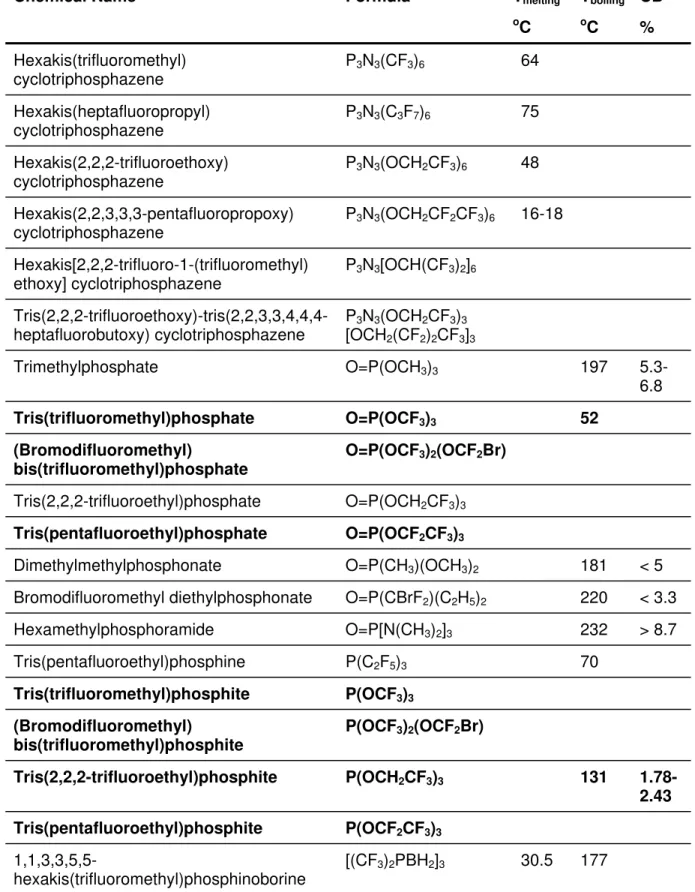
group may provide suppression synergism between bromine and phosphorus [5]. Table 2 lists potential compounds that warrant further investigation [5, 12, 15, 17]. The compounds in bold print are among the most promising potential agents for further evaluation and development as they are expected to provide chemical action for fire extinguishment. Relatively little information on toxicity of the interested compounds and combustion by-products is available, which is important for toxicological
assessment. Phosphorous compounds have a large variability in toxicity and have the possibility of causing cholinesterase inhibition, which is a concern. Phosphite esters
generally have a lower toxicity than phosphate esters. Although phosphorus compounds are unlikely to have unacceptable environmental properties, atmospheric chemistry involving phosphorus has not been fully studied [4]. A better understanding of atmospheric chemistry and extinguishment mechanisms is also needed.
5.0 TROPODEGRADABLE HALOCARBONS
Global environmental impact of a chemical is usually associated with its
atmospheric lifetime. The potential of an agent for ozone depletion and global warming generally decreases with decreasing atmospheric time. Some halocarbons have very short atmospheric times of a few days or a few weeks, and can be rapidly removed from the troposphere by physical and chemical processes. They are called tropodegradable halocarbons [2, 15, 18-23].
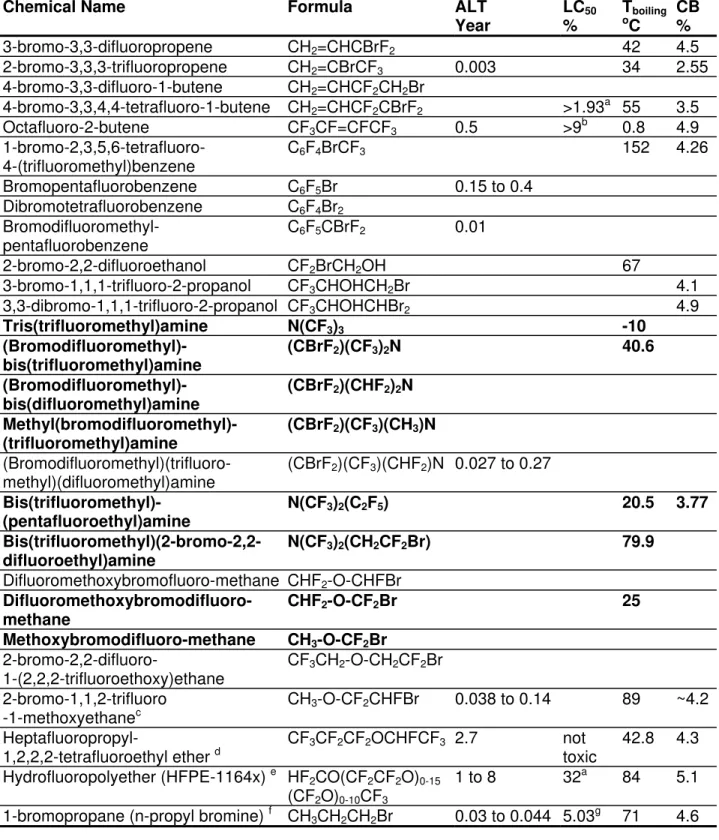
Table 3 shows characteristic data of some tropodegradable compounds,
including ALT, lethal concentration fifty (LC50) for acute toxicity, normal boiling point and
cup-burner heptane-flame extinguishment concentrations [2, 5, 17-22, 24-32]. The compounds in bold print are among the most promising potential agents for further investigation for the reasons outlined below.
There are several processes that are important for troposphere degradation of these organic compounds [2, 15, 18-24]. Tropospheric hydroxyl (OH) radicals can remove these compounds from the atmosphere by abstracting hydrogen atoms from the compounds or by adding to the unsaturated bonds of the compounds. Alkenes,
aromatics, hydrogen-containing amines and ethers, and ketones are likely to have significantly reduced atmospheric times due to the reaction with the OH radicals. Electromagnetic radiation, such as ultraviolet (UV) radiation, can cause some compounds to be fragmented or photolyzed. The photolysis process is an important mechanism for tropospheric removal of ketones, iodides, bromides and the compounds with conjugated double bonds. For highly polarized compounds, such as alcohols, amines, esters and ketones, rainout is an effective process for physical removal. The stratosphere (10 to 50 km above earth's surface) ozone layer shields the earth from UV radiation. The troposphere (0 to 10 km above earth's surface) ozone, however, creates smog, which causes unhealthy air to breathe. Alkenes can react rapidly with the
troposphere ozone, which could be a significant removal mechanism for alkenes.
5.1 Fluoroiodocarbons
Fluoroiodocarbons (i.e. iodides) can be easily photolyzed by sunlight (UV radiation) and be rapidly removed from troposphere in days (ALT < 2 days). Since fluoroiodocarbons are so short-lived, their ODP and GWP become negligible. The major issue for fluoroiodocarbons is their toxicity, especially their cardiac toxicity. Inhalation of trifluoroiodomethane (CF3I) at a 4000 ppm concentration can cause cardiac
sensitization. Based on evaluation of acute, reproductive, cardiac and genetic toxicity and exposure studies, the occupational exposure limits for CF3I have been
recommended to be 2000 ppm for firefighting exposure and 150 ppm for chronic
exposure [33-36]. Among fluoroiodocarbons, CF3I has the lowest toxicity and the lowest
boiling point. Higher molecular weight fluoroiodocarbons (such as C2F5I, C3F7I, etc.)
5.2 Brominated and Fluorinated Alkenes, Ethers and Amines
Fluorinated and/or brominated alkenes, ethers and amines are of great interest for potential fire suppression applications. About a decade ago, alkenes, ketones, ethers and amines were included in an exploratory list for fire suppression investigation [6].
Bromofluoroalkenes and aromatic bromofluorobenzene (unsaturated
bromofluorocarbons) are interesting since some of them have very short atmospheric lifetimes and low cup burner extinguishment concentrations [2, 17, 19-21, 29]. For example, 2-bromo-3,3,3-trifluoropropene (CF3CBr=CH2) has an ALT of less than 1 day
and a cup burner flame extinguishing concentration of 2.55% [17, 29]. In order to reduce the toxicity problems however, the bromine atom should be moved away from the doubly
bonded carbon [19]. 3-bromo-3,3-difluoropropene (CF2BrCH=CH2) and
4-bromo-3,3,4,4-tetrafluorobutene (CBrF2CF2CH=CH2) are expected to have lower toxicity than
2-bromo-3,3,3-trifluoropropene (CF3CBr=CH2). Octafluoro-2-butene (CF3CF=CFCF3),
which was tested in bench-scale extinguishment tests, appeared to be relatively low in toxicity [25].
Fluorinated ethers that have hydrogen atoms on the ethers' alpha carbon atom usually have low ALT [5, 19]. Most hydrofluoroethers or perfluoroethers, however, do not have very high fire suppression capability. A slight exception is heptafluoropropyl-1,2,2,2-tetrafluoroethyl ether, which has a cup burner value of 4.3% and has been tested in laboratory-scale streaming experiments [25]. Hydrobromofluoroethers may offer some potential [4].
Some fluoroalkylamines showed a higher inhibitory effect on flame propagation than HFC-227ea [18]. (CF3)2(CF3CF2)N has a reasonably low cup burner value of
3.77%. In order to ensure low ALT and GWP, some hydrogen atoms must be attached to the alpha carbon atom(s) in fluorinated amines [19]. Bromofluoroamines offer some promise but it is still difficult to determine whether hydrofluorobromoamines have a sufficiently short ALT (estimated ALT of 10 to 100 days) [4]. Compounds such as
(CF3)(CHF2)(CF2Br)N should have short ALTs and do provide chemical suppression [5].
A better understanding of the environmental impact is needed.
5.3 Heavy Bromoalkanes and Blends
Some high molecular weight bromoalkanes have short atmospheric lifetimes. (Bromoalkanes are compounds that contain no halogen atoms other than bromine.) Bromoalkanes considered to date include 1-bromopropane, 1-bromobutane,
1,2-dibromopropane, 1,3-dibromobutane, 2,3-dibromobutane and 1,4-dibromopentane [27]. The atmospheric lifetime decreases with the increasing molecular weight of a bromoalkane. 1-bromopropane (CH3CH2CH2Br) has an ALT of 11 to 16 days [17, 31,
32]. Due to this short ALT, its ODP is estimated to be as low as 0.0019 (there are two other different ODP values, 0.006 and 0.027, which are believed to be overestimated); its GWP relative to carbon dioxide is estimated to be 0.31 for a 100-year time horizon [31, 32]. 1-bromopropane has been developed as an alternative solvent for cleaning applications. It has a reasonably low toxicity and boiling point for a streaming
1-bromopropane extinguishes cup-burner heptane flames at a 4.6% concentration [27]. A blend of a chemically acting agent (such as bromoalkane) with a high heat capacity carrier agent (such as an HFC) may provide synergy of physical and chemical actions for fire suppression. This synergy can be represented by the fact that the fire extinguishment concentration of a blend is lower than a linear addition of the fractional extinguishment concentration of each individual component in the blend. Some blends of bromoalkane with different carriers have demonstrated this synergy in bench-scale studies, as shown in Figure 1 [27].
1-bromopropane was blended with carrier agents such as HFC-236fa
(1,1,1,3,3,3-hexafluoropropane, C3H2F6), HFC-227ea (1,1,1,2,3,3,3-heptafluoropropane,
C3HF7), HFPE-1164x (hydrofluoropolyether, HF2CO[CF2CF2O]0-15[CF2O]0-10CF3) and
octafluoro-2-butene (CF3CF=CFCF3), respectively [17, 25, 27, 28]. A synergistic effect
was observed in the cup burner tests; significant improvement was observed in bench-scale streaming fire tests [27, 28]. When these carrier agents were blended with
1-bromopropane, smaller quantities of the carrier agents (approximately 30 to 40% less) were required to extinguish the flame, and flame extinguishment was quicker. The most effective blending ratio was 10 to 15% 1-bromopropane by weight in the carrier. The blends of 1-bromopropane with these carrier agents demonstrated fire extinguishment abilities near (in some cases better than) those of Halon 1211. Lesser quantities of thermal decomposition products were produced when HFPE-1164x was blended with 1-bromopropane than when HFPE-1164x was used alone.
Up to now, these bromoalkane blends have not been tested in the total flooding mode, which should be an interesting research subject. Additional toxicity studies are required and issues with handling, storage and transfer need to be addressed.
6.0 CONCLUSIONS
In response to the Kyoto Protocol, recent research has been focused on
developing advanced agents with a short atmospheric lifetime. The potential of an agent for ozone depletion and global warming generally decreases with decreasing
atmospheric time. Halogenated organosilicon compounds, metallic compounds, phosphorus compounds and tropodegradable halocarbons have been identified in laboratory screening for further assessment as potential substitutes to halons. Phosphorus compounds and tropodegradable halocarbons appear to be more promising.
Advanced agents are still in the early development stage. Many scientific and technical issues need to be resolved through further research and development. The toxicity of many of these compounds has yet to be determined, including cardiac, acute, chronic and developmental toxicity, etc. Some environmental characteristics and key physical/thermodynamic properties also have to be determined. Some of the potential compounds have not even been tested in cup burner or bench-scale apparatuses because of difficulties in synthesis of these compounds. Larger scale tests have yet to be conducted to determine the effectiveness of these agents (such as minimum quantity required to extinguish different type of fires), appropriate system design (such as
cylinder fill densities, pressurization, discharge patterns) and thermal decomposition products in realistic fire scenarios.
Figure 1. Cup-burner concentration versus composition ratio of bromoalkane blend (Note: figure from reference [27])
Table 1 – Halogenated Organosilicon Compounds for Further Study
Chemical Name Formula
Halogenated Silane
Bromodifluoromethyl tris(trifluoromethyl)silane Si(CF3)3(CF2Br)
Bromofluoromethyl tris(trifluoromethyl)silane Si(CF3)3(CHFBr)
Bromodifluoromethyl tris(2,2,2-trifluoroethyl)silane
Si(CH2CF3)3(CF2Br)
Bromofluoromethyl tris(2,2,2-trifluoroethyl)silane Si(CH2CF3)3(CHFBr)
Bromodifluoromethyl tris(2,2,2-trifluoroethoxy)silane Si(OCH2CF3)3(CF2Br) Tetra(trifluoromethoxy)silane Si(OCF3)4 Bromodifluoromethoxy tris(trifluoromethoxy)silane Si(OCF3)3(OCF2Br) Tetra(2,2,2-trifluoroethoxy)silane Si(OCH2CF3)4a Tetra(bromodifluoromethoxy)silane Si(OCF2Br)4 Halogenated Siloxane 1,3-bis(bromomethyl)-1,1,3,3-tetramethyl disiloxane (CH2Br)(CH3)2SiOSi(CH3)2(CH2Br) 1,3-dimethyl-1,1,3,3-tetra(bromomethyl) disiloxane (CH2Br)2(CH3)SiOSi(CH3)(CH2Br)2 1,3-bis(bromodifluoromethyl)-1,1,3,3-tetra(2,2,2-trifluoroethyl)disiloxane (CF2Br)(CF3CH2)2SiOSi(CH2CF3)2(CF2Br) 1,3-bis(bromodifluoromethyl)-1,1,3,3-tetra(trifluoromethyl)disiloxane (CF2Br)(CF3)2SiOSi(CF3)2(CF2Br) Hexa(bromomethyl)disiloxane (CH2Br)3SiOSi(CH2Br)3 a
Table 2 – Phosphorus Compounds for Further Study
Chemical Name Formula Tmelting
o C Tboiling o C CB % Hexakis(trifluoromethyl) cyclotriphosphazene P3N3(CF3)6 64 Hexakis(heptafluoropropyl) cyclotriphosphazene P3N3(C3F7)6 75 Hexakis(2,2,2-trifluoroethoxy) cyclotriphosphazene P3N3(OCH2CF3)6 48 Hexakis(2,2,3,3,3-pentafluoropropoxy) cyclotriphosphazene P3N3(OCH2CF2CF3)6 16-18 Hexakis[2,2,2-trifluoro-1-(trifluoromethyl) ethoxy] cyclotriphosphazene P3N3[OCH(CF3)2]6 Tris(2,2,2-trifluoroethoxy)-tris(2,2,3,3,4,4,4-heptafluorobutoxy) cyclotriphosphazene P3N3(OCH2CF3)3 [OCH2(CF2)2CF3]3 Trimethylphosphate O=P(OCH3)3 197 5.3-6.8 Tris(trifluoromethyl)phosphate O=P(OCF3)3 52 (Bromodifluoromethyl) bis(trifluoromethyl)phosphate O=P(OCF3)2(OCF2Br) Tris(2,2,2-trifluoroethyl)phosphate O=P(OCH2CF3)3 Tris(pentafluoroethyl)phosphate O=P(OCF2CF3)3
Dimethylmethylphosphonate O=P(CH3)(OCH3)2 181 < 5
Bromodifluoromethyl diethylphosphonate O=P(CBrF2)(C2H5)2 220 < 3.3
Hexamethylphosphoramide O=P[N(CH3)2]3 232 > 8.7 Tris(pentafluoroethyl)phosphine P(C2F5)3 70 Tris(trifluoromethyl)phosphite P(OCF3)3 (Bromodifluoromethyl) bis(trifluoromethyl)phosphite P(OCF3)2(OCF2Br) Tris(2,2,2-trifluoroethyl)phosphite P(OCH2CF3)3 131 1.78-2.43 Tris(pentafluoroethyl)phosphite P(OCF2CF3)3 1,1,3,3,5,5-hexakis(trifluoromethyl)phosphinoborine [(CF3)2PBH2]3 30.5 177
Table 3 – Tropodegradable Halocarbons for Further Study
Chemical Name Formula ALT
Year LC50 % Tboiling o C CB % 3-bromo-3,3-difluoropropene CH2=CHCBrF2 42 4.5 2-bromo-3,3,3-trifluoropropene CH2=CBrCF3 0.003 34 2.55 4-bromo-3,3-difluoro-1-butene CH2=CHCF2CH2Br 4-bromo-3,3,4,4-tetrafluoro-1-butene CH2=CHCF2CBrF2 >1.93a 55 3.5 Octafluoro-2-butene CF3CF=CFCF3 0.5 >9b 0.8 4.9 1-bromo-2,3,5,6-tetrafluoro- 4-(trifluoromethyl)benzene C6F4BrCF3 152 4.26 Bromopentafluorobenzene C6F5Br 0.15 to 0.4 Dibromotetrafluorobenzene C6F4Br2 Bromodifluoromethyl-pentafluorobenzene C6F5CBrF2 0.01 2-bromo-2,2-difluoroethanol CF2BrCH2OH 67 3-bromo-1,1,1-trifluoro-2-propanol CF3CHOHCH2Br 4.1 3,3-dibromo-1,1,1-trifluoro-2-propanol CF3CHOHCHBr2 4.9 Tris(trifluoromethyl)amine N(CF3)3 -10 (Bromodifluoromethyl)-bis(trifluoromethyl)amine (CBrF2)(CF3)2N 40.6 (Bromodifluoromethyl)-bis(difluoromethyl)amine (CBrF2)(CHF2)2N Methyl(bromodifluoromethyl)-(trifluoromethyl)amine (CBrF2)(CF3)(CH3)N (Bromodifluoromethyl)(trifluoro-methyl)(difluoromethyl)amine (CBrF2)(CF3)(CHF2)N 0.027 to 0.27 Bis(trifluoromethyl)-(pentafluoroethyl)amine N(CF3)2(C2F5) 20.5 3.77 Bis(trifluoromethyl)(2-bromo-2,2-difluoroethyl)amine N(CF3)2(CH2CF2Br) 79.9 Difluoromethoxybromofluoro-methane CHF2-O-CHFBr Difluoromethoxybromodifluoro-methane CHF2-O-CF2Br 25 Methoxybromodifluoro-methane CH3-O-CF2Br 2-bromo-2,2-difluoro- 1-(2,2,2-trifluoroethoxy)ethane CF3CH2-O-CH2CF2Br 2-bromo-1,1,2-trifluoro -1-methoxyethanec CH3-O-CF2CHFBr 0.038 to 0.14 89 ~4.2 Heptafluoropropyl- 1,2,2,2-tetrafluoroethyl ether d CF3CF2CF2OCHFCF3 2.7 not toxic 42.8 4.3 Hydrofluoropolyether (HFPE-1164x) e HF2CO(CF2CF2O)0-15
(CF2O)0-10CF3
1 to 8 32a 84 5.1
1-bromopropane (n-propyl bromine) f CH3CH2CH2Br 0.03 to 0.044 5.03g 71 4.6
a
4-hour LC50
b
15-min LC50 c
an anaesthetic d a blood substitute
e
NOAEL=11.6%, LOAEL=16.8% and vapour pressure 2.6 kPa at 25oC
f
GWP100y, CO2 = 0.31
g
6.0 NOMENCLATURE
ALT atmospheric lifetime in years
CB agent concentration by volume for extinguishing the cup burner heptane
flame
COF2 carbonyl fluoride
Fe(C5HF6O2)3 tris(hexafluoroacetylacetonato)iron(III), Tmelting= 47-49oC
Fe(C5H4F3O2)3 tris(trifluoroacetylacetonato)iron(III), Tmelting= 114-115oC, Tsublimation= 48oC
Fe(C5H7O2)3 tris(acetylacetonato)iron(III), Fe[CH3C(O)CHC(O)CH3]3,
Tmelting= 178-183oC, Tsublimation= 69oC
GWP global warming potential relative to carbon dioxide (CO2)
HF hydrogen fluoride
HFC hydrofluorocarbon
HFPE hydrofluoropolyether
LC50 lethal concentration fifty for acute toxicity (agent concentration by volume)
LOAEL lowest observed adverse effect level for cardiac sensitization (agent
concentration by volume)
NOAEL no observed adverse effect level for cardiac sensitization (agent
concentration by volume)
ODP ozone depletion potential relative to CFC-11 (CCl3F)
ppm parts per million (by volume)
ρL, 25°C density of a liquefied gas in kg/m3 at 25oC
Tboiling normal boiling point in°C at a pressure of 101.325 kPa
Tmelting melting point in°C
UV ultraviolet
7.0 REFERENCES
1. Tapscott, R.E., Moore, T.A., Mather, J.D. and Vitali, J.A., "Halon Replacement Research – A Historical Review of Technical Progress and Regulatory Decision Points," Proceedings of Halon Options Technical Working Conference, Albuquerque, NM, U.S.A., 1998, pp. 17-22.
2. Tapscott, R.E., Heinonen, E.W. and Brabson, G. D., “Advanced Agent Identification and Preliminary Assessment,” Advanced Agent Working Group, NMERI Report No. 95/38/32350, November 1996.
3. Gobeli, G.W., Tapscott, R.E. and Kaizerman, J.A., “Advanced Streaming Agent Development, Volume I: Silicon Compounds,” Vol. 1 of 5, Wright Laboratories (WL/FIVCF) and Applied Research Associates, Inc., Tyndall Air Force Base, FL, NMERI Report No. 96/1/32540, May 1996.
4. Tapscott, R.E., Heinonen, E.W. and Mather, J.D., “Identification and Proof Testing of New Total Flooding Agents: Toxicity and Global Environmental Assessment,” Interim Report, U. S. Department of Defense, Strategic Environmental Research and
Development Program and Defense Advance Research Projects Agency, Arlington, VA, NMERI Report No. 97/29/33010, February 1998.
5. Tapscott, R.E., Mather, J.D., Heinonen, E.W., Lifke, J.L. and Moore, T.A., “Identification and Proof Testing of New Total Flooding Agents: Combustion
Suppression Chemistry and Cup Burner Testing,” Final Report, U. S. Department of Defense, Strategic Environmental Research and Development Program and Defense
Advance Research Projects Agency, Arlington, VA, NMERI Report No. 97/6/33010, May 1998.
6. Pitts, W.M., Nyden, M.R., Gann, R.G., Mallard, W.G. and Tsang, W., “Construction of an Exploratory List of Chemicals to Initiate the Search for Halon Alternatives,” NIST Technical Note 1279, National Institute of Standards and Technology, U.S.A., 1990. 7. Patterson, R.A., Gobeli, G.W., Brabson, G.D. and Tapscott, R.E., “Advanced
Streaming Agent Development, Volume II: Metal Compounds,” Vol. 2 of 5, Wright Laboratories (WL/FIVCF) and Applied Research Associates, Inc., Tyndall Air Force Base, FL, NMERI Report No. 96/3/32540, June 1996.
8. Brabson, G.D., Walters, E.A., Schiro, J. and Spencer, C., "Flame Extinguishment by Metal Containing Agents," Proceedings of Halon Options Technical Working
Conference, Albuquerque, NM, U.S.A., 1996, pp. 213-223.
9. Lask, G. and Wagner, H.G., "Influence of Additives on the Velocity of Laminar Flames," Eighth Symposium (International) on Combustion, Williams and Wilkins, Baltimore, MD, 1962, pp. 432-438.
10. Linteris, G.T. and Reinelt, D., "Experimental Studies of the Flame Inhibition Effect of Iron Pentacarbonyl," Proceedings of Halon Options Technical Working Conference, Albuquerque, NM, U.S.A., 1996, pp. 199-211.
11. Lifke, J.L., Moore, T.A. and Tapscott, R.E., “Advanced Streaming Agent
Development, Volume V: Laboratory-Scale Streaming Tests,” Vol. 5 of 5, Wright Laboratories (WL/FIVCF) and Applied Research Associates, Inc., Tyndall Air Force Base, Florida, NMERI Report No. 96/2/32540, June 1996.
12. Kaizerman, J.A. and Tapscott, R.E., “Advanced Streaming Agent Development, Volume III: Phosphorus Compounds,” Vol. 3 of 5, Wright Laboratories (WL/FIVCF) and Applied Research Associates, Inc., Tyndall Air Force Base, FL, NMERI Report No. 96/5/32540, June 1996.
13. Skaggs, S.S., Kaizerman, J. and Tapscott, R.E., "Phosphorus Nitrides as Fire Extinguishing Agents," Proceedings of Halon Options Technical Working Conference, Albuquerque, NM, U.S.A., 1995, pp. 345-355.
14. Tapscott, R.E., Heinonen, E.W., Moore, T.A. and Kaizerman, J.A., "Advanced Agent Halon Substitutes," Proceedings of International CFC And Halon Alternatives
Conference, Washington, DC, U.S.A., 1995, pp. 644-648.
15. Tapscott, R.E., Gobeli, G., Heinonen, E.W., Kaizerman, J.A., Lifke, J.L. and Patterson, R.A., "Update on Advanced Agent Candidates," Proceedings of Halon Options Technical Working Conference, Albuquerque, NM, U.S.A., 1996,
pp. 195-198.
16. Kinkhead, E., Kimmel, E., Wall, H. and Grabau, J., “Determination of the Toxicity of Cyclotriphosphazene Hydraulic Fluid by 21-Day Repeated Inhalation and Dermal Exposure,” American Industrial Hygiene Association Journal, Vol. 51, 1990, pp. 583-587.
17. Tapscott, R.E. and Mather, J.D., "Research on Main Group Element Compounds and Tropodegradable Halocarbons as Halon Substitutes”, Proceedings of Fire Suppression and Detection Research Application Symposium, Orlando, FL, U.S.A., 1999, pp. 190-195.
18. Heinonen, E.W., Lifke, J.L. and Tapscott, R.E., “Advanced Streaming Agent Development, Volume IV: Tropodegradable Halocarbons,” Vol. 4 of 5, Wright Laboratories (WL/FIVCF) and Applied Research Associates, Inc., Tyndall Air Force Base, FL, NMERI Report No. 96/4/32540, May 1996.
19. Tapscott, R.E, “Development of a Tropodegradable Total-Flooding Agent, Phase I: Preliminary Survey,” Advanced Agent Working Group, NMERI Report No.
20. Tapscott, R.E. and Mather, J.D., “Development of a Tropodegradable Total-Flooding Agent Phase II: Initial Screening,” Advanced Agent Working Group, NMERI Report No. 96/22/30930, July 1997.
21. Tapscott, R.E., Olivares-Sooley, M.G. and Moore, T.A., “Development of a
Tropodegradable Total-Flooding Agent, Physical Property Assessment,” Advanced Agent Working Group, NMERI Report No. 97/31/30930, October 1997.
22. Skaggs, S.R., "Second Generation Halon Replacements," Proceedings of Halon Options Technical Working Conference, Albuquerque, NM, U.S.A., 1993,
pp. 239-246.
23. Tapscott, R.E., Heinonen, E.W., Lifke, J.L., Mather, J.D. and Moore, T.A.,
"Tropodegradable Bromocarbons as Halon Replacements," Proceedings of Halon Options Technical Working Conference, Albuquerque, NM, U.S.A., 1997,
pp. 178-185.
24. Ball, D., Chattaway, A. and Spring, D.J., "There Will Be No 'Son of Supergas'," Proceedings of Halon Options Technical Working Conference, Albuquerque, NM, U.S.A., 1998, pp. 45-55.
25. Grzyll, L.R., Ramos, C., Laut, P.A., Vitali, J.A., Mitchell, B. and Nelson, D.F., "Laboratory-Scale Streaming Tests of Advanced Agents," Proceedings of Halon Options Technical Working Conference, Albuquerque, NM, U.S.A., 1998, pp. 59-69. 26. Chattaway, A., Grigg, J. and Spring, D.J., "The Investigation of Chemically Active
Candidate Halon Replacements," Proceedings of Halon Options Technical Working Conference, Albuquerque, NM, U.S.A., 1998, pp. 33-44.
27. Moore, T.A. and Lifke, J.L., "n-Propyl Bromide and Bromoalkane Testing,"
Proceedings of Halon Options Technical Working Conference, Albuquerque, NM, U.S.A., 1998, pp. 91-104.
28. Moore, T.A. and Lifke, J.L., "Evaluation and Testing of Clean Agents for U.S. Army Combat Vehicle Portable Fire Extinguishers," Proceedings of Halon Options Technical Working Conference, Albuquerque, NM, U.S.A., 1997, pp. 453-466. 29. Tapscott, R.E., “Tropodegradable Bromocarbon Extinguishants”, New Mexico
Engineering Research Institute, Albuquerque, NM, U.S.A., 1998, pp. 1-5.
30. Mather, J.D. and Tapscott, R.E., "Next-Generation Fire Suppression Technology Program: NMERI/CGET Projects Overview," Proceedings of Halon Options Technical Working Conference, Albuquerque, NM, U.S.A., 1998, pp. 339-346. 31. Liimatta, E.W. and Shubkin, R.L., "normal-Propyl Bromide Based Cleaning
Solvents," Proceedings of International Conference on Ozone Protection Technologies, Baltimore, MD, U.S.A., 1997, pp. 443-452.
32. Shubkin, R.L., "A New and Effective Solvent/Cleaner with Low Ozone Depletion Potential," Proceedings of International Conference on Ozone Protection
Technologies, Washington, DC, U.S.A., 1996, pp. 685-694.
33. Skaggs, S.R. and Cecil, M.A., "Exposure Assessment to TriodideTM in Streaming Scenarios," Proceedings of International CFC and Halon Alternatives Conference, Washington, DC, U.S.A., 1995, pp. 561-569.
34. Skaggs, S.R., Dierdorf, D.S. and Newhouse, S., "Recent Progress in TriodideTM Commercialization," Proceedings of International Conference on Ozone Protection Technologies, Washington, DC, U.S.A., 1996, pp. 631-639.
35. Skaggs, S.R. and Rubenstein, R., "Setting the Occupational Exposure Limits for CF3I," Proceedings of Halon Options Technical Working Conference, Albuquerque,
NM, U.S.A., 1999, pp. 254-261.
36. McCain, W.C. and Macko, J., "Toxicity Review for Iodotrifluoromethane (CF3I),"
Proceedings of Halon Options Technical Working Conference, Albuquerque, NM, U.S.A., 1999, pp. 242-253.
37. Kibert, C., "Fluoroiodocarbons as Halon 1211/1301 Replacements: An Overview," Proceedings of Halon Options Technical Working Conference, Albuquerque, NM, U.S.A., 1994, pp. 261-269.
38. Nimitz, J., "Trifluoromethyl Iodide and its Blends as High-Performance,
Environmentally Sound Halon 1301 Replacements," Proceedings of Halon Options Technical Working Conference, Albuquerque, NM, U.S.A., 1994, pp. 283-294.
![Figure 1. Cup-burner concentration versus composition ratio of bromoalkane blend (Note: figure from reference [27])](https://thumb-eu.123doks.com/thumbv2/123doknet/14205335.480803/9.918.160.773.153.515/figure-burner-concentration-versus-composition-bromoalkane-figure-reference.webp)