HAL Id: tel-02009827
https://tel.archives-ouvertes.fr/tel-02009827
Submitted on 6 Feb 2019HAL is a multi-disciplinary open access archive for the deposit and dissemination of sci-entific research documents, whether they are pub-lished or not. The documents may come from teaching and research institutions in France or abroad, or from public or private research centers.
L’archive ouverte pluridisciplinaire HAL, est destinée au dépôt et à la diffusion de documents scientifiques de niveau recherche, publiés ou non, émanant des établissements d’enseignement et de recherche français ou étrangers, des laboratoires publics ou privés.
Plant-based (Camelina Sativa) biodiesel manufacturing
using the technology of Instant Controlled pressure
Drop (DIC) : process performance and biofuel quality
Fanar Bamerni
To cite this version:
Fanar Bamerni. Plant-based (Camelina Sativa) biodiesel manufacturing using the technology of In-stant Controlled pressure Drop (DIC) : process performance and biofuel quality. Chemical and Process Engineering. Université de La Rochelle, 2018. English. �NNT : 2018LAROS004�. �tel-02009827�
NIVERSITÉ DE LA ROCHELLE
UFR des SCIENCES et TECHNOLOGIE
Année: 2018 Numéro attribué par la bibliothèque:
THÈSE
pour obtenir le grade de
DOCTEUR
de
L’UNIVERSITÉ DE LA ROCHELLE
Discipline : Génie des Procédés Industriels
Présentée et soutenue par
Fanar Mohammed Saleem Amin BAMERNI
Le 23 février 2018
TITRE:
Procédé de Fabrication de Biodiesel assistée par Texturation par Détente
Instantanée Contrôlée (DIC) de Camelina Sativa : Performance des Procédés et
Qualité du Produit.
Plant-Based (Camelina Sativa) Biodiesel Manufacturing Using the Technology of
Instant Controlled Pressure Drop (DIC); Process performance and biofuel Quality.
Dirigée par : Professeur Ibtisam KAMAL et Professeur Karim ALLAF JURY:
Rapporteurs: M. Farid CHEMAT, Professeur, Université d’Avignon - France M. Eugene VOROBIEV, Professeur, Université de Technologie de Compiègne - France Examinateur: M. Omar BARKAT, Ex-Professeur d’Université, Expert en Ingénierie Pétrochimique - USA Mme Colette BESOMBES, Docteure, MCF Université de La Rochelle - France Directeurs: M. Karim ALLAF, Professeur, Université de La Rochelle - France Mme Ibtisam KAMAL, Professeure, Université de Soran - Irak
I
Dedication
To
My Merciful Mother ...
The Soul of My Father ...
My Teachers ...
My Dear Brother and Sisters ...
And All My Friends ...
II
ACKNOWLEDGEMENT
Great thanks to Allah, the most merciful, the most compassionate. It is my pleasure to express my deepest thanks and sincere gratitude to my supervisors Prof. Ibtisam Kamal and Prof. Karim Allaf for their advice, scientific suggestions, encouragement, kind assistance and continual guidance throughout the study period.
I also extend my gratitude to all the staff members in the University of La Rochelle.I also appreciate the efforts of all staff members in Zakho University. Specially the staff in Department of Chemistry at Faculty of Science.
My great thanks and respect to Dr. Yosef from Agriculture College and both of Dr. Jamal from chemistry Department and Dr. Deea from Biology Department at Faculty of Science from Dohuk University. I would like also to thank each of, Mr. Ali El-Tememy in the Ministry of Science and Technology/ Environment and Water Department/ Baghdad, and Mr. Ali Showani, in Kirkuk Refinery, for their help.
Finally, I would like to pass my sincere gratitude to my family and all my friends for their love, support and continued encouragement and assistance.
III
LIST OF PUBLICATIONS
1- F. Bamerni, I. Kamal, and K. Allaf, “Swell-Texturing assisted in-situ Transesterification of Camelina Seeds Biodiesel,” International Journal of Engineering Research and Development, vol. 13, no. 9, pp. 31–44, 2017.
2- F. Bamerni, I. Kamal, and K. Allaf, “Coupling of Texturing/Cooling Using Instant Controlled Pressure Drop and Transesterification for Biodiesel Production from Camelina Sativa,” Global Journal of Researches in Engineering, Vol. 17 no. 2 Version 1.0, 2017. 3- F. Bamerni, I. Kamal, and K. Allaf, “How can “Instantaneous Pressure-Drop DIC” Texture Camelina Seeds, Increase Extraction Yields and Preserve Vegetal Oil Quality?” Global Advanced Research Journal of Engineering, Technology and Innovation, Vol. 6 (1) pp. 001-011, January, 2018.
IV
LIST OF CONTENTS
ACKNOWLEDGEMENT ... II LIST OF PUBLICATIONS ... III LIST OF CONTENTS ... IV LIST OF TABLES ... VIII LIST OF FIGURES ... X LIST OF ABBREVIATIONS ... XII
ABSTRACT…………. ... 1
1. CHAPTER 1. GENERAL INTRODUCTION ... 4
1.1 Fossil fuels and Biofuels ... 4
1.2 Biodiesel ... 5
1.3 Biodiesel Production ... 7
1.4 Biodiesel Raw Materials ... 7
1.5 Aim of the Current Study ... 9
2. CHAPTER 2. STATE-OF–THE-ART ... 10
2.1 Camelina Sativa ... 10
2.1.1 Geographical Distribution of Camelina Sativa ... 11
2.1.2 Description of Camelina Sativa Plant ... 12
2.1.3 Camelina Sativa Products ... 12
2.1.3.1 Camelina Seed Oil ... 12
2.1.3.2 Camelina Cake ... 15
2.1.4 Potential Uses and Industrial Applications for Camelina ... 15
2.1.4.1 Human Foods... 16
2.1.4.2 Animal Feeds ... 17
2.1.4.3 Camelina Oil as Feedstock for Renewable Jet Fuel ... 17
2.1.4.4 Camelina Oil as Feedstock for Renewable Biodiesel ... 18
2.2 Oil Extraction Process ... 22
2.2.1 Conventional oil extraction processes ... 24
2.2.1.1 Pressing ... 24
2.2.1.2 Solvent Extraction... 26
2.2.2 Innovative Techniques Used to Assist Extraction Process ... 28
2.2.2.1 Ultrasound-Assisted Extraction (UAE) ... 28
2.2.2.2 Microwave-Assisted Extraction (MAE) ... 29
2.2.2.3 Supercritical Fluid Extraction (SFE) ... 30
2.2.2.4 Acceleration Solvent Extraction (ASE) ... 30
2.2.2.5 Enzymatic-Assisted Extraction (EAE) ... 31
2.2.2.6 Instant Controlled Pressure Drop (DIC) ... 32
V
2.3.1 Characteristics of Oils and Fats Used in Biodiesel Production ... 36
2.3.2 Physical Transformations ... 37
2.3.2.1 Direct Use of Oil and Blending... 37
2.3.2.2 Micro-Emulsion of Oils ... 38
2.4 Chemical Transformation ... 38
2.4.1 Pyrolysis of Biomass ... 38
2.4.2 Biodiesel Production Process ... 39
2.5 Transesterification of Vegetables Oils ... 40
2.5.1 Alkali or Base Catalyzed Transesterification ... 43
2.5.2 Acid- Catalyzed Transesterification ... 46
2.5.3 Heterogeneous Catalysts ... 48
2.5.4 Enzymatic -- Catalyzed Transesterification ... 49
2.6 In-situ Transesterification ... 50
3. CHAPTER 3. EXPERIMENTAL PART - MATERIALS AND METHODS ... 54
3.1 Raw material ... 54
3.2 Response Surface Methodology (RSM) ... 54
3.3 Treatment Methods ... 56
3.3.1 Main Treatments of Camelina Seeds ... 56
3.3.2 Intensification of Oil Extraction through Texturing of Camelina Seeds by Instant Control Pressure Drop (DIC) Treatment... 56
3.3.3 Design of Experiment DoE for DIC Treatments ... 57
3.4 Extraction of Oil from Camelina Sativa. ... 58
3.4.1 Mechanical Pressing ... 59
3.4.2 Solvent Extraction of Oil from Camelina Seeds and Pressing Cake ... 60
3.5 Assessment Methods ... 61
3.5.1 Measurement of Moisture Content of Un-textured and DIC-textured Seeds ... 61
3.5.2 Determination of the Oil Physicochemical Properties ... 62
3.5.2.1 Determination of oil extraction Yield ... 62
3.5.2.2 Determination of Oil Density ... 62
3.5.2.3 Determination of Kinematic Viscosity of Oil ... 63
3.5.2.4 Determination of Oil Refractive Index ... 63
3.5.2.5 Determination of Oil Peroxide Value ... 64
3.5.2.6 Determination of Oil Acid Value ... 64
3.5.2.7 Determination of Oil Free Fatty Acids (FFA) ... 65
3.5.2.8 Determination of Oil Saponification Value ... 66
3.5.2.9 Determination of Oil Ester Value and Percentage of Glycerol ... 67
3.5.2.10 Determination of Oil Iodine Value ... 67
3.5.3 Fatty Acid Profiles by GC Chromatography ... 68
3.6 Biodiesel Production ... 69
3.6.1 Transesterification Process (TE) ... 69
VI
3.6.2.1 Experimental Design of TE for the Oil Extracted from Raw Un- Treated
Camelina Seeds ... 71
3.6.2.2 Experimental Design for the DIC-Textured Camelina Seeds... 71
3.6.3 In-situ Transesterification Process (ISTE) ... 72
3.6.3.1 RSM for In-situ Transesterification ... 73
3.6.3.2 Experimental Design of ISTE for Fresh (Un-textured) Camelina Seeds ... 73
3.6.3.3 Experimental Design for ISTE for (DIC-textured) Camelina Seeds ... 74
3.7 Assessment Methods of FAMEs ... 74
3.7.1 FAMEs Profiles by Gas Chromatography ... 74
3.7.2 Determination of the Biodiesel Physicochemical Properties of Fatty Acid Methyl Esters (FAMEs) ... 75
3.7.2.1 Measuring and estimation of Yield ... 75
3.7.2.2 Determination of FAMEs Density by Pycnometer (EN ISO 12185) ... 75
3.7.2.3 Determination of Specific Gravity and API Gravity of FAMEs ... 76
3.7.2.4 Determination of FAMEs Kinematic Viscosity (ASTM D-445) ... 76
3.7.2.5 Determination of FAMEs Acid Value (EN 14104) ... 76
3.7.2.6 Determination of FAMEs Iodine Value (EN 14111) ... 77
3.7.2.7 Determination of FAMEs Cetane Number (ASTM E1655) ... 77
3.7.2.8 Determination of FAMEs Conradson Carbon Residue (D 189) ... 78
3.7.2.9 Determination of FAMEs Cold Filter Plugging Point (CFPP) (ASTM D 6371) ... 79
3.7.2.10 Determination of FAMEs Pour Point (ASTM D 97) ... 79
3.7.2.11 Determination of FAMEs Cloud Point (ASTM D 2500-02) ... 79
3.7.2.12 Determination of FAMEs Freezing Point ... 80
3.7.2.13 Determination of FAMEs Flash Point (ASTM D 93) ... 80
3.7.3 ASTM Distillation (ASTM D 1160) ... 81
4. CHAPTER 4. RESULTS AND DISCUSSION ... 83
4.1 Moisture Content for Camelina Seeds... 83
4.2 Oil Yield ... 85
4.3 Moisture and Oil Content of Camelina Cakes ... 87
4.4 Effect of DIC Parameters on Oil Extraction of Camelina Seeds and Cakes ... 89
4.5 Physical and Chemical Characteristics of Oil ... 94
4.5.1 Evaluation of Oils Density... 95
4.5.2 Evaluation of Oils Kinematic Viscosity ... 95
4.5.3 Evaluation of Oils Refractive Index ... 96
4.5.4 Evaluation of Oils Iodine Number ... 96
4.5.5 Free Fatty Acid and Acid Value for Oil... 97
4.5.6 Evaluation of Oils Saponification Value ... 97
4.5.7 Evaluation of Oils Ester Value and Percentage of Glycerol ... 98
4.5.8 Evaluation of Oils Peroxide Value ... 99
4.6 Fatty Acid Profiles ... 99
VII
4.7.1 RSM Modeling and Optimization of Transesterification of the Oil from
Fresh (Un-textured) Camelina Seeds ... 103
4.7.2 RSM Modeling and Optimization of Transesterification of the Oil from (DIC-textured) Camelina Seeds ... 107
4.8 In-situ Transesterification ... 108
4.8.1 RSM Modeling and Optimization of In-situ Transesterification for the Fresh (un-textured) Camelina Seeds ... 109
4.8.2 RSM Modeling and Optimization of FAMEs Yield of the DIC-assisted In-situ Transesterification of Camelina Seeds ... 111
4.9 Assessment for the Impact of DIC on FAMEs Quantity Produced by ISTE .... 114
4.10 Evaluation of Fuel Properties of Camelina Biodiesel ... 118
4.10.1 Evaluation of Camelina Methyl Esters Density, Specific Gravity and API 121 4.10.2 Evaluation of Camelina Methyl Esters Kinematic and Dynamic Viscosity ... 122
4.10.3 Evaluation of Camelina Methyl Esters Acid Value ... 123
4.10.4 Evaluation of Camelina Methyl Esters Iodine Value ... 124
4.10.5 Evaluation of Camelina Methyl Esters Cetane Number ... 125
4.10.6 Evaluation of Camelina Methyl Esters Carbon Residue ... 126
4.10.7 Evaluation of Camelina Methyl Esters Cold Flow Properties ... 127
4.10.8 Evaluation of Camelina Methyl Esters Freezing Point ... 128
4.10.9 Evaluation of Camelina Methyl Esters Flash Point ... 129
4.10.10 Evaluation of Boiling Range for Camelina FAMEs ... 130
5. CHAPTER 5. INDUSTRIALIZATION ... 133
5.1 Background ... 133
5.2 Comparative Industrial Yield of Oil ... 137
5.3 Comparative Industrial Yield of Biodiesel ... 137
6. CHAPTER 6. CONCLUSION AND FUTURE RECOMMENDATIONS ... 140
6.1 Conclusions ... 140
6.2 Recommendation ... 143
VIII
LIST OF TABLES
Table 2-1. Camelina sativa content of fatty acids from different researches ... 13 Table 2-2. The diversity values for fatty acids percent in Central and Northern Europe 14 Table 2-3. Properties of Camelina methyl Ester (FAMEs) and regular diesel ... 19 Table 2-4. Calorific value for type of fuels ... 20 Table 3-1. The factorial design matrix with the coded levels of the independent variables
... 57 Table 3-2. Actual values of the independent variables for DIC ... 58 Table 3-3. Real and coded values of independent parameters (solvent/seeds ratio, acid
catalyst concentration, and reaction time) for TE of the raw Camelina seeds ... 71 Table 3-4. Independent variables and their coded and natural levels employed in central
composite design to optimize the effect of DIC processing temperature and
treatment time on TE process ... 72 Table 3-5. Real and coded values of independent parameters (solvent/seeds ratio S and
catalytic acid concentration C) for in-situ Transesterification for the raw Camelina seeds ... 74 Table 3-6. Real and coded values of DIC independent parameters (processing
temperature, T and processing time, t) to optimize the effect of DIC processing Parameters on ISTE treatment ... 74 Table 4-1. Percentage of moisture content dry basis by W (g H2O/g db) by oven and IR
analyzer ... 83 Table 4-2. Oil yield from mechanical pressing yield ... 86 Table 4-3. Oil yield from solvent extraction for Camelina seeds ... 86 Table 4-4. Impact of DIC on moisture content of Camelina cake (measured by oven
method). ... 87 Table 4-5. Yield of cake oil obtained by solvent-extraction ... 88 Table 4-6. Experimental design with the actual values of the DIC independent variables,
and oil yield extracted by pressing and solvent. ... 89 Table 4-7. Empirical models and regression coefficients for oil yields YA, YB, and YC
expressed in (g oil/g db), versus DIC operating parameters: Temperature (T) and treatment time (t). (A) Oil extracted by pressing from DIC treated seeds, (B) oil extracted by solvent from the pressed cake, and (C) oil extracted by solvent from DIC treated seeds. ... 90 Table 4-8. Chemical and physical properties of oil from raw and DIC-treated Camelina
seeds, in comparison with other researches ... 94 Table 4-9. The main fatty acids composed in oil from un-textured Camelina seeds ... 101 Table 4-10. The main fatty acids composed in oil from DIC textured Camelina seeds .. 102 Table 4-11. Central composite design of TE for the raw Camelina seeds oil; the actual
values of the independent variables and the FAMEs as responses ... 104 Table 4-12. Central composite design of TE for the DIC-textured Camelina seeds oil; the
IX
Table 4-13. Central composite design of ISTE for the raw Camelina seeds; the actual values of the independent variables and the FAMEs yield as responses ... 109 Table 4-14. Central composite design of ISTE for the DIC-textured Camelina seeds; the
actual values of the independent variables and the FAMEs yield as responses .... 112 Table 4-15. ANOVA data of ISTE FAMEs yields Y (dependent variable) versus various
terms of independent parameters of DIC temperature T and time t ... 113 Table 4-16. Composition and weight percent for FAMEs produced from un-textured
Camelina seeds by ISTE at different reaction time ... 115 Table 4-17.Composition and weight percent for FAMEs produced from DIC-textured
Camelina seeds by ISTE at different reaction time ... 115 Table 4-18. Comparison between the FAMEs yields in weight percent from TE and ISTE
processes ... 118 Table 4-19. Properties of Camelina biodiesel with the standards specified in the ASTM
D6751 and EN 14214 as well as published values in literature ... 104 Table 4-20. Boiling range for Camelina FAMEs and Kirkuk diesel ... 131 Table 5-1. Comparative Industrial amounts of extracted oil of various extraction
operations from 1000 kg Camelina seeds and meals as raw material (RM) ... 137 Table 5-2. Real values of DIC independent parameters and responses (FAMEs yield from
TE and ISTE) ... 138 Table 5-3. Summary of Response Surface Modeling (RSM results estimated from Analysis of variance (ANOVA) ... 138 Table 5-4. Comparative Industrial yield of TE and ISTE operations in 1000 kg of
un-textured and DIC-un-textured Camelina seeds ... 139
X
LIST OF FIGURES
Figure 2-1. Camelina sativa seeds ... 12
Figure 2-2. Schematic time- pressures profiles of a DIC processing cycle, including 1/ establishment of the vacuum within the processing reactor; 2/ injection of dry saturated steam at the selected pressure level; 3/ maintain of treatment pressure during selected time; 4/ instant controlled pressure drop towards a vacuum and 5/ establishment of the atmospheric pressure within the processing reactor ... 33
Figure 2-3. The mechanism of thermal decomposition of triglycerides ... 39
Figure 2-4. General equation for transesterification of triglycerides ... 41
Figure 2-5. Undesirable reactions of NaOH in triglyceride transesterification reactions 43 Figure 2-6. The typical hydrolysis reaction ... 44
Figure 2-7. Chemical formula of glycerin esters ... 44
Figure 2-8. Mechanism for homogeneous base catalysis in transesterification ... 46
Figure 2-9. Esterification reaction of fatty acids for biodiesel production ... 46
Figure 2-10. Mechanism for homogeneous acid catalysis in esterification and transesterification ... 47
Figure 2-11. Comparison between homogeneous and heterogeneously catalyzed transesterification ... 49
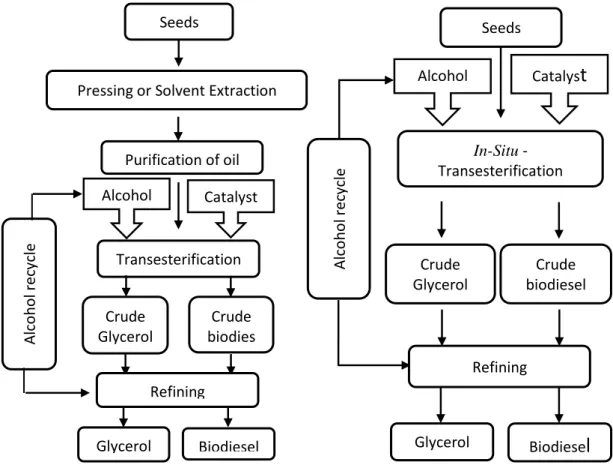
Figure 2-12. Comparison between transesterification and in-situ transesterification process ... 52
Figure 3-1. Schematic diagram of DIC unit ... 57
Figure 3-2. Persse Type 40 A, (Sweden) ... 59
Figure 3-3. Camelina oil collected from pressing ... 59
Figure 3-4. Camelina seeds solvent extraction ... 60
Figure 3-5. OHAUS MB45 Moisture Analyzer ... 61
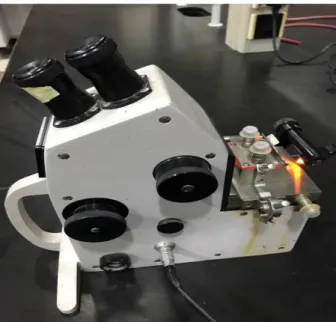
Figure 3-6. Abbe 60 refractometer ... 64
Figure 3-7. Shemadzo Gas Chromatography ... 68
Figure 3-8. Final product from TE ... 70
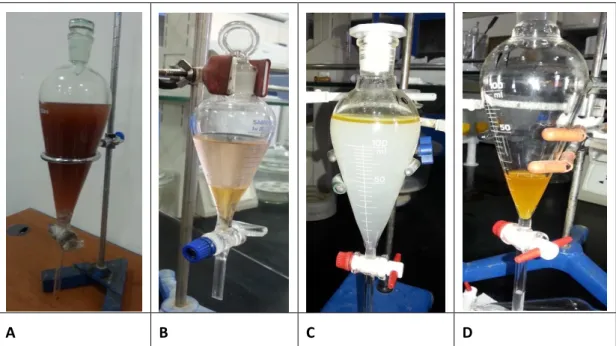
Figure 3-9. Steps of separetion the TE product mixture, A, all mixture befor separation. B, separeation of glycerol. C,washing the ester layer by warm water. D, pure Camelina ME ... 70
Figure 3-10. Conradson Carbon Residue ... 78
Figure 3-11. Oil Product Low-temperature Characteristics Meter– OPLCM, SHATOX Co. ... 80
Figure 3-12. Pensky-Martens Closed Cup Flash Point Tester ... 81
Figure 3-13. Vacuum Distillation Apparatus ... 82
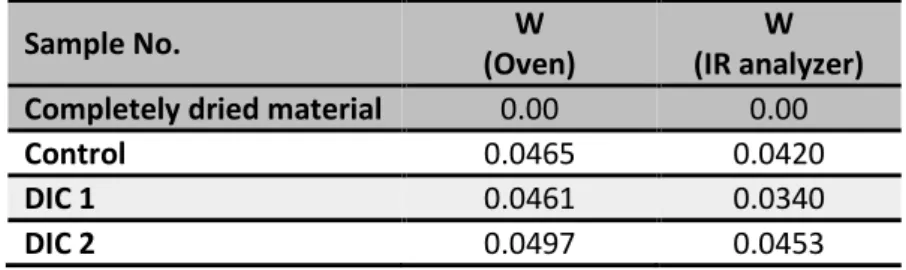
Figure 4-1. Relation between %dry basis moisture content determined by oven vs IR analyzer ... 84
Figure 4-2. Relation between dry basis moisture content for seeds and cake (g H2O/g db) ... 88
Figure 4-3. Pareto chart, main effect plots, and response surface for yield of oil extracted by pressing from DIC treated seeds ... 90
XI
Figure 4-4. Pareto chart, main effect plots, and response surface for yield of oil extracted
by solvent from pressed cake. ... 91
Figure 4-5. Evolutions of pressing yield and residual oil in the cake ... 92
Figure 4-6. Pareto chart, main effect plots, and response surface for yield of oil extracted by solvent from DIC treated seeds where T: DIC Temperature, t: DIC treatment time ... 93
Figure 4-7. GC-FID Chromatogram of Fatty Acid Methyl Esters (FAMEs) Standard: Methyl esters of; methyl palmitate, methyl stearate, methyl oleate, methyl linoleate and methyl linolenate. ... 100
Figure 4-8. GC-FID Chromatogram of FAMES produced from un-textured Camelina by transesterification ... 101
Figure 4-9. GC-FID Chromatogram of FAMES produced from DIC-textured Camelina seeds by transesterification ... 102
Figure 4-10. Pareto-charts, Main effects plot, Interaction Plot, Contours of Estimated Surface, and response surface of the effects of solvent/ oil ratio, time of reaction and catalyst concentration on biodiesel yield ... 105
Figure 4-11. TE biodiesel yield for the raw un-textured (Conventional TE process: in red) and (innovative DIC/ISTE process: in blue) from Camelina seeds oil ... 108
Figure 4-12. Pareto-charts, main effects plot, interaction Plot, Contours of Estimated Surface, and response surface of the effects of solvent/seeds ratio and catalyst concentration on biodiesel yield ... 110
Figure 4-13. ISTE biodiesel yield for the raw un-textured (Conventional ISTE process: in red) and (innovative DIC/ISTE process: in blue) from Camelina seeds ... 112
Figure 4-14. Standardized Pareto Chart (p-value=5%) of the processing temperature T and the processing time t for FAMES yield produced by ISTE of DIC textured Camelina seeds ... 114
Figure 4-15. Contours of estimated response surfaces of the effects of DIC processing temperature, T and processing time, t on FAMEs yield from DIC textured Camelina seeds ... 114
Figure 4-16. GC-FID chromatogram of ISTE-FAMEs (un-textured Camelina seeds after 30, 60, and 120 min, respectively) ... 116
Figure 4-17. GC-FID chromatogram of ISTE-FAMEs (DIC-textured Camelina seeds at 30, 60, and 120 min, respectively) ... 117
Figure 4-18. Distillation curves of Kirkuk diesel and Camelina biodiesel ... 132
Figure 5-1. Strategy usually adopted for numerous industrial applications of Instant controlled pressure drop (DIC) technologies. ... 134
Figure 5-2. Lab-scale Instant controlled pressure drop (DIC) unit... 134
Figure 5-3. Instant controlled pressure drop (DIC) industrial unit ... 135
Figure 5-4. Instant controlled pressure drop (DIC) set-up ... 135
Figure 5-5. Multi-vessel Instant controlled pressure drop (DIC) industrial unit. ... 136
XII
LIST OF ABBREVIATIONS
Abbreviation Full Name
DIC Instant Controlled Pressure-Drop
RSM Response Surface Method
YSolvent yield of solvent extraction for seeds
Ypressing yield of pressing extraction for seeds
Ymeal yield of solvent extraction for meal
T Temperature
T Time
Db Dry Basis
Wb Wet Basis
Ddb dry dry basis
ISTE In-situ Transesterification
TE Transesterification
ISTE/DIC In situ transesterification process coupled with Instant Controlled Pressure-Drop treatment
TE/DIC Transesterification process coupled with Instant Controlled Pressure- Drop treatment
Camelina s. Camelina sativa
FAMEs Fatty Acid Methyl Esters
ASTM American Society for Testing Materials
UNE-EN European Committee for Standardization
XIII
FA Fatty Acids
BC Before Christ
AD After Jesus was born
LA Linoleic Acid
ALA α-Linolenic Acid
GSL Glucosinolates
FT Fischer–Tropsch
HRJ Hydro-Processed Renewable Jet
GD Green Diesel
ISO International Organization for Standardization
HHV Higher Heating Value
GHG Greenhouse Gas
FAEE Fatty Acids Ethyl Ester
FABE Fatty Acids Butyl Ester
UAE Ultrasound-Assisted Extraction
MAE Microwave-Assisted Extraction
SFE Supercritical Fluid Extraction
ASE Acceleration Solvent Extraction
EAE Enzymatic-Assisted Extraction
TAG Triglyceride
cSt Centistoke
DoE Design of Experiment
XIV
IP Standard Test Methods of UK
DIN Standard Test Methods of Germany
AFNOR Standard Test Methods of France
AATCC American Association of Textile Chemists and Colorists
CFPP Cold Filter Plugging Point
EN Equivalent European Standard
RI Refractive Index
IN Iodine Number
SV Saponification Value
SFA Saturated Fatty Acids
USFA Un-Saturated Fatty Acids
MUFA Mono-Unsaturated Fatty Acids
PUFA Poly-Unsaturated Fatty Acids
ANOVA Analysis of Variance
CN Cetane Number
CP Cloud point
PP Pour point
FP Freezing point
1
ABSTRACT
Camelina sativa seeds (0.0420 g H2O/g db (dry basis)) moisture content were treated
by the thermo-mechanical; high temperature-short time Instant Controlled Pressure-Drop (DIC) as a texturing pretreatment step at different DIC operating parameters, followed by oil extraction process. Two different techniques of extraction of the vegetal oil, i.e. mechanical pressing and solvent extraction were carried out including the definition of the intensification routes. The DIC process showed highly positive effect on oil extraction yield. Optimizations of DIC parameters; temperature (T) and time (t) for the two oil extraction pathways were computed using Response Surface Method (RSM). The Response Surface Modeling (RSM) results predicted maximized yield of oil extraction by pressing and using solvent while lower oil extraction yield from the pressing cake using solvent. The optimum oil yield was up to 0.3153 and 0.4490 g oil/g db (dry basis) from pressing and solvent extraction respectively compared to 0.2277 and 0.368 g oil/g db, from the crude raw Camelina seeds, thus DIC allowed the yield to increase by 38% and 22%, respectively by DIC treatment at optimum operating conditions (157.7 ᵒC for 40.6 s).
The physical properties of the oils extracted were determined and compared with those reported in literatures. The results showed that the quality of the oil extracted from the DIC textured seeds was similar to that extracted from the raw seeds. The fatty acid profile of Camelina oils was determined by GC-FID (Gas chromatography – Flame Ionization Detector). The GC-FID analysis revealed that the main fatty acids content (wt. %) of the oil from un-textured Camelina seeds were; (6.15%) Stearic acid, (13.54) Linoleic acid, (16.50%) Palmitic acid, (21.83%) Linolenic acid and (32.50%) Oleic acid, compared to (6.22%) Stearic acid, (14.47%) Linoleic acid, (17.70%) Palmitic acid, (21.48%) Linolenic acid and (34.01%) Oleic acid from the DIC-textured seeds.
In the present work, an intensified way for biodiesel manufacturing was investigated. The innovative route involves coupling the texturing process by DIC with acid catalyzed transesterification (TE) and in-situ transesterification (ISTE) processes. Adequate Experimental Designs using Response Surface Methodology (RSM) were adopted to optimize and model mathematically the effect of biodiesel manufacturing variables
2
and the effect of DIC operating variables on biodiesel yield. The experimental designs were adopted after preliminary laboratory experiments.
The optimized conditions of TE of the un-textured Camelina oils were found to be: reaction time (36.6 minute), catalyst [H2SO4]/ solvent [Methanol: Toluene (90:10)] (2%
v/v), and solvent/oil ratio (17:1 v/v). The optimized conditions of TE were implemented to study the impact of DIC operating parameters; saturated steam temperature (T) and processing texturing time (t) as independent variables on the yield of biodiesel (Fatty Acid Methyl Esters) (FAMEs). The biodiesel yields from the raw and DIC textured seeds were of approximate values: 0.9991 g FMEs/g db oil (dry basis) from DIC textured seeds, compared to 0.9649 g FMEs/g db oil from raw un-treated seeds. The similar oil source may be behind the close biodiesel yields. The results of GC-FID approved the situation, such as no remarkable differences were predicted for the chemical and physical properties for the oils extracted from the raw un-textured and DIC-textured seeds.
Then optimized conditions for ISTE process for the raw seeds were estimated using RSM. The optimum operating variables were catalyst: solvent (10% v/v), and solvent/seeds ratio (50:1 v/wt.). These optimized conditions of ISTE were implemented to study the impact of operating parameters of DIC texturing using saturated steam temperature (T) and processing texturing time (t) as independent variables on the yield of Fatty Acid Methyl Esters (FAMEs) as dependent variable. The new DIC/ ISTE process resulted in acquiring a yield of 0.7731 g FMEs/g ddb (dry dry basis) compared to 0.3935 g FAMEs/g ddb from raw un-treated seeds.
The physical properties for FAMEs produced in the current work by transesterification and in-situ transesterification processes at optimum conditions for DIC-texturing for Camelina seeds were determined and compared with ASTM D 6751-09 and UNE-EN 14214 standards. The results confirmed that almost all the properties of FAMEs produced in the current work within the standards limit. An exception was detected for Iodine value, which show as a greater value than the value limited by ASTM D 6751-09 and UNE-EN 14214. The higher iodine value maybe attributed to high content of unsaturated methyl esters in Camelina biodiesel. The value of the properties of DIC- Camelina biodiesel had been compared with the values obtained by other researches.
3
The kinetics of the transformation process to biodiesel for ISTE and DIC/ ISTE were followed by Gas chromatography. Samples from the reaction pots withdrawn after (0.5, 1, 2 hours) reaction time were analyzed directly by GC-FID. The results confirmed that FAMEs produced by DIC/ISTE have higher FAMEs yield compared to those via conventional ISTE.
A comparative study of an industrial production of biodiesel using 1000 kg of Camelina seeds was performed in the current work. Conventional Transesterification TE of Camelina oil, and in-situ transesterification ISTE of un-textured raw seeds and the DIC-textured seeds resulted in great difference in biodiesel yield. An increase in biodiesel yield of about 86.56 and 155.80 kg/ 1000g is produced from TE and ISTE respectively. The findings are of potential importance from industrial point of view in term of cost effective biodiesel production.
4
1.
CHAPTER 1. GENERAL INTRODUCTION
1.1 Fossil fuels and Biofuels
Today, the vast of the energy utilized in different life sectors originates from fossil fuels, for example, petroleum, coal, and natural gas. While fossil fuels are until now being formed by underground heat and pressure, they are being consumed more quickly than they are being made. Hence, fossil fuels are considered as a non-renewable or non-sustainable fuel; that is, they are not replaced as soon as we used it. Petroleum fuels formed from a hydrocarbon as a complex mixture with a trace amount of organic compounds, for example, nitrogen, oxygen, and sulfur as well as compounds containing metallic constituents, especially iron, vanadium, nickel, and copper. The renewable energy sources such as biomass, hydro, solar (thermal and photovoltaic), wind, geothermal, marine, and hydrogen will play an important role in the future [1] and [2].
There are two schools describe the origin of petroleum fuels: the first one is, a Western school suggesting that the petroleum fuels origin is biogenic producing from the decay of organic biological substance and stored in sedimentary basins close the Earth’s surface. While the second school, Ukrainian-Russian school suggesting that the petroleum origin is abiogenic proposing that a lot of carbon found naturally in the planet, some in the form of hydrocarbons. Since the hydrocarbons are less dense than aqueous pore fluids thus it has the ability to migrate towards the up during profound break systems[3] and [4].
In general, petroleum is one of the more important substances consumed by the human at the present time. It is utilized as a major source of energy for heating, industry, and transportation and it also supplies the raw materials for the petrochemical plants to produce plastics, polymers, and many other products [5] and [6].
Despite the vast fall in price of fossil fuels, and due to consider the fossil fuels as a non- sustainable resource and its inevitable depletion feature, with addition to increase the environmental pollution day by day due to the large utilize of the low grade of petroleum oil, which liberate some amount of SOx, COx, and NOx to the atmosphere.
5
As a results, biodiesel promises to be the fuel of future due to its favorable environmental features and there have been generous increments in biodiesel production in recent years and this trend is predicted to continue, that is leaded to that the alternative fuel and bio will take a more important role as the world energy supply for future life [7], [8] and [9].
The consideration of biofuels is expanding worldwide as substitutions for petroleum-derived transportation fuels to support global warming. The expression biofuel is utilized to mean any liquid fuel produced from plant material that can be utilized as a substitute for petroleum-derived fuel [10].
The most important biofuels generated from biomass are bioethanol and biodiesel [11].
In general, there are different feedstocks and conversion technologies can be utilized in biofuel production, bioethanol mostly is produced by fermenting plant carbohydrates with yeast, it is produced from sugar or the starch fraction of plants (e.g., Sugar Beet, Sugar Cane, Corn, Cassava and Wheat), also bioethanol can be produced from lignocellulosic materials. While biodiesel produced from vegetable oils (e.g., Palm oil, Sunflower, Soybean and Rapeseed), animal fats and microorganisms, like microalgae [12] and [13].
1.2 Biodiesel
In recent years, the research on the production of biodiesel has increased significantly because of the demand for an alternative fuel which endows with renewability, biodegradability, and low toxicity. Animal fats, plant oils, microalgae oils and waste products such as, cooking oils, animal rendering, and fish processing waste have been employed as raw materials for biodiesel production. With a view to designing an environmentally and economically sustainable biodiesel production process, a proper understanding of the factors affecting the process and their relative significance is necessary [14].
Biodiesel has been defined by the American Society for Testing and Materials (ASTM) as a mixture of long-chain mono-alkyl esters from fatty acids derived from renewable resources, to be utilized in diesel engines [15]. According to the raw material used in
6
the biodiesel production, historically the process was classified into first, second, third and fourth generations.
First generation biodiesel was directly related to the main use of edible oil seeds, food crops, and animal fats [16]. Thus, during this period, it has been noted that about (95%) of biofuel worldwide was derived from edible vegetable oils such as Canola and Soybeans, and a heated debate on 'fuel vs food' has condemned the competition between fuel production and feed - food uses [17]. Consequently, first generation biofuels were associated with a number of issues resulting in greatly increasing of food crops. This problem has favored the seeking of non-edible biomass for the production of biofuels [18].
Second-generation biodiesel has been indicated to specific biomass, such as wastes and by-products. It also proposed dedicated raw materials, short rotation forests and other energy crops. Nevertheless, such biomass would also need lands in competition with food production [19] and [20]. The problems with this generation were the costly advanced technology needed to develop cost-effective conversion of biomass to fuel [19], since even the residual cooking oil requires additional processes for purification [21].
The third-generation biofuel feedstock had concerned algal biomass (especially microalgae) [22], which has a very special growth yield as compared with first and second generations. Algae are known to produce biomass faster using reduced land surface. However, production of algal biomass presents technical challenges such as additional energy consumption for the cultivation of algae (mixing, filtration, centrifugation, etc.) and dewatering [19] and [21].
The fourth generation of biofuels has inserted the concept of “cell factory”, based on studies of metabolic engineering of algae to increase the photosynthetic ability of the cell to produce more yield of fuel [23]. This 4th generation has also the advantage to
not imply competition with food nor food land. However, their actual applications in the industrial scale field stay limited because of technological barriers. Actually, such biofuel production has not been evolved to completely function in oxygenic photosynthetic organisms, and its performance has not been optimized. So, there are
7
no matter what novel fuel molecules could be made from algae, it is despairing to make an impact on the fuel market until the technology is economically feasible [24] and [21].
The eventual fate of biofuels may not depend exclusively on one generation, but rather might be a combination of the three generations to cope with increased worldwide demand because of depletion in the world’s oil resources [21].
1.3 Biodiesel Production
Since the vegetable oils can be utilized directly as biodiesel, while due to their high viscosity, lower volatility, and the reactivity of unsaturated hydrocarbon chains. Direct use of vegetable oil in diesel engines in isolation is technically not possible, leads to appear problems only after the engine has been working on vegetable oils for longer periods of time, particularly with direct-injection engines [25], [26] and [1]. example for the problems caused by the direct use of this high viscos vegetable oils and fats in diesel engine is, its leads to deposits on various engine parts with addition to several other operational problems [27].
The problems have been qualified by developing vegetable oil derivatives that approximate the characteristic and performance and make them appropriate with the hydrocarbon-based diesel fuels through different methods [28] including: Dilution [28], Micro-emulsion of oils [26] and [29], Pyrolysis of Biomass [1] and [30], Transesterification [31], [32] and [33] and in-situ transesterification [34] and [35].
1.4 Biodiesel Raw Materials
Recently, biodiesel has become more attractive because of its environmental advantages and the fact that it is formed from renewable resources [36].
Biodiesel price is directly related to the cost of the used raw materials (70-95 % of the total biodiesel cost) [16]. According to USA report for biodiesel production in 2016, mentioned that the Soybean oil remained the largest biodiesel feedstock during December 2016 with 610 million pounds consumed, also reported the others raw material which used in this production were vegetable oils such as (Canola, Corn, Cottonseed and Palm) and animal fats such as (poultry, white grease and tallow) and recycled feeds such as (yellow grease) [37].
8
Finally microalgae also can be used as a feedstock in this production [23] and [38]. Used Soybean seeds or oil has some drawbacks in biodiesel production like, high cost of its seeds and the Soybeans have only 18-20% oil content in addition to that the Soybean oil is the major edible oil in the world [39].
Jatropha curcas is another feedstock which widely used in worldwide to produce biodiesel [40] and [41], while it is not a food crop and the oil is non-edible. but it is consider as a one of poisonous crops and the most of the Jatropha which currently grown is a toxic, thus it is make the seed-cake unacceptable for use as cattle feed and may effect on a human safety hazard [39].
In the current research, the possibility of producing biodiesel from Camelina seeds have been studied. This feedstock can be classified as a new generation or a more relevant second-generation type. Camelina have been classified and selected according to several factors; Camelina can be grown in short marginal periods without being a competitor of food land since it can be used as a natural fertilizer when it is combined with edible crops on good arable land. On the other hand, life-cycle evaluations of biodiesel produced from Camelina grown under different conditions showed a reduction in energy inputs and overall greenhouse gas emissions compared to diesel, as well as other biodiesel oleaginous crops [42], [43] and [44].
Furthermore, it was reported that the optimized Camelina biodiesel respond with the ASTM D6571 and EN 14214 standards regarded to biodiesel and are comparable to those of regular diesel fuels [45] and [46].
9
1.5 Aim of the Current Study
The aim behind the current work is to establish a base for exploitation the natural renewable agro sources in Kurdistan region for production of biodiesel as alternative to fossil diesel fuel. Camelina seeds was chosen as a candidate renewable feedstock. It is a type of second generation for biodiesel, it is a non-edible crop, can be cultivated on marginal land.
An innovative technology mainly used as texturing process; the Instant Controlled Pressure Drop (DIC) was applied on the candidate feedstock for the purpose of enhancing the oil extractability and the yield of biodiesel. The impact of DIC treatment for Camelina sativa seeds on oil extraction and conversion to biodiesel throughout the conventional transesterification of the extracted oil, and in-situ transesterification of the seeds was studied using Response Surface Methodology. The optimized conditions of the conversion reactions as well as the DIC process for optimum texturing were estimated, and the corresponding mathematical models were adopted.
The extracted oils were characterized and the properties of Camelina biodiesel (FAMEs) were evaluated to identify the quality of the produced biodiesel and highlight the effect of DIC treatment on biodiesel quality.
10
2.
CHAPTER 2. STATE-OF–THE-ART
2.1 Camelina Sativa
Camelina (Camelina sativa L.) is a cruciferous oilseed plant belonging to the Brassicaceae (mustard) family with the common names false flax and gold of pleasure. Seeds of the crop have been found in archaeological excavations in Scandinavia and Europe, were revealed the existence of Camelina sativa (L.) Crantz, C.microcarpa and C.linicola in the Bronze Age (1500-400 B.C.) and Iron Age (400 B.C.-500 A.D.) [47], [48] and [49].
Camelina sativa has important agronomic traits that recommend it as a perfect production platform for biofuels and industrial feedstocks [42].
Nowadays it gained a growing interest due to its high oil content, Camelina sativa is an oilseed crop that is currently being commercially produced in the USA as a feedstock for biodiesel [50], [51], [52] and [45].
Camelina possesses a short-season crop; (85-100 days) for example, Camelina matures 21 days earlier than Flax seed, It is a promising sustainable alternative energy crop because it can be grown as an annual summer or biannual winter crop under different climatic and soil conditions with the exception of heavy clay and organic soil [45], [51] and [53].
Recently, interest in Camelina sativa has been renewed due to the fact that the crop can be grown on poorer soils that require lower inputs of fertilizers and pesticides than traditional crops (Rapeseed/ Canola, Soybeans or Sunflowers) required, it grows well in semiarid regions. Moreover, Camelina needs little water and does not compete with food crops [52] and [53].
To improve the health of the soil, Camelina sativa may be used as a rotation crop during the fallow years with wheat [54], and dryland cereals, like oats and barley, without affecting the yield of these crops. The roughly 5-7 million acres of land available through such a fallow rotation would provide a Camelina oil yield of 750-1000 million gallons per year. Yield produced of (Camelina – Soybean) and (Camelina – Sunflower) were 82% and 72% respectively of their mono cropped counterparts
11
however the net economic returns for (Camelina - Soybean) double crop were higher than Soybean alone. In a subsequent study, winter Camelina grown as double crop and relay crop with Soybean showed a similar net economic returns compared to the mono- cropped full season Soybean [42].
It is worth mentioning that the oil yield (L/ha) for Camelina, Rapeseed, Soybean and Sunflower were reported as (106-907), (965-1342), (247-562) and (500-750) [55], while the seed yields (t/ha) for Camelina, Rapeseed, Soybean and Sunflower were (0.90-2.24), (2.68-3.39), (2.14-2.84) and (1.44-1.70) respectively [55].
2.1.1 Geographical Distribution of Camelina Sativa
Camelina sativa originated in Germany and its cultivation expanding to Central Europe [56]. From the outset of 20th century up to the 1930’s Camelina sativa was planted
sporadically in France, Belgium, Holland, the Balkans and Russia. In 1950s Camelina was still planted in Sweden and it was an important crop in the USSR (Union of Soviet Socialist Republics) [48].
The popularity of Camelina waned after World War II since it was expensive and difficult to hydrogenate Camelina oil as other oilseed crops like Canola and Soybean which started gaining in popularity [57] and [43].
Camelina sativa has been traditionally cultivated in Europe as an oilseed crop to produce vegetable oil andanimal feed. There is abundant archeological proof to show it has been planted in Europe for at least 3000 years. Camelina was an important oil crop in eastern and central Europe, and has continued to be cultivated for its seed [58].
Camelina seeds were discovered in a storage vessel in Eastern Turkey dating from (700 to 900 BCE) and in Romania in the transition from the Eneolithic to Bronze Age, showing that Camelina was likely cultivated for its oil. Though its importance decreased in the Medieval Age, in general, Camelina cultivation continued in sporadically form over the years [59] and [60].
finally, it is worth mentioning that the Camelina genus includes about 10 species, only Camelina Rumelica has existed in Iraq [61].
12
2.1.2 Description of Camelina Sativa Plant
Camelina sativa, has shallow root system, it’s become woody as the plant matures and can grow to heights ranging from (30 to 80) cm [43]. Stems are generally smooth or only sparsely hairy near their base [62]. Camelina leaves are arrow-shaped, pointed with smooth edges and are (5 to 9) cm long [43]. It produces prolific small, pale yellow or greenish-yellow flowers with four petals [63].
The yellow flowers are very small (about 5 mm diameter) and self-pollination is predominant. The fruits are pear- shaped pods that contain (10–25) yellow-reddish seeds [64]. Various oilseed rape the pods are more or less shatter-proof, which makes Camelina much less weather-dependent, give rise to more consistent harvested yield [50].
Camelina seeds are very small that close to 1000 seeds weigh 1.0 g depending on the diversity and growth conditions, the color of the seeds was pale yellow-brown, turns dark-brown or reddish on ripening and under storage,
Figure 2-1 [51].
Figure 2-1. Camelina sativa seeds
2.1.3 Camelina Sativa Products
2.1.3.1 Camelina Seed Oil
The main product of Camelina sativa is the oil produced by crushing and pressing the seeds, the oil content of Camelina seeds ranged from 29.9 to 38.3% [52] and [56], however the oil values as high as 48% has been reported [43].
13
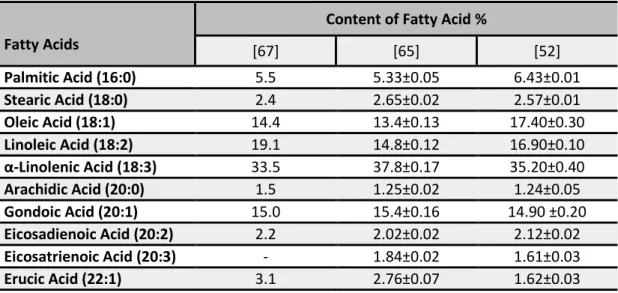
Free fatty acids (FFA) present in Camelina oil in the range between 0.55 to 0.80 % [51]. Over 50% of the fatty acids in Camelina seed oil are polyunsaturated acids is slightly higher than those published for some other vegetable oils [54]. The content of polyunsaturated fatty acids, such as linoleic acid (18:2 n-6) (LA) is about 15%, and the content of α-linolenic acid (18:3 n-3) (ALA) is about 38% [65].
while common vegetable oils such as Olive, Cornand Sunflower oils have less than 1 % of α -linolenicacid, Rapeseed or Soybean oil have about 8 %, and Linseedoil with up to 60 % is the richest source of α-linolenic acid [52].
Camelina oil differed from the others in several respects. It was the only oil that contained 11-eicosenoic acid, and in relatively high concentrations (13.6%). It was somewhat higher in erucic acid than Flax (Linseed) oil but much lower than Crambe oil [56], this acid is considered as a limiting factor in vegetable oil because it determines the oil’s applicability for human consumption. The permitted value of this acids is 5 % [52]. Table 2-1 illustrates the comparison of fatty acid percent content in Camelina from different researches.
The high degree of unsaturation renders Camelina oil highly prone to oxidation [42], in spite of that Camelina oil contains antioxidants (tocopherols, sterols, and polyphenols, which makes it more resistant to oxidation and give it a longer shelf life than Flax seed oil [53] and [66]. Tocopherol content is about 700 mg kg-1 [45].
Table 2-1. Camelina sativa content of fatty acids from different researches
Fatty Acids
Content of Fatty Acid %
[67] [65] [52] Palmitic Acid (16:0) 5.5 5.33±0.05 6.43±0.01 Stearic Acid (18:0) 2.4 2.65±0.02 2.57±0.01 Oleic Acid (18:1) 14.4 13.4±0.13 17.40±0.30 Linoleic Acid (18:2) 19.1 14.8±0.12 16.90±0.10 α-Linolenic Acid (18:3) 33.5 37.8±0.17 35.20±0.40 Arachidic Acid (20:0) 1.5 1.25±0.02 1.24±0.05 Gondoic Acid (20:1) 15.0 15.4±0.16 14.90 ±0.20 Eicosadienoic Acid (20:2) 2.2 2.02±0.02 2.12±0.02 Eicosatrienoic Acid (20:3) - 1.84±0.02 1.61±0.03 Erucic Acid (22:1) 3.1 2.76±0.07 1.62±0.03
14
It is worth mentioning that Camelina sativa composition varies with the agro technical measures (different regions and different growing conditions) used in their production. In different region, the fatty acid composition of Slovene Camelinaoil was similar, but not the same as that reported for oils from seeds of Camelina cultivars grown in the USA, Central and Northern Europe [52]. The diversity values for fatty acids percent in Central and NorthernEurope are reported in Table 2-2.
Table 2-2. The diversity values for fatty acids percent in Central and Northern Europe [52]
Fatty acids Percentages in CentralEurope Percentages in Northern Europe α-linolenic 34.9 39.7 oleic acid 14.0 16.9 linoleic acid 13.5 16.5 gondoic acid 15.1 15.8
in different climate, the fatty acids linoleic acid content recorded diverse from 12.4 ± 0.1 to 15.3 ± 0.4 in winter to summer, and α-Linolenic content recorded diverse from 40.8 ± 0.2 to 36.8 ± 0.8 in winter to summer [68].
Camelina oil is extracted from the seeds by various processes such as cold pressing [69], solvent extraction [53] or supercritical CO2 extraction [70], Camelina oil, due to
its relatively high (>50%) content in omega-3 and 6 fatty acids and low in saturated fatty acids, is considered to be a high quality edible oil [53].
Although Camelina sativa oil content of high amount of unsaturated fatty acids which make the oil highly prone to oxidation, but because of this oil also contains minor components, such as tocopherols, sterols, and polyphenols, some of which help to make the oil more resistant to oxidative rancidity, that’s lead to make Camelina oil to be more stable towards oxidation than highly unsaturated Linseed oil but less stable than Rapeseed, Olive, Corn,Sesame and Sunflower oils [53].
As reported that the oil content (wt. %) for Camelina, Rapeseed, Soybean and Sunflower were 35-45, 40-44, 18-22 and 39-49 respectively [55]. In a comparison study between Camelina oil properties with Jatropha and waste cooking oil, it was shown that the Camelina oil had more suitable properties for biodiesel owing to:
Viscosity; where the value of viscosity (mm2/s) at 40ᵒC of the Camelina oil is
15
Pour point; where the value of pour point (ᵒC) of the Camelina oil is -23, while for Jatropha oil and Waste oil are 1 and -12 respectively.
Acid value; where the value of acid value or number (mg of KOH/g) of the Camelina oil is 3.1635, while for Jatropha oil and Waste oil are 28.15 and 17.41 respectively [46].
2.1.3.2 Camelina Cake
Extraction of oil from oilseeds by pressing yield a by-product called Oil cakes/ meal which contain of 5-10 % residual oil, 13 % fiber, 5 % of minerals, some minor levels of vitamins [51] and [48], 40% protein and has a moderately-low glucosinolate (GSL) [71]. Glucosinolates are β-thioglucoside N-hydroxysulfates with a side chain and sulfur linked β-D-glucopyranose, GSLs are also anionic and sulfur-rich compounds that after hydrolysis by the enzyme thioglucosidase (called myrosinase) [72] which used as natural pesticides and as defense against herbivores; these substances are also responsible for the bitter or sharp taste of many cruciferous vegetables [58], Camelina meal, produces Soy quality meal and Canola quality oil [53].
However, the seed meal has not yet been allowed as animal feed according to Health Canada (Health Canada is the federal department responsible for helping Canadians maintain and improve their health). In Europe, Camelina sativa is listed as undesirable substances in animal feed. There is evidence that Camelina sativa seed meal used as feed 5 and 10% to broiler chickens resulted in decreased growth and feed intake, while it increased meat omega-3 fatty acid levels [73].
2.1.4 Potential Uses and Industrial Applications for Camelina
Ideally, crops grown for industrial feedstocks or biofuel purposes should not displace other crops grown for food. The agronomic features of Camelina mean that it is well convenient for this function. For example, its low water and fertilizer requirements mean it can be cultivated on marginal lands [42].
Camelina is a good alternative crop because it is, much less weather dependent, more consistent yield, and cheaper to produce than other new crops. Camelina has very low requirements for tillage and weed control [58] and [50].
16
Due to the unique fatty acid profile for Camelina, it is making it an ideal candidate for both industrial and nutritional applications. Historically, Camelina seeds were crushed and boiled to release oil used in food, lamp oil, medicinal purpose and in cosmetics purpose such as skin care products, soaps, and soft detergents [43].
The probable industrial applications of Camelina include its use in environmentally safe paintings, coatings, lubricants, resins, adhesives and low emission biodiesel fuels production. The oil extracted from Camelina seeds can be count as a good remedy for various medicinal issues. In classical medicine, it is utilized internally against stomach and intestine ulcers, digestive problems, colic attacks, and gastritis. Camelina oil can be useful for the regeneration of cells, skin flexibility and slenderness recovery. The fatty acid profile of Camelina makes it a suitable raw material for the production of cosmetic products such as; lotions, skin creams, balms, bars of soap, and lipsticks [45], [43], [74] and [51].
2.1.4.1 Human Foods
Camelina oil is reported to contain an unusually high level 188 mg/kg of cholesterol compared with other vegetable oils. Recently, cholesterol was reported to reach a level of 350 mg/kg in Camelina oil and a total sterol level of 5110 mg/kg, which is predominantly ß-sitosterol 59%. Tocopherol content in the oil was found to be 780 mg/ kg (mainly γ-tocopherol at about 92%) [54], and because of Camelina oils relatively high content in omega-3 (α-linolenic acid) fatty acids and low saturated fatty acids [53], the use of Camelina oil as a functional food oil is being developed in a variety of food products as an alternative to Linseed [54].
Camelina is being marketed in Europe as cooking oil and in salad dressing. Because the resistance to oxidation and the storage stability of Camelina oil is low at high temperatures, it is best suited for use in cold dishes and it is not suitable as deep-fat fry oil [75] and [45].
Camelina has two anti-nutritional factors, the presence of high erucic acid and glucosinolates which limits the amount of meal that can be fed makes higher dietary consumptions of Camelina oil unsafe [17] and [43].
17
2.1.4.2 Animal Feeds
In addition to use Camelina oil as an edible oil for human consumption, Camelina oil cake or meal can be used as a protein rich source as Animal feeds [45].
Defatted Camelina seeds meal include considerable levels of proteins and carbohydrates as well as a numeral of phytochemicals including glucosinolates, which could be used for additional agricultural, food and feed uses [58].
2.1.4.3 Camelina Oil as Feedstock for Renewable Jet Fuel
There are two widespread alternative fuel technologies for producing two sorts of jet fuels: Fischer–Tropsch (FT) fuels to displace the conventional kerosene fuels, and hydro-processed renewable jet (HRJ) fuels produced from hydro-processed oils [76]. Therefore, in order to enhance the cold flow properties of the fuels, isomerization to branched paraffin is decisive. Renewable jet fuels which made from vegetable oils initially requires hydro-deoxygenation identical to renewable diesel fuel. However, isomerization to branched paraffin to enhance cold flow properties is basically important in the case of jet fuel, according to ASTM D1655 (American standard for aviation turbine fuels), jet fuels must have freezing points below (-40°C). Simultaneously, paraffin is transformed to shorter-chain hydrocarbons by a selective catalytic cracking process, which leads to lowers the boiling range of jet fuel in comparison to that of diesel fuel. The resulting product is called hydro-processed renewable jet (HRJ) fuel [77] and [55].
Camelina's growing commercial prominence as a good alternative source to traditional petroleum derived jet and diesel fuels is demonstrated by a memorandum of understanding between 14 major airlines from the; United States, Canada, Germany, and Mexico announced by US-based Alt Air Fuels on negotiations to purchase 750 million gallons of renewable diesel and jet fuel derived from Camelina at Seattle-Tacoma International Airport [76].
Hydro-treated renewable jet fuel (HRJ) which derived from Camelina oil has been tested by the US military and a commercial airline and proved that this type of jet fuel satisfy stringent engine fuel and performance specifications, also reduced environmental emissions [78] and [79]. However, when Camelina based jet fuel
18
compared with petroleum based jet fuel according to a life cycle analysis study, the carbon emissions were reduced to 84% [45].
In 2009 both Japan Airlines and KLM Royal Dutch Airlines successfully flight tested with 80% blended hydro-treated renewable jet fuel derived from Camelina oil. Camelina oil was extracted and processed to remove any impurities and then modifiedto a hydro-treated renewable jet and/or a Green diesel (GD) by hydrogen [80].
Additionally, Great Plains Oil & Exploration (LLC) and the Energy and Environmental Research Center at the University of North Dakota have composed into an agreement to produce combinations of diesel, jet fuel, gasoline and propane from Camelina [55].
2.1.4.4 Camelina Oil as Feedstock for Renewable Biodiesel
Camelina is known as a promising feedstock for biodiesel production. Camelina oil was methylated according to ISO 5509 standard (Animal and vegetable fats and oils - Preparation of methyl esters of fatty acids) [81].
Nowadays a major preoccupation is the production and usage of fuels obtained from renewable and eco-friendly sources. One option is the usage of vegetable oils which have a low contain of sulfur and aromatics and are totally biodegradable [82], and in order to sustain food production, oilseed crops should be from non-human food sources [43], currently, more than 95% of biodiesel worldwide is derived from edible vegetable oils such as Soybeans and Canola, which makes the biodiesel competes for grain with livestock and other food uses [17]. Another option is the usage of cheap feedstocks, due to the cost of feedstocks accounts for 75-85% of total biodiesel production cost [83]; for example, Jatropha curcas are require some irrigation for optimal growth and need to be supplemented with fertilizers to produce seed oil if grown on marginal lands [42], which makes them expensive and unattractive for biodiesel production. Therefore, it is important to develop non-edible and/or low-cost oil crops that meet certain requirements, including low agriculture inputs, high oil yield, and favorable fatty acid compositions, to increase the overall viability of biodiesel production [83].
The methyl ester produced from Camelina oil has properties similar to Rape methyl ester, with the exceptionof its higher iodine value which protects against more rapid
19
deterioration of the lubricating oil [45]. A vehicle test in whichhigh levels of lubricating oil dilution occurred gaveno indication of any adverse effect of the high iodinevalue of the methyl-ester on lubricating oil properties [84]. Also it was found that the fuel properties (such as kinematic viscosity (40°C), flash point, cloud point, cold filter plugging point acid value, cetane number, and oil stability index) of Camelina biodiesel are similar to Sunflower and Soybean biodiesel properties [43].
Since Camelina has high amount of erucic acid and glucosinolates, it is less competitive than other feed and food crops [17]. Also, Camelina has very low requirements for tillage and weed control. This could potentially allow this unique vegetable oil to be produced more cheaply than those from traditional oil crops such as Rapeseed, Corn, and Soybean [58]. In addition, Camelina has negligible potential as an invasive weed if grown in a large scale as biodiesel crop, all that makes Camelina seeds, an attractive crop for biofuels and many other industrial applications [46] and [43].
Camelina sativa biodiesel was evaluated as a viable biofuel alternative, a comprehensive characterization was performed based on the European and the American standards (EN 14214 and ASTM D6751) [85]. It has been shown that iodine value, cetane number and oxidative stability of Camelina oil derived biodiesel did not meet the quality specifications stipulated in the EN 14214 and ASTM D6751 standards [80]. However, It has been demonstrated that optimized biodiesel from Camelina met the related ASTM D6571 and EN 14214 biodiesel standards and can be used for diesel engines as qualified fuel [46]. Also, It was revealed that the fuel properties of biodiesel produced from Camelina sativa feedstocks meet the ASTM biodiesel standards and are comparable to those of the regular petroleum diesel fuels [45]. Table 2-3 shows the Camelina biodiesel properties compared with the properties of biofuel standard and petrodiesel fuel.
Table 2-3. Properties of Camelina methyl Ester (FAMEs) and regular diesel [86]
Properties FAMEs Biofuel Standard ASTM D6751-08 Regular Diesel Testing Methods Specific gravity 0.88 to 0.90 0.87 to 0.90 0.85 ASTM D287 Viscosity (mm2/s) at 40ᵒc 4.25 to 4.36 1.9 to 6.0 2.6 ASTM D445
20
Cetane number 47.60 to
48.75 47 min 46 ASTM D613
pour point (ᵒc) -10 to -8 -15 to 10 -20 ASTM D97
The high amounts of poly unsaturated fatty acids in Camelina oil, causes its weak oxidation stability and the highest potential to form coke during present a drawback for Camelina sativa for biodiesel application. Therefore, to make Camelina sativa a good row material for use in biofuels it is necessary to reduce the high degree of unsaturation and the molecular weight of the oil [43] and [53]. While, the content of polyunsaturated acids, is the strongest factor influencing the auto-oxidation intensity of fatty acid esters [87].
The heat of combustion (calorific value) measures the energy content in a fuel. The ultimate analysis of a vegetable oil provides the weight percentages of carbon, hydrogen, and oxygen. The higher heating values HHV of vegetable oils ranges from 37.27 to 40.48 mJ/kg. The HHVs of various vegetable oils vary by <9%. The increase in heat content results from a high increase in the number of carbons and hydrogens, as well as an increase in the ratio of these elements relative to oxygen. A decrease in heat content is the result of fewer hydrogen atoms (i.e., greater unsaturation) in the fuel molecule [88], [89] and [1]. Table 2-4, shows calorific value for the types of fuels.
Table 2-4. Calorific value for type of fuels
Type of Fuels Calorific Value
(MJ/kg) References
Regular diesel 42 [90]
Camelina oil 44.50-46.50 [90]
Camelina biodiesel from TE process by
heterogeneous metal oxide catalysts 45.05-46.15 [90]
Camelina biodiesel at supercritical methods 44.97-45.124 [91] Camelina biodiesel at subcritical methods 45.01-45.18 [91]
Camelina Butyl Ester 39.97 [92]
Camelina Ethyl Ester 39.60 [86]
Camelina Methyl Ester 39.26
45.05-46.15
[86] [46]
Jatropha Methyl Ester 39.65-41.63 [46]
Waste cooking Methyl Ester 39.19 [93]
The calorific values of Jatropha, Camelina, and waste cooking oil esters were lower than that of diesel because of their oxygen content. The presence of oxygen in the
21
biodiesel helps for complete combustion of fuel in the engine [46]. Also, the use of alcohol with longer alkyl chain is favorable to calorific value [86].
For Camelina oil to be better suited for biodiesel, genetic engineering or conventional plant breeding would be required to reduce the high degree of unsaturation and molecular weight. Until that is achieved, however, blending or hydro-treating Camelina oil appear to be alternative strategies for developing it for biodiesel [94]. Pecchia and coworkers reported for the first time a process to improve the Camelina oil quality and its oxidative stability by hydrogenated the methyl esters selectively using a non-toxic and non-pyrophoric heterogeneous copper catalyst (Cu/SiO2 or
Cu/Al2O3). This results showed that both catalysts are able to reduce the linolenic acid
content below 1% while selectively increasing the monounsaturated one [95]. In general biofuels are prone to more rapid oxidation compared with fossil fuels due to its chemical composition and structure, however, oxidation rate depends on the concentration of natural antioxidants in biofuels and storage conditions (temperature, light, and humidity) [87]. Camelina seeds and raw oil have high concentrations of tocopherol, an anti-oxidant that inhibits rancidity and allows long storage without degradation [79].
Further, life cycle assessments of biodiesel produced from Camelina grown under different conditions showed reduced energy, non-renewable energy inputs and overall greenhouse gas emissions compared to diesel fuel, as well as biodiesel from other oilseed crops, making Camelina more environmental friendly substitute than other biofuel crops [42].
Krohn and Fripp studied the environmental feasibility of Camelina biodiesel and revealed that greenhouse gas (GHG) emissions and fossil fuel use have been reduced up to 40–60% by Camelina biodiesel as compared to petroleum diesel [96]. As well, Camelina biodiesel has been demonstrated to have better performance in decreasing GHG emissions than traditional Soybeans and Canola biodiesel [73].
It is important to mentioned that the cold pressed filtered neat oil prepared from Camelina seeds produced greater power output (43.3 kW) compared with (38.5 kW) for mineral diesel fuel [43].
![Table 2-2. The diversity values for fatty acids percent in Central and Northern Europe [52]](https://thumb-eu.123doks.com/thumbv2/123doknet/14502658.719549/30.892.213.730.347.476/table-diversity-values-fatty-percent-central-northern-europe.webp)
![Figure 2-10. Mechanism for homogeneous acid catalysis in esterification and transesterification [230]](https://thumb-eu.123doks.com/thumbv2/123doknet/14502658.719549/63.892.162.852.687.1044/figure-mechanism-homogeneous-acid-catalysis-esterification-transesterification.webp)