Aquatic Microenvironments in Bacterial Ecology and Diversity
byDana E. Hunt B.A. Biochemistry
B.A. Environmental Engineering Rice University, 2001
Submitted to the department of Civil and Environmental Engineering in Partial Fulfilling of the Requirements for the Degree of
Doctor of Philosophy
in Civil and Environmental Engineering at the
MASSACHUSETTS INSTITUTE OF TECHNOLOGY February 2008
C 2008 Massachusetts Institute of Technology.
All rights reserved.
Signature of Author
Department of Civil and Environmental Engineering October 12, 2007 Certified by_
6~VY
Martin F. PolzAssociate Professor Thesis Supervisor Accepted by
el Daniele Veneziano
Chairman, Departmental Committee for Graduate Students
AftCHm/p
OF TEOHNOLOGAquatic Microenvironments in Bacterial Ecology and Diversity
byDana E. Hunt
Submitted to the Department of Civil and Environmental Engineering on October 12, 2007 in Partial Fulfillment of the
Requirements for the Degree of Doctor of Philosophy in the Field of Environmental Biology
ABSTRACT
Molecular surveys have revealed tremendous bacterial diversity in the world's oceans; yet how do these diverse bacteria with the same essential nutrient requirements co-exist in the same environment? This study examines the role of aquatic microenvironments in generating bacterial diversity: closely related organisms may co-exist in the same
environment without competing for resources by a combination of habitat, metabolic, and behavioral differentiation. This hypothesis has been approached from several angles: (i) Within the bacterial family Vibrionaceae is there evidence for microenvironmental specialization or functional differentiation? (ii) Is there small scale clustering of bacteria around phytoplankton in the coastal ocean? Microdiverse clusters (< 1% 16S rRNA gene divergence) of Vibrionaceae were found to be differentially distributed between
zooplankton-enriched, particulate, and planktonic water column microenvironments. However microhabitat preferences may not correspond to metabolic capabilities; chitin metabolism was observed to be a near ubiquitous metabolic characteristic of the
Vibrionaceae, yet does not appear to be linked to colonization of chitinous zooplankton or particles. Finally, the microscale patchiness of bacterial cells was examined over an annual cycle, revealing seasonal variation and a positive correlation with eukaryotic cell number, suggesting that bacteria may cluster in the nutrient-rich microzones around algae in the environment. This study seeks to answer several fundamental questions about marine bacterial populations: how do closely related species co-exist in the same environment, do bacteria adapt to distinct microscale environments and how important are these microenvironments to bacterial productivity.
Thesis Supervisor: Martin F. Polz
ACKNOWLEDGEMENTS:
I would first like to thank my advisor Martin Polz, for his continual support. As my project evolved and shifted Martin allowed me to explore intellectually stimulating ideas, even when they were quite different from what I had originally intended on studying. His critical thinking and mentorship have changed the way I think about science. I would also like to thank my committee members: Ed Delong, Daniele Veneziano, Roman Stocker and Eric Alm, each of whom contributed to my intellectual journey outside of formal committee meetings, sometimes even at the lab bench or
computer screen.
My lab mates over the years have made the crazy schedule, frustrations, and joys of my thesis research so much more rewarding. Special thanks to Stefan Bertilsson, Silvia Acinas and Vanja Klepac-Ceraj as my "lab mommies" setting me on a path to scientific competence when I was a clueless first year student. Field work wouldn't have half so enjoyable without the company of Janelle Thompson, Luisa Marcelino and Sarah Preheim. My bioinformatics incompetence was mitigated by valuable collaborations with Dirk Gevers, Lawrence David and Eric Alm. For general lab entertainment the contributions of Ramahi Sarma-Rupavtarm, Chanathip Pharino, Jennifer Benoit, Hong Xue, Ben Kirkup, Jenn Carr, Hans Wildschutte, and Yan Boucher cannot be beat. The undergraduate researchers I supervised, Nisha Vahora and Marion Dumas, were both excellent scientists and kept me on my toes with their insightful questions. The
Chisholm, Delong, and Stocker labs were great resources for "borrowing" supplies and equipment or just hashing out ideas.
Further thanks to my friends and family who have put up with my scientific obsession for the last six years even when they didn't understand what I was doing, why I was doing it, or why anyone else would possibly care once I got results. And of course my significant other, Zackary Johnson, contributed both scientific and emotional support. I value his clear thinking and role as a "sounding board" for all of my ideas and late-night discoveries.
TABLE OF CONTENTS: Abstract 3 Acknowledgements 5 List of Figures 8 List of Tables 10 Chapter 1: Introduction 11
Chapter 2: Adaptation of microdiverse bacterial clusters to distinct marine 39 microenvironments
Chapter 3: Conservation of the chitin utilization pathway in the Vibrionaceae 71 Chapter 4: Microscale spatial coupling of phytoplankton and bacteria in the 111 coastal ocean
Chapter 5: Conclusions and future work 141
Appendix 1: Evaluation of 23S rRNA PCR primers for use in phylogenetic 155 studies of bacteria diversity
LIST OF FIGURES: Chapter 1
Fig 1. Temporal and spatial extent of micro- and meso-scale features 15 affecting the growth and productivity of marine bacteria
Chapter 2
Fig 1. Alternate explanations for the distribution of bacterial clades 58 between seawater size fractions
Fig 2. Depiction of site and method of in situ sampling of bacterial 59 microenvironmental association
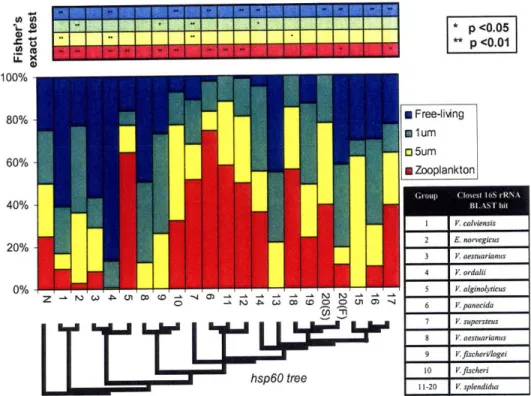
Fig 3. Phylogenetic relationships of Vibrionaceae isolates 61 Fig 4. Testing clades for seasonal association 65 Fig 5. Testing clades for ecological association 66 Fig 6. Summary of vibrio clades and associations with 67
microenvironments
Fig 7. Comparison of phylogenies for closely related isolates 69
Chapter 3
Fig 1. Schematic of the chitin catabolic cascade in V. cholerae 89 Fig 2. Distribution of chitin pathway genes among Vibrionaceae 90
genomes
Fig 3. Phylogenetic relationships of partial chiA gene sequences from 91 Vibrionaceae and related organisms based on maximum
likelihood analysis.
Fig S1. Phylogenetic relationships of Vibrionaceae genomes and 106 chitin-metabolizing isolates, for which no chiA gene sequence was obtained, based on maximum likelihood analysis of the concatenated partial sequences of hsp60, mdh and adk genes.
Chapter 4.
Fig 1. Seawater sampling scheme to capture environmental variability 130
at multiple spatial scales.
Fig 2. Microfluidic channel design 131
Fig 3. Coefficient of variation (CV) for 1 ptl samples measured over a 132 seasonal cycle.
Fig 4. Comparison of organic and inorganic nutrient concentrations 133 with the coefficient of variation of prokaryotic cell abundance
(1 pl samples).
Fig 5. Coefficient of variation of prokaryotic cell abundance in 136 1 pl1 samples versus the average number of eukaryotic cells for
the same sampling event.
Fig 6. Comparison of average cell concentration of prokaryotes and 137 eukaryotes in the same samples.
Fig 7. Chemotaxis of bacteria to phytoplankton extracellular products. 138 Fig 8. Motile Roseobacter Y41 attached to heat-shocked cells of the 139
diatom T. weissflogii. Appendix 1
Fig 1. Relative frequency distribution of major phylogenetic groups 159 detected among the environmental sequences from a 16S rRNA library (black) and 23S rRNA library (grey)
LIST OF TABLES: Chapter 1
Table 1. A review of the literature on the partitioning of bacteria diversity between aquatic microenvironments
Table 2. Spatial variability in bacterial abundance
Chapter 2
Table 1. Physical and nutrient conditions of bulk samples
Chapter 3
Table 1. Growth of vibrio isolates on different forms of chitin an
Table Table
d GlcNAc
S 1. The full names and accession numbers of genomes analyzed
S2. Detailed listing of the genes present in each chitin-related
gene family
Chapter 4
Table
Appendix 1
1. Comparison of cell counts for 10 ml and 1 ll samples
Table 1. Percentage mismatches to the 23S rRNA gene dataset for primers designed in this study.
Table 2. Percentage mismatched to the 23S rRNA gene dataset for previously described universal primers
129
159
Chapter One
INTRODUCTION
This thesis investigates the importance of aquatic microenvironments in bacterial productivity and diversity. Aquatic microenvironments are here defined as local resource inhomogeneities on scales within the dispersal range of individuals, implying that
organisms can actively seek out these environments. While the importance of mesoscale oceanographic features has been established for metazoans, microenvironmental features may be similarly important for bacteria, as they are at the scale at which bacteria can sense and respond to their surroundings. There are two major types of microscale interactions, those involving (i) colonization of a resource and (ii) motility-driven clustering around sources of dissolved organic matter (DOM). Here, I review these two adaptive strategies using specific examples: bacterial attachment to particles and the chemotaxis of heterotrophic bacteria toward phytoplankton, with emphasis on the roles these microenvironments play in bacterial productivity and diversity.
The ability to physically separate particle-attached and free-living bacteria has revealed differences between these two populations in cell size, abundance, diversity, and activity. The relationship of heterotrophic bacteria with phytoplankton also bears further investigation as photosynthesis is the major source of bacterial carbon in the epipelagic. Yet, the spatial component of phytoplankton- bacterial interactions in the ocean remain unclear. Evidence of ecological specialization among microdiverse (>99% rRNA
similarity) bacteria has been observed for both large and small-scale environmental traits and compartments, suggesting that closely related bacteria partition resources in the environment.
Oceanographers historically treated the oceans as homogeneous at scales smaller than kilometers, yet small resource-rich patches could allow more efficient foraging and explain the high productivity of nutrient-depleted waters (McCarthy & Goldman 1979, Azam & Ammerman 1984, Alldredge & Cohen 1987, Blackburn et al. 1998). Recently,
mesoscale features, which persist on the scale of kilometers and days, have been incorporated in oceanographic modeling to explain nutrient and energy fluxes
(McGillicuddy et al. 1998), patchiness in surface chlorophyll values (Doney et al. 2003) and observed zooplankton abundance (Bochdansky & Hemdl 1992, Davis et al. 1992, Folt & Bums 1999). One might ask if bacteria also experience environmental patchiness, potentially on the microscale (micrometers to centimeters) at which they can sense and respond to their environment (Figure 1). Although the extent and importance of these microscale features have been relatively poorly studied, preliminary evidence suggests that adaptation to microenvironments is an important ecological strategy in the marine
month
wee k
clay i
hour m
minute
Inm Ilpm Imm I m I km 100km
Figure 1 Temporal and spatial extent of micro- and meso-scale features affecting the
growth and productivity of marine bacteria. The region to the right and above the arrows
indicates features that are captured by standard oceanographic sampling methods
(modified from (Dickey 1991, Seymour 2005)). Reprinted from (Polz et al. 2006).
Types and sources of nutrient-rich microenvironments in the ocean
Microscale nutrient patches may be hotspots of bacterial activity allowing bursts
of uptake and reproduction that drive much of the total bacterial productivity in a
background of low bulk nutrient concentrations (Giovannoni & Stingl 2005). There has
been a renewed interest in assigning bacteria roles as either oligotrophs or copiotrophs/
"opportunitrophs" i.e. those which efficiently utilize low levels of background nutrients
or those which can exploit nutrient patches (Poindexter 1981, Giovannoni & Stingl 2005,
Polz et al. 2006). Patch-specialized bacteria respond to nutrient pulses with increased uptake and behavioral adaptation, allowing a rapid cycling of resources (Polz et al. 2006). This patchy environmental landscape can be generated by a wide range of sources,
including "sloppy feeding" or excretion by zooplankton, lysed cells (Azam & Cho 1987, Fuhrman 1999), fecal pellets (Jacobsen & Azam 1984), detrital particles, eukaryotes, and marine snow (Kiorboe et al. 2002) (Figure 1).
Difficulty in determining the role of these microscale features stems partially from inherent variation in the composition, persistence, and size of these
microenvironments (Figure 1). For example, marine snow is defined operationally as particles larger than 0.5 cm; however, these aggregates can contain multiple constituents ranging from algae engaged in oxygenic photosynthesis to anaerobic fecal pellets
(Alldredge & Cohen 1987, Turner 2002). Besides providing nutrients to the surface-attached bacteria which degrade complex polymers, marine snow, as well as other particles, may release a plume of dissolved organic matter (DOM) that can be used by free-living bacteria (Kiorboe & Jackson 2001). The influence of these particles is also mediated by their persistence which can be highly variable, where a photosynthesizing algal aggregate can be highly buoyant, fecal pellets fall hundreds of meters per day to the ocean floor, removing their nutrients from the pelagic food web (Turner 2002). The quality of particulate matter may also change over time; with depletion of key nutrients
(nitrogen, phosphorous, etc.), microhabitats may become less attractive to bacteria
(Jacobsen & Azam 1984, Smith et al. 1992). Colloids, sized between 1 and 1000 [lm, are small enough to remain suspended over long periods of time (Wells 1998); although they aggregate into larger particles that are subject to gravity (Chin et al. 1998). However,
prior to aggregation they may be too small to support a bacterial population (Chin et al. 1998).
Bursts of DOM produced by photosynthesizing algae or lysing cells (Figure 1) are then subject to dissipation in the aquatic environment, resulting in ephemeral
microenvironments. While these microhabitats are transient, they potentially provide an important stimulus for chemotactic bacteria, which require dissolved organic matter to bind chemoreceptors. Such dissolved monomers could allow bacteria to localize in nutrient-rich patches. Each patch may be chemically distinct; as the materials released from lysed cells, phytoplankton, or zooplankton are likely highly dependent on the species or growth state of the organism. Moreover, the fluid environment limits the lifetime of nutrient patches, with diffusion and turbulence acting to disperse patches of dissolved organic matter (Moeseneder & Herndl 1995).
The two primary means by which bacteria make use of microenvironments in the ocean are colonization/attachment and transient clustering mediated by chemotaxis and motility. The same resource may be used by bacteria employing both methods; marine snow may be both colonized by bacteria and produce a wake of dissolved organic matter used by chemotactic bacteria (Moeseneder & Herndl 1995). Additionally, chemotaxis may be used to locate and colonize particles.
Bacterial attachment to particles
Particles are one of the best studied aquatic microenvironments since attached bacteria can be physically separated from free living cells, and thus particles' roles in biogeochemical cycling and bacterial productivity has been extensively studied. A large
fraction work has focused on marine snow due to its potential for deep-sea carbon export (Alldredge & Silver 1988, Turner 2002). However, smaller particles are orders of
magnitude more abundant than marine snow; and such particles are varied in composition including proteins (Long & Azam 1996), transparent exopolymers, colloids (Chin et al.
1998), and other recalcitrant macromolecules.
Evidence suggests that particles represent an important resource for bacteria: a significant fraction are colonized (Long & Azam 1996), bacterial density is higher than in seawater (Caron et al. 1982), and up to half of the total water column community can be particle attached (Crump et al. 1998). Further, attached bacteria can constitute 90% of bacterial biomass production (Crump et al. 1998), suggesting particles provide a
significant nutrient resource for bacterial cells (Alldredge 1979, Hebel et al. 1986, Long & Azam 1996). Additionally, attached bacteria have higher per cell levels of hydrolytic enzymes (Karner & Herndl 1992, Smith et al. 1992). These extracellular enzymes convert particulate matter to DOM, not all of which is taken up by attached bacteria, generating a nutrient plume that can be utilized by free-living organisms (Kiorboe & Jackson 2001) and retaining organic matter in the upper ocean.
The majority of studies have observed differences between attached and free-living bacteria (Table 1). However, even in the Flavobacteria, which are thought to be particle specialists, no phylogenetic difference was observed between free-living and attached communities, although they were more abundant in the particle-attached size fraction (Abell & Bowman 2005). While some studies have found certain groups only in particle-attached fractions (Huber et al. 2003), this may be an artifact of limited sample size rather than reflecting a true absence in the free-living fraction. Instead of existing as
a distinct population, particle attached bacteria are likely a subset of the free-living population, as attached bacteria shed offspring which then colonize new particles. Additionally, particle attached bacteria may display distinct physiologies; for example, particle derived isolates are more likely to have antagonistic interactions with other bacteria (Long & Azam 2001a).
Table 1. A review of the literature on the partitioning of bacterial diversity between aquatic microenvironments
tPn, 1~4Al;t*-•n•an aDrtirlc Clone Vc (An~iac at al 1000 I
Rnrteri n jan lranclsco PnrticrlP TnrMrE (1HolDaugn et al. I
,!- nr n v. (1vlioeseneaer et at.
Bacteria Coastal ocean Marine snow libres
libraries
Yes (DeLong et al. 1993)f '"'t~rr^- UVIIVI VTUV
1 DGGE = denaturing gradient gel electrophoresis; T- RFLP= terminal restriction fragment length polymorphism; FISH= fluorescence in situ hybridization; MLSA=
IL~lu. Ar-.. n- -1 __
I^n^-- ,,-
XT•_ I
-multilocus sequence analysis; ERIC-PCR= Enterobacterial Repetitive-Element Intergenic Consensus Sequence PCR; Phage= phage sensitivity assays; FODC=fluorescent
oligonucleotide direct count.
Bacterial clustering around nutrient point sources
Bacterial clustering around small nutrient patches may be responsible for a large fraction of bacterial activity. For example, bacterial productivity decreased by 12-20% when water samples were artificially mixed suggesting that nutrient patches enhance productivity over an even distribution of the same total nutrients (Moeseneder & Herndl 1995). Microbial adaptation to large changes in resource concentrations is also evident in the multiphasic kinetics for the uptake of D-glucose and amino acids (Azam & Hodson
1981, Fuhrman & Ferguson 1986, Ayo et al. 2001), suggesting that either individual bacteria have multiple transport systems or taxa are optimized to different substrate concentrations. In either case, marine assemblages are adapted to order of magnitude variations in nutrient levels and can increase uptake under pulsed nutrient conditions (Azam & Hodson 1981, Fuhrman & Ferguson 1986, Ayo et al. 2001).
Bacterial aggregation has been observed in seawater enrichments where patches of bacteria hundreds of micrometers in diameter developed around microfeatures such as lysed cells (Blackburn et al. 1998); other potential transient sources of dissolved organic matter include excretion events and sloppy feeding by metazoans as well as
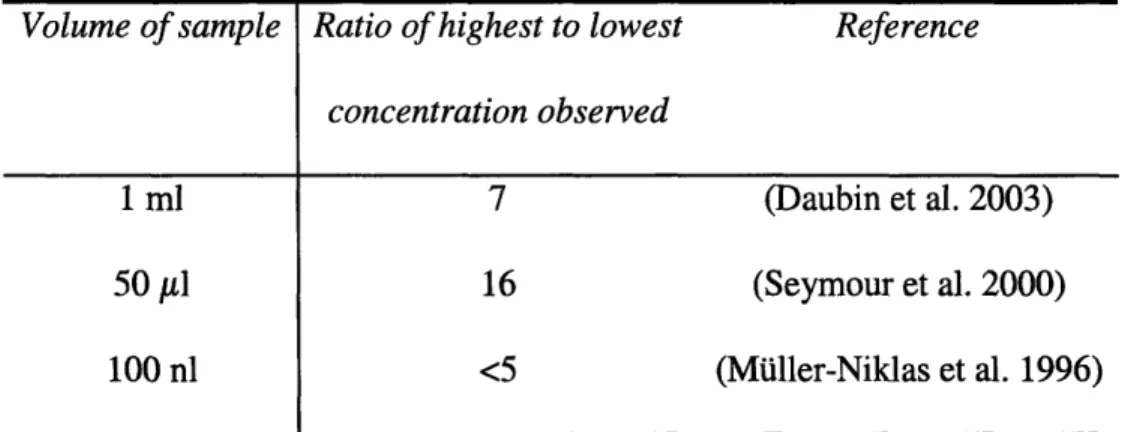
photosynthate released by phytoplankton. Microscale variability in bacterial cell numbers in environmental samples suggests that patchy resources induce clustering (Table 2); such clustering can also be artificially generated by adding a nutrient source
(Blackburn et al. 1998, Krembs et al. 1998a, Krembs et al. 1998b). These in situ observations of aquatic bacterial patchiness at the millimeter to centimeter scale found abundance differences of up to 16-fold (Table 2); however, these bacterial patches are too large to have been formed by chemotactic aggregation which occurs on the scale of hundreds of micrometers (Blackburn et al. 1998). Explanations given for these larger-scale events include differential growth in higher nutrient environments (Duarte & Vaqu6 1992, Andreatta et al. 2004), turbulent resuspension of particles/ bacteria (Seymour et al. 2000, Andreatta et al. 2004, Seymour et al. 2005), attachment to particles such as marine snow (Seymour et al. 2004), and differential feeding by predators (Seymour et al. 2000). Using flow cytometery, bacterial populations can be binned by size and DNA content; it appears that large, high-DNA content bacteria, presumably the most active, are the most numerically patchy (Andreatta et al. 2004, Seymour et al. 2004). Although the extent and importance of chemotaxis-driven clustering is not yet known, bacteria appear to be
adapted to use of aquatic microenvironments.
The costly energetic investment in motility (Mitchell 2002) implies that bacteria derive a substantial energetic benefit from microenvironments. Most marine isolates display a high-speed "run-reverse" motility, which may allow enhanced response to nutrient pulses that dissipate in tens of seconds (Mitchell et al. 1996, Blackburn et al.
1998), and can reach speed of -400rm/second (Barbara & Mitchell 2003a).
Contradicting the assumption that a low fraction of bacteria are motile, up to 60% percent of cells have been observed to swim (Mitchell et al. 1995, Mitchell 2002). Additionally, marine assemblages have demonstrated chemotaxis towards glucose and amino acids, suggesting that transient nutrient point sources are important in these systems (Fenchel
2001, Barbara & Mitchell 2003b). Older marine chemotaxis models suggesting that bacterial motility is energetically unfavorable should be reconsidered in light of the high speeds, novel search strategies, and sensitive chemotaxic receptors of marine bacteria (Kiorboe & Jackson 2001).
Table 2. Spatial variability in bacterial abundance suggested by ratio of the highest observed concentration of bacteria to the lowest bacterial cell count for each study.
Volume of sample Ratio of highest to lowest Reference
concentration observed
1 ml 7 (Daubin et al. 2003)
50 #il 16 (Seymour et al. 2000)
100 nl <5 (Mtiller-Niklas et al. 1996)
Patchy resources may be preferentially exploited by certain groups of bacteria with capabilities for motility and chemotaxis (Jackson 1987, Mitchell 2002, Barbara & Mitchell 2003b, Polz et al. 2006). As with studies of particle-attached and free-living populations (Table 1), there is some controversy about whether bacterial types vary over
small spatial scales. Differences in bacterial diversity between microscale seawater samples may reflect the influence of various microhabitats including clustering around point sources, attachment to particles, sampling error, or mixing of water masses with distinct origins. Denaturing gradient gel electrophoresis (DGGE) is used to obtain
fingerprints of ribotype diversity and found variable patterns of diversity in 1 pl (Long & Azam 2001b), but not in 25 pl samples (Kirchman et al. 2001), suggesting that the
bacterial phylogenetic patchiness scale occurs between these two volumes. Bacteria exhibited enhanced diversity in the presence of particles (Long & Azam 2001b), but interpretation of these banding patterns as indications of distinct populations clustering remains tenuous. As DGGE captures only the most abundant ribotypes (Long & Azam 2001b) and PCR exhibits stochastic variability, the significance of variations in banding patterns are difficult to assess (Kirchman et al. 2001). In order to gain an accurate picture of community structure in small scale samples, experiments should measure both
bacterial diversity and the relative abundance of these sequence types.
Coupling of phytoplankton and prokaryotes
The region surrounding photosynthesizing algae has been proposed as a high productivity microenvironment for bacteria, yet there have been few studies that link prokaryotes and eukaryotes in a spatially explicit manner. Bulk coupling of
photosynthesis and bacterial production is well established; primary production is thought to be the main driver of bacterial metabolism in the photic zone of the pelagic, and
bacterial abundance is positively correlated with chlorophyll levels (Gasol & Duarte 2000, Li et al. 2006). Although heterotrophs depend on carbon fixed by phytoplankton, they concurrently compete with them for macronutrients such as nitrogen and
phosphorous. In nutrient-limited culture, bacteria out-compete algae for phosphorous (Rhee 1972), resulting in nutrient-starved algae that release more DOM (Guerrini et al.
and heterotrophs become co-limited by phosphorous and carbon, thus limiting their abundance relative to the algae (Mindl et al. 2005). Relationships with bacteria can also be beneficial for algae, vitamin B12-requiring phytoplankton can obtain this compound through a symbiotic relationship with bacteria (Croft et al. 2005); and although the
function bacteria serve is unknown, it is difficult to culture phytoplankton axenically. Moreover, algae may act on bacterial physiology through the release of cAMP, a metabolic regulator in bacteria that increases the production of catabolic enzymes, potentially making additional nutrients available to the algal cells (Azam & Ammerman 1984). While large scale coupling of bacteria and phytoplankton is driven by carbon fixation, finer scale interactions may include elements of mutualism, commensalism, and parasitism.
In order to gain better access to released photosynthate, bacteria may cluster around phytoplankton; Bell and Mitchell (1972) first suggested the importance of the "phycosphere", the region surrounding a photosynthesizing alga analogous to the rhizosphere of plants. Up to 60% of photoassimilated carbon can be leaked or released by algae (Hellebrust 1974), and this material is thought to be a major source of organic
matter used by bacterioplankton (Lancelot 1979, Azam & Cho 1987). The extent to which bacteria cluster around algae remains controversial with models suggesting outcomes ranging from no clustering (Jackson 1987) and clustering only on specialized low-turbulence regions (Mitchell et al. 1985) to estimates that at any given time up to 20% of chemotactic bacteria reside in the phycosphere (Bowen et al. 1993).
Yet clustering of bacterioplankton around algae has not been observed in situ. In order for chemotaxis-driven bacterial patchiness to occur, several conditions have to be
met: a fraction of the population has to be actively motile, chemoeffectors have to be spatial localized, and samples at the appropriate spatial scale must be examined. In previous assays looking at clustering, the sample sizes have been either too large (Table 2) or did not find an association. For example, there was no bacterial clustering observed in either natural or algae amended (to 1000 cells/ml of Chaetoceros muelleri) seawater samples (Miiller-Niklas et al. 1996). Possible explanations for this finding are that the majority of the bacterial cells were non-motile or the algae were not a good
chemoattractant. A lag in induction of bacterial motility may have initially limited clustering in another study, where bacterial patchiness was observed at the 100 p.m scale only several hours after amendment with lysed diatoms (Krembs et al. 1998a). Further, this patchiness was not associated with the distribution of algal cells; a potential
explanation for this observation is that algal nutrients indirectly stimulated patchiness by up-regulating motility or shifting the bacterial population to more motile phylotypes (Krembs et al. 1998a). These results suggest that while bacteria may cluster around phytoplankton in aquatic systems, this association may not be a general phenomenon perhaps occurring only when specific conditions are met.
Additionally, phytoplankton exert a control on the phylogenetic composition of the bacterial population, presumably through the quality and quantity of organic matter produced (Fandino et al. 2001, Schtifer et al. 2002, Pinhassi et al. 2004, Grossart et al. 2005, Grossart et al. 2006, Kent et al. 2007). In the lab, phytoplankton strains appear to maintain specific bacterial populations in co-culture (Grossart et al. 2006). Certain groups such as the Roseobacter appear to be adapted to a phytoplankton-associated lifestyle; as they are enhanced in the presence of algae (Grossart et al. 2005), exhibit
chemotaxis towards algal products (Miller et al. 2004) and degrade the algal osmolite dimethylsulfide (DMSP) (Moran et al. 2003, Moran et al. 2004) or photosynthetic byproduct glycolate (Lau & Armbrust 2006).
Ecologically coherent role of sequence clusters?
Aquatic microenvironments may be important habitats for aquatic bacteria, but at what level of sequence divergence does ecological differentiation among microdiverse
sequence clusters emerge? A recent study found that the majority of bacterial diversity is found at less than 1% 16S rRNA gene sequence divergence (Acinas et al. 2004); and 16S
microdiversity has been observed in vibrio isolates, despite multiple rRNA operons (Thompson et al. 2005). Yet we have little understanding of the metabolic or ecological diversity that may underlie even small changes in rRNA sequence; although data suggests that similar ribotypes mask extensive genomic diversity (Welch et al. 2002, Rocap et al. 2003, Jaspers & Overmann 2004, Thompson et al. 2005). However, at some level ribotype-based clusters may function as ecological units; as members of these clusters appear to co-vary on seasonal cycles and along environmental gradients (Thompson et al. 2004, Johnson et al. 2006).
There has been a renewed focus on establishing natural taxonomic units for bacterial populations based on the distribution of bacterial types in relation to physical, chemical and biological parameters in the environment rather than divisions dependent
on arbitrary sequence distances (Polz et al. 2006). Analysis of metagenomic datasets reveals strong environmental preferences (e.g. soil, ocean) along phylogenetic lineages, with a distance-dependent decay (von Mering et al. 2007). This long-timescale affinity to
macroenvironments must be reconciled with observed specialization of bacteria populations even in qualitatively similar environments, such as the leaves of different trees species (Lambais et al. 2006), varieties of coral (Rohwer et al. 2002) or diatom cultures (Grossart et al. 2005). Further, microdiverse bacterial strains display
biogeographic differentiation (Vogel et al. 2003, Whitaker et al. 2003, Vos & Velicer 2006, Ramette & Tiedje 2007). Yet, current and historical environmental differences are difficult to deconvolute from neutral drift due to geographic isolation. Researchers are now working to link the distributions of closely related microbial taxa with physical characteristics of the environment: depth distribution (Field et al. 1997, Lopez-Lopez et al. 2005), light levels (Rocap et al. 2002, Ferris et al. 2003), temperature (Selje et al. 2004, Thompson et al. 2004, Johnson et al. 2006, Sikorski & Nevo 2007), attachment to particles (Casamayor et al. 2002), chemical concentrations (Johnson et al. 2006, Ramette & Tiedje 2007) and association with eukaryotes (Gordon & Cowling 2003, Ward et al. 2004, Ast & Dunlap 2005, Buchan et al. 2005, Nightingale et al. 2006, Smith et al. 2006). The relationship between microdiverse clusters and environmental parameters suggests that environmental and even microhabitat specialization occurs among closely related bacteria. Thus it may be possible to identify ecologically-based clusters by examining bacterial diversity and environmental heterogeneity at the appropriate resolution.
The relative rates at which genomes evolve via gene transfer, selection, point mutation, etc. will determine the relationship between marker gene sequences and preferred environmental niche. The distribution of marine bacteria has largely relied upon highly conserved markers such as the 16S rRNA gene which may evolve too slowly to detect ecological adaptations of closely related bacteria. More variable markers such
as housekeeping or virulence genes may be more appropriate means to delineate ecological populations (Ward et al. 2004, Hanage et al. 2006). Homologous recombination and lateral gene transfer may serve to obscure ecologically cohesive
groupings. Conversely, if frequent acquisition of ecological-adaptive genes through horizontal gene transfer determines an organism's niche, then standard phylogenetic methods may not be related to ecologically-meaningful sequence groupings.
To assess the importance of microenvironments and avoid convoluting factors such as endemism and macroecological changes, the well-mixed coastal water column is a good location to investigate microhabitat differentiation; as in soils and sediments the microscale features develop at extremely fine scales and lakes are subject to greater biogeographic effects. Although aquatic environments are considered unstructured, ecological specialization develops rapidly in liquid laboratory culture (Rainey &
Travisano 1998, Maharjan et al. 2006), suggesting that sympatric speciation can occur in the absence of physical barriers. Investigation of marine microscale features has focused
largely on particles and examined diversity at the phylum level, with little information about resource partitioning between closely related organisms (Table 1). However, specialization of microdiverse bacteria on different habitats has been suggested for soil bacteria (Mummey & Stahl 2004, Ramette & Tiedje 2007), pathogens (Nightingale et al. 2006), and aquatic bacteria (Buchan et al. 2005), indicating that utilization of
microenvironmental habitats is a common feature among bacteria of diverse lifestyles and population structures (Vos & Velicer 2006). Microenvironmental specialization may lead to differential population structure in organisms adapted to different microhabitats
through changes in rates of reproduction, genetic exchange, or predation- leading to differences in effective population size etc.
SUMMARY
Microbiologists have recently begun to grasp the staggering diversity of bacteria in the world's oceans and are only now investigating how this diversity is maintained. However, the extent to which bacteria interact with microscale environmental
compartments has not been determined. At the bacterial scale, the ocean is rich with microscale patches, such as particles, photosynthesizing or lysing cells, and zooplankton. Each of these may provide a unique chemical environment for bacterial adaptation and differentiation. By investigating spatial, temporal and metabolic partitioning in marine bacterioplankton we hope to address the roles microscale features play in bacterial diversity.
GOALS OF THIS THESIS
This thesis asks two specific questions related to microenvironments in the oceans: (i) do closely related bacteria develop microhabitat specialization and functional differentiation in aquatic environments, and (ii) is chemotactic clustering around algae an important lifestyle in the coastal ocean? These questions were addressed by combining field sampling of the in situ distribution of bacteria in a temperature temperate coastal estuary (Plum Island Sound, Ipswitch, MA), with physiological characterization of bacterial isolates, and modeling the interactions underlying these observed associations.
This research focuses on bacteria of the family Vibrionaceae as ubiquitous, heterotrophic bacterioplankton that metabolize a broad range of substrates (Thompson & Polz 2006) and are known to attach to the chitinous exoskeletons of zooplankton
(Heidelberg et al. 2002). In chapter 2, microdiverse clusters of Vibrionaceae were observed to be differentially distributed in size-fractionated seawater corresponding to zooplankton-enriched, particulate, and planktonic water column microenvironments in spring and fall samples. This uneven distribution between seasons and seawater fractions suggests that these microdiverse clades specialize on distinct water column microhabitats. Although clusters corresponding to named bacterial species generally have distinct environmental preferences, preferred habitats switches can occur between clades
differing by only a single base pair in the hsp60 gene, suggesting that habitat switches occur on short timescales as well. Moreover, metabolic differentiation was investigated in the Vibrionaceae; chitinoclastic ability was near ubiquitously distributed among vibrio isolates (Chapter 3), even among isolates that were found as largely free-living (as observed in Chapter 2). This finding suggests either these clades occasionally use particulate chitin resources or degrade chitin oligomers, or alternately that unused traits such as chitinoclastic ability are maintained in the genome. The persistence of unused metabolic capabilities may allow rapid adaptation to new niches. Moreover, these results suggest strong competition among the vibrios for resources such as chitin, as does the rapid differentiation and wide range of microhabitats utilized (as observed in Chapter 2)
Finally, clustering of bacteria around phytoplankton was investigated in the marine environment (Chapter 4). Field observations found correlations between the
This relationship was most pronounced under high eukaryotic cell concentrations, presumably phytoplankton blooms; which squared with a conceptual model suggesting chemotaxis toward and clustering around phytoplankton is only energetically efficient for high algal concentrations. This prediction was confirmed experimentally by observing a
Roseobacter strains clustering around and attaching to dead diatoms (Thalassiosira
weissflogii). Further an isogenic bacterial motility mutant did not colonize dead diatoms,
suggesting that motility is necessary to utilize this important resource. This study seeks to answer fundamental questions about marine bacterial populations: how do closely related species co-exist in the same environment, are metabolic characteristics tightly linked to an organism's preferred habitat and how important are microenvironments to bacterial productivity.
WORKS CITED:
Abell GCJ, Bowman JP (2005) Ecological and biogeographic relationships of class Flavobacteria in the Southern Ocean. FEMS Microbiology Ecology 51:265-277 Acinas SG, Anton J, Rodriguez-Valera F (1999) Diversity of free-living and attached
bacteria in offshore western Mediterranean waters as depicted by analysis of genes encoding 16S rRNA. Applied and Environmental Microbiology 65:514-522 Acinas SG, Klepac-Ceraj V, Hunt DE, Pharino C, Ceraj I, Distel DL, Polz MF (2004)
Fine-scale phylogenetic architecture of a complex bacterial community. Nature 430:551-554
Alldredge AL (1979) The chemical composition of macroscopic aggregates in two neretic seas. Limnology and Oceanography 24:855-866
Alldredge AL, Cohen Y (1987) Can microscale chemical patches persist in the sea -microelectrode studies of marine snow, fecal pellets. Science 235:689-691 Alldredge AL, Silver MW (1988) Characteristics, dynamics and significance of marine
snow. Progress in Oceanography 20:41-82
Andreatta S, Wallinger MM, Piera J, Catalan J, Psenner R, Hofer JS, Sommaruga R (2004) Tools for discrimination and analysis of lake bacterioplankton subgroups measured by flow cytometry in a high-resolution depth profile. Aquatic Microbial Ecology 36:107-115
Ast JC, Dunlap PV (2005) Phylogenetic resolution and habitat specificity of members of the Photobacterium phosphoreum species group. Environmental Microbiology 7:1641-1654
Ayo B, Unanue M, Azua I, Gorsky G, Turley C, Iriberri J (2001) Kinetics of glucose and amino acid uptake by attached and free-living marine bacteria in oligotrophic waters. Marine Biology 138:1071-1076
Azam F, Ammerman JW (1984) Cycling of organic matter by bacterioplankton in pelagic marine ecosystems: microenvironmental considerations. In: Fasham MJR (ed) Flows of energy and materials in marine ecosystems. Plenham Press, New York, p 345-360
Azam F, Cho BC (eds) (1987) Bacterial utilization of organic matter in the sea, Vol. Cambridge University Press, New York, NY
Azam F, Hodson RE (1981) Multiphasic kinetics for D-glucose uptake by assemblages of natural marine-bacteria. Marine Ecology-Progress Series 6:213-222
Barbara GM, Mitchell JG (2003a) Bacterial tracking of motile algae. FEMS Microbiology Ecology 44:79-87
Barbara GM, Mitchell JG (2003b) Marine bacterial organisation around point-like sources of amino acids. FEMS Microbiology Ecology 43:99-109
Blackburn N, Fenchel T, Mitchell J (1998) Microscale nutrient patches in planktonic habitats shown by chemotactic bacteria. Science 282:2254-2256
Bochdansky AB, Herndl GJ (1992) Ecology of amorphous aggregations (marine snow) in the Northern Adriatic Sea .3. Zooplankton interactions with marine snow. Marine Ecology-Progress Series 87:135-146
Bowen JD, Stolzenbach KD, Chisholm SW (1993) Simulating bacterial clustering around phytoplankton cells in a turbulent ocean. Limnology and Oceanography 38:36-51 Buchan A, Gonzalez JM, Moran MA (2005) Overview of the marine Roseobacter
lineage. Applied and Environmental Microbiology 71:5665-5677
Caron DA, Davis PG, Madin LP, Sieburth JM (1982) Heterotrophic bacteria and bacterivorous protozoa in oceanic macro-aggregates. Science 218:795-797 Casamayor EO, Pedros-Alio C, Muyzer G, Amann R (2002) Microheterogeneity in 16S
ribosomal DNA-defined bacterial populations from a stratified planktonic
environment is related to temporal changes and to ecological adaptations. Applied and Environmental Microbiology 68:1706-1714
Chin WC, Orellana MV, Verdugo P (1998) Spontaneous assembly of marine dissolved organic matter into polymer gels. Nature 391:568-572
Comeau AM, Suttle CA (2007) Distribution, genetic richness and phage sensitivity of
Vibrio spp. from coastal British Columbia. Environmental Microbiology
9:1790-1800
Croft MT, Lawrence AD, Raux-Deery E, Warren MJ, Smith AG (2005) Algae acquire vitamin B-12 through a symbiotic relationship with bacteria. Nature 438:90-93 Crump BC, Armbrust EV, Baross JA (1999) Phylogenetic analysis of particle-attached and free-living bacterial communities in the Columbia river, its estuary, and the adjacent coastal ocean. Applied and Environmental Microbiology 65:3192-3204 Crump BC, Baross JA, Simenstad CA (1998) Dominance of particle-attached bacteria in
Dang HY, Lovell CR (2002) Seasonal dynamics of particle-associated and free-living marine Proteobacteria in a salt marsh tidal creek as determined using
fluorescence in situ hybridization. Environmental Microbiology 4:287-295 Daubin V, Moran NA, Ochman H (2003) Phylogenetics and the cohesion of bacterial
genomes. Science 301:829-832
Davis CS, Gallager SM, Solow AR (1992) Microaggregations of oceanic plankton observed by towed video microscopy. Science 257:230-232
DeLong EF, Franks DG, Alldredge AL (1993) Phylogenetic diversity of aggregate-attached vs free-living marine bacterial assemblages. Limnology and
Oceanography 38:924-934
Dickey TD (1991) The emergence of concurrent high resolution physical and biooptical measurements in the upper ocean and their applications. Reviews of Geophysics 29:383-413
Doney SC, Glover DM, McCue SJ, Fuentes M (2003) Mesoscale variability of Sea-viewing Wide Field-of-view Sensor(SeaWiFS) satellite ocean color: Global patterns and spatial scales. Journal of Geophysical Research-Oceans 108 Duarte CM, Vaqu6 D (1992) Scale dependence of bacterioplankton patchiness. Marine
Ecology-Progress Series 84:95-100
Fandino LB, Riemann L, Steward GF, Long RA, Azam F (2001) Variations in bacterial community structure during a dinoflagellate bloom, analyzed by DGGE and 16S rDNA sequencing. Aquatic Microbial Ecology 23:119-130
Fenchel T (2001) Eppur si muove: many water column bacteria are motile. Aquatic Microbial Ecology 24:197-201
Ferris MJ, Kuhl M, Wieland A, Ward DM (2003) Cyanobacterial ecotypes in different optical microenvironments of a 68 degrees C hot sring mat community revealed by 16S-23S rRNA internal transcribed spacer region variation. Applied and Environmental Microbiology 69:2893-2898
Field KG, Gordon D, Wright T, Rapp6 M, Urbach E, Vergin K, Giovannoni SJ (1997) Diversity and depth-specific distribution of SAR11 cluster rRNA genes from marine planktonic bacteria. Applied and Environmental Microbiology 63:63-70 Folt CL, Burns CW (1999) Biological drivers of zooplankton patchiness. Trends in
Ecology & Evolution 14:300-305
Fuhrman JA (1999) Marine viruses and their biogeochemical and ecological effects. Nature 399:541-548
Fuhrman JA, Ferguson RL (1986) Nanomolar concentrations and rapid turnover of dissolved free amino-acids in seawater -agreement between chemical and microbiological measurements. Marine Ecology-Progress Series 33:237-242 Gasol JM, Duarte CM (2000) Comparative analyses in aquatic microbial ecology: how
far do they go? FEMS Microbiology Ecology 31:99-106
Giovannoni SJ, Stingl U (2005) Molecular diversity and ecology of microbial plankton. Nature 437:343-348
Gordon DM, Cowling A (2003) The distribution and genetic structure of Escherichia coli in Australian vertebrates: host and geographic effects. Microbiology-SGM
Grossart HP, Kiorboe T, Tang KW, Allgaier M, Yam EM, Ploug H (2006) Interactions between marine snow and heterotrophic bacteria: aggregate formation and microbial dynamics. Aquatic Microbial Ecology 42:19-26
Grossart HP, Levold F, Allgaier M, Simon M, Brinkhoff T (2005) Marine diatom species harbour distinct bacterial communities. Environmental Microbiology 7:860-873 Guerrini F, Mazzotti A, Boni L, Pistocchi R (1998) Bacterial-algal interactions in
polysaccharide production. Aquatic Microbial Ecology 15:247-253
Hanage WP, Fraser C, Spratt BG (2006) Sequences, sequence clusters and bacterial species. Philosophical Transactions of the Royal Society B-Biological Sciences 361:1917-1927
Hebel D, Knauer GA, Martin JH (1986) Trace metals in large agglomerates (marine snow). Journal of Plankton Research 8:819-824
Heidelberg JF, Heidelberg KB, Colwell RR (2002) Bacteria of the gamma-subclass
Proteobacteria associated with zooplankton in Chesapeake Bay. Applied and
Environmental Microbiology 68:5498-5507
Hellebrust JA (ed) (1974) Extracellular products, Vol. Blackwell Scientific, London Hollibaugh JT, Wong PS, Murrell MC (2000) Similarity of particle-associated and
free-living bacterial communities in northern San Francisco Bay, California. Aquatic Microbial Ecology 21:103-114
Huber JA, Butterfield DA, Baross JA (2003) Bacterial diversity in a subseafloor habitat following a deep-sea volcanic eruption. FEMS Microbiology Ecology 43:393-409 Jackson GA (1987) Simulating chemosensory responses of marine microorganisms.
Limnology and Oceanography 32:1253-1266
Jacobsen TR, Azam F (1984) Role of bacteria in copepod fecal pellet decomposition
-colonization, growth-rates and mineralization. Bulletin of Marine Science 35:495-502
Jaspers E, Overmann J (2004) Ecological significance of microdiversity: Identical 16S rRNA gene sequences can be found in bacteria with highly divergent genomes
and ecophysiologies. Applied and Environmental Microbiology 70:4831-4839 Johnson ZI, Zinser ER, Coe A, McNulty NP, Woodward EMS, Chisholm SW (2006)
Niche partitioning among Prochlorococcus ecotypes along ocean-scale environmental gradients. Science 311:1737-1740
Karner M, Herndl GJ (1992) Extracellular enzymatic-activity and secondary production in free-living and marine-snow-associated bacteria. Marine Biology 113:341-347 Kent AD, Yannarell AC, Rusak JA, Triplett EW, McMahon KD (2007) Synchrony in
aquatic microbial community dynamics. The ISME Journal 1:38-47
Kiorboe T, Grossart HP, Ploug H, Tang K (2002) Mechanisms and rates of bacterial colonization of sinking aggregates. Applied and Environmental Microbiology 68:3996-4006
Kiorboe T, Jackson GA (2001) Marine snow, organic solute plumes, and optimal
chemosensory behavior of bacteria. Limnology and Oceanography 46:1309-1318 Kirchman D, Yu L, Fuchs BM, Amann R (2001) Structure of bacterial communities in
aquatic systems as revealed by filter PCR. Aquatic Microbial Ecology 26:13-22 Knoll S, Zwisler W, Simon M (2001) Bacterial colonization of early stages of limnetic
Krembs C, Juhl AR, Long RA, Azam F (1998a) Nanoscale patchiness of bacteria in lake water studied with the spatial information preservation method. Limnology and Oceanography 43:307-314
Krembs C, Juhl AR, Strickler JR (1998b) The spatial information preservation method: Sampling the nanoscale spatial distribution of microorganisms. Limnology and Oceanography 43:298-306
Lambais MR, Crowley DE, Cury JC, Bull RC, Rodrigues RR (2006) Bacterial diversity in tree canopies of the Atlantic forest. Science 312:1917-1917
Lancelot C (1979) Gross excretion rates of natural marine phytoplankton and heterotrophic uptake of excreted products in the southern North Sea, as determined by short-term kinetics. Marine Ecology-Progress Series 1:179-186 Lau WWY, Armbrust EV (2006) Detection of glycolate oxidase gene glcD diversity
among cultured and environmental marine bacteria. Environmental Microbiology 8:1688-1702
Li WKW, Harrison WG, Head EJH (2006) Coherent sign switching in multiyear trends of microbial plankton. Science 311:1157-1160
Long RA, Azam F (1996) Abundant protein-containing particles in the sea. Aquatic Microbial Ecology 10:213-221
Long RA, Azam F (2001a) Antagonistic interactions among marine pelagic bacteria. Applied and Environmental Microbiology 67:4975-4983
Long RA, Azam F (2001b) Microscale patchiness of bacterioplankton assemblage richness in seawater. Aquatic Microbial Ecology 26:103-113
Lopez-Lopez A, Bartual SG, Stal L, Onyshchenko O, Rodriguez-Valera F (2005) Genetic analysis of housekeeping genes reveals a deep-sea ecotype of Alteromonas
macleodii in the Mediterranean Sea. Environmental Microbiology 7:649-659 Maharjan R, Seeto S, Notley-McRobb L, Ferenci T (2006) Clonal adaptive radiation in a
constant environment. Science 313:514-517
McCarthy JJ, Goldman JC (1979) Nitrogenous nutrition of marine phytoplankton in nutrient-depleted waters. Science 203:670-672
McGillicuddy DJ, Robinson AR, Siegel DA, Jannasch HW, Johnson R, Dickeys T, McNeil J, Michaels AF, Knap AH (1998) Influence of mesoscale eddies on new production in the Sargasso Sea. Nature 394:263-266
Miller TR, Hnilicka K, Dziedzic A, Desplats P, Belas R (2004) Chemotaxis of Silicibacter sp strain TM1040 toward dinoflagellate products. Applied and Environmental Microbiology 70:4692-4701
Mindl B, Sonntag B, Pernthaler J, Vrba J, Psenner R, Posch T (2005) Effects of phosphorus loading on interactions of algae and bacteria: reinvestigation of the 'phytoplankton-bacteria paradox' in a continuous cultivation system. Aquatic Microbial Ecology 38:203-213
Mitchell JG (2002) The energetics and scaling of search strategies in bacteria. American Naturalist 160:727-740
Mitchell JG, Okubo A, Fuhrman JA (1985) Microzones surrounding phytoplankton form the basis for a stratified marine microbial ecosystem. Nature 316:58-59
Mitchell JG, Pearson L, Bonazinga A, Dillon S, Khouri H, Paxinos R (1995) Long lag times and high velocities in the motility of natural assemblages of marine-bacteria. Applied and Environmental Microbiology 61:877-882
Mitchell JG, Pearson L, Dillon S (1996) Clustering of marine bacteria in seawater enrichments. Applied and Environmental Microbiology 62:3716-3721
Moeseneder MM, Herndl GJ (1995) Influence of turbulence on bacterial production in the sea. Limnology and Oceanography 40:1466-1473
Moeseneder MM, Winter C, Herndl GJ (2001) Horizontal and vertical complexity of attached and free-living bacteria of the eastern Mediterranean Sea, determined by
16S rDNA and 16S rRNA fingerprints. Limnology and Oceanography 46:95-107 Moran MA, Buchan A, Gonzalez JM, Heidelberg JF, Whitman WB, Kiene RP,
Henriksen JR, King GM, Belas R, Fuqua C, Brinkac L, Lewis M, Johri S, Weaver B, Pai G, Eisen JA, Rahe E, Sheldon WM, Ye WY, Miller TR, Carlton J, Rasko DA, Paulsen IT, Ren QH, Daugherty SC, Deboy RT, Dodson RJ, Durkin AS, Madupu R, Nelson WC, Sullivan SA, Rosovitz MJ, Haft DH, Selengut J, Ward N
(2004) Genome sequence of Silicibacterpomeroyi reveals adaptations to the marine environment. Nature 432:910-913
Moran MA, Gonzalez JM, Kiene RP (2003) Linking a bacterial taxon to sulfur cycling in the sea: Studies of the marine Roseobacter group. Geomicrobiology Journal 20:375-388
Mifller-Niklas G, Agis M, Herndl GJ (1996) Microscale distribution of bacterioplankton in relation to phytoplankton: Results from 100-nl samples. Limnology and Oceanography 41:1577-1582
Mummey DL, Stahl PD (2004) Analysis of soil whole- and inner-microaggregate bacterial communities. Microbial Ecology 48:41-50
Nightingale KK, Lyles K, Ayodele M, Jalan P, Nielsen R, Wiedmann M (2006) Novel method to identify source-associated phylogenetic clustering shows that Listeria
monocytogenes includes niche-adapted clonal groups with distinct ecological
preferences. Journal of Clinical Microbiology 44:3742-3751
Pinhassi J, Sala MM, Havskum H, Peters F, Guadayol O, Malits A, Marrase CL (2004) Changes in bacterioplankton composition under different phytoplankton
regimens. Applied and Environmental Microbiology 70:6753-6766
Poindexter JS (1981) Oligotrophy -fast and famine existence. Advances in Microbial Ecology 5:63-89
Polz MF, Hunt DE, Preheim SP, Weinreich DM (2006) Patterns and mechanisms of genetic and phenotypic differentiation in marine microbes. Philosophical Transactions of the Royal Society B-Biological Sciences 361:2009-2021 Rainey PB, Travisano M (1998) Adaptive radiation in a heterogeneous environment.
Nature 394:69-72
Ramette A, Tiedje JM (2007) Multiscale responses of microbial life to spatial distance and environmental heterogeneity in a patchy ecosystem. Proceedings of the National Academy of Sciences of the United States of America 104:2761-2766 Rhee G-Y (1972) Competition between an alga and an aquatic bacterium for phosphate.
Limnology and Oceanography 17:505-514
Riemann L, Winding A (2001) Community dynamics of free-living and particle-associated bacterial assemblages during a freshwater phytoplankton bloom. Microbial Ecology 43:290-290
Rocap G, Distel DL, Waterbury JB, Chisholm SW (2002) Resolution of Prochlorococcus and Synechococcus ecotypes by using 16S-23S ribosomal DNA internal
transcribed spacer sequences. Applied and Environmental Microbiology 68:1180-1191
Rocap G, Larimer FW, Lamerdin J, Malfatti S, Chain P, Ahlgren NA, Arellano A, Coleman M, Hauser L, Hess WR, Johnson ZI, Land M, Lindell D, Post AF, Regala W, Shah M, Shaw SL, Steglich C, Sullivan MB, Ting CS, Tolonen A, Webb EA, Zinser ER, Chisholm SW (2003) Genome divergence in two Prochlorococcus ecotypes reflects oceanic niche differentiation. Nature 424:1042-1047
Rohwer F, Seguritan V, Azam F, Knowlton N (2002) Diversity and distribution of coral-associated bacteria. Marine Ecology-Progress Series 243:1-10
Schaifer H, Abbas B, Witte H, Muyzer G (2002) Genetic diversity of 'satellite' bacteria present in cultures of marine diatoms. FEMS Microbiology Ecology 42:25-35 Selje N, Simon M (2003) Composition and dynamics of particle-associated and
free-living bacterial communities in the Weser estuary, Germany. Aquatic Microbial Ecology 30:221-237
Selje N, Simon M, Brinkhoff T (2004) A newly discovered Roseobacter cluster in temperate and polar oceans. Nature 427:445-448
Seymour JR (2005) Microscale spatiotemporal heterogeneity of marine microbial communities. Ph.D., Flinders University
Seymour JR, Mitchell JG, Pearson L, Waters RL (2000) Heterogeneity in
bacterioplankton abundance from 4.5 millimetre resolution sampling. Aquatic Microbial Ecology 22:143-153
Seymour JR, Mitchell JG, Seuront L (2004) Microscale heterogeneity in the activity of coastal bacterioplankton communities. Aquatic Microbial Ecology 35:1-16 Seymour JR, Seuront L, Mitchell JG (2005) Microscale and small-scale temporal
dynamics of a coastal planktonic microbial community. Marine Ecology-Progress Series 300:21-37
Sikorski J, Nevo E (2007) Patterns of thermal adaptation of Bacillus simplex to the microclimatically contrasting slopes of 'Evolution Canyons' I and II, Israel. Environmental Microbiology 9:716-726
Smith DC, Simon M, Alldredge AL, Azam F (1992) Intense hydrolytic enzyme activity on marine aggregates and implications for rapid particle dissolution. Nature 359:139-141
Smith NH, Kremer K, Inwald J, Dale J, Driscoll JR, Gordon SV, van Soolingen D, Hewinson RG, Smith JM (2006) Ecotypes of the Mycobacterium tuberculosis complex. Journal of Theoretical Biology 239:220-225
Thompson JR, Pacocha S, Pharino C, Klepac-Ceraj V, Hunt DE, Benoit J, Sarma-Rupavtarm R, Distel DL, Polz MF (2005) Genotypic diversity within a natural coastal bacterioplankton population. Science 307:1311-1313
Thompson JR, Polz MF (2006) Dynamics of vibrio populations and their role in
environmental nutrient cycling. In: Thompson FL, Austin B, Swings J (eds) The Biology of Vibrios. ASM Press, Washington DC, p 190-203
Thompson JR, Randa MA, Marcelino L, Tomita-Mitchell A, Lim E, Polz MF (2004) Diversity and dynamics of a North Atlantic coastal Vibrio community. Applied and Environmental Microbiology 70:4103-4110
Turner JT (2002) Zooplankton fecal pellets, marine snow, and sinking phytoplankton blooms. Aquatic Microbial Ecology 27:57-102
Vogel J, Normand P, Thioulouse J, Nesme X, Grundmann G (2003) Relationship
between spacial and genetic distance in Agrobacterium spp. in 1 cubic centimeter of soil. Applied and Environmental Microbiology 69:1482-1487
von Mering C, Hugenholtz P, Raes J, Tringe SG, Doerks T, Jensen LJ, Ward N, Bork P (2007) Quantitative phylogenetic assessment of microbial communities in diverse environments. Science 315:1126-1130
Vos M, Velicer GJ (2006) Genetic population structure of the soil bacterium Myxococcus
xanthus at the centimeter scale. Applied and Environmental Microbiology
72:3615-3625
Ward TJ, Gorski L, Borucki MK, Mandrell RE, Hutchins J, Pupedis K (2004) Intraspecific phylogeny and lineage group identification based on the prfA virulence gene cluster of Listeria monocytogenes. Journal of Bacteriology
186:4994-5002
Welch RA, Burland V, Plunkett G, Redford P, Roesch P, Rasko D, Buckles EL, Liou SR, Boutin A, Hackett J, Stroud D, Mayhew GF, Rose DJ, Zhou S, Schwartz DC, Perna NT, Mobley HLT, Donnenberg MS, Blattner FR (2002) Extensive mosaic
structure revealed by the complete genome sequence of uropathogenic
Escherichia coli. Proceedings of the National Academy of Sciences of the United States of America 99:17020-17024
Wells ML (1998) Marine colloids -A neglected dimension. Nature 391:530-531 Whitaker RJ, Grogan DW, Taylor JW (2003) Geographic barriers isolate endemic
populations of hyperthermophilic archaea. Science 301:976-978
Worm J, Gustavson K, Garde K, Borch NH, Sondergaard M (2001) Functional similarity of attached and free-living bacteria during freshwater phytoplankton blooms. Aquatic Microbial Ecology 25:103-111
Chapter Two
Adaptation of microdiverse bacterial clusters to distinct
marine microenvironments'
'To be submitted with co-authors: L David, SP Preheim, D Gevers, EJ Aim, MF Polz
ABSTRACT:
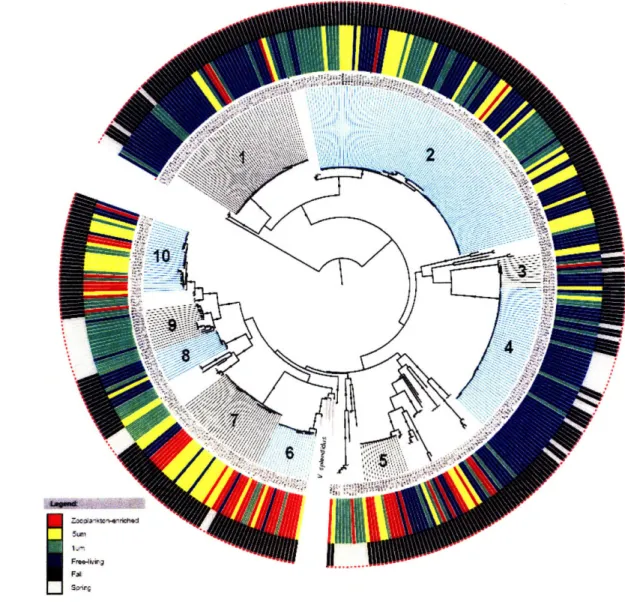
How vast numbers of closely related bacteria coexist in the ocean remains poorly understood due to paucity of observations and conflicting theories of ecological speciation. Here, we show spatial and temporal resource partitioning for a group of coastal heterotrophic bacteria (Vibrionaceae). Statistical analysis reveals that ecological populations can be recognized as phylogenetic clusters, which primarily correspond to deeply divergent taxa. However, one group (V. splendidus) appears to be currently undergoing ecological radiation as evidenced by many microdiverse, and in some cases, nested clades with distinct habitat distributions. Overall, the data suggest that a large number of clades are unevenly distributed between different seasons and lifestyles (free-living, particle-associated and zooplankton-associated) in spite of high potential for population homogenization by genetic recombination and ocean mixing.
INTRODUCTION:
The ocean's microbial communities harbor far greater genetic diversity than previously expected (Acinas et al. 2004, Sogin et al. 2006, Rusch et al. 2007). Although
comparative analyses reveal differential distributions of microbial taxa and specific gene families (Giovannoni & Stingl 2005, DeLong et al. 2006), it is poorly understood to what extent the vast co-existing microbial diversity reflects population differentiation (e.g., by resource partitioning) or neutral variation (Giovannoni & Stingl 2005, Polz et al. 2006). First, it has been difficult to determine specific association of bacterial genotypes with
spatio-temporal conditions; second, it remains controversial how ecological
differentiation should be manifest genetically. Phylogenetic clusters have been proposed to correspond to ecological populations that arise by neutral diversification following niche-specific selective sweeps (Cohan & Perry 2007). Clusters are indeed observed among closely related isolates [e.g., by multilocus sequence analysis] (Hanage et al. 2006) and in culture-independent analysis of coastal bacterioplankton (Acinas et al. 2004). Yet theoretical studies suggest that clusters can result from neutral evolution (Fraser et al. 2007), and evidence for clusters as ecological populations remains sparse, having been most conclusively demonstrated for cyanobacteria along ocean-scale gradients (Johnson et al. 2006). Further, horizontal gene transfer (HGT) may erode ecological cohesion of populations if adaptive genes are transferred (Doolittle & Papke 2006), and homologous recombination among closely related genomes may obscure the phylogenetic signal in ecologically distinct populations (Retchless & Lawrence 2007). Thus to what extent phylogenetic and ecological differentiation is correlated remains a
crucial problem in understanding evolutionary mechanisms of bacterial speciation and ecological differentiation (Fraser et al. 2007).
Here, we ask to what extent closely related genotypes are ecologically
differentiated (as evidenced by differential distribution among microhabitats). We focus on heterotrophic bacteria of the family Vibrionaceae, which are metabolically and ecologically versatile members of the coastal plankton (Thompson & Polz 2006). The coastal ocean is well suited to test population-level effects of microhabitat selection,
since tidal mixing and oceanic circulation ensure high probability of immigration, rendering population differentiation due to endemism unlikely. In the plankton,
heterotrophs may adopt alternate ecological strategies: exploiting either the generally low but more evenly distributed dissolved nutrients or attaching and degrading small,
suspended organic particles, originating from algal exopolysaccharides and detritus (Polz et al. 2006). In this dynamic environment, microhabitat preferences may develop since resources are distributed on the same scale as the dispersal range of individuals due to turbulent mixing and active motility (Kiorboe et al. 2002). Particles represent a relatively short-lived resource as the labile components are rapidly utilized (-hours-days) (Pomeroy et al. 1984, Panagiotopoulos et al. 2002), suggesting that particle-colonization is a
dynamic process. Moreover, particulate matter may not constitute a uniform resource, changing composition with macroecological conditions (e.g., algal blooms).
Zooplankton may provide additional, more stable microhabitats; vibrios attach to
chitinous zooplankton exoskeletons (Heidelberg et al. 2002), but may also live in the gut or occupy pathogenic niches. The extent to which microenvironmental preferences contribute to resource partitioning in this complex ecological landscape remains an important question in microbial ecology.
MATERIAL AND METHODS: Sample collection
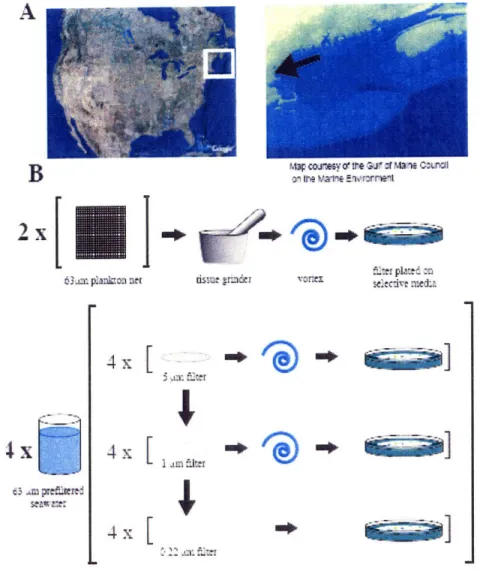
Samples were collected at high tide on the marine end of the Plum Island Estuary
(NE Massachusetts) (Fig. 1A) on two days representing spring (4/28/06) and fall (9/6/06)
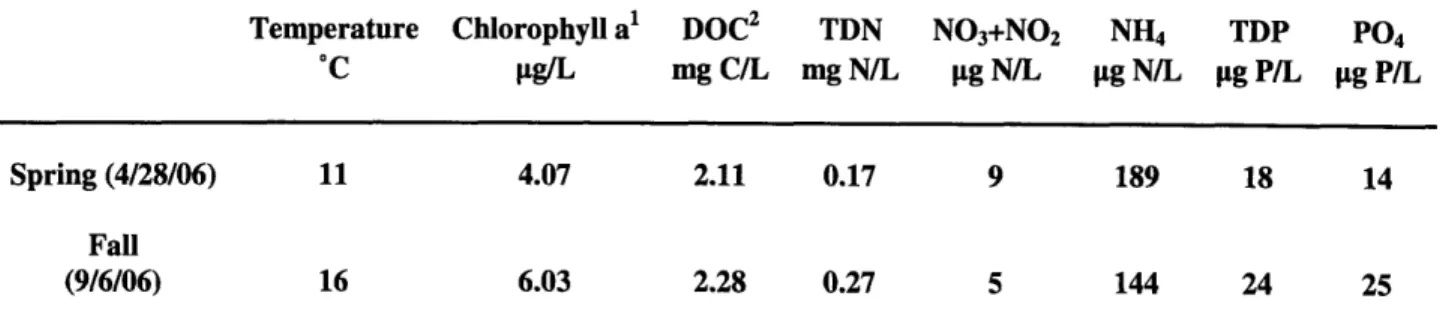
conditions in the coastal ocean. Nutrient concentrations, water temperature and chlorophyll levels were measured on both sampling dates (Table 1)