HAL Id: hal-02355115
https://hal.inria.fr/hal-02355115v2
Submitted on 13 Feb 2020
HAL is a multi-disciplinary open access
archive for the deposit and dissemination of
sci-entific research documents, whether they are
pub-lished or not. The documents may come from
teaching and research institutions in France or
abroad, or from public or private research centers.
L’archive ouverte pluridisciplinaire HAL, est
destinée au dépôt et à la diffusion de documents
scientifiques de niveau recherche, publiés ou non,
émanant des établissements d’enseignement et de
recherche français ou étrangers, des laboratoires
publics ou privés.
Evaluating Voice Conversion-based Privacy Protection
against Informed Attackers
Brij Mohan Lal Srivastava, Nathalie Vauquier, Md Sahidullah, Aurélien
Bellet, Marc Tommasi, Emmanuel Vincent
To cite this version:
Brij Mohan Lal Srivastava, Nathalie Vauquier, Md Sahidullah, Aurélien Bellet, Marc Tommasi, et al..
Evaluating Voice Conversionbased Privacy Protection against Informed Attackers. ICASSP 2020
-45th International Conference on Acoustics, Speech, and Signal Processing, IEEE Signal Processing
Society, May 2020, Barcelona, Spain. pp.2802-2806. �hal-02355115v2�
EVALUATING VOICE CONVERSION-BASED PRIVACY PROTECTION AGAINST
INFORMED ATTACKERS
Brij Mohan Lal Srivastava
1, Nathalie Vauquier
1, Md Sahidullah
3, Aur´elien Bellet
1, Marc Tommasi
2,
Emmanuel Vincent
31
INRIA, France
2Universit´e de Lille, France
3
Universit´e de Lorraine, CNRS, Inria, Loria, F-54000 Nancy, France
ABSTRACT
Speech data conveys sensitive speaker attributes like identity or accent. With a small amount of found data, such attributes can be inferred and exploited for malicious purposes: voice cloning, spoof-ing, etc. Anonymization aims to make the data unlinkable, i.e., en-sure that no utterance can be linked to its original speaker. In this paper, we investigate anonymization methods based on voice conver-sion. In contrast to prior work, we argue that various linkage attacks can be designed depending on the attackers’ knowledge about the anonymization scheme. We compare two frequency warping-based conversion methods and a deep learning based method in three attack scenarios. The utility of converted speech is measured via the word error rate achieved by automatic speech recognition, while privacy protection is assessed by the increase in equal error rate achieved by state-of-the-art i-vector or x-vector based speaker verification. Our results show that voice conversion schemes are unable to effectively protect against an attacker that has extensive knowledge of the type of conversion and how it has been applied, but may provide some protection against less knowledgeable attackers.
Index Terms— privacy, voice conversion, speech recognition, speaker verification, linkage attack
1. INTRODUCTION
Speech is a behavioural biometric characteristic of human beings [1], which can produce distinguishing and repeatable biometric features. Dramatic improvements in speech synthesis [2], voice cloning [3, 4] and speaker recognition [5] that leverage “found data” pose se-vere privacy threats to the users of speech interfaces [6]. Accord-ing to the ISO/IEC International Standard 24745 on biometric in-formation protection [7], biometric references must be irreversible and unlinkable for full privacy protection. Anonymization or de-identification [8–10] refers to the task of concealing the speaker’s identity while retaining the linguistic content, thereby making the data unlinkable [11]. In this work, we consider the following threat model: given a public dataset of (supposedly) anonymized speech, an attacker records/finds a sample of speech of a target user and at-tempts to guess which utterances in the anonymized dataset are spo-ken by the target user. A good anonymization scheme should prevent
This work was supported in part by the European Union’s Horizon 2020 Research and Innovation Program under Grant Agreement No. 825081 COMPRISE (https://www.compriseh2020.eu/) and by the French National Research Agency under project DEEP-PRIVACY (ANR-18-CE23-0018). Experiments presented in this paper were carried out using the Grid’5000 testbed, supported by a scientific interest group hosted by Inria and including CNRS, RENATER and several Universities as well as other organizations (see https://www.grid5000.fr).
such linkage attacks from being successful, while preserving the per-ceived speech naturalness and intelligibility and/or the performance of downstream tasks such as automatic speech recognition (ASR).
Fang et al. [12] classify speaker anonymization methods into two categories: physical vs. logical. Physical methods perturb speech in the physical space by adding acoustic noise, while logical meth-ods apply a transformation to the recorded signal. Among the latter, voice conversion (VC) methods have been traditionally exploited as a way to map the input voice (source) into that of another speaker (target) [13–15]. In contrast to feature-domain approaches [10], the output of VC remains a speech waveform and it may be used for listening or transcription purposes. The anonymized speech should thus sound as natural and intelligible as possible [16].
Crucially, all past studies assumed a weak attack scenario where the attacker is unaware that an anonymization method has been ap-plied to the found data [12]. This raises the concern that the privacy protection may entirely rely on the secrecy of the design and imple-mentation of the anonymization scheme, a principle known as “se-curity by obs“se-curity” [17] that has long been rejected by the se“se-curity community. There is therefore a strong need to evaluate the robust-ness of the anonymization to the knowledge that the adversary may have about the transformation. In practice, such knowledge may for instance be acquired by inspecting the code embedded in the user’s device or in an open-source implementation.
As opposed to past studies, we consider different linkage at-tacks depending on the attacker’s knowledge of the anonymization method. At one end of the spectrum, an Ignorant attacker is unaware of the speech transformation being applied, while at the other end an
Informedattacker can leverage complete knowledge of the
transfor-mation algorithm. A Semi-Informed attacker may know the voice transformation algorithm but not its parameter values. In our exper-iments, we evaluate three VC methods with different target speaker selection strategies in various attack scenarios to study unlinkability in the spirit of ISO/IEC 30136 standard [18]. In each scenario, we assess how well each method protects the speaker identity against at-tackers that leverage state-of-the-art speaker verification techniques based on i-vectors [19] or x-vectors [5] to design linkage attacks. We also report the word error rate (WER) achieved by a state-of-the-art end-to-end automatic speech recognizer [20]. While a formal listening test is beyond the scope of this paper, we make a few
sam-ples of converted speech available for informal comparison.1
In Section 2, we describe the three VC methods we evaluate in the context of anonymization. Section 3 introduces the target speaker selection strategies and the attack scenarios. Section 4 presents the experimental settings and the results. We conclude in Section 5.
1https://github.com/brijmohan/adaptive_voice_
2. VOICE CONVERSION METHODS
The criteria for selecting the VC methods in our study are that they must be 1) non-parallel, i.e., do not require a parallel corpus of sen-tences uttered by both the source and target speakers for training — this is important from a privacy perspective since there exist few par-allel corpora and selecting openly available targets would increase the risk of an inversion attack; 2) many-to-many, i.e., allow conver-sion between arbitrary sources and targets so that any speaker in a large corpus can be selected as the target ; 3) source- and language-independent, i.e., do not require enrollment sentences for the source speaker and do not rely on language-specific ASR or phoneme clas-sification — this is important from a usability perspective as it frees the user from the burden of enrolling and it is applicable to any lan-guage (including under-resourced ones), and from a privacy perspec-tive since enrollment translates into the storage of a voiceprint which poses even greater privacy threats.
The third criterion is quite strict: many VC methods, such as StarGAN-VC [21] or the ASR-based method in [12], do not satisfy it. We found that the vocal tract length normalization (VTLN) based methods in [15, 22] and the one-shot method in [23] satisfy all cri-teria. In this paper, we use models trained over English speech [24] but do not use any other linguistic resources such as transcriptions. 2.1. VoiceMask
VoiceMask is described in [15] as the frequency warping method based on the composition of a log-bilinear function, expressed
as f (ω, α) = | − i ln z−α
1−αz|, and a quadratic function, given by
g(ω, β) = ω + β(ωπ− (ω π)
2
). Here ω ∈ [0, π] is the normalized fre-quency, α ∈ [−1, 1] is the warping factor for the bilinear function, z = eiω, and β > 0 is the warping factor for the quadratic function. Therefore, the warping function is of the form g(f (ω, α), β). The two parameters, α and β, are chosen uniformly at random from a predefined range which is found to produce intelligible speech while perceptually concealing the speaker identity. In the following, we apply this transform to the spectral envelope rather than the pitch-synchronous spectrum as in the original paper. In addition, we apply logarithm Gaussian normalized pitch transformation (see [25]) so as to match the pitch statistics of a target speaker2.
The authors claim that this transformation is difficult to inverse when the parameter values are unknown because they are randomly selected from a large interval. However, VoiceMask uses the same parameter values to warp the spectra at each time step of the utter-ance. This approach is quite limited to conceal the identity of the source speaker and to mimic the target speaker because it warps the entire frequency axis in a single direction.
2.2. VTLN-based voice conversion
VTLN-based VC [22] represents each speaker by a set of centroid spectra extracted using the CheapTrick [26] algorithm for k
pseudo-phonetic classes. These classes are learned in an unsupervised
fashion by clustering all speech frames of all utterances from this speaker. For each class of the source speaker, the procedure finds the class of the target speaker and the warping parameters that minimize the distance between the transformed source centroid spectrum and the target centroid spectrum. All speech frames in that class are then warped using a power function. Similarly to above, we apply this
2Strictly speaking, VoiceMask is a voice transformation method rather
than a VC method: pitch is converted from the source speaker to a target speaker, but the spectral envelope is not related to a particular target speaker.
warping to the spectral envelope and also perform Gaussian normal-ized pitch transformation so as to match the pitch statistics of the target. Compared to VoiceMask, this approach warps the frequency axis in different directions over time. The parameters of this method include the number of classes k and the chosen target speaker. 2.3. Disentangled representation based voice conversion The third approach is based on disentangled representation of speech as proposed in [23, 27]. The core idea is that speaker information is statically present throughout the utterance but content information is dynamic. This approach is based on a neural network transformation and uses a speaker encoder and a content encoder to separate the fac-tors of variation corresponding to speaker and content information. The only parameter of this method is the chosen target speaker.
3. TARGET SELECTION STRATEGIES AND ATTACKERS In this study, we consider that the VC function and the sets of pos-sible parameter values are known to all users. Each user records his/her voice on his/her device and applies a VC scheme locally be-fore sending it to a public database. In the threat model we consider, an attacker then performs a linkage attack to try to identify which converted utterances in this public database are spoken by a partic-ular user. To this end, we assume that the attacker has access to a small amount of found speech from this user (and potentially some additional public resources, such as benchmark speech processing datasets to train generic speaker models).
In the following, we define three parameter selection (a.k.a. tar-get selection) strategies for the three VC methods above, which can be seen as key ingredients of a “private-by-design” speech process-ing system. We then describe the knowledge that an attacker tryprocess-ing to compromise the system could have about the VC function and the target selection strategy.
3.1. Target selection strategies
We consider three possible target selection strategies. In strategy const, the VC function is constant across all users and all utterances. This means choosing a unique target speaker and, in the case of VoiceMask, fixed values for α and β. In strategy perm, the con-version parameters are chosen at random once by each user. In other words, when a user downloads the VC module on his/her device, he/she selects a personal target speaker and, in the case of Voice-Mask, personal random values for α and β. Finally, in the random strategy, each time a user applies VC to an utterance, a random set of parameters is drawn, i.e., a random target speaker is selected and, in the case of VoiceMask, random values are drawn for α and β. 3.2. Attackers’ knowledge
We define the types of attackers based on the extent of their knowl-edge about the VC function and its parameters. An Ignorant attacker is not aware that VC has been applied at all. In contrast, an Informed attacker knows the VC method and its exact parameter values (i.e., the chosen target speaker and the values of α and β). One may argue that an Informed attacker is not very realistic (except for the const strategy), while an Ignorant attacker is very weak. Between these two extreme cases, various types of attackers can be defined. For instance, we consider a Semi-Informed attacker who knows the cho-sen VC method (VoiceMask, VTLN, or dicho-sentangled reprecho-sentation) and the target selection strategy (const, perm, or random), but not the
actual target (i.e., the actual target speaker or the value of α and β). This is arguably more realistic since the VC algorithm and the target selection strategy may be open-source, while (except for the const strategy) the target chosen by the user is much less easily accessible. It is important to note that many concrete instances of attackers of the above types can be designed, and finding out the “best” at-tacker of a particular type is a hard problem. In the experiments sec-tion, we propose attackers exploiting these different levels of knowl-edge based on the assumptions defined above. A more exhaustive investigation of the design of attackers is left for future work.
4. EXPERIMENTS AND RESULTS 4.1. Data and evaluation setup
All experiments are performed on the LibriSpeech corpus [24]. We use the 460 h clean training set (train-clean-100 + train-clean-360), which contains 1,172 speakers, to train the disentanglement trans-form. Out of the test-clean set, we create an enrollment set (438 ut-terances) and a trial set (1,496 utut-terances) with different utterances from the same 29 speakers (13 male and 16 female, not in the train-ing set) considered as source speakers. The target speakers for all three VC methods are randomly picked from the training and test-cleansets. See [10] for more details.
For each VC method and target selection strategy, all utterances in the trial set are mapped to possibly different target speakers in the training or trial set. The converted trial set serves as the public database that attackers want to de-anonymize by designing a linkage attack. To this end, attackers have access to the enrollment set which serves as the found data used to model the speakers in the trial set.
The attackers also have access to the 460 h training set to train state-of-the-art speaker verification methods based on x-vectors [5] and i-vectors, which are stronger than the Gaussian mixture model-universal background model (GMM-UBM) based method used in the seminal work of [16]. We adapt the sre16 Kaldi recipe for
train-ing x-vectors and i-vectors to LibriSpeech3. We use a smaller
net-work architecture for x-vector computation than the original recipe. Specifically, compared to the architecture in [5, Table 1], we re-move the frame4, frame5 and segment7 layers, thereby also reduc-ing the stats poolreduc-ing layer to 512T ×1024 and the segment6 layer to 1024×512. Here T refers to the utterance-level context. This re-duced architecture performs slightly better on LibriSpeech than the architecture in the original recipe. We give more details on the dif-ferent attackers in Section 4.3.
Finally, we evaluate the utility of each VC method in terms of the resulting ASR performance on the converted data. We use a hy-brid connectionist temporal classification (CTC) and attention based encoder-decoder [20] trained on the converted 460 h training set
us-ing the standard recipe for LibriSpeech provided in ESPnet4.
4.2. Voice conversion settings
VoiceMask. Pitch, aperiodicity and spectral envelope are extracted
using the pyworld vocoder5. We follow strategy random only. We
sample α uniformly such that |α| ∈ [0.08, 0.10] then β in [−2, 2] such that 0.32 ≤ distfα,β ≤ 0.40 where distfα,β =R0π|fα,β(ω)−
ω| is the distortion strength of the warping function. These ranges
3https://github.com/brijmohan/kaldi/tree/master/
egs/librispeech_spkv/v2
4https://espnet.github.io/espnet/ 5https://github.com/JeremyCCHsu/
Python-Wrapper-for-World-Vocoder
are provided by VoiceMask’s authors in [15] since they produce most intelligible output. A subset of 100 target speakers is randomly se-lected and, for every utterance, pitch is transformed so as to match a random speaker within that subset. Other target selections strategies have not been applied because fixed values for α and β (whether speaker-dependent or not) are prone to inversion attacks.
VTLN-based VC. Pitch, aperiodicity and spectral envelope are extracted using the pyworld vocoder. For each speaker, we collect speech frames using energy-based voice activity detection (VAD) with a threshold of 0.06, and we cluster their spectral envelopes via k-means with k = 8. In strategy const, only one target speaker is selected. In perm, we draw a random subset of 100 target speakers and, for each source speaker, we select a random target within it. In random, we draw a random subset of 100 target speakers and, for each source utterance, we select a random target within it.
Disentangled representation based VC. We use a publicly
available implementation of this method6. As per the authors’
sug-gestion in the preprocessing script, we train the disentanglement models (speaker encoder, content encoder, decoder) over the
train-clean-100subset of the LibriTTS corpus (itself a subset of the 460 h
training set of LibriSpeech), with a batch size of 128 and learning rate of 0.0005 for 500,000 iterations. All three target selection strate-gies are applied similarly to VTLN-based VC except that only the source utterance and one random utterance from the target speaker are used as inputs to the content and speaker encoders, respectively. Other utterances from the source and targets speakers are unused. 4.3. Attackers
We have implemented several attackers depending on the choice of the VC algorithm and the target selection strategy as well as the ex-tent of the attacker’s knowledge (Informed, Semi-Informed or Ig-norant). Our Ignorant attacker is unaware of the VC step: he/she simply trains x-vector/i-vector models on the untransformed train-ing set, and applies them to the untransformed enrollment set. Our
Semi-Informedattacker knows the VC algorithm and the target
selec-tion strategy (const, random or perm) but not the particular choices of targets. He/she applies this strategy to the training and enrollment sets by drawing random target speakers from the subset of 100 target speakers used by the VC method (we assume that the value of k in VTLN is known to the attacker). As a result, the training and en-rollment data are converted in a similar way as the trial data, but the target speaker associated with every speaker in the enrollment set is typically different from that associated with the same speaker in the converted trial set. Finally, our Informed attacker has access to the actual VC models and target choices used to anonymize the trial set, so it converts the training and enrollment sets accordingly.
In our preliminary experiments, we also considered attackers who convert the enrollment set only and use x-vector/i-vector models trained on the untransformed training set. Unsurprisingly, we found that this leads to significantly larger equal error rates (EER) than re-training the x-vector/i-vector model (which can easily be done by the attacker using public benchmark data). Therefore, we do not report results for such attackers below.
4.4. Results and discussion
We first train and apply the ASR and speaker verification systems on the original (untransformed) data for baseline performance. We
6https://github.com/jjery2243542/adaptive_voice_
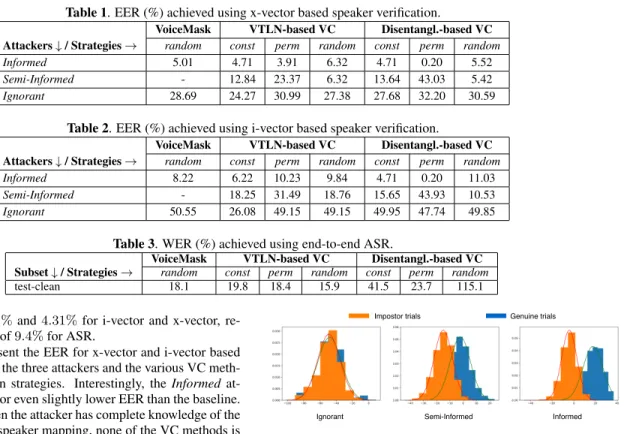
Table 1. EER (%) achieved using x-vector based speaker verification.
VoiceMask VTLN-based VC Disentangl.-based VC Attackers ↓ / Strategies → random const perm random const perm random Informed 5.01 4.71 3.91 6.32 4.71 0.20 5.52 Semi-Informed - 12.84 23.37 6.32 13.64 43.03 5.42 Ignorant 28.69 24.27 30.99 27.38 27.68 32.20 30.59
Table 2. EER (%) achieved using i-vector based speaker verification.
VoiceMask VTLN-based VC Disentangl.-based VC Attackers ↓ / Strategies → random const perm random const perm random Informed 8.22 6.22 10.23 9.84 4.71 0.20 11.03 Semi-Informed - 18.25 31.49 18.76 15.65 43.93 10.53 Ignorant 50.55 26.08 49.15 49.15 49.95 47.74 49.85
Table 3. WER (%) achieved using end-to-end ASR.
VoiceMask VTLN-based VC Disentangl.-based VC Subset ↓ / Strategies → random const perm random const perm random test-clean 18.1 19.8 18.4 15.9 41.5 23.7 115.1
obtain an EER of 4.61% and 4.31% for i-vector and x-vector, re-spectively, and a WER of 9.4% for ASR.
Tables 1 and 2 present the EER for x-vector and i-vector based speaker verification for the three attackers and the various VC meth-ods and target selection strategies. Interestingly, the Informed at-tacker achieves similar or even slightly lower EER than the baseline. This indicates that, when the attacker has complete knowledge of the VC scheme and target speaker mapping, none of the VC methods is able to protect the speaker identity. While an attacker with such complete knowledge is not very realistic in most practical cases, our results show that speaker information has not been totally removed and is somehow still present in the converted speech.
For the more realistic Semi-Informed attacker, we observe that strategy perm is quite effective in protecting privacy and shows the highest gains in EER. This is due to the fact that the target speaker in the enrolled data may not be same as the one in trial, hence greater confusion is induced during inference. We also notice that strat-egy random is not much affected by the change of speaker mapping, which is intuitive because in this case the utterances are already be-ing mapped randomly to different speakers. Such mappbe-ing would be ineffective due to averaging of randomness. Strategy const is also slightly affected by the change of mapping because the training and enrollment speaker is not same as that of test speaker, but the effect is not as significant as strategy perm.
Consistently with past results in the literature, the Ignorant at-tacker performs worst in terms of EER. This confirms that, when the attacker is oblivious to the privacy-preserving mechanism, we can protect speaker identity completely. Figure 1 shows the dis-tribution of i-vector PLDA scores for genuine and impostor trials, i.e., the log-likelihood ratios between same-speaker and
different-speakerhypotheses. For full unlinkability, the distributions of
gen-uine and impostor scores must be identical. We observe that the overlap between the two distributions decreases as we move from the Ignorant to the Informed attacker, hence increasing linkability.
Table 3 gives the WER obtained for each VC method, which we use as a proxy for the usefulness of the converted speech. Note that there is no difference between converted data in different attack scenarios, hence the WER does not depend on the attacker. Voice-Mask and VTLN-based VC achieve reasonable WER compared to the untransformed data, while the disentangled representation based VC produces unreasonably high WER. Note that these WERs are achieved when ASR is trained solely using converted data. In
prac-Impostor trials Genuine trials
Informed Semi-Informed
Ignorant
Fig. 1. I-vector score distribution for trials conducted on VTLN (strategy random) converted data by Ignorant, Semi-Informed, or
In-formedattackers. The orange distribution indicates impostor scores,
while the blue distribution indicates genuine scores. The crossing between the two curves indicates the threshold for EER. More over-lap means greater confusion, hence greater privacy protection.
tice, many techniques can be used optimize the WER, such as using converted data to augment clean data.
5. CONCLUSION AND FUTURE WORK
We investigated the use of VC methods to protect the privacy of speakers by concealing their identity. We formally defined target speaker selection strategies and linkage attack scenarios based on the knowledge of attacker. Our experimental results indicate that both aspects play an important role in the strength of the protection. Simple methods such as VTLN-based VC with appropriate target selection strategy can provide reasonable protection against linkage attacks with partial knowledge.
Our characterization of strategies and attack scenarios opens up several avenues for future research. To increase the naturalness of converted speech, we can explore intra-gender VC as well as the use of a supervised phonetic classifier in VTLN. We also plan to con-duct experiments with a broader range of attackers and use standard local and global unlinkability metrics [11] to precisely evaluate the privacy protection in various scenarios. More generally, designing a privacy-preserving transformation which induces a large overlap be-tween genuine and impostor distributions even in the Informed attack scenario remains an open question. In the case of disentangled rep-resentations, this calls for avoiding any leakage of private attributes into the content embeddings.
6. REFERENCES
[1] Anil Jain, Lin Hong, and Sharath Pankanti, “Biometric iden-tification,” Communications of the ACM, vol. 43, no. 2, pp. 90–98, 2000.
[2] ´Eva Sz´ekely, Gustav Eje Henter, Jonas Beskow, and Joakim
Gustafson, “Spontaneous conversational speech synthesis
from found data,” in Proc. INTERSPEECH, 2019, pp. 4435– 4439.
[3] Ville Vestman, Tomi Kinnunen, Rosa Gonz´alez Hautam¨aki, and Md Sahidullah, “Voice mimicry attacks assisted by au-tomatic speaker verification,” Computer Speech & Language, vol. 59, pp. 36–54, 2020.
[4] Jaime Lorenzo-Trueba, Fuming Fang, Xin Wang, Isao Echizen,
Junichi Yamagishi, and Tomi Kinnunen, “Can we steal
your vocal identity from the internet?: Initial investigation of cloning Obama’s voice using GAN, WaveNet and low-quality found data,” in Proc. Odyssey: The Speaker and Language Recognition Workshop, 2018, pp. 240–247.
[5] David Snyder, Daniel Garcia-Romero, Gregory Sell, Daniel Povey, and Sanjeev Khudanpur, “X-vectors: Robust DNN em-beddings for speaker recognition,” in Proc. ICASSP, 2018, pp. 5329–5333.
[6] Tomi Kinnunen, Md Sahidullah, H´ector Delgado, Massi-miliano Todisco, Nicholas Evans, Junichi Yamagishi, and Kong Aik Lee, “The ASVspoof 2017 challenge: Assessing the limits of replay spoofing attack detection,” in Proc. IN-TERSPEECH, 2017, pp. 2–6.
[7] Document ISO/IEC 24745:2011, “Information Technology—
Security techniques—Biometric Information Protection,”
ISO/IEC JTCI SC27 Security Techniques, 2011.
[8] Andreas Nautsch et al., “Preserving privacy in speaker and speech characterisation,” Computer Speech & Language, vol. 58, pp. 441–480, 2019.
[9] Fahimeh Bahmaninezhad, Chunlei Zhang, and John HL
Hansen, “Convolutional neural network based speaker
de-identification.,” in Proc. Odyssey: The Speaker and Language Recognition Workshop, 2018, pp. 255–260.
[10] Brij Mohan Lal Srivastava, Aur´elien Bellet, Marc Tommasi, and Emmanuel Vincent, “Privacy-preserving adversarial rep-resentation learning in ASR: Reality or illusion?,” in Proc. INTERPSPEECH, 2019, pp. 3700–3704.
[11] Marta Gomez-Barrero, Javier Galbally, Christian Rathgeb, and Christoph Busch, “General framework to evaluate unlinkabil-ity in biometric template protection systems,” IEEE Transac-tions on Information Forensics and Security, vol. 13, no. 6, pp. 1406–1420, 2017.
[12] Fuming Fang, Xin Wang, Junichi Yamagishi, Isao Echizen, Massimiliano Todisco, Nicholas Evans, and Jean-Francois Bonastre, “Speaker anonymization using x-vector and neu-ral waveform models,” in Proc. 10th ISCA Speech Synthesis Workshop, 2019, pp. 155–160.
[13] Slobodan Ribaric, Aladdin Ariyaeeinia, and Nikola Pavesic, “De-identification for privacy protection in multimedia con-tent: A survey,” Signal Processing: Image Communication, vol. 47, pp. 131–151, 2016.
[14] Miran Pobar and Ivo Ipˇsi´c, “Online speaker de-identification using voice transformation,” in Proc. 37th International con-vention on information and communication technology, elec-tronics and microelecelec-tronics (mipro), 2014, pp. 1264–1267. [15] Jianwei Qian, Haohua Du, Jiahui Hou, Linlin Chen, Taeho
Jung, and Xiang-Yang Li, “Hidebehind: Enjoy voice input
with voiceprint unclonability and anonymity,” in Proc. the
16th ACM Conference on Embedded Networked Sensor Sys-tems. ACM, 2018, pp. 82–94.
[16] Qin Jin, Arthur R Toth, Tanja Schultz, and Alan W Black, “Speaker de-identification via voice transformation,” in Proc. ASRU, 2009, pp. 529–533.
[17] Rebecca T Mercuri and Peter G Neumann, “Security by ob-scurity,” Communications of the ACM, vol. 46, no. 11, pp. 160, 2003.
[18] ISO/IEC FDIS 30136, “Information Technology—
Performance Testing of Biometric Protection Schemes,” ISO/IEC JTCI SC37 Biometrics, 2017.
[19] Najim Dehak, Patrick J Kenny, R´eda Dehak, Pierre Du-mouchel, and Pierre Ouellet, “Front-end factor analysis for speaker verification,” IEEE Transactions on Audio, Speech, and Language Processing, vol. 19, no. 4, pp. 788–798, 2010. [20] Shinji Watanabe, Takaaki Hori, Shigeki Karita, Tomoki
Hayashi, Jiro Nishitoba, Yuya Unno, Nelson Enrique Yalta So-plin, Jahn Heymann, Matthew Wiesner, Nanxin Chen, Adithya
Renduchintala, and Tsubasa Ochiai, “ESPnet: End-to-end
speech processing toolkit,” in Proc. INTERPSPEECH, 2018, pp. 2207–2211.
[21] Hirokazu Kameoka, Takuhiro Kaneko, Kou Tanaka, and Nobukatsu Hojo, “StarGAN-VC: Non-parallel many-to-many voice conversion using star generative adversarial networks,” in Proc. Spoken Language Technology Workshop (SLT), 2018, pp. 266–273.
[22] David Sundermann and Hermann Ney, “VTLN-based voice conversion,” in Proc. 3rd IEEE International Symposium on Signal Processing and Information Technology, 2003, pp. 556– 559.
[23] Ju chieh Chou and Hung-Yi Lee, “One-Shot Voice Conver-sion by Separating Speaker and Content Representations with Instance Normalization,” in Proc. INTERSPEECH, 2019, pp. 664–668.
[24] Vassil Panayotov, Guoguo Chen, Daniel Povey, and Sanjeev Khudanpur, “LibriSpeech: an ASR corpus based on public domain audio books,” in Proc. ICASSP, 2015, pp. 5206–5210. [25] Kun Liu, Jianping Zhang, and Yonghong Yan, “High quality voice conversion through phoneme-based linear mapping func-tions with STRAIGHT for Mandarin,” in Proc. Fourth Interna-tional Conference on Fuzzy Systems and Knowledge Discovery (FSKD 2007), 2007, vol. 4, pp. 410–414.
[26] Masanori Morise, “CheapTrick, a spectral envelope estimator for high-quality speech synthesis,” Speech Communication, vol. 67, pp. 1–7, 2015.
[27] Dmitry Ulyanov, Andrea Vedaldi, and Victor Lempitsky, “Im-proved texture networks: Maximizing quality and diversity in feed-forward stylization and texture synthesis,” in Proc. CVPR, 2017, pp. 6924–6932.