http://jfm.sagepub.com/
Journal of Feline Medicine and Surgery
http://jfm.sagepub.com/content/15/7/563
The online version of this article can be found at:
DOI: 10.1177/1098612X13489214
2013 15: 563
Journal of Feline Medicine and Surgery
Alan D Radford, Etienne Thiry, Uwe Truyen and Marian C Horzinek
Boucraut-Baralon, Herman Egberink, Tadeusz Frymus, Tim Gruffydd-Jones, Margaret J Hosie, Hans Lutz, Karin Möstl,
Maria Grazia Pennisi, Fulvio Marsilio, Katrin Hartmann, Albert Lloret, Diane Addie, Sándor Belák, Corine
Bartonella
Species Infection in Cats: ABCD guidelines on prevention and management
technique does not amount to an endorsement of its value or quality, or the claims made by its manufacturer. those of the authors and the inclusion in this publication of material relating to a particular product, method or of animals and interpretation of published materials lies with the veterinary practitioner. The opinions expressed are from actions or decisions based on information contained in this publication; ultimate responsibility for the treatment
arising country. The authors, editors, owners and publishers do not accept any responsibility for any loss or damage advertising material, it is the responsibility of the reader to check that the product is authorised for use in their own bear this in mind and be aware of the prescribing laws pertaining to their own country. Likewise, in relation to Furthermore, drugs may be mentioned that are licensed for human use, and not for veterinary use. Readers need to formulations that are not available or licensed in the individual reader's own country.
The Journal of Feline Medicine and Surgery is an international journal and authors may discuss products and Disclaimer
Published by:
International Society of Feline Medicine
American Association of Feline Practitioners
and
http://www.sagepublications.com
can be found at:
Journal of Feline Medicine and Surgery
Additional services and information for
http://jfm.sagepub.com/cgi/alerts Email Alerts: http://jfm.sagepub.com/subscriptions Subscriptions: http://www.sagepub.com/journalsReprints.nav Reprints: http://www.sagepub.com/journalsPermissions.nav Permissions:
What is This?
- Jun 27, 2013
Version of Record
>>
at Universite de Liege on September 3, 2013 jfm.sagepub.com
European Advisory Board on Cat Diseases www.abcd-vets.org
Corresponding author: Maria Grazia Pennisi Email: [email protected]
C L I N I C A L
R E V I E W
BARTONELLA SPECIES INFECTION IN CATS
ABCD guidelines on prevention
and management
Maria Grazia Pennisi, Fulvio Marsilio, Katrin Hartmann, Albert Lloret, Diane Addie, Sándor Belák, Corine Boucraut-Baralon, Herman Egberink, Tadeusz Frymus, Tim Gruffydd-Jones, Margaret J Hosie, Hans Lutz, Karin Möstl, Alan D Radford, Etienne Thiry, Uwe Truyen and Marian C Horzinek
Bacterial properties
Bartonella (previously named Rochalimaea) species are small, vector-transmitted Gram-negative intracellular bacteria that are well adapted to one or more mammalian reservoir hosts.
To date, over 22 Bartonella species have been described, but their role as pathogens of humans and domestic animals is the subject of on -going investigations (Table 1).1The most common species in both cats
and humans is B henselae, the agent of cat scratch disease as well as of other potentially fatal disorders in immunocompromised people.
B henselae is naturally transmitted among cats by the flea Ctenocephalides felis felis, or by flea faeces. In the infected cat, Bartonella inhabits red blood cells, which are ingested by the flea, and the bacterium survives in the flea’s gut. Contaminated flea faeces deposited on the skin of the cat end up under the cat’s claws due to self-scratching. A cat scratch is the common mode of transmission of the organism to other animals, including humans.2
B henselae has been experimentally transmitted among cats by trans-ferring fleas fed on naturally infected cats to specific pathogen-free (SPF) cats, and by intradermal inoculation of excrement collected from fleas fed on B henselae-infected cats.2This has demonstrated that both
the vector and the cat – through scratches – may transmit the organism. Infection is amplified in the flea hindgut, and B henselae can persist in the environment in flea faeces for at least 9 days.3 Blood transfusion
also represents a risk: cats have been experimentally infected with B henselae and B clarridgeiae by intravenous or intramuscular inocula-tion with infected cat blood.4
European Advisory Board on Cat Diseases
The European Advisory Board on Cat Diseases (ABCD) is a body of experts in immunology, vaccinology and clinical feline medicine that issues guidelines on prevention and management of feline infectious diseases in Europe, for the benefit of the health and welfare of cats. The guidelines are based on current scientific knowledge of the diseases and available vaccines concerned.
The latest version of the Bartonella species infection in cats guidelines is available at www.abcd-vets.org
Overview: Over 22 Bartonella species have been
described in mammals, and Bartonella henselae is most common worldwide. Cats are the main reservoir for this bacterium. B henselae is the causative agent of cat scratch disease in man, a self-limiting regional lymphadenopathy, but also of other potentially fatal disorders in immunocompromised people.
Infection: B henselae is naturally transmitted
among cats by the flea Ctenocephalides felis felis, or by flea faeces. A cat scratch is the common mode of transmission of the organism to other animals, including humans. Blood transfusion also represents a risk.
Disease signs: Most cats naturally infected
by B henselae do not show clinical signs but cardiac (endocarditis, myocarditis) or ocular (uveitis) signs may be found in sporadic cases. B vinsonii subspecies berkhoffii infection has reportedly caused lameness in a cat affected by recurrent osteomyelitis and polyarthritis.
Diagnosis: Isolation of the bacterium is the gold
standard, but because of the high prevalence of infection in healthy cats in endemic areas, a positive culture (or polymerase chain reaction) is not confirmatory. Other compatible diagnoses must be ruled out and response to therapy gives a definitive diagnosis. Serology (IFAT or ELISA) is more useful for exclusion of the infection because of the low positive predictive value (39–46%) compared with the good negative predictive value (87–97%). Laboratory testing is required for blood donors.
Disease management: Treatment is
recommended in the rare cases where Bartonella actually causes disease.
R E V I E W/ABCD guidelines on Bartonella species infection
B henselae transmission did not occur when infected cats lived together with uninfected cats in a flea-free environment. Transmission consequently does not occur through bites, scratches (in the absence of fleas), grooming, or sharing of litter boxes and food dishes. Furthermore, transmission could not be demonstrated between bacteraemic female cats and uninfected males during mating, or to the kittens of infected females either during gestation or in the neonatal period, again in flea-free environments.5
Ticks may also act as vectors for transmis-sion among cats, human beings, dogs and other mammalian hosts: stadial trans-mission of B henselae was demonstrated in Ixodes ricinus.6
Epidemiological evidence and experimental studies have demonstrated the important role of fleas in the transmission of B henselae and B clarridgeiae among cats. Three other species, B koehlerae, B bovis and B quintana, have been isolated from cat blood, but the modes of transmission and the reservoir potential of these species in felids have not been estab-lished. In addition, B vinsonii subspecies berk-hoffii DNA was detected in the blood of a cat.7
Epidemiology
Bartonella species have a worldwide distribu-tion, with highest prevalences in areas where conditions are most favourable for arthropod vectors, mainly fleas. In Europe, many studies have been carried out and the antibody preva-lence in cats has ranged from 8–53% (Table 2).
Pathogenesis
Chronic bacteraemia mainly occurs in young cats, under the age of 2 years.20 Young
experi-mentally infected cats maintained relapsing B henselae or B clarridgeiae bacteraemia for as long as 454 days.21Immune system avoidance
via intracellular location, frequent genetic rearrangements and alteration of outer membrane proteins are considered important factors for the maintenance of persistent bacteraemia. The location within erythrocytes and vascular endothelial cells is believed to protect Bartonella also from antimicrobial agents.
As the host-adapted reservoir of B henselae, cats display minimal pathogenic effects after experimental infection. Gross necropsy find-ings were unremarkable in experimentally infected cats but some histopathological changes emerged: follicular hyperplasia of lymph nodes and spleen, lymphocyte and plasma cell infiltrates in liver, heart, kidney and eye, and pyogranulomatous inflamma-tion in liver, spleen, kidney, heart and lymph nodes.5,21
Immunity
The antibody response to B henselae has been investigated for the identification of vaccine candidates. The kinetics in response to B hense-lae antigens in chronically infected
experimen-564
JFMSCLINICAL PRACTICEB henselae can persist in the environment
in flea faeces for at least 9 days.
Bartonella species Primary reservoir Vector Accidental host
B bacilliformis Human Lutzomyia verrucarum
None
B quintana* Human Pediculus humanus Cat, dog, monkey
B elizabethae Rattus norvegicus
Xenopsylla cheopis Human, dog
B grahamii Several species of wild mice
Rodent fleas Human
B henselae* Cat Ctenocephalides felis felis (C felis)
Other vectors?
Human, dog
B clarridgeiae* Cat C felis Human, dog
B koehlerae* Cat C felis Human
B vinsonii subspecies berkhoffii*
Coyote, dog Ticks? Human, cat
B vinsonii subspecies arupensis
Peromyscus leucopus
Ticks? Fleas? Human
B washoensis Spermophilus beecheyii
Fleas? Human, dog
B asiatica Rabbit Fleas? Human
*Zoonotic species
Species and subspecies of Bartonella that are confirmed or potential human pathogens1
Table 1
Country Number of cats Prevalence (%) Reference
Netherlands 163 (stray) 52 Bergmans et al (1997)8
Austria 96 33 Allerberger et al (1995)9 Switzerland 728 8 Glaus et al (1997)10 Germany 713 245 15 37.1 Haimerl et al (1999)11 Morgenthal et al (2012)12 France 64 94 179 36 53 41 Chomel et al (1995)13 Heller et al (1997)14 Gurfield et al (2001)15 Spain 680 23.8 Ayllon et al (2012)16 Italy 540 1300 (stray) 38 23.1 Fabbi et al (2004)17 Brunetti et al (2013)18 Scotland 78 15.3 Bennett et al (2011)19
Antibody prevalence of Bartonella infection in the feline population in European countries Table 2
at Universite de Liege on September 3, 2013 jfm.sagepub.com
tal cats is highly variable in degree and dura-tion.2,21,22 Reinfection by a different strain of
B henselae is possible, as supported by the isola-tion of unrelated bacterial clones from the same cat at different times.23Antibodies are,
there-fore, considered not protective, and Bartonella species antibody positive cats may be infect-ed.17A cell-mediated response was not evident
in investigated experimentally infected cats.21
Clinical signs
Cats naturally infected with Bartonella species usually do not show clinical signs. Both exper-imental and natural infection studies have tried to establish an association between clini-cal signs and infection, but a link has not been unequivocally proven.
Experimental infection
Exposure to infected fleas does not result in clinical signs [EBM grade II].2,24In some cases
of experimental inoculation, a self-limiting febrile disease, transient mild anaemia, localised or generalised lymphadenopathy, mild neurological signs and reproductive fail-ure have been reported [EBM grade III].21
Natural infection
The role of Bartonella as a cause of clinical signs is even more unclear after natural infection despite a plethora of studies. Studies based on antibody detection are of limited value because antibody only proves exposure, and not necessarily an active infection. Moreover, there is cross-reactivity between different Bartonella species and strains that may or may not cause clinical signs. Because of the high percentage of infected healthy cats in endemic areas an association between clinical signs and B henselae infection is not easy to demonstrate. It has been suggested that Bartonella infection could play a role in chronic gingivo -stomatitis, but the prevalence of antibodies or organisms was not higher in diseased cats than in control populations [EBM grade II].10,25–30
Cats positive for both feline immunodefi-ciency virus (FIV) and Bartonella antibodies had in one study an increased risk of lym-phadenopathy [EBM grade III].25
An association between Bartonella antibod-ies and urinary tract disease or haematuria was found in two studies [EBM grade III].10,31
Pearce et al did not find any difference in antibody prevalence between healthy cats and cats with seizures or other neurological conditions.32 A non-controlled retrospective
study reported Bartonella DNA and antibodies in cerebrospinal fluid from cats with CNS disease [EBM grade III].33
No difference in Bartonella antibody
preva-lence was found between healthy cats and those affected by uveitis, but in some cases evi-dence of Bartonella species exposure was report-ed in cats with uveitis responsive to drugs considered effective against Bartonella [EBM grade IV].34–36
No difference in Bartonella antibody preva-lence was found in cats affected by anaemia, but in cats positive for Bartonella antibodies a significant association with hyperglobuli-naemia was seen [EBM grade I].37,38 Lappin et
al demonstrated no association between fever and positivity to Bartonella antibodies or DNA.39
A study based on serology and culture did not find an association between Bartonella infection and chronic rhinosinusitis.40Also no
link was reported between Bartonella infection and pancreatitis, based on the finding that cats with normal feline pancreatic lipase immunoreactivity values and cats with elevat-ed values did not show any difference in Bartonella antibody prevalence.41
A few case reports concern B henselae-associ-ated endocarditis or myocarditis. Fatal aortic and mitral valve B henselae-associated endo-carditis was reported in two cats in the USA.42,43 Moreover, B henselae anterior mitral
valve leaflet vegetative endocarditis was suc-cessfully treated in a cat presenting with a grade III/IV systolic heart murmur and signs of aortic embolisation (lethargy and weakness in the hind limbs, weak femoral pulses, pelvic pain, increased serum creatine kinase activi-ty).44This case report confirms that Bartonella
species may be a cause of blood culture-negative endocarditis, as suspected.45
Bartonella-associated myocarditis was suspect-ed in a cat presenting with supraventricular tachycardia responsive to antibiotic therapy.46
Because
of the high
percentage
of infected
healthy cats in
endemic areas,
an association
between
clinical signs
and B henselae
infection is
not easy to
demonstrate.
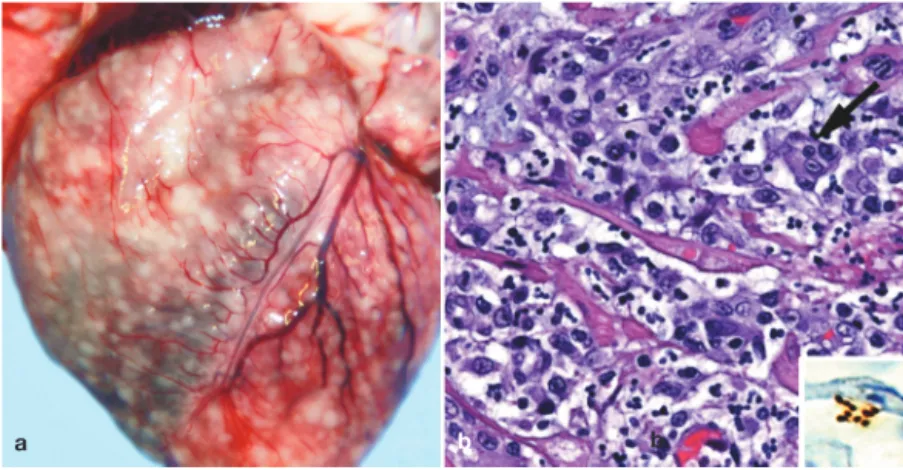
Figure 1Gross and histological findings in two cats from a North Carolina shelter that died after a litter of flea-infested kittens was introduced to the shelter. (a) Coalescing granulomas distributed throughout the myocardium of an approximately 9-week-old female kitten. (b) Pyogranulomatous myocarditis in an 8-month-old castrated male cat, which had been co-housed with the flea-infested kittens. Macrophages, with a rare multinucleated giant cell (arrow), are particularly numerous towards the upper left of the image; haematoxylin and eosin stain. Inset: Cluster of short bacilli in an inflammatory focus are immunoreactive (brown) for B henselae-specific monoclonal antibody; immunohistochemistry with diaminobenzidine chromogen and haematoxylin counterstain. Reproduced, with permission, from Varanat et al (2012)47
566
JFMSCLINICAL PRACTICEDrug Dose Duration Reference(s) EBM grade
Doxycycline 10 mg/kg PO q12–24 h
2–4 weeks Lappin and Black (1999)35 IV Azithromycin 10 mg/kg PO q24h (q48h) For 7 days followed by every other day for 6–12 weeks Ketring et al (2004)36 Varanat et al (2009)7 IV Marbofloxacin 5 mg/kg PO q24h 6 weeks Perez et al (2010)44 IV Amoxicillin– clavulanate (with azithromycin) 62.5 mg PO q12h 2 months Varanat et al (2009)7 IV Suggested treatment for bartonellosis in cats Table 3
Post mortem evidence of pyogranulomatous myocarditis and diaphragmatic myositis associated with B henselae infection was also obtained in two cats (Figure 1).47
Lameness and pain during limb palpation were observed in a cat affected by recurrent osteomyelitis and polyarthritis associated with B vinsonii subspecies berkhoffii infection and bacteraemia.7
In conclusion, most cats naturally infected by B henselae do not show clinical signs. The identification of Bartonella infection in cats with disease should prompt a critical assess-ment of the role of the infection in the causa-tion of the clinical signs and the exclusion of other compatible diagnoses.
Diagnosis
Bartonella laboratory testing is required for feline blood donors, for pet cats belonging to immunosuppressed persons, or when a human Bartonella-related disease is diagnosed in a cat’s home.
Isolation of the bacterium is the gold stan-dard, but because of the high prevalence of infection in healthy cats in endemic areas, a positive culture is not confirmatory, and other compatible diagnoses must be ruled out.
The disease is, therefore, diagnosed on the basis of exclusion, and by assessing the response to therapy. The ex juvantibus infer-ence about disease causation from the observed response to a treatment may apply to uveitis, endocarditis, myocarditis, osteoarthritis and multifocal central nervous system (CNS) disease, which are considered compatible with feline bartonellosis.
PCR may be used on samples of blood,
R E V I E W/ABCD guidelines on Bartonella species infection
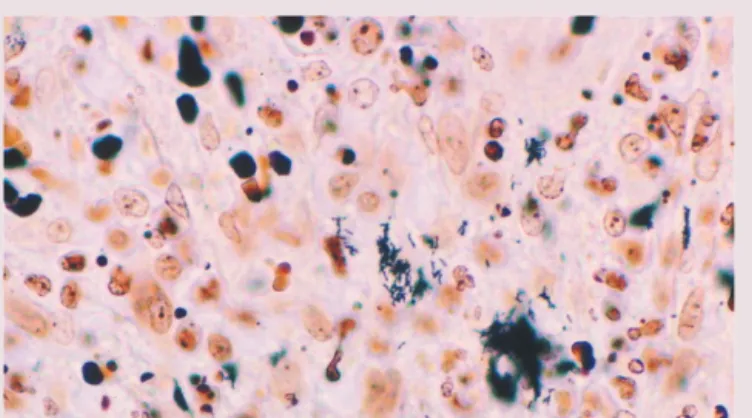
B henselae is the causative agent of cat scratch disease (Figure 2). This is a usually self-limiting regional lymphadenopathy that develops after a primary papular lesion and lasts for a few weeks to several months.48 Abscessation of the lymph node and
systemic signs are occasionally reported. Atypical forms and an expanding spectrum of clinical conditions are being associated with B henselae infection, such as neuroretinitis, uveitis, endo-carditis and neurological disorders.48–52An unusual
case of cat scratch disease has been reported in a veterinarian affected by persistent fever and back pain after an accidental needle puncture.53The occupational risk of
expo-sure to arthropod vectors, as well as the reservoir host, should be also considered by veterinarians for this vector-borne dis-ease.54 Immunocompetent individuals may
even experience subclinical Bartonella infec-tion; conversely, immunocompromised persons
suffer from clinical forms of a disseminated infection that may be fatal if untreated.55,56
D i s e a s e i n h u m a n s
Zoonosis B henselae is the causative agent of cat scratch disease.
aqueous humour, cerebrospinal fluid or tis-sues, and several gene targets have been stud-ied. To reduce false-negative test results, repeated blood cultures are required or PCR performed on more than one kind of biologi-cal sample (blood, lymph node, oral swab).
Serology (IFAT or ELISA) is more useful for exclusion than for confirmation of the infec-tion because of the low positive predictive value (39–46%) compared with the good negative predictive value (87–97%) [EBM grade III].13,15,17,20 Bartonella IgM antibodies are
found in experimentally and naturally infect-ed cats but their occurrence seems not to be related to bacteraemia [EBM grade II].57
Treatment
Treatment is recommended in the rare cases where Bartonella has actually caused disease (eg, endocarditis).
Figure 2Immunohistochemical identification of B henselae in a case of cat scratch disease. With Warthin-Starry silver stain, these coccobacillary pathogens can be seen singly, in small clumps or in chains in necrotic foci. Courtesy of Dharam Ramnani, Webpathology.com
EBM grades
The ranking system for grading the level of evidence of various statements within this article is described on page 533 of this Special Issue.
at Universite de Liege on September 3, 2013 jfm.sagepub.com
Cats are the main reservoir for B henselae, the agent of cat scratch disease and more severe human diseases observed in severely immunosuppressed persons such as bacillary angiomatosis and peliosis hepatis. Recognised risk factors for bacteraemia in cats are young age, infestation with fleas, out-door lifestyle and a multicat environment.13,15,20,48
There is no evidence of benefit to cats or their owners from routine testing of the pet for Bartonella infection or from anti -biotic treatment of healthy antibody positive cats [EBM grade IV].61Infection does not always lead to clinical signs in healthy
persons and many of them have antibodies.55
Owner education by practitioners about Bartonella transmis-sion is essential to reduce the zoonotic risk, and the presence of immunosuppressed persons in the cat family should be specifi-cally considered. It is recommended that immunosuppressed persons are allowed to keep their pet cat or to adopt a new one and a few simple tips summarised on the right can minimise their exposure risk.61,62
P u b l i c h e a l t h c o n s i d e r a t i o n s
Recommendations for prevention of B henselae infection in immunocompromised persons61,62
< Immunocompromised owners should adopt cats that are older than 1 year, flea-free, in good health, not from shelters or multicat households, and have no history of contact with cats of unknown health status
< Strict flea control should be exercised under veterinary supervision
< Rough play should be avoided, and the cat’s claws kept trimmed
< Any wound should promptly be cleaned with soap and water, and medical advice sought < Cats should be kept indoors to avoid exposure
to fleas and other possible vectors, and also to prevent other zoonotic risks
Current therapeutic strategies in cats (Table 3) are based on in vitro studies and human bartonellosis. Data from controlled efficacy studies in cats are lacking. A cat affected by recurrent osteomyelitis and polyarthritis asso-ciated with B vinsonii subspecies berkhoffii genotype II infection and bacteraemia recov-ered after therapy with azithromycin (10 mg/kg PO q48h for 3 months) and amoxi-cillin–clavulanate (62.5 mg PO q12 for 2 months) [EBM grade IV].7
After natural or experimental infection with B henselae or B clarridgeiae, healthy cats have been treated to eliminate bacteraemia and many drugs have been evaluated: doxycy-cline, amoxicillin, amoxicillin-clavulanate, enrofloxacin, erythromycin and rifam picin
[EBM grade II].58–60 Based on these results,
clearance of bacteraemia cannot be guaran-teed and, in the case of failure, there is the risk of inducing antimicrobial resistance. Treatment of healthy carriers, therefore, can-not be considered an effective measure for eliminating the zoonotic risk, as is sometimes requested in human cases of cat scratch dis-ease or where other Bartonella-related disdis-ease occurs in a family member.
Prevention
Based on transmission studies to date, strict flea (and tick) control is the only successful preventive measure. There is no vaccine avail-able against Bartonella infection.
< B henselae is the most common Bartonella species infecting cats, which are the main reservoir for this bacterium.
< B henselae is the causative agent of cat scratch disease in man, a self-limiting regional lymphadenopathy.
< B henselae is naturally transmitted among cats by the faeces of Ctenocephalides felis felis fleas; contact
infections do not occur. Blood transfusion also represents a risk.
< Most cats naturally infected by B henselae do not show clinical signs but sporadic cases of endocardial, myocardial or ocular feline disease have been reported.
< Other Bartonella species, for which cats are accidental hosts, may have more pathogenic potential. < Antibodies are not protective, and seropositive cats may be reinfected.
< Bartonellosis is diagnosed on the basis of exclusion, and by assessing the response to antibiotic therapy. < Testing healthy cats or people is of no benefit.
< Treatment of healthy carriers is no measure for eliminating the zoonotic risk. < Strict flea and tick control is the only effective preventive measure.
568
JFMSCLINICAL PRACTICER E V I E W/ABCD guidelines on Bartonella species infection
Bouillin C, et al. Epidemiology of Bartonella infection in domes-tic cats in France. Vet Microbiol 2001; 80: 185–198.
16 Ayllon T, Diniz PP, Breitschwerdt EB, Villaescusa A, Rodriguez-Franco F and Sainz A. Vector-borne diseases in client-owned and stray cats from Madrid, Spain. Vector Borne Zoonotic Dis 2012; 12: 143–150.
17 Fabbi M, De Giuli L, Tranquillo M, Bragoni R, Casiraghi M and Genchi C. Prevalence of Bartonella henselae in Italian stray cats: evaluation of serology to assess the risk of transmission of Bartonella to humans. J Clin Microbiol 2004; 42: 264–268.
18 Brunetti E, Fabbi M, Ferraioli G, Prati P, Filice C, Sassera D, et al. Cat-scratch disease in Northern Italy: atypical clinical manifes-tations in humans and prevalence of Bartonella infection in cats. Eur J Clin Microbiol Infect Dis 2013; 32: 531–534.
19 Bennett AD, Gunn-Moore DA, Brewer M and Lappin MR. Prevalence of Bartonella species, haemoplasmas and Toxoplasma gondii in cats in Scotland. J Feline Med Surg 2011; 13:
553–557.
20 Guptill L, Wu CC, HogenEsch H, Slater LN, Glickman N, Dunham A, et al. Prevalence, risk factors, and genetic diversity of Bartonella henselae infections in pet cats in four regions of the United States. J Clin Microbiol 2004; 42: 652–659.
21 Kordick D, Brown TT, Shin K and Breitschwerdt EB. Clinical and pathologic evaluation of chronic Bartonella henselae or Bartonella clarridgeiae infection in cats. J Clin Microbiol 1999; 37:
1536–1547.
22 Yamamoto K, Chomel BB, Kasten RW, Hew CM, Weber DK and Lee WI. Experimental infection of specific pathogen free (SPF) cats with two different strains of Bartonella henselae type I: a comparative study. Vet Res 2002; 33: 669–684.
23 Arvand M, Viezens J and Berghoff J. Prolonged Bartonella
hense-lae bacteremia caused by reinfection in cats. Emerg Infect Dis
2008; 14: 152–154.
24 Bradbury CA and Lappin MR. Evaluation of topical application of 10% imidacloprid-1% moxidectin to prevent Bartonella henselae transmission from cat fleas. J Am Vet Med Assoc 2009;
236: 869–873.
25 Ueno H, Hohdatsu T, Muramatsu Y, Koyama H and Morita C. Does coinfection of Bartonella henselae and FIV induce clinical disorders in cats? Microbiol Immunol 1996; 40: 617–620.
26 Quimby J, Elston T, Hawley J, Brewer M, Miller A and Lappin MR. Evaluation of the association of Bartonella species, feline herpesvirus 1, feline calicivirus, feline leukemia virus and feline immunodeficiency virus with chronic feline gingivo stomatitis. J Feline Med Surg 2008; 10: 66–72.
27 Dowers KL, Hawley JR, Brewer MM, Morris AK, Radecki SV and Lappin MR. Association of Bartonella species, feline calicivirus, and feline herpesvirus 1 infection with gingivostomatitis in cats. J Feline Med Surg 2010; 12: 314–321.
28 Pennisi MG, La Camera E, Giacobbe L, Orlandella BM, Lentini V, Zummo S, et al. Molecular detection of Bartonella henselae and
Bartonella clarridgeiae in clinical samples of pet cats from Southern Italy. Res Vet Sci 2010; 88: 379–384.
29 Belgard S, Truyen U, Thibault JC, Sauter-Louis C and Hartmann K. Relevance of feline calicivirus, feline immuno deficiency virus, feline leukemia virus, feline herpesvirus and Bartonella hense-lae in cats with chronic gingivostomatitis. Berl Munch Tierarztl
Wochenschr 2010; 123: 369–376.
30 Namekata DY, Kasten RW, Boman DA, Straub MH, Siperstein-Cook L, Couvelaire K, et al. Oral shedding of Bartonella in cats: correlation with bacteremia and seropositivity. Vet Microbiol 2010; 146: 371–375.
Funding
The authors received no specific grant from any funding agency in the public, commercial or not-for-profit sectors for the preparation of this article. The ABCD is supported by Merial, but is a scientifically independent body.
Conflict of interest
The authors do not have any potential conflicts of interest to declare.
References
1 Chomel BB, Boulouis H-J, Maruyama S and Breitschwerdt EB.
Bartonella spp. in pets and effect on human health. Emerg Infect
Dis 2006; 12: 389–394.
2 Chomel BB, Kasten RW, Floyd-Hawkins KA, Chi B, Yamamoto K, Roberts-Wilson J, et al. Experimental transmission of Bartonella
henselae by the cat flea. J Clin Microbiol 1996; 34: 1952–1956.
3 Finkelstein JL, Brown TP, O’Reilly KL, Wedincamp J Jr and Foil LD. Studies on the growth of Bartonella henselae in the cat flea (Siphonaptera: Pulicidae). J Med Entomol 2002; 39: 915–919. 4 Abbott RC, Chomel BB, Kasten RW, Floyd-Hawkins KA, Kikuchi
Y, Koehler JE, et al. Experimental and natural infection with
Bartonella henselae in cats. Comp Immunol Microbiol Infect Dis
1997; 20: 41–57.
5 Guptill L, Slater L, Wu C-C, Lin T-L, Glickman LT, Welch DF, et al. Experimental infection of young specific pathogen-free cats with Bartonella henselae. J Infect Dis 1997; 176: 206–216. 6 Cottè V, Bonnet S, Le Rhun D, Le Naour E, Chauvin A, Boulouis
H-J, et al. Transmission of Bartonella henselae by Ixodes ricinus.
Emerg Infect Dis 2008; 14: 1074–1080.
7 Varanat A, Travis A, Lee W, Maggi RG, Bissett SA, Linder KE, et al. Recurrent osteomyelitis in a cat due to infection with
Bartonella vinsonii subsp. berkhoffii genotype II. J Vet Intern
Med 2009; 23: 1273–1277.
8 Bergmans AMC, de Jong CMA, van Amerongen G, Schot CS and Schouls LM. Prevalence of Bartonella species in domestic cats in The Netherlands. J Clin Microbiol 1997; 35: 2256–2261.
9 Allerberger F, Schonbauer M, Zangerle R and Dierich M. Prevalence of antibody to Rochalimaea henselae among Austrian cats. Eur J Ped 1995; 154: 165.
10 Glaus T, Hofmann-Lehmann R, Greene C, Glaus B, Wolfensberger C and Lutz H. Seroprevalence of Bartonella henselae infection and correlation with disease status in cats in Switzerland. J Clin
Microbiol 1997; 35: 2883–2885.
11 Haimerl M, Tenter AM, Simon K, Rommel M, Hilger J and Autenrieth IB. Seroprevalence of Bartonella henselae in cats in Germany. J Med Microbiol 1999; 48: 849–856.
12 Morgenthal D, Hamel D, Arndt G, Silaghi C, Pfister K, Kempf VA, et al. Prevalence of haemotropic Mycoplasma spp, Bartonella spp and Anaplasma phagocytophilum in cats in Berlin/ Branderburg (Northeast Germany). Berl Munch Tierarztl
Wochenschr 2012; 125: 418–427.
13 Chomel BB, Gurfield AN, Boulouis HJ, Kasten RW and Piemont Y. Réservoir félin de l’agent de la maladie des griffes du chat,
Bartonella henselae, en région parisienne: resultants prélimi-naires. Rec Med Vet 1995; 171: 841–845.
14 Heller R, Artois M, Xemar V, de Briel D, Gehin H, Jaulhac B, et al. Prevalence of Bartonella henselae and Bartonella clarridgeiae in stray cats. J Clin Microbiol 1997; 35: 1327–1331.
15 Gurfield AN, Boulouis H-J, Chomel BB, Kasten RW, Heller R,
at Universite de Liege on September 3, 2013 jfm.sagepub.com
31 Breitschwerdt EB, Levine JF, Radulovich S, Hanby SB, Kordick DL and La Perle KMD. Bartonella henselae and Rickettisa seroreac-tivity in a sick cat population from North Carolina. Int J Appl Res
Vet Med 2005; 3: 287–302.
32 Pearce LK, Radecki SV, Brewer M and Lappin MR. Prevalence of
Bartonella henselae antibodies in serum of cats with and with-out clinical signs of central nervous system disease.
J Feline Med Surg 2006; 8: 315–320.
33 Leibovitz K, Pearce L, Brewer M and Lappin MR. Bartonella species antibodies and DNA in cerebral spinal fluid of cats with central nervous system disease. J Feline Med Surg 2008; 10: 332–337.
34 Fontenelle JP, Powell CC, Hill AE and Radecki SV. Prevalence of serum antibodies against Bartonella species in the serum of cats with or without uveitis. J Feline Med Surg 2008; 10: 41–46. 35 Lappin MR and Black JC. Bartonella spp infection as a possible
cause of uveitis in a cat. J Am Vet Med Assoc 1999; 214: 1205–1207. 36 Ketring KL, Zuckerman EE and Hardy Jr WD. Bartonella: a new etiological agent of feline ocular disease. J Am Anim Hosp Assoc 2004; 40: 6–12.
37 Ishak AM, Radecki S and Lappin MR. Prevalence of Mycoplasma
haemofelis, ‘Candidatus Mycoplasma haemominutum’, Bartonella species, Ehrlichia species, and Anaplasma phagocy-tophilum DNA in the blood of cats with anemia. J Feline Med
Surg 2007; 9: 1–7.
38 Whittemore JC, Hawley JR, Radecki SV, Steinberg JD and Lappin MR. Bartonella species antibodies and hyperglobulinemia in privately owned cats. J Vet Intern Med 2012; 26: 639–644. 39 Lappin MR, Breitschwerdt E, Brewer M, Hawley J and Hegarty B
Prevalence of Bartonella species antibodies and Bartonella species DNA in the blood of cats with and without fever. J Feline
Med Surg 2009; 11, 141–148.
40 Berryessa NA, Johnson LR, Kasten RW and Chomel BB. Microbial culture of blood samples and serologic testing for bartonellosis in cats with chronic rhinosinusitis. J Am Vet Med
Assoc 2008; 233: 1084–1089.
41 Bayliss DB, Steiner JM, Sucholdolski JS, Radecki SV, Brewer MM, Morris AK, et al. Serum feline pancreatic lipase immunoreactiv-ity concentration and seroprevalences of antibodies against Toxoplasma gondii and Bartonella species in client-owned cats.
J Feline Med Surg 2009; 11: 663–667.
42 Chomel B, Wey AC, Kasten RW, Stacy BA and Labelle P. Fatal case of endocarditis associated with Bartonella henselae type I infec-tion in a domestic cat. J Clin Microbiol 2003; 41: 5337–5339. 43 Chomel BB, Kasten RW, Williams C, Wey AC, Henn JB, Maggi R,
et al. Bartonella endocarditis: a pathology shared by animal reservoirs and patients. Ann N Y Acad Sci 2009; 1166: 120–126.
44 Perez C, Hummel JB, Keene BW, Maggi RG, Diniz PPVP and Breitschwerdt EB. Successful treatment of Bartonella henselae endocarditis in a cat. J Feline Med Surg 2010; 12: 483–486. 45 Malik R, Barrs VR, Church DB, Zahn A, Allan GS, Martin P, et al.
Vegetative endocarditis in six cats. J Feline Med Surg 1999; 1: 171–180.
46 Nakamura RK, Zimmerman SA and Lesser MB. Suspected
Bartonella-associated myocarditis and supraventricular tachy-cardia in a cat. J Vet Cardiol 2011; 13: 277–281.
47 Varanat M, Broadhurst J, Linder KE, Maggi RG and Breitschwerdt EB. Identification of Bartonella henselae in two cats with pyogranulomatous myocarditis and diaphragmatic myositis.
Vet Pathol 2012; 49: 608–611.
48 Boulouis HJ, Chang CC, Henn JB, Kasten RW and Chomel BB.
569
Factors associated with the rapid emergence of zoonotic Bartonella infections. Vet Res 2005; 36: 383–410.49 Fonollosa A, Galdos M, Artaraz J, Perez-Irezabal J and Martinez-Alday N. Occlusive vasculitis and optic disk neovascularization associated with neuroretinitis. Ocul Immunol Inflamm 2011; 19: 62–64.
50 Tsuneoka H, Yanagihara M, Otani S, Katayama Y, Fujinami H, Nagafuji H, et al. A first Japanese case of Bartonella henselae-induced endocarditis diagnosed by prolonged culture of a spec-imen from the excised valve. Diagn Microbiol Infect Dis 2010; 68: 174–176.
51 Mascarelli PE, Maggi RG, Hopkins S, Mozayeni BR, Trull CL, Bradley JM, et al. Bartonella henselae infection in a family experiencing neurological and neurocognitive abnormalities after woodlouse hunter spider bites. Parasit Vectors 2013; 6: 98. DOI: 10.1186/1756-3305-6-98.
52 Maggi RG, Ericson M, Mascarelli PE, Bradley JM and Breitschwerdt EB. Bartonella henselae bacteremia in a mother and son potentially associated with tick exposure. Parasit Vectors 2013 6: 101. DOI: 10.1186/1756-3305-6-101.
53 Lin JW, Chen CM and Chang CC. Unknown fever and back pain caused by Bartonella henselae in a veterinarian after a needle puncture: a case report and literature review. Vector Borne
Zoonotic Dis 2011; 11: 589–591.
54 Maggi RM, Mascarelli PE, Havenga LN, Naidoo V and Breitschwerdt EB. Co-infection with Anaplasma platys,
Bartonella henselae and Candidatus Mycoplasma haematoparvum in a veterinarian. Parasit Vectors 2013; 6: 103. DOI: 10.1186/1756-3305-6-103.
55 Massei F, Messina F, Gori L, Macchia P and Maggiore G. High prevalence of antibodies to Bartonella henselae among Italian children without evidence of cat scratch disease. Clin Infect Dis 2004; 38: 145–148.
56 Lange D, Oeder C, Waltermann K, Mueller A, Oehme A, Rohrberg R, et al. Bacillary angiomatosis. J Dtsch Dermatol Ges 2009; 7: 767–769.
57 Ficociello J, Bradbury C, Morris A and Lappin MR. Detection of
Bartonella henselae IgM in serum of experimentally infected and naturally exposed cats. J Vet Intern Med 2011; 25: 1264–1269. 58 Greene CE, McDermott M, Jameson PH, Atkins CL and Marks
AM. Bartonella henselae infection in cats: evaluation during primary infection, treatment, and rechallenge infection.
J Clin Microbiol 1996; 34: 1682–1685.
59 Regnery RL, Rooney JA, Johnson AM, Nesby SL, Manzewitsch P, Beaver K, et al. Experimentally induced Bartonella henselae infections followed by challenge exposure and antimicrobial therapy in cats. Am J Vet Res 1996; 57: 1714. Erratum in: Am J Vet
Res 1997 58: 803.
60 Kordick DL, Papich MG and Breitschwerdt EB. Efficacy of enrofloxacin or doxycycline for treatment of Bartonella henselae or Bartonella clarridgeiae infection in cats. Antimicrob Agents
Chemother 1997; 41: 2448–2455.
61 Kaplan JE, Benson C, Holmes KH, Brooks JT, Pau A, Masur H, et al. Guidelines for prevention and treatment of opportunistic infections in HIV-infected adults and adolescents: recommenda-tions from CDC, the National Institute of Health, and the HIV Medicine Association of the Infectious Diseases Society of America. MMWR Recomm Rep 2009; 58: 1–207.
62 Brunt J, Guptill L, Kordick DL, Kudrak S and Lappin MR. American Association Feline Practitioners 2006 Panel report on diagnosis, treatment, and prevention of Bartonella spp infec-tions. J Feline Med Surg 2006; 8: 213–226.