Université de Montréal
Contextualizing Discretion: Micro-dynamics of Canada’s
Refugee Determination System
par Sule Bayrak
Département de science politique Faculté des arts et des sciences
Thèse présentée à la Faculté des arts et des sciences en vue de l’obtention du grade de Ph.D.
en science politique
Mars 2015
i
Université de Montréal
Faculté des études supérieures et postdoctorales
Cette thèse intitulée:
Contextualizing discretion : Micro-dynamics of Canada’s Refugee Determination System
Présentée par : Sule Bayrak
a été évaluée par un jury composé des personnes suivantes : Frédéric Mérand, président-rapporteur
Pascale Dufour, directeur de recherche Fabien Desage, membre du jury Steven Maynard-Moody, examinateur externe Guylaine Racine, représentante du doyen de la FES
ii
Abstract
In an era where international immigration is increasingly difficult and selective, refugee status constitutes a valuable public good that enables some non-citizens access and membership to the host country. Based on the discretionary judgment of the decision-maker, refugee status is only granted to claimants who establish well-founded fear of persecution if returned to their home country. Canada’s largest independent administrative tribunal, Immigration and Refugee Board of Canada (IRB), is charged to hear refugee claimants and make refugee status determinations. This dissertation investigates why significant disparities exist among IRB’s politically appointed decision-makers’ refugee status grant rates.
As little was known about the concrete ways Canada allocates opportunities for entry and legal status for non-citizens, lifting the blanket of administration was necessary. By exploring refugee decision-making from a Street Level Bureaucracy Theory (SLBT) perspective, and an ethnographic methodology that combined direct observation, semi-structured interviews and document analysis, the study sought first to understand whether the variation in grant rates were a result of differences in decision-makers’ discretionary practices and reasoning and second to trace the organizational factors that foster variation.
In line with previous scholarship on SLBT that document how the work situation structure discretion and how individual views play in decision-making; this study demonstrates substantive differences among decision-makers in terms of their work routines, conceptions of refugee claimants and the best way to conduct their work. The analysis illustrates how decision-makers apply not a singular but a variety of approaches to the refugee hearing, ranging from rigid interrogation to the more resilient interview style. Despite clear organizational constraints on decision-makers that target to increase consistency and efficiency of refugee determinations, the significance of credibility-assessment and the invisibility of the decision-making space leave ample room for discretionary behavior.
Even in rule-saturated environments like administrative tribunals which extensively regulate discretion; decision-making hardly means neutral and hierarchical rule adherence. Instead discretion is nested within the context of interaction routines, work situation, rule adherence and law. It is inherently difficult if not improbable to control and discipline discretionary decision-making even in organizations that institutionalize and standardize training and communicate their demands clearly to decision-makers. When faced with goal ambiguity and with demands that they consider run against their discretionary authority, decision-makers reinterpret their job definition and routinize their practices. They formulate an encounter routine that is organizationally acceptable to assess the people in front of them. This dissertation illustrates how unevenly the claimants, their testimony and evidence are treated and how these treatments are reflected on the refugee decision.
Key words: administrative discretion, administrative tribunals, street-level bureaucracy, refugee status determination, refugee decision-making, international human rights standards, Canada, policy implementation, bottom up approaches
iii
Résumé
À une époque où l'immigration internationale est de plus en plus difficile et sélective, le statut de réfugié constitue un bien public précieux qui permet à certains non-citoyens l'accès et l'appartenance au pays hôte. Reposant sur le jugement discrétionnaire du décideur, le statut de réfugié n’est accordé qu’aux demandeurs qui établissent une crainte bien fondée de persécution en cas de retour dans leur pays d'origine. Au Canada, le plus important tribunal administratif indépendant, la Commission de l'immigration et du statut de réfugié du Canada (CISR), est chargé d’entendre les demandeurs d'asile et de rendre des décisions de statut de réfugié. Cette thèse cherche à comprendre les disparités dans le taux d’octroi du statut de réfugié entre les décideurs de la CISR qui sont politiquement nommés.
Au regard du manque de recherches empiriques sur la manière avec laquelle le Canada alloue les possibilités d’entrée et le statut juridique pour les non-citoyens, il était nécessaire de lever le voile sur le fonctionnement de l’administration sur cette question. En explorant la prise de décision relative aux réfugiés à partir d'une perspective de Street Level Bureaucracy Theory (SLBT) et une méthodologie ethnographique qui combine l'observation directe, les entretiens semi-structurés et l'analyse de documents, l'étude a d'abord cherché à comprendre si la variation dans le taux d’octroi du statut était le résultat de différences dans les pratiques et le raisonnement discrétionnaires du décideur et ensuite à retracer les facteurs organisationnels qui alimentent les différences.
Dans la lignée des travaux de SLBT qui documentent la façon dont la situation de travail structure la discrétion et l’importance des perceptions individuelles dans la prise de décision, cette étude met en exergue les différences de fond parmi les décideurs concernant les routines de travail, la conception des demandeurs d’asile, et la meilleure façon de mener leur travail. L’analyse montre comment les décideurs appliquent différentes approches lors des audiences, allant de l’interrogatoire rigide à l’entrevue plus flexible. En dépit des contraintes organisationnelles qui pèsent sur les décideurs pour accroître la cohérence et l’efficacité, l’importance de l’évaluation de la crédibilité ainsi que l’invisibilité de l’espace de décision laissent suffisamment de marge pour l’exercice d’un pouvoir discrétionnaire.
Même dans les environnements comme les tribunaux administratifs où la surabondance des règles limite fortement la discrétion, la prise de décision est loin d’être synonyme d’adhésion aux principes de neutralité et hiérarchie. La discrétion est plutôt imbriquée dans le contexte de routines d'interaction, de la situation de travail, de l’adhésion aux règles et du droit. Même dans les organisations qui institutionnalisent et uniformisent la formation et communiquent de façon claire leurs demandes aux décideurs, le caractère discrétionnaire de la décision est par la nature difficile, voire impossible, à contrôler et discipliner. Lorsqu'ils sont confrontés à l'ambiguïté des objectifs et aux exigences qui s’opposent à leur pouvoir discrétionnaire, les décideurs réinterprètent la définition de leur travail et banalisent leurs pratiques. Ils formulent une routine de rencontre qui est acceptable sur le plan organisationnel pour évaluer les demandeurs face à eux. Cette thèse montre comment les demandeurs, leurs témoignages et leurs preuves sont traités d’une manière inégale et comment ces traitements se répercutent sur la décision des réfugiés.
iv
Mots-clés: discrétion administrative, tribunaux administratifs, street-level bureaucracy, détermination du statut du réfugié, normes internationales relatives aux droits de l’homme, Canada, mise en œuvre des politiques, approche l’État au guichet
v
Table of Contents
LIST OF TABLES VIII
LIST OF FIGURES IX
ABBREVIATIONS X
INTRODUCTION 1
CHAPTER 1 STUDYING REFUGEE DECISION-MAKING EMPIRICALLY 12
1.1 The puzzle: disparities in refugee status grant rates 13
1.2 Lack of convincing empirical evidence for alternative explanations 17
1.3 The Legal and practical complexity of refugee determination 22
1.4 The IRB: neither judiciary nor bureaucracy 24
1.5 The Features of the Board member’s job 28
1.6 Studying refugee decision-making from below 38
1.7 Argument 43
1.8 Plan of the dissertation 44
1.9 Contribution 46
CHAPTER 2 LITERATURE REVIEW & THEORETICAL FRAMEWORK 48
2.1 Problematizing discretion 48
2.1.1 Discretion in legal and social science scholarship, the differences 49 2.1.2 Cognitive dimension of discretion: implicated but not uttered 52
2.2 Political control and compliance 57
2.3 Managerial control 62
2.4 Representative bureaucracy: serving to represented clients 67
vi
2.6 Street-level bureaucracy: the impact of organizational constraints 73
2.7 How to study discretion in refugee determination? 78
CHAPTER 3 OPERATIONALIZATION OF THE RESEARCH 80
3.1 Methodological framework: why ethnography? 81
3.2 Research question and objectives 83
3.3 Organizational ethnography: pursuing complexity in mundane organizational life 84
3.4 Research design: a dynamic approach 87
3.4.1 Development of the field research and the issue of Board member diversification 89 3.4.2 Pre-field work period and sampling (March-October 2012) 90 3.4.3 Getting started with fieldwork and maintaining efforts of sampling 95
3.4.4 An ordinary day in the field 96
3.4.5 Strengthening the bonds with refugee lawyers and advocacy organizations 98 3.4.6 Challenges encountered as a result of adopting an ethnographic methodology 100
3.5 Ethnographic data collection 102
3.5.1 Direct observation: situating the discretionary practices concretely 102 3.5.2 Semi-structured interviews: getting closer to Board members’ meanings and self-understandings 107 3.5.3 Document Analysis: locating and evaluating relevant documentation 110
3.6 Analysis and interpretation of data: contextualizing discretion 112
3.7 Questions of reflexivity, positionality and ethics 113
3.8 Limitations, reliability and validity 115
CHAPTER 4 TRUTH IS A STUBBORN BEAST, HOW WILL YOU HANDLE IT?:
TRUTH-SEEKING AND CREDIBILITY ASSESSMENT IN REFUGEE HEARINGS 117
4.1 Organizational backstage of the refugee hearing 117
4.2 Refugee hearing as an administrative inquiry: interrogation or interview 120
4.3 Similar cases, contradictory practices 123
4.4 The implications of discretion in refugee decision-making 133
4.5 Refugee determination as interplay between conceptions and the hearing style 136
4.5.1 Internal consistency: contradictions, omissions and details 138 4.5.2 External consistency: believability and reasonableness 149 4.5.3 Accuracy of testimony: spontaneity, details and demeanor 156
vii
4.6 Conclusion 165
CHAPTER 5 DYNAMICS OF ORGANIZATIONAL LIFE AT THE REFUGEE PROTECTION
DIVISION 168
5.1 Routines and simplifications: managing and controlling the work situation 169
5.2 Organizational dynamics as the source of disparity 173
5.3 Simultaneous instruction of sensitivity and disbelief 174
5.3.1 Sensitivity in handling the refugee claims 177
5.3.2 Teaching disbelief rather than suspicion 185
5.4 Conditions and Expectations of the IRB: a fertile ground for hearing style 192
5.4.1 Peer pressure and peer perceptions: lack of a harmonious organizational culture 193 5.4.2 Emotional distress in a rational organization 196
5.4.3 Dealing with difficult counsel 199
5.4.4 Limited success of demands for consistency 201
5.4.5 Clear pressures of efficiency but remain unrealized 204
5.4.6 Employment Uncertainty 206
5.5 Conclusion 207
CONCLUSION 210
FROM: BAYRAK SULE CCLX
FROM: BAYRAK SULE SENT: AUGUST 3, 2012 12:49 PM TO: NELIGAN, DAVID SUBJECT:
RE: RESEARCH AT REFUGEE PROTECTION DIVISION CCLXII
APPENDIX B- HEARING OBSERVATIONS CCLXV
APPENDIX C – ATIP REQUESTS CCLXX
APPENDIX D. FIGURE OF CANADA’S REFUGEE STATUS DETERMINATION CCLXXIX
viii
List of Tables
Table 1. Outcome of Decisions by Board member in 2012 16 Table 2. Outcome of Decisions by Board member in 2013 16
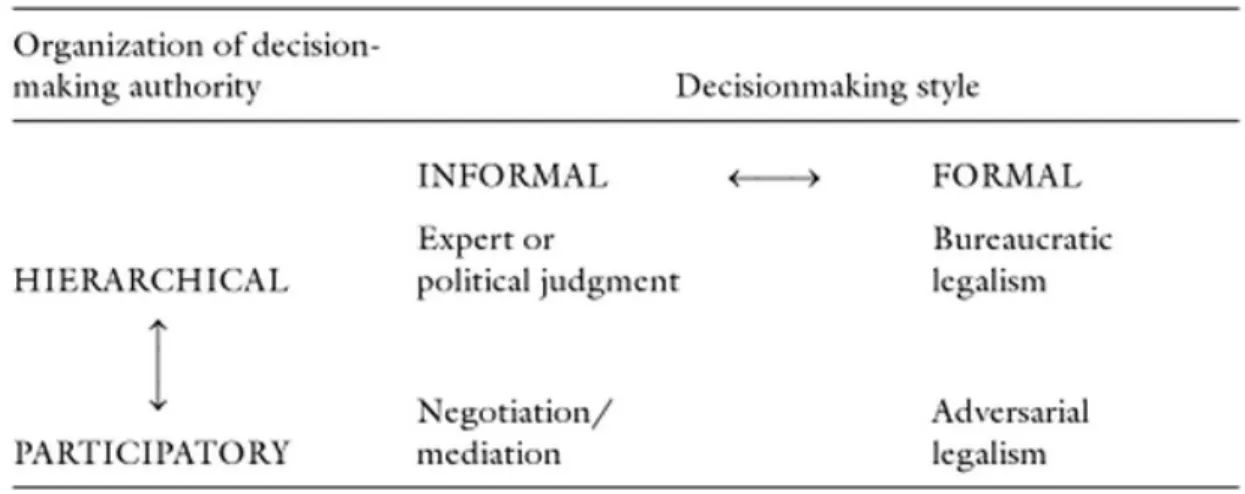
Table 3. Modes of Decision-making and Dispute Resolution 30
Table 4. The IRB Board Member Appointment Process 37
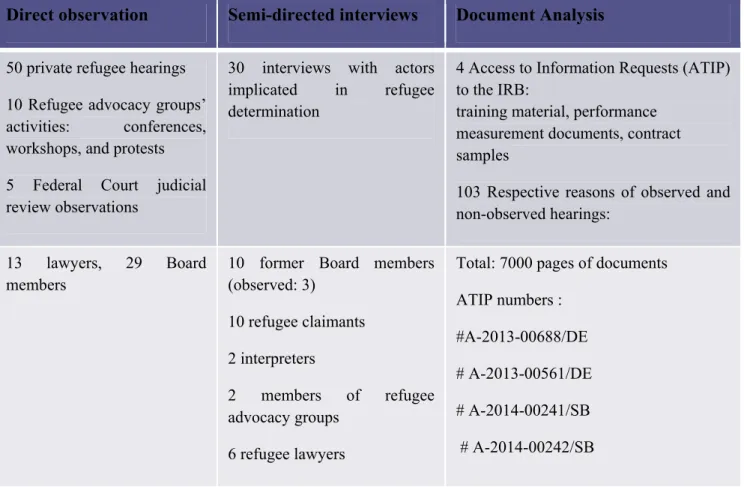
Table 5. Research methods and data 80
ix
List of Figures
Figure1. Canada’s Court System 25
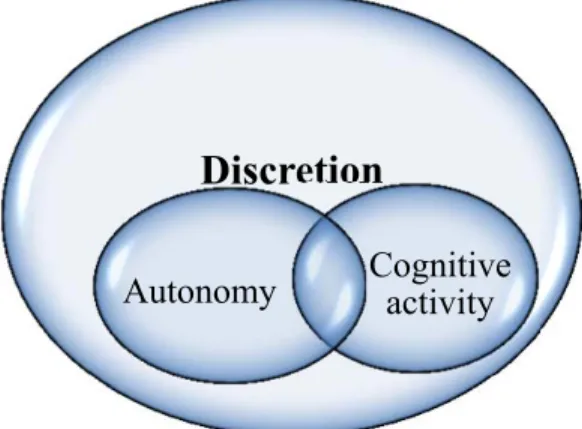
Figure 2. Two Aspects of Discretion 55
x
ABBREVIATIONS
Access to Information and Privacy (ATIP) Action Réfugiés Montréal (ARM)
Canadian Association for Refugee and Forced Migration Studies (CARFMS) Canadian Association of Refugee Lawyers (CARL)
Canadian Border Services Agency (CBSA) Canadian Council for Refugees (CCR) Case Management Team (CMT) Citizenship and Immigration (CIC) Coordinating Member (CM)
Cour nationale du droit d’asile (CNDA) Corporate Security Services (CSS) Designated Country of Origin (DCO) Democratic Republic of Congo (DRC) Governor in Council (GiC)
Internal Flight Alternative (IFA)
Immigration and Refugee Board of Canada (IRB) Immigration and Refugee Protection Act (IRPA)
Learning and Professional Development Directorate (LPDD) Mara Salvatrucha (MS-13)
Methodological Notes (MN)
Ministerial Advisory Committee (MAC) New Public Management (NPM)
Observational Notes (ON)
xi Operations Services Manager (OSM)
Personal Information Form (PIF) Persons living with AIDS (PLWA) Port of Entry (PoE)
Public Appointments Commission Secretariat (PACS) Refugee Protection Division (RPD)
Scientific Content Analysis (SCAN)
Strategic Communications and Partnerships Branch (SCPB) Street-Level Bureaucracy Theory (SLBT)
Street-Level Bureaucrat (SLB)
Table de concertation des organismes au service des personnes réfugiées et immigrantes (TCRI) Theoretical Notes (TN)
Tribunal Officer (TO)
Unified Lumumbist Party (PALU) World War II (WWII)
xii
For those who search for a safe home. And for Steve, who decided that life at a prison wasn’t worth living.
xiii
Acknowledgements
I owe a debt of gratitude to a group of people and institutions for the completion of this dissertation. Unfortunately, those to whom I owe the greatest debt must remain nameless. First and foremost, I would like to thank all of the refugee claimants who allowed me to be a part of one of the most important moments in their lives. I deeply respect your strength and courage to leave and seek a new home. I greatly admire the work done by refugee advocacy community, interpreters, refugee lawyers, and Board members. Your generosity in sharing insights that went beyond my requests helped me immensely in interpreting your world. I hope that I do justice in capturing the importance and the complexity of your work. I have endeavored to treat each story, dialogue, observation, and people behind them with respect and integrity. All errors remain my own.
Next, I want to thank my supervisor, Pascale Dufour, who is one of the rare adults who would truly appreciate le Petit Prince and can see the elephant inside the boa constrictor. Pascale, you supported me for the last five years as a mentor and a good friend. You always had the time to quiet my mind chatters. You stimulated me and put me back on track when I was feeling down. You kept pushing me towards a goal that seemed so far away, even unreachable. You insisted that I deliberate further when I thought that I had all the answers. This dissertation, Pascale, would not have been written in this way - the way I am proud of - in your absence.
Denis Saint-Martin, thank you for your support and belief in this ambitious and pragmatic project from the beginning. Without your guidance I could only scratch the surface of what I was looking for. Thank you Fabien Desage for encouraging me from the very first baby steps of putting my scientific inquiry on paper. Thank you for finding the time to read and discuss my chapters, arguments, and analyses. You knew what I was going to write before my mind’s labour pains.
Next, I want to thank Steven Maynard-Moody for evaluating this dissertation as outstanding. I am looking forward to our future collaboration and discussions.
Special thanks to Alain Noël, for inspiring me to study Canadian politics, to Jean-François Godbout for disciplining my thought process while I was writing my research proposal, to Christine Rothmayr Allison for being supportive, and to Frédéric Mérand for finding this project stimulating. I am grateful to Michael Orsini from University of Ottawa and Cheryl Collier from University of Windsor for their constructive comments at the beginning of my research.
To Nordin Lazreg, I will always remain indebted. You are the person who first introduced me to the street-level bureaucracy theory. Maybe, without you, this dissertation - even the research it is based on- would not have existed. Thank you with all my heart for your interest, support and enthusiasm.
I would like to thank previous and current members of le Centre de recherche sur les politiques et le développement sociale where I found a supportive home and an intellectually stimulating environment. Jean-Philippe, Martin, Ricardo, Islam, Renaud, Audrey, Cem, Patricia, Maxime; thank you. I was very fortunate to be surrounded by such brilliant and insightful colleagues.
xiv
Financial support from le Fonds de recherche du Québec sur la société et la culture (FRQSC) and political science department of Université de Montréal are greatly acknowledged.
Thanks to Evelyn Z. Brodkin, the researcher that I look up to, who always found the time to read my work, and stimulated my intellectual curiosity for the last two years and many more to come.
James Alexander, my favourite English man, my former professor and my present day friend, thank you. I am grateful that you knew how I was a “natural anthropologist” much before I was aware of ethnography. Cheers for your friendship and support for the last eleven years.
My former students of my POL 3120 class, especially Manon Champel, Mathilde Gouin-Bonenfant, Valérie Jean, Nicolas Bourgeois, and Vincent Férland. Thank you for your challenging and stimulating questions. I cannot overstate how much learned from you.
Merouan Mekouar, Teresa Cappiali, and Mireille Paquet, thank you for being in my life and staying there. Thank you for being so inspiring, realistic, and grounding.
During the last three years, from the baby steps of this project, have I not only grown intellectually but I also developed friendships that will last a lifetime. Julien Morency-Laflamme, Alexandre Morin-Chassé, Maude Genest-Denis, and Marie-Claire Major, thank you for being my first Québécois family. Julien, I am grateful to you for always being there for me. Cheers for being a great friend and colleague for many more years to come.
Thanks to all my yoga teachers whom I practiced with during the last four years, especially to Gen Larocque for inspiring me to study yoga and to James Dylan for nourishing my practice. The women that I hold so close to my heart, who are loving, straightforward and strong, thank you. Sophie Andronas, our weekly yoga sessions do me a world of good. Marie-Joëlle Zahar, thank you for convincing me that I am a good teacher. Colette Nyirakamana, you are a gift, so unexpected and so beautiful. Ece Aksakoĝlu, life is simply better with you. Amanda Chicoine, I cannot imagine the rest of my life without you. Katrin Wittig, my soul sister, thank you for teaching me what putting one’s heart and soul into a friendship meant. I will never let you go. My in-laws, Maman and Bob, thank you for welcoming me to your family and making me feel like a daughter. Thank you, Bob, for reading and editing this dissertation. My parents, Gülfer and Yaşar Bayrak who have been teaching primary school for over thirty years, and were my first teachers. Thanks annecim for instilling the joy of learning in me. Thanks babam, for teaching me the significance of interpersonal skills for learning of all sorts. My family in Turkey, my grandmothers, aunts, uncles, cousins, especially my brother Celal, and my sister Özge, thank you for asking me every six months “Aren’t you done yet?” I am, now, finally.
Marc Tomkinson, my love at first sight, my strongest ally, my rock, my home… Thank you for accepting and loving this eccentric woman as she is. Your love and assurance made my PhD a pleasant, exciting, and worry-free experience. Thank you for believing in me and supporting me at the darkest times. For the last eight years, you have inspired me to dare, to step up and to grow. Every, single, day. I cannot say it enough, THANK YOU. I love you sevgilim.
1
Introduction
On a particularly cold February afternoon, at 12:55 pm, on the second floor of Guy-Favreau complex, refugee and immigration lawyer Roger Bluer presents me to his client Qadir Hussein, a 43-year-old man from Pakistan, one of the most articulate and cheerful refugee claimants that I met during my fieldwork. Qadir asks for Canada’s protection since he fears persecution on the basis of political opinion and his activities against the Taliban. His younger brother Hassan, a journalist, who was accepted as a refugee a few months ago accompanies him. In order to comfort Qadir, Hassan grabs his shoulder and says “Insha’Allah, god willing, everything will be all right”. Qadir’s tenuous smile slowly disappears, and he looks very serious. He turns to Roger and inquires of his chances to be accepted as a refugee like all claimants do. Roger is a realistic lawyer and a very sharp-tongued one in the hearing room. He looks at Qadir and answers cold-bloodedly: “I do not know which decision-maker we will have. I will see with you when we all enter the hearing room. We have very strong evidence, and you are well prepared”. Then he turns to me, “If we have Wael as the decision-maker, he will be accepted for sure. But if we have Walter or Hector, I am not sure. You observed them, right?” I nod and roll my eyes. He continues: “They will find a way to refuse, like they always do”. While we walk towards the hearing room 30, I notice once again, how perception of uncertainty and arbitrariness encompasses the refugee determination in Canada.
This dissertation focuses on refugee decision-making, one function of the state. It analyzes how macro-level and abstract legal rules are interpreted and employed in the conduct of refugee status determination. It locates the various forces that operate on decision-makers’
2
treatment of refugee claims made in Canada. It studies concrete individuals and tries to understand the sources of their embedded actions.
The state, as the principle of political reality, encompasses two different, even contradictory arrangements. At the macro-level, it represents an abstract, monolithic, vast and coherent structure; at the micro-level, on the other hand, it translates into a set of concrete, diverse, localized and inharmonious organizations. Policy is designed and adopted at the national, provincial or federal level, but its implementation takes place on the ground. State practice occurs at various locations; when a poor citizen waits to collect food stamps at a welfare office, when a police officer decides to arrest a suspicious looking individual at night or when a refugee decision-maker demands clarifications to a claimant’s testimony during a refugee hearing. It happens in direct and immediate ways through routine face-to-face encounters between the public and concrete individuals who represent the state. Policy is implemented during or as a result of these encounters and the state continues to play a ubiquitous role in public and private life. Taking the state seriously in understanding policy outcomes does not mean using the state simply as an independent variable. It signifies, on the contrary, studying the numerous forces that operate on the state actors’ mundane encounters with the public. Locating practices and decisions through concrete encounters, demystifies the state as a macro-level homogenous body and challenges the taken-for granted assumptions behind the law and policy.
States have no option but to employ individuals to process private demands of their public, which is greatly diversified; neither its demands nor its characteristics are the same. In terms of its relationship to the state, the public can simply be divided into two extreme opposites as citizens and non-citizens. Citizens are persons recognized as having an effective link to the state through strong ties; they bear citizenship rights and are officially entitled to freely stay or
3
leave the state territories. They are equal and full members of the society. Non-citizens’ relationship with the state where they are located, conversely is characterized by the absence of any bond of attachment.1 As a result of this difference, the rights they bear are more limited and they are not free to cross state borders to which they lack attachment as they please. The demands made by citizens and non-citizens are most of the time received, processed, categorized, and decided by front-line workers who interfere in demanders’ lives at close range.
A non-citizen may gain the rights and privileges, which citizens enjoy, through refugee or immigrant categories. States make a distinction between immigrants and refugees despite the fact that their movements can be considered within the framework of international mobility. They maintain that refugees are people who escape from persecution in their country of origin and they are forced to leave, hence unable or unwilling to return back to their country of origin safely. Immigrants on the other hand, are considered to be people leaving their country of origin on a voluntary basis to improve their lives economically, socially and educationally. Contrary to refugees, immigrants are considered to have the option to return back to their home country hassle-free. The distinction between refugees and immigrants are codified through international human rights law. States who ratified the United Nations Convention on the Status of Refugees agree to accept and protect qualified refugee claimants who seek asylum within their borders. This means that refugees have a right to protection “upon the host country that arises from outside the host country’s jurisdiction” (Whitaker, 1998, p. 418). International immigration, on the other hand remains to be a privilege and a fundamental feature of state sovereignty at the formal level. States decide which non-citizens are worthy of being accepted as an immigrant and a refugee. This
1 See the judgment of the International Court of Justice on 6 April 1955 in the Nottebohm case (Liechtenstein v. Guatemala).
Non-citizens are not a single body of individuals they vary importantly such as permanent residents, immigrants, refugees, refugee claimants, refused refugee claimants, temporary visitors, survivors of human smuggling and trafficking and stateless people.
4
macro-level distinction has to be made on the ground by front-line decision-makers as well. The refugee claimant, who seeks asylum, has to convince the decision-maker that s/he is a refugee on Convention grounds, and in need of the host country’s protection; and that s/he is not an immigrant who left his/her country of origin voluntarily.
In Canada, the interpretation and the application of refugee definition into individual reality is done by Canada’s largest independent, quasi-judicial, and administrative tribunal, the Immigration and Refugee Board of Canada (IRB). It renders decisions on immigration and refugee matters. The IRB’s Refugee Protection Division (RPD) receives, hears and processes refugee claims made in Canada. Annually around 25.000 refugee claim decisions are finalized by decision-makers, who are called Board members (IRB, 2013, 2014g). These categorization decisions require assessment and judgment. A refugee claimant, who fears persecution, has to demonstrate that his/her fear has an objective basis. The Board member has to assess whether the claimant is credible and if s/he is personally targeted by the agents of persecution and that s/he is at higher risk compared to persons similarly positioned if returned back to his/her country of origin. If the judgment is positive, the claimant is eligible for both refugee and permanent residence status in Canada [my emphasis] (IRB, 2004).
Canada is known as a country of immigration which is reflected by its ethnic diversity. Historically, it “has been viewed as a global leader with respect to refugee protection” (Amnesty International, 2015). Yet, international immigration continues to raise questions of membership as who is admitted, settled and included to Canadian society. Immigration is debatably one of the most researched Canadian public policy fields today. This rich and interdisciplinary scholarship often focuses on the study of immigration policy-making processes (Kelley & Trebilcock, 1998; Simmons, 2010), federalization of this process (Paquet, 2014), immigrant integration and
5
resettlement (Black, 1982; Frideres, Burstein, & Biles, 2008), citizenship (Bloemraad, 2006) and governance of immigrants (Triadafilopoulos, 2012).
Simultaneously, there exist two research gaps that have not been adequately addressed by social scientists in Canada. First, state officials who implement immigration policy and take decisions in immigration related matters are rarely studied (Bouchard, 2000; Bouchard & Carroll, 2002; Foster, 1998; Hawkins, 1972; Pratt, 2005; Satzewich, 2014a, 2014f). Secondly, the study of refugees, as one of the four categories of immigrants that Canada receives, remains at the margins of Canadian immigration studies (Adelman, 1991; Anderson, 2010, 2013; Dirks, 1978, 1984; Garcia y Grigeo, 1994; Mountz, 2010; Soennecken, 2013, 2014; Whitaker, 1987, 1998, 2002). As I will elaborate on these studies in more detail below, despite their valuable contributions, there is no theorisation of how Canada determines refugee status and differentiates refugees from immigrants. Little if anything is known about the concrete ways Canada allocates opportunities for entry and legal status for refugee claimants. Without such understanding, we are left with insufficient evidence and analysis into this important matter.
This dissertation tackles three concepts very central to political science: state, law and authority. The differentiation I made above in terms of the state as the abstract, monolithic and coherent macro-level structure and the concrete, diverse and inharmonious micro-level one is even more pronounced when we consider the diversity of individual front-line decision-makers. These individuals are the delegated state authority. On one hand, the principles of equality and the rule of law require them to strictly implement universal laws and policies in an impartial and impersonal manner. On the other hand, they are real individuals with personalities, opinions, interests and preferences. This concrete tension challenges the conception of policy
6
implementation as a top-down, prescriptive, and well-structured process with predictable outcomes.
This dissertation investigates why significant disparities exist among RPD’s Board members’ refugee status grant rates. It offers an organizational analysis of the administrative process that the refugee claimants have to go through to gain refugee and permanent resident status in Canada. More than simply seeking how policy is implemented though, this study strives to identify why codified universal refugee definition is not interpreted and applied in a consistent manner by Board members.
In Canada, in terms of the study of immigration policy implementation, not many researchers had access to decision-makers. Limited research that investigates how immigration officials carry out their jobs mostly focuses on visa officers. The first study is by the political scientist Freda Hawkins, who visited several European visa offices in the 1960s, before the overtly racist Canadian immigration law was transformed. Her research focuses on policy formation and the pressures immigration managers face, with some attention to officers that she characterizes as very dedicated to their work (Hawkins, 1972). Secondly, sociologist Lorne Foster shares his observations and reflections as an immigration officer in the 1980s and the 1990s in Toronto. He draws a negative portrayal of these officers who disproportionally focus on keeping the “bad” immigrants out, instead of settling the “good” ones (Foster, 1998). Thirdly, for her dissertation, Geneviève Bouchard studied visa officer discretion across three national contexts; Canada, the United States, and Quebec. Through interviews with officers and analysis of official documentation, she endeavors to understand what room was officially left for officers’ discretion (Bouchard, 2000). Therefore, she explores the structural differences among national contexts, and how they impact broader officer discretion instead of individual officers. Fourthly,
7
criminologist Anna Pratt, in her examination of Canada’s detention and deportation practices, analyzes official documents and gives an overview of the deportation policy. However, the study of state officials who carry out this policy is largely missing from her previous work (Pratt, 2005). Later, Pratt (2010), through interviews and court decisions, studies how border officials’ suspicion is made reasonable through border control agency policies and the courts. She argues that the interplay between the two enhances border officer discretion and safeguards their decisions from scrutiny. Again, officials are studied as a unified group, on what they say, without attention to what they actually do. Most recently, sociologist Vic Satzewich secured access to a quarter of Canadian overseas visa offices (Satzewich, 2014a, 2014f). Through in-depth interviews with visa officers, observations of their interactions with applicants, and official document analysis, he argues that visa decision-making is not informed by racism as some Canadian debates suggest, but discretion is socially constituted and technical organizational logics shape decision-making.
When it comes to refugee policy, all but one study focus on formal policy-making process and policy change. They provide well-developed historical institutionalist explanations in relation to Canada’s refugee policy, but say almost nothing in relation to refugee decision-making.2 Political scientist Gerald E. Dirks (1978) through a historical institutional analysis, illustrates how until after World War II (WWII), Canada was cautious in relation to the creation of permanent international organizations that would play a role in the settlement of immigrants and refugees. Later, Dirks (1984) describes the factors that influenced the governmental actors in the formulation of refugee policy in the 1976 Immigration Act. He emphasizes the actors’ persistence in deterring potential refugee claimants to minimize the administrative costs of
2 I exclude human rights (Macklin, 2009), refugee law (Rehaag, 2008), and administrative law (Hamlin, 2014) researchers from that list. I will talk extensively about their work in the first chapter.
8
refugee status determination. Historian Manuel Garcia y Grigeo (1994, p. 138) argues that Canada’s postwar refugee and immigration policies “reveal a fluctuating pattern of opening and closing”. He concludes that despite the commitment to human rights protection, Canada increasingly attempts to manage international immigration. Political scientist Reg Whitaker’s work explores how Canada’s refugee policy is steered by the interaction of security and ideology concerns. He emphasizes that Canadian refugee policy historically favored the exclusion of asylum seekers3 who were leftists or communists in favor of non-citizens seeking to enter Canada from Eastern Europe and Indochina (Whitaker, 1987, 1998). He contradicts the claims of how September 11 attacks transformed migration policies towards a security focus, and rather highlights the continuity of refugee policy within a Canadian national security discourse (Whitaker, 2002). Philosopher Howard Adelman (1991), in a volume called Refugee Policy: A Comparison of Canada and the United States, provides a comprehensive historical analysis of refugee policy change in Canada. He demonstrates the 1980s shift in policy emphasis from off-shore humanitarian settlement to inland refugee claims. Political scientist Christopher G. Anderson’s work concentrates on the politics of border control in relation to asylum seekers, mainly the interaction between institutions and policy-making processes from a historical perspective. He points out that comparative literature on liberal-democratic state responses to asylum seekers almost always assume that the expansion of rights protection for these populations undermine restrictive border control policies. Instead, he argues that rights-restrictive policies undermine border control by producing rights-based politics and creating administrative inefficiencies (Anderson, 2010, 2013). Geographer Alison Mountz (2010) studies the interaction between law, geography and state power under a crisis situation. Her analysis is
3 Asylum seeker is a non-citizen seeking asylum. It is synonym of refugee claimant. While asylum seeker is the term used internationally, the use of refugee claimant is prevalent in Canada.
9
partly based on her ethnographic fieldwork in the late 1990s, at the Citizenship and Immigration (CIC) office in Vancouver when Canada received four boats filled with 600 smuggled individuals from China. She illustrates how during turbulent times, bureaucrats simultaneously perceive themselves as vulnerable state actors against unwanted immigration and as powerful ones who can circumvent human rights of non-citizens who are potential threats by extending state power beyond their border. Her work is a successful demonstration of how the CIC bureaucracy responded to an exceptional situation and managed the crisis. However, it does not tell us much about how the state functions every day in relation to the management of refugee claimants. Finally, political scientist Dagmar Soennecken, as the only researcher who analyzes Canada’s contemporary refugee determination system, studies the interplay between political actors and judicial institutions and the outcome for administrative procedures for refugee determination. She argues that refugee determination is severely managerialized in Canada through efficiency-based standards (Soennecken, 2013) and took a securitization turn (Soennecken, 2014). Soennecken’s work is similar to other researchers and concentrates on the formal policy side. The question raised by this dissertation, therefore, remains unanswered by these two groups of studies focusing on visa officers and formal refugee policy.
As little was known about the concrete ways Canada allocates opportunities for entry and legal status for refugee claimants, lifting the blanket of administration was necessary. I explored refugee decision-making from a Street Level Bureaucracy Theory (SLBT) perspective and an ethnographic methodology that combined direct observation of 50 closed refugee hearings, semi-structured interviews with 30 actors of which 10 were former Board members, and document analysis of 7000 pages of IRB’s official documentation. The study sought first, to understand
10
whether the variation in grant rates were a result of differences in Board members’ discretionary practices and reasoning and second, to trace the organizational factors that foster this variation.
In line with previous scholarship on the SLBT that documented how the work situation structure discretion and how individual views play in decision-making; this study demonstrates substantive differences among Board members in terms of their work routines, personal conceptions of refugee claimants and their work. The analysis illustrates how decision-makers apply not a singular but a variety of approaches to the refugee hearing, ranging from rigid interrogation to the more resilient interview style. Despite clear organizational constraints on decision-makers that target to increase consistency and efficiency of refugee determinations, the significance of credibility-assessment and the invisibility of the decision-making space leave ample room for discretionary behavior.
By contextualizing discretion in an administrative tribunal which determines the rights of refugee claimants who are non-citizens, this dissertation engages in a new way with a longstanding debate in decision-making in the SLBT. Even in rule-saturated environments like administrative tribunals which extensively regulate discretion; decision-making hardly means neutral and hierarchical rule adherence. Instead discretion is nested within the context of interaction routines, work situation, rule adherence and law. It is inherently difficult if not improbable to control and discipline discretionary decision-making even in organizations that institutionalize and standardize training and communicate their demands clearly to decision-makers. In organizations that lack a shared workplace culture, when faced with goal ambiguity and with demands that they consider run against their discretionary authority, decision-makers reinterpret their job definition and routinize their practices. They formulate an encounter routine that is organizationally acceptable to
11
assess the people in front of them. This dissertation illustrates how unevenly the claimants, their testimony and evidence are treated and how these treatments are reflected on the refugee decision.
In the next chapter, I set the stage for the importance of studying refugee decision-making by pointing out its particularity. In the second chapter, I explain why the SLBT scholarship equips us with the best tools among other front-line decision-making literatures. Chapter 3 sets an agenda for an organizational ethnography with the aim of contextualizing Board member’s discretion. In chapter 4, I offer a detailed analysis of the refugee hearing as a routine of practice, Board members’ distinct hearing styles, and coherent conceptions of the refugee claimants and the credibility assessment practices. Chapter 5 situates the Board members’ organizational life at the IRB and illustrates the endogenous conditions that foster differential hearing styles. In the concluding section, after raising questions on the concepts of state, rule of law, justice, and discretion, I underline the significance of studying the routines of practice of other state officials responsible from carrying out immigration policy, whose decisions impact non-citizens’ lives such as detention reviews or immigration appeals. In sum, this dissertation illustrates that refugee decision-making is not singular or uniform, but various conceptions and practices guide it. Board member’s discretion has wide-ranging consequences in terms of which claimants are deemed worthy of Canada’s protection.
12
Chapter 1 STUDYING REFUGEE DECISION-MAKING EMPIRICALLY
Controlling international immigration is one of the biggest challenges liberal democracies face today. Despite the expansion and institutionalisation of international human rights, border control remains among the most important principles of state sovereignty (Anderson, 2010). Refugee claimants seek entry to a country other than their own, on the basis of international human rights law. Unlike immigrants and overseas refugees, who are selected for settlement before their arrival, refugee claimants, whose claim for refugee status is based on their right to escape persecution, are unsolicited (Joppke, 1997) or “self-selected”.
As a modern administrative category, refugee status allows the Western refugee-receiving states to keep sovereignty over their borders while also making a commitment to protect non-citizens who escape persecution (Fassin, 2013). This very valuable status is only granted to a small percentage of refugee claimants who demonstrate a well-founded fear of persecution. International law provides a common refugee definition in the 1951 Convention Relating to the Status of Refugees and the 1967 Protocol Relating to the Status of Refugees. The Convention and the Protocol outline the characteristics of a refugee and set standards on how refugee claimants should be treated. Refugee is
“any person owing to well-founded fear of being persecuted for reasons of race, religion, nationality, membership of a particular social group or political opinion, is outside the country of his nationality and is unable or, owing to such fear, is unwilling to avail himself of the protection of that country; or who, not having a nationality and being outside the country of his former habitual residence as a result of such events, is unable or, owing to such fear, is unwilling to return to it” (UNHCR, 1966).
The purpose of refugee and human rights law is essentially a humanitarian one, requiring each Refugee Convention signatory state to extend its protection to non-citizens to whom it owes
13
no obligation and who would otherwise not qualify to stay under immigration law. Canada, like other Western refugee receiving states, aims to identify the claimants who are in need of protection while eliminating those who use the system for speedy landed status (Urbanek v. Canada [1992)]). Right to asylum does not exist per se, but a right to seek refugee status does, a non-citizen has the right to ask the relevant administrative authority whether s/he meets the refugee definition (Thomas, 2011).
1.1 The puzzle: disparities in refugee status grant rates
In Canada, the administrative body that determines if the claimant meets the refugee definition is an administrative tribunal, Refugee Protection Division (RPD) of Immigration and Refugee Board of Canada (IRB). Established following the Supreme Court’s 1985 landmark Singh v. Canada decision which recognized that refugee determination procedures existing at the time, based on the assessment of an interview transcript by an immigration officer, was invalid. The Immigration Act of 1976 did not provide the refugee claimant with an oral hearing. Based on the interpretation of the Canadian Charter of Rights and Freedoms and Bill of Rights, the Singh decision established that refugee claimants are entitled to a fair hearing on the basis of fundamental justice (Dirks, 1984; Dolin & Young, [1993] 2002).
Following its establishment as an independent administrative tribunal in 1989, the IRB faced continuous criticism on the selection, appointment and behavior of its Board members employed by the RPD (House of Commons, May 4, 2001). Members hear and decide refugee protection claims on a discretionary basis. They are appointed politically by the Governor in Council (GiC) on renewable limited-terms as advised by the Minister of Citizenship and Immigration. One set of criticisms is that the RPD appoints Board members through patronage,
14
instead of on merits. Another set of criticisms focus on the inconsistency of refugee decision-making among the Board members. The IRB compiles refugee decision-decision-making data on annual refugee status outcomes (positive or negative) of its Board members, which are obtainable through Access to Information and Privacy (ATIP) Requests. Year after year, the Canadian media reported significant disparities among Board members’ refugee status grant rates (Macklin, 2009). Especially following the influential academic article of a refugee law researcher, Sean Rehaag, in which he illustrated that refugee status grant rates for 2006 varied considerably across Board members, and some Members granted refugee status to over 95 % of the claimants while some others refused around the same percentage (Rehaag, 2008), this issue became more newsworthy. When reporting this highly mediatised issue, journalists have claimed that the RPD is characterized by inconsistent decision-making, alleging that the Board member who hears the claim makes a greater difference than the merits of the case (Humphreys, 2014; Keung, 2011, 2012; McKie, 2009; Sanders, 2013; Sheppard, 2012). Even when Members hear claims of a similar nature arising from the same countries and regions, the disparities remain (Rehaag, 2008).
According to the refugee advocacy community, which includes refugee lawyers and refugee advocacy and service organizations, the main issue is arbitrary refugee decision-making (Showler, 2006; Zambelli, 2012c). The fact that one Board member only granted refugee status to 3 claimants among 368 claimants he heard since his appointment in 20074, while another consistently granted status to over 80 % of the claims he heard since 2007 hints bias, according to Rehaag (2013) which is difficult to explain through the legal assessment of the claimant’s eligibility to refugee status.
4 Here is the number of claims he heard: 51 decisions (1 positive) in 2012, 108 decisions (2 positive) in 2011, 62 decisions in 2010; 72 decisions in 2009; 35 decisions in 2008 and 40 decisions in 2007.
15
Suffice it to say inconsistency raises significant questions about the treatment of refugee claimants, equality and the rule of law that I will cover below. This dissertation is the first study that attempts to understand the sources of this disparity. The puzzle I seek to solve is the following: Why do some Board members very rarely grant refugee status while their colleagues grant it to the majority of the claimants they hear? What explains this disparity in refugee status grant rates if Board members simply interpret refugee, human rights and Canadian immigration law and apply it to individual cases?
When asked to comment on this issue for almost for over a decade, all spokespersons of the IRB respond that jumping to conclusions about the quality and consistent decision-making at the IRB based on these statistics, is unreasonable. They accentuate that Members specialize in certain regions, cases are assigned randomly, and some Members hear claims from more democratic and stable countries. Commentaries underline the expertise of the Board members, that they are independent decision-makers and that they are hired on merits, that they are well-trained and receive continuing training. Spokespersons also comment along the following lines “Acceptance rates of individual IRB members do not reflect the many factors — besides the alleged country of persecution and the conditions in that country — that members must consider before making a determination” (Humphreys, 2014). There is decrease among extreme acceptance and refusal rates as the compiled data shows (Rehaag, 2013, 2014). However, the perception of uncertainty and arbitrariness of refugee decisions that I introduced through Qadir’s story, tied to the individual Board member, as the sole decision making authority, but not to the claimant’s written narrative, evidence and oral testimony is still very present (Butler, 2010, 2011a, 2011c; House of Commons, Apr 24, 2007; House of Commons, Canada, May 2 , 2012, Nov 29,
16
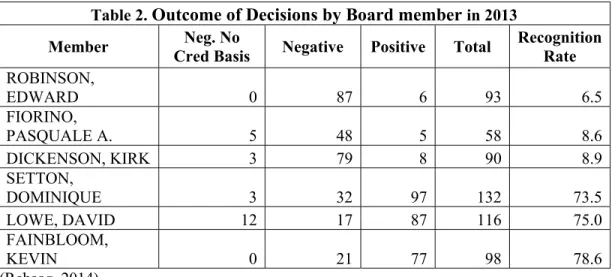
2011). Two tables below illustrate a snapshot of outcome of decisions for in 2012 and 2013 for six members with highest and lowest refugee status grant rates.
Table 1. Outcome of Decisions by Board member in 2012
Member Cred BasisNeg. No 5 Negative Positive Total Recognition Rate (%) MCSWEENEY, DANIEL 64 15 1 80 1.3 MCBEAN, DAVID 19 31 1 51 2.0 JOBIN, MICHEL 6 94 6 106 5.7 GOBEIL, MARC 0 25 99 124 79.8 FAINBLOOM, KEVIN 0 23 100 123 81.3 FORTIN, JACQUES 0 6 114 120 95.0 (Rehaag, 2013)
Table 2. Outcome of Decisions by Board member in 2013 Member Neg. No
Cred Basis Negative Positive Total
Recognition Rate ROBINSON, EDWARD 0 87 6 93 6.5 FIORINO, PASQUALE A. 5 48 5 58 8.6 DICKENSON, KIRK 3 79 8 90 8.9 SETTON, DOMINIQUE 3 32 97 132 73.5 LOWE, DAVID 12 17 87 116 75.0 FAINBLOOM, KEVIN 0 21 77 98 78.6 (Rehaag, 2014)
Why is divergence in refugee acceptation rate alarming? Refugee law experts note that potentially these are life and death decisions. Normatively, we would expect “some but relatively little variation” in relation to refugee status decisions among decision-makers on the doctrinal assessment of the claimant’s eligibility for refugee status: especially if the claimants originate from the same country and base their claims on the same Convention refugee category (Ramji-Nogales,
5Refusal on non-credibility basis means that the Board member is convinced that the claimant is credible. Claimants refused on that basis become removable from Canada within 15 days following the decision.
17
Schoenholtz, Schrag, & Kennedy, 2009, p. 11). This position is quite pervasive in the discipline of law. Legal certainty is among the main pillars of justice and rule of law. It is the prerequisite condition that “law to be applied equally to all persons in like circumstances in a non-arbitrary manner” (Wolff, 2011, p. 553). According to this position, the law is certain, the outcome of the application of law is predictable, and inconsistency signals arbitrariness.
The assumptions of political science discipline are not much different from law. For over a century, Weber’s formulation of the state as a rational, monolithic and coherent entity has dominated our way of thinking about public administration (Weber, 1978). The principle of rule of law has an implicit conception that the citizens should be able to predict the impact of the actions of the state. Rule of law as obedience to an identifiable body of norms and rules is the essential basis for legitimate authority (Hill & Hupe, 2009). Theoretically, Weber’s claim of a rule-bound conduct of the bureaucrats and the “strictly neutral implementation of codified universal and precise laws” would eliminate uncertainty and make administrative decisions predictable (Rothstein, 2012, p. 410). However, since the 1970s, policy implementation scholars have challenged the assumptions of certainty and predictability of decision-making both empirically and theoretically. The administrative discretion debate emerged from these studies. It was clear that policy implementation did not refer to a prescriptive and well-structured process with predictable outcomes (Gofen, 2013; Hupe & Hill, 2007; Hupe & Sætren, 2014; Moore, 1987).
1.2 Lack of convincing empirical evidence for alternative explanations
In trying to understand why such disparities in refugee status grant rates exist, two perspectives, one based on political patronage and the other based on sociological characteristics of the Board members have been put forth, but no empirical evidence for these positions exist.
18
Refugee advocates call attention to the political character of the appointment process and claim that the disparity in refugee status grant rates might be explained in relation to the political party that appointed the Board member: Liberal or Conservative. As a result of their lack of security of tenure, critics argue, Board members are not insulated from ministerial influence in their decision making for reappointment considerations (Bonisteel, 2010). However, previous research shows that re-appointment based on positive performance was never certain (Crépeau & Nakache, 2008). Furthermore, the critics acknowledge the importance of the broader change in immigration and refugee policy in 2012 as well as the negative political discourses of former Minister of Citizenship, Immigration and Multiculturalism Jason Kenney in relation to Roma and Mexican claimants. They also highlight that the Minister controls the RPD and consequently the organizational leaders limit and regulate the authority of the Board member (Aiken, 2012; Soennecken, 2013; Zambelli, 2012a). Therefore, they allege that the policy preference of the Minister will impact the Board members and endanger their independence.
Political control claim does not hold true for refugee status grant rates even for aggregate results. The policy preferences of the Citizenship and Immigration Minister do not have a direct impact on the decisions Board-members take. For example, previous Minister Jason Kenney, while campaigning for refugee policy change, made countless references to the fraudulent nature of Mexican and Hungarian Roma refugee claims and even added these two countries to the designated safe countries of origin list, which makes it much harder for these claimants to receive refugee protection (Boesveld, 2012; CBCNews, 2013; Chase, 2013). In spite of clear political signals towards non-recognition of these claimants as refugees, between January and June 2013, 183 Hungarians and 132 Mexicans were granted refugee status by Board members (Cohen, 2013). In 2014, Hungary was the third country in top 20 countries, by the number of
19
decisions finalized, and the aggregate refugee status grant rate for Hungarians was 35 % (Dench, 2014).
The aggregate refugee status grant rates of refugees are in decline since the Conservatives came to power in 2006 (D. Black, 2012) but political control argument fails to explain whether the IRB demands its members to refuse or accept more claimants from certain countries, or the Minister selects and appoints candidates among other applicants since they had a more unfavorable approach towards refugees. According to former IRB Chair Peter Showler (1999-2002), the Conservatives kept simply appointing people who “are just instinctively less receptive to refugee claims being made in Canada” (Butler, 2011a). On the other hand, there is no evidence for these presumptions.
Previous research that focuses on the design and the transformation of Canada’s refugee policy shows that the ministerial focus on the deterrence of claimants from certain countries are not new, but representative of historical border control concerns (Anderson, 2010, 2013; Dirks, 1978, 1995; Garcia y Grigeo, 1994). That said Board members, who are appointed by the Conservative party, have very divergent refugee status grant rates.6 The critics cannot explain the re-appointment of Board members with very high or very low grant rates with political control arguments in relation to perceived refugee policy preference of the political party in power. New scholarship in judicial politics challenges the main theoretical assumptions of political control. Hausegger, Riddell, and Hennigar (2013a) argue that party of appointment is not a meaningful measure to study patronage because it is different party affiliation, as commitment to a political party and its policies. They stress eloquently:
Governments tend to favour their own partisans in the selection process, but they also appoint a number of individuals who have no political background and occasionally appoint
20
individuals who are connected to an opposition party. This suggests that if policy preferences influence the votes of these judges, party of appointment may not accurately measure it (Hausegger, Riddell, & Hennigar, 2013b, p. 666).
Former Board members also challenge political control argument and highlight that they took decisions not because they were pressed by the Minister, but decided cases based on their own judgment. In an opinion article, published with the accusatory title “Ministerial chill eroding IRB: ex chair”, Butler (2011c) cites Rehaag commenting that the majority of the Members with lowest refugee status grant rates were Conservative appointees. By contrast, the article continues,
“15 members approved 70 per cent or more of the claims they ruled on. One, Marie Chevrier, a Liberal appointee, approved 94 per cent. She is now off the Board, as are two other members who had sky-high grant rates last year”.
As members in office are not allowed to comment about the private proceedings of the RPD and are required to avoid mediatisation at all times (SCPB, April 2011, September 2011), we do not hear any direct response from them. But as Chevrier was not a member anymore in 2012, she publicly responded to the article through a reader’s letter that she found defaming. She explains how she was responsible for expedited claims, which focuses on the cases “that appeared manifestly well-founded and could be accepted without a hearing. My acceptance rate was logically quite high.” She continues:
When I was first appointed to the IRB, I already had five years’ experience as part of an important administrative tribunal in Quebec, preceded by 16 years of legal practice in administrative law. I should hope that I was not a Liberal patronage appointee, but a competent bilingual woman and lawyer, chosen for my professional background and competence.
I can state, without any hesitation, that during my eight years as a member of the IRB, and later as a coordinating member, I have never felt influenced or pressed by the current minister, nor by his predecessor (Chevrier, 2012).
Academic research weakens the impact of political control on the Board members’ decision-making powers. In her comparison of American, Canadian and Australian refugee
21
status determination regimes, Hamlin (2014) documents that Canada has the most administratively insulated regime from other institutional players, namely, legislative, executive and judicial bodies. The deference shown by these players to the IRB leaves it relatively autonomous to develop its own guidance for its Members. Previously Heckman (2008) also argued that the RPD meets the requirements of an independent tribunal and appears to operate independently from the political executive.
Aside from political control argument, some other researchers hint to sociological characteristics of the Board members and highlight that the disparity might be explained by these characteristics (Hamlin, 2014; Rehaag, 2008). There is some evidence that sociological characteristics play a role in refugee decision-making. A data set of 65,000 status determinations from 2004 to 2008 reveals that male Board members accept more refugees at 51.5 % compared to their female counterparts at 48.6 %, and this difference is more pronounced for male Board members who hear female claimants involving gender-based persecution. However, female Board members who have previous experience in women’s rights, accept more gender-based persecution claims. Their grant rate for these claims filed by female refugee claimants were 64.2 %, while for the other female Board members without previous experience in women’s rights, the acceptance rate for the same groups of claimants was 55.5 % (Rehaag, 2011a). Other than this one, there is no research that focuses on sociological characteristics of Board members.
Taken together, political control and sociological characteristics arguments fail to provide convincing empirical evidence. In this dissertation, in order to understand disparities in refugee status grant rates we will look elsewhere, namely to refugee hearing and the endogenous features of the IRB as an organization. Disparities in refugee status grant rates raise important questions for public administration research, such as decision-making, administrative discretion and policy
22
implementation. But before I start tackling these questions, a short description of the decision-making space at the RPD is necessary.
1.3 The Legal and practical complexity of refugee determination
The administrative process of identification of refugee claimants escaping from persecution and providing them with protection through refugee status is called refugee determination process and stems from international law (Hamlin, 2012, 2014). It is also incorporated into the Immigration and Refugee Protection Act (IRPA, 2001), the federal legislation regulating immigration to Canada.
Not everyone who claims refugee status neatly fits into the categories of refugee definition. In the presence of ever-increasing barriers to legal immigration to Western countries, claiming refugee status is an attractive option and an international immigration strategy for some non-citizens who desire to secure entry. Refugee determination aims to identify ‘genuine’ refugees while weaning out the ‘fraudulent’ ones. As Ward v. Canada [1993] one of the most significant decisions of the Federal Court of Canada in refugee law, indicates;
the international community did not intend to offer a haven for all suffering individuals. The need for “persecution” in order to warrant international protection, for example, results in the exclusion of such pleas as those of economic migrants, i.e., individuals in search of better living conditions, and those of victims of natural disasters, even when the home state is unable to provide assistance, although both of these cases might seem deserving of international sanctuary.
The refugee determination process functions as follows: After an asylum seeker makes a refugee claim, the claim is referred to the IRB by an immigration officer after an initial eligibility assessment (M. D. Jones & Baglay, 2007). Board members examine, through a hearing, whether
23
the refugee claimant fits one of the categories of people that Canada has promised to protect. In order to make these determinations, the RPD requires the claimants to file and submit a detailed document called a Personal Information Form (PIF). The claimants hold the burden of proof and in the PIF, they have to explain their reasons for seeking Canada’s protection in a narrative format (Galloway, 2011). Alongside the PIF, they may submit documentary evidence and proof regarding general country conditions. During this process, they may choose to seek legal representation, at their own expense or through legal aid. 87.5 % of refugee claimants in Canada are represented by legal counsel and 79.1 % by refugee lawyers (Rehaag, 2011c).
The most intrinsic part of the quality of refugee is not that the person has crossed borders as of fear of persecution, not even that s/he has been persecuted because “the fear of persecution looks to the future” (Goodwin-Gill, 2008). For a claimant to be considered as a refugee, s/he has to pass an administrative test. S/he has to convince the Board member, through his/her oral and written testimony, as well as documentary evidence, that s/he is likely to face persecution in his/her country of origin on the basis of one of the five grounds determined in the definition of refugee, namely; race, religion, nationality, membership of a particular social group or political opinion [my emphasis]. Therefore, the Board member is required to determine whether, “at the time of the claim is being assessed, the claimant has good grounds for fearing persecution in the future” (IRB, 2010).
The Members have to reach their determinations on very limited evidence. As a result of this scarcity of ‘hard’ evidence, refugee decisions rely on a judgment of whether the subjective fear of the refugee claimant is credible or not (Cohen, 2001; Rousseau, Crépeau, Foxen, & Houle, 2002; Thomas, 2005). The subjective fear of persecution has to be justified on objective grounds. There must be valid basis for fear and that the fear must be seen as reasonable. To assess
24
the claimants’ need for protection; Board members must also be familiar with the social and human rights conditions of the claimants’ country of origin. They also have the determine the identity of the claimant and the veracity of the submitted documents (Diesenhouse, 2006).
In the public perception, a refugee hearing suggests an informal space where the claimant tells his/her story to the Board member and explains why s/he needs protection. Although briefly presented, the process is highly formal and legalistic. It requires extensive preparation for the refugee claimants. The claimants do not simply tell their story but respond to the Board member who has to resolve the determinative issues of the claim for the analysis and the decision. Before moving along with the explanation of why Board members constitute distinct actors within Canadian public administration, I will continue with a critical description of how the IRB, despite its similarities with judiciary and bureaucracy is also very different than both.
1.4 The IRB: neither judiciary nor bureaucracy
Administrative tribunals are established for pragmatic reasons to unencumber the bureaucracy and the judiciary but they embody an insolvable tension within democratic regimes. They share some characteristics of the judiciary and the bureaucracy, but they fit neither of the two categories. Their adjudicative independence is in question as a result of the executive appointment process. The expertise of the tribunal Members also raises important questions. However, this dual role played by administrative tribunals in implementing government policy and distributing justice has largely gone unnoticed by political scientists in Canada (Sheldrick, 2009).
Administrative tribunals represent a procedural innovation in administrative justice (Genn, 1993). Tribunals are often referred as agencies, boards and commissions. They, both
25
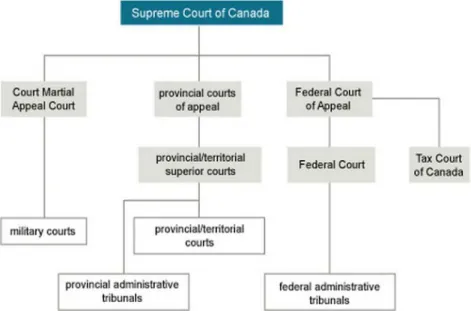
provincial and federal, are specialized organizations that hear disputes over administrative rules and regulations or make determinations of rights and privileges. Created by statute, they focus on very particular areas of law such as employment insurance, disability benefits, human rights, immigration and refugee claims. Administrative tribunals resemble courts but they are not a part of the court system. As can be seen in the figure below, they run parallel to provincial or territorial, and federal court systems (CJC, 2013; Department of Justice, 2013; 1994). Courts, however, play a supervisory role over administrative tribunals through judicial review and make sure that they operate under the law and that their procedures are fair (Department of Justice, 2013).
Figure 1. Canada’s Court System