PaPer
Biosecurity and management practices
in different dog breeding systems have
considerable margin for improvements
Pierre-Alexandre Dendoncker,
1,2,3Christel Moons,
1Steven Sarrazin,
2Claire Diederich,
3Etienne Thiry,
4Tiny de Keuster,
1Jeroen Dewulf
2To investigate the current management and biosecurity practices and identify possible differences between different types of breeders, a cross-sectional study was carried out in 102 Belgian dog breeding facilities
ranging from small (less than 10 dams on site) to large-scale (more than 50 dams on site or at least 500 puppies sold yearly) breeders. Veterinary prophylactic protocols (ie, vaccination, endoparasite control, ectoparasitic treatments) were highly implemented (91.5 per cent, 92.6 per cent, 42.7 per cent, respectively) across all breeder categories. 13.8 per cent of all visited breeders reported to administer antimicrobials to each female post partum and 10.3 per cent reported to treat all puppies, or at least of one breed, systematically with antimicrobials. Large-scale breeders reported to employ staff more frequently (p<0.01), and appeared to be more familiar with the principles of biosecurity. They reported to apply disinfection (p<0.01) and hygienic measures (p=0.03) across all parts of the facility, and to quarantine newly acquired dogs (p<0.01) more often compared with small-scale breeders. Nonetheless, a moderate knowledge of and use of disinfection was recorded, as was the presence of pet dogs, breaking the compartmentalisation. Results of this study indicate that there is substantial room for improvement in hygiene and disease management across all categories of breeders. The characterisation of different types of dog breeders with respect to biosecurity and management practices is a first step towards improvement of dog husbandry and biosecurity measures. Tailored guidelines should permit breeders to further improve the health of breeding animals and puppies while reducing the risk of infectious disease outbreaks and associated expenses.
Introduction
In the past decennia, operations of large-scale dog breeders (ie, selling more than 20 litters a year) and merchants have been linked to higher incidences of illness and disease outbreaks in dogs compared with those of small-scale breeders,1–6 possibly obstructing
the welfare of puppies and breeding dogs. Improvement in prophylactic treatments and immunisation might be expected due to the efforts of expert groups publishing and distributing guidelines in the last decade.7–10
However, despite available guidelines, there is evidence that applied prophylactic protocols for puppies are insufficient for good dog breeding facility management. Several authors have suggested that immunoprophylaxis against common canine viral pathogens can fail because of incorrect application,11
insufficient immunisation12 or interference with
maternal immunity.13 14 Endoparasite control is widely
applied on a regular basis; however, routinely used formulations are not effective against Giardia species and Cystoisospora species, and high prevalences of these endoparasites are reported in breeding facilities.15
Although there is no evidence yet, it is possible that the current endoparasite control strategies might hasten the appearance of benzimidazole resistance at dog breeding facilities, as has occurred in livestock.16
The periparturient period is undoubtedly the period with the highest risk of disease transmission, and 10.1136/vr.104996
Veterinary Record (2018) doi: 10.1136/vr.104996
1Laboratory for Ethology, Department
of Nutrition, Genetics and Ethology, Faculty of Veterinary Medicine, Ghent University, Merelbeke, East-Flanders, Belgium
2Veterinary Epidemiology Unit,
Department of Reproduction, Obstetrics and Herd Health, Faculty of Veterinary Medicine, Ghent University, Salisburylaan, Belgium
3Integrated Veterinary Research Unit
(IVRU), Department of Veterinary Medicine, Faculty of Sciences, University of Namur, Namur, Belgium
4Virology, Department of Infectious
and Parasitic Diseases, FARAH Centre, Faculty of Veterinary Medicine, University of Liège, Liège, Belgium E-mail for correspondence: PierreAlexandre. Dendoncker@ UGent. be
Provenance and peer review Not commissioned; externally peer reviewed.
Received April 26, 2018 Revised June 21, 2018 Accepted July 6, 2018
antimicrobial treatments (eg, amoxicillin-clavulanic acid or cephalosporins) are readily available and applied during this period.17 18 Excessive and incorrect
implementation of antimicrobials may, contrarily to their purpose, give rise to unwanted or even dangerous circumstances such as the development of drug resistance. Antimicrobial use in small animals has been identified as one of the risk factors for colonisation or infection with resistant pathogens.19–22
In analogy with other species, it is assumed that higher levels of biosecurity lead to a reduction in the need for antimicrobials and to improved animal health, thus increasing the welfare.23 24 Biosecurity
is the total of preventive measures to limit animals’ and persons’ exposure to disease agents.25 External
biosecurity measures are applied to limit the entrance of pathogens while internal biosecurity measures, often called biocontainment, help to control the spread of pathogens within the facility.26 A detailed read of
biosecurity measures and application in dog kennels and breeding facilities can be found in Biosecurity
in animal production and veterinary medicine: from principles to practice.27
Guidelines for biosecurity measures exist for group housing of dogs28 and some measures (eg, duration
of quarantine, use of non-porous materials, stocking density) are legally required.29–32 Unfortunately, to date,
it is unclear if and how these guidelines are applied in canine breeding facilities, especially in small-scale dog breeders. Not all breeders seem to apply the same level of health management and biosecurity, likely because large-scale breeders have been associated with more disease in the past. In addition, prophylactic protocols may be insufficiently useful due to how they are applied, how breeders approach antimicrobial strategies and how they approach general management (eg, use of porous materials that are not easy to keep pathogen-free). Further examination of the above-mentioned issues can be achieved by mapping out existing health and biosecurity management in dog breeding.
Given the importance of disease prevention, the aim of this study was to investigate management, biosecurity practices and health protocols at different
breeder types to be able to provide better guidance for future improvements.
Materials and methods
Study design
Given the protocol Directive 2010/63/EU did not apply and no permission from an Animal Ethics Committee had to be sought. A written informed consent was obtained from all dog breeders before entry into this study. This study was designed as a stratified randomised cross-sectional study.
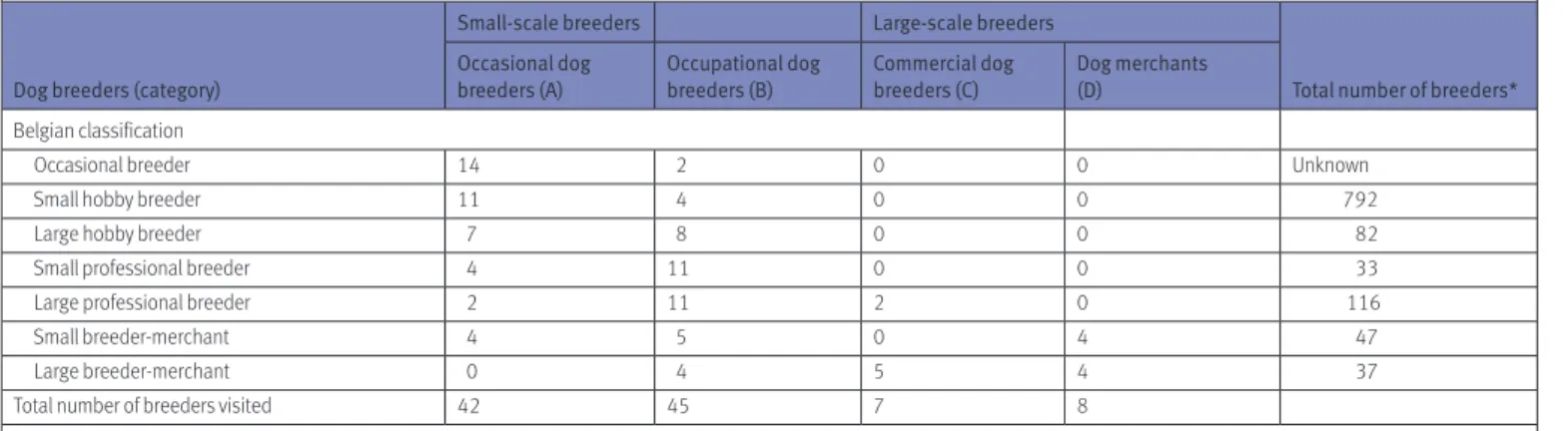
The target population consisted of persons breeding and selling dogs in Belgium, which included puppies bred locally as well as abroad. In Belgium, seven categories of dog breeders are legally defined (table 1) and are regulated accordingly.32 This classification
results in the appellation of the occasional breeder, the hobby breeder, the professional breeder and the breeder-merchant. This classification is based on the number of litters born yearly (less or equal than or more than 10) and further subdivision in small and large categories of breeders hinges on the number of females on site (less or equal than or more than 10), respectively. All breeders except occasional breeders are subject to accreditation before being allowed to breed and sell dogs. Based on these criteria, dog breeders producing more than two litters per year are registered and receive an accreditation. Legislation states that breeders may only merchandise self-bred puppies, with the exception of breeder-merchants, who may also supply puppies from a different source, for example, puppies from other Belgian breeders or puppies originating from foreign countries.
The sampling frame consisted of a selection of accredited breeding facilities, listed by the government, and of all non-accredited breeders (producing less or equal than two litters per year) that could be identified through known sale channels such as: kennel club websites, canine breed clubs, specialised magazines, social networks and online advertisements. The inclusion criteria for both accredited and non-accredited breeders were that the breeders were actively breeding or selling dogs, that at least one adult female dog was Table 1 Sampled dog breeder categories A–D compared with Belgian classification
Dog breeders (category)
Small-scale breeders Large-scale breeders
Total number of breeders* Occasional dog
breeders (A) Occupational dog breeders (B) Commercial dog breeders (C) Dog merchants (D) Belgian classification
Occasional breeder 14 2 0 0 Unknown
Small hobby breeder 11 4 0 0 792
Large hobby breeder 7 8 0 0 82
Small professional breeder 4 11 0 0 33
Large professional breeder 2 11 2 0 116
Small breeder-merchant 4 5 0 4 47
Large breeder-merchant 0 4 5 4 37
Total number of breeders visited 42 45 7 8
present on site and that at least one puppy has been sold during the last two years before the visit (ie, 2014 or 2015).
Randomisation of accredited dog breeders was achieved by stratified sampling from the registration database based on the Belgian classification, while aiming for an arbitrary number of breeders (n=15) for each stratum (table 1). Randomisation of non-accredited breeders was achieved by performing a systematic random sampling (n=15) of dog breeders advertising a litter at that moment.
Data collection
All randomly selected breeders were contacted before an on-site visit to solicit their cooperation, as participation by breeders was voluntary. A response rate of 50.2 per cent was obtained. The main reasons for participation refusal were: not actively breeding anymore, participation was deemed too time-consuming, retirement was imminent or the investigator was unable to reach the breeder. Other, less common (<10 per cent) reasons reported not to participate included: no particular interest in the study, change in regulations is not welcome or the breeder and the investigator were not able to find a mutual schedule to plan a visit. Data were collected by the first author during an on-site semi-structured interview, using a checklist on all aspects relevant to biosecurity and health management and observations at the site of the breeder. The checklist was developed based on factors described in literature as well as aspects described in the current legislations. More specifically, information was collected on breeding adults, pregnant dams, litters (both self-bred and acquired), ill animals, the structure of the facility and the materials used, husbandry practices, medical treatments and breeding performance. The 544 questions (of which 142 were open questions) were pretested and further optimised based on a preliminary visit to three breeding facilities of different categories. Selling numbers, frequencies of cleaning or medical treatments were reported by the breeder and not on sanitary documents, although observations prevailed reported information when both were available. All data were collected confidentially and coded anonymously in a spreadsheet (Microsoft Excel 2011). Recruitment and data collection were performed from January to September 2016.
Data processing and statistical analysis
Before analysis, skewed continuous data (ie, dams on site, puppies born yearly) were normalised by means of a log10 transformation. Comparison of the breeder categories with regard to size (dams on site, adults on site, annual litters, yearly number of puppies sold) and implemented biosecurity measures was performed by analysis of variance (ANOVA) for continuous variables (eg, frequency of cleaning, number of animals) and
Pearson’s χ2 tests for binomial variables (eg, staff employment, disinfection). Pairwise comparisons of the data for each breeder categories were performed respectively by Tukey post hoc analysis for continuous variables and by a generalised linear model with Šidák correction for binomial data. Significance level was set to 5 per cent. All statistical analyses were done with SPSS Statistics V.24 (IBM).
Results
Breeder categories
Data were obtained from 102 Belgian dog breeders.
Table 1 lists the distribution for each breeder category. Because 17.6 per cent and 2.0 per cent of the sampled breeders had more, respectively fewer dams on site than was to be expected based on their accreditation and 10.8 per cent produced more litters yearly, a great overlap was found between the Belgian categories. Therefore, it was decided to categorise the dog breeders into four categories (A, B, C and D) based on the number of dams observed on site and the number of puppies reported to be sold per year instead of what they had once declared when filling in the accreditation forms for the government. The breeders ranked into the new category showed more similarities (lower intracategory variability and higher intercategory variability) than when ranked into the Belgian categories. The authors decided to keep certain names (such as occasional) because they will have a meaning even without knowing the Belgian classification.
Breeder category A
Breeder category A is composed of dog breeding facilities limited in size, with less or equal to nine dams on site at the moment of the visit. It is called the category of occasional dog breeders. Breeders from category A included all the Belgian legally recognised categories (occasional breeders, hobby breeders, professional breeders and breeder-merchants) with the exception of large breeder-merchants.
Breeder category B
Breeder category B is composed of dog breeding facilities with 10–50 dams on site. This category is called the
occupational dog breeders. Breeders from category B
included all legally recognised categories. Breeder category C
Breeder category C is composed of commercial breeding facilities, organised with the purpose of achieving commercial goals and at a scale of 51 or more dams on site. This category is called the
commercial dog breeders. Breeders from category C
included only large professional breeders and large breeder-merchants.
Breeder category D
Breeder category D includes merchants with a small-scale breeding facility (≤50 dams on site), selling ≥500 puppies a year for commercial goals. This category is called the dog merchants. Breeders from category D included only breeder-merchants.
Both categories A and B are considered in this article as small-scale breeders while categories C and D are considered as large-scale breeders.
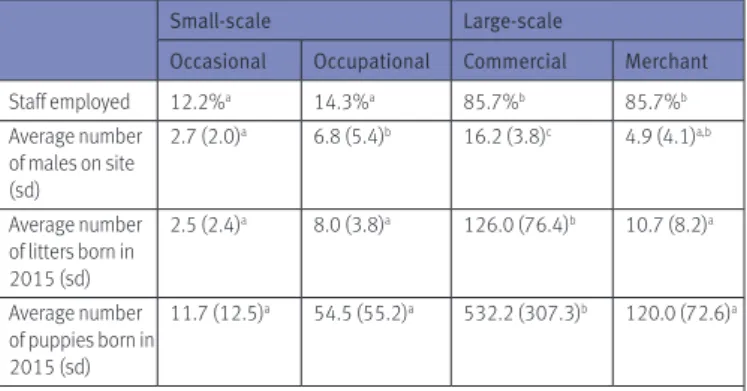
Table 2 depicts a comparison of the different breeder categories regarding the category defining variables (ie, the observed number of dams on site and number of puppies sold per year as reported by the breeder). General management at the different breeder categories Of all breeders, 46.9 per cent consisted of a family environment where under-aged children (<16 years) were involved in the daily husbandry practices. Adult breeding animals were mainly kept in pairs or in groups (94.8 per cent), leaving individual housing less common among breeders. On average, pregnant females were isolated after 7.2 (SD 1.1) weeks of pregnancy; no significant differences between breeder categories were found. Table 3 depicts a comparison of the different breeder categories regarding staff employment and additional size-related variables (ie, the observed number of adult male dogs on site and the number of puppies born as reported by the breeder).
External biosecurity measures at the different breeder types
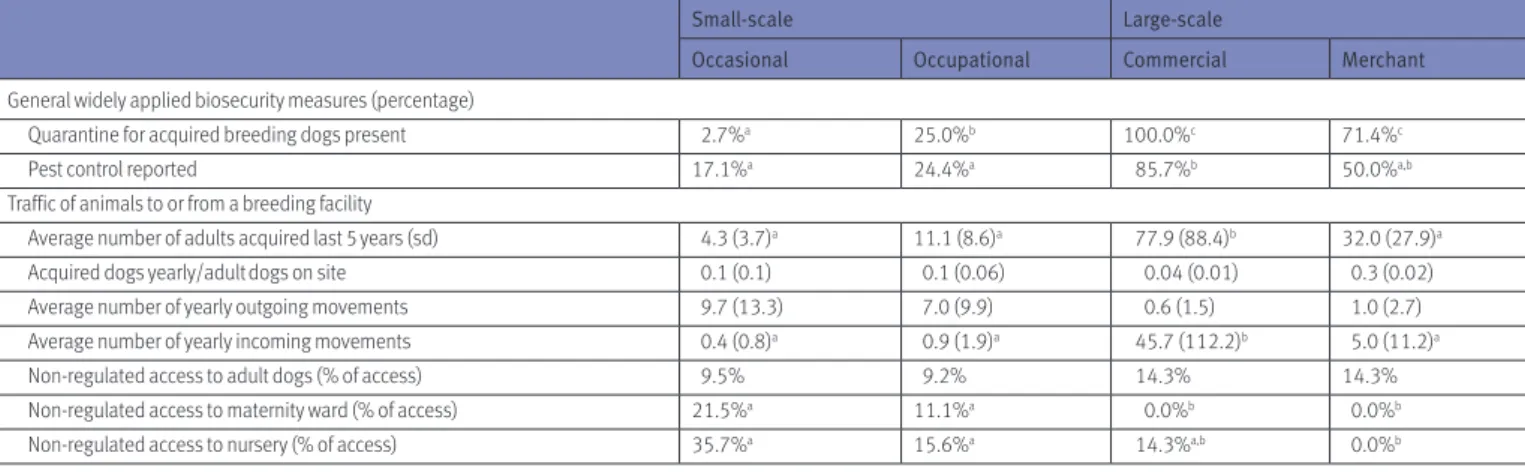
A comparison of the different breeder categories regarding external biosecurity measures is depicted in
table 4. On average, breeders renewed 11.4 per cent of the adult dogs annually. Limiting the acquisition of breeding dogs to only one supplier was recorded for 5.9 per cent of breeders. More large-scale breeders quarantined (ie, isolated for at least 48 hours) newly acquired breeding dogs compared with small-scale breeders (p<0.01), but all dog merchants reported to quarantine acquired puppies for at least 5 days (as legally defined) unless decided otherwise by the contracting veterinarian. Of all the breeders that declared to quarantine newly acquired dogs (n=25 of 102), adequate quarantine procedures (ie, providing complete segregation in a dedicated room) were observed on site in 72.0 per cent. Only one breeder declared to quarantine dogs after exhibitions.
Pest prevention (ie, control of rodents, wildlife and birds) was found to be higher for commercial breeders compared with occasional and occupational breeders (p<0.01).
Movements of dogs were defined by the number of times that a breeder declares to take his dog or her dog out of the facility (outwards) in order to have contact with stranger dogs, or to accept stranger dogs into the breeding facility (inwards). Both inward (ie, for boarding or mating) and outward (ie, going to exhibitions, external mating) movements of dogs in general were requested for each breeding facility, as declared by the breeder. Movements of short durations or in the immediate neighbourhood of the facility (ie, going for a walk) were not considered.
Regarding the inward movements, commercial breeders were found to accept dogs from external sources significantly more often than small-scale breeders (p<0.01) and slightly more often than dog merchants (p=0.05). No complete segregation of incoming strange dogs was recorded in 25 out of 36 breeders that declared to accept strange dogs. For these cases, we recorded shared rooms/outdoors, shared staff or shared equipment (ie, without any sanitary measure in-between), and sometimes no segregation at all. While 33.3 per cent of all breeders declared to perform outward movements with their dogs, small-scale breeders exposed their dogs significantly more (p<0.01) to external contacts by outward movements than large-scale breeders. Overall, 2.0 per cent of the visited breeders reported to limit the contact through mating by applying artificial insemination.
Non-regulated access of visitors to the maternity ward (p<0.01) and the nursery (p<0.01) was significantly higher at small-scale breeders. Two per cent of the visited breeders applied hygienic measures for vehicles (eg, cleaning and disinfecting before entering or after leaving the facility, or restricting access to a dedicated Table 2 Number of animals (dams or puppies) at the different categories
of breeders
Small-scale Large-scale
Occasional Occupational Commercial Merchant Dams on site
Average number of dams on
site (sd) 5.1 (2.5)
a 17.5 (8.7)b 101.4 (51.1)c 17.1 (17.3)b
Median 5.0 16.0 87.0 9.0
Dams on site (min; max) (1; 9) (10; 34) (56; 180) (1; 47) Puppies sold in 2015
Average number of puppies sold in 2015 (sd) 7.2 (6.1) a 24.6 (28.1)b 480.0 (403.5)c 1092.9 (638.0)c Median 7.0 29.0 550.0 800.0 Puppies sold in 2015 (min; max) (0; 21) (0; 100) (0; 1000) (500; 2000) See text for description of A–D categories.
a-c Index indicates a significant difference (p<0.05) between the means/percentages.
Table 3 Management at the different breeder categories
Small-scale Large-scale
Occasional Occupational Commercial Merchant Staff employed 12.2%a 14.3%a 85.7%b 85.7%b Average number of males on site (sd) 2.7 (2.0)a 6.8 (5.4)b 16.2 (3.8)c 4.9 (4.1)a,b Average number of litters born in 2015 (sd) 2.5 (2.4)a 8.0 (3.8)a 126.0 (76.4)b 10.7 (8.2)a Average number of puppies born in 2015 (sd) 11.7 (12.5)a 54.5 (55.2)a 532.2 (307.3)b 120.0 (72.6)a
path: a ‘dirty road’). Four breeders were familiar with the concept of clean and dirty road and all-in/all-out management; however, none of them applied the measures.
Internal biosecurity measures at the different breeder categories
Table 5 depicts a comparison of the breeder categories regarding internal biosecurity measures across the Table 4 External biosecurity measures applied by the different breeder categories
Small-scale Large-scale
Occasional Occupational Commercial Merchant General widely applied biosecurity measures (percentage)
Quarantine for acquired breeding dogs present 2.7%a 25.0%b 100.0%c 71.4%c
Pest control reported 17.1%a 24.4%a 85.7%b 50.0%a,b
Traffic of animals to or from a breeding facility
Average number of adults acquired last 5 years (sd) 4.3 (3.7)a 11.1 (8.6)a 77.9 (88.4)b 32.0 (27.9)a
Acquired dogs yearly/adult dogs on site 0.1 (0.1) 0.1 (0.06) 0.04 (0.01) 0.3 (0.02) Average number of yearly outgoing movements 9.7 (13.3) 7.0 (9.9) 0.6 (1.5) 1.0 (2.7) Average number of yearly incoming movements 0.4 (0.8)a 0.9 (1.9)a 45.7 (112.2)b 5.0 (11.2)a
Non-regulated access to adult dogs (% of access) 9.5% 9.2% 14.3% 14.3% Non-regulated access to maternity ward (% of access) 21.5%a 11.1%a 0.0%b 0.0%b
Non-regulated access to nursery (% of access) 35.7%a 15.6%a 14.3%a,b 0.0%b
a-c Index indicates a significant difference (p<0.05) between the means/percentages.
Table 5 Internal biosecurity measures applied by the different dog breeder categories
Small-scale Large-scale
Occasional Occupational Commercial Merchant Presence of other dogs on site (percentage)
Presence of retired dogs 50.0%a 46.7%a 100.0%b 37.5%a
Segregation of diseased animals? 19.0%a 25.6%a 100.0%b 87.5%b
Application of internal biosecurity measures at adult dogs (percentage)
Porous materials absent 19.0%a 27.3%a 28.6%a 62.5%b
Temperature control present 77.5%a 50.0%b 42.9%a,b,c 28.6%c
Ventilation control present 12.2% 2.4% 14.3% 14.3%
Disinfection monthly 17.1%a 28.9%a 71.4%b 87.5%b
Regulated access to outside 2.4%a 15.6%b 28.6%a,b 0.00%a
Outdoors cleanable 17.1%a 15.8%a 60.0%a,b 62.5%b
Weekly average of cleaning at adult dogs
Dry cleaning weekly (sd) 6.1 (3.5) 6.9 (4.1) 4.3 (2.0) 5.7 (2.2) Wet cleaning weekly (sd) 2.0 (1.6) 2.4 (1.9) 1.2 (0.6) 2.7 (2.0) Application of internal biosecurity measures at maternity ward (percentage)
Porous materials absent 40.5% 53.3% 71.4% 62.5%
Whelping box non-porous 39.4% 37.1% 66.7% 28.6%
Temperature control present 92.5%a 59.5%b 57.1%a,b 50.0%b
Ventilation control present 15.4%a 0.0%b 14.3%a,b 12.5%a,b
Disinfection when empty 20.0%a 31.0%a 57.1%a,b 87.5%b
Regulated access to outside 12.2%a 15.6%a 71.4%b 62.5%b
Outdoors cleanable 16.7%a 21.1%a 100.0%b 33.3%a
Weekly average of cleaning at maternity ward
Dry cleaning weekly (sd) 6.6 (4.4) 5.9 (4.2) 5.6 (2.4) 4.4 (2.2) Wet cleaning weekly (sd) 2.1 (1.9) 2.2 (1.8) 1.3 (0.5) 2.4 (2.2) Application of internal biosecurity measures at nursery (percentage)
Separate room 17.5%a 80.0%b 100.0%c 100.0%c
Porous materials absent 33.3%a 53.3%a,b 71.4%b 62.5%a,b
Temperature control 90.5%a 64.4%b 42.9%a,b,c 25.0%c
Ventilation control 11.9% 2.2% 14.3% 12.5%
Disinfection when empty 14.3%a 28.9%a 14.3%b 12.5%b
Regulated access to outside 9.5%a 15.6%a 66.7%b 71.4%b
Outdoors cleanable 12.5%a 20.5%a 100.0%b 40.0%a
Weekly average of cleaning at nursery
Dry cleaning weekly (sd) 9.9 (8.1) 7.7 (5.8) 6.1 (1.9) 6.3 (1.9) Wet cleaning weekly (sd) 2.4 (2.0) 2.4 (2.1) 1.5 (0.7) 2.6 (2.1)
facility. Visitation of the various infrastructures revealed a heterogeneity in the housing of dogs, ranging from private houses, garden sheds, outdoor kennels, old livestock stables, outdoor pens and more traditional pet-store setups with glass walls. No significant differences were found in the choice of flooring (eg, grass, concrete, gravel, etc) for the outdoor areas.
All visited breeders applied the following physical compartmentalisation at their facility: adult dogs (for breeding males and females that are not yet isolated if pregnant or not kept with puppies anymore), maternity ward (when pregnant dams are separated from the adults for whelping and stay there with puppies until weaning) and nursery (only for puppies that are not sold yet). The presence of a sick-bay, allowing the segregation of diseased animals, was mainly observed in large-scale breeders (p<0.01). Retired dogs (dogs without a breeding purpose, ie, retired dams and sires) were kept by 47.1 per cent of all breeders. All commercial breeders declared to keep retired dogs.
Additional compartmentalisations recorded were: a quarantine area (observed in 18.0 per cent of all breeders) and a showroom (observed in 13.7 per cent of all breeders). In a showroom, breeders can present the pups that are born on site or, in the case of merchants, originate from other breeders to potential owners. No facility included a hygiene lock, a separate room for applying hygienic measures such as changing clothes and footwear before entering a compartment of the animal facilities.
The presence of porous materials (ie, uncoated softwood and hardboard, natural stone, unsealed concrete, soil) was assessed in each compartment, and also for the whelping box (a confined space where the dam is kept whelping and nursing during). Porous materials were least used by merchants in the compartment of the adult dogs and by commercial breeders in the nursery.
Overall, ventilation and humidity were mechanically regulated in 12.5 per cent and 3.9 per cent of the breeding facilities, respectively. With regard to cleaning of the facility (ie, removing waste and medium), both dry cleaning, on average 20.6 times a week (SD 11.0), and wet cleaning on average 6.6 (SD 4.8) times a week, were applied broadly across all breeder categories. With regard to disinfection (ie, killing most of pathogens), 31.4 per cent of all breeders applied disinfection preceded by cleaning regularly in the maternity ward and in the nursery. Disinfection across all compartments was applied most by commercial breeders and merchants. While investigating the disinfectants used, 19 breeders stated that they were not confident with their choice or would like guidelines or a course to gain knowledge. The main reasons given to choose a disinfectant were: previous experiences, recommended by another breeder or readily accessible (ie, sodium hypochlorite solution). No significant differences between type of breeders
were found in providing outside access to adult dogs, although differences appeared when considering if outdoor access was free or regulated.
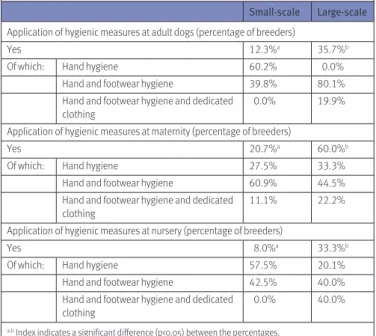
Table 6 lists the reported hygienic measures for each breeder category applied at the different compartments (the adult dogs, the maternity ward and the nursery). Systematically applied hygienic measures included measures that the breeders declared to always perform, such as hand hygiene (ie, washing hands, wearing gloves), footwear hygiene (ie, cleaning shoes, wearing boot covers, using dedicated shoes) and the wear of dedicated clothing (wearing clothes specific to a compartment or wearing a disposable coverall).
Over all compartments, most hygienic measures were applied by large-scale breeders. In any given compartment, the use of porous materials was associated with the absence of systematically applied hygienic measures (p<0.01) and the absence of disinfection (p=0.03).
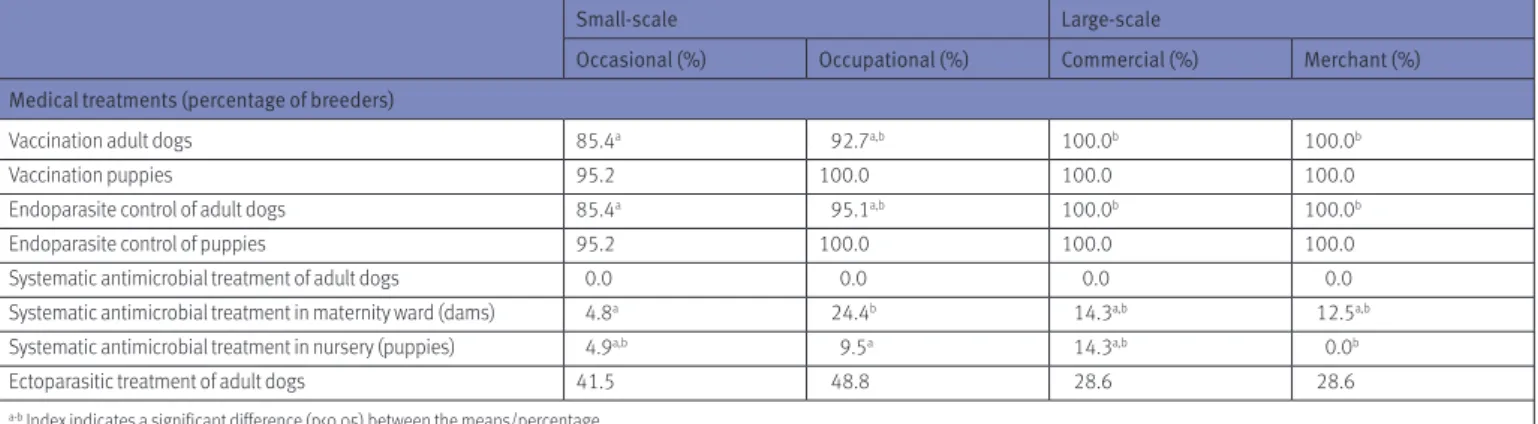
Medical treatments at the different breeder categories Prophylactic treatments such as vaccination and endoparasite control were widely adopted across all categories (table 7). Out of all sampled breeders, 13.8 per cent responded that they systematically administered antimicrobials to females after parturition (in the maternity ward) and 10.3 per cent of them responded that they systematically administered antimicrobials to all their puppies, or at least to puppies of one breed (in the nursery). Of all the identified types of antimicrobials in the maternity ward (for females after parturition) (n=10), the most commonly used were amoxicilin-clavulinic acid (n=6), followed by trimethoprim-sulphonamide (n=2) and amoxicillin (n=2). Of all the identified types of antimicrobials in the nursery (for puppies) (n=8), the most commonly used
Table 6 Systematic application of hygienic measures according to breeder category
Small-scale Large-scale Application of hygienic measures at adult dogs (percentage of breeders)
Yes 12.3%a 35.7%b
Of which: Hand hygiene 60.2% 0.0% Hand and footwear hygiene 39.8% 80.1% Hand and footwear hygiene and dedicated
clothing 0.0% 19.9%
Application of hygienic measures at maternity (percentage of breeders)
Yes 20.7%a 60.0%b
Of which: Hand hygiene 27.5% 33.3% Hand and footwear hygiene 60.9% 44.5% Hand and footwear hygiene and dedicated
clothing 11.1% 22.2%
Application of hygienic measures at nursery (percentage of breeders)
Yes 8.0%a 33.3%b
Of which: Hand hygiene 57.5% 20.1% Hand and footwear hygiene 42.5% 40.0% Hand and footwear hygiene and dedicated
clothing 0.0% 40.0%
are metronidazole-spiramycin (n=6), erythromycin (n=1) and amoxicillin-clavulanic acid (n=1). The metronidazole-spiramycin formulation (Stomorgyl, Merial) was systematically administered (the breeder declared to always treat) in response to intermittent intestinal signs. Underlying giardiasis was assumed based on similarities with previous outbreaks, but was not individually tested through microscopic examination or laboratory findings.
Discussion
To the best of our knowledge, this is the first study investigating the facility management, the applied biosecurity measures and the prophylactic protocols in different categories of dog breeding facilities.
Stratified sampling provided an overview of all breeder categories. Although selection bias in our study was limited by random sampling of the accredited breeders, it remains noteworthy that participation was based on willingness to collaborate. Because of the acceptable response rate of breeders and the main reasons given not to participate, a limited enrolment bias is expected. Not all data could be verified on site, for example, how often a breeder provides outdoor access, the cleaning frequency or the systemic administration of therapeutics. Also, the applied biosecurity measures were not put into relation to the disease incidence or mortality, and more research including measuring these parameters would enable some more firm conclusions to be reached. Nonetheless, we believe that the collected information provides a good insight into the level of application of biosecurity measures in the different dog breeder categories. A general approach was chosen in order to assess all factors possibly influencing the biosecurity in dog breeding facilities without compromising time and financial limitations. More in-depth research of specific measures would be deemed profitable.
Considering the fact that larger breeding facilities are more likely to face disease outbreaks,6 33 consistent
and correct implementation of biosecurity measures should be a fundamental element of large-scale breeder management. More external interaction and sources
result in a higher risk of introduction of pathogens. For instance, acquisition of new animals can result in the introduction of pathogens into the breeding facility.26
The interview with the breeders revealed anecdotal reports of a ‘20 per cent renewing rule’, meaning that a breeder replaces 20 per cent of breeding dogs every year. While a handful of breeders stuck to this empirical rule, lower figures were reported for most breeder categories.
Historically, quarantine has been an effective method to limit the introduction of diseases in a confined area by performing the segregation of animals.34 The
importance of quarantine in canine facilities has also been recognised by several authors.35–38 Quarantine
limits the introduction of disease through direct transmission; however, indirect transmission should not be overlooked. Visitors, rodents, birds, wildlife, vehicles, food and water are, in analogy to other species,39 40 potential canine disease transmitters.41–45 In
this study, implementation of quarantine, a compulsory measure for all merchants when gathering and selling dogs of different origins, was significantly higher in large-scale breeders. The legislative minimum duration of quarantine of five days, however, does not cover the incubation period for several important pathogens such as Bordetella bronchiseptica and canine parainfluenza virus (4–6 days), or canine parvovirus (3–7 days), canine infectious hepatitis (4–9 days) and canine herpesvirus (6–10 days).46–49 Arguably, it would be
better to implement quarantine for a minimum duration of the longest incubation period of the most common pathogen, resulting in a minimal advised duration of 10 days. However, when it concerns young dogs, the psychological wellbeing and socialisation of the animal might be compromised during the segregation, and should be taken into account.
This study showed that the inward movements (ie, purchase, exchange and boarding) of puppies and adult dogs is a common practice at most dog breeders. Additionally, the number of breeders that reported to board external dogs (ie, for mating purposes or as a boarding service) was surprisingly high. Since boarding kennels are a challenging environment for biocontainment,50 51 these circumstances could
Table 7 Preventive medical treatment as reported by dog breeders
Small-scale Large-scale
Occasional (%) Occupational (%) Commercial (%) Merchant (%) Medical treatments (percentage of breeders)
Vaccination adult dogs 85.4a 92.7a,b 100.0b 100.0b
Vaccination puppies 95.2 100.0 100.0 100.0
Endoparasite control of adult dogs 85.4a 95.1a,b 100.0b 100.0b
Endoparasite control of puppies 95.2 100.0 100.0 100.0
Systematic antimicrobial treatment of adult dogs 0.0 0.0 0.0 0.0 Systematic antimicrobial treatment in maternity ward (dams) 4.8a 24.4b 14.3a,b 12.5a,b
Systematic antimicrobial treatment in nursery (puppies) 4.9a,b 9.5a 14.3a,b 0.0b
Ectoparasitic treatment of adult dogs 41.5 48.8 28.6 28.6
facilitate the spread of pathogens to the breeding facility and should therefore always be avoided, especially by commercial breeders.
The number of outward movements of dogs was reasonably high in the breeder sample, with some occasional breeders having over 40 outward movements per year for one or more dogs. These numbers were partly caused by external mating (33.3 per cent of all breeders), and were also expected to be relatively high since the importance of increasing the genetic diversity in bloodlines by outbreeding has been established.52 A
second explanation is the large number of exhibitions that dogs are required to participate in order to be allowed in the book of origins. High rates of outward movement, however, should be considered a risk for pathogen transmission, especially during canine exhibitions, since a large number of dogs and visitors from different origins are gathered. Outbreaks in canine exhibitions have been reported,53 resulting from both
direct transmission through the dogs as well as indirect transmission through visitors, who often share intense contact with other canine populations.54 55
Prevention of disease can be further achieved through cleaning and disinfection. Physical cleaning (dry and wet) is the removal of waste and organic materials. Cleaning does not kill pathogens but removes most of the medium. Disinfection is the process of reducing the number of pathogens.56 Protocols including dry
and wet cleaning were largely implemented, especially the regular removal of organic material; however, improvements can be made considering disinfection. In small-scale breeders, the use and knowledge of disinfection were relatively moderate. The choice of disinfectant products and their application was based on habits or empirical knowledge. Since disinfection is the keystone for control of environmentally resistant pathogens,57 improvement in the education of dog
breeders and implementation of category-adjusted hygiene guidelines could increase the awareness and application of disinfection across all dog breeder categories.
The periparturient period has been proven as the period with the highest risk of morbidity and mortality for puppies and dams, and particular hygiene should be introduced when isolating the dams and during the first weeks of the puppies’ lives.58 59 Although measures are
more often applied in large-scale breeders, a substantial number of breeders across all categories could improve the periparturient hygiene. The relatively frequent use of porous materials in the maternity ward (in particular for the whelping box) reveals an absence of knowledge in the cleaning and disinfection of surfaces rather than an absence of awareness in the importance of it. Porous materials were least used in the maternity ward by the dog breeders who applied most hygienic measures in the maternity ward and performed disinfection more frequently. This may suggest that breeders who are more
aware of biosecurity are also better informed about the choice of surfaces.
The data recorded on antimicrobial use are in agreement with earlier reports of misuse of antimicrobials in Italian canine breeding facilities.22 60
Moreover, these data might well be an underestimate as they are based on self-reporting. Resistance to broader spectrum antimicrobials (ie, amoxicillin-clavulanic acid) in Escherichia coli isolates61 is a phenomenon that
could be partially explained by excessive and incorrect implementation of this drug. This is worrying since shedding of E coli by the pregnant bitch increases during the periparturient period58 and has been reported as
the most frequent isolate in postpartum mortality of puppies.62
This study supports the suspicion that systemic administration of antimicrobials is regularly based on assumptions, earlier experiences or empirical knowledge, rather than on clinical diagnoses.
Conclusions
Data collected during this study demonstrated that large-scale breeders are associated with a higher implementation of biosecurity measures. However, substantial improvements of internal and external biosecurity measures are desirable in all categories. To be efficacious and feasible, these measures should be tailored to the different categories of breeders. The characterisation of the different types of dog breeders and their biosecurity and management practices in this study are a first step towards tailored recommendations, but the relative paucity in scientific literature calls for more research in the field of management of canine facilities, with the emphasis on prevention of introduction and spread of disease, while taking into account behavioural development and wellbeing of breeding stock puppies to be sold.
Acknowledgements The authors would like to thank the breeders that participated in the study and the support of ANI-ZOO (the branch organisation for entrepreneurs in the pet sector) and SRSH-KMSH (the Belgian Kennel Club).
Funding The PupWelfare project is funded by the Federal Public Service Health, Food Chain Safety and Environment and by the Flemish government, Department of Environment, Nature and Energy (14/01 contract PUPWELFARE 1).
Competing interests None declared.
© British Veterinary Association (unless otherwise stated in the text of the article) 2018. All rights reserved. No commercial use is permitted unless otherwise expressly granted.
References
1 Stehr-Green JK, Murray G, Schantz PM, et al. Intestinal parasites in pet store puppies in Atlanta. Am J Public Health 1987;77:345–6.
2 Scarlett JM, Saidla JE, Pollock RV. Source of acquisition as a risk factor for disease and death in pups. J Am Vet Med Assoc 1994;204:1906–13.
3 Bandai C, Ishiguro S, Masuya N, et al. Canine coronavirus infections in Japan: virological and epidemiological aspects. J Vet Med Sci 1999;61:731–6.
4 Stavisky J, Pinchbeck G, Gaskell RM, et al. Cross sectional and longitudinal surveys of canine enteric coronavirus infection in kennelled dogs: a molecular marker for biosecurity. Infect Genet Evol 2012;12:1419–26.
5 Hird DW, Ruble RP, Reagor SG, et al. Morbidity and mortality in pups from pet stores and private sources: 968 cases (1987-1988). J Am Vet Med Assoc 1992;201:471–4. 6 Schumaker BA, Miller MM, Grosdidier P, et al. Canine distemper outbreak in pet store
7 ESCCAP. Control of Intestinal protozoa in Dogs and Cats - ESCCAP Guidelines 2nd edition [Internet]. 2010. https://www. esccap. org/ guidelines/
8 Day MJ, Horzinek MC, Schultz RD, et al. WSAVA Guidelines for the vaccination of dogs and cats. J Small Anim Pract 2016;57:4–8.
9 Looney AL, Bohling MW, Bushby PA, et al. The Association of Shelter Veterinarians veterinary medical care guidelines for spay-neuter programs. J Am Vet Med Assoc
2008;233:74–86.
10 Welborn LV, DeVries JG, Ford R, et al. 2011 AAHA canine vaccination guidelines. J Am Anim Hosp Assoc 2011;47:1–42.
11 Day MJ, Horzinek MC, Schultz RD. Vaccination Guidelines Group (VGG) of the World Small Animal Veterinary Association (WSAVA). Guidelines for the vaccination of dogs and cats. Compiled by the Vaccination Guidelines Group (VGG) of the World Small Animal Veterinary Association (WSAVA). J Small Anim Pract 2007;48:528–41. 12 Ellis WA. Control of canine leptospirosis in Europe: time for a change? Vet Rec
2010;167:602–5.
13 Thiry E, Horzinek MC. Vaccination guidelines: a bridge between official requirements and the daily use of vaccines. Rev Sci Tech 2007;26:511–7.
14 Decaro N, Buonavoglia C. Canine parvovirus–a review of epidemiological and diagnostic aspects, with emphasis on type 2c. Vet Microbiol 2012;155:1–12. 15 Dupont S, Butaye P, Claerebout E, et al. Enteropathogens in pups from pet shops and
breeding facilities. J Small Anim Pract 2013;54:475–80.
16 Bugg RJ, Robertson ID, Elliot AD, et al. Gastrointestinal parasites of urban dogs in Perth, Western Australia. Vet J 1999;157:295–301.
17 Münnich A. The pathological newborn in small animals: the neonate is not a small adult. Vet Res Commun 2008;32:81–5.
18 Milani C, Corrò M, Drigo M, et al. Antimicrobial resistance in bacteria from breeding dogs housed in kennels with differing neonatal mortality and use of antibiotics.
Theriogenology 2012;78:1321–8.
19 Pomba C, Rantala M, Greko C, et al. Public health risk of antimicrobial resistance transfer from companion animals. J Antimicrob Chemother 2016;42:dkw481–68. 20 De Graef EM, Decostere A, Devriese LA, et al. Antibiotic resistance among fecal
indicator bacteria from healthy individually owned and kennel dogs. Microb Drug Resist 2004;10:65–9.
21 Bramble M, Morris D, Tolomeo P, et al. Potential role of pet animals in household transmission of methicillin-resistant Staphylococcus aureus: a narrative review. Vector Borne Zoonotic Dis 2011;11:617–20.
22 Rota A, Milani C, Drigo I, et al. Isolation of methicillin-resistant Staphylococcus pseudintermedius from breeding dogs. Theriogenology 2011;75:115–21. 23 Postma M, Vanderhaeghen W, Sarrazin S, et al. Reducing Antimicrobial Usage in Pig
Production without Jeopardizing Production Parameters. Zoonoses Public Health
2017;64:63–74.
24 Speksnijder DC, Mevius DJ, Bruschke CJ, et al. Reduction of veterinary antimicrobial use in the Netherlands. The Dutch success model. Zoonoses Public Health
2015;62:79–87.
25 Anderson JF. Biosecurity: A new term for an old concept: How to apply it. The Bovine Practitioner 1998;32:61–70.
26 Villarroel A, Dargatz DA, Lane VM, et al. Suggested outline of potential critical control points for biosecurity and biocontainment on large dairy farms. J Am Vet Med Assoc
2007;230:808–19.
27 Dendoncker P-A, de Rooster H, Abma E, et al. Biosecurity measures for dog merchants and canine breeding kennels. In: Dewulf J, Van Immerseel F, eds. Biosecurity in animal production and veterinary medicine: from principles to practice. Leuven / Den Haag: Acco, 2018:433–52.
28 Miller L, Zawistowski S. Housing, husbandry, and behavior of dogs in animal shelters. In: Miller L, Zawistowski S, eds. Animal Behavior for Shelter Veterinarians and Staff. Chichester, UK: Wiley-Blackwell, 2012:145.
29 VLAREM [Internet]. https:// navigator. emis. vito. be/ mijn- navigator? woId= 263 30 Code de l’Environnement [Internet]. http:// environnement. wallonie. be/ cgi/ dgrne/
aerw/ pe/ rubri/ rubrique. idc? chx_ rubri= 01. 39. 04. 02.B
31 RD 14/08/1986 [Internet]. http://www. ejustice. just. fgov. be/ cgi_ loi/ change_ lg. pl? language= fr& la= F& cn= 1986081434& table_ name= loi
32 RD 27/04/2007 [Internet]. http://www. ejustice. just. fgov. be/ cgi_ loi/ change_ lg. pl? language= fr& la= F& cn= 20070427B0& table_ name= loi
33 Zicola A, Jolly S, Mathijs E, et al. Fatal outbreaks in dogs associated with pantropic canine coronavirus in France and Belgium. J Small Anim Pract 2012;53:297–300. 34 Gensini GF, Yacoub MH, Conti AA. The concept of quarantine in history: from plague to
SARS. J Infect 2004;49:257–61.
35 Loveridge GG. Environmentally enriched dog housing. Appl Anim Behav Sci
1998;59:101–13.
36 ESCCAP. Worm Control in Dogs and Cats - ESCCAP Guidelines 2nd edition [Internet]. 2010. https://www. esccap. org/ guidelines/
37 Hubrecht RC, Serpell JA, Poole TB. Correlates of pen size and housing conditions on the behaviour of kennelled dogs. Appl Anim Behav Sci 1992;34:365–83.
38 Simmons KE, Hoffman CL. Dogs on the Move: Factors Impacting Animal Shelter and Rescue Organizations' Decisions to Accept Dogs from Distant Locations. Animals
2016;6:11.
39 Laanen M, Persoons D, Ribbens S, et al. Relationship between biosecurity and production/antimicrobial treatment characteristics in pig herds. Vet J
2013;198:508–12.
40 Gelaude P, Schlepers M, Verlinden M, et al. Biocheck.UGent: a quantitative tool to measure biosecurity at broiler farms and the relationship with technical performances and antimicrobial use. Poult Sci 2014;93:2740–51.
41 Umhang G, Comte S, Raton V, et al. Echinococcus multilocularis infections in dogs from urban and peri-urban areas in France. Parasitol Res 2014;113:2219–22.
42 Dobler G, Pfeffer M. Fleas as parasites of the family Canidae. Parasit Vectors
2011;4:139.
43 Crawford PC, Dubovi EJ, Castleman WL, et al. Transmission of equine influenza virus to dogs. Science 2005;310:482–5.
44 LeJeune JT, Hancock DD. Public health concerns associated with feeding raw meat diets to dogs. J Am Vet Med Assoc 2001;219:1222–5.
45 Song D, Kang B, Lee C, et al. Transmission of avian influenza virus (H3N2) to dogs.
Emerg Infect Dis 2008;14:741–6.
46 Lamm CG, Rezabek GB. Parvovirus infection in domestic companion animals. Vet Clin North Am Small Anim Pract 2008;38:837–50.
47 Thrusfield MV, Aitken CGG, Muirhead RH. A field investigation of kennel cough: Incubation period and clinical signs. J Small Anim Pract 1991;32:215–20. 48 Decaro N, Martella V, Buonavoglia C. Canine adenoviruses and herpesvirus. Vet Clin
North Am Small Anim Pract 2008;38:799–814.
49 Miranda C, Thompson G. Canine parvovirus: the worldwide occurrence of antigenic variants. J Gen Virol 2016;97:2043–57.
50 Buonavoglia C, Martella V. Canine respiratory viruses. Vet Res 2007;38:355–73. 51 Ronsse V, Verstegen J, Onclin K, et al. Seroprevalence of canine herpesvirus-1 in the
Belgian dog population in 2000. Reprod Domest Anim 2002;37:299–304. 52 Leroy G. Genetic diversity, inbreeding and breeding practices in dogs: results from
pedigree analyses. Vet J 2011;189:177–82.
53 Primm K. Canine influenza strikes the Southeast: Another outbreak? 2017. http:// veterinarynews. dvm360. com/ canine- influenza- strikes- southeast- another- outbreak 54 Bender JB, Shulman SA. Animals in Public Contact subcommitteeNational Association
of State Public Health Veterinarians. Reports of zoonotic disease outbreaks associated with animal exhibits and availability of recommendations for preventing zoonotic disease transmission from animals to people in such settings. J Am Vet Med Assoc
2004;224:1105–9.
55 Grgič-Vitek M, Frelih T, Ucakar V, et al. An outbreak of measles associated with an international dog show in Slovenia, November 2014. Euro Surveill 2015;20:21012. 56 Gilman N. Sanitation in the animal shelter. In: Miller L, Zawistowski S, eds. Shelter
Medicine for Veterinarians and Staff. First Edit. Ames, Iowa: Blackwell Publishing, 2004:67–78.
57 Fiechter R, Deplazes P, Schnyder M. Control of Giardia infections with ronidazole and intensive hygiene management in a dog kennel. Vet Parasitol 2012;187:93–8. 58 Evermann JF, Wills TB. Immunologic development and immunization. In: Peterson
ME, Kutzler MA, eds. Small Animal Pediatrics: The First 12 Months of Life. St Louis: Saunders/Elsevier, 2011:104–12.
59 Lloyd S, Amerasinghe PH, Soulsby EJL. Periparturient immunosuppression in the bitch and its influence on infection with Toxocara canis. J Small Anim Pract 1983;24:237–47. 60 Rota A, Milani C, Corrò M, et al. Misuse of antimicrobials and selection of methicillin-resistant Staphylococcus pseudintermedius strains in breeding kennels: genetic characterization of bacteria after a two-year interval. Reprod Domest Anim
2013;48:1–6.
61 Normand EH, Gibson NR, Reid SW, et al. Antimicrobial-resistance trends in bacterial isolates from companion-animal community practice in the UK. Prev Vet Med
2000;46:267–78.
62 Nielen AL, van der Gaag I, Knol BW, et al. Investigation of mortality and pathological changes in a 14-month birth cohort of boxer puppies. Vet Rec 1998;142:602–6.