HAL Id: dumas-01599814
https://dumas.ccsd.cnrs.fr/dumas-01599814
Submitted on 3 Oct 2017
HAL is a multi-disciplinary open access
archive for the deposit and dissemination of
sci-entific research documents, whether they are
pub-lished or not. The documents may come from
teaching and research institutions in France or
abroad, or from public or private research centers.
L’archive ouverte pluridisciplinaire HAL, est
destinée au dépôt et à la diffusion de documents
scientifiques de niveau recherche, publiés ou non,
émanant des établissements d’enseignement et de
recherche français ou étrangers, des laboratoires
publics ou privés.
Distributed under a Creative Commons Attribution - NonCommercial - NoDerivatives| 4.0
International License
dans la littérature
Thomas Wauters
To cite this version:
Thomas Wauters. Définition de la fragilité à partir des critères retenus dans la littérature . Sciences
du Vivant [q-bio]. 2017. �dumas-01599814�
UNIVERSITE de BRETAGNE OCCIDENTALE
FACULTE DE MEDECINE
ANNEE
2017 THESE
N°
DOCTORAT EN MEDECINE
SPECIALITE : Médecine Générale
PAR
Mr WAUTERS Thomas
Né le 14/01/1986 à Rennes
PRESENTÉE ET SOUTENUE PUBLIQUEMENT LE 22 Juin 2017
DEFINITION DE LA FRAGILITE A PARTIR DES CRITERES RETENUS DANS LA
LITTERATURE
THE FRAILTY DEFINITION BASED ON THE CRITERIA USED IN THE LITERATURE
Directeur de thèse: Professeur Jean-Yves LE RESTE
Président de thèse: Professeur Jean-Yves LE RESTE
Membres du Jury : Professeur Jean-Yves LE RESTE
Professeur Armelle TILLY - GENTRIC
Docteur Patrice NABBE
UNIVERSITE DE BRETAGNE OCCIDENTALE
FACULTE DE MÉDECINE ET
DES SCIENCES DE LA SANTÉ DE BREST
PROFESSEURS ÉMÉRITES
CENAC Arnaud Médecine interne
LEHN Pierre Biologie Cellulaire
PROFESSEURS DES UNIVERSITÉS EN SURNOMBRE
COLLET Michel Gynécologie - Obstétrique
MOTTIER Dominique Thérapeutique
RICHE Christian Pharmacologie fondamentale
LEFEVRE Christian Anatomie
DOYENS HONORAIRES:
Professeur H. H. FLOCH
Professeur G. LE MENN ()
Professeur B. SENECAIL
Professeur J. M. BOLES
Professeur Y. BIZAIS ()
Professeur M. DE BRAEKELEER ()
PROFESSEURS DES UNIVERSITÉS - PRATICIENS HOSPITALIERS DE CLASSE
EXCEPTIONNELLE
BOLES Jean-Michel Réanimation Médicale
COCHENER - LAMARD Béatrice Ophtalmologie
DEWITTE Jean-Dominique Médecine & Santé au Travail
FEREC Claude Génétique
GILARD Martine Cardiologie
JOUQUAN Jean Médecine Interne
OZIER Yves Anesthésiologie et Réanimation Chirurgicale
ROBASZKIEWICZ Michel Gastroentérologie - Hépatologie
PROFESSEURS DES UNIVERSITÉS - PRATICIENS HOSPITALIERS DE 1
ÈRECLASSE
BAIL Jean-Pierre Chirurgie Digestive
BERTHOU Christian Hématologie – Transfusion
BLONDEL Marc Biologie cellulaire
BRESSOLLETTE Luc Médecine Vasculaire
DE PARSCAU DU PLESSIX Loïc Pédiatrie
DE BRAEKELEER Marc Génétique
DELARUE Jacques Nutrition
DUBRANA Frédéric Chirurgie Orthopédique et Traumatologique
FENOLL Bertrand Chirurgie Infantile
FOURNIER Georges Urologie
GOUNY Pierre Chirurgie Vasculaire
HU Weiguo Chirurgie plastique, reconstructrice & esthétique ; brûlologie
KERLAN Véronique Endocrinologie, Diabète & maladies métaboliques
LACUT Karine Thérapeutique
LEROYER Christophe Pneumologie
LE MEUR Yannick Néphrologie
LE NEN Dominique Chirurgie Orthopédique et Traumatologique
LOZAC’H Patrick Chirurgie Digestive
MANSOURATI Jacques Cardiologie
MARIANOWSKI Rémi Oto. Rhino. Laryngologie
MISERY Laurent Dermatologie – Vénérologie
MERVIEL Philippe Gynécologie médicale : option gynécologie obstétrique
NEVEZ Gilles Parasitologie et Mycologie
NONENT Michel Radiologie & Imagerie médicale
PAYAN Christopher Bactériologie – Virologie; Hygiène
REMY-NERIS Olivier Médecine Physique et Réadaptation
SALAUN Pierre-Yves Biophysique et Médecine Nucléaire
SARAUX Alain Rhumatologie
SIZUN Jacques Pédiatrie
STINDEL Éric Bio statistiques, Informatique Médicale & technologies de communication
TILLY - GENTRIC Armelle Gériatrie & biologie du vieillissement
TIMSIT Serge Neurologie
VALERI Antoine Urologie
WALTER Michel Psychiatrie d'Adultes
PROFESSEURS DES UNIVERSITÉS - PRATICIENS HOSPITALIERS DE 2
ÈMECLASSE
ANSART Séverine Maladies infectieuses, maladies tropicales
AUBRON Cécile Réanimation ; médecine d’urgence
BERNARD-MARCORELLES Pascale Anatomie et cytologie pathologiques
BEZON Éric Chirurgie thoracique et cardiovasculaire
BOTBOL Michel Psychiatrie Infantile
BROCHARD Sylvain Médecine Physique et Réadaptation
CARRE Jean-Luc Biochimie et Biologie moléculaire
COUTURAUD Francis Pneumologie
DAM HIEU Phong Neurochirurgie
DELLUC Aurélien Médecine interne
DEVAUCHELLE-PENSEC Valérie Rhumatologie
GIROUX-METGES Marie-Agnès Physiologie
HUET Olivier Anesthésiologie - Réanimation Chirurgicale/Médecine d’urgences
LIPPERT Éric Hématologie ; transfusion : option hématologie
LE MARECHAL Cédric Génétique
L’HER Erwan Réanimation Médicale
MONTIER Tristan Biologie Cellulaire
NOUSBAUM Jean-Baptiste Gastroentérologie - Hépatologie
PRADIER Olivier Cancérologie - Radiothérapie
RENAUDINEAU Yves Immunologie
SEIZEUR Romuald Anatomie-Neurochirurgie
PROFESSEUR DES UNIVERSITÉS - PRATICIEN LIBÉRAL
LE RESTE Jean Yves Médecine Générale
LE FLOC'H Bernard Médecine Générale
PROFESSEUR DES UNIVERSITÉS ASSOCIÉS À MI-TEMPS
BARRAINE Pierre Médecine Générale
PROFESSEUR DES UNIVERSITÉS – LRU
BORDRON Anne Biochimie et Biologie moléculaire
MAÎTRES DE CONFÉRENCES DES UNIVERSITÉS – PRATICIENS HOSPITALIERS DE HORS
CLASSE
LE MEVEL Jean Claude Physiologie
PERSON Hervé Anatomie
MAÎTRES DE CONFÉRENCES DES UNIVERSITÉS – PRATICIENS HOSPITALIERS DE 1ÈRE
CLASSE
ABGRAL Ronan Biophysique et Médecine nucléaire
CORNEC Divi Rhumatologie
DE VRIES Philine Chirurgie infantile
DOUET-GUILBERT Nathalie Génétique
HERY-ARNAUD Geneviève Bactériologie – Virologie; Hygiène
HILLION Sophie Immunologie
JAMIN Christophe Immunologie
LE BERRE Rozenn Maladies infectieuses-Maladies tropicales
LE GAC Gérald Génétique
LE ROUX Pierre-Yves Biophysique et Médecine nucléaire
LODDE Brice Médecine et santé au travail
MIALON Philippe Physiologie
PLEE-GAUTIER Emmanuelle Biochimie et Biologie Moléculaire
QUERELLOU Solène Biophysique et Médecine nucléaire
VALLET Sophie Bactériologie – Virologie ; Hygiène
MAÎTRES DE CONFÉRENCES DES UNIVERSITÉS – PRATICIENS HOSPITALIERS DE 2ÈME
CLASSE
LE GAL Solène Parasitologie et Mycologie
LE VEN Florent Cardiologie
PERRIN Aurore Biologie et médecine du développement & de la reproduction
TALAGAS Matthieu Cytologie et histologie
MAÎTRES DE CONFÉRENCES DES UNIVERSITÉS – PRATICIENS HOSPITALIERS STAGIAIRES
UGUEN Arnaud Anatomie et Cytologie Pathologiques
MAITRE DE CONFÉRENCES – PRATICIEN LIBERAL
NABBE Patrice Médecine Générale
MAÎTRES DE CONFÉRENCES ASSOCIÉS DES UNIVERSITÉ MI-TEMPS
BARAIS Marie Médecine Générale
CHIRON Benoît Médecine Générale
MAÎTRES DE CONFÉRENCES DES UNIVERSITÉS
BERNARD Delphine Biochimie et biologie moléculaire
FAYAD Hadi Génie informatique, automatique et traitement du signal
HAXAIRE Claudie Sociologie - Démographie
LANCIEN Frédéric Physiologie
LE CORRE Rozenn Biologie cellulaire
MIGNEN Olivier Physiologie
MORIN Vincent Électronique et Informatique
MAÎTRES DE CONFÉRENCES ASSOCIÉS DES UNIVERSITÉS A TEMPS COMPLET
MERCADIE Lolita Rhumatologie
MAÎTRES DE CONFÉRENCES ASSOCIÉS DES UNIVERSITÉS A MI - TEMPS
SCHICK Ulrike Cancérologie, radiothérapie : option radiothérapie
AGRÉGÉS / CERTIFIÉS DU SECOND DEGRÉ
MONOT Alain Français
RIOU Morgan Anglais
Remerciements
-A Monsieur le Professeur Jean-Yves Le Reste, Président du jury, pour son engagement et son
dynamisme dans l’enseignement de la médecine générale, si je suis devenu brestois, c’est en
partie grâce à vous.
-A Monsieur le professeur Patrice Nabbe, pour la qualité de ses séminaires, et son implication
dans l’enseignement de la médecine générale.
-A Madame Tilly – Gentric Armelle, pour me faire l’honneur d’être membre du jury.
-A Madame Thépault – Saulnier Murielle, pour sa bienveillance et ses enseignements. Pour
m’avoir montré qu’un équilibre entre vie professionnelle et travail est toujours possible.
-A mes parents, à qui je dois tout. Pour leur soutien à toute épreuve.
-A Codou qui m’accompagne depuis tant d’années, sans qui je ne serais jamais devenu ce que
je suis aujourd’hui.
-A Hugo et Zoé, rien n’enlèvera jamais l’amour que je vous porte, si je fais cette thèse c’est
avant tout pour vous deux.
-A Céline ma grand-mère, source d’inspiration et d’engagement.
-Au Docteur Jean-Yves Hascoet pour m’avoir convaincu de devenir médecin généraliste.
-A l’équipe des urgences de Paimpol pour leur accueil mémorable.
-Au Docteur Denis Marghis et à toute l’équipe de gynécologie de Carhaix, pour tous ces
bons/beaux moments.
-A l’équipe de pneumologie de Morlaix, je n’ai jamais autant reçu de leçons de vie que dans
ce service. Peu importe l’excellence ou la médiocrité si à la fin il y a la satisfaction.
-A Marie pour sa spontanéité, sa générosité et son engagement à me relire.
-Au Docteur Doare Catherine, pour sa contagieuse joie de vivre et son soutien.
-Au Docteur Le Pichon Jacqueline pour sa patience et m’avoir ouvert les portes de son
cabinet.
-A mes professeurs de SVT du lycée Edouard Branly pour m’avoir donné l’envie de devenir
médecin.
ABSTRACT
Introduction: Frailty is a recent geriatric concept. Numerous studies have searched this
subject, but there is no consensus for a definition of frailty. However, obtaining a definition
and tools for the diagnosis of fragility are becoming more and more necessary with the
population getting older. The aim of the study, on the basis of the pre-existing definitions and
their criteria, is to produce a definition with criteria permitting consensus.
Methods: The study is qualitative, based on a systematic review of the literature (PRISMA).
From this review are extracted the definitions of frailty. The grounded theory is used to carry
out a coding based on the criteria resulting from the definitions. The coding is at three levels
(open-axial-thematic). The themes are then organized into a chart and each major axis is
explored by a chart too. Finally, a definition is produced from the criteria.
Results: Out of 40 articles from the literature review, 348 definitions are used for coding. Of
these definitions, 209 criteria are extracted as open code. Axial coding gives 52 groups. Then
the thematic coding brings out 14 themes. This coding reveals a confusion between the
causes, what happens before the frailty (prefrailty) and what happens after the frailty, the
consequences. It is also highlighted that certain criteria make consensus in frailty such as age /
aging, nutritional factors, addiction, environment.
Conclusion: Frailty is described by many definitions. By now, no consensus reached. Yet the
two main recognized theories (Fried et al. vs Rockwood et al.) are not contradictious. The
identified criteria can provide a common basis for the achievement of a consensus definition.
RESUME
Introduction : La fragilité est un concept dont la réversibilité fait l’intérêt. Deux modèles
principaux et de multiples études abordent ce sujet sans réel consensus pour une définition de
la fragilité. Une définition consensuelle avec des outils de diagnostic seraient utiles devant le
vieillissement de la population. Le but de l’étude était, à partir des définitions préexistantes de
produire une définition exhaustive de la fragilité permettant ensuite un consensus.
Méthodes : L’étude était qualitative, basée sur une revue systématique de la littérature par
méthode PRISMA. Des articles sélectionnés étaient extraites les définitions de la fragilité.
L’analyse était réalisée avec des outils issus de la théorie ancrée (grounded theory) pour
réaliser un codage thématique à partir des critères issus des définitions. Le codage comprenait
trois phases (ouvert-axial-thématique). Les thèmes étaient organisés en cartes heuristiques.
Résultats : Sur 40 articles issus de la revue de littérature, 348 définitions différentes ont servis
au codage. De ces définitions, 209 critères furent extraits comme code ouvert. Le codage axial
donne 52 axes. Puis le codage thématique fait ressortir 14 thèmes. Ce codage met en évidence
une confusion entre les causes, ce qui se passe avant la fragilité (la pré fragilité) et ce qui se
passe après la fragilité, les conséquences. Il est aussi mis en évidence que certains critères font
consensus dans la fragilité comme l’âge/vieillissement, les facteurs nutritionnels, l’addiction,
l’environnement.
Conclusion: Les 2 principales théories reconnues (théorie de Fried et al. Et théorie de
Rockwood et al) ne sont pas antinomiques. Les critères maintenant identifiés peuvent offrir un
socle commun pour la réalisation d’une définition consensuelle.
INTRODUCTION :
Le patient fragile est une notion de gériatrie étudiée depuis les années 80.(1)
Néanmoins la
première définition de la fragilité remonte à 2001 avec les travaux de Fried (2) et le concept de
phénotype de la fragilité. Depuis les définitions, les échelles et outils de dépistage se multiplient
à travers un grand nombre d’études. (3) Le succès de la fragilité est compréhensible à travers la
notion de réversibilité de cet état. La population est de plus en plus âgée et la nécessité de
prévenir des évènements indésirables (hospitalisation, dépendance, mortalité) est devenue de
plus en plus importante. (4)
Cependant les praticiens ont vus émerger une multiplication des définitions et des critères de
fragilité ces 15 dernières années ce qui a apporté une confusion grandissante. Il est nécessaire
de trouver une définition et des critères qui soient l’objet d’un consensus. (5,6) Les 2 classes de
critères de fragilité les plus reconnues sont celle de Fried, le phénotype de fragilité (2), et la
fragilité multidimensionnelle (Rockwood). (7) Ces 2 conceptions de la fragilité n’ont jusqu’à
présent jamais fait l’objet d’une tentative de consensus. Un consensus pour permettre la
stabilisation du concept général de fragilité auprès des chercheurs et des cliniciens favorisant
son utilisation dans la pratique courante. (6)
Le but de cette étude est de trouver les critères définissant la fragilité en se basant sur les critères
présents dans les définitions préexistantes, réunies à partir d’une revue systématique de la
littérature. (8) Cela permettra de proposer une éventuelle définition consensuelle.
METHODE :
Il s’agit d’une étude qualitative, se basant sur les données d’une revue de littérature
systématique, et exploitant ces données par un codage selon la théorie ancrée (grounded
theory).(9)
Récupération des données
Un travail préalable de revue de la littérature a servi de base afin établir une définition
exhaustive de la fragilité à partir des différentes définitions préexistantes (8). Cette revue de
systématique de la littérature suivait la méthode PRISMA (Preferred Reporting Items for
Systematic Reviews and Meta-analyses). (10)
Les articles sélectionnés dans cette étude étaient tous en rapport avec la fragilité. Ils avaient
tous un résumé (abstract) avec une structure IMRAD (Introduction, Méthode, Résultat et
Discussion). Ils possédaient tous le terme « fragilité » (frailty) dans leurs questions de
recherche. Enfin, s’ils ne définissaient pas clairement la fragilité, ils étaient exclus.
(11,12,13,14,15,16,17,18,19,20,21,22,23,24,25,26,27,28,29,30,31,32,33,34,35,36,37,38,39,40
,41,42,43,44,45,46,47,48,49,50)
Toutes les définitions de la fragilité contenues dans ces articles étaient extraites et évaluées
selon la théorie dont elles dépendaient. (8)
Codage des différents critères
Pour exploiter ces définitions un codage a été utilisé en faisant appel à une analyse thématique
et des outils issus de la théorie ancrée. (9) Les définitions avaient composé le verbatim de ce
codage. (Annexe 1) A partir du verbatim était réalisé un codage ouvert, dans lequel figurent
tous les critères présents dans les définitions. Ces critères étaient réunis par groupe dans un
codage axial. Enfin les codes axiaux étaient appariés dans un codage thématique. (Annexe 2)
Ces thèmes étaient organisés en organigramme pour réaliser une définition.
Une couleur étaient attribuée à chaque code ouvert, vert quand le critère concernait la
préfragilité (cause), rouge pour la post fragilité (conséquences) et noir/bleu si le critère ne
prenait pas parti entre préfragilité et post fragilité. Certains critères ne correspondaient ni à une
cause ni à une conséquence.
Exclusions
Des définitions sélectionnées ont été exclues dans cette étude car leur verbatim avait perdu en
significativité avec l’absence de capacité à déterminer les caractéristiques de la fragilité.
D’autres définitions ont été exclues devant l’absence de critères pouvant être codé. (Annexe 2)
Organigrammes/définition
Pour la réalisation de la définition de la fragilité, fut instauré un organigramme sur le codage
thématique. (Tableau 1) Néanmoins ce niveau de codage était potentiellement trop synthétique
pour que la définition qui s’en dégagea fût assez précise. Des sous-organigrammes englobant
les thèmes principaux avec leurs codages axiaux avaient été produits. Ces sous-organigrammes
permettaient une définition plus précise et une meilleure mise en évidence des
contradictions/oppositions entre les différents articles et définitions retenus. (Tableau 2 à 12)
RESULTAT :
Récupération des données :
La revue de littérature a retrouvé 40 articles correspondant aux critères convenus. De ces 40
articles furent issues 358 définitions. Parmi ces définitions en ont été exclu 10, soit par absence
de sens, soit par absence de critères à coder. Comme par exemple pour la soixante-quatrième
définition : « A person can be frail in one aspect of life but not another. » (13)
Codage :
A partir des 348 définitions intégrées comme verbatim, 209 critères différents ont été identifiés
dans le codage ouvert. Dès la réalisation du codage ouvert est apparu l’existence une confusion
entre les causes et les conséquences de la fragilité. De nombreux critères soit se présentaient
comme une conséquence ou soit comme une cause de la fragilité selon les définitions/auteurs.
Ces 209 critères ont été appariés dans le codage axial, retrouvant 52 codes axiaux.
Enfin a été réalisé un codage thématique en regroupant les codes axiaux dans de grands thèmes.
Le codage thématique comportait 14 grands thèmes.
Ces thèmes étaient : les conséquences potentielles, fonctionnel, classement, conditions /
participe au développement de la fragilité, physique, sénescence/physiologie, pathologie, perte,
descriptif, exclusion (différent de la fragilité), interactions avec l’environnement, évaluation,
prévention/protection, organes/fonctions.
Organigramme thématique :
La fragilité a été représentée dans un organigramme, comme étant liée à tous ces thèmes en
dehors de celui de l’exclusion (différent de la fragilité) (tableau 1) Ce Thème comportait le
code axial : ce qui n’est pas la fragilité. Ce code contenait des critères comme : pas forcement
liée à l’âge, opposée à la vitalité, différent de l’infirmité, n’affecte pas la réalisation de buts
individuels, différent de la comorbidité, pas forcément liée au sexe ou au groupe ethnique, du
fait des différences de composition physique, différent du vieillissement.
Pour une meilleure visibilité et une meilleure précision de la définition de la fragilité, on avait
réalisé des organigrammes pour chaque thème reprenant les codes axiaux qui les composaient.
Cela n’a pas été réalisé pour les codes ouverts qui étaient trop nombreux pour produire un
organigramme lisible.
(Tableau 2 à 12)
Il n’y avait pas de tableau pour le thème physique car il ne couvre qu’un seul code axial (critères
physiques).
Tableau 1 : les thèmes de la fragilité
Organigrammes axiaux :
Dans les organigrammes suivants certains critères étaient présents sur des thèmes
contradictoires comme les conditions et les conséquences.
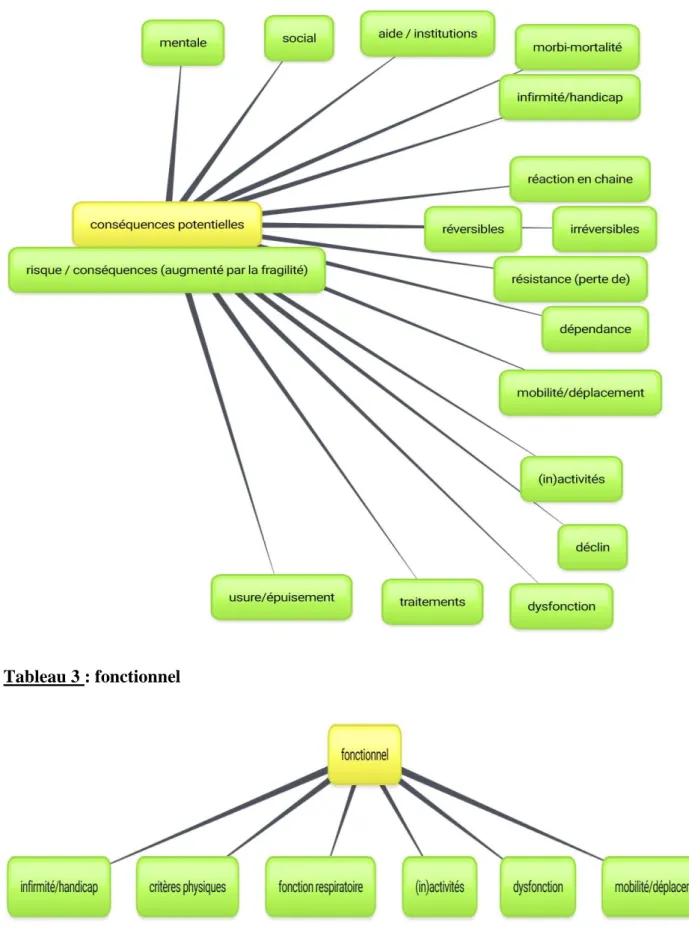
Tableau 2 : les conséquences de la fragilité
Tableau 4 : classement de la fragilité (ou au sein de la fragilité)
Tableau 6 : sénescence / physiologie dans la fragilité
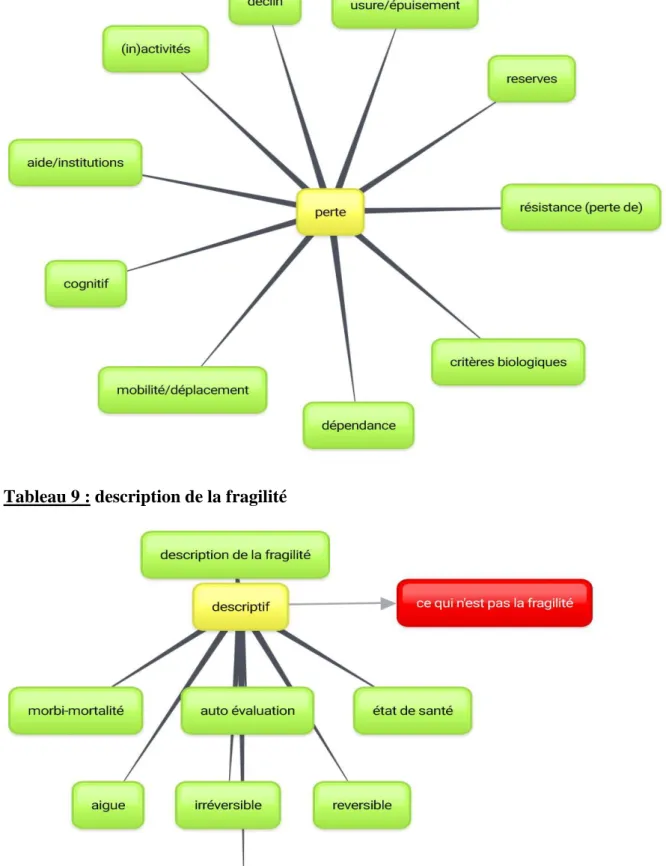
Tableau 8 : perte et fragilité
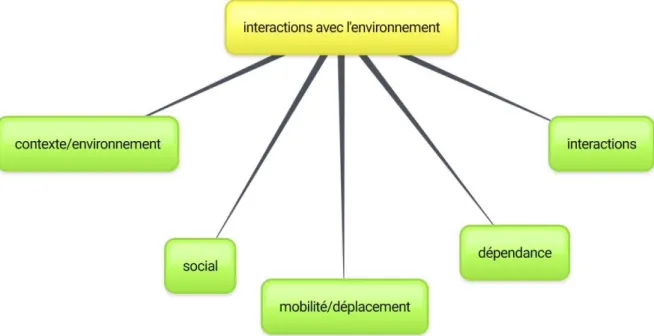
Tableau 10 : interactions avec l’environnement
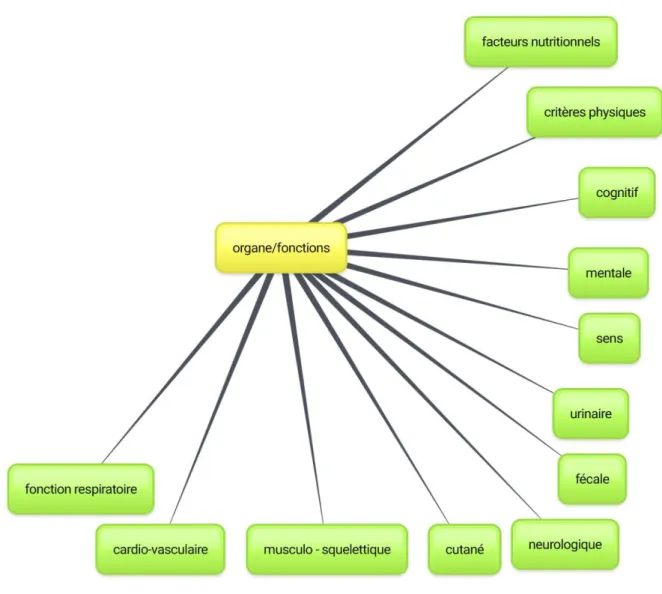
Tableau 12 : organe/ fonctions et fragilité
Critères consensuels :
Certains critères ne furent pas touchés par la confusion entre conditions et conséquences. En
effet l’âge/vieillissement, les facteurs nutritionnels, l’addiction, l’environnement ont été cités
comme des conditions. Pour les conséquences, il était plus difficile de citer des critères. Cela
venait du fait que la fragilité s’inscrivait dans une réaction en chaine, dont la plupart des
conséquences pouvaient aussi bien favoriser ou être une condition au développement de la
fragilité. L’infirmité/ handicap a été souvent citée comme une conséquence. Pourtant le
principal code ouvert de ce critère était « le développement d’une infirmité » ou « disability »
et celui-ci était clairement cité comme une conséquence (11) aussi bien que comme une
condition selon les définitions. (19)
Critères non consensuels :
Certains critères souffraient de l’ambiguïté entre conséquences et conditions. Ils pouvaient
aussi bien être cités comme condition que comme conséquence. Pour la plupart de ces critères
il était possible de considérer les 2 possibilités. En effet leur grande diversité appuyait le fait
que la fragilité pouvait s’exprimer comme un enchainement d’évènements, comme un cercle
vicieux.
Parmi ces critères pouvait être cité : le déclin, l’usure/l’épuisement, l’ (in)activité, la perte de
résistance.
Définition :
La fragilité selon les définitions issues de la littérature était un concept comprenant différents
types de fragilité (physique, mentale, sociale) et différents niveaux ou degrés.
La fragilité était un mécanisme physiopathologique avec d’une part la senescence et d’autre
part la possibilité d’une participation de diverses pathologies.
La fragilité a été associée à une série de pertes qui pouvaient aussi bien être un élément
déclencheur qu’un facteur de développement de la fragilité, de plus les pertes pouvaient aussi
s’exprimer comme une conséquence, dans un cycle ou un continuum.
La fragilité pouvait être l’expression de l’interaction avec l’environnement. Cette interaction
n’a pas été pour autant la seule source de condition pour l’apparition de la fragilité. Les
conditions de la fragilité étaient des critères physiques, l’âge/le vieillissement, le déclin, les
facteurs nutritionnels, l’ (in)activité, les aides/institutionnalisations, la morbidité, le
contexte/l’environnement, l’état de santé, le mental, des dysfonctionnements, le social, la
mobilité/les déplacements, la dépendance, la perte de résistance, les réactions en chaines, les
traitements, l’usure/ l’épuisement, l’addiction, l’inné.
La fragilité a eu pour conséquences l’infirmité/le handicap, le déclin, l’ (in)activité, les
aides/institutionnalisations, la morbi-mortalité, la dégradation de l’état de santé y compris
mentale, des dysfonctionnements, la dégradation de la vie sociale, de la mobilité/ des
déplacements, la dépendance, la perte de résistance, les réactions en chaines, les traitements,
l’usure/l’épuisement.
La redondance entre conditions et conséquences de la fragilité était due à l’enchainement de
pertes comme dit précédemment et cela exprimait que l’état de fragilité a été perçu comme
une spirale de déclin, un cercle vicieux par certains chercheurs.
DISCUSSION :
Contexte :
Cette étude utilisait des définitions très diverses. La grande majorité d’entre elles se basait sur
une des deux classes de critères. (5) Pour mémoire, ces 2 classes étaient la physiopathologie
énergétique et motrice, autrement appelée phénotype de la fragilité, et la fragilité
multidimensionnelle.
Concernant le phénotype de fragilité, il a été utilisé par un grand nombre d’études se basant sur
la définition proposée par la Cardiovascular Health Study (CHS) proposée par Fried.
(2,17,21,23,24,25,26,31,35,37,49) Cette définition comportait un index de fragilité avec 5
critères : la perte de poids, la lenteur de déplacement, la sensation de fatigue, la faiblesse
musculaire et la sédentarité. (2) La présence de 3 critères permettait de dire qu’un patient était
fragile.
Une version simplifiée était présente dans The Study of Osteoporotic Fractures (SOF) (51), il
n’y avait plus que 3 critères et la présence de 2 d’entre eux était suffisante pour dépister la
fragilité. Ces critères étaient la perte de poids, l’impossibilité de se lever d’une chaise à 5
reprises sans utiliser ses membres supérieurs, un bas niveau d’énergie. (22)
Concernant la fragilité multidimensionnelle ou théorie de l’accumulation des déficits de
Rockwood, elle utilisait un index de fragilité mis en place dans the Canadian Study of Health
and Aging (CSHA). (20) Le dépistage de la fragilité se basait ici sur une liste de 70 déficits.
L’accumulation de nouvelle études avait continué sans pour autant qu’il y ait eu de consensus
pour une définition ou un outil de mesure commun. (52, 53,54) Les théories de l’accumulation
des déficits et du phénotype de la fragilité avaient toutes les 2 des avantages et des
inconvénients. Le vieillissement de la population et les répercussions sur les systèmes de soins
rendant souhaitable qu’un consensus fut trouvé. (55)
Apports de l’étude :
Cette étude a permis de visualiser que certains critères étaient communs à la pluparts des études.
Ces critères pourraient servir de base pour une définition consensuelle de la fragilité. Les 2
principales classes de critères ne semblaient pas antinomiques.
L’étude des critères a montré que beaucoup de critères non consensuels étaient généralement
compris dans la confusion entre causes et conséquences. (56) Il était tout à fait probable que le
caractère cyclique des réactions en chaines mises en jeu dans la fragilité fut responsable de cette
confusion. Il était intéressant d’avoir identifié ces critères pour définir au mieux la fragilité.
Pour obtenir un accord le plus large possible, sur le plus grand nombre de critères pour forger
les outils de dépistage et de prévention qui fassent consensus.
Les limites de l’étude :
Pour cette étude, la récupération des définitions extraites de la revue de littérature (8) exposait
aux limites de cette première étude. Certaines définitions avaient pu être oubliées, apportant un
biais de sélection et un biais d’évaluation. Aussi dans la plupart des études se basant sur des
cohortes, les patients en institutions étaient exclus. Les personnes en institutions représentaient
pourtant une grande proportion chez les patients fragiles.
Dans les cohortes se posait également le problème de la limite d’âge, des patients jeunes avaient
été inclus et ce qui pouvait influencer les résultats.
Les définitions retenues avaient moins de 20 ans. Pourtant la fragilité fut citée depuis les années
80, cela s’expliquait par l’absence de nécessité de définir la fragilité avant que Fried n’ai
introduit le phénotype de la fragilité. (2)
Dans cette étude les critères les plus répétés n’ont pas été mis en valeur car l’étude n’était pas
quantitative. Cela évita la mise en valeur des 5 critères de l’index de fragilité de la CHS, qui
étaient très cités.
La traduction des définitions depuis l’anglais et l’espagnol et l’attribution des codages étaient
le travail d’une seule personne et comportaient un risque d’erreur linguistique et de subjectivité
dans le regroupement des critères sur les 3 niveaux de codage. Il y avait nécessité pour renforcer
l’objectivité d’effectuer ce type de travail en binôme ou en groupe.
Une contre étude pourrait éventuellement être menée pour vérifier si les critères obtenus sont
similaires.
CONCLUSION
La fragilité a continué d’être étudiée sans définition commune. Cette étude a montré la grande
pluralité de définitions et de critères, ainsi que le grand nombre de critères contradictoires selon
les définitions et auteurs. Cependant certains critères firent consensus dans les différents
courants utilisés. De même les critères contradictoires étaient, en partie, potentiellement
intégrables à une définition commune.
Les 2 approches principales, la fragilité multidimensionnelle ou continuum de déficit
(Rockwood) et le phénotype de la fragilité (Fried) n’étaient pas opposées, mais il n’y avait pas
eu de tentative de recherche de consensus. Il apparaissait d’autant plus nécessaire d’y parvenir.
(55) Pour cela il était nécessaire d’arrêter de produire de nouvelles recherches utilisant de
nouvelles définitions apportant toujours plus de confusions. L’intérêt de la fragilité résidait dans
son dépistage et plus les définitions seront confuses, plus les échelles/outils de mesure seront
complexe et moins ce concept sera exploitable en pratique. La stabilisation du concept de
fragilité devrait être une priorité pour les chercheurs afin d’en permettre une utilisation plus
courante par les cliniciens. (6)
Les futures recherches dans ce domaine pourraient se concentrer sur une définition et des outils
consensuels. Dans ce sens une nouvelle étude comparant les critères présents dans les outils et
index de fragilité pourrait elle aussi aider à aboutir à une définition commune.
BIBLIOGRAPHIE :
1. Oktay JS, Volland PJ. Foster home care for the frail elderly as an alternative to nursing
home care: an experimental evaluation. Am J Public Health 1987;77:1505–10.
2. Fried LP, Tangen CM, Walston J, Newman AB, Hirsch C, Gottdiener J, et al. Frailty in
older adults: evidence for a phenotype. J Gerontol A Biol Sci Med Sci 2001;56:146–56.
3. Walston J, Robinson TN, Zieman S, et al. Integrating Frailty Research into the Medical
Specialties-Report from a U13 Conference. Journal of the American Geriatric Society.
2017:
10.1111/jgs.14902
4. Kern L, Termoz N, Le Cren F, et al.
Activité physique et prévention des chutes chez les
personnes âgées. Inserm. 2015. chapitre 5 Syndrome de fragilité. Pages 197- 207
5. Rolland Y, Benetos A, Gentric A, et al. Frailty in older population: a brief position paper
from the French society of geriatrics and gerontology. Geriatr Psychol Neuropsychiatr
Vieil 2011; 9:387-90.
6. Morley JE, Vellas B, van Kan GA, et al. Frailty consensus: a call to action. J Am Med
Dir Assoc 2013; 14: 392–7
.
7. Rockwood K, Andrew M, Mitnitski A. A comparison of two approaches to measuring
frailty in elderly people.
J Gerontol A Biol Sci Med Sci. 2007:
62(7):738-43.
8. Corre L. Meaning of the frailty's concept in medicine: definitions of a frail patient
following a systematic literature review. Th. : Méd. : Brest 2015
9. Barney G. Glaser, Ph.D. The Grounded Theory Methodology - What is GT?. Grounded
Theory Institute. 2014 - http://www.groundedtheory.com/what-is-gt.aspx
10. Moher D, Liberati A, Tetzlaff J, Altman DG. Preferred reporting items for systematic
reviews and meta-analyses: the PRISMA statement. BMJ 2009;339:2535.
11.
Gill TM, Baker DI, Gottschalk M, Peduzzi PN, Allore H, Byers A. A program to
prevent functional decline in physically frail, elderly persons who live at home. N Engl
J Med 2002;347:1068–74.
12.
Binder EF, Schechtman KB, Ehsani AA, Steger-May K, Brown M, Sinacore DR, et al.
Effects of exercise training on frailty in community-dwelling older adults: results of a
randomized, controlled trial. J Am Geriatr Soc 2002;50:1921–8.
13.
Markle-Reid M, Browne G. Conceptualizations of frailty in relation to older adults. J
Adv Nurs 2003;44:58–68.
14.
Wolf SL, Barnhart HX, Kutner NG, McNeely E, Coogler C, Xu T. Selected as the best
paper in the 1990s: Reducing frailty and falls in older persons: an investigation of tai
chi and computerized balance training. J Am Geriatr Soc 2003;51:1794–803.
15.
Jones DM, Song X, Rockwood K. Operationalizing a frailty index from a standardized
comprehensive geriatric assessment. J Am Geriatr Soc 2004;52:1929–33.
16.
Bartali B, Frongillo EA, Bandinelli S, Lauretani F, Semba RD, Fried LP, et al. Low
nutrient intake is an essential component of frailty in older persons. J Gerontol A Biol
Sci Med Sci 2006;61:589–93.
17.
Semba RD, Bartali B, Zhou J, Blaum C, Ko C-W, Fried LP. Low serum micronutrient
concentrations predict frailty among older women living in the community. J Gerontol
A Biol Sci Med Sci 2006;61:594–9.
18.
Faber MJ, Bosscher RJ, Chin A Paw MJ, van Wieringen PC. Effects of exercise
programs on falls and mobility in frail and pre-frail older adults: A multicenter
randomized controlled trial. Arch Phys Med Rehabil 2006;87:885–96.
19.
Levers M-J, Estabrooks CA, Ross Kerr JC. Factors contributing to frailty: literature
review. J Adv Nurs 2006;56:282–91.
20.
Rockwood K, Andrew M, Mitnitski A. A comparison of two approaches to measuring
frailty in elderly people. J Gerontol A Biol Sci Med Sci 2007;62:738–43.
21.
Cawthon PM, Marshall LM, Michael Y, Dam T-T, Ensrud KE, Barrett-Connor E, et al.
Frailty in older men: prevalence, progression, and relationship with mortality. J Am
Geriatr Soc 2007;55:1216–23.
22.
Ensrud KE, Ewing SK, Taylor BC, Fink HA, Cawthon PM, Stone KL, et al.
Comparison of 2 frailty indexes for prediction of falls, disability, fractures, and death in
older women. Arch Intern Med 2008;168:382–9.
23.
LaCroix AZ, Gray SL, Aragaki A, Cochrane BB, Newman AB, Kooperberg CL, et al.
Statin use and incident frailty in women aged 65 years or older: prospective findings
from the Women’s Health Initiative Observational Study. J Gerontol A Biol Sci Med
Sci 2008;63:369–75.
24.
Espinoza SE, Hazuda HP. Frailty in older Mexican-American and European-American
adults: is there an ethnic disparity? J Am Geriatr Soc 2008;56:1744–9.
25.
Avila-Funes JA, Helmer C, Amieva H, Barberger-Gateau P, Le Goff M, Ritchie K, et
al. Frailty among community-dwelling elderly people in France: the three-city study. J
Gerontol A Biol Sci Med Sci 2008;63:1089–96.
26.
Avila-Funes JA, Amieva H, Barberger-Gateau P, Le Goff M, Raoux N, Ritchie K, et al.
Cognitive impairment improves the predictive validity of the phenotype of frailty for
adverse health outcomes: the three-city study. J Am Geriatr Soc 2009;57:453–61.
27.
Cigolle CT, Ofstedal MB, Tian Z, Blaum CS. Comparing models of frailty: the Health
and Retirement Study. J Am Geriatr Soc 2009;57:830–9.
28.
Kiely DK, Cupples LA, Lipsitz LA. Validation and comparison of two frailty indexes:
29.
García-González JJ, García-Peña C, Franco-Marina F, Gutiérrez-Robledo LM. A frailty
index to predict the mortality risk in a population of senior Mexican adults. BMC
Geriatr 2009;9:47.
30.
Romero-Ortuno R, Walsh CD, Lawlor BA, Kenny RA. A frailty instrument for primary
care: findings from the Survey of Health, Ageing and Retirement in Europe (SHARE).
BMC Geriatr 2010;10:57.
31.
Ensrud KE, Blackwell TL, Cauley JA, Cummings SR, Barrett-Connor E, Dam T-TL, et
al. Circulating 25-hydroxyvitamin D levels and frailty in older men: the osteoporotic
fractures in men study. J Am Geriatr Soc 2011;59:101–6.
32.
Vermeulen J, Neyens JC, van Rossum E, Spreeuwenberg MD, de Witte LP. Predicting
ADL disability in community-dwelling elderly people using physical frailty indicators:
a systematic review. BMC Geriatr 2011;11:33.
33.
Pilotto A, Rengo F, Marchionni N, Sancarlo D, Fontana A, Panza F, et al. Comparing
the prognostic accuracy for all-cause mortality of frailty instruments: a multicentre
1-year follow-up in hospitalized older patients. PLoS One 2012;7:29090.
34.
Pijpers E, Ferreira I, Stehouwer CDA, Nieuwenhuijzen Kruseman AC. The frailty
dilemma. Review of the predictive accuracy of major frailty scores. Eur J Intern Med
2012;23:118–23.
35.
Espinoza SE, Jung I, Hazuda H. Frailty transitions in the San Antonio Longitudinal
Study of Aging. J Am Geriatr Soc 2012;60:652–60.
36.
Romero-Ortuno R, Kenny RA. The frailty index in Europeans: association with age
and mortality. Age Ageing 2012;41:684–9.
37.
Lakey SL, LaCroix AZ, Gray SL, Borson S, Williams CD, Calhoun D, et al.
Antidepressant use, depressive symptoms, and incident frailty in women aged 65 and
older from the Women’s Health Initiative Observational Study. J Am Geriatr Soc
2012;60:854–61.
38.
Tieland M, Dirks ML, van der Zwaluw N, Verdijk LB, van de Rest O, de Groot
LCPGM, et al. Protein supplementation increases muscle mass gain during prolonged
resistance-type exercise training in frail elderly people: a randomized, double-blind,
placebo-controlled trial. J Am Med Dir Assoc 2012;13:713–9.
39.
Woo J, Leung J, Morley JE. Comparison of frailty indicators based on clinical
phenotype and the multiple deficit approach in predicting mortality and physical
limitation. J Am Geriatr Soc 2012;60:1478–86.
40.
Garrido M, Serrano MD, Bartolomé R, Martínez-Vizcaíno V. Differences in the
expression of the frailty syndrome in institutionalized elderly men and women with no
severe cognitive decline. Rev Esp Geriatr Gerontol 2012;47:247–53.
41.
Dent E, Visvanathan R, Piantadosi C, Chapman I. Use of the Mini Nutritional
assessment to detect frailty in hospitalised older people. J Nutr Health Aging
2013;16:764–7.
42.
Romero-Ortuno R. The Frailty Instrument for primary care of the Survey of Health,
Ageing and Retirement in Europe predicts mortality similarly to a frailty index based
on comprehensive geriatric assessment. Geriatr Gerontol Int 2013;13:497–504.
43.
Wou F, Gladman JRF, Bradshaw L, Franklin M, Edmans J, Conroy SP. The predictive
properties of frailty-rating scales in the acute medical unit. Age Ageing 2013;42:776–
81.
44.
Theou O, Brothers TD, Mitnitski A, Rockwood K. Operationalization of frailty using
eight commonly used scales and comparison of their ability to predict all-cause
mortality. J Am Geriatr Soc 2013;61:1537–51.
45.
Baitar A, Van Fraeyenhove F, Vandebroek A, De Droogh E, Galdermans D, Mebis J,
et al. Evaluation of the Groningen Frailty Indicator and the G8 questionnaire as
screening tools for frailty in older patients with cancer. J Geriatr Oncol 2013;4:32–8.
46.
Kobayashi S, Asakura K, Suga H, Sasaki S. High protein intake is associated with low
prevalence of frailty among old Japanese women: a multicenter cross-sectional study.
Nutr J 2013;12:164.
47.
Cacciatore F, Della-Morte D, Basile C, Mazzella F, Mastrobuoni C, Salsano E, et al.
Long-term mortality in frail elderly subjects with osteoarthritis. Rheumatology (Oxford
Journals) 2014;53:293–9.
48.
Bagshaw SM, Stelfox HT, McDermid RC, Rolfson DB, Tsuyuki RT, Baig N, et al.
Association between frailty and short- and long-term outcomes among critically ill
patients: a multicentre prospective cohort study. CMAJ 2014;186:95–102.
49.
Shikany JM, Barrett-Connor E, Ensrud KE, Cawthon PM, Lewis CE, Dam T-TL, et al.
Macronutrients, diet quality, and frailty in older men. J Gerontol A Biol Sci Med Sci
2014;69:695–701.
50. Malmstrom TK, Miller DK, Morley JE. A comparison of four frailty models. J Am
Geriatr Soc. 201462:721–6. 473001
51. Li G, Ioannidis G, Pickard L, Kennedy C, Papaioannou A, Thabane L, et al. Frailty
index of deficit accumulation and falls: data from the Global Longitudinal Study of
Osteoporosis in Women (GLOW) Hamilton cohort. BMC Musculoskelet Disord
2014;15:185.
52. Oubaya N, Mahmoudi R, Jolly D, Zulfiqar AA, Quignard E, Cunin C, et al. Screening
for frailty in elderly subjects living at home: validation of the Modified Short Emergency
Geriatric Assessment (SEGAm) instrument. J Nutr Health Aging 2014;18:757–64.
53. Mello A de C, Engstrom EM, Alves LC. Health-related and socio-demographic factors
associated with frailty in the elderly: a systematic literature review. Cad Saude Publica
2014;30:1143–68.
54. Johansen KL, Dalrymple LS, Delgado C, Kaysen GA, Kornak J, Grimes B, et al.
Comparison of self-report-based and physical performance-based frailty definitions
among patients receiving maintenance hemodialysis. Am J Kidney Dis 2014;64:600–7.
55. Cesari M, Marzetti E, Calvani R, et al.The need of operational paradigms for frailty in
older persons: the SPRINTT project.
Aging Clin Exp Res. 2017
;29(1):3-10.
56. McIsaac DI, Moloo H, Bryson GL, van Walraven C. The Association of Frailty With
Outcomes and Resource Use After Emergency General Surgery: A Population-Based
Annexe 1 :
Définitions et critères (classé par ordre chonologique)
Annex 2. Definitions & Characteristics Founded (in chronological order).→ A program to prevent functional decline in physically frail, elderly persons who live at home (The New England Journal of Medicine, 2002)
1) Physical frailty was defined according to the results of two tests of physical abilities that are strongly associated with the development and progression of disability. Persons were considered physically frail if they required more than 10 seconds to perform a rapid-gait test (i.e. to walk along a 10-ft [3.0m] course and back as quickly as possible) or if they could not stand up from a seated position in a hardback chair with their arms folded. Persons meeting one of these criteria were considered moderately frail, and those meeting both criteria were considered severely frail.
2) […] Criteria for physical frailty identified elderly persons with substantial impairments in physical abilities and hence with high projected rates of disability and functional decline.
→ Effects of exercise training on frailty in community-dwelling older adults: results of a randomized, controlled trial (The American Geriatrics
Society, 2002)
1) […] Mild to moderate physical frailty, as defined by two of the following three criteria: Modified Physical Performance Test (modified PPT) score between 18 and 32, peak oxygen uptake (VO2 peak) between 10 and 18 mL/kg/min, and self-report of difficulty or assistance with one basic activity of daily living (ADL),or two instrumental ADLs.
2) Physical frailty is a syndrome characterized by declines in multiple physiological domains, including muscle mass and strength, flexibility, balance and neuromuscular coordination, an cardiovascular function. In addition to aging per se, factors that contribute to the development of frailty include chronic illnesses, poor nutrition, and physical inactivity. Frailty greatly increases the risk for functionnal decline, instutionalization, morbidity, and mortality. 3) […] Mildly to moderately frail older people retain the ability to adapt to endurance training with functionally significant increases in VO2 peak. 4) […] Frail older people retain the capacity to adapt to weightlifting with significant increases in strength.
5) […] Frail older people are able to perform and adapt to whole-body programs of strength training involving a variety of exercises and all major muscle groups.
→ Conceptualizations of frailty in relation to older adults (Journal of Advanced Nursing, 2003)
1) […] A new theoretical approach to the concept of frailty in older adults: (1) it must be a multidimensional concept that considers the complex interplay of physical, psychological, social and environmental factors; (2) the concept must not be age-related, suggesting a negative and stereotypical view of ageing; (3) the concept must take into account an individual’s context and incorporate subjective perceptions; (4) the concept must take into account the contribution of both individual and environmental factors.
2) […] Frailty was defined as impairment in one or more aspects of the activities of daily living or cognitive impairment or poor self rated health. 3) […] Frail elders at risk for increasing morbidity, acute hospital and long-term care use and death.
4) […] frailty has been considered when there are indications of: (1) functional impairment and dependence on others for activities of daily living that threaten the ability of a person to live independently in the community, (2) poor physical health, such as chronic illness or acute illnesses, (3) disability, (4) vulnerability or lack of strength and resilience, (5) poor mental health functioning; for example, cognitive impairment or depression, (6) requiring formal, informal, or long-term care to meet basic needs, and (7) simply old age.
5) Demographers use the term frailty in mathematical modelling of morbidity and mortality to denote a latent variable associated with extent of risk. 6) […] Biomedical perspective, equating frailty with ageing, disease, decline, loss and dependence on others.
7) […] Frailty as poor functioning in physical, cognitive, emotional, sensory or social functioning.
8) It has been subdivided into types including ‘medical frailty’, ‘functional frailty’, ‘mental frailty’, and ‘physical frailty’, implying that there is just one type of characteristic by which an individual is evaluated for frailty.
9) Aging.
10) Reduced physiological reserves.
11) Decreased muscle strength, mobility and balance.
12) Decreased strength, flexibility, cardiovascular endurance and body composition. 13) Compromised homeostatic mechanisms.
14) Feebleness, delicately constituted, vulnerable or lack of resilience. 15) Disability.
16) Inactivity combined with weight loss.
17) Functional impairment and dependence in activities of daily living. 18) Chronic and disabling illness.
19) Acute illnesses such as confusion, falls, immobility, incontinence, and pressure sores. 20) Poor mental health functioning, such as cognitive impairment and depression. 21) Need for formal or informal assistance with personal care or household tasks. 22) Specialized geriatric intervention and long-term (nursing home) care. 23) Failure to thrive.
24) Biologically old.
25) Wasting syndrome common in people of advanced age. 26) Chronically dependent in a variety of ways.
27) Functional disability. 28) Functional dependency.
29) Decreased ability to respond to stressful situations. 30) Fragile, delicate, brittle, tender, easily disturbed. 31) Functionally vulnerable.
32) Chronic illness and disability. 33) Feebleness and general vulnerability.
34) External stressors that can precipitate frailty but are also essential for maintenance of function.
35) Frailty results from a loss o a person’s capability to withstand environmental stressors related to diminished physiologic reserves beyond a threshold limit. Reserve capacities reduced by disease, disuse, illness and age.
36) Frailty is a precursor to disability or unstable disability.
37) The process of becoming frail consists of a series of episodic, progressive and irreversible losses.
38) Frailty results from the dysfunction of tissue secondary to non-optimal energy flow because of disuse, aging and disease leading to a threshold loss of physiologic function.
39) Frailty is defined as opposite to vitality along a continuum. Frailty is reversible through the reestablishment of optimal energy flow. 40) A person is considered frail if they have physiologic declines beyond a predefined threshold limit.
41) Frailty is defined as a cycle – a process of declining energetics, including muscle mass loss, falling metabolic rate, declining strength, energy expenditure and mobility.
42) The frail elderly are those persons for whom the deficits outweigh the assets, so these people can no longer maintain their independence in the community.
44) Frailty occurs when there is diminished ability to carry out the important practical and social activities of daily living. Reserve capacity contributes to a person’s position on the frail hardiness continuum, but, by itself is sufficient to determine frailty.
45) Frailty is defined as opposite to hardiness along a continuum. The position on the continuum depends on the complex interaction among personal and environmental factors.
46) Frailty reflects a societal view of aging as a battle between independence and dependence.
47) Frailty is socially produced through the interaction of older adults, their caregivers and their health providers.
48) Frailty is a quality and a dynamic adaptational process on the part of elderly persons, families, and health care personnel. 49) […] Frailty is unidimensional and is characterized by functional losses that influence the capacity for independence in daily living. 50) […] Frail elders as those who are unable to fulfill social roles and perform activities of daily living.
51) […] Dependence on others is a sufficient condition for frailty.
52) […] Frailty as consisting of the physiological dimensions of musculoskeletal function, aerobic capacity, cognitive and nutritional states. 53) […] Failty is more a reflection of a disease or physiological state than a statement of need.
54) While the majority of models have viewed frailty as including primarily biomedical and objective dimensions, others have gone beyond this by incorporating psychological and/or social dimensions.
55) […] A person can be frail in one aspect of life but not another.
56) The problem of frailty is viewed as a medical problem that falls to the medical community to identify and treat refers to this as the medicalization paradigm.
57) The presence of frailty may result from the presence or absence of numerous intersecting factors, many of which are external to the individual, and are conditions occurring within the environment.
58) […] Frailty can be addressed by altering the characteristics of the external environment rather than focusing entirely on the individual. 59) It is a state of reduced physiological reserves associated with ageing that affects an individual’s capacity for functional independence. 60) […] A model of breakdown among older people.
61) Frailty results from age-related physiological losses in combination with disease, disuse and illness; 62) […] Frailty as a syndrome that is age-related and common.
63) Frailty has age-specific connotations.
64) The literature has associated frailty with a lack of hope, absence of positive outlook […], and loss or declining abilities. 65) […] Frailty is a relative term suggests not thinking of people as either frail or not frail, but rather placing them on a continuum. 66) […] Different degrees of frailty suggests a vulnerable state in which an individual is at risk of becoming more or less frail over time.
67) [...] Definitions: (a) the degree of frailty is context dependent and, therefore, greatly affected by the subjective perceptions of individuals, (b) frailty is multidimensional and results from a complex interplay of physical, psychological, social and environmental factors, (c) frailty is not age-related and, therefore, does not portray a negative and stereotypical view of ageing, and (d) frailty can originate from within an individual or from conditions in the environment. What is needed is a ‘fit’ between the needs and resources of the person and the demands and resources of the environment.
→ Selected as the best paper in the 1990s: Reducing frailty and falls in older persons: an investigation of tai chi and computerized balance training (The American Geriatrics Society, 2003)
1) Frailty, defined as a reduction in physiological reserves and behavioral capacities, can affect individuals throughout the age continuum, but the consequences of frailty are particularly devastating for older persons.
→ Operationalizing a frailty index from a standardized comprehensive geriatric assessment (The American Geriatrics Society, 2004)
1) The construct of frailty appears to have a firm biological basis, and frailty is easily recognized clinically.
2) Frailty has been measured by constructing a frailty index (FI), based on the accumulation of a variety of functional deficits (such as comorbid illness, poor health attitudes, signs of disease, and self-reported disabilities).
3) […] Frailty is not the same as disability, as evidenced by the fact that not all disabled people are frail.
4) […] A vulnerable state of health, arising from the complex interaction of medical and social problems, resulting in a decreased ability to respond to stress, and associated with a decline in functional performance.
5) In general, frail people are more likely to be disabled.
6) Another way to conceptualize degrees of frailty in frail samples is to consider the relative degree of functional dependence. 7) Higher levels of frailty are associated with increasing risk of an adverse outcome of death or institutionalization.
8) […] The relationship between frailty and functional decline [...] follows the hierarchical pattern suggested by population studies but that frailty is more than just disability, as evidenced here by the combination of impairment, disability, and disease that constitute the index.
9) Frailty appears to operate analogously to macroscopic state variables (such as temperature measured by the summary of the average kinetic energy of the component molecules) in physical systems.
10) Although moderately and severely frail older adults are at a greater risk of adverse outcomes, frailty did not affect their ability to achieve individualized goals.
→ Low nutrient intake is an essential component of frailty in older persons (Journal of Gerontology: Medical Sciences, 2006)
1) Frailty is a syndrome associated with reduced functional reserve, impairment in multiple physiological systems, and reduced ability to regain physiological homeostasis after a stressful, destabilizing event.
2) Frail older persons are at high risk of accelerated physical and cognitive functional decline, disability, and death. 3) Fried and colleagues defined frailty as a vicious cycle connecting specific signs and symptoms.
4) […] A clinical syndrome characterized by three or more of the following criteria: low muscle strength, unintentional weight loss, feeling of exhaustion, poor physical performance, and reduced physical activity.
5) […] Inadequate dietary intake is a component of the syndrome, which may trigger and/or sustain the cascade of the other processes that lead to frailty. 6) Frailty was defined as having two or more of the following four criteria: 1) exhaustion [self-reported feeling that ‘‘everything I did was an effort,’’ at least three times a week in the last month.]; 2) low physical activity (sedentary state or performing light intensity physical activity [i.e., walking less than 1 hour/ week]); 3) poor muscle strength (grip strength in the lowest quintile, stratified by gender and body mass index [BMI] quartiles); and 4) low walking speed (time to walk 15 feet in the highest quintile, stratified by gender and standing height).
7) [...] Low intakes of vitamins E and C were associated with frailty, independent of protein and energy intake. 8) […] Association between low intake of vitamin D and frailty.
9) […] Poor nutritional intake is an important factor associated with the frailty syndrome. 10) A low intake of nutrients is associated with frailty even independent of energy intake. 11) A low intake of specific nutrients may contribute to the development of the frailty syndrome.
persons at an 12) Low intakes of energy and specific nutrients are associated with frailty. By using nutritional intake, it may be possible to target older early stage of frailty.
→ Low serum micronutrient concentrations predict frailty among older women living in the community (Journal of Gerontology: Medical
Sciences, 2006)
1) Frailty is common in older adults and is considered a state of high vulnerability for adverse health outcomes, including disability, dependency, falls, need for long-term care, and mortality.
2) Frailty has sometimes been used synonymously with disability and comorbidity, however, mounting consensus indicates that frailty is a physiologically based condition with a clinical presentation that predicts disability and may result from comorbidity as well as multisystem physiologic dysregulation with aging.
3) Frailty was defined as a clinical syndrome based on having at least three of five criteria: unintentional weight loss, self-reported exhaustion, weakness, slow walking speed, and low physical activity.
4) A high prevalence of multiple micronutrient deficiencies occurs among frail women.
5) Women were categorized as frail or not frail according to a recent frailty phenotype (5) that was based on the presence of five characteristics: (i) unintentional weight loss (selfreported weight loss of 10 pounds or more in the prior year), (ii) self-reported exhaustion, (iii) weakness (measured grip strength in the lowest quintile at baseline), (iv) slow walking speed (the slowest quintile on test of timed walking speed), and (v) low level of physical activity (lowest quintile of physical activity scale). Women were defined as frail by the presence of at least three, and not frail if they had up to two of the five components.
6) Frail women were older (p < .0001), less educated (p = .002), had a higher prevalence of cardiovascular disease (p < .0001), and a higher proportion of frail women than nonfrail women had a BMI,18.5 kg/m2 (p < .0001).
7) A larger proportion of frail women reported fair or poor appetite compared with women who were not frail.
8) Frail women had lower serum concentrations of total carotenoids (p = .006), a-tocopherol (p = .06), 25-hydroxyvitamin D (p < .0001), selenium (p < .0001), and zinc (p = .001) at baseline compared with women who were not frail.
9) The incidence rates for frailty were higher for women in the lowest quartile of total carotenoids (p = .04) and a-tocopherol (p = .04). 10) Age (p < .0001) was associated with risk of becoming frail.
11) Current smoking, race, education, diabetes mellitus, cardiovascular disease, osteoarthritis, chronic pulmonary disease, and multivitamin use were not significantly related to incident frailty.
12) Women with no nutrient deficiencies had the lowest incidence rate of frailty, and the incidence of frailty increased with higher number of deficiencies.
13) The number of nutrient deficiencies was associated with the incidence of frailty […] after adjusting for age, smoking, and chronic pulmonary disease. 14) total carotenoids were associated with the incidence of frailty […], and a-tocopherol had a marginal association with the incidence of frailty. 15) Older women who had one or more indicators of poor micronutrient status had significantly higher risk of becoming frail.
16) Micronutrient deficiencies may be one major pathway by which women are at higher risk of becoming frail. 17) Frailty increases the risk for adverse outcomes, including hospitalizations and mortality.
18) Micronutrient malnutrition may play a role in the pathogenesis of frailty through different biological pathways. 19) Low serum carotenoid concentrations were predictive of frailty.
20) Low intake of fruits and vegetables may increase the risk of frailty through increased oxidative stress, inflammation, and sarcopenia.
→ Effects of exercise programs on falls and mobility in frail and pre-frail older adults: A multicenter randomized controlled trial (Archives of
Physical Medicine and Rehabilitation, 2006)
1) Frailty is commonly used in the context of elderly facing functional disabilities but the term is not a synonym for disability. 2) Frailty is related to instability and risk of loss of function.
3) A body-wide set of linked deteriorations including, but not confined to, musculoskeletal, cardiovascular, metabolic, and immunologic systems.
4) Frailty can be subdivided into various types, including medical, functional, mental, and physical frailty.
5) The phenotype concept introduced by Fried et al is operationalized by 5 indicators: unintentional weight loss, weakness, exhaustion, slowness, and low physical activity. […] Frailty is considered to be present if at least 3 indicators are positive and a pre-frailty status is defined with 1 or 2 positive indicators.This classification system has been shown to be predictive for falls, worsening mobility, worsening activity of daily living (ADL), disability, hospitalizations and death.