
Features modeling with an α-stable distribution: Application to pattern recognition based on continuous belief functions
Texte intégral
Figure

Documents relatifs
GO approximation of the scattering coefficient in the KA at normal incidence for alpha- stable surfaces with the same Gaussian filter and the same slope parameter s = 0.2.. which is
When the transcription rates were slowed by diluting both UTP and rNTPs, there was still a slight preference towards the WRC hotspot motifs but activity also peaked at
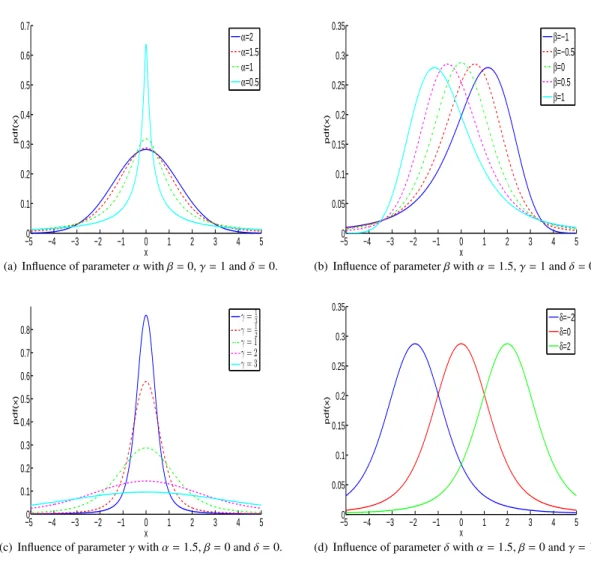
A probability density function is said to have a heavy tail if the tail of the distribution decreases more slowly that the tail of a Gaussian probability density function.. A
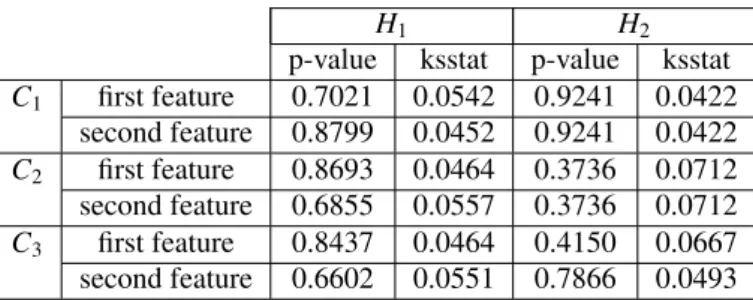
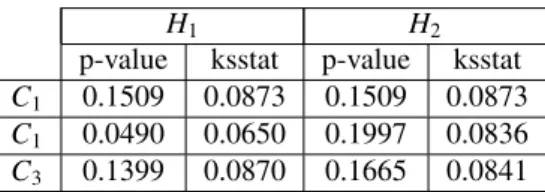
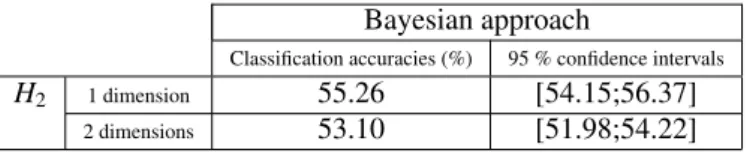
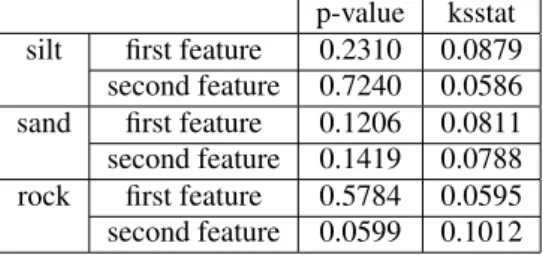
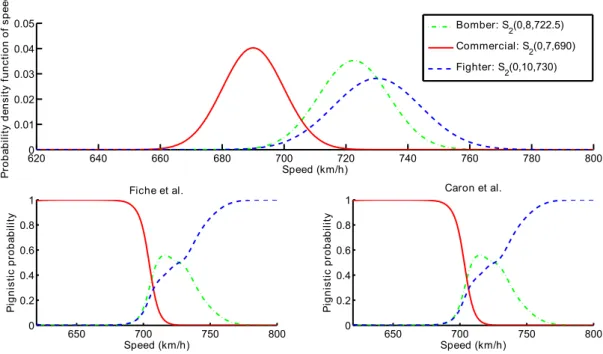
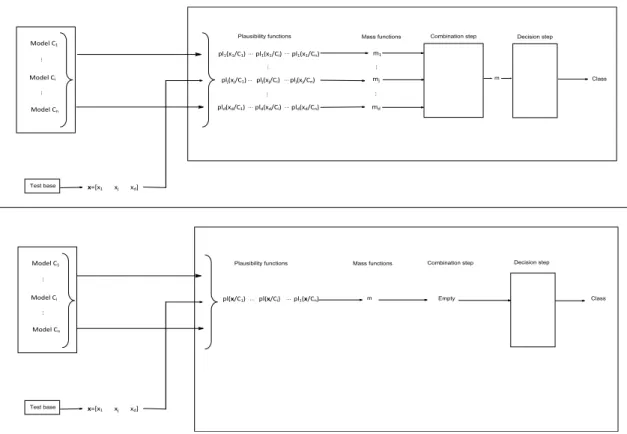
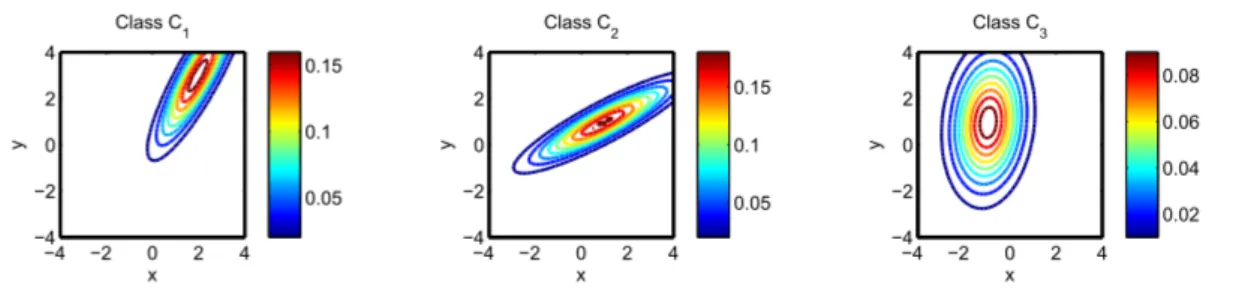
Conse- quently, we propose a way to calculate plausibility func- tions where probability density functions are modelized by symmetric α-stable distributions.. Therefore, a com-
We also show that the use of belief functions allows us to combine the information contained into different input data derived from the whole spectrum data, and that it is an
A syllable is considered as prominent if (a) one of these first three parameters reaches a certain threshold (on the basis of a corpus-based learning procedure involving a 70-minute
Using the spinal decomposition, to compute the number of individuals in a branching random walk who stay in a well-chosen path, it is enough to know the probability for a random
In this paper, we propose a new approach based on utilization of motion boundaries to generate Motion Stable Shape (MSS) features to describe human actions in videos.. In fact, we
