HAL Id: hal-01649521
https://hal.archives-ouvertes.fr/hal-01649521
Submitted on 7 Nov 2019
HAL is a multi-disciplinary open access
archive for the deposit and dissemination of
sci-entific research documents, whether they are
pub-lished or not. The documents may come from
teaching and research institutions in France or
abroad, or from public or private research centers.
L’archive ouverte pluridisciplinaire HAL, est
destinée au dépôt et à la diffusion de documents
scientifiques de niveau recherche, publiés ou non,
émanant des établissements d’enseignement et de
recherche français ou étrangers, des laboratoires
publics ou privés.
Continuous mixing of powder mixtures with
pharmaceutical process constraints
Henri Berthiaux, Khadija Marikh, Cendrine Gatumel
To cite this version:
Henri Berthiaux, Khadija Marikh, Cendrine Gatumel. Continuous mixing of powder mixtures with
pharmaceutical process constraints. Chemical Engineering and Processing: Process Intensification,
Elsevier, 2008, 47 (12), pp.2315-2322. �10.1016/j.cep.2008.01.009�. �hal-01649521�
Continuous mixing of powder mixtures with
pharmaceutical process constraints
Henri Berthiaux
∗, Khadija Marikh, Cendrine Gatumel
RAPSODEE, UMR CNRS 2392, Ecole des Mines d’Albi-Carmaux, Campus Jarlard, route de Teillet, 81000 Albi, France
Abstract
While it would provide many advantages from many aspects, the application of continuous mixing processes to the pharmaceutical field is still in its infancy. In this paper we report results concerning the continuous mixing of nine ingredients (including three actives) that constitute a current drug. We examine these results in the light of different pharmaceutical process constraints, such as mixture quality control, time-stability of this quality, sensitivity of the process to perturbations. The apparatus is a pilot plant Gericke GCM 500 continuous mixer with three loss-in-weight feeders. A specific experimental protocol is developed to determine the homogeneity of the mixtures at the outlet of the mixer. The homogeneity of the mixtures is examined through industrial standards that would allow the product to be released on the market. The steady-state operation is first reported on, and it is demonstrated that a very acceptable mixture can be produced under certain conditions, with excellent time stability. The response of the mixer to filling sequences of two critical feeders is also quantified in terms of mixture homogeneity. It is found that it may be preferable to stop the process during these periods.
Keywords: Continuous mixing; Pharmaceuticals; Mixture quality; Powder; Transitory regime
1. Introduction
1.1. General industrial context with special attention to the pharmaceutical industry
Controlling powder-mixing operations is crucial in practi-cally all kind of industries: ceramics, agro-food, cement, aromas, explosives, cosmetics or drugs. By fixing the composition of a mixture at a desired scale, it will largely guarantee the attainment of the end-used properties of a product, even if, in most cases, this scale and/or these properties are not well defined. Chemi-cal and process engineers (and also product engineers) working with powders are currently faced with problems associated with mixture quality. They have to overcome such difficult barriers as sampling, use more or less advanced statistical analysis, cope with different standards and practices, but also understand a wide range of available technologies. Most of the time, when consid-ering the insertion of a new mixer in an existing process, costly
∗Corresponding author.
E-mail address:[email protected](H. Berthiaux).
pilot or full scale tests need to be performed. As a consequence, the general tendency in the industry is to avoid any change, and to concentrate on the way to validate the actual process. This is illustrated by a certain elasticity in sampling recommendations and practices[1,2].
With regard to the pharmaceutical industry, the above gen-eral picture is even magnified. This is especially due to traceability needs and quality insurance. When transposed to a mixing problem, these requirements can be broken down into:
• Qualification of the components. These must have been pre-viously characterised from the point of view of purity, particle size, density, etc.
• Operational qualification regarding the training of the opera-tors.
• Qualification of the operations. Each operation in the process must have been validated separately (mixer, feeders, etc.). Normally, this is the task of the equipment manufacturer. • Process qualification is the responsibility of the producer.
It must demonstrate that a process will give the product the desired homogeneity, and may rely on optimal process
conditions, but also on sampling procedures and analytical protocols.
• Washing validation procedures. This is essential to avoid cross-contamination and generally concerns the analysis of the washing effluents.
This requires validation step-by-step, unit operation by unit operation. It also means that a single change in a single opera-tion requires resetting the validaopera-tion of the following steps, and sometimes of the previous ones. While this is essential for prod-uct quality and sanitary rules, it is a clear handicap for process innovation in this field.
The “reconciliation principle”, which serves as the basis for traceability, also forms part of such necessary but restricting controls. This principle states that the flow of all the compo-nents of a mixture entering a process may be superior or equal to the flow leaving this process. In other words, if losses may be explained, they cannot be found in another batch. Also, if a mixture is found to be inhomogeneous, the whole related pro-duction must be destroyed. Even if there is clearly not a problem of product contamination by an external source, it will not be permitted to mix the powders again. This is in contradiction with basic process optimisation principles that are currently taught to young chemical engineers and demonstrates the main difficulty that a pharmaceutical company is currently faced with: how to stay competitive when process optimisation encounters so many constraints?
1.2. Mixture quality and pharmaceutical standards
First of all, the quality of a powder mixture cannot be defined if there is no precision on the scale at which the mixture is observed. If this scale is the entire production, the whole batch, mixture quality is irrelevant. Conversely, if it is a single particle of a binary mixture, mixture quality will be zero. Normally, this scale of scrutiny corresponds to that of the unit dose that a patient may take. . . something between 10 mg and 5 g in typical human recipes. When compared to the size and filling of an industrial mixer, this means that it may contains from several hundreds of thousands to one or two millions times the unit dose.
Secondly, one may identify what the component is for which the mixture has to be qualified. This key component is logi-cally the active ingredient, of therapeutic effect. But in the case of multiple key components, what follows must be repeated for each “active”. If a mixture is composed of N unit doses, therefore corresponding to one batch or a definite period of time in con-tinuous operation, then mixture homogeneity will be expressed by the variance or standard deviation σ in the composition in active xiof all the doses, with respect to the mean content µ:
σ2= 1 N N ! i=1 (xi− µ)2. (1)
However, due to the difference in scale explained above, and because in-line and non-destructive methods are not well devel-oped up to now, it is not feasible for a real pharmaceutical case to
use this formula at “full scale”. Sampling procedures are there-fore used to approach this criterion by taking n samples out of the N possible, thus defining:
s2= 1 n n ! i=1 (xi− xm)2 (2)
where xmis the mean content of active ingredient in the samples.
Finally, because a standard deviation has a real significance if it is compared to the mean value, the coefficient of variation is often employed:
CV = s
xm. (3)
This overall analysis, including the sampling impact, serves as a basis for the definition of standards that need to be met to avoid the production being destroyed, with all the resulting cost implications. Basically three criteria are under observation: • The mean of the samples xm. Even if there is always a
sam-pling error, a significant difference from the “true” mean µ can be indicative of a bad mixture. A typical criterion attached to this is: µ − 7.5% µ < xm< µ + 7.5%µ.
• The individual values. A unit dose must contain the theoret-ical active composition with a certain tolerance. In practice: µ− 15% µ < xi< µ + 15%µ. So in a tablet containing 1 g
of paracetamol, one may expect to have between 850 and 1150 mg of the active.
• The coefficient of variation. It must be inferior to 6%. In pro-cess development, CV’s of around 1 or 2% are the objectives to reach so as to limit the risk of homogeneity loss during scale up.
Some differences can also be appreciated if one compares US Federal Drug Administration (FDA) and EU standards. For example, the rule cited above for the individual values is used in the EU pharmacopoeia. However, the FDA does not mentioned the true mean µ as the reference for calculating the range of the permitted values, which means that this can be done with estimated mean xm. In this case, the FDA standard is less severe
that the EU one.
In parallel to the existence of these criteria for “batch libera-tion”, one may also be confronted with real practice. As stated above, sampling must be done at the scale of scrutiny, which means the scale of, say, one tablet. If this can be done eas-ily at the end of the process, it is not always feasible at that precise scale for the previous steps, including the mixing step, mainly because of sampler size and process accessibility (also resulting in higher sampling errors). This motivated the initiative of developing Process Analytical Technologies (PAT), as on-line methods that are well adapted to detecting pharmaceutical molecules: NIR spectroscopy[3], FT-Raman[4], laser-induced fluorescence[5,6].
Table 1
Main characteristics of the powders used and mixing configuration Mean particle size
(!m)
Carr index (%) True specific gravity
(g cm− 3)a Theoretical weight perunit dose (g) Mixing configuration Mass flows (kg/h)
BM containing A1 and A2 110b 15 1.48 4.275 BM 32.87 A3 28c 21 1.22 0.025 A3+ 1/2 I1 0.95 I1 67c 15 1.31 0.200 I2 59c 11 1.33 0.050 I3+ I2+ 1/2 I1 4.18 I3 53c 20 1.75 0.400
aMeasured by Helium pycnometer. b Measured by sieving.
cMeasured by laser diffraction.
1.3. Batch versus continuous in the pharmaceutical industry
Recently, Pernenkil and Cooney[7]published a very
com-plete review of continuous powder-mixing, some 30 years after the first one written by Williams[8]. They pointed out the little attention that the scientific literature has paid to continuous pro-cesses for mixing powders and grains, particularly with respect to batch processes. They also noted the absence of reported work concerning the continuous mixing of pharmaceutical powders. To our knowledge, the effective use of continuous mixers (as well as continuous granulators) in pharmaceutical plants is restricted to four or five examples throughout the world. Indeed, the batch reference predominates to an extent which is somewhat “cul-tural” in this field of activity, while in many cases, replacing an old batch mixer by a continuous one would result in a significant increase in productivity.
Basic advantages of continuous mixers with respect to batch mixers are currently:
• Lower size of the mixing vessel for a same production level. • Less segregation risk due to the absence of handling
opera-tions, such as filling and emptying. • Lower running costs.
• Better definition of mixture homogeneity, at the outlet of the apparatus.
In the pharmaceutical context, we may add and emphasize: • The possibility to include an on-line analysis set-up at the
outlet of the mixer to measure the quality of the mixtures, but also to implement process control. This point is exactly in the direct line of the PAT recommendations.
• The fact that practically all the final steps, such as tabletting and conditioning, in a drug fabrication scheme are already continuous operations.
• The elimination of scale-up problems during process devel-opment.
This last point is undoubtedly a very serious advantage for continuous mixers. The validation of an industrial “batch” dur-ing process development must actually be done at a scale of 1/10 of the real batch capacity. This means that if one wants
Fig. 1. Pilot plant equipment (a) used showing the loss-in-weight feeders, and stirring device (b).
to produce 100 kg at industrial scale in a batch mixer, the val-idation can be done with a mixer containing 10 kg of mixture. In continuous mixing, this may be traduced by 1 h of full scale test to represent 10 h of industrial production. The risk of error is undoubtedly much easier to assume for a continuous process rather than for a batch process that has to “cross the scales”.
In this paper, we will report and discuss, probably for the very first time, some results that we obtained when studying a “real” pharmaceutical mixture of 9 ingredients including 3 actives. First, we will present the continuous mixer used and the specific methodologies developed. Then, we will focus on the homogeneity of the mixtures produced and their time-stability in normal operation. To continue with process constraints, we will also examine the effect of process disturbance, such as periods of feeding of the loss-in-weight feeders.
2. Experiments
2.1. Mixture considered
The industrial case under consideration is a drug currently on the market containing 3 actives for a total of 9 ingredients. Two of the actives, which will be referred to as A1and A2,are
agglomerated with three other ingredients to form a basic mix-ture (BM). A1will represent 10% (by weight) of the final drug,
while A2will concern 4% of it. The four last ingredients, three
additives I1, I2, I3and the active A3, are divided into two
pre-mixes P1and P2, which are defined inTable 1, as well as some
other characteristics.
This finally defines a mixture made of three streams to mix: BM, P1, P2. The flow rates attached to these streams have been
calculated to cope with the industrial cadences of production,
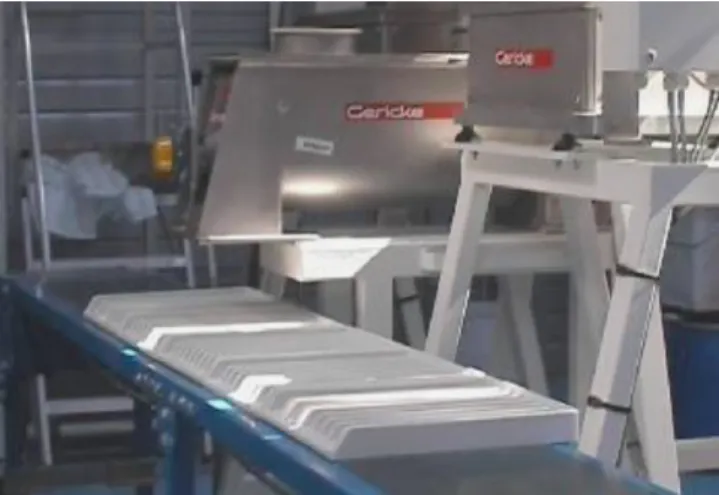
Fig. 2. Photograph of the outlet of the mixer showing the sampling set-up.
and of course, with the composition of the mixture. As it can be seen fromTable 1, the overall mixture is of low dosage concern-ing the active A3(nearly 0.5%), which can be considered as the
“main key component”. However, the mass of A3in a sample of
unit size is still detectable by conventional methods. As regards the “physical” differences of the ingredients, the values do not really indicate an important risk of particle segregation by size or density. We may only remark that flowability is worse for A3
and I3, which are to be considered as fully cohesive powders and
may result in difficulties during dosage and mixing.
2.2. Mixing equipment and experimental procedure
The mixer used is a Gericke GCM 500® nearly
hemi-cylindrical apparatus of the following dimensions: 50 cm long,
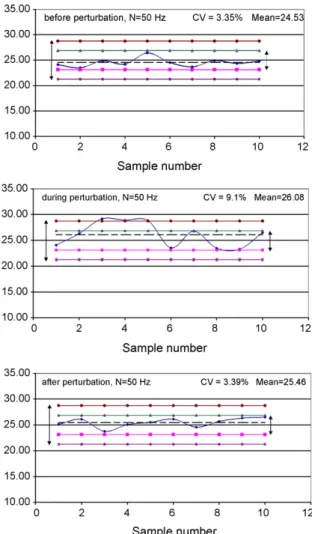
Fig. 3. Mixtures obtained after different operation times under the conditions specified on the graphs, showing the values of the individual content and the mean content in A3, as well as the related coefficients of variation.
20 cm diameter (seeFig. 1). The stirrer consists of 15 blades mounted on a driven shaft. The range of rotational speeds of the stirrer varies from 10 to 160 rpm, and may be
advanta-geously described by a Froude number Fr = RN2/g, where R
is the radius of the mobile and N its rotational speed. In
pre-vious studies [9–11], it has been shown that Froude values
below 1 corresponded to dense phase flow, while Froude val-ues superior to 1 corresponded to nearly fluidised motion of the particles.
Three loss-in-weight feeders of different capacities and char-acteristics ensure a very acceptable regularity and precision of dosage. Qualification of these feeders for the present products was made in a preliminary study, which is not reported here for clarity and confidentiality reasons.
To qualify the mixtures produced, a sampling protocol was specifically established. Striated boxes defining well separated sections were placed on a conveyor belt of variable speed located at the outlet of the mixer (seeFig. 2). The speed of the belt was adjusted so that the powder mass falling in a section cor-responded to the scale of scrutiny of the mixture (nearly 5 g). While a certain fluctuation exists of the sample masses collected through this procedure, this error was neglected because the analysis of mixture homogeneity is based on the concentrations of the actives (and mainly A3).
For homogeneity calculations, 10 consecutive samples were collected and the composition in each active component was calculated after an industrially validated dissolution and HPLC specific protocol. The three criteria defined in the introduc-tion of this paper were used to determine the best condiintroduc-tions of operation of the mixer (stirrer type, rotational speed, pre-mix configuration). This “optimisation” procedure is not the objective of the present work and will be reported in future communications.
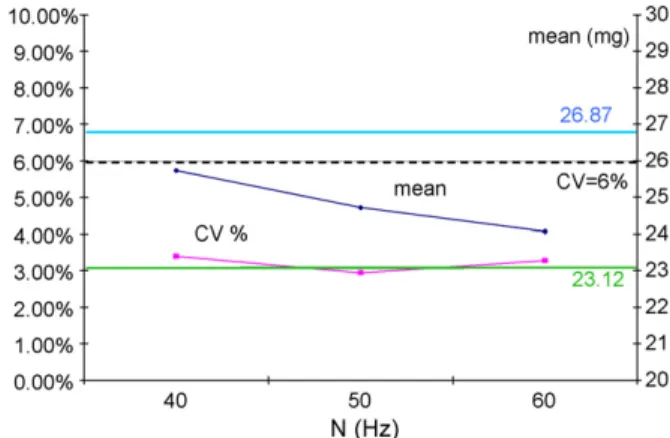
Fig. 4. CV and mean content in A3 obtained after 10 min of operation for
different rotational speeds.
3. Mixture quality in steady-state operation
Because the active A3is low-dosed in the mixture, we will
concentrate our efforts on describing the homogeneity regarding this component.Fig. 3reports the results of the sampling pro-cedure described above for a stirrer rotational speed of 50 Hz and for several tries corresponding to different operation times. In the graphs, the tolerance intervals corresponding to the mean and to the individual values are also specified.
As can be seen fromFig. 3, no individual value is outside the tolerance interval, the sample mean lays in the acceptable range and the CV values are much below the limit of 6%. After 10 min running, which may be considered as corresponding to five times the mean residence time of the particles, the mix-ture passes the three criteria for drug “liberation”. In addition, it seems that the mixture quality with respect to A3 improves
with the time of operation of the process. This may be due to
a micromixing effect generated by the cohesive nature of the components. A3is a cohesive powder which is made of
“pack-ets” of particles. These packets need a certain time to disrupt inside the mixer and disperse into the bulk, therefore improv-ing the quality of the mixture. This may concern the particles that stay longer in the mixer, those belonging to the tail of a Residence Time Distribution curve. For instance, the micromix-ing steady-state characteristic time may be somewhat higher than the macromixing time (the well-known “5 mean residence times” rule). This also suggests that a better premix of A3with
I1, would result in a better final mixture. For this kind of mixing
problem, there is also no doubt that a random sampling protocol would have been very suitable for deriving the homogeneity of the mixtures.
In the above, the rotational speed was fixed to 130 rpm (or 50 Hz for the engine), which corresponds to Fr = 1.89. In this nearly fluidised regime, we also performed experiments with a lower and a higher rotational speed (see Fig. 4). While the other two values of the rotational speed (namely 40 and 60 Hz) still provided mixtures of industrially acceptable quality, they also gave rise to higher CV’s and mean values that were quite different from the “hoped value” 25 mg. It may also be noted that experiments performed in the dense phase flow regime (below 35 Hz), and not reported here, produced much worse mixtures and sometimes non-validated mixtures from the viewpoint of the present standards. Indeed, the choice (but also design) and the operation of mixing equipment to resolve a specific mixing problem is a very tedious task, as it still requires empiricism in the optimisation procedure.
4. Impact of changes in dosage modes
Loss-in-weight feeders lose their regularity and precision when the mass of powder in the hopper becomes less than approximately 15–20% of its apparent volume. This means that such feeders may also be fed during processing, either through a storage tank with an aerolic conveyor or from a volumetric feeder of high storage capacity. This results in an important source of mixture homogeneity perturbation because during the time ded-icated to the filling of a loss-in-weight feeder, the powder mass in the hopper changes too quickly to be counterbalanced by a change of speed of the feeding screw that may have been able to ensure the same regularity and precision as before. In other words, a change of dosage mode, from gravimetric to volumet-ric, is operated and results in a transitory regime in the mixer (seeFig. 5). In this last part, we will examine how this problem affects the quality of the mixtures under consideration.
The experimental protocol consists in: (a) measuring the mixture quality after 10 min of normal operation; (b) feeding a loss-in-weight feeder for approximately t0= 1 min; (c)
mea-suring the mixture quality during the perturbation, after 1 mean residence time (<t>); (d) measuring the mixture quality after 5 mean residence times. Therefore, we assume that the main impact of the perturbation on the quality of the mixture corre-sponds to the powder mix produced at t0+ <t>.
Fig. 6shows the three mixtures obtained before, during, and after feeding of the feeder containing A3. As the flow rate
asso-Fig. 6. Mixtures obtained when filling the loss-in-weight feeder of active ingre-dient A3.
ciated with this feeder is quite low in comparison to the feeder containing the other two actives, the mixture quality will still be judged on the basis of the A3content in the sample.
The mixture produced during this critical phase is not in con-formity with industrial standards, either from the viewpoint of the coefficient of variation or from the individual values, while the sample mean is still acceptable. Fortunately, there is a clear stability of the process, as the mixture examined after this phase conforms to these criteria again. In particular, the value of the CV’s after and before feeding are extremely close to each other, and also to the value found in Fig. 3. This indicates a cer-tain reproducibility of the process, as well as demonstrating the sensitivity of our experimental approach.
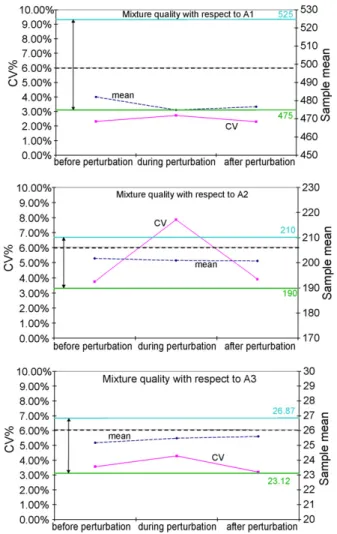
Because this feeding operation is only to be repeated one or twice during the whole production cycle, a possibility – given that it cannot be recycled – is to destroy the mixture produced during this specific period of time. But if the cost of doing so is too high, the process may be stopped during re-feeding. This problem arises again inFig. 7, where the impact of similar exper-iments performed for the loss-in-weight feeder dedicated to BM (which contains A2and A1) is shown for each of the three active
ingredients. While A1and A3are practically insensitive to the
compo-Fig. 7. Changes in mixture qualities with respect to each active ingredient when feeding the loss-in-weight feeder containing the basic mixture.
nent and A3is fed by another feeder, the coefficient of variation
with respect to A2approaches 8% and the overall mixture is not
validated.
Because the main flow rate is supported by this feeder, this systematic perturbation will occur quite often (10–15 times during a production cycle). For instance, it may probably be advisable to stop the process at a definite time of operation in order to fill all the feeders. Fortunately, stop-and-go tests (not reported here) in which the mixer was stopped for between 1 min and several hours and then started again, have been shown to have no influence on mixture quality. Nevertheless, an intermediate storage of a small volume (a buffer) after the continuous mixer will be necessary, at least for this reason.
5. Concluding remarks
In this paper, we have oriented the presentation of our results towards the “normal” operation of a continuous mixer operat-ing with pharmaceutical products, and examined the quality of the mixtures using industrial standards. We did not fully report other results concerning the influence of operating parameters, the impact of accidental perturbations, the procedures for the beginning and the end of the process, in particular to take account
of reconciliation principles. This will be done in future papers. Also, we may emphasise that the consideration of various key components in the mixture is undoubtedly an additional diffi-culty: as in the present case, the risk is to invalidate the mixture because of one “indicator” out of nine.
While for the specific case under study, very acceptable con-ditions have been found to industrialise the process in the actual configuration, there are still many improvements to bring: • The improvement of mixer design, at many levels: design of
the inlet of the mixer to premix the ingredients in the chute; design of the outlet of the apparatus to adjust the mean res-idence time; design of the stirrer to approach the perfectly mixed vessel; . . .
• The inclusion of process constraints, such as facility of dosage of certain ingredients, during the formulation stage. It would be a pity to give up so important a process optimisation scheme as changing from batch process to continuous process, just because a single additive was chosen rather than a different one.
• The development of an on-line and real-time technique, with a fully validated associated methodology, for measuring the homogeneity of the mixtures. This would in turn open the door to process control.
Acknowledgement
The authors wish to thank the company BMS (UPSA site in Agen, France) for their very fruitful scientific cooperation.
Appendix A. Nomenclature
CV coefficient of variation of a mixture
Fr Froude number
g acceleration of gravity (m s− 2)
n number of samples in an estimation
N number of possible samples in a mixture
R radius of the stirrer (m)
s2 variance of a mixture (estimated from sampling)
t0 feeding time (s)
<t> mean residence time (s)
xi composition of sample i in key component
xm mean composition in key component (estimation)
Greek letters
µ mean composition in key component (real)
σ2 variance of a mixture (estimated from sampling)
References
[1] F.J. Muzzio, P. Robinson, C. Wightman, D. Brone, Sampling practices in powder blending, Int. J. Pharm. (1997) 155.
[2] J. Berman, A. Schoeneman, J.T. Shelton, Unit dose sampling: a tale of two thieves, Drug Dev. Ind. Pharm. 22 (11) (1996) 1121–1132.
[3] P.A. Hailey, P. Doherty, P. Tapsell, T. Oliver, P.K. Aldridge, Automated system for the on-line monitoring of powder blending processes using near-infra-red spectroscopy. Part 1. System development and control, J. Pharm. Biomed. Anal. 14 (5) (1996) 551–559.
[4] G.J. Vergote, T.R.M. DeBeer, C. Vervaet, J.P. Remon, W.R.G. Baeyens, N. Diericx, F.F. Verpoort, In-line monitoring of a pharmaceutical blending process using FT-Raman spectroscopy, Eur. J. Pharm. Sci. 21 (4) (2004) 479–485.
[5] C.K. Lai, D. Holt, J.C. Leung, C.L. Cooney, G.K. Raju, P. Hansen, Real-time and non-invasive monitoring of dry powder blend homogeneity, AIChE J. 47 (11) (2001) 2618–2622.
[6] L. Pernenkil, T.P. Chirkot, C.L. Cooney, Continuous operation of zigzag®
blender for pharmaceutical applications, in: Proceedings of the World Congress on Particle Technology 5, Orlando, FL, 2006.
[7] L. Pernenkil, C.L. Cooney, A review on the continuous blending of pow-ders, Chem. Eng. Sci. 61 (2006) (2006) 720–742.
[8] J.C. Williams, Continuous mixing of solids, a review, Powder Technol. 15 (2) (1976) 237–243.
[9] K. Marikh, M´elange des poudres en continu: dynamique et mod´elisation, Ph.D., Thesis, INPL, 2003.
[10] K. Marikh, H. Berthiaux, V. Mizonov, E. Barntseva, D. Ponomarev, Flow analysis and Markov chain modelling to quantify the agitation effect in continuous powder mixer, Chem. Eng. Res. Des. 84 (A11) (2006) 1059– 1074.
[11] K. Marikh, H. Berthiaux, V. Mizonov, E. Barantseva, Experimental study of the stirring conditions taking place in a pilot plant continuous mixer of particulate solids, Powder Technol. 157 (2005) 138–143.