Vol. 113 No. 2 (2012) 101–123
urn:nbn:de:hebis:34-2012092441794 ISSN: 1612-9830 – journal online: www.jarts.info
Alternative plant protein sources for pigs and chickens
in the tropics – nutritional value and constraints: a review
Siriwan D. Martens
a,∗, Tassilo T. Tiemann
a, Jérôme Bindelle
b, Michael Peters
a,
Carlos E. Lascano
caInternational Center for Tropical Agriculture (CIAT), Tropical Forages, Cali, Colombia/Vientiane, Laos bUniversity of Liège, Gembloux Agro-Bio Tech, Animal Science Unit, Gembloux, Belgium
cUniversidad Nacional de Colombia, Bogotá, Colombia
Abstract
In the tropics, a large number of smallholder farms contribute significantly to food security by raising pigs and poultry for domestic consumption and for sale on local markets. The high cost and, sometimes, the lack of availability of commercial protein supplements is one of the main limitations to efficient animal production by smallholders. Locally-grown forages and grain legumes offer ecological benefits such as nitrogen fixation, soil improvement, and erosion control which contribute to improve cropping efficiency. Besides these agronomical assets, they can be used as animal feeds in mixed farming systems. In this paper we review options to include locally-grown forages and grain legumes as alternative protein sources in the diets of pigs and poultry in order to reduce farmers’ dependence on externally-purchased protein concentrates. The potential nutritive value of a wide range of forages and grain legumes is presented and discussed. The influence of dietary fibre and plant secondary metabolites contents and their antinutritive consequences on feed intake, digestive processes and animal performances are considered according to the varying composition in those compounds of the different plant species and cultivars covered in this review. Finally, methods to overcome the antinutritive attributes of the plant secondary metabolites using heat, chemical or biological treatment are reviewed regarding their efficiency and their suitability in low input farming systems.
Keywords: tropical forages, pigs, poultry, protein supplementation
Abbreviations:
ANF – antinutritional factors, CP – crude protein, DF – Dietary fibre, DM – dry matter,
NSP – non-starch polysaccharides, SCFA – short-chain fatty acids, TIA – trypsin-inhibitory activity
∗Corresponding author
Email: [email protected]
Center for International Tropical Agriculture, Tropical Forages Recta Cali-Palmira, km 17, Cali, Colombia
Tel. (+57-2) 4450000. Fax (+57-2) 4450073
1
Introduction
The demand for animal protein for human nutrition in the developing world is still rising, especially for pork and poultry products (OECD and Food and Agriculture Organization of the United Nations, 2010). This is an opportunity for smallholders with livestock, who make up almost 20 % of the world population (McDermott
et al., 2010), to increase household income and improve
their livelihoods by connecting with the livestock value chain.
Smallholders often lack access to good quality feed with sufficient energy content and the balanced amino acid profile that is needed to ensure satisfactory animal
performance. Soybean meal is widely used as a feed supplement with high energy content and an amino acid profile close to ideal. World soybean production (262 million t in 2010) is dominated by United States (90.6), Brazil (68.5) and Argentina (52.7) (FAOSTAT, 2012). Soybean meal is the residue after the oil is expressed and is dominantly used in highly industrialized production systems of swine and poultry. Globally, however, there is little surplus soybean meal for smallholders. More-over, the cost of feed concentrates for livestock is in-creasing (OECD and Food and Agriculture Organization of the United Nations, 2010). Therefore, to meet the nu-tritive requirements for smallholder swine and poultry, we need to identify alternative low-cost feed resources (Ly, 1990; Lekule & Kyvsgaard, 2003).
The humid and subhumid tropics offer almost year-round growing conditions (Ly, 1990), with seasonal wa-ter deficits and excesses, constraints that are usually manageable. Unfortunately, tropical soils are often ni-trogen deficient so that production of protein-rich mate-rial to supplement the diets of small animals either re-quires input of nitrogen fertiliser to gramineous crops, or the use of legumes either as the source of the supple-ment itself or as part of a rotation. Here we focus on the use of legume crops themselves as supplements.
There are about 650 genera of legumes with some 18,000 species, with a large diversity in the tropics and subtropics (NAS, 1979). Many of them have been collected for evaluation as tropical forages with gene banks at the Centro Internacional de Agricultura Tropi-cal (CIAT, over 20,000 accessions, CIAT, 2011), the In-ternational Livestock Research Institute (ILRI, 20,000 African forage accessions, Karaimu, 2011), together with the Australian Tropical Crops and Forages Collec-tion and the collecCollec-tion of CENARGEN-EMBRAPA.
We summarize results of research aimed at charac-terising alternative resources of primary feed for swine and poultry and identify the options of improving small-holder production of monogastric animals in the trop-ics in terms of their protein needs and forage sup-ply.
2
Digestion and nutrient utilization in pigs
and chickens
Pigs and chickens are both single-stomached (mono-gastric) species as opposed to ruminants, which have several fermentation compartments before the true stomach. Although monogastric mammals and birds show clear differences in their digestive systems, they share similar general feed digestion patterns compared with ruminants. Ingested feed is digested by acid and
enzymes in the stomach and soluble components are ab-sorbed in the small intestine. Indigestible components, such as non-starch polysaccharides, resistant starch, protein that underwent Maillard reactions, and some tannin- and fibre-bound proteins reach the cecum and the large intestine (pigs), and the ceca (poultry), where, together with endogenous secretions, they are fermented by the inhabiting microbiota. The fermentation pro-duces short-chain fatty acids (SCFA), which are an im-portant source of energy for the host. For example, in growing pigs and in sows, SCFA can provide 15 % (Di-erick, 1989) and 30 % (Varel & Yen, 1997), respectively, of the animals’ maintenance energy requirements. In chickens, SCFA can provide up to 8 % of their energy re-quirements, while ostriches can obtain 75 % of their en-ergy requirements from fermentation in the ceca (Joze-fiak et al., 2004). Concentrate-only feeds change the di-gestion processes in the ceca of domesticated chickens so that its function and physiology are not well under-stood (Thomas, 1987; Jozefiak et al., 2004). In contrast, there is no indication that modern pig genotypes have less ability to digest fiber (Urriola & Stein, 2012; Ly
et al., 2011; von Heimendahl et al., 2010; Ninh et al.,
2009).
In contrast to ruminants, little
microbially-synthesised amino acids can be absorbed from the large intestine in either pigs or poultry (Bowen, 1996). Therefore, feed protein must be digestible by the enzymes of the stomach to be absorbed in the small intestine. The amino acid profile of the feed protein should correspond to the specific amino acid require-ments of the animals. According to the concept of the ideal protein (Wang & Fuller, 1989; Fuller et al., 1989), the profile depends on the composition of body tissue, coat, and products (e.g. eggs) and must suffice for maintenance and growth (Fuller and Chamberlain, 1983 in FAO, 1996a).
3
Constraints for production systems in the
tropics
In smallholder systems of monogastric production, lack of essential amino acids is common as diets often consist of cereal grains or part of them (rice, rice bran, maize, or sorghum) or cassava. These only provide 30 % or less of the pigs’ requirements of lysine and methion-ine, which are the most limiting amino acids in pig feeds (Lekule & Kyvsgaard, 2003). Although many small-holders include other feed sources such as local roots or leaves, fruit (papaya) or agricultural by-products such as banana stems, these do little to improve the nutritional status of their pigs.
Farmers often do not understand or know their ani-mals’ feed requirements, nor do they know the nutri-tional value of these alternative feeds. Moreover, the nutritional quality of these alternatives may be low due to fibre-bound nitrogen (Shayo & Uden, 1999) and com-pounds such as trypsin inhibitors and tannins, which inhibit enzymes or bind to protein and reduce its di-gestibility. Because smallholders often have such lim-ited choices, they welcome the solution of growing feeds locally specifically for their pigs and poultry, par-ticularly if it also increases their productivity.
Low protein diets can be supplemented with syntheticalproduced critical amino acids such as ly-sine (FAO, 1996a), which increases growth rates and re-duces N-excretion (Kirchgessner et al., 1994 in Jeroch
et al., 1999). This option is being used in commercial
production systems in developing countries, but is rarely available to or affordable for most smallholders. There, it is important to avoid feeding too much protein as the excess is degraded in the animal to urea or uric acid for excretion. This has negative environmental impacts (Aarnink & Verstegen, 2007) and moreover is energy-consuming for the animal (GfE [Ausschuss für Bedarf-snormen der Gesellschaft für Ernährungsphysiologie], 2006).
Within the context of smallholder farms, one has to recognise that fast growth rates, which demand an optimum supply of dietary protein, is not necessarily the most profitable outcome when using locally-grown feeds. Finally, we have to understand the existing small-holder farming and marketing systems well before we attempt to introduce a new feed crop. Cost and prof-itability are key issues. The understanding also has im-plications for identifying suitable plant species and pro-cessing technologies that will fit within the current agri-cultural system and its calendar.
4
Tropical forages as protein source
Ideally, feeds should be derived from a crop that is part of an environmentally-sustainable farming system, which optimizes biomass productivity per unit of solar energy, minimizes inputs of agro-chemicals, and main-tains (preferably enhances) soil fertility and biodiversity (FAO, 1996b).
Although all these requirements are rarely met at the same time, tropical forages as feed for monogastrics contribute to improved sustainability of animal produc-tion within farming systems (Schultze-Kraft & Peters, 1997 and modified according to Savon, 2005):
• High biomass production in environments where other crops cannot compete;
• No or limited competition with human food require-ments;
• High levels of protein with a desirable amino acid (AA) profile, especially lysine, methionine and other sulphur-AA, which for monogastrics ade-quately balances the limitations of cereal proteins (leaf and grain);
• High levels of vitamins and minerals compared to traditional energy-based feed ingredients; and • Additional benefits from the integration of forages
in the farming system such as human food, wood, fibre, gum, tannery, soil improvement, and soil con-servation.
4.1 Nutritional value and effect on animal perfor-mance
The crude protein content in tropical forage plants varies widely (Table 1), with values up to 360 g/kg of
DM, which is similar to soybean grain. Comparing
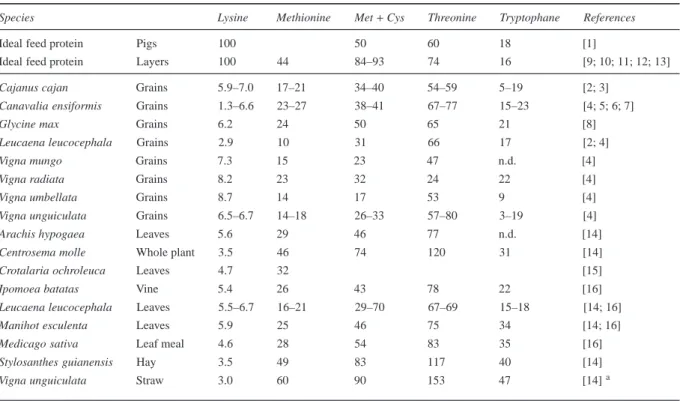
the amino acid profiles to the ideal protein for pigs and for layers (Table 2), the proportion of the sulphur-containing methionine and cystine in the analysed plants is low for chickens. The proportion threonine seems to be quite well balanced and the tryptophane level is within the desired range in half of the species analysed. In general terms, tryptophane is rather high in the green part of the plants and lower in the seeds. Although the amino acid pattern is not optimal for any one plant species, pig and poultry diets are usually mixtures of several ingredients, which when combined should com-plement each other to meet the nutritional requirements. The response of monogastric farm animals to supple-ments made from forage species cannot be generalised as it depends on the ratio of the different components in the overall diet. Thus, to formulate optimal diets for monogastric farm animals, it is important to iden-tify the optimum inclusion level for the available forage species as well as the best administration form in mixed rations. In addition to protein, forage legumes also con-tain higher amounts of vitamins and minerals compared to most cereals, forage grasses, and some agro-industrial by-products (Lopez & Tapia, 2003; Lajide et al., 2008; Aarti et al., 2005; Mosha et al., 1995; Imungi & Potter, 1983; Garcia et al., 1996; Leterme et al., 2006), which may eliminate the need for premixed industrial supple-ments.
Forages can have further positive effects when in-cluded in diets of monogastrics. Hens’ fertility in-creased when their diet included 14 % grass meal (Davtyan & Manukyan, 1987), while grass and lucerne meal included in the diet of layers decreased cholesterol in their eggs (Rybina & Reshetova, 1981). We do not know whether these effects apply generally nor what the physiological mechanism is.
Table 1: Crude protein (CP) content of selected legumes [g kg−1DM]
Plant species CP content Digestibility
Average Herbage Yield [t/ha] *
Grain Leaf Whole plant Hay
Arachis glabrata 150–220 [1] 110 [2] 65 % DM and 66 % CP
apparent digestibility (horses)[2]
10 [38]
Arachis pintoi 205 [5] 162–279 [3] 143 [4] 50 % ileal CP digestibility
(rabbits) [6] 84 % apparent DM digestibility (horses) [7] 10 [38] Cajanus cajan 190-219 [8,9], 212-225 [10], 223 [11] 189-214 [12] 167 [12] 50 % apparent CP digestibility of seed meal (pigs)[13] 81 % CP digestibility of seed (broilers)[14] 2-12 [39] Centrosema molle (C. pubescens) 236-253 [12] 73 % CP digestibility of seed meal (broilers)[15] 3-10 [39] Crotalaria ochroleuca 247-384 [16] 99-388 [17] 185-305 [17] Desmanthus virgatus 178 [12] 115 [18] 276 [19] Leaf meal 27 % in-vitro enzymatic DM digestiblity and 22 % in-vitro enzymatic CP digestibility of leaf meal (pigs) [20]
7 [38] Lablab purpureus ≤ 120 [21] 252 [25] 230-280 [26] 186 [22] 143-385 [26] 181 [12] 145 [22] 100-250 [23] 167 [12] 51-74 % apparent CP digestibility of seeds (pigs) [24] 4-10 [39] Mucuna (pruriens, utilis) 274-286 [25] – 153-165 [12] 148 [12] 77 % CP digestibility of seed meal (broilers) [25] 5-12 [38] Psophocarpus tetragonolobus 192-349 [12] 54 % CP digestibility of seed meal (broilers) [26] Stylosanthes guianensis 195 [27] 88 (stem) [27] 150-160 [29] 138-166 [30] 167 [12] 31 % in-vitro enzymatic DM digestibility [28] 5-10 [38] Vigna mungo 200 [31] 261-268 [12] 194 [12] max. 15.6 [40] Vigna radiata 233-244 [12] 130 [12] 3-7 [39] Vigna umbellata 233 [12] 182 [32] 174-200 [33] 169 [12] Vigna unguiculata 275 [34] 250 [35] 225-249 [12] 102 [29] 57 % apparent DM and 53 % apparent CP digestibility of herbage meal (pigs) [36] 53-59 % true DM digestibility of grains (chickens) [37]
3-8 [39]
[1] Beltranena et al., 1980; [2] Eckert et al., 2010; [3] Villarreal et al., 2005; [4] Ladeira et al., 2002; [5] Nieves et al., 2004; [6] Nieves et al., 2009; [7] Morgado et al., 2009; [8] Amarteifio et al., 2002; [9] Oloyo, 2004; [10] Eneobong & Carnovale, 1992; [11] Apata & Ologhobo, 1994; [12] FAO, 2007; [13] Mekbungwan et al., 2004; [14] Leon et al., 1993; [15] Iyayi et al., 2011; [16] Mkiwa et al., 1990; [17] Sarwatt et al., 1990; [18] Sukkasame & Phaikaew, 1998; [19] Ly & Samkol, 2001; [20] Ly et al., 2001; [21] Lambourne & Wood, 1985; [22] Diaz et al., 2005; [23] Murphy & Colucci, 1999; [24] Laswai et al., 1998; [25] Iyayi et al., 2011; [26] Leon et al., 1993;
[27] Phimmmasan et al., 2004; [28] Heinritz et al., 2012b; [29] Guodao & Chakraborty, 2005; [30] Gruben, 2001; [31] Rani & Hira, 1998; [32] Saharan et al., 2002; [33] Sadana et al., 2006; [34] Luis et al., 1993; [35] Ravindran & Blair, 1992; [36] Sarria et al., 2010;
Table 2: Essential amino acid composition relative to lysine content (absolute in g kg−1CP) in forage and legume grains compared to the ideal feed protein, which are given relative to lysine (100).
Species Lysine Methionine Met+ Cys Threonine Tryptophane References
Ideal feed protein Pigs 100 50 60 18 [1]
Ideal feed protein Layers 100 44 84–93 74 16 [9; 10; 11; 12; 13]
Cajanus cajan Grains 5.9–7.0 17–21 34–40 54–59 5–19 [2; 3]
Canavalia ensiformis Grains 1.3–6.6 23–27 38–41 67–77 15–23 [4; 5; 6; 7]
Glycine max Grains 6.2 24 50 65 21 [8]
Leucaena leucocephala Grains 2.9 10 31 66 17 [2; 4]
Vigna mungo Grains 7.3 15 23 47 n.d. [4]
Vigna radiata Grains 8.2 23 32 24 22 [4]
Vigna umbellata Grains 8.7 14 17 53 9 [4]
Vigna unguiculata Grains 6.5–6.7 14–18 26–33 57–80 3–19 [4]
Arachis hypogaea Leaves 5.6 29 46 77 n.d. [14]
Centrosema molle Whole plant 3.5 46 74 120 31 [14]
Crotalaria ochroleuca Leaves 4.7 32 [15]
Ipomoea batatas Vine 5.4 26 43 78 22 [16]
Leucaena leucocephala Leaves 5.5–6.7 16–21 29–70 67–69 15–18 [14; 16]
Manihot esculenta Leaves 5.9 25 46 75 34 [14; 16]
Medicago sativa Leaf meal 4.6 28 54 83 35 [16]
Stylosanthes guianensis Hay 3.5 49 83 117 40 [14]
Vigna unguiculata Straw 3.0 60 90 153 47 [14]a
[1] Cole, 1978; [2] Ravindran & Blair, 1992; [3] Eneobong & Carnovale, 1992; [4] FAO, 2007; [5] Vadivel & Janardhanan, 2005; [6] Belmar et al., 1999; [7] Apata & Ologhobo, 1994; [8] INRA, 2004; [9] Kirchgessner et al., 1995; [10] Jais et al., 1995; [11] NRC National Research Council (U.S.) Subcommitee on Poultry Nutrition, 1984; [12] NRC National Research Council (U.S.) Subcommitee on Poultry Nutrition, 1994; [13] Jeroch, 1992; [14] FAO, 2007; [15] Sarwatt et al., 1990; [16] Ravindran & Blair, 1992
aFurther reading on V. unguiculata and other legume herbages’ amino acids in Heinritz et al. (2012b).
We emphasise that the nutritional value of a feed de-pends not only on the essential nutrients it contains but also on their digestibility and hence their actual avail-ability. Digestibility can be strongly affected by the con-tent of dietary fiber and by plant-secondary compounds with toxic or antinutritive activities.
4.2 The effect of fibrous diets on the digestive physiol-ogy
Dietary fibre (DF) is defined as non-starch polysac-charides (NSP), including pectins, cellulose, hemicellu-lose,β-glucans, fructans, oligosaccharides, lignin, and resistant starch (Bindelle et al., 2008; Chesson, 1995). Fibrous tropical feeds comprise leaves of crops, trees, legumes, and grasses. The chemical composition, the nature, and type of dietary fibre influence the volun-tary intake of monogastric animals. Pigs can consume a maximum total amount of only 3.0 kg DM per day of feed (DLG, 2005) or 100 g DM/kg metabolic live weight, but growing pigs need about 16–35 MJ metab-olizable energy (ME) per day, i.e. about 13 MJ ME/kg feed. DF lowers the energy value of the diet since its apparent digestibility is only 0.40–0.50, varying widely depending on the fibre source (Close, 1993), while
di-gestibilities of protein, fat, sugars, or starch are above 0.80 (Noblet & Le Goff, 2001).
Intake increases with increasing fibre content to main-tain the same amount of digestible energy in the diet (Savon, 2005), but the compensation is limited by gut capacity (Close, 1993). Pigs less than 50 kg liveweight cannot compensate for an energy concentration less than 14 MJ/kg, while pigs over 70 kg liveweight can compen-sate by increased feed intake if the energy concentration falls to 10 MJ/kg (Black et al., 1986). Young animals, particularly, require diets that are highly digestible. Ad-ditionally, increased intake of DF raises the animal’s basal temperature from the heat produced in the large intestine by fermentation, which can reduce voluntary feed intake (Ogle, 2006).
DF stimulates peristalsis in the monogastric intestinal tract, which can be used in swine management. For ex-ample, feed intake of sows must be restricted during the first 12 weeks of gestation (Reese, 1997; Hackl, 2002; Kirchgessner, 1997; Savon, 2005), which leads to be-havioural problems. Adding at least 4 % DF to the diet, which can easily be done by adding forages, promotes peristalsis and appeases the animal’s hunger (Jamikorn
Table 3: The effect of tropical plant species as supplements in feed for monogastric animals.
Plant species Common name(s) Plant part Form Animal Effect* Inclusion Level† Country Ref.
Arachis glabrata Perennial peanut, florigraze
Leaf Meal Broilers +/– ≤ 20 Cameroon [1]
Arachis pintoi Forage peanut Forage Dried Pigs + 20 % of diet CP Colombia [2]
Cajanus cajan Pigeon pea Grain Raw Chickens + 30 g/animal Philippines [3]
Grain Meal Pigs + ≤ 30 Australia [4]
Centrosema molle/pubescens Centro Forage Pellet Rabbits + ≤ 75 Indonesia [5]
Crotalaria ochroleuca Marejea, Grain Rats – 30 Tanzania [6]
Rattlebox Leaf Meal Rats +/– ≤ 10 Tanzania [6]
Desmanthus virgatus Wild tantan Leaf Meal Pigs – 18 Cambodia [7]
Lablab purpureus Lablab Leaf Meal Layers – > 10 Nigeria [8]
Grain Rats – ≤ 12 % of diet CP Australia [9]
Mucuna (pruriens, utilis) Mucuna, Velvet bean
Grain Roasted/ cracked/ soaked
Pigs + 100 g/d Benin [10]
Grain Raw/toasting/ cooking/ soaking
Pigs – 15 % of diet CP Honduras [11]
Grain Raw/boiled/ toasted
Broilers – ≥ 10 % Nigeria [12]
Stylosanthes guianensis Forage Fresh Pigs + Laos [13]
Leaves Pigs + ≤ 6.4 Laos [14]
Vigna/Phaseolus mungo, aureous Mungbean Grain Raw Pigs +/– 15 India [15]
Vigna radiata mongo, gram Grain coat Broilers + 15 Philippines [16]
Vigna umbellata Rice bean Grain Roasted, meal Chickens + ≤ 40 India [17]
Vigna unguiculata Cowpea, caupí Grain Meal Broilers +/– Philippines [18]
Leaf Meal Shrimps +/– 9 % of diet CP Philippines [19]‡
Manihot esculenta Cassava, yuca Leaf Fresh Pigs + ≤ 50 Cambodia [20]
Ipomoea batatas Sweet potato Leaf Dried Broilers – Replacing 300 or
200 g/kg maize
Cameroon [21]
Meal Rats + 10 % of diet CP USA [22]
Amaranthus hypochondriacus Amaranthus, Prince-of-Wales feather
Leaf Meal Rats – 10 % of diet CP USA [22]
Chenopodium quinoa Quinoa Leaf Meal Rats – 10 % of diet CP USA [22]
Leaf Meal Pigs + ≤ 5 Cuba [23]
Morus alba Mulberry Leaf Pigs + 55 % of diet CP Cambodia [24]
Trichantera gigantea Nacedero Leaf Meal Pigs – 25 % of diet CP Colombia [25]
Ipomoea aquatica Water spinach Fresh Pigs + 15 Vietnam [26]
n.n. unknown;*effects on animal performance compared to control,†in % of diet dry matter if not indicated differently; (+) positive, (–) negative, (– –) extremely negative /toxic, (– +) both negative and positive effects, (+/–) neutral compared to control
[1] Teguia et al., 1997; [2] Posada et al., 2006; [3] Yamazaki et al., 1988; [4] Whiteman & Norton, 1981; [5] Prawirodigdo et al., 1989; [6] Mkiwa et al., 1994; [7] Ly et al., 2001; [8] Odunsi, 2003; [9] Lambourne & Wood, 1985; [10] Eteka, 1999; [11] Flores et al., 2002; [12] Emenalom & Udedibie, 1998;
[13] Phengsavanh & Stür, 2006; [14] Keoboualapheth & Mikled, 2003; [15] Ravi et al., 1999; [16] Ancheta & Arellano, 1988; [17] Gupta et al., 1992; [18] Luis et al., 1993; [19] Eusebio & Coloso, 1998; [20] Ty et al., 2011; [21] Teguia et al., 1997; [22] Cheeke & Carlsson, 1978; [23] Diaz et al., 1995; [24] Ty et al., 2007; [25] Sarria et al., 1991; [26] Nguyen & Preston, 2011
‡For pigs refer to Sarria et al. (2010).
forage legumes is generally higher than of grasses due to their lower fibre content and higher digestibility. Their retention times in the stomach are therefore shorter so that they are good options to feed for monogastrics. Ad-ditionally, pigs and poultry digest hemicellulose better than cellulose, so that forages should be used at an early stage of maturity, before they start to lignify (Kephart
et al., 1990).
High levels of DF increases the number and activ-ity of cellulolytic bacteria in the gastrointestinal tract of poultry (Jozefiak et al., 2004) and swine (Bindelle et al., 2010), with the same species found in ruminants (Varel & Yen, 1997). This is an important adaptation to the DF utilization (Rodriguez et al., 2000, 2001). Pigs of > 25 kg live weight need at least 3–5 weeks (Longland
et al., 1993) or more (Kephart et al., 1990) adaptation
time to maximize the digestion of high-fiber feeds. This needs to be considered when introducing and evaluating forages in the diet.
Non-starch polysaccharides (NSPs) such as polymers of galacturonic acid, galactomannans, xylose, and cel-lulose have digestibilities in pigs as low as 27–43 % (Gdala & Buraczewska, 1997). They are therefore only secondary in the nutrition of the animal, although xylose and galacturonic acid were much better digested when given at a low rate (4 g/d) to pigs (Yule & Fuller, 1992). Nevertheless, the types and proportions of soluble and insoluble NSPs strongly influence intestinal ecophysi-ology and health, including the balance between detri-mental and health-promoting bacteria species. High lev-els of fermentable NSPs, such as inulin or beta-glucans, induce a decrease in undesirable enterobacteria in the
hindgut by (1) lowering the pH through increased pro-duction of short-chain fatty acids; (2) increasing health-promoting bacteria, which impede the access to the re-ceptors on the intestinal epithelium to pathogens; and (3) reducing bacterial proteolysis of undigested pro-tein. (Molist et al., 2009). This is important in freshly-weaned piglets, which are prone to transient inflamma-tion of the gastrointestinal tract (Pie et al., 2007).
Alpha-galactosides or oligosaccharides in legume seeds cannot be directly hydrolysed and absorbed by non-ruminants, which lackα-galactosidase. While mi-croorganisms in the large intestine degrade these sug-ars, leading to flatulence and gastric discomfort (Trugo
et al., 1990), oligosaccharides also have prebiotic effects
in chicken (Lan, 2004; Xiang et al., 2008). In broilers, a moderate level ofα-galactosides had no effect on animal performance (Veldman et al., 1998). In consequence, a restricted level of legume seeds contributes well to nu-trition and health of monogastrics.
4.3 Chemical constraints and antinutritional factors
Plants produce a variety of simple to highly com-plex compounds, many of which have been identified and characterized. Many of them seem to be defense against biotic and abiotic stresses and more than 1200 classes serve to protect against herbivory. They are not involved in the plant primary biochemical pathways for cell growth and reproduction (Makkar, 2007). The most common major groups are polyphenols, cyanogenic gly-cosides, alkaloids, saponins, steroids, toxic proteins and amino acids, non-protein amino acids, phytohemag-glutinins, triterpenes, and oxalic acid (Kumar, 1992; Liener, 1980), and are either toxic or act as anti-nutritive factors (ANF). ANFs are defined as, “Sub-stances generated in natural feed ingredients by the normal metabolism of [plant] species and [interacting] by different mechanisms, e.g. inactivation of some nutrients, interference with the digestive process or metabolic utilization of feed which exert effects con-trary to optimum nutrition. Being an ANF is not an in-trinsic characteristic of a compound but depends upon the digestive process of the ingesting animal” (Aganga & Tshwenyane, 2003). Thus, plants that are relatively harmless to humans and other mammals may be, and often are, highly toxic to birds, fish, insects and others (Dobson, 1959; Kumar & D’Mello, 1995). The utility of leaves, pods, and edible twigs of shrubs and trees as an-imal feed is limited by the presence of ANFs. ANFs are generally not lethal but may cause toxicity during peri-ods of scarcity or confinement when the animals con-sume large quantities of ANF-rich feed.
In this section, we briefly review a selection of the most common ANFs and the plant species in which they occur.
4.3.1 Lectins
Lectins are sugar-binding glycoproteins, which are classified as toxic (Phaseolus vulgaris, Canavalia
en-siformis), growth inhibitory (Glycine max, Amaranthus cruentus, Phaseolus lunatus, Dolichos biflorus) (Grant,
1989), or essentially non-toxic or beneficial (seeds of
Vigna subterranea, Vigna umbellata and Vigna unguic-ulata) (Grant et al., 1995). Lectins occur depending on
the development stage and on the part of the plant. Toxic lectins generally coagulate the erythrocytes, which can affect the immune system (Jeroch et al., 1993), or dis-rupt nutrient absorption in the intestines by shedding the brush border membrane of the enterocytes (Makkar, 2007). Lectin activity can be removed by heat, with moist better than dry.
4.3.2 Polyphenolic compounds
Polyphenols are a major group often related to taste, odour, and colour. Flavanoids (monomeric elements of condensed tannins), cumarine, and lignane are the principal agents. Condensed tannins (CT) are com-plex heat-stable phenolic compounds and common in many plants, especially shrub legumes such as
Gliri-cidia sepium, Acacia species, Leucaena leucocephala
and Albizia falcataria.
Tannins bind protein through H-bonds and hydropho-bic interactions. By doing so, they reduce the digestibil-ity of protein (Jeroch et al., 1993) and carbohydrates in-cluding starch and fibers. Another important property is their bitter and astringent taste, which in many cases reduces palatability, so the animal will not eat it. In pigs and poultry, tannins are associated with poorer feed con-version efficiency (FAO, 1996b). In poultry, tannin lev-els from 0.5 to 2.0 % in the diet can depress growth and egg production, while levels from 3 to 7 % can cause death. In swine, tannins depress growth rates and pro-tein utilization, damage the mucosal lining of the diges-tive tract, alter the excretion of certain cations, and in-crease excretion of proteins and essential amino acids (Cannas, 2008). Pigs fed a tannin-rich extract of the quebracho tree had a lower apparent ileal digestibility of nitrogen, but there was no significant decrease in true ileal nitrogen digestibility (Steendam et al., 1998). Con-densed tannins are usually not toxic, but hydrolysable tannins can cause liver and kidney damage, and death (Makkar, 2007). Conversely, tannins are anti-oxidants and can improve resistance to heat stress (Liu et al., 2011).
4.3.3 Toxic amino acids
Non-protein amino acids occur in unconjugated forms in many plants, especially in legumes, with the highest concentration in the seed. For example,
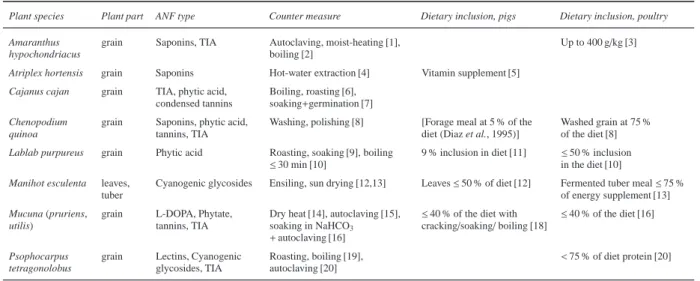
Table 4: Anti-nutritional factors in selected forage plants.
Plant species Plant part ANF type Counter measure Dietary inclusion, pigs Dietary inclusion, poultry Amaranthus
hypochondriacus
grain Saponins, TIA Autoclaving, moist-heating [1], boiling [2]
Up to 400 g/kg [3]
Atriplex hortensis grain Saponins Hot-water extraction [4] Vitamin supplement [5]
Cajanus cajan grain TIA, phytic acid, condensed tannins
Boiling, roasting [6], soaking+germination [7]
Chenopodium quinoa
grain Saponins, phytic acid, tannins, TIA
Washing, polishing [8] [Forage meal at 5 % of the diet (Diaz et al., 1995)]
Washed grain at 75 % of the diet [8]
Lablab purpureus grain Phytic acid Roasting, soaking [9], boiling
≤ 30 min [10]
9 % inclusion in diet [11] ≤ 50 % inclusion in the diet [10]
Manihot esculenta leaves, tuber
Cyanogenic glycosides Ensiling, sun drying [12,13] Leaves≤ 50 % of diet [12] Fermented tuber meal≤ 75 % of energy supplement [13]
Mucuna (pruriens, utilis)
grain L-DOPA, Phytate, tannins, TIA
Dry heat [14], autoclaving [15], soaking in NaHCO3
+ autoclaving [16]
≤ 40 % of the diet with
cracking/soaking/ boiling [18]
≤ 40 % of the diet [16] Psophocarpus
tetragonolobus
grain Lectins, Cyanogenic glycosides, TIA
Roasting, boiling [19], autoclaving [20]
< 75 % of diet protein [20]
[1] Pond et al., 1991; [2] Fadel et al., 1996; [3] Ravindran et al., 1996; [4] Coxworth et al., 1969; [5] Jurubescu et al., 1991; [6] Muangkeow, 1994; [7] Sangronis & Machado, 2007; [8] Improta & Kellems, 2001; [9] Jain et al., 2009; [10] Abeke et al., 2008; [11] Laswai et al., 1998; [12] Ty et al., 2011; [13] Udedibie et al., 2004; [14] Siddhuraju et al., 1996; [15] Vijayakumari et al., 1996a; [16] Vadivel & Pugalenthi, 2008; [17] Vadivel et al., 2011; [18] Emenalom & Udedibie, 1998; [19] Igene et al., 2006; [20] Lumen et al., 1982
minerals and pyridoxalphosphate (Makkar, 1991), de-creasing the activity of the enzymes that require them as co-factors, and ultimately inhibiting metabolic path-ways. It can disrupt the reproductive process, show ter-atogenic effects, lead to loss of hair and wool, and even to death (Sastry & Rajendra, 2008; Reis, 1975, 1978; Laswai et al., 1997).
The seeds of Canavalia species and other legumes such as Vicia ervilia (Sadeghi et al., 2009) and
Med-icago sativa (Nunn et al., 2010) contain canavanine.
Canavanine is a potent inhibitor of insect development by competing with the indispensable amino acid argi-nine. Poultry are much more susceptible to canava-nine than mammals due to the antagonism of lysine with arginine in birds. It leads to autoimmune-like diseases affecting the kidneys and skin. Canavaline, found in Canavalia ensiformis seeds, is a derivative of canavanine. It is highly toxic and a potent insecti-cide (Rosenthal, 1983). L-DOPA, which is present in
Mucuna species, is cytotoxic (Lee et al., 2006)
lead-ing to haemolytic anaemia. Lathyrogenic amino acids, like BCNA (β-cyanoalanine), ODAP (β-N-oxalyl-α,β-diaminopropionic acid), DABA (α,γ-diaminobutyric acid) and BAPN (β-aminopropionitrile) are neurotoxic and occur in Lathyrus species and in Vicia sativa (D’Mello & Walker, 1991).
Selenoamino acids, found in Lecythis ollaria, may cause toxic reaction because they replace corresponding sulphur amino acids during protein synthesis (D’Mello & Walker, 1991). As they contribute to the selenium supply in the animal they can act both as micronutri-ent or as toxin depending on the dose (Kabata-Pendias, 2000).
4.3.4 Saponins
Saponins are found in Brachiaria decumbens, B.
brizantha (Brum et al., 2009), Amaranthus hypochon-driacus, Chenopodium quinoa, Atriplex hortensis
(Cheeke & Carlsson, 1978), and Medicago sativa (Ped-ersen et al., 1972). They are heat-stable, form a soapy froth when mixed with water, and alter the cell wall per-meability, leading to hemolysis and to photosensitiza-tion (Brum et al., 2009). They depress growth in chicks (Jeroch et al., 1993), but there are conflicting results in pigs, with a positive effect on both sows and piglets (Hauptli & Lovatto, 2006), compared with fewer still-born piglets but reduced growth performance (Ilsley & Miller, 2005).
4.3.5 More ANFs
There are heat-labile cyanogens and heat-stable anti-genic proteins, amongst others.
Cyanogenic glycosides, such as linamarin and lotaus-tralin, which are common in cassava (Manihot
es-culenta) and also in Acacia, Phaseolus and Psopho-carpus, depress performance and cause cyanide
in-toxication. If, however, “cyanogen content is below 100 mg HCN equivalent kg−1and the diet is adequately supplemented with proteins, particularly with sulphur-containing amino acids, and iodine”, it is safe to feed to livestock (Tewe, 1994).
Alkaloids of legumes such as the bitter-tasting quinolizidine in lupins (Acamovic et al., 2004) reduce the feed intake, may affect the liver, and paralyze respiration (Jeroch et al., 1993).
Isoflavones like the genistein and daidzein of soy have estrogenic effects, which can lead to reduced fertility (Winter et al., 2008), but not always (Wei et al., 2004).
Protease inhibitors like chymotrypsin and trypsin in soybean (Swiech et al., 2004) depress growth, and can cause hypertrophy and hyperplasia of the pancreas. They occur widely in many plants.
Phytate is a major pool of phosphates in plants, with a low availability of the bound phosphorus to non-ruminants. The intestinal apparent digestibility of phy-tate in pigs varies widely, between 0 and 25 % (Rubio
et al., 2006). Moreover, phytate significantly reduces
the availability of minerals such as zinc, calcium, and magnesium (Rimbach et al., 2008).
Oxalates, which have similar attributes, occur in con-centrations as high as in rhubarb and sorrel (Rhumex
acetosa) in some tropical legume forages such as Vigna unguiculata, Desmodium velutinum, and Lablab pur-pureus (Martens, unpublished data) and in grasses such
as Setaria (Rahman et al., 2011). They limit especially the availability of calcium, magnesium, and iron (Weiss, 2009).
4.4 Processing to improve nutritional value
Forage plants can be processed to enhance palata-bility, intake, and digestipalata-bility, to conserve, detoxify the antinutritional factors above, or concentrate nutri-ents (Akande et al., 2010; Close, 1993). All this should be achived without decreasing the nutritive value of the feed.
4.4.1 Heat treatments
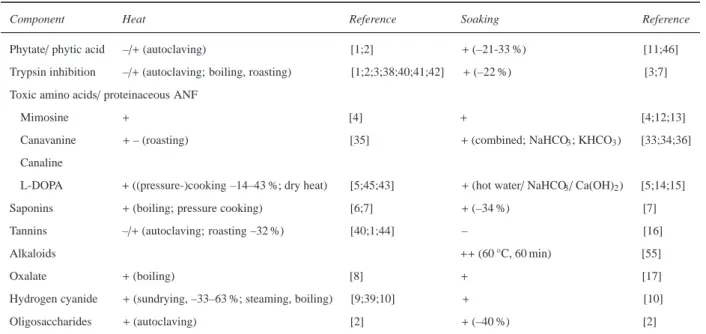
Heat treatment includes sun- and oven-drying, roast-ing, autoclavroast-ing, and boilroast-ing, which usually reduces the content of heat-labile ANFs (see Table 5). Sun-dried cassava leaves (Manihot esculenta) had 20 mg/kg hydro-gen cyanide in the leaf meal compared with 190 mg/kg in the meal of fresh leaves (Phuc et al., 1995). Lay-ing hens fed sun-dried Gliricidia sepium performed bet-ter than those fed with the oven-dried legume (Montilla
et al., 1974), although it is not clear how the type of
drying affects the feeding quality. Drying reduces the volume and increases total dry matter intake, which can more than double in pigs (Leterme et al., 2010) given adequate amounts of water.
Thermal treatment considerably reduced the trypsin-inhibitory activity of seeds of Glycine max (Liener, 1994), Cajanus cajan (Muangkeow, 1994), Arachis
hypogaea (Hira & Chopra, 1995), and Psophocarpus tetragonolobus (Igene et al., 2006). In the latter,
roast-ing also completely removed haemagglutinin. Roast-ing or autoclavRoast-ing seed of Phaseolus vulgaris reduced its tannin content by 30–40 %, this was surpassed by
dehulling (Borges et al., 1998). Dry heat (Siddhu-raju et al., 1996) and autoclaving (Vijayakumari et al., 1996a) significantly reduced the content of L-DOPA in seeds of Mucuna pruriens.
Autoclaving gives mixed results. Broilers
per-formed better on autoclaved seed meal of
Psopho-carpus tetragonolobus than on raw meal (Gerpacio &
Princesa, 1985), however, it does not remove haemag-glutinin, trypsin inhibitors, tannins, or phytins (Igene
et al., 2006). Boiling Canavalia ensiformis seeds for
60 min gave better broiler performance than either the raw seeds or boiling for 30 min (Aquino et al., 1985), yet it may reduce the mineral content by solubilisation (Igene et al., 2006). Boiling significantly increased ap-parent and true metabolisable energy of Cajanus
ca-jan seeds (Muangkeow, 1994). In contrast, boiling
re-duced the lysine content of Vigna radiata seeds by 43 % (Bhatty et al., 2000), but significantly increased starch digestibility (Antu & Sudesh, 2009). Boiling removes part of water-soluble nutrients and minerals of legume seeds in contrast to autoclaving (Apata & Ologhobo, 1994). Compared with roasting, boiling improved the nutrient availability and utilisation of Lablab purpureus beans in pigs (Laswai et al., 1998).
4.4.2 Grinding/ milling
Milling dried forages reduces the volume substan-tially and is an affordable way to reduce animal selec-tivity. Also, animals utilize nutrients better from feeds ground to small particle size (Mosenthin & Sauer, 2011; Kim et al., 2009).
4.4.3 Pelleting
Feeding texture determines voluntary feed intake and influences nutritive value. Weaned pigs tend to prefer pellets to meal (Laitat et al., 2004, 2000). Pelleting in-creases the digestibility in chicks of protein and starch and apparent metabolisable energy values of Vicia faba (Lacassagne et al., 1988).
4.4.4 Hulling/husking
Some ANFs such as tannins are mainly concentrated in the seed coat, so that hulling is a simple method to re-move them (Vadivel & Janardhanan, 2005). In
Phaseo-lus vulgaris seeds, dehulling reduced the tannin content
from 22.0 to 5.3 mg/100g (Borges et al., 1998). This method might be an option for farmers, such as coffee growers, who have other uses for a dehulling mill. Other opportunities for small-scale milling are explained by Jonsson et al. (1994).
4.4.5 Soaking
Soaking grains in water for 18 h reduced the phytate content of Mucuna monosperma by up to one-third of
the original content (Vijayakumari et al., 1996b). Farm-ers in Laos soak Leucaena leucocephala leaves for at least three hours, which improves their feeding value for pigs (Tiemann, personal observation). Soaking re-duces phytic acid content of Lablab purpureus seeds (Jain et al., 2009).
4.4.6 Extraction/chemical treatment (cold)/extrusion cooking/expanding
Extraction of Canavalia ensiformis beans with KHCO3followed by either autoclaving or microwaving reduced canavanine concentration compared with sim-ple soaking (D’Mello & Walker, 1991).
Extrusion cooking inactivated the haemagglutination of Canavalia ensiformis, but in feeding chicks other unidentified anti-nutritive factors seemed to be active (Melcion et al., 1994).
Leaf meal of Leucaena leucocephala treated with ei-ther acetic acid or NaOH raised the rate of nitrogen re-tention in pigs (Echeverria et al., 2002).
Extraction, extrusion cooking, or chemical treat-ment are unlikely methods for smallholder farmers, even though urea and sodium hydroxide treatment were adopted for improving roughage quality on-farm in feeding ruminants (Kayouli et al., 1982; Sourabie et al., 1995; Chenost & Kayouli, 1997).
Expanding grains is a hydrothermal process, which like extrusion, can be run at different temperatures. It is important in soybean processing for its cheapness and for conserving lysine (van Zuilichem et al., 1998). Expanding lupin seeds decreased antinutritional factors and significantly improved apparent nutrient digestibil-ity in pigs compared to grinding (Yang et al., 2007).
4.4.7 Fermentation
Under anaerobic conditions microbes ferment carbo-hydrates into organic acids and/or alcohols. Ensiling is a suitable fermentation method for both grains and whole-crop forage (Table 6).
Lactic acid fermentation reduced trypsin and α-amylase inhibitor activity and tannins in Sphenostylis
stenocarpa seeds by up to 100 % in contrast to
cook-ing (Azeke et al., 2005), and reduced cyanogenic gly-cosides and alpha-galactosides by 85 % compared with only 10-20 % by cooking. Fermentation of Phaseolus
vulgaris grains and grain meal increased in-vitro protein
digestibility, affected different vitamin fractions, and decreased minerals (Granito et al., 2002), reducing α-galactosides, trypsin inhibitory activity, and tannin con-tent in seed meal. Fermenting Mucuna to tempe, a tra-ditional Indonesian food, reduced L-DOPA by 70 % and hydrolysed 33 % of phytic acid (Higasa et al., 1996; Su-darmadji & Markakis, 1977). Solid state fermentation of
Cicer arietinum gave higher digestibility of lysine and
protein, reduced phytic acid content to 10 %, and tannin content to 13 % of raw chickpea flour (Reyes-Moreno
et al., 2004).
Ensiling Leucaena leucocephala shoots reduced mi-mosine content from 7 % to 2 % (Liu & Wang, 1990). Ensiled cassava leaves lost 77 % of their hydrogen cyanide and increased digestibility for growing pigs (Borin et al., 2005), although sun-drying was more ef-fective (Bui Huy et al., 2000). Good fermentation management (Niven et al., 2006; Olstorpe et al., 2010; Marcinakova et al., 2008), which is feasible for small-holders, is required to avoid substantial losses of lysine and tryptophane (Blandino et al., 2003), or even ben-efit from increased lysine content (Gerez et al., 2006). Further information on ensiling and silo types is avail-able in FAO (2000), Heinritz et al. (2012a), Reiber et al. (2008), and Reiber et al. (2009).
4.4.8 Use of enzymes
There have been various attempts to mix different en-zymes into feeds to reduce antinutrients (Table 6). The only successes are phytase (Varley et al., 2011) and NSPases (Ao et al., 2010). Enzymes are currently un-likely to be suitable for smallholders due to cost and their limited availability.
4.4.9 Germination
Germination activates endogenous enzymes, which attack most antinutrients (Campbell & van der Poel, 1998) (Table 6) and enhance the nutritional value of grains (Muzquiz et al., 1998). But germination can be difficult to manage as seedlings tend to attract moulds and are easily spoiled. The germinated seeds have to be fed immediately or dried, which increases their cost.
Germination reduces trypsin inhibitors, phytic acid, galactosides, and certain lectins in Glycine max (Bau
et al., 1997) and, compared to raw seeds, improves the in-vitro starch digestibility in Cicer arietinum, Vigna unguiculata and Vigna radiata, similar to the
improve-ment through ferimprove-mentation and pressure cooking (Urooj & Puttaraj, 1994).
Germination, preceded by soaking, reduced trypsin inhibitory activity of Phaseolus vulgaris and Cajanus
cajan seeds by 26–53 %, phytic acid by 41–53 %, and
condensed tannins by 14–36 %, while the in-vitro pro-tein digestibility, vitamin C and thiamine content in-creased significantly, and the mineral composition was modified (Sangronis & Machado, 2007). Germina-tion of Lupinus albus for 96 h gave peak phytase ac-tivity, while in Lupinus luteus it increased until 120 h (Muzquiz et al., 1998).
Table 5: Reduction of anti-nutritional factors by physical processing.
Component Heat Reference Soaking Reference
Phytate/ phytic acid –/+ (autoclaving) [1;2] + (–21-33 %) [11;46]
Trypsin inhibition –/+ (autoclaving; boiling, roasting) [1;2;3;38;40;41;42] + (–22 %) [3;7] Toxic amino acids/ proteinaceous ANF
Mimosine + [4] + [4;12;13]
Canavanine + – (roasting) [35] + (combined; NaHCO3; KHCO3) [33;34;36]
Canaline
L-DOPA + ((pressure-)cooking –14–43 %; dry heat) [5;45;43] + (hot water/ NaHCO3/ Ca(OH)2) [5;14;15]
Saponins + (boiling; pressure cooking) [6;7] + (–34 %) [7]
Tannins –/+ (autoclaving; roasting –32 %) [40;1;44] – [16]
Alkaloids ++ (60 °C, 60 min) [55]
Oxalate + (boiling) [8] + [17]
Hydrogen cyanide + (sundrying, –33–63 %; steaming, boiling) [9;39;10] + [10]
Oligosaccharides + (autoclaving) [2] + (–40 %) [2]
Table 6: Reduction of anti-nutritional factors by biological means.
Component Fermentation Reference Enzymes Reference Germination Reference
Phytate/ phytic acid + (–33 %) [1;2;18;49] ++ (phytase) [27] + (–41–53 %) [16;52;53;54]
Trypsin inhibition –/+ (–50 %–99 %) [3;19,20,18,47] ++ [1;52;53]
Toxic amino acids/ proteinaceous ANF
Mimosine + (–21–90 %) [32;21;22;23;50] + (endogenous) [28;51] Canavanine – [37] Canaline + [29] L-DOPA + (–10–47 %) [24;49] – [5] Saponins + –/+ [30;7] Tannins + (–80 %) [25;1] + (–14–36 %) [1;53] Alkaloids + [2] Oxalate + [26] + [17] Hydrogen cyanide + (–78-85 %) [9;47] + [16] Oligosaccharides + [2;48] + [31;52]
+ reduction; ++ strong reduction; – no effect; –/+ effect variable
[1] Ramachandran & Ray, 2008; [2] Khattab & Arntfield, 2009; [3] Fadahunsi, 2009; [4] Murthy et al., 1994; [5] Bressani et al., 2002; [6] Ejoh et al., 2009; [7] Sinha et al., 2005; [8] Lewu et al., 2009; [9] Borin et al., 2005; [10] Fukuba et al., 1982; [11] Noreen et al., 2009; [12] Vogt, 1990; [13] Tawata et al., 1986; [14] Vadivel & Pugalenthi, 2008; [15] Gurumoorthi et al., 2008; [16] Yasmin et al., 2008; [17] Haritha & Maheswari, 2007; [18] Stodolak & Starzynska-Janiszewska, 2008; [19] Li-Jing & Yu, 2008; [20] Lin et al., 1988; [21] Srinivasulu et al., 2000; [22] Rosas et al., 1980; [23] Angthong et al., 2007; [24] Matenga et al., 2002; [25] Valizadeh et al., 2009; [26] Malavanh et al., 2008; [27] Luo et al., 2009; [28] Lyon, 1985; [29] Rosenthal, 1992; [30] Jyothi et al., 2007; [31] Oboh et al., 2000; [32] Khatta et al., 1987;[33] Sadeghi et al., 2009; [34] Gupta et al., 2001; [35] Viroben & Michelangeli-Vargas, 1997; [36] D’Mello & Walker, 1991; [37] Kasai & Sakamura, 1986; [38] Liener, 1994; [39] Phuc et al., 1995; [40] Igene et al., 2006; [41] Hira & Chopra, 1995; [42] Muangkeow, 1994; [43] Siddhuraju et al., 1996; [44] Borges et al., 1998; [45] Vijayakumari et al., 1996a; [46] Vijayakumari et al., 1996b; [47] Azeke et al., 2005; [48] Granito et al., 2002; [49] Ukachukwu et al., 2002; [50] Liu & Wang, 1990; [51] Ghosh & Samiran, 2007; [52] Bau et al., 1997; [53] Sangronis & Machado, 2007; [54] Muzquiz et al., 1998; [55] Rodriguez & Tecson-Mendoza, 1998
5
Conclusions and outlook
There is a large diversity of tropical forage species as protein options for monogastric farm animals in the tropics. There is also a multitude of choices in terms of agricultural suitability and yields, nutrient contents, and nutritional constraints, which may be partly or fully overcome by appropriate processing methods. Individ-ual decisions at farm level considering ecological con-ditions, labour and technical requirements, and already-available feed ingredients can achieve good economic returns and reduce the risks of failure.
The available diversity, however, often makes the se-lection of the best option challenging and requires am-ple knowledge of agronomic, nutritional, and secondary compound characteristics of forage species. Creative approaches are required to fit forage-based feed solu-tions for monogastric animals into existing smallholder systems and further systematic research is required to define the actual value of some less-common forage species for different animal species. There are surpris-ingly large knowledge gaps of the digestibility of to-tal plant or crude protein, and even the direct effects of feeding some of the listed plant species to different farm animals are not documented. In the end, these results have to be dovetailed with agronomic, economic, and sociological studies throughout the tropics to tap the full potential of local plants in swine and poultry feeding for eco-efficient and market-oriented animal production.
Acknowledgements
We kindly acknowledge Dr. Pascale Picron’s contribu-tion to improve the readability of this paper.
References
Aarnink, A. J. A. & Verstegen, M. W. A. (2007). Nu-trition, key factor to reduce environmental load from pig production. Livestock Science, 109, 194–203. Aarti, S., Sankhla, A. K., Bhavna, B. & Alpana, S.
(2005). Nutrient composition of less familiar leaves consumed by the tribals of Udaipur region. Journal of
Food Science and Technology (Mysore), 42, 446–448.
Abeke, F. O., Ogundipe, S. O., Sekoni, A. A., Dafwang, I. I., Adeyinka, I. A., Oni, O. O. & Abeke, A. (2008). Effect of duration of cooking Lablab purpureus beans on its utilization by broiler finishers (4-8 weeks).
Asian Journal of Animal and Veterinary Advances,
3, 85–91.
Acamovic, T., Cowieson, A. J. & Gilbert, C. E. (2004). Lupins in poultry nutrition. In E. van Santen, & G. D. Hill (Eds.), Wild and cultivated lupins from the
Trop-ics to the Poles. Proceedings of the 10th International Lupin Conference, Laugarvatn, Iceland, 19-24 June
2002 (pp. 314–318). International Lupin Association.
Canterbury.
Aganga, A. A. & Tshwenyane, S. O. (2003). Feed-ing Values and Anti-Nutritive Factors of Forage Tree Legumes. Pakistan Journal of Nutrition, 2, 170–177. Akande, K. E., Doma, U. D., Agu, H. O. & Adamu, H. M. (2010). Major antinutrients found in plant pro-tein sources: their effect on nutrition. Pakistan
Jour-nal of Nutrition, 9, 827–832.
Amarteifio, J. O., Munthali, D. C., Karikari, S. K. & Morake, T. K. (2002). The composition of pigeon peas (Cajanus cajan (L.) Millsp.) grown in Botswana.
Plant Foods for Human Nutrition, 57, 173–177.
Ancheta, H. B. & Arellano, V. R. (1988). Mongo
(Vi-gna radiata) seed coat as feed supplements for
broil-ers. TCA [Tarlac College of Agriculture] Research
Journal (Philippines), 10, 9–13.
Angthong, W., Cheva-Isarakul, B., Promma, S. & Cheva-Isarkul, B. (2007). Beta-carotene, mimosine and quality of leucaena silage kept at different dura-tion. Kasetsart Journal, Natural Sciences, 41, 282– 287.
Antu, G. & Sudesh, J. (2009). Chemical composition and digestibility (in vitro) of green gram as affected by processing and cooking methods. Nutrition & Food Science, 39, 342–349.
Ao, X., Meng, Q. W., Van, L., Kim, H. J., Hong, S. M., Cho, J. H. & Kim, I. H. (2010). Effects of Non-starch Polysaccharide-degrading Enzymes on Nutrient Di-gestibility, Growth Performance and Blood Profiles of Growing Pigs Fed a Diet Based on Corn and Soy-bean Meal. Asian-Australasian Journal of Animal Sciences, 23, 1632–1638.
Apata, D. F. & Ologhobo, A. D. (1994). Biochemical Evaluation of Some Nigerian Legume Seeds. Food
Chemistry, 49, 333–338.
Aquino, A. G., Arce, A. M., Arganosa, A. S., Atega, T. A., Baguyo, M. A., Suryadikusamo, D. R. & Perez, J. A. (1985). Feeding value of jackbean (Canavalia
ensiformis) for broilers [Philippines]. Philippine Journal of Veterinary and Animal Sciences, 11, 31.
Azeke, M. A., Fretzdorff, B., Buening-Pfaue, H.,
Holzapfel, W. & Betsche, T. (2005). Nutritional value of African yambean (Sphenostylis stenocarpa L): im-provement by lactic acid fermentation. Journal of the
Science of Food and Agriculture, 85, 963–970.
Bau, H. M., Villaume, C., Nicolas, J. P. & Mejean, L. (1997). Effect of germination on chemical composi-tion, biochemical constituents and antinutritional fac-tors of soya bean (Glycine max) seeds. Journal of the
Science of Food and Agriculture, 73, 1–9.
Belmar, R., Nava-Montero, R., Sandoval-Castro, C. & Mcnab, J. M. (1999). Jack bean (Canavalia
ensi-formis L-DC) in poultry diets: antinutritional factors
and detoxification studies - a review. Worlds Poultry
Science Journal, 55, 37–59.
Beltranena, R., Breman, J. W. & Prine, G. M. (1980). Florigraze rhizoma peanut (Arachis glabrata Benth.) as affected by cutting frequency. Agronomy Ab-stracts. 72nd annual meeting, American Society of Agronomy.
Bhatty, N., Gilani, A. H. & Nagra, S. A. (2000). Nu-tritional value of mung bean (Vigna radiata) as ef-fected by cooking and supplementation. Archivos Latinoamericanos de Nutricion, 50, 374–379.
Bindelle, J., Buldgen, A. & Leterme, P. (2008). Nu-tritional and environmental consequences of dietary fibre in pig nutrition: a review. Biotechnologie, Agronomie, Société et Environnement, 12 (1), 69–80.
Bindelle, J., Pieper, R., Leterme, P., Rossnagel, B. & Kessel, A. G. (2010). Changes in intestinal microbial ecophysiology as related to the carbohydrate compo-sition of barleys and oats cultivars in an in vitro model of the pig gastrointestinal tract. Livestock Science, 133, 151–153.
Black, J. L., Campbell, R. G., Williams, I. H., James, K. J. & Davies, G. T. (1986). Simulation of energy and amino acid utilisation in the pig. Research and
Development in Agriculture, 3, 121–145.
Blandino, A., Al-Aseeri, M. E., Pandiella, S. S., Can-tero, D. & Webb, C. (2003). Cereal-based fermented foods and beverages. Food Research International, , 527–543.
Borges, G., Levy-Benshimol, A. & Carmona, A. (1998). Interaction of bean tannins with Phaseolus vulgaris proteins. In A. J. M. Jansman, J. Huisman, & A. F. B. van der Poel (Eds.), Recent advances of research in
antinutritional factors in legume seeds and rapeseed. Proceedings of the third international workshop (pp.
301–305). Wageningen.
Borin, K., Lindberg, J. E. & Ogle, R. B. (2005). Effect of variety and preservation method of cassava leaves on diet digestibility by indigenous and improved pigs.
Animal Science, 80, 319–324.
Bowen, R. (1996). Digestive Function of Horses. URL http://www.vivo.colostate.edu/hbooks/ pathphys/digestion/herbivores/horses. html.
Bressani, R., Lau, M. & Vargas, M. S. (2002). Protein and cooking quality and residual content of dehydrox-yphenylalanine and of trypsin inhibitors of processed Mucuna beans (Mucuna spp.). Tropical and
Subtrop-ical Agroecosystems, 1, 197–212.
Brum, K. B., Haraguchi, M., Garutti, M. B., No-brega, F. N., Rosa, B. & Fioravanti, M. C. S. (2009). Steroidal saponin concentrations in Brachiaria
de-cumbens and B. brizantha at different developmental
stages. Ciencia Rural, 39, 279–281.
Bui Huy, N. P., Ogle, B. & Lindberg, J. E. (2000). Effect of replacing soybean protein with cassava leaf protein in cassava root meal based diets for growing pigs on digestibility and N retention. Animal Feed Science
and Technology, 83, 223–235.
Campbell, G. L. & van der Poel, A. F. B. (1998). Use of enzymes and process technology to inactivate antin-utritional factors in legume seeds and rapeseed. In A. J. M. Jansman, J. Huisman, & A. F. B. van der Poel (Eds.), Recent advances of research in antinutritional
factors in legume seeds and rapeseed. Proceedings of the third international workshop (pp. 377–386).
Wa-geningen.
Cannas, A. (2008). Tannins: fascinating but sometimes dangerous molecules. Cornell University, NY, USA. URL http://www.ansci.cornell.edu/plants/ toxicagents/tannin.html.
Cheeke, P. R. & Carlsson, R. (1978). Evaluation of sev-eral crops as sources of leaf meal: composition, effect of drying procedure, and rat growth response.
Nutri-tion Reports InternaNutri-tional, 18, 465–473.
Chenost, M. & Kayouli, C. (1997). Roughage utilization
in warm climates. Food and Agriculture Organization
(FAO), Rome.
Chesson, A. (1995). Dietary Fiber. In A. M. Stephen, & I. O’Dea (Eds.), Food Polysaccharides and their
Ap-plication (pp. 547–576). Marcel Dekker. New York.
CIAT (2011). Forages collection. Centro Internacional de Agricultura Tropical. URL http://isa.ciat. cgiar.org/urg/foragecollection.do.
Close, W. H. (1993). Fibrous diets for pigs. In M. Gill, E. Owen, G. E. Pollot, & T. L. G. Lawrence (Eds.),
Animal production in developing countries (pp. 107–
115). British Society of Animal Production Occa-sional Publication No 16. London.
Cole, D. J. A. (1978). Amino acid nutrition of the pig. In W. Haresign, & D. Lewis (Eds.), Recent advances in
animal nutrition (pp. 59–72). Butterworths, London,
UK.
Cook, B. G., Pengelly, B. C., Brown, S. D., Don-nelly, J. L., Eagles, D. A., Franco, M. A., Han-son, J., Mullen, B. F., Partridge, I. J., Peters, M. & Schultze-Kraft, R. (2005). Tropical Forages: an interactive selection tool. [CD-ROM], CSIRO, DPI&F(Qld), CIAT and ILRI, Brisbane, Australia. . Available at: http://www.tropicalforages.info. Last accessed 04.10.2012.
Coxworth, E. C. M., Bell, J. M. & Ashford, R. (1969). Preliminary evaluation of Russian Thistle, Kochia, and Garden Atriplex as potential high protein content seed crops for semiarid areas. Canadian Journal of
Plant Science, 49, 427–434.
Davtyan, A. & Manukyan, V. (1987). Effect of grass meal on fertility of hens. Ptitsevodstvo, 6, 28–29. Diaz, J., Diaz, M. F. & Cataneda, S. (1995). A note on
the use of Chenopodium quinoa forage meal in pre-fattening pigs. Cuban Journal of Agricultural
Sci-ence, 29, 223–226.
Diaz, M. F., Padilla, C., Lon Wo, E., Castro, M., Her-rera, R. & Martinez, R. O. (2005). Annual legumes as an alternative for animal feeding in Cuba. In
Proceed-ings of the XXth International Grassland Congress (p.
280). Dublin, Ireland.
Dierick, N. A. (1989). Biotechnology aids to improve feed and feed digestion: Enzymes and fermentation.
Archives of Animal Nutrition, 39, 241–261.
DLG (2005). Kleiner Helfer für die Berechnung von
Futterrationen. Wiederkäuer und Schweine. DLG,
Frankfurt a.M.
D’Mello, J. P. F. & Walker, A. G. (1991). Detoxification of Jack Beans (Canavalia ensiformis) - Studies with young chicks. Animal Feed Science and Technology, 33, 117–127.
Dobson, M. E. (1959). Oxalate ingestion studies in the sheep. Australian Veterinary Journal, 35, 225–233. Echeverria, V., Belmar, R., Ly, J. & Santos-Ricalde,
R. H. (2002). Effect of Leucaena leucocephala leaf meal treated with acetic acid or sodium hydroxide on apparent digestibility and nitrogen retention in pig di-ets. Animal Feed Science and Technology, 101, 151– 159.
Eckert, J. V., Myer, R. O., Warren, L. K. & Brendemuhl, J. H. (2010). Digestibility and nutrient retention of perennial peanut and bermudagrass hays for mature horses. Journal of Animal Science, 88, 2055–2061. Ejoh, A. R., Djuikwo, V. N., Gouado, I. & Mbofung,
C. M. (2009). Effect of different postharvest treat-ments on antinutritional factors in some commonly consumed leafy vegetables in Cameroon. Journal of
Food Processing and Preservation, 33, 161–174.
Emenalom, O. O. & Udedibie, A. B. I. (1998). Effect of dietary raw, cooked and toasted Mucuna pruriens seeds (velvet bean) on the performance of finisher broilers. Nigerian Journal of Animal Production,
25, 115–119.
Eneobong, H. N. & Carnovale, E. (1992). A Com-parison of the Proximate, Mineral and Amino-Acid-Composition of Some Known and Lesser Known Legumes in Nigeria. Food Chemistry, 43, 169–175. Eteka, A. C. (1999). Cover crop seed for human and
animal consumption. CIEPCA Newsletter 3. Eusebio, P. S. & Coloso, R. M. (1998). Evaluation of
leguminous seed meals and leaf meals as plant protein sources in diets for juvenile Penaeus indicus. Israeli
Journal of Aquaculture, 50, 47–54.
Fadahunsi, I. F. (2009). The effect of soaking, boiling and fermentation with Rhizopus oligosporus on the water soluble vitamin content of bambara groundnut.
Pakistan Journal of Nutrition, 8, 835–840.
Fadel, J. G., Pond, W. G., Harrold, R. L., Calvert, C. C. & Lewis, B. A. (1996). Nutritive value of three ama-ranth grains fed either processed or raw to growing rats. Canadian Journal of Animal Science, 76, 253– 257.
FAO (1996a). Feeding pigs in the tropics. FAO Animal Production and Health Paper. FAO, Rome.
FAO (1996b). Tropical animal feeding. A
man-ual for research workers. FAO, Rome. URL
http://www.fao.org/AG/AGa/AGAP/FRG/ AHPP126/cont126.htm.
FAO (2000). Silage Making in the Tropics with
Par-ticular Emphasis on Smallholders. Proceedings of the FAO Electronic Conference on Tropical Silage, 1 September to 15 December 1999. FAO Plant
Produc-tion and ProtecProduc-tion Paper 161. FAO.
FAO (2007). Animal Feed Resources Information
Sys-tem. Food and Agriculture Organization of the United
Nations, Rome.
FAOSTAT (2012). Production quantity of soybeans
2010. URL http://faostat.fao.org/site/
567/DesktopDefault.aspx?PageID=567#ancor. Flores, L., Esnaola, M. A. & Myhrman, R. (2002). Growth of Pigs Fed Diets with Mucuna Bean Flour (Mucuna pruriens) Compared to Soybean Meal. Mu-cuna Workshop held in April 26-29, 2000, in Teguci-galpa, Honduras.
Fukuba, H., Igarashi, O., Briones, C. M. & Mendoza, E. M. T. (1982). Determination and detoxification of cyanide in cassava and cassava products. Philippine
Journal of Crop Science, 7, 170–176.
Fuller, M. F., McWilliam, R., Wang, T. C. & Giles, L. R. (1989). The optimum dietary amino acid pattern for growing pigs. 2. Requirements for maintenance and for tissue protein accretion. British Journal of
Nutri-tion, 62, 255–267.
Garcia, G. W., Ferguson, T. U., Neckles, F. A. & Archibald, K. A. E. (1996). The nutritive value and forage productivity of Leucaena leucocephala.
Ani-mal Feed Science and Technology, 60, 29–41.
Gdala, J. & Buraczewska, L. (1997). Ileal digestibility of pea and faba bean carbohydrates in growing pigs.
Journal of Animal and Feed Sciences, 6, 235–245.
Gerez, C. L., Rollan, G. C. & Valdez, G. F. (2006). Gluten breakdown by lactobacilli and pediococci strains isolated from sourdough. Letters in Applied
Gerpacio, A. L. & Princesa, A. O. (1985). Effects of heat treatment and fat extraction on the nutritive value of winged bean seed meal for broilers [Philippines].
Animal-Production-Technology (Philippines), 1, 33–
34.
GfE [Ausschuss für Bedarfsnormen der Gesellschaft für Ernährungsphysiologie] (2006). Empfehlungen zur
Energie- und Nährstoffversorgung von Schweinen.
DLG-Verlag, Frankfurt a. M., Germany.
Ghosh, M. K. & Samiran, B. (2007). Mimosine toxicity - a problem of Leucaena feeding in ruminants. Asian
Journal of Animal and Veterinary Advances, 2, 63–
73.
Granito, M., Frias, J., Doblado, R., Guerra, M., Champ, M. & Vidal-Valverde, C. (2002). Nutritional improve-ment of beans (Phaseolus vulgaris) by natural fer-mentation. European Food Research and Technology, 214, 226–231.
Grant, G. (1989). Anti-nutritional effects of dietary lectins. In J. P. F. D’Mello, C. M. Duffus, & J. H. Duf-fus (Eds.), Anti-nutritional factors, potentially toxic
substances in plants (pp. 51–74). Warwick, United
Kingdom.
Grant, G., More, L. J., McKenzie, N. H., Dorward, P. M., Buchan, W. C., Telek, L. & Pusztai, A. (1995). Nutritional and haemagglutination properties of sev-eral tropical seeds. The Journal of Agricultural
Sci-ence, 124, 437–445.
Gruben, I. E. (2001). Management of forage legumes in Ubon paspalum (Paspalum atratum). Strip es-tablishment of Ubon paspalum and forage legumes. Diploma Thesis University of Rostock.
Guodao, L. & Chakraborty, S. (2005). Stylo in China: a tropical forage legume success story. Tropical
Grass-lands, 39, 215.
Gupta, J. J., Yadav, B. P. S. & Gupta, H. K. (1992). Rice bean (Vigna umbellata) as poultry feed. Indian
Jour-nal of Animal Nutrition, 9, 59–62.
Gupta, J. J., Yadav, B. P. S., Gupta, H. K., Sahoo, S. K. & Agrahar, D. (2001). Nutritive value of detoxi-fied jack bean (Canavalia ensiformis) seed for young chicks. Indian Journal of Animal Sciences, 71, 1169– 1171.
Gurumoorthi, P., Janardhanan, K. & Myhrman, R. V. (2008). Effect of differential processing methods on L-Dopa and protein quality in velvet bean, an under-utilized pulse. LWT - Food Science and Technology, 41, 588–596.
Hackl, W. (2002). Optimierung der Eiweissernährung bei Monogastriden. In W. Methling, & J. Unshelm (Eds.), Umwelt- und tiergerechte Haltung (pp. 147– 151). Berlin, Wien.
Haritha, P. & Maheswari, K. U. (2007). Effect of pro-cessing on the antinutritional and antimicrobial activ-ity of sicklesenna seeds (Cassia tora L.). Legume
Re-search, 30, 108–112.
Hauptli, L. & Lovatto, P. A. (2006). Feeding sows in gestation and lactation with diets containing saponins. Ciencia Rural, 36, 610–616.
von Heimendahl, E., Breves, G. & Abel, H. (2010). Fiber-related digestive processes in three different breeds of pigs. Journal of Animal Science, 88, 972– 981.
Heinritz, S., Martens, S. D., Avila, P. & Hoedtke, S. (2012a). The effect of inoculant and sucrose addi-tion on the silage quality of tropical forage legumes with varying ensilability. Animal Feed Science and
Technology, 174 (3), 201–210.
Heinritz, S. N., Hoedtke, S., Martens, S. D., Peters, M. & Zeyner, A. (2012b). Evaluation of ten tropi-cal legume forages for their potential as pig feed sup-plement. Livestock Research for Rural Development, 24 (1). Article #7.
Higasa, S., Negishi, Y., Adoyagi, Y. & Sugahara, T. (1996). Changes in free amino acids of tempe dur-ing preparation with velvet beans (Mucuna pruriens).
Journal of Japanese Society for Food Science and Technology, 43, 188–193.
Hira, C. K. & Chopra, N. (1995). Effects of roasting on protein quality of chickpea (Cicer arietinum) and peanut (Arachis hypogaea). Journal of Food Science
and Technology-Mysore, 32, 501–503.
Igene, F. U., Oboh, S. O. & Aletor, V. A.
(2006). Nutrient and anti-nutrient components of raw and processed winged bean seeds (Psophocarpus
tetragonolobus). Indian Journal of Animal Sciences,
76, 476–479.
Ilsley, S. E. & Miller, H. M. (2005). Effect of dietary supplementation of sows with quillaja saponins dur-ing gestation on colostrum composition and perfor-mance of piglets suckled. Animal Science, 80, 179– 184.
Improta, F. & Kellems, R. O. (2001). Comparison of raw, washed and polished quinoa (Chenopodium
quinoa Willd.) to wheat, sorghum or maize based
di-ets on growth and survival of broiler chicks. Livestock
Research for Rural Development, 13, 1–10.
Imungi, J. K. & Potter, N. N. (1983). Nutrient contents of raw and cooked cowpea leaves. Journal of Food
Science, 48, 1252–1254.
INRA (2004). Tables of composition and nutritional
value of feed materials. Wageningen Academic
Pub-lishers, INRA, Paris.
INRA, CIRAD, AFZ and FAO (2012). Feedipedia -Animal Feed Resources Information System. URL
![Table 1: Crude protein (CP) content of selected legumes [g kg − 1 DM]](https://thumb-eu.123doks.com/thumbv2/123doknet/5600411.134736/4.892.111.809.144.957/table-crude-protein-cp-content-selected-legumes-dm.webp)