HAL Id: hal-00163424
https://hal.archives-ouvertes.fr/hal-00163424
Submitted on 17 Jul 2007
HAL is a multi-disciplinary open access
archive for the deposit and dissemination of
sci-entific research documents, whether they are
pub-lished or not. The documents may come from
teaching and research institutions in France or
abroad, or from public or private research centers.
L’archive ouverte pluridisciplinaire HAL, est
destinée au dépôt et à la diffusion de documents
scientifiques de niveau recherche, publiés ou non,
émanant des établissements d’enseignement et de
recherche français ou étrangers, des laboratoires
publics ou privés.
Formalisation and use of competencies for industrial
performance optimisation : a survey.
Xavier Boucher, Eric Bonjour, Bernard Grabot
To cite this version:
Xavier Boucher, Eric Bonjour, Bernard Grabot. Formalisation and use of competencies for
indus-trial performance optimisation : a survey.. Computers in Industry, Elsevier, 2007, 58 (2), pp.98-117.
�10.1016/j.compind.2006.09.004�. �hal-00163424�
Final draft paper published in : Computers in industry, Volume 58, Issue 2, February 2007, Pages 98-117
Formalisation and use of competencies
for industrial performance optimisation: a survey
Xavier Boucher1, Eric Bonjour2, Bernard Grabot3
1
ENSMSE-G2I, 158 cours Fauriel, 42100 Saint Etienne, France (e-mail:[email protected], Tel + 33-4-77 42-01-33, Fax + 33-4-77 42-66-66)
2
LAB – UMR CNRS 6596 – ENSMM – U.F.C – 25 rue Alain Savary 25000 Besançon, France
3
LGP-ENIT, 47 Avenue d'Azereix, BP 1629, F-65016 Tarbes Cedex, France
Abstract. For many years, industrial performance has been implicitly considered as deriving from the optimisation of technological and material resources (machines, inventories,...), made possible by centralized organisations. The topical requirements for reactive and flexible industrial systems have progressively reintroduced the human workforce as the main source of industrial performance. Making this paradigm operational requires the identification and careful formalisation of the link between human resource and industrial performance, through concepts like skills, competencies or know-how. This paper provides a general survey of the formalisation and integration of competence-oriented concepts within enterprise information systems and decision systems, aiming at providing new methods and tools for performance management.
Keywords: Competence model, performance, information and decision systems, enterprise modelling.
1. Introduction
For many years, the industrial context has been characterised by an increasing need of flexibility and reactivity. Consideration of the pure notion of “optimisation” is no longer sufficient for improvements of industrial performance. Performance becomes more dependent on management of change and innovation, both for product and organisation. In such a context, human workforce appears as a natural source of flexibility and reactivity, like automation and centralised planning were natural sources of productivity optimisation in previous periods. This evolution leads one to re-consider some process management activities or functions, traditionally technology-centred. Indeed this "new" way of considering human resource, not only as a resource among others but as the main source of performance, requires a more precise formalisation of concepts like competence or skills, in order to be able to efficiently link people, as source of performance, to process activities.
The paper emphasises the notion of competence; however, in the remainder of the text, we use this concept to cover several notions referred to in academic research as skills, abilities or even capabilities. The expression “individual competence” is used to deal with the competence of a person, the expression “collective
competence” is used to deal with the competence emerging from a group of persons and the expression “global competence” is used to describe the organisational ability of an enterprise. Putting the focus on the notion of competence can be explained by what Zarifian calls the “competence model” [1]: a new way to consider the relationships between the workforce, the enterprise and the managers, associated with a new vision of the performance and the organisation of work, as well as new forms of management and decision-making. For
Final draft paper published in : Computers in industry, Volume 58, Issue 2, February 2007, Pages 98-117
restrictive notion of employee “qualifications”, to a broader notion of employee “competencies”: this new concept allows a deeper description of the real skills and a much more flexible management of human resources.
If the “competency model” is ever more in use in industry, decisional tools and methods available at different levels of management have not yet fully incorporated the deep impact of such change. This paper tackles the topical issue of how to integrate competence-oriented concepts within enterprise information systems and decision systems, so as to provide managers with the good decision support. In that context, the central issue becomes how to deal with internal and external competencies in an efficient and reactive way, so as to determine where in the organisation people can be the best sources of performance enhancement.
This research area is at the crossroads of several disciplines: socio-human sciences, aiming at understanding what competence is and how it grows or decreases, managerial sciences aiming at integrating the “competency model” within strategic analysis, but also industrial engineering (including production management and computer sciences) aiming at integrating the concept of competence within information systems, as a basis for performance analysis and for the development of decision support systems. These fields are of course in interaction but their positioning is clearly differentiated by the objectives of their respective communities and by the scientific methods and paradigms in use in each domain. The current paper will only focus on the domain of industrial engineering and aims at providing a survey on how competence-related concepts are modelled and formalised in the scientific literature dealing with the improvement of the industrial performance, and what perspectives can be expected to better integrate these concepts in a wide range of existing industrial engineering methods.
To provide a reference framework, Section 2 aims at positioning the concepts of competence and
performance within industrial processes. The possible causality relations between competence and performance are then analysed, and the three following sections review papers dealing with the integration of these concepts in information or decision support systems. For that purpose, three complementary fields have been selected, for which industrial engineering methods specifically require addressing the competence paradigm more intensively, and thus where a large amount of academic work can be found. Sections 3 and 4 deal with complementary steps in product industrialisation, respectively design management and production management. Section 5 is dedicated to “competence in the management of distributed organisation”, giving thus an organisational view transversal to the various steps of the product life-cycle. Finally, new perspectives emerging from that broad survey are drawn in section 6.
Final draft paper published in : Computers in industry, Volume 58, Issue 2, February 2007, Pages 98-117
2- Connection between competence, performance and processes 2.1 Towards a competence-oriented management of process performance
The aim of this section is to clarify the link between competence and performance, so that the connection between systems dealing with management of competence and management of processes is established. Indeed, the link between competence and performance has been underlined in many scientific articles, at multiple levels of decision and according to various points of view, often corresponding to distinct disciplines.
The industrial context emphasised in the introduction has positioned human factors, and more specifically skills and competencies, at the heart of industrial performance. Managerial theories can help us to identify the relation between the management of performances and the management of competencies. Indeed, in the traditional process-oriented approach initially developed by Porter [2], the enterprise is considered as a goods-and-services production system. Firms’ performance directly depends on the management of value creation processes: the performance is generated by the efficacy of goods-and-services production processes1, associated with external factors of market positioning. Complementary approaches have highlighted some limits of that orientation: the “Resource Based View” theory states that a large part of the competitive advantage lies in the internal assets of a firm, among which competencies play an important part [3], [4], [5]. From that point of view, the direct management of process performances is not sufficient and competitiveness lies also in the
development of the internal potential of competencies.
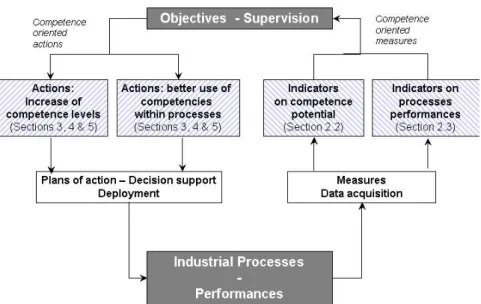
Figure 1, extracted from [6], suggests a necessary interrelationship between the two previous points of view. Indeed, according to the focus chosen, the enterprise can be considered either as a goods-and-services production system or as a competence production system. Thus, these two points of view merely lead to two complementary models of the same system. The interaction between them can be explained by referring to performance: the performance of the goods-and-services production system is generated by the competencies available, depending on two main factors: (i) the levels of competencies available and (ii) the ability to allocate and coordinate competencies along business processes.
These two factors induce two main means of action for a better use of competencies to enhance performance. On one side, one deals with a descriptive and static view of the competencies available at a given moment where the performance improvement is based on a better use of available competencies. On the other side, one takes into account a dynamic view of the competencies, and the performance improvement can be based on an
1
“Production system” is used herein in a broad sense, not limited to manufacturing processes but covering all the life cycle of the product.
Final draft paper published in : Computers in industry, Volume 58, Issue 2, February 2007, Pages 98-117
increase of the available potential of competencies. Of course, both types of competence-based improvement actions are to be combined with more classical actions to enhance industrial performance.
A crucial step towards the implementation of this competence paradigm within performance management systems is to define the concepts and models required to introduce competence in firms’ information and decision systems. This survey paper addresses this topical question, with a restrictive focus on industrial engineering methods: research on models used to make an operational use of the notion of competence within information systems, development of decision support systems and methods, and computer-based tools useful in an industrial context. Before coming to the management of processes in sections 3, 4 and 5, the first part of the survey (sections 2.2 and 2.3) will focus on the introduction of competence-related concepts within performance measurement systems. Indeed, according to [7], each performance control system should include:
- specifications of the expected goals;
- a measurement system concerning the real performance reached (performance indicators); - a set of performance drivers (potential performance improvement actions).
In the previous paragraph, two complementary types of performance drivers have been identified. They imply the use of two different types of indicators: (i) indicators to measure the available potential of
competencies, and (ii) indicators measuring the impact of competencies on processes performance (see Figure 2). The following two sections provide a survey on those two types of indicators.
2.2. Assessment of competence levels
In the field of industrial engineering, several models have been developed to provide a systematic and objective evaluation of levels of competencies in a firm. Such information on competence levels is used in industrial engineering methods as raw data needing to be processed by decision support systems. This evaluation can be provided at the level of the individual, collective or global competence of the firm.
Concerning the evaluation of individual competencies, most of the authors choose a similar approach: (1) the results of socio-human researches are used to identify the main models linked to competencies; (2) they provide a formal and qualitative model of the competence; (3) a mathematical and/or quantitative model is proposed to generate a systematic evaluation of competence levels. In a re-engineering context, Harzallah suggests the CRAI model (Competence, Resource, Aspect, Individual), associated with axioms based on set theory [8].
Competencies are characterised by sets of Knowledge, Know-How and Behaviour associated to a context and linked to individual actors. Based on a classical evaluation of the “Knowledge”, “Know-How” and “Behaviour”
Final draft paper published in : Computers in industry, Volume 58, Issue 2, February 2007, Pages 98-117
characteristics, a mathematical aggregation is suggested to provide a quantitative evaluation of competencies. The approach aims at manipulating data bases describing formal competence in order to provide a mapping between required and acquired competence in an enterprise reengineering context. A similar approach of formal evaluation is developed by Jia [9] with an objective of allocation of production actors. Referring to a structural model of competence, Franchini uses a multi-criteria decision tool to aggregate the various factors considered within the competence level [10]. The added value is to provide several evaluations depending on the user’s point of view. A fuzzy approach for the evaluation of competencies is also proposed in [1]. An aggregated competence indicator is evaluated by a fuzzy-aggregation of several evaluation criteria. The fuzzy approach is flexible enough to incorporate and combine various criteria; it also has the advantage of allowing an integration of subjective aspects which may be required for the evaluation process. An alternative fuzzy approach with similar objectives has been developed in [12]. Finally, complementary contributions use the results of individual evaluations to provide a better visibility of the potential of competencies available within a firm. They mix the qualitative level of competence of the actors with their quantitative time availability, to provide a global estimation of the available potential on each competence considered [13], [14].
To our best knowledge, few results are yet available concerning the evaluation of collective competencies in the field of industrial engineering. Indeed, socio-human research on collective competence is still recent and the results are not advanced enough to look for industrial engineering-oriented formalisation. However, promising trends have emerged:
One type of models aims at providing decision support system to configure groups of actors. Individual competencies of actors are mapped with competencies requirements. Such contributions can be found in production management [9], [15] or in design (see team building in section 4.3). The configuration of groups of actors aims at a good performance, but the collective competence as such is not evaluated. In the field of project management the profile theory [16] originally proposed by Plekhanova goes one step further. It provides tools to evaluate not only the capability of human resources, but also their mutual compatibility within a group.
However, the notion of compatibility remains very simple. Thus, up to now, formal approaches trying to tackle the issue of collective competence refer to a limited view on collective competence: the synergic factors at work in collective efficiency do not seem to be adapted to a formalising process and the collective competence itself is not evaluated.
Finally, numerous articles also show advances concerning competence evaluation at the level of the global competence of the firm. However, such approaches mainly belong to the managerial field, notably with
Final draft paper published in : Computers in industry, Volume 58, Issue 2, February 2007, Pages 98-117
contributions to value firm intangible assets or to measure their intellectual capital, with application to financial or knowledge management. This field is beyond the scope of the present article. As a matter of fact, at that strategic level, the performance of the firm is usually measured globally, without explicit link to the operational performances of the processes.
2.3 Causal models: impact of competencies on the performance of processes
The previous section has only presented research on the assessment of competence levels. Other
contributions go further and try to formalise models of the impact of competencies on process performances. The objective is to make explicit the causal relationships between competence levels and operational performances. Competence levels are classically linked to temporal performances, but recent approaches also consider cost or product-quality indicators. Here again, we can distinguish between individual competence, collective
competence and global competence of the firm.
In industrial engineering, such research has been first developed with the aim to provide the best allocation of actors to operational processes, depending on their efficacy. In fact, the first results in that field show two strong limitations: (i) as an extension of Taylor’s organisational model, only human efficacy is considered, and not really competency levels; (ii) most of these approaches only concentrate on temporal performance, addressing the impact of human efficacy on execution duration [17].
At the very beginning of the 90’s, socio-technical approaches of production systems tried to cope with this limitation by integrating socio-cultural features [18] to take into account more complex models of human factors. El Mhamedi characterises the production operator by several qualitative criteria such as versatility, experience level or control level on working environment [15]. He elaborates an “approximate” model of the performance of a working station {operator/machine), based on the aggregation of criteria characterising both the machine and the operator. This aggregation also integrates a variable to express the impact of the working environment. This work provides an interesting contribution to a better formalisation of the impact of human factors in industrial processes. However, only temporal performances are studied and the robustness of the model would require further development.
In a similar perspective, several approaches have suggested aggregations of the various human factors to be considered by the use of a more elaborated competence model [9], [13], [19]. Qualitative models of individual competence (see section 2.2) are used to formalise the evaluation of competence levels. The causal link between competence and performance remains simple: at the level of a basic activity. It is represented as a dependency
Final draft paper published in : Computers in industry, Volume 58, Issue 2, February 2007, Pages 98-117
relation between an efficacy factor and the competence levels. Usually, this efficacy factor is used to adapt the nominal performances of the activities, the global performance of processes being built by the aggregation of activity performances. Simulation [9], [20] is the most usual tool to produce such an aggregation, as it will be pointed out in section 4.2. Some articles go even further by formalising the mechanisms of performance evolution: individual learning mechanisms have for instance an impact on medium and long term temporal performances [21], [22].
Concerning the second limitation mentioned above, research from manufacturing-ergonomics stresses the impact of individual levels of competencies on non-temporal performances [23]. In that perspective, Coves presents a model which has neither of the two previous limitations: causality relationships are formalised between individual competencies levels and the operational performances of processes [24]. They are not only applied to delays but also to cost-oriented indicators or product-quality measures. The model itself is very generic, which makes the approach highly flexible. Causality is formalised by dependency relations between performance criteria and performance indicators. The user’s expertise is required to define pertinent dimensions of performances, indicators on those dimensions, criteria linked to the indicators and dependency relations between criteria and indicators. However, the overall model is unwieldy to implement in a specific case since it requires a high level of user-expertise. Moreover, the pertinence of the model depends too much on that expertise.
Studies on collective competence are rarer in the field of industrial engineering. A model aiming at representing explicitly the impact of collective competence on the operational performances of processes has been developed in [25]. The authors provide a quantitative model to formalise the impact of cooperation between actors on performances. The quality of cooperation is quantified depending on individual communication criteria and is used to estimate performance modulation coefficients. The correspondence between quality of cooperation and modulation coefficients depends on experimental data from the industrial context. Modulation coefficients then affect the nominal performances of the activities. This formal and quantitative model is used within a simulation environment to provide the aggregation of activity performances. A major interest of that work is to show the great impact of the quality of cooperation on the final performance. However, the model is based on a set of restrictive hypotheses which limit the application and the simulation results depend on experimental data whose reliability is not completely verifiable.
Finally, causal relationships between competence and performance are also studied at the level of the global competencies of the firm. Statistical studies intend to demonstrate a scientific correlation between key
Final draft paper published in : Computers in industry, Volume 58, Issue 2, February 2007, Pages 98-117
competencies and global productive performances. Some of those contributions analyse the impact of very specific competencies: e.g., Fawcet et al. [26] state that the “delivery capability” of a firm has a strong positive influence on performance. At another level, the authors show that globalisation, information availability and planning sophistication are useful competence inducers for the “delivery capability”. The impact of
manufacturing flexibility capabilities on performance is also analysed by Zhang et al. [27] who consider customer satisfaction or by Llorens et al. [28]as a critical factor in the process of strategic change.
More than flexibility, Perona and Miragliotta [29] are interested in the impact of complexity management on the supply chain performance. Their model shows that the ability to control complexity within manufacturing and logistic systems can be regarded as a core competence in order to jointly improve efficiency and
effectiveness on the wide scale of the supply-chain. In [30], Narasimhan et al. put forward the idea that flexibility depends on “flexibility competence” defined as the ability to convert investments in advanced technologies and strategic source initiatives into manufacturing flexibility. Using a data analysis method, they also show that firms can develop a specific ability to convert their flexibility into higher levels of performance. Their research tends to demonstrate the benefits of competence management on the global performance of a firm.
A general framework for such relationships between performances and manufacturing competencies is elaborated in [31]. The framework shows (i) the relationships among manufacturing capabilities and (ii) the relationships between those capabilities and business performance. Five main manufacturing capabilities are identified: “conformance quality”, “delivery speed”, “delivery dependability, “product flexibility” and “cost management”. Such generic model is also to be completed by domain oriented studies such as [32] in pharmaceutical industry or [33] in microelectronics industry.
2.4 Focus and structure of the survey
This section provides a survey on research works studying the formal link between competence and performance. One can consider that there is already quite an amount of academic contributions useful for understanding and modelling that link, but in most of the above mentioned studies, competence is only
considered as being one dimension of the performance among others. However, it is considered as an important dimension which is still not enough taken into account, often because of a lack of formalisation. Such research is at the frontier between qualitative and quantitative modelling approaches: several contributions clearly pave the way for the development of formal models useful in a perspective of concrete decision support.
Final draft paper published in : Computers in industry, Volume 58, Issue 2, February 2007, Pages 98-117
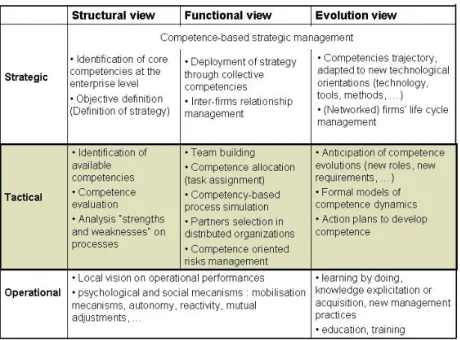
As underlined above, the causality relationship between competence and performance can be studied and formally modelled at distinct decision levels. These decision levels will help us make the positioning of the rest of the paper more explicit. Indeed, the overall scientific domain covered by competence oriented approaches applied to industrial processes remains too large for a single state of the art. Table 1 explains the focus chosen in this paper, in the field of industrial engineering methods.
In that table, it is considered that research on competencies focuses on distinct points of view: the structural view is a static point of view concerning mainly identification, structuring and evaluation of competencies. The functional view concerns the mechanisms of competence mobilisation in a working context where the goal is to make the most of available competencies. Finally, the evolution view deals with the evolution processes concerning competencies (notion of competence trajectories and dynamic models).
These three views can be managed at the strategic, tactical or operational levels of decision. In the following sections, we will only concentrate on the tactical level, since most of industrial engineering contributions deal with that level, where concepts have to be formalised for further application in dedicated pieces of software or practical techniques at the operational level. This positioning also excludes the research from strategic managerial sciences, as well as from human and social sciences.
In the following sections, we will develop a survey on the integration of competence models within the information and decision systems of the firm, aiming at answering questions such as: How can these models be integrated in the existing industrial engineering methods? How can the notion of competence be used to implement innovative decision aids for tactical management of the firm? The survey mainly focuses on three fields for which we have found substantial research proposals. The first two deal with two complementary processes within the product life cycle: section 3 provides a survey on competence applied to the management of design processes. Indeed, it is a very active research field aiming at analysing which competencies are required at the various stages of the product and system design. Section 4 will focus on production (operation)
management, where a better use of available competencies is nowadays perceived as a major performance driver. Section 5 will be more transversal, regarding design management and production management: the emphasis will be set on the use of competence models for the management of inter-firms relationships.
3. Competencies in management of design processes
Products are increasingly more complex. Concurrent Engineering, aiming at decreasing the time to market, is based on the fact that specifications are not completely known at the beginning of the NPD (New Product
Final draft paper published in : Computers in industry, Volume 58, Issue 2, February 2007, Pages 98-117
Development) projects and are linked to the company strategy by innovation management and core competence management. Solutions are progressively determined, within an iterative process while specifications
progressively emerge from the anticipation of the future life cycle of the product. Different kinds of uncertainty (e.g. market trends, changes in norms, new technologies or cognitive conflicts among actors) increase the difficulties of problem solving and decision making during the project, and increase the risks of wrong choices. Concurrent Engineering requires that designers establish assumptions that will be checked later when more knowledge or information have been produced. Multi-disciplinary teams and cross-functional processes are often required to insure the success of NPD. An advantage of team working over individual work should be that a greater number and variety of concepts and knowledge are generated and considered. The collaborative work requires an appropriate communication to share concepts and knowledge, as well as the use of ontologies. One disadvantage of collaboration is related to the possibility of arising conflicts between team members. An appropriate coordination would be necessary to build teams, manage project (team building, project
management) and to identify and resolve conflicts. Technical conflicts are normal in design and may be of value when solving complex problems, but interpersonal conflicts have to be avoided. These different aspects of design match various research topics. This section classifies significant contributions related to competence management in the New Product Development processes.
3.1 Core competencies and design management
A functional approach to the enterprise management concerns the strategic level that defines global directions according to the changes in the enterprise environment and in its internal capabilities (resources, core
competencies...). Research issues are focussed on core and organisational competencies, strategic management of R&D, innovation management and "competencies destroying" [34], [35]. Some authors are interested in relationships between products and manufacturing systems life cycles and core competence changes: Torkkeli and Tuominen [36]point out that the opportunities to build core competencies should be systematically assessed when selecting technologies and propose a method to clarify the impact of technology selection on core
competencies. Especially, high-technological competencies of R&D involved in innovation projects enhance the design of new functionalities in products and industrial processes and provide the company with a competitive advantage. Numerous works emphasise the linkages between product innovation management (technological changes) and core competencies life cycle [37], [38] . Dawson [39] discusses the uncertainty factor in R&D organisations and proposes to manage jointly the mix of end products and core competencies, both in the short
Final draft paper published in : Computers in industry, Volume 58, Issue 2, February 2007, Pages 98-117
term and in the long term. The point is to elaborate methods and tools to select appropriate core competencies that need to be developed, to assure sustainable long-term competitiveness. The link between strategy and NPD organisations design has only been mentioned occasionally in the literature. Large industrial companies have undertaken deep transformations of their organisations to structure, coordinate and facilitate design activities along with knowledge and competence development [40]. Nevertheless, very few studies explicitly link
organisational structures and performance. Osterlund [41] deals with effective structuring of NPD processes and considers competence as an essential resource. He proposes an approach to manage competence transfer and development, trying to establish links between effective organisation and core competencies building. This work is based on different models ("resource-box", "decision-box") to structure information flows and to facilitate communication and consequently, virtual team building. The interest of simulation related to the integration of competence in the NPD processes is also discussed.
Nowadays, managers have to define how the design process and the collective activities should be organised and supported to enable designers to reach high performance in design. This issue concerns the integration of competence in NPD processes management, team building and competence allocation, collaborative design and coordination processes.
3.2 Integration of competence in NPD projects management
Global directions provided by the strategic level influence the choice of a coherent organisation able to enhance the performance at the tactical level. Major cross-functional processes are defined by describing the expected objects and their intermediate states through the processes. To reach the performance required, coordination has to be properly established to break down each process into a sequence of sub-processes and to integrate each local result. Each sub-process has to be allocated to one actor. Numerous works have focused on models and methodologies to decompose design activities [42], [43] and to perform these activities simultaneously. To reduce the complexity of a large scale project, activities are grouped either on the basis of product structure or on the basis of precedence relationships between activities. These approaches are mainly top-down oriented: competencies are not taken into account since the main focus is set on the temporal organisation of the project. They assume (1) that the individual competencies are available and (2) that collective competencies will emerge from the sum of individual competencies. To tackle this assumption, different research works have proposed an efficient organisation that makes appropriate matches between activity features (task, uncertainty, coordination) and competence features.
Final draft paper published in : Computers in industry, Volume 58, Issue 2, February 2007, Pages 98-117
Eriksson et al. [44] study projects management competence needs in the customer organisation when designing a large technical system. The authors examine the relationships between customer and supplier to specify the minimum requirement of competencies. They try to find out "who" is most suitable to do "what" according to different initial conditions in the projects studied. Bstieler [45] explores potential effects of environmental uncertainty on the development process, project organisation and on project timeliness with a sample of development projects in two countries, Canada and Australia. In [46], Mc Dermott and O'Connor underline that traditional NPD organisations are not necessarily designed to support uncertainty related to radical innovation projects. The project teams targeting radical innovation encounter a much different set of challenges than those typically faced by NPD teams engaged in incremental innovation, especially human issues both at the designer level and at the project team level. Project activities are subject to considerable uncertainty, which is gradually decreased during project execution. However, project scheduling largely assumes complete information about the process to be planned, which means a static deterministic environment. The fundamental approaches for scheduling under uncertainty are compared in [47]: reactive scheduling, stochastic project scheduling, fuzzy project scheduling, robust (proactive) scheduling and sensitivity analysis. The authors discuss the potentials of these approaches for scheduling under uncertainty projects with deterministic network evolution structure. This literature review shows that no research work has clearly addressed the relationships between competence and uncertainty, along with their simultaneous integration in project management.
3.3 Team building and competence allocation
To be successful, NPD teams must be composed of people who work well together. Numerous theories have been developed to characterise roles, personalities or cognitive profiles that facilitate team building. The most famous applied theory was developed in 1981 by R.M. Belbin [48] who defines two role types: functional role (actor function) and role in the team (actor relationships within the team). For this latter type, he identified eight roles required for team performance: Chairman, Shaper, Plant, Monitor-Evaluator, Resource Investigator, Team Worker, Company Worker and Completer-Finisher. An audit form called « Belbin’s Self-Perception Inventory » was developed to determine the compatibility between actors and roles. These results are the reference for some works on team building that propose formal models from his theory [49], [50], [51]. Other social theories could become the basis of operational research on collective competence to elaborate decision support systems. For instance, Kichuk and Wiesner [52] identify five important personality factors that could be used as selection variables to determine the "optimal" team composition. A short empirical study allowed the authors to examine
Final draft paper published in : Computers in industry, Volume 58, Issue 2, February 2007, Pages 98-117
relationships between these personality factors and team performance. Their conclusions need to be confirmed by further experiments, a question being why consider these five factors and only these ones. On the same topic, the importance of member personalities, goals and capacities to control team performance is underlined by [53], [54].
Social theories need deeper investigations but could be used from now on to develop formal models and to design decision support systems with the aim of assisting managers in team building. Indeed, a great deal of attention is focused on team building but only few works propose formal models to improve collective performance and to control risks of failure. Some relevant papers have been selected as follows.
Chen and Lin [55] develop a mathematical model and a five-step approach to support team building. The authors define quantitative levels of competence based on three characteristics (functional competence, capacity to work in team and personality profile). They use the Analytic Hierarchy Process method to compare different designers according to their competencies and to select the most appropriate members for the team. Fuzzy logic is used in [49] to model the interactions between team members, based on Belbin's framework. Along the same lines, a team building approach is proposed in the field of collaborative design by [51]. The authors use team roles as defined above by Belbin and introduce an indicator related to the designer ability to cooperate. Their assignment model is expressed as an integer-linear program that maximises the sum of the evaluation of the selected designers. The previous works have some limits and assumptions that have to be pointed out: they do not predict the planned performance of the team; they do not sufficiently evaluate the risk of project failure; and they only suggest static approaches to team organisation. Further works could study the links between team building and process decomposition in the team.
Acuna and Juristo [56] propose a qualitative model and a procedure to assign people to perform roles in software development projects, depending on their capabilities and the capabilities required by the role. Their capabilities-oriented process model includes traditional elements (activities, products, techniques, people and roles) and an original element: capability in order to add behavioural competencies to the process model. According to the authors, their method improves software development performance. Tsai et al. [57] state that team building for a software development project is "an important issue for reducing project cost, duration, and risk". They propose a computational method to solve the resource selection problem, based on two steps: firstly, they build a critical resource diagram to show the interrelationships among human resources and tasks. Secondly, they implement a Taguchi parameter design approach to select appropriate human resources. In their works, they consider human resources as controllable and they show that under these assumptions, their approach is efficient
Final draft paper published in : Computers in industry, Volume 58, Issue 2, February 2007, Pages 98-117
and effective for human resource selection. In the same field, De Korvin et al. [58] develop a model and an algorithm for allocating human resources to a team for a multi-phase project subject to meeting quality limits. The authors identify the necessary resources, namely skills to perform the various activities and costs involved for the salaries of the personnel who possess these skills. Fuzzy compatibility indicators are constructed to measure the acceptable quality levels of the team building process. Trade-offs in membership are made due to budget considerations. According to the authors, their method is applicable to cross-functional team definition and improves team performance.
A framework and an intranet solution for an electronic market of human competencies is proposed in [59], in order to facilitate the team building process in the context of multi-site and large companies. An information phase should allow buyer and supplier pairs to meet. The point is to properly represent task requirements and competencies to enable high effectiveness of the search for potential candidates and of the matching process. They propose a classification divided into four categories: knowledge, enabling technologies (tools to act in the task), fields of experience (environment) and personal traits ("to ensure a proper integration and a balanced team"). For each dimension, two values are required (min and max). Even if the approach seems to be
interesting, the authors do not explain how the aggregation is performed to obtain a proximity ratio, and assertive hypotheses are formulated without being made explicit: the sum of individual competencies does not enable one to obtain a collective competency.
3.4 Integration of competence in collaborative works and coordination processes
In the field of design, another important issue closely linked to competence management concerns collaborative processes and tools. Even if the authors working on the collaborative design are not interested explicitly in modelling competence, their results are useful to structure collective competence and to improve the performance of design processes. According to Torkkeli and Tuominen [36],"the application of the technological capabilities of R&D in specific innovation projects to produce new functionalities in products and processes depends on complex coordination processes". Some relevant papers are presented below.
NPD processes in manufacturing organisations are distributed and knowledge-intensive [60]. To tackle this challenge, Madhusudan presents an Agent-based Process Coordination (APC) framework for distributed design process management [61]. The framework uses a centralised decision-making and task sharing approach to support design activities. This study illustrates the interest of deploying agent-based workflow technologies to: (a) enable incremental and large-scale process and product knowledge acquisition and management, (b) facilitate
Final draft paper published in : Computers in industry, Volume 58, Issue 2, February 2007, Pages 98-117
design process knowledge reuse in different contexts, and (c) support distributed dynamic process management. An agent model based on the concepts of role, process and information is proposed in [62] to support the collective decision in collaborative product design. The points are to find mechanisms to support information sharing and exchange, to organise the members of actors-network according to their knowledge/competence and to plan the general decision process. The development of design supports requires integrated product and process models to describe and organise activities, information and decisions involved in design. In [63], Lee et al. propose an entity-based integrated model that uses product and process entities to represent respectively design information and design activities. Organisational relationships organise entities into hierarchies, interaction relationships characterise the nature of entity interactions and sequence relationships identify the sequences in which process entities are initiated during the design process. Companies do not possess all the knowledge they need but instead rely on other organisations: this point results in the need of distant product development, which in turn requires information and knowledge in the place, time and format required. In response to this need, a knowledge-driven collaborative product development system architecture is developed in [64], in order to facilitate the provision of knowledge involved in product development.
Even if the links between knowledge management and performance optimisation are beyond the scope of this paper, it seems obvious that such collaborative computer tools facilitate competence mobilisation and
development. Moreover, very few approaches aim at integrating product, process and competence models. However, it would be useful to develop integrated computer tools that could automatically identify competence. Numerous research works focus on collaborative works or processes coordination and produce formal models (mathematical or simulation models). These models could be enriched to be even more realistic or relevant by taking into account competence more explicitly.
3.5 Competence development in design process management
When organisational structures and collaborative supports have been defined, the design activities are performed (at the operational level), either by an individual actor or by a collective actor (a team, a work group...). Objects manipulated by designers play a crucial role at this level [65], [66]. They enable designers to co-elaborate shared representations, to make mutual interactions easier and then to develop collective
competence. Design organisation is based on the interactions of multiple actors. Artefacts and representations of the design process have a key function in the organisation of this activity. Nowadays, an abundant literature deals with collaborative design activities and more specifically with collective learning processes that are closely
Final draft paper published in : Computers in industry, Volume 58, Issue 2, February 2007, Pages 98-117
related to product dynamics [67]. Organisational learning is believed to be important for competitive
performance of companies. Several works examine how organisations learn from experience of the introduction of new product and propose recommendations to help companies to build a learning organisation in R&D [68], [69]. Moreover, companies that neglect post-project reviews as a way of inter-project learning waste invaluable potential for competence building.
3.6 Conclusion on management of design processes
In the field of design, two research approaches can be noticed: either competence is considered as a valuable asset and needs to be properly managed, or this dimension is not directly addressed but the concerned topics involve changes in human competencies. The latter is the most widespread, even if, today, the trend in Engineering Design has more to do with explicitly studying the impact of managerial and organisational decisions on competence. The links between performance evaluation of design process and competence management have not been explicitly addressed in the literature. Competence is considered as an input data for project management or team building but it is not integrated as a joint result. The performance evaluation has been focusing on the main objects, related to the product and the manufacturing system (in Concurrent Engineering) but competence development process has seldom been evaluated with explicit criteria related to knowledge or competence expansion.
4. Competencies in production management
Production management can be considered as the synchronisation between informational and material flows, taking into account different types of constraints including the availability of resources like machines but also operators. In the following, we have been mainly interested in how the human resources are considered and modelled for solving this synchronisation problem. Depending on the objectives of the process, two main areas have been distinguished: scheduling of a workforce, in order to generate the planning which will organise production, and simulating the workshop, including its human resources, in order to assess its performance.
4.1 Scheduling a workforce
Scheduling is not a new but still active application field of operations research in manufacturing.
Traditionally, the question has been to allocate tasks to resources through time, these resources being most of the time machines. An interesting exception is nevertheless the Hungarian method (described for instance in [70]) aiming at providing an optimal solution to a problem where tasks were to be allocated to people having different
Final draft paper published in : Computers in industry, Volume 58, Issue 2, February 2007, Pages 98-117
speeds for performing these tasks. In spite of this example and other similar ones, the explicit consideration of workers in the manufacturing activities has mainly come from industrial scheduling packages that became available in the 80's on personal computers. In this type of software, human resource was considered as a sub-problem of multi-resource scheduling: a task was requiring a machine according to a part routing, but also eventually a worker. In most scheduling packages (and still in modern ones), an ordered list of operators was associated to a machine. Once the scheduler has positioned a task in time, the software will look for the first available worker in the list. Implicitly, the ranking in the list conditions the skill of the person on the machine.
On the other hand, rostering or staff scheduling techniques were another point of interest of operations research. The problem, in that case, is to define a work plan for a set of persons, within a given working period. Staff scheduling and rostering techniques have for instance been applied to transportation systems (e.g. airlines or railways), healthcare systems, emergency services (police, ambulance, fire brigade), call centres, service organisations (e.g. restaurants, hotels or retail stores) and occasionally in manufacturing [71]. In most of these cases, the problem consists in dimensioning a workforce at lower cost in order to answer a demand. No mention of skills or competencies has been made since, usually, tasks can be performed by all the workers (see the typical cases about mail processing in [73] and [74] or nurse rostering in [75]). In [76], Lee notices for instance that the existing literature on employees scheduling problems does not take into consideration the quality of service provided by persons characterised by distinct skills and work speeds. It seems nevertheless that reality is a somewhat more paradoxical, since in many works, skills are emphasised as being an important issue of staff scheduling... but are not considered in the suggested models. It is, for instance, typical to see that some papers define staff scheduling as finding weekly schedules for each employee in a given skill category [72], or state that task assignment should be made according to individual skill strength [77], [76] but do not include this concept in their framework. Similarly, a survey on the nurse rostering problem [78] considers as a hard constraint the respect of the nurse skill level and category, whereas none of the papers referenced in this survey seems to fully consider this constraint. Nevertheless, different categories of workers are sometimes considered in simple cases, like in mail processing in [79], where clerks are considered as linked to machines and are scheduled first, while the requirements for mail handlers are established as a second step through simulation. In other works, skills are expressed through the definition of a hierarchy for performing a task [80], [81], which is quite similar to the method used by the industrial scheduling packages described above. In that case, it can be possible to
"downgrade" a person of a given skill level by allocating him to a lower level task instead of keeping him under-loaded [81]. This technique introduces new degrees of freedom but can lead to dissatisfaction problems. In [82],
Final draft paper published in : Computers in industry, Volume 58, Issue 2, February 2007, Pages 98-117
the use of a genetic algorithm for scheduling a staff of mixed skills is suggested. Once again, it is underlined in the article that traditional research usually considers only simplified models, with staff having homogeneous skills. Nevertheless, only a very simple example is detailed in this paper for mixed skills management: two types of jobs are considered with three skills, one allowing to perform the first job, another the second and the third one both of them.
In many works, competence is only considered as being related to performance in terms of speed to perform a task, which is close to the scope of the Hungarian method. In [83], the number of workers required to perform a set of tasks is for instance assessed first, then an allocation of tasks to persons is made in order to optimise performance. The influence on the customer delay of workers having different capabilities in terms of speed is also addressed in [76], in which it is also noticed that the existing literature on employee scheduling problems does not take into account the quality of service provided by persons of various skills. Indeed, workers are often considered in these studies as all able to perform a task (with different performance), whereas other works consider strict skill categories (i.e. the worker needs to possess a skill in order to be authorised to perform a task) within which workers are considered as similar.
In the manufacturing area, two studies emphasise the interest of defining skills or competencies at the planning or scheduling level [84], [14]. The framework of annualised hours is considered in [14]. Here the authors have used a questionnaire sent to companies to determine to which entity the operator should be linked (parts, operation or resource). On the base of the answers, competencies are defined as mainly related to
operations or to resources, leading to the definition of skills such as “controller”, “setter” and “operator”, the last two being applied to various machines. A method is then suggested to translate a production plan into a
"competence requirement planning". Constraint propagation is finally used in order to allocate multi-competent workers in the context of annualised hours.
In [84], the objective is also to manage critical skills through a "Skill Requirement Planning". Skills are linked to a type of operations (e.g. manufacturing, transport, set-up quality control, etc.) and are considered once a schedule based on the allocation of operations to machines has been performed, using a "classical" scheduling tool. The number of operators required per period is calculated, together with a "skill workload" per period. The result is an assignment of the operators to the operations or resources.
Final draft paper published in : Computers in industry, Volume 58, Issue 2, February 2007, Pages 98-117
At a higher level, ERP (Enterprise Resource Planning) systems are software tools which are supposed to provide a comprehensive solution for all aspects regarding the management of a company. The largest systems include both human resource (HR) management and production planning modules. In most of them, the human resource management focuses on employee management, payroll, training, recruitment and time management but only the most comprehensive include skill management. For instance, qualification profiles can be associated to persons in the HR module of SAP R/3 (leader of the ERP systems), allowing for instance to compare a person to a position (SAP, 2003). Within the production planning module, a work centre can be defined as a machine or a group of machines but also a person or a group of persons, and therefore be linked with the persons listed in the HR module. In a routing, a qualification can be requested to allow an operator to perform an operation.
4.2 Competence in simulation systems
Simulation of manufacturing systems has many common points with scheduling (because it considers the same entities) but it differs in terms of objectives (mainly, assessing the performance of a workshop) which leads to a clear distinction between schedulers and simulation tools. Especially, simulation tools do not have all the facilities for planning the production over time by including follow-up modules and do not easily allow an incremental planning (i.e. a new schedule is built periodically on the basis of the past one, updated by the follow-up information). On the other hand, simulation tools must sfollow-upport the assessment of new layouts or control of policies and, therefore, are usually more open to changes in the input data than scheduling tools. They also include facilities aiming at simulating disturbances in order to assess not only the ideal workshop behaviour but also a more realistic one, including disturbances.
Building a realistic simulation model necessarily requires taking into account the critical resources of the workshop. Like in the scheduling area, recent studies have emphasised the interest of better consideration of the human resource in the scheduling models. Two white papers2 from the HUCENS (Human Centered Simulation) working group of the Sim-Serv project provide for instance a recent summary on the subject, concerning both the research literature and the commercial simulation tools. The following statements are largely extracted from these reference white papers.
Since simulation is mainly oriented on performance assessment, the research literature on the subject is also oriented on human performance in production systems, which depends on technical concerns but also on
2 available at http://www.sim-serv.com
Final draft paper published in : Computers in industry, Volume 58, Issue 2, February 2007, Pages 98-117
physical attitude in carrying out operations, on physical and mental stress, on learning processes and on human skills [20], [86], [87]. Thus, personnel-oriented simulation requires additional information linked to personnel qualification, learning and unlearning effects, etc, which are seldom present in material-oriented simulation tools. In spite of this, the literature on the qualification issues is very poor, human aspects focusing often on ergonomic aspects (linked to the position or efforts of the operator at work) or performance (for instance through models of tiredness).
Simulation tools are mainly oriented on the resolution of industrial problems and, as a consequence, the concept of skill is better taken into account in these products than in the research literature. In commercial simulation tools, skills and qualifications are dealt with very much like scheduling tools, even if more flexibility is allowed:
- In Arena3, human resources can be allocated to tasks according to a given set of pre-defined rules, which can also be customised, including skills considered as the possibility to perform a given task.
- In Dosimis 34, the number of workers and their qualification can be defined for each task separately. A task may be assigned to a worker according to three criteria: qualification, idle time and distance.
- In eM-Plant5, various services can be defined for processing a part. These services can be treated as human resources skills and it is possible to define pools of workers of the same skill. The skill may influence the efficiency of the worker.
- In Witness6, human resources are specific entities which can be called by other simulation objects (e.g. machines, conveyors, vehicles) in order to perform an operation (e.g. set-up, cleaning, repair, drive a vehicle, etc.). An operator can have simple or multiple competencies. He can work on a workstation and be competent for setting-up machines and repairing simple failures (complex ones being tackled by specialists).
In all these products, more accurate models of qualification or skills can be integrated in the standard functionalities thanks to the openness of the products, but the effort required may be substantial.
3 http;://www.arenasimulation.com 4 http://www.sdz.de/dosimis/tutorial/dosimis_3_tutorial_english.pdf 5 http://www.tecnomatix.com 6 http://www.lanner.com
Final draft paper published in : Computers in industry, Volume 58, Issue 2, February 2007, Pages 98-117
Therefore, the standard integration of the workforce skill and competence in simulation tools is very similar to the one for scheduling tools, the main difference being that it is nevertheless possible to adapt these tools to more demanding requirements.
4.3 Conclusion on production management
As a summary to this section, it is clear that two types of problems are usually considered in the literature on workforce planning and scheduling:
- The major part of this literature is made of articles related to staff scheduling or rostering, where competencies (usually considered as "skills") are at best considered as a hierarchy of categories allowing to allocate people to teams or operations. In this part of the literature, simple skill models are marginally used for building teams or for allocating persons to tasks but there is never any link with the technical data required for manufacturing scheduling (bills of materials, routings, machines etc.).
- On the other hand, the manufacturing scheduling area has historically focused on the allocation of tasks to machines. In coherence with the MRP II (Manufacturing Resource Planning) method, the critical resources are still often considered as machines, the workforce being usually considered in a second step as additional resources, skills being managed again through very simple models. Even in the rare case where human resource is the central point of interest of a planning or scheduling method, only very basic models of competence are used which are far from expressing the complexity of the operational aspects of competence management.
The state of play in simulation is somehow different since facilities are often provided in simulation tools in order to allow the user to describe with the required accuracy the criteria which may lead to allocate a task to one operator rather than another. Nevertheless, no generic framework is suggested, and there is a huge gap between a very simple off-the-shelf description of basic skills/competencies and the possibility to define its own
framework, requiring an important development effort.
5. Competencies for the management of distributed organisations and supply chains
It is a very topical issue to underline the important industrial and research needs linked to the deployment of extended and/or distributed organisations. The distribution of productive activities among a set of independent but collaborative partners requires new coordination mechanisms characterised by real flexibility in the composition of the production chain, due to potential changes of the partners. This raises specific challenges
Final draft paper published in : Computers in industry, Volume 58, Issue 2, February 2007, Pages 98-117
linked to competence-oriented management of processes. There is therefore a strong tendency of the firms to concentrate on their core competencies and, consequently, there is a great coordination need among partners. In that context, complementariness of competencies becomes a key point of the overall system performance. In most cases of creation of networked organisations, several companies try to cooperate in order to make a new “collective corpus of competencies” operational [88], [89]. This link is clearly stressed in recent definitions of virtual organisations including: “a temporary alliance between a number of core competence based
firms/individuals, formed to take advantage of market opportunities” in [89] or “a series of co-operating nodes of core competence which form a supply chain in order to address a specific opportunity in the market place” in[90]. Thus, taking advantage of the cooperation, distributed organisations provide higher innovation capabilities, as well as opportunities of savings on transactions costs [91], which can even be applied to competencies transfers [92].
The dynamics of competencies development and competencies mobilisation depend on the characteristics of the distributed enterprise considered. Referring to a stability criterion (linked to the life-duration of the network) this survey is structured according to two generic categories of distributed organisations. These categories7 will help to identify different types of competence-oriented control mechanisms, depending on stability and temporality.
The first category refers to short-term distributed organisations with low level of stability (including for instance Virtual Organisations or “On-demand” Supply Chains). That field of research has been very productive along recent years and a competence focus is often considered in the management of such organisations. Here, competence models are mainly used to look for the best productive pattern of the distributed business processes. The selection of partners within virtual organisations depending on the requirements appears as a key
performance driver. Most of the approaches are oriented on decision aid tools and methods. Section 5.1 provides a survey of the use of competence models aiming at the configuration of short-term distributed organisations.
The second category refers to long term inter-enterprises co-operations, with a rather high level of stability. Such distributed organisations are usual for SME and refer for instance to Clusters in Great Britain, SME-Districts in Italy or "Systèmes Productifs Locaux" (SPL) in France. There is a large amount of research work on
7
There is no real frontier between these two generic categories and all intermediary situations are possible. However, that distinction helps to better understand competence-oriented mechanisms. Long-term and short-term competence dynamics are not in opposition but complementary.
Final draft paper published in : Computers in industry, Volume 58, Issue 2, February 2007, Pages 98-117
such organisational structures and Peillon [93] synthesises the main characteristics of those networks as far as competence development is concerned:
- The partnerships between firms are durable and motivated by a shared strategy on competence development, even if each partner keeps its own goals.
- The network consists in relations characterised by interdependencies and by shared investments, for which the notion of equity between partners is a major issue for a good coordination of collaborative actions. Section 5.2 will put the focus on the mechanisms of competence evolution for those long-term and stable inter-firm co-operations. We will underline three complementary orientations: (i) the link with life cycle
management for networked organisations; (ii) decision support for the constitution of long-term clusters; and (iii) management of the collective competence within those distributed processes
5.1 Competence based configuration of short-term distributed processes
Among the various challenges faced by virtual organisations, the selection of partners and the configuration of efficient business processes appear as major drivers of performance improvement [94]. Indeed, a poor partner selection is often a key failure factor resulting in a gap between competence requirements and real qualification of the partners [95], [96]. Furthermore, the agile and fast configuration of virtual organisations leaves very little time for the process of evaluation and selection [97], which puts forth a real need for decision support to ensure the consistence of decision processes. This section will thus synthesise advances in decision support systems integrating the competence dimension.
The industrial need for decision support tools is confirmed by several authors. Tuma [91] considers virtual organisations as a combination of core competencies of single partners, which implies, for each partner, a mechanism of concentration on its strategic competencies. The author underlines the crucial need of Decision Support Systems (DSS) to address specific issues of production networks linked to competencies: the allocation of adequate project partners to sub-tasks, the redistribution of project earnings and the harmonisation of distributed production processes. In [98],the authors emphasise the collaborative decision process leading to agreements between partners to solve the problem of combining their different competencies. A framework is proposed, based on a classification of the roles of partners and on the identification of key firm-competencies, in order to structure collaborative relationships. With the same perspective, Pedersen and Van den Berg put forth the need of competence modelling as a basis for decision aids [97]. A French project [99] suggests a structuring of the various needs of decision-making tools to support the coordination and development of competencies
Final draft paper published in : Computers in industry, Volume 58, Issue 2, February 2007, Pages 98-117
within networks of SMEs. These needs are defined in reference to three main decision processes: performance improvement for the distributed processes, life cycle management for networks of SMEs and internal
competencies development. Contributions using a competence approach can also be found in projects focusing on distributed enterprises like GLOBEMEN [100], VOSTER [101] or COMET [102].
The Multi Agents Systems (MAS) are often used to build decision support systems for partner selection. Several authors have underlined the relevance of MAS approach to model virtual organisations, due to the structural correspondence between the distributed model and the distributed organisation itself [103], [104], [91]. MAS approaches are also very appropriate to define competence oriented models. In [105], the core
competencies characterising companies are used as decision-making criteria to assign tasks to actors. The multi-agent model proposed aims at solving administrative operations for a manufacturing network. Administrative tasks like “Identifying firms suitable to handle a specific mission” are executed by a group of Intelligent Agents associated with a genetic algorithm scheme. In that case, the agents represent administrative actors but they do not directly represent the companies in the network. In [106], the authors define the partners of a
non-hierarchical production network as competence-cells. Their contribution focuses on automated negotiation between partners in order to build a productive network able to answer the customer requests. The approach proposes a software agent able to carry out an automated negotiation to assist the human decision-maker and accelerate the harmonisation of individual interests. The feasibility of the approach has been demonstrated but not its complete applicability to real cases. In relation with the Globemen project and the Virtual Enterprise Reference Architecture and Methodology (VERAM), Petersen [104] develops a multi-agent architecture to cope with virtual enterprise formation process (evaluation and selection of partners). In that case, agents are used both to provide models of the potential partners and to provide models of the negotiation processes between partners. Activities within the virtual enterprise require roles and roles require skills and competencies from the agents (candidate companies). A generic model of the process of partner selection is proposed, where the requirements for a virtual organisation are compared to skills and availability of the partners. A multi-criteria utility function is calculated to provide a ranking of the partners. The approach presents the advantage of having been tested on five case studies, with results showing a clear added value for decision-makers, especially in a context of high number of potential combinations.
However, MAS is not the only way to deal with this decisional process and to represent competence-oriented models. Different types of analytical methods have also been applied to solve that problem. Hammami et al. [107] suggest a method to allocate customers orders within a network of firms based on four mains concepts:
![Figure 1. Two complementary points of view on performance according to Boucher and Burlat [6]](https://thumb-eu.123doks.com/thumbv2/123doknet/11602591.299593/41.892.128.807.105.393/figure-complementary-points-view-performance-according-boucher-burlat.webp)