HAL Id: halshs-01679456
https://halshs.archives-ouvertes.fr/halshs-01679456
Preprint submitted on 9 Jan 2018
HAL is a multi-disciplinary open access
archive for the deposit and dissemination of sci-entific research documents, whether they are pub-lished or not. The documents may come from teaching and research institutions in France or abroad, or from public or private research centers.
L’archive ouverte pluridisciplinaire HAL, est destinée au dépôt et à la diffusion de documents scientifiques de niveau recherche, publiés ou non, émanant des établissements d’enseignement et de recherche français ou étrangers, des laboratoires publics ou privés.
Forecasting and risk management in the Vietnam Stock
Exchange
Manh Ha Nguyen, Olivier Darné
To cite this version:
Manh Ha Nguyen, Olivier Darné. Forecasting and risk management in the Vietnam Stock Exchange. 2018. �halshs-01679456�
EA 4272
Forecasting and risk management in
the Vietnam Stock Exchange
Manh Ha Nguyen*
Olivier Darné*
2018/03
(*) LEMNA - Université de Nantes
Laboratoire d’Economie et de Management Nantes-Atlantique Université de Nantes
Chemin de la Censive du Tertre – BP 52231 44322 Nantes cedex 3 – France
http://www.lemna.univ-nantes.fr/ Tél. +33 (0)2 40 14 17 17 – Fax +33 (0)2 40 14 17 49
Docum
ent
de Tra
vai
l
W
or
ki
ng P
ape
r
1
Forecasting and risk management in the Vietnam Stock Exchange
NGUYEN Manh Ha12
LEMNA, University of Nantes
DARNÉ Olivier3
LEMNA, University of Nantes
Abstract
This paper analyzes volatility models and their risk forecasting abilities with the presence
of jumps for the Vietnam Stock Exchange (VSE). We apply GARCH-type models, which capture
short and long memory and the leverage effect, estimated from both raw and filtered returns.
The data sample covers two VSE indexes, the VN index and HNX index, provided by the Ho Chi
Minh City Stock Exchange (HOSE) and Hanoi Stock Exchange (HNX), respectively, during the
period 2007 - 2015. The empirical results reveal that the FIAPARCH model is the most suitable
model for the VN index and HNX index.
Keywords: Vietnam Stock exchange, volatility, GARCH models, Value-at-Risk. JEL Classification: C22, C53, G10, G17
1 IAE Nantes, Institute of Economics and Management, Chemin de la Censive du Tertre, BP 52231, 44322 Nantes
Cedex 3, France. Phone: +33 (0)2 40 14 17 00. Fax: +33 (0)2 40 14 17 17. E-mail: [email protected].
2 Faculty of Banking and Finance, Foreign Trade University. 91 Chua Lang Street, Dong Da District, Hanoi City.
Phone: +84 (04) 32595158 (ext: 280,284). Fax: +84 (04) 38343605
3 IAE Nantes, Institute of Economics and Management, Chemin de la Censive du Tertre, BP 52231, 44322 Nantes
2 1. Introduction
Together with the banking system, the stock market is an important financial source for the economy. Conversely, changes in policies and legal instruments and the variability of macroeconomic indicators have an impact on stock market returns and volatility. Compared to other stock markets in the world, the Vietnamese stock exchange (VSE) is rather young. The first trading of the Ho Chi Minh Stock Exchange (HOSE) was started on July 28, 2000 with only two securities, and that of the Hanoi Stock Exchange (HNX) was on July 14, 2005. After more than 10 years of operation, despite much volatility, the VSE has thrived significantly. The number of listed companies has been considerably increased from only 2 listed companies in July 2000 to 453 in 2009 and 694 in 2011. By the end of 2015, 684 tickers and fund certificates had been listed on the HOSE and HNX, with a total value of USD 24.32 billion, corresponding to an increase of 25% in comparison with 2014. In addition, the market capitalization reached approximately USD 59.321 billion, which was equivalent to 30.7% of the GDP of the country. However, the average daily trading volume is quite small, approximately USD 113.04 million.4
During the financial crisis of 2007-2009, world stock markets witnessed a fall in their asset price and exhibited volatility. The VSE had also experienced several difficulties, and the bubble burst. Both the VN index (HOSE) and the HNX index (HNX) declined by nearly 70% in 2008, one of the biggest loss ever seen in any of the world stock markets. Since 2009, the VSE has been still unstable, with high volatility. In this context, an empirical study on the volatility of the VSE is required.
Volatility in the equity market, which is a fundamental concept in the discipline of finance, has been seen as a measure of the uncertainty of investment’s rate of return. As a proxy of risk, modeling and forecasting stock market volatility have become a concerned subject of numerous
4 Note that the HOSE and HNX exchanges are categorized as frontier market country (i.e., non-investible
3
empirical and theoretical contributions over past decades. Forecasting and modeling stock volatility are crucial inputs for pricing derivatives and for trading and hedging strategies. Furthermore, the extreme volatility could disrupt the smooth functioning of the financial system and lead to structural or regulatory changes. Therefore, it is important to understand the behavior of return volatility. Autoregressive Conditional Heteroskedasticity (ARCH) introduced by Engle (1982), independently extended to the Generalized ARCH (GARCH) model by Bollerslev (1986) and Taylor (1986), and improved GARCH-type models have been developed to capture the most important stylized facts of stock returns, which are heavy-tailed distributed, volatility clustering, leverage effect and long memory volatility. To examine the characteristics of VSE return volatility, this paper uses 10 members of GARCH family models, namely, GARCH, EGARCH, GJR-GARCH, IGARCH, RiskMetrics, APARCH, FIGARCH, FIAPARCH, FIEGARCH and HYGARCH models.
However, it is well known that stock markets are subject to some drastic shocks, called large shocks, outliers or jumps (references). This type of event includes, for example, oil shocks, wars, financial slumps, changes of policy regimes, and natural disasters. These shocks may have undesirable effects on the tests of conditional homoscedasticity (e.g., van Dijk et al., 1999; Carnero et al., 2007), the identification and estimation of GARCH models governing the conditional volatility of returns, and thus on the out-of-sample volatility forecasts (e.g., Franses and Ghijsels, 1999; Carnero et al., 2007, 2012; Charles, 2008) and Value-at-Risk predictions (e.g., Mancini and Trojani, 2011; Iqbal and Mukherjee, 2012; Dupuis et al., 2015). In this paper, we thus address jumps in two ways. First, we detect jumps in the VSE returns from the additive jump detection procedure in GARCH models proposed by Franses and Ghijsels (1999), and then apply GARCH-type models on the filtered returns. Then, we use the back-testing of Kupiec (1995) and Engle and Manganelli (2004) to compare the predictive ability of models estimated from the original and adjusted-outlier returns in terms of forecasting market, in particular from Value-at-Risk (VaR).
4
The paper is organized as follows. The literature review is given in Section 2. Section 3 describes the Vietnam stock exchange. Section 4 presents the methodology and provides data information. The empirical results are discussed in Section 5. Section 6 analyzes the VaR and back-testing. Section 7 provides some concluding comments.
2. Literature review
This section pays special attention to the empirical studies relating to Vietnam's young stock market. One of the first studies developed by Vuong (2004) finds evidence of GARCH effects on return series of ten listed companies and the VN index during the period of 2000-2003. In another study, Farber et al. (2006) show that the HOSE presents an anomaly of stock returns and a strong herd effect by using the daily stock return from 2000 to 2006. The authors also argue that the ARMA-GARCH model is the best one in the case of serial correlations and fat-tailed for the stabilized period. However, Do et al. (2009) use GARCH(1,1) and GJR-GARCH(1,1) to characterize the returns and volatility of ASEAN emerging stock markets (Indonesia, Malaysia, the Philippines, Thailand and Vietnam), incorporating with the effects from the international gold market. The GJR-GARCH(1,1) model seems to be effective in describing daily stock returns’ features for most of these stock markets, except Vietnam. However, as the exogenous variables (the one-day-lagged returns and the one-day-lagged return volatility in the PM London Gold Fix) are introduced, GARCH(1,1)-X captures better stock market volatility behavior than the GJR-GARCH(1,1)-X, except for Indonesia. Daily closing data of the stock market indexes and the PM London Gold Fix were selected in the period from July 28, 2000 to October 31, 2008.
More recently, Truong (2012), employing the OLS and GARCH (1,1) model for daily return of HNX index series from 2002 to 2011, evidences the day-of-the-week effects on stock returns and the presence of volatility in the HNX market. Similarly, Le et al. (2012) evaluate
5
the day-of-the-week of eight stock market indexes from both developed and developing countries including Vietnam over the period 2002-2008 through a broad set of econometric models, notably GARCH, modified GARCH (daily dummies added into the conditional variance equation of standard GARCH), modified GARCH-M, modified TGARCH and modified EGARCH models. Similar to Truong (2012), the authors note a negative Tuesday return in the case of Vietnam, which is reliably documented in eight models.
The GARCH family models have also been applied to examine the effects of external shocks on the VSE. For instance, Chang et al. (2009) adopt a non-linear threshold model with the bivariate Momentum Threshold Error-Correction Model- Glosten, Jagannathan and Runkle GARCH (MTECM-GJR-GARCH(1,1)) process to consider the asymmetric return and volatility transmission relationships between exchange rate and stock prices in Vietnam. Daily closing values of Vietnamese stock price and exchange rates are collected from Datastream for the period from July 28, 2000 to December 29, 2006, a total of 1,416 observations. The leverage effect is evidenced in both the Vietnam exchange rate and stock markets. Then, they are a strong interaction between the stock price and exchange rate. The empirical results indicate that Vietnam stock prices will revert to the long-term equilibrium level when a disequilibrium term created by changes to the exchange rate market. Using the same model, Chang and Su (2010) find that the development of Japan and Singapore stock markets influences the VSE. Moreover, they confirm the existence of asymmetric volatility effect in the VSE. In contrast, Tran (2011) suggests that the effects of shocks on volatility were symmetric in the VSE. The author also explores the relevance of GARCH models in explaining stock return dynamics and volatility on the Vietnamese stock market during the period January - October 2009. Luu (2011) uses ARMA-GARCH and ARMA-EGARCH models to examine the relationship between the US and the VSE. The research analyzes 1,483 daily observations from 2003-2009. The author finds evidence that the S&P500 index has a positive and strong significant influence on the VN index return. However, there is no evidence of volatility spillover effects between the two indexes.
6
Moreover, several recent studies focus on the effect of macroeconomic factors on the VSE. For instance, Vo and Batten (2010) investigate the relationship between liquidity and stock returns in the VSE during the financial crisis period by using a data set ranging from 2006 to 2010. They reveal that liquidity positively affected stock returns. In another work, Vo (2016) suggests that institutional investors stabilized the stock return volatility in the HOSE for the period 2006–2012. Finally, according to Vo and Nguyen (2011), GARCH and GARCH-in-mean (GARCH-M) models are the appropriate models in describing daily stock returns’ features. The data employed in this study comprise 2,121 observations of daily closing stock price index of the HOSE, obtained from March 01, 2002 to August 31, 2010. Regarding structural breaks, the number of volatility shifts significantly decreases in comparison with the raw return series when applying ICSS to standardized residuals filtered from the GARCH (1,1) model.
Furthermore, some other authors have adopted the Value-at-Risk model (VaR) to determine and predict the level of risk when investing in the VSE. More recently, Vo et al. (2010), employing the GARCH and the VaR model for daily return of VN index series from 2000 to 2010, evidences the GARCH effects on stock returns and the presence of a weak-form efficient market in the HOSE. The authors also argue that the IGARCH model is the best one to determine VaR. Similarly, Hoang et al. (2011) confirm that the daily return of the VN index in the period from July 28, 2000 to March 31, 2011 can be captured by the GARCH (1,1) model. In particular, through the VaR model on the VN index, GARCH forecasts fairly accurately the risk of capital loss of the portfolio, thus supporting investors in making reasonable decisions on fund allocation. Meanwhile, Hoang et al. (2015) have adopted the model GARCH-EVT (Extreme Value Theory)-Copula, normal distribution and empirical distribution to estimate the VaR (Value at Risk) and ES (Expected Shortfall) of some shares listed on the Vietnamese stock market. The study used data from January 02, 2007 to December 28, 2012 and comprised 11 series of stock returns. Back-testing VaR and ES results showed that the conditional Copula
7
method and EVT are appropriate and reflect the actual value of losses on the portfolio more precisely than yield stocks with a normal distribution.
3. Overview of the Vietnam stock exchange
Vietnam has made significant progress in the transition from a centrally planned economy to a market-oriented system. Political and economic reforms (Đổi Mới) launched in 1986 have transformed the country from one of the poorest in the world, with GDP per capita (current USD) of approximately USD 143, to lower middle income status within a quarter of a century with approximately USD 2,100 by the end of 2015. Vietnam’s economy continued to strengthen in 2015, with an estimated GDP growth rate of 6.86% for the entire year.
Together with the positive changes in the economic situation, the financial background in Vietnam has also changed significantly. Capital market development has also been considered an important factor that facilitates the ongoing banking sector reforms. Established in 1990, Vietnam’s banking industry has grown tremendously from a mono-banking system to a huge network of banks and financial institutions. Over the past 25 years, the Vietnamese government has initiated many banking reforms for decades to improve the efficiency and competitiveness of the banking system in the country, in particular through the privatization of its state-owned banks. By 2015, Vietnam’s banking sector comprised 7 state-owned commercial banks (SOCBs), 28 joint stock banks (JSBs), 50 foreign bank branches, 3 joint venture banks, 5 banks with 100% foreign capital and two development and policy banks.
Moreover, reforming State-owned enterprises (SOEs) is the biggest concern in Vietnam. The government plans to undertake reforms through equalization and subsequent initial public offerings (IPOs), which are expected to improve the SOEs efficiency and productivity. The SOE reforms undertaken by the Government has resulted in the development of capital markets.
8
Consequently, the Government established the State Securities Commission (SSC) in 1997 and set the necessary legal framework.
As a result of these changes, two stock markets, the HOSE and HNX, have been established. The Ho Chi Minh City Securities Trading Center (HOSTC), which was established in July 28, 2000, became the HOSE on August 8, 2007. The HOSE is currently the largest stock exchange in Vietnam, which is the market for big corporations with capital greater than USD 5.51 million. The second securities trading center, the Hanoi Securities Trading Center (HASTC), opened in March 2005 and is oriented for small and medium companies with capital from USD 0.688 million. In January 2009, according to a decision of the Prime Minister of Vietnam, the HASTC was renamed and restructured as the Hanoi Stock Exchange (HNX).
The first transaction of the HOSE started on July 28, 2000 with only two listed companies, notably the Saigon Cable and Telecommunication Material Joint Stock Company (SAM) and Refrigeration Electrical Engineering Joint Stock Company (REE), with a total market capitalization of USD 30,600. The VSE experienced very slow growth during the beginning period. By the end of 2000, there were only 5 stockholding companies listed with market capitalization accounting for 0.2% GDP in 2000. From 2001 to 2004, there were only 26 stockholding listed companies with total capital of USD 0.269 billion. Total market capitalization just reached 0.54% of GDP in 2004. In 2005, there was an optimistic outlook for the securities market. By the end of 2005, there were 38 shareholdings listed companies on the HOSTC and HASTC, which were mainly restructured SOEs through equalization. The total of market capitalization reached USD 0.583 billion in 2005, contributing 1.01% of GDP. In general, before 2006, the VSE was operated in a tentative manner.
9
Figure 1: The number of listed companies on the HOSE and HNX during 2000-2015
Source: Author’s estimation from HOSE and HNX Annual Reports for 2000 - 2015
With some encouraging policies and positive responses from domestic and international investors, 2006 was considered a boom year for the VSE with 151 newly listed companies. Since 2006, the VSE has become very active in terms of quantity and quality. By the end of 2006, there were 193 listed companies on the HOSE and HNX. Total stocks circulated in the markets increased 8 times compared to the entire previous period of 2000 - 2005. The total market capitalization by the end of 2006 reached USD 13.776 billion (equivalent to 20.76% of GDP), 20 times higher than that in 2005.
Following the success of 2006, in 2007, the Vietnam government made a set of promoting measures for its stock markets, including promoting the equalization of SOEs and implement the Law on Securities. Consequently, on March 12, 2007, the VN index (HOSE) reached a record height of 1,170.67 points. Similarly, the HNX index had ending at 242.89 points (+146.65 points), increasing by 153.37% compared to 2006. The total market capitalization had a record of USD 30.690 billion (equivalent to 39.64% of GDP).
0 50 100 150 200 250 300 350 400 450 2000 2001 2002 2003 2004 2005 2006 2007 2008 2009 2010 2011 2012 2013 2014 2015 HOSE HNX
10
Influenced by the global economic crisis, the year of 2008 was a volatile and disastrous one for the VSE. Record inflation and a large trade deficit led to a macro-financial imbalance. In this context, the Government tightened its monetary policy and domestic banks reduced their capital into stock markets. The market capitalization plunged with a loss of approximately USD 16 billion. The 2008 turmoil caused an end to eight years of gains on the HOSE and three years of gains on the HNX. Both the VN and the HNX indexes declined by nearly 70% in 2008, one of the biggest losses ever seen in any world stock market. The HNX index even fell below its starting point of 100 in November 2008.
The year of 2009 was marked by the arrival of three biggest ex-SOE companies on the HOSE, notably, the Vietnam Insurance Corporation (Bao Viet), Bank for Foreign Trade of Vietnam (Vietcombank), and Industrial and Commercial Bank of Vietnam (Vietinbank). The total value of market capitalization reached over USD 34.578 billion (32.62% of GDP). By the end of 2010, with 642 joint-stock companies, Vietnam’s total market capitalization reached USD 38.2 billion. Since 2012, VSE has borne many negative impacts of macroeconomic instability such as high inflation and that of the liquidity of the banking system. For instance, market capitalization decreased significantly, reaching only USD 25.785 billion, dropping 25.7% compared to that by the end of 2010, accounting for 19.02% of GDP. Moreover, as displayed in Figure 2, in comparison with other countries in the region, the market capitalization/GDP ratio of the VSE is the lowest.
11
Figure 2: Market capitalization/GDP (%) of ASEAN’s countries
Source: Author’s calculation from WDI’s data and HOS and, HNX Annual Reports in 2011
While most regional equity markets recovered quickly after the 2007 financial crisis, Vietnam has not yet reached its record level again. The market capitalization in 2012 gained only 24% of GDP. Furthermore, the number of newly listed companies on the HNX has dropped significantly from 104 in 2010 to 14 in 2012.
Currently, although the world economy still contains many uncertainties, Vietnam’s economy has recovered fairly. For instance, after reaching the peak of 18.68% in 2011, Vietnam’s inflation rate has fallen into single digits since 2012 and has steadily decreased in the following years, as reported in Table 1. In this period, following the recovery of economic activities, market capitalization has also grown steadily. In this context, more private investors have engaged in the stock markets, and the stock market has been playing an increasingly more important role in Vietnam’s economy.
19.020 72.445 217.379 132.781 43.686 73.643 0.000 50.000 100.000 150.000 200.000 250.000
12
Table 1: The growth of GDP and CPI of Vietnam over 2010-2015
2010 2011 2012 2013 2014 2015 GDP growth (annual %) 6.42 6.24 5.25 5.42 5.98 6.68 Inflation, consumer prices
(annual %)
8.86 18.68 9.09 6.59 4.09 0.63
Source: Author’s calculation from WDI’s data
The world economy in 2015 experienced many up and down trends such as the plunge of China’s economy and stock market, exchange rate issues, the movement of international capital flows, and plummeting oil prices. However, Vietnam’s stock markets in 2015 remained relatively stable and were considered a bright spot for attracting foreign capital inflows relative to other regional countries. In 2015, the GDP of Vietnam grew by 6.68%, outperforming the previous figure of 5.98% in 2014 and achieving the peak for the last 5 years. Similarly, inflation in 2015 slightly increased by 0.63%, recorded as the lowest rate over the last 15 years. As result, the stock market in 2015 closed with the VN Index reaching 579.03 points, up 5.5% over the beginning of the year but it still fell short of investors’ expectations. Market capitalization raised through the stock market hit USD 139.599 billion, accounting for 30.64% of GDP. Furthermore, the quantity of listed companies had increased from 642 listed companies in 2010 to 684 companies in 2015 to diversify goods in the stock market.
13
Figure 3: Market capitalization of the VSE over 2000-2015
Source: Author’s calculation from HOSE and HNX Annual Reports during 2000 – 2015
Since its establishment in July 2000, Vietnam’s stock market has strengthened and expanded the financial system, as it serves trade, hedge, and diversify and pool risks. It has become a critical channel in terms of producing an efficient allocation of capital, and short and long-term investments, which contribute to the expansion of business operations, and has become more diversified and effective for an overall domestic economy. The stock market has assumed a developmental role in global economics and the financial system of Vietnam.
0.000 10.000 20.000 30.000 40.000 50.000 60.000 70.000 2000 2001 2002 2003 2004 2005 2006 2007 2008 2009 2010 2011 2012 2013 2014 2015 market capitalization (billion USD) market capitalization (% of GDP)
14
Figure 4: The comparison between Vietnam’s GDP growth and Market capitalization during 2000-2015
Source: Author’s calculation from WDI’s data, and HOSE and HNX Annual Reports during
2000 - 2015
Stock market activity also plays an important role in determining the level of economic development. As seen in Figure 4, there is a relative co-movement in the relationship between Vietnam’s economic growth and market capitalization. Vietnam achieved an approximate 8% in annual GDP growth from 1990 to 1997, and it continued at approximately 7% from 2000 to 2005. Continuously, Vietnam had the record of having GDP growth at 6.98% and 7.13% in 2006 and 2007, and experienced an inflation rate of 7.39% and 8.30%, respectively. Vietnam is becoming the world's second-fastest growing economy, following China only. This is also a booming period for the Vietnamese stock market with growth in listed companies (250) and market capitalization (39.64%). Due to the deeper integration into the world's economy, Vietnam has been heavily influenced by the 2007 financial crisis. Vietnam's economic growth had fallen to 5.66%, and its inflation had reached a record of 23.12%. These events mark a
0 5 10 15 20 25 30 35 40 45 0.00 1.00 2.00 3.00 4.00 5.00 6.00 7.00 8.00 2000 2001 2002 2003 2004 2005 2006 2007 2008 2009 2010 2011 2012 2013 2014 2015 GDP growth (annual %) Market capitalization (% of GDP)
15
significant decrease in the VSE’s activities. As the economy has become stable since 2012, the stock market has also grown steadily.
Figure 5: Structure of Vietnam’s GDP by sector during 1990-2015
Source: Author’s calculation from WDI’s data
We now turn to the composition of the VSE. As shown in Figure 5, during the early years of economic reforms, agriculture played a key role in the national economy. The contribution of the agricultural sector to GDP was 32.94% during the period 1990-1995. This figure steadily decreased during the following five-year periods (1996-2000), 25.85%, 22.32%, 20.89% and 18.95%, respectively. In the context of industrializing and modernizing Vietnam’s economy, industry and the services sector have played an increasingly decisive role in economic growth. Particularly from 2001, the service sector has gradually set its position in an increasing
32.94 25.854 22.318 20.89 18.952 26.71 33.106 39.566 41.36 36.726 40.35 41.04 38.116 37.75 40.308 0.00 20.00 40.00 60.00 80.00 100.00 120.00 1990-1995 1996-2000 2001-2005 2006-2010 2011-2015
Agriculture, value added (% of GDP) Industry, value added (% of GDP) Services, etc., value added (% of GDP)
16
contribution through each stage. This is also illustrated by an increasing number of listed companies on the VSE. The listed companies are mainly concentrated in the financial sector and industrial areas, with the percentages 41.16% and 34.36%, respectively, in 2009. Since 2014, the financial sector has retained its leading position (24.5%), followed by consumer staples (21.8%), and utilities (15.2%). On January 25, 2015, the HOSE officially announced the Sectoral Index of Global Industry Classification Standard GICS®5, in which the financial sector has retained its first place (41.47%), followed by consumer staples (21.05%), and utilities (12.24%) on the HOSE. Similarly, on the HNX, the financial and industrial sectors have taken the first and second positions with 35.06% and 17.11%, respectively, followed by the oil and gas mining sector with 12.42%, and the construction sector with 12.02%.
5 MSCI and Standard & Poor’s developed the Global Industry Classification Standard (GICS), seeking to offer an efficient
investment tool to capture the breadth, depth and evolution of industry sectors. It consists of 10 sectors, 24 industry groups, 67 industries and 156 sub-industries
17
Figure 6: Structure of listed value by sector on the HOSE and HNX, 2016
Source: Author’s calculation from HOSE’s data and HNX’s data
After 16 years of operation, the development of the VSE has also been explained by the contribution of both domestic and foreign investors. Foreign investors’ activities in the stock market have been still prudentially controlled. In 2003, foreign ownership in listed companies was limited up to 30% of company capital. However, since September 2005, the Government has expanded the limitation of foreign securities in investor ownership from 30% up to 49% (except companies in the banking field). Compared to Decree 58/2012, Decree 60/2015 abandoned the limit of the ownership percentage of foreign investors. Accordingly, except for
HOSE HNX 2% 1% 5% 7% 41% 9% 21% 2% 12%
Health Care Energy Consumer Discretionary Materials Financial Industrials
Consumer Staples Information Technology Utilities 1% 12% 10% 12% 35% 17% 6% 1% 5% 1% Health Care Mining, Oil and Gas
Trade and accommodation services, meals Construct
Financial Industrials Real estate
Science and technology; administrative and support services Transportation and storage
18
the international commitments of Vietnam as integration and business conditions, the proportion of foreign ownership is unrestricted in public companies, unless stated in company rules.
Figure 7: The number of foreign investors in the VSE during 2006-2015
Source: Author’s calculation from the VSD’s data
Before 2005, the role of foreign investors was not featured in the Vietnamese stock market. Since 2006, foreign investors have participated quite actively in the market. In 2006, there were 3,050 individuals and 239 organizations with trading codes. By the end of 2015, the Vietnamese Stock Depository (VSD) had granted stock transactions code for 18,607 foreign investors, including 2,879 organizations and 15,728 individual investors, increasing 99.65% and 17.43%, respectively, compared to those in 2010.
Moreover, the amount of capital transactions by foreign investors in the VSE has been increasing significantly. In 2009, foreign investors purchased nearly 70.26 million shares and sold approximately 65.56 million shares. Foreign investors have focused on purchasing blue-chips stocks with high market value and selling stocks with low value. The net buying value of foreign investors reached its record of USD 805.68 million in 2010. In general, foreign investors’ participation has increased market liquidity for transactions worth approximately
0 2000 4000 6000 8000 10000 12000 14000 16000 18000 2006 2007 2008 2009 2010 2011 2012 2013 2014 2015 Individuals Organizations
19
26.32% of the total market trading, which could result in better and more efficient capital allocation. Additionally, foreign investors’ participation has contributed to making corporate governance more transparent and closer to international practices and thus to promoting the image of Vietnam's economy.
Figure 8: The comparison of transaction value of foreign investors and the overall market trading
Source: Author’s calculation from the HOSE’s data
4. Overview on GARCH models 4.1. The GARCH model
Autoregressive conditionally heteroscedastic (ARCH) models introduced by Engle (1982), extended to GARCH models, independently, by Bollerslev (1986) and Taylor (1986), have become important tools in the analysis of time series data, particularly in financial applications to analyze and forecast volatility. They have been proved to be sufficient in capturing the most important stylized facts of stock return, which are time-varying volatility, heavy-tailed distribution, volatility clustering and volatility persistence.
One weaknesses of the ARCH model is that it requires too many parameters and a high order q to capture the volatility process. To reduce this limitation, Bollerslev (1986) and Taylor
15.3 19.61 35.99 28.31 31.99 25.14 27.92 0 5 10 15 20 25 30 35 40 2009 2010 2011 2012 2013 2014 2015
20
(1986) independently proposed the Generalized ARCH (GARCH) model. The GARCH model, which is an extension of the ARCH model, not only keeps all the characteristics of the ARCH model but also reduces the number of estimated parameters by imposing nonlinear restrictions. The GARCH model has been raised with a new term, the lagged conditional variance term ( ). An unexpected increase or decrease in returns at time t will generate an increase in the expected variability in the next period. The standard GARCH (1,1) can be given by:
r = μ + ε = μ+ σ z,~ NID(0,1) (1)
where is the daily return at time t computed as = ln( / ) x 100, with the stock prices at time t and (t-1), µ is the conditional mean of the asset return r , ε = σ is the prediction error, σ > 0 is the conditional standard deviation of the underlying asset return (denoted volatility) and the standardized error ∼ NID(0, 1).
= ! + "# + $ (2)
A sufficient condition of the GARCH(1, 1) model for the conditional variance to be positive is ω > 0, α > 0, β ≥ 0.6 The stationary of the process is achieved when the restriction α + β < 1 is satisfied. Ling and McAleer (2002a, 2002b) have derived the regularity conditions of a GARCH(1,1) model, defined as follows: %&# ' = (
) *< ∞ if α + β < 1 and %&#-' < ∞
6Nelson and Cao (1992) show that the restrictions imposed by Bollerslev (1986), i.e., the non-negativity of all parameters in the condition variance specification, can be substantially relaxed. They derive necessary and sufficient conditions for the GARCH(1,1) model. More specifically, some of the parameters are allowed to have a negative sign. Note that the Nelson and Cao (1992) conditions are implemented in econometric packages such as G@RCH package for Ox.
21
if ." + 2"$ + $ <1, where k is the conditional fourth moment of .7 Ng and McAleer (2004) show the importance to verify these conditions.
The sum of α and β quantifies the persistence of shocks to conditional variance, meaning that the effect of a volatility shock vanishes over time at an exponential rate. The GARCH models are short-term memory, which define explicitly an intertemporal causal dependence based on a past time path. In such a model, the probability of a price increasing or decreasing is a function of both the current state of the price but also the prices assumed in the previous instants.
Another linear GARCH-class model is the IGARCH model of Engle and Bollerslev (1986), which can capture infinite persistence in the conditional variance. It means that a shock of variance in the current conditions will have an impact on the predicted values in the future. The model setting of the IGARCH(1,1) model is similar to that of GARCH(1,1), but the coefficients α and β satisfy the condition that α + β = 1. This parameter restriction is imposed when estimating the conditional variance specification. The unconditional variance of an IGARCH model is not finite, implying the complete persistence of such a shock, that is, multi-period forecasts of volatility will tend upwards. The IGARCH(1,1) can be written as:
= ! + "# + (1 − ") (3)
Additionally, The RiskMetrics volatility specification of JP Morgan is also a special case of the IGARCH and GARCH models, where the autoregressive parameter is set at a pre-specified value of 0.94 and the coefficient of # , is equal to 0.06. It is widely used to forecast
7Under the assumption of Normal distribution, k = 3, and thus, the condition becomes 3" + 2"$ + $ <1. See Ling and McAleer (2002a, 2002b) for other distributions.
22
short term variations and is defined as:
= 0.06# + 0.94 (4)
The GARCH model possesses many advantages, but it also has some limitations in estimating the volatility. First, GARCH is symmetric and does not measure the asymmetric leverage effect, where increases in volatility are larger when previous returns are negative than when they have the same magnitude but are positive. Indeed, GARCH equally evaluated good and bad information in the stock market. The asymmetric volatility property is explained in the literature in terms of the leverage effect and the volatility feedback effect. The leverage hypothesis (Black, 1976; Christie, 1982; Schwert, 1989) suggests that bad news (negative return shocks) increases financial leverage and makes the stocks riskier, which in turn increases market volatility. The volatility feedback hypothesis relies on the widely documented finding of volatility persistence (see Bollerslev et al., 1992) and time-varying risk premiums (see French et al., 1987; Campbell and Hentchel, 1992). As the volatility feedback story goes, bad news brings higher current stock volatility, which induces market participants to revise upward the conditional variance since volatility is persistent. Increased conditional variance leads to an instantaneous decline in market price so that investors can be compensated in the form of additional expected return. Thus, in the case of bad news, the volatility feedback effect further strengthens the leverage effect. Second, the constraint of non-negative parameters involves the conditional variance, which is not negative. Thus, a shock, no matter what its sign is, always has a positive effect on the volatility. To solve these drawbacks, the GARCH model has been further improved. To capture the asymmetric leverage volatility effect, a new class of GARCH models was introduced with the asymmetric (non-linear) GARCH models, such as the GJR-GARCH model by Glosten, Jagannathan and Runkel (1993), the exponential GJR-GARCH
23
(EGARCH) model by Nelson (1991), and the asymmetric power ARCH (APARCH) model by Ding et al. (1993).
4.2. The asymmetric GARCH models
The GJR model developed by Glosten et al. (1993) is constructed to capture the potential larger impact of negative shocks on return volatility. The specification for the conditional variance of GJR-GARCH(1,1) model is:
= ! + "# + 67 # + $ (5)
where 7 is an indicator variable taking value one if the residual (# ) is smaller than zero and the value zero if the residual (# ) is not smaller than zero. The coefficient 6 captures the asymmetric effect of a negative shock on the conditional variance as opposed to a positive shock. γ > 0, is the asymmetric leverage coefficient, which describes the volatility leverage effect. The volatility is positive if α > 0, γ ≥ 0, α + γ ≥ 0 and β ≥ 0. The process is defined as stationary if the constraint α + β + (γ/2) < 1 is satisfied. Ling and McAleer (2002b) have derived the regularity conditions for a GJR-GARCH(1,1), defined as follows: %&# ' < ∞ if α + β + γδ <1 and %&#-' < ∞ if k" + 2"$ + $ + $6 + ."6 + .96 < 1.8 The GJR-GARCH model nets the GARCH model when γ = 0.
Another popular nonlinear GARCH-class model, which can also depict the volatility leverage effect, is the Exponential GARCH (EGARCH) one proposed by Nelson (1991). As
8
Under a Normal distribution and a Student-t(v) distribution, with v > 5, 9 = . See Ling and McAleer (2002a, 2002b) for other distributions.
24
opposed to GJR-GARCH, the conditional variance of the EGARCH is always positive even if the parameter values are negative; thus, there is no need for parameter restrictions to impose non-negativity. The EGARCH(1,1) model is given as:
log ( ) = ! + > ? + > (|? | − E|? |) + $log ( ) (6)
where > B| | − %(|# |)C determines the size effect and the term > define the sign effect of the shocks on volatility, with is the standardized residual. The specification of the volatility in terms of its logarithmic transformation implies that the parameters in this model are not restricted to positive values. β measures the persistence in conditional volatility irrespective of anything occurring in the market. According to Alexander (2009), volatility will take a long time to die out following a crisis in the market when β is relatively large. Furthermore, a sufficient condition for the stationarity of the EGARCH model is |$| < 1. The θ parameter measures the asymmetry or the leverage effect, the parameter of importance, so that the EGARCH model allows for the testing of asymmetries. If > = 0, then the model is symmetric. If > < 0, positive shocks (good news) will create less volatility than negative ones, and this impact is vice versa when > > 0.
Another variant of the asymmetric GARCH model is the asymmetric power ARCH (APARCH) model of Ding et al. (1993). The APARCH model is defined as:
25
where ! > 0, α ≥ 0 and β ≥ 0. The parameter 9 (9 > 0) plays the role of a Box-Cox transformation of the conditional standard deviation while 6 reflects the so-called leverage effect, with -1 < γ < 1. Furthermore, the condition for the existence of %( D) is given by ακ + β < 1, where κ = %(|# − 1| − 6# )D , which depends on the error distribution. Ding et al. (1993) derive the expression of κ for Gaussian errors, and Lambert and Laurent (2001) and Karanasos and Kim (2006) obtain it for Skewed-Student and Student distributions, respectively. The APARCH model includes several GARCH extensions as special cases, including the GARCH(1,1) model when 9 = 2 and 6 = 0, and the GJR-GARCH (1,1) one when 9 = 2.
4.3. The long-memory GARCH models
A GARCH model features an exponential decay in the autocorrelation of conditional variances. However, it has been noted that squared and absolute returns of financial assets typically have serial correlations that are slow to decay similar to those of an I(d) process. A shock in the volatility series seems to have very long memory and impact on future volatility over a long horizon. The IGARCH model captures this effect but a shock in this model has an impact upon future volatility over an infinite horizon, and the unconditional variance does not exist for this model. This model implies that shocks to the conditional variance persist indefinitely, and this is difficult to reconcile with the persistence observed after large shocks, such as the crash of October 1987, as well as with the perceived behavior of agents who do not appear to frequently and radically alter the composition of their portfolios, as would be implied by IGARCH (Mills, 1990). Thus, the widespread observation of the IGARCH behavior may be an artifact of a long memory.
If the IGARCH model assumes that the impact of shocks on the conditional variance does not dissipate over time but continues infinitely, the fractionally integrated GARCH (FIGARCH) model of Baillie et al. (1996) encompasses the possibility of persistent but not
26
necessarily permanent shocks to volatility, in which the conditional variance at time t is an infinite moving average of the squared realizations of the series up to time t−1. The FIGARCH (1,d,1) model can be written as:
= ! + &1 − (1 − $G) ((1 − ∅G)(1 − G)I'# (8)
where 0 ≤ d ≤ 1, ω > 0, ϕ and β < 1, and d is the fractional integration parameter while L is the lag operator. Conrad and Haag (2006) have derived necessary and sufficient conditions for the non-negativity of the conditional variance in the FIGARCH (1,d,1) model.
The degree of hyperbolic decay in the long-memory property is governed by the parameter d, which allows autocorrelations to decay at a slow hyperbolic rate. One advantage of the FIGARCH model is that it can describe three different situations in which reflect the impacts of lagged squared innovations on the conditional variance: (1) the intermediate ranges of persistence given by 0 < d < 1, implying a long-memory behavior and a slow rate of decay after a volatility shock; (2) the complete integrated persistence of volatility shocks associated with d = 1 (IGARCH model); and (3) the geometric decay associated with d = 0 (GARCH model).
Davidson (2004) proposed another long-memory model of the conditional variance, the hyperbolic GARCH (HYGARCH) model, a special case of GARCH and FIGARCH, with success in modeling the long-run dynamics in the conditional variance of several financial time series. While sharing the desired properties of the covariance stationarity with GARCH model, the HYGARCH one still obeys hyperbolically decaying impulse response coefficients, as does
27
the FIGARCH model.9 It can be viewed as a two-component GARCH specification with one component being GARCH and the other being FIGARCH. The HYGARCH (1,d,1) model is defined as follows:
= ! + {1 − (1 − $G) ∅G&1 + .(1 − G)I − 1'}# (9)
where 0 ≤ d ≤1, ω > 0, k ≥ 0, φ, β > 1 and L is the lag operator. The HYGARCH model nests the FIGARCH and GARCH models when k = 1 and 0, respectively. For 0 < k < 1 this process is stationary, while for k > 1, it implies that this process is non-stationary. Conrad (2010) has derived non-negativity conditions for the HYGARCH (1,d,1) model that are necessary and sufficient.
4.4. The asymmetric and long-memory GARCH models
The FIGARCH (p,d,q) model explained earlier the persistence, fat-tailed and volatility clustering in the series. One limit of this model is the variance structure depends only on the sign of innovations t, which is contrary to the empirical behavior of stock market prices, which allows for the leverage effect. To accommodate for asymmetries between positive and negative shocks, Bollerslev and Mikkelsen (1996) extend the FIGARCH process to FIEGARCH, to correspond with Nelson’s (1991) EGARCH model to allow for asymmetry. Thus, this model accounts for long memory in volatility (fractional integration, as in the FIGARCH model of Baillie et al. (1996)) and asymmetric volatility reaction to positive and negative return
9 The HYGARCH model permits the existence of second moments at more extreme amplitudes compared with the
simple IGARCH and FIGARCH models. Thus, the HYGARCH model is covariance stationary while the IGARCH and FIGARCH models are not covariance stationary.
28
innovations (the exponential feature, as in Nelson's (1991) EGARCH model). The FIEGARCH(1,d,1) model is given as:
ln ( ) = ω + (1 − G)I"M( ) + $Nn( )
g( ) = > (| | − %(| |)) + > (10) Note that the functional form for g( ) accommodates the asymmetric relationship between stock returns and volatility changes associated with the leverage effect by both a “sign effect”, > , and a “size effect”, > (| | − %(| |)). %(| |) depends on the assumption made on the unconditional density of , with is the standardized residual. For Normal distribution %(| |) = O2/P. Same as the EGARCH model, this model does not impose any positivity restrictions on the coefficients of the volatility (α, β, > and > ). The FIEGARCH (1,d,1) specification nests the conventional EGARCH model for d = 0.
Finally, the fourth class of GARCH model is associated with the combined stylized features of long memory and asymmetric volatility. Tse (1998) developed the fractionally integrated asymmetric power ARCH (FIAPARCH) model, through the expansion of the APARCH model to a process that is fractionally integrated such as the FIGARCH specification, and the FIGARCH process modification to allow for asymmetry. The FIAPARCH (1,d,1) model can then be written as follows:
= ! + &1 − (1 − $G) (1 − ∅G)(1 − G)I'(|# | − 6# )D (11)
where 0 ≤ d ≤ 1, ω and δ > 0, ϕ and β < 1, and −1 < γ < 1. The FIAPARCH process is therefore reduced to the FIGARCH one when γ = 0 and δ = 2.
29 4.5. Outlier data in GARCH model
Excess kurtosis and volatility clustering are some important parameters to determine high-frequency time series of returns on financial assets. The common method to access this pattern is the GARCH model, which is used to model these two stylized facts and forecast their volatility. The GARCH model, however, still remains a problem about excess kurtosis (Baillie and Bollerslev, 1989) in the residuals standardized by the conditional volatility. An alternative study is to address the outliers in returns series, which give better solutions, while the GARCH model cannot fulfill it (Balke and Fomby, 1994; Fiorentini and Maravall, 1996). There are some undesirable effects on the identification and the estimation of GARCH models governing the conditional volatility of returns (e.g., Franses and Ghijsels, 1999; Carnero et al., 2007, 2012, 2016; Charles, 2008; Raziq et al., 2017).
A number of procedures have been developed to identify these outliers on linear models (e.g., Tsay, 1986; Chang et al., 1988; Chen and Liu, 1993). Nevertheless, it is well known that the world is not linear, and neither are financial data. There are several methods for detecting outliers in a nonlinear setting (Hotta and Tsay, 1999; Sakata and White, 1998; Franses and Ghijsels, 1999; Franses and van Dijk, 2000; Charles and Darné, 2005; Doornik and Ooms, 2005, Zhang and King, 2005; Grané and Veiga, 2014) based on intervention analysis as originally proposed by Box and Tiao (1975). Here, we use the method proposed by Franses and Ghijsels (1999) to detect and correct additive outliers (AOs) when using GARCH models.
Consider the return series , which is defined in Eq. (1), and the conditional volatility follows a GARCH(1,1) model given by:
30
The GARCH(1,1) model can be rewritten as an ARMA(1,1) model for #
# = ω + (α + β)# + T − βT (13)
where T = # - . The additive outliers (AO) can be modeled by regression polynomials as follows:
U = # + !ξ(W)7 (X) (14)
where 7 (X) is the indicator function defined as 7 (X) = 1 if t = τ, and zero otherwise, with τ the date of outlier occurring, ω and Y(W) denote the mangnitude and the dynamic pattern of the outlier effect, respectively, with Y(W) = 1.
An AO is related to an exogenous change that directly affects the series and only its level of the given observation at time t = τ. We can write Eq. (14) as
T = [\Z + P(W)# (15) Similarly, the observed residuals are given by
= [\Z + P(W)U = T + P(W)!ξ(W)7 (X) (16) Expression (17) can be interpreted as a regression model for , i.e.,
= ω] + T (17)
with ] = 0, and t<τ, ] = 1 f and t=τ, ]^_` = −P`.
31
X̂(X) = ((b(^)cbd )(∑ ]f
g^ ) / = ((∑ ] hfg^ )/ ij) (∑ ]fg^ ) / (18)
where ij denotes the estimated variance of the residual process.
5. Data description
In this paper, we use the VN index of the HOSE and the HNX index of the HNX to capture the main characteristics of the VSE. Moreover, to increase the persuasiveness of our study, we use the FTSE Vietnam Index as another alternative market indicator.
The VN and HNX indexes are composite indexes calculated from prices of all common stocks traded on the official Vietnam stock exchange. Specifically, the VN index is a market capitalization weighted price index, which compares the current market value of all listed common shares to the value on the base date of July 28, 2000 - the first traded session on the market. Similar to the VN index, the HNX index has been calculated since July 14, 2005. The VN and HNX indexes were initially set at 100 points.
In this paper, we collect the daily data from Thomson Datastream. We use 2,266 observations for the two stock exchanges of Vietnam over the period from February 09, 2007 to October 15, 2015. Figure 9 and 10 display the prices and returns of VSE indexes.
32
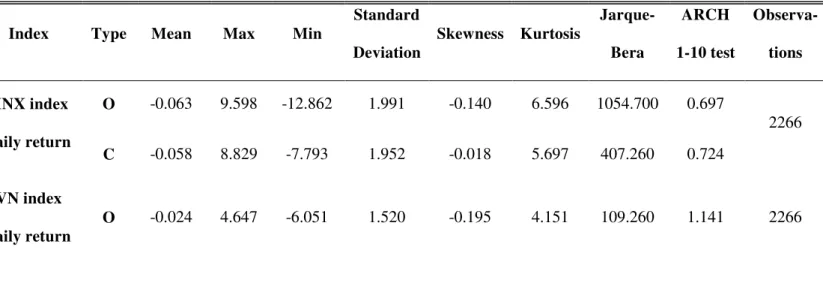
Table 2: Statistic description of VSE’s daily return
Note: O: original series, C: corrected series
Table 2 reports the descriptive statistics for daily stock market returns. As expected, the mean is close to zero, and the VN returns provide the lowest mean return (-0.024). The HNX returns are more volatile than the VN returns, measured by standard deviation (1.991 versus 1.520), indicating a high level of fluctuations of the VSE daily returns. This difference can be explained by the fact that the HOSE attracts large enterprises with capitalization of more than VND 80 billion, whereas the HNX is mainly for small and medium businesses with an approximate VND 10 billion in market capitalization. To check the presence of ARCH effect, the Lagrange Multiplier (LM) test, proposed by Engel (1982), is conducted, using lag 10. The result shows a conditional heteroscedasticity, which is a common feature of financial data. The daily returns of 5 indexes presented in Figure 9 show that volatility occurs in bursts and that the mean returns are constant but the variances change over time, with large or small changes followed by large or small changes in either sign.
As reported in Table 2, all returns series have negative skewness, implying that the distribution has a left tail and that the VSE has a non-symmetric return. Regarding the kurtosis
Index Type Mean Max Min
Standard Deviation Skewness Kurtosis Jarque-Bera ARCH 1-10 test Observa-tions HNX index daily return O -0.063 9.598 -12.862 1.991 -0.140 6.596 1054.700 0.697 2266 C -0.058 8.829 -7.793 1.952 -0.018 5.697 407.260 0.724 VN index daily return O -0.024 4.647 -6.051 1.520 -0.195 4.151 109.260 1.141 2266
33
values, which are greater than 3.7, the VSE returns have a fatter tail than Normal distribution. These characteristics are also demonstrated by the highly significant Jarque-Bera normality test that is a joint test for the absence of skewness and kurtosis. According to the Jarque-Bera test, we reject the null hypothesis of normality. In sum, both Vietnamese indexes of interest obtain the important financial characteristics: volatility clustering and leptokurticity.
We now apply the identification procedure of additive outliers in a GARCH model to both daily stock market indexes. In Table 3, all detected outliers are given by series, with their changes, timing, and events. Many outliers are detected in the HNX index, but not in the VN index. This highlights the interest to take into account this type of outliers. The HNX index return series experienced three AO outliers. The first observation corresponds to April 23, 2007, with a decline of 12.86%. The market was recorded to have significantly grown from December 2006 to March 2007. Concerning the overheated growth of the market, the Government has taken strict market control measures (the Laws on Personal Income Tax). Moreover, there is no positive information about the business situation of listed companies on the market. In response to these, the stock market experienced a downward trend during March and April of 2007. Investors sold off shares in fear of a deeper fall of the market. The second outlier detected corresponded to July 02, 2007, with a fall of 10.51%. This can be explained when the State Bank of Vietnam issued the Instruction No 03 to limit capital inflow to securities market. Accordingly, the lending into securities market of commercial banks was restricted at the level of 3%. Finally, the third observation corresponds to November 14, 2007, with an increase of 9.6%, when the main stock indexes of several major markets in Asia increased after the US market had surged the day before amid the good news regarding the credit losses of large banks having diminished: NIKKEI 225 (2.47%). SHANGHAI 4.94%. Hang Seng 4.19%. KOSPI 2.05% and THAILANDSET 0.62%. In addition, US stocks on November 13 rebounded strongly, thanks to optimistic data about the profits of US companies that reduced fears of a slump in economic growth. The Dow Jones and S&P 500 index rose 2.46% and 2.91%,
34
respectively, and the NASDAQ index rose 89.52 points (up 3.46%). In addition, oil prices fell below $92 per barrel, which also boosted the stock market.
After applying the outlier detection method, we observed that the coefficient of skewness of the HNX index decreased and was still negative. As result, the presence of asymmetry in those returns was rejected. Additionally, the excess kurtosis remained significant for all series but the values are less important than the original series. The coefficients of skewness and kurtosis along with the Jarque-Bera (JB) test support the view that the distribution of series is not Normal and in particular seems leptokurtic and volatility clustering, coinciding with the empirical findings of the original return series. Finally, the outlier-filtered returns also exhibit conditional heteroscedasticity.
Overall, the descriptive statistics suggest that an appropriate model of VSE return volatility should account for its time-varying nature and the non-Normality of VSE returns, as do the GARCH-type models.
Table 3: Outliers in volatility of VSE
Series Date Changes Events
HNX-index 23/04/2007 -12.86% Fearing the decline of the strong market, investors withdrew the capital
02/07/2007 -10.51% Instruction No 3 of State Bank, limited capital inflow of securities market.
14/11/2007 9.6% US stocks on November 13 rebounded strongly, and the main stock indexes of several major markets in Asia increased.
35
Figure 9: Daily price data of VSE indexes (09/02/2007 - 30/10/2015)
0 200 400 600 800 1000 1200 1400 2/9/2007 2/9/2008 2/9/2009 2/9/2010 2/9/2011 2/9/2012 2/9/2013 2/9/2014 2/9/2015 VN-INDEX 0 50 100 150 200 250 300 350 400 450 500 2/9/2007 2/9/2008 2/9/2009 2/9/2010 2/9/2011 2/9/2012 2/9/2013 2/9/2014 2/9/2015 HNX-INDEX
36
Figure 10: Daily return of VSE (09/02/2007 - 30/10/2015)
-0.08 -0.06 -0.04 -0.02 0 0.02 0.04 0.06 2/9/2007 2/9/2008 2/9/2009 2/9/2010 2/9/2011 2/9/2012 2/9/2013 2/9/2014 2/9/2015
VN-index daily return
-0.15 -0.1 -0.05 0 0.05 0.1 0.15 2/9/2007 2/9/2008 2/9/2009 2/9/2010 2/9/2011 2/9/2012 2/9/2013 2/9/2014 2/9/2015
37 5. Empirical results
In this section, we present the estimated results for the different volatility models discussed in Section 4, namely, the GARCH, EGARCH, GJR-GARCH, IGARCH, RiskMetrics, APARCH, FIGARCH, FIAPARCH, FIEGARCH and HYGARCH models with the Normal, Student-t and Skewed Student-t distribution. The parameters of the volatility models are estimated by maximizing the log-likelihood function from the Broyden-Fletcher-Goldfarb-Shanno (BFGS)algorithm from the G@RCH package for Ox software.
The comparison between the volatility models is evaluated from the in-sample criteria Log-likelihood (LL), Akaike (AIC) and Hannan-Quinn (HQ). For each table, the best model is given in bold face, owing to the higher value of the LL and the lowest values for AIC and HQ. The residuals tests are also reported to check whether the chosen volatility model is the most appropriate. The estimation results for the HNX and VN indexes are reported in Tables 4 and 5, respectively.
<Insert Table 4>
In Tables 4 and 5, the FIAPARCH process captures the best temporal pattern of volatility for the HNX and HOSE return series with Skewed Student-t and Student-t distributions, respectively. The FIAPARCH model increases the flexibility of the conditional variance specification by allowing for an asymmetric response of volatility to positive and negative shocks and long-range volatility dependence. In addition, it allows the data to determine the power of stock returns, for which the predictable structure in the volatility pattern is the strongest (Conrad et al., 2011).
The ARCH and GARCH effects are captured by, respectively, the parameters ϕ and β. The coefficients for the lagged variance (β) are positive and statistically significant for all stock markets. Moreover, the parameters ϕ in the variance equation are positive and significantly different from zero for all stock returns. This result justifies the suitability of the FIAPARCH(1,d,1) specification as the best fitting of the time-varying volatility. In addition, the estimation results provide evidence that the index returns exhibit fractional dynamics. The estimated factionary parameter (d-value) is statistically significant, greater than zero, and indicates the presence of positive
38
persistence phenomenon in the index series volatility. Thus, the volatility displays the long memory or long-range dependence property. The results show that the HOSE returns seem to have a lower degree of long-memory behavior than the HNX returns (d = 0.455 and 0.644, respectively). Moreover, the power term δ (HNX: 2.023, HOSE: 1.719) of stock returns for the predictable structure in the volatility pattern is positive and statistically significant for all stock markets. In addition, the estimates for the asymmetric parameter γ are positive and statistically significant for all stock market returns, confirming the assumption of the asymmetric effect. Indeed, a positive value of γ means that past negative shocks have a more severe impact on current conditional volatility than past positive shocks. That is, negative shocks give rise to higher volatility than positive shocks. Note that the HOSE index exhibits a higher degree of asymmetry than the HNX index (HNX: 0.108, HOSE: 0.139).
In addition, the degree of asymmetry can be calculated by the formula |kl km|
kl_km for the EGARCH model and (α+γ)/α for the GJR-GARCH model. With the EGARCH model, the results show that the degree of asymmetry of the VN return is larger than that of the HNX return, 1.328 versus 1.255. Moreover, we also obtain the same results with the GJR-GARCH. In particular, the degree of asymmetry of the HNX return is 1.547, while that of the VN return is 1.584.
Panel B of Table 4 shows that the better specification of the HNX index is the FIGARCH model with a Student distribution when the data are cleaned of outliers. This result shows that the asymmetric effect disappears when outliers are taken into account, suggesting that the presence of outliers can bias the identification and estimation of asymmetric GARCH-type models, as found by Carnero et al. (2016).
<Insert Table 5>
These results indicate that the asymmetric effect is present in the markets as earlier suggested by Chang et al. (2009). However, in the case of emerging stock markets such as Vietnam, due to the lack of professionalism, investors buy and sell under the impact of herd mentality. As a result, the bad news quickly spreads and rather than good news, deeply influences the market.
39 6. Value-at-Risk
During the last decade, Value-at-Risk (commonly known as VaR) has become one of the most popular techniques to measure financial risk. The VaR method aims to capture the market risk of an asset portfolio. It measures the maximum potential loss of a given portfolio over a prescribed holding period at a given confidence level, which is typically chosen between 1% and 5%. Therefore, after investigating the volatility of the VSE through a GARCH analysis, we apply the VaR technique to forecast the VSE risk level.
In mathematical terms, the VaR on day t at level α for a sample of returns is defined as the corresponding empirical quantile at α%:
: ~ o(p, )
" = ( < q r)) (19)
where is the daily return at time t, and Pr is the probability.
Back-testing is a statistical procedure, in which actual profits and losses are systematically compared to corresponding VaR estimates. Initially, to assess the accuracy of the model-based VaR estimates, Kupiec (1995) provided a likelihood ratio test (LR) for testing whether the failure rate of the model is statistically equal to the expected one (unconditional coverage). Consider that o = ∑ 7sg is the number of exceptions in the sample size
T:
7 = t 1, uv < q r0, uv > q r
40
The failure number follows a binomial distribution, N ∼ B(T,α), and p = E(N/T) is the expected exception frequency (i.e., the expected ratio of violations). Consequently, the appropriate likelihood ratio statistic in the presence of the null hypothesis is given by:
Gr = -2lnw|xyy( x)( |)z{yz{y} ~ ~ (1) (20)
Finally, in addition to the Kupiec’s LR test, we use the dynamic quantile (DQ) test suggested by Engle and Manganelli (2004). The DQ test is based on a sequence of VaR’s violations that is not serially correlated. Formally, considering two new variables:
•u€ (") = 7B < q r (")C − " (21) •u€ (1 − ") = 7B > q r (1 − ")C − " (22) They suggest to test jointly the two following hypotheses:
• H1: %B•u€ (")C = 0 (for long trading positions) or %B•u€ (1 − ")C = 0 (for short trading position) • H2: •u€ (") or •u€ (1 − ") is uncorrelated with the variables included in the information set.
H1 and H2 are tested based on the regression •u€ = •‚ + # , where X is the vector of explanatory variable. With reference to Engle and Manganelli (1999), the DQT is given by: ƒ… †)( ))„ „† ƒ‡ where ‚ˆ is the OLS estimates of ‚. According to Engle and Manganelli (1999), the DQ statistic follows a ~ (.).
Any risk measure that satisfies these axioms can be considered to be coherent. The four axioms they stated are: (i) monotonicity (higher losses mean higher risk); (ii) translation equivariance (increasing, or decreasing, the loss increases, or decreases, the risk by the same amount); (iii) subadditivity (diversification decreases risk); and (iv) positive homogeneity (doubling the portfolio size doubles the risk).
41
VaR fails to meet the subadditivity axiom and therefore is criticized for not being a coherent risk measure. However, Expected Shortfall (ESF) or Conditional Value at Risk (CVaR) can be mentioned as a risk measure that overcomes these weaknesses and has become increasingly used. ESF is an alternative to VaR that is more sensitive to the shape of the loss distribution in the tail of the distribution. Expected Shortfall is a coherent, and moreover a spectral, measure of financial portfolio risk. It requires a quantile-level q and is defined to be the expected loss of portfolio value given that a loss is occurring at or below the q-quantile. ES is the conditional expectation of the return given that it exceeds the VaR.
Let X be a continuous random variable representing loss. Given a parameter 0 < α < 1, the α-CVaR of X is:
‰q r)(•) = %&•|• ≥ q r)(•)' (23)
Tables 6 and 7 report our empirical results of the VaR at 1% and 5%, respectively, and the Kupiec and DQ back-testing tests. Back-testing VaR is also employed to validate the forecast performances of volatility models. The selected estimation and evaluation periods for each index are similar to the ones used in the out-of-sample forecast evaluation procedure. We apply the prediction performance of the VaR to the selected GARCH-class specifications by computing the out-of-sample forecasts. As mentioned above, the out-of-sample time series of the VN index and HNX index cover the period from January 2, 2012 to October 19, 2015, including 991 daily observations. A 5% VaR for each index is calculated and examined with ESF, Kupiec and DQ tests to evaluate the volatility forecast performances of studied models.
Regarding the 5% VaR results reported in Table 6, we find that most of selected models perform well. This result provides strong evidence that the GARCH-class models are able to capture the major stylized facts of Vietnam’s stock market return and volatility dynamics.
With reference to DQ and Kupiec tests, we find that the FIAPARCH specifications with Skewed Student-t distributed (or Student-t distributions) innovations provide better forecasts for all the critical levels. Specifically, the p-values corresponding to the Kupiec LR test and the DQ test statistics are greater for all selected stock