Université de Montréal
Association between timing of asthma diagnosis and medication use during pregnancy
Par
Simone Issa
Faculté de Pharmacie
Mémoire présenté en vue de l’obtention du grade de maîtrise
en sciences pharmaceutiques, option Médicament et santé des populations
Mars 2020
Université de Montréal
Sciences pharmaceutiques – Médicaments et santé des populations, Faculté de Pharmacie
Ce mémoire intitulé
Association between timing of asthma diagnosis and medication use during pregnancy
Présenté par
Simone Issa
A été évalué par un jury composé des personnes suivantes
Yola Moride Président-rapporteur Lucie Blais Directeur de recherche Cristina Longo Codirecteur Marie-Josée Martel Membre du jury
Résumé
L’utilisation de médicaments contre l’asthme pendant la grossesse est recommandée par les lignes directrices internationales pour maintenir le contrôle des symptômes puisqu’il a été démontré qu’un mauvais contrôle de l’asthme augmente le risque d’effets périnataux indésirables. À ce jour, aucune étude n’a évalué l’association entre le moment du diagnostic d’asthme et l’utilisation des médicaments antiasthmatiques pendant la grossesse. L’objectif de cette étude est d’évaluer si l’utilisation des médicaments antiasthmatiques pendant la grossesse diffère chez les femmes souffrant d’asthme diagnostiqué au cours des 19 premières semaines de grossesse par rapport à celles diagnostiquées deux ans avant la grossesse.
Nous avons mené une étude de cohorte rétrospective en utilisant la base de données québécoise sur l’asthme et la grossesse. L’issue principale était l’utilisation de corticostéroïdes inhalés (CSI), CSI/ß2-agonistes à longue durée d’action (BALA) et ß2-agonistes à courte durée d’action (BACA) pendant la grossesse définie comme le nombre d’ordonnances remplies dès 20 semaines de grossesse (entrée à la cohorte – EC –) jusqu’à l’accouchement. L’utilisation de corticostéroïdes oraux (CSO) pendant la grossesse a été définie comme le nombre de jours d’ordonnances remplies d’EC jusqu’à l’accouchement. Des modèles de régression de Poisson ont été utilisés pour comparer les taux d’utilisation des médicaments contre l’asthme entre les femmes diagnostiquées avant et au début de la grossesse, tout en ajustant pour les facteurs de confusion potentiels. Les issues secondaires étaient le traitement rempli au moment du diagnostic, défini comme les médicaments antiasthmatiques dispensés à la pharmacie au cours du mois précédent et du mois suivant la date du diagnostic d’asthme et l’adhésion aux CSI pendant la période de suivi, estimée avec la proportion de jours couverts (PDC).
6
La cohorte comprenait 1 731 femmes souffrant d’asthme diagnostiqué avant la grossesse et 359 au début de la grossesse. Les femmes diagnostiquées en début de grossesse étaient plus susceptibles d’utiliser les CSI [aRR 1.9, IC à 95 % 1.6–2.3] et les SABA [aRR 2.0, IC à 95 % 1.7–2.4] que les femmes diagnostiquées avant la grossesse. Pas de différence au niveau de l’utilisation des CSI/BALA [aRR 0.9, IC à 95 % 0.7–1.3] et des CSO [aRR 0.8, IC à 95 % 0.6–1.2]. Les médicaments de contrôle et de secours les plus couramment dispensés étaient les CSI et BACA au cours du mois précédant le diagnostic et le mois suivant le diagnostic, respectivement, pour les deux sous-cohortes. Le PDC moyen pendant la période de suivi chez les utilisatrices de contrôleurs basés sur les CSI parmi les femmes diagnostiquées avant la grossesse était assez similaire à celui des femmes diagnostiquées en début de grossesse (27,7%; IC 95% 25,3–30,1 vs 24,5%; IC 95% 21,3– 27,8). En ce qui concerne l’adhésion, le modèle de régression linéaire a révélé que la différence ajustée de l’adhésion aux CSI n’était pas statistiquement significative (-3,6; IC à 95 % - 7,9 à 0,6).
L’asthme diagnostiqué en début de grossesse pourrait suggérer un asthme plus persistant de nature en raison des changements hormonaux nécessitant une plus grande utilisation des CSI et des BACA. Compte tenu de la faible adhésion et utilisation des médicaments antiasthmatiques pendant la grossesse, ces résultats supportent un suivi médical étroit des femmes asthmatiques nouvellement diagnostiquées avant ou au début de le grossesse en fournissant aux patientes des ressources éducatives sur la gestion de l’asthme pour maintenir l’asthme sous contrôle et prévenir des conséquences périnatales graves.
Mots-clés : Asthme; Utilisation des médicaments antiasthmatiques; Asthme maternel; Adhésion; Grossesse; Épidémiologie; Bases de données sur l’asthme et la grossesse au Québec.
Abstract
Asthma medication use during pregnancy is recommended by international guidelines to maintain control of symptoms since poor control has been shown to increase the risk of adverse perinatal outcomes. To date, no studies have evaluated the association between the timing of new-onset asthma and the use of asthma medications during pregnancy. The objective of this study is to assess whether asthma medication use during pregnancy differs in women with asthma diagnosed during the first 19 weeks of pregnancy compared to those diagnosed 2 years before pregnancy.
We conducted a retrospective cohort study using the Quebec asthma and pregnancy database. The primary outcome was the use of inhaled corticosteroids (ICS), ICS/long-acting ß2-agonists (LABA) and short-acting ß2-ß2-agonists (SABA) during pregnancy defined as the number of filled prescriptions from 20 weeks of pregnancy (Cohort entry – CE –) until delivery. Oral corticosteroids (OCS) use during pregnancy was defined as the number of days of filled prescriptions from CE until delivery. Poisson regression models were used to compare the rates of asthma medication use between women diagnosed before and early in pregnancy, while adjusting for potential confounders. The secondary outcomes were the treatment dispensed at diagnosis defined as asthma medications filled at the pharmacy in the month prior and the month following the date of asthma diagnosis and adherence to ICS during follow-up estimated with the proportion of days covered (PDC).
The cohort included 1 731 women with asthma diagnosed before and 359 early in pregnancy. Women diagnosed early in pregnancy were more likely to use ICS [aRR 1.9, 95% CI 1.6–2.3]
8
and SABA [aRR 2.0, 95% CI 1.7–2.4] than women diagnosed pre-pregnancy. No difference in the use ICS/LABA [aRR 0.9, 95% CI 0.7–1.3] and OCS [aRR 0.8, 95% CI 0.6–1.2]. The most common asthma controller and reliever dispensed in the month prior to diagnosis and the month after diagnosis were ICS and SABA, respectively, for both sub-cohorts. The mean PDC over the study follow-up among users of ICS-based controllers in women diagnosed pre-pregnancy was quite similar to those diagnosed early in pregnancy (27.7%; 95% CI 25.3–30.1 vs 24.5%; 95% CI 21.3– 27.8). With respect to adherence, the linear regression model revealed that the adjusted difference in ICS adherence was not statistically significant (-3.6; 95% CI -7.9 to 0.6).
Asthma diagnosed early in pregnancy might suggest a more persistent asthma in nature due to hormonal changes requiring more use of ICS and SABA. Taking into consideration low asthma medication use and adherence during pregnancy, these results support a closer medical follow-up of asthmatic women newly diagnosed before or early in pregnancy by providing patients with educational resources about asthma management to maintain asthma under control and prevent serious perinatal outcomes.
Keywords: Asthma; Asthma medication use; Maternal asthma; Adherence; Pregnancy; Epidemiology; Quebec Asthma and Pregnancy database.
Table of Contents
Résumé ... 5 Abstract ... 7 List of Tables ... 13 List of Figures ... 15 Abbreviations ... 17 Acknowledgments ... 21 CHAPTER 1: INTRODUCTION ... 1CHAPTER 2: REVIEW OF THE LITERATURE ... 7
2.1 Asthma during pregnancy... 9
2.1.1 Asthma definition ... 9
2.1.2 Asthma prevalence ... 9
2.1.3 Asthma severity and control... 10
2.2 Asthma treatment during pregnancy ... 13
2.2.1 Controller medications ... 13
2.2.2 Reliever medications ... 15
2.3 Impact of asthma during pregnancy on perinatal outcomes ... 15
2.3.1 Asthma diagnosed prior to pregnancy ... 16
2.3.2 Asthma diagnosed during pregnancy ... 16
2.3.3 Asthma diagnosed either prior to or during pregnancy ... 17
2.3.4 Asthma newly diagnosed during pregnancy vs prior to pregnancy ... 18
2.4 Impact of asthma medication use during pregnancy on perinatal outcomes ... 19
2.4.1 ICS ... 19
2.4.2 Beta2-agonists ... 19
2.4.3 ICS/LABA ... 22
2.4.4 OCS... 23
2.5 Use and adherence to asthma medications during pregnancy ... 23
10
2.5.2 Studies evaluating asthma medication use and adherence during pregnancy... 25
2.5.3 Summary of literature review and knowledge gap ... 34
CHAPTER 3: OBJECTIVES ... 41 3.1 Primary objective ... 42 3.2 Secondary objectives ... 42 3.3 Hypotheses ... 42 CHAPTER 4: METHODS ... 45 4.1 Sources of data ... 46
4.1.1 Maintenance et Exploitation des Données pour l’Étude de la Clientèle Hospitalière (MED-ECHO) ... 46
4.1.2 Régie de l’assurance maladie du Québec (RAMQ) ... 47
4.1.3 Quebec asthma and pregnancy database (QAPD) ... 48
4.2 Ethics approval ... 48
4.3 Study design ... 48
4.4 Maternal exposure to asthma diagnosis... 50
4.5 Outcomes definition ... 50
4.5.1 Asthma medication use during pregnancy ... 50
4.5.2 Treatment dispensed at asthma diagnosis ... 52
4.5.3 Asthma medication adherence during pregnancy ... 52
4.6 Sensitivity analysis ... 54
4.7 Confounding variables ... 54
4.8 Statistical analyses ... 56
CHAPTER 5: RESULTS – MANUSCRIPT ... 57
5.1 Manuscript ... 59
5.2 Unpublished sensitivity analysis ... 92
CHAPTER 6: DISCUSSION ... 97
6.1 General discussion ... 99
11
6.3 Strengths of the study ... 103
6.3.1 Databases ... 103
6.3.2 Study design ... 104
6.3.3 Outcomes measurement ... 105
6.4 Limitations of the study ... 105
6.4.1 Selection bias ... 105
6.4.2 Information bias ... 106
6.4.3 Confounding bias ... 107
6.5 External validity ... 108
6.6 Clinical implications of the results ... 109
6.7 Further research ... 110
CHAPTER 7: CONCLUSION AND PERSPECTIVES ... 113
List of Tables
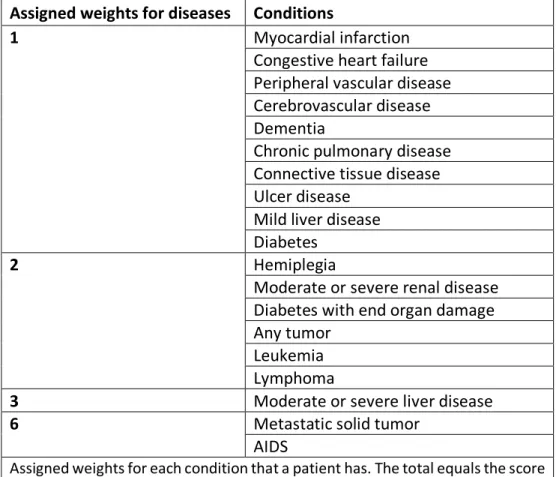
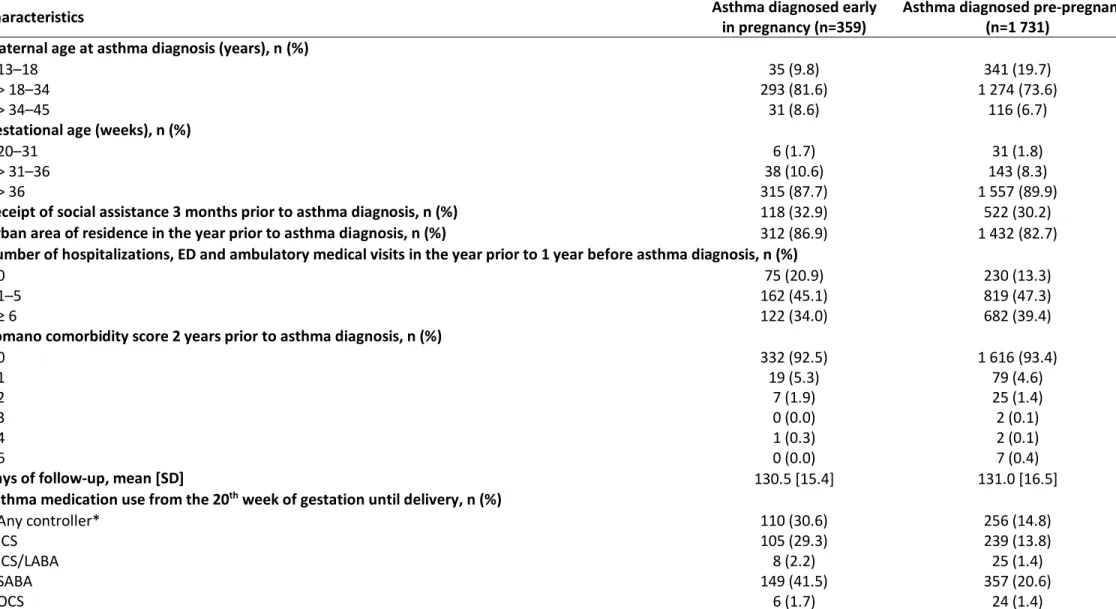
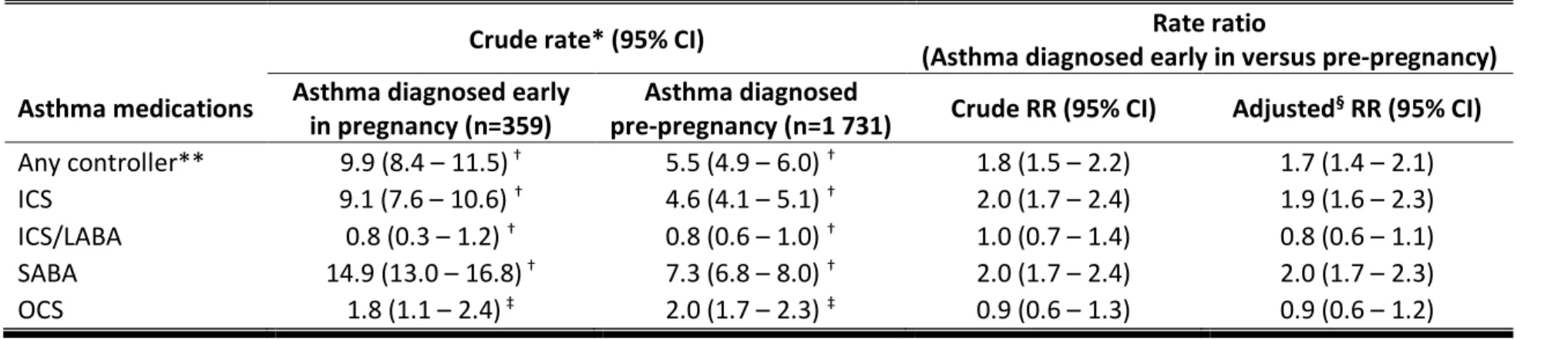
Table 2.1 Classification of asthma control according to the GINA guidelines ... 12 Table 2.4.A Studies investigating the association between asthma medication use or adherence and asthma diagnosis ... 38 Table 2.4.B Results of studies investigating the association between asthma medication use or adherence and asthma diagnosis... 39 Table 2.4.C Results of a study investigating ICS adherence during versus prior to pregnancy among women with asthma diagnosed pre-pregnancy ... 40 Table 2.4.D Results of the only study investigating the association between asthma medication use during pregnancy and the timing of asthma diagnosis... 40 Table 4.6 Romano weighted index of comorbidity ... 55 Table 5.2 Crude rate and crude and adjusted RR of asthma medication use from the 20th week of gestation until delivery ... 95
List of Figures
Figure 2.1 Stepwise approach to control symptoms and minimize future risk ... 11 Figure 2.4 Flow chart of selected articles... 37
Abbreviations
aOR – Adjusted odds ratioCASP – Critical Appraisal Skills Program CI – Confidence interval
CTS – Canadian Thoracic Society ED – Emergency department
ICD – International Classification of Diseases ICS – Inhaled corticosteroid
LABA – Long-acting beta2-agonist LBW – Low birth weight
LMP – Last menstrual period
LTRA – Leukotriene receptor antagonist GINA – Global Initiative for Asthma
MED-ECHO – Maintenance et Exploitation des Données pour l’Étude de la Clientèle Hospitalière MPR – Medication possession ratio
OCS – Oral corticosteroids OR – Odds ratio
PDC – Proportion of days covered
QAPD – Quebec Asthma and Pregnancy Database RAMQ – Régie de l’Assurance Maladie du Québec RR – Rate ratio
Rx – Prescription
18
SABA – Short-acting beta2-agonist SGA – Small gestational age THEO – Theophylline
Acknowledgments
I am really grateful to my supervisor, Dr. Lucie Blais, for giving me the opportunity to join her team. I truly appreciate her valuable experience in the field of asthma and pregnancy, rigorous scientific knowledge and guidance throughout my masters. I particularly acknowledge her great availability, yet so loaded with responsibilities, and her continuous encouragement and support in attending national and international conferences to disseminate the study results.
I have a lot of admiration toward Dr. Cristina Longo, who is a professional model for her time management. I appreciate her valuable support and confidence in my potentials since day one.
I would like to thank my advisory committee Dr. Marie-France Beauchesne and Dr. Anick Bérard for their constructive and relevant comments. Their expertise in the field has greatly contributed to the quality and the development of my research project.
Many thanks to Amélie Forget for her exceptional help, constructive advices and daily support throughout the whole project. Thanks to all my colleagues for their supportive spirit.
I would like to thank the Faculty of Pharmacy at University of Montreal for the recruitment scholarship, the Canadian Institutes of Health Research (CIHR) for the travel award and the Ministry of Education in Lebanon for the scholarship of exemption from foreign student differential tuition fees.
22
I would also like to extend my gratitude to the jury members for accepting to evaluate my thesis.
I dedicate this thesis to my parents who thought me the concepts of perseverance and resilience. Many thanks to my mother for her continuous care and support and my father for his encouragement and precious advices throughout my whole years of study. I would not be the person I am today if it was not for them and their faith in me.
1. Introduction
According to WHO estimates, asthma affects 235 million individuals worldwide. (1) The proportion of Canadians diagnosed with asthma increased by 67% from 2.1 million (6.7%) in 2000–2001 to 3.8 million (11.0%) in 2011–2012. An increase in the prevalence of asthma could be due to a greater case detection of asthma or an increase in the frequency of risk factors for asthma. (2) Therefore, asthma is considered a serious health burden in terms of loss of productivity and health care costs. (3) In the past decades, asthma has been shown to be the most frequent chronic disease and a serious medical complication during pregnancy. (4-6) The disease affects about 3.4% to 12.4% of pregnant women and shows an increase in its prevalence over time. (6, 7) During pregnancy, asthma symptoms improve in approximately one third of women, remain the same in one third, and worsen in one third, which suggests the importance of frequent re-assessment of asthma control and medication requirements. (8-10)
Several studies showed an association between uncontrolled asthma during pregnancy and perinatal outcomes including low birth weight, prematurity and congenital malformations. (6, 11-14) Poorly controlled and severe asthma might lead to respiratory alkalosis that will decrease fetal blood oxygen and will be potentially dangerous to the growth and development of the fetus. (15) According to the Global Initiative for Asthma (GINA) and the Canadian Thoracic Society (CTS) guidelines, the use of asthma medications during pregnancy is highly recommended to maintain asthma control since the benefits outweigh the potential risks of asthma medication use. (1, 16, 17) The ultimate goal of asthma therapy in pregnancy is to achieve and maintain asthma control and improve the quality of life by preventing symptoms and minimizing future risk of exacerbations. (1, 17) Treatment and control of asthma could be achieved by using several
4
medications. Asthma medications are categorized in two classes: 1) reliever medications (e.g. short-acting beta2-agonists (SABA), oral corticosteroids (OCS)); and 2) long-term controller medications (e.g. inhaled corticosteroids (ICS) and long-acting beta2-agonists (LABA)). (1, 17) ICS are considered the cornerstone in the management of moderate to severe persistent asthma during pregnancy while SABA are widely used for quick relief of asthma symptoms during pregnancy. LABA are used for patients with moderate to severe persistent asthma not fully controlled with ICS alone. LABA have limited studies on their safety and use during pregnancy compared to SABA and ICS due to their precedence on the market. (1, 17)
Non-adherence to ICS medications during pregnancy has been shown to range between 27% and 40% (18-20) in women with prevalent asthma, with poor control linked to a higher risk of adverse perinatal outcomes. (21-23) Baarnes et al. (18) reported that ICS self-reported and documented adherence using the Medication Possession Ratio (MPR) were significantly higher during pregnancy compared to prior to pregnancy in women with asthma diagnosed prior to pregnancy.
According to the literature, women with pre-existing asthma had a decrease in asthma medication use during pregnancy compared to pre-pregnancy. (24-27) Only one cohort study assessed asthma medication use during pregnancy between prevalent cases of asthma diagnosed during or prior to pregnancy. (28) A significant lower ICS use (27.7% vs 97.0%, p < 0.001) and higher use of SABA (34.8% vs 9.7%, p < 0.001), ICS/LABA (28.0% vs 10.5%, p < 0.001), LTRA (Leukotriene receptor antagonists (LTRA); 20.3% vs 7.1%, p < 0.001) and OCS (27.5% vs 7.4%, p < 0.001) during pregnancy in women with asthma diagnosis code during pregnancy compared to women with evidence of asthma prior to pregnancy. (28) Nevertheless, these results should be
5
interpreted with caution since the follow-up period was not clearly defined for both groups and asthma medication use was measured in the entire pregnancy for all women, giving by design, differential periods to assess asthma medication use in women diagnosed during pregnancy. Moreover, asthma diagnosed during pregnancy was reported to be a new asthma diagnosis, without implementing a lookback period to exclude prevalent cases of asthma, and asthma diagnosed pre-pregnancy did not necessarily occur within a fixed period before pregnancy and could have occurred several years before, making the comparison difficult. (28)
In women with pre-existing asthma, the fear of harmful effects of asthma medications on the fetus (7) and consequently treatment nonadherence are known underlying causes of exacerbations and poor asthma control during pregnancy. (11-13) As diagnosing asthma during pregnancy can be challenging due to pregnancy-induced hormonal changes (8, 29-32), whether pregnancy-onset asthma leads to similar trend in asthma medication use and adherence during pregnancy has yet to be investigated. We suspect that women newly diagnosed with asthma prior to pregnancy would be more likely to use and adhere to their medication than those newly diagnosed during pregnancy. While no other studies have assessed the timing of asthma diagnosis in relation with asthma medication use during pregnancy and to overcome the aforementioned methodological limitations, we conducted a retrospective population-based cohort study of pregnant women selected from the Quebec Asthma and Pregnancy Database (QAPD). Therefore, the general objective of this large retrospective cohort study was to assess whether the use and adherence to asthma medications during pregnancy differ in women with asthma newly diagnosed during the first 19 weeks of pregnancy compared to women with asthma newly diagnosed 2 years prior to pregnancy.
9
2. Review of the literature
This chapter will introduce the definition of asthma including asthma severity and control. I will also discuss the prevalence and treatment of asthma during pregnancy as well as the impact of asthma disease and asthma medications on perinatal outcomes. Moreover, I will cover the association between the timing of asthma diagnosis and asthma medication use and adherence during pregnancy.
2.1 Asthma during pregnancy
2.1.1 Asthma definition
According to the GINA guidelines, asthma is defined as “a chronic inflammatory disorder of the airways in which many cells and cellular elements play a role. The chronic inflammation is associated with airway hyper-responsiveness that leads to recurrent episodes of wheezing, breathlessness and coughing particularly at night or in the early morning. These episodes are usually associated with wide spread, but variable, airflow obstruction within the lung that is often reversible either spontaneously or with treatment”. (1) Asthma symptoms are triggered by factors such as exercise, exposure to environmental allergens, obesity, medications like
nonsteroidal anti-inflammatory drugs (NSAIDs) and aspirin, stress and pregnancy. It might cause limitation of activity and flare-ups that require urgent health care and might be fatal. (1)
2.1.2 Asthma prevalence
According to WHO estimates, asthma is affecting 235 million individuals worldwide.(3) The number of Canadians living with diagnosed asthma increased by 67% from 2.1 million (6.7%) in
10
2000–2001 to 3.8 million (11.0%) in 2011–2012. The causes of the increase in prevalence could be due to a greater case detection of asthma or an increase in the risk factors for asthma. (2) However, Canadians diagnosed with asthma who needed medical attention declined by 18% from 908 000 in 2000–2001 to 820 000 in 2011–2012. (1) In the past decades, asthma has been shown to be the most frequent chronic disease that can complicate pregnancy, with a prevalence ranging between 3.4% and 12.4%. (6, 7)
2.1.3 Asthma severity and control
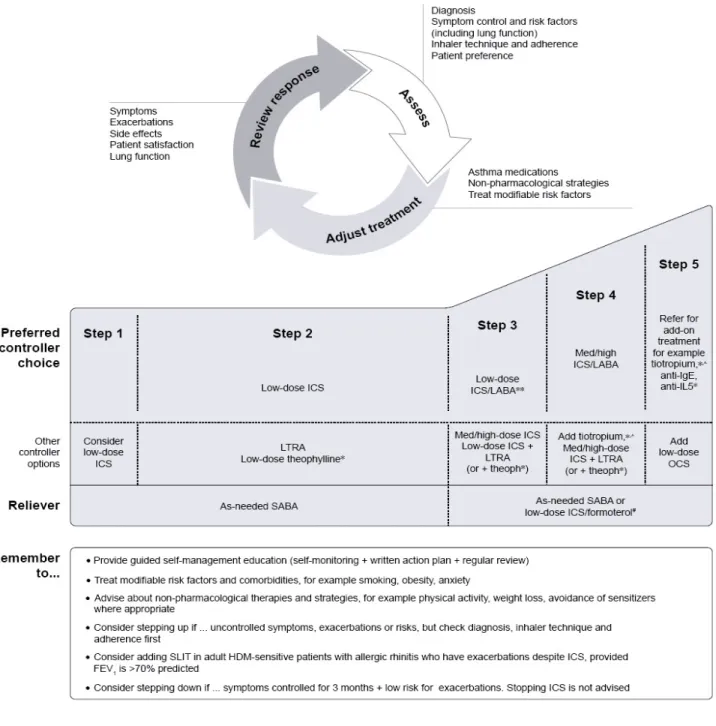
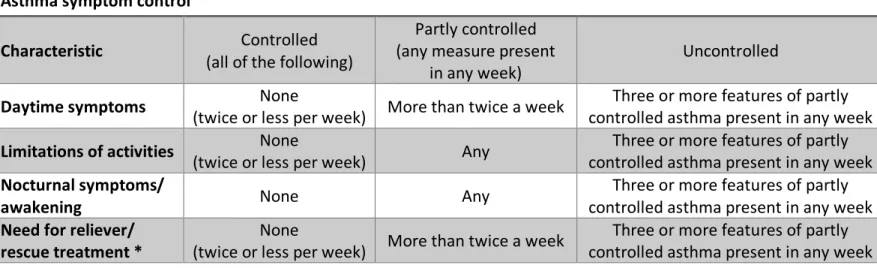
During pregnancy, asthma symptoms improve in approximately one third of women, remain the same in one third, and worsen in one third. (8-10) According to the GINA guidelines, asthma severity is assessed once the patient has reached the level of treatment needed to control asthma symptoms and exacerbations. It might vary over months or years requiring treatment adjustment to find the patient’s most appropriate therapy. (1) Asthma severity is classified into three categories based on the intensity of the treatment required to achieve asthma control: mild asthma (Step 1 or 2), moderate asthma (Step 3), and severe asthma (Step 4 or 5). (1, 3) A stepwise approach is then used to manage asthma in each patient according to his/her level of asthma severity (Please see Figure 2.1). (1) The GINA guidelines defined asthma control as the degree to which the manifestations of asthma can be observed in the patient, or have been minimized by therapeutic intervention. Asthma control is assessed based on symptom control and future risk of adverse outcomes measured at asthma diagnosis and periodically thereafter. (1) Asthma control is classified into controlled, partly controlled, and uncontrolled (Please see Table 2.1). (1)
11
Figure 2.1 Stepwise approach to control symptoms and minimize future risk
Source: Global Initiative for Asthma guidelines for asthma management and prevention, Executive summary report, 2018 *Not for children <12 years. **For children 6-11 years, the preferred Step 3 treatment is medium dose ICS. ^Tiotropium by mist inhaler is an add-on treatment for patients with a history of exacerbations; it is not indicated in children <12 years. #Low dose ICS/formoterol is the reliever medication for patients prescribed low dose budesonide/formoterol or
low dose beclomethasone/formoterol maintenance and reliever therapy. ICS: inhaled corticosteroids; LABA: long-acting beta2-agonists; IgE: immunoglobulin E; IL5: interleukin-5; LTRA: leukotriene receptor antagonists; OCS: oral corticosteroids; SABA: short-acting beta2-agonists; HDM: house dust mite; SLIT: sublingual immunotherapy.
12
Table 2.1 Classification of asthma control according to the GINA guidelines Asthma symptom control
Characteristic (all of the following) Controlled (any measure present Partly controlled
in any week) Uncontrolled
Daytime symptoms (twice or less per week) More than twice a week None controlled asthma present in any week Three or more features of partly Limitations of activities (twice or less per week) None Any controlled asthma present in any week Three or more features of partly Nocturnal symptoms/
awakening None Any
Three or more features of partly controlled asthma present in any week Need for reliever/
rescue treatment * (twice or less per week) None More than twice a week controlled asthma present in any week Three or more features of partly Risk factors for poor asthma outcomes
Having uncontrolled asthma symptoms is an important risk factor for exacerbations
Additional potentially modifiable risk factors for flare-ups (exacerbations) even in patients with few symptoms † - High SABA use (with increased mortality if > 1 x 200-dose canister/month)
- Inadequate ICS: not prescribed ICS; poor adherence; incorrect inhaler technique - Low FEV1, especially if <60% predicted
- Higher bronchodilator reversibility
- Major psychological or socioeconomic problems - Exposures: smoking; allergen exposure if sensitized
- Comorbidities: obesity; chronic rhinosinusitis; confirmed food allergy - Sputum or blood eosinophilia
- Elevated FENO (in adults with allergic asthma taking ICS) - Pregnancy
Other major independent risk factors for flare-ups (exacerbations) - Ever intubated or in intensive care unit for asthma
- ≥ 1 severe exacerbation in last 12 months Risk factors for developing fixed airflow limitation
- Preterm birth, low birth weight and greater infant weight gain - Lack of ICS treatment
- Exposures: tobacco smoke; noxious chemicals; occupational exposures
- Low initial FEV1; chronic mucus hypersecretion; sputum or blood eosinophilia Risk factors for medication side-effects
- Systemic: frequent OCS; long-term, high dose and/or potent ICS; also taking P450 inhibitors - Local: high-dose or potent ICS; poor inhaler technique
Source: Global Initiative for Asthma guidelines for asthma management and prevention, Executive summary report, 2018
*Excludes reliever taken before exercise. †Independent risk factors are those that are significant after adjustment for the level of symptom control. SABA: short-acting beta2-agonists; ICS: inhaled corticosteroids; FEV1: forced expiratory volume in one second; FENO: fractional exhaled nitric oxide; P450 inhibitors: cytochrome P450 inhibitors such as ritonavir, ketoconazole, itraconazole; OCS: oral corticosteroids.
13
2.2 Asthma treatment during pregnancy
The goal of asthma treatment is to achieve and maintain asthma control by preventing symptoms, functional and psychological morbidity and minimizing risk factors for future poor outcomes such as exacerbations and limitation of physical activity. According to the GINA, CTS and National Asthma Education and Prevention Program guidelines (1, 6, 17), the use of controller medications for asthma during pregnancy is recommended since the benefit of active treatment to maintain asthma control and prevent exacerbations outweighs the potential risks of asthma medication use. Nevertheless, the fear of harmful effects on the fetus may be a barrier to the use of asthma treatments, potentially leading to complications associated with uncontrolled asthma during pregnancy. (7) Asthma medications are categorized in two classes: 1) reliever medications provided to patients for as-needed quick relief of symptoms (e.g. SABA and OCS); 2) long-term controller medications (e.g. ICS, LABA and LTRA) are used as regular maintenance therapy to reduce airway inflammation and avoid loss of lung function. During pregnancy, monthly monitoring of asthma is recommended. If the patient is not controlled while taking controller medications and has persistent symptoms, step up in treatment is recommended after checking for adherence, and comorbid conditions. (1, 6)
2.2.1 Controller medications
Controller medications should be taken daily on a long-term basis to control symptoms and avoid exacerbations. The most effective maintenance medications are anti-inflammatory drugs since the main cause of symptoms are due to airway inflammation in asthmatic patients. (1)
14
- ICS: ICS are considered the primary drug of choice in all levels of persistent asthma and the most potent and effective anti-inflammatory medication available. ICS, especially budesonide, is the cornerstone therapy in the management of persistent asthma during pregnancy (1, 3, 6) based on more available data related to safety during pregnancy compared to other ICS. (33-36)
- LABA: Salmeterol and formoterol are used during pregnancy in combination with ICS. Although limited safety data is available for LABA use during pregnancy, they have been used concomitantly with ICS for a sustained control of symptoms, especially nocturnal symptoms, in moderate and severe persistent asthma. (1, 3, 6)
- LTRA: Zafirlukast or montelukast are less effective than ICS and can be used during pregnancy as alternative therapy in women with mild persistent asthma or patients not sufficiently controlled on ICS. (1, 3, 6)
- Methylxanthines: Theophylline is a sustained-release bronchodilator used during pregnancy as alternative treatment in mild persistent asthma or as adjunctive with ICS, in moderate or persistent asthma. This agent is not used often due to the frequent need of drug level monitoring. (1, 3, 6)
- Cromolyn sodium and Nedocromil: These agents can be used during pregnancy as an alternative treatment, but not preferred, for women with mild persistent asthma. They have limited effectiveness compared to ICS. (1, 3, 6, 37, 38)
15
2.2.2 Reliever medications
Quick-relief medications are usually prescribed on as needed basis for immediate relief of respiratory symptoms. (1, 3) They provide rapid reversibility of acute airway obstruction and relief of bronchoconstriction. (1)
- SABA: SABA are the agents of choice in rescue therapy used as needed during pregnancy. They act as bronchodilators in acute asthmatic symptoms, exacerbations and prevent exercise-induced bronchoconstriction by relaxing the smooth muscles of the bronchi. Albuterol is the preferred agent due to its proven safety profile during pregnancy. (1, 3, 6)
- OCS: OCS are generally used for a short-term period to treat and provide a rapid control of the disease since it decreases the inflammation by reversibly increasing the capillary permeability. In severe persistent uncontrolled asthma, short courses of prednisone may be prescribed during pregnancy until asthma control is regained. (1, 3, 6)
2.3 Impact of asthma during pregnancy on perinatal outcomes
Pregnant women with asthma are at a higher risk of adverse perinatal outcomes, requiring interventions to minimize the risk for substantial morbidity. (39) Preterm birth (< 37 weeks of gestation) occurs in about 8% of pregnancies in Canada, low birth weight – LBW – (< 2500 g) in about 6% and small gestational age – SGA – (birth weight below the 10th percentile for gestational age) in about 9% and are associated with high mortality and morbidity rates that substantially affect infants, their families and the healthcare system. (40) Approximately 1 in 25 Canadian infants are diagnosed with 1 or more congenital anomalies every year. (41) Although it could be difficult to separate the effect of the disease, severity, and associated levels of control from the
16
effects of asthma medications, many studies (42-53) have documented that maternal asthma could significantly increase the risk of preterm birth (odds ratio [OR] 1.27, 95% CI 1.10–1.40,
p < 0.001 (43); adjusted odds ratio [aOR] 2.37, 95% CI 1.15–4.88 (42); rate ratio [RR] 1.41, 95% CI
1.23–1.62 (45); RR 1.16, 95% CI 1.08-1.24 (53)), LBW (OR 1.23, 95% CI 1.10–1.40, p = 0.001 (43); RR 1.46, 95% CI 1.22–1.75 (45)), SGA (RR 1.22, 95% CI 1.14–1.31 (45); aOR 1.31, 95% CI 1.12–1.55 (44); RR 1.06, 95% CI 1.01-1.11 (53)) and congenital malformations (RR 1.11, 95% CI 1.02–1.21, p < 0.1 (52)).
2.3.1 Asthma diagnosed prior to pregnancy
Maternal asthma diagnosed prior to pregnancy was found to be associated with preterm delivery and LBW in two studies (42, 43). Sorensen et al. (42) showed that asthmatic women experienced a 2-fold increased risk of preterm delivery compared to women with no history of asthma, while controlling for maternal age, race, parity and smoking during pregnancy (aOR 2.37, 95% CI 1.15–4.88). (42) Shaked et al. (43) reported that preterm delivery and LBW were more common in pregnant women with asthma compared to pregnant women without asthma (OR 1.27, 95% confidence interval [CI] 1.10– 1.40, p < 0.001; OR 1.23, 95% CI 1.10–1.40, p = 0.001, respectively).
2.3.2 Asthma diagnosed during pregnancy
The risk of preterm delivery, SGA and LBW in women with asthma diagnosed during pregnancy were examined in only one prospective cohort study. (44) Compared to non-asthmatic women, maternal asthma diagnosed during pregnancy was associated with a significantly increased risk of SGA (aOR 1.31, 95% CI 1.12–1.55). No significant associations were found
17
between maternal asthma and preterm delivery (aOR 0.96, 95% CI 0.69–1.34) or LBW (aOR 1.11, 95% CI 0.77–1.59). Of note, these results were adjusted for potential confounders including maternal age, maternal BMI, parity, smoking, ethnicity and marital status. (44)
2.3.3 Asthma diagnosed either prior to or during pregnancy
Pregnancy outcomes of women with asthma diagnosed either during or prior to pregnancy compared to non-asthmatic women were examined in several studies and results have shown increased risks in perinatal outcomes among asthmatic mothers.
Murphy et al. (45) conducted a meta-analysis including 11 prospective and 15 retrospective cohort studies that reported at least one perinatal outcome in pregnant women with asthma diagnosed either before or during pregnancy and in pregnant non-asthmatic women. Maternal asthma was found to be associated with a significantly increased risk of LBW (RR 1.46, 95% CI 1.22–1.75), SGA (RR 1.22, 95% CI 1.14–1.31) and preterm delivery (RR 1.41, 95% CI 1.23–1.62). (45) These significant associations between maternal asthma and preterm birth, LBW and SGA are also in accordance with other studies. (46-51) Furthermore, Murphy et al. (11) conducted another systematic review and meta-analysis to examine the risk of congenital malformations, among other outcomes, in pregnant women with and without asthma. This study reported that infants of asthmatic pregnant women are 11% more likely to have congenital malformations compared with infants of women without asthma (RR 1.11, 95% CI 1.02–1.21, p < 0.1). Following the meta-analysis, another study also supported the association between congenital malformations and maternal asthma. (52)
18
2.3.4 Asthma newly diagnosed during pregnancy vs prior to pregnancy
Only one retrospective cohort study (53) assessed whether women with newly asthma newly diagnosed during pregnancy are at an increased risk of preterm birth, SGA and major congenital malformations compared to women with asthma newly diagnosed prior to pregnancy. Longo et al. (53) reported that the risk of prematurity is higher among women diagnosed during the second (RR 1.34, 95% CI 1.08–1.65) and third (RR 1.93, 95% CI 1.62–2.29) trimesters compared to pre-pregnancy (RR 1.06, 95% CI 0.98–1.15). This study also showed a trend toward an increased risk of major congenital malformations among women newly diagnosed during the first trimester (RR 1.18, 95% CI 0.94–1.49) relatively to those diagnosed pre-pregnancy (RR 0.99, 95% CI 0.92–1.07). No significant associations were found between the timing of asthma diagnosis and SGA. Irrespective of the timing of asthma diagnosis, women with incident asthma were more likely to have preterm birth (RR 1.16, 95% CI 1.08–1.24) and SGA RR 1.06, 95% CI 1.01–1.11) compared to those without asthma; however, it was not found to be associated with an increased risk of major malformations (RR 1.04, 95% CI 0.97–1.11). (53)
Overall, there is a well-documented consistency in the association between adverse perinatal outcomes and maternal asthma, in studies that combined women diagnosed prior and during pregnancy. Yet, these studies vary in terms of sample size, study design, adjustment for confounders and examination of specific outcomes (prematurity, LBW, SGA and congenital malformations). Optimal preventive and healthcare strategies should be implemented to improve asthma control during pregnancy and prevent exacerbations, with the aim of reducing perinatal outcomes. (45)
19
2.4 Impact of asthma medication use during pregnancy on perinatal
outcomes
Multiple studies (13, 33-36, 54-68) found an association between the use of asthma medications during pregnancy and the risk of adverse perinatal outcomes including preterm delivery, LBW, SGA and major or any congenital malformations. However, it is difficult to interpret these associations as causal because part of this risk might be attributable to the severity of asthma. Asthmatic women using asthma medications during pregnancy were documented to be at a higher risk of perinatal outcomes. (13, 33-36, 55, 56, 58, 59, 62-68)
2.4.1 ICS
Many studies examined the association between maternal ICS use during pregnancy and the risk of major congenital malformations, preterm birth, LBW and SGA but only two studies reported an increased risk of perinatal outcomes. (54, 57, 60, 61, 63, 68) Kallen et al. reported that ICS users during pregnancy have a significantly increased risk of major malformations (aOR 1.08, 95% CI 1.01–1.16) compared to asthmatic non-users. (63) Moreover, Blais et al. found that asthmatic users of high ICS doses during the first trimester of pregnancy had a significantly increased risk of congenital malformations (aRR 1.63, 95% CI 1.02–2.60) compared to asthmatic non-users. (68)
2.4.2 Beta2-agonists
Although LABA and SABA are considered key medications in the treatment of maternal asthma, there are evidence of perinatal outcomes increased risk. (33-36, 55, 56, 62-67)
20 2.4.2.1 LABA
Recently, Eltonsy et al. (62) conducted a systemic review including six studies that examined the association between LABA use during pregnancy and major congenital malformations. Among those six studies, only one reported that maternal LABA users were found to be associated with a significantly increased risk of major cardiac malformations (aOR 2.38, 95% CI 1.11–5.10), genital malformations (aOR 6.84, 95% CI 2.58–18.10), major “other unspecified malformations” (aOR 3.97, 95% CI 1.29–12.20) and any “other and unspecified malformations” (aOR 3.43, 95% CI 1.39–8.45) compared to asthmatic and non-asthmatic non-users. (55) However, an important limitation should be considered in the interpretation of these results since the authors used non-asthmatics as a reference group. Although it may be difficult to separate the effect of asthma as a disease (i.e. asthma control and asthma severity) from the effects of asthma medications, many studies suggested that maternal asthma could significantly increase the risk of perinatal outcomes as compared to women without asthma. (11, 13, 14, 45, 69) Therefore, including non-asthmatic women in the reference group might overestimate the adverse effects of asthma medications. The authors could have compared asthmatic users against asthmatic non-users, decreasing the possibility of confounding by indication (i.e. asthma itself) and by severity. However, following this systemic review, further studies reported no significant association between maternal LABA use and congenital malformations, preterm delivery, LBW and SGA. (54, 57, 63)
2.4.2.2 SABA
In the systemic review conducted by Eltonsy et al. (62), 13 studies reported an increased risk of major or any congenital malformations in asthmatic women exposed to SABA. Among
21
those studies, two reported a significantly increased risk of any cardiac defect (aOR 1.38, 95% CI 1.12–1.70), cleft lip (aOR 1.79, 95% CI 1.07–2.99), cleft palate (aOR 1.65, 95% CI 1.06–2.58) and any malformations (aOR 1.11, 95% CI 1.04–1.19) in asthmatic users compared to the general population of asthmatic (users and non-users) and non-asthmatic women. (56, 66) Moreover, one more study reported that maternal SABA use was found to be associated with a significantly increased risk of any malformations (crude OR 1.6, 95% CI 1.3–2.0) compared to asthmatic non-users. (64) These significant associations between maternal use of SABA and congenital malformations are also in accordance with other studies. (63, 65) As mentioned in the previous section, these results should be interpreted with caution due to the likelihood of indication bias caused by the use of non-asthmatics in the reference groups. Nevertheless, another study included in this systemic review found a significantly decreased risk of major malformations (aOR 0.68, 95% CI 0.48–0.95) among asthmatic users of high dose of SABA per week (> 10 doses) compared to asthmatic women unexposed to SABA during pregnancy. (55)
2.4.2.3 SABA and/or LABA
In their systemic review, Eltonsy et al. (62) included six studies that examined the association between the maternal exposure to beta2-agonists and major congenital malformations. From the six studies, four reported a significantly increased risk of congenital heart defects (aOR 2.20, 95% CI 1.05–4.61), gastroschisis (aOR 2.06, 95% CI 1.19–3.59), cleft lip (aOR 1.77, 95% CI 1.08–2.88) and other selected birth defects (aOR 2.39, 95% CI 1.23–4.66) among asthmatic users compared to a mixed population of asthmatic users and non-asthmatics. (33, 34, 66, 67) Nevertheless, these study results might prevent drawing a solid conclusion, considering the potential risk of confounding by indication and severity. Further
22
studies confirmed the association between congenital malformations and SABA and/or LABA use during pregnancy. (35, 36, 63, 65) Notwithstanding, these results were not conclusive since SABA and LABA cannot be considered as a combined beta2-agonists therapy due to their different indications in asthma management. In fact, this confounding by indication can be minimized in these studies by comparing two treatment regimens with the same indication such as comparing ICS/LABA in low or medium doses to high doses of ICS.
2.4.3 ICS/LABA
Despite being used for many years in the treatment of asthma during pregnancy, ICS/LABA combination therapy is one of the least studied treatment regimens. An explanation for this limited knowledge can be due to the fact that researchers have focused on ICS and LABA separately to examine the effect of each medication on perinatal outcomes. To the best of our knowledge, two studies examined the association between ICS/LABA use during pregnancy and the risk of perinatal outcomes. (35, 61) Garne et al. (35) reported a significantly increased risk of esophageal atresia (aOR 3.63, 95% CI 1.26–10.42) among asthmatic users compared to asthmatic women unexposed to this combination therapy during pregnancy. Blais et al. (61) found no significant difference in the risk of major congenital malformations among women using low-dose ICS plus LABA compared to those using medium-dose ICS (aOR 1.1, 95% CI 0.6–1.9) and also among women using medium-dose ICS plus LABA compared to those using high-dose ICS (aOR 1.2, 95% CI 0.5–2.7). Hence, the risk of major congenital malformations did not differ among asthmatic women treated with either ICS/LABA combination therapy or ICS at higher doses, suggesting that both treatments can be considered during pregnancy.
23
2.4.4 OCS
Namazy et al. (13) conducted a meta-analysis including two prospective studies that reported perinatal outcomes in asthmatic women using OCS during pregnancy. Maternal OCS use during pregnancy was found to be associated with a significantly increased risk of preterm delivery (RR 1.51, 95% CI 1.15–1.98), LBW (RR 1.41, 95% CI 1.04–1.93). (13) These significant associations between asthmatic women exposed to OCS during pregnancy and adverse perinatal outcomes are also in accordance with other studies. (58, 59, 65)
In summary, evidence on maternal ICS and SABA use during pregnancy has demonstrated sufficient fetal safety for the management of asthma during pregnancy while OCS use during pregnancy was found to be associated with adverse perinatal outcomes. Despite their use among asthmatic women, especially in combination with ICS, LABA have very small body of evidence of perinatal outcomes increased risk in the literature. Further studies and meta-analyses are required to achieve the power needed to make conclusions about the effects of LABA on congenital malformations.
2.5 Use and adherence to asthma medications during pregnancy
This section is the most important section of the literature review since it will summarize the whole body of evidence on the general objective of our study (i.e. the association between the timing of asthma diagnosis and asthma medication use during pregnancy). I will discuss in details the search strategy used and the studies evaluating asthma medication use and adherence during pregnancy.
24
2.5.1 Literature review methods
A librarian was consulted to develop a search strategy to answer the following literature review question: What do we know in the literature about the association between the timing of asthma diagnosis (i.e. prior vs during pregnancy) and the use and/or adherence to asthma medication during pregnancy. It included three concepts about asthma, pregnancy and drug therapy that were combined in order to generate results from 2 databases: i) Medline (549 studies); and ii) Embase (1 110 studies), for a total of 1 659 studies (Please see Figure 2.4). From the total, 202 duplicates were excluded, 1 457 were evaluated at first by title (1 274 excluded), and then by abstract (80 excluded) for relevance to asthma guidelines, timing of asthma diagnosis and measurement of medication use and adherence before or during pregnancy. From the remaining 103 studies, 99 were excluded as they were not relevant to our study objectives since they did not assess the use or adherence to asthma medications, and they were either evaluating asthma management strategies or safety of asthma medications during pregnancy.
To ensure the inclusion of moderate-to-good quality studies in my literature review, I appraised the quality of the remaining eight studies with the Critical Appraisal Skills Program (CASP) cohort study checklist, which includes 12 items. I excluded two studies as it failed to meet five of the CASP quality appraisal items because of poor quality methods used and unclear results. From the final six studies included in this literature review, one study assessed adherence to asthma medications during pregnancy in women with asthma diagnosed prior to pregnancy (18) and five studies investigated the use of asthma medications during pregnancy among women with asthma diagnosed either prior to or during pregnancy. (24-28) In the five studies assessing timing of asthma diagnosis relative to pregnancy-onset, two included women with asthma
25
diagnosed either during or prior to pregnancy (24, 25), two included women with asthma diagnosed prior to pregnancy (26, 27) and one study considered women with asthma diagnosed prior to pregnancy and those with asthma newly diagnosed during pregnancy separately (28).
2.5.2 Studies evaluating asthma medication use and adherence during
pregnancy
Six studies – four cohort studies (18, 24, 26, 28), one ecological study (27) and one survey (25) – included pregnant women with asthma diagnosed either prior to or during pregnancy. The studies included were mostly published during the last 14 years and conducted in different countries including USA, France, Denmark, Korea, Australia and Canada. Sawicki et al. (25) included women who self-reported asthma diagnosis during their 36th week antenatal visit at an outpatient clinic, while the remaining five studies defined asthma as having a physician-confirmed asthma diagnosis and/or received at least 1 prescription for an asthma medication prior or during pregnancy (Please see Table 2.4.A). (18, 24, 26-28) Five out of six studies measured asthma medication use during pregnancy including one ecological and three cohort studies using prescription claims data and one survey using a questionnaire. (24-28) The sixth study measured adherence to asthma medication in pregnant women via the medication possession ratio (MPR) and self-reported adherence. (18)
Five studies assessed the use of ICS (24-28) and one study assessed the adherence to ICS in pregnant women (18). Moreover, four studies assessed SABA use (24, 25, 27, 28), one study assessed the use of LABA, LTRA, ICS/LABA and xanthine derivatives (28), two studies assessed OCS
26
use (27, 28), one study assessed ICS + SABA use (25), and one study assessed the overall use of LABA, LTRA and mast cell stabilizers without reporting the use of each drug class separately (24).
2.5.2.1 Asthma medication use during pregnancy in women with asthma diagnosed prior to pregnancy
We identified two studies, including one cohort and one survey, that assessed the use of asthma medications during pregnancy in women with asthma diagnosed prior to pregnancy. (24, 25)
Schatz et al. (24) enrolled 334 women with asthma diagnosed prior to pregnancy to examine health care and asthma medication use including SABA and controller medications (ICS, LABA, LTRA and mast cell stabilizers) 6 months prior to pregnancy and during the first 6 months of pregnancy. However, patients were not followed until delivery. (8) Asthma was defined as having received at least one prescription for any asthma medication in the 6 months preceding pregnancy. Asthma medication use was defined as patients who filled at least one asthma medication 6 months prior to pregnancy or the first 6 months of pregnancy using a database of US managed care organization (PharMetrics Patient-Centric Database). Of note, no information regarding asthma severity was reported in the study. (24)
The findings demonstrated that ICS, SABA and any other asthma controllers (LABA, LTRA, or mast cell stabilizers) use decreased during the first 6 months of pregnancy when compared to 6 months prior to pregnancy (19.5% vs 30.2%, 41.0% vs 84.7%, 8.7% vs 12.3% respectively) (Please see Table 2.4.B). (24) According to the authors, the change in asthma medication use during pregnancy might be due to pregnancy-related or seasonal changes in asthma severity or symptoms. (24)
27
While the data was collected prospectively, eliminating the possibility of recall bias, the study suffered from the following limitations: 1) small sample size reducing statistical power; and 2) absence of statistical analyses to determine whether or not the observed differences in use during and prior to pregnancy were statistically significant. (24)
Sawicki et al.’s survey (25) included 102 pregnant women attending an Australian pregnancy clinic at their 36th week who self-reported asthma diagnosis prior to pregnancy. They were asked to complete a questionnaire regarding their asthma symptoms and management in general and, more specifically, to recall the change in their asthma medication use (controllers or relievers alone or in combination) during pregnancy as compared to before pregnancy. The period of recall about their asthma medication use prior to pregnancy was not specified. (25) The survey showed that the overall self-reported use of any asthma medication has significantly decreased from 92.2% before pregnancy to 75.5% during pregnancy (p < 0.001). Specifically, the self-reported ICS use alone or in combination with SABA decreased during the first 36th weeks of gestation compared to prior to pregnancy (2.0% vs 5.9%, p < 0.001; 5.9% vs 12.7%, p = 0.012 respectively). The use of LABA alone decreased from 1.0% before pregnancy to 0.0% during the first 36th weeks of gestation (p < 0.001). It is worth noting that ICS/LABA combination use remained unchanged prior to and during pregnancy (2.9%). Furthermore, this survey concluded a significant increase in self-reported SABA use during the first 36th weeks of gestation compared to prior to pregnancy (57% vs 54%, p = 0.004) (Please see Table 2.4.B). (25) In addition, asthma medication use during pregnancy was not associated with asthma severity and asthma symptoms. (25)
28
The study results were not conclusive due to several major drawbacks. Self-reporting of maternal medication use might not be highly accurate, leading to a non-differential misclassification and a recall bias that underestimates or overestimates asthma medication use. (70, 71) For instance, the authors were not able to distinguish between patients’ non-adherence to therapy from prescribed reduction in medications use since the responses were not verified against data records. Moreover, the study results are only limited to patients attending one Australian maternal clinic and cannot be generalized to the whole Australian population. Further surveys should have been conducted in other Australian maternity hospitals to enhance the external validity of these study results. (25)
2.5.2.2 Adherence to asthma medications during pregnancy in women with asthma diagnosed prior to pregnancy
Baarnes et al.’s (18) cohort study evaluated if enrolment in an asthma management program improves ICS adherence during pregnancy and 3 months post-pregnancy. This study included 114 women with prevalent asthma diagnosed at any time prior to pregnancy. Information regarding the duration of asthma, treatment, and smoking history of women were available; however, the time frame with respect to asthma diagnosis prior to pregnancy was not specified. Asthma diagnosis was defined by a physician-confirmed asthma diagnosis (International Classification of Disease, Tenth Revision [ICD–10]; J45) and having filled an ICS prescription at any time prior to pregnancy. Pregnant women were asked to grade their adherence to the prescribed daily dose of ICS at the initial medical visit during the 9 months prior to pregnancy as good, moderate or low. Follow-up visits were scheduled every 4 weeks during pregnancy to assess the level of adherence to ICS. The results were compared to those obtained
29
from the 9 months prior to pregnancy. Self-reported adherence was compared to documented adherence measured using the MPR. The MPR was calculated as the total number of days supplied, using prescription refill records, over the number of days of observation multiplied by 100 in both the 9 months prior to and during pregnancy. For the MPR, the following cut-off values were used: non-adherence (0%), poor adherence (< 40%), moderate adherence (41-79%) and good adherence (> 80%). (18)
Baarnes et al. (18) identified that women enrolled in this study were mainly prescribed budesonide (69%) followed by fluticasone (15%) and beclomethasone (3%). Self-reported adherence to ICS was higher during pregnancy (73%) compared to 9 months prior to pregnancy (52%, p < 0.001). The MPR was higher during pregnancy (moderate adherence: 46%) compared to 9 months prior to pregnancy (poor adherence: 28%, p < 0.0001). It is worth mentioning that 71% of women with a low pre-pregnancy MPR had moderate to good adherence during pregnancy. Moreover, self-reported adherence was significantly correlated with the MPR during pregnancy (p = 0.004) but not during the 9 months prior to pregnancy (p = 0.46) (Please see Table 2.4.C). According to the authors, adherence to asthma medications during pregnancy was significantly higher than prior to pregnancy due to the extensive follow-up and close monitoring every 4 weeks during pregnancy. (18)
Nevertheless, this study suffered from some limitations. Self-reporting is not a valid measurement of actual adherence compared to MPR with a tendency to overestimate adherence. (70, 71) Another key weakness is the lack of a control group to confirm or infirm if the improvement of ICS adherence during pregnancy was due to the pregnancy itself and not to the close monitoring during follow-up visits. (18)
30
2.5.2.3 Asthma medication use during pregnancy in women with asthma diagnosed either during or prior to pregnancy
One cohort and one ecological study assessed the use of asthma medications during pregnancy in women with asthma diagnosed either during or prior to pregnancy. (26, 27) A cohort study conducted by Blais et al. (26) assessed the change in ICS use and markers of uncontrolled asthma during pregnancy in 4 434 women with asthma diagnosed at any time during pregnancy or prior to pregnancy, contributing a total of 4 920 pregnancies to the analysis. Asthma was defined as at least one asthma diagnosis (ICD-9; 493) as well as filling at least one prescription for any asthma medication at any point in time in the 2 years prior to or during pregnancy and at least one ICS prescription 9 months prior to pregnancy. The study comprised data from three health administrative databased in Quebec including The Régie de l’Assurance Maladie du Québec (RAMQ) and the Maintenance et Exploitation des Données pour l’Étude de la Clientèle Hospitalière (MED-ECHO) and the Institut de la statistique du Québec databases. (26) Blais et al. (26) described the average daily ICS dose (expressed in beclomethasone–chlorofluorocarbon equivalent) 9 months prior to pregnancy compared to during pregnancy using an algorithm developed in previous studies (68, 72). This algorithm is based on the name of the drug and equivalences between the different inhaled corticosteroid products as recognized by the Canadian Asthma Consensus guidelines (73, 74), dose prescribed, date and duration of the prescription and rate of renewals. (75, 76) The change in ICS use was then categorized as discontinuation (reduction of ≥ 75%), reduction (26–75% reduction), no change (± 25% change) and increase (increase > 25%). (26)
31
This study reported that among 4 920 pregnancies of women with asthma diagnosed either during or prior to pregnancy, 29.5% discontinued their ICS therapy during pregnancy while taking lower daily doses of ICS (8 ± 28.4 μg) during pregnancy when compared to 9 months prior to pregnancy (179.5 ± 187.5 μg). Moreover, 19.0% of enrolled women reduced their daily ICS doses from 325.6 ± 408.7 μg 9 months prior to pregnancy to 158.2 ± 219.3 μg during pregnancy. Furthermore, 22.7% did not change their daily doses of ICS during versus prior to pregnancy (218.4 ± 320.9 μg vs 228.7 ± 331.3 μg), whereas 28.8% of women increased their ICS daily dose to 290 ± 330.5 μg during pregnancy from 125.2 ± 181.7 μg 9 months prior to pregnancy (Please see Table 2.4.B). Overall, the mean daily doses of ICS were below the recommended doses according to international guidelines for 9 months prior to and during pregnancy. (1, 6, 17) Of note, the study findings were adjusted for maternal sociodemographic variables, pregnancy-related and maternal chronic conditions, asthma pregnancy-related variables and markers of asthma severity and control. (26)
Strengths of this study include its large sample size and the use of prescription refills, as opposed to questionnaires, to ascertain medication use. However, the discontinuation of ICS use during pregnancy might be related to an improvement in asthma control leading to confounding bias. (26)
Enriquez et al. (27) conducted an ecological study of 8 149 women with asthma diagnosed either during or prior to pregnancy to determine the change in asthma medication use (ICS, SABA and OCS) starting 20 weeks prior to pregnancy and during pregnancy. Women were included in the study if they had a physician-confirmed asthma diagnosis (ICD–9; 493) with/without having filled 2 prescriptions of SABA or a single prescription for any other asthma medication from the
32
180 days prior to last menstrual period (LMP) through delivery. Using the Tennessee Medicaid database and vital record files, women were categorized as follows: ICS or SABA users in the week if the days’ supply of their prescription included at least 1 day in that week; OCS users were defined as women filling a single prescription of at least 3 days’ supply, with each course of OCS prescription separated by at least 7 days. Weekly asthma medication use was computed by dividing the total number of users by the total number of enrolled women for the corresponding week and was assessed at 3 times: from 20 weeks prior to LMP through 5 weeks after LMP, at 13 weeks after LMP and at 26 weeks after LMP. When assessing change in medication use during pregnancy, women contributing to the ‘pre-pregnancy’ group may have been different from those contributing to the ‘during pregnancy’ group, as this was an ecological study rather than a cohort study. (27)
Enriquez et al. (27) reported that ICS use significantly decreased by 23% (95% CI 13.9–31.0,
p < 0.0005) at 13 weeks of pregnancy (3.7%) compared to 20 weeks prior to pregnancy through 5
weeks after LMP (4.7%). The results of ICS use between 14 weeks and 26 weeks of pregnancy were not reported. SABA use decreased by 13% (95% CI 9.0–17.2, p < 0.0001) at 13 weeks of pregnancy (15.4%) compared to 20 weeks prior to pregnancy through 5 weeks after LMP (17.7%). This significant decline in SABA use during the first trimester was followed by an increase of 7% between 14 weeks and 26 weeks of pregnancy (95% CI 1.6–12.4, p = 0.01) but it is still considered lower than the pre-pregnancy level. Furthermore, OCS use has significantly decreased by 54% (95% CI 41.6–64.2, p < 0.0001) at 13 weeks of pregnancy (0.8%) compared to 20 weeks prior to pregnancy through 5 weeks after LMP (1.7%). The results of OCS use between 14 weeks and 26 weeks of pregnancy were not reported (Please see Table 2.4.B). (27)
33
According to the authors, prescribers may have some concerns about the safety of asthma medications. However, they will encourage women to continue their appropriate asthma therapy, preferably using SABA, to ensure asthma control. This study had a large sample size allowing a high statistical power and had no recall bias by using claims databases. However, it suffered from some limitations: 1) lack of adjustment for confounding variables such as maternal sociodemographic characteristics, maternal chronic conditions or asthma-related variables might have led to ecological fallacy; 2) the time intervals used for the comparison of asthma medication use were unequal prior to pregnancy and during pregnancy. The longer the time interval, the more opportunity women would have to pick up their prescriptions. (27)
2.5.2.4 Asthma medication use during pregnancy in women with asthma diagnosed during pregnancy vs prior to pregnancy
Kim et al. (28) is the only study to date that compared the use of asthma medications (ICS, LABA, ICS/LABA, SABA, LTRA, OCS and xanthine derivatives) during pregnancy between women with an asthma diagnosis code during pregnancy (n = 483) and those with evidence of asthma prior to pregnancy (n = 3 357). Of note, the timing of asthma diagnosis prior to pregnancy (could be shortly before pregnancy or during infancy) and during pregnancy was not specified. Physician-confirmed asthma was operationally defined as having a recorded asthma diagnosis (ICD–10; J45.x – J46.x) during or prior to pregnancy in the Korean National Health Insurance (NHI) claim database along with at least one asthma medication claim or a positive lung function test. Asthma medication use was defined as patients who filled at least one asthma medication during pregnancy. It is worth mentioning that some patients were using more than one class of asthma medications. (28)
34
Kim et al.’s (28) study showed a significant lower ICS use (27.7% vs 97.0%, p < 0.001) and higher use of SABA (34.8% vs 9.7%, p < 0.001), ICS/LABA (28.0% vs 10.5%, p < 0.001), LTRA (20.3% vs 7.1%, p < 0.001), LABA (8.3% vs 3.0%, p < 0.001), OCS (27.5% vs 7.4%, p < 0.001) and xanthine derivatives (15.5% vs 4.7%, p < 0.001) during pregnancy in women diagnosed during pregnancy compared to women diagnosed prior to pregnancy. Additionally, the findings demonstrated that LABA alone had the lowest overall percentage of use during pregnancy of all asthma medication classes studied (Please see Table 2.4.D). (28)
The strength of this study is that it had no recall bias and can be generalized on the national level since Korea has a unique NHI system covering almost the entire population. On the other hand, the study had some methodological limitations: 1) asthma diagnosed during pregnancy was reported to be a new asthma diagnosis (without implementing a lookback period to exclude prevalent cases of asthma) whereas asthma diagnosed prior to pregnancy might be either a prevalent or a new asthma diagnosis; 2) the use of medication was measured in the entire pregnancy for all women, giving by design, a different period to ascertain asthma medication use in women diagnosed during pregnancy; and 3) estimates might be susceptible to bias related to unmeasured confounders due to the lack of information in claim databases on maternal characteristics and asthma severity or control.
2.5.3 Summary of literature review and knowledge gap
In the above sections, we aimed to summarize the existing literature on the use and adherence to asthma medications during pregnancy. Women with asthma diagnosed prior to pregnancy or during pregnancy had a decrease in asthma medication use during pregnancy
35
compared to before pregnancy. (24-27) Additionally, women with asthma diagnosed prior to pregnancy had a higher self-reported and documented adherence (MPR) to ICS during pregnancy compared to before pregnancy. (18)
Kim et al.’s (28) study evaluated the association between prevalent cases of asthma and asthma medication use during pregnancy. A lower use of ICS and higher use of other asthma medication classes during pregnancy were reported in women diagnosed during pregnancy compared to women diagnosed prior to pregnancy. Nevertheless, these results should be interpreted in the light of major methodological limitations mentioned earlier.
In fact, the GINA, CTS and National Asthma Education and Prevention Program guidelines (1, 6, 17) recommend the use of asthma medications during pregnancy to achieve disease control. The appropriate use of ICS and SABA, as first-line therapy, does not cause harm to the developing fetus or pregnant women since the risk of adverse effects associated with using them during pregnancy appears to be substantially less than the risk related to poorly controlled asthma. (1, 6) Recently, Longo et al. (53) found that the risk of preterm birth was higher in women with asthma newly diagnosed later in pregnancy compared to women with asthma newly diagnosed before or in the first trimester of pregnancy, hypothesizing that asthma diagnosed later in pregnancy might be latent or new asthma symptoms triggered by hormonal fluctuations, and thus difficult to treat in a timely manner. Moreover, non-adherence is considered to be a major problem in achieving optimal asthma control, with poor control linked to a higher risk of adverse perinatal outcomes. (21-23)