AMCIS 2008 Proceedings
Americas Conference on Information Systems
(AMCIS)
1-1-2008
The "Love of Art" vs. Website Design: An
Application of Bourdieu's Theory in Online
Environments
Jessie Pallud
Paris Dauphine University, [email protected]
Detmar W. Straub
Georgia State University, [email protected]
Follow this and additional works at:
http://aisel.aisnet.org/amcis2008
This material is brought to you by the Americas Conference on Information Systems (AMCIS) at AIS Electronic Library (AISeL). It has been accepted for inclusion in AMCIS 2008 Proceedings by an authorized administrator of AIS Electronic Library (AISeL). For more information, please contact
Recommended Citation
Pallud, Jessie and Straub, Detmar W., "The "Love of Art" vs. Website Design: An Application of Bourdieu's Theory in Online Environments" (2008). AMCIS 2008 Proceedings. Paper 128.
The “Love of Art” vs. Website Design: An Application of
Bourdieu’s Theory in Online Environments
Jessie Pallud
Paris Dauphine University,
CREPA, CNRS UMR7088 (France)
and Georgia State University (USA)
[email protected]
Detmar W. Straub
Department of Computer Information Systems
J. Mack Robinson College of Business
Georgia State University (USA)
[email protected]
ABSTRACT
Several IS studies have shown that well-designed websites positively influence users, capturing visitor attention and encouraging return behaviors. However, little attention has been paid to non commercial and cultural websites such as museum websites. This study draws on human-computer interaction literature and sociology of culture to determine the influence of website design on museum visitor intentions. Two free-simulation experiments were conducted with American and French college students who were invited to visit a museum website and express their opinions through a web questionnaire. The results suggest that website design can encourage museum visits, actualizing in this way the list of factors identified by Bourdieu and Darbel (1969). However, the socio-cultural factors, namely prior experience, museum interest and subjective norms, still play an important role that balance IT effects.
Keywords
Website design, Bourdieu, subjective norms, prior experience, museums. INTRODUCTION
Prior research suggests that the Internet is increasingly being used by people in their daily life. For instance, in 2003 more than 80% of American households reported using the Internet for their hobbies, games or entertainment (Hoffman et al. 2004). Therefore, companies working in the leisure and culture industry should have well-designed websites in order to attract visitor attention and make visitors select their museum rather than some other. Indeed, several studies show that website design influences affect (De Wulf et al. 2006), cognition (Webster and Ahuja 2006), and behavioral intentions (Ranganathan and Ganapathy 2002).
Because the Internet is used regularly by individuals to organize their leisure time, the present research addresses the design of museum websites. A survey conducted by the Institute of Museum and Library Services (IMLS) in 2004 revealed that 96.6% of large and medium American museums possess a website, while 78% of small museums have one (Institute of Museum and Library Services 2006). For a long time, museum professionals feared that virtual museums could replace physical museums and prevent people from coming to traditional museums (Marty 2004). But nowadays, most museum experts realize that websites represent golden opportunities to draw people into their museums. Consequently, museums tend to invest in their websites in order to improve the quality of these virtual interfaces. For instance, on the new website the Louvre launched in 2005, more than 7 million euros were spent (Sauvage 2005).
Whereas well wrought websites should inspire visits to physical museums, prior research has not investigated this phenomenon. Furthermore, in the realm of cultural institutions, socio-cultural variables also play an important role in future behaviors. Indeed, Bourdieu and Darbel (1969) were among the first authors to argue that high culture was not equally appreciated by the citizenry. They noted that museum visits were highly dependent on social class and education. Therefore, it may be that the website investments suggested by Schlosser et al. (2006) and others may not be sufficient to truly attract visitors. This leads to our research question:
1. Which are stronger predictors of intentions to visit physical or virtual museums: website design or socio-cultural variables?
THEORETICAL GROUNDING AND HYPOTHESES DEVELOPMENT
To answer these research questions, we propose the research model shown in Figure 1. It distinguishes two set of factors influencing intentions: socio-cultural variables and website design. The different hypotheses are introduced in the following sub sections.
Figure 1. Research Model and Hypotheses
Specificities of Museum Websites
Most prior research on website design has been conducted on commercial or business websites (i.e., Benbunan-Fich 2001; Flavian et al. 2006). Indeed, the most frequent research outcome has been findings about purchasing behavior. Researchers argue that usability can increase on-line sales (Kuan et al. 2003; Venkatesh and Agarwal 2006), and only rarely focus on non-monetary outcomes although Hoffman and Novak (1996) do encourage researchers to study non-transactional activities. Bélanger et al. (2006) open up the research ground by pointing out that most IS research looking at websites has stressed e-commerce. Consequently, they elaborated a taxonomy of website goals in order to take into account the wide variety of websites available on the Internet.
Museum websites are more related to the “Internet presence websites” in Hoffman et al.’s (1995) typology. In effect, the primary goal is not selling even if some museum interfaces support purchasing or provide online boutiques. By way of contrast to commercial sites, “Internet presence websites,” like museum sites, aim at advertising and providing information to visitors (Hoffman et al. 1995). This advertising can draw more people to the museum. This supposition is supported by Lagrosen (2003) who looked at how the use of Internet by Swedish museums provided valuable online services to visitors. Actually, Lagrosen (2003) explains that “it is the visit and the experiences that the visitors have that are the product [of museums]” (p.134). Consequently, encouraging future visits is an important goal for museum websites. Using Belanger et al.’s (2006) typology, we can elaborate further goals for museum websites.. They are: “life enrichment, knowledge enhancement, online learning and entertainment”. These goals are consistent with museum missions of education and entertainment (ICOM 2002).
Metrics for Assessing Website Design
After highlighting the specificities and goals of museum websites, we selected a metric for their evaluation. We decided to rely on the conceptualization of usability developed by Agarwal and Venkatesh (2002) and adapted from the Microsoft Usability Guidelines (MUG). This conceptualization employs five categories: content, ease-of-use, promotion, made-for-the-medium and emotion. We chose to use this instrument for two principal reasons. First, its five constructs have acceptably
good content validity, as demonstrated by Agarwal and Venkatesh (2002). Second, this metric also provides several dimensions and sub-dimensions which enable a straight-forward assessment of different aspects of website usability. Because of space limitations, we will illustrate only some sub-dimensions of each MUG construct.
Content is the first category of MUG and is composed of four subcategories: relevance, media use, depth and breadth and current information. Content is critical as Gemino et al. (2006) have shown that irrelevant content in technology-mediated environments can distract users and limit their understanding. Media use refers to the use of multimedia, video, virtual reality or other types of media on a website. It is an important criterion for museum websites since it is a good way to represent historical artifacts and make them more accessible.
The ease of use category is composed of three measures: goals, structure and feedback. Based on Webster and Ahuja (2006), who found that poorly designed interfaces can lead to user disorientation and less engagement with the website, the structure of a website is particularly important.
Made-for-the-medium includes three different dimensions: community, personalization and refinement. We argue that the personalization category will be all the more important for visitors to museum websites, given that museums have a heterogeneous public. Therefore, having a unique content will not be attractive to all audiences (Soren 2005).
Emotion is composed of four subcategories: challenge, plot, character strength and pace. Marty (2004) argues that with the development of on-line, interactive technologies, museum websites gain in interest and in challenge. Challenge is important because prior research shows that when people perceive a great challenge, this enhances individual flow (Novak et al. 2000). Character strength corresponds to the credibility of the website. Since trust is an important factor influencing online behaviors (Gefen and Straub 2003; Pavlou and Gefen 2004), conversely there is a link between website credibility and individual responses to a website.
Prior research on MUG has shown that this set of variables play a major role for visitors in the overall assessment of a website design (Agarwal and Venkatesh 2002; Venkatesh and Agarwal 2006; Venkatesh and Ramesh 2006). In conclusion, these five constructs represent the relevant criteria for assessing website design. Based on the discussion above, we propose the following hypothesis:
1. Hypotheses 1a&b: A positive assessment of the museum website design will positively influence: a) intentions to
return to the website and b) intentions to visit the physical museum.
However cultural institutions differ from commercial organizations and prior research has shown that in a museum context, socio-cultural variables influence behaviors as well (Bourdieu and Darbel 1969).
The Sociology of Culture
Bourdieu is a French sociologist who conducted research on a wide variety of topics such as education and school, tribal organization in Algeria, media and arts. His works particularly highlight the mechanisms of domination and reproduction that perpetuate the advantages of some groups, the dominants, over other groups, the dominated. Concerning consumption of high arts, Bourdieu (1979) explained that individual tastes for culture are determined by economic, social and cultural capital. The more people possess capital like money or education, the more they will be able to develop tastes for culture and will be considered as members of the dominant classes. Cultural tastes are also determined by individuals’ habitus, defined as a “systems of durable, transposable dispositions, structured structures predisposed to function as structuring structures, that is, as principles which generate and organize practices and representation” (Bourdieu 1990, p.53).
Regarding the particular case of museums, Bourdieu and Darbel (1969) studied those who attended European museums. Their goal was to determine the typical visitor profile of museums. They published the results of this study in a book entitled The Love of Art. This book is composed of three parts. The first part presents the social conditions of museum visitors by detailing their socio-demographic profiles. Bourdieu and Darbel (1969) point out five factors that could explain museum visits. They are: education, school, income, socio-professional category and tourism.
The second part of Bourdieu and Darbel’s book discusses the inequality of people in the presence of high culture. Bourdieu and Darbel (1969) were among the first to argue that high culture was not equally appreciated within the population. Indeed, Bourdieu and Darbel (1969) noticed that cultural behaviors were dependent on the social class of origin. For instance, they argue that people from lower classes are less likely to practice activities like theaters or museums whereas people from upper classes highly value these activities. Furthermore, according to Bourdieu and Darbel (1990), “the perception of the work of art is necessarily informed and therefore learnt” and “the love of art is not love at first sight but is born of long familiarity” (p.54). Consequently, the authors included in their survey several questions about museum practice and more generally prior experience with cultural activities. These aspects are included in our research model with “prior experience” and “interest in
museums”. Moreover, these two variables appear as a relevant way to assess cultural capital. Actually, according to DiMaggio and Mukhtar (2004), “artistic practices and tastes have served as useful measures of cultural capital because of their generality” (p. 170).
The last part of Bourdieu and Darbel’s book deals with the laws of cultural diffusion. Bourdieu and Darbel (1969) try to understand why the messages conveyed by museums are not received in the same way by their publics. They argue that museum messages generally require a baccalauréat to be well understood by the intended audience. This is the reason why undereducated people find it more difficult to appreciate museums. The authors also observe that social influence and group pressure are particularly important in high arts consumption. In order to include this important finding in our research model, we decided to rely on the frequently captured construct subjective norms. Subjective norms are defined as “the perceived social pressure to engage or not to engage in the behavior” (Fishbein and Ajzen 1975).
The Love of Art accounts for cultural consumption, but, has been critiqued by more recent studies. For instance, the French sociologist Lahire (2004) followed up on Bourdieu’s work on culture and came to different conclusions. Indeed, Lahire (2004) found that people, whatever their social class, tend to develop heterogeneous practices. These “dissonant profiles” are less determined by their habitus and more by the wide varieties of experience they encounter throughout their life (Lahire 2004). Consequently, people from different classes can appreciate the same experiences.
With regard to the aforementioned literature, we will not focus on social class as a factor explaining museum visits since individuals may be less influenced by their habitus. But we believe that The Love of Art still makes valid points about people’s decision to visit high culture, physically or online. We introduce “prior experience with cultural activities”, “interest in museums” and “subjective norms” as socio-cultural variables in our research model and posit the following hypotheses:
2. Hypotheses 2a&b: Interest in museums will positively influence a) intentions to return to the website and b) intentions
to visit the physical museum.
3. Hypotheses 3a&b: Prior experience with cultural activities will positively influence a) intentions to return to the
website and b) intentions to visit the physical museum.
4. Hypotheses 4a&b: Subjective norms will positively influence a) intentions to return to the website and b) intentions to
visit the physical museum.
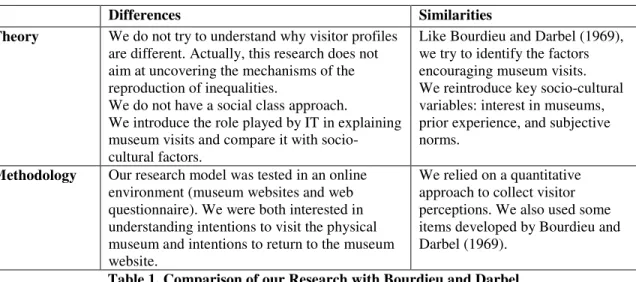
Table 1 below presents the similarities and differences between our research and Bourdieu and Darbel (1969).
Differences Similarities
Theory We do not try to understand why visitor profiles
are different. Actually, this research does not aim at uncovering the mechanisms of the reproduction of inequalities.
We do not have a social class approach.
We introduce the role played by IT in explaining museum visits and compare it with socio-cultural factors.
Like Bourdieu and Darbel (1969), we try to identify the factors encouraging museum visits. We reintroduce key socio-cultural variables: interest in museums, prior experience, and subjective norms.
Methodology Our research model was tested in an online
environment (museum websites and web questionnaire). We were both interested in understanding intentions to visit the physical museum and intentions to return to the museum website.
We relied on a quantitative approach to collect visitor perceptions. We also used some items developed by Bourdieu and Darbel (1969).
Table 1. Comparison of our Research with Bourdieu and Darbel
METHODOLOGY Research Design
To test the effects of our two sets of factors, website design and socio-cultural variables, two free-simulation experiments were conducted (Fromkin and Streufert 1976), as previously employed in the research of Gefen and Straub (2000). In this experimental methodology, the researcher has relatively less control over the manipulated independent variables and the subjects’ approaches to the experimental task (Straub et al. 2004). Furthermore it is a free simulation because there are no treatment conditions, but rather a stimulation to which subjects can freely respond. Thus, the values of the independent
variables can vary freely with respect to subject interactions with the system. Generally, the free simulation experiment is used when the researcher wants to be as close as possible to the real world. For this study, subjects were stimulated to visit two museum websites. The independent variables that varied freely with their responses were the established usability variables. We had also less control over the subjects since experimentation occurred outside the laboratory setting.
Two museum websites were selected for the free simulations. One is the website of the Quai Branly Museum, a French museum dedicated to African, American, Asian and Oceania arts and history. The other is the Atlanta History Center, an American Museum dedicated to the national and regional history of Atlanta. We checked the quality of these two website designs and concluded that both websites satisfied the condition of reasonably good design.
Sampling Procedures
The sample of this study consisted of 230 college students from two different countries. For the US sample, 97 participants came from a Southern university. They were offered course credit for visiting the website of the Atlanta History Center and filling in the Web questionnaire. Most were enrolled in computer information systems and business courses. The second sample was 133 French participants, students at a French university located within Paris. These subjects were invited to visit the Quai Branly website. Furthermore, to ensure that the participants would not be reluctant to physically visit the museum because it was too far away, we selected museums located locally.
We chose these two countries as settings for our experiments because most of Bourdieu’s work on cultural practices has been replicated or extended to the American people by DiMaggio (1982; 1985). Therefore, applying Bourdieu and Darbel’s (1969) arguments to the American public is possible.
Experimental Procedures
The data collection technique was a Web questionnaire (Straub et al. 2004). This instrument was developed using existing scales. The MUG items came from Agarwal and Venkatesh (2002) and we created another single, reflective item for “promotion.”. The subjective norms construct was adapted from Fishbein and Ajzen (1975), and the intention constructs from Pavlou and Gefen (2004). Interest in museums was adapted from the semantic scales of McQuarrie and Munson (1991). And last, “prior experience with cultural activities” was adapted from Bourdieu and Darbel’s (1969) study. All the constructs were measured with seven-point Likert scales, except “prior experience” which was assessed with a six-point frequency scale (1= Never, 2=once a year, 3= three or four times a year, 4= once a month, 5= twice a month, 6=once a week).
Participants were invited to engage with the website as if they were a potential visitor of the museum. To help them while browsing the website, we suggested four principal sections of the website that should be of general interest for museum visitors. They were: “Practical Information”, “Collections”, “Games/ Interactive Activities” and the “Museum History”. These suggested sections existed on both websites, what enabled us to replicate the same scenario with both samples. However, the participants were also free to visit any other sections that could be relevant and interesting to them. This autonomy is congruent with the free simulation methodology where researchers have less control over participant interactions.
DATA ANALYSIS
Descriptive statistics were computed using SPSS 12.0 and the other data analyses were performed with SmartPLS 2.0 (Ringle et al. 2005). Our research model includes a number of formative constructs, and PLS allows the specification of reflective and formative constructs in the research model (Chin 1998). Table 2 provides details regarding the profile of our participants.
Study 1
French Sample Study 2American Sample
N 133 97 Age (S.D.) 22.59 (4.14) 26.4 (9.27) % Male 29.3 46.4 % Female 70.7 53.6 % Undergraduate 82 99 % Graduate 18 1
Number of visits to the museum Quai Branly Atlanta History Center
- Never (%) 87.2 75.3
- 1-5 visits (%) 12.8 22.9
Number of visited sections (S.D.)
3.32 (0.90) 2.88 (1.10) Time spent on the website 0-5 minutes: 16.5%
5-10 minutes: 43.6% 10-15 minutes: 24.8% >15 minutes: 15.1% 0-5 minutes: 17.5% 5-10 minutes: 44.3% 10-15 minutes: 25.8% >15 minutes: 12.4%
Table 2. Descriptive Statistics
Measurement Model
Since we had two types of constructs, we had to perform distinct analyses for each type. For instance, we paid attention to loadings when analyzing our reflective constructs and to weights for our formative constructs. Similarly, validity and reliability were obtained with different statistical techniques.
Chin (1998) explains that reflective constructs should be validated with PLS through Composite Reliability, Average Variance Extracted (AVE) and Cross-Loadings. All our items exhibited high loadings and cross-loadings on their respective constructs: they were above the threshold value of 0.70 (Nunnally 1967) and AVEs above the threshold value of 0.50. It means that the items converged more on their own construct than on the other constructs presented in our research model. Formative constructs differ from reflective constructs because they are caused by their items rather than be reflected by them (Bollen 1989). We followed the approach explained by Loch et al. (2003) to construct a Multi Trait Multi Method matrix (MTMM) and validate our formative constructs, namely the MUG categories (that form website design) and prior experience. Structural Model
We report hereafter the results of our research model testing. In this research, we have not posited any hypothesis about national culture even though two different countries were involved. We rather view the American study as a replication of the French study in order to extend the generalizability of our results.
France USA
Hypotheses Path
coefficients T-value Support? Path coefficients T-value Support?
H2a. Website design Intention to use website
0.342*** 4.64 Yes 0.296*** 4.01 Yes H2b. Website design
Intention to visit museum
0.232** 3.00 Yes 0.179* 2.12 Yes H2a. Interest in museums
Intention to use website
0.217** 2.70 Yes 0.148 1.91 No H2b. Interest in museums
Intention to visit museum
0.326*** 4.21 Yes 0.171 1.85 No H3a. Prior experience
Intention to use website
0.145* 2.04 Yes 0.225** 3.11 Yes H3b. Prior experience
Intention to visit museum
0.059 0.86 No 0.133 1.80 No H4a. Subjective norms
Intention to use website
0.171* 2.23 Yes 0.508*** 7.31 Yes H4b. Subjective norms
Intention to visit museums
0.304** 3.97 Yes 0.536*** 5.87 Yes Notes: * p<0.05 ; **p<0.01 ; ***p<0.001
We used bootstrapping with a 200 re-sampling procedure to determine the T-values of our path coefficients. A value higher than 1.96 indicates significant paths.
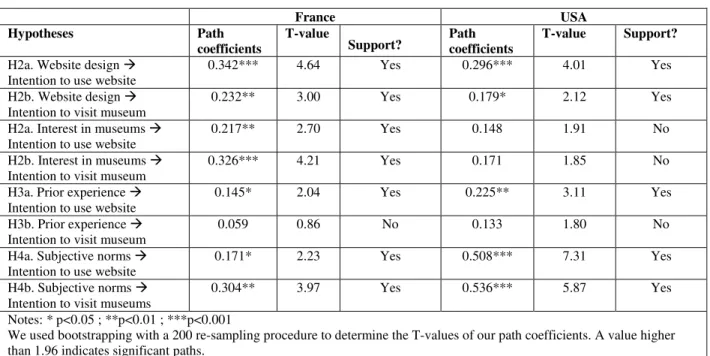
Table 3. Summary of Path Coefficients and Significance Levels for the Two Studies
DISCUSSION
Hypotheses 1a and 1b were verified in both studies, supporting the idea that website design positively influences user intentions. More specifically, we can assert that well designed websites encourage visitors to return to the website and arouse their interest in visiting the museum. So the link between the virtual interface and the physical setting is established.
Regarding the role of the socio-cultural factors, hypotheses 2a and 2b were supported in France but not in the USA, showing that interest in museums is a better predictor of intentions for the French participants. The role of subjective norms (hypotheses 4a and 4b) also has a significant effect on intentions. Hypothesis 3a was verified in both countries but 3b in neither.
In response to our research question, we see that the strongest predictor of “intentions to return to the website” is the website design for French participants, while it is subjective norms for the American participants. The strongest predictor of “intentions to visit the museum” is interest in the museum for the French participants, while it is subjective norms for the American participants. We notice that the results are different between the two countries, revealing one of the limitations of our research and suggesting that national culture should be studied further.
Regarding the strongest predictors of intentions, our research confirms Bourdieu and Darbel’s argument that subjective norms influence high culture practice. We reinforce their argument by stressing the fact that a museum visit is a social activity (Debenedetti 2003). Since people go to museums to have a social interaction (Debenedetti 2003), the perceptions of people close to them towards museums are essential. It is noteworthy that the role of subjective norms persists even in the online context and is stronger for the American sample. Unexpectedly, prior experience and interest in museums, which are our other socio-cultural variables, play a less important role than website evaluation in determining intention to visit museums. The non significant role of prior experience as predictor of museum visits can be explained by the set of activities included in the scale (attendance at theaters, opera, concerts, cinema, monuments, and museums). Actually, it seems that these aforementioned activities are not always relevant to assess cultural capital. More precisely, DiMaggio and Mukhtar (2004) found that arts participation is evolving: “a change is occurring in the composition of artistic cultural capital in response to societal trends towards multiculturalism and greater inclusivity” (p. 190). DiMaggio and Mukhtar (2004) argue that some traditional activities are in decline, such as ballet, while new activities, like computer games, are increasing. Hence, our scale of experience with cultural activities could be enriched by these elements. Surprisingly, interest in museums was not significant to predict the American students’ intentions. DiMaggio and Mukhtar (2004) explain that arts participation is often perceived as an element of distinction, an activity that is practiced for the prestige. This may explain our results: the participants do not visit museums by interest but rather have a more distant (less affective) relationship with them by viewing these institutions as a sign of distinction.
This discussion would not be complete without discussing the research limitations. First, we selected only one type of museums (history museum). It would be very interesting to compare different types of museum websites in order to extend the generalization of our findings. Similarly, the websites of other “high-culture” activities such as opera or theater could be studied. This study also focused on college students so replicating this study with another public would provide interesting comparison. As noted earlier, the role of national culture is not investigated in this research but should be studied further. Contributions
This research makes several contributions.
First, we apply MUG to a new context, namely, museum websites. This contributes to MUG generalizability, as encouraged by Agarwal and Venkatesh (2002; 2006), and it also provides insight into a new domain. Indeed, most research in usability concerns business websites while specific domains in the cultural heritage sector have only been lightly studied. We believe that museum websites represent a new context of technology use that differs from commercial websites. Among others, Orlikowski and Iacono (2001) encourage researchers to study IT in different contexts of use and, by doing so, to analyze the differences produced by these new contexts.
Second, this research combines IS research with the sociology of culture to take into account the specificities of our research context. More particularly, we decided to apply the sociological theory of Bourdieu and Darbel (1990). Bourdieu has already been introduced and used in IS research by researchers such as Kvasny (2002) and Levina and Vaast (2005). This work follows these IS studies by legitimating the role played by sociological factors in IS research. However, in the present study, we also explore another facet of Bourdieu’s work, that is, how cultural practices function and we use his conceptualization to measure its influence on the use of museum websites. Therefore, this research focused on the IT artifact in its aim to “understand the relative importance of IS variables vis-à-vis non-IS variables” (Benbasat and Zmud 2003, p.192).
This research also has practical and managerial implications. Our results can encourage designers of museum websites to improve the usability and appearance of their online interfaces. However the role of the website can be nuanced since young people seem to be also dependent on the perceptions of those close to them towards museums. As a result, discount prices for two or more visitors, and a free pass for the accompanying person may be interesting marketing solution suggested by this research.
CONCLUSION
In conclusion, this research was an attempt to determine the potential of museum websites for attracting visitors either to return to these websites or to visit the physical museums represented by these sites. As noted, website design has been principally studied via usability criteria on commercial websites. Therefore, we selected museum websites for study. To enrich this research, we also relied on the sociology of cultural consumption, and more particularly on the work of Bourdieu and Darbel (1969).
Future research can extend this study by investigating in greater detail the possible link between prior museum visits to museums and attitudes toward the website. Actually, it is reasonable to think that a museum visit can prompt a website visit because visitors may want to complete their knowledge and obtain further information on the exhibition they have just previewed. But all such assumptions certainly need further testing.
REFERENCES
1. Agarwal, R., and Venkatesh, V. "Assessing a Firm's Web Presence: A Heuristic Evaluation Procedure for the Measurement of Usability," Information Systems Research (ISR) (13:2), 2002, pp 168-186.
2. Bélanger, F., Fan, W., Schaupp, C., Krishen, A., Everhart, J., Poteet, D., and Nakamoto, K. "Web Site Sucess Metrics: Addressing the Duality of Goals," Communication of the ACM (49:2), 2006, pp 114-116.
3. Benbasat, I., and Zmud, R.W. "The Identity Crisis within the Is Discipline: Defining and Communicating the Discipline's Core Properties," MIS Quarterly (27:2), 2003, pp 183-194.
4. Benbunan-Fich, R. "Using Protocol Analysis to Evaluate the Usability of a Commercial Web Site," Information &
Management (39:2), 2001, p 151.
5. Bollen, K. Structural Equations with Latent Variables John Wiley & Sons, New York, 1989. 6. Bourdieu, P. La Distinction. Critique Sociale Du Jugement, Paris, 1979.
7. Bourdieu, P. Logic of Practice Stanford University Press, Stanford, CA, 1990.
8. Bourdieu, P., and Darbel, A. L'Amour de l'Art: Les Musées d'Art Européens et leur Public, (2nd ed.) Les Editions de Minuit, Paris, 1969.
9. Bourdieu, P., and Darbel, A. The Love of Art: European Art Museums and their Public Standford University Press, Standford, California, 1990.
10. Chin, W. "The Partial Least Squares Approach to Structural Equation Modeling," in: Modern Methods for Business
Research G.A. Marcoulidès (ed.), Lawrence Erlbaum Associates, Mahwah, N.J., 1998, pp. 295-336.
11. De Wulf, K., Schillewaert, N., Muylle, S., and Rangarajan, D. "The Role of Pleasure in Web Site Success," Information
& Management (43:4), 2006, pp 434-446.
12. Debenedetti, S. "Investigating the Role of Companions in the Art Museum Experience," International Journal of Arts
Management (5:3), 2003, pp 52-63.
13. DiMaggio, P. "Cultural Capital and School Success: The Impact of Status Culture Participation on the Grades of U.S. High School Students," American Sociological Review (47), 1982, pp 189-201.
14. DiMaggio, P., and Mohr, J. "Cultural Capital, Educational Attainment, and Marital Selection," American Journal of
Sociology (90), 1985, pp 1231-1261.
15. DiMaggio, P., and Mukhtar, T. "Arts Participation as Cultural Capital in the United States, 1982–2002: Signs of Decline?," Poetics (32), 2004, pp 169-194.
16. Fishbein, M., and Ajzen, I. Belief, Attitude, Intention and Behavior: An Introduction to Theory and Research Addison-Wesley, Reading, MA., 1975.
17. Flavian, C., Guinaliu, M., and Gurrea, R. "The Influence of Familiarity and Usability on Loyalty to Online Journalistic Services: The Role of User Experience," Journal of Retailing & Consumer Services (13:5), 2006, pp 363-375. 18. Fromkin, H.L., and Streufert, S. "Laboratory Experimentation," in: Handbook of Industrial and Organizational
Psychology, Rand McNally Publishing Company, Inc., Chicago, IL, 1976.
19. Gefen, D., and Straub, D. "The Relative Importance of Perceived Ease of Use in IS Adoption: A Study of E-Commerce Adoption," Journal of the Association of Information Systems (1:Paper 8), 2000, pp 1-28.
20. Gefen, D., and Straub, D. "Managing User Trust in B2C e-Services," e-Service Journal (2:2), 2003, p 7.
21. Gemino, A., Parker, D., and Kutzschan, A.O. "Investigating Coherence and Multimedia Effects of a Technology-Mediated Collaborative Environment," Journal of Management Information Systems (22:3), 2006, pp 97-121. 22. Hoffman, D.L., and Novak, T.P. "Marketing in Hypermedia Computer-Mediated Environments: Conceptual
23. Hoffman, D.L., Novak, T.P., and Chatterjee, P. "Commercial Scenarios for the Web: Opportunities and Challenges," in:
Journal of Computer-Mediated Communications, 3(1), 1995.
24. Hoffman, D.L., Novak, T.P., and Venkatesh, A. "Has The Internet Become Indispensable?," Communications of the
ACM (47:7), 2004, pp 37-42.
25. ICOM, "ICOM Statutes," 2002, Accessed April 9, 2006, http://icom.museum/statutes.html#2.
26. Institute of Museum and Library Services "Status of Technology and Digitization in the Nation's Museums and Libraries," 2006.
27. Kuan, H.H., Vathanophas, V., and Bock, G.-W. "The Impact of Usability on the Intention of Planned Purchases in E-commerce Service Websites," 7th Pacific Asia Conference on Information Systems, Adelaide, South Australia, 2003, pp. 369-392.
28. Kvasny, L. "Problematizing the Digital Divide: Cultural and Social Reproduction in a Community Technology Initiative," in: Department of Computer Information Systems, Georgia State University, Atlanta, 2002.
29. Lagrosen, S. "Online Service Marketing and Delivery: The Case of Swedish Museums," Journal of Information
Technology (16:2), 2003, pp 132-156.
30. Lahire, B. La Culture des Individus : Dissonances Culturelles et Distinction de Soi La Découverte, Paris, 2004.
31. Levina, N., and Vaast, E. "The Emergence of Boundary Spanning Competence in Practice: Implications for Implementation and Use of Information Systems," MIS Quarterly (29:2), 2005, pp 335-363.
32. Loch, K., Straub, D., and Kamel, S. "Diffusing the Internet in the Arab World: The Role of Social Norms and Technological Culturation," IEEE Transactions on Engineering Management (50:1), 2003, pp 45-63.
33. Marty, P.F. "The Changing Role of the Museum Webmaster: Past, Present, and Future," Museums and the Web 2004, Toronto, Canada, 2004.
34. McQuarrie, H., and Munson, J. "A Revised Product Involvement Inventory: Improved Usability and Validity," in:
Advances in Consumer Research, J.F. Sherry and B. Sternthal (eds.), The Association for Consumer Research,
Provo, UT, 1991.
35. Novak, T.P., Hoffman, D.L., and Yung, Y.-F. "Measuring the Consumer Experience in Online Environments: A Structural Modeling Approach," Marketing Science (19:1), 2000, pp 22-42.
36. Nunnally, J.C. Psychometric Theory McGraw-Hill, New York, 1967.
37. Orlikowski, W.J., and Iacono, C.S. "Research Commentary: Desperately Seeking the 'IT' in IT Research--A Call to Theorizing the IT Artifact," Information Systems Research (12:2), 2001, p 121.
38. Pavlou, P.A., and Gefen, D. "Building Effective Online Marketplaces with Institution-Based Trust," Information Systems
Research (15:1), 2004, pp 37-59.
39. Ranganathan, C., and Ganapathy, S. "Key Dimensions of Business-to-Consumer Web Sites," Information &
Management (39:6), 2002, pp 457-465.
40. Ringle, C.M., Wende, S., and Will, A. Smart PLS University of Hamburg, Hamburg, Germany, 2005. 41. Sauvage, L. "Le Louvre s'Offre une Nouvelle Jeunesse sur le Web," 2005.
42. Schlosser, A.E., White, T.B., and Lloyd, S.M. "Converting Web Site Visitors into Buyers: How Web Site Investment Increases Consumer Trusting Beliefs and Online Purchase Intentions," Journal of Marketing (70:2), 2006, pp 133-148.
43. Soren, B.J. "Best Practices in Creating Quality Online Experiences for Museum Users," Museum Management and
Curatorship (20), 2005, pp 131-148.
44. Straub, D., Gefen, D., and Boudreau, M.-C. "The ISWorld Quantitative, Positivist Research Methods Website," D. Galletta (ed.), 2004.
45. Venkatesh, V., and Agarwal, R. "Turning Visitors into Customers: A Usability-Centric Perspective on Purchase Behavior in Electronic Channels," Management Science (52:3), 2006, pp 367-382.
46. Venkatesh, V., and Ramesh, V. "Web and Wireless Site Usability: Understanding Differences and Modeling Use," MIS
Quarterly (30:1), 2006, pp 181-206.
47. Webster, J., and Ahuja, J.S. "Enhancing the Design of Web Navigation Systems: The Influence of User Disorientation on Engagement and Performance," MIS Quarterly (30:3), 2006, pp 661-678.