Optimization Models for Sustainable Reverse Logistics
Network Planning under Uncertainty
by
Julien TROCHU
MANUSCRIPT-BASED THESIS PRESENTED TO ÉCOLE DE
TECHNOLOGIE SUPÉRIEURE IN PARTIAL FULFILLMENT FOR THE
DEGREE OF DOCTOR OF PHILOSOPHY
Ph.D.
MONTREAL, JULY 3, 2019
ÉCOLE DE TECHNOLOGIE SUPÉRIEURE UNIVERSITÉ DU QUÉBEC
This Creative Commons license allows readers to download this work and share it with others as long as the author is credited. The content of this work can’t be modified in any way or used commercially.
BOARD OF EXAMINERS
THIS THESIS HAS BEEN EVALUATED BY THE FOLLOWING BOARD OF EXAMINERS
Mr. Amin Chaabane, Thesis Supervisor
Department of Systems Engineering at École de technologie supérieure
Mr. Mustapha Ouhimmou, Thesis Co-supervisor
Department of Systems Engineering at École de technologie supérieure
Mr. Fausto Errico, President of the Board of Examiners
Department of Construction Engineering at École de technologie supérieure
Mr. Marc Paquet, Member of the jury
Department of Systems Engineering at École de technologie supérieure
Ms. Jacqueline Bloemhof-Ruwaard, External Examiner
Department of Operations Research and Logistics at Wageningen University
Mr. El-Houssaine Aghezzaf, External Independent Examiner
Department of Industrial Systems Engineering and Production Design at Ghent University
THIS THESIS WAS PRENSENTED AND DEFENDED
IN THE PRESENCE OF A BOARD OF EXAMINERS AND PUBLIC ON JUNE 20, 2019
ACKNOWLEDGMENT
The research presented in this thesis was performed at the Laboratoire Numerix in the Department of Systems Engineering at École de Technologie Supérieure (ÉTS).
The work accomplished in this thesis would not have been possible without the guidance, expertise, motivation and financial support of my advisors, Professors Amin Chaabane and Mustapha Ouhimmou. I am deeply grateful for these years of research and I sincerely hope that they enjoyed this collaboration as much as I did.
Words would not be strong enough to say how thankful I am to my wife Charline, for her loving support and her patience, but most of all for being such an incredible mother to our children, which clearly played a major role toward the success of this Ph.D.
I address special thanks to my parents for their moral and financial support during most of this long academic journey. In addition, I thank my family and friends for their support and understanding during these years of hard work and perseverance. I also want to thank my dad who will be, very likely, the only one that will try to read this thesis in the future, or at least the part of it that is accessible to external readers that are not familiar with optimization.
Lastly, I am grateful to my dear colleagues at Numerix and ÉTS for the peaceful environment of support they provided, and I wish them the best of luck for the remaining time in the Numerix lab until their own graduation.
Modèles d’optimisation pour la planification de réseaux logistiques inverses durables sous incertitudes
Julien TROCHU
RÉSUMÉ
Le terme développement durable est un terme utilisé pour désigner un développement qui intègre les trois considérations fondamentales : la dimension économique, environnementale et sociale. Un développement durable se réfère généralement à : « Un développement qui répond aux besoins du présent sans compromettre la capacité des générations futures de répondre aux leurs ». Les chaînes d’approvisionnement se trouvent aujourd’hui face au défi majeur de faire évoluer leurs pratiques traditionnelles afin d’appliquer ce concept à leurs opérations. Cette thèse vient appuyer cet effort visant à assurer la durabilité des opérations de la chaîne d’approvisionnement dans les années à venir, en proposant des modèles quantitatifs d’aide à la décision pour la conception de réseaux logistiques inverses performants.
Ma thèse, intitulée « Modèles quantitatifs pour la conception de réseaux logistiques inverses
durables sous incertitude », souligne l'importance de développer des modèles décisionnels
intégrant les incertitudes critiques inhérentes aux opérations de logistique inverses dans l'industrie. Ce travail de recherche étudie également les compromis nécessaires à la conception de réseaux logistiques inverses efficaces, tout en tenant compte de divers aspects environnementaux, améliorant ainsi les chances de progresser vers un développement durable. Dans les trois articles présentés ci-dessous, l'industrie de la construction, de la rénovation et de la démolition (CRD) est utilisée comme référence pour valider nos modèles au travers de plusieurs études de cas.
Le premier article de cette thèse présente une étude de cas détaillée qui traite des défis liés à la gestion des débris de matériaux de bois de CRD au Québec, Canada. Dans cet article, le modèle d’optimisation proposé détermine les emplacements et les capacités des centres de collecte qui assurent le tri des matériaux afin d’être en accord avec la règlementation locale sur l’enfouissement du bois. Nous formulons le problème sous la forme d'un modèle de programmation linéaire en nombres entiers mixtes (MILP), afin de minimiser le coût total du de recyclage du bois au sein du réseau de logistique inverse et de rendre son élimination moins attractive financièrement. Nous proposons une approche basée sur divers scénarios afin de redéfinir le réseau de logistique inverse actuel en fonction des incertitudes sur les emplacements des sites de collecte, la quantité et la qualité du bois collecté. Les résultats montrent que le réseau de logistique inverse optimal dans un scénario donné peut s’avérer obsolète dans d’autres scénarios, dépendamment de la réalisation des paramètres incertains. Bien que seule l’aspect économique soit considéré dans cet article, cela représente un premier pas vers des opérations de logistique inverse durables par l’optimisation des opérations de gestion des débris dans un secteur qui compte parmi les plus grands générateurs de déchets au monde.
VIII
Ainsi, dans le deuxième article et dans le but de répondre aux problèmes causés par les incertitudes, nous présentons une nouvelle formulation plus avancée qui traite simultanément un nombre élevé de scénarios. De cette manière, nous sommes capables d’optimiser nos espérances en terme de profits sur un horizon de planification multi-période. Dans ce second article, non seulement nous optimisons la conception du réseau de logistique inverse pour la gestion des débris, mais nous évaluons également l’impact de l’intégration de plateformes logistiques appelées centres de séparation à la source, que nous utilisons pour effectuer une première séparation des débris avant leur expédition vers les centres de collecte certifiés. De plus, nous réalisons une analyse de sensibilité sur le nombre de sources d’approvisionnement (générateurs de déchets) afin de comparer les zones de collecte rurales à faible densité par rapport aux zones urbaines à forte densité, où il est souvent plus complexe de réaliser des activités de collecte. La flexibilité offerte par ces plates-formes dynamiques atteint son plein potentiel dans les zones urbaines à haute densité. Les résultats suggèrent des ajustements significatifs du réseau de logistique inverse entraînant une augmentation du profit moyen espéré ainsi que de la quantité de matériaux recyclés.
Enfin, dans le troisième article, nous adaptons le modèle stochastique du précédent article en intégrant la dimension environnementale, par le biais d’une deuxième fonction objectif qui minimise la quantité de matériaux éliminés par enfouissement. Dans cette recherche, nous optimisons la conception du réseau de logistique inverse pour le recyclage des débris de bois provenant de l'industrie de CRD, sous contraintes à la fois de restrictions d'enfouissement et de contrôle des émissions par un système de plafonnement et d'échange, tel que celui en vigueur au Québec. Une fois encore, l’importance de la stratégie de séparation à la source est soulignée dans cet article, et nous établissons la relation entre l’incertitude sur la qualité du bois collecté et la difficulté de respecter les objectifs de recyclage fixés par le gouvernement. En effet, en comptabilisant les émissions libérées par les différents processus de recyclage, il s'avère que l'enfouissement des débris de bois se révèle parfois être la meilleure option selon le niveau de qualité des déchets collectés.
En résumé, le premier article permet d’établir et de quantifier l’impact des incertitudes sur l’efficacité du réseau de logistique inverse, hautement dépendante des valeurs des paramètres incertains. Sur la base de cette constatation, nous développons dans le deuxième article un modèle stochastique qui vise à établir le meilleur compromis afin de faire face à un grand nombre de scénarios simultanément. Enfin et pour finir, dans le troisième article nous adaptons ce dernier modèle à l’étude de cas sur le recyclage des débris de bois. Les émissions de gaz à effet de serre provenant des processus de recyclage du bois sont comptabilisées, et la réglementation relative aux restrictions de l’enfouissement est également appliquée.
Mots-clés : Chaîne d'approvisionnement durable, logistique inverse, conception de réseau, modèles d’aide à la décision, optimisation stochastique et multi-objectifs, industrie de CRD, gestion des déchets, recyclage du bois, réglementations environnementales.
Optimization models for sustainable reverse logistics network planning under uncertainty
Julien TROCHU
ABSTRACT
Nowadays, evolving toward sustainable operations among supply chains is a critical need for the near future and the well-being of the upcoming generations. The term sustainability commonly refers to the interactions between the economic, environmental and social dimensions of development. A sustainable development usually refers to: “A development that meets the needs of the present without compromising the ability of future generations to meet their own needs". Practitioners and academics all over the world are working toward this goal since the last three decades. Thus, this thesis comes to complement this effort toward achieving sustainability in supply chain operations.
My dissertation, entitled “quantitative models for sustainable reverse logistics network
design under uncertainty”, focuses on the importance of developing decision-making models
that include critical uncertainties inherent to the reverse logistics operations in the industry. It studies more specifically the trade-offs that are necessary to design efficient reverse logistics networks while considering various environmental aspects, thus improving our chances to take this step toward sustainability. In the three articles presented below, we will use the construction, renovation and demolition (CRD) industry as a reference to validate our models through several case studies.
The first article, titled “Reverse logistics network redesign under uncertainty for wood waste
in the CRD industry” presents a detailed case study of the challenges related to the wood
building material waste management in Quebec, Canada. In this paper, the main objective is to determine the location and the capacities of the sorting facilities to ensure compliance with the regulation and prevent the wood from being massively landfilled. We formulate the problem as a mixed-integer linear programming model (MILP) to minimize the total cost of the wood recycling processes collected from CRD sites. We start from the real collection centers’ locations from the Quebec CRD industry and we propose a scenario-based approach to redesign the reverse logistics network based on various realizations of the randomness targeting the uncertain parameters. The results demonstrate that efforts toward obtaining accurate information about the supply sources’ locations, the collected wood quantity and its quality would guarantee a more efficient reverse logistics network redesign. Although environmental and social considerations are not addressed in this article, it represents a first step toward sustainability by optimizing waste management operations in a sector that is among the biggest waste generators worldwide.
Thus, in the second article, titled “A two-stage stochastic optimization model for reverse
X
model formulation that addresses multiple scenarios at the same time in order to cope with uncertainty in the best manner over a multi-period planning horizon. The availability of each material collected from the supply sources and the recycling rates at the collection centers are the main sources of uncertainty considered in this study. This time, not only we optimize the reverse logistics network design, but we also evaluate the integration of logistics platforms called source-separation centers (SSC), that we use to perform source-separation of the materials before shipping them to the main collection centers. We perform a sensitivity analysis on the number of supply sources (i.e. waste generators) to compare low-density rural collection zones versus high-density urban areas, where the waste collection activities are often more challenging. Although the SSC improve the network performance in both rural and urban zones, the flexibility provided by these dynamic platforms reaches its best efficiency in the high-density urban areas. The results suggest significant RLND adjustments that lead to increase both the average expected profit and the amount of materials recycled through the reverse logistics channel.
Finally, in the third article, titled “A carbon-constrained stochastic model for eco-efficient
reverse logistics network design under environmental regulations in the CRD Industry”, we
adapt the stochastic model of the previous article to include environmental considerations by adding a second objective function. In this research, we evaluate the optimal eco-efficient reverse logistics network design for the wood waste recycling from the CRD industry under both landfilling restrictions and emission control by a cap-and-trade system, such as the one effective in Quebec these days. In this paper, we emphasize the importance of the source separation strategy to address the challenge caused by the unpredictable quality of the wood collected and its impact on the efficiency of the recycling processes. Indeed, by accounting the emissions released by the various recycling processes, it turns out that the landfilling option may be the best option depending on the quality level of the collected waste. Finally, in this paper we establish the relation between the quality level uncertainty of the collected materials and the difficulty to comply with governmental recycling targets.
Overall, the scenario-based approach in the first article allows establishing the problematic of multiple uncertainties for designing an optimal reverse logistics network that performs under each scenario. Based on this finding, in the second article we develop a two-stage stochastic model in order to find the best expected RLND to cope with a large number of possible scenarios in a multi-period planning horizon. Lastly, in the third article we adapt this model to fit with the reality of the CRD industry for the wood waste recycling case study. Such adaptations imply emissions accounting from the wood recycling processes and complying with the legal framework regarding the recycling targets.
Keywords : Sustainable supply chain, reverse logistics, network design, quantitative decision-making models, stochastic and multi-objective optimization, CRD industry, waste management, wood recycling, environmental regulations.
TABLE OF CONTENTS
Page
INTRODUCTION ...1
CHAPTER 1 LITERATURE REVIEW ...17
1.1 Fundamentals of reverse logistics in sustainable supply chains ...17
1.1.1 Incentives toward reverse logistics ... 18
1.1.2 Reverse logistics decision levels ... 19
1.1.3 Reverse logistics activities among supply chains ... 20
1.2 Focus on sustainable RL network design optimization models ...21
1.2.1 Deterministic reverse logistics network design models ... 22
1.2.2 RL network design under uncertainty: a focus on stochastic models ... 23
1.2.3 Multi-objective reverse logistics network design models ... 25
1.2.4 Advanced multi-objective stochastic formulations ... 26
1.3 Reverse logistics in the construction industry ...28
1.3.1 Legal framework: a sector under the radar of the authorities ... 28
1.3.2 Estimation of the waste quantity generated ... 29
1.3.3 Evaluating the recovery opportunities for the collected material waste ... 30
1.3.4 Facility location assessment ... 31
1.4 Discussion on the research gaps ...32
CHAPTER 2 REVERSE LOGISTICS NETWORK REDESIGN UNDER UNCERTAINTY FOR WOOD WASTE IN THE CRD INDUSTRY ...35
2.1 Introduction ...36
2.2 Literature review ...38
2.3 Model development ...41
2.3.1 Assumptions ... 41
2.3.2 Mathematical formulation ... 42
2.4 Case study description and data collection ...48
2.5 Experimental evaluation and managerial insights ...51
2.5.1 Redesign of the current reverse logistics network ... 53
2.5.2 Reverse logistics configuration under collection sites location change .... 55
2.5.3 Reverse logistics configuration under recycled wood quality uncertainty 57 2.5.4 RLND under joint waste quantities and collection sites locations change 60 2.6 Conclusion ...62
CHAPTER 3 A TWO-STAGE STOCHASTIC OPTIMIZATION MODEL FOR REVERSE LOGISTICS NETWORK DESIGN UNDER DYNAMIC SUPPLIERS’ LOCATIONS ...65
3.1 Introduction ...66
3.2 Literature review ...68
3.3 Model description ...71
XII
3.3.2 Objective function – Maximizing the profits ... 77
3.3.3 Constraints of the model ... 78
3.3.4 Solution procedure ... 81
3.4 A case study in the construction, renovation and demolition (CRD) industry ...85
3.4.1 Reverse logistics network configuration under uncertainty ... 86
3.4.2 Impact of the source-separation centers on the network design performance ... 89
3.5 Conclusion and further research ...99
CHAPTER 4 A CARBON-CONSTRAINED STOCHASTIC MODEL FOR ECO-EFFICIENT REVERSE LOGISTICS NETWORK DESIGN UNDER ENVIRONMENTAL REGULATIONS IN THE CRD INDUSTRY ...101
4.1 Introduction and context ...102
4.2 Literature review ...104
4.3 Model development ...107
4.3.1 Proposed methodology... 107
4.3.2 Multi-objective stochastic formulation ... 110
4.4 The case study of wood waste recycling from the CRD industry ...125
4.4.1 Optimal reverse logistics network design for wood recycling ... 129
4.4.2 Enforcing the landfilling regulation: the new “compliance network” .... 131
4.4.3 The role of the source separation centers in the CRD industry ... 132
4.4.4 Sensitivity analyses on the uncertainty for the recycled wood quality ... 134
4.5 Conclusion ...137
CONCLUSION ...139
APPENDIX I LISTING OF THE 38 FACILITIES USED IN THE CASE STUDY ...145
APPENDIX II SCENARIO-BASED APPROACH UNDER UNCERTAINTIES ...146
APPENDIX III BASELINE SCENARIO VS SCENARIO 1: RECYCLING & LANDFILLING LANDFILLING FLOWS ...147
APPENDIX IV RECYCLING DISTANCE INCREASE WITH SUPPLIERS LOCATIONS LOCATIONS LS2 & LS3 ...148
APPENDIX V BOUNDS AND OPTIMALITY GAPS ACCORDING TO THE SAMPLE SAMPLE SIZE (EXAMPLE WITH S=10, 50, 100 AND 250) ...149
APPENDIX VI SUMMARY OF THE 3 MAIN RLN CHARACTERISTICS ...150
LIST OF TABLES
Page
Table 1.1 Recent quantitative models for sustainable RLND (2016-2017-2018) ...22
Table 2.1 Recent RL and CLSC decision models considering uncertainties (2007-2017) ...40
Table 2.2 RL and CLSC papers by sectors (2007 – 2017) ...41
Table 2.3 Annual estimated CRD waste generation by administrative region in Quebec ...50
Table 2.4 Annual market demand for recycled wood material in Quebec ...51
Table 2.5 Baseline scenario versus scenario 1 (fixed network) ...54
Table 2.6 Potential impact of a change in collection sites locations ...56
Table 2.7 Potential impact of a change in collection sites locations ...59
Table 2.8 Optimal RLND according to the CRD sites locations and waste quantity ...61
Table 3.1 Review of two-stage & multi-stage stochastic optimization models for RLND ...70
Table 3.2 Main data used in the CRD industry case study ...86
Table 3.3 Summary of the optimal RLND features according to (S,N) Variations ...88
Table 3.4 Criteria selected to conduct the sensitivity analysis ...90
Table 3.5 Main improvements reached through the SSC operations (S=10; N=10) ...91
Table 3.6 Main improvements reached through the SSC operations (S=250; N=90) ...91
Table 3.7 Scenario generation for the variation in the level of uncertainty ...92
Table 4.1 Main features of the previous multi-objective stochastic models for RLND ...106
Table 4.2 Sensitivity analyses on the impact of the quality of the collected wood ...134
LIST OF FIGURES
Page
Figure 01 The triple bottom line of sustainable development ...1
Figure 02 The 3R-hierarchy for sustainable development ...3
Figure 03 The complexity of CLSC management (integrated FSC & RL) ...5
Figure 04 Thesis objectives ...10
Figure 05 Methodological approach ...11
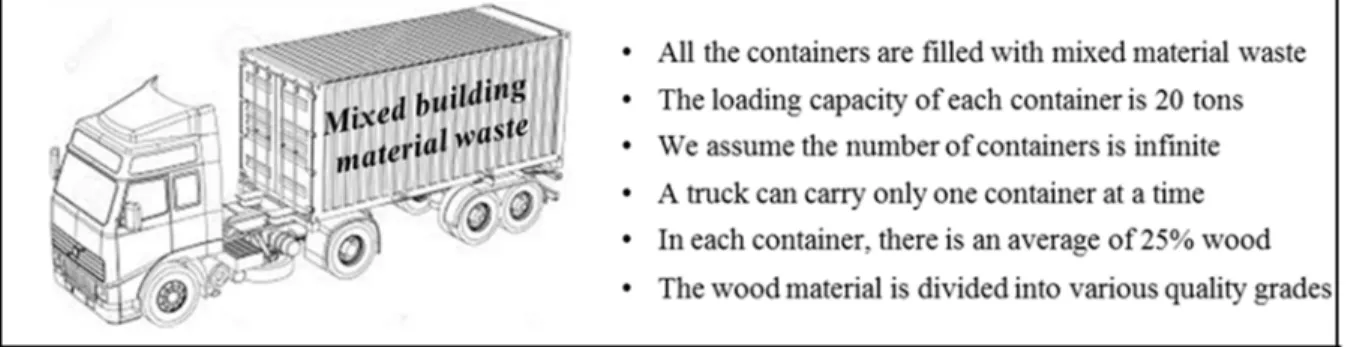
Figure 2.1 Main assumptions regarding the containers collected at CRD sites...42
Figure 2.2 RL network for the recycled wood material from the CRD industry ...43
Figure 2.3 Repartition of Quebec provinces into regions ...49
Figure 3.1 Methodology for SSL random generation (example with S=50 and T=5) ...72
Figure 3.2 A Generic framework for RLND under dynamic suppliers’ locations ...73
Figure 3.3 Impact of the uncertainties on the total recycled quantity of materials (C1) ...93
Figure 3.4 Impact of the uncertainty level on the recycling cost per ton (C2) ...94
Figure 3.5 Impact of the uncertainty level on the distance to recycle (C3) ...95
Figure 3.6 Impact of the uncertainty level on the total number of shipments (C4) ...96
Figure 3.7 Impact of the uncertainty level on the proportion of SMC (C5) ...97
Figure 3.8 The impact of the uncertainty level on the average expected profits (C6) ...99
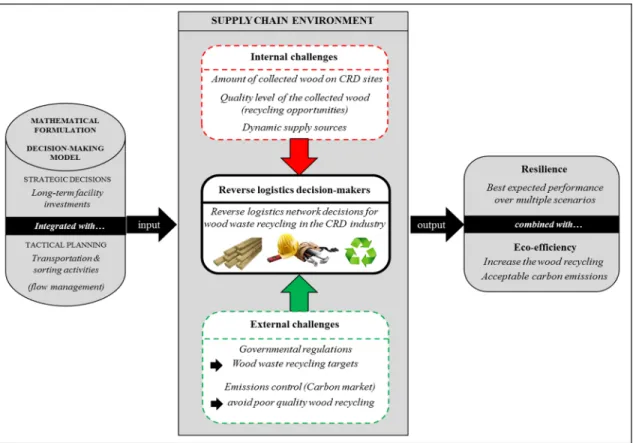
Figure 4.1 Reverse logistics network configuration in the CRD industry ...110
Figure 4.2 Reverse logistics network for wood building material recycling ...127
Figure 4.3 Trade-offs between profits and landfilling – Pareto-front ...128
Figure 4.4 Current wood recycling in the Province of Quebec ...129
Figure 4.5 Optimal network design characteristics ...130
XVI
Figure 4.7 Compliance network without using the source separation strategy ...133 Figure 4.8 Impact of the uncertain wood quality on the optimal landfilling level ...135
LIST OF ABREVIATIONS
AHP Analytic Hierarchy Process BOM Bill of Materials
CC Collection Centers
CLSC Closed-Loop Supply Chain
CRD Construction, Rénovation et Démolition CSR Corporate Social Responsibility
DSS Decision Support System
EPA Environmental Protection Agency ELV End of Life Vehicle
ETS Emission Trading Scheme FSC Forward Supply Chain
GHG Greenhouse Gases
LCA Life Cycle Assessment
MCDM Multi-Criteria Decision Making MILP Mixed Integer Linear Programming
MMC Mixed-Material Container
MOSM Multi-Objective Stochastic Model
MOTSSM Multi-Objective Two-Stage Stochastic Model PLM Product Life Cycle Management
RL Reverse Logistics
XVIII
RLND Reverse Logistics Network Design RoHS Restriction on Hazardous Substance SCND Supply Chain Network Design SMC Single-Material Container
SP Separation Platforms
SSC Source Separation Centers
SSCM Sustainable Supply Chain Management WEEE Waste on Electronic and Electrical Equipment
WM Waste Management
INTRODUCTION
Research context
Sustainable supply chain management has become a critical matter in nowadays society. Practitioners and academics have demonstrated an increased interest in the environmental damage caused by the supply chains activities worldwide. Indeed, the last two decades of the 20th century marked a real change regarding the awareness of the international communities
of the environmental threat caused by traditional industrial practices. During the third Earth Summit of June 1992 in Rio de Janeiro, 182 states and more than a thousand organizations met and discussed measures to be adopted to preserve the environment. This unprecedented meeting contributed to the collective awareness and the start of the Sustainable development era. Today, a widely accepted definition of sustainable development is: “a development that
allows the needs of the present generation to be met without compromising the ability of future generations to meet their own”. Since the emergence of the sustainable supply chain
triple bottom-line concept in the literature (Elkington, 1998), considering supply chains as entities converting raw materials into finished products to satisfy customer requirements have changed (Benita and Beamon, 1999). Figure 01 illustrates the triple-bottom-line concept.
Figure 01 The triple bottom line of sustainable development (adapted from Elkington, 1998)
2
In fact, some of the major environmental concerns were discovered a long time ago. Among them, acid rain and atmospheric pollution were already established in 1872 (Cowling, 1982), climate change and global warming issues were noticed a few years later (Arrhenius, 1896), and the same goes for the ozone layer related problems in 1913 (Solomon, 1999). However, all these matters became of an increased interest in the late 1900s only, partly because of the evolution of the trends in the global industry. Nowadays, the rapidity of technology evolution implies an increasing variety of products with short lifecycles, thus reaching obsolescence faster than before (Hilletofth et al., 2018). As a consequence, the global market demand has increased dramatically for a wide variety of products and services in the past century (Rajeev et al., 2017). Moreover, since 2011, the emergence of what is called the « industry 4.0 » era and all the associated opportunities that will be offered to the logistics systems and industries, we can safely assume that this trend is going to remain in the following years. Indeed, we can expect to witness the emergence of supply chains that are faster and more performant than ever before (Hofmann and Rüsch, 2017). As a result, nowadays the natural resources consumption by the supply chains far exceeds the earth capacity on a long-term horizon. In the meantime, a population in constant growth and an industry in perpetual evolution in developing countries increase the risks of disruption.
The supply chains worldwide being huge resource consumers and massive polluters, they have a major role to play in the evolution toward more sustainable practices to preserve our environment for future generations. Thus, the social and environmental impacts of supply chain activities have become key targets that cannot be ignored anymore. For that purpose, in the early 1970s we see the emergence of the well-known “3R” concept (see figure 02 below). The “3R” stand for « Reduce the waste created », « Reuse the products and materials that
can have a future purpose » and « Recycle the items if you can » (Environmental Protection
Agency, EPA). However, the emergence of this new state of mind in doing business also implies new challenges for the supply chain managers around the world, moving from a profit-oriented management to a more sustainable vision of operations. From this point, we witnessed the emergence of new challenging activities that are part of many supply chains’ operations these days such as : energy consumption monitoring (Shen et al., 2017), carbon
3
management (Chaabane et al., 2012, Rezaee et al., 2017), lifecycle assessment of products (Blass and Corbett, 2018), products’ design for end of life purposes (Zhu and He, 2017; Kianpour et al., 2017), clean technology investments (Chan et al., 2018), among other numerous topic of interest. Nowadays, considering that the above-mentioned elements play a role in the decision-making process, « thinking sustainable » often leads to complex supply chains with larger structures, many assets and multiple stakeholders involved in the process.
Figure 02 The 3R-hierarchy for sustainable development
Reverse logistics opportunities
Among the well-known examples of the 3R inclusion in nowadays’ society, the field of reverse logistics (RL) has become a critical expertise among supply chains all over the world (Govindan et al., 2015). It is also one of the most popular field in the academic literature on sustainable supply chains (Min and Kim, 2012; Agrawal et al., 2015). The term reverse logistics refers to activities related to the management of products that have reached the end of their useful life to the consumers in any way to give them an added value (Guide and Van Wassenhove, 2009). Usually, we qualify the standard logistics activities that convert the raw materials into finished products for customers as forward supply chain (FSC). On the other hand, among the RL operations we commonly find the collection, transportation, sorting,
4
refurbishing, recycling, reusing and also the landfilling activities (Fleischmann et al., 1997; Alshamsi and Diabat, 2017). Typically, in FSC management, the supply chain decision-making process can be divided into three (3) main categories: the strategic, tactical and operational decision levels. While the strategic decisions focus on the supply chain configuration, the tactical decisions evaluate the best ways to satisfy the demand of the customers through aggregate operation planning. The operational decisions find ways to ship the orders to meet the due dates (Chopra et Meindl, 2004). These decision levels also apply to RL planning. Strategic decisions mainly focus on the reverse logistics network design (RLND), such as facility location and capacity allocation, technology acquisition and other long-term costly decisions, while tactical decisions focus on the flow allocation between logistics units such as collection centers, recycling centers and landfills. Finally, operational issues usually focus on lot-sizing problems, vehicle routing decision or disassembly planning operations (Souza, 2013).
In this thesis, we will mainly focus on reverse logistics network design problems. Although facility location problems were introduced a long time ago (Weber, 1909), the first studies addressing network design problems in RL appeared around 20 years from now (Barros et al., 1998). From this point, we denote an increased variation in the RLND models with focus interests on various aspects of reverse logistics operations such as the collection (Kumar and Putnam, 2008), inspection and sorting (Loomba and Nakashima, 2012), disposition of the products (Mutha and Pokharel, 2009) and so on. In the articles proposed in this thesis, we will focus on the strategic RL network configuration and the tactical flow routing decisions through the reverse logistics channel. Indeed, as RLND decisions imply long-term costly strategic management that might affect the performance of the whole supply chain for the next decades, the supply chain managers should address them very carefully. Indeed, no matter how well the tactical decisions, poor choices regarding facility locations and capacity allocation will lead to a low RL network efficiency that fails to be sustainable (Daskin et al., 2005).However, although it is widely recognized that sustainable reverse logistics network design is a topic of high interest toward seeking supply chains sustainability, the decision makers are often struggling with the complexity of this process that bring many challenges
5
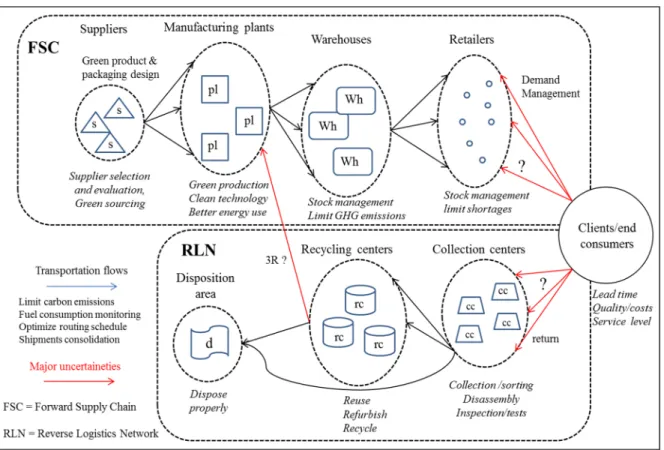
(Govindan and Bouzon, 2018). Figure 03 provides an overview of the numerous challenges faced by the supply chains managers by including RL operations in their activity.
Figure 03 The complexity of CLSC management (integrated FSC & RL)
As a contribution, the research articles presented in this thesis aim to develop innovative decision-making models for sustainable supply chain management. Based on mathematical formulations, these quantitative models will help assisting the supply chain managers by providing the best decisions for RLND. We mentioned before the significance of the 3R actions toward sustainability. In this research, we will position on the last one, by developing mathematical programming models to help the decision-makers with the recycling process of the materials at the end of their useful life for the initial consumer. Lately, there is a critical need for the development of quantitative decision-making models to improve the recycling operations in industries, specifically in those being huge waste generators and represent environmental burdens for the society (Brandenburg et al., 2014).
6
Problem statement
The incentives are numerous to introduce reverse logistics operations into a supply chain. Nowadays, there is a growing concern among customers about “buying green” and people think in a different way than before about the environmental consequences of their actions (Gunasekaran et al., 2015). From a company perspective, the fear of reputation loss and the pressures from customers, stakeholders and governments sure encourage to take this step toward the adoption of reverse logistics operations (Seüring and Müller, 2008). However, the complexity of the associated decisions combined with a highly uncertain environment is often a turn-off, putting the companies in difficult positions in many ways. To prevent the companies from being discouraged and giving up the inclusion of reverse logistics practices into their business, the governments are enforcing more and more regulations worldwide to ensure the global transition toward a sustainable industry. Indeed, a wide variety of sectors is impacted, such as the electric and electronic equipment (Gu et al. 2016; Salhofer et al. 2017), the automotive (Wang et al. 2017), chemical industry (Wallbank et al. 2017), the durable products (Huang et al. 2017), the packaging (Arnaud, 2017), the construction industry (Trochu et al., 2018), among others. Compliance to these governmental laws and programs is one of the main reasons for the growing attention toward reverse logistics among supply chains lately. Indeed, refusing to comply implies at least penalty costs for the company (Fahimnia et al., 2015), and in the worst-case scenario the end of business activities (Koh et al., 2012).
Among the main targets of these emerging regulations, the waste management practices are receiving an increased attention these days. Thus, in the sectors that are considered as huge waste generators, supply chains are constrained to find better ways to comply with waste management policies. Among the sectors under the radar of the authorities in many countries including Canada, the construction, renovation and demolition industry (CRD) has partly motivated the research presented in this thesis (Trochu et al., 2018). More specifically, the wood building material recovery process is increasingly controlled due to its many recycling opportunities. Indeed, if the CRD sector is responsible for less than 10 % of the total annual
7
waste quantity in countries such as Thaïland (Kofoworola and Gheewala, 2009), usually it is more common to exceed a 20 % level. For example, the CRD industry in Spain generates about 25 % of the total waste of the country (Rodriguez et al., 2015), the United States reach a 29 % level (Falk and McKeever, 2012), while Canada generates about one third of the annual national waste in this unique sector (Yeheyis et al., 2013). In practice, there is no well-defined methodology to deal with CRD waste in an effective manner internationally. Each country has different average quantities of waste generated, and according to the different geographic areas a nation might deal with various compositions and proportions for each type of building materials (General Building Contractors Association, GBCA). For example, southern countries such as Spain and Portugal use more concrete primary building structures whereas northern nations such as Finland, Sweden and Denmark are more likely to use wood building structures. With a very large territory and a lot of forest lands, the Canada is one of the countries with the highest wood building material rate inside its buildings, thus showing a particularly high quantity of wood in the CRD waste traditional composition (Yeheyis et al., 2013), as it is also the case in the province of Quebec.
However, although plenty of wood building material is collected on the CRD sites in Quebec, today the market demand for recycled wood materials exceeds the supply coming from the collection centers. One of the main reasons of this problem is that although the wood is considered a renewable resource, a large amount of this material is landfilled when leaving the CRD sites (RECYQ-QUEBEC, 2014). Unfortunately, this can be partly explained by the poor performance of the RL network in this industry, which results in difficulties being competitive with the low cost of landfilling applicable in this area (MDDELCC).
If the recycling of the wood building material is a complex process and the reverse logistics network in Quebec is not efficient, it is mainly due to the multiple uncertainties inherent to the RL operations in the CRD industry. Designing a performant RLND necessitate reliable information in order to make the best configuration decisions. In this case, we face major uncertainty regarding the amount of waste generated on the CRD sites, and by extension the amount of wood among the debris. In addition, the quality of the collected wood is also
8
highly uncertain, which greatly impact the recycling opportunities of this material. Finally, and not the least, the reverse logistics performance in this sector is affected by the dynamic nature of its collection zones (also called supply sources in this thesis). Indeed, the reverse logistics network is often designed in a way that minimizes the transportation distances to recover the materials in order to reduce transportation costs (Kara et al., 2007) and the total transportation time (Krishnamurthy et al., 2008), which becomes a complex task when the collection zones are moving from one period to another.
Therefore, to ensure an effort toward sustainability in the CRD industry in Quebec, the local authorities are strengthening the legal framework targeting the waste management activities. This sector is facing waste elimination prevention measures and carbon emissions control in many industries, including the wood recycling processes (MDDELCC, 2016). The authorities in charge have already approved a regulation preventing the wood from being landfilled, which is expected to become effective in the near future (RECYQ-QUEBEC report, 2014). The main objective of this governmental action is to redirect all the wood building material collected from the CRD sites to certified collection centers. This way, it is expected that the amount of wood at the entrance and at the exit of these facilities will experience a strong growth in the near future, thus possibly giving an opportunity to the recycled wood products industry, while preventing the use of virgin wood materials when possible. However, the same type of legislation banning the wood material from the landfills has already been implemented in other countries before. This experience proved that the reverse logistics network for waste management has to be well-prepared to welcome such a development. Infrastructures’ locations and capacity allocation to deal with an increased volume of incoming wood are concerns that must be addressed carefully. Indeed, if the network design is not suitable, it may lead to illegal dumping or some containers with wood could be landfilled in bordering countries or provinces, as it has been the case in the past in the state of Massachusetts in 2006. In order to face the upcoming regulations in the best conditions in Quebec and learn from the past mistakes, some attention should be given to designing a sustainable reverse logistics network for the wood waste material in the CRD industry.
9
Below, we summarize the information provided above and make the assumptions that motivate this research:
Assumption 1
Considering the huge amount of waste generated in the Canadian CRD industry, there is a need to introduce efficient RL operations that will enable this sector to face the low landfilling costs and to become more sustainable in the future.
Assumption 2
Efficiency in RL activities cannot be achieved without a suited reverse logistics network design.
Assumption 3
Because of the multiple uncertainties targeting the wood recycling process in the CRD industry, the decision-makers are facing difficulties to design and operate a performant RL network and they would clearly beneficiate some valuable insights for this purpose.
Assumption 4
Considering the increasing number of regulations and programs targeting the CRD industry, a performant RLND has become a necessity to ensure sustainability in this sector.
Thesis objectives
The main objective of this thesis is to provide the supply chain decision-makers with a set of decision support tools for sustainable reverse logstics network design and evaluation. This way, by applying the proposed models to the CRD industry case study, we propose a way for evolving toward sustainable waste management by introducing performant RL design and operations. In the meantime, these quantitative decicion-support models will help supply chains to comply with the regulations and programs of this sector in the best possible way, being a mandatory requirement.
10
To fulfill these objectives, we aim to answer the following research questions:
• Q1: How are the optimal reverse logistics network configuration and performance
affected by the presence of dynamic supply sources and multiple uncertainties targeting the collected wood waste volume and quality in the CRD industry ?
• Q2: What role can play the source-separation centers and what is the impact of the
source-separation strategy on the reverse logistics network configuration and performance under uncertainty in the CRD industry ?
• Q3: What are the impact of environmental regulations on the reverse logistics
network design and performance under multiple uncertainties in the CRD industry? and how does the source-separation strategy impact the compliance with the regulations ?
11
Proposed methodology
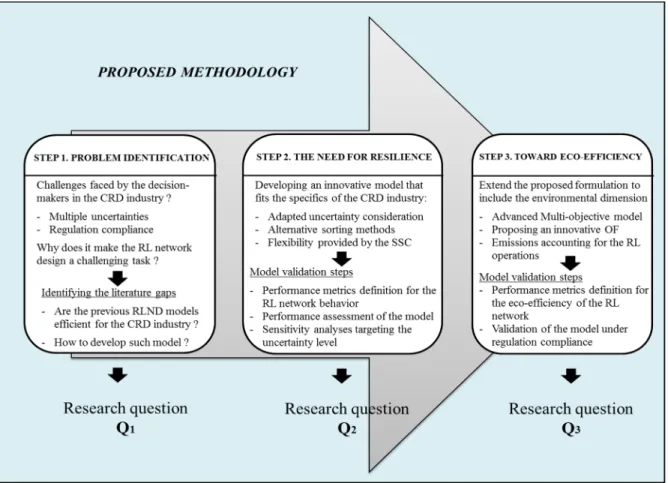
To address these research questions and reach the objectives of this thesis, we will follow three (3) main steps as synthesized in figure 05 below. In the first step called problem
identification, rather than solving the problem we aim to highlight the challenge faced by the
supply chain managers when dealing with the reverse logistics operations in the CRD industry. In step 2 called the need for resilience, we will propose a decision-making model that will offer solutions to cope with the challenges previously established in step 1. This second step ensures the RL network design efficiency under uncertainty in an economic perspective (i.e. long-term economic viability). Finally, step 3 includes the environmental dimension in the strategic decision-making process in order to provide a second aspect of sustainability: the eco-efficiency of the reverse logistics network.
12
Step 1. Problem identification
We will start by developing a scenario-based approach to evaluate and compare several RL network configurations and performances. These scenarios will present variations in key uncertain parameters that are a concern for the supply chain managers in the CRD industry. We will validate our model by performing experiments on a case study in the recycled wood CRD industry in Quebec. At this point, various performance indicators will be set to evaluate the impact of uncertainties on the optimal RL network configurations for the wood recycling process under environmental regulation. This first step represents a valuable contribution as the majority of the data used to conduct the case study was gathered from major players of the CRD recycled wood industry. Thus, the results could provide valuable insights to both supply chain decision-makers and to the legal entities that set the regulation parameters.
Step 2. The need for resilience
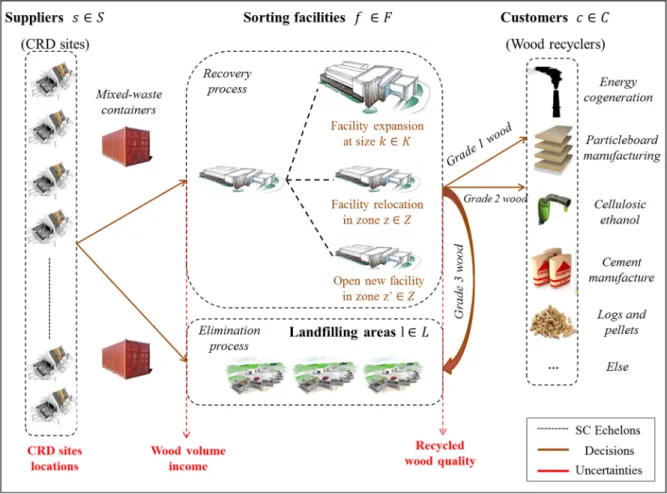
In this step, we will develop a model that allows setting a resilient network that will provide the best configuration for a multi-period planning horizon while considering simultaneously a large number of scenarios (i.e. randomness outcomes). We will also introduce flexibility in the RL activities by allowing an alternative sorting method: the source separation. Indeed, we will show how this alternative sorting strategy impact the efficiency of the RL operations, and the comparison will be performed for low-density rural zones versus highly populated urban areas. To achieve network resilience, a two-stage stochastic model is developed that ensures coordination between highly strategic network design decisions and tactical flow routing matters between the collection zones, the source-separation centers, the main collection centers and the building material recyclers. The main objective of this second step is to propose a solution to face uncertainty in an economically viable manner in this sector.
Step 3. Toward eco-efficiency
13
extend the previous mathematical formulation to consider the environmental regulations that target the wood recycling process in Quebec. The main goal of this final step is to highlight the trade-offs that need to be done between the economic viability of the RL operations and the eco-efficiency of the wood recycling process. The proposed multi-objective stochastic model helps understand that the source-separation strategy shows some benefits for both economic and environmental aspects of the supply chain operations.
Thesis outline
The rest of this thesis is organized as follows. In the first chapter, we review the literature on sustainable RLND with a specific focus on quantitative models with uncertainty. This way, we will highlight the theoretical gaps that we aim to fill with our own contributions.
In chapter #2, we present a scenario-based approach to evaluate the impact of uncertainties on the RLND best decisions. We formulate the problem as a mixed-integer linear program that minimizes the total cost of the wood recycling process and we validate this model trough a case study in the Quebec CRD industry. The objective is to determine the location and the capacities of the sorting facilities to ensure compliance with the wood landfilling prevention regulation and prevent the wood from being massively landfilled. The results of this study show that the adjustment of the reverse logistics network leads to the reduction of wood recycling cost due to the improved efficiency of sorting facilities and the economy of scale achieved under the new policy.
In chapter #3, instead of addressing the scenarios one by one, we will present a two-stage stochastic programming model for reverse logistics network design under uncertainty. We solve this model with a Sampling Average Approximation procedure, being an approach allowing to deal with a significant number of scenarios simultaneously. By doing so, the model provides the optimal RLND over multiple outcomes for the random parameters in a multi-period planning horizon. However, in this paper we emphasize the importance of including the SSC to address the challenge of the dynamic supply sources and the uncertain
14
quality of the materials. Indeed, source separation and shipments consolidation are performed at the SSC to increase the productivity level at the collection centers. We compare the efficiency of using the source-separation strategy in low-density rural collection zones versus in high-density urban areas, where the waste collection activities are often more challenging. The results indicate that the flexibility provided by the SSC improves the performance of the RL network, especially in the case of high-density urban areas.
In chapter #4, we develop a novel multi-period, multi-echelon and multi-objective two-stage stochastic model under environmental constraints for eco-efficient RLND. This last article includes the environmental dimension of sustainability as a second objective of the model. This way, we will be able to evaluate the trade-offs between the profits of recycled materials’ selling versus the environmental impact of the RL operations under both landfilling and greenhouse gases emission constraints. Indeed, the case study on the wood recycling processes in the CRD industry reveals that under quality uncertainty, recycling the wood can be harmful to the environment. In addition, as we include an emission control system in this last model, recycling poor quality wood leads to additional costs that penalize the RL network efficiency. The experiments demonstrate the difficulty for the network to achieve both regulation compliance and eco-efficiency in the meantime in an uncertain environment.
Finally, concluding remarks are given at the end of this work, along with a discussion of the future potential research related to our topics.
Research contributions
Article 1 (Chapter #2). To the best of our knowledge, analyses that consider variations in the locations of the supply sources while making reverse logistics network design decisions are unavailable. Indeed, this characteristic is very specific to the CRD industry, a sector that has been neglected in terms of reverse logistics studies (Govindan and Bouzon, 2018). Moreover, a second contribution is proposed by validating the model in the Quebec CRD industry, using real data gathered from the major players of the recycled wood industry in this area.
15
Article 2 (Chapter #3). In the first article, we establish that the RLND is very sensitive to the uncertainty targeting the suppliers’ location, the material quality and the volume of material collected. To our knowledge, no stochastic model addresses the RLND problem considering this combination of uncertainty over a multi-period horizon. By developing this model, we aim to provide valuable insights to the supply chain decision-makers in this industry that will allow them to build a resilient RLND over many possible outcomes in the future.
Article 3 (Chapter #4). In this article, we extend the formulation presented in article 2 to include a second objective function and additional constraints related to the environmental regulations. To the best of our knowledge, there is no advanced multi-objective stochastic formulation that captures the characteristics of the CRD industry for eco-efficient reverse logistics network design purposes. Moreover, traditionally objective functions (OF) are profit or cost-oriented, however, in this article we study an innovative OF that minimizes the landfilling flows to adapt to a new environmental regulation. Finally, usually the process of controlling the emissions targets the product design and procurement (Ren et al., 2015), manufacturing processes and technologies (Chaabane et al., 2012), the RL facilities in use (Kannan et al., 2012), but mainly the transportation activities (John and Sridharan, 2017). However, in this study, we account for the emissions of the customers’ activities, being an entity that is often neglected in the emissions accounting process, although we believe it is relevant since we consider a supply chain collaboration perspective toward sustainability.
The work presented in this thesis has led to the publication and submission of three (3) peer-reviewed journal articles, which are presented in detail in chapters #2 (Resources,
Conservation & Recycling Journal), chapter #3 (Waste Management Journal) and chapter #4
(Journal of Cleaner Production). In addition, our research findings and contributions were submitted, accepted and presented to seven (7) international conferences including the International Conference on Modeling, Optimization and Simulation (MOSIM), the conference on International Logistics Systems (ILS), European Conference on Operational Research (EURO), International Conference on Advanced Logistics and Transport (ICALT) and the international conference on industrial engineering (CIGI), among others.
CHAPTER 1
LITERATURE REVIEW
1.1 Fundamentals of reverse logistics in sustainable supply chains
Nowadays, it is widely acknowledged that reverse logistics has a leading role to play toward seeking sustainable supply chains. The term reverse logistics refers to operations related to the management of products that have reached the end of their useful life to the consumers in any way to give them an added value (Guide and Van Wassenhove, 2009). Reverse logistics practices have been recognized to be a powerful mean to reduce materials and products’ waste at their end of life, mainly by reusing some parts, repairing, refurbishing or recycling others, and ultimately by eliminating the unusable parts in a proper way (Fleischmann et al., 1997). Thus, today reverse logistics is a critical area of expertise among supply chains. This increased popularity explains why RL is one of the most popular fields in the literature on sustainable supply chains over the past decade. Indeed, this field is constantly evolving and providing the supply chain managers with innovative decision-making models to support them in their quest of sustainability (Min and Kim, 2012; Agrawal et al., 2015; Govindan and Bouzon, 2018).
In this chapter, we will focus on the theoretical background on reverse logistics in sustainable supply chains. Although this review has not the pretention to be exhaustive, our goal is to provide a representative overview of the existing models that address RLND decision-making among supply chains. Although the first part of this review addresses reverse logistics topics in general, the second part, however, will be more focused on strategic reverse logistics network design models. The last part of this analysis provides specific emphasis on the range of applications of RL in the construction industry, as it will allow highlighting our contributions. Finally, we will conclude this review by identifying the research gaps we aim to fill with this thesis.
18
1.1.1 Incentives toward reverse logistics
Today, factors that influence RL adoption are numerous (Seüring and Müller, 2008). While it is often perceived as an initiative to look for a positive brand image of green supply chain (Srivastava, 2007), some firms actually manage to realize profits through the RL operations (Cline et al., 2015). Indeed, nowadays, there is a growing consciousness among customers toward “buying green”. A recent survey declares that more than 80% of the responders are actually considering the product “greenness” when making purchasing decisions (Hong and Guo, 2018). Moreover, an increasing number of customers (nearly 3 out of 4) are willing to pay higher fees or taxes for buying green (Zhao et al., 2014).
In addition from the economic incentives coming from their customers, companies are facing pressures from stakeholders (Schaltegger and Burritt, 2014; Meixell and Luoma, 2015). For example, Mathivathanan et al., (2018) proposed a framework model based on DEMATEL methodology (Decision Making Trial and Evaluation Laboratory method) to cope with multiple stakeholders’ perspectives in the Indian automotive industry. The authors claim that the evaluation of the similarities and differences between the multiple supply chain stakeholders leads to increase the chances of success to reach sustainability in supply chain management. Supply chains are also facing pressures from various environmental groups (Luthra et al., 2016). Again, quantitative methods have been developed to tackle this problem such as the structural equation model (SEM) proposed by Yang, (2018) that analyses the effects of institutional pressures on the green supply chain performance in the container shipping industry. Finally, the main source of pressure probably comes from the authorities (Rajeev et al., 2017). Indeed, an increasing number of regulations are emerging such as the extended producer responsibility framework targeting multiple product categories, for example electronics (Temur and Bolat, 2017), vehicles (Demirel et al., 2016), plastics (Bing et al., 2015), construction material waste (Trochu et al., 2018) and so on. The goal of these legislations is to force supply chains to move toward sustainable practices in their business activities.
19
1.1.2 Reverse logistics decision levels
The pressures coming from these various institutions are forcing supply chains either to anticipate, or at least to react and find their own way toward sustainability. Adopting RL practices among companies represent an opportunity to improve the brand image, satisfy the multiple stakeholders and comply with the legal framework (Seüring and Müller, 2008). However, there is a wide range of decisions to be made in the field of reverse logistics. As it is the case in the classical forward supply chain management, these decisions are traditionally divided into three (3) main decision levels: the strategic, tactical and operational levels. Regarding reverse logistics, strategic decisions mainly focus on the network design, such as facility location and capacity allocation decisions, the technology acquisition and other long-term costly decisions. The tactical decisions focus on the flow allocation between logistics units such as collection centers, recycling centers and landfills. Finally, operational issues focus on lot-sizing, vehicle routing or disassembly planning operations (Souza, 2013).
All three decision levels have been explored in the literature, especially in the past decade. Among the strategic models, reverse logistics network design is a field of great importance that has been addressed by many authors (Kannan et al., 2012; Soleimani and Govindan, 2014; Govindan et al., 2016; Fattahi and Govindan, 2017; Trochu et al., 2018). For a more exhaustive review of RLND models, the reader is referred to (Akçali et al., 2009; Chanintrakul et al. 2009; Sheriff, 2012; Eskandarpour et al; 2015). The RLND decisions are among the most important in order to ensure the whole supply chain sustainability. Indeed, these are long-term costly decisions that will impact the network behavior and performance over many years, even decades. No matter how well the tactical and operational levels are managed, if the network configuration is not adapted, it will affect the whole supply chain performance and the chances of success toward reaching sustainability. Except the network design problems, the other main strategic topic addressed in the models is the investment decisions into green technologies (Hu et al., 2015; Saberi et al., 2018). Some models also address network design and technology selection at the same time (Rezaee et al., 2017; Rad and Nahavandi, 2018).
20
We also denote a large number of models addressing tactical concerns. Among them, the very large majority are targeting the physical flows going through the network (Lieckens and Vandaele 2012; Demirel et al., 2016; Bal and Satoglu, 2018). An extended review of the tactical RL decision models is provided by Govindan et al., (2015). It is important to denote that some of the strategic models consider the network design and the tactical flow routing decisions simultaneously (Yu and Solvang, 2016; Rezaee et al., 2017; Trochu et al., 2018).
As we mentioned, network design and flow routing through the reverse logistics networks are the main decisions addressed in the strategic and tactical levels respectively. However, it is more difficult to extract a predominant topic from the literature targeting operational models. Indeed, operational decision-making models address pricing decisions between supply chain partners (Atasu et al., 2013), production rates and lot sizing for products returns (Feng et al., 2013; Sifaleras and Konstantaras, 2017; Zouadi et al., 2018), optimal order quantitites (Abdallah et al., 2012; Panagiotidou et al., 2013; Shekarian et al., 2016; Zeng and Hou, 2018), inventory related decisions (Alinovi et al. 2012; Kaya and Urek, 2016; Hiassat et al., 2017), routing decisions or trucks loading issues (Gamberini et al. 2010; Kassem and Chen, 2012; Niknejad and Petrovic, 2014; Zhalechian and Tavakkoli-Moghaddam, 2016; Qiu et al., 2018), among other topics.
1.1.3 Reverse logistics activities among supply chains
For all the decision level assessed by the models, their goal is usually to provide the supply chain managers with useful insights regarding the best reverse logistics decisions. Multiple RL activities benefit from such decision-making tools, among them one of the most popular topics in the RL literature is the management of product returns through the reverse logistics channel (Agrawal et al., 2015). Indeed, forecasting product returns has a great impact on the best reverse logistics network design and various quantitative models have been developed for this purpose, using for example simplex theory (Chen and he, 2010), flow analysis (Yu et al., 2010), analytic models (Shih et al., 2012), Bayesian estimation (Krapp et al., 2013), or fuzzy methods (Temur et al., 2014). In addition, many stochastic models consider the return
21
of the products as an uncertain parameter so that they can deal with it in the best manner under many possible outcomes (Ayvaz et al., 2015; Jeihoonian et al., 2016; Fattahi and Govindan, 2017; Srinivasan and Khan, 2018). After the estimation of product returns and their collection in the RL channel, several RL operations can be performed. The products and parts can be reused if their quality level allows it, they can be repaired or remanufactured in case of a lower quality, or finally they may be recycled for another purpose. If no additional value can be obtained from the returned materials, their disposition is the last recourse. Thus, optimization models are developed to help with each of these operations in order to make the best decisions. Some of them cope with the reusing activities (Diabat et al., 2013; Dai and Wang, 2014; Cole et al., 2018), repairing and remanufacturing operations (Ramezani et al., 2013; Lieckens et al., 2013; Eskandarpour et al., 2014; John and Sridharan, 2017; Liao, 2018), the recycling processes (Zeballos et al., 2012; Lundkvist et al., 2013; Subulan et al., 2015; Demirel et al., 2014; Ardjmand et al., 2015; Zhang and Ding, 2017; Rahimi and Ghezavati, 2018; Trochu et al., 2018), and ultimately some models address the disposition decisions for the collected products and parts (Hazen et al., 2012; Agrawal et al., 2016; Singh and Agrawal, 2018). Again, regardless of the decision level of the above-mentioned models, it is important to note that a majority of these problems consider the transportation decisions through the RL channel.
1.2 Focus on sustainable RL network design optimization models
The previous section provided the reader with an overview of the various activities part of the RL processes among supply chains. We reviewed the quantitative models developed to help the managers making decisions to perform these operations, from either a strategic, tactical or an operational perspective. Moreover, we started by explaining the various incentives that may lead supply chains to include reverse logistics practices into their business. However, in the following section, we focus on recent quantitative optimization models for sustainable RL network design, as it falls into the category of models that we present in chapters 2, 3 and 4.
22
1.2.1 Deterministic reverse logistics network design models
As the interest toward RL has grown recently, we denote a significant number of academic publications that address RLND matters. Our goal here is not to provide an exhaustive review of these models, but rather to highlight some of the trends among those that were recently published. To do so, we selected what we believe to be 10 representative research papers and we analysed their content. These models were selected based on three (3) criteria: they are all reverse logistics network design models (1), single objective and deterministic
MILP (2), and published in peer-reviewed journals in the last three years 2016-2017-2018 (3).
More advanced multi-objective and stochastic models will be reviewed in the next sections. Below, table 1.1 synthesizes the information regarding the selected content.
Table 1.1 Recent quantitative models for sustainable RLND (2016-2017-2018)
Authors (year) Focus Commodities Periods Sector Contribution to sustainability
Demirel el al., (2016) Recycling
operations SC MP Automotive
An innovative model for vehicle recycling regulation compliance in Turkey
Keirkah and Rezai (2016) Cross-docking
operations MC SP General
Evaluation of cross-docking operations in the context of reverse logistics
Zandieh and Chensebli (2016) Products collection
& recovery SC SP General
Development of an original metaheuristic for solving NP-hard RLND problems
Alshamsi and Diabat (2017) Products
remanufacturing MC MP
Household appliances
Development of an new efficient Genetic Algorithm to solve large-scale problems
Budak and Ustundag (2017) Waste collection &
disposal MC MP Healthcare
Case study for waste treatment optimization in the healthcare sector in Turkey
Guo et al., (2017) E-waste recycling MC MP E-commerce Application of combined heuristics to reduce the recycling costs of E-products in Shangaï
Kannan et al., (2017) E-waste recycling MC MP E-commerce Analyzing the benefits of using 3PRL to minimize the cost of RLND for recycling
Li et al., (2017) Collection & repair
operations SC SP General
Development of a performant algorithm for enhanced local search for large-scale RLND
John et al., (2018) Products collection
& recovery MC MP Refrigerators
Innovative model for the recovery of used parts of refrigerators in India
Trochu et al., (2018) Recycling
operations MC SP CRD industry
An innovative model for wood recycling under regulation compliance in Canada SC: Single Commodity; MC: Multiple Commodities; CRD: Construction, Renovation & Demolition; RLND: Reverse Logistics Network Design; 3PRL: Third Party Reverse Logistics Providers; E-Waste: Electronic Waste; NP: Non-Polynomial
23
As our first paper (later presented in chapter #2), matches the above-mentioned criteria, we decided to include it in table 1.1. Overall, MILP is the most popular modelling technique for optimizing reverse logistics network design activities. Among them, a majority presents multi-product networks while the proportion of single versus multi-period models is quite similar. Although the trend suggests that waste collection and recycling are the main topic under study (Demirel et al., 2016; Guo et al., 2017; Kannan et al., 2017; Trochu et al., 2018), a wide variety of other RL activities have been considered such as the recovery (Zandieh and Chensebli, 2016; John et al., 2018) the repairing (Li et al., 2017), the remanufacturing (Alshamsi and Diabat, 2017) and also the disposal of the products that are not reusable in any way (Budak and Ustundag, 2017).
In the past, the trend was to build generic models. Indeed, these formulations were applicable to many industries and as a result, there was a lack of quantitative models that were able to capture the characteristics of specific sectors (Brandenburg et al., 2014). However, as suggested in table 1.1, lately we witnessed an increased number of optimization models applied to specific sectors. One of the main reasons for this evolution is the growing number of environmental regulations and programs targeting supply chains in many countries. Thus, because the requirements of these legislations are targeting specific sectors and commodities, there is a need for the models to adapt and be more industry-related in the meantime. As we can see in table 1.1, increasing recycling rates of products under regulation is an increasingly popular contribution of the research papers toward sustainability (Demirel et al., 2016).
1.2.2 RL network design under uncertainty: a focus on stochastic models
Uncertainty being a major concern in RL optimization, an increasing number of models are considering it in order to be more realistic. Although there are various approaches for uncertainty modeling such as fuzzy methods (Govindan et al., 2016; Soleimani et al., 2017) or robust optimization (Entezaminia et al., 2017; Haddadsisakht and Ryan, 2018), this section essentially reviews stochastic optimization models applied to sustainable RLND problems, as the research presented in chapters 3 and 4 fall into this category.