HAL Id: inria-00348313
https://hal.inria.fr/inria-00348313
Submitted on 18 Dec 2008
HAL is a multi-disciplinary open access
archive for the deposit and dissemination of
sci-entific research documents, whether they are
pub-lished or not. The documents may come from
teaching and research institutions in France or
abroad, or from public or private research centers.
L’archive ouverte pluridisciplinaire HAL, est
destinée au dépôt et à la diffusion de documents
scientifiques de niveau recherche, publiés ou non,
émanant des établissements d’enseignement et de
recherche français ou étrangers, des laboratoires
publics ou privés.
Rabab Hayek, Guillaume Raschia, Patrick Valduriez
To cite this version:
Rabab Hayek, Guillaume Raschia, Patrick Valduriez. Cluster-based Search Technique for P2P
Sys-tems. [Research Report] RR-6782, INRIA. 2008, pp.21. �inria-00348313�
a p p o r t
d e r e c h e r c h e
0 2 4 9 -6 3 9 9 IS R N IN R IA /R R --6 7 8 2 --F R + E N G Thème COMCluster-based Search Technique for P2P Systems
Rabab Hayek — Guillaume Raschia — Patrick Valduriez
N° 6782
Centre de recherche INRIA Rennes – Bretagne Atlantique
Rabab Hayek
∗, Guillaume Raschia
∗, Patrick Valduriez
∗Thème COM — Systèmes communicants Équipe-Projet Atlas
Rapport de recherche n° 6782 — December 2008 — 21 pages
Abstract: We consider network clustering as the way to improve the perfor-mance of locating data in unstructured P2P systems. Connectivity-based Dis-tributed node Clustering (CDC), and SCM-based DisDis-tributed Clustering (SDC) are two major protocols that allow partitioning a network topology into clus-ters, based on node connectivity. These protocols focus on the accuracy of the clustering scheme, i.e. using the Scale Coverage Measure (SCM ), and its maintenance against node dynamicity. However, they do not propose search techniques that may take advantage of their clustering information. Thus, their proposals have not been evaluated according to the motivation behind.
In this work, we propose a new, efficient Cluster-based Search Technique (CBST) for unstructured P2P systems. We use it to validate connectivity-based clustering schemes, according to the trade-off between cost of maintaining clusters, and benefit for query processing. Our experimental results show the efficiency of CBST implemented over the SDC protocol. By simply exploiting clustering features of the underlying network, a query can travel across a large number of nodes with a minimum number of messages. CBST eliminates a large portion of redundant messages, thus avoiding to overload the P2P network. Key-words: P2P Systems, Network Clustering
réseau
Résumé : Nous proposons une technique de recherche qui exploite l’organisation inhérente d’un réseau P2P afin de réduire le nombre de messages échangés. Dans la litératire, deux travaux majeurs ont proposés des protocoles d’organisation de réseaux P2P, basés sur la connectivité des noeuds (i.e. Connectivity-based Dis-tributed node Clustering (CDC), et SCM-based DisDis-tributed Clustering (SDC)). Ces protocoles ont focalisé sur la précision du schéma d’organisation, et sa maintenance contre la volatilité des noeuds. Cependant, ils ne proposent pas des techniques de recherche qui peuvent exploiter des informations sur leur or-ganisation du réseau. Leurs propositions ne sont pas donc evaluées selon la motivation sous-jacente.
Dans notre travail, nous proposons CBST (Cluster-based Search Technique), une technique de recherche pour des systèmes P2P non structurés. Cette tech-nique est utilisée pour valider les protocoles d’organisation de réseaux P2P, selon le compromis réalisé entre le coût de maintenir les groupes de noeuds (i.e. clusters) et les gains en traitement de requêtes. L’évaluation de performance montre l’efficacité de notre technique de recherche. Une requête est propagée vers un grand nombre de noeuds, avec un nombre optimal de messages. CBST elimine une grande portion de messages redondants, évitant donc de surcharger le système P2P.
1
Introduction
P2P networks allow to share data on a world-wide scale with many advantages such as decentralization, self-organization, etc. However, a key challenge is to implement efficient search techniques. Initially, P2P search systems relied on flooding mechanism. Despite of its simplicity and high network coverage (i.e. a large number of nodes could be visited within small values of Time-To-Live (T T L)), the flooding mechanism suffers from high bandwidth consumption. There are two major concerns with flooding.
• Search Blindness: a peer forwards a query message to its neighbors without any information on how these neighbors may contribute to query answers.
• Message Redundancy: a peer may receive the same query message multiple times. This is due to the ad hoc nature of P2P connections, i.e. the neighbor selection process is random and non-discriminant.
Many techniques have been proposed in order to improve the performance of P2P systems. Initial works have led to structured systems, which mainly act as global distributed indexes (e.g. [7], [14]). These systems address the problem of topology randomness by imposing a specific network structure, and remedy to the blindness problem by making a tight control on data (or data point-ers) placement. Hence, these systems provide an efficient, deterministic search. However, they compromise node autonomy and may restrict search expressive-ness. Other data indexing techniques have been proposed in fully unstructured systems such as [1], [3]. Each of these techniques achieves a different trade-off between the cost of maintaining indexes and the benefits obtained in query processing.
Another research axis has focused on network clustering which aims to in-troduce some structure to, or extract inherent structural patterns from fully unstructured P2P networks. A network clustering scheme consists in organiz-ing the nodes into clusters, based on a given criterion. A clusterorganiz-ing criterion could be a physical network metric (e.g. bandwidth, latency), some peer prop-erty/behavior (e.g. node connectivity/stability), or even defined at the applica-tion layer (e.g. similar interests).
Our contribution consists in exploiting the characteristics of the overlay topology, namely its clustering features, in order to reduce the number of re-dundant query messages generated by flooding-based algorithms. This allows to improve the performance of P2P systems, irrespective of the employment of techniques relying on data semantics at the application layer (i.e. semantic indexing or clustering). In reality, the flooding approach is still a fundamental building block of unstructured P2P systems. It represents the natural way for exchanging messages between nodes which are connected in an ad hoc manner. This paper proposes a Cluster-Based Search Technique (CBST) for P2P systems, which is implemented over a connectivity-based clustering protocol. A connectivity-based clustering protocol aims to discover the natural organization of nodes, based on their connectivity. Thus, it delimits the boundaries of sub-graphs (i.e. clusters) which are loosely connected and in which nodes are highly connected. In the P2P literature, two main protocols have been proposed, i.e.
the Connectivity-based Distributed node Clustering (CDC) [12], and the SCM-based Distributed Clustering (SDC) [9]. These works have been introduced by arguing that efficient routing protocols could be defined by taking advantage of the clustering features of the underlying network. However, none of them has proposed an appropriate routing protocol, or provided analytical models or experimental results on how their clustering schemes contribute to reduce the bandwidth consumption. The main focus was on the clustering scheme accuracy, i.e. using the Scale Coverage Measure (SCM), and its maintenance against node dynamicity.
The CBST works as follows. Based on a local knowledge about the network clustering in its neighborhood, each node maintains information about the lo-cal links to nodes in its cluster (intra-cluster information), as well as about global links connecting its cluster to other reachable clusters (inter-cluster in-formation). The intra-cluster routing information is equivalent to a spanning tree, rooted at that node and covering its partners (i.e. the nodes that belong to its cluster). These information are efficiently gathered and maintained in a cluster-based routing table. The benefits in query routing are two folds. First, a query Q is efficiently disseminated in a given cluster, using the spanning tree of the first node contacted in that cluster. Second, the query messages between clusters are restricted to those traversing the global links specified by the query-ing node. Extensive simulations have demonstrated the efficiency of the CBST technique compared to the pure flooding and random walk routing techniques. The rest of this paper is organized as follows. Section 2 gives an overview of the existing connectivity-based clustering schemes. In section 3 we describe our cluster-based search technique CBST . Section 4 discusses the trade-off between search accuracy and bandwidth consumption that can be achieved by CBST . Section 5 presents performance evaluation through simulation. In section 6, a comparison to related works is provided. Section 7 concludes.
2
Connectivity-based clustering schemes
A connectivity-based clustering protocol should fulfill the following requirements in order to be considered as appropriate for P2P systems.
• A natural requirement is that it should achieve a good clustering accuracy, i.e. it should organize the network such that nodes are highly connected in the same cluster and less connected between clusters.
• It should well control the cluster size (or cluster diameter). Due to the lack of knowledge about network structure, it is expensive to maintain expanded clusters in large P2P networks.
• It should be fully distributed. Nodes should form clusters automatically without the knowledge of the complete network topology.
• It should recover from node dynamics, with small overhead in term of the number of messages exchanged between nodes.
Centralized clustering algorithms, like MCL (Markov Cluster) [13], can achieve high clustering accuracy. However, such algorithms assume that the complete network topology is available at a central point, and thus cannot be used in
P2P networks. The CDC scheme [10] is a distributed approach that discovers connectivity-based clusters in P2P networks. A set of nodes are selected as “orig-inators” and clusters are formed around them using flow simulation. The quality of the clustering scheme depends on how well the “originators” are distributed in the network. Furthermore, the main issue with the CDC algorithm is that it cannot handle node dynamicity in a decent way. The whole network has to be re-clustered at each node join or leave, which incurs a large traffic overhead. The SCM-based Distributed Clustering (SDC) protocol [9] proposes to satisfy all the design criteria discussed above. The protocol performs in a fully dis-tributed way, which is briefly described in Section 2.2. The clustering accuracy is dynamically adjusted using the Scaled Coverage Measure (SCM ), a practical clustering accuracy measure, which is presented in Section 2.1. Besides, the cluster size is well controlled, and the node arrival/departure is locally handled with a small number of messages, while keeping a good quality of clustering.
2.1
SCM: Accuracy Measure for Graph Clustering
The Scaled Coverage Measure (SCM) has been proposed by S.Van Dangon [13] to evaluate the accuracy of a clustering scheme. The key idea behind this performance measure is that an optimal clustering of a given graph should minimize both the number of inter-cluster edges and the number of non-neighbor vertices in each cluster. Let G = (V, E) be a graph, where V is the set of nodes corresponding to the set of peers in a P2P system, and E is the set of links, which are the logical connections between peers. We assume that C = {C1, C2, . . . , Cl} is a given clustering on graph G. Each cluster Ci is a non-empty subset of V , and ∪l
i=1Ci= V . Given a node ni∈ V , we have the following notations: • Nbr(ni): the set of neighbors of node ni;
• Clust(ni): the set of nodes in the same cluster as node ni (excluding ni); • FalsePos(ni): the set of nodes in the same cluster as nibut not neighbors
of ni;
• FalseNeg(ni): the set of neighbors of ni but not in the same cluster as ni.
Then the Scaled Coverage Measure of node niwith respect to the clustering C, SCM (ni), is defined as:
SCM (ni) = 1 −
|F alseP os(ni)| + |F alseN eg(ni)| |N br(ni) ∪ Clust(ni)|
(1) The SCM value of the graph G, SCM (G), is defined as the average of the SCM values of all of the nodes: SCM (G) =PniSCM (ni)/N , where N is the
network size (i.e. |V | = N ).
2.2
The SDC Protocol
Given a network, each node no is initialized as an orphan node with its own clust_id (any unique id is sufficient) and clust_size (1 in this case). For SCM computation, node no maintains two variables ao and bo such that:
ao= |N br(no) ∪ Clust(no)|, bo = |F alseP os(no, C)| + |F alseN eg(no, C)|. Ini-tially, ao= bo= |N br(no)|, and according to Equation 1: SCM = 1 − bo/ao.
When running the SDC protocol, all nodes start to exchange messages with their neighbors, conduct some simple computation, and form clusters in a greedy manner. After a number of rounds of communication, the clustering procedure becomes stable without further message exchange and the network is finally clustered. The clustering procedure executed when node noattempts to join a new cluster can be briefly described as follows.
• First, node no probes its neighborhood (i.e. Clust_P robe message) to discover “candidate clusters” to which it may join. Then, a request message is flooded in each candidate cluster to indicate the intention of node noto join that cluster.
• Second, each node njin a candidate cluster Cicomputes the gain ∆SCM (nj) assuming that node nojoins Ci. Note that this computation only requires the information of whether no is a nj’s neighbor or not. According to equation 1, if no∈ N br(nj),
∆SCM (nj) = 1/anj.
Otherwise, the gain in SCM is given by,
∆SCM (nj) = bnj/anj − (bnj + 1)/(anj+ 1).
Similarly, each node in Clust(no) has to compute its gain as if no leaves its current cluster. After gain computation, node nj sends back its gain value to node no (i.e. Clust_Reply message).
• Upon receiving all the reply messages from all the nodes in its cluster and a candidate cluster Ci, node nocomputes the overall gain ∆SCM (G) assuming it leaves its original cluster and joins Ci. If ∆SCM (G) > 0, no should join Ci. There might be multiple candidate lusters of which ∆SCM are positive, no should join the one with the maximum SCM gain. Once nodetermines which cluster to join, a Clust_U pdate message is flooded in its original cluster and the new cluster. This allows to update the clustering information of its old and new partners.
• The cluster diameter is bounded by a predefined threshold D, which is used to limit the flooding of request and update messages within clusters. If the arrival of node no to a new cluster implies that the new cluster diameter will exceed the D value, then the join request of node nowill be rejected. This allows to control the cluster size as well. Simulation results in [9] have shown that the average cluster size is very stable, for topologies with different scales.
Note that, after node no joins the new cluster, its neighbors in the original cluster are affected and should check whether they should join other clusters, in the same way as node nohas done. The whole procedure will end if no node can join any cluster based on ∆SCM (G), and the cluster diameter control.
Neighbor Cost(nb of hops) Destination Partner entries n1 h11 p1 n2 h22 p2 · · · · nn hnk pk Cluster entries n1 h11 C1 n2 h22 C2 . . . . nm hml Cl
Table 1: Routing table of node no
3
CBST for unstructured P2P systems
In our work, we aim at defining a cluster-based search technique on the top of a connectivity-based clustering protocol (i.e. the SDC protocol). In this section, we first define a mechanism for building cluster-based routing tables, and updating their entries against node dynamicity. Second, we propose a routing mechanism that allows a query to travel across clusters such that a maximum number of nodes is visited (for a given value of T T L), and redundant query messages are quasi-eliminated.
3.1
Cluster-based Routing Table
Let G = (V, E) be the graph corresponding to an unstructured P2P network, and C the clustering obtained from running the SDC protocol on that graph. Suppose that node no ∈ V belongs to the cluster Co ∈ C. According to the notations in 2.1, N br(no) is the set of no’s neighbors, and Clust(no) is the set of no’s partners, i.e. the set of nodes that belong to the same cluster Co. Note that Co= Clust(no) ∪ {no}.
3.1.1 Routing Table Description
Table 1 describes the routing table maintained at node no. We distinguish between intra-cluster routing information, which is represented by the first set of partner entries, and inter-cluster routing information, which is represented by the second set of cluster entries. The former provides information about paths to each partner p ∈ Clust(no), while the latter provides information about paths to a subset of reachable clusters.
A partner entry ep( respectively cluster entry ec) in Table 1 is read as follows. Going through neighbor ni, node nocan reach a partner pj ( respectively a new cluster Cj), with a minimal number of hops hij. Thus, the set of partner entries is equivalent to a spanning tree of the subgraph Co, rooted at node no. The number of these entries is limited to the cluster size, which is well controlled by the underlying clustering protocol. On the other hand, to control the number of cluster entries, node no chooses to keep information only about clusters that contain, at least, one node locating at a maximum distance of D.
Before presenting how the routing table RT at node no is maintained, we list the set of properties that should be satisfied in order to keep RT staleness. Property 1 P a = Clust(no), where P a is the set of destinations (peers) of partner entries in the no’s RT (P a := {ni∈ V /∃ep∈ RT, ep.destination = ni}). Property 2 ∀ep ∈ RT , ep.cost = min(distance(no, ni)) over all the intra-cluster paths (no, ni), where ni = ep.destination.
These two first properties guarantee that the set of partner entries in no’s RT represents the spanning tree of the subgraph Co, rooted at node no itself.
Property 3 ∀ec ∈ RT , ∃ni∈ D-N br(no) such that ni.clust_id = ec.destination, where D-N br(no) is the D-neighborhood of node no, i.e. D-N br(no) = {ni ∈ V /distance(no, ni) ≤ D}.
This property guarantees that each cluster referred by a cluster entry in no’s RT is still existing in the network, and contains at least one node belonging to the D-N br(no).
Property 4 ∀e ∈ RT , e.dist ≤ D.
This final property guarantees that the cost values in no’s RT are all bounded by the predefined threshold D, which is used by the SDC protocol to control the cluster diameter.
3.1.2 Table Maintenance
When running the SDC protocol on a P2P network, nodes exchange some messages and after a round of communications, they determine their respective clusters (Section 2.2). In our work, we define an efficient algorithm which allows to create/update our routing tables, while the clustering scheme is establishing. The main idea is to only use the SDC clustering messages in order to gather and maintain cluster-based routing tables, without requiring additional mes-sages. Due to space limitations, we do not present the details of our algorithm. However, for illustration, we consider the network of Figure 1, which contains 8 nodes and 4 different clusters (the orphan node 7 is considered as a separate cluster). All nodes maintain their initial routing tables, which are in a valid state, before node 7 attempts to join a new cluster. Figure 2 shows the network after node 7 has joined cluster B. The routing tables are updated accordingly, and thus are in a new valid state.
At node 7, the cluster entry that corresponds to the newly joined cluster is removed. That is, the second entry of its initial table is removed. Then, entries that describe paths to the new partners 1 and 5 are added. New partners is identified thanks to the reply messages which have been sent back to node 7.
The clustering change made by node 7 will certainly incur modifications on other nodes’ routing tables. According to SDC, node 7 sends a Clust_U pdate message to be flooded in both old (if still exist) and new clusters (e.g. cluster B). Such a message can be used to update the routing tables of visited nodes. To this end, we assume that it is flooded in all candidate clusters, and is associated with its routing table. Hence, the modifications are propagated from a node to
C 6 1 6 7 4 1 1 7 A Cluster entries Node 2 Partner entries 3 1 3 1 1 B 4 5 7 0 3 6 2 1 cluster A cluster C cluster B 4 1 4 7 7 1 2 7 B Partner entries Cluster entries 2 C 4 Node 0 0 1 0 7 2 1 7 C Partner entries Cluster entries 1 7 2 B Node 4 2 2 6 7 2 1 2 7 A Cluster entries Node 3 Partner entries 2 1 2 2 2 B 5 1 5 7 2 1 1 7 C Partner entries Cluster entries 2 2 A Node 1 2 2 2 3 7 1 2 7 A Cluster entries Node 6 Partner entries 2 1 2 2 B 2 Partner entries Cluster entries 0 1 2 2 7 1 1 1 1 7 7 A Partner entries Cluster entries Node 5 1 C A 1 1 B 2 1
Figure 1: Initial routing tables
another. Remind that the flooding of SDC clustering messages is limited to the maximum cluster diameter value D. Thanks to the Property 4, such a limited flooding is sufficient for reaching all affected nodes.
In our example, each cluster entry that supposes that node 7 belongs to its old cluster should be removed, e.g. the third entry in the initial table of node 6. Besides, the clustering change made by node 7 may either introduce a new cluster into the D-neighborhood of a given node, or provide a shorter path to a cluster which is already known. In the first case, a cluster entry for the new cluster should be added. However, in the second case, the corresponding entry should be appropriately updated. For instance, the last entry in the initial table of node 6, which describes the path to cluster B, is replaced by the fourth entry in its final table, since it provides a smaller cost value.
In the case where an alternative path to a given cluster is provided with a same cost, then the current node chooses the path in which the next hop node is a partner. For instance, in the routing table of node 1, the last cluster entry describes the path to cluster A via node 2, with a cost of 2 hops. This entry in the final table by an entry that describes another path, which goes through the new partner 7 with a same cost.The benefit of such a choice is discussed while presenting our query propagation mechanism.
Once the clustering scheme is established, and the routing tables are in a valid state, the only events that can disturb this network stability is node con-nection/disconnection. Suppose now that node noenters/leaves the P2P system. Figure 3 shows the decomposition of the network into subgraphs according to the relative position to no. Here, Co is the cluster of node no before its leaves,
2 5 1 5 2 7 1 2 C A Cluster entries Node 1 Partner entries 7 1 7 4 5 7 0 3 6 2 1 cluster A cluster C cluster B 4 1 4 7 4 1 2 B C Partner entries Cluster entries Node 0 0 1 0 2 1 C B Partner entries Cluster entries Node 4 7 1 6 1 6 4 1 1 1 A B Cluster entries Node 2 Partner entries 3 1 3 2 2 6 2 7 2 1 A B Cluster entries Node 3 Partner entries 2 1 2 2 2 3 2 7 2 1 A B Cluster entries Node 6 Partner entries 2 1 2 1 1 1 7 1 2 A C Cluster entries Node 5 Partner entries 7 1 7 5 1 5 0 2 1 A C Cluster entries Node 7 Partner entries 1 1 1 1
Figure 2: Final routing tables
or the new cluster it joins upon its arrival into the network. The diameter d of cluster Co is bounded by the predefined threshold D.
D d D−Nbr(no) P2P Network no Nbr(no) Co
Figure 3: Network around node no
First, consider a node niwhich is out of the D-neighborhood of node no(i.e. ni∈ D-Nbr(n/ o)). Its routing table RTi is not affected and remains in its valid state. In fact, according to Property 4, each entry e in RTi describes a path to a given destination such that e.cost ≤ D. Hence, each node nj locating on this path should satisfy the following condition: distance(ni, nj) ≤ D. Since distance(ni, no) > D, node no does not affect any path information maintained in RTi. Therefore, a first conclusion is that the node arrival/departure are localized events and their impacts on routing tables are limited to the D-neighborhood of the arriving/leaving node (i.e. the gray zone in Figure 3).
When node noleaves or enters the P2P network, the topology structure in its neighborhood is changed, and thus existing clusters may be affected. In [9],
the SDC protocol handles node dynamics in a very efficient way. It ensures a good clustering accuracy, with a low cost in term of the number of exchanged messages. Once again, we aim here at exploiting the clustering messages in order to update our cluster-based routing tables in D-N br(no).
According to SDC, before leaving the network, node no sends a leave message that contains its identifier to all nodes in N br(no), as well as in Co through flooding. As such, each affected node in N br(no) ∪ Co can update its clustering information, i.e. cluster size and SCM value. Concerning the routing tables, all stale entries that describe paths traversing node noshould be removed. To this end, we assume in our work that the leave message sent by a node ni has the following structure: leave = hno, SEi, T T Lii, where SEi is the set of stale entries in its routing table RTi, relative to node no’s exit. While the T T Li value controls the message flooding, and is dynamically adjusted at node ni. In the following, we describe how SEi and T T Li are determined.
a) Set of Stale Entries SE:
At a neighbor node ni in N br(no), the set SEi of stale entries is given by: SEi= {e ∈ RTi | e.neighbor = no}. For instance, if we consider that node 0 is leaving from the network of figure 2, the sets of stale entries at nodes 4 and 7 are: SE4= {ep1}, and SE7= {ec1}.
At a non-neighbor node nj which has received the leave message from a neighbor ni, the set SEj of stale entries is given by:
SEj = {e ∈ RTj | ∃e′∈ SEi; (e.neighbor = ni) and (e.destination = e′
.destination)}
In our example, the set of stale entries at node 5 which receives the message from node 7 is: SE5= {ec1}.
b) Dynamic TTL value:
In order to reach all the stale entries in D-N br(no), a solution could be to flood the leave message with a T T L value, initialized by no to D, and decremented by one after each message hop. However, to reduce the number of exchanged messages, we adopt an alternative in which each node ni locally adjusts the T T L value.
First, if the set SEi of stale entries is empty at node ni, the T T L value is set to 0 and the leave message is stopped. Otherwise, the T T L value is set as follows. Let e be a stale entry found at node ni. This entry describes the path to a given destination dest. Suppose now that there is a node njwho is reaching the same destination dest through node ni. Hence, there is a stale entry e′that should be also removed from the routing table of node nj. However, according to Property 4:
e′
.cost ≤ D ⇒ distance(nj, ni) + e.cost ≤ D
⇒ distance(nj, ni) ≤ D − e.cost (2) The value of T T Lishould be greater than distance(nj, ni) in order to reach nj and remove its stale entry e′. According to 2, T T L
icould be set to D − e.cost. By applying this condition to all stale entries at node ni, we conclude that
the T T L value is given by: T T Li = (D − mine∈SEi(e.cost)). This alternative
allows to remove all the stale entries at affected nodes in D-N br(no), with a minimal number of leave messages. Node arrival is treated in a similar way as node departure. As stated before, the key idea is to limit the strategy of routing table updates to affected regions, with a dynamically controlled flooding.
3.2
Query Propagation
We describe now how a query Q is propagated in the network, using cluster-based routing tables. The query message is in the following form.
Q_M sg = hQ_id, cluster_id, T T L, dest_Listi
• Q_id: the query identifier. It mainly allows to avoid processing the same query multiple times.
• cluster_id: the cluster identifier of the node sending the query. It mainly allows to avoid serving the same query within the same cluster multiple times.
• T T L: the T T L value which is the maximum number of hops a query Q can make in the network.
• dest_List: the destination list which contains routing information pro-vided by the tables of visited nodes.
Recall that our routing tables do not provide information about the re-quested objects. The destination list dest_List serves as a memory that keeps trace of the query all along its path. Thus, at each forwarding step, the query is able to remember all the routes it has already traversed. In other terms, the query propagation mechanism is still blind from a data location point of view, but is supported with memory which allows avoiding unnecessary messages. An dest_List’s element is represented by: hneighbor, desti, where neighbor iden-tifies which neighbor of the current node should be chosen for the next query hop, in order to reach destination dest with a minimal cost. A neighbor field value of −1 indicates that the corresponding destination is either reached or targeted by another path that doest not include the current node. To illustrate our mechanism, suppose that node 0 in our network example issues a query Q0 (Figure 4). Upon receiving the query message, a node n first decrements the T T L value. If T T L > 0, it proceeds to update the query message and forward it. Otherwise, the query forwarding is stopped. To update dest_List, node n performs the following steps.
a) Adding new partner entries: First, node n verifies if it is the first visited node in its cluster. In that case, n adds new partner elements, each of which provides information about the path to a given partner (e.g. node 7 and node 2 in Figure 4). In other terms, the query will be disseminated in a given cluster according to the spanning tree rooted at the first visited node.
−1 7 4 destList0 Cluster A node 4 Cluster B Cluster C 4 −1 destList7 Cluster C −1 Cluster A node 1 5 node 5 Qo −1 3 destList2 Cluster C −1 −1 Cluster A Cluster B node 3 6 node 6 4 5 7 0 3 6 2 1 cluster A cluster C cluster B destList4 node 4 Cluster B Cluster C −1 −1 −1 2 Cluster A −1 −1 destList3 Cluster C −1 −1 Cluster A Cluster B node 3 −1 −1 destList6 Cluster C −1 −1 Cluster A Cluster B node 3 −1 node 6 −1 −1 destList1 Cluster C −1 −1 Cluster A Cluster B node 1 −1 node 5 node 6 −1 −1 destList5 Cluster C −1 −1 Cluster A Cluster B node 1 −1 node 5 −1 1 Cluster B −1
Figure 4: Cluster-based query propagation
b) Setting entries: Second, node n should update each element e in dest_List as follows. If n = e.neighbor which means that node n locates on the path de-scribed by element e, then n has to precise the next query hop based on its routing table. Otherwise, the neighbor field value is set to −1 to indicate that all paths that traverse node n are not supposed to reach the corresponding destination.
c) Adding new cluster entries: Third, node n checks if its routing table contains information about additional clusters that do not figure in dest_List. If such cluster entries exist then corresponding elements, which are extracted from n’s routing table, are added to dest_List.
To illustrate the destination list update, consider dest_List4 of query Q0 in Figure 4. Node 4 belongs to the same cluster as the query sender, which is node 0. The last element in dest_List4 indicates that through node 2 the query can reach cluster C. The two first entries indicate that node 4, as well as its own cluster A, have been already visited. The third entry informs node 4 that it does not locate on the path leading to cluster B. This allows avoiding redundant messages since node 4 could also send a message to cluster B via its neighbor node 7. Once dest_List updated, node n forwards the query to each neighbor in dest_List. For example, node 4 sends the query only to node 2. If node n does not belong to the same cluster as the query sender, it sets the cluster_id field of the query to its cluster identifier before forwarding it.
Now let us examine the cost of propagating query Q0 in Figure 4. Our cluster-based propagation mechanism requires only 7 messages to cover the en-tire network (i.e. the continuous arrows). In comparison, a flooding mechanism would result in 4 additional, unnecessary messages (i.e. dashed arrows). Ob-viously, this propagation efficiency may be compromised by a smaller value of
query accuracy, which is quantified by the total number of visited nodes for a given value of T T L. For example, node 6 could be reached with a T T L value of 2 using the flooding technique, while a T T L value of 3 is required for our cluster-based technique. In fact, this trade-off between query accuracy and query propagation cost will be discussed later in this paper.
4
Discussion
In P2P networks, a search is successful if it discovers at least one replica of the requested object. The efficiency of a search technique could be quantified by the success rate (or accuracy), which is the ratio of successful to total searches made. However, search techniques are also evaluated according to bandwidth consumption.
4.1
Search Accuracy vs. BW Consumption
The performance of flooded-based search techniques is quantified by the pair (M, P ), where M is the total number of exchanged messages, and P is the total number of visited nodes. The search accuracy of blind techniques depends on the number of visited nodes P . To increase the probability of finding a replica of the requested object, these techniques tend to propagate the query to a large number of nodes, since they do not dispose of any information related to object locations. However, the main issue is to achieve a good trade-off between search accuracy and bandwidth consumption. In other terms, increasing P should not result in increasing the number of redundant messages M − P , which unnecessarily overload the network.
a) Intra-cluster messages: In our approach, a query is disseminated inside a given cluster based on the spanning tree rooted at the first visited node in that cluster. Thus, the intra-cluster query propagation guarantees that all partner nodes falling into the query scope are visited only once, through the shortest intra-cluster paths. In the case where the cluster diameter d ≤ T T L, the cluster will be entirely covered.
b) Inter-cluster messages: Now suppose that node n maintains information about l clusters in its routing table. If T T L ≤ D, then the set of clusters visited by the query is included among those l clusters. Otherwise, i.e. if the T T L value permits to go beyond the D-N br(n), additional clusters could be visited by the query. Here, two different nodes locating on two different query routes might have information about a same new cluster. Thus, the latter will be reached twice, which may incur redundant messages. Another issue is that, a cluster entry maintained in n’s routing table describes the shortest path to a first contacted node in that cluster. However, it does not guarantee that all the nodes visited in the new cluster are reached with a minimal number of hops.
4.2
Clustering Scheme Accuracy vs. BW Consumption
Besides studying the benefits obtained for query processing, the cost of main-taining an accurate clustering scheme should be taken into account, especially
in the context of P2P systems. In [9], simulation results show that the cost of recovering from a given node arrival/departure is very limited, and quasi-independent of the network size. This interesting result is due to the very efficient solution adopted by SDC to handle node dynamicity. This cost is lim-ited to 50 messages (the cost of node joining is slightly less than the cost of node leaving), and this for a network size ranging from 1000 to 5000. In our work, we have mainly used the clustering messages in order to update the cluster-based routing tables. However, we require some additional messages to make all the necessary modifications to all affected tables (Sections 3.1.2). According to SDC, the Clust_U pdate message has only to be flooded in the old and new clusters of the moving node no. While the Leave message should be flooded in N br(no) and the old cluster Co of the leaving node no.
For our CBST purposes, however, the Clust_U pdate and the Leave mes-sages should be flooded in all neighboring clusters of node no. However, this incurs a very limited number of messages, and this because of the two following reasons. First, the number of neighbor clusters of node nois supposed to be very small since the clustering metric is node connectivity. Nodes that are neighbors are preferred to be partners in the same cluster, which is taken into consider-ation by the SCM gain computconsider-ation. Second, the SDC protocol has a stable performance in term of controlling the cluster size. Thus the flooding within a given cluster is well controlled. Besides, the solution we have proposed for dynamically adjusting the TTL value of the leave message reduces at maximum the number of induced messages.
5
Experimental Results
We validated CBST through event-driven simulations, which are commonly used to evaluate the performance of large scale P2P systems. Simulations allow controlling system parameters, and thus studying their impact on overall sys-tem performance. Furthermore, our performance evaluation consists mainly in quantifying the trade-off between search accuracy and bandwidth consumption. The first is measured in terms of the number of visited nodes, while the sec-ond is measured in terms of the number of exchanged messages in the system. Network parameters such as latency and bandwidth do not interfere with these measurements. Thus, simulation results are supposed to give a rough estimation of real values that might be obtained from real implementations.
5.1
Simulation Setup
We used the SimJava package [4] and the BRITE universal topology genera-tor [5] to generate power law P2P networks, with an average node degree of 4. Note that the SDC protocol has been tested over both random and power-law topologies. However, the latter yield better performance regarding the overhead traffic, which is required for maintaining good clustering accuracy, and the clus-ter size control. On the other hand, recent studies (e.g. [15], [11]) have shown that many real-life networks (e.g. social networks, P2P networks) have common characteristics, including power law degree distributions. In our experiments, we first generate network topologies with sizes varying between 100 and 3000. Then, we run the SDC protocol to establish a connectivity-based clustering
scheme over the generated networks. The value of D, which is used to control the cluster size is set to 3, as considered in [9]. Finally, we implement our search technique over these clustered networks in both static and dynamic settings.
Figure 5: Query cost vs. network size
5.2
Perfomance in Static Systems
In this set of experiments, we assume that all nodes remain connected to the system, the clustering scheme is stable, and all routing tables are in a valid state. Under these assumptions, we quantify the trade-off between search accuracy and bandwidth consumption. We compare CBST against flooding and random walk [16] techniques. The comparison to flooding techniques is very relevant for evaluating search accuracy, since they provide the highest accuracy values (for a given T T L). However, they produce a huge traffic overhead in the network. Thus, we choose to compare CBST to the random walk technique, which is a good representant of the blind techniques that have been proposed to overcome the problem of bandwidth consumption. In these experiments, a query Q is associated with a T T L value of 3.
5.2.1 Search accuracy vs. Bandwidth Consumption
Figure 5 depicts the total number of messages exchanged for propagating a query Q, while Figure 6 depicts the number of visited nodes, in function of the network size. We can observe that the random walk approach reduces very significantly the number of exchanged messages. In fact, a requesting node n sends out k query messages to an equal number of randomly chosen neighbors. Each of these messages is forwarded to a randomly chosen neighbor at each step. In our experiments, we use a high value of k such that a query originator sends the query message to all its neighbors. However, as we can see in Figure 6, the search accuracy is also very reduced. A very limited number of nodes are visited by the query Q. For our CBST technique, Figure 5 shows that the number of exchanged messages per query is significantly reduced. For instance, this query cost is reduced by a factor of 2 for a network of 200 nodes. However, in return, CBST incurs a small decrease in search accuracy compared to flooding (Figure 6). This result is due to the fact that our approach focuses on eliminating redundant messages without affecting search accuracy.
Figure 6: Search accuracy vs. network size
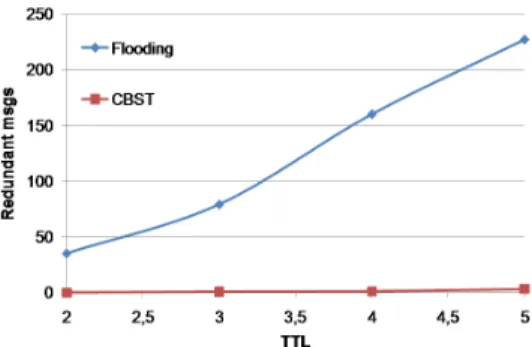
Figure 7: Influence of T T L 5.2.2 Influence of TTL
Here, we fix the network size to 100 and we vary the value of T T L between 2 and 5. Figure 7 gives the number of redundant messages for both flooding and CBST techniques. We can see that, as long as T T L is less than the maximum value of cluster diameter D, the CBST produces a very limited number of redundant messages. Moreover, we note that in our approach, a redundant message may not be discarded, and thus may contribute to improve search accuracy. To illustrate, a given node may receive a first query message as being a partner in a cluster, and another message as being a node locating on the path leading to a new cluster. Once T T L exceeds the cluster diameter, the number of CBST redundant messages increases slightly. However, this number is much smaller than the one produced by flooding. For instance, the number of redundant messages is limited to 4 for a T T L value of 5.
5.3
Performance in Dynamic Systems
The previous results have shown that CBST achieves a very good trade-off between search accuracy and bandwidth consumption. However, it is very im-portant to study the performance of CBST in dynamic P2P systems. In order to propagate a query Q, CBST uses the cluster-based routing tables which may be in an invalid state while recovering from a node arrival/departure.
We assume that 10% of the network size are initially disconnected. Then, nodes start to leave the system at a rate τ. We consider that each node
depar-Figure 8: Search accuracy vs. network size
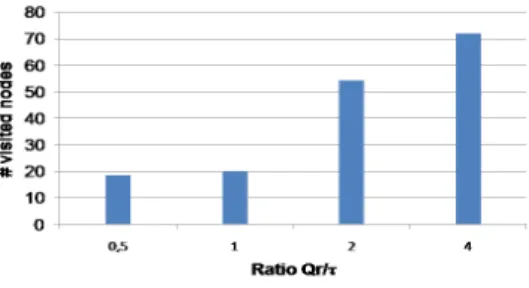
Figure 9: Search accuracy vs. rate ratio
ture is followed by the arrival of another node, such that the total number of nodes remains constant in the system. Simultaneously, users issue queries with a uniform query rate Qr. In a first set of experiments, we set the rate τ of node connection/disconnection and the query rate Qr to 0.1, i.e. 1 event (connec-tion/disconnection or query) per 10 minutes. Current file-sharing P2P systems are well characterized by such rate values, as well as by the ratio τ/Qr value of 1. Figure 8 depicts the number of visited nodes in function of the network size, in both static and dynamic settings. We can observe that node dynamicity results in small degradation of the search accuracy of CBST . This degradation is due to the stale entries in routing tables used while propagating a query Q. However, as discussed in Section 3.1.2, the node arrival/departure are localized events, and thus only queries that are issued in the same locality are affected. Because of that, we can see also that the number of visited nodes is reduced by a constant factor, which is independent of the network size. Since the rate ratio Qr/τ is quited related to the nature of P2P applications, we choose to study the search accuracy of CBST while varying the value of that ratio. Here, the network size is fixed to 100 nodes. Figure 9 shows that, for a given query rate, the more stable is the network, the higher is the search accuracy. For instance, CBST can improve the search efficiency of database P2P applications, which are characterized by a higher stability.
6
Comparison with Related Work
To better understand the efficiency of CBST technique, we compare our per-formance to other blind search techniques. The flooding mechanism provides the highest accuracy values (for a given T T L), since it allows to cover the entire network. However, it produces a huge traffic overhead in the network.
Many works have proposed other techniques that aim to overcome the prob-lem of bandwidth consumption. Quantitative comparisons between the well known techniques are provided by [17]. Lv et al. [16] have proposed replacing flooding with random walks. The most important advantage of this algorithm is the significant message reduction it achieves, since it produces k ∗ T T L mes-sages in the worst case. It also achieves some kind of local “load balancing”, since no nodes are favored in the forwarding process over others. However, the most serious disadvantage is its highly variable performance. It has been shown in [17], that this algorithm displays low accuracy and requires large values of T T L in order to satisfy the query.
Adamic et al. [8] addressed this problem by recommending that instead of using purely random walks, the search protocol should bias its walks toward high-degree nodes. The intuition behind this is that if we arrange for neighbors to be aware of each other’s shared files, high-degree nodes will have (pointers to) a large number of files and hence will be more likely to have an answer that matches the query. However, this approach ignores the problem of overloaded nodes. In fact, by always biasing the random walk towards high-degree nodes, it can exacerbate the problem if the high-degree node does not have the capacity to handle a large number of queries. Other blind search protocols operate on hybrid topologies built upon the notion of Ultrapeers [2] or Supernodes [6]. Obviously, such protocols have to be supported with efficient ultrapeer/supernode selection mechanism.
7
Conclusion
In this paper, we studied how the search efficiency can be improved by clustering a P2P network based on node connectivity. Our solution does not impose a specific network structure or require indexes over the shared data. Instead, it simply relies on inherent clustering patterns that can be extracted from the underlying topologies.
We proposed a cluster-based search technique that is implemented over the SDC protocol, an appropriate connectivity-based clustering protocol for P2P systems. Each node maintains a routing table that provides information about paths to partners belonging to its cluster, as well as to other reachable clusters. Such cluster-based routing tables are created/maintained using the clustering messages involved by the SDC protocol, without requiring additional traffic overhead. Then, we discussed the performance of our search technique according to search accuracy, and bandwidth consumption. This performance is evaluated through simulation. An interesting result shows that the proposed technique allows eliminating redundant messages, which prevent many search techniques from scaling up. In return, only a small decrease in the number of visited nodes per query is incurred.
References
[1] A.Crespo and H.G.Molina. Routing indices for peer-to-peer systems. In Proc. of the 28 tn Conference on Distributed Computing Systems, 2002. [2] A.Singla and C.Rohrs. Ultrapeers: another step towards gnutella
scalabil-ity. Technical report, 2002.
[3] B.Yang and H-G.Molina. Improving search in peer-to-peer networks. In Proc of the 22 nd International Conference on Distributed Computing Systems (ICDCS), 2002.
[4] F.Howell and R.McNab. Simjava: a discrete event simulation package for java with the applications in computer systems modeling. In Int. Conf on Web-based Modelling and Simulation, San Diego CA, Society for Computer Simulation, 1998.
[5] http://www.cs.bu.edu/brite/. [6] http://www.gnutella2.com.
[7] I.Stoica and et al. Chord: A scalabale peer-to-peer lookup service for internet applications. In Proc ACM SIGCOMM, 2001.
[8] L.Adamic and et al. Search in power law networks. Physical Review E, 64:46135–46143, 2001.
[9] Y. Li, L. Lao, and J.-H. Cui. Sdc: A distributed clustering protocol for peer-to-peer networks. In Networking, pages 1234–1239, 2006.
[10] L.Ramaswamy, B.Gedik, and L.Liu. A distributed approach to node clustering in decentralized peer-to-peer networks. IEEE Transactions on Parallel and Distributed Systems, 16(9):814–829, 2005.
[11] M.Ripeanu, I.Foster, and A.Iamnitchi. Mapping the gnutella network. IEEE Internet Computing Journal, 6(1), 2002.
[12] L. Ramaswamy, B. Gedik, and L. Liu. Connectivity based node clustering in decentralized peer-to-peer networks. In P2P ’03: Proceedings of the 3rd International Conference on Peer-to-Peer Computing, page 66, 2003. [13] S.Dongen. A new cluster algorithm for graphs. Technical report,
Amster-dam, 1998.
[14] S.Ratnasamy, P.Francis, M.Handley, R.M.Karp, and S.Shenker. A scalable content–addressable network. In SIGCOMM, 2001.
[15] S.Saroiu, P.Gummadi, and S.Gribble. A measurement study of peer-to-peer file sharing systems. In Proc of Multimedia Computing and Networking (MMCN), 2002.
[16] Q. et al. Search and replication in unstructured peer-to-peer networks. In ACM Int. conference on Supercomputing, 2002.
[17] D. Tsoumakos and N. Roussopoulos. A comparison of peer-to-peer search methods. In Int.Workshop on the Web and Databases (WebDB), pages 61–66, 2003.
Contents
1 Introduction 3
2 Connectivity-based clustering schemes 4
2.1 SCM: Accuracy Measure for Graph Clustering . . . 5
2.2 The SDC Protocol . . . 5
3 CBST for unstructured P2P systems 7 3.1 Cluster-based Routing Table . . . 7
3.1.1 Routing Table Description . . . 7
3.1.2 Table Maintenance . . . 8
3.2 Query Propagation . . . 12
4 Discussion 14 4.1 Search Accuracy vs. BW Consumption . . . 14
4.2 Clustering Scheme Accuracy vs. BW Consumption . . . 14
5 Experimental Results 15 5.1 Simulation Setup . . . 15
5.2 Perfomance in Static Systems . . . 16
5.2.1 Search accuracy vs. Bandwidth Consumption . . . 16
5.2.2 Influence of TTL . . . 17
5.3 Performance in Dynamic Systems . . . 17
6 Comparison with Related Work 19
Centre de recherche INRIA Bordeaux – Sud Ouest : Domaine Universitaire - 351, cours de la Libération - 33405 Talence Cedex Centre de recherche INRIA Grenoble – Rhône-Alpes : 655, avenue de l’Europe - 38334 Montbonnot Saint-Ismier Centre de recherche INRIA Lille – Nord Europe : Parc Scientifique de la Haute Borne - 40, avenue Halley - 59650 Villeneuve d’Ascq
Centre de recherche INRIA Nancy – Grand Est : LORIA, Technopôle de Nancy-Brabois - Campus scientifique 615, rue du Jardin Botanique - BP 101 - 54602 Villers-lès-Nancy Cedex
Centre de recherche INRIA Paris – Rocquencourt : Domaine de Voluceau - Rocquencourt - BP 105 - 78153 Le Chesnay Cedex Centre de recherche INRIA Saclay – Île-de-France : Parc Orsay Université - ZAC des Vignes : 4, rue Jacques Monod - 91893 Orsay Cedex
Centre de recherche INRIA Sophia Antipolis – Méditerranée : 2004, route des Lucioles - BP 93 - 06902 Sophia Antipolis Cedex
Éditeur
INRIA - Domaine de Voluceau - Rocquencourt, BP 105 - 78153 Le Chesnay Cedex (France)