DOCTORAT DE L'UNIVERSITÉ DE TOULOUSE
Délivré par :
Institut National Polytechnique de Toulouse (INP Toulouse)
Discipline ou spécialité :
Génie des Procédés et de l'Environnement
Présentée et soutenue par :
M. XINQIANG YOU
le lundi 7 septembre 2015
Titre :
Unité de recherche :
Ecole doctorale :
APPROCHE THERMODYNAMIQUE POUR LA CONCEPTION ET
L'OPTIMISATION DE LA DISTILLATION EXTRACTIVE DE MELANGES A
TEMPERATURE DE BULLE MINIMALE (1.0-Ia)
Mécanique, Energétique, Génie civil, Procédés (MEGeP)
Laboratoire de Génie Chimique (L.G.C.)
Directeur(s) de Thèse :
M. VINCENT GERBAUD
Rapporteurs :
M. JEAN-NOEL JAUBERT, INP DE NANCY M. JEAN TOUTAIN, INP BORDEAUX
Membre(s) du jury :
1 Mme XUAN MI MEYER, INP TOULOUSE, Président
2 M. MICHEL MEYER, INP TOULOUSE, Membre
2 M. OLIVIER BAUDOIN, PROSIM SA, Membre
Title in English :
Thermodynamic Insight for the Design and Optimization of Extractive Distillation of 1.0-1a Class Separation
i
ABSTRACT
We study the continuous extractive distillation of minimum boiling azeotropic mixtures with a heavy entrainer (class 1.0-1a) for the acetone-methanol with water and DIPE-IPA with 2-methoxyethanol systems. The process includes both the extractive and the regeneration columns in open loop flowsheet and closed loop flowsheet where the solvent is recycled to the first column.
The first optimization strategy minimizes OF and seeks suitable values of the entrainer flowrate FE, entrainer
and azeotrope feed locations NFE, NFAB, NFReg, reflux ratios R1, R2 and both distillates D1, D2. OF describes the
energy demand at the reboiler and condenser in both columns per product flow rate. It accounts for the price differences in heating and cooling energy and in product sales. The second strategy relies upon the use of a multi-objective genetic algorithm that minimizes OF, total annualized cost (TAC) and maximizes two novel extractive thermodynamic efficiency indicators: total Eext and per tray eext. They describe the ability of the
extractive section to discriminate the product between the top and to bottom of the extractive section. Thermodynamic insight from the analysis of the ternary RCM and isovolatility curves shows the benefit of lowering the operating pressure of the extractive column for 1.0-1a class separations. A lower pressure reduces the minimal amount of entrainer and increases the relative volatility of original azeotropic mixture for the composition in the distillation region where the extractive column operates, leading to the decrease of the minimal reflux ratio and energy consumption.
The first optimization strategy is conducted in four steps under distillation purity specifications: Aspen Plus or Prosim Plus simulator built-in SQP method is used for the optimization of the continuous variables: R1, R2
and FE by minimizing OF in open loop flowsheet (step 1). Then, a sensitivity analysis is performed to find
optimal values of D1, D2 (step 2) and NFE, NFAB, NFReg (step 3), while step 1 is done for each set of discrete
variables. Finally the design is simulated in closed loop flowsheet, and we calculate TAC and Eext and eext
(step 4). We also derive from mass balance the non-linear relationships between the two distillates and how they relate product purities and recoveries. The results show that double digit savings can be achieved over designs published in the literature thanks to the improving of Eext and eext.
Then, we study the influence of the Eext and eext on the optimal solution, and we run the second
multiobjective optimization strategy. The genetic algorithm is usually not sensitive to initialization. It allows finding optimal total tray numbers N1, N2 values and is directly used with the closed loop flow sheet. Within
Pareto front, the effects of main variables FE/F and R1 on TAC and Eext are shown. There is a maximum Eext
(resp. minimum R1) for a given R1 (resp. Eext). There exists an optimal efficiency indicator Eext,opt which
corresponds to the optimal design with the lowest TAC. Eext,opt can be used as a complementary criterion for
the evaluation of different designs. Through the analysis of extractive profile map, we explain why Eext
increases following the decrease of FE and the increase of R1 and we relate them to the tray numbers.
With the sake of further savings of TAC and increase of the environmental performance, double-effect heat integration (TEHI) and mechanical heat pump (MHP) techniques are studied. In TEHI, we propose a novel optimal partial HI process aiming at the most energy saving. In MHP, we propose the partial VRC and partial BF heat pump processes for which the coefficients of performance increase by 60% and 40%. Overall, optimal partial HI process is preferred from the economical view while full VRC is the choice from the environmental perspective.
Keywords
Extractive distillation, thermodynamic insight, reduced pressure, energy integration, multiobjective optimization, thermodynamic separation efficiency.
RÉSUMÉ
Nous étudions la distillation extractive continue de mélanges azéotropiques à temperature de bulle minimale avec un entraineur lourd (classe 1.0-1a) avec comme exemples les mélanges acétone-méthanol avec l’eau et DIPE-IPA avec le 2-méthoxyethanol. Le procédé inclut les colonnes de distillation extractive et de régénération de l’entraineur en boucle ouverte et en boucle fermée.
Une première stratégie d’optimisation consiste à minimiser la fonction objectif OF en cherchant les valeurs optimales du débit d’entraineur FE, les positions des alimentations en entraineur et en mélange NFE, NFAB,
NFReg, les taux de reflux R1, R2 et les débits de distillat de chaque colonne D1, D2. OF décrit la demande en
énergie par quantité de distillat et tient compte des différences de prix entre les utilités chaudes et froides et entre les deux produits. La deuxième stratégie est une optimisation multiobjectif qui minimise OF, le coût total annualisé (TAC) et maximise deux nouveaux indicateurs thermodynamiques d’efficacité de séparation extractive totale Eext et par plateau eext. Ils décrivent la capacité de la section extractive à séparer le produit
entre le haut et le bas de la section extractive.
L’analyse thermodynamique des réseaux de courbes de résidu ternaires RCM et des courbes d’isovolatilité montre l’intérêt de réduire la pression opératoire dans la colonne extractive pour les séparations de mélanges 1.0-1a. Une pression réduite diminue la quantité minimale d’entraineur et accroît la volatilité relative du mélange binaire azéotropique dans la région d’opération de la colonne extractive. Cela permet d’utiliser un taux de reflux plus faible et diminue la demande énergétique.
La première stratégie d’optimisation est conduite avec des contraintes sur la pureté des produits avec les algorithmes SQP dans les simulateurs Aspen Plus ou Prosim Plus en boucle ouverte. Les variables continues optimisées sont : R1, R2 et FE (étape 1). Une étude de sensibilité permet de trouver les valeurs de D1, D2
(étape 2) et NFE, NFAB, NFReg (étape 3), tandis l’étape 1 est faite pour chaque jeu de variables discrètes. Enfin
le procédé est resimulé en boucle fermée et TAC, Eext et eext sont calculés (étape 4). Les bilans matières
expliquent l’interdépendance des débits de distillats et des puretés des produits. Cette optimisation permet de concevoir des procédés avec des gains proches de 20% en énergie et en coût. Les nouveaux procédés montrent une amélioration des indicateurs Eext et eext.
Afin d’évaluer l’influence de Eext et eext sur la solution optimale, la seconde optimisation multiobjectif est
conduite. L’algorithme génétique est peu sensible à l’initialisation, permet d’optimiser les variables discrètes
N1, N2 et utilise directement le shéma de procédé en boucle fermée. L’analyse du front de Pareto des
solutions met en évidence l’effet de FE/F et R1 sur TAC et Eext. Il existe un Eext maximum (resp. R1 minimum)
pour un R1 donné (resp. Eext). Il existe aussi un indicateur optimal Eext,opt pour le procédé optimal avec le plus
faible TAC. Eext,opt ne peut pas être utilisé comme seule fonction objectif d’optimisation mais en complément
des autres fonctions OF et TAC. L’analyse des réseaux de profils de composition extractive explique la frontière du front de Pareto et pourquoi Eext augmente lorsque FE diminue et R1 augmente, le tout en lien avec
le nombre d’étage.
Visant à réduire encore TAC et la demande énergétique nous étudions des procédés avec intégration énergétique double effet (TEHI) ou avec des pompes à chaleur (MHP). En TEHI, un nouveau schéma avec une intégration énergétique partielle PHI réduit le plus la demande énergétique. En MHP, la recompression partielle des vapeurs VRC et bottom flash partiel BF améliorent les performances de 60% et 40% respectivement. Au final, le procédé PHI est le moins coûteux tandis que la recompression totale des vapeurs est la moins énergivore.
Mots clés
Distillation extractive, analyse thermodynamique, pression réduite, intégration énergétique, optimisation multiobjectif, indicateur thermodynamique d’efficacité de séparation.
iii
ACKNOWLEDGMENTS
Firstly, let me give my deepest gratitude to my supervisor Mr. Vincent GERBAUD, for his constructive and illuminating guidances on my thesis. I deeply appreciate his high requirements and admire his great interest on research. His useful method, his wonderful personality, his high efficiency, his patience and persistence leave me the most profound impression. He is the perfect professor in my mind.
I should like to acknowledge the assistance and guidance given by Ms. Ivonne Rodriguez-Donis and Mr. Weifeng SHEN. Their helps and professional instructions are important for my research.
I am deeply indebted to prof. Jean-Noël JAUBERT, University of Lorraine, and prof. Jean TOUTAIN of Institut Polytechnique de Bordeaux. Both of them are reviewers of this thesis. I deeply thank them for spending time to give constructive suggestions and opinions, and kindly eliminate many of the errors in it, which are helpful and important for my thesis.
I really appreciate the presence of prof. Xuan MEYER, prof. Michel MEYER, and Dr. Olivier BAUDOUIN. All of them have graciously accepted to be a member of the jury. I would like to thank them for their constructive advices and important opinions for my thesis.
My gratitude also extends to my dear colleagues and friends: Philippe, René, Ségolène, Sofia, László, Antonio, Stephane, Ahmed, Jesus, Marco, Manuel, Maria, Anh and many others. I have passed a happy and wonderful life in Toulouse with all of them.
Last but importantly, my thanks would go to my family, especially to my wife for their supports during my study.
Xinqiang YOU Le 08/09/2015 a Toulouse
CHAPTER CONTENTS
Title Page
Chapter 1. General Introduction ... 1
1. Introduction ... 2
1.1. Process feasibility ... 2
1.2. Process design and optimization ... 3
Chapter 2. State of The Art and Objectives ... 7
2. State of the art and objectives ... 8
2.1.1. Phase equilibrium model ... 8
2.1.2. Nonideality of mixture ... 9
2.2. Nonideal mixtures separation ... 10
2.2.1. Pressure-swing distillation ... 12
2.2.2. Azeotropic distillation ... 13
2.2.3. Reactive distillation ... 14
2.2.4. Generalized extractive distillation ... 15
2.2.4.1. Extractive distillation with solid salt or salt effect distillation 15 2.2.4.2. Extractive distillation with ionic liquid 16 2.2.4.3. Extractive distillation with low transition temperature mixtures (LTTMs) 17 2.2.4.4. Extractive distillation with hyperbranced polymers 17 2.2.4.5. Extractive distillation with pressurized carbon dioxide 17 2.3. Introduction of extractive distillation with liquid entrainer ... 18
2.3.1. Extractive distillation ... 18
2.3.2. Entrainer features ... 18
2.3.3. Relative volatility... 19
2.3.4. Entrainer selectivity ... 20
2.3.5. Residue curve maps ... 21
v
2.4. Extractive distillation process feasibility ... 24
2.4.1. Thermodynamic insight on extractive distillation feasibility ... 24
2.4.1.1. Topological features of class 1.0-1a extractive distillation process 24 2.4.1.2. Product and limiting operating parameter for class 1.0-1a extractive distillation 26 2.4.1.3. Foregone feasibility research of our group 27 2.4.2. Feasibility assessed from intersection of composition profiles and differential equation ... 28
2.4.3. Extractive process feasibility from pinch points analysis ... 30
2.5. Research objectives ... 31
Chapter 3. Optimal Retrofits of ED, Acetone-Methanol with Water ... 33
3. Optimal retrofits of extractive distillation, acetone-methanol with water ... 34
3.1. Introduction ... 34
3.2. Optimal method and procedure ... 37
3.2.1. Extractive process feasibility ... 37
3.2.2. Optimal method ... 38
3.2.3. Extractive distillation process flow sheet ... 40
3.2.4. Objective function (OF) ... 41
3.2.5. Optimization procedure ... 42
3.3. Results and discussion ... 42
3.3.1. First step: continuous variables FE, R1, R2 ... 42
3.3.2. Second step: two distillates D1 and D2 ... 43
3.3.3. Third step: three feed locations... 43
3.3.4. Fourth step: closed loop corroboration ... 44
3.3.5. The final result and comparing with the design in literature ... 45
3.4. Conclusions ... 47
Chapter 4. Improved Design and Efficiency of Extractive Distillation ... 49
4. Improved design and efficiency of extractive distillation ... 50
4.1. Introduction ... 50
4.2.1. Extractive process feasibility ... 50
4.2.2. Process optimization techniques ... 51
4.2.3. Objective function ... 52
4.3. Analysis of pressure and residue curve map ... 52
4.3.1. Pressure sensitivity of the azeotropic composition ... 52
4.3.2. Analysis of residue curve map... 53
4.4. Optimization results ... 53
4.4.1. Continuous variables FE, R1, R2 ... 53
4.4.2. Distillates and three feed locations ... 54
4.4.3. Effect of entrainer purity on the process ... 55
4.4.4. Summary of optimal design parameters, product purity and recovery ... 56
4.5. Development of an extractive distillation process efficiency indicator... 60
4.5.1. Extractive section efficiency ... 60
4.5.2. Comparison of efficiencies for extractive process design ... 60
4.6. Conclusions ... 63
Chapter 5. Design and Optimization of ED for separating DIPE-IPA... 65
5. Design and Optimization of Extractive Distillation for Separating Diisopropyl ether and Isopropyl alcohol ... 66
5.1. Introduction ... 66
5.2. Steady state design ... 67
5.2.1. Extractive process feasibility ... 67
5.2.2. Pressure sensitivity of the azeotropic mixture ... 68
5.2.3. Analysis of residue curve map... 69
5.2.4. Process optimization procedure ... 70
5.2.5. Objective function ... 70
5.3. Results and discussions ... 70
5.3.1. The relation of two distillate in extractive distillation ... 71
5.3.2. Choice of distillate flow rate for this chapter ... 72
5.3.3. Continuous variables FE, R1 and R2 ... 74
vii
5.3.5. Closed loop design and optimal design parameters ... 76
5.3.6. Analysis from efficiency indicators and profile map in ternary diagram ... 79
5.4. Conclusions ... 80
Chapter 6. Influence of Thermodynamic Efficiency on Extractive Distillation ... 83
6. Influence of thermodynamic efficiency on extractive distillation acetone-methanol with water ... 84
6.1. Introduction ... 84
6.2. Optimal methods ... 84
6.2.1. Non-Sorted Genetic Algorithm as Process optimization technique ... 84
6.2.2. Advantages of NSGA for the design of extractive distillation process compared with SQP ... 85
6.2.3. Objective functions ... 85
6.3. Results and discussion ... 86
6.3.1. Problem setting ... 86
6.3.2. Pareto front of the optimal design solution ... 87
6.3.3. Insight on the Pareto front shape from the ternary map with extractive profile ... 89
6.3.4. Further improvement of GA optimal design ... 94
6.4. Results and discussion ... 98
Chapter 7. Reducing Process Cost and CO2 Emissions ... 101
7. Reducing process cost and CO2 emissions for extractive distillation by double-effect heat integration and mechanical heat pump... 102
7.1. Introduction ... 102
7.2. Literature studies of extractive process with double-effect heat integration and heat pump ... 104
7.3. Evaluation method of heat pump performance and CO2 emissions ... 107
7.3.1. Heat pump performance ... 107
7.3.2. Evaluation of CO2 emissions for distillation column ... 108
7.3.3. Economic assessment... 109
7.4. Extractive distillation with double-effect heat integration ... 109
7.4.1. Direct partial heat integration ... 109
7.4.3. Optimal full heat integration ... 112
7.5. Extractive distillation with MHP heat pump ... 113
7.6. Evaluation of VRC heat pump assisted distillation process ... 114
7.6.1. VRC heat pump assisted extractive column ... 114
7.6.2. VRC heat pump assisted regeneration column ... 116
7.6.3. Full VRC heat pump process ... 117
7.6.4. Partial VRC heat pump process ... 118
7.7. Evaluation of BF heat pump assisted distillation process ... 119
7.7.1. BF heat pump assisted extractive column ... 119
7.7.2. BF heat pump assisted regeneration column ... 120
7.7.3. Full BF heat pump process ... 121
7.7.4. Partial BF heat pump process ... 122
7.7.5. Summary of mechanical heat pump ... 124
7.8. Comparison of OPHI and partial VRC... 124
7.9. Conclusions ... 125
Chapter 8. Conclusions and perspectives ... 127
8. Conclusions and perspectives... 128
8.1. Conclusions ... 128 8.2. Perspectives ... 131 Chapter 9. Appendix ... 133 9. Appendix ... 134 9.1. Cost data ... 134 9.2. Nomenclature... 136 9.3. References ... 141
ix
LIST OF TABLES
Table Page
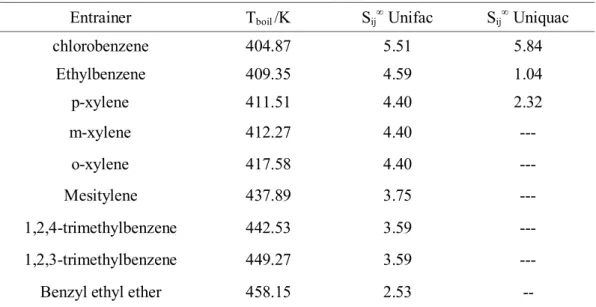
Table 3.1 – Entrainer candidates for acetone-methanol separation with acetone as the distillate (from
Kossack et al.,2008) ... 35
Table 3.2 – Entrainer candidates for acetone-methanol separation with methanol as the distillate (from Kossack et al.,2008) ... 35
Table 3.3 – Model binary parameters of acetone-methanol-water system ... 37
Table 3.4 – Experimental and predicted data of azeotropic point at 99.28 kPa ... 37
Table 3.5 – Step 1, optimal results of FE, R1 and R2 ... 42
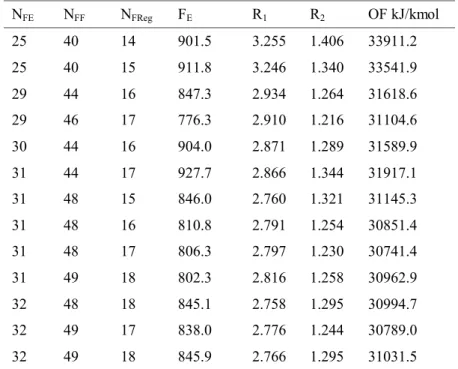
Table 3.6 – Optimal results of FE, R1, R2, NFE, NFF, NFReg under fixed D1 and D2 ... 44
Table 3.7 – Comparison of our optimal results with Luyben’s design ... 45
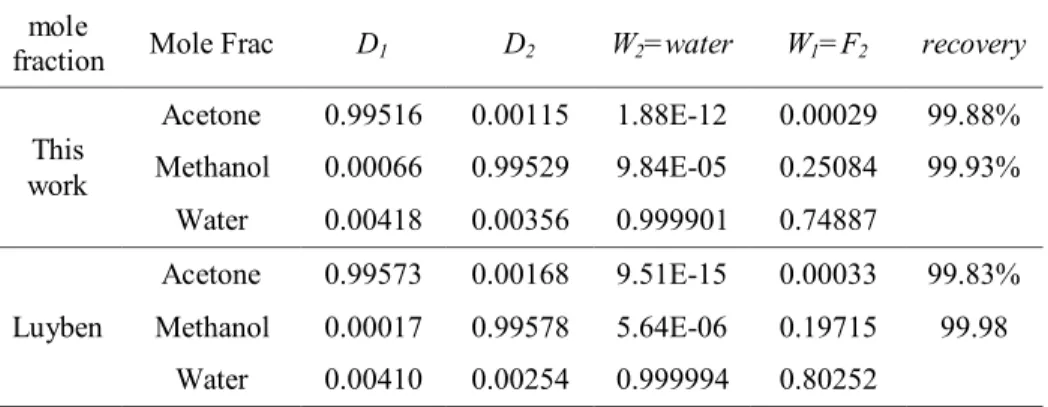
Table 3.8 – Product purities from optimal results and Luyben’s design ... 46
Table 4.1 – Acetone-methanol azeotropic temperature and composition at different pressures with UNIQUAC model ... 52
Table 4.2 – Optimized values of FE, R1 and R2 for the extractive distillation of acetone – methanol with water under reduced pressure ... 54
Table 4.3 – Open loop optimal results of FE, R1, R2, NFE, NFAB, NFReg under fixed D1 and D2 for the extractive distillation of acetone – methanol with water ... 55
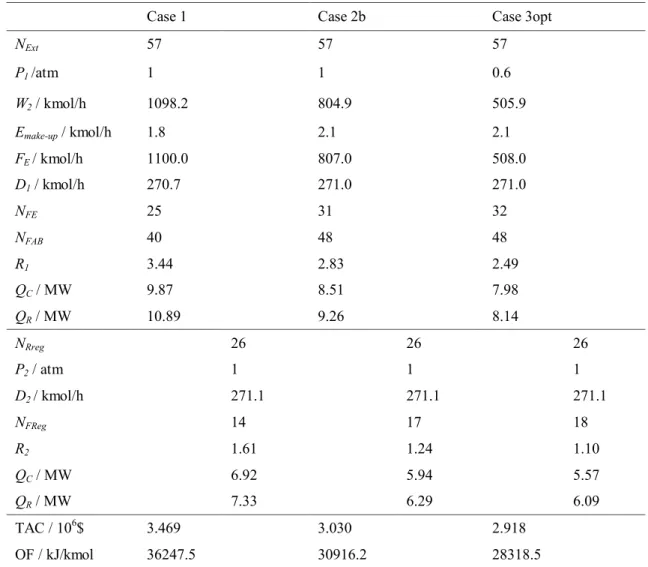
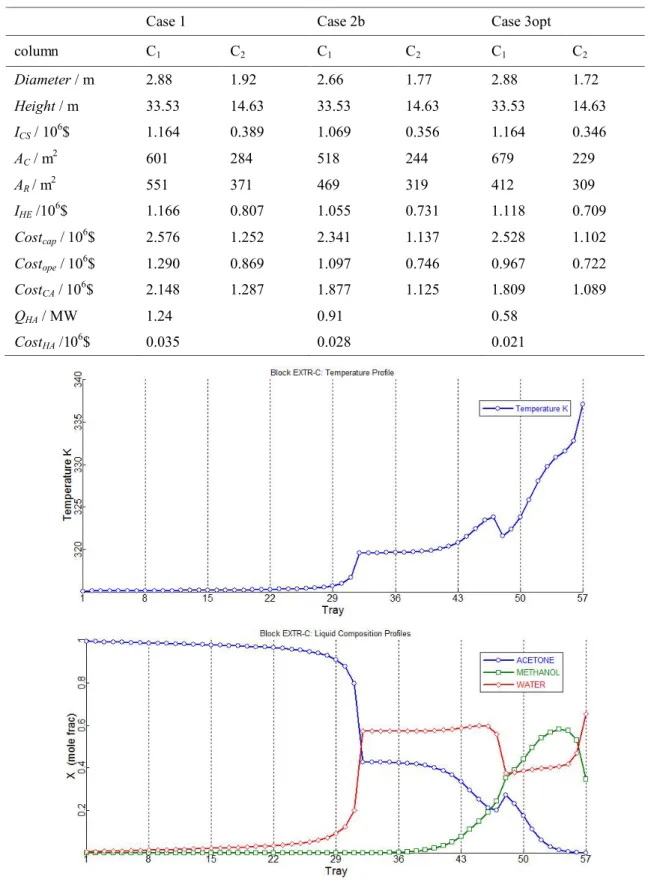
Table 4.4 – Optimal design parameters and cost data from closed loop simulation for the extractive distillation of acetone – methanol with water ... 56
Table 4.5 – Sizing parameters for the optimal designed columns and cost data from closed loop simulation for the extractive distillation of acetone – methanol with water... 57
Table 4.6 – Product purities and recoveries for case 1, 2 and 3op designs ... 58
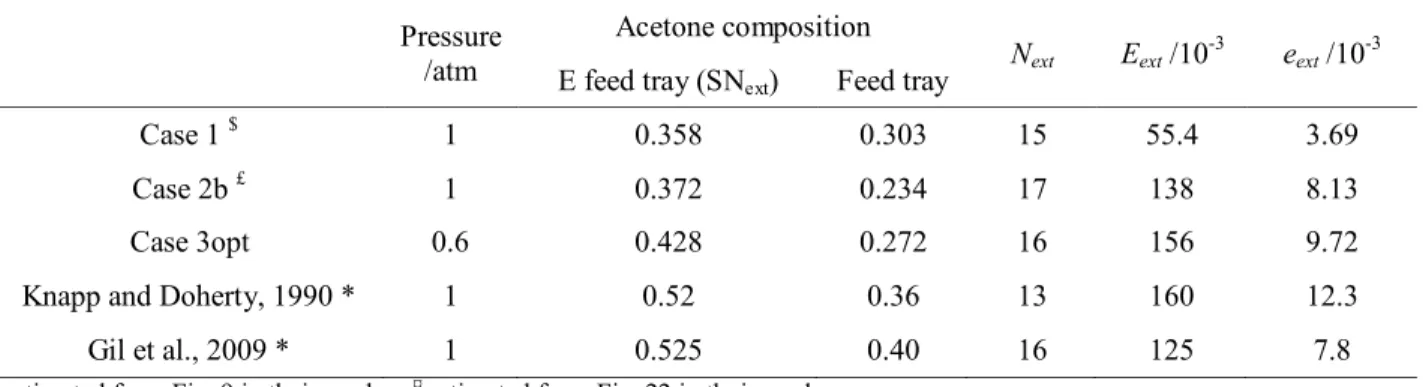
Table 4.7 – Efficiencies of per tray and total extractive section for the extractive distillation of acetone – methanol with water ... 60
Table 5.1 – DIPE-IPA azeotropic temperature and composition at different pressures with NRTL model ... 68
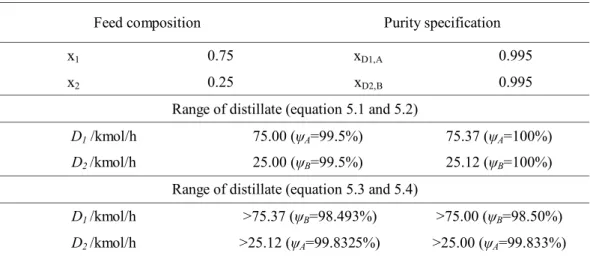
Table 5.2 – Relationship of distillates, purity and recovery for binary mixture for 100kmol/h binary mixture ... 72
Table 5.3 – Relationship of distillates, purity and recovery for DIEP-IPA... 73
Table 5.4 – Optimized values of FE, R1, and R2 for the extractive distillation of DIPE – IPA with 2-methoxyethanol ... 74
Table 5.5 – Open loop optimal results of FE, R1, R2, NFE, NFAB, NFReg under fixed D1 and D2 for the extractive distillation of DIPE – IPA with 2-methoxyethanol, P1 = 0.4 atm and P2 = 1 atm ... 75
Table 5.6 – Optimal design parameters and cost data from closed loop simulation for the extractive distillation of DIPE-IPA with 2-methoxyethanol ... 77
Table 5.7 – Product purities and recoveries for case Luo, case 1 and 2 designs ... 78
Table 5.8 – Efficiencies of per tray and total extractive section for the extractive distillation of DIPE – IPA with 2-methoxyethanol ... 80
Table 6.1 – Design parameters for G1-G6 belonging to the Pareto front, P1 = 0.6 atm, P2 = 1 atm ... 92
Table 6.2 – Sizing parameters for the columns and cost data of the design G1-G6 belonging to Pareto front... 93
Table 6.3 – Final design results for acetone-methanol-water by NSGA and SQP ... 95
Table 6.4 – Sizing parameters for the columns and cost data of the design case 1, case G1 and case SQP ... 96
Table 6.5 – Product purities and recoveries for case NSGA and SQP designs ... 96
Table 7.1 – Temperature difference, TAC and OF2 of reboiler/condenser heat exchanger following P2 .. 110
Table 7.2 – Design parameters of three double-effect heat integration extractive distillation processes, acetone-methanol with water... 112
Table 7.3 – Sizing parameters and cost data of three double-effect heat integration extractive distillation processes, acetone-methanol with water ... 112
Table 7.4 – Cost data for extractive column with heat pump at different compressor outlet pressure ... 114
Table 7.5 – Comparison of extractive column with and without VRC heat pump ... 115
Table 7.6 – Cost data for extractive column with heat pump at different compressor outlet pressure ... 116
Table 7.7 – Comparison of regeneration column with and without heat pump ... 117
Table 7.8 – Cost data of the process without heat pump, full and partial VRC heat pump ... 118
Table 7.9 – Cost data for extractive column with BF heat pump at different throttle valve outlet pressure ... 120
xi Table 7.11 – Cost data for regeneration column with BF heat pump at different throttle valve outlet
pressure ... 121
Table 7.12 – Comparison of regeneration column with and without BF heat pump ... 121
Table 7.13 – Cost data of the process without heat pump, partial and full BF heat pump ... 123
xiii
LIST OF FIGURES
Figure Page
Figure 1.1 – Onion model for energy efficiency improvement. ... 4 Figure 2.1 – Typical homogeneous mixtures with maximum boiling azeotrope water and formic acid, a negative deviation from Raoult’s law ... 9 Figure 2.2 – Typical homogeneous mixtures with minimum boiling azeotrope methanol and chloroform, a positive deviation from Raoult’s law ... 10 Figure 2.3 – Schematic diagram of various techniques for separation of azeotropic mixtures ... 11 Figure 2.4 – Indirect separation (a) and direct (b) azeotropic continuous distillation under finite for a 1.0-2 class mixture (from Gerbaud and Rodriguez-Donis, 2010) ... 14 Figure 2.5 – Azeotropic ternary mixture: Serafimov’s 26 topological classes and Reshetov’s statistics (Hilmen et al., 2002). (o) unstable node, (∆) saddle, (●) stable ... 23 Figure 2.6 – Topological features of class 1.0-1a with heavy entrainer in extractive distillation process operation (adapted from Rodriguez-Donis et al., 2009a). ... 25 Figure 2.7 – Thermodynamic features of 1.0–1a mixtures. Separation of a minimum boiling azeotrope with a heavy entrainer. (adapted from Shen et al., 2012) ... 27 Figure 2.8 – Extractive distillation of acetone-methanol with water (1.0-1a class). Feed ratio as a function of the reflux ratio to recover 98% mol acetone. (adapted from Shen et al., 2012) ... 28 Figure 3.1 – T-xy and y-x experimentand predicted maps at 1 atm for acetone (A)-methanol (B)-water (E) system ... 36 Figure 3.2 – Extractive distillation column configuration and acetone – methanol – water 1.0-1a residue curve map at 1 atm with univolatility curves at 1 atm ... 38 Figure 3.3 – Closed loop (a) and open loop (b) flow sheet of the extractive distillation process ... 40 Figure 3.4 – Effects of D1 and D2 on OF with D1, D2, FE, R1 and R2 as variables ... 43
Figure 3.5 – Temperature and composition profiles of extractive column for acetone – methanol with water (adapted from Luyben 2008) ... 45 Figure 3.6 – Our design: Temperature and composition profiles of extractive column for acetone – methanol with water... 46
Figure 4.1 – Extractive distillation column configuration and acetone – methanol – water 1.0-1a
residue curve map at 1 atm with univolatility curves at 0.6 and 1 atm ... 51
Figure 4.2 – Temperature and composition profiles of case 3opt extractive column for the extractive distillation of acetone – methanol with water ... 57
Figure 4.3 – Temperature and composition profiles of case 3opt regeneration column for the extractive distillation of acetone – methanol with water ... 58
Figure 4.4 – Liquid composition profiles for case 1(1atm),case 2(1atm) and 3(0.6atm) extractive distillation column designs for the extractive distillation of acetone – methanol with water ... 61
Figure 4.5 – Volatility profile of acetone vs methanol along the extractive column for the extractive distillation of acetone – methanol with water, case 1(1atm),case 2(1atm) and 3(0.6atm) ... 61
Figure 5.1 – Extractive distillation column configuration and DIPE – IPA –2-methoxyethanol class 1.0-1a residue curve map at 1atm with isovolatility curves at 0.4 and 1 atm. ... 68
Figure 5.2 – T-xy map of 2-methoxyethanol – DIPE ... 70
Figure 5.3 – Effects of D1 and D2 on OF with D1, D2, FE, R1 and R2 as variables ... 73
Figure 5.4 – Temperature and composition profiles of case 2 extractive column for the extractive distillation of DIPE-IPA with 2-methoxyethanol ... 78
Figure 5.5 – Temperature and composition profiles of case 2 entrainer regeneration column for the extractive distillation of DIPE-IPA with 2-methoxyethanol ... 79
Figure 5.6 – Liquid composition profiles for case Luo (1atm), case 1(1atm) and case 2(0.4atm) extractive distillation column designs for the extractive distillation of DIPE-IPA with 2-methoxyethanol ... 80
Figure 6.7 – Pareto front of extractive distillation for acetone-methanol-water system, TAC versus Eext and R1, △ means G1 ... 87
Figure 6.8 – Pareto front of extractive distillation for acetone-methanol-water system, Eext versus R1 and FE, △ means G1... 88
Figure 6.9 – Pareto front of extractive distillation for acetone-methanol-water system, TAC versus R1 and FE, △ means G1... 89
Figure 6.10 – Relation map of Eext and TAC for some designs from Pareto front ... 90
Figure 6.11 – Extractive section profile map for acetone-methanol-water, case G3 ... 90
Figure 6.12 – Extractive section profile map for acetone-methanol-water, case G1 ... 94
Figure 6.13 – Temperature and composition profiles of extractive column for the extractive distillation of acetone – methanol with water, case SQP ... 97
xv Figure 6.14 – Temperature and composition profiles of entrainer regeneration column for the extractive distillation of acetone – methanol with water, case SQP ... 98 Figure 7.1 – Mechanical heat pump flow sheet for extractive column (a) vapor compression (VC) (b) vapor recompression (VRC) (c) bottom flash (BF). ... 103 Figure 7.2 – Sketch for heat integration process ... 105 Figure 7.3 – Extractive distillation of acetone-methanol with water, case SQP in chapter 6 as base case . 106 Figure 7.4 – Effect of P2 on TAC and OF2, the performance of direct partial heat integration process... 110
Figure 7.5 – Relative volatility of methanol over water at different pressure ... 111 Figure 7.6 – Partial VRC heat pump for extractive distillation process... 114 Figure 7.7 – Total annual cost of extractive column following payback period with and without heat pump technique ... 116 Figure 7.8 – Total annual cost of regeneration column following payback period with and without heat pump technique ... 117 Figure 7.9 – Total annual cost of basic case, full and partial VRC heat pump processes following payback period... 119 Figure 7.10 – Partial BF heat pump for extractive distillation process ... 122 Figure 7.11 – Total annual cost of basic case, full and partial BF heat pump processes following payback period... 123 Figure 7.12 – Total annual cost of optimal partial HI and partial VRC process following payback period ... 124
1.Introduction
Distillation is the most practical and hence the most widely used fluid mixture separation technology in many chemical and other industry fields like perfumery, medicinal and food processing (Olujić et al., 2009). The first clear evidence of distillation can be dated back to the first century AD. Being the leading process for the purification of liquid mixtures, distillation consumes large amounts of energy that are estimated to be more than 95% of the total energy used for separation processes in chemical process industries (Mahdi et al., 2015). Azeotropic and low relative volatility mixtures often occur in separating industry which separation cannot be realized by conventional distillation. Extractive distillation is then a suitable alternative process. Extractive distillation has been studied for many decades with rich literatures, some main subjects studied include: column with all possible configurations; process operation polices and strategy; process design, synthesis, optimization; determining separation sequencing; entrainer design and selection, feasibility studies and so on. Among those, process feasibility and process design and optimization are always the critical issues. It is necessary to assess process feasibility before making the design specifications, and the feasibility studies also contribute to a better understanding of complex unit operations. In the other view, process design and optimization which are more practical for industries are not only the aims of process feasibility studies, but also tools for the validation of process feasibility.
1.1.Process feasibility
Upon the feasibility study, the design of extractive distillation is connected to thermodynamics, in particular the volatility order. The residue curve maps analysis allows assessing the feasibility under infinite reflux conditions with the finding of the ultimate products under direct or indirect split conditions. However, under finite reflux conditions, finding which products are achievable and the location of the suitable feed composition region is more complicated because we must consider the dependency of composition profile on reflux and entrainer-to-feed ratio. That affects the range of composition available to each section profiles due to the occurrence of pinch points, which differ from the singular points of the residue curve map. The identification of possible cut under key parameters reflux, reboil ratio and entrainer flowrate has been the main challenge for an efficient separation of azeotropic mixtures.
For decades, the design of an extractive distillation process has relied upon a simple feasibility rule (Levy and Doherty, 1986; Andersen et al., 1991; Laroche et al., 1992): for the separation of a minimum (maximum) boiling azeotropic mixture A-B, one should add a heavy entrainer E that forms no new azeotrope. The corresponding ternary mixture A-B-E belongs to the (1.0-1a) class (Hilmen et al., 2002), which occurrence among all azeotropic ternary mixtures amounts to 21.6% (Kiva et al., 2003). Rodríguez-Donis et al., (2001) combined the knowledge of the thermodynamic properties of residue curve map and uni-volatility line, and expressed a general feasibility criterion for extractive distillation under infinite reflux. Residue curve maps
and uni-volatility line analysis allows assessing the feasibility under infinite reflux conditions and the finding of the ultimate products which is related to column configuration (direct or indirect split). Besides, isovolatility lines reflect the easiness of proposed separation system, especially for the regeneration column. However, distillation runs under finite reflux conditions and finding which products are achievable and the location of the suitable feed composition region is more complicated because we must consider the dependency of composition profiles on reflux as well as on entrainer flowrate (Lelkes et al., 1998a). Following the general feasibility criterion for extractive distillation, the use of heavy, light or intermediate boiling entrainers for the separation of minimum or maximum boiling azeotropic mixtures or of low relative volatility mixtures are feasible (Rodriguez-Donis et al., 2009a, 2009b, 2012a, 2012b). The total occurrence of suitable ternary mixtures classes for homogeneous extractive distillation reaches 53% in batch operation mode and can be extended to continuous operation as well (Shen et al., 2013; Shen and Gerbaud, 2013). The position of the uni-volatility curve in the residue curve map defines the product to be withdrawn as was first proposed by Laroche et al.,(1991). It also hints at the occurrence of limiting entrainer flow rate or the separation to be effective.
1.2.Process design and optimization
Upon the process design and optimization, following the definition of Figueirêdo et al. (2011), a well-designed extractive process means obtaining the lowest specific energy consumption and the least loss of solvent, taking into consideration the constraints imposed on the process. In the other hand, as global energy consumption continues to increase, global climate change has recently begun to affect human life. Many comprehensive energy reduction programs are being pursued to reduce energy usage and promote sustainable development for the near future (Gao et al., 2013). Studies on how to save energy cost during distillation operation is in urgent because distillation processes represent approximately 3% of the world energy consumption (Engelien and Skogestad, 2004) and it is ranked in a third of the total used energy in chemical industry (Linnhoff et al., 1983).
A systematic approach in saving energy consumption and improving the energy efficiency of industrial processes is the onion-model developed in industrial heat technology (Bruinsma and Spoelstra, 2010). The model is visualized in Figure 1.1.
In the first shell, the processes itself are optimized with respect to energy consumption and capital cost. It is done by an economic optimization in which energy and other operating cost are balanced with annualized investment cost for the equipments. In extractive distillation, the process means that both-columns are optimized with variables by minimizing the energy cost and total annual cost.
In the second shell, energy consumption can be saved further by heat integration using heat exchanger (HEX). There is a limitation for using heat integration technique because a temperature driving force is needed for heat exchangers. Preheating the feed stream by using the bottom stream is the basic heat
integration in stand-alone distillation columns. Further energy savings can be realized between condensers and reboilers of different distillation columns and applying side reboilers.
A great further reduction of energy consumption can be achieved in the third shell: the heat pump technique. Heat pump is a device that upgrades heat from a lower temperature source to a higher temperature. Interest to use heat pumps also for heating purposes increased with global awareness of the limited availability of fossil fuels in combination with the greenhouse effect. Vapor recompression (VRC) mechanical heat pump is the most studied heat pump technique.
In the last shell, the process utilities are also an aspect for saving energy cost. For extractive distillation, the entrainer is usually high boiling temperature, which means high pressure steam is needed for vaporizing the bottom liquid.
Process HEX
HP Utilities
Figure 1.1 – Onion model for energy efficiency improvement.
The presentation of this work focuses on the following chapters:
Chapter 2 is a literature review to present the state of the art on the extractive distillation. This chapter introduces several issues related to our thesis: phase equilibrium, possible method to separate nonideal mixtures, the state of art on extractive distillation, entrainer selection, process feasibility. The objective and organization of the thesis are shown at the end of this chapter.
In chapter 3, we show the four steps procedure for the simultaneous optimization of the extractive column and entrainer regeneration column by using sensitivity analysis and Sequential quadratic programming (SQP) method built in Aspen plus software, and the results are verified with Prosim plus software. The procedure should be carried out based on good initial design from literature. The objective function OF (the energy consumption per product flow rate) is proposed and minimized under the constraints of product purity and recovery, and recycling entrainer purity. Given fixed two columns tray numbers, the process is optimized in
open loop flowsheet and process variables are reflux ratios and distillates of the two columns, three feed locations and the entrainer flowrate (It reflects entrainer-to-feed flowrate ratio). The effects of operating variables in the regeneration column on the extractive column and the total process are firstly qualified during optimization process. Then, the closed loop flowsheet is simulated with the variables got from the open loop flowsheet in order to make sure that the effect of impurity of recycling entrainer on the process is overcome. Total annual cost (TAC) for the process is calculated and worked as a complementary criterion for comparing different designs. A trade-off between the two columns variables is found and optimal parameters with lower energy consumption and TAC than literature results are found. The case study is provided with the extractive distillation separation of acetone-methanol with entrainer water (class 1.0-1a). Notice that the optimization procedure can treat the designs with different column tray number following TAC, but we keep the same column tray numbers as literatures for comparison in chapter 3, 4 and 5. Then we take them into account as variables in chapter 6 by using the genetic algorithm method.
In chapter 4, we show how thermodynamic insight can be used to improve the design of a homogeneous extractive distillation process and we define an extractive efficiency indicator to compare the optimality of different designs. Thermodynamic insight from the analysis of the ternary residue curve map and isovolatility curves shows that a lower pressure reduces the minimal amount of entrainer and increases the relative volatility of acetone – methanol in the extractive column. A 0.6 atm pressure is selected to enable the use of cheap cooling water in the condenser. The four steps procedure shown in Chapter 3 is used by minimizing the total energy consumption per product unit. The TAC is calculated for all processes. Double digit savings in energy consumption and in TAC are achieved compared to literature values. We then propose a novel efficiency indicator Eext and eext that describes the ability per tray of the extractive section to
discriminate the desired product between the top and the bottom of the extractive section. Shifting the feed trays locations improves the efficiency of the separation, even when less entrainer is used.
In chapter 5, in order to further demonstrate the effects of thermodynamic insight and extractive efficiency indicators on the homogeneous extractive distillation process itself, we show the optimization process of the separation of the diisopropyl ether (DIPE) – isopropyl alcohol (IPA) minimum boiling azeotrope with heavy entrainer 2-methoxyethanol aiming at finding the possible way to save energy cost and TAC. The four steps procedure and the thermodynamic insight from the analysis of the ternary residue curve map and isovolatility curves shows again that a lower pressure reduces the usage of entrainer and increases the relative volatility of DIPE – IPA for the same entrainer content in the extractive column. A 0.4 atm pressure is selected to enable the use of cheap cooling water in the condenser. We pay attention to explain the relationship of two distillates in extractive distillation process and the curious behaviors that the energy cost OF decreases following the increase of the distillate flowrate. Double digit savings in energy consumption have achieved while TAC is reduced. The efficiency indicator of extractive section is calculated for comparison and explanation of the energy savings.
In chapter 6, we consider thermodynamic efficiency indicator Eext and eext for optimizing the extractive
distillation in addition to energy cost OF and TAC. A two step optimization strategy for extractive distillation is conducted to find suitable values of the entrainer feed flowrate, entrainer feed and azeotropic mixture feed locations, total number of trays, reflux ratio, heat duty and condenser duty in both the extractive column and the entrainer regeneration column. The first strategy relies upon the use of a multi-objective genetic algorithm (GA) with four objective functions: OF, TAC, Eext and eext. Secondly, results taken from
the GA Pareto front are further optimized focusing on decreasing the energy cost by using the four steps procedure shown in chapter 3 with only OF as objective function. In this way, the most suitable design with relatively high efficiency and low cost are obtained. The final design is related to the thermodynamic insight and help understanding the process behaviors. We find that there is a maximum Eext at given reflux ratio, and
there is minimum reflux ratio for a given Eext. There is an optimal efficiency indicator Eext,opt which
corresponding the minimum TAC. In other word, Eext,opt can be a criterion for the comparison between
different design for the same separating system.
In chapter 7, we show the double-effect heat integration and mechanical heat pump (MHP) technique for extractive distillation in order to further save energy cost and TAC. As extractive distillation is an energy intensive non-ideal liquid mixture separation process, reducing the total process cost and TAC is an interesting issue for the process itself as well as the environmental pollution reduction effort. Double-effect heat integration and mechanical heat pump technique are investigated for extractive distillation process and compared from the economical view by TAC and environmental aspect by CO2 emissions. A novel optimal
partial heat integration process is proposed and optimized through the new objective function OF2. The direct partial and full heat integration are regarded as the extremely conditions where (Qr1-Qc2) in OF2 taking
the maximal value or the minimal value zero. Instead of the minimum TAC founded in the optimal full heat integration process as intuition, the optimal partial heat integration has the lowest TAC. Further, the mechanical heat pumps (VRC and BF) are evaluated and both economical and environmental aspects are taken into account. Based on the character of extractive distillation process that the temperature difference between the bottom of the extractive column and the top of the regeneration column is usually small, we proposed the new partial VRC and new partial BF process flowsheet in order to reduce the high initial capital cost of compressors. We find that Partial VRC process gives better performance from economical view while full BF process leads better performance in environmental aspect.
The last part chapter deals with conclusions and future studies that can be drawn. Appendixes collect the formulations for calculating the cost data of distillation column, some definitions of common terms of extractive distillation in this manuscript.
2.State of the art and objectives
2.1.Phase equilibrium
As the systems in extractive distillation are non-ideal, the phase equilibrium model and thermodynamic model used to describe the proposed system are fatal for all the works and the results should be validated by the experimental data.
2.1.1.Phase equilibrium model
Phase equilibrium behavior is the foundation of chemical mixture components separation by distillation. The basic relationship for every component in the vapor and liquid phases of a system at equilibrium is the equality of fugacity in all phases. In an ideal liquid solution the liquid fugacity of each component in the mixture follows Raoult’ law and is directly proportional to the mole fraction of the component. However, because of the non-ideality in the liquid solution of the systems, activity coefficient which represents the deviation of the mixture from ideality methods is used to describe the liquid phase behavior. For the vapor phase, as the pressure is not high, ideal gas behavior is assumed and the gas fugacity equals to the partial pressure. Thus the basic vapor-liquid equilibrium equation (McCabe et al., 2004; Poling et al., 2001) is modified as: P y f f x fil i
i i*,l iv i (2.1) i
is the liquid activity coefficient. With the liquid phase reference fugacity l if
*, being calculated from: * * * *, *, ( , ) i i i v i l i T P P f
(2.2) Where v i*,
is the fugacity coefficient of pure component i at the system temperature (T) and saturated vapor pressure, as calculated from the vapor phase equation of state (for ideal vapor phase: vi*,
= 1 ). *i
P
is the saturated vapor pressure of component i at the system temperature. *i
is the Poynting correction forpressure exp( 1 * ) *,
PP l i iV dP RT .At low pressures, the Poynting correction is near unity and can be ignored. Thus the overall vapor–liquid phase equilibrium (VLE) relationship for most of the mixture systems in the following chapters can be described as the following equation:
* i i i iP x P y
(2.3)Equation (2.3) is the so-called Raoult-Dalton's Law. Calculation of the saturated vapor pressure for a pure component is needed in Equation (2.3) for the VLE relationship. The extended Antoine equation can be used to compute liquid vapor pressure as a function of the system temperature T:
i C i i i i j i i T C C T C T C T C C P 7 6 5 4 3 2 1 * ln ln (2.4)
Where C1i to C7i are the model parameters, model parameters for many components are available in the
literature or from the pure component databank of the Aspen Physical Property System or from Simulis Thermodynamic.
2.1.2.Nonideality of mixture
In most distillation systems, the predominant nonideality occurs in the liquid phase because of molecular interactions. Equation (2.3) contains the liquid phase activity coefficient of the i component. When chemically dissimilar components are mixed together (for example, oil molecules and water molecules), there exists repulsion or attraction between dissimilar molecules. If the molecules repel each other, they exert a higher partial pressure than if they were ideal. In this case the activity coefficients are greater than unity (called a “positive deviation” from Raoult‘s law). If the molecules attract each other, they exert a lower partial pressure than if they were ideal. Activity coefficients are less than unity (negative deviations). Activity coefficients are usually calculated from experimental data or from the VLE models regressed on experimental data. Azeotropes occur in a number of nonideal systems. An azeotrope exists when the liquid and vapor compositions are the same (xi = yi) at a given azeotrope temperature. There are maximum boiling
azeotrope (Figure 2.1) and minimum boiling azeotrope (Figure 2.2).
Figure 2.1 – Typical homogeneous mixtures with maximum boiling azeotrope water and formic acid, a
Figure 2.2 – Typical homogeneous mixtures with minimum boiling azeotrope methanol and chloroform, a
positive deviation from Raoult’s law
The Figure 2.1 and Figure 2.2 shows a combined graph of the bubble and dew temperatures, pressures and the vapor-liquid equilibrium phase map, which gives a complete representation of the VLE. Each of these diagrams uniquely characterizes the type of mixture. Negative deviations (attraction) can give a higher temperature boiling mixture than the boiling point of the heavier component, called a maximum-boiling azeotrope (Figure 2.1). Positive deviations (repulsion) can give a lower temperature boiling mixture than the boiling point of the light component, called a minimum boiling azeotrope (Figure 2.2).
2.2.Nonideal mixtures separation
For the separation of nonideal mixtures, advanced techniques are needed because nonideal mixtures can’t be separated by conventional distillation. These technologies have been classified into three major categories: membrane processes, process intensification and enhanced distillation as shown in Figure 2.3 (Mahdi et al., 2015).
Figure 2.3 – Schematic diagram of various techniques for separation of azeotropic mixtures
First, membrane processes include pervaporation, frictional diffusion and membrane distillation. Pervaporation (PV) involves permeation of feed components through a membrane, followed by evaporation into the downstream in different rates. The driving force for the separation is the difference in the partial pressures of the components on the two sides of the membrane, and the main advantage of PV is that it is not limited by the vapor-liquid equilibrium because it is independent of the relative volatility of the mixture. Frictional Diffusion is a separation technology based on differences of diffusivities in a mass separating sweep gas or vapor mixtures. Its driving force is the gradient in the chemical potential. It has been shown to allow for the breaking azeotropes of alcohols and water mixtures (Breure et al., 2008; Selvi et al., 2007) aiming at increasing the energy efficiency and reducing the use of hazardous solvents. Comparing with conventional membrane processes such as microfiltration, nanofiltration, reverse osmosis and pervaporation, membrane distillation is an emerging thermally driven membrane process in which a hydrophobic microporous membrane separates a heated feed solution and a cooled receiving phase (Onsekizoglu, 2012). Membrane distillation includes four configurations: direct contact, air gap, sweeping gas and vacuum. The difference among them is the way in which the vapor is condensed in the permeate side. The temperature difference across the membrane results in a water vapor pressure gradient, causing water vapor transfer through the pores from high vapor pressure side to the low one. The key advantages of membrane distillation are relatively lower energy costs and lower operating pressure and temperature (Onsekizoglu, 2012). The main disadvantage of membrane distillation is the risk of membrane pores getting filled with liquid or wetted (Banat and Simandl, 1999). Generally speaking, the membrane processes are usable for breaking azeotrope. However, it has the drawbacks of low flow rate through the membrane, the swelling or shrinking of the
membrane materials caused by the feed mixtures and so on (Mahdi et al., 2015; Wang et al., 2005). Besides, they are limited in terms of industrial application because it is yet to be proven in large scale production. Second, process intensifications include microwave enhanced process and ultrasonic enhanced process. Gao et al., (2013) studied the separation of benzene-ethanol mixture using microwave technology and demonstrated that the effect of VLE under a microwave field was significant, indicating that a strong dependence on the dielectric properties of the binary mixture might exist. Ripin et al., (2009) studied the effects of ultrasonic waves on the vapor-liquid equilibrium of methyl-tert-butyl-ether and methanol mixture, and proved that ultrasonic waves at different intensities and frequencies had potential to favorably manipulate the relative volatility of an azeotropic mixture. The main advantage of microwave and ultrasonic technology is that the azeotropic point can be shifted or eliminated by choosing suitable operating conditions. However, those studies are still in laboratory stage and more research attentions are needed before they are used in industrial separation processes.
Third, there are four enhanced distillation processes by modifying the process conditions and configurations: (1) Pressure-swing distillation (PSD), which consists in taking advantage of the binary azeotropic composition changing with the pressure (Knapp and Doherty, 1992; Phimister and Seider, 2000). (2) Azeotropic distillation (AD), in which a third component E is added to the feed. A or B components become either a residue curve stable or unstable node in the relevant distillation region, thus being removable as product by either an indirect or a direct split respectively (Widagdo and Seider, 1996). (3) Reactive distillation (RD), which uses chemical reaction to modify the composition of the mixture or, alternatively, uses existing vapor-liquid differences between reaction products and reactants to enhance the performance of a reaction. (4) Extractive distillation (ED), in which the third component is fed at another location than the main feed, giving rise to an extractive section (Pierotti, 1944; Lelkes et al., 1998b;). Usually but not always, the achievable product of extractive distillation is a residue curve saddle node in the relevant distillation region. For generalized extractive distillation, the separating agent can be a liquid solvent, dissolved salt (salt distillation), mixture of liquid solvents, mixture of dissolved salts, ionic liquids and hyperbranched polymers (Mahdi et al., 2015). As the industrial proven processes for separating azeotropic mixture, enhanced distillation processes are still the main technologies in large scale production.
2.2.1.Pressure-swing distillation
Pressure-swing distillation can be used for the binary pressure-sensitive azeotrope (Luyben, 2012; Modla and Lang, 2010) or pressure-insensitive azeotrope with an entrainer (Knapp and Doherty, 1992; Li et al., 2013) or ternary mixture with one, two or three binary azeotropes and at least one of them is pressure sensitive (Modla et al., 2010). In binary pressure-swing distillation, two columns operated in sequence at two different pressures if composition of the azeotrope changes significantly with pressure (Seader et al., 2010). Generally, the composition of component A (light in the azeotropic mixture) increases as pressure decreases, possibly until disappearance of the azeotrope allowing the use of a conventional distillation process.
For pressure insensitive azeotropes, Knapp and Doherty, (1992) proposed a new pressure-swing distillation to separate them with a suitable pressure-swing entrainer. This new technique uses varying pressure to move distillation boundaries that lie between the desired products which otherwise would make the separation impossible. The design and control of pressure-swing distillation for separating pressure insensitive maximum boiling azeotrope phenol-cyclohexanone using acetophenone as a heavy entrainer is shown by Li et al., (2013). In a ternary mixture separation, there may exist distillation boundaries involving azeotrope (s) as seen on residue curve maps. These boundaries can be crossed by changing the pressure because they vary with pressure along with the azeotrope composition. Between the boundaries at two different pressures, there is a region from where different products can be obtained at the different pressures. If all products obtained at different pressures are pure components or pressure sensitive binary azeotrope (s) this region is considered as the operating region of pressure-swing distillation (Modla et al., 2010).
2.2.2.Azeotropic distillation
Azeotropic distillation usually refers to the specific technique of adding another component along with the main feed. In some senses, adding an entrainer is similar to extractive distillation. Azeotropic distillation processes have been well studied and the feasibility assessment only relies upon residue curve map analysis whereas for extractive distillation, the volatility order region must be known as well (Gerbaud and Rodriguez-Donis, 2014). Consider the separation of a minimum boiling azeotrope AB with a light entrainer E forming no new azeotrope. The ternary diagram belongs to the 1.0-2 class (see Figure 2.4). Both A and B are stable node but they are located in different batch distillation regions. Residue curves begin at the unstable entrainer vertex (E) and end at the stable A or B. In batch, both azeotropic components can be distillated if the boundary is curved enough (Bernot et al., 1990; Doherty and Malone, 2001). In continuous only A or B is obtained from the column. Regarding continuous process, research has focused on advances in the methodologies for the synthesis, design, analysis and control of separation sequences involving homogeneous and heterogeneous azeotropic towers. Maps of residue curves and distillation lines were examined in a review article (Widagdo and Seider 1996), as well as geometric methods for the synthesis and design of separation sequences, trends in the steady-state and dynamic analysis of homogeneous and heterogeneous towers, the nonlinear behavior of these towers, and strategies for their control. Emphasis is placed on the methods of computing all of the azeotropes associated with a multicomponents mixture, on the features that distinguish azeotropic distillations from their non azeotropic counterparts, on the possible steady-state multiplicity, and on the existence of maximum and minimum reflux bounds. Important considerations in the selection of entrainers are examined (Foucher et al., 1991). For the synthesis of separation trains, when determining the feasible product compositions, the graphical methods are clarified, especially the conditions under which distillation boundaries can be crossed and bounding strategies under finite reflux (Gerbaud and Rodriguez-Donis, 2014). A recent update on azeotropic distillation was published by Arlt (2014).
(a) A A
B C B C
(b)
Figure 2.4 – Indirect separation (a) and direct (b) azeotropic continuous distillation under finite for a 1.0-2
class mixture (from Gerbaud and Rodriguez-Donis, 2010)
2.2.3.Reactive distillation
Reactive Distillation (RD) is a combination of reaction and distillation in a single vessel owing to which it enjoys a number of specific advantages over conventional sequential approach of reaction followed by distillation or other separation techniques (Hiwale et al., 2004). Harmsen, (2007) reported that more than 150 industrial scale reactive distillations which is operated worldwide at capacities of 100–3000 kiloton/year because it offers the advantage of improved selectivity, increased conversion, better heat control, effective utilization of reaction heat, scope for difficult separations and the avoidance of azeotropes. In RD, the entrainer reacts preferentially and reversibly with one of the original mixture components, the reaction product is distilled out from the non-reacting component and the reaction is reversed to recover the initial component. This can result in significant reductions in both energy and equipment in systems that have appropriate chemistry and appropriate vapor–liquid phase equilibrium. Besides, conversion can be increased far beyond what is expected by the equilibrium due to the continuous removal of reaction products from the reactive zone (Luyben and Yu, 2009).
Although invented in 1921, the industrial application of reactive distillation did not take place before the 1980. Being a relatively new field, research on various aspects such as modeling and simulation, process feasibility, column hardware design, non-linear dynamics and control is in progress. The suitability of RD for a particular reaction depends on various factors such as volatilities of reactants and products along with the feasible reaction and distillation temperature. A commentary paper (Malone and Doherty, 2000) on RD exposes an effective way of decomposing the design and development of reactive distillation involves four stages: (1) feasibility and alternatives, (2) conceptual design and evaluation, (3) equipment selection and hardware design, and (4) operability and control. The feasibility criteria for single-feed and double-feed continuous and batch reactive distillation systems are studied by Guo and coworkers (Guo et al., 2004; Guo and Lee, 2004) using graphical method and the phase and reaction equilibrium information. Brehelin et al., (2007) studied the catalytic reactive distillation process for the production of n-propyl acetate based on experiments and simulations. Pilot plant experiments were performed using a homogeneous strong acid catalyst in a packed column. Simulation results are in good agreement with experimental data. Filipe et al.,
(2008) investigated the multiobjectives design of complex reactive distillation columns through the use of feasible regions. A cost indicator reflecting energy usage and column size is introduced and used to build the Pareto surface describing the optimal combinations of cost and performance. Mo et al., (2011) studied the design and control of the RD for hydrolysis of methyl lactate based on the objective function of TAC. The effects of tray number of rectifying section, tray number of reactive section, and feed location on the TAC were investigated, and a dual-temperature control structure was proposed. Fernandez et al., (2013) presented a series of experiments for the production of ethyl acetate from esterification of acetic acid and ethanol in a reactive distillation pilot column. Predicted and measured results show good agreement and reveal a strong dependency of the structured packing catalyst activity on the pilot geometry and its operating conditions. The experimental validation is shown to be essential to provide realistic hydrodynamic parameters, to understand the sensitive parameters such as heat losses and to adapt values for the catalyst holdup as a function of the system. A recent update on reactive distillation was published by Keller (2014).
2.2.4.Generalized extractive distillation
Extractive distillation is a powerful and widely used technique for separating azeotropic and low relative volatility mixtures in pharmaceutical and chemical industries. Given an azeotropic mixture A-B (with A having a lower boiling temperature than B), an entrainer E is added to interact selectively with the original components and alter their relative volatility, thus enhancing the original separation. Compared with azeotropic distillation, some energy saving is expected in extractive distillation because the amount of entrainer is usually less, leading to the energy saving in entrainer regeneration column (Lang, 1992; Lei et al., 2003). The main distinction between extractive distillation and azeotropic distillation is that: the entrainer is fed at a different location than the main mixture, bringing an additional extractive section in the column, between the usual stripping and/or the rectifying sections (Gerbaud and Rodriguez-Donis, 2014). We will introduce the extractive distillation following the separating agent: solid salt, combination of liquid solvent and solid salt, ionic liquid and hyperbranched polymers. Notice that the extractive distillation processes with a liquid entrainer are the main part of this work and will be introduced emphatically in the next part.
2.2.4.1. Extractive distillation with solid salt or salt effect distillation
In salt effect distillation, a salt is dissolved in the mixture of azeotropic or zeotropic liquids mixtrures and alters the relative volatilities sufficiently so that the separation becomes possible. The salt is fed into the distillation column at the top of the column at a steady rate. It dissolves in the liquid phase, and since it is non-volatile, flows out with the heavier bottoms stream. The bottoms are partially or completely evaporated to recover the salt for reuse. The simulate and optimization of a saline extractive distillation process for dehydration of ethanol have been studied by using four saline agents (NaCl,KCl,KI,CaCl2) (Pinto et al.,
2000).
Compared to the liquid agent, solid salt is more effective and requires a much smaller salt ratio, thus leading to a high production capacity and a low energy consumption (Gil et al., 2008). Besides, the product at the top
of the column is free from salt impurities since solid salt is not volatile. However, salt effect distillation has the disadvantages of dissolution, reuse and transport of the salt, corrosion of equipment. Thus its application in industry is limited (Lei et al., 2005).
In order to overcome the disadvantages of salt effect distillation, Lei et al., (2002) studied the use of N,N-dimethylformamide (DMF) as a solvent to separate C4 mixture by adding a small amount of solid salt to DMF and achieved an improvement in the relative volatilities of C4. They also described the relationship between microscale salt coefficients and macroscale relative volatilities at infinite dilution by using the scaled particle theory. Gil et al., (2008) analyzed an extractive distillation process for azeotropic ethanol dehydration with ethylene glycol and calcium chloride mixture as entrainer, and obtained a substantial reduction in the energy consumption. Dhanalakshmi et al., (2014) investigated the salt effect of four inorganic salts on the vapor liquid equilibria of the binary methyl acetate–methanol system at 1 atm and they observed that the bivalent cation salts had greater salting out effect than uni-valent cation. They also found that zinc nitrate is more effective than the other nitrate salts of calcium and magnesium even at lower salt concentrations, which leads to energy saving in reboiler. However, because of the equipment corrosion caused by salts and the decomposition of salts at high temperatures, the suitable solid salts are available only in a narrow range.
2.2.4.2. Extractive distillation with ionic liquid
The use of ionic liquids (ILs) as separating agents in the extractive distillation process is a recent strategy and has received considerable attention due to their unique advantages of negligible vapor pressure at room temperature (Earle et al., 2006). Besides, extractive distillation with the ILs has the following advantages: (1) Absence of product impurities at the top of the column as ILs are not volatile. (2) A wide using temperature range. (3) Facile recovery and reuse of ILs. (4) High stability when the operations of extractive distillation in terms of thermal and chemical conditions (Mahdi et al., 2015). Dhanalakshmi et al., (2013) studied the separation of methyl acetate-methanol and ethyl acetate-ethanol with 13 cations and 27 anions as entrainers to identify suitable ILs using the conductor-like screening model for realistic salvation (COSMO-RS) model. They reported that the shorter alkyl chain of the cation favors the azeotrope separation, and the anion plays an important role and decides the solubility of ionic liquid in alcohols by which methyl acetate and ethyl acetate are removed from the alcohol solutions. Ramírez-Corona et al., (2015) presented a design method for distillation systems aided by ILs based on tray-by-tray calculations with the ethanol dehydration as case study. They found that the most important design parameter is the IL concentration, and that the separation process can be intensified with the use of a single column.
Nevertheless, extractive distillation with ILs has some disadvantages such as the long time required to prepare ILs, the high cost of synthesis specialty components, difficult to manage due to the separation of viscous solutions, and moisture sensitivity of ILs (Lei et al., 2005; Pereiro et al., 2012). Such disadvantages have slowed down the application of this process in industry.