Autonomous Active Ankle Exo-Skeleton Devices
MASSACHUSETTS INSTITUTE
Provide Metabolic Cost Reduction
OFTECHNOLOGYby
JUL
16 2019
Bon
Ho Brandon Koo
LIBRARIES
Submitted to the Department of Mechanical Engineering
ARCHIVES
in partial fulfillment of the requirements for the degree of
Bachelor of Science in Mechanical Engineering
at the
MASSACHUSETTS INSTITUTE OF TECHNOLOGY
June 2019
O
Massachusetts Institute of Technology 2019. All rights reserved.
Signature redacted
A uth or .... ..
...
Department of Mechanical Engineering
May 10, 2019
Signature redacted
C ertified b y ...
...
Hugh Herr
Associate Professor
Thesis Supervisor
Signature redacted
A ccep ted by ...
Maria Yang
Aj
3
Autonomous Active Ankle Exo-Skeleton Devices Provide Metabolic Cost Reduction
by
Bon Ho Brandon Koo
Submitted to the Department of Mechanical Engineering on May 10, 2019, in partial fulfillment of the
requirements for the degree of
Bachelor of Science in Mechanical Engineering
Abstract
In this thesis, I designed and conducted an experiment that looks to confirm the metabolic cost decrease associated with the usage of an autonomous active ankle exoskeleton. The primary method to identify the associated metabolic costs was through the comparison of cardiovascular and respiratory activity during gait with and without the use of the exoskeleton. Rates of oxygen consumption, carbon dioxide production, and pulse were recorded for both control and experimental trials. Using these physiological responses, associated energy expenditure rates were calculated. The results of these trials suggest the presence of a quantifiable reduction in energy expenditure rate seen by the implementation of an autonomous active ankle exoskele-ton in flat-terrain walking protocols. Additionally, the time to convergence, defined as the time a particular data-set takes to reach steady-state, was calculated using the same physiological responses. The results of this observation suggest that the time to convergence of metabolic indicators is much shorter than previously assumed. Fi-nally, the potential benefits of utilizing a custom exoskeleton interface are quantified and elaborated.
Thesis Supervisor: Hugh Herr Title: Associate Professor
5
Acknowledgments
I would like to thank my thesis advisor professor Hugh Herr for giving me the
oppor-tunity to conduct my thesis experiments with the Media Lab Biomechatronics group. Working on both my previous undergraduate projects as well as my thesis was a tremendous learning experience regarding both the field of biomechatronics as well as academia as a whole. My experiences encouraged me to pursue a higher degree and the willingness to do so is present in part due to the time I spent learning and growing as a professional in the lab.
I would also like to thank Mike Nawrot, my ongoing mentor and source of help,
for being supportive of my research goals and assisting me in this project. The assistance in selecting a direction, pivoting in the face of adversity, and material needs was paramount to the completion of this project.
In addition, I would like to extend thanks to Aaron Jaeger, Matt Weber, Vir-ginia Monteiro, and many other MIT Media Lab Biomechatronics group members for providing insight and help throughout my project.
Contents
Contents
List of Figures List of Tables 1 Introduction
1.1 The Need for Metabolic Cost Reduction .
1.2 Exoskeletons and Metabolic Cost . . . .
1.3 Recent Breakthroughs in Exoskeleton Studies 1.4 Uncertainty in Recent Studies . . . .
1.5 Aims and Hypotheses . . . .
2 Methods
2.1 Exoskeleton Device . . . . 2.2 Metabolic Analyser . . . .
2.3 Experimental Protocol . . . .
2.4 Data Analysis and Processing
3 Results
3.1 Observed Metabolic Cost reduction . . . .
3.1.1 Physiological Reactions . . . .
3.1.2 Reduction in Energy Expenditure (EE)
7 9 11 13 13 14 15 16 17 19 19 20 21 22 25 25 25 25 . . . . . . . . . . . .
3.2 Convergence of Metabolic Indicators . . . . 28
3.3 D iscussion . . . . 28
3.3.1 Hypothesis Revisit . . . . 28
3.3.2 Outstanding Points of Uncertainty . . . . 30
3.3.3 Future Design Improvement . . . . 30
3.3.4 Improvements to Exoskeleton Interface Design . . . . 31
3.3.5 Improving Augmentation Factor . . . . 32
3.4 Conclusion . . . . 32
Bibliography 35
List of Figures
2-1 Images of the autonomous ankle exoskeleton . . . . 19
2-2 Images of the PNOE metabolic analyzer . . . . 21
3-1 Plots showing a typical response of the subject . . . . 26
3-2 Plot of EE response from one particular trial . . . . 27
3-3 Plot illustrating time to convergence . . . . 28
List of Tables
3.1 Respiratory/cardiovascular results averaged across all trials . . . . 27 3.2 Energy Expenditure (EE) results averaged across all trials . . . . 27
Chapter 1
Introduction
1.1
The Need for Metabolic Cost Reduction
Many environments demand the ability for an individual to sustain and remain mo-bile under extrinsic load of various magnitudes. In such environments, the capability to assist in the conservation of metabolic cost allows for the extended operation under loaded conditions. For example, conserving metabolic energy is critical to a warfighter's ability to react and respond accordingly to perceived threats. In modern conflicts, an infantry element can consume well in excess of 6,000 calories a day in combat conditions, exceeding multiple folds the average adult's energy consumption
[1].
It is likely that the extreme demand for energy in combat operations can be accredited to the need to carry a standard combat load with movements much more vigorous than those seen in civilian contexts. Furthermore, the average weight re-quired to be transported by an individual element has seen a steady increase over recent conflicts; World War I saw a 50% increase in load carried by soldiers, breaking 60lbs, and the trend continues through World War II at an average of 80lbs. Most recently, average loads carried in the conflicts of Desert Shield and Operation En-during Freedom (OEF) exceeded 100lbs [11]. There are reports of Marine elements carrying an excess of 1501bs of equipment for extended periods of time for marchesapproaching 10 miles [7]. Without assistance, bearing such loads not only reduce mobility and directly hinder the fighting capabilities of units, but are also shown to cause chronic health conditions related to the back, waist, and knees.
An approach to aid in these difficulties is the augmentation of human gait and load-bearing capabilities. Reducing the metabolic cost associated with transporting large loads while adding assistive forces in movement can be achieved by supplementing the natural human gait. Enabling a user to carry large amounts of mass with comparable energy costs to a natural un-weighted gait cycle will allow for the conserved metabolic energy to be expended elsewhere, either in addressing adversarial situations or even simply reducing the resources required to operate in various conditions.
1.2
Exoskeletons and Metabolic Cost
Exoskeletons and other externally wearable technologies are promising avenues for achieving assisted and augmented gait under load as they are adaptable to the user, non-surgical, and non-invasive. However, the development of such systems also fall victim to the complex nature of studying human limb control under physical loads and often results in a counterproductive increase of metabolic cost. Walsh et al. utilized a spring damper system in parallel with the human hip and knee joints that, al-though resulted in an overall decrease in perceived weight by around 80%, increased the metabolic costs by around 10% while using the exo-skeleton device [12]. The R&BD Robotics group of KITECH designed an exoskeleton featuring minimized en-ergy consumption through the utilization of elastic and dissipative elements during walking and sit-to-stand/stand-to-sit (STS) motions while carrying a load [6]. The experimental results suggest that the proposed elastic and dissipative elements en-hance how the exo-skeleton supports the load. Thus, the amount of generated power required from the motor can be reduced when using these elements. However, the exoskeleton did not sufficiently support the load upon specific portions of the gait,
such as on heel strikes. a lower-body exoskeleton device developed by Kazerooni et
al. allowed a user to walk at 1.3 m/s while carrying a 34 kg payload along with the 36 kg exoskeleton. However, this device did not conclusively show any metabolic cost improvements [5]. All of the above devices show an assistive component in terms of supporting a payload, however the addition of the exoskeleton often results in in-creased metabolic cost most likely due to the added mass and complexity of motion. Due to this tradeoff of effectiveness to metabolic cost, efforts have been made to
sim-plify and isolate specific joints and interactions in the hopes to reduce the mass and
impedance caused by a complex exoskeleton system.
1.3
Recent Breakthroughs in Exoskeleton Studies
Recent studies that attempt alleviate the issues of the metabolic cost tradeoff in var-ious exoskeleton configurations described in section 1.2 present improvements. There are two primary approaches to an exoskeleton design: passive, and active. Passive exoskeletons are often simple and light but lack a power supply or an active method of control. Active exoskeletons use active electronic control systems that adjust to external inputs including the deployment of power [9]. Various studies suggest that different configurations of both passive and active exoskeletons provide users with reduced metabolic cost. A passive exoskeleton developed by Collins and Wiggin was shown to reduce the metabolic cost of walking at 1.25 m/s by 7.2% [4]. Similarly, using an active exoskeleton developed by Mooney et al. yields a metabolic cost reduction of about 8%, supporting the hypothesis that a metabolic reduction dur-ing walkdur-ing with a load can be achieved by a leg exoskeleton capable of providdur-ing substantial positive mechanical power with minimal added distal mass [10].
1.4
Uncertainty in Recent Studies
The metabolic cost reduction presented in each study is conclusive within the re-spective scopes and measurement methods utilized. However, there are significant uncertainties regarding the confirmation method in the metabolic cost reduction of active exoskeletons in the study described. The study relies on the mechanics and dynamic responses of the human body as a system. Most notably, the Augmen-tation Factor (AF) approach taken in studies estimate the metabolic cost through the incorporation of torque, power, and geometric measurements in conjunction with ground reaction forces to predict the metabolic impact caused by a worn exoskeleton. The underlying assumption is that the exoskeleton will improve metabolic rate by either providing positive mechanical power to joints during phases of positive muscle-tendon power, providing negative mechanical power to joints during phases of negative muscle-tendon power, or a combination of the two processes [12]. In contrast, Collins
et al. in part explores the respiratory response changes, as well as biomechanical
factors such as ground reaction forces and both static and dynamic mechanics data derived from motion capture technology, to make a similar conclusion. To arrive at a more robust conclusion stating that a particular configuration of an active exoskeleton device indeed provides a reduction in metabolic cost, the biomechanical responses as well as cardiovascular, pulmonary, and respiratory reactions should be evaluated.
Additionally, the experimental setups as conducted by Mooney et al. raise the question of experiment cycle time and the certainty of data convergence. The walking trials, in order to assure that each trial has converged to a metabolic steady-state, lasted between 40 to 45 minutes per trial split between 20 to 25 minutes per condition with up to 5 minutes of acclimation in between. The assumption was that such long trials would, with greater certainty, show results where metabolic indicators have fully developed into steady-state operation. It is unclear whether or not this given time period is sufficient or, more likely based on past observations, overdone [10]. There is a possibility that, if the exact time it takes for metabolic indicators to stabilize is
identified, the experimental procedures can be altered to yield more efficient subject utilization and aid in conserving subject strain for further data accuracy in subsequent trials.
1.5
Aims and Hypotheses
In light of the information presented in section 1.4, one purpose of this study is to confirm the results on the study of the exoskeleton system developed and presented in the work by Mooney et al.
[9,
10] by utilizing advanced cardiovascular andres-piratory measurement methods developed more recently. The intent of this research is to understand the relationship between predictions based on biomechanics and the physiological reactions with regards to cardiovascular and respiratory changes. My hypothesis is that using an ankle exoskeleton predicted to have a metabolic cost re-duction through biomechanical approximations and the AF approach in flat surface walking will show a reduced volume of oxygen consumed, volume of carbon diox-ide produced, reduced energy expenditure, as well as a reduced average heart rate compared to gait without the exoskeleton. This will allow for a more robust claim of metabolic cost reduction. Overall, the result of the reduction of these mentioned parameters should be a reduction in energy expenditure rate (EE) similar to those proposed in the estimates presented by Mooney et al.
[10].
My secondary hypothesis is that the time traditionally allocated to the insurance of
data convergence is greater than what is necessary; it has been qualitatively observed that the convergence occurs much earlier in each trial than the typically allocated 20 to 25 minutes of the mentioned studies [10, 9]. Thus, this study also aims to conclusively indicate an optimal time-period to dedicate to data convergence in order to increase protocol efficiency in later studies.
Chapter 2
Methods
2.1
Exoskeleton Device
The bilateral exoskeleton used in this study is highly analogous to that used in experi-ments conducted by Mooney [10]. The exoskeleton was designed to provide assistance to the ankles during walking and is comprised of two main assemblies: modified shoes that support a pair of aluminum struts each, and unidirectional actuators mounted on each anterior shank segment that house the control package, powered by batteries carried off-board as shown in figure 2-1. The two aluminum struts of each modified shoe, attached in order to create a large moment arm for the winch actuator, hinge at the lateral and medial aspects of the metatarsophalangeal joints at one end
re-(a) Full exoskeleton (b) Actuator component (c) Modified shoe Figure 2-1: Images of the autonomous ankle exoskeleton
spectively while the midsections of each strut are joined to the heel of each shoe via a stretch of weaved fabric as visible in figure 2-1c. Per modified shoe, the ends of each strut are connected to one another using an inextensible polyethylene cord fed through the actuator component. The location and angle of each strut, as well as the length of cord and weaved fabric, was selected such that the force applied to the anterior shank lacked a translational shear force and only applied an isolated normal force into the leg.
The autonomous active ankle exoskeleton system uses a pair of winch actuators (one on each shin) to exert a plantar-flexion torque about the ankle. Each custom winch actuator is powered by a brushless DC (BLDC) motor. The 200 W BLDC motor (model: 305015 Maxon Motor, Sachseln, CH) actuates spool through a belt transmission with a conversion ration of 13:8. The spool wraps the aforememtioned inextensible polyethylene cable (Dyneema, Stanley, NC) attached to the proximal ends of the aluminum struts of each modified shoe. This geometric transmission eliminates the need for a traditional mechanical transmission, such as ankle joints, reducing weight and complexity of the device while increasing geometric compliance
by removing the need for joint alignment.
2.2
Metabolic Analyser
For this study, the PNOE metabolic analyzer system was used to identify physiolog-ical responses of the subject during the experiments. the PNOE analyzer, shown in figure 2-2, composes of three functional groups: a portable solid-state respiratory gas sensor, a computer module, and a heart-rate sensor. The respiratory sensor collects and processes data for 21 different metabolic variables, 5 of which were utilized in this study: V02 (volume of oxygen consumed), VCO2 (volume of carbon dioxide
pro-duced), RER (respiratory exchange ratio), heart-rate, and EE (Energy expenditure). Data is gathered every breath, and the collection and visualization of the
experi-(a) Full PNOE device (b) Facemask and sensor (c) Computing module
Figure 2-2: Images of the PNOE metabolic analyzer
mental information was done through the PNOE servers which can be manipulated using both an IOS application as well as a browser-based application programming
interface (API) in real time.
2.3
Experimental Protocol
The physiological effects of the autonomous powered ankle exoskeleton were experi-mentally determined using one participant (male, 24 years old, 68 kg body mass, 170 cm in height). The subject was healthy and displayed no gait abnormalities. This study was approved by the MIT CUHES (Committee on the Use of Human as Ex-perimental Subjects) and the participant gave his informed consent upon recognizing the possible consequences of the experiment. The participant was asked to perform
5 control trials across 5 days without using the exoskeleton. Each control trial was
followed by an experimental trial with the usage of the ankle exoskeleton. The walk-ing trials were performed on a treadmill at a speed of 1.5 m/s, a speed slightly above the average adult walking speed [2].
For the control trial, the participant was asked to walk, while wearing the PNOE
metabolic analyzer described in section 2.2, until the physiological indicators (V02,
VCO2, RER, and heart-rate) plateaued to a relative constant. Each trial proceed
for an additional 5 minutes to confirm the stability. Following each control trial, the subject equipped the exoskeleton and took approximately 5 minutes to familiarize
with the usage of the exoskeleton described in section 2.1. Finally, the experimental trial proceeded with the usage of the exoskeleton in an identical fashion to the control trial.
2.4
Data Analysis and Processing
The metabolic cost of walking during each condition was deduced using the physio-logical, respiratory, and cardiovascular information collected during the trials. The
PNOE metabolic analyzer allows for the manipulation of multiple parameters of
in-terest in this study, as described in section 2.2, and thus the observed V02, VCO2,
heart-rate, and EE data were manipulated and analyzed. The mean metabolic rate and cost of each trial was determined by averaging the final 20% of relevant data up to the conclusion of each trial as to assure that the observations represented a stabi-lized metabolic state. Statistical outliers for any given trial, defined in this study as data-points that deviate further than 4 standard deviations away from the mean of that trial, were excluded in the organization and calculation of conclusive figures.
In order to explore the time to convergence of each trial, defined by the time taken for the cardiovascular and respiratory indicators to reach a steady state, the data representing EE was fitted to a decreasing exponential decay function based on least-squares. The fit function used is described in equation 2.1. For the purposes of this study, y represents the energy expenditure rate (EE) which correspond to the given time represented by t, with C as the limit the EE approaches and b as a time constant determined by each trial.
y = C(1 - e-bt) (2.1)
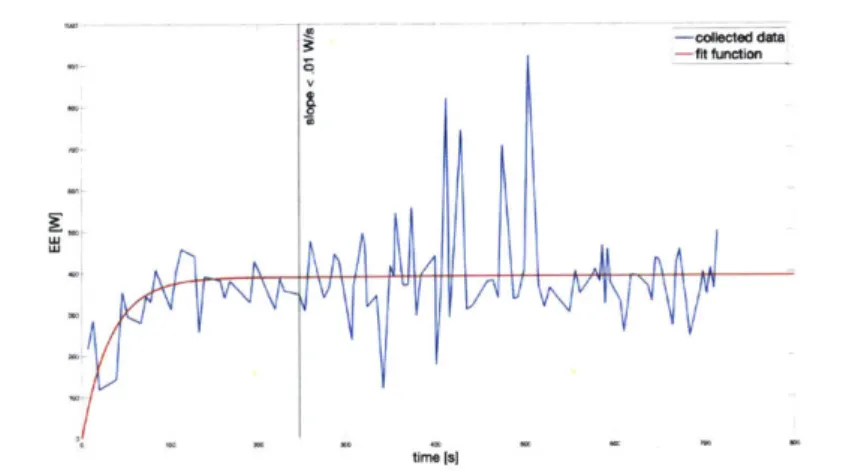
Time to convergence was further defined as the time a particular data set takes to approach a least squares fitted slope of 0.01 W/s or less, at which point the data is considered to have arrived at steady-state operations. To isolate the time at which
this occurs, equation 2.1 was differentiated with respect to time to represent the slope of the fitted curve at each point, yielding equation 2.2.
y = Cbe-bt (2.2)
Per the formerly established definition of the time to convergence, the first time at which the fitted slope was at 0.01 W/s or less was identified to be the time at which convergence occurs.
Chapter 3
Results
3.1
Observed Metabolic Cost reduction
3.1.1
Physiological Reactions
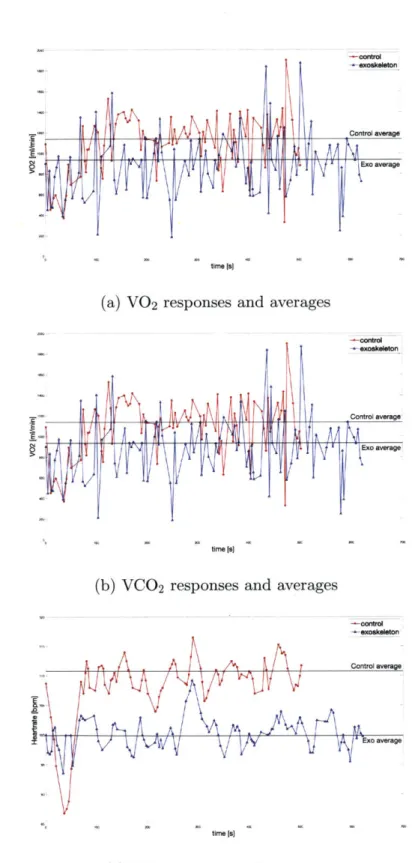
The active ankle exoskeleton significantly reduced the average V02, VCO2, and heart-rate compared to those when the active ankle exoskeleton was not used as shown in figure 3-1. The volume of 02 consumed per minute, normalized to body mass, without the use of an active ankle exoskeleton decreased 18.3 4 % compared to when utilizing an exoskeleton. Similarly, the volume of CO2 produced decreased 14.7 8
% upon implementing the exoskeleton compared to the control experiments without
the exoskeleton. Additionally, the heart-rate was 8.3 2 % lower when using the exoskeleton. Above results, elaborated in table 3.1, summarize an overall decrease in respiratory and cardiovascular indicators associated with metabolic cost when using an active ankle exoskeleton in flat ground gait.
3.1.2
Reduction in Energy Expenditure (EE)
Conversions to estimate energy expenditure based on oxygen consumption and carbon dioxide production outlined by Brockway et al. were used to calculate the average
.1
j
Control average A; 9 -E, ( I ~V
v vV
Exo average time [a](c) HR responses and averages
Figure 3-1: Plots showing a typical response of the subject, along with the aver-age values, in each respective respiratory and cadiovascular parameter over time for both cases with and without the exoskeleton. These plots represent one particular
I LZINLU W
Exo average
time [s
(a) V02 responses and averages
- ~~~Conro'dvrae
Exo average
time Is]
(b) VCO2 responses and averages
exolkton
Control average
without exo with exo reduction
[%]
V02 [ml/min/kg] 16.8 3 13.7 2 18.3 4
VCO2 [ml/min/kg] 12.9 3 10.9 2 14.7 8
Heart-rate [bpm] 118.7 2 108.9 2 8.3 2
Table 3.1: Respiratory/cardiovascular results averaged across all trials
-v
ft
V~ ~ ~~A~L~ATI1VVi J/Uki{9i1XIZ
time [a]
I a y Exo average
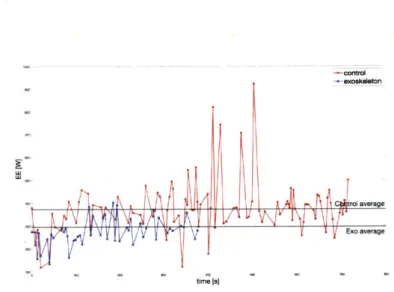
Figure 3-2: Energy expenditure, along with the average value, of one particular ex-perimental and control trial pair.
energy expenditure rate [3]. Much like the response of other respiratory and car-diovascular variables as mentioned in section 3.1.1, The rate of energy expenditure
(EE) was also significantly reduced as show in figure 3-2. Overall, the energy
expen-diture rate per unit mass without exoskeleton assistance (5.5 1 W/kg) was reduced
by 17.6 4 % with the use of the active ankle exoskeleton (4.6 1 W/kg).
without exo with exo reduction [%]
EE [W/kg] 5.5 1 4.6 1 17.6 4
Table 3.2: Energy Expenditure (EE) results averaged across all trials ~~~~~~ rol " -average
/ km '* N Kl 11
V " %Nv N V I"
-colectd data -fit function,
V
Figure 3-3: plot showing the least-squares fitted line of the EE data collected during a particular trial. Also shown is the threshold time in which the data is considered to have converged
3.2
Convergence of Metabolic Indicators
The data collected in this study shows that the time to convergence, defined in sec-tion 2.4, is in fact much shorter than the previously imposed 20 to 25 minutes. The experiments conducted converged on average 263.8 +47.5 seconds into each control trial and 138.4 +49.9 seconds into each experimental trial. The behavior of each trial with reference to the time to convergence is illustrated in figure 3-3. Additionally, the average R-squared value across all trials was 0.931.
3.3
Discussion
3.3.1
Hypothesis Revisit
One hypothesis guiding this study, outlined in section 1.5, is that using an ankle exoskeleton predicted to have a metabolic cost reduction through biomechanical ap-proximations and the AF approach in flat surface walking will show a reduced volume of oxygen consumed, volume of carbon dioxide produced, reduced energy expenditure, as well as a reduced average heart rate compared to gait without the exoskeleton and
thereby show a reduction in energy expenditure rate (EE). The findings outlined in sections 3.1.1 and 3.1.2 support this hypothesis. Additionally, the reduction in energy expenditure aligns with, although is not exactly coincident to, the estimated findings of Mooney et al. of 8 3 % and 10 % respectively [10, 9]. This study therefore aids to establish the following two assumptions.
First, since the results of this study agree with the findings outlined in the two studies mentioned previously while following distinct derivations to the conclusion, it can be said that the methods and experimental protocols utilized in this study is sufficient when analyzing the metabolic costs of flat-terrain walking and the reduction of energy expenditure provided by the use of an active ankle exoskeleton. Addition-ally, the retrospective argument can also be made. since the results presented by the two prior studies and this study generally arrive to a similar conclusion regard-ing energy expenditure rate in flat-terrain gait usregard-ing different approaches, it can be suggested that the methods and experimental protocols used in the preceding studies were viable methods to evaluate such metabolic cost reductions.
Additionally, based on the experimental results outlined in section 3.2, the time to convergence for each trial is much shorter than the previously imposed 20 to 25 minutes. The data suggests that the duration necessary for each trial to be considered fully developed, and thus is an accurate data set for a steady-state of metabolic operation, is approximately 4.4 minutes without a powered exoskeleton device and
2.3 minutes with one. This confirms, with reasonably high certainty due to the high
R-squared correlation value across the trials, the additional hypothesis presented in section 1.5 and suggests that the process of data collection based on cardiovascular and respiratory indicators can be greatly shortened to increase time efficiency of experiment sessions. This not only accelerates the process of data collection, but may yield in more accurate data overall as the subjects are no longer required to undertake much longer trials that can lead to fatigue or physical discomfort.
3.3.2
Outstanding Points of Uncertainty
There are a number of factors that should be further explored in order to fully validate the findings presented in this study. First, the relatively monolithic nature of the subjects utilized across all referred studies exploring the metabolic cost reduction of exoskeletonsnamely subjects who are male, medium to athletic build, and average to slightly above average height, present a question of the universal validity of the findings presented by this study. To assume that subjects outside of the represented demographic will yield identical results would be an oversimplification. Although the assumption made in this study was that there would not be a great variation across different subjects in the change of metabolic cost as a result of the use of an autonomous ankle exoskeleton, exploring a wide range of subjects may further validate the findings of this study and those of similar studies before it. Additionally, the geometric dependence of the magnitude, or even the existence, of a metabolic cost reduction is unexplored in this study as the bio-mechanical mechanism parameters, such as geometry, were not accounted for in this study. It is reasonable to suspect that the outcome may depend on some or multiple static and dynamic configurations of the particular subject in question.
3.3.3
Future Design Improvement
In light of the uncertainties described in section 3.3.2, there are improvements that can be made to make the findings of this study more robust. The sample size can be increased in followup studies to confirm or deny the universal nature of the findings in this study. Recruiting subjects from a wide demographic background of gender, build, athletic background, flexibility, weight, and many more parameters may yield interesting results that may or may not further strengthen the conclusions made in section 3.3.1.
3.3.4
Improvements to Exoskeleton Interface Design
Studies show that the interface design can also effect the metabolic cost reduction of an exoskeleton of like configuration to that used in this study [8]. It is suggested that autonomous ankle exoskeletons, and any other exoskeleton design that interfaces with the human body through contact, suffer a loss of power delivered due to compliance of the interface surface. In the device used in this study, it is also likely that there is a non-negligible loss in power due to the lack of rigidity in the human-machine interface that drives the metabolic cost to operate higher than necessary thus reducing the amount of metabolic cost reduced.
One solution to reducing the loss of power in the use of an ankle exoskeleton caused
by the compliant nature of the human limb is to strategically design the interface such
that it only applies forces onto the least compliant areas of the anterior shank region. Such interface customization is explored by Langois et al.
[8].
Langlois was able to conclude that interfacing with such stiffer regions of the shin can reduce the relative motion between the exoskeleton and leg by up to 80 %, which leads to the conclusion that the power delivery must be therefore improved. However, the metabolic cost benefits of such custom interfaces are not elaborated upon.Although not addressed in this particular study, the topic of interface design may yield fruitful in further conservation of metabolic cost. A customized interface that has the autonomous exoskeleton only be seated to the least compliant sections of the leg, similar to that designed by Langlois [8], may further reinforce the hypotheses confirmed in section 3.3.1 by improving the power delivery of the exoskeleton. Such personalized designs can be achieved by utilizing modern 3D scanning techniques. To aid in the potential increase in metabolic cost conservation, the custom interface may result in reduced mass, which has a large impact in reducing the Augmentation Factor
(AF) of a given exoskeleton as elaborated in section 3.3.5. The application of such
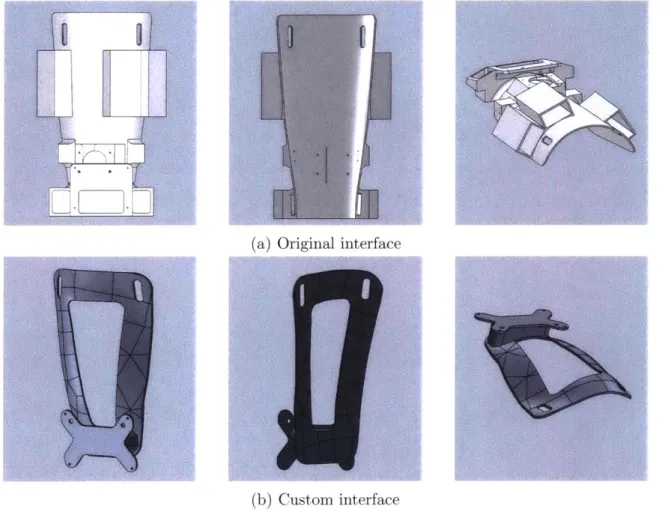
can take the shape of figure 3-4, where a 3D scanner was used to model and construct a custom interface designed specifically for the subject utilized in this study. This
particular configuration is calculated to have a 22 % reduction in mass compared to the one utilized throughout this study.
3.3.5
Improving Augmentation Factor
Overall, The additional conservation of metabolic cost due to an improved positive mechanical power delivery (p+) from a less compliant interface and reduction of distal mass (m) in the interface as suggested in section 3.3.4 can be quantified through an improved AF as described in equation 3.1 [10].
p + +i pdist n
AF - _+___s -
Z
imi (3.1)The particular configuration shown in figure 3-4b has 22 % less distal mass than the one shown in figure 3-4a due to the features designed to avoid areas of high compliance. Assuming that all other variables (pdist,q, and 43) are constant, the AF
of the configuration using a custom interface with 80 % less compliance and 22 % less distal mass at the shin should be approximately 36.1 W, which is 9.3 % greater than that of the configuration utilized in the mentioned study [10]. It is therefore reasonable to expect a performance increase of similar magnitude, and is also indicative of the benefits that custom interfaces bring to metabolic cost reduction.
3.4
Conclusion
In this study, an active autonomous ankle exoskeleton was shown to reduce the metabolic cost of level ground walking through the use of data collected from a solid-state metabolic analyzer. The relevant respiratory and cardiovascular parameters showed a visible and relevant reduction as a result of the use of the exoskeleton. The reduction in energy expenditure (EE) was not only present but the results agreed with previous studies that shared a similar hypothesis which estimated a reduction in EE
(a) Original interface
(b) Custom interface
Figure 3-4: Illustrations of the original interface configuration compared to a custom interface designed using 3D scans of an individual's anterior shank region
through different means, primarily utilizing the augmentation factor (AF) or other system-dynamic approaches. This agreement strongly suggests that the methodology in investigating the metabolic cost reduction of ankle exoskeletons in gait utilized in this study is valid and that the particular autonomous ankle exoskeleton explored in this study does provide its user with an identifiable reduction in metabolic cost. Additionally, this study confirms a much lower time to convergence than previously assumed, which suggests that metabolic cost analysis can be further optimized in time and prevent subject fatigue and discomfort. Finally, this study highlights the potential benefits of a custom exoskeleton interface design through the reduction of distal mass and the increase of positive mechanical power input, which can have a pro-found effect on the Augmentation Factor (AF), and therefore aid to further conserve metabolic cost associated with using an autonomous powered ankle exoskeleton.
Bibliography
[1] G. L. Belenky. Varieties of Reaction and Adaptation to Combat Experience.
Bulletin of the Menninger Clinic, 51(1), 1987.
[2] R. W. Bohannon. Comfortable and maximum walking speed of adults aged 20-79 years: reference values and determinants. Age Ageing, 26(15), 1997.
[3] J. M. Brockway. Derivation of formulae used to calculate energy expenditure in
man. Human Nutrition Clinical Nutrition, 41(463), 1987.
[4] S. H. Collins, M. B. Wiggin, and G. .S. Sawicki. Reducing the energy cost of human walking using an unpowered exoskeleton. Nature, 522(212), 2015.
[5] H. Kazerooni and R. Steger. The Berkeley lower extremity exoskeleton. Journal
of Dynamic Systems Measurement Control, 128:14-25, March 2006.
[6] H. Kim, J. Lee, J. Jang, S. Park, and C. Han. Design of an Exoskeleton with
Min-imized Energy Consumption based on using Elastic and Dissipative Elements.
International Journal of Control, Automation, and Systems, 13(2):11, 2015.
[7] J. King. The Overweight Infantryman. 2017.
https://mwi.usma.edu/the-overweight-infantryman/
[8] Kevin Langlois, Marta Moltedo, Tomislav Basek, and Carlos
Relative Motion Between the User and a Powered Ankle Foot Exoskeleton. IEEE
International Conference on Biomedical Robotics and Biomechatronics, 7, 2018.
[9] L. Mooney and H. Herr. Biomechanical walking mechanisms underlying the metabolic reduction caused by an autonomous exoskeleton. Journal of
Neuro-Engineering and Rehabilitation, 13(4), 2016.
[10] L. Mooney, E. Rouse, and H. Herr. Autonomous exoskeleton reduces metabolic
cost of human walking during load carriage. Journal of NeuroEngineering and
Rehabilitation, 11(80), 2014.
[11] D. Mujumdar. Effects of military load carriage on kinematics of gait. Ergonomics, 53(6):9, 2010.
[12] C. J. Walsh, K. Endo, and H. Herr. A quasi-passive leg exoskeleton for load-carrying augmentation. Int J HR, 4:487-506, 2007.