British Journal of Nutrition (1991), 65, 337-346 337
Antioxidant vitamin intakes assessed using
a
food-frequency
questionnaire
:
correlation with biochemical status in smokers
and non-smokers
BY C. BOLTON-SMITH', C. E. CASEY', K. F. GEY3*, W. C. S. SMITH' A N D H. T U N S T A L L - P E D O E '
'
Cardiovasculur Epidemiology Unit, Ninewells Hospital and Medical School, Dundee DDI 9SY Department of Medicine and Therapeutics, University of Aberdeen, Aherdeen AB9 2 2 0 "Department of Vitamin and Nutrition Research, F. Hofjmann-La Roche and Co. Ltd, Basle,Switzerland
(Received 28 Fchruary 1990 -Accepted 18 October 1990)
~ ~ __ ~ ___ ~ ~ _ _ ~ _ _ _ _ _ _ _ _ ~
The increasing interest in the possible role of antioxidant vitamins in many disease states means that methods of assessing vitamin intakes which are suitable for large-scale investigations are now required. The suitability of the food-frequency questionnaire, which was developed by the Medical Research Council - Cardiff Group, for determining dietary intake of antioxidant vitamins in epidemiological studies was investigated in 196 Scottish men. The validity of the dietary data was assessed by comparison with serum vitamin concentrations, and separate analyses were performed for current smokers and non- smokers. The results showed that total energy intake and the percentage of energy derived from sugar were higher in smokers, and that both dietary and serum values of vitamin C, /I-carotene and vitamin E
were lower in smokers than non-smokers. After adjustment for serum lipids, energy intake and body mass index, correlation coefficients between dietary and serum vitamins C and E were similar for smokers ( r 0555 and 0.25 respectively) and non-smokers (r 0.58 and 0.32 respectively). Correlation between dietary and serum carotenes was reduced from 0.28 in non-smokers to 0.09 in smokers and correlations for retinol and total vitamin A were weakly significant only for non-smokers. The food-frequency questionnaire assigned > 70% of subjects correctly into the upper or lower plus adjacent tertiles of serum vitamin values, with the exception of @-carotene and total vitamin A for smokers. Thus, the food- frequency questionnaire appeared to be an adequate tool for assigning individuals into tertiles of serum antioxidant vitamins with the main exception of &carotene for smokers. Marked differences do occur between the vitamins and between the smoking groups which may reflect reduced accuracy of reporting on the food-frequency questionnaire or differential absorption and metabolism of the vitamins. Dietary antioxidant vitamins: Biochemical markers: Smoking
~ ~ _ _ _ _ _ _ _ _ _ _ _ _ - _ _ - ~ ~ - _ _ -
With the growing interest in, and understanding of, the role of antioxidant vitamins in disease processes such as coronary heart disease (CHD), cancer and inflammatory diseases (Gey, 1986; Gey et ul. 1987; Duthie et ul. 1989; Larner & Conway, 1989) it is important to be able to assess dietary intake of these vitamins in epidemiological studies. Food- frequency questionnaires (FFQ) are the method of choice for large-scale dietary investigations, especially when the long-term patterns of intake are most pertinent (Nelson et ul. 1989). FFQ have been validated against 7 d weighed intake procedures (Yarnell et u1. 1983) and compared with numerous other diet assessment methods (Cameron & Van Staveren, 1988), all of which are susceptible to reporting bias. Biochemical markers may Molccular Biology, University of Bern, Buhlslr. 28, Postfach 98, CH-3000 Bern 9, Switzerland
offer independent validation of nutrient intake. Although suitable markers are not available for many nutrients, serum values for several vitamins are reported to reflect intake in controlled studies (Willett et al. 1983 h) despite the inevitable confounding by individual variability in absorption, availability and metabolism of the vitamins.
The FFQ used in both the Scottish Heart Health Study (SHHS; Smith et al. 1989; Tunstall-Pedoe et al. 1989) and the Scottish MONTCA Study (WHO MONTCA Project Principal Tnvestigators, 1988) was the Medical Research Council-Caerphilly questionnaire (Yarnell et al. 1983) which was originally designed to assess fibre intake and the macronutrients. Its suitability for determining dietary vitamin intake was unknown.
Both the differences between the diets of smokers and non-smokers (Fehily et al. 1984) and the possibility of different metabolism and requirements of antioxidant vitamins in smokers (Kallner et ul. 1981; Stryker et al. 1988) made it important to assess the relative validity of the FFQ in both of these groups. The two Scottish cities, Glasgow and Aberdeen, have relatively high and low mortality rates respectively from CHD, and also very different social and cultural backgrounds. As such, differences in dietary and smoking habits are likely to occur, and may provide a wide range of vitamin intakes over which association with serum vitamin concentrations may be detected.
The present study, therefore, investigates the validity of using the F F Q to categorize smokers and non-smokers into correct tertiles of serum antioxidant vitamins in men living in North Glasgow and Aberdeen.
M E T H O D S
Subjects were men born between 1938 and 1947, randomly selected from general practitioners’ registers in Aberdeen and North Glasgow. In the spring of 1988,450 subjects were approached and asked to complete a questionnaire identical to that used in the SHHS and the Scottish MONTCA studies, which included socio-demographic questions and the FFQ (Yarnell et al. 1983). Supplementary questions asked about intake of vitamin supplements and those people taking supplements, or those with chronic disease, were subsequently removed from the analysis. Questionnaires were checked for completeness when the subjects attended a clinic for weight, height and blood pressure measurement and the taking of a non-fasted venous blood sample.
The dietary vitamin intakes were calculated by computer programme from the food- frequency data, using standard portion sizes and the vitamin contents given in the food composition tables (Paul & Southgate, 1978). Smokers were defined as those men smoking at least one cigarette per day and non-smokers as those currently smoking no cigarettes regularly. Cigar and pipe smokers were not analysed separately for their numbers were too small (respectively six and three).
Serum total cholesterol (total-C), triacylglycerols (TG) and the antioxidant vitamins a- and y-tocopherol (vitamin E), ascorbic acid (vitamin C), carotene (consisting mainly of
0-
carotene, with minor amounts of a-carotenes) and retinol were measured by procedures described previously (Gey 1986). a-Tocopherol equivalents (vitamin E) and retinolequivalents (vitamin A) were calculated from the relative biological activities of their components, and dietary p-carotene may also include minor amounts of other carotenes as given in McCunce arid Widdowson’s The Composition of Foods (Paul & Southgate, 1978).
Stutistical analysis
Mean and standard deviations of dietary and serum levels of the antioxidant vitamins were calculated by smoking habit, and differences between smoking habits were tested for by analysis of variance. The skewed distributions of dietary vitamins (all) and serum vitamin C, carotene and TG were normalized by natural logarithm and square root (carotene)
A N T I O X I D A N T V I T A M I N S I N D I E T A N D B L O O D
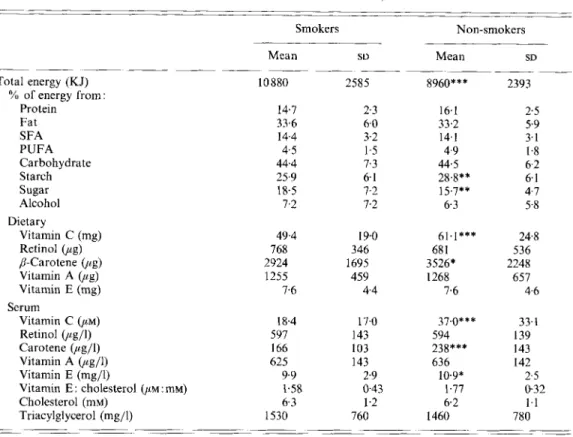
Table 1 . Daily nutrient intake and serum vitamin values j o r smokers (n 79) and non- smokers (n 117)
(Mean values and standard deviations)
339 - ____ _ _ ~ _ _ _ _ _ ~ _ _ Total energy (KJ) Protein Fat SFA PUFA Carbohydrate Starch Sugar Alcohol Dietary Vitamin C (mg) Retinol @g) p-Carotene @g) Vitamin A (up) Vitamin E (mg) % of energy from Smokers Nonsmokers ~ Mean S U Mean SD ~ ~ _ _ 10 880 14.7 33.6 14.4 4.5 44.4 25.9 18.5 7.2 ~~ 2585 2.3 6.0 3.2 1.5 7.3 6.1 7-2 7.2 49.4 19.0 768 346 2924 1695 1255 459 7.6 4.4 18.4 597 166 625 9.9 1.58 6.3 1530 ~~ 17.0 143 103 143 2.9 043 1.2 760 ~~ _ _ _ _ _ 8960*** 2393 16.1 2.5 33.2 5.9 14.1 3.1 4.9 1.8 44.5 6.2 28.8** 6.1 15.7** 4.7 6.3 5.8 61.1*** 248 68 1 536 3526* 2248 1268 657 7.6 4.6 Scrum Vitamin C @M) Retinol (yg/l) Carotene (pg/l) Vitamin A (,ug/l) Vitamin E (mg/l)
Vitamin E cholesterol (/IM mM)
Cholesterol (mM)
Triacylglycerol (mg/l)
_ ~ _ _ _ ~ ~ ~
_ _ _ _ _ _ _ _ _ _ _ _ _ _ ~
SFA, saturated fat; PUFA, polyunsaturated fat.
Mean values for non-smokers were significantly different from those of smokers (by analysis of variance): * P < 0 0 5 ; **P < 001 ; * * * P < 0001. 37.0*** 594 238*** 636 10.9* 1.77 6.2 1460 ~~ 33- I 139 143 142 2.5 0.32 1.1 780 ~_ _ _ _ _ _ _ _
transformations. Statistical analyses were performed on both the raw and transformed data. Serum vitamin E values were adjusted for total-C ($+vitamin E : mM-total-C) as recommended in the literature (Thurnham et al. 1986; Gey et al. 1987), and the relative merits of separate adjustment for serum cholesterol or the entering of total-C into the partial correlation model were assessed. Associations between serum vitamin values and serum lipid concentrations, body mass index (weight: height'; BMI), age, alcohol (g) and total energy intake were tested for by linear regression analyses of the raw values. Correlations between dietary and serum vitamin levels were tested by simple Pearson correlation analyses and by partial correlation analyses, adjusting for total energy intake, BMI, total-C and TG. Regression and correlation analyses were performed for the whole sample together and for smokers and non-smokers separately, in order to determine whether different relationships existed between dietary and serum vitamin values for smokers and non-smokers.
The ability of the FFQ data to assign individuals correctly into tertiles of serum vitamin concentrations was also assessed for smokers and non-smokers separately.
Table 2. Regression coejficients between .,erum vitamin values and serum total cholesterol (total-C), serum triacylglycerol ( T G ) and body muss index (weight: height’; BMZ) for
smokers ( S ) and non-smokers ( N )
__ _ _ __ ~- ~ _ _ _ _ _ _ ___ _ _ ~ _ _ ~ ~ -~ ~~ _ _ _ _ _ ~ - total-C TG BMI ~ _ _ ~ _ _-- _ __ _ _ Serum vitamins S N S N S N Vitamin C 0 13 -0 20* -0 06 -0 16 0 05 0 03 Retinol 0 33** 0 38*** 0 50*** 045*** 0 25* 0 10 Carotene 0 27* 0 02 -0 06 -0 19* -0 03 -0 24* Vitamin A 0 36*** 0 39*** 0 49*** 0 44*** 0 25* 0 09 Vitamin E 049*** 0 64*** 0 36** 0 47*** 031** 0 I 5 total-C - - 0 39*** 0 35*** 0 24* 0 19* TG 0 39*** 0 35*** - - 0 46*** 031*** ~~ _ _ _ _ _ _ - _ _ _ - - - -~ __ ~ ~ ~~ _ _ -__ ~ ___
Significant trend between dietary and serum vitamin values by linear regression analysi5 * P < 0 0 5 , * * P < 001, ***P < 0001
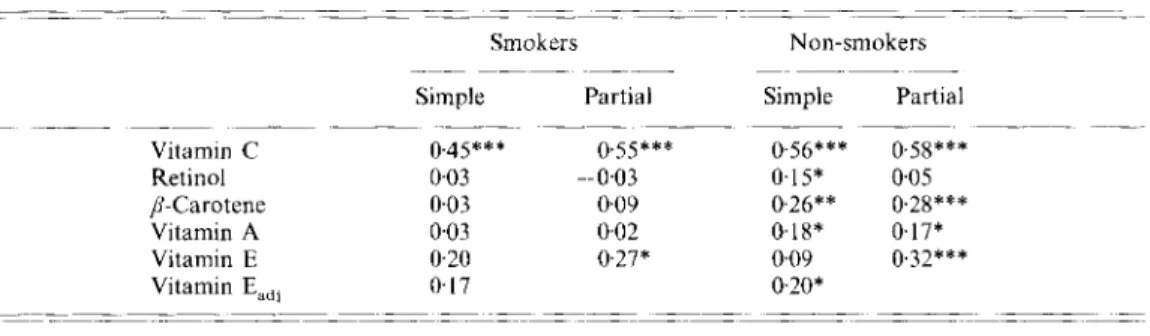
Table 3 . Simple and partial correlation coeficientst between dietary and serum vitamin
values for smokers and non-smokers
_ ~ _ _ _ _ _ _ _ _ ~ _ _ _ _ ~ _ _ _ _ _ _ _ _ _ _ _ _ ~ _ ~ ~ _ _ _ _ _ _ _
Smokers Non-smokers
_ ~ _ -~ - -~~
Simple Partial Simple Partial
Vitamin C 0 4 5 * * * 0 55*** 0 S6*** 0 58*** Retinol 0 03 --0 03 015* 005 8-Carotene 0 03 0 09 026** 028*** Vitamin A 0 01 0 02 018* 017* Vitamin E 0 20 0 27* 0 09 0 32*** - Vitamin E,,, 0 17 0 20* _ _ _ _ _ _ _ _ _ _ _ _ _ _ ~ ._ ~~~ ~~~~
Vitamin E,,,, serum vitamin E concentrations were adjusted for serum total cholesterol valurs ( p - v i t a m i n * P < 0 0 5 , * * P i O O l , ***P<OOOl
7 Simple refers to Pedrson correlation, partial refers to correlation after ddjustment for total energy intake, E mu-cholesterol)
body mass index, serum total cholesterol and serum triacylglycerol
R E S U L T S
The response rate (excluding those invitations returned by the Post Office) was 64.5 %, with no difference between the two cities. Thirty-four men were excluded from the sample due to disease, and a further eighteen due to the taking of vitamin supplements or to incomplete FFQ records.
The mean age and BMI of the smoking group were respectively 45.8 (SD 2.9) and 25.3 (SD 3.8), and for the non-smoking group were respectively 46.0 (SD 2.8) and 25.8 (SD 3.2). The differences between the groups were not significant ( P > 0.05).
The daily nutrient intakes and serum vitamin values are given by smoking group in Table I . Total energy intake was significantly higher ( P < O.OOl), while the percentage of energy derived from starch was significantly lower ( P < O.Ol), and that derived from sugar was significantly higher ( P < O.Ol), in the smokers than in the non-smokers. Both dietary and serum vitamin C and @-carotene levels were significantly lower in the smokers than in the non-smokers ( P < 0.001, except dietary @-carotene ( P < 0.05)). Serum vitamin E was also significantly lower in smokers than in non-smokers ( P < 0.05).
A N T I O X I D A N T V I T A M I N S I N D I E T A N D B L O O D 341 loo
1
Nonsmokers 8o1
..
+ *.A
I ///
/
/..
+ 60 + . 13
u J+ .
c .- E m > 4- .- + * - + + . t * + + + ++ + 0! 4 T
I I I I i 0 30 60 90 120 150 Dietary vitamin C (mg/d) 800 0, e, 4-$
400 0I.
+ . * Non-smokers / +-
Smokers Q 4I ---
E 2 v) 200-
& +..
*
+ + + 0 2000 4000 6000 8000 10000 1 2 0 0 0 Dietary p-carotene (pg/d)Fig. 1. Lincar regression plots for serum v. dietary values or vitamin C and ,&carotene for smokers (n 79) (+) and non-smokers ( n 117) (0). The slopes of the lines are for vitamin C ; smokers 0.43 (SE 0.09) ( P < 0,001) and non-
smokers 0.51 (SE 0.07) (P < 0.001), and for /&carotene; smokers 0.005 (SE 0.007) (P = 0.44) and non-smokers 0,017
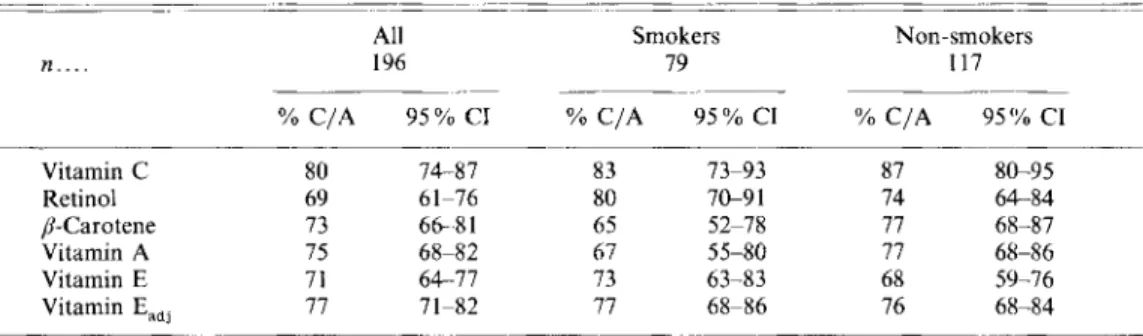
Table 4. The percentage of subjects who are correctly assigned by the food-frequency questionnaire data into the lower or adjacent and upper or adjacent tertiles (YO C I A ) of serum
vitamin values (with their 95 O h confidence intervals (95 YO CZ))*
-
~-
~- -
All Smokers Non-smokers
n .. 196 79 117
~ ~- -~
% C/A 95% CI Yo C/A 95% CI Yo C/A 959'' CI
Vitamin C 80 7 4 87 83 73-93 87 8G95 Retinol 69 61-76 80 7&91 74 64-84 p-Carotene 73 6 6 8 1 65 52-78 77 68-87 Vitdmin A 75 68-82 67 55-80 77 68-86 Vitamin E 71 64-77 73 63-83 68 59-76 Vitamin E,,, 77 7 1-82 77 68-86 76 68-84 - ~~~ ~ - - _____ ~~~
Vitamin E,,,, serum vitamin E concentrations were adjusted for serum total cholesterol values (phi-vitamin * The percentages in the correct or adjacent lower and upper tertiles (YO C/A) were determined using a Latin E mM-cholesterol)
square design
corresponding serum vitamins, but vitamin C was a notable exception to this, for inter- individual serum variability was 3.54.0 times that of dietary vitamin C variability.
The results of analyses performed on the transformed values were not appreciably different from those on the raw values, and so only the latter results are presented (others are available on request). Similarly, differences between separate adjustment for total-C and the entering of total-C into the partial correlation model were negligible for vitamin
E.
The results of linear regression analyses for serum vitamins against serum lipids and BMI are given by smoking group in Table 2. (Results for the whole sample together are not given : the coefficients were intermediate between those of the two smoking groups.) Differences between the smoking groups were most marked for /?-carotene. Linear associations were also tested with age, total energy intake, alcohol consumption (g/d) and cigarette number (smokers). There was no significant linear trend between any serum vitamin and age (43-52 years) or cigarette number. Significant inverse associations occurred between serum carotene and alcohol consumption (R-0.30, P = 0.01) and between serum carotene and BMI (R-0.24, P = 0.01 1) for the non-smokers only. Serum vitamin C was inversely associated with total energy intake (R-0.29, P = 0.009) for smokers only. Dietary intakes of retinol, vitamin A and vitamin E were also significantly associated with total energy intake for both smokers and non-smokers ( P < 0.001, except vitamin E in smokers ( P = 0.009)), but no significant associations between dietary values and BMI, cigarette number, alcohol consumption or age occurred for either group.
The simple Pearson correlation and partial correlation coefficients for dietary v. serum vitamin values are given by smoking group in Table 3. (Here again, the correlation coefficients for the whole sample together were intermediate between those of the two smoking groups, and so are not given.) Significant positive correlations ( P < 0.05) occurred for all the vitamins (except the unadjusted vitamin E) for the non-smokers, whilst for the smokers, only vitamin C was significant ( P < 0.001) by Pearson correlation, and both vitamins C and E were significant by partial correlation analysis (P < 0.001 and P < 0.05 respectively). Adjustment in the partial analyses improved the correlation coefficients for the associations between dietary and serum values for vitamin C, /?-carotene and vitamin E. However, neither full adjustment nor individual adjustment with each variable improved
A N T I O X I D A N T V I T A M I N S I N D I E T A N D B L O O D 343 the raw correlations between dietary and serum vitamin A and retinol. Dietary p-carotene
correlated significantly with serum retinol ( R 0.17,
P
= 0.036) for non-smokers on partial correlation analysis. The different relationships between the dietary and serum vitamin C and /?-carotene values for smoker and non-smokers are illustrated by the slopes of the regression lines in Fig. 1 .The ability of the F F Q data to assign people correctly into the upper or adjacent and lower or adjacent tertiles of serum vitamin concentrations is given in Table 4. The percentage who were seriously misclassified into the opposite tertile varied from 13 YO for vitamin C in non-smokers to 35 O h for /3-carotene in smokers. Serious misclassification was
more common in the upper than the lower tertiles for both smokers and non-smokers (values not shown), and with the exception of unadjusted vitamin E and retinol, misclassification was greater in smokers than non-smokers. This effect was most marked for p-carotene, where nearly double the proportion were correctly assigned to the lower and upper serum tertiles in the non-smoking group (494 "/o) compared with the smoking group
(27.5 Yo).
D I S C U S S I O N
Total energy intake and the percentage of energy from sugar were significantly greater in smokers than non-smokers in the present study, in agreement with some previous reports (Elwood et al. 1970; Tillotson et al. 1981), but in contrast to others (Fehily et al. 1984; Fulton et al. 1988). These variable results may reflect different reporting biases between smokers and non-smokers depending on whether food is weighed or estimated from FFQ. Reduced intakes of vitamins C and E and p-carotene are consistently reported for smokers (Fehily et al. 1984; Chow et a/. 1986; Stryker et al. 1988), while results for retinol and total vitamin A are more varied, and may reflect differences in the social class structure of the
study populations (Bolton-Smith et al. 199 1). The reduced serum concentrations of vitamin C and carotene reported here in smokers have been shown previously (Russell-Briefel et al. 1985 ; Chow et al. 1986 ; Stryker et al. 1988). Stryker et al. (1 988) also found lower serum vitamin E levels in smokers, but the difference did not reach the significance level of
P
< 005 reported here.An attempt was made to draw the study population from contrasting cities in order to achieve a wide range of nutrient intakes. This was successful, for both the amounts and ranges of the dietary vitamins were equivalent to, or greater than, those reported by Tangney et al. (1987), and only marginally less than those reported by Stryker et al. ( 1 988) in a sample of 18-79-year-olds compared with only a 10-year age-range (43-52 years) in the present study.
The relationships of serum vitamin E with total-C and T G have been reported previously (Stryker et al. 1988) and are probably the result of its mode of transport in the lipoproteins, as well as its predominant occurrence in oils and fat-rich foods. /3-Carotene absorption is also dependent on dietary fat (Dimitrov et al. 1988), and is transported in lipoproteins (Vahlquist et al. 1982). A significant negative correlation was also found here for serum carotene with TG in non-smokers, but not in smokers. The reason for this is unclear, but as occurred for the associations of retinol and vitamin A with total-C and TG, adjustment
for these serum lipids did not improve the correlation between dietary intake and serum vitamin concentrations. This suggests that these associations may not be of biological importance for determining serum concentrations in contrast to the situation for vitamin E.
The inverse correlation between serum carotene and BMI which was found here in non- smokers, has been reported previously (Willett et al. 1 9 8 3 ~ ; Nierenberg et al. 1989). The biological significance of the positive associations of retinol, vitamin A and vitamin E with
BMI, only in the smoking group, is also unclear but as smoking is known to influence the BMI and metabolic rate (Wack & Rodin 1982), alterations in vitamin metabolism may also occur, It is, moreover, clear from the results of the correlation analyses presented here and by others (Stryker et ai. 1988), that p-carotene absorption and/or storage and metabolism is markedly different between smokers and non-smokers, although one study produced contrary results (Nierenberg et al. 1989).
The poor association between retinol and vitamin A intakes and serum values has been reported previously (Willett et ai. 1983a, 6 ; Krasinski et al. 1989). It is, however, interesting to note that on partial correlation analysis, dietary p-carotene was significantly positively correlated with serum retinol in non-smokers, but not smokers. The factors such as the concentration of retinol-binding protein, conversion rates of p-carotene to retinol, and
p-
carotene storage, all of which may affect circulating retinol levels (Nierenberg et al. 1989), clearly need more detailed laboratory investigation with specific attention to the effects of smoking. It seems unlikely that the difference between smokers and non-smokers for p- carotene is due to poorer recording of their diet by smokers, for no similar differences were seen for vitamins C and E.Dietary intakes of both vitamins C and E correlated significantly with serum concen- trations, as found previously (Lemoine et al. 1980; Willett et ai. 19836). The correlation coefficients for vitamin E were low (0.27 smokers and 0.32 non-smokers) compared with
those (0.53) reported by Stryker et al. (19819, but were similar to the value of 0.34 reported by the same group previously (Willett c’t al. 1983h), and to values reported by Knekt et al. (1988) for correlations with margarines and vegetable oils (0.22) and green vegetables (0.24) for men and women respectively. The partial correlation coefficients between diet and serum vitamin C for smokers and non-smokers were similar (0.55 v. 0.58), but the slopes of the regression lines differed. These findings may, therefore, support the steady-state turnover studies of Kallner et al. (1981), which suggested that a higher intake of vitamin C was required by smokers in order to maintain equivalent serum values to non-smokers. The non-significant correlation between dietary and serum carotene for smokers as distinct from non-smokers is in agreement with the results from Stryker et al. ( 1 988), where, for men, the correlation coefficient fell from 0.44 to 0.02 as compared with the present results of 0.28 and 0.09 for non-smokers and smokers respectively. The present study is in agreement with others in finding no association between serum vitamin values and the number of cigarettes smoked per d (Chow et al. 1986; Stryker et al. 1988).
It has been pointed out that due to large intra- and inter-individual variation in both dietary and serum vitamins (Tangney et al. 1987) correlations between them ‘can at best be modest’ (Willett et al. 19836). While the partial correlation coefficients reported here are modest, they give a good indication of the ability of the F F Q findings to categorize individuals correctly by tertile of serum vitamin concentrations. These findings do suggest that the FFQ in use in the SHHS and Scottish MONICA studies is able to categorize the majority ( > 70 YO) of the study population into the correct or adjacent lower and upper tertile of serum vitamin C, vitamin E, p-carotene, retinol and vitamin A for non-smokers, and with a reduced ability to do so for only p-carotene and vitamin A for smokers. The FFQ data appears poorly to reflect serum carotene values for smokers, and thus, the converse is also true: serum carotene is not a good biological marker for dietary intake in smokers, while serum concentrations of the other antioxidant vitamins may be satisfactory markers of low or high dietary intake. Although these results only refer to men, other reports indicate that women may not differ significantly in this respect (Lemoine et al. 1980; Willett et a/. 19836; Stryker et ai. 1988).
The use of such a F F Q to investigate associations between dietary intake of the antioxidant vitamins and disease states such as CHD, may expect to yield associations
A N T I O X I D A N T V I T A M I N S I N D I E T A N D B L O O D 345 which are less than the true values (Freudenheim & Marshall, 1988). The inevitable errors in reported intake levels, as well as those errors associated with only a single measurement of serum vitamins, will attenuate the true relationship, in a similar manner to that which is likely to have occurred in the reported dietary and serum vitamin correlations presented here.
This collaborative study was funded by F. Hoffman La Roche and Co. Ltd; C.B.-S. is supported by a grant from the British Heart Foundation and C.E.C. is supported by a grant from the MacRobert Trust.
Thanks go to the subjects for participating in the study and to the field staff for their work in the sample collection. The Cardiovascular Epidemiology Unit is supported by the Scottish Home and Health Department, but the opinions expressed in the present paper are those of the authors alone.
R E F E R E N C E S
Bolton-Smith, C., Smith, W. C. S., Woodward, M. & Tunstall-Pedoe, H. (1991). Nutrient intakes of different social-class groups: results from the Scottish Heart Health Study (SHHS). British Journal of Nutrition 65,
Cameron, M. E. & Van Staveren, W. A . (1988). Manual on Methodology f o r Food Con.suniprion Studie.r. New York: Oxford University Press.
Chow, C. K., Thacker, R. R., Changchit, C., Bridges, R. B., Rehm, S. R., Humble, J. & Turbek, J. (1986). Lower levels of vitamin C and carotenes in plasma of cigarette smokers. Journal of the American College qf Nutritihn
Dimitrov, N. V., Meyer, C., Ullrey, D. E., Chenoweth, W., Michelakis, A,, Malone, W., Boone, C . & Fink, G . (1988). Bioavailability of p-carotene in humans. Americun Journal of Clinical Nutrition 48, 298-304.
Duthie, G . G., Wahle, K. W. J. & James, W. P. T. (1989). Oxidants, antioxidants and cardiovascular disease.
Nutrition Research Reviews 2, 51-62.
Elwood, P. C., Waters, W. E., Moore, S. & Sweetnam, P. (1970). Sucrose consumption and ischaemic heart disease in the community. Lancet i, 1014-1016.
Fehily, A. M., Phillips, K. M. & Yarnell, J. W. G. (1984). Diet, smoking, social class and body mass index in the Caerphilly heart disease study. Americun JuzirnuI uf Clinical Nutrition 40, 827-833.
Freudenheim, J. L. & Marshall, J . R. (1988). The problem of profound mismeasuremcnt and the power of
epidemiological studies of diet and cancer. Nutrition and Cancer 11, 243 250.
Fulton, M., Thomson, M., Elton, R. A., Brown, S., Wood, D. A. & Oliver, M. F. (1988). Cigarette smoking, social class and nutrient intake: relevance to coronary heart disease. European Journal of Clinical Nutrition 42,
Gey, K. F. (1986). On the antioxidant hypothesis with regard to arteriosclerosis. Bibliorhecu ‘ Nutrilio el D i m ’
Gey, K. F., Brubacher, G. B. & Stahelin, H. B. (1987). Plasma levels of antioxidant vitamins in relation to ischaemic heart disease and cancer. Amerirun Journul of Clinicul Nutrition 45, 1368-1 377.
Kallner, A. B., Hartmann, D. & Hornig, D. H . (1981). On the requirements of ascorbic acid in man: steady-state turnover and body pool in smokers. Amrrican Journal offclinical Nutrition 34, 1347-1 355.
Knckt, P., Scppanen, R. & Aaran, R.-K. (1988). Determinants of serum a-tocopherol in Finnish adults.
Prcrentutive Medicine 17, 125-735.
Krasinski, S. D., Russcll, R. M., Otradovec, C. L., Sadovski, J. A,, Hartz, S. C., Jacob, R. A. & McGandy, R. B. (1989). Relationships of vitamin A and vitamin E intake to fasting plasma retinol, retinol-binding protein, retinol esters, carotene, a-tocopherol and cholesterol among elderly people and young adults : increased plasma retino1 esters among vitamin A-supplement users. American Journal of Clinical Nutrition 49, 112-120. Larner, A. J. & Conway, M. A. (1989). Free radicals in acute myocardial infarction. Quarterly Journal ofhfedicine Lemoine, A., le Devehat, C., Codaccioni, J. L., Monges, A,, Bermond, P. & Salkeld, R. M. (1980). Vitamin B,,
B,, B, and C status in hospital inpatients. American Journal of Clinical Nufrition 33, 2595-2600
Nelson, M . , Black, A. E,, Morris, J . A. & Cole, T. 3. (1989). Between- and within-subject variation in nutrient intake from infancy to old age: estimating the number of days required to rank dietary intakes with desired precision. Amrrican Journal qf Clinical Nutririon 50, 155-1 61.
Nierenberg, D. W., Stukel, T. A , , Baron, J. A,, Dain, B. J., Greenberg, E. R. & The Skin Cancer Prevention Group (19x9). Determinants of plasma levels of bcta-carotene and retinol. Amerirun Journal of Epidemiology
Paul, A. A . & Southgate, D. A. T. (1978). McCance und Widdowson’s The Composition of Foods, 4th ed. London: 321 -335.~ 5 , 305-312. 797-803. 37, 53-91. 70, 205-212. 130, 51 1-521. H.M. Stationery Officc.
Russell-Briefel, R., Bates, M. W. & Kuller, L. H. (1985). The relationship of plasma carotenoids to health and biochemical factors in middle-aged men. American Journal of Epidemiology 122, 741-749.
Smith, W. C. S., Tunstall-Pedoe, H., Crombie, 1. K. & Tavendale, R. (1989). Concomitants of excess coronary deaths - major risk factor and life-style findings from 10359 men and women in the Scottish Heart Health Study. Scottish Medical Journal 34, 550-555.
Stryker, W. S., Kaplan, L. A,, Stein, E. A , , Stampfer, M. J., Sober, A . & Willett, W. C. (1988). The relation of diet, cigarette smoking and alcohol consumption to plasma beta-carotene and alpha-tocopherol levels.
American Journal of Epidemiology 127, 283-296.
Tangney, C. C., Shekelle, R. B., Raynor, W., Gale, M. & Betz, E. P. (1987). Intra and interindividual variation in measurements of ,&carotene, retinol and tocopherols in diet and plasma. American Journal of Clinical Nutrition 45, 764769.
Thurnham, D. I., Davies, J. A., Crump, B. J., Situnayake, R. D. & Davis, M. (1986). The use of different lipids to express serum tocophero1:lipid ratios for the measurement of vitamin E status. Annals of Clinical
Biochemistry 23, 514-520.
Tillotson, J. L., Gorder, D. D. & Kassim, N. (1981). Nutrition data collection in the multiple risk factor intervention trials (MRFIT). Journal of the American Dietetics Association 78, 235-240.
Tunstall-Pedoe, H., Smith, W. C. S., Crombie, I . K. & Tavendale, R. (1989). Coronary risk factors and lifestyle variation across Scotland : results from the Scottish Heart Health Study. Scottish Medicul Journal 34, 556560. Vahlquist, A,, Carlson, K., Hallberg, D. & Rossner, S. (1982). Serum carotene, vitamin A, retinol binding protein
and lipoproteins before and after jejuno-ileal bypass surgery. International Journal of Obesity 6 , 491 4 9 7 . Wack, J. T. & Rodin, J. (1982). Smoking and its effects on body weight and the systems of caloric regulation.
American Journal of Clinical Nutrition 35, 366-380.
WHO MONICA Project Principal Investigators (prepared by H. Tunstall-Pedoe) (1988). The World Health Organization MONICA project (monitoring trends and determinants in cardiovascular disease): a major international collaboration. Journal of Clinical Epidemiology 41, 105-1 14.
Willett, W. C., Stampfer, M. J., Underwood, B. A., Speizer, F. E., Rosner, B. & Hennekens, C. H. (1983a). Validation of a dietary questionnaire with plasma carotenoid and n-tocopherol levels. American Journal of
Clinical Nutrition 38, 63 1-639.
Willett, W. C . , Stampfer, M. J., Underwood, B. A., Taylor, 0. J. & Hennekens, C. H . (1983b). Vitamins A, E and carotene : effect of supplementation on their plasma levels. American Journal of Clinical Nutrition 38, 559-566.
Yarnell, J. W. G . , Fehily, A.M., Milbank, J. E., Sweetnam, P. M. & Walker, C. L. (1983). A short dietary questionnaire for use in an epidemiological survey. Comparison with weighed dietary records. Human
Nutrition: Applied Nutrition 37A, 10351 12.