Ministry of Higher Education and Scientific Research
8 MAI 1945 UNIVERSITY / GUELMA ةملاق / 1945 يام 8 ةعماج FACULTY OF LETTERS AND LANGUAGES تاغللا و بادلآا ةيلك DEPARTMENT OF LETTERS & ENGLISH LANGUAGE ةيزيلجنلااةغللا و بادلآا مسق
Option: Linguistics
Exploring Teachers
’ and Students’ Attitudes towards the Role of
Classroom Debate in Enhancing Learners
’ Critical Thinking:
Teachers and EFL First Year Master Students at the University of
Guelma 8 Mai 1945.
A Dissertation Submitted to the Department of Letters and English Language in Partial Fulfillment of the Requirements for the Degree of Master in Language and Culture
BOARD OF EXAMINERS
Chairwoman: Mrs. CHEKKAT Ilhem MAA University of 8 Mai 1945 Guelma Supervisor: Mrs. BISKRI Yamina MAA University of 8 Mai 1945- Guelma Examiner: Mr. CHETTIBI Mohammed Walid MAA University of 8 Mai 1945- Guelma
Candidate: Supervisor
DEROUICHE Abir BISKRI Yamina
i
I dedicate this work to my beloved family.
To the “Queen of hearts”, dear mother, for her endless love, sacrifice, support. To the “greatest” father on earth who had always believed in me.
To my lovely sisters, Dorsaf and Razika. To my cherished brother and his wife.
To my favorite “Youcef”.
To all those who have been helpful, caring, and patient, I dedicate this simple work. Thank you all.
ii
In the name of Allah, the most Compassionate, the most Merciful.
I am extremely grateful to Allah who granted me the power and patience to finish this simple work.
I would like to direct my sincere gratitude to Mrs. Biskri who honoured me with her supervision and for her support, patience, constructive comments and insightful advice through the completion of this work.
Special thanks go to Mrs. Chekkat and Mr. Chettibi who accepted to read my dissertation and be members in the jury.
Also, I would like to express my deep appreciation to all teachers and first year Master students at the department of Letters and English Language for their sincere collaboration in conducting this dissertation.
iii
This work tries to investigate the effect of classroom debate on developing of students’ critical thinking. Though both teachers and students of English language recognize the importance of critical thinking skill, they neglect to develop it. Therefore, teachers are required to help their students to promote their critical thinking and choose the appropriate strategies and tools to achieve this objective. Correspondingly, classroom debate is one of the recommended techniques by many scholars and educationalists to be used for this purpose. It is an activity through which learners can practice many critical thinking skills. Consequently, their critical thinking would be enhanced. Thus, we hypothesize that if teachers use debate in the classroom, students’ critical thinking will be enhanced. This research tends mainly to explore both teachers’ and students’ attitudes towards the use of classroom debate to enhance critical thinking. Also, it sheds light on the importance of both critical thinking as an important skill, and in-class debate as an innovative tool for teaching and learning. In order to affirm the research hypothesis and achieve its aims, two varied questionnaires were administered and distributed to sixty students of first year Master level and fifteen teachers of different modules. After analyzing the findings of both questionnaires, it is indicated that classroom debate helps students to perceive issues from different perspectives, think adequately and thus, reach evident conclusions and establish credible data. These abilities are the major features related to critical thinking. This assumes that many of first year Master students and their teachers believe that classroom debate acts as an effective tool in enhancing critical thinking. On the basis of these results, it is recommended that teachers should raise students’ awareness towards the importance of critical thinking skill, and help them develop it through the use of classroom debate.
iv
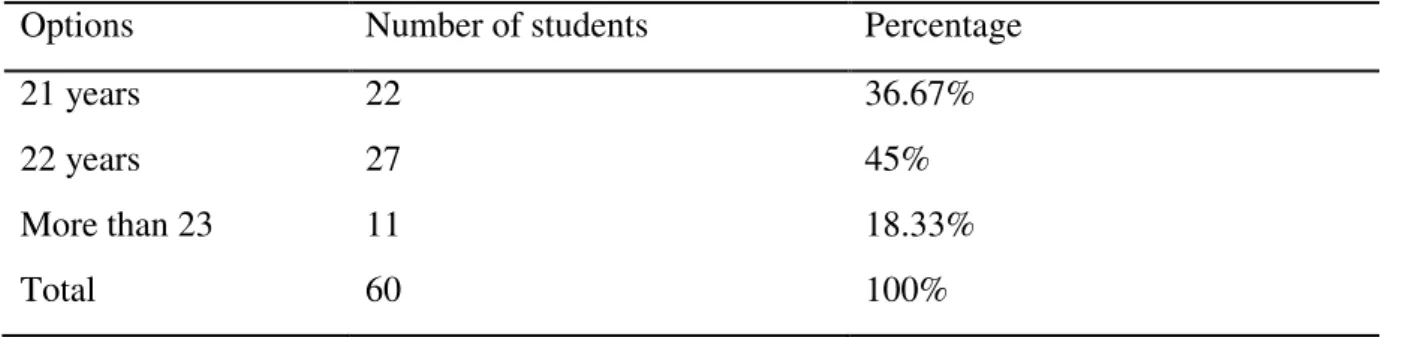
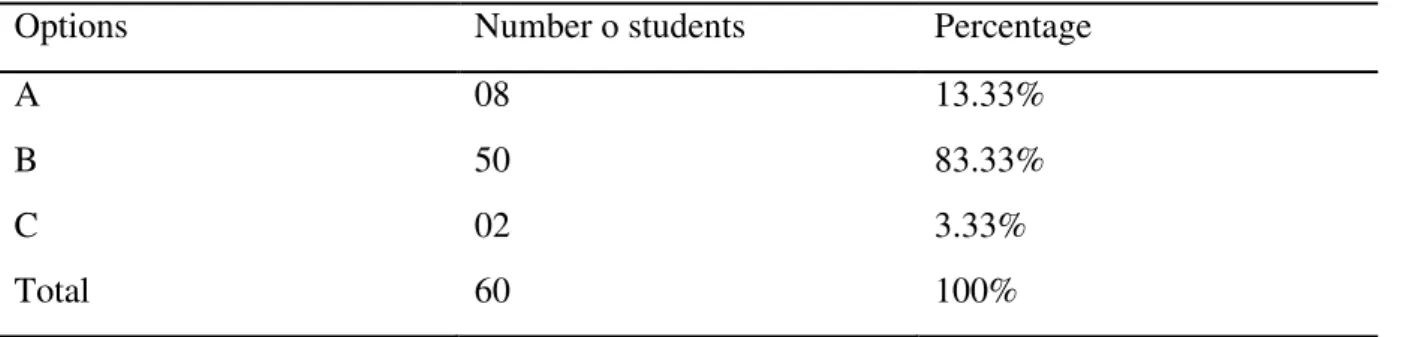
Table 3.1: Students’ Age……….…………..…………..…….42
Table 3.2: Students’ Study Background ...………..………..42
Table 3.3: Students’ Choice of Studying English at the University………..….……….43
Table 3.4: Students’ Level in English………..…………..…………..43
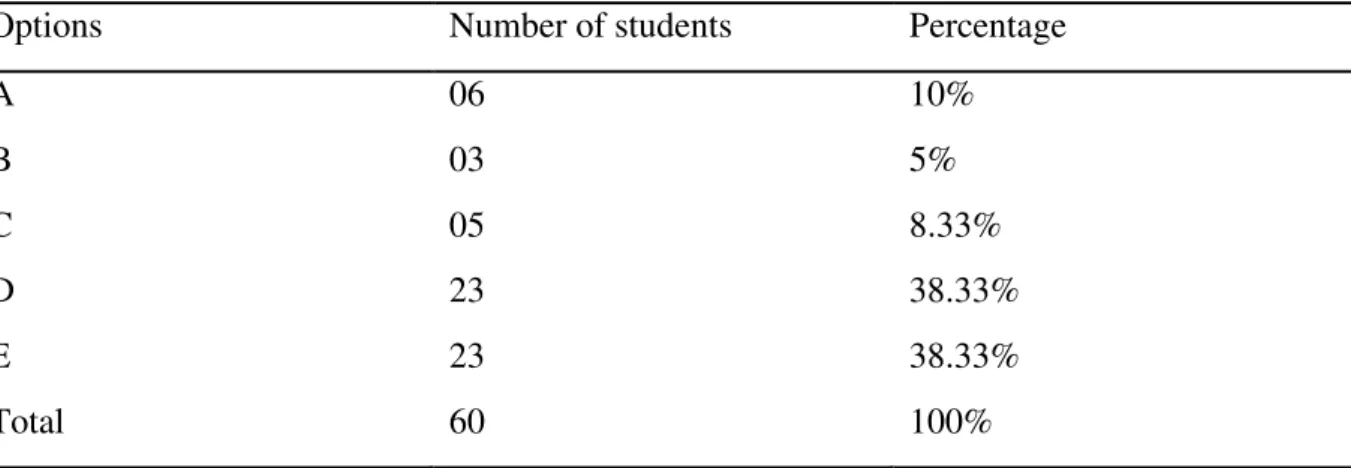
Table 3.5: Students’ Frequency of Classroom Participation………...……….44
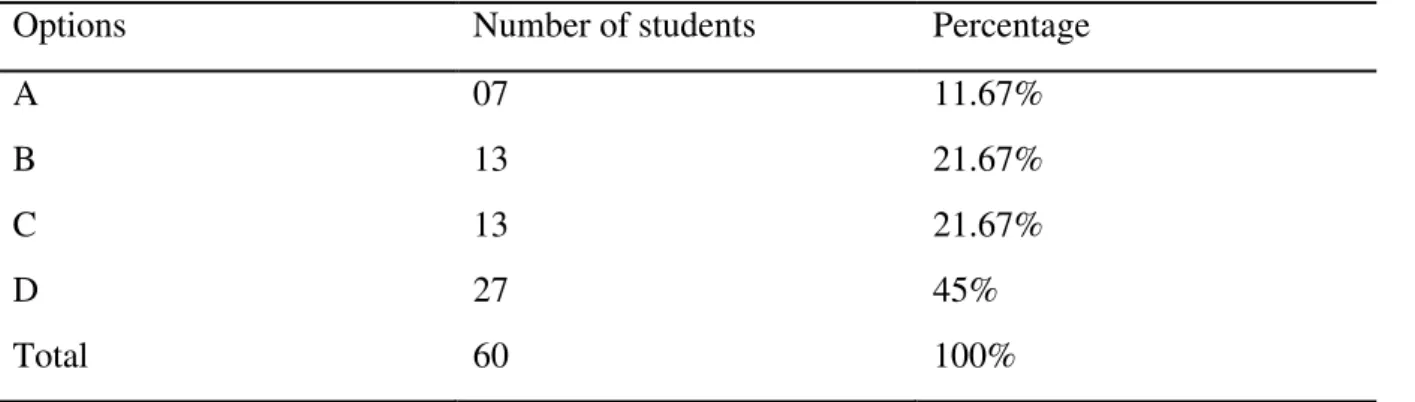
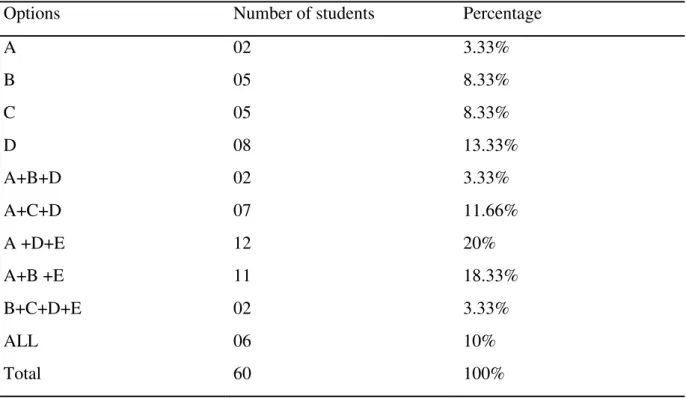
Table 3.6: Students’ Preferred Teaching Strategies……….45
Table 3.7: Students’ Preference to Debate in Understanding the Lecture……….…………..46
Table 3.8: Students’ Understanding to Classroom Debate………..47
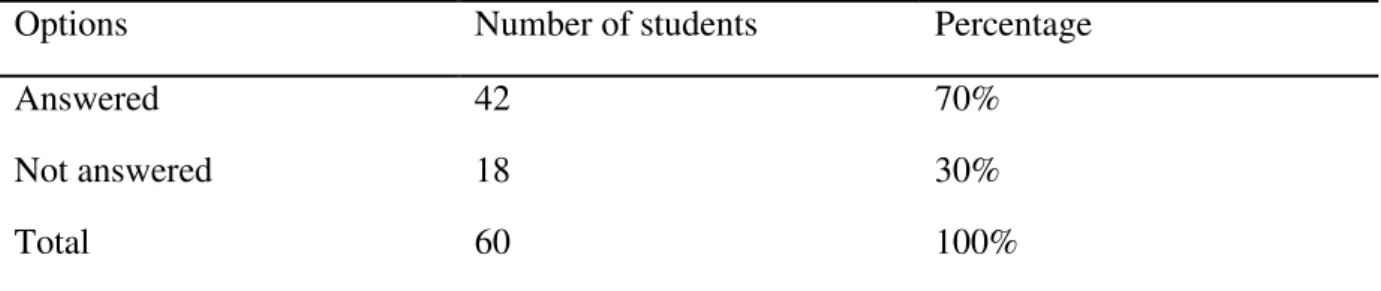
Table 3.9: Teachers’ Use of Classroom Debate ………..47
Table 3.10: Teachers’ Frequency of Using Classroom Debate………48
Table 3.11: Students’ Engagement in Classroom Debates………..49
Table 3.12: Students’ Preferred Structure of Classroom Debate……….50
Table 3.13: Students’ Way of Debating………...51
Table 3.14: The Characteristics that Students Master ………….………52
Table 3.15: Students’ Perception to Classroom Debate……….………..53
Table 3.16: Students’ Definitions of Critical Thinking….………..54
Table 3.17: Critical Thinker’s Abilities………...56
v
Table 3.20: Teachers Encouraging Students to Debate……….…..59
Table 3.21: Activities Allocated to Enhance Students’ Critical Thinking Skills……….……60
Table 3.22: Values of Classroom Debate ………61
Table 3.23: The Influence of Classroom Debate on the Students’ Thinking Skills………….62
Table 3.24: Enhancing Critical thinking through Classroom Debate………..63
Table 3.25: Students’ Comments and Suggestions…….……….64
Table 3.26: Teachers’ Degree ……….………70
Table 3.27: Teachers’ Experience in Teaching English………...71
Table 3.28: Teachers’ Experience in Teaching Master One Classes………...72
Table 3.29: The Modules that Teachers Teach………72
Table 3.30: Teachers’ Views of Activities that Students Better Respond to ……….……….73
Table 3.31: Teachers’ Views of the most Used Activities……….…….…….74
Table 3.32: Teachers’ Attitudes towards Encouraging Students to Debate in the Class…….75
Table 3.33: Teachers’ Aims behind Encouraging Students to Debate……….76
Table 3.34: Applying Classroom Debate in Teaching All Modules………76
Table 3.35: Teachers’ Difficulty of Involving Students in Classroom Debate………77
Table 3.36: Difficulties Students Face when Debating………78
vi
Table 3.39: Teachers’ Definitions of Critical Thinking Skill………..80 Table 3.40: Enhancing Students’ Academic Achievements through Critical Thinking…...81 Table 3.41: Teachers’ Strategies for Making Students Develop their Critical Thinking ……82
Table 3.42: Teachers Views about the Importance of Classroom Debate………..…….83 Table 3.43: Developing Students’ Critical Thinking Regardless Their Level………….……84
Table 3.44: Teachers’ Attitudes towards Students Appropriate Level……….………..85 Table 3.45: Teachers Use of Classroom Debate to Enhance Critical Thinking……….……..86 Table 3.46: Improving Critical Thinking through Classroom Debate………86
Table 3.47: Teachers’ Comments on the Effect of Classroom Debate on Students’ Critical
vii CT Critical Thinking
CTS Critical Thinking Skill DR Deductive Reasoning
EFL English as a Foreign Language ELT English Language Teaching ESL English as a Second Language IR Inductive Reasoning
viii
Figure 1. 1. Stages of Problem Solving………17
Figure 2.1: Layout of Four Corner Debate in Classroom……….26
Figure 2.2: Layout of Fishbowl Debate in the Classroom...……….27
Figure 2.3: Lincoln-Douglass Debate in the Classroom………...28
ix
Dedication………..……… i
Acknowledgements……….………..ii
Abstract………..……..iii
List of Tables ………..………….iv
List of Abbreviations ……….…………vii
List of Figures...viii
Contents………ix
General Introduction 1. Statement of the Problem ………..……….1
2. Research Question………..2
3. Aims of the Study………...…2
4. Research Hypothesis………..……….3
5. Research Methodology and Design………3
5.1. The Research Method………..3
5.2. The Study Sample………3
5.3. Data Gathering Tool……….………4
5.4. The Pilot Study………..………..4
6. Structure of Dissertation……….5
CHAPTER ONE: CRITICAL THINKING SKILL Introduction……….………6
1.1. Historical Overview ………6
x
1.4. Developmental Stages of Thinking………..9
1.4.1. Stage One: Unreflective Thinker………...………..………9
1.4.2. Stage Two: Challenged Thinker………...……….…10
1.4.3. Stage Three: Beginning Thinker………...……….10
1.4.4. Stage Four: Practicing Thinker………...………...10
1.4.5. Stage Five: Advanced thinker…………..……….10
1.4.6. Stage Six: Accomplished thinker……...………11
1.5. Critical Thinking Skills………..11
1.5.1. Reasoning………...11 1.5.1.1. Inductive Reasoning………..………12 1.5.1.2. Deductive Reasoning………..………..13 1.5.2. Analysis……….……….13 1.5.2.1. Examining Ideas………....14 1.5.2.2. Detecting Arguments………14 1.5.2.3. Analyzing Arguments………...14 1.5.3. Evaluation……….……….15 1.5.4. Problem Solving………16
1.5.4.1. Stages of Problem Solving………16
1.5.5. Decision Making………17
1.5.5.1. The Process of Decision Making ………18
1.6. The Importance of Critical Thinking in Language Learning……….19
xi CHAPTER TWO: CLASSROOM DEBATE
Introduction………...23
2.1. History off Debate………..………23
2.2. Definition of Classroom Debate………..………..24
2.3. The Process of Classroom Debate ………....25
2.4. Formats of Classroom Debate………..……….26
2.4.1. Four Corner Debate………..26
2.4.2. Fishbowl Debate……….………..27
2.4.3. Lincoln-Douglass Debate ………..….………..28
2.4.4. The Role-Play Debate……….……..………28
2.5. Debating Skills……….………..29
2.5.1. Arguing ……….……….………29
2.5.2. Speaking ………30
2.5.3. Flowing ………….……….30
2.5.4. Research…….……….30
2.6. The Effectiveness of Classroom Debate………31
2.7. Classroom Debate in ELT Context………34
2.8. Developing Critical Thinking through Classroom Debate………36
Conclusion ………...38
CHAPTER THREE: FIELD INVESTIGATION Introduction ………..39
xii
3.1.2. Administration of the Questionnaire……….……….39
3.1.3. Description of Students’ Questionnaire……….40
3.1.4. Analysis of the Results………...41
Summary of Results and Findings from Students’ Questionnaire………...…….65
3.2. Teachers’ Questionnaire………68
3.2.1. Population and Sample………..…………..68
3.2.2. Administration of Teachers’ Questionnaire………….……….…………..68
3.2.3. Description of Teachers’ Questionnaire……….……….68
3.2.4. Analysis of the Results………70
Summary of Results and Findings from Teachers’ Questionnaire………...88
Conclusion………90
General Conclusion………..91 REFERENCES
APPENDICES: Appendix [A] Numrich’s Sequence of Critical Thinking Tasks. Appendix [B] Students’ Questionnaire.
Appendix [C] Teachers’ Questionnaire. Arabic Summary
General Introduction
The educational system of any country aims strongly at creating well educated learners who are able to understand all the important, useful and powerful ideas provided for them. As human beings, learners are required to reflect and analyze the data before accepting it and start working with it. Having the ability to do so requires some cognitive skills like the skill of thinking critically. The critical thinking skill has been a growing area of research since thousands years ago. It aims mainly at making reasonable judgments, and wise decisions based on facts rather than opinions. This happens through the act of rationalizing, analyzing and assessing data gathered about all life subject matters.
Learners can achieve more success in different domains; particularly social and educational life through mastering the critical thinking skill. It helps them to solve different problems which they may face in classroom assignments or in real life situations, using logic. It enables the learners to move from being passive to being active members in the classroom and the society as a whole. Therefore, teachers seek to manage a successful lecture using different methods and strategies taking into consideration the different skills that each student possesses and needs to improve. Moreover, the use of debate as a teaching-learning strategy may has much influence on the development of students’ critical thinking, in which they have an opportunity to express their thoughts, ask questions and assess the other’s ideas. Hence, students will feel more comfortable during the lectures, increase their achievements, improve their own lives and contribute to the whole society, culture and civilization.
1. Statement of the Problem
The majority of students at the Department of English at 8 Mai 1945, Guelma University seem to be passive because they accept all information provided by their teachers without judging or questioning it. This is because they are not aware of developing their CTS. Also, the learner-centered approach necessitates the students to be more active members within the
whole teaching-learning process, where the teacher acts only as a guide and monitor of his/her students’ progress. As Students may wonder how to discover their CTS and how to activate it, instructors suggested many strategies that may raise their ability to think critically and implement it in the classroom. Debate can be one of the suitable techniques that students can follow in order to use their skills of analyzing, rationalizing, questioning, criticizing ...etc. Thus, debate is one of the instructional activities that can potentially maximize and develop students’ critical thinking skills.
2. Research question
The central focus of this study is how classroom debate can develop their EFL students’ critical thinking skill. Hence, our research addresses the following main question:
Does classroom debate have a significant improvement on EFL students’ critical thinking improvement?
3. Aims of the Study
Developing critical thinking is a must for all EFL learners not just for educational tasks but also for everyday life ones. Thus, the use of debate in classroom can promote achieving this goal. In conducting this research, several aims were planned to work as the platform for this study. This research aims at:
1. Raising teachers awareness about the importance of developing critical thinking skill like any other skill.
2. Stressing the importance of using debate in EFL classroom.
3. Investigating the perceived impact of using debate in EFL classroom to enhance critical thinking.
4. Research Hypothesis
The use of debate within the classroom is considered as an effective tool used to enhance students’ critical thinking. In this research we hypothesize that:
- If teachers use debate in EFL classroom, EFL students’ critical thinking will be enhanced. 5. Research Methodology and Design
5.1. The Research Method
The present study employs the quantitative descriptive method. The nature of the present research indicates that it is a descriptive research since it describes EFL students’ as well as teachers’ perceptions towards using debate in classroom and its effect on EFL students’ critical thinking. This method deals with numerical and statistical data. It is chosen in order to gather precise and reliable data and to test the research hypothesis.
5.2. The Study Sample
The sample of this study consists of two types of population; students and teachers of the Department of Letters and English Language at the University of Guelma, 8 Mai 1945. The sample was chosen randomly. Participants of the first sample are 16 teachers who have an experience in teaching different modules, whereas the second sample contains 60 first year Master students. They serve as the best sample for our study; because they are supposed to have sufficient experiment about debate; how it is conducted and what are its characteristics. Furthermore, they started to learn about critical thinking in their lessons in some modules. Hence, they will help in providing more reliable data.
5.3. Data Gathering Tool
The current research is conducted to confirm the research hypothesis. In order to explore both teachers’ and students’ attitudes towards developing CTS through using debate in the
classroom, two questionnaires are administered to both students and teachers.A total number of 60 Master one students and 16 teachers at the Department of Letters and English Language, Guelma University, participated in answering a survey questionnaire as the only quantitative tool to carry out this study. We selected the questionnaire as a method of data collection. Therefore, it is the appropriate tool to gather data about both students’ and teachers’ attitudes. Questionnaires are composed of likert- skale items which are a useful and effective means of determining opinions and attitudes; yes/no and other close-ended questions. The open-ended questions are followed by respondents’ comments. Students themselves, through their responses, help us to answer the research question, investigate their knowledge and use of classroom debate, and to collect data about their critical thinking skill. Teachers are more concerned with consciousness-raising of critical thinking than their students to urge them dealing with such concept in their classes. It is by questioning teachers to know whether or not are aware of the importance of classroom debate, and to collect data about their procedures for improving students’ critical thinking.
6. The Pilot study
Six students and three teachers, accordingly, had taken part in the piloting of the questionnaires. Feedback from these teachers was taken into consideration in rewording questions, adding new ones and modifying ambiguous ideas and wordings.
7. Structure of the Dissertation
The present dissertation is composed of three chapters, each with a specific aim to accomplish. The first two chapters are theoretical parts, whereas the third one is devoted to the practical part. The first chapter explores CTS, providing an overview about it, its definition, characteristics, skills and sub-skills in addition to its importance and how it can be taught. Then, the second chapter is about debate, in which we will present its definition,
history, skills and formats. Also, it shows its importance in education, in ELT context and in enhancing critical thinking. Finally, a third chapter is conducted to analyze data collected from teachers’ and students’ questionnaires, in addition to a general introduction and general conclusion.
Introduction
As people have goals in their lives and seek to achieve them, they need to be able to distinguish fact from opinion, true from the false and reach conclusions based on evidence. Therefore, higher levels of thinking are required like critical thinking (CT). Hence, critical thinking along time has been a growing area of study by many scholars and philosophers. This chapter tries to provide a brief history of CT, discusses some of its characteristics and shows to what extent it is Important in EFL classes.
1.1 Historical Overview
The notion of critical thinking is not a recent one, it dates back to 2500 years ago with Socrates’s method of probing questioning, which is called nowadays “Socratic questioning”. It was used as a tool to teach critical thinking where it is required to initiate profound questions before accepting any idea and believe in it. His work was further developed by Plato, Aristotle and Greek skeptics who assumed that things look different from how they appear; only active minds can see the deep reality of life (Paul, Elder & Bartell, 1997, p.34).
Other significant contributions were made by different scholars like Dewey; who emphasized on developing our sense of the instrumental nature of human thought within actual human objectives. Also, Ludwig Wittgenstein work raised awareness to analyzing concepts and evaluating their power and restrictions. In addition to Piaget who focused on the special need to promote critical thinking; which is the ability to rationalize within multiple opinions, arriving to the level of "conscious realization." (Paul, Elder & Bartell, 1997, p.35).
1.2. Definition
In an attempt to clarify the ambiguity and the vagueness concerning critical thinking and to stress its importance, researchers have investigated different aspects of critical thinking. In this regard, many scholars started to define ‘thinking’ either as a concept or its meaning in the
context of education, before giving a clear definition to ‘critical thinking’. McPeck (1990) argued that thinking must be about something; it is impossible to think about naught; it ought to be linked to a subject matter, whatever the subject is about (pp.19-20). Atabaki, Kesthtiaray and Yarmohammaadian (2015) considered thinking as the most substantial aspect of human beings and argued that the task of an education system is to make people learn how to think autonomously (p.93).
The term ‘critical’ is also demonstrated by several authors who established various explanations of the specific connotation of the term. Paul, Binker, Martin, Vetrano and Kreklau (1989) declared that the ‘critical’ dimension realizes the “intellectual autonomy of the critical thinker” (p.2). Paul et al. emphasize that a critical thinker is the one who will not take conclusions for grant and will assess evidences – distinguishing true ones from false ones – and then decide what to believe. The ability to do so is a skill that must be acquired. On the basis of these simple definitions, critical thinking has been defined by Halpern (1996) as the implementation of “cognitive skills” and techniques to increase the opportunity for appropriate outcome that recognizes a purposeful, evident, and straightforward thinking. Furthermore, she argued that it is the type of thinking that encompasses a number of cognitive tasks such as; problem solving, inferring, calculating likelihoods, and decision making (p.23).
Sternberg (1986) defined critical thinking as, “The mental processes, strategies and representation people use to solve problems” (p.2). Dewey (1933) preferred to call it “reflective thinking”, and define it as “the active, persistent and careful consideration of a belief or supposed form of knowledge in the light of the grounds which support it and the further conclusion to which it tends.” (p. 9). In other words, critical thinking is an active process that requires reflecting on and evaluating reasons to reach reasonable conclusions.
From one hand, Ennis (1985) claimed that it is a logical deep thinking aiming at making sound decision about what to believe or what should be done in different situations (p. 45). In
the other hand, Lipman et.al (1980) pointed out that the aim of critical thinking is to make a correct judgment based on criteria. Teaching critical thinking needs to be programmed carefully for the students. So that, thinking skills are well transferred and students are aware of what they learn (p.8). Same ideas were discussed by Paul and Elder (2009) stating that CT is the way of thinking about subject matter, whereby the thinker enhances his/her thinking through “skillfully taking charge of the structures inherent in thinking and imposing intellectual standards upon them”. Critical thinking is, therefore, the way in which we think about thinking (p.18).
1.3. Characteristics of a Critical Thinker
Paul et.al (1989) identified the aspects of a critical thinker as someone who can think critically as ‘reasonable person’. The term ‘critical’ is meant to realize the intellectual autonomy of the critical thinker. For that, a critical thinker never accepts conclusions without reflecting on them. He needs to evaluate or judge reasons. However, to agree with or accept these conclusions without understanding them creates unreflective thinker (p. 45).
Additionally, Chafee (2009) claimed that a critical thinker is an individual who can deeply recognize the outside world, make sage judgments, and reason “important ideas” (p.43). Furthermore, Paul and Elder (2009) agreed that the reasonable thinker puts on critical issues into discussions, asks and develops effective questions clearly and accurately, bring all relevant data and evaluate them; thereafter, s/he assesses the conclusions according to some relevant criteria (as cited in Michaelsen & sweet, 2012, p.8).
According to Bowell and Kemp (2002), critical thinkers are able to infer meaning, analyze ideas and arguments, and construct accurate conclusions based on logic. They can deduce the credibility of information from its bias. Critical thinkers are typical self-reflectors and independent thinkers. They rationalize their way of thinking, and they are likely able to think “outside the box.” Critical thinkers deeply consider their beliefs, assumptions, ideas, and
arguments in order to detect errors in thinking. They are able to repair their thinking processes, and they master the skill of synthesizing information (as cited in Karakoç, 2016, p.82).
Interestingly, critical thinking is a complex whole of cognitive skills that enable individuals to rationalize data and check its credibility before starting to believe in it. A critical thinker sees things from different angles using logic that enables him to acquire higher levels of knowledge. Decision making, problem solving, inferring, analyzing…etc are all skills that goes under the critical thinking skill.
1.4. Developmental Stages of Thinking
Critical thinking has become one of the most prominent aspects that teachers focus on in their instructions. Nevertheless, they need to take into consideration that CT is not an innate skill. Rather, it needs to be learnt and developed through stages. In this respect, Paul and Elder, as educational psychologists, (2010) have developed six main stages of thinking development classified as follow:
1.4.1. Stage One: The Unreflective Thinker
Thinkers in this stage are highly unaware of the significant role of thinking in their lives and of potential issues with their own reasoning – they are not self-reflective. They may develop some skills in their thinking unconsciously. But, these skills are inconsistently applied because of biases and prejudices. Although these thinkers may be highly educated, they tend to be unable to “fix” problems in thinking or embrace new procedures to solve problems.
1.4.2. Stage Two: The Challenged Thinker
These thinkers are aware of the significance of thinking in their lives. They know that problems in thinking and logic may cause them trouble. They merely understand the basic components of reasoning and the criteria for evaluating thinking. But, it is still hard for them
to enforce it accurately and properly in their reasoning. Thus, enhancing their thinking skills is quite difficult for them.
1.4.3. Stage Three: The Beginning Thinker
Thinkers of this stage are positively trying to control and develop their thinking. Despite that they recognize the problems in their thinking; they still unable to find systematic solutions to improve it. They welcome critics about their own thinking, and egocentrism. They know that their reasoning needs to be self-regulated. However, they are still confused about it.
1.4.4. Stage Four: The Practicing Thinker
At this stage, thinkers are starting to posses the necessary skills to control and develop their thinking. They do analyze their thinking in several areas of their live. Practicing thinkers began to assess their reasoning in a structured way. However, their knowledge about problems in reasoning is still limited. In this regard, Boyle (2014) affirmed that these thinkers have the needed skills that will assist them to fix their defects in thinking (p.326).
1.4.5. Stage Five: The Advanced Thinker
These thinkers have established good habits of thinking. They actively rationalize and criticize their own reason and skillfully deal with their defects in thinking. Although they become better thinkers, they may not function accurately at all times in all fields. Boyle (2014) claimed that “advanced thinkers have mastery over their critical thinking faculties and are able to place under heightened surveillance their thought process and decision making processes” (p.329).
1.4.6. Stage Six: The Accomplished (Master) Thinker
These thinkers have conducted a deep, systematic plan to promote their own thinking processes, and they continually revise, assess and develop this plan to enhance their thinking
level. They largely recognize their bias and egocentric thinking. The good habits of thinking are becoming as a matter of routine.
The students’ ways of thinking remains unclear for them, until they are exposed to their teachers’ instructions. Through dealing with classroom tasks, they will be able to discover their abilities and the mistakes they commit in thinking, and why not to determine their developmental stage in thinking. Any person who grows up as a critical thinker must pass through certain stages based on his willingness to step up.
1.5. Critical Thinking Skills
According to the Executive Order number 338 of the California State University system (1980), instruction in critical thinking is established with the aim of realizing what links language to logic, which necessitates the capacity to analyze, judge, and defend ideas, to reason inductively and deductively, and to end up with wise decisions based on reasonable inferences constructed from clear amount of information (p.3). In other words, critical thinking is an umbrella skill that encompasses a whole set of sub-skills that a learner should master to be a creative critical thinker.
1.5.1. Reasoning
According to the Online Collins English dictionary, reasoning is “the process by which you reach a conclusion after thinking about all the facts”. In other words, reasoning is the act of building arguments, draw conclusions and make decision using logical thinking. The GE Foundation Workplace Skills Program agreed that reasoning is the capacity to construct an argument coherently and logically, and to justify this argument through reason (2006, p. 6).
Hughes (1936) from his part stated that “when we reason we actively link thoughts together in such a way that we believe one thought provides support for another thought” (p.15). Besides, Kutty (2013) assumed that reasoning is a highly structured way of thinking. It is a mental activity that rationalizes data in order to achieve clear conclusions. Individuals
with this high level of thinking are able to infer meaning from different symbols, develop concepts and use linguistic ability. In comparison with thinking, reasoning is taken as more serious and complex cognitive process (p.160).
Reasoning is a highly skillful way of thinking which helps an individual to recognize the cause and effect relationship of an event or solving a problem. It occurs through well-organized steps based on previous knowledge combined with present experience. Hence, mastering the critical thinking skill cannot be achieved without acquiring the reasoning skill. It has two types; inductive reasoning and deductive reasoning.
1.5.1.1. Inductive Reasoning
In inductive reasoning (IR), a general conclusion is drawn from specific premises (S. A. Hatch & L. Z. Hatch, 2006, p.66). According to Patrick Perret (2015), inductive reasoning refers to a mental activity of inducing inferences that has two characteristics. First, IR has a specific direction that begins with observing particular conditions and ends with formulating more general rules. Second, the conclusions from IR are doubtful since it includes formulating hypotheses about principles (p.390). For example:
Tombor is a dog and has claws.(specific premise) Smoky is a dog and has claws. (specific premise) Max is a dog and has claws. (specific premise) Thus, all dogs have claws. (general conclusion)
Induction starts with observations and methods. Some similarities or structures can be established to form some hypotheses. Then, turn these hypotheses into theory. It is difficult to decide about the truthfulness of the conclusion, despite the accuracy of all the premises from the observation (Feeney & Heit, 2007, pp.2-3). Therefore, the conclusion from induction must not be always true instead it can be or it is likely to be true, which makes it subject to revision and discussion.
1.5.1.2. Deductive Reasoning
According to Ayalon and Even, deductive reasoning (DR) is the act of inferring certain conclusions from a set of familiar data using essential logical rules (2008, pp.235-236). Laird and Byrne (1991) also shared the same idea that it is the cognitive process of making logical inferences (p.8). In contrast to inductive reasoning, in DR the process of inference moves from the very broad premises and come up with specific conclusions (S. A. Hatch and L. Z Hatch, 2006, p.66). Schechter (2013) assumed that the accuracy of the conclusion is formally ensured by the validity of the premises, unless there is no error in reasoning (p.226). Therefore, the premises provide an accurate basis for approving the conclusion. For example:
All birds live on the tree. (general premise) The owl is a bird. (specific premise)
Therefore, the owl lives on the tree. (very specific premise) 1.5.2. Analysis
Analysis is one of the most prominent skills of critical thinking. It helps in the comprehension of various types of data, as well; it is involved in all the other skills. Quoting from the Consensus Statement of the National Panel of Experts, analysis is “to identify the intended and actual inferential relationships among statements, questions, concepts, descriptions, or other forms of representation intended to express belief, judgment, experiences, reasons, information, or opinions.” The experts consider the ability to examine ideas, explore arguments, and analyzing them as sub-skills of analysis (as cited in Facione, 2013, p.5).
Analysis can be viewed as the opposite of synthesis. It is a mental process through which a complex whole is divided into smaller components for understanding it better. According to Facione (1990), analysis is to identify and investigate the essentials and details of particular
issues, then discover the relationship between these constituents and what they tend to express (p.9). Accordingly, he argued that it involves three different sub-skills:
1.5.2.1. Examining Ideas
Before believing in ideas, a careful analysis to the terms and expressions used for persuasion is required. Also, examining ideas involves revealing the relationship between these expressions and terms in relation to the context in which it is expressed.
1.5.2.2. Detecting Arguments
It implies analyzing the data provided with the argument, and find out if it supports the claim or contrasts it. In other words, is to detect the relationship between the opinion, thought or a statement and its internal structure.
1.5.2.3. Analyzing Arguments
According to Govier (2018), the analysis of arguments involves a careful understanding to the arguments, and evaluating the premises used to support it (p.361). In other words, it incorporates the exploring the argument and the background information used to in support for the main conclusion. This step helps in avoiding misleading and to ensure the understanding of the argument.
1.5.3. Evaluation
According to Bloom’s Taxonomy of Cognitive Learning (1956), evaluation is one of the higher order thinking skills that cannot be established unless students analyze the information first (as cited in Krathwohl, 2002, p.214). Evaluation is closely associated with critical thinking. Some writers such as Beyer (1985) and Yinger (1980) seem to equate “critical thinking” with “evaluation.” Most theorists, however, described critical thinking as including evaluation among several other higher-order thinking processes (Cromwell 1992; Ennis 1989; Paul 1992). Because of these ties between evaluation and critical thinking, much theory and research about critical thinking informs an understanding of evaluation.
The term evaluation is likely understood as a demonstration of a well-structured process. However, Freidman and Wyatt (2006) suggested that evaluation aims at answering questions and making decisions. Thus, it refers to gathering data through multiple activities intended to answer questions. According to The GE Foundation Workplace Skills Program, evaluation is to assess information according to certain criteria or a set of standards (p.6). The consensus statement of the national panel of experts (as cited in Facione, 2013) suggests that evaluation is:
To assess the credibility of statements or other representations which are accounts or descriptions of a person’s perception, experience, situation, judgment, belief, or opinion; and to assess the logical strength of the actual or intended inferential relationships among statements, descriptions, questions or other forms of representation.”. (p.6)
Therefore, evaluation is an activity performed by a critical thinker to assess the truthfulness and reliability of data according to some criteria.
1.5.4. Problem solving
Harris (2016) defined problem as the difference between the current state and the desired state. According to Dunbar (1998), a problem has four elements. It has a primary state of the person’s knowledge concerning a problem, and a desired state that a person wants to achieve. Also, it requires some procedures through which a problem solver can reach the desired state. Then, it has a task context where the solver is working on. The context helps in providing different ways to solve a problem (p.2). Therefore, problem solving is the individual’s ability to figure out the basic reasons behind an issue or situation, think of some solutions, then decide upon which solution is ideal to solve the problem.
According to GE Foundation Workplace Skills Program, there are several stages that one should go through in order to solve a problem.
a. Identifying the problem: is a basic step in the process of problem solving. The solver needs to discover the basic reasons for this problem; look at facts, determine the interrelation between factors and map the problem through asking questions.
b. Looking for possible solutions: at this stage, the problem solver starts to create possible solution for the problem. S/he can brainstorm as many ideas as possible, note all the ideas without assessing them. Then, make sure that the ideas are understood before starting to discuss and select the ideal solution.
c. Selecting solution: at this stage, the solver decides upon the best solutions. It involves evaluating all the suggested solutions in terms of their cons and pros. Also, developing some criteria to avoid solutions that cannot be accomplished. Then, the selection of the best solution takes place.
d. Acting on solutions: it is the final stage in problem solving. The solver develops an action plan to implement the solution in reality. It is important to monitor the process of implementation to check the effectiveness of the selected solution (2006, pp.26-29).
Figure1. 2. Stages of Problem Solving.
1.5.5. Decision Making
Pearce and Robinson (1989) assumed that decision-making is inescapable, because to think of not making a decision is a decision making in itself (as cited in Al-Tarawneh, 2012, p.2). Therefore, people are obliged to make decisions everyday even if they do not intend to.
Many researchers see that, a decision exists when a solution to a problem is selected to be implemented. (Duncan, 1973) stated that it is a conscious selection to the way of behaving or thinking in a certain situation. However, according to Harrison (1975), a decision making is a dynamic process described by Cole (2004) as “a process of identifying a problem, evaluating alternatives, and selecting one alternative” (as cited in Al-Tarawneh, 2012, p.3). It is the process where people are selecting the best choice among many other options according to the present situation.
1.5.5.1. The Process of Decision Making
Decision making is the process of choosing one option over many. Several models were suggested to identify the process of decision making in order to make more deliberate, thoughtful decisions. Tiernan, Morley and Foley (2013) proposed a six-step model that decision makers usually go through:
A. Identify and diagnose the problem: the decision maker needs to identify the issue that requires resolution. Before taking any action, some information should be gathered about the real cause behind the issue and what it needs to be solved.
B. Identify alternative solutions: the next step involves identifying a range of possible actions that can be used in a way to solve the problem. A decision might be tried before, but it does not mean that it is unique. One should be creative.
C. Evaluate alternatives: based on a certain analysis and feelings, a decision maker will try to imagine each alternative under the same circumstances of the problem. A deep
investigation should be conducted to evaluate each option and to determine whether it meets the desired goal or not.
D. Choose an alternative: after evaluating the suggested options, the decision maker now is ready to select the ideal one. If s/he faces any difficulty, s/he may go back to step 2 and start again.
E. Implement the decision: This step is of high importance in the decision making process. When a decision is made, it is time to take action through implementing it. Thus, the best choice is worthless if it is not implemented perfectly.
F. Evaluate the decision: In this final step, the decision maker evaluates his decision in terms of the results, if they are still appropriate for the situation or not. If any adjustment is required then it should be executed (pp.148-151).
1.6. Importance of Critical Thinking in Language Learning
Enhancing critical thinking among foreign language learners is of high importance and can help them to achieve many successes. When language learners are aware of their own thinking, they can successfully develop the ways they learn through. Also, critical thinking broadens the learning process and makes the language of a higher value for learners. Furthermore, critical thinking is highly interconnected with the learners’ achievements (Rafi, 2011, pp.63-67). Various studies have proved the role of critical thinking in improving EFL writing ability (Rafi, 2011); “language proficiency” (Liaw, 2007); and “oral communication ability” (Kusaka & Robertson, 2006).
According to the Language Awareness Approach, which emerged in the 1970’s, critical thinking plays a significant role in the language learning process. This approach permits learners to analyze the “real world” language not only focusing on classroom language. The principle of this approach is that teachers equip the students with the needed strategies to be
self-motivated and well-prepared to analyze language whenever they come across it and “solve the problem” of communication using critical thinking (Villa, 2017, p. 75).
Indeed, language learners who have developed to be critical thinkers are able to do some activities of which other students may find difficulty in. According to the study of Mahyuddin, Lope Pihie, Elias and Konting (2004), these critical thinkers are capable of thinking rationally and creatively to achieve the goals of the curriculum; they have the ability to make decisions and solve problems, they use their thinking skills effectively to understand the language or its contents; and finally they are intellectually, physically, emotionally and spiritually well-balanced (pp.23-33).
On the basis of the above mentioned benefits of improving critical thinking in language learners and its little implication in EFL settings, Brown (2004) asserted that, in an ideal academic English language program, the objectives of the curriculum should go beyond linguistic factors, and develop critical thinking skills (p.23). Since English is regarded as a lingua franca, its users and learners need to be critical in their learning and use of the language.
As critical thinking has a great significance in developing the learners’ ways of learning; it is then, the role of the instructors to help their students develop the critical thinking skill. Consequently, they will be able to achieve the main objectives of the curriculum. As Lipman (2003) admitted that teachers are required to work on promoting critical thinking in learners instead of focusing on how to move them from one educational level to another. The responsibility of foreign language teachers is to help their learners acquire critical thinking skills while learning the language (p.28).
1.7. Teaching Critical Thinking
Critical thinking skill has become a very important skill in EFL classrooms. This higher level of thinking enables learners to develop reasoned judgments in both the classroom and
everyday life. The educational system insists on including critical thinking into curricula. However, English language teachers wonder how to include developing such important skills in their lessons.
Empirical researches revealed that teachers, when using traditional ways of teaching, they unconsciously provide their students with all the needed data (Kabilan, 2000); like, taught sessions. Therefore, the learners will not have the opportunity to reason or even raise question. Nevertheless, activities such as group work, project-based work, classroom debate and presentation skills (Kusaka & Robertson, 2006) would be appropriate to enable students to be more active thinkers.
The Qualifications and Curriculum Authority (2001-2002), a non-departmental organization sponsored by the Department of Education and Skills in the U.K, claimed that teaching a foreign language for children requires the application of activities that include: (1) identifying and understanding the relations between the foreign language and mother language in terms of lexis, syntax, and morphology; (2) drawing conclusions from unfamiliar language and unexpected ideas; (3) using their grammatical knowledge to infer the meaning of new words and expressions; (4) using language productively to express ideas, attitudes and opinions; (5) adapting and using the language for their needs; (6) identifying and using language patterns; and (7) managing their own use of language-learning strategies (as cited in Fahim & Shirkhani, 2011, p.1092). This type of activities works in line with the type of activities needed to develop critical thinking among EFL learners. Thus, teachers who aim at promoting their students’ critical thinking can apply such activities.
Many authors recommended different ways to increase thinking skills among language learners. For instance, Zainuddin and Moore (2003) in their experiment proposed a structured controversial dialogue technique for developing critical thinking among language learners (classroom debate); Kasper (2000) based on his experiment suggested engaging language
learners in sustained content study within collaborative learning communities as well as using information technology resources to improve learners‘ linguistic and thinking skills. Of the suggested methods and techniques, learner-centered approach (Kennedy, 2007; Zare & Othman, 2013; Freeley & Steinberg, 2005) is considered as an effective tool to teach language skills while promoting critical thinking.
Carol Numrich, a professor at Columbia University, tried to generate a sequence of tasks that may guide teachers in incorporating and reinforcing critical thinking within their lessons (see appendix A). Therefore, they will help their students to develop and become reasonable thinkers. It involves seven practical task types that work with all different levels of English learners. These tasks can be classified into three classes; some of them are done before displaying the main text (observing and identifying assumptions), others are done while concentrating on the text (understanding and organizing and interpreting) and some others are done after presenting and explaining the main text (Inquiring further, analyzing and evaluating and making decisions). Here, the word text denotes the source of information shaped in a lesson or unit (as cited in Beaumont, 2010, pp.1-6).
Among the tasks that teachers should focus on to achieve this goal are forming relationships; comparing and contrasting; classifying; evaluating; ranking; identifying right from wrong, facts from opinion, cause and effect; summarizing; generalizing; interpreting; identifying main, supporting and detailed ideas as well as making decisions and solving problems (Mahyuddin et al, 2004). Classroom activities need to be a way for the students to share their thoughts, evaluate their learning, and engage in interactive situations with colleagues and teachers (Kusaka & Robertson, 2006). Also, the use of materials which can be analyzed, synthesized, discussed, argued about, classified in different ways…etc is a suitable way to enhance critical thinking among language learners (Shirkhani & Fahim, 2011, p.1092).
Conclusion
In nowadays, critical thinking has gained huge importance in education and EFL context in particular. It has become equal to the four skills of language if not more important. This chapter attempted to provide a clear idea about some key concepts related to critical thinking, which is viewed as a crucial part of EFL learning process. It dealt with various definitions provided by known scholars in addition to a historical overview about it. Then, it stated it skills and sub-sills. Next, it showed to what extent this skill is important in EFL context. Furthermore, it tried to cover the possible ways for teaching this skill for foreign language learners.
Introduction
Classroom debate serves as a systematic pedagogical tool that allows for the active engagement of students. The main purpose of conducting a debate is not only to win the discussion, but it is to develop students’ ability to think independently and critically through a set of claims or arguments, in order to enlarge their comprehension and improve their ability think adequately. This chapter presents a brief definition of debate, its history, skills needed for a good debater. Also, it shows its effectiveness as a teaching tool and how it develops critical thinking skill.
2.1. History of Debate
The concept of debate is not considered as a recent one. It dates back over 4,000 years to the Egyptians (2080 B.C.), and debate as a teaching strategy dates back over 2,400 years to Protagorus in Athens (481-411 B.C.) who is the “father of debate” (Combs & Bourne, 1994; Freeley & Steinberg, 2005; Huryn, 1986 ; Snider & Schnurer, 2002). Phajoohande stated that during the 5th century, the ancient Greek philosophers were debating over methods of teaching mainly the dialectic and rhetoric methods that were established by the Sophists. Socrates used debate in his dialectic method to identify the addressees' errors, and repair the mistakes and perplexity of mind. After Socrates, Aristotle become more famous with this method since he conducted Socratic teaching style into methodological ones (as cited in Najafi, Motaghi, Nasrabadi & Heshi, 2016, p.212).
Debate as a teaching strategy flourished along the 19th and early 20th century and then lost its popularity (Garrett, Schoener & Hood, 1996, p.37). A new interest in debate as a systematic teaching-learning strategy was recognized in the 1980s by the assumption of promoting critical thinking, and the high significance of developing critical thinking skills, communication, and logic (Freeley, 1986, p.249).
2.2. Definition of Classroom Debate
As provided by the Collins Co-build Advanced Learner’s English Dictionary, debate is defined as a discussion or to discuss. The debate can be perceived as a type of dialogue aiming at finding an answer or solution. That is to say, two or more people speak about a specific subject matter, and establish a thought based on different opinions. The debate that aims at investigating and exploring facts through exchanging opinions affects prominently the human’s mental side (Soraya, 2005, p.80). More interestingly, debates have a significant influence on human’s thinking skills.
Debate was defined by Garett and Hood as an instructional method that promotes empirical reasoning and thinking skills and the increasing awareness of “attitudes,” “values” and beliefs” (as cited in Ramlan, Kassim, Pakirisamy & Selvakumar, 2016, p.196). Debate is also perceived as a type of play that gives a chance for students to share their ideas and opinions. It is a game that is based on evidence whereby students provide arguments and defend their claims to establish a better perception to the world and develop their ideas. (Lee & Nair, 2016, p.125)
Debate is a method that marks a chance for students to communicate their points of view. In contrast with classroom discussion which aims at solving problems together and finding out the appropriate solutions, during a debate the class divides into two confronting parties. This requires students to compete, support, and clarify their arguments in opposition to the contrasting arguments in the class (Kurniawan, 2013, p.4). Debates have been successfully practiced in many fields including sociology, history, psychology, biotechnology, math, health, dentistry, nursing, marketing, and social work (Jugdev, Markowski, & Mengel, 2004, pp.4-6).
The process of debate involves investigating different points of view to form judgments. The practice of debate varies between someone using it to establish a decision for his own,
and someone else or many people use it for the sake of convincing others to change their opinion (Freeley & Steinberg, 2005, p.14). The "debate" includes formal, appointed verbal reciprocation of ideas that a group of people can conduct. It is viewed as a systematic learning method that includes specific steps (Rahimi, 2009). It can be claimed that a debate is a teaching-learning method that suggests a certain position on an issue, assertion, or solution to a problem.
2.3. The Process of Classroom Debate
A general description to the process of debate provided by Worthen and Pack (1992) stating that it passes through the following steps. First, a topic or an issue is selected to be debated by all groups. Then, students are required to divide themselves into two separate groups consisting of affirmative and negative side (p.6-7). Darby (2007) claimed that debates differ from lectures and discussions in that there are pre-arranged definitive sides to the issue: “for/affirmative” or “against/negative”. The positive team will deliver their thoughts and arguments. Then, the negative team "clashes" with evidence in opposition to the affirmative's analysis (pp.1-10). Silberman (1996) emphasizes that topics are chosen at random. These topics need to be of a controversial nature. Also, they should be linked to the content of the lesson and under the students’ ability (p.142).
According to Vo and Morris (2006),debate involves the students’ selection of a topic and making a research about it by the students. Then, they state their viewpoints on the issue. Teachers are required to pre-select materials for the debaters to use. At the end of the debate, the announcement of the winner is not obligatory. Yet, there should be a talk after a sharp debate; in order to achieve understanding for both groups (pp.315-320).
In a classroom debate, the participating students are confronting each other providing their claims on a specific subject matter. Yet, all formats of classroom debates promote viewing issues critically from multiple perspectives. This implies students to analyze and
evaluate the logical connections and build arguments for their position towards the subject under discussion.
2.4. Formats of Classroom Debate
Classroom debate can be shaped in different formats whereby all students can be involved and demonstrate multiple views concerning one subject matter. However, the selection of the appropriate formats depends on the objectives of the given course. Some formats are presented below:
2.4.1. Four Corner Debate
According to Hopkins, students in a Four Corner Debate are given a topic, and they establish a position towards it whereby they either strongly agree, agree, disagree, or strongly disagree. Then move to the corner that represents their position. The students of the same position will work with each other arguing for their stand point. At the end of the contest, students are allowed to change the corner if their position has changed. Then all groups are requested to write a new paragraph that summarizes their thoughts and arguments for their claims. For example, developing students’ speaking skill through class participation can serve as a good topic for this type of debate. (as cited in Kennedy, 2007, p.185)
Figure2.1: Layout of Four Corner Debate in Classroom (Claxton, 2008, p.89 modified by the researcher)
Agree
Disagree
Strongly
agree
Strongy
disagree
2.4.2. Fishbowl Debate
In a fishbowl debate, students are separated into two or three groups by the teacher, and they are supposed to argue for their position together. They sit in a circle of chairs situated in the middle of the class forming a fishbowl, and surrounded by the rest of the students. All members can participate in the fishbowl. Thus, when someone in the audience has something to add, he can come and sit in one of the chairs. This format is mainly used when students
already have background knowledge about the topic (Kennedy, 2007, pp.186-187). Temple
stood up for the fishbowl debate, claiming that all students can participate in this debate, while they are divided into two groups in addition to the audience as a third group (as cited in Brown, 2015, p.41).
Figure2.2: Layout of Fishbowl Debate in the Classroom
(Huynh, 2016, Retrieved from www.empoweringells.com/a7-teaching-harkness/) 2.4.3. Lincoln-Douglass Debate
In the Lincoln-Douglas format of debate, only two students face each other just as Abraham Lincoln and Stephen Douglas did during the Illinois senate debate about slavery in 1858 (Roy & Macchiette, 2005, p.264). In this type of debate, the participants are restricted with time. Yet, each side consisting of one person or a group gives their opening arguments, the opposing arguments to the other group, and a concluding argument. It is also called
‘values debate’ since it usually emphasizes more on logical, philosophical, ethical issues (Kennedy, 2007, 187). For instance, the multicultural sensitivity can be a good topic to be debated in the module of culture and civilization.
Figure2.3: Lincoln-Douglass Debate in the Classroom (Retrieved from: http://www.wikihow.com/Debate) 2.4.4. The Role-Play Debate
Hopkins claimed that, in Role-play debates, more than two points of view can be introduced about the issue under debate. In this format, students are asked to represent their opinions in the form of a scenario, and act the roles in order to experience them in educational settings. For example, in a debate concerning “Students should be required to wear uniforms to school” some of the stakeholders might be a teacher, a student, parents…etc. Each member acts according to his role and provides his arguments (as cited in Kennedy, 2007, 185).
In order to conduct a successful debate in the classroom, it should be done through specific procedures following an organized format. Thus, it will establish an enthusiastic environment in the classroom where every student will be encouraged to share his thoughts, do rebuttals, and state the confirmation arguments.
Figure 2.4: Layout for Role-Play Type of Debate (Retrieved from: https://blog.ampli.com/2014/03/)) 2.5. Debating Skills
Classroom debate as a teaching-learning strategy is being widely used by many teachers. Yet, they may face many difficulties in achieving a successful debate. These difficulties can be due to the lack of students to the necessary skills to be good debaters who are able to win a sharp contest. Therefore, a set of skills is required in the participants to be good debaters.
2.5.1. Arguing
The use of argumentation in classroom debates is not always set to make others take an action towards the topic. Rather, it is meant to discuss issues reasonably using evidence (Hanes, 2012, p.3). All types of arguments consist of three parts namely “claim”, “warrant”, and “data”. The claim refers to the position that will be argued for, for example; ‘Euthanasia should be banned’. The warrant is the reason behind taking this side, in this example; the reason is that it is considered as a crime. Also, the data includes the evidence used to support the claim. The data that can be used to support this claim is that people are to be killed and no one has the right to take others’ lives (National Association for Urban Debate League ‘NAUDL’, 2007, p.5). In building arguments, the participants are free in choosing the data
they want in which they can appeal to logic “logos”, to authority “ethos” or to emotions “pathos” (Varpio, 2018, pp.207-210).
2.5.2. Speaking
During debates, it is very important to be a good speaker and communicator. Having a good delivery increases ones’ credibility and enhances the audiences’ memory. Therefore, some verbal skills should be acquired like speaking clearly using a simple precise and concise language, use a heard voice sometimes quite loud to add emphasis on some ideas, use a good pronunciation of words and be at ease don’t show nervousness. It is also very important to focus on using non-verbal traits like the use of an effective body language including facial expression, eye contact and gestures. Most importantly, one should be prepared and act confidently (Snider, 2008, p.110).
2.5.3. Flowing
Flow sheeting or flowing is a term used in debates to refer to the process of careful listening and note taking during the debate. The notes include the arguments presented by the confronting side to remember them. Therefore, the speech then will be based on answering and rebutting the recorded arguments (NAUDL, 2007, p.7). Since people speaking occurs faster than their writing, using symbols and abbreviations will facilitate the process of writing a shortened meaningful set of ideas. A good flow helps in refuting the opponents clearly and directly. Moreover, it is a significant step towards good reasoning and good speaking (Hanes, 2012, p.11)
2.5.4. Research
One of the most crucial elements needed before engaging in a debate is to make a deep research about the topic. Since students are not experts, they need to gather the necessary information upon which they will claim for their arguments and convince their opponents.
Also, it is helpful to quote experts’ ideas to support the arguments. Information can be gathered from multiple sources either the internet, databases or books in libraries…etc. However, it is important to evaluate the truthfulness and relevance of these data before believing in it (Hanes, 2012, p.31).
Doody and Condon (2012) from their part tried to summarize the main skills that a good debate demands. Participants of a debate need to be able to: identify the resolution under debate, assess and interpret the underlying values involved, evaluate the relevance and credibility of information or evidence obtained, collect the different merits of each perspective, deliver ideas and arguments effectively, organize all arguments and rely on logic, and lastly, adjust one’s performance as well as the team (p.232-237).
2.6. The Effectiveness of Classroom Debate
Since many studies assumed that students learn through different ways, teachers are supposed to imply various instructional strategies that fulfill this goal and satisfy the learners’ needs. Classroom debate acts as a systematic tool to allow students to be involved with the lecture and become active members in the classroom. Additionally, this strategy has a large scale of advantages on the students’ developments and achievements.
Snyder (as cited in Brownson, 2013) claimed that students will benefit more from the learning process whenever they are engaged more in debates (pp.78-83). As Zare and Othman (2013) affirmed that: “debate encourages students to learn course content better, since they are engaged in the course content actively, broadly, deeply and personally” (p.2). Also, Students will learn better through the active analysis, discussion, and application of what they learn meaningfully instead of passively getting the information (Bonwell & Eison, 1991, p.25). According to Snider and Schnurer, debate promotes engaging students actively within the lecture, letting them understand it by their own (2002, p.33). Also, Berdine claimed that “students place a higher value on learning by participating than on learning by being lectured