Ministry of Higher Education and Scientific Research
8 MAI 1945 UNIVERSITY / GUELMA ةملاق - 1945 يام 8 ةعماج FACULTY OF LETTERS AND LANGUAGES تاغللاو بادلآا ةيلك DEPARTMENT OF LETTERS & ENGLISH LANGUAGE ةيزيلجنلااةغللا و بادلآا مسق
Option: Linguistics
A Dissertation Submitted to the Department of Letters and English Language in Partial Fulfillment of the Requirements for the Degree of Master in Anglophonic Languages Literatures
and Civilizations.
BOARD OF EXAMINERS
Chairwoman: Miss. Imane DOUAFER. Maitre Assistante 'B'. University of 8 Mai 1945- Guelma. Examiner: Mrs. Sabrina LASSOUED. Maitre Assistante 'B'. University of 8 Mai 1945 Guelma. Supervisor: Mrs. Hasna HENAINIA. Maitre Assistante 'B'. University of 8 Mai 1945- Guelma.
Candidate: Supervisor:
Sawssen SLIMANI Mrs.Hasna HENAINIA
2017-2018
The Impact of the Willingness to Communicate
on EFL Learners’ Speaking Performance inside
the Classroom:
The Case of Third Year LMD Students of English
at Guelma University.
I
Dedications
To the soul of my parents,
To my lovely sisters Sarah and Dounia,
To the one I love and I will love forever.
II
Above all, I want to thank Allah for everything and especially for granting me the power and energy to continue this work.
I would like to extend my thanks to my teacher and supervisor Mrs. Hasna Henainia for her valuable guidance and support to accomplish this work from the beginning to the end. Thank you Mrs. Henainia for one-of-a kind supervision.
Special thanks go to the teachers of oral expression at the university of Guelma especially Pr. Ladi Tolgui, Mrs. Yamina Beskri, Mrs. Amel Chiheb and Mr. Bilel Zennou for accepting to answer the interview.
I would like to express my deep appreciation and gratitude to the jury members Mrs. Imane Douafer and Mrs. Sabrina Lessouad for accepting to read and correct this modest dissertation.
I am also grateful for the students of third year LMD from the department of English Language and Letters at Guelma University who accepted to answer the questionnaire.
III
The main goal of learning a foreign language is to be able to use this language appropriately in real situations. In an EFL context, learners are highly motivated to study English to become fluent speakers for many reasons, mainly studying abroad, increasing job opportunities, and travelling. However, in the classroom there is a prevailing phenomenon of the silent majority versus the speaking minority. Thus, this study is intended to investigate the extent to which EFL learners’ speaking ability is affected by their willingness to communicate (WTC) inside the classroom. Moreover, it seeks to identify and analyze the internal and external factors behind the students’ reticence to speak in a real classroom context. For that, a case study was conducted with a sample of 70 third year LMD students, and oral expression teachers at the English department of English Language and Letters in Guelma University. The students’ questionnaire and the teachers’ interview are the main data collection tools used to serve the present work. The analysis of the findings revealed the significant relationship between the students’ willingness to communicate and their speaking performance. Finally, the study is concluded by suggesting some pedagogical recommendations for EFL learners and teachers to raise awareness about the concept of willingness to communicate, and show them its
IV CA: Communication apprehension
ELT: English Language Teaching
FL: Foreign language
L1: First language
L2: Second language
LMD: License Master Doctorate
Q: Question
SLA: Second language acquisition
SPCC: Self-perceived communication competence
WTC: Willingness to communicate
V
Table 01: Students ’Age ... 44
Table 02: Students’ Gender ... 45
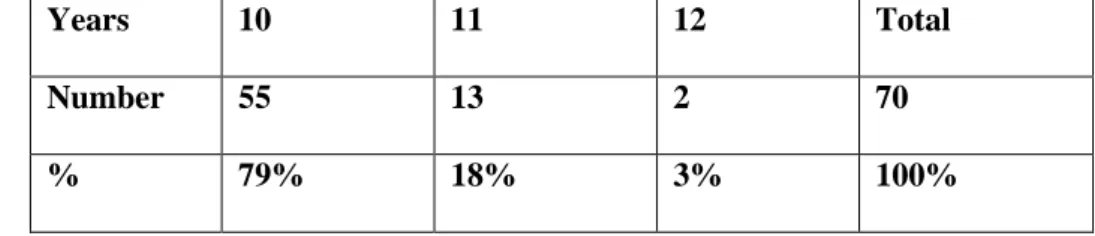
Table 03: Students’ Years of studying English ... 45
Table 04: Students’ Choices in Studying English ... 46
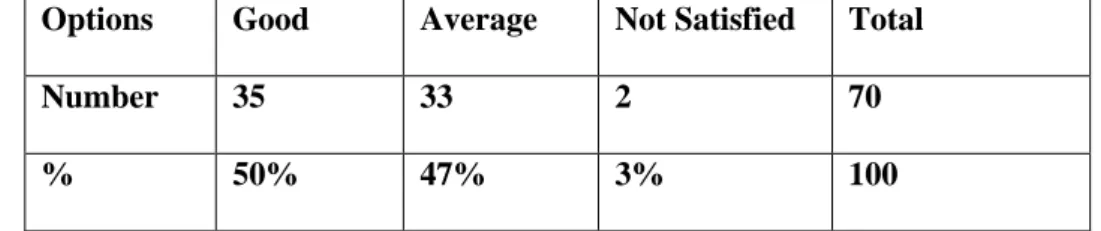
Table 05: Students’ Level in EFL ... 46
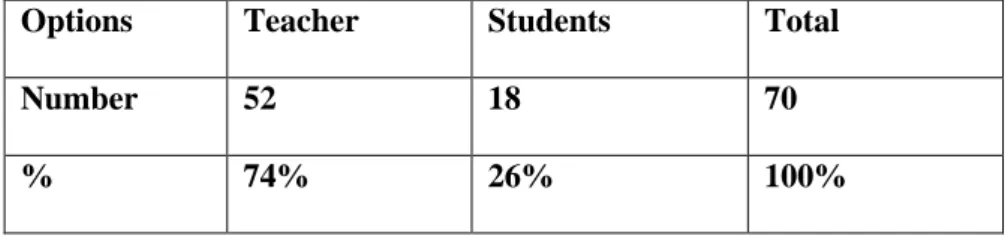
Table 06: Teacher and Students’ Amount of Interaction in the Classroom ... 47
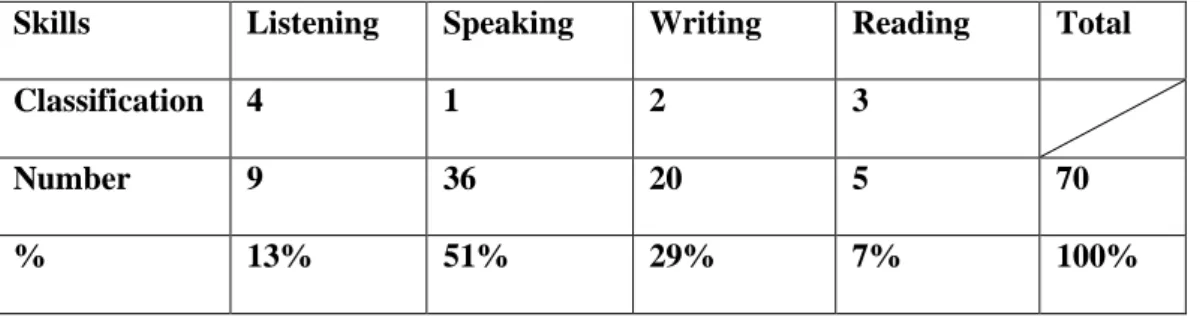
Table 07: Students’ Classification of the Four Skills ... 48
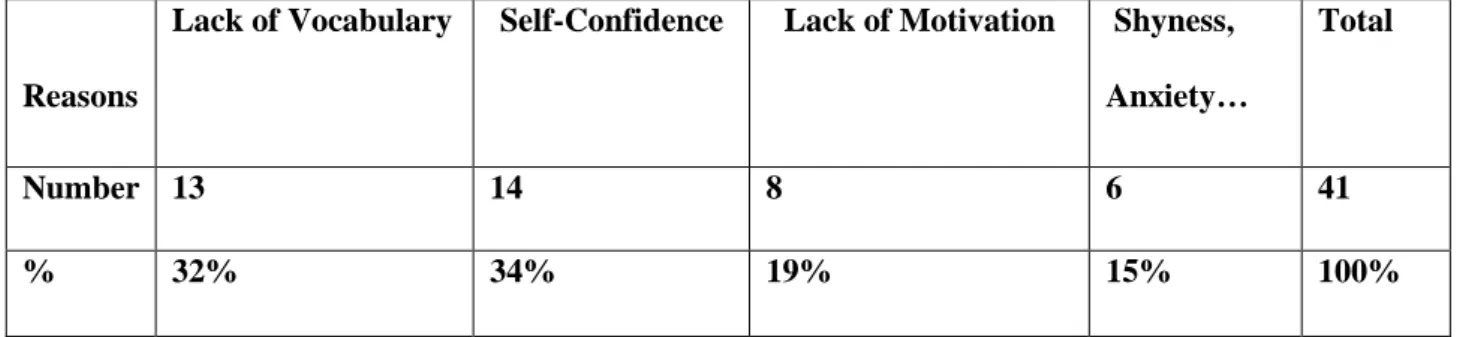
Table 08: Students’ Difficulties When Speaking inside the Classroom ... 48
Table 09: Students’ justification of the difficulties they face when speaking in the classroom ... 49
Table 10: Students’ Preferable Learning Situation ... 49
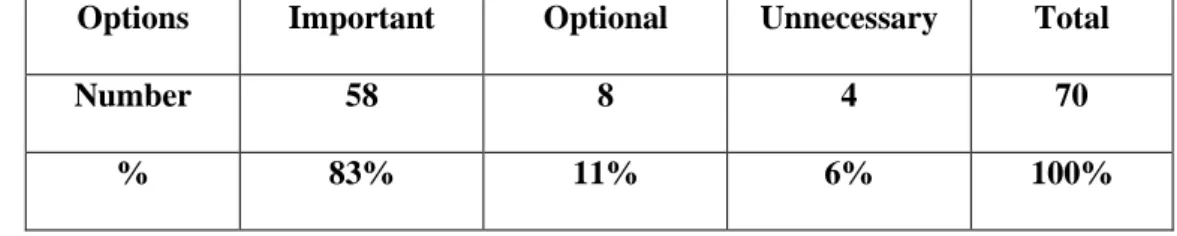
Table 11: Students’ Opinions about Classroom Oral Presentation ... 50
Table 12: Students’ Opinions about Classroom Oral Participation ... 50
Table 13: Students’ justification of their opinions concerning the classroom oral participation ... 51
Table 14: Teacher’ Impact on the Students’ WTC in the Classroom ... 52
Table 15: Students’ Avoidance of the Classroom Participation Because of the Module ... 53
VII
Figure01: Types of Speaking ... 8
Figure02: Components of Communicative Competence ... 16
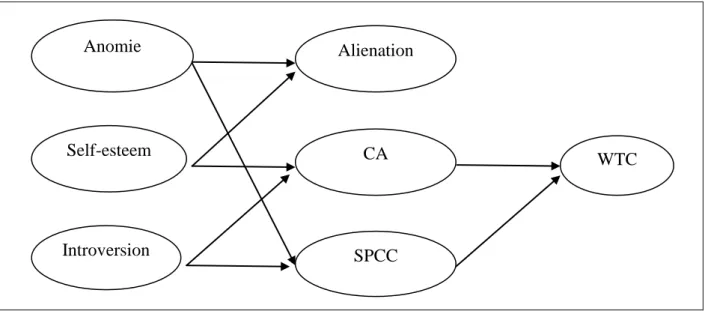
Figure 03: MacIntyre’s (1994) Causal Modal for Predicting WTC by Using
Personality-Based Variables ... 30
VIII
General Introduction ... 1
1. Statement of the Problem ... 1
2. Aims of the Study ... 2
3. The Research Questions ... 3
4. Hypotheses ... 3
5. Significance of the Study ... 3
6. The Research Methodology ... 3
7. Structure of the Dissertation ... 3
Chapter One: An Overview of the Speaking Skill Introduction ... 5 1.1. Overview of speaking ... 5 1.2. Definition of speaking ... 6 1.3. Component of speaking ... 6 1.3.1. Comprehension ... 7 1.3.2. Grammar ... 7 1.3.3. Vocabulary ... 7 1.3.4. Pronunciation ... 7 1.3.5. Fluency ... 8
IX 1.4.1. Imitative ... 9 1.4.2. Intensive ... 9 1.4.3. Responsive ... 9 1.4.4. Interactive ... 9 1.5. Speaking in FL classrooms ... 10
1.6. Teaching Speaking Skill ... 10
1.7. Characteristics of successful Teaching Speaking ... 11
1.7.1. Learners Talk a Lot ... 12
1.7.2. Participation is Even ... 12
1.7.3. Motivation is High ... 12
1.7.4. Language is of an Acceptable Level ... 12
1.8. Methods of teaching speaking for EFL learners ... 12
1.8.1. The Grammar Translation Method ... 13
1.8.2. The Direct Method ... 13
1.8.3. The Audio-Lingual Method ... 14
1.8.4. The Total Physical Response ... 14
1.8.5. The Silent Way ... 15
X
1.9.1. Grammatical Competence ... 16
1.9.2. Discourse competence ... 17
1.9.3. Sociolinguistic competence ... 17
1.9.4. Strategic Competence ... 17
1.10. The different roles of the teacher in communicative approach ... 18
1.11. Factors affecting the speaking ability inside the classroom ... 20
1.11.1. Performance Conditions ... 20
1.11.2. Affective Factors ... 20
1.11.3. Listening Skill ... 20
1.11.4. Feedback during Speaking Activities ... 20
1.11.5. Students’ Speaking Problems ... 21
1.12. The importance of speaking skill ... 22
Conclusion ... 23
Chapter Two: The Willingness to Communicate Introduction ... 24
2.1. Overview of the WTC ... 24
2.2. WTC in the Native Language Communication ... 26
XI
2.3.2 Self-Perceived Communication Competence ... 29
2.4. WTC in the Second Language Communication ... 31
2.5. WTC in EFL Classroom ... 34
2.6. Factors Affecting EFL Student’s WTC ... 36
2.6.1 .Individual Factors ... 36
2.6.2. Social Contextual Factors ... 38
2.7. Speaking and the WTC ... 39
Conclusion ... 40
Chapter Three: Description and Analysis of the Students’ Questionnaire and the Teachers’ Interview Introduction ... 41
3.1 Means of Data Collection ... 41
3.2. The population ... 42
3.2.1.The students ... 42
3.2.2. The teachers ... 42
3.3. Description of the students’ questionnaire ... 43
3.3.1. Section One: Background Information (Q1-Q5 ... 43
XII
Classroom (Q14-Q18 ... 44
3.4. The Analysis of the Results ... 44
3.4.1. Section One: Background Information ... 44
3.4.2. Section Two: Students’ Attitude toward Classroom Oral Participation ... 47
3.4.2. Section Three: Factors Influencing Students’ WTC inside the Classroom ... 51
3.5. Summary of the Results ... 54
3.6. Description of the Teachers’ Interview ... 55
3.7. Analysis Teachers’ Interview ... 57
3.8. Summary of the Results ... 60
Conclusion ... 60
General Conclusion ... 61
Reference List ... 64
General Introduction 1. Statement of the Problem
Effective EFL teaching and learning is becoming increasingly an important task to do because of the global spread of this language. Speaking is the skill that deserves more attention among the other skills for EFL learners. However, many English teachers may experience the same situation in which students are unwilling to speak and interact
appropriately in the classroom, due to many internal and external factors that hinder students from speaking. As a result, MacIntyre, Clément, Dornyei and Noels (1987) have introduced a recent notion called: language learners’ willingness to communicate. The concept of
willingness to communicate originated in the area of native/first language communication. However, recent studies on willingness to communicate have shifted the research interest from first language to second or foreign language communication domains.
The primary goal of teaching and learning a foreign language is to make learners able to communicate fluently and accurately. In EFL classrooms, when the teacher encounters the students with many opportunities to practice and use the target language, some of them speak up and express themselves freely, while the others prefer to keep silent even when they possess high linguistic competencies. Thus, students’ unwillingness to communicate inside the classroom can be an essential factor that affects their speaking skill.
The willingness to communicate is a recent notion that emerged after the endeavors of Burgoon (1976) on the concept of the “Unwillingness to communicate” and the study of Mortensen, Arnston and Lusting (1977) on predisposition toward verbal behavior, and the one of McCroskey and Richmond (1982) on shyness. It was further found by MacIntyre, Bahin, and Clément (1999) the willingness to communicate in L1 communication captures both the personality and the situation, that may totally differ from person to person, and situation to situation. The studies conducted by Yashima et al.(2004), McCroskey (1997), and Wen and
Clément (2003) have investigated the relationship that exists between the learners’ willingness to communicate and many affective variables such as; motivation, attitude, language anxiety, gender…etc. According to Alemi et al. (2001) those learners who are generally able to communicate and get high degrees in the proficiency tests, are more willing to initiate communication than the others who are unwilling to speak up and achieve high scores. In an EFL Iranian context, Pashmforoosh (2001) attempted to explore the relationship between the students’ willingness to communicate, the language anxiety, and the language proficiency. That later found that there exists a relationship between all of them.
Considering the above mentioned conducted studies in this area, it seems that no clear study has pointed out the direct relationship between the learners’ willingness to communicate and their speaking performance inside the classroom.
2. Aims of the Study
The students’ reluctance to engage in the classroom oral participation is a very common problem faced by many language teachers, so, through the present study at the English department of Guelma University, we aim at investigating the impact of the willingness to communicate on EFL learners’ speaking performance inside the classroom. Moreover, to shed the light on the affective factors behind students’ hindrance from speaking in the classes, and then to suggest some pedagogical recommendations that may help in increasing the students’ willingness to communicate and develop their speaking skill.
3. The Research Questions
The main questions explored in the study are:
1. How can the learners’ speaking ability be influenced by their willingness to communicate? 2. How can teachers increase or decrease the learners’ willingness to communicate?
4. Hypotheses
Based on the above questions, the following hypotheses are formulated:
1. There may be an impact of the willingness to communicate on EFL learners’ speaking ability inside the classroom.
2. There may be internal and external factors that influence EFL learners’ willingness to communicate inside the classroom.
5. Significance of the Study
The importance of this study lies in the contribution to a better understanding of the nature and role of WTC in the development of speaking skill, and it provides EFL teachers and learners with useful recommendations that may help in increasing students’ willingness to communicate and then improve the speaking performance inside the classroom.
6. The Research Methodology
The study will be conducted at the English department of Guelma University, in which a sample will be taken randomly from Third-year LMD students and teachers of Oral
Expression of the same level. A questionnaire for the students and an interview for the teachers are going to be the main data collection tools used in the present study. 7. Structure of the Dissertation
In order to accomplish the objectives of the dissertation, this study will be arranged into three main chapters, in addition to a general introduction and a general conclusion. The first chapter introduced by a general overview about the speaking skill: definition, types,
importance, some methods of teaching the speaking, the difficulties that EFL students experience when speaking in the classroom, and the role of the teacher to overcome these difficulties. The second chapter: deals with the foundation of the willingness to communicate construct, the willingness to communicate in L1 and L2 communications, it also seeks to present the different factors influencing EFL learners’ willingness to communicate, then the
relationship between the speaking skill and the willingness to communicate. Finally, chapter three will be concerned with the description of the sample population, the research methods used in the present study, and the analysis of the obtained results. Moreover, it will provide some solutions for EFL learners and teachers in order to develop the students’ speaking skill through raising their willingness to communicate inside the classroom.
Chapter One
An Overview of the Speaking Skill Introduction
The speaking skill plays an important role in the area of teaching and learning a foreign language among listening, reading and writing skills. Through speaking, one can express his own feelings, thoughts and ideas and communicate properly with others, but teachers of EFL can agree on that there are some students who have the willingness to communicate, while others are unwilling to speak the target language.
This chapter is concerned with the speaking process, it deeply describe and focuses on the concepts of speaking and its components, the types of classroom speaking performance, and teaching the speaking skill, in addition to, the different language teaching methods which was set to help EFL learners to communicate properly among them; communicative competence and its components. Then it tackles the factors that affect the speaking skill inside the classroom.
1.1. Overview of Speaking
Having a good idea seems interesting, but having the ability to properly transfer this idea is much more important. Speaking is a crucial process in communication, it helps in thinking, shaping, and organizing words and thoughts in our minds by which we interact to each other. Inside the classroom, speaking is considered as the main tool through which teachers and learners express themselves, exchange ideas and opinions, asking about unclear points to achieve certain goals. As a matter of fact the speaking skill, besides reading, writing, and listening skills seems intuitively as the most important and the frequently used language skill. As Rivers (1981) states, speaking is used twice as much as reading and writing in our
1.2. Definition of Speaking
“Speaking is the process of building and sharing meaning through the use of verbal and non-verbal symbols, in a variety of contexts”. (Chaney,1998, p.13). Speaking is a crucial skill in communication; it has a lot to do with constructing and transferring meaning whether by using verbal (words) and non-verbal symbols (gestures) in different contexts, to convey the intended idea.
Speaking is defined as an interactive process of constructing meaning that involves producing, receiving and processing information, its form and meaning are dependent on the context in which it occurs, the participants and the purposes of speaking (Burns & Joyce 1997). For learners, in order to properly communicate in the FL, they have to master well the speaking skill. Accordingly, speaking ability is one’s ability to express, interact, and
appropriately communicate in any given situation, through the use of different aspects of language as such; grammar, vocabulary, and pronunciation guided by the correct rules of spoken language. Furthermore, speaking is one of the central elements of the interaction process by which an individual alternately takes the roles of a speaker and a listener to communicate information, ideas, thoughts, express their feelings and emotions to each others through the use of oral language (Sister, 2004, p.7). So, in order to be a good communicator, the speaker in his turn has to firstly construct a clear meaning that will be delivered to help the others easily grasp what have said to them.
1.3. Component of Speaking
Speaking is a productive skill that requires the mastery of its components, in order to be a good communicator. For that Syakur (2007,p.4) states, comprehension, grammar, vocabulary, pronunciation, and fluency are the basic components of the speaking skill.
1.3.1. Comprehension
Comprehension is one’s ability to understand and process the various stretches of discourse, in order to deliver meaningful messages that can be clearly understood by the receiver, and to avoid misunderstanding. In the same vein, (Cohen, 2005, p.51) states, comprehension refers to the fact that participants fully understand the nature of the research project, even when procedures are complicated and entail risks.
1.3.2. Grammar
Grammar refers to the set of rules that allow us to combine words in our language into larger units, (Greenbaum & Nelson, 2002, p.1) . Moreover, Harmer (2001,p.12) states, the grammar of a language is the description of the ways in which words can change their forms and can be combined into sentences in that language .Grammar then is the basis which the students need to construct and form a meaningful structure of spoken and written utterances and sentences.
1.3.3. Vocabulary
One cannot communicate effectively or express their ideas both in oral or written form if they do not have sufficient vocabulary, without grammar very little can be conveyed (Willid in Moras, 2007, p.5). Vocabulary can be defined as knowing the meaning of words that we are communicating with, between each other. Hence, it is considered as the core of an effective communication.
1.3.4. Pronunciation
In an oral production, the term pronunciation refers to the way in which the speaker pronounces the words (Harmer, 2009). For Louma (2003), pronunciation is the sound of speech that “can refer to many features of the speech stream such as; individual’s sound, pitch, volume, speed, pausing, stress and intonation”. (p.11). Pronunciation refers to the way
in which utterances are produced, it may include different aspects as such; pitch of voice, rhythm, and intonation.
1.3.5. Fluency
Richards (2006) defines fluency as the natural language use, which despite limitations in the communicative competence, the speaker engages in an interaction that maintains an understandable and current communication. In the same context, CEFRL (2001) defines as the ability to articulate, and keep communication going. Hence, fluency can be defined as looking as natural as possible when using a language.
One cannot say that speaking is only an oral production of the language, but it is the production of meaningful sentences (comprehension); knowing the right meaning of the words (vocabulary); arranging those words in the correct structure (grammar); sounding as a native speaker (pronunciation); and interacting naturally as much as possible (fluency). 1.4. Types of Classroom Speaking Performance
Speaking is a process by which individuals use in order to achieve a particular goal, however, the goal of speaking depends mainly on the type of speaking. Brown (2001:251) classifies the types into two basic categories as the figure bellow:
Figure01: Types of Speaking
In dialogue, when there is an interaction between two or more persons, it can be divided into social interaction (interpersonal), or for the purpose of transfer the truth and facts
Types of Speaking
Dialogue
Monologue
(transactional). While in monologue, the speaker interacts with people in long speech without any interruption from them such as; reading, lecturer, news broadcast …etc.
In the classroom context, Brown also provides us with types of classroom speaking performance, they are:
1.4.1. Imitative
A simple type of speaking in which the student is exposed to a piece of discourse, and then he tries to imitate what he have heard, it is not considered as a meaningful interaction but it just focuses on a specific element of language .
1.4.2 Intensive
It is a type of speaking performance in which the student produces short stretches of language, in order to demonstrate competence in some aspects of language (intonation, stress, rhythm…) there is a slight difference between this type and the imitative one.
1.4.3. Responsive
It as a kind of short interaction between the teacher and the students, they interact collaboratively, ask about unclear points, clarify confusion and ambiguity, respond to each other at a limited level of very short conversations.
1.4.4. Interactive
As its name shows, it is an interaction between the speaker and the listener, it may include multiple exchanges and multiple participants. Interaction can take the form of a transaction which has the purpose of exchanging factual information, or an interactional exchange for the purpose of maintaining social relationships.
1.4.5. Extensive
Extensive speaking is considered as the most advanced type of oral production, during which the opportunity is given more to the speaker to talk for a long period of time, while the
opportunity for the listener to interact is highly limited. Also the language here should be more formal than the other types of speaking.
1.5. Speaking in FL Classrooms
Learning a foreign language requires the mastery of the four skills, but unlike the listening, reading, and writing, speaking is considered as a big challenge and a measure for learners to handle an interaction. Louma (2004) states that “…the ability to speak in a foreign language is at the very heart of what it means to be able to use a foreign language”. (p.5). This implies that using the speaking skill while learning a foreign language is considered as an advanced level for the learners.
In an EFL classroom, the majority of learners measure their proficiency in the foreign language in their ability to properly speak this language, according to (Ur, 1984): “Many if not most foreign language learners are interested in learning to speak” (p.120) that is why to expect a high oral achievement from the learners, the focus should be more on enhancing the speaking skill, and much more attention should be given to the learners who are anxious when speaking a foreign language, unlike their desire to listen, read and write this language. In addition, the light must be shed on the methods of teaching and the psychological factors that may have a negative impact on the EFL learners’ speaking performance inside the classroom. 1.6. Teaching Speaking Skill
Teaching speaking implies teaching the students how to express themselves, communicate their needs, interact with each other in different situations and influence the others. For that, it is necessary for the teacher to have full understanding of what he is about to transmit to the students. According to Hornby (1995:37) teaching means giving instruction, knowledge and skill to a person, while speaking means to make use of words in an ordinary speech. So teaching speaking is to give the learners the appropriate instructions in order to speak and communicate effectively.
The primary goal of teaching speaking is to make the learners able to speak the target language, they should be able to make themselves understood, using their current proficiency to the fullest. They must try to avoid confusion in the message due to faulty pronunciation, grammar, or vocabulary and to observe the social and cultural rules that are applied in each communication situation (Bunkart,1998:2). Then in teaching speaking, there are some principles that the teacher should be aware of, according to Nunan (2003:54-56) they are: To be aware of the difference between the second language and the foreign language in the learning context.
To give students chances for practice to reach both fluency and accuracy. To provide opportunity for students to talk by using group work or pair work. To plan speaking tasks that involve negotiation of meaning.
To design classroom activities that involve guidance and practice in both transactional and interactional speaking.
So, based on the explanation above, it can be inferred that being aware of the principles of teaching speaking and relating them to the teaching materials inside the classroom, would mainly make students connect them with their speaking ability and become good
communicators.
1.7. Characteristics of a Successful Teaching of Speaking
Teaching is not an easy task to do; especially teaching speaking can be much more difficult. It can be evaluated through the degree to which learners are fluent enough in speaking the target language or not. Brown (2001:270) says, spoken language is easy to perform, but in some cases it is difficult, in order that students can carry out the successful speaking, they must have some characteristics of successful speaking activities inside the classroom such as:
1.7.1. Learners Talk a Lot
Activities given to students inside the classroom are basically related to how much they speak, this is an obvious mark to the advanced level of the speaking skill.
1.7.2. Participation is Even
Classroom interaction should not be dominated by just few talkative active students, all the students have to get the opportunity to speak and make their own contributions to the topics. 1.7.3. Motivation is High
Students should not speak inside the classroom only because they are obliged, or to avoid harsh comments and judgment, but they have to be intrinsically interested in the topics to achieve the tasks’ objectives.
1.7.4. Language is of an Acceptable Level
It is necessary for the students to make their own contributions that are relevant to the topics, and of an acceptable level of language accuracy. Those are the characteristics of successful speaking which can be a parameter for the teacher to teach speaking.
1.8. Methods of Teaching Speaking for EFL Learners
The main reason of learning English language is to be able to communicate in real life situations, due to the rapid technological development, English language is considered now as an international language and the main tool people from all over the world can use to
communicate with each other. It can also help in finding a job, improving education through studying abroad and in traveling opportunities. J. Baker and H. Westrup (2003, p.5) state that “a student who can speak English well may have greater chance for further education, of finding employment and gaining promotion”. That is, the primary goal of teaching speaking in an EFL context is to improve the learners ‘communicative skills. For that many scholars have suggested methods to support teaching speaking for EFL learners are; the Grammar
Translation Method, the Direct Method, the Audio-Lingual Method, the Total Physical Response, the Silent Way and the Natural Approach.
1.8.1. The Grammar Translation Method
A traditional method of foreign language teaching dating back to the late nineteenth and early twentieth century’s, it emerged to oppose the classical method of Latin and Greek (Brown,2008:18). The basis of this method is on the grammatical rules as a main focus for translating from the second language to the native language. According to (Prator and Celce Murcia, 1979 cited in Brown, 2000:3) the main principles of this method are:
1. Classes are taught in the mother tongue, with little active use of the target language. 2. Much vocabulary is taught in the form of lists of isolated words.
3. Often the only drills are exercises in translating disconnected sentences from the target language into the mother tongue.
4. Elaborate explanation of grammar are always provided. 5. Little or no attention is given to pronunciation.
1.8.2. The Direct Method
This method came to oppose the Grammar Translation Method in the twentieth century. (Harmer, 2001:21). The main focus of this method is that the second language should be taught and learnt in the same way as the first language. It is based on the use of interaction and communication between students and the neglection of translation between 1st and 2nd language (Ibid: 21). According to Richard and Roger (1989: 9 -10) the main principles of the direct method are summarized as follows:
1. Classroom instruction was conducted exclusively in the target language 2. Only everyday vocabulary and sentences were taught
3. Oral communication skills were built up in a carefully traded progression, organized around question and answer exchanges between teachers and students in small intensive classes.
4. Grammar was taught inductively.
5. New teaching points were taught modeling and practice.
6. Concrete vocabulary was taught through demonstration objects and pictures, abstract vocabulary was taught by association of ideas.
7. Both speaking and listening comprehension were taught. 8. Concrete pronunciation and grammar were emphasized. 1.8.3. The Audio-Lingual Method
This method took its main concern from the behaviorist view; it focuses on the habit formation in learning a second language (Harmer, 2001: 79). Learners could be trained through a system of reinforcement. The correct response would be praised (reward), while the incorrect response would be punished. Moreover the main focus of this method is on using drills to form habits (Ibid: 79). The main characteristics of this method are:
1. Dependence on mimicry and memorization of set of phrases. 2. Teaching structural patterns by means of repetitive drills. 3. No grammatical explanation.
4. The use of various types and visual aids.
5. Immediate reinforcements of correct responses (Richard and Rodgers, 2001: 156,157). 1.8.4. The Total Physical Response
The Total Physical Response emerged in 1977 by the scholar James Asher, this method of language teaching focuses on the physical actions in teaching the foreign language. According to Brown (2000:30) the main characteristics of this method are:
1. Focus on the listening skill more than speaking skill.
2. Utilize the imperative mood such as; open the window, close the door. 3. Focus on the meaning more than the form.
1.8.5. The Silent Way
It was founded by Caled Gattegno in 1963, it emphasizes on the cognitive aspect then the affective one.(Brown, 2000: 28). Richards and Rogers (1986:99) summarized the theory of learning behind the silent way as follows:
1. Learning is facilitated if the learner discovers or creates rather than remembers and repeats what is to be learnt.
2. Learning is facilitated by accompanying/ mediating physical objects.
3. Learning is facilitated by problem solving involving the material to be learned. 1.8.6. The Natural Approach
The Natural Approach was proposed by Krashan and Terrell in 1983, it focuses on the comprehensible input provided by the teacher to facilitate the acquisition of the second language. In the Natural Approach students should follow the three main stages: 1. The preproduction stage: in this stage foreign students develop their speaking skill. 2. Early production stage: in this stage the students straggle with language and teachers should focus on the meaning not the form; the teacher should not correct errors in this stage. 3. The speech emergent stage: in this stage students develop their speaking skill and their speech by involving them in role plays, dialogues...(Brown, 2000:31)
All the above methods were established as a support to help the EFL learners to communicate effectively by using the target language, but most of them seem failed to achieve the primary goal. So a new approach stands to be a different one in the field of ELT to develop learners’ communicative competence.
1.9. Communicative Competence
The term “communicative competence” was first coined by the sociolinguist Dell Hymes (1966) describing the art of communicating. According to Brown (1994, p.227)
interpret messages and negotiate meanings interpersonally within specific contexts”. (Cited in B.L Teaver & J.E Willis, 2004, p.5). In other words, learners have to fully understand the sociolinguistics and conversational rules of language. The main concern of the
communicative competence is that learning a language successfully involves communication rather than just memorizing a series of rules. Hymes states that the speaker needs to
communicate the language and to be able to use it according to the sociocultural environment, imply that the speaker of the FL has to use the target language in a specific context.
Canale and Swain (1980) and Savignon conceived communicative competence in terms of four components: grammatical competence, discourse competence, sociocultural competence, and strategic competence.
Figure02: Components of Communicative Competence 1.9.1. Grammatical Competence
lexical items and rules of morphology, syntax, sentence grammar, semantics and phonology (Brown, 2007; in Canale and swain, 1980: 29).In other words, the knowledge of grammar rules, lexis, syntax, phonetics and vocabulary of the target language and the ability to use them.
1.9.2. Discourse competence
According to Brown (2007:220) discourses competence “the ability to connect sentences …and to form meaningful whole out of a series utterances” In other words; the ability to understand the context and to know how to link utterances of language to make coherent whole and meaningful texts.
1.9.3. Sociolinguistic competence
It helps the speakers to be “contextually appropriate” (Hedge, 2000:50).
This means the knowledge of how to express messages in accordance with the relationship between the speaker, the listener, the topic, and the setting.
1.9.4. Strategic Competence
According to Brown (2007:220) discourses competence “the ability to connect sentences …and to form meaningful whole out of a series utterances” In other words; the ability to understand the context and to know how to link utterances of language to make coherent whole and meaningful texts.
The speaking skill in particular is of paramount importance among the other skill, it can be affected by everything in the classroom. The different teaching methods stated above, can be effectively adopted and applied by the teacher while teaching students the speaking skill, in order to help the EFL to raise their desire and willingness to communicate, that mainly leads to their development in the speaking skill.
1.10. The Different Roles of the Teacher in the Communicative Approach
The roles of the teacher are fundamental during the teaching process, the effectiveness of a teacher can be seen in the enhancement of his learners’ level, which mainly depends on his behavior inside the classroom (role) according to the various types of activities (nature of activity). In the traditional classrooms, the teacher only explains the content and transmits the knowledge to the students, communicatively speaking, the teacher should play different roles while managing his class in order to achieve high goals. He has to interact with the students, giving them feedback and comments, provide for them the opportunity to speak
collaboratively. Hedge Tricia (2000: 26) identifies the important roles the teachers can play: As controller in eliciting nationality words; as assessor of accuracy as
students try to pronounce the words; as corrector of pronunciation; as organizer in giving instructions of the pair work, initiating it, monitoring it, and organizing feedback ; as promoter while students are working together and as resource if students need help with words and structures during the pair work.
1. Controller
During the classroom interaction, the teacher is the responsible for transmitting the knowledge to his learners, as well as controls the interaction between him/her and the students. He provide the students with the needed instruction and activities, while they have just to listen and follow him. With this the teacher is taking the role of the controller of the whole class.
2. Assessor
The assessment of the student’s competence is one of the most important tasks facing the teacher. Mapstone states “Good teachers know how they must assess their student’s learning” (1996). The learning process cannot be enhanced, without providing learners with feedbacks,
corrections and praising in order to let the students be aware about their strengths and weaknesses.
3. Corrector
The teacher as a corrector must consider the appropriate time to interfere and correct his learners’ errors and mistakes.
4. Organizer
The teacher should organize his/her classroom interaction, pair and group works, and to provide the students with the right instruction at the right time, s/he also must organize the students turn to talk.
5. Prompter
Due to the lack of vocabulary, learners sometimes get confused and blocked while speaking, here the teacher has to motivate his/her learners to develop their thinking , so that they become independent from him/her.
6. Resource
The teacher should provide his/her learners with all the needed information, answer on all their questions to avoid ambiguity and unclear points.
Although the teacher is the provider of knowledge and the manager of his/her classroom, but the focus should be placed on the students’ behaviors and achievements and providing them with many opportunities to practice the target language. In the classroom, the teacher can assume different roles to teach what s/he wants, since s/he is considered as a modal to the students inside. His/her enthusiasm must be transferred to the students as well as his/her roles should be played the right way in front of them to create a good environment, because this will certainly reflect on his/her students’ willingness to communicate in, which also affect their speaking performance inside the classroom.
1.11. Factors Affecting the Speaking Skill inside the Classroom
In EFL classrooms, students’ speaking performance may be affected by many external and internal factors, so it is necessary to figure out what are these factors and how do they affect, in order to help the learners to overcome the problem and to improve their speaking
performance inside the classroom. Tuan and Mai (2015) have conducted a study dealing with the factors that affect the learners’ speaking performance.
1.11.1. Performance Conditions
Students perform a speaking activity inside the classroom under many conditions, in which they can be abided by the time pressure, planning, and the quality of performance as (Nation & Newton, 2009) assumed.
1.11.2. Affective Factors
The students’ affective side is considered as the guideline for success or failure for learners while learning a foreign language, according to Krashen (1982) the factors related to success in second language acquisition can be categorized between; motivation, anxiety, and self- confidence.
1.11.3. Listening Skill
Speaking and listening are two closing related language skills, the speaker should deliver a meaningful speech to allow the listener to clearly understand what is uttered to him, and effectively interact with each other. (Doff, 1998) states that the speaking skill cannot be developed unless one develop the listening skill.
1.11.4. Feedback during Speaking Activities
Giving feedback on learners’ performance while they still speak, can certainly block the flow of the conversation, then demotivate and make them afraid to speak. So, teachers should positively affect their learners’ speaking performance as Baker and Westrup (2003) clarifie that the learners’ speaking performance is mainly related to the instructors’ support.
1.11.5. Students’ Speaking Problems
While speaking in the classroom many students cannot speak easily, they may face many difficulties caused by internal and external factors can make them unable to speak, or block at a certain stage. For Ur (2000), four main problems can be faced by students in speaking activities, which are; inhibition, nothing to say, low uneven participation, and mother tongue use.
1. Inhibition
Speaking confidently in front of the audience can be stopped at any stage of the dialogue, because of the fear of making mistakes and errors, the harsh criticism, shyness, stress and anxiety. Littlewood (1993:93) argues that: “it is too easy for a foreign language classroom to create inhibition and anxiety). Implies that inhibition is mostly expected in foreign language classrooms because of the anxiety related with the use of the foreign language.
2. Nothing to Say
“I have nothing to say”, “I do not know anything about” are very common arguments most of the students use to defend their unwillingness to participate in a particular topic, the student feels demotivated to express himself/herself, since s/he strongly believes that he would add nothing to the topic, he knows nothing about the relevant topic, or the topic did not suit him at all. As it was supported by Rivers (1968): “the teacher may have chosen a topic which is uncongenial to him [the learner] or about which he knows very little, and as a result he has nothing to express, whether in native language or the foreign language” (p.192).
3. Low Uneven Participation
In each classroom, there is always a dominant student who frequently participates and takes almost the whole students’ turn to talk. That is what makes some of the other learners unwilling to express themselves freely, they prefer to remain silent, in the same context, Harmer (2001) suggests to integrate all the students of the different levels together and to
allow them to work in groups. Moreover, the teacher should play a major role in increasing the students’ participation, otherwise even the active ones will not be interested anymore. 4. Mother-Tongue Use
The use of the mother language in a foreign language classroom is a common problem for the majority of the learners, especially at first year classes, because they may worry about making mistakes in the foreign language, and feel at ease when expressing themselves in their mother language. According to Baker and Westrup (2003) “barriers to learning can occur if students knowingly or unknowingly transfer the cultural rules from their mother tongue to a foreign language” (p.12). Therefore, in order to correctly master a foreign language, students should not keep borrowing words from their mother language. Identifying and analyzing the factors mentioned above may have an important role in revealing their unwillingness to communicate and their enhancing EFL learners’ speaking ability.
1.12. The Importance of the Speaking Skill
According to Bygate (1987) “speaking is a skill which deserves attention as much as the literary skills in both native and foreign language”. The common belief among EFL learners, that is the primary goal behind learning a foreign language is to be a good communicator in real situations, in order to achieve their goal they should frequently practice the target language either in classrooms, or even in daily life conversation furthermore, EFL learners must believe that the more they practice speaking, the better they become. As it was supported by Robert Frost “I am a writer of books in retrospect, I talk in order to understand, I teach in order to learn”. So improving your speaking will not only make you a fluent speaker, but also you will be proficient in using the target language, express ourselves, fulfill our needs and develop a clear thinking.
Conclusion
To conclude this chapter, we have tried to provide an overview about the speaking process in EFL classes, which is the measure for both teachers and learners success in the foreign language, also we have tackled the process of teaching the speaking skill and the
characteristics of successful teaching speaking, we have also shed the lights on the different roles that the teacher may play inside the classroom such as; a guide, an organizer, a planner, an assessor that can help in achieving high goals.
Chapter Two
The Willingness to Communicate Introduction
This chapter provides a deep understanding of the foundation of the willingness to communicate construct, WTC related to both the native language communication and the second language communication. It also presents a clear description of the pyramid model that represents the different factors influencing the L2 WTC, and WTC in an EFL context. It presents the different factors influencing EFL student’s WTC, then the chapter ends up with the relationship between the speaking skill and the WTC.
2.1. Overview of the Willingness to Communicate
An important issue well worth considering that precedes the process of speaking and its importance in the area of EFL teaching and learning, which is the willingness to
communicate. When EFL students have the opportunity to use the English language some of them speak up, while others choose to remain silent even when they are able to interact and communicate effectively i.e. not all of the EFL learners seek for opportunities to use the target language in a meaningful context. For that, modern linguists have attached a great
importance to the various psychological, social, linguistic, and situational factors that affect the student’s reluctance to speak in EFL classes.
The concept of the WTC was first set by McCroskey and Richmond to refer to first language communicators, i.e. those who are willing to engage in communication, then it expanded and became mainly related with the use of L2 communicators, i.e. those students who avoid initiating communication using their English. According to McCroskey and Richmond (1987) WTC is considered as the measure of speaker’s desire to participate or avoid communication. The different factors related to second language acquisition such as; fear, anxiety, shyness… are also considered as the main elements in communication in this
language. (McCroskey et al., 1985). Willingness to communicate is “a readiness to enter into discourse at a particular time with a specific person or persons using a L2” (MacIntyre, Dörnyei, Clément and Noels, 1998, p. 547).
Learning a second or a foreign language aims basically at communicating in that language. That is why many linguists like; McCroskey, Richmond,MacIntyre, Dörnyei, Clément and Noels, have focused on the communicative goal in the language teaching and learning field. A recently developed instrument known as willingness to communicate emerged as a concept for individual’s L1 and L2 communication, it includes psychological, linguistic and
communicative variables to predict communication (Alemi et al., 2011). It has emerged from the endeavors of Burgoon (1976) on the concept of “unwillingness to communicate” and the study of Mortensen, Arnston and Lusting (1977) on predisposition toward verbal behavior, and the one of McCroskey and Richmond (1982) on shyness.
Willingness to communicate was first conceptualized as the desire to initiate
communication when you have the opportunity to do so (McCroskey & Baer, 1985). It is of utmost importance in revealing students’ willingness to engage in communication in the classroom. In the same context, Kang (2005) states that “willingness to communicate is an individual’s volitional inclination towards actively engaging in the act of communication in a specific situation, which can vary according to interlocutor(s), topic, and conversational context among other potential situational variables” (p.291). This implies that WTC is the optional tendency inside the individuals to participate in communication in various contexts, depending on the person you are interacting with, the discussed topic, the situation…, and many other affective variables.
MacIntyre, Clément, Dorney and Noels (1998) have suggested that the main goal of L2 education is to create WTC in the language learning process, for the purpose of raising
Kang (2005) argued that we can increase L2 learners ‘willingness to communicate by creating opportunities, that might make an environment in which learners feel supported and
comfortable to initiate communication, because learners with high willingness to communicate are more likely to use their L2 in authentic communication, which can contribute to their successes in second language acquisition.
Based on the statements above, the ultimate goal of learning a second or foreign language is communication. In the same vein, the use of the target language in different contexts plays an important role in achieving communicative purposes. So the willingness to communicate arises as the most basic orientation toward communication, it measures a person’s willingness to participate in interaction, and represents the psychological preparedness to use the L2 when the opportunity is given.
2.2. WTC in the Native Language Communication
McCroskey and Richmond (1987) stated that the willingness to communicate is an individual’s general personality orientation towards communicating, they pointed out that people differ in the degree of communication, with whom they interact and under which circumstances they do communicate. This means that the contextual variables affect
individual’s willingness to communicate in their L1. For instance, a person’s mood in a given day, the relationship between people who are communicating, what has been said before in the conversation, whether the topic is of interest or not …, all these variables could affect communication willingness. Hence, to some extent the WTC in L1 can be viewed as a situation dependent.
However, although McCroskey and Richmon (1987) have introduced the WTC as a
situation feature, they claimed that WTC was substantially a personality orientation, a concept which has a lot to do with the personality traits.
For that McCroskey (1997) restated and defined that “the willingness to communicate trait is an individual’s predisposition to initiate communication with others” (p.77).
To confirm whether WTC in L1 communication is a personality trait-like or a situational trait-like (the reason behind why people vary in their WTC), McCroskey and Richmond have set a series of variables that might contribute to individual differences in the willingness to communicate, they referred to these variables as the “Antecedents” of the willingness to communicate, which are six variables; introversion, anomie and alienation, self-esteem, cultural divergence, communication skill level, and communication apprehension. However, all these antecedents were believed to have a possible contribution in the willingness to communicate, the ambiguity in these antecedents have led to series of subsequent studies that examine each of these variables among them _ Communication Apprehension (CA), and Self-Perceived Communication Competence (SPCC) _ these two factors have received substantial attention from many researchers.
2.3. Factors Influencing WTC in L1 Contexts 2.3.1 Communication Apprehension
Based on the research of Clevenger (1959) on stage fright and Philips (1965) on reticence, McCroskey (1997) defined the communicative apprehension as “an individual’s level of fear or anxiety associated with either real or anticipated communication with another person or persons” (p.192). This implies that CA is the measure factor and the predictor of the individual’s willingness to communicate, four types of CA were introduced by McCroskey (1997) ; trait-like CA, generalized-context CA, person-group CA, and situational CA a/ Trait-like CA
Is viewed by McCroskey (1997) as a relatively stable readiness toward facing fear,
shyness, or anxiety in different communicative situations. While an individuals’ level of trait-like CA is presumed to be the adjustable subject over time in the personality of the individual.
This means that some people feel uncomfortable when they deliver speeches in a class. for example, those learners who are naturally shy and avoid public speaking.
b/ Generalized-Context CA
McCroskey (1997) defined it as a context anxiety that triggers CA, it is related mainly to a single type of context, for instance the fear from public speaking commonly known as
“speech fright” or “stage fright”. Generalized-context CA is supposed to be stable because it becomes a habit over extended periods of time, such as; being anxious while speaking in front of class, small group discussions, or meetings.
c/ Person-Group CA
McCroskey (1997) states that person-group CA is mainly related to the relationship
between the speaker and the receiver (strangers, acquaintance, and friendship), that the degree of the acquaintance may strongly affect the level of CA here. When a specific individual or group of people create a problem of communication. for example, when the students interact with each other they feel relaxed, while the interaction with the teacher makes them feel upset.
d/ Situational CA
McCroskey (1997) claimed that this type of communication is assumed to be fluctuate since it is affected by the environment in which the communication takes place i.e. the context and the behavior of people who are communicating. It is a kind of anxiety triggered by a specific combination of the audience and the situation that involves different dimensions. As an example, when the students experience new faces on a new environment in the first day of school, this may increase the level of the stress and create communication apprehension. McCroskey (1997) argued that trait-like CA, generalized-context CA and person-group CA were all seen as the stable tendency toward communication, that mainly depend on the type of context and the person or group of people. While situational CA is considered as the
temporary tendency toward communication. Thus, he claimed that there was no fixed trait or state CA, but a continuation “ranging from the extreme trait pole to the extreme state pole, although neither the pure trait nor the pure state probably exists as a meaningful
consideration” (McCroskey, 1997,p.84).
2.3.2 Self-Perceived Communication Competence
Based on the early research of Philips on reticence (1965) in which anxiety and lack of communication skills were considered as the two major reasons behind avoiding
communication. McCroskey and Richmond (1987) proposed CA and communication skills as the main affective factors in one’s WTC, they noticed that people’s WTC is positively
correlated with their training in the communication skills i.e. whenever their communication skills are developed, their WTC arises. Kelly (1982) found that the communication skills of the reticent speaker are almost the same as the communication skills of the non-reticent speaker. Therefore, the self-perception of the communicative skills level is more significant than the actual observed skill level of the person. It the same context, communication competence was defined by McCroskey (1984) as “adequate ability to pass along or give information; the ability to make known by talking or writing” (p.109). As a result, McCroskey and Richmond (1997) claimed that self-perceived communication competence might have a direct correlation with one’s WTC, because “The choice of whether to communicate is cognitive one, it is likely to be more influenced by one’s perception of competence (of which one usually is aware) than one’s actual competence (of which one may be totally unaware)” (p.27)
McCroskey (1997) did not focus on the person’s actual communication skills which affect one’s WTC, but rather the individual’s self-perceived communication competence. Therefore, people who believe themselves as a competent communicator are more willing to participate in communication.
Many studies and researches have been conducted by scholars to investigate and
demonstrate that these variables are significantly correlated to be influential on one’s WTC. MacIntyre (1994) suggested a causal modal to test the six antecedents identified as the main factors that contribute in the willingness to communicate construct; anomie, alienation, self-esteem, introversion, communication apprehension, and self-perceived communication competence. He started his modal by the general personality dispositions ( i.e. anomie, self-esteem, and introversion) and then followed up the tracks with the more specific
predispositions ( communication apprehension, and self-perceived communication competence ) then the modal ends up with the willingness to communicate (WTC) considering that as the last step before starting communication behavior.
Figure 03: MacIntyre’s (1994) Causal Modal for Predicting WTC by Using Personality-Based Variables.
According to the causal model, only the last two variables _ communication apprehension, and self-perceived communication competence_ that are considered as the determinants of the differences among individual’s WTC. Hence, people who show less or no anxiety while communicating are believed to be more willing to participate in a conversation. Anomie and Alienation Anomie WTC SPCC CA Introversion Self-esteem
alienation were not considered as causal factors of WTC. Moreover, MacIntyre (1994) pointed out that the modal should not be limited by the use of these personality-based variables, but also it should be extended to include even the examination of the situational factors, as it was suggested by MacIntyre (1994) “the interaction between general personality variables and specific situational characteristics also would provide a potential avenue for the future research” (p.140). Thus, for the development of the willingness to communicate (WTC) Both of the personality-based variables, and the situational factors should be taken into
consideration for the future investigations. 2.4. WTC in the Second Language Context
During the 1900s, the conducted researches on the willingness to communicate in L1 started to develop and extend to shed the light on the willingness to communicate in the second language acquisition, under the area of the individual differences in acquiring the second language. MacIntyre (1998:547) defined L2 WTC as “a readiness to enter into discourse at a particular time with a specific person or persons, using L2”. Accordingly, the situation in L2 WTC differs from that of L1. It seems more complex because of the level of one’s communicative skills in L2 is not the same as one’s communicative skills in the native language. In the vein, MacIntyre, Dornyei, Clément, and Noels (1998) claimed that “it is highly unlikely that WTC in the second language (L2) is a simple manifestation of WTC in L1” (p.546). The limited researches contributing to the comparison of WTC between L1 and L2 have revealed that although students’ communication apprehension in L1 and L2 are almost the same, but their L1 WTC was higher than their L2 WTC.
MacIntyre et al., (1998) stated that “a more complex manner with those variables that influence L1 WTC in L2 use” (p.546). Considering that the second language acquisition is usually related most to adults, their communication competence in L2 could be high a certain level of their L1 communication competence. In addition, the difference between L1 and L2
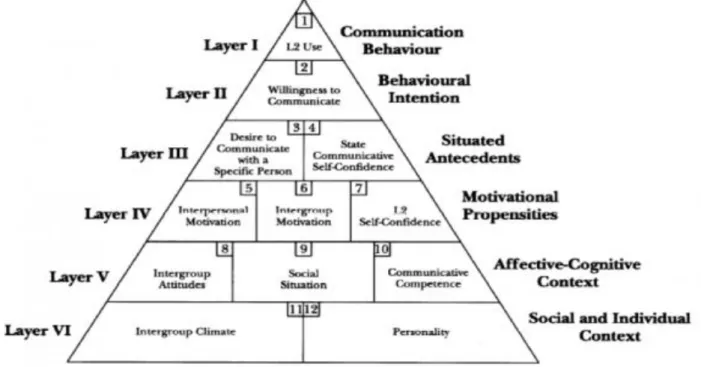
WTC may also lead to a range of affective variables namely linguistic, social, communicative and psychological factors . Accordingly, MacIntyre et al., (1998) proposed a heuristic model to present the conceptualization of WTC in an L2 communication setting:
Figure 04: MacIntyre et al’s (1998) Heuristic WTC Modal
The heuristic modal represents the different factors that affect the L2 WTC. The shape of pyramid stands for the more general to the more specific influencing factors in L2 WTC. As the figure 4 represents there are six layers of the modal, the first three layers (communication behavior, behavioral intention, and situated antecedents) represent the impact of the situation on one’s WTC at a given period of time. The other three layers (motivational propensities, affective-cognitive context, and social and individual context) indicate the impact of the fixed factors on the L2 WTC. Therefore, from the top to the bottom, the modal moves from the changeable (i.e. situation-based contexts) to the stabe affective factors in L2 communication context.
The fist layer of communication behavior which is described in a broad sense of L2 use MacIntyre et al., (1998) stated that “the ultimate goal of the learning process should be to engender in language students the willingness to seek out communication opportunities and
the willingness actually to communicate in them” (p.547). That is to say that, L2 use is placed at the climax of the model as the primary goal of second language learning. In layer 2, the willingness to communicate (WTC) is set to imply a behavioral intention, the intention which is the main reason over person’s actions in a communication setting.
The desire to interact with a specific person and state communication self-confidence are embodied under the third layer of situated antecedents, which are considered as the most immediate factors of WTC. The desire to interact with a specific person is affected by the elements of affiliation and control motives; affiliation refers to the nature of the relationship between the interlocutors. For example, people with a close relationship, their desire to interact with each others is high. While control motives can stand for the push over initiating communication. The state communicative self-confidence is suggested by Clément (1980) as a transient feeling in which the communicator feels at ease to participate in communication using L2 at a particular situation.
The motivational propensities in the fourth layer contain three elements; interpersonal motivation, intergroup motivation, and L2 self-confidence. As it was mentioned before in the third layer, affiliation and control motives are the main determinants over maintaining
communication between a person or group of persons (i.e. interpersonal motivation, and intergroup motivation). However, unlike the state communication confidence, L2 self-confidence is viewed as the “overall belief in being able to communicate in the L2 in an adaptive and efficient manner” (MacIntyre et al., 1998, p.551).
The fifth layer deals with another individual-based influential factor, the affective-cognitive context involves; intergroup attitudes, social situation, and communicative competence. Intergroup attitudes entailed by the factors of integrativeness, a fear of assimilation, and motivation to learn the L2. Integrativeness is the likely force that pushes individuals to learn a second language and the desire to integrate with the second language
identity (Gardner, 1985). Whereas, a fear of assimilation implies the fear of losing one’s own self-identity while learning the L2, hence showing less interest with the L2 community. Motivation to learn the L2 refers to the positive or negative attitude from the individuals towards the L2 itself. Another affective variable in this layer is the social situation, it describes the social environment where the communication setting takes place, that involve the interlocutors, the place, the topic, the purpose, and the channel of communication that affect individual’s WTC in L2 in a broad sense. The last variable in this layer is the
communicative competence which includes the linguistic competence, discourse competence, and strategic competence that vary from one person to another and affect his WTC in L2. The last layer of the model is the societal and individual contexts, which is concerned with the interaction between society and the individual. Mainly the intergroup climate implies the societal context in which values, attitudes of the society members help and provide
opportunities to learn and use the second language. On the other hand, personality has an indirect effect on one’s WTC. Therefore, intergroup climate and personality were placed at the bottom of the model to refer to their less direct influence on a person’s L2 WTC.
MacIntyre et al., (1998) modal is considered as the first attempt to explain and predict the influential variables on the WTC in L2, in which he extended the affective variables in L1 that have been mentioned before by McCroskey and Richmond (1984). In addition to the major role that the context plays in communication as a contextual variable, which drives the individuals to participate in communication.
2.5. WTC in EFL Classrooms
In an EFL context, the student’s willingness to communicate can be affected by unidentifiable variables, because it is hard to know why some students seek while others evade foreign language (FL) communication. McCroskey and Richmond (1991) pointed out that the personality-based variables are the main raison why certain students hold a
conversation in certain times, while others remain reticent in similar situations. Many EFL teachers have found that some students with high linguistic competence do not have the desire to use the target language for communication in the classroom, whereas the other students with only limited linguistic knowledge have greater tendency to communicate in every opportunity they have. Therefore, the intention or desire to communicate which is the
willingness to communicate (WTC) is considered as an important factor that must be present among EFL students to achieve high goals in that language.
Among the findings of the variables contributing to and reducing student’s WTC in the context of EFL classroom are the teacher’s role. Kang (2005), MacIntyre et al., (2011) claimed that a significant impact on students’ WTC is made by the teacher’s methods of teaching, attitude and involvement inside the classroom. In the same context, Wen and Clément (2003:28) indicated that at least in a Chinese EFL classroom students’ tendency and desire to initiate communication are influenced by teacher involvement and immediacy. It has also been found that students’ background knowledge about the topic, task types, familiarity of classmates affect students’ WTC in the context of EFL classrooms (Cao and Philip 2006, Kang 2005, MacIntyre et al., 2011).
As teachers are the ones responsible on how to carry out and manage the classrooms, they should seek to create an appropriate atmosphere for students so that they raise their WTC in the FL and minimize the fear of making mistakes, by providing students with more
opportunities to communicate with each others. For instance, negotiating topics, adapting successful teaching methods, focusing on the positive feedback…, MacIntyre et al.
(1998:548) emphasize that WTC alone cannot produce behavior, but there must also be an opportunity to communicate. Therefore, without opportunities for communication, students cannot do so, even if they are willing to communicate. In this way, the teacher has to