Supporting Information
for Macromol. Chem. Phys, DOI: 10.1002/macp.201700302
Phase Segregation in Supramolecular Polymers Based on Telechelics Synthesized via Multicomponent Reactions
Ansgar Sehlinger, Nikolai Bartnick, Ilja Gunkel, Michael A. R. Meier* and Lucas Montero de Espinosa*
1. Synthesis 1-Aminodocosane
A mixture of 1-bromodocosane (5.17 g, 13.3 mmol), hexadecyltrimethylammonium bromide (0.484 g, 1.33 mmol), sodium azide (2.16 g, 33.3 mmol), and water (10 mL) was sonicated at 60 °C for 4 h. The resulting emulsion was refluxed (85 °C) for 4 days. The milky reaction mixture was treated with hexane and the aqueous layer separated. After drying over sodium sulfate, the solvent was removed and 1-azidodocosane was obtained as a sticky white solid (3.36 g, 72 %). TLC (hexane) Rf= 0.44; 1H NMR analysis showed a conversion of 90 %. 1H
NMR (CDCl3, 300 MHz): į (ppm) = 0.88 (t, J = 6.6 Hz, 3 H, CH3), 1.18 – 1.48 (m, 38 H, 19
CH2), 1.60 (m, 2 H, N3CH2CH2), 3.25 (t, J = 6.9 Hz, 2 H, N3CH2).
To a solution of 1-azidodocosane (3.36 g, 9.56 mmol) in 50 mL hexane was added 10% Pd/C (0.168 g, 5 wt%). The resulting mixture was hydrogenated at 10 bar and ambient temperature overnight. The reaction mixture was hot filtered over Celite and the filtrate was put in the freezer for 2 hours. The pure product was collected by filtration and dried under high vacuum (2.75 g, 88 %). TLC (hexane) Rf= 0.10; 1H NMR (CDCl3, 300 MHz): į (ppm) = 0.88 (t, J =
6.6 Hz, 3 H, CH3), 1.06 – 1.52 (m, 42 H, 20 CH2, NH2), 2.67 (t, J = 6.9 Hz, 2 H, CH2NH2); 13C NMR (CDCl
3, 75 MHz): į (ppm) = 14.24, 22.83, 27.05, 29.50, 29.66, 29.80, 29.84, 32.07,
326.3781, found 326.3780; IR (ATR) Ȟ = 3330.0, 3165.8, 2952.9, 2914.3, 2846.3, 1609.8, 1471.6, 1461.2, 1364.5, 1058.5, 1031.4, 1007.5, 983.4, 968.7, 930.6, 918.4, 892.6, 730.0, 718.9, 521.3, 429.5 cm-1; Tm = 66 °C.
1-Isocyanodocosane
50 mL (46.0 g, 621 mmol) of ethyl formate were added to 1-aminodocosane (2.75 g, 8.45 mmol) and the reaction mixture was refluxed overnight. Then, the solvent was evaporated to obtain the product as white solid (2.93 g, 98 %). TLC (hexane) Rf= 0.05; 1H NMR (CDCl3,
300 MHz, mixture of cis/trans-amide bonds, ratio = 1:5): į (ppm) = 0.87 (t, J = 6.6 Hz, 3 H, CH3), 1.16 – 1.40 (m, 38 H, 19 CH2), 1.42 – 1.59 (m, 2 H, CH2CH2NH), 3.21, 3.29 (2q, J =
6.8 Hz, 2 H, CH2NH, cis/trans), 5.50 (br, 1 H, NH), 8.04 (d, J = 12.0 Hz, 1 H, NHCHO, cis),
8.16 (s, 1 H, NHCHO, trans); 13C NMR (CDCl3, 75 MHz): į (ppm) = 14.23, 22.82, 26.52
(CH2, cis), 26.98 (CH2, trans), 29.27, 29.37, 29.49, 29.62, 29.66, 29.70, 29.83, 31.39 (CH2,
cis), 32.05 (CH2, trans), 38.34 (CH2, trans), 41.89 (CH2, cis), 161.25 (CHO, trans), 164.69
(CHO, cis); FAB of C23H47NO (M+H+ = 354.4); HRMS (FAB) of C23H47NO [M+H]+ calc.
354.3730, found 354.3729; IR (ATR) Ȟ = 3294.6, 2953.0, 2914.3, 2846.4, 1643.8, 1534.2, 1468.6, 1378.4, 1235.3, 1220.8, 1211.4, 778.5, 718.7, 667.4, 445.8 cm-1; Tm = 79 °C.
The obtained formamide (2.90 g, 8.20 mmol) was dissolved in dichloromethane (25.0 mL) and diisopropylamine (5.79 mL, 4.15 g, 41.0 mmol, 5.00 eq.) was added. Then the reaction mixture was cooled with an ice bath to 0°C and, subsequently, phosphorus oxychloride (1.07 mL, 1.76 g, 11.5 mmol, 1.40 eq.) was dropped to the strongly stirred solution. The mixture was allowed to reach room temperature and stirred for two hours. The reaction was quenched by addition of a sodium carbonate solution (20 %, 25 mL). After thirty additional minutes dichloromethane (100 mL) and water (100 mL) were added. The organic layer was separated, dried over sodium sulfate and then evaporated to dryness. The crude isocyanide was purified
by flash chromatography (hexane/ ethyl acetate 30:1) to obtain a white solid (1.94 g, 71 %). TLC (hexane/ ethyl acetate 30:1) Rf= 0.38; 1H NMR (CDCl3, 300 MHz): į (ppm) = 0.88 (t, J
= 6.6 Hz, 3 H, CH3), 1.15 – 1.35 (m, 36 H, 18 CH2), 1.37 – 1.52 (m, 2 H, CH2CH2CH2NC),
1.60 – 1.76 (m, 2 H, CH2CH2NC), 3.32 – 3.42 (m, 2 H, CH2NC); 13C NMR (CDCl3, 75 MHz):
į (ppm) = 14.22, 22.81, 26.44, 28.83, 29.25, 29.49, 29.63, 29.73, 29.82, 32.05, 41.65 (t), 155.82 (t); FAB of C23H45N (M+H+ = 336.4); HRMS (FAB) of C23H45N [M+H]+ calc.
336.3625, found 336.3627; IR (ATR) Ȟ = 2911.9, 2847.1, 2149.2, 1470.9, 1350.7, 926.4, 716.1, 549.8 cm-1; Tm = 50 °C.
1-Isocyanooctadecane
20 mL (18.4 g, 248 mmol) of ethyl formate were added to octadecylamine (5.80 g, 21.5 mmol) and the reaction mixture was refluxed overnight. Then, the solvent was evaporated to obtain the product as white solid (6.40 g, quant.). TLC (hexane / ethyl acetate ) Rf= 0.48; 1H
NMR (CDCl3, 300 MHz, mixture of cis/trans-amide bonds, ratio = 1:4): į (ppm) = 0.87 (t, J
= 6.6 Hz, 3 H, CH3), 1.17 – 1.41 (m, 30 H, 15 CH2), 1.41 – 1.59 (m, 2 H, CH2CH2NH), 3.20,
3.29 (2q, J = 6.8 Hz, 2 H, CH2NH, cis/trans), 5.57 (br, 1 H, NH), 8.03 (d, J = 12.0 Hz, 1 H,
NHCHO, cis), 8.16 (s, 1 H, NHCHO, trans); 13C NMR (CDCl3, 75 MHz): į (ppm) = 14.10,
22.70, 26.42 (CH2, cis), 26.91 (CH2, trans), 29.17, 29.29, 29.38, 29.46, 29.51, 29.58, 29.62,
29.68, 29.73, 31.16 (CH2, cis), 31.95 (CH2, trans), 38.28 (CH2, trans), 42.07 (CH2, cis),
161.64 (CHO, trans), 163.62 (CHO, cis), 165.16 (CHO, cis); FAB of C19H39NO (M+H+ =
298.4); HRMS (FAB) of C19H39NO [M+H]+ calc. 298.3104, found 298.3106; IR (ATR) Ȟ =
3292.4, 2952.9, 2913.9, 2866.9, 2846.5, 1709.1, 1643.2, 1534.9, 1467.9, 1377.4, 1249.2, 1230.7, 1215.5, 1204.8, 778.0, 718.9, 666.4, 483.5, 421.5 cm-1; Tm = 68 °C.
The obtained formamide (6.00 g, 20.2 mmol) was dissolved in dichloromethane (60.0 mL) and diisopropylamine (14.2 mL, 10.2 g, 101 mmol, 5.00 eq.) was added. Then the reaction
mixture was cooled with an ice bath to 0°C and, subsequently, phosphorus oxychloride (2.63 mL, 4.34 g, 28.3 mmol, 1.40 eq.) was dropped to the strongly stirred solution. The mixture was allowed to reach room temperature and stirred for two hours. The reaction was quenched by addition of a sodium carbonate solution (20 %, 60 mL). After thirty additional minutes dichloromethane (250 mL) and water (250 mL) were added. The organic layer was separated, dried over sodium sulfate and then evaporated to dryness. The crude isocyanide was purified by flash chromatography (hexane/ ethyl acetate 10:1) to obtain a white solid (4.69 g, 83 %). TLC (hexane/ ethyl acetate 9:1) Rf= 0.62; 1H NMR (CDCl3, 300 MHz): į (ppm) = 0.88 (t, J =
6.6 Hz, 3 H, CH3), 1.16 – 1.36 (m, 28 H, 14 CH2), 1.36 – 1.53 (m, 2 H, CH2CH2CH2NC),
1.59 – 1.75 (m, 2 H, CH2CH2NC), 3.33 – 3.42 (m, 2 H, CH2NC); 13C NMR (CDCl3, 75 MHz):
į (ppm) = 14.20, 22.79, 26.43, 28.82, 29.24, 29.47, 29.62, 29.71, 29.80, 32.04, 41.64 (t), 155.85 (t); FAB of C19H37N (M+H+ = 280.3); HRMS (FAB) of C19H37N [M+H]+ calc.
280.2999, found 280.3001; IR (ATR) Ȟ = 2910.4, 2846.6, 2151.6, 1470.8, 1447.6, 1337.2, 1350.8, 1141.9, 986.5, 954.7, 889.6, 851.8, 827.5, 716.4, 549.7, 468.0 cm-1; Tm = 35 °C.
Figure S1. 1H NMR spectrum (CDCl3) of the commercial hydroxyl-terminated
poly(ethylene-co-butylene) telechelic used in this study.
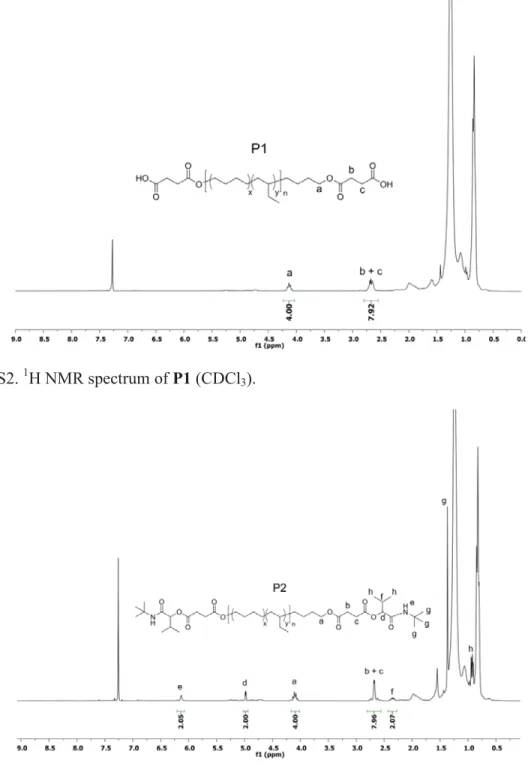
Figure S2. 1H NMR spectrum of P1 (CDCl3).
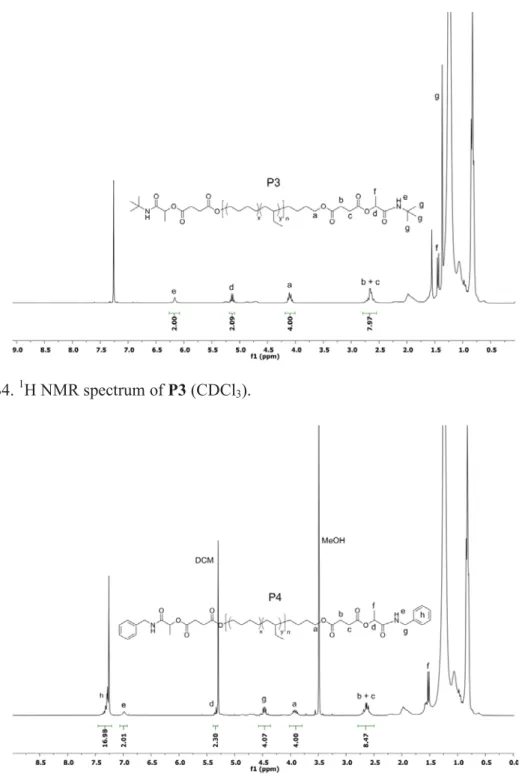
Figure S4. 1H NMR spectrum of P3 (CDCl3).
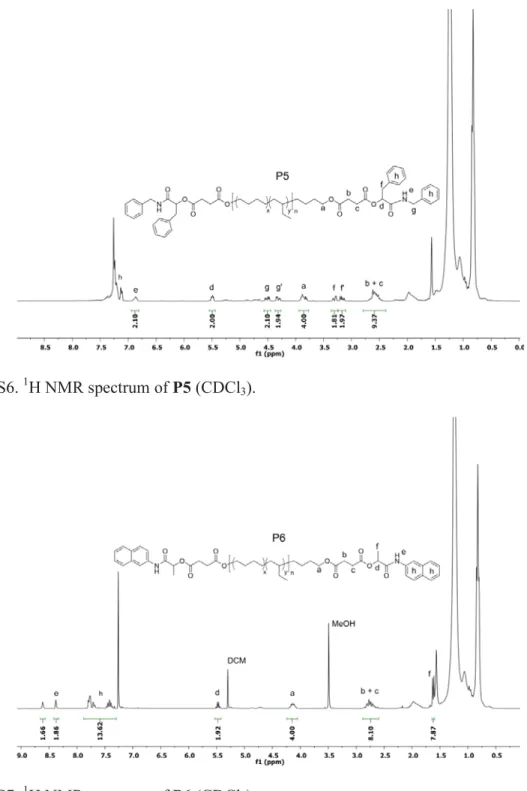
Figure S6. 1H NMR spectrum of P5 (CDCl3).
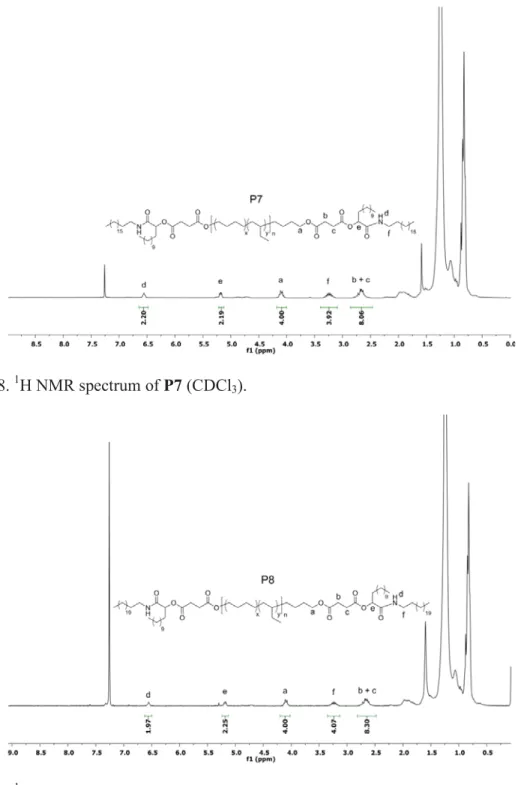
Figure S8. 1H NMR spectrum of P7 (CDCl3).
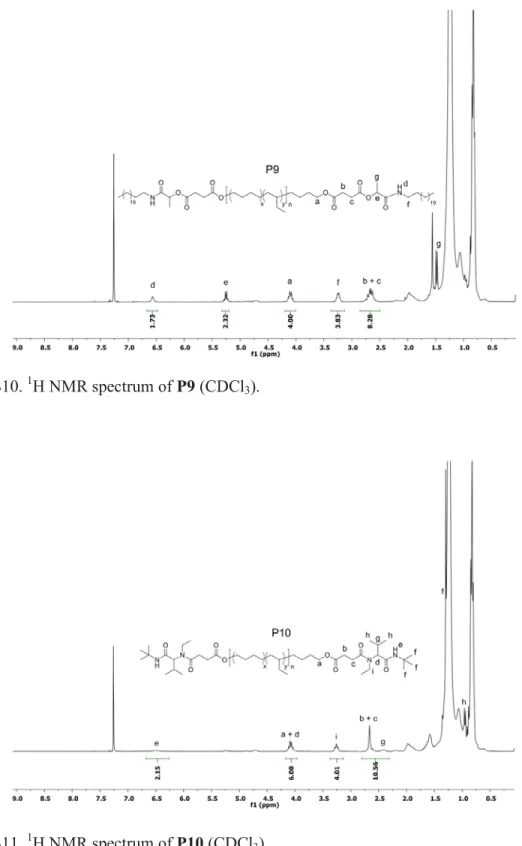
Figure S10. 1H NMR spectrum of P9 (CDCl3).
Figure S11. 1H NMR spectrum of P10 (CDCl 3).
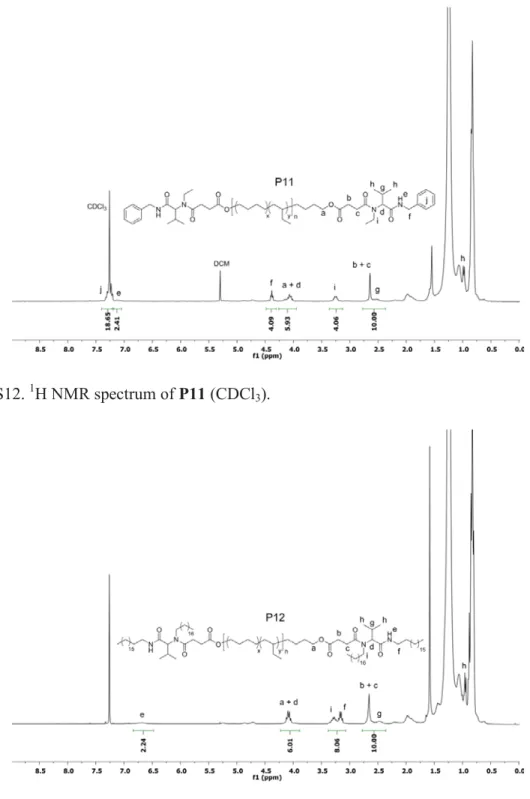
Figure S12. 1H NMR spectrum of P11 (CDCl3).
3. SEC traces
Figure S14. SEC traces of carboxylic acid terminated PEB P1 and telechelic PEBs synthesized via Passerini and Ugi MCRs.
4. AFM
Figure S15. AFM phase image and profiles extracted from the numbered regions (white lines labeled as 1, 2, 3, and 4). Based on the profiles the spacing of the fibril-like features can be estimated to у 11 ± 2 nm.