UNDERSTANDING A TEACHER’S KNOWLEDGE OF
CLASSROOM COMMUNITY
JOHN BARNETT University of Western Ontario
GERALD FALLON Malaspina University College & British Columbia School District 68
ABSTRACT. Using primarily online interaction, we worked with a grade one teacher to help her develop an understanding of community in her own class-room. Using an interpretive interactionist methodology, we theorized four domains in her view of classroom community: trust, membership, power, and capacity. The teacher’s perceived success in creating community suggested the development of an adaptive community coming from a newfound ability to negotiate the contradictions inherent in each domain.
COMPRENDRE LA CONNAISSANCE QU’UNE ENSEIGNANTE A DE LA COMMUNAUTÉ FORMÉE PAR SA CLASSE
RÉSUMÉ.Par le truchement principal de sessions interactives en ligne, nous avons aidé une enseignante de première année du primaire à perfectionner sa compréhension de la communauté formée par ses élèves. Selon une méthode interactioniste interprétative, nous avons élaboré une théorie axée sur quatre volets d’interprétation de la communauté formée par la classe : confiance, appartenance, pouvoir et capacité. Le succès que perçoit l’enseignante sur le plan de la création d’un esprit communautaire suggère la mise sur pied d’une communauté adaptative issue d’une nouvelle capacité à traiter les contradic-tions inhérentes à chaque volet.
Introduction
I
n August, 2003, three of us, a teacher, her former principal, and an edu-cational researcher met to discuss a problem. The teacher had created a multi-media project in her grade one classroom to teach reading to six-year-old boys in a private school. However, she was sure that her prior teaching tactics did not work well because they did not cope easily with the student ownership required by the project. The teacher asked her former principal to help with the problem. He suggested that they meet together with an educational researcher.At the meeting, the teacher told the others about her project, in which students collaboratively created a story and then she uploaded it to a web-site. The teacher-researcher’s website was a showcase of high technology. Incorporating Macromedia Flash© programming, the website was highly graphic and displayed many photographs of children working on projects as well as pictures created by the children to illustrate the stories they had written. These were accompanied by audio files of children reading the stories. Animation, in the form of page turning as each story progressed, was synchronized with the children’s reading of the story. Finally, an extensive section of the website was devoted to the strategies used by the teacher, the documents she used, and the theory underlying her strategies.
As the project had progressed, she had noticed a gradual shift in the learning environment. The landscape had blurred between one in which instruction was situated in topic areas to one situated in real-world contexts, such as what would fit the website. The new environment was beginning to resemble a learning milieu in which students were acting less like “objects” of teaching and more like learning “participants.” The activities, we inferred, required fundamental change in the core processes and organizational culture of the classroom because the shared learning tasks required that the students learn to work together, resolving conflicts. The typical strategies of teacher-centred lesson planning, triadic dialogue, and student assessment were constraining the educational possibilities of her project. As she said, “I believe that [with] some of the ways I teach I’m limiting the growth of the students if I’m too directed. But without any directions…” The implied question emphasized her need to develop greater knowledge of strategies to encourage collaborative inquiry driven by her students’ questions and capacity levels. The question was: How does she conceptualize and understand the way that her classroom might function in this new learning environment?
This article thus is not an attempt to describe the emergence of a learning community by direct observation. Rather, it attempts to derive an under-standing of how, and to what extent, the teacher-researcher developed her own knowledge base about learning in that emerging community.
Design and methodology
The principal suggested that a “community of learners” approach might be helpful in solving the teacher’s problem if he and the researcher could work with the teacher. The researcher likened the effort to developing a more sophisticated professional knowledge landscape (Clandinin & Con-nelly, 1995). The teacher would be a teacher-researcher while the principal and researcher would be researchers in a reflective action process (Schön, 1983) beyond the “contrived collegiality” noted by Hargreaves (1993). It was agreed that the researchers would ask the teacher-researcher critical
questions, using their perceptions of what was going on. However, due to distance, all research would be conducted electronically.
Interpretive interactionism (Denzin, 1989, 2002) was chosen as the qualita-tive research framework because it combines elements of symbolic interac-tionism with hermeneutics and ethnography. Thus it enabled us to better share, understand, and interpret the classroom (and lived) experience of the teacher-researcher through the lenses of our three individual lived ex-periences. In so doing, we were led to share and value our personal teacher stories. The approach was therefore conducive to creating a small research community to help us better understand the nature of classroom community development. It allowed us to be sensitive to the high stress situation that the teacher-researcher found herself in and allowed the authors to take a standpoint yet still analyze the data with rigour.
Methodologically, we employed bracketing to critically examine the struc-tures of classroom, school, and online environment as equal co-researchers, taking into account that the authors were male and the teacher was female. We read and re-read the data until structures became visible that were then critically examined in the next week’s online chat. We then arranged those elements against a few pre-selected elements until a pattern emerged that helped to connect them together. Finally, we located the patterns in the context of the teacher-researcher’s teaching situation to better understand her motives, feelings, and intentions from her own perspective. The data for each source (chat, journal, documents, and website) was compared to that from the other sources to expose commonalities and differences and to derive meaning.
The research process took place from September, 2003, until late February, 2004. The teacher was teaching grade one in a private school. During this period, the teacher-researcher related to the researchers her evolving un-derstanding of the facets of “community” that she was attempting to enact. The perceived classroom situation was theorized in a collaborative process of reflection-on-action (Schön, 1983). Problems were solved, meanings were made, and frameworks were created and dismantled together.
The data included eleven regular (generally weekly) synchronous electronic one-hour chat sessions, six months of collected electronic mail messages, twenty-three reflective journal writings, more than one hundred pages of the multi-media website, a two-hour semi-structured interview, and ten teaching and classroom documents.
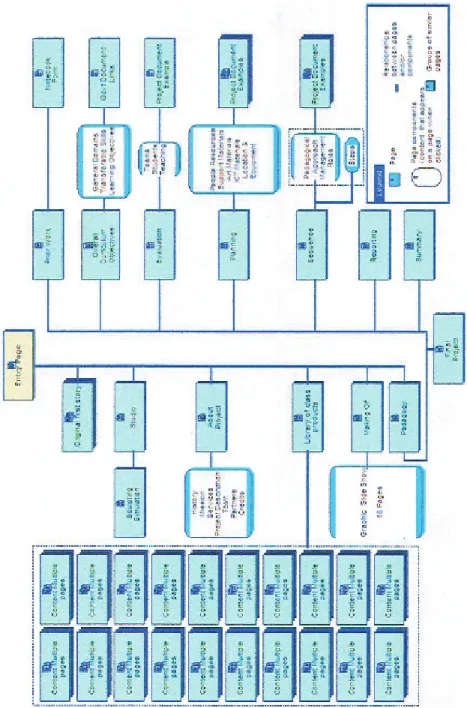
Analysis of the highly detailed pedagogy of the multi-media website (See Figure 1), described later, provided some confirmatory data on interdepen-dency in small work groups, collaboration with outside experts, and some responsibility for shared learning. The sheer size of the web site told us
that the project and its products were extremely important to the teacher-researcher and its analysis provided us with another analytical lens. The study concluded with a semi-structured interview between the teacher and one of the researchers.
Together, these data provided rich descriptions of events. Using Atlas ti v 4.2, the researchers qualitatively analyzed each type of data in relation to five pre-selected domains of study. These were: trust, knowledge, student learning, managing, and organizing. However, some of these, such as student learning, were not fruitful and were replaced by others, such as capacity, that helped to better explain the data during analysis. In this process, new codes were added and defined specifically by each researcher when coding the data alone. The two researchers met and compared their sets of codes. Where differences existed in the codes or the coding, the meanings and definitions of individual codes were negotiated until the researchers could agree. At this point, the researchers added codes that did not appear in the data in order to create a theoretically congruent and complete framework of ideas with the view that what was not expressed may also have been important. In this way the final set of codes was created.
The website was analyzed descriptively. Each webpage that comprised the website was analyzed as to its content and its purpose. Then the overall website was analyzed according to the domains that had emerged from the text data (teacher’s journal, research chats, interview transcript, and so on). Specifically, the researchers looked for triangulatory evidence throughout the website that the activities and documents described by the teacher were, in fact, carried out.
The unit of analysis throughout was the “thought” – that section of text that dealt with one primary idea. A thought could be as short as a single sentence, “I find problem solving requires creativity,” to a complete paragraph:
I had an idea... in two weeks, I’m meeting with the class mom. She’s in charge of coordinating the parent volunteer committee of my class. What I’m thinking of asking is if a parent could coordinate questions, input or any kind of natural feedback that could come from the parents so we can share our learning, someone to gather information, write a parent journal of thoughts.
We set about building our researcher community by getting to know each other’s backgrounds, professional interests, and life situations. Each chat session began with community time, sharing what was happening in our respective lives and how we were making sense of the project. We defined what we collectively meant by community, the values that we held in com-mon, and the ways that we would interact. We also decided that we did not want to sell one idea of community but rather develop our collective understanding of its nature.
We decided that the researchers would raise issues about all aspects of the classroom community, code the resulting data, read, share, and organize the relevant literature, as well as publish the results. The teacher-researcher would try to develop trust and leadership through collaborative rule making, liaise with school staff personnel, and raise issues that arose in the class with the researchers. However, she did not want to be involved in writing up the results and stated unequivocally that she, her school, and her website must remain anonymous.
To ensure that her voice is heard without endangering her anonymity, and to allow the reader to judge for her or himself the nature and depth of the evidence, we have included extensive quotes and analyzed the multimedia website.
Theoretical basis of teachers’ knowledge of learning in community
This study examined a teacher’s evolving understanding of what classroom community meant to her. Hence, it involved the change in her teacher’s knowledge of her classroom. Teachers and their knowledge make up one of the four important components of any learning milieu (Schwab, 1969). Teachers employ knowledge as if it were a personal database that they can call upon in various ways and at various times to meet whatever situations arise. Personal construct theory (Kelly, 1955) is a useful theoretical basis to understand such knowledge. People search for meanings to make sense of personal experience and to try to control their destiny. Even though we cannot directly touch reality, we construct mini theories (Claxton, 1990) personal to ourselves that help us to explain and hence direct our own fate. Teachers use such theories in their working lives. This theoretical knowl-edge was alluded to by Stenhouse (1975) when he claimed that, to engage in meaningful professional development, teachers should engage in critical reflective research and thus develop their knowledge.
Further groundbreaking work of a number of authors (Connelly & Clandinin, 1985; Lampert, 1985; Schön, 1983; Shulman, 1987) has articulated the notion that teachers’ knowledge is complex, mulitifaceted, and constitutes theory. Elbaz (1981) coined the term “practical knowledge,” Shulman (1986) “pedagogical content knowledge” (PCK), and Schubert (1992) “teacher lore” attempting to unpack the complexities of teachers’ knowledge. Interest in understanding teachers’ knowledge continues to the present (Barnett & Hodson, 2001; Barrell, 1995; Carter, 1990; Garrahy, Cothran, & Kulinna, 2005; Welker, 1992).
Teachers’ work, though often conducted alone with their students in class-rooms, is nevertheless social (Bell & Gilbert, 1992). Ross, Cornett, and McCutcheon (1992) say that teachers theorize professionally when talking to each other outside the classroom about teaching. Teachers’ knowledge,
even when based in individual reflection, is always enacted within munity (Schubert & Ayer, 1992). However, teachers’ knowledge in com-munity can be enacted in a broader context than professional comcom-munity because they have membership in any community that they create within their classrooms. In this study we considered ways to examine “community” to reflect on the developing knowledge of the teacher-researcher about her classroom community.
From a cognitive viewpoint, there is abundant literature about the benefits of building a sense of community (McGilly, 1994; Mitchell & Sackney, 2000). For example, students in schools with a good sense of community are more likely to be academically motivated, have better on-task behaviour, and act more altruistically (Battistich, Solomon, Watson, & Schaps, 1997). Many researchers and educators hold the view that the most important reform needed in education is “to make schools into better communities of caring and support for young people” (Hargreaves, Earl, & Ryan, 1996, p. 77). However, the data are mixed that community can be facilitated with early elementary students (Horn, Karlin, Ramey, Aldridge, & Snyder, 2005). McMillan (1996) suggested that community consists of four dimensions: (a) spirit – i.e., membership/belonging; (b) trust – i.e., confidence in community norms; (c) trade – i.e., mutual benefit; and (d) art – i.e., emotional connection. We were drawn towards Sergiovanni’s (1999) theory of community with its notions of reflection, development, conversation, caring, and responsibility. However, there are varied tasks to be performed (Tomlinson & Callahan, 1997) in community and the diversity of its members should be enriching. In an effective community of learning, we contended, there are varied roles and tasks which stem from respect for students’ diversity.
Our evolving understanding of learning in community
Our model focused on “classroom community” (Cibulka & Nakayama, 2000), an educational setting whose primary purpose is learning based on a set length of time rather than “school community” (Rovai, 2001). As we strategized teaching tactics to foster classroom community, we slowly developed a shared vision of what it meant. Informed by the notions of Rousseau, Dewey, Piaget, and Vygotskii (Woods, 1999), community, as we conceptualized it, included all as teachers and all as learners in a shared environment of democratic leadership. Community rested upon recogniz-ing the elements of commonality. The most important consequence was a feeling of belongingness (Osterman, 2000).
However, struggle and conflict are also part of many human relationships. Community is, therefore, a paradoxical experience. It is about difference as much as unity in its purposes, values, and practices. It is about conflict and harmony. So communities are formed around diversity and exclusivity, but
must struggle with maintaining the cohesion that gives the sense of being in community. We hypothesized these tensions as a celebration of plurality not unity. Thus, as we understood the dynamic nature of community, we envisaged a model underpinned by social constructivism (Vygotskii, 1978), in which the members actively construct their knowledge through their interactions with each other. We postulated that students would work co-operatively together, on authentic tasks, negotiating their understandings, sharing their ideas and responsibilities, and collaborating with outside experts (Crawford, Krajcik, & Marx, 1999).
In addition, we also saw learning communities as chameleon-like and func-tioning as “adaptive” or “generative” (Irwin & Farr, 2004). Whilst being adaptive, communities create collective learning as responses to policies and/or pedagogies framed outside their membership. In this mode, learning communities are both seen and used as management tools. They improve collaboration and work within “power-over,” “top-down” dynamics. However, participants do not join on terms of their own choosing. In contrast, when communities are functioning as “generative,” they emphasize continuous experimentation and feedback. Their members define and solve their own problems, thus generating collective knowledge. They are empowered by having voice, defining their learning needs and generating relevant col-lective knowledge within “power-with,” non-hierarchical dynamics. Such learning communities emerge from the choices made by their members to affiliate with one another.
Thus, adaptive and generative learning communities can be distinguished from each other by the degree to which their members are empowered to make meaningful choices. This distinction is useful in understanding the different educational purposes and functions of classroom learning communities. RESULTS
We had started with a large number of potential domains of community – capacity, spirit, trust, trade, art, belongingness, reflection, development, conversation, caring, responsibility, and tasks, but found that from this large array only four domains of community emerged in our data from the teacher-researcher’s descriptions. These were trust, membership, power, and capacity.
Trust
The first, and arguably the most important, of the domains described by the teacher was trust (Bryk & Schneider, 2003). Three dimensions of trust emerged in her understanding: climate, self-trust, and trust in others. CLIMATE. The first dimension centred on the climate of trust. This was the teacher-researcher’s goal from the beginning: “My first objective in September,
when I meet the students, is to develop a climate of trust with them, with the parents, with my colleagues and the administrators” (Teacher’s journal 13/9). She noted that this climate had to be developed, “in the school, with administrators and teachers, and with the parents.” She knew the central role of trust in facilitating the emergence of community: ”I would like the community to be driven by a different force than power: acceptance, trust, sharing” (Chat session 15/10). She went on: “just to say that my thinking, right now, is that building a community is building trust BUT… building trust
is taking risk” (Chat session 12/11). She also knew that this trust was not automatic: “that is probably the first obstacle I encountered when we started chatting [in our research group]. When I got my children or the parents in … the obstacle was building trust” (Chat session 29/10). She described developing a climate of trust through various activities with her young stu-dents, by “discussing the rules with the children. In the classroom, we have been discussing our mutual expectations, classroom rules, routines and all the values and reasons underlying our decisions” (Teacher’s journal 25/9). TRUST IN SELF. To develop this climate, one must also have trust in oneself. As the teacher-researcher wrote, “Giving trust is very difficult, especially when you’re not too confident, you’ve been hurt and don’t know how to express your own limits and openness” (Chat session 12/11) . She noted that, “To feel competent, you need to have trust in what you believe, but remain open to other ideas” (Chat session 15/10). At another point she described trust as the “ups and downs” of personal growth something like a spiral within a frame: “When I use this image, it is to communicate to people a personal belief that we can act on our life; it is just a question of perception and trust and acceptance” (Chat session 15/10). Thus she linked trust with growth.
TRUST IN OTHERS. The third dimension is trust in others: “In order to col-laborate, you need to trust: Trust yourself to not be perfect. Trust that oth-ers will accept you, even if [you are] different” (Chat session 15/10). She stated a personal truth, “When you want to start a relationship, you need to build trust” (Chat session 29/10). Of course, relationship is at the heart of community.
The teacher-researcher summed up trust:
I focused on building trust, on getting to know the students, on making sure that the students would not feel threatened … and [by implicitly saying], “We are not going to judge you.” ... I focused on knowing the students to make sure that they all participated in our journey and nobody [thought himself] better than others. (Teacher interview 21/2)
The dialectic strategy that she needed to employ was building trust in herself as she accepted it from others, all the while accepting that such trust must be questioned. She made efforts to establish trust to create an environment in which members of the learning community felt safe to share.
Membership
The second domain was membership. There is no community without members. Thus, community must be built by taking into account the needs of each member. As the teacher-researcher said, “I think the first thing is building confidence, setting mutual expectations, limits, interests, talents and needs” (Chat session 29/10). There were two dimensions of member-ship in her narratives: belonging and types – whether core or peripheral – of membership.
BELONGING. A key component of membership was a sense of belongingness: “Being part of a community is taking risks, feeling supported by it, and feel-ing safe to [do thfeel-ings]’’ (Chat session 12/11). She said:
Almost all of the students seem to be part of the community. [They are] feeling happy to be caring about [each] other, being respected for who they are, and feeling that they can trust us…. Is it important that everybody feels that they belong? Is it my role as a teacher? I would like to have everybody [feel] part of the community and [I want] to find a way to include them into the community; to help them perceive that, if there is something that keeps them from taking part, we can remove it and include them. (Teacher interview 21/2)
Obviously, membership in a community is not based on completely harmoni-ous relationships. Members of a community can disagree and this contention in itself can help to build the community. She wrote, “Everything becomes part of that journey of self reflection, experimentation, learning, interacting differently and feeling good!” (Chat session 15/10).
The website contained abundant evidence that belongingness was fostered. Every multi-media project began with its title spoken aloud by the class. A check of the class list against tasks performed showed that every student took part and that all jobs were valued.
Community for her was not the lack of contention but rather the ways that differences were settled and negotiated. “I believe community can be bad if difference is not accepted and if being part of that community requires one to think and be like the others” (Chat session 15/10).
TYPES OF MEMBERSHIP. We found different levels of membership within the community she described and called these levels “core” and “peripheral” (Hogan, 2002). Core members were those who had to be present for the community to function and peripheral members were those who did not. Membership was equitable but members held different responsibilities. In this community, the teacher-researcher and the students comprised the core membership and the parents, the school administration, and other teachers were peripheral members.
As the teacher-researcher said:
This idea of core or peripheral members of this community brings me to make another relationship with the responsibility one may have. I consider myself and the students to be core members, but we have different kinds of responsibilities within this community. The parents are peripheral members, although some parents share a responsibility similar to the teacher’s role: guiding, putting in place learning conditions, evaluating and assessing. (Teacher’s journal 9/12)
Parents remained peripheral members for the most part in this community. However, some parents became very involved in the classroom as outside “experts” in the classroom process: “I got parents to come in the class as experts, (professional artist, film maker, composer, web designer, graphic de-signer, etc....)” (Chat session 10/9). This is echoed by the pedagogical model in the website that claims that allowing many teams to work simultaneously requires more supervision than one person can provide; thus parents are asked to participate.
The website supports the core and peripheral claims that we have made. The teacher is the centre followed by students, with parents on the periphery where they are called on only at two points (to help with audio recording and to witness the final results).
The dialectic that she had navigated was in accepting that membership is not the same for all members; that membership is dynamic and can change; and that membership does not preclude conflict.
Power
Power is inherent in all forms of human relationships. In a democratic com-munity of learners, power relationships enable the marginalized to construct countervailing power to dominant institutions through the acquisition of reliable knowledge. Empowerment and capacity development are therefore two of the ultimate objectives of community.
Power issues emerged in her narratives in various ways: sources, shared leader-ship, and tension. We saw evidence of the sources of power, the uses to which power was put, the organization and management of the teacher-researcher’s power and the tension that arises from the interplay of power. We noted the use of “power-with” as a form of democratic community power versus the “power-over” form of hierarchical social control. However, “power-with” did not work in every situation. Even with the use of “power-with,” there was still resistance, even amongst the six-year-old students.
One place where one can see power is in assessment. The evidence of self-assessment in the multi-media website showed that students were asked to take greater responsibility for themselves and for their team members than in a traditional class. In the assessment documents on the website,
coopera-tive skills such as participation, listening, taking turns to speak, expressing one’s own ideas, and helping others were shown in both self-assessment and peer-assessment forms. However, another document showed a workbook-like form that had designated tasks, such as putting words in alphabetic order. Thus there seemed to be a balance between the facilitation of community and the use of a very traditional pedagogy.
SOURCES. There were obvious sources of power in the teacher-researcher’s knowledge landscape (Clandinin & Connelly, 1995). Like many teachers, the teacher-researcher already had a sense of power. However, she realized that the use of power is costly: “Power is there. When I use it to control my class, my energy goes down fast. I use it when I’m tired. I want to get straight to the point or to finish something” (Chat session 15/10). However, she perceived that the misuse of power can be negative in a community: “Leadership, control, power, is the second main obstacle [in creating com-munity]” (Chat session 29/10). The teacher-researcher summed up her understanding of the sources of power in a journal entry:
The relationship of authority and power, observed in my classroom, tells me more about how to create a community of learners. The challenge here is to base this relationship upon natural authority, rather than position in a hierarchy. (Teacher’s journal 9/12)
SHARED LEADERSHIP. She also realized that power operates differently in a democratic community of learners: “It seems to be better when the leader-ship is not the monopoly of one powerful person, a strong personality.” She recognized various ways that power played out in the classroom. Carefully observing the behaviour of students she noted, “Enthusiasm is a very easy way to see how the power is circulating” (Chat session 15/10). Obviously, students who are enthusiastic have a sense of personal power. Another in-teresting observation concerned the need of some students to seek power: “Some children seem to look for power when what they might need is at-tention” (Chat session 15/10).
TENSION. Power is intimately tied to conflict. Different individuals have different and conflicting needs and/or wants and thus, in a democratic com-munity, there will be contention for power. She expressed this dynamic in different ways:
Most of the time, it is that we’re doing an activity they don’t feel like do-ing…. D wants to help instead of doing our stuff…. A likes to be engaged in a highly intellectual exchange or else he is not very focused…. B, he doesn’t always understand…. E doesn’t like to learn to read and write because that is challenging for him. (Chat session 15/10)
An incident near the beginning of the year showed the teacher-researcher using a traditional tactic to deal with behaviour problems:
Since the beginning of the year, I observed some conflict and children not being able to focus when they sat one beside another, at their desks…. Unfortunately, I had to change two boys who were not concentrating but were disrupting the rest of the group. I moved them closer to the front of the classroom, where I usually stand, correcting the students’ work and helping them. It works better now. (Teacher’s journal 26/9)
Later in the year, a conflict amongst students occurred over a game and its resolution illustrated how she felt that community had developed:
Usually, when they fight, it’s because they disagree on the rules or some-body is taking over the rest of a group, or an individual. Five boys in my class were playing together and started fighting over a game. There was G, B, H, A and J. The five of them are very positive leaders and it was hard to come to an agreement. They moved away from me to continue their discussion....
When we came back into the classroom, we had a class meeting. The children identified two problems: one was the difficulty of finding a name [required for the game], the second was G being “bossy.” They received suggestions [from the class] like picking the name from a hat, picking a student who would choose the name that day, or be the leader that day. Some children offered to help in solving the problem. (Teacher’s journal 27/10)
The method of negotiating the resolution exemplified her negotiating the dialectic of democracy and de jure leadership in an adaptive community. She called the class meeting. She allowed the other students to give input that challenged the conflicted group. She told the group to consider the sugges-tions. However, the community was supported and all had a voice.
None of the tension and conflict destroyed the community in her view. In fact, her account of the overall experience suggested that the community functioned well:
It was amazing to see already how much they take charge. Picking up the huge mural paper roll, unrolling it on the floor, cutting it, going around the paper, distributing the pastels amongst themselves and working together, hands on the paper, mixing colours, helping up to clean. All that, without much supervision. I was really part of the group, a member. I really felt the initiative was shared amongst leaders, and [the] other children were cooperating. No discipline, just fun! (Teacher’s journal 21/10)
Democracy was a key:
Yesterday, as we were having our class council meeting, I suggested that, besides identifying problems and finding solutions, we could also take the time to congratulate the class or someone for something good. I told them how much I like teaching them and I’m looking forward to hearing their stories and adventures. I thanked them for their great team work. As we were circulating the “microphone” around the circle, most of them said positive things, agreeing on what I said. G said: “I would like to thank the class because they are kind to me.” Two boys talked about problems: one
was about sharing the pastels in the art class, the other was about listen-ing to instructions in the science class. It was interestlisten-ing to see that now the difficulties identified by the children seem to occur outside the class. (Teacher’s journal 21/10)
Thus, it may well be that some conflict is helpful in setting up tension for change as long as the resolution of that conflict is done in ways that support democratic community leadership and the growth of the members’ capacity. The teacher thus negotiated the dialectic of power – using it to give it away. Capacity
Capacity is the ability of a person or a group to carry out those activities that they need to do. Capacity development in a group is, therefore, a non-hierarchical participatory process that enables people to analyze their life-worlds, plan their actions, and monitor and evaluate the results. The development of capacity is a process of multidimensional learning. The change involves generating knowledge and developing skills needed to un-derstand and function effectively within a social institution (Bolger, 2000; Eade, 1997; Lavergne & Saxby, 2001).
PERSONAL. Personal capacity is a set of core abilities, such as working pro-ductively, communicating effectively, and acting responsibly that relate to a person’s creativity, resourcefulness and ability to learn, adapt, and respond effectively to challenges. Mitchell and Sackney (2000, p. 31) have called it “active change in both cognition and practice … [that] requires the edu-cator to move from reflection and analysis (deconstruction) into action (reconstruction)” whilst learning and applying new skills and approaches on a continuous basis (Lavergne & Saxby, 2001).
The teacher-researcher saw it this way:
…looking at my reality through new lenses while I was teaching, I was looking at a different perspective but I felt limited by my own perspective. By taking part in this research, my expectation was to understand more [about] how I can change my approach, change my role, change my ways of acting in the classroom, to achieve a better [system], like a community of learners in which each child has his own place and it is not directed by me, as much. (Teacher interview 21/2)
Through the multi-media project, the teacher-researcher perceived that she had extended her personal capacity by engaging in active change in cogni-tion (refleccogni-tion and analysis of current practice) and skill (improvements and changes in her own practice). She asked, “Why would it be a better benefit for the students to be part of a community of learners? It’s probably accepting and valuing differences, learning from others as they are different, and adding to our own and our partners’ experience” (Teacher’s journal 13/9).
INTERPERSONAL. Interpersonal capacity refers to the collegial relations that foster collective learning. As people “work together on shared purposes, they take individual and collective responsibility for the well-being and learning of others, and they operate in a spirit of mutual respect and psychological safety” (Mitchell & Sackney, 2004, p.14). In other words, it is the ability of a group to become a successful organization with an organized structure that takes advantage of the knowledge and experience that individuals and com-munities have (Addleson, 2003). Interpersonal capacity building is explicitly mentioned in the website. It is also implicit in the emphasis on team work at many other places in the website. Personal capacity is implied in words used in the documents, such as “autonomy” and “interdependence.” Capacity building was also implied in an event noted by the teacher-researcher in which the community maintained itself without her direction:
Recently, I went through a hard phase within the community…. Usually when something happens, like a crisis, I kind of manage the whole thing but this time I felt overwhelmed. A group of children got together and they managed the crisis. I would say almost all the students together did things in order to get back on track, to continue to learn and have fun together. They demonstrated that they care for the well being of their own community. They care about me. They care about their relationships with others that they have been building since the beginning of the year. So I think this has been the big shift and I think when you have those kinds of interactions, you also develop those relationships, and the foundations are more solid. I think that instead of learning being just intellectual, it is more of a transformation of the students and myself – not just temporary learning. (Teacher interview 21/2)
Capacity, like the other aspects of community we found, was also dialectical. She had to develop her own personal capacity to support the interpersonal capacity of her community.
Website evidence
There is no doubt that the teacher-researcher believed that community had been established at least in some emerging form. But the researchers had to ask: which form? The website provided triangulatory evidence that a mostly adaptive learning community had developed. Although the teacher-researcher said that students shared some power and participated collaboratively in creating a product, they seemed to have generated mostly collective pro-cedural knowledge within teacher-initiated projects. For example, in the exposition of the pedagogy underlying the entire project in the website, there is explicit reference to the need for students “to develop the autonomy and capacity to help each other.” Therefore, they are brought together to work in groups, and different groups are charged with different tasks. There is also extensive peer evaluation and explicit reference to weekly planning, curriculum documents:
The students do different tasks according to the roles they play. The various teams play their roles dependent on the project’s state of advancement. At other times, those students who are not needed, work in an independent manner in their groups. The challenge of this project is therefore to offer specific help to the students, according to their needs. I therefore need parent volunteers to help me. In addition, I call upon the autonomy and the capacity of the students to work in their teams, all the while helping them to become persons who take charge of the production activities that they have to do. An atmosphere of interdependence, collaboration, helping each other, and sharing reigns in the class. (Teacher’s website)
The teacher and the management of the project support the teams in the planning, doing, follow up, and evaluation of the activities. The parents help the artists in the production of the settings and the accessories and the narrators in the recording of the text. (Teacher’s website)
The choices the students make are simply procedural. One can also see the adaptive nature of the community in the specific steps of story creation detailed on the web site:
1. Teaching the structure of the story. BEGINNING. Who is the
char-acter? Where does he find himself? PROBLEM. What is the problem?
Who is making the problem? SOLUTION. Who is going to help? How? ENDING. How does the story end?
2. Presentation of other stories on the website
3. Team preparation. 4 writers. 4 artists. 2 editors. 4 narrators. 2 photographers. 2 scriptwriters. 1 project manager.
4. Story production. Make a plan of the story (whole class). Describe the places and character (writers). Compose the story (writers). Create the scenes and the characters (artists). Type the text into the computer (editors). Divide the text into scenes (scriptwriters). Record the voices into the computer (narrators). Take the photos of each scene (photographers). Upload the text, sound and image files.
5. Present the making of the production to the parents.
6. Present the story to the kindergarten and grade one students as well as the parents. (Teacher’s website)
The pedagogy and the questions are those of the teacher. Within this teacher-initiated project, the task provides evidence of some dimensions of community in that the conception of each story is based on ideas generated by the whole class. However, following that task, the work becomes jigsaw-like, with less whole-class involvement and more division of labour. As for collaboration, students are described as working together with each other, with the teacher, with parents, and with at least one outside expert.
There are 6 photographs on the website that demonstrate this process. The nature of this project, starting from an explicit collaborative base, could only be accomplished if students worked together with adults since, as six-year olds, such complex outcomes would be clearly impossible. In addition, the complex nature of the task and the large number of concurrent tasks clearly would be very difficult for one teacher to accomplish without outside help in the short time frame of 18 hours described on the website. Bringing the parents in, as peripheral community members, would therefore be one of the only ways to accomplish the rather optimistic goals of the project.
DISCUSSION
In the course of this study, the teacher-researcher made a number of com-ments that summarized her experience. Two of these concerned her view of learning in community:
Learning shouldn’t be the acquisition of concepts and measurement of an ability to perform. Learning for me means growing, evolving, having fun discovering the world and sharing that with others. (Teacher’s journal 13/9)
I think it is this ability to self-assess themselves [the students], to know themselves better in terms of strengths and weaknesses, and how they can interact and create positively and productively with others, and work together. (Teacher interview 21/2)
From the teacher-researcher’s account we were able to infer that she had developed a richer understanding of the process of creating community. Her understanding of learning in community involved herself, students, and parents engaged in common work (Crawford et al., 1999). They shared, to some degree, common sets of values, norms, beliefs, and orientations towards teaching and learning similar to McMillan’s (1996) domain of “spirit” and they operated collaboratively in ways that fostered interdependence and belongingness. In the teacher-researcher’s view, it was not the most com-petitive who grew, but those who were more capable of symbiosis as they developed their interpersonal capacity to create and sustain a network of relationships with each other.
For her, a learning community was not a simple common unity (Burkett, 2002). Unlike Sergiovanni’s (1999) bucolic view of community, she came to know that community was about difference just as much as unity. It was about tension with resolution, self interest alongside caring, individuality inside collectivity, and discomfort furthering wellbeing.
Although highly positive as a substrate for learning in a classroom, commu-nity by necessity involves negotiating a place to position oneself within the dialectic of group unity and individuality of existence. Thus, the process of community included the negotiation of difference. The community embraced
diverse personal interests, linkages, value sets, intentions, and even conten-tions. For the researchers, the perceived success of the learning community suggested it was the teacher-researcher’s skill in negotiating a path in the dialectic that made the experience a positive one. Each of the domains we found in her accounts (trust, membership, power, and capacity) involved some negotiation of the dialectic space.
The levels of trust described in her community involved negotiation among the participants as both individuals and groups within the classroom and without. Without freely given trust, the processes of learning in community simple could not exist. The teacher-researcher indicated that she had to involve the students and their parents in a trusting relationship, but to do that, she had to withstand some critical scrutiny before starting and through-out the process. The dialectic involved maintaining trust and negotiating trusting ways to proceed when it was inevitably broken from time to time in small ways.
Membership was also a dimension that had to be negotiated within the same dialectic space. Although from the teacher-researcher’s perspective all were members, not all memberships were the same or equal. The students together, and individually, composed one type of community membership. The parents who were involved in the process were ascribed a different type of membership. However, the teacher-researcher described walking a path of being at one and the same time both community member and community leader. The power behind this dual membership was not based on election, as that of a democratic political leader would be. So, to some extent, equal membership was an illusion that had to be maintained.
Power negotiation was understood by the teacher-researcher as sharing some power with the community, particularly curriculum and dispute resolution power, in order to let other members empower themselves, while at the same retaining the right to intervene and control, thus constraining that very same power. She perceived this power to share power as being constrained simply by being a teacher within a larger institution with its own policies and power structures. The classroom community had to live within the school, after all.
The personal and interpersonal capacity of the individuals was also dialectic. Every successful community builds capacity among its members, but some-times that increased capacity comes at the expense of individual members. A learning community, to be successful, has to ensure that it supports the personal capacity of all its members. However, a successful community also requires interpersonal capacity. The teacher-researcher’s personal capacity development allowed her to share with students the freedom to problem solve and to contribute, and this process might ultimately have led to the
development of the students’ own interpersonal capacity, which allowed the class to run the community when necessary.
However, from her descriptions, it was apparent that this community probably functioned more often like an adaptive community than a generative one. Most learning activities or ways of solving problems within the community were initiated by the teacher-researcher. The students probably experienced the community more often like a management tool for the teacher-researcher than a space in which they had voice in defining their learning needs and generating relevant collective knowledge. Their range of decision-making seemed to be limited to generating collective procedural knowledge needed for teacher-initiated projects. It is important to note that this type of learning community might very well be related to what was comfortable and possible for the teacher-researcher within the context of the school.
FINAL THOUGHTS
Our principal objective was to neither condemn nor condone the constitutive features of the teacher-researcher’s level of understanding of her classroom as a community but, rather, to advance our understanding of the complex-ity of learning in communcomplex-ity. At the beginning of the study, we conceived that community was a good thing for students with definable boundaries and objectives. However, classroom communities are dynamic and they contain contradictions that require expertise on the part of teachers to negotiate successfully. We saw evidence, based primarily on the teacher-researcher’s views, documents, and web site, that her understanding of community had reached the stage where she could successfully create an adaptive community within the classroom, though perhaps not a generative one. In fact, we specu-late that it may be beyond the power of any teacher to create a generative learning community because the classroom community functions within a hierarchically organized school. Therefore, the real challenge involves re-designing the school as a professional learning community. That will be the focus of this continuing research programme. Understanding the dialectic within which this teacher-researcher worked to build her knowledge about learning in community will be helpful in guiding that process.
REFERENCES
Barnett, J., & Hodson, D. (2001). Pedagogical context knowledge: Toward a fuller understanding of what good science teachers know. Science Education, 85(4), 426-453.
Barrell, B. R. C. (1995). The texture of teaching. In D. C. Jones (Ed.), The spirit of teaching excel-lence (pp. 13-29). Calgary, AB: Detselig.
Battistich, V., Solomon, D., Watson, M., & Schaps, E. (1997). Caring school communities. Educational Psychologist, 32, 137-151.
Bell, B., & Gilbert, J. (1992). Teacher development as professional, personal, and social develop-ment Teaching & Teacher Education. 10(5),483-497.
Bolger, J. (2000). Capacity development: What, why, and how? Ottawa, ON: Capacity Develop-ment Occasional Series 1(1), Canadian International DevelopDevelop-ment Agency Policy Branch. Downloaded July 7, 2004 from http://www.acdi-cida.gc.ca/INET/IMAGES.NSF/vLUImages/ CapacityDevelopment/$file/CapDevOSVol1No1-E.pdf.
Bryk, A. S., & Schneider, B. (2003). Trust in schools: A core resource for school reform. Educa-tional Leadership, 60(6), 40-45.
Burkett, I. (2002). The challenge of building real and virtual human communities in the 21st century. In Encyclopedia of Life Support Systems (EOLSS Online). Developed under the Auspices of the UNESCO. Oxford , UK: Eolss Publishers.
Carter, K. (1990). Teachers’ knowledge and learning to teach. In W. R. Huston (Ed.), Handbook of Research on Teacher Education (pp. 291-310). New York: Macmillan.
Cibulka, J., & Nakayama, M. (2000). Practitioners’ Guide to Learning Communities. Washington, D.C.: National Partnership for Excellence and Accountability in Teaching.
Clandinin, D. J., & Connelly, F. M. (1995). Teachers’ professional knowledge landscapes. New York: Teachers College Press.
Claxton, G. (1990). Teaching to learn: A direction for education. London: Cassell.
Connelly, F. M., & Clandinin, D. J. (1985). Personal practical knowledge and the modes of knowing: Relevance for teaching and learning. NSSE Yearbook 84(2), 174-198.
Crawford, B. A., Krajcik, J. S., & Marx, R. W. (1999). Elements of a community of learners in a middle school science classroom. Science Education, 83, 701-723.
Denzin, N. K. (1989). Interpretive interactionism. Newbury Park, CA, Sage. Denzin, N. K. (2002). Interpretive Interactionism (Second Edition). London, Sage
Eade, D. (1997). Capacity development: An approach to people-centered development. Oxford, UK: Oxfam.
Elbaz, F. (1981). The teacher’s «practical knowledge»: Report of a case study. Curriculum Inquiry, 11(1), 43-71.
Garrahy, D. A., Cothran, D. J., & Kulinna, P. H. (2005). Voices From the Trenches: An Exploration of Teachers’ Management Knowledge. The Journal of Educational Research, 99(1), 56.
Hargreaves, A. (1993). Individualism and individuality: Reinterpreting the teacher culture. In J. W. Little & M. W. McLaughlin (Eds.), Teachers work (pp. 51-76). New York: Teachers College Press.
Hargreaves, A., Earl, L., & Ryan, A. J. (1996). Schooling for change: Reinventing education for early adolescents. London: Falmer.
Hogan, K. (2002). Pitfalls of community-based learning: How power dynamics limit adolescents’ trajectories of growth and participation. Teachers College Record, 104(3), 586-624.
Horn, M. L. V., Karlin, E. O., Ramey, S. L., Aldridge, J., & Snyder, S. W. (2005). Effects of deve-lopmentally appropriate practices on children’s development: A review of research and discussion of methodological and analytic issues. The Elementary School Journal, 105(4), 325.
Irwin, J. W., & Farr, W. (2004). Collaborative school communities that support teaching and learning. Reading and Writing Quarterly, 20, 343-363.
Kelly, G. A. (1955). The psychology of personal constructs. New York: Norton.
Lampert, M. (1985). How do teachers manage to teach: Perspectives on problem in practice. Harvard Educational Review , 552, 178-194.
Lavergne, R., & Saxby, J. (2001). Capacity development: Vision and implications. Ottawa, ON: Canadian International Development Agency Policy Branch.
McGilly, K. (1994). Cognitive science and educational practice: An introduction. In K. McGilly (Ed.), Classroom lessons: Integrating cognitive theory and classroom practice. Cambridge, MA: MIT Press. McMillan, D. W. (1996). Sense of community. Journal of Community Psychology, 24(4), 315-325. Mitchell, C., & Sackney, L. (2000). Profound improvement: Building capacity for a learning envi-ronment. Lisse, the Netherlands: Swets & Zeitlinger.
Osterman, K. F. (2000). Students’ need for belonging in the school community. Review of Edu-cational Research, 70(3), 323-367.
Ross, E. W., Cornett, J. W., & McCutcheon, G. (1992). Teacher personal theorizing and research on curriculum and teaching. In E. W. Ross, J. W. Cornett & G. McCutcheon (Eds.), Teacher personal theorizing: Connecting curriculum practice, theory, and research (pp. 3-18). Albany, NY: SUNY Press.
Rovai, A. P. (2001). Building classroom community at a distance: a case study. Educational Technology Research and Development, 49(4), 33.
Schön, D. A. (1983). The reflective practitioner: How professionals think in action. New York: Basic Books.
Schubert, W. H. (1992). Personal theorizing about teacher personal theorizing. In E. W. Ross, Cornett J.W. & McCutcheon, G. (Ed.), Teacher Personal Theorizing: Connecting Curriculum Practice, Theory, and Research (pp. 257-272). Albany, NY: State University of New York Press.
Schubert, W. H., & Ayer, W. E. (1992). Teacher lore: Learning from our own experience. New York: Longman.
Schwab, J. J. (1969). The practical: A language for curriculum. School Review, 78(1).
Sergiovanni, T. (1999). The story of community. In J. Retallick, B. Cocklin & K. Coombe. (Eds.), Learning communities in education: Issues, strategies and contexts. (pp. 9-25). London: Routledge. Shulman, L. S. (1986). Those who understand: Knowledge growth in teaching. Educational ResearcheR, 15(2), 4-14.
Shulman, L. S. (1987). Knowledge and teaching: Foundations of the new reform. Harvard Educational Review 57(1), 1-22.
Stenhouse, L. (1975). An introduction to curriculum research and development. Oxford: Heine-mann.
Tomlinson, C. A., & Callahan, C. M. (1997). Becoming architects of communities of learning: Ad-dressing academic diversity in contemporary classrooms. Exceptional Children, 63(2), 269-282. Vygotskii, L. S. (1978). Mind in society: The development of higher psychological processes. Michael Cole (Ed.). Cambridge: Harvard University Press.
Welker, R. (1992). The teacher as expert: A theoretical and historical examination. Albany, NY: Suny Press.
Woods, P. (1999). Teaching and learning, school and community. British Journal of Sociology of Education, 20(3), 419.
JOHN BARNETT is assistant professor of science and technology education at the J. G. Althouse Faculty of Education, University of Western Ontario, 1137 Western Road, London, ON. N6G 1G7. [email protected] His research interests include online pedagogy, community, internet safety, and online research methods
GERALD FALLON has a PhD in policy and educational leadership from the University of Western Ontario. He teaches at Malaspina University College and for British Co-lumbia School District #68 (Nanaimo-Ladysmith) [email protected]. His research interests include learning and professional community, educational policy, law, and educational leadership.
JOHN BARNETT est professeur adjoint en enseignement des sciences et technologies à la faculté de l’éducation J. G. Althouse de la University of Western Ontario, 1137, chemin Western, à London (Ontario) N6G 1G7. Son adresse électronique est barnett@uwo. ca. Ses sujets de recherche comprennent la pédagogie en ligne, les communautés, la sécurité sur Internet et les méthodes de recherche en ligne.
GERALD FALLON a obtenu un doctorat en études de politiques et leadership en éduca-tion de la University of Western Ontario. Il enseigne au Malaspina University College et dans le district scolaire no 68 de la Colombie-Britannique (Nanaimo-Ladysmith). Son adresse électronique est [email protected]. Ses sujets de recherche compren-nent les communautés d’apprentissage et professionnelles, les politiques d’éducation, la loi et le leadership en éducation.