THE IMPACTS OF THE USE OF UAVS ON THE NATURE,
ORGANISATION AND REGULATION OF CANADA-U.S.
BORDER SURVEILLANCE
Mémoire
Adam Szoo
Maîtrise en sociologie
Maître ès arts (M.A.)
Québec, Canada
© Adam Szoo, 2015
iii
Résumé
Suite à la « guerre contre le terrorisme », la frontière Canada-États-Unis est devenu de plus en plus un point focal de la sécurité. Les politiques et les innovations humaines et technologiques ont émergé comme une réponse des deux pays pour ramener la «guerre contre le terrorisme » chez. Un outil nouvellement adoptée, le véhicule aérien sans pilote (UAV) a la capacité d'avoir un impact profond sur l'efficacité et la conceptualisation de l’organisation et de la sécurité des frontières en Amérique du Nord. Cette recherche vise à comprendre les impacts de l'utilisation des UAV sur la conception, la pratique, et l’organisation de la sécurité conjoint de la frontière. L'analyse d’entretiens, de conférences et de documents nous a permis d'identifier des tendances de l'atténuation des risques, des nouvelles technologies et de la militarisation de la sécurité à la frontière, tout en décrivant en détail le programme de surveillance par UAV, ses avantages et ses défis.
v
Abstract
In the wake of the “war on terror,” the Canada-United States border has come to assume increased importance as a focal point of security. Policy, human and technological innovations have emerged as a response to both Canada and the United States agreeing to bring the “war on terror” home. A newly adopted tool, the Unmanned Aerial Vehicle (UAV) has the capacity to have a profound impact upon not only the effectiveness, but the conceptualisation of border security and its organization in North America. This thesis aims to understand how UAV border surveillance of the shared border affects the conceptions, practices and the organisation of joint Canada-U.S. border security efforts. After the analysis of interviews, conferences and literature, results allowed the researcher to identify trends involving risk mitigation, new technology and the militarization of border security, all-the-while describing in detail the UAV border surveillance program, its advantages and the challenges it faces.
vii
Table of Contents
Résumé ... iii
Abstract ... v
Table of Contents ... vii
List of Tables ... ix
Glossary ... xi
Acknowledgements ... xiii
CHAPTER 1 Introduction: UAV surveillance of the Canada-U.S. border: trade, threats and techs ... 1
1.1 Domestic UAV missions ... 8
1.2 SBInet: technology at the frontiers ... 9
1.3 Conclusion ... 13
CHAPTER 2 Constructing border security ... 15
2.1 What is a border? ... 15
2.2 Mobility: social sorting and controlling the contemporary nomad ... 16
2.3 Securitization of the border: what does it really mean? ... 18
2.4 Risk, risk society and the security culture ... 21
2.5 Canada-U.S. Border Security Discourse post 9/11 ... 23
2.6 The role of new technologies of surveillance ... 29
2.7 UAVs in North America ... 33
2.8 Privacy and controversies ... 35
2.9 Why study UAVs? ... 38
2.10 Conclusion ... 39
CHAPTER 3 Materials and Methods ... 41
3.1 Composition of the main corpus ... 41
3.2 Ethics, participant recruitment and interview particulars ... 44
3.3 Limits, challenges and biases ... 48
3.4 Biases ... 50
3.5 Analysis Process ... 51
3.6 Conclusion ... 53
CHAPTER 4 UAV border surveillance: the structure, the perception and the ramifications in the North-American security culture ... 55
viii
4.2 The practice of UAV surveillance ... 56
4.3 Missions and Incremental Capability Plan ... 62
4.4 How are border surveillance UAVs perceived? ... 66
4.5 Challenges facing the UAV border surveillance program ... 68
4.6 Integration of technology to the practice of border protection ... 78
4.7 Representations of borders, security, and risk ... 81
4.8 Conclusion ... 84
CHAPTER 5 The impacts of UAV surveillance on the conceptions, practices and the organisation of joint Canada-U.S. border security efforts ... ……..87
5.1 Risk and Risk Management ... 87
5.2 UAVs in the Security/Surveillance System ... 90
5.3 The Militarization of border security ... 95
5.4 Border Security ... 99
5.5 Concluding remarks ... 102
CONCLUSION Risk, Border Security and New Technology: A Framework for UAV Surveillance ... 105
REFERENCES ... 111
APPENDIX 1 - Letter of Consent ... 121
APPENDIX 2 - Email Recruitment Script ... 125
APPENDIX 3 - Oral Consent Script ... 127
APPENDIX 4 - Letter from Dr. Stéphane Leman-Langlois ... 129
APPENDIX 5 - Interview Questions ... 131
APPENDIX 6 - Laval University Research and Ethics Board Approval ... 133
APPENDIX 7 - Public Safety Canada Organizational Chart ... 135
ix
List of Tables
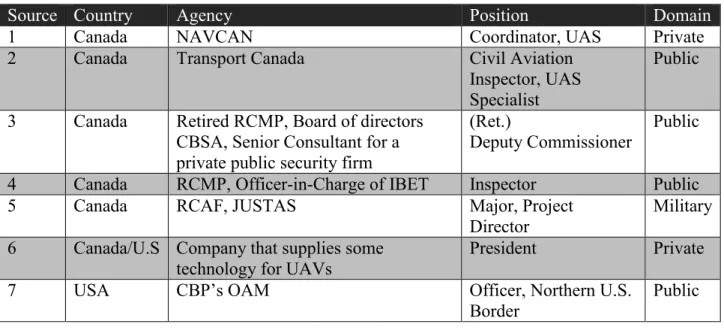
Table 1: List of elite interviews………..……….48
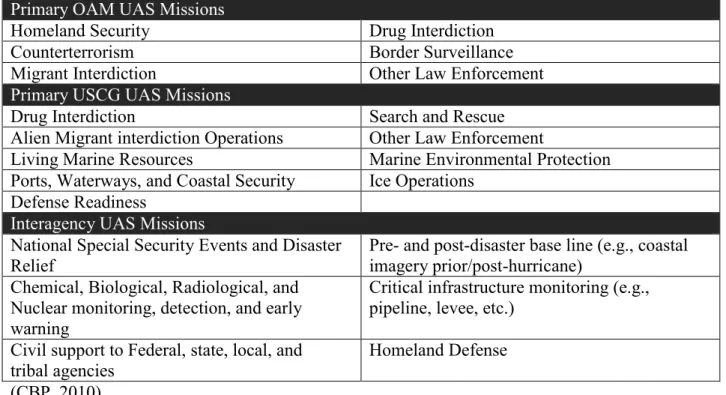
Table 2: Missions supported by the DHS UAS………..……….64
Table 3: CBP UAS Incremental Capability Plan, 2010……….………..65
xi
Glossary
9/11 Terrorist attacks on September 11th, 2001 in New York
IRPA Immigration and Refugee Protection Act OAM Office of Air & Marine JUSTAS Joint Unmanned Surveillance Target Acquisition
System
AMOC Air and Marine Operations Center JFO Joint Taskforce Operations API Advance Passenger Information MOU Memorandums of Understanding ATA Anti-Terrorism Act MTOW Maximum Take-off Weight BBWG Beyond the Border Working Group MTS Multi-Spectral Targeting System BSO Border Security Officer NAFTA North American Free Trade Agreement CBCF U.S.- Canada Cross Border Crime Forum NAVCA
N NAV CANADA
CBSA Canada Border Services Agency NAVSE
A Naval Sea Systems Command CCLA Canadian Civil Liberties Association NBS Northern Border Strategy
CCRA Canada Customs and Revenue Agency NORAD North American Air Defense Command CFIA Canadian Food Inspection Agency OIG Office of Inspector General
CIC Citizenship and Immigration Canada OIOC Office of Intelligence and Operations Coordination CJS Criminal Justice System OPC Office of the Privacy Commissioner of Canada CBP U.S. Customs and Border Protection PBC Parole Board of Canada
COM Collection Operations Manager PIA Privacy Impact Assessment CSC Correctional Service of Canada PIP Partners in Protection CSIS Canadian Security Intelligence Service POE Point of Entry DOD Department of Defense PS Public Safety Canada
DHS Department of Homeland Security RCMP Royal Canadian Mounted Police
EO Electron optical RCAF Royal Canadian Air Force
FAA Federal Aviation Administration RF Radio frequency
FAST Free and Secure Trade RPA Remotely Piloted Aircraft FEMA Federal Emergency Management Agency RPV Remotely Piloted Vehicle FLIR Forward Looking Infrared RRC Regulatory Cooperation Council GCS Ground Control Station RVT Remote Video Terminal GMTI Ground Moving Target Indication SAR Synthetic Aperture Radar
GOT Ground Data Terminal SATCO
M Satellite communications IBET Integrated Border Enforcement Teams SBD Smart Border Declaration
ICAO International Civil Aviation Organisation SPP Security and Prosperity Partnership ICE U.S. Bureau of Immigration and Customs
Enforcement TSA Transportation Security Administration ICMLEO Integrated Cross-border Maritime Law
Enforcement Operations UAS Unmanned Aerial System
IR Infrared UAV Unmanned Aerial Vehicle
USBP U.S. Border Patrol USCG U.S. Coast Guard
xiii
Acknowledgements
I would like to acknowledge and express my gratitude to the men and women who agreed to participate in our study. They have dedicated their careers to maintain the security of Canada and the United States. They have witnessed firsthand the evolution of policy and technology and without their insight this study would not have been possible; despite their busy schedule, they took the time to speak to us for our research.
I would like to thank David Murakami Wood and André Drainville for evaluating my thesis. Their thoughtful critiques and recommendations have been invaluable and have served to strengthen this project.
Words cannot express the appreciation I have for Stéphane Leman-Langlois whose guidance, patience, encouragement, and critique was fundamental to the completion of this thesis. I am truly grateful for the opportunity to have worked with such an excellent academic and teacher. Your many comments and lessons have helped me cultivate a comprehensive understanding of the nuances of contemporary security and surveillance. Merci.
Above all, I must thank my family and friends who helped me keep my head on straight, find the word I had on the tip of my tongue or simply remind me not to take myself too seriously. Without your love, support and patience I certainly would not have completed this project.
1
CHAPTER 1
Introduction: UAV surveillance of the Canada-U.S. border: trade, threats
and techs
Terms such as risk society (Beck 1999), liquid modernity (Bauman 2007) reflexive modernity (Giddens 1999), security era (Hornqvist 2004) and surveillance society, (Marx, 1985) have been used to describe the current socio-political post-industrial society. The principal theme within this literature is the existence of an increasingly endemic sense of insecurity and the concomitant concern with the management of risk of undesirable events that may potentially occur in the
future. Such management requires ever increasing amounts of information on risks, acquired by
multiple forms of surveillance.
One field where surveillance has increased at an exponential rate is at the boundaries of geopolitical entities. With more and more people crossing political boundaries (for business, travel and also when seeking economic and political refuge), ports-of-entry (POEs) such as airport terminals, highways and naval border crossings have intensified their surveillance apparatuses, particularly in the wake of the 9/11 terrorist attacks.
In countries like Canada and the U.S., that have open trade economies and open immigration policies, the dominant neoliberal discourse holds that the elimination of all vulnerabilities is simply not possible since it would involve limiting the importation of goods and restricting the entry of people to such a degree as to incur major long term expenditures. According to Sebben (2011), this issue was recognized by the U.S. Office of Homeland Security's 2002 National Strategy for Homeland Security, which outlined a plan for prevention, threat reduction, damage minimization, and recovery. Border security was listed as an integral part of this plan for risk
management.
Prosperity and security are key elements in the “trade and mobility” discourse in both Canada and the U.S., and appear in most bi-national agreements.
The only remaining space for controversy rests with the “security versus liberty” debate and the ways the proper “balance” might be reached. Much political literature bears on this balance and tends to fall on either side of the argument. But the economics and pro-trade discourse tends to
2
underline the undisputable economic benefits that come from cross-border initiatives (Haddal, 2010). Many figures can be invoked to support this, including that nearly 300,000 people cross the Canada-U.S. border on a daily basis and an average of $1.5 billion worth of trade occurs every day (Canada, 2011). Disputable as they are, what these figures undoubtedly show, however, is that border surveillance strategies could potentially reach an extremely high number of persons and activities.
The abundance of new surveillance technologies and their virtually limitless array of functions is creating a new and ever growing dimension to the global community. Rapid advances in video and audio interception equipment, identification technologies and intelligence-gathering have created extraordinary new opportunities for the various entities tasked with maintaining security. Surveillance has become a fixed component of the growing information society, which has been adopted by both governments and private corporations alike.
It is said that the next generation of technology will exploit a growing fusion between people and technology. An intimacy without parallel will mean that areas of life that we have conventionally considered private will be comprehensively and irremediably exposed. Technological convergence will ensue, meaning that all machines will likely have the ability to communicate with each other, creating a Global Information Infrastructure. Consequently, mass surveillance is developing not merely through video cameras, DNA profiling, satellite surveillance, credit reporting agencies and surveillance Unmanned Arial Vehicles (UAV), but through a vast range of computer-based surveillance algorithms constantly datamining massive databases.
New forms of surveillance that target domestic civilian populations have been redefined. The threat of terrorism, in particular, remote and imperceptible as it is, has motivated the growth of sinister forms of watching and self (panoptic) monitoring. According to Peter Manning (2008), these forms are characterized by four features that have given the sociological problem of surveillance a new outward appearance:
[…] most are invisible: unknown as to time, place and channel; they are consequential: the fatefulness of being watched, even if known, is unknowable in advance; they are almost universal: cheap, available, growing in capacity and shrinking in size. They engage the person, knowingly and unknowingly, in self-monitoring and self-revelation which in turn has commercial and/or criminal aspects. (Manning, 2008: 2012)
3 In short, these new modes of surveillance are powerful, both influential and controlling. While widespread anxiety is ever present (and growing), their actual, consequential impact is insofar unknown.
Indeed, according to Lemieux (2008), the 1990s were a decisive decade for the development and deployment of new technologies across the U.S. criminal justice sphere and in particular in the law enforcement sector. Furthermore, this period was also marked by a significant phenomenon that Haggerty and Ericson (2001) describe as a transfer of technologies from the military industrial complex to the policing sphere. The so-called “Military techno-structure” is what has come of the National Justices Institute and the Department of Defence (DoD) and their Joint Program Steering Group, which was created to adapt military technologies (including surveillance technologies) for use in law enforcement. Weapons technologies and often military technologies are increasingly adopted by civilian security forces and by private security services. Many authors (especially Kraska, 1999) have already described how the militarization of policing is driven by the increasing adoption of military weapons and the tactics they impose.
This growth was originally stimulated in large part by the “cold war,” when the U.S. poured money into the military versions of surveillance technology (Manning, 2008). This trend has continued right up to the “War on Terror”. As Haggerty and Ericson (2001) have argued, there is not only a “trickle down” effect of military technology on security, but a diffusion of tools created for the military and then adapted for civilian life. There is also a direct effect — which stems from the outsourcing of so-called “dual use," civilian and military surveillance tools. According to Manning (2008), these systems reflect a general trend in technology, particularly information-surveillance technology, and a move to cheaper, lighter, more efficient tools that have computers as a common denominator. The argument, explains Manning, is that the diffusion into the corporate world of technological capacity developed in military procurement “enlarges the capacity of the public police to track, gather information on and monitor movements” (Manning, 2008: 217). What is tacit here, is that the data collected is then stored, analysed, processed, applied to a strategy and, in turn, further processed or abandoned as a “failed extension of the senses” (Manning, 2008: 226).
4
Essentially, with new surveillance technology there is a recipient instrument or tool for gathering data, which is an extension of the human senses that then feeds collected data to a processor, human and/or computer, and is then analysed, again by human and/or computer. Thus, in response to threats, risks and fear, procedures based on pattern recognition, profiling, biometrics, intercepts, satellites, sensors, etc., are utilised. Technologies are used as a means to emphasise prevention, pre-clearance, preparedness, vigilance and risk assessment based on useful, useable intelligence. These developments are concomitant with new innovations in surveillance technologies, which have become at once cheaper and more sophisticated. One important question is whether the need for surveillance has led to the adoption of new technologies, or if the affordability and availability of these technologies have created a new need for high-tech surveillance.
A prime example would be the spin-off effect that has emerged from the military development of the (relatively) inexpensive Unmanned Aerial Vehicle (UAV) battlefield reconnaissance drones. Some of the vehicles available can cruise independently for up to 30 hours along a GPS-guided path, can transmit high quality, high resolution digital video, and then return automatically to their owner. Some versions of UAVs are getting smaller and smaller, heading towards miniaturization, and can assist an infantry squad, a police department or an intelligence agency in tackling urban conflict, drug growing operations or suspected terrorists.
The nomenclature that describes unmanned aircraft is diverse and has evolved over time. Some of the most common names associated with them include: robots planes, pilotless aircraft, drones, unmanned aerial vehicles (UAV), unmanned aerial systems (UAS) and remotely piloted vehicles (RPV), remotely operated aircraft (ROA) and remotely piloted aircraft (RPA). They are most often called UAVs, and when combined with ground control stations and data links, they form unmanned aerial systems (UAS). The U.S. Department of Defense (DoD) recognizes most of these terms all the while referring them to the same unmanned aerial system (DoD, 2007). Despite the varied, inconsistent and seemingly interchangeable nomenclature that can be found amidst both the cultural vernacular and scientific and academic terminology, each term invokes “an aircraft operated without the possibility or direct human intervention from within or on the aircraft” (FAA, 2011). In this thesis the researcher shall use the FAA’s and Transport Canada’s “UAV” nomenclature.
5 UAVs vary widely in size and capacity and have diverse shapes, uses, and means of control. They range in size from small radio-controlled model airplanes with wingspans as small as six inches to large jet aircraft similar to a Boeing 737. Some are controlled manually from the ground while others may be autonomous (though communication links and additional equipment is required for safe flight and mission control).
UAVs are much like other new technologies in that they have been modified from their original military version for new domestic tasks. The “drones” first became popular with U.S. military commanders in the Balkans and the Middle East as a way of targeting enemies without risking the lives of soldiers. As those wars wound down, the Pentagon looked to expand their use outside of war zones, with both the industry and the Pentagon now pushing for the opening of domestic airspace to UAV’s.
According to a report written by Zenko (2012), most unmanned aircraft flown by the U.S. military require not only a pilot on the ground, but also numerous surveillance analysts, (approximately 19 per platform), sensor operators, and a large team to serve as a maintenance crew. It is said that some 168 people are required to keep a Predator drone in the air, as compared to the 100 people or so for an F-16 fighter jet. Zenko says that in order to respond to the incessant demand, the U.S. Air Force has indeed trained more UAV operators than pilots since 2010. According to the Congressional Budget Office UAVs are usually less expensive than manned aircraft ($15 million for a Global Hawk versus about $55 million for a new F-16). That being said, according to Zenko, costly sensors and a history of excessive crashes can in fact limit this positive difference (or even completely negate it).
UAVs are said to be an ideal instruments for what the military calls ISR (intelligence, surveillance and reconnaissance) missions. Yet, with no need for an onboard crew and with the capacity to hover unseen at high altitudes for long periods, UAV’s also have many non-military uses. Whether deployed in the air, on the ground or in the water, unmanned drones are ideally suited for a broad range of scientific, business, public-safety and even humanitarian tasks. This is due to what is known as the “three Ds” capability – Dull (they can work long hours, conducting repetitive tasks), Dirty (drones are impervious to toxicity) and Dangerous (no lives lost if a drone is destroyed). In addition to being used in warzones overseas, UAV systems are being used for emergency management, tracking criminal activity in both urban and rural areas, spying on
6
foreign drug cartels, and, of course, conducting border control and border security operations (Wall and Monahan, 2011).
Consequently, UAVs are said to fill a gap in current border surveillance by improving coverage along remote sections of the Canada-U.S. border. This cutting edge technology has been used to expand the overall areas of coverage along the border, particularly those sections that have less of a chance of detection and a low availability of resources. The long flight times of UAVs and their ability to loiter for extended periods of time mean that sustained coverage over previously “dark” areas may improve border surveillance at low cost. The range of UAVs is also a significant asset when compared to border agents on patrol or stationary surveillance equipment. They are often referred to by security agencies as being ‘force multipliers’ for border security. According to John Priddy, director of National Air Security Operations Center for U.S. Customs and Border Protection (CBP)-Grand Forks (Margolis, 2011), an often forgotten quality of UAVs is the time it takes to reach different areas as they remain a much faster tool than land vehicles for example; “It would take border patrol agents an entire day to reach [certain] spot[s] in a vehicle” (John Priddy in Margolis, 2011). Unmanned aircraft equally allow his team to “…quantify the threat level at different parts of a long border and identify where crossings are occurring”.
Additionally, with high powered cameras, UAVs can identify small objects from great distances and with thermal detection sensors, a more complete image is presented, independent of the terrain and the amount of daylight available. Interestingly, the UAVs in question are indeed actual drones, meaning that they can be automated and are able to do their jobs autonomously, thus raising the issue of the breach of privacy by machine and the role that new technologies play in personal and national security. Various UAV’s are proliferating in North America and abroad. A new high-tech realm is emerging, where remotely controlled and autonomous unmanned systems do our bidding. Unmanned Aerial Vehicles (UAVs) and Unmanned Aerial Systems (UAS) – once again, commonly known as drones – are already working for us in many ways. The military industrial complex and the emergence of the homeland security apparatus’ use of UAVs has put border drones at the forefront of the intensifying public debate about the proper role of UAVs domestically.
That being said, according to the administrators of privacysos.org (2011), one problem with the force-multiplier argument for border UAV deployment is that the department of Homeland
7 Security (DHS) has only rarely provided any legitimate data to support the assertion. They state that DHS probably cannot supply this supporting data because it is simply not true. UAVs might be better described as being manpower-intensive rather than force multipliers. They say that at any given time, it is more likely that CBP drones are sitting on U.S. military bases along the border rather than serving as the Border Patrol's "eyes in the skies."
According to Jefferson Morley (2012), the U.S. Customs and Border Protection (CPB) of the Department of Homeland Security (DHS) is operating nine UAVs from sites along the country’s northern and southern borders. DHS flies unarmed UAVs above the northern and southern U.S. borders, snapping pictures, as they carry an excellent camera system. In 2012, DHS expressed interest in camera systems that can surveil four square miles at once, well within the range of the military’s new mega-cameras. Furthermore, police departments in the U.S. and in Canada have started using smaller scout-type surveillance UAVs as well (Morley, 2012). Indeed, there has been a significant deployment of UAV’s by DHS, which is developing a fleet of UAVs that it projects will be capable of quickly responding to homeland security threats, national security threats and national emergencies across the entire nation as they are mobile in their transportation and operational capabilities.
In addition, DHS says that its UAV fleet is available to assist local law-enforcement agencies. The Intelligence Reform and Terrorism Prevention Act (IRTPA) of 2004 in the U.S. and the Anti-Terrorism Act (ATA) of 2001 in Canada have played important roles in the rapid proliferation and integration of UAVs along the Canada-U.S. border. Essentially, these acts allowed for advanced technologies for border surveillance and law enforcement support along the border. In the U.S., IRPTA has allowed the DHS to make important strides with regards to implementing UAV technology for surveillance support along borders. According to Darnell (2011), from 2006 to 2010 the federal government budgeted for nearly $121 million to operate, maintain, and acquire Predator UAVs for use by CBP. Zenko (2012) says that the U.S. is “far and away the leader in developing drone technology” as it is projected to account for 77 percent of UAV R&D and 69 percent of procurement in the coming decade.
That said, for the time being UAV use in Canada or the U.S. remains lower than recommended by politicians and national security professionals. This, in part because despite Government and private industry efforts at meeting the challenges mentioned thus far, several specialists have
8
concluded that the safe operation of UAVs presents a complex challenge not only for Transport Canada and the FAA, but also for the International Civil Aviation Organisation (ICAO) and the federal government (whether it be DHS, Public Security Canada or the Privacy Commissioner).
1.1 Domestic UAV missions
Literature suggests that there is a growing domestic demand for UAVs. UAS are said to be able to offer new ways for both public and private agencies to increase operational effectiveness, limit operating costs, and create jobs for returning military personnel and aircraft as several oversees missions are coming to an end. Consequently, public and private sector interest continues to grow for UAV use in a variety of domestic missions. Some members of Congress have actually called for an increased use of UAVs to improve border security, public safety, and emergency response missions. According to the Teal Group (2011), UAVs are also big business. They predict that $94 billion dollars will be spent on UAS research, development, and production over the next 10 years, with the U.S. government accounting for a large majority of this research, development and procurement. It does, however, appear that the operational and economic value offered by UAVs is being overshadowed not only by a sense that they present a flight safety risk and possible lacks in allocated funding, but also the fact that with the recent National Security Administration (NSA) spying scandal, privacy issues are on the forefront of the world stage. Although unmanned aircraft have been part of aviation since its origins, their nomenclature has undoubtedly evolved. Additionally, since their initial deployment, the slowed development of UAVs has historically followed the cyclical trends of financial and political support. That being said, nearing the end of the 20th century, their utility was revived as a tool meant to perform the “dull, dirty and dangerous operations” as described by the U.S. military, as it increased its presence in the Middle East. As innovations in technology increased throughout the 21st century, their proliferation has increased and new uses and tasks have been elaborated, particularly in domestic operations. One of the main new domestic uses of UAVs as mentioned earlier, is border surveillance.
As reiterated by CBP, UAVs help attain Canada and the U.S.’ border security strategy by performing surveillance coverage along porous sections of the Canada-U.S. border, particularly as is indicated in the Beyond the Border Action Plan (Government of Canada, 2011) and the
9 DHS’ Northern Border Strategy (DHS, 2012). As Dennis M. Gormley, senior lecturer at the University of Pittsburgh, has noted, “the virtue of most UAVs is that they have long wings and you can strap anything to them” (Shane, 2011). In fact, the electro-optical sensors that are equipped on the adapted Predator B UAVs used by CBP can provide precise and real-time imagery to ground control operators who can instantaneously relay and disseminate information to be used for numerous possibilities of appropriate reactions by the most relevant agencies; one of which would be to deploy border patrol agents. The pilots of UAVs switch roughly every two hours. Mission Control keeps track of it all, shares real time data and responds to requests from border patrol agents on the ground. A Border Patrol liaison is in the control room as well. This team analyzes the data sent back. Furthermore, CBPs UAVs have an impressively long loitering capacity which may reach up to 30 hours without refueling. This modern and unique capacity enables previously unattainable sustained air domain coverage, consequently improving border security.
John Priddy (in Margolis, 2011), director of National Air Security Operations Center-Grand Forks, told the news agencies the aircraft have contributed to arrests, but wouldn't elaborate as the cases are still in the courts. According to the Customs and Border Protection's Office of Air and Marine (OAM), in fiscal year 2011, unmanned aircraft contributed to the seizure of more than 7,600 pounds of narcotics and the apprehension of more than 75 individuals taking part in illicit activities (which all things considered, is not very much). But CBP officials say the Predators offer advantages that go beyond the amount of drugs seized. Their vantage point has been critical for agents in dangerous situations.
The DHS’s new targeted enforcement strategy relies more heavily on unmanned aircraft to gather intelligence that helps agents break up cartel smuggling rings rather than just nab drug mules at the border, as is explained by John Priddy (in Margolis, 2011) "We're trying to work the border smarter, not harder".
1.2 SBInet: technology at the frontiers
The United-States Southern border reaches from the Pacific Ocean to the Gulf of Mexico. It is 3200km long, and has long been a hot spot for illegal immigration and the smuggling of illicit substances into the United States. Some consider the large cross-border migration of
10
undocumented workers and the flow of illegal drugs into the United States from Mexico as potential security threats. Many criminal organizations stemming from within Mexico and the U.S., some of which are becoming progressively more powerful and influential, have developed extensive expertise in evading U.S. border controls, whether coming by land, sea, or air. The Center for Strategic and International Studies (CSIS, 2004) has noted that the importance of coyote organizations in Mexico has grown considerably, to the extent that today it is next to impossible for individuals to cross the border illegally without their assistance. Similarly, drug smugglers have sophisticated and expansive internationally associated trafficking capabilities for crossing the border undetected.
Contrary to the U.S.-Canada border, the terrorist attacks of 9/11 were not the original mega-catalyst for a sharp incline in security at the U.S.–Mexico border. Indeed, increased public concern in the United States about the large flow of undocumented workers, the important amounts of drug and human trafficking and the common occurrence of deaths of migrants trying to cross in dangerous circumstances, sparked the initial increase in border security even before 9/11.
The Mexican government augmented its monitoring of financial transactions, all-the-while increasing its security to prevent the transboundary movement of arms, and established a more comprehensive exchange of information among security agencies, as well as sharing information with Interpol and the United States (Andreas, 2003). Moreover, the government augmented its staffing and surveillance along its northern border with specially trained personnel who were given the task of focussing on fighting terrorism and organized crime (Meyers, 2003).
The long, porous border and the practical impossibility of establishing mechanisms that could reliably monitor all of the human and material traffic across the border create a vexing dilemma for officials on both sides of the border. As note Bronk and Payan (2009), it is likely that a feeling of loss of control of law and order along the border led to a logic of law enforcement that, in turn, led the U.S. government to ignore evidence pointing to economic interdependence and moral panic. Thus, the only certainty in this context was that better border and security cooperation was called for with a clearly marked inclination towards new technologies to assist in accomplishing the task.
11 In 1994, Attorney General Janet Reno announced “Operation Gatekeeper”, an initiative to “...shut the door on illegal immigration” (Meyers, 2003). This initiative included a fence meant to stem the illegal flow of migrants into the U.S. In addition to the border fence which was first erected in the Border Patrol’s westernmost sector, the program introduced a new means of surveillance technology; a systematic biometric collection program was instituted. The original success of this program provided the groundwork for the following Secure Border Initiative (SBI) and the unprecedented value placed on the adoption of surveillance technology for border security. Eventually, the fence and the technology, the attorney general claimed, would close the border. However, it didn’t. Illegal immigration continued unabated, despite the fence and the technology. The U.S.-Mexico border thus remains an important source of frustration for those who held high hopes for new high-tech initiatives, especially the massive Boeing contract for creating SBInet. This initiative showed that better technology is not the “one-size-fits-all solution” to meet border security needs. According to a representative of DHS (as cited by the U.S. Congress special committee [2011]), “SBInet has had continued and repeated technical problems, cost overruns and schedule delays, raising serious questions about the system’s ability to meet the needs for technology along the border.”
Bronk and Payan (2009) note that in all likelihood, one of the major reasons for the failure of the U.S.-Mexico border security initiatives such as the Boeing SBInet is the emergence of an iron triangle-type relationship between border politicians, agencies, the army and the private sector that claims to provide the goods (surveillance equipment, UAVs, fence equipment, biometric technologies, etc.,) and services (maintenance, surveillance, safeguarding, etc.,) that an increasingly securitized border such as the U.S.-Mexico border requires. As Bronk and Payan (2009: 10) suggest, there is next to no debate or discussion revolving around the logic or the policy that underlies the current border security management system. “Instead, [border security] conferences look increasingly like trade shows where politicians, bureaucratic agencies, and the private sector trade information on how they can collaborate to reinforce border security.’’ Initially, the SBI promise was to deliver cutting edge technology, infrastructure and a unique management capacity so as to better monitor the Mexico-U.S. border. “By combining personnel, technology and physical barriers, the hope was that the U.S. could more effectively monitor the border, keeping out economic migrants, narco-traffickers and terrorists alike” (Bronk and Pataya,
12
2009: 24). The fence is meant to be a smart fence; a 21st century fence, not a 19th century fence (DHS, 2005). DHS deployed sophisticated new surveillance equipment, developed by Boeing and several subcontractors, along remote stretches of terrain known for an increasing number of deaths of those attempting illegal border crossings. However, the actual deployment of the system proved to be more of a challenge than originally assumed. According to a GAO (2007) analysis of the initial SBInet expenditure plan submitted to the U.S. government, the DHS initially believed that a widespread SBInet solution would be set up for the entire southern U.S. border by 2011, and that some basic capabilities would be deployed by the 2008. However, in 2009 the DHS “ …believed that some limited functionalities—that have yet to be determined— would be deployed to one-third of the Southwest border by 2011”(U.S. Congress, 2010). SBI was eventually declared a failure by DHS, but only after the agency had spent $1 billion on the project. At that point it comprised of a mere 80km of virtual border fence. In January 2011, Boeing had its $1 billion contract cancelled. However, Nick Wakeman of Washington Technology (2013) notes that DHS is now moving forward with the demonstration phase of a reworked system.
What has become clear with the U.S.-Mexico border, and could (should?) be heeded as a warning or possibly as a word of advice for Canada-U.S border security (despite the obviously important differences) is the fact that applying additional surveillance on the border does nothing to change the reality that the sociopolitical and economic realities on either side of the “secure border” are very present and will likely represent sufficient motivation either for illegal immigrants, terrorist networks, or drug traffickers to find other more creative, more lucrative, more dangerous ways to go about their illicit activities. The example offered by Bronk and Payan (2009) in this case is that with the remote terrain being better watched and patrolled, narco-traffickers will likely funnel an even greater amount of narcotics through the POEs and fight even more persistently amongst one another for control of each one, with prices likely to rise if demand remains the same.
The primary strategic differences between the U.S.-Mexico border and the Canada-U.S. border are the enormity of the northern border, its varied and challenging geography, and the general absence of large American population centers along the border (DHS, 2005). Sure enough, the U.S. Border Patrol (USBP) has allocated the majority of its focus along the southern border of the
13 U.S., where it hopes to contain unauthorized immigration. In opposition, the northern border represents at once a lesser set of problems and a far greater set of challenges.
Under the supervision of DHS, the Border Patrol’s northern border strategy focuses cooperation with State governments and Canadian authorities so as to maximise intelligence gathering and processing through the deployment of technology and surveillance equipment. According to DHS (2005), improving the mobility of agents in order to respond rapidly to identify threats is a key aspect of the northern border strategy.
1.3 Conclusion
We now have a better understanding of what Andreas was referring to in a 2005 journal article when he coined the expression to describe the augmented security along the northern U.S. border as the “Mexicanization of the Canada-U.S. border”. Andreas’ observations will become more vivid in the next chapter as we explore the evolving border security context of the Canada-U.S. border.
15
CHAPTER 2
Constructing border security
“Geography has made us neighbours. History has made us friends. Economics has made us partners. And necessity has made us allies.” (JFK, 1961)
2.1 What is a border?
The idea of borders suggests a circumscribed entity separate from its environment. It stems from a traditional interpretation of territorial sovereignty, indicated by physical geographical delimitation. The need for these symbolic delineations drawn to distinguish political entities is the result of political history. Borders became central to the nationalist agenda and the development of nation states. Paasi (1999) identified such boundaries as institutional constructs. At the core of such constructs is the fact that boundaries result from international agreements that are established by mutual understandings between states. These create complex, intermeshed networks of government policies and functions that interact to form international boundaries delineating sovereign spaces.
Salter (in Zureik and Salter, 2005) describes borders as over-determined, polysomic and heterogeneous. He says that the political border always coincides with other kinds of borders, be they cultural, economic, linguistic, historical, and so on. The application of sovereign power at the border is absolute; travellers possess only basic human rights guaranteed by international conventions and circumscribed nationally derived rights. The border represents the limit of the political community – the territorial manifestation of the inside/outside boundary.
Thus, the border of a state is central to its definition. The “debordering process”, is what scholars refer to when speaking about the fact that border functions are increasingly distant from border frontiers. Borders now exist elsewhere, in places that traditionally belonged to sovereign states, but now have been transformed to enable governments to check across their geographic borders, personal identity and monitor the movement of “people of interest” before such mobilisation actually takes place.
Border barriers are intended to block access by defining edges. Borders as barriers can be understood as literal containers or excluders of people, objects and information. Some of this is done by using “hard”, physical factors such as doors, walls, etc., and some “soft”, normative
16
factors such as “don’t pass”, and very often both (Marx in Zureik and Salter, 2005). By definition, a border demarcates. Nevertheless, beyond its denotive function, a barrier can be intended to keep in, keep out or both simultaneously and differentially. Today the border is a site of commercial activity, of welcoming to immigrants and travelers, and of rejection to the undesirable (Marx in Zureik and Salter, 2005).
One must understand that a border is not what it used to be. A border is no longer only a traditional singular line that may be uni- or bi-directionally crossed. Recent developments in communications, surveillance and related technologies in some ways undermine and alter traditional physical, geographical, spatial, judicial and temporal borders, making them more vulnerable to crossing, and, partly in response, new borders appear. With the development of mobile check-points and pre-clearance programs, borders are no longer fixed. Closer to contemporary questions, we see the link between borders and how technology may change them. Marx (in Zureik and Salter, 2005) says that new communication and surveillance technologies along with new crises, threats and opportunities, are also blurring and rearranging organization structures and goals. In many ways, it becomes more difficult to draw clear-cut lines separating the centre from the periphery, the rural from the urban, the national from the international and the private from the public. Developments in communications and surveillance create new forms and destroy, rearrange and alter some of the physical, geographical, spatial, judicial and temporal borders that have traditionally defined and protected the integrity of individuals and groups.
2.2 Mobility: social sorting and controlling the contemporary nomad
Transnational mobility is an uncontested resource, an important dimension of social, economic and political capital for many states. The understanding of the relation between spatial and social mobility and geopolitics is fundamental in the understanding of controlling movement, as it reinforces the categories of potential mobility. According to Bigo (2010), mobility, in the occidental imaginary, is associated with liberty or the suppression of restrictions.
Pallitto and Heyman (2008) have identified two wide-ranging trends concerning the “new” protection of borders. First, there is increased volume and speed of movement in the world system, though transnational movement itself is hardly new. According to them, checkpoints and barriers may continue, but they have to cope with many privileged travellers and commodities
17 that facilitate high-speed global movement, which often seems to be economically motivated. Examples of this can be seen in many airports in North America, with the new NEXUS system for frequent travellers, who have been deemed “safe” or “low-risk.” Second, territorialized regulatory frameworks continue to operate, meaning that we continue to rely heavily on borders for identification, inspection, and tracking. However, the circumscribed units involved may change. For example, a single sovereign state changes to multiple sovereign states such as the European Union or the multi-country Schengen accord in Europe.
According to Pallitto and Heyman (2008), identification and tracking were greatly strengthened by the rise of the political figure of the citizen – with specific rights and assigned duties within a nation’s “bounded” physical territory. Citizenship limited movement not only of its members to the outside, but it also controlled the inward movement of outsiders or non-citizens. Overall, however, a specific kind of political personhood emerged that entailed rights to move around the national territory.
Because the state is in a position to observe intimately and incessantly, it can generate elaborate groupings of individuals based on observed knowledge. Zureik and Salter (2005) find airports to be specific spacial and temporal institutions where differing mobilities are sorted in contemporary society. Sorting is an actuarial practice that proceeds by risk categories that have been dictated by previously accumulated data. For example, air travellers are assigned a specific risk-oriented profile and treated in accordance to this assigned profile. Sorting is based on statistical logic yet, by definition, it entails unequal treatment.
As Didier Bigo (2010) argues, the work of borders has expanded into a wider network of “differentiated mobility”. Just as it is inaccurate to view borders simply as inhibitors of the movement of people and trade, it is equally problematic to assume that in the today’s postmodern context, borders no longer present an obstruction to mobility, and in fact, that free movement is more and more accessible. Security programs entail many different effects on mobility, and those effects can for the most part, be conceptualized as inequalities. Essentially, the recently amplified border security model generates “differential mobility” effects so that the ability of individuals to negotiate borders becomes unequal in certain respects.
18
No longer simply represented by lines on a map, or marked by political boundaries (security check-points, passport controls, transit points), borders and the regular crossing of borders, have become part of our routine experience. We have become accustomed to a world where borders wax and wane, as it were, and the important borders in our lives do not remain fixed. The ‘borderless world’ thesis associated with some variants of globalization theory as mentioned above, suggests that borders are being smoothed away in order to facilitate greater economic mobility (the borderless internal market of the EU, for example) while at the same time security concerns and worries about ‘open borders’ have led to the rebordering of nation-states who wish to better control flows of migrant workers, refugees and terrorists.
To tackle this global issue, we are seeing new global and regional entities with more inclusive borders. There is increased evidence of regional economic integration, for example, the North American Free Trade Agreement (NAFTA). It is common to refer to the globalization of many aspects of the economy. American cars are made with parts from many countries and are eventually assembled in diverse locations outside of the country. Multinational corporations continue to grow. We see political integration in Europe with the European Community, and the United Nations is playing a more active role than ever.
2.3 Securitization of the border: what does it really mean?
Barry Buzan, Ole Wæver, and Jan de Wilde, co- founders of the Copenhagen School of International Relations Theory, have studied the securitization of issues and how it changes the political dynamics of debate through an incessant escalation of rhetoric. They argued that “security” takes politics beyond the established “rules of the game” and frames the issue as a special kind of politics, or even above politics altogether. Securitization can thus be seen as a more extreme version of politicization (Buzan, Wæver, De Wilde, 1998). Through this lens, various types of risks are seen as threats requiring urgent response in order to avoid possibly devastating consequences. Subsequently, Haddal (2010) says that the end of the cold war broadened the discourse of national security issues to be considered, allowing room for discussions regarding securitization on the North American political platform. Following the September 11 attacks, the 3200 kilometer U.S.-Mexico border and the 4800 kilometer boundary shared with Canada, often referred to as the “world’s longest undefended border”, suddenly became potential ports of entry for terrorists to gain access into the United States. The fact that
19 the borders are perceived as being vulnerable to such an extent speaks volumes regarding the evolution of the transformation of the borders under the heading of “national security” in the whole of North America.
Securitization theory is essentially concerned with how threats are identified and responded to (Mabee 2007). The majority of changes that take place in border security can indeed be linked to a process of “securitization”: the spreading of national security techniques across a wide variety of fields of concern. Securitization theory offers an essential component of analysis that is deemed crucial in the conceptualizing of border security policy. The security mindset, as it is understood through various dialogues, can legitimize exceptional political measures or procedures.
The key to the approach is how discursive moves by securitizing actors bring a perceived threat out of the area of normal politics and into the area of security, where it is seen as a kind of emergency measure. The invocation of security has been the key to legitimizing the use of force, but more generally it has opened the way for the state to mobilize, or to take special powers, to handle existential threats (Buzan et al. 1998: 21 as cited in Mabee 2007: 387).
From an empirical standpoint, the security mindset that is dominant in the security era and identified through various examples of prevalent discourse has a direct impact on border security policies. This type of mindset is what forms the basis of specific border security policies and joint Canada-U.S accords such as the Security and Prosperity Partnership, the Smart Border Declaration and the Beyond Borders deal.
Nevertheless, it is impossible, not to mention fruitless, to reduce the question of borders to a tension between open borders and securitized borders. When policy issues are raised within a securitization context, as seems to be the norm in the time of insecurity, they immediately appear urgent to the safety and perhaps even the survival of the society. Of course, we must not forget the primordial notion that securitization strengthens the central government and can be linked to multiple economic justifications. The events of 9/11 gave considerable momentum to the “securitization” of mobility by means of a network of borders, and the emphasis today is on technological means. It is worth emphasizing that this new “securitization” movement is built from the inherited political and economic past (Pallitto and Heyman, 2008).
20
Borders are being fortified mainly against transnational law evaders. The obstinate policy dilemma is that these clandestine actors, whether they be illegal immigrants, terrorists, drug dealers, etc., use the same cross-border transportation and communications networks that are the essential channels of a highly integrated and interdependent political economy. This may eventually develop into a less formal, less administration driven, security perimeter that strives to simulate the European model. Rather than the classic idea of fortress Europe, we may soon be referring to the bound entities of Canada-U.S.-Mexico as “fortress North America” (Pallitto and Heyman, 2008).
Heightened security serves the compound function of addressing security threats at the earliest point possible and to appear to do it in a manner that respects privacy, liberty and other basic human rights, as declared in the Beyond the Border Action Plan (Canada, 2011). However the primary concerns are clearly trade facilitation, economic growth, and job creation, as well as managing long-term partnerships. In short, all concerns are meant to be addressed by an increase in security along the border.
It has been said that trafficking illicit substances along North American borders contributes to the threat of terrorist activity, a phenomena usually referred to as “narco-terrorism.” Under that discourse these activities sustain terrorism by providing funds, supporting corruption, and providing a cover that upholds the necessary infrastructures for illicit activities (CRS, 2004). According to analysts, between $19 and $29 billion each year flows from the U.S. into Mexico in money and weapons to fuel the violence (Selee and Olson, 2011). For this reason, it is no coincidence that security agencies (in the U.S. at least) are concerned that an increase in drug violence along North American borders could possibly lead to terrorist activity. It is still accepted knowledge amongst national security agencies both in Canada and the U.S. that the border is a “resource thin environment” despite the efforts made by both governments to increase the number of border service agents and other security procedures.
Indeed, there have been important Federal efforts made to interdict terrorists and their weapons; illegal drugs; and other contraband being smuggled into the United States (O'Hanlon, 2006). Customs inspections aid in maintaining border security, by interdicting the export of unreported currency from narcotics trafficking and other illicit activities; preventing international terrorist groups and rogue nations from obtaining sensitive and controlled commodities; and interdicting
21 stolen vehicles and other stolen property. The challenge faced by CBP and CBSA, amongst other intelligence and security services, is to achieve a sufficient level of security while not affecting the efficient flow of commercial trade at the border.
According to Macklin (2001), the terrorist attacks on September 11, 2001, brought attention to the northern border of the U.S., which has historically been understaffed and has lacked the necessary infrastructure to adequately screen individuals seeking entry into the United States. Several pieces of legislation passed in Congress that authorized and appropriated funding for additional staffing and resources along the northern border.
2.4 Risk, risk society and the security culture
The theoretical construction of risk society (also termed reflexive modernity) is typically associated with the work of Ulrich Beck and Anthony Giddens. In its most basic form, the concept of risk “emerged in a future-oriented society in which hazards are assessed in relation to future possibilities” (Giddens 1999: 1). It is argued that wealth attainment typified the mindset of industrial modernity and has since been replaced by a mindset of risk avoidance (Ekberg 2007). Additionally, Sebben (2011) notes that contrary to today’s society, industrial society’s risks resulted from the force of nature (sickness, natural disasters, etc.), whereas in today’s society, manufactured risks result from human impact on the world (Giddens 1999).
Sebben (2011) says that individuals in technologically advanced societies are saturated with conceptions of security and insecurity on a daily basis. According to both Giddens and Beck, the extent to which security features are present in our daily lives has inarguably increased over the past few decades to a point that they are now ubiquitous. According to Sebben (2011), not only do media outlets continuously feed us images and stories of an assortment of security issues to be mindful of, but also we are rather tolerant to what some see as “an increasingly invasive state gaze” (2011:44). For example, it is common to see CCTV cameras; participate in mass data collection schemes, create biometric identification profiles and share personal information with the public and private sectors. To sum up, (in)security is a routine feature of today’s society, thus amplifying feelings of fear, uncertainty and insecurity.
Ekberg, as noted by Sebben (2011) says that “the sociology of risk is inseparable from the politics of risk, which includes the risk to our fundamental political ideals of liberty, equality,
22
justice, rights and democracy” (Ekberg 2007: 357). Clearly, border security and the many innate complexities highlighted throughout this research fall under the label of politics or sociology of risk, which in turn illustrates the pragmatic nature of the risk society. Giddens (1999) argues that in the risk society “politicians hesitate between scaremongering and cover-ups”. Similarly, Sebben (2011) argues that politicians are somewhat at a loss in the risk society regarding the true management of risk.
In the post 9/11 world, heightened security concerns in the United States and Canada led to changes in many policy areas, including, but not limited to important border policy changes. The terrorist attacks exposed the vulnerability of western countries to non traditional terrorist threats. 9/11 marked the beginning of a new era for the western world, in which security was dramatically redefined. The threat was not from another country as mentioned above, but the ubiquitous possibility of an attack from anywhere, including from within a state’s own borders. In the wake of 9/11, with the hopes of foiling another planned attack, countless countries began seriously examining their security, immigration, and border policies. The goal was to reduce or eliminate any possible vulnerability that may accompany these practices.
According to Peter Andreas (2003), since the terrorist attacks on September 11th, the usual business at the border has been much less tolerable. In the escalating counter-terrorism effort, specifically at points of entry into the country, the expectation of success is significantly higher than what is was in the cases of drug and immigration control (the foremost objective pre-9/11). Ottawa has taken many measures to demonstrate its resolve against terrorism and its efforts to reinforce border security. It put into place a high state of alert at multiple points of entry, enhanced the levels of security at the country’s airports, added nearly $280 million dollars in new funds for detection technologies and personnel to strengthen the security framework, initiated new legislation to combat the financing of terrorism, and froze the funds of known terrorist groups. Moreover, reorganization of institutions took place; for instance, the creation of the Canada Border Services Agency (CBSA) with the objective of improving border security. On top of all of the new funds that were freed in the name of national security, almost 2,000 officers of the Royal Canadian Mounted Police (RCMP) were assigned to border patrol and anti-terrorism work (Andreas, 2003).
23 Despite the vernacular belief that the events of 9/11 are the rationale for all of the major changes in security that followed, it is important to note that 9/11 was a catalyst, and not the reason to the security era and its associated risk-based border security approach. Risk governance was already embedding itself into national security initiatives and 9/11 served to deepen the senses in which the present may be described as the security era (Lyon 2003). As Wark (2006) states, "in the immediate wake of the attacks, and for some time thereafter, the government response was reactive". This is demonstrated by the creation of the Anti-Terrorism Act (ATA), in the immediate aftermath of the attacks in December 2001, and the Canada-U.S. Smart Border Declaration. The intention was to "develop a zone of confidence against terrorist activity" (Canada, 2011).
2.5 Canada-U.S. Border Security Discourse post 9/11
Essentially, since 2001 Canada and the United States have been working towards the goal of securing a smart border to facilitate national security interests while ensuring that the economic interests of both countries also remain a priority. While it is implicitly recognized that the ATA continued to be amended after it was enacted in December 2001, the intention of the author is to demonstrate the reactive approach taken in the aftermath of 9/11.
The Smart Border Declaration
There was talk after 9/11 that several of the terrorists who participated in the attacks in the United States had gained access through Canada. Despite the fact that this rumour was proved untrue, the alleged flaws of the Canada-U.S. border were brought to the forefront of both Canadian and American national security dialogue. Three months after 9/11, the Smart Border Declaration was implemented. The Smart Border Declaration was the first bi-national declaration dedicated to securing the border between Canada and the U.S. post 9/11, it is important to understand the Smart Border Declaration as it is the founding bi-national political accord on Canada-U.S. border governance. The Declaration originally included a 30-point action plan that has since been increased to 32. The objective of the Smart Border Declaration is outlined by its four pillars: (1) the secure flow of people; (2) the secure flow of goods; (3) investing in secure infrastructure; and (4) coordination and information sharing in the enforcement of these objectives (Public Safety Canada, 2008). One of the “pillars” of the declaration is centered on the integration of
24
enforcement and information sharing. This objective has in recent years predominantly been carried out by Integrated Border enforcement Teams (IBETs), joint enforcement coordination, integrated intelligence, information and intelligence retention and dissemination, joint training, biometric data collection, and counter-terrorism legislation.
Security and Prosperity Partnership
The Security and Prosperity Partnership (SPP) was the second bi-national declaration dedicated to securing the border between Canada and the U.S post 9/11. The SPP was a North American partnership between Canada, the United States, and Mexico that was signed in March 2005 (Government of Canada, 2009). The main goal of the SPP was to build on other already existing useful bilateral and trilateral relationships established with Canada, the U.S. and Mexico through such mechanisms as the North American Free Trade Agreement (NAFTA); the Canada-U.S. Smart Border Declaration; and the Canada-Mexico Partnership. Thus, border security was not the goal of the SPP; rather, it was one element among many that were meant to augment continental security and economic effectiveness. Contrary to the Smart Border Declaration, the SPP was a non-binding partnership with "flexible means of dialogue, priority setting, collaboration and action on issues affecting the security, prosperity and quality of life of Canadians, Americans, and Mexicans" (Government of Canada, 2009).
According to Sebben, (2011), the SPP was a convoluted and complex trilateral partnership. For example, she states that in 2007 five priorities were announced for the following year and each priority had sub-priorities creating goals and objectives that were almost impossible to attain. In the end, the SPP failed. Essentially, it failed due to unattainable goals and ineffective, uncommitted organization on part of its political leaders (d’Aquino 2011). Regardless of the failure of the SPP, it reinforces the notion that the physical entity of the border is transformed into a fluid and mobile concept and security and integration are deemed inseparable.
Secure Border Initiative
Other policies, such as the Secure Border Initiative (SBI) of 2005 serve to further emphasize the security agenda at the U.S.-Canada border. While the SBI had the goal of facilitating legitimate trade and travel in its mandate, the initiative includes measures such as important increases in border patrols and the implementation of new detection and patrolling technologies at the border.
25 Beyond general discussions of the intention to implement policies that operate on the distinction between desirable and undesirable entries or activities, before the SBI, no real, actionable plan was defined, and as the SPP evolved into what is now the Beyond the Border Action Plan, the importance of balancing the priorities of security with those of trade developed into something that was much more palpable in terms of specificity.
Beyond Borders
The Beyond Borders deal is officially referred to as the 'Perimeter Security and Economic Competitiveness' and is still currently in its early stages of operation. The Beyond Border deal is a bi-national agreement formulated to enhance the security and prosperity of both the United States and Canada. The intention is "to address security threats at the earliest point possible in a manner that respects privacy, civil liberties, and human rights" (Government of Canada 2011: Beyond the Border), which reinforces the border as a fluid and mobile concept rather than a physical entity. This accord commits both countries to enhance security and prosperity by cooperating together on border governance. The Prime Minister and President indicated that through cooperation and partnership they would strengthen resilience by ensuring "readiness" at all levels of government. There are four key areas of cooperation that are defined in the Beyond Borders agreement: (1) addressing threats early; (2) trade facilitation, economic growth and jobs; (3) integrated cross-border law enforcement; and (4) critical infrastructure and cyber-security (Government of Canada 2011: Beyond the Border).
Hand in hand with the mentality of the themes that are prevalent in both the Smart Border declaration and the SPP, Prime Minister Harper and President Obama indicated, "effective risk management should enable us to accelerate legitimate flows of people and goods into Canada and the United States and across our common border, while enhancing physical security and economic competitiveness of our countries" (Government of Canada 2011: Beyond the Border). The two nations intend to carry out their goals by increasing information sharing while recognizing and respecting the "separate constitutional and legal frameworks that protect privacy, civil liberties, and human rights and provide for the appropriate recourse and redress" (Government of Canada, 2011).