I N F E C T I O N C O N T R O L AND H O S P I T A L E P I D E M I O L O G Y JANUARY 2 0 0 8 , VOL. 2 9 , N O . 1
O R I G I N A L A R T I C L E
Impact of an Infection Control Program on the Prevalence
of Nosocomial Infections at a Tertiary Care Center in Switzerland
Corina Ebnother, MD; Beate Tanner, MD; Flavia Schmid, MD; Vittoria La Rocca, RN; Ivo Heinzer, MD; Thomas Bregenzer, MD
OBJECTIVE. To study the impact of a multimodal infection control program on the rate of nosocomial infections at a 550-bed tertiary care center.
METHODS. Before and after the implementation of an infection control program, the rate of nosocomial infection was recorded in time-interval prevalence studies. Hand hygiene compliance was studied before and after the intervention. As a surrogate marker of compliance, the amount of alcohol-based hand rub consumed before the intervention was compared with the amount consumed after the intervention. The intervention included additional staff for infection control, repeated instructions for hand hygiene, new guidelines for preoperative antibiotic prophylaxis, and isolation of patients infected or colonized with multidrug-resistant bacteria.
RESULTS. The rate of nosocomial infection decreased from approximately 11.7% to 6.8% in 2 years. The rate of hand hygiene compliance increased by 20.0%; it was 59.0% before the intervention and increased to 79.0% afterward. These results correlate with data on the consumption of alcohol-based hand rub, but not with data on the use of antibiotics.
CONCLUSION. Within 2 years, a multimodal infection control program intervention such as this one may reduce the rate of nosocomial infection at a tertiary care center by more than one-third and improve both the quality of care and patient outcomes. It may also generate considerable savings. Therefore, such programs should be promoted not only by hospital epidemiologists but also by hospital administrators.
Infect Control Hosp Epidemiol 2008; 29:38-43
For more than 150 years, nosocomial infection has been rec-ognized as an important threat to hospitalized patients,1 one which causes up to 15,000 deaths annually in Great Britain2 and has enormous economic consequences.3'4 The impact of infection control in hospitals on patients' safety, the quality of care, and healthcare costs has been demonstrated in several publications.5,6 Thus, infection control is not only an eco-nomic issue but, even more importantly, it is an ethical ob-ligation.7 The cost effectiveness of infection control programs is well documented.2'3,6 Infection control in hospitals depends on clinicians' awareness of epidemiologic observations in wards and their awareness of findings in the microbiology laboratory. Cooperation and communication between micro-biologists, hospital epidemiologists, and clinical infectious diseases specialists is crucial for effective infection control. An approximately one-third reduction in the incidence of nosocomial infections is an achievable goal if an infection control unit is staffed with 2-4 full-time infection control professionals per 500 beds, as recommended.5,8 Prior to the infection control interventions, the rate of nosocomial infec-tion at our instituinfec-tion was 11.7%, and the rate has been
documented since 1999 in prevalence studies carried out in cooperation with the Swiss Nosocomial Infection Prevalence (SNIP) studies.9 In contrast to the above-mentioned staffing recommendation, at our 550-bed institution, only 1 full-time infection control nurse and a microbiologist (20% of whose job time was dedicated to infection control) were responsible for infection control until 2004. On April 1, 2004, a full-time hospital epidemiologist was employed, and an infection con-trol program was initiated. We analyzed the impact of this program on the prevalence of nosocomial infection from April 1, 2004, through June 30, 2006.
M E T H O D S
We performed an observational study of the impact of an infection control program at Kantonsspital Aarau, a 550-bed tertiary care center in Aarau, Switzerland. On April 1, 2004, a full-time hospital epidemiologist was employed to imple-ment this program. A new division for hospital hygiene and infection control that cooperated closely with the microbi-ologist and the infectious diseases clinician was established. Studies of the program's efficacy were conducted in 2006.
From the Division for Infection Control (C.E., V.L.), the Microbiology Laboratory (I.H.), and the Division of Infectious Diseases (B.T., F.S., T.B.] Kantonsspital Aarau, Switzerland.
Received July 24, 2007; accepted September 25, 2007; electronically published November 30, 2007.
TABLE 1. Consumption of Alcohol-Based Hand Rub During the 2-Year Study Period, by 6-Month Intervals Variable lul-Dec 2004 Jan-fun 2005 Jul-Dec 2005 lan-Iun 2006 Amount of hand rub consumed, L 4,967.9
Change from the previous period, L (%)
4,611.2 6,089.2 6,494.9 -356.7 (-7.2) 1,478 (32.1) 405.7 (6.7) NOTE. The hand hygiene intervention took place between September and December 2005.
The main steps of the infection control program were as follows.
Managing Patients Colonized and/or Infected with Multidrug-Resistant Bacteria
This intervention involved the revision of guidelines for the management and isolation of patients who were infected and/ or colonized with multidrug-resistant bacteria, such as meth-icillin-resistant Staphylococcus aureus (MRSA), extended-spec-trum (3-lactamase (ESBL)-producing gram-negative rods, aminoglycoside-resistant Pseudomonas aeruginosa, and van-comycin resistant enterococci (VRE). All isolates recovered from patients infected and/or colonized with MRSA were care-fully analyzed and the strains were compared by pulsed-field gel electrophoresis (PFGE). The revised guidelines were com-municated to all healthcare workers (HCWs), and instruction in infection control was provided for all HCWs. The infection control nurse was responsible for providing infection control instructions and ensuring that isolation guidelines were fol-lowed in wards that had patients in isolation.
Preoperative Antibiotic Prophylaxis
This intervention involved analysis of the guidelines for pre-operative antibiotic prophylaxis for surgical patients and the implementation of a new guideline, which was distributed on pocket cards. Before this intervention (ie, in January 2003) and afterward (ie, in November 2004), we retrospectively analyzed 1,000 anaesthesia protocols from surgical procedures to determine the rate of compliance with the guideline that was in place at the time.
Bacteremia Intervention
Previous prevalence studies had demonstrated that up to 19.4% of nosocomial infections at our hospital were blood-stream infections (BSIs). Pittet et al.10 showed that the at-tributable mortality rate for nosocomial BSI is as high as 35% for intensive care unit patients, and the importance of early appropriate antibiotic treatment for these infections has been shown in studies by Leibovici et al.11 Therefore, in 2004, all patients with bacteremia were visited and assessed by the infectious diseases clinician. BSI was classified either as nos-ocomial or not nosnos-ocomial, in accordance with Centers for Disease Control and Prevention guidelines. In addition, a written recommendation for antibiotic therapy was given to the physician responsible for each case patients with bacteremia.
Hand Hygiene Education and the Distribution of Hand Rub
All HCWs and cleaning personnel were repeatedly instructed on hand hygiene. Alcohol-based hand rub was made easily available, and additional dispensers were installed on the walls in patients' rooms and at the door of each room. In addition, 100-mL bottles were distributed for HCWs to carry in their pockets. This hand hygiene program was enhanced by par-ticipation in the Swiss Hand Hygiene Campaign (SHHC) in September 2005.12 As part of this campaign, hand-hygiene compliance was recorded according to the SHHC protocol both before and after the intervention. In addition, beginning in 2004, the hospital pharmacy recorded the consumption of alcohol-based hand rub at 6-month intervals.
Timing of Studies and Analysis of Data
In 1999, 2002, 2003, and 2004, our institution participated in the SNIP studies,9 which were nationwide, 1-week prev-alence studies. To control for the efficacy of our interventions, in 2006 we repeated the nosocomial infection prevalence study using the same method and case report forms as were used in the national studies. Data were analyzed at the SNIP study center in Geneva. Categorical data were compared using the x2 test. A 2-sided P value of less than .05 was considered to be statistically significant. s« Prevalenc e rate s fo r nosocomia l infectio n 13.0 10.7 i — ^ ^ " — 10.5 12.8 6.8 1999 2002 2003 2004 2006
FIGURE. Prevalence of nosocomial infection from 1999 to 2006. In the years prior to 2004 the mean rate of nosocomial infections was 11.7%. After implementation of the infection control program in 2004, the rate of nosocomial infections dropped to 6.8% (OR, 0.51 [95% confidence interval, 0.27- 0.88]; P = .01).
4 0 I N F E C T I O N C O N T R O L AND H O S P I T A L E P I D E M I O L O G Y JANUARY 2 0 0 8 , V O L . 2 9 , N O . 1
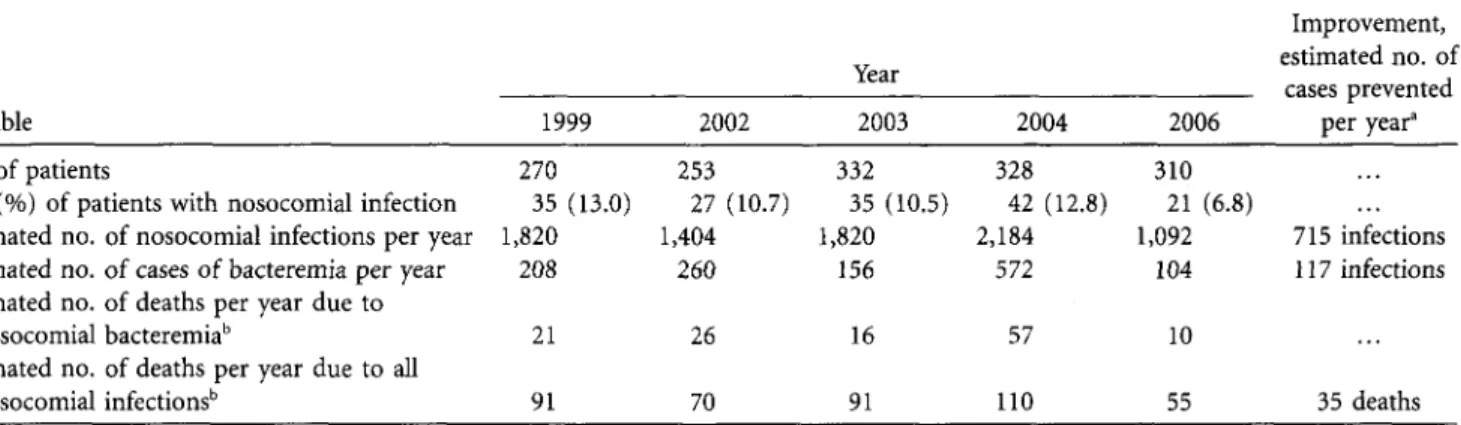
TABLE 2. Estimates of the Impact of Nosocomial Infection Before and After Implementing an Infection Control Program in 2004
Year Variable 1999 2002 2003 2004 2006 Improvement, estimated no. of cases prevented per year" No. of patients 270
No. (%) of patients with nosocomial infection 35 (13.0) Estimated no. of nosocomial infections per year 1,820 Estimated no. of cases of bacteremia per year 208 Estimated no. of deaths per year due to
nosocomial bacteremiab
Estimated no. of deaths per year due to all nosocomial infections'1 21 91 253 27 (10.7) 1,404 260 26 70 332 35 (10.5) 1,820 156 16 91 328 42 (12.8) 2,184 572 57 110 310 21 (6.8) 1,092 104 10 55 715 infections 117 infections 35 deaths NOTE. Results from 1-week prevalence studies are calculated for 1 year.
" Improvement compares the mean value prior to 2004 with the value for 2006. b
We estimate that approximately 10% of the patients with nosocomial bacteremia die from this infection and that approximately 5% of all patients with nosocomial infections die from these infections.
R E S U L T S
Before the intervention to improve hand hygiene, hand hy-giene compliance was observed in accordance with the stan-dardized protocol of the SHHC, as described by Sax and Pittet.1213 The compliance rate (denned as a percentage of hand-hygiene opportunities completed appropriately) was 59.0% for the entire hospital, and compliance rates ranged from 42.1% to 78.3% among different wards. Hand hygiene compliance increased to 79.0% after the intervention and repeated instruction in hand hygiene (range, 65.4%-100.0% compliance). The percentage of improvement in hand hy-giene compliance in various wards ranged from 2.4% to 42.7%. Simultaneous with the improvement in hand hygiene compliance, the consumption of alcohol-based hand rub throughout the hospital increased by 32.2% after the inter-vention (Table 1).
The rate of infection and/or colonization with MRSA at our institution has been slowly increasing, but it is still below 2%. PFGE was performed for all strains recovered from pa-tients at our institution. In 2005, there was an outbreak of MRSA colonization that involved 1 patient and 2 HCWs in a single ward. All patients and HCWs in the ward were screened for MRSA carriage by culture of nasal and pharyn-geal swab samples. The outbreak was controlled after a few days, and no further transmission of MRSA has yet been recorded at our institution. All MRSA isolates recovered after this outbreak originated from outside the hospital and were detected by culture of screening swab samples obtained at admission. Less than 1% of the S. aureus isolates recovered at our institution were methicillin resistant in 2005 and 2006.
The revised guideline for preoperative antibiotic prophy-laxis was implemented in April 2004. In January 2003, the rate of compliance with the guidelines for preoperative an-tibiotic prophylaxis was 29.9%. After instruction was pro-vided and the new guideline was implemented, the compli-ance rate improved to 54.5%. Aberration in the time of
prophylaxis (ie, delayed or premature administration) was the most frequent reason that prophylaxis failed to comply with the guideline. In 2003, preoperative prophylaxis was administered at an incorrect time for 42.3% of procedures; in 2004, prophylaxis was administered at an incorrect time for 31.0% of procedures ( P < .001). Additional dosages were given to 26.5% of patients in 2003 and to 2.3% of patients in 2004 (P < .001). Prophylaxis was administered without in-dication for 11.8% of procedures prior to the intervention, but only for 1% of procedures after the intervention (P = .002).13
Antibiotic therapy that was not prescribed in accordance with the guideline was prescribed for 93 (30.5%) of 305 pa-tients with bacteremia. For 62 of these papa-tients (66.7%), em-pirical therapy was switched to a narrower-spectrum agent or to a first-line agent. More importantly, 26 (27.5%) of these patients received empirical therapy that was not active against the organism they were known to be infected with, or they received no antibiotic therapy at all.14
As an outcome parameter, the prevalence of nosocomial infection at our institution had been documented repeatedly by prevalence studies (Figure). Compared with the mean
val-TABLE 3. Estimates of the Reduction in Costs Associated With Nosocomial Infection
Variable
Estimated value in 2006 No. of nosocomial infections prevented
Cases of bacteremia prevented Money saved, at a cost of €3,000
per nosocomial infection
Estimated cost per year for additional staff and infrastructure
Savings per year
700 110 €2,100,000
€200,000 €1,900,000 NOTE. Values for 2006 are in comparison with the period prior to 2004, that is, the period before the infection control program was implemented.
ues of studies prior to 2006 (11.7%), the nosocomial infection
rate was reduced by 41.2% after the intervention. Before the
intervention, between 10.5% and 13.0% of the patients were
affected by nosocomial infections. After the intervention, the
prevalence decreased to 6.8%. (OR for 2006 compared with
2004, 0.5 [95% CI, 0.27-0.88]; P = .01). In 2004, the number
of hospital admissions was 19,968, and the mean length of
stay was 8.5 days; in 2006, there were 20,059 admissions and
the mean length of stay was 8.5 days. We estimate that this
infection control program prevented approximately 700
nos-ocomial infections at our institution (Table 2). Furthermore,
previous 1-week prevalence studies identified between 3 and
11 (mean, 5) cases of nosocomial bacteremia per week until
2004. In 2006, there were only 2 cases per week (x
2=
5.86; P = .016).
DISCUSSION
Repeated studies of the prevalence of nosocomial infection
in 1999, 2002, and 2003 showed a high prevalence at our
institution. Eventually, 1 additional person (a hospital
epi-demiologist) was employed. Together with the infection
con-trol nurse, and in cooperation with the microbiologist and
the infectious diseases clinician, an infection control program
was implemented. Additional staff members are usually
be-lieved to generate additional costs. Therefore, it is difficult to
convince stakeholders in hospital administrations to finance
infection control programs, because their primary interest is
to reduce healthcare costs.
15The potential impact of an
in-fection control program is difficult to document, and it is
nearly impossible to achieve maximum impact if an infection
control team is understaffed. As do most other preventive
activities, infection control has to fight against its poor image
in the community: prophylaxis itself does not generate profit,
and therefore, it is not attractive. It prevents a potentially
life-threatening situation for the patient, and it prevents costs
for the hospital. The costs that are avoided, however, cannot
be factored into an annual budget. The savings only become
apparent in comparison with costs from previous years before
preventative measures were implemented, when the rate of
nosocomial infection was higher. In contrast, it is easy to
calculate the costs associated with the employment of
infec-tion control staff and the improvement of infrastructure.
Communication is crucial to overcoming this conflict
be-tween clinicians and administrators, because quality
improve-ment is often cost effective, and cooperation is the way to
improve quality of care and reduce costs.
6Infection
preven-tion at hospitals is highly cost effective,
5'
616but finances are
not the only reason to enhance hygiene measures at hospitals.
Ethical concerns, patient safety, and quality-of-care issues are
the main reasons.
7Isolation of patients—for example, those infected and/or
colonized with MRSA—has been criticized as being
ineffec-tive and as increasing the risks for patients in isolation because
if lowers the quality of care.
1718Cepeda et al.
17compared
isolation with standard care in a intensive care unit where
the rate of hand hygiene compliance was 21%; screening for
colonization with MRSA was performed for only
approxi-mately 80% of patients, and patients were not isolated
be-tween the time screening samples were obtained and the time
culture results were available. Thus, in that study, the spread
of MRSA on HCWs' insufficiently disinfected hands could
continue for 2 additional days, until culture results became
available, or even longer if patients were not screened. The
Cepeda et al.
17study does not document the ineffectiveness
of isolation measures; it shows that if isolation is delayed and
adherence to hand hygiene recommendations is low, the
transmission of MRSA is not preventable. The combination
of improved hand hygiene and preventive isolation during
the time between obtaining screening samples and receiving
culture results would probably be more effective.
19However,
this approach is much more feasible at an institution such
as our hospital, where there is a low prevalence of infection
and colonization with MRSA, than it would be in a setting
where MRSA was endemic. The goal of our multimodal
in-tervention was to maintain this low prevalence of MRSA at
our institution and, more generally, in our area, and to reduce
the transmission of pathogens. During the study period, there
was no increase in the incidence of infection or colonization
with MRSA. Our intervention may have contributed to this
result. Observational studies do not allow for the evaluation
of a single intervention, but they may better reflect clinical
practice, and hence, be a more appropriate way than a
ran-domized, controlled clinical trial to show whether it is
pos-sible to prevent the spread of MRSA in a clinical setting.
Preoperative antimicrobial prophylaxis has been
estab-lished as an important measure for decreasing the rate of
postoperative wound infection. The efficacy of preoperative
prophylaxis depends on the time at which it is administered.
20It is frequently prescribed for prolonged periods and may
contribute to the emergence of resistant pathogens.
21The
main goal of this step of our intervention was to standardize
the prophylaxis procedure and, therefore, increase the
com-pliance with the administration time recommended in the
guideline and avoid unnecessary postoperative
administra-tion. The distribution of the guideline on pocket cards made
it easily available and may have contributed to improved
compliance and reduced antibiotic consumption. Webb et
al.
22showed that improved preoperative use of antibiotics
resulted in a significant decrease in surgical site infection. In
our institution, we were not able to quantify the effect of our
intervention on surgical site infections. However, significantly
improved adherence to the prophylaxis guidelines may have
had a positive impact.
At our institution, about one-third of BSIs are hospital
acquired.
14Up to 19% of the nosocomial infections
docu-mented during prevalence studies were BSIs. In the 1970s,
nosocomial BSI had already been shown to cause an excess
length of stay of 14 days and $3,600 in increased direct costs.
23In intensive care units, nosocomial BSI causes attributable
4 2 I N F E C T I O N C O N T R O L AND H O S P I T A L E P I D E M I O L O G Y JANUARY 2 0 0 8 , VOL. 2 9 , N O . 1
costs of $40,000 per survivor, an excess length of stay of 24
days, and an attributable mortality of 35%.
10The improved
management of bacteremia may improve outcome
24and
re-duce costs. Therefore, in our study the infectious disease
cli-nician visited and assessed all patients with blood cultures
positive for a pathogen. For approximately one-third of these
patients, treatment was modified in accordance with
guide-lines. This type of intervention is a kind of secondary
pre-vention. Its goal is simply to improve the management of an
established nosocomial BSI. However, this intervention may
have had a positive impact on outcomes for these patients,
as has been shown in a similar setting.
24In contrast to other studies, our review of interventions at
our institution did not focus on a single intervention. We
report on a multimodal approach that represents a real-life
situation at a tertiary care center. The most important and
effective intervention may have been the hand hygiene
cam-paign; increased adherence to preoperative antibiotic
pro-phylaxis guidelines, supervised isolation of patients colonized
and/or infected with muhidrug-resistant bacteria, and therapy
recommendation for all patients with bacteremia from the
infectious diseases clinician probably have only a minor direct
impact on the rate of nosocomial infection. However, all of
the interventions combined with the frequent presence of
infectious diseases and hygiene staff in wards had an impact
on the perception of hygiene issues and, therefore, may have
indirectly contributed to the reduction of the nosocomial
infection rate, which is a reliable outcome parameter. In
ac-cord with the observed reduction in the prevalence of
nos-ocomial infection, we observed, as surrogate marker, a 32%
increase in the consumption of alcohol-based hand rub after
the intervention. For the first time in the past 10 years, the
hospital pharmacy did not record an increase in the
con-sumption of antibiotics, although the number of admissions
at our hospital has been continuously increasing. The effect
of our infection control program was greater than expected,
but there may have been a Hawthorne effect, and the results
may have been short lived if the interventions were not
con-tinued. To reduce this risk, the program will be continued,
and hand hygiene compliance and prevalence rates for
nos-ocomial infection will be studied annually.
We estimate that our infection control program reduced
the number of nosocomial infections per year by
approxi-mately 700. Assuming a case-fatality rate of 5% for
noso-comial infection,
25'
26the program may prevent approximately
25-50 deaths per year. The costs associated with a single
nos-ocomial infection, based on the literature,
2"
4range between
€1,200 and €6,000,
2or up to $40,000 for BSIs in intensive
care units.
10The additional length of hospital stay added by
a nosocomial infection ranges from 1 to 11 days, and up to
12 days for the 41% of rehospitalized patients who acquired
nosocomial infection during their first hospital stay.
26Thus,
our infection control program may save approximately €1.9
million per year (Table 3). It seems to be highly cost effective,
given that the savings are about 10 times as much as the costs
of the program. Our program demonstrates that the reduction
of nosocomial infection rates by about one-third
5is an
achiev-able goal. The employment of staff qualified to implement
such a program should be one of the first goals for clinicians
and hospital administrators, not only for economic reasons,
but even more importantly, for ethical reasons, and to
im-prove the quality of care and patient outcomes.
Address reprint requests to Thomas Bregenzer, MD, Division of Infectious Diseases, Department of Internal Medicine, Kantonsspital Aarau, 5000 Aarau, Switzerland ([email protected]).
Published in part: Sixth International Conference of the Hospital Infection Society; Amsterdam, The Netherlands; October 15-18, 2006 (Abstract P12.40).
R E F E R E N C E S
1. Semmelweis PI. Aetiologie, Begriff und Prophylaxis des Kindbettfiebers. Pest 1861. Reprint. Leipzig: Ambrosius Barth; 1912.
2. Wilcox MH, Dave J. The cost of hospital-acquired infection and the value of infection control. / Hosp Infect 2000; 45: 81-84.
3. Wenzel RP. The economics of nosocomial infections. / Hosp Infect 1995; 31: 79-87.
4. Zhan C, Miller MR. Excess length of stay, charges and mortality attrib-utable to medical injuries during hospitalization. JAMA 2003; 290:1868-1874.
5. Haley WR, Culver DH, White JW, et al. The efficacy of infection sur-veillance and control programs in preventing nosocomial infections in US hospitals. Am J Epidemiol 1985; 121: 182-205.
6. Meliones J. Saving money, saving lives. Harv Bus Rev 2000; 78:57-67. 7. Herwaldt LA. Ethical aspects of infection control. Infect Control Hosp
Epidemiol 1996;17:108-113.
8. O'Boyle C, Jackson M, Henly SJ. Staffing requirements for infection control programs in US health care facilities: Delphi project. Am } Infect
Control 2002; 30:321-333.
9. Sax H; Swiss-NOSO. Nationwide surveillance of nosocomial infections in Switzerland—methods and results of the Swiss Nosocomial Infection Prevalence Studies (SNIP) in 1999 and 2002 [in German]. Ther Umsch 2004;61:197-203.
10. Pittet D, Tarara D, Wenzel P. Nosocomial bloodstream infection in crit-ically ill patients: excess length of stay, extra costs, and attributable mor-tality. JAMA 1994; 271:1598-1601.
11. Leibovici L, Shraga I, Drucker M, Konigsberger H, Samraz Z, Pitlik SD. The benefit of appropriate empirical antibiotic treatment in patients with bloodstream infections. / Intern Med 1998; 244:379-386.
12. Campagne Suisse d'hygiene des mains. Swisshandhygiene.campaign .2005/2006, organized by Swiss-NOSO. Available at: http://cclin-sudest .chu-lyon.fr/antennes/auvergne/Auvergne_journee05/Uckay_05.pdf. Ac-cessed November 21, 2007.
13. Schmid F, Ebnother C, Heinzer I, Bregenzer T. Can the infectious diseases service improve management of bloodstream infections? In: Programs and abstracts of the 46th Interscience Conference on Antimicrobial Agents and Chemotherapy (Washington, DC). 2005:367. Abstract K-1934.
14. Schmid F, Ebnother C, Wydler J, Bregenzer T. Compliance to guidelines for preoperative antibiotic prophylaxis. In: Program and abstracts of the Swiss Infection Conference (Basel, Switzerland). 2005:36. Abstract p94. 15. Herzlinger RE. Why innovation in health care is so hard. Harv Bus Rev
2006; 84:58-66.
16. Wenzel RP. Does infection control control infections? SchweizMed
Woch-enschr 2000; 130: 119-121.
rooms or cohorts to reduce spread of MRSA in intensive-care units: prospective two-centre study. Lancet 2005; 365: 295-304.
18. Stelfox HT, Bates DW, Redelmeier DA. Safety of patients isolated for infection control. JAMA 2003; 290:1899-1905.
19. Salaripour M, McKernan P, Devlin R, et al. A multidisciplinary approach to reducing outbreaks and nosocomial MRSA in a university-affiliated hospital. Healthc Q 2006; 9: 54-60.
20. Classen DC, Evans RS, Pestotnik SL, Horn SD, Menlove RL, Burke JP. The timing of prophylactic administration of antibiotics and the risk of surgical-wound infection. N EnglJ Med 1992; 326: 281-286.
21. Kernodle DS, Barg NL, Kaiser AB. Low-level colonization of hospitalized patients with methicillin-resistant coagulase-negative Staphylococci and emergence of the organisms during surgical antimicrobial prophylaxis.
Antimicrob Agents Chemother 1988; 32:202-208.
22. Webb AL, Flagg RL, Fink AS. Reducing surgical site infections through
a multidisciplinary computerized process for preoperative prophylactic antibiotic administration. Am J Surg 2006; 192:663-668.
23. Spengler RF, Greenough WB 3rd. Hospital costs and mortality attributed to nosocomial bacteremias. JAMA 1978; 240:2455-2258.
24. Fluckiger U, Zimmerli W, Sax H, Frei R, Widmer AF. Clinical impact of an infectious disease service on the management of bloodstream in-fection. Eur J Clin Microbiol Infect Dis 2000; 19:493-500.
25. Wisplinghoff H, Bischoff T, Tallent SM, Seifert H, Wenzel RP, Edmond MB. Nosocomial bloodstream infections in US hospitals: analysis of 24,179 cases from a prospective nationwide surveillance study. Clin Infect
Dis 2004; 39:309-317.
26. Kirkland KB, Briggs JP, Trivette SL, Wilkinson WE, Sexton DJ. The impact of surgical-site infections in the 1990s: attributable mortality, excess length of hospitalization, and extra costs. Infect Control Hosp