Physicians’ Communication Behavior in Pediatric Context:
Investigating Parents’ Proximal Outcomes
Gemmiti, Marco
Sora (Italien)
Dissertation zur Erlangung der Doktorwürde an der
Philosophischen Fakultät der Universität Freiburg (Schweiz)
Genehmigt von der Philosophischen Fakultät auf Antrag der Professoren
Petra Klumb (1. Gutachter) und Marianne Schmid Mast (2. Gutachter)
Freiburg, den 06.03.2015
Prof. Dr. Marc-Henry Soulet, Dekan
2
Acknowledgements
I would first like to thank my supervisor Prof. Dr. Petra Klumb for her support and encouragements through all these years. Petra, I’ve learned and benefitted a lot from your scientific competence and advice. Finalment, on a reussi!
I would also thank Dr. Johannes Wildhaber and Dr. Cosette Pharisa for their cooperation within this thesis project, and Selei Hamed for helping with the data collection.
I’m grateful to my colleagues and former colleagues of the Department, Thomas, Christine, Regina, Anik, Alain, Andreas, and all the others at the Department of Psychology who contributed to create a pleasant and inspiring working atmosphere. Thank you, Annalena and Regina, who proofread parts of this doctoral dissertation. Also thanks to the students who helped me with the coding of the data: Miriam Zeiter, Cyril Chariatte and Rebecca Thoma.
Finally, I’m particularly grateful to my family and friends for their love, support and encouragements. Lyne, you have been patient, and your support and love have been precious during all these years. Thank you Timothée and Gabriel for your patience as well, and your cheering up, especially during the final stage of this thesis. Oui, papa a enfin fini!
3
Table of contents
1. Introduction...………..4
1.1. Studying parents in the pediatric context………...6
1.1.1. Childhood illness and parental self-regulation………...7
1.2. Importance of the medical visit………....11
1.3. The medical interview as stressful event……...………...11
1.3.1. Physicians’ affective communication behavior...……….12
1.4. Physicians’ negative word use and parents’ positive affect……….13
1.4.1. Affect dependent satisfaction with care………..………..14
1.5. Importance of parents’ satisfaction and recall of medical information…………...14
1.5.1. Satisfaction………...14
1.5.2. Recall of medical information………..15
1.5.3. Physicians’ speech complexity..………...16
1.5.4. Physicians’ interrupting behavior….………...17
1.6. Summary of research questions………..………..18
2. Overview of Papers………19
2.1. Paper 1: Physicians’ affective communication behavior attenuates parents’ stress response during the medical interview………..22
2.2. Paper 2: Pediatric Consultations: Negative word use and Parent Satisfaction..….48
2.3. Paper 3: Physicians’ speech complexity and interrupting behavior in the pediatric context….………...75
3. Summary and integration………....106
3.1. The medical interview as stressful event…..………...107
3.2. Physicians’ affective communication behavior………...108
3.3. Physicians’ negative word use………....109
3.4. Physicians’ speech complexity and interrupting behavior………...110
3.5. Practical implications………...112
3.6. Future directions………...114
3.7. Conclusion………...116
4. References………...118
4
1. Introduction
Man, you don’t have to play a whole lot of notes. You just have to play the pretty ones.
Trumpeter Miles Davis
This quote from the renowned musician and composer Miles Davis reflected his personal approach towards music, which not only revolutionized jazz music, but music in general. Besides his technical ability, he distinguished himself as an improviser that knew exactly which note to play at the right time, thus making each piece he played a unique musical experience for the listener.
Often, the medical practice and relationship between physicians and patients is compared to jazz music (Haidet, 2007). As Shaughnessy and colleagues state it:
Music is an apt metaphor for the practice of medicine. The best medical practice, like the best music, melds technical skill and expertise with individual artistry. The new paradigm of evidence-based medicine and the apparently conflicting concept of clinical experience represent these 2 aspects of medicine. To many physicians, evidence-based medicine seems rigid, highly structured, and uninspiring - as stilted and regimented as a poorly performed Bach fugue. In contrast, economists, academics, and health authorities view the enigmatic and seemingly unpredictable use of clinical experience as analogous to punk rock: uncontrollable, chaotic, and obeying few rules.
The best medical practice is similar to neither baroque nor grunge music; instead, it is like good jazz, combining technical mastery with the artistry of focused personal improvisation. Clinical jazz combines the structure supplied by patient-oriented evidence with the physician’s clinical experience to manage situations of uncertainty, instability, uniqueness, and conflicting values. (Shaughnessy, Slawson, & Becker, 1998, p. 425)
5 The comparison of the physicians’ clinical practice with jazz music is a risky affair, as this may give the impression that physicians are encouraged to engage in hazardous and experimental behaviors at the cost of the patient. But this is not the case. Rather, the above-mentioned statement illustrates two important aspects of medical care, that are well described by Paul Haidet (2007, p.168):
Physicians who focus on only a fixed set of questions or follow the same sequence of inquiry for every patient will miss opportunities to hear the patient’s perspective, build partnerships, and bring their own selves to the work of patient care. Physicians must be skilled improvisers, able to efficiently explore the unique aspects of a patient’s illness and communicate in a way that is in harmony with that patient’s style, all while managing the tension between new territory and the established patterns inherent in their communicative and clinical training.
Exploring the patients’ world and communicating in a way that fits best the patients’ needs and preferences is mirrored in the concept of patient centered communication. This concept has become a central element of high quality health care (Epstein et al., 2005), and is receiving increased attention in health care communication research (Street, Cox, Kallen, & Suarez-Almazor, 2012). The underlying rationale is that physicians engage in a variety of communicative acts that not only reflect evidence-based practice, but also need to be adapted to the uniqueness and individual needs of the person requiring medical care.
Research in health care communication has evidenced a variety of beneficial effects of physicians’ effective communication behavior on patient outcomes, including satisfaction (Beck, Daughtridge, & Sloane, 2002; Buller & Buller, 1987; DiMatteo, Taranta, Friedman, & Prince, 1980), compliance and adherence to medical treatment (Burgers, Beukeboom, & Sparks, 2012; Ha & Longnecker, 2010; Hall, Roter, & Katz, 1988), better adjustment to illness (Arora, 2003), lowered distress (Fogarty, Curbow, Wingard, McDonnell, & Somerfield, 1999; Roter et al., 1995) and disclosure of concerns (Maguire, Faulkner, Booth, Elliott, & Hillier, 1996). Albeit theses positive advancements, research in health care communication has predominantly focused on the physician-patient dyad. But often, health care interactions involve more than two participants. This is for example the case in the pediatric context, where parents come to the consultation for their child’s illness (Bensing, van Dulmen, & Tates, 2003).
6 1.1. Studying parents in the pediatric context
The pediatric setting differs from the classical physician-patient interaction, as it occurs within the context of the family system involving the child and the parent (Nikendei et al., 2011), where both may yield important roles (Cohen & Wamboldt, 2000). Thus, physicians are challenged to take parents’ needs into account in addition to the needs of the child. Although the child as patient is the primary target of the medical visit, his involvement is rather small and age-dependent (Tates & Meeuwesen, 2001). Parents, therefore, remain physicians’ primary conversational partners during the medical encounter. Furthermore, the child’s health improvement and recovery depend as well on parents’ implication and adherence to the treatment plan established by the physician (Hart, Drotar, Gori, & Lewin, 2006; Waisman et al., 2003). Furthermore, parents and family members are the closest people in a child’s life, and a main source of support during such a difficult life period (Saleeba, 2008). Parents know the needs and expectations of their child during illness best, especially if the child needs to be hospitalized.
In the pediatric setting, communication research has received less attention compared to the traditional physician-patient context (Ammentorp, Mainz, & Sabroe, 2005; Cohen & Wamboldt, 2000; Levetown, 2008; Nikendei et al., 2011), and little is known about physicians’ communication behaviors that are related to parental outcomes. Communication behaviors examined in the pediatric context are limited to physicians’ instrumental and affective behaviors (Wasserman, Inui, Barriatua, Carter, & Lippincott, 1984) and mainly related to parental satisfaction (Hatcher & Richtsmeier, 1990; Jessee, Nagy, & Downs, 2001; Lew, Lalwani, & Palermo, 2010; Lewis, Scott, Pantell, & Wolf, 1986; Magaret, Clark, Warden, Magnusson, & Hedges, 2002; Swedlund, Schumacher, Young, & Cox, 2012). Some studies have focused on parents’ adherence to treatment recommendations, and discussion of psychosocial concerns (Hart, Kelleher, Drotar, & Scholle, 2007; Nobile & Drotar, 2003). Another outcome that has received attention in relationship with physicians’ medical jargon use (Waisman et al., 2003) is parental understanding and recall of medical information
(Grover, Berkowitz, & Lewis, 1994). The necessity of studying parents in health care communication becomes obvious given the poor knowledge and scarcity of research, but also because communication between parents and health care professionals is not optimal (Hart et al., 2006). Parents are often dissatisfied with their child’s health care experience (Fisher & Broome, 2011), and this may be attributed to the poor communication of healthcare professionals (Studdert et al., 2003), or emanate from discrepancies in parents’ and
7 physicians’ attitudes and expectations concerning the medical visit and the child’s care (Hart et al., 2006).
In contrast to the child and the classical patient, parents perceptions and affective experiences are not directly related to personal physical threat, but primarily affected by multiple demands and concerns elicited by the child’s illness. Thus, although parents play an important role in communicating with the physician, supporting the child and contributing to its health care, their personal stress and strain increases as the care giving burden accumulates and interferes with everyday personal and family functioning (Major, 2003). As a consequence, parental resources are taxed and their well-being and health are affected as well. This requires of parents to adapt their behaviors and apply appropriate coping strategies in order to handle the situation (Carver & Scheier, 1999; Lazarus & Folkman, 1984).
In this thesis, I suggest that the medical encounter represents an important event and resource for parents fostering positive outcomes. These outcomes, in turn, are beneficial for the child’s health, as they may for example promote parents’ adherence to the medical treatment, but as well help parents better adapt to the multiple demands and concerns elicited by the child’s illness.
Thus, the aim of this thesis is to investigate physicians’ communication behaviors that are susceptible to influence important proximal outcomes in parents during the medical encounter. These behaviors, on the other hand, may lead to long-term outcomes that not only affect the child’s health, but may foster parents’ self-regulatory capacities as well. The current chapter serves as the theoretical embedding on which this work and research questions are built on. Based on an empirical study, the following chapter presents three papers that investigate my articulated research questions, conceived as manuscripts and presented according to the guidelines of the journal in which they have been published or to which they will be submitted. Chapter three will summarize and integrate the findings of the papers, discuss practical implications and provide suggestions for future research.
1.1.1. Childhood illness and parental self-regulation
The rationale of this thesis is embedded in the context of self-regulation theory. This approach places the medical encounter in a broader perspective, and accentuates the thesis’ contribution with regards to the demands that parents have to face and cope with during childhood illness.
8 The concept of self-regulation, as postulated by Carver and Scheier (1999; 2001), is viewed as a process by which individuals pursue and attain desired goals or conditions. Personal goals are therefore at the center of self-regulation, as these motivate human behavior, direct activities and consequently structure peoples’ life on a short and long-term basis (Carver & Scheier, 2001; Wrosh, Scheier, Miller & Carver, 2012). Consequently, self-regulatory capacities contribute to adaptive behaviors (Carver & Scheier, 1999; 2001; Mann, de Ridder, & Fujita, 2013), enhance subjective well-being as well as physical health (Baumeister & Vohs, 2007; Wrosch, Scheier, Miller & Carver, 2012). In this context, personal health, as well as the health of family members is an important value (Bowling, 1994) that contributes to the flourishing of personal and family well-being (Lavee, McCubbin, & Olson, 1987; Ryff & Keyes, 1995; Ryff & Singer, 2000).
Individuals may engage in many self-regulatory efforts in order to sustain good health, mainly in keeping positive lifestyle habits including healthy nutrition, physical activity, abstinence from smoking or adequate stress management (Bandura, 2005; Scheier & Carver, 2003). This is also the case for parents who engage in various child-related behaviors, ranging from hygiene practices, healthy and regular nutrition to using a car seat for the children when driving (Yoo, Slack, & Holl, 2010), in order to ensure the child’s health and protection (Kai, 1996). Even if parents exert a certain amount of control over their own health and the health of their family, external events like the illness of a child may interfere with their goal of sustained health. From a stress-theoretical perspective, such situations where important goals are at stake and impede goal attainment are perceived as stressful and require an appropriate response from the parent (Folkman & Lazarus, 1985; Lazarus & Folkman, 1984). The illness of a child places parents in a position of weakness, because they face a plethora of questions and concerns that are outside of their realm of competency (Kai, 1996). Consequently, parents’ usual self-regulatory strategies are no longer sufficient to face the problem and require additional effort and resources to overcome the goal hindrance generated by the child’s illness.
Taking a closer look at the healthcare literature, the illness of a child is a disruptive event eliciting concerns both in the child and parents (Jessee et al., 2001). According to Fernandez-Castillo and colleagues (Fernández-Castillo, Vílchez-Lara, & López-Naranjo, 2012), concerns affecting parents may be related to the disease itself, including the child’s symptoms and physical condition as well as the severity of the situation. Another concern relates to the treatment and care received, which may embed clinical interventions,
9 information about the patient, and aspects related to hospitalization. Furthermore, concerns may also be attributed to the alteration of parental roles and, in case of hospitalization of the child, the parents’ role at the hospital (Hallström, Runesson, & Elander, 2002). Consequently, parents’ attention is inevitably absorbed by such a situation, requiring to engage in illness-related activities that need to be integrated into existing daily family and work routines (Streisand, Kazak, & Tercyak, 2003). These supplemental demands may be challenging, as these impair parental self-regulation of effective day-to-day functioning (Carver & Scheier, 1999) and interfere with domains relating to home, work and social relationships (Moskowitz, Shmueli Blumberg, Acree, & Folkman, 2012).
Caring for the sick child and providing adequate emotional support requires time and attention that is not available for siblings and other family members (Hopia, Tomlinson, Paavilainen, & Astedt-Kurki, 2005; Streisand, Braniecki, Tercyak, & Kazak, 2001). This time consuming aspect compels parents to seek alternative arrangements, for example housekeeping, support for siblings and other home-related obligations (Last & Grootenhuis, 1998). For working parents, reorganization of their time may also imply modulation of their work hours, or taking a day or week off from work (Witt & DeLeire, 2009). In cases where the child’s illness is chronic, parents may even accept career loss in order to provide the adequate care to their child (Gravelle, 2008; Rasmussen, Wrosch, Scheier, & Carver, 2006). Marital functioning may be affected as well. For example, couples experience greater marital role strain, have difficulties accepting role changes and communicating with their spouses, resulting in fewer positive and supportive interactions (Da Silva, Jacob, & Nascimento, 2010; Quittner et al., 1998). In addition to family and work dynamics, social ties, as well as interactions with important others may likewise suffer during childhood illness (Stein & Riessman, 1980).
Besides the multiple demands they have to deal with, parents are faced with threat to their child’s life and face uncertainty about the illness and recovery (Boman, Viksten, Kogner, & Samuelsson, 2004; Bonner, 2005; Hallström et al., 2002). Parents also report feeling helpless, being in a weak position and fear losing control over the situation (Hallström et al., 2002). Parents’ perception of illness threat may already start by simply observing the child’s symptoms or physical condition, like fever or coughing (Fernández-Castillo et al., 2012; Kai, 1996). This negative perception is even more accentuated for parents with little experience in childcare (Hansen, 1994), or with increased severity of illness (Boman et al., 2004).
10 In view of the multiple demands and concerns that are raised by the child’s illness, parents may feel overwhelmed and lacking the necessary resources to manage this stressful situation (Lazarus & Folkman, 1984). Stressful events adversely impact the affective, bodily and behavioral system of an individual (Cohen & Wills, 1985; Viswesvaran, Sanchez, & Fisher, 1999), and a child’s illness is no exception. Parents with a sick child report higher psychological distress, anxiety, depressive symptoms, and exhaustion (Miller, Cohen, & Ritchey, 2002; Streisand, Mackey, & Herge, 2009; Vrijmoet-Wiersma et al., 2008; Witt, Gottlieb, Hampton, & Litzelman, 2009). The child’s’ illness may as well negatively affect physiological parameters in parents, such as changes in cortisol. For example, parents with chronically ill children show flatter diurnal cortisol slopes, which are a marker of a dysregulated stress response system (Miller et al., 2002).
How parents perceive and react to the situation is not only dependent on the child’s illness itself, but modulated by environmental and personal factors (Moos & Schaefer, 1993). For example, ongoing life stressors like work stress may negatively contribute to parents’ appraisal and make them perceive the situation more stressful. On the other hand, possessing valuable social resources like family members, friends or community may function as social support and buffer the impact of the child’s illness on parents’ strain (Thoits, 2011; Uchino, 2009). Personal characteristics have also the potential to influence parental appraisal and reaction to the situation (Moos & Schaefer, 1993). For example, older parents may have more experience with childhood illness and perceive it as less threatening compared to young parents. Furthermore, optimism seems to be an important personal characteristic that determines how individuals respond to illness threats. Past research suggests that optimistic individuals perceive health problems as less threatening and adopt more proactive coping strategies compared to pessimistic individuals (Scheier & Carver, 2003).
Considering all of the above, parents cannot sufficiently self-regulate anymore and experience a valuable amount of emotional and psychological distress. With this background, the encounter with the physician is of high significance for parents. In the following section, I will discuss the importance of the medical interview in the pediatric context, and the role that physicians’ communication behavior may have on important parental outcomes relevant for the child’s health improvement and parental self-regulation.
11 1.2. Importance of the medical interview
The medical interview is the primary mean through which physicians carry out their work and plays a major role for the relationship between physician and patients (Cole & Bird, 2014; Lazare, Putnam, & Lipkin, 1995). Based on previous conceptual considerations (see Cohen-Cole, 1991; Lipkin, Lazare & Putnam, 1995), Roter and Hall (2006) suggest four functions that can be attributed to the medical interview: 1) physicians gather data/collect information, 2) educate and counsel their patients, 3) respond to patients’ emotions and 4) facilitate patient participation in the dialogue. Thus, the medical interview is crucial in determining the problem of the patient and proposing the appropriate treatment. As discussed previously, physicians’ effective communication behaviors during the medical encounter are positively related to a number of patient outcomes, such as satisfaction or adherence to medical treatment. For parents, the medical encounter represents a significant event as well. They rely on physicians’ competence and expertise concerning diagnosis, treatment, or prognosis concerning their child. Coming to the consultation, therefore, is likely to involve uncertainty and fear, since parents want to know what is happening to their child and apprehend the outcome of the medical visit.
1.3. The medical interview as stressful event
Several authors have argued that the medical visit is a specific form of interpersonal encounter that may feature stressful characteristics (Finset, Graugaard, & Holgersen, 2006; Van Dulmen & Bensing, 2002), but empirical evidence in this domain is scarce. A study of Bensing and colleagues (Bensing, Verheul, & van Dulmen, 2008) observed elevated anxiety levels in patients entering the consultation room. More suggestions can be drawn from studies investigating physiological processes occurring during the medical encounter. Although small, evidence suggests that the medical encounter may be related to psychophysiological responses in patients and physicians (Finset, 2012; Hulsman, Smets, Karemaker, & de Haes, 2011). Physiological reactions have been observed and indicate that the interview is stressful for physicians (Hulsman et al., 2010; van Dulmen, Tromp, Grosfeld, ten Cate, & Bensing, 2007), but the picture is unclear concerning patients.
It is well documented that situations involving threat and low controllability are perceived as stressful, and typically involve the activation of the
hypothalamic-pituitary-12 adrenal-axis (HPA) and the release of the steroid hormone cortisol (Denson, Spanovic, & Miller, 2009; Dickerson & Kemeny, 2004). In the pediatric context, the encounter with the physician may be perceived as stressful by parents because of the interactional character of the encounter itself and the child’s health that is at stake. Given that existing research findings are not conclusive, Paper 1 analyzes the impact of the medical interview on parents’ stress response, and investigates if the encounter with the physician is an event stressful enough to elicit a cortisol response in parents.
1.3.1. Physicians’ affective communication behavior
Stressful features related to the medical encounter, like uncertainty and lack of information, accentuate parents’ dependence on physicians’ expertise and communication regarding the diagnosis, treatment and prognosis of the child’s illness. This may explain why parents place much importance on physicians’ supportive communication during the medical visit (Bradford, Roedl, Christopher, & Farrell, 2012a; Coulson, Buchanan, & Aubeeluck, 2007), and report assistance with family and social support as their greatest unmet need during the illness of their child (Levetown, 2008). Physicians’ transmission of information and communication behavior is therefore crucial to the medical encounter, and may function as social support (Street, Makoul, Arora, & Epstein, 2009).
Especially physicians’ affective communication has been suggested to be effective in situations that are characterized by threat and low controllability (Uchino, Cacioppo, & Kiecolt-Glaser, 1996), as it might buffer the stress response in parents elicited by the medical encounter (Bensing & Verheul, 2010). Adopting a warm and compassionate communication style may encourage a reappraisal of the situation (Cohen & Wills, 1985), enhance parental self-esteem and self-efficacy to face challenging situations in the future, and increase their trust in the physician (Bensing, Schreurs, & De Rijk, 1995; Schwarzer & Knoll, 2007). The reduction of the stress response in parents plays an important role to their perception of the child’s illness and recovery prognosis. In addition, stress reduction is also related to improved well-being and increased positive affect, which may prevent further distress and help generate personal resources in the longer term (Fredrickson, 2000; Garland et al., 2010).
Until now, there has been no effort to investigate the effects of physicians’ affective communication behavior on parental stress experienced during the medical encounter. The
13 few studies available have been conducted with adult patients and suggest that empathic statements may lower distress in patients (Fogarty et al., 1999) and their autonomic activity during the medical encounter (Sep, van Osch, van Vliet, Smets, & Bensing, 2014). Thus, in addition to measuring parents’ stress during the medical visit, Paper 1 analyzes if physicians’ affective communication behavior is able to attenuate this stress response in parents.
1.4. Physicians’ negative word use and parents’ positive affect
During the medical encounter, the modalities and valences through which physicians convey their communication are important as well. To this effect, physicians’ language use has not received much attention in the literature, but is thought to influence patients’ perceptions during the medical visit (Cyna & Lang, 2010; Häuser, Hansen, & Enck, 2012; Heritage, Robinson, Elliott, Beckett, & Wilkes, 2007; Lang et al., 2005). Especially, employing words with negative emotional valence seem to adversely affect patient outcomes. For example, patients undergoing medical procedures reported higher levels of pain and distress when physicians employed phrases containing words with negative emotional content, like “sting” or “burn”, compared to patients in the control group (Lang et al., 2005). In the pediatric context, parents do not undergo medical procedures and their involvement is rather limited to verbal interactions with the physician. It is therefore interesting to investigate if the same underlying mechanisms would apply to parents during the medical visit.
Words do impact social interactions (Pennebaker, Mehl, & Niederhoffer, 2003), it is therefore legitimate to assume that physicians’ negative word use may adversely relate to parents’ affective experiences during the medical encounter. To this effect, focusing on parents’ positive emotions is of special interest. The reason lies in the critical role that positive emotions play for emotion regulation. Research in this domain has evidenced that positive emotions undo the aftereffects of negative emotions and build enduring personal resources (Fredrickson, 2000; Garland et al., 2010). Interestingly, no study has attempted to focus on patients’ or parents’ positive moods during the medical encounter. Finset and Mjaaland (2009) have noticed this drawback in health care research and advocate that physicians foster positive emotions in patients and thus actively engage in assisting their affect-regulation. Investigating communication behaviors that may influence positive emotions of parents are therefore of great utility in health care communication, as these are beneficial for parents in the short and long term. To answer this question, one goal of Paper 2
14 is to investigate if physicians’ negative word use is negatively related to parents’ positive mood during the medical visit.
1.4.1. Affect-dependent satisfaction with care
Affective states are not only important for parents’ well-being, but may also contribute as to how they evaluate the quality of care received. It is known that satisfaction ratings depend mainly on the patient level, and several individual characteristics like age, gender, health status and expectations have been identified so far (Bjertnaes, Sjetne, & Iversen, 2011, Crow et. al, 2002). Individuals’ temporary affect as a source of variation in satisfaction ratings has not been investigated in healthcare communication, but is known to serve as a basis for the formation of evaluative judgments (Forgas, 2008) and has been applied to consumer satisfaction (Oliver, 1980; 1993) and job satisfaction (Judge & Ilies, 2004; Scott & Judge, 2006). In the health care setting, patient satisfaction is thought to involve cognitive and affective components, reflecting therefore the subjective nature of the evaluation (Gill & White, 2009). Thus, Paper 2 pursues two further goals. It investigates if parents’ momentary positive mood is related to their evaluation of the medical visit, and analyzes if part of the variation in satisfaction ratings is related to physicians’ negative word use.
1.5. Importance of parents’ satisfaction and recall of medical information
1.5.1. Satisfaction
An important consequence of parental satisfaction with the medical visit is their compliance and adherence to the treatment plan established by the physician (Lewis et al., 1986). Parental adherence is a significant topic in health care, as patients or parents’ noncompliance has negative consequences on a variety of domains. Noncompliant patients do not fully benefit of the medical treatment, and consequently have poor health outcomes, lower quality of care and increased health care costs (van Dulmen et al., 2007). Adherence to medical treatment is even more critical in chronic disease, because of the long-term aspect of disease-management and its impact on daily activities. Improving adherence in the pediatric context is especially important, the impact on children’s health outcomes seems to be stronger compared to adults (DiMatteo, Giordani, Lepper, & Croghan, 2002). In fact, the meta-analytic
15 review of DiMatteo and colleagues (DiMatteo et al., 2002) reports that non-adherence in the pediatric setting may compromise the health benefits of treatment by 71%. Thus, parents’ adherence to the treatment plan will affect long-term outcomes in their children like symptom resolution and improved health (Stewart, 1995). While parents participate in improving the health of their child, this is also effective in reducing their uncertainty and distress, as they may observe improvements in their child’s health status and establish a sense of mastery over the illness.
1.5.2. Recall of medical information
Parental recall of medical information is another important outcome for parents and patients in general. Besides being related to satisfaction, it is also associated with better compliance and adherence to medical treatment, (Kessels, 2003; Watson & McKinstry, 2009; Zeng-Treitler, Kim, & Hunter, 2007). Furthermore, patients’ better recall also improves their disease management and decreases anxiety (van der Meulen, Jansen, van Dulmen, Bensing, & van Weert, 2008).
Albeit its importance, past research has shown that patients’ recall of medical information is not optimal (Watson & McKinstry, 2009). Kessels (2003) reports that patients immediately forget 40 to 80% of the information received during the medical encounter, and half of the information remembered is incorrect. Studies investigating parental recall do not depict a better situation. Dawson and colleagues (Dawson, Taylor, Williams, Taylor, & Brown, 2014) report that parents only recall 39% of the information received when asked two weeks after the medical visit. Recall right after the medical encounter is generally higher, but still not optimal. Waisman and colleagues (2003) report parents to recall 80% of the type, frequency and duration of the medication received, without asking them about the name and dosage of medication. A study from Bayldon and colleagues (Bayldon, Glusman, Fortuna, Ariza, & Binns, 2013) revealed that parents were able to name 71% of the medication prescribed by the physician, but only 37% recalled the medication instructions received. The reasons for poor recall in patients or parents have been studied to some extent (see Kessels, 2003; Watson & McKinstry, 2009), and may depend on aspects related to the physician (e.g. medical jargon use), how the information is transmitted (e.g. verbal vs. written) or to aspects related to the patient (e.g. education).
16 In the next section, I will propose two communication behaviors - physicians’ speech complexity and interrupting behavior - that have not been investigated in conjunction with parents’ satisfaction and recall of medical information, and discuss their importance for the mentioned outcomes.
1.5.3. Physicians’ speech complexity
Physicians’ speech complexity has received little attention in general health care communication, and the pediatric context is no exception. This is surprising, as parents expect health information to be of high quality, and provided in an effective and efficient manner (Fisher & Broome, 2011; Levetown, 2008). Furthermore, physicians’ clear and comprehensible language is critical for parent’s understanding, recall and satisfaction (Brown & Wissow, 2008; Selic, Svab, Repolusk, & Gucek, 2010).
Physicians possess more knowledge and expertise compared to patients or parents, and they may use complex speech as a means to control the course of the medical visit (Sakai & Carpenter, 2011). For example, physicians’ employment of medical jargon is often used as a marker of complex speech, and associated with physicians’ dominance behavior (Schmid Mast, 2003; Schmid Mast, Hall, Klöckner Cronauer, & Cousin, 2011). This may affect parents in different ways. It may inhibit parents to ask questions, and consequently stop the communication process (Jessee et al., 2001). This behavior clearly counteracts parents’ expectations (Hallström et al., 2002; Levetown, 2008) to receive information in a clear and simple way. Consequently, parents’ satisfaction may be negatively affected. Furthermore, complex speech is known to tax memory and processing capacities (Ley, 1979; Wingfield et al., 2003), and thus impedes parents’ retention of medical information (Jackson, 1992).
Past research on physicians’ complexity of language has predominantly focused on medical-jargon use or readability of written health information (Freed et al., 2013; Howard, Jacobson, & Kripalani, 2013; Jackson, 1992; van Weert et al., 2010; Wilson & Wolf, 2009), but physicians’ speech complexity in terms of syntactic and semantic complexity has rarely been studied (Bradshaw et al., 1975; Ley, 1979). Therefore, Paper 3 investigates to what extent physicians’ speech complexity, in terms of syntactic and semantic complexity, relates to parental satisfaction and recall of medical information
17 1.5.4. Physicians’ interrupting behavior
Studies investigating physicians’ interruptions have overall been descriptive in nature. Physicians tend to interrupt patients already during the first minute of talk (Beckman & Frankel, 1984; Marvel, Epstein, Flowers, & Beckman, 1999; Rhoades, McFarland, Finch, & Johnson, 2001), and use more non-supportive interruptions compared to patients (Li, Krysko, Desroches, & Deagle, 2004; Menz & Al-Roubaie, 2008). Differences in frequencies of interruptions are not coherent across studies. Street and Buller (1988) and Li (2001) found no differences in amounts of interruptions. A study from West (1984) found physicians to interrupt more than patients, whereas Arntson, Droge and Fassl (1978) as well as Irish and Hall (1995) reported a reversed pattern of interrupting behavior during the medical visit. These ambivalent findings may be attributed to the different definitions being used for investigating interruptions (Li et al., 2004).
The above findings have laid out a foundation for the study of interruptions, but do not show if and how physicians’ interruptions affect patient outcomes. The only study that has linked physicians interrupting behavior to patient outcomes shows that physicians’ overall interruptions negatively affect patients’ satisfaction with the medical visit (Hall, Irish, Roter, Ehrlich, & Miller, 1994). However, the authors did not distinguish between various styles of interruptions, which may differentially affect patient outcomes. Li et al. (2004) argue that interruptions are more a question of style rather than of frequency, and consequently propose to conceptualize interruptions into supportive and non-supportive ones.
According to Li et al. (2004), supportive interruptions aim to bring clarification and foster the information exchange between physician and patient, and thus uphold the conversation initiated by the parent. These characteristics are consistent with physicians’ communication behaviors commonly designated as affiliative (see Buller & Buller, 1987; Kiesler & Auerbach, 2003). The goal of such behavior is to establish and maintain a good relationship with the patient. The opposite is applicable for non-supportive interruptions. These may be employed to control the course of the medical visit and interfere with the conversational flow, and thus reflect physicians’ dominance during the medical encounter (Schmid Mast et al., 2011). Affiliative behaviors are associated with increased satisfaction both in patients and parents (Beck et al., 2002; Swedlund et al., 2012), as well as recall of medical information in patients (Hall et al., 1988; Roter, Hall, & Katz, 1987). In contrast, physicians’ dominant behavior negatively relates to patients’ satisfaction and recall of
18 medical information (Hall et al., 1988; Roter et al., 1987). Based on these considerations, Paper 3 investigates the influence of physicians’ interruptions - supportive and non-supportive – on parents’ satisfaction and recall of medical information.
1.6. Summary of research questions
In my thesis, several research questions are investigated. In the following, I will summarize the research questions that will be addressed in the 3 papers presented in the following chapter.
Paper 1: Does the medical encounter represent a stressful event eliciting a psychophysiological response in parents in form of an increase in cortisol? Is physicians’ affective communication behavior effective in attenuating this stress response in parents during the medical encounter?
Paper 2: Does physicians’ negative word use decrease parents’ positive affect as well as their satisfaction with the medical encounter? Does parents’ positive affect mediate the relationship between physicians’ negative word use and parents’ satisfaction?
Paper 3: Is physicians’ speech complexity negatively related to parental recall of medical information and parental satisfaction with the medical visit?
Do physicians’ interruptions negatively affect parental recall of medical information and parental satisfaction with the medical visit? Specifically, do supportive interruptions positively affect parental recall of medical information and parental satisfaction with the medical visit? Do non-supportive interruptions negatively affect parental recall of medical information and parental satisfaction with the medical visit?
19
2. Overview of Papers
Paper 1: Physicians’ affective communication behavior attenuates parents’ stress response during the medical interview
Abstract
Objective
To investigate whether the medical interview in the pediatric context generates a stressful response in parents in form of heightened cortisol activity, and whether pediatricians’ empathetic communication is able to attenuate this stress response.
Methods
68 parents were recruited at pediatric out-patient and in-patient consultations. Salivary samples were collected between 60 and 30 minutes prior to the consultation, shortly before the consultation, 20 minutes as well as 45 minutes after the consultation. 19 pediatricians participated in the study and effectuated the medical visit as usual. We videotaped the consultations and coded pediatricians’ affective communication using the RIAS and the Four Habits Coding Scheme.
Results
Parents’ cortisol increased during the medical visit with a peak at 20 minutes after the medical encounter. Furthermore, multilevel analysis revealed a lesser increase in parents’ cortisol response associated with pediatricians’ levels in supportive communication behaviors.
Conclusion
As indicated by their humoral stress responses, the medical encounter was stressful for the parents. Pediatricians’ affective communication modulated this stress response in that more supportive communication was related to smaller cortisol increases. Pediatricians’ affective communication behavior during the medical visit can alleviate parents’ distress and anxiety, representing a source of social and emotional support.
20 Paper 2: Pediatric Consultations: Negative-Word Use and Parent Satisfaction
Abstract
Objective
This study investigates the impact of pediatricians’ negative-word use on parents’ affective quality and satisfaction judgments during the medical encounter.
Methods
In total, 68 medical consultations were videotaped and pediatricians’ communication
transcribed for analysis. We employed the Linguistic Inquiry and Word Count application in order to measure the amount of negative words used by the pediatrician. Parents rated their momentary mood as well as their satisfaction at the end of the encounter.
Results
Pediatricians’ negative-word use was negatively linked to parents’ affect quality, but not with the satisfaction ratings after the medical visit. Although there was no direct effect, our results revealed an indirect effect of pediatricians’ negative-word use on parents’ satisfaction via parents’ mood.
Conclusions
The results point to the negative impact that words employed during the medical encounter can have on individuals in need of care. Consequently, this is relevant for clinical training and practice.
21 Paper 3: Physicians’ speech complexity and interrupting behavior in pediatric consultations
Abstract
Objective
Physicians’ communication behavior is an essential aspect of the medical visit in the pediatric context, affecting a variety of outcomes both in child and parents. So far, little attention has been given to physicians’ speech complexity and interrupting behavior, and this study analyzes how these behaviors relate to parents’ recall of medical information as well as satisfaction with the medical visit.
Methods
Participants in our study were 19 physicians and 68 parents recruited at pediatric outpatient and inpatient consultations. The medical interaction was videotaped and analyzed in order to assess physicians’ speech complexity and interrupting behavior. At the end of the encounter, parents filled out two questionnaires in order to assess their satisfaction with the medical visit and their recall of medical information.
Results
Our results evidence that recall of medical information is negatively associated with physicians’ interrupting behavior for parents reporting low positive mood, but not with physicians’ speech complexity. We also found lower educated parents to report less satisfaction the more complex language physicians employed. Furthermore, parents’ satisfaction was negatively associated with physicians’ interrupting behavior, especially when displayed by male physicians.
Conclusions
These findings emphasize the importance of physicians’ communication behavior in the pediatric context, and recommend that physicians employ comprehensible language when talking with parents. Furthermore, physicians should interrupt rarely during the medical encounter, and if they do, then with positive involvement.
22 2.1. Paper 1
Physicians’ affective communication behavior attenuates
parents’ stress response during the medical interview
Marco Gemmitia, Selei Hamedb, Anna Lauber-Biasonc, Johannes Wildhaberb, Cosette Pharisab & Petra L. Klumba
a Department of Psychology, University of Fribourg, Fribourg, Switzerland b Department of Pediatrics, Hospital Fribourg, Fribourg, Switzerland c
Department of Medicine, University of Fribourg, Fribourg, Switzerland
Published as:
Gemmiti, M., Klumb, P. L., Hamed, S., Pharisa, C., Lauber-Biason, A., & Wildhaber, J. (2016). Physicians’ affective communication behavior attenuates parents’ stress response during the medical interview. Patient Education and Counseling. Advance online publication. doi: 10.1016/j.pec.2016.09.006.
This paper has been accepted for publication, and is currently (February 2017) available as an online preview at the reference cited above. Note that the version of the paper presented below is not the version printed in the journal, but the last version submitted to the journal.
23 Abstract
Objective: To investigate whether the medical interview in the pediatric context generates a stressful response in parents in form of heightened cortisol activity, and whether pediatricians’ empathetic communication is able to attenuate this stress response.
Methods: 68 parents were recruited at pediatric out-patient and in-patient consultations. Salivary samples were collected between 60 and 30 minutes prior to the consultation, shortly before the consultation, 20 minutes as well as 45 minutes after the consultation. 19 pediatricians participated in the study and effectuated the medical visit as usual. We videotaped the consultations and coded pediatricians’ affective communication using the RIAS and the Four Habits Coding Scheme.
Results: Parents’ cortisol increased during the medical visit with a peak at 20 minutes after the medical encounter. Furthermore, multilevel analysis revealed a lesser increase in parents’ cortisol response associated with pediatricians’ levels in supportive communication behaviors. Conclusion: As indicated by their humoral stress responses, the medical encounter was stressful for the parents. Pediatricians’ affective communication modulated this stress response in that more supportive communication was related to smaller cortisol increases. Practice Implication: Pediatricians’ affective communication behavior during the medical visit can alleviate parents’ distress and anxiety, representing a source of social and emotional support.
24 Introduction
The medical interview serves an important function in medical care, because it serves to determine the problem of the patient, to create and sustain a therapeutic relationship and to implement a consequent treatment plan [1]. Although the quality of the medical interaction can influence a number of physiological and psychosocial aspects of patients’ health [2-4], it is suggested that the encounter with the physician may as well represent a stressful experience involving stress-related physiological changes [5]. In fact, a number of studies found autonomic activity in patients in response to the medical interview [6].
Besides eliciting cardiovascular activity, a parallel response to stressful situations is a cascade from negative emotions to the activation of the different elements of the hypothalamic-pituitary-adrenal-axis (HPA) with the release of the steroid hormone cortisol being the final outcome [7]. The few studies examining adrenocortical activity in association with the medical interview evidence heightened cortisol activity in medical students conducting simulated consultations [8,9], but no association has been established so far in patients involved in arranged consultations [10]. Given the scarcity of research in this domain, our study aims at filling this gap by observing real medical visits involving parents in pediatric consultations.
The child’s sickness can be a threatening event for parents and talking to the pediatrician is often anticipated with apprehension [11]. Thus, we expect that the stressful characteristics of the consultation most likely trigger a strain response in parents, in form of adrenocortical activity. At the same time, this stressful process can be modulated by pediatricians’ affective communication. Pediatricians’ emotional support is a resource that may help parents perceive the situation as less threatening and more controllable [12], and may in turn be effective in reducing their physiological strain [13].
25 1.1. Medical interview in pediatric setting
Threats to the well-being of a child are stressful for parents and the whole family, especially if the illness proves to be severe or chronic. Parental concerns may relate to the child’s disease, aspects of the treatment and care it will receive, as well as to the alteration of parental roles [14] and involve impairments in parents’ psychological and physiological well-being. Empirical evidence for illnesses in the minor and moderate ranges are lacking, but parents whose children have severe illnesses such as cancer show higher psychological strain and cortisol levels than those with healthy children [15,16].
Given the multiple demands and concerns elicited by the child’s illness, the encounter with the pediatrician represents a significant event for parents. Confronted with harm to their beloved child, they rely on the expertise and experience of the physician concerning the child’s diagnosis, treatment, or prognosis. Thus, anticipating the medical interaction is often afflicted with uncertainty and fear since parents expect to receive new information, particularly bad one. Furthermore, the demands of the interaction itself may elicit physiological activity in parents [5]. Specifically, they may feel distressed with regard to the number and importance of topics discussed [5,17]. Ultimately, differences in status and power may underline parents’ unease, and not leave much room for them to exert control, entailing a feeling of powerlessness [5].
Situations that threaten central goals and are characterized by low controllability are perceived as stressful. Besides involving negative affective states, like anxious mood and agitation [18-21], such situations induce a cascade of cardiovascular and endocrine responses, particularly the release of cortisol [7]. The hormone cortisol, a glucocorticoid secreted from the adrenal cortex, is involved in normal physiological functioning, and helps the body adapt to increased demands and challenges placed on the organism [22]. Prolonged, repeated, or
26 increased HPA activity, however, may favor negative physical and mental health outcomes [23].
The related burden of a child’s accident or chronic condition may already involve high levels of parental strain, leaving only limited room for further cortisol increases following the medical interview [19,21,24,25]. The anticipation of the visit would have to elicit HPA activity in addition to the elevated cortisol levels upon arrival. Based on our argumentation above, we expect the specific features of the encounter, namely threat and lack of control, to be sufficiently strong to elicit an endocrine stress response in parents above and beyond stressful events experienced during the day.
Hypothesis 1: The parents’ level of free cortisol will increase during the medical encounter. 1.2. Affective Communication
Physicians’ affective communication has a supportive function [26] particularly effective in situations where individuals lack control [27]. It therefore constitutes a supplemental psychosocial resource for patients and their families [28]. Typical behaviors include empathetic expressions and reassuring words [5,29], but a significant portion is conveyed through physicians’ nonverbal cues and the positive atmosphere created [30,31]. Despite its importance, supportive behaviors account only for a minor part of the duration of medical consultations [32], especially emotionally supportive behaviors [33].
Physician’s affective communication is a form of emotional support that can have direct and indirect effects on the stress process [34]. Social and emotional support decrease the negative reactions to the stressful situation via a direct effect on physiological activity or through encouraging a reappraisal of the situation [13]. Because emotionally distressing events have their origin in the individual’s evaluation of the circumstances, a comforting and warm communication is effective in motivating constructive appraisal patterns that foster positive emotions [35], especially in situations that are threatening or restricting control [36].
27 Positive emotions, in turn, are effective to counter the negative effects of stress [37]. Also, individuals may feel valued and understood, which can enhance their self-esteem and trust in the physician [17]. To be effective, the support received does not have to be perceived by the recipient [38].
In summary, emotional support may represent an important coping resource for parents, which can directly influence their physiological stress response and lead parents to perceive the situation as less threatening and more controllable. Pediatricians’ positive affect and supportive climate may therefore play an important role in reducing the strain elicited by the consultation.
Hypothesis 2: Pediatricians’ affective communication behavior is negatively associated with parents’ change in cortisol during the medical encounter
a) Pediatricians’ positive affective atmosphere is negatively related to parents’ cortisol response.
b) The verbal facets of pediatricians’ affective communication are negatively related to parents’ cortisol response.
c) Pediatricians’ nonverbal behavior is negatively associated with parents’ cortisol response.
2. Methods
2.1. Setting and participants
The first and second author recruited participants at pediatric out-patient and in-patient consultations in two different Swiss hospitals between October 2010 and November 2013. In total, 68 parents agreed to participate in the study. The majority of the sample consisted of mothers (82.4 %), and the average age was 33.4 years (SD = 5.29). Participants attained slightly more compulsory (29.4 %) and tertiary education (29.4 %) compared to secondary
28 education (25 %; missing data, 16.2%). Children’s age ranged from 2 months to 15 years, and the reasons for treatment where diverse (e.g. asthma, fever, nutritional allergies).
In total, 19 pediatricians agreed to participate in the study and were mostly female (73.5 %). The average age was 36.18 years (SD = 9.82), and they differed as to their position (resident, 63.2%; senior physician, 19.1%; chief physician, 17.6%) and work experience (M = 7.15 years, range: 0.5-28 years).
2.2. Procedure
Parents received information about the purpose and procedure of the study, as well as the planned video-recording of the consultation. After giving informed consent, parents completed a questionnaire with sociodemographic information as well as information about their smoking habits, hormonal-contraceptive use and medication intake, physical activity, and food consumption. The consultation took place according to the routines with the only difference being its being video-recorded for the purpose of analyzing pediatricians’ affective communication. Pediatricians and parents received no specific instructions, and were unaware of the tested hypotheses. We took salivary cortisol samples of the participating parents before and after the consultation (see section 2.4.2 for details).
2.3. Ethical considerations
This study received approval from the Human Research Ethics Committees of the Cantons of Vaud and Fribourg in Switzerland.
2.4. Measures
2.4.1. Affective Communication Behavior
Rating of global affective impression created by physician. We used four items of the Global Affect Rating Scale of the Roter Interaction Analysis System (RIAS, [39]) to measure the affective atmosphere of the consultation. The RIAS is a widely used instrument for
29 assessing communication in medical context, and has demonstrated reliability and validity in various studies [39]. The Global Affect Ratings are additional dimensions of the RIAS that capture the emotional climate of the entire conversation and include the subjective ratings of general impressions concerning affective characteristics of the speakers based rather on vocal qualities than verbal content. Two independent observers rated the dimensions “friendliness/warmth”, “interest/attentiveness”, “responsiveness/engagement” and “sympathetic/empathetic” on a five-point Likert scale (1 = lowest and 5 = highest; ICCs ranged from .65 to .75). In a second step, we summed up the scores of each individual dimension to form a global score.
Verbal affective behavior. Using the RIAS, physician-patient dialogue can be coded into predefined categories based on communication units defined as utterances, which represent the “smallest unit of expression or statement to which a meaningful code can be assigned” [39, p. 35]. The predefined categories are generally viewed as reflecting socio-emotional and task-focused aspects of medical talk, and in order to measure verbal facets of pediatricians’ affective behavior, we aggregated affective RIAS codes from the socio-emotional cluster into a composite measure including the categories “personal remarks”, “empathetic expressions” and “reassuring statements”. The interrater reliability for this composite reached .84.
Nonverbal Behavior. We measured pediatrician’s nonverbal behavior using one item from the Four Habits Coding Scheme [40]. This instrument is used to describe and evaluate physicians’ effective behavior in the clinical setting. The categories are more broadly defined than the ones from RIAS and observers have to give their evaluation on 5-point likert scales. We took one item from habit 3 (demonstrate empathy), which evaluates to what extent physicians display nonverbal behaviors that express great interest, concern and connection. This item focuses only on nonverbal behavior, whereas the remaining items from the Four Habits Coding Scheme and the items from the RIAS do not distinguish between verbal and nonverbal cues. The interrater reliability for this measure reached an ICC of .69.
30 2.4.2. Free cortisol
Salivary samples were collected using Salivettes (Sarstedt Rommelsdorf, Germany) on four measurement occasions to determine the levels of free cortisol. The first measurement took place between 60 and 30 minutes prior to the medical visit (t1), followed by a second measurement shortly before the medical visit (t2). The participants were asked again to give a saliva sample 20 minutes (t3) as well as 45 minutes after the medical visit (t4). The saliva samples were stored at – 20 C° and analyzed at the laboratory of Clinical Chemistry and Biochemistry of the University Children's Hospital Zürich (Switzerland) using electro-chemiluminescence immunoassay (Cobas 3411; Roche Diagnostics, Rotkreuz, Switzerland). For our analysis, the change in level of cortisol between the first (t1) and the third measurement occasion (t3) was calculated on the basis of regressed change scores.
2.4.3. Intervening variables
Daytime cortisol levels are known to be influenced by a number of intervening variables. We decided to rule out some of those factors on the basis of our eligibility criteria (e.g., pregnancy or breastfeeding were exclusion criteria, [41]). Other factors that are potential confounders in ambulatory cortisol assessment were measured and introduced in our
multilevel models as covariates.
Sex. Sex is one of the time-constant covariates that influence salivary cortisol secretion [41] and we therefore decided to control it statistically (men = 0, women = 1).
Age. Age-related differences in cortisol responses have been observed in experimental studies, older adults showing higher cortisol responses compared to younger adults [42]. This information was introduced in our models as well.
Hormonal contraceptive use. The use of oral contraceptives is associated with flatter diurnal cortisol curves [41]. We therefore utilized this information as a covariate (no = 0, yes = 1).
31 Smoking. Acute stress can increase cortisol levels as well as trigger consumption of nicotine, and therefore, smoking is regarded as a confounder [41]. We assessed the smoking habits of our participants (no = 0, yes = 1), and introduced it in our models.
Physical activity. Since acute responses to physical exercise could influence cortisol secretion [41] we computed a variable indicating whether study participants were physically active prior to the visit (no = 0, yes = 1) and included it as a covariate.
Medication. Medication is known to influence daytime cortisol levels. We assessed the medication intake (e.g. antidepressants, corticosteroid medication) of our participants (no = 0, yes = 1) and included it as a covariate.
Food intake. Daytime cortisol levels are influenced by meal intake. Ideally, the participants would be asked to abstain from food at least two hours before coming to the consultation. In our study, we assessed if the participants had important meals shortly before the medical encounter (no = 0, yes = 1).
Time of day. Because cortisol secretion undergoes diurnal variations, it is recommended to test individuals in the late afternoon because the diurnal decline slows down [42]. Due to hospital routines, our participants came to the consultation primarily in the morning, only a small proportion of consultations took place in the afternoon; we therefore included this information in our model (afternoon = 0, morning = 1).
Visit length. We included the length of the visit as a covariate, because physicians’ supportive communication takes time and may in part be expressed by deliberately taking more time for a patient thus potentially lengthening the encounters. To do this, we calculated the time elapsed in minutes between the start and the end of the consultation.
2.5. Statistical analysis
In our sample, 5 parents had extreme cortisol values (more than 2 standard deviations above the mean; 6 values, 2.2%), and 6 parents had missing cortisol values (10 missing
32 values, 3.7%). The outliers were winsorized, whereas the missing data were replaced by the sample mean of the respective measurement occasion. Furthermore, to correct for the skewness of the cortisol distribution, we computed log-transformations of the raw cortisol data as suggested by Miller and Plessow [43].
To account for the hierarchical nature of our data (parents nested within pediatricians), we conducted multilevel analysis using HLM 7.01 [44]. We used 2-level models with level 1 including pediatricians’ affective communication behaviors in the different encounters and our covariates as independent variables, and level 2 including pediatricians. Before testing our hypothesis, we first examined the amount of within- and between-individual variance concerning the outcome variable. In a second step, we calculated separate multilevel models for each affective communication measure including our covariates, in order not to overtax our models [45]1.
3. Results
3.1. Descriptives
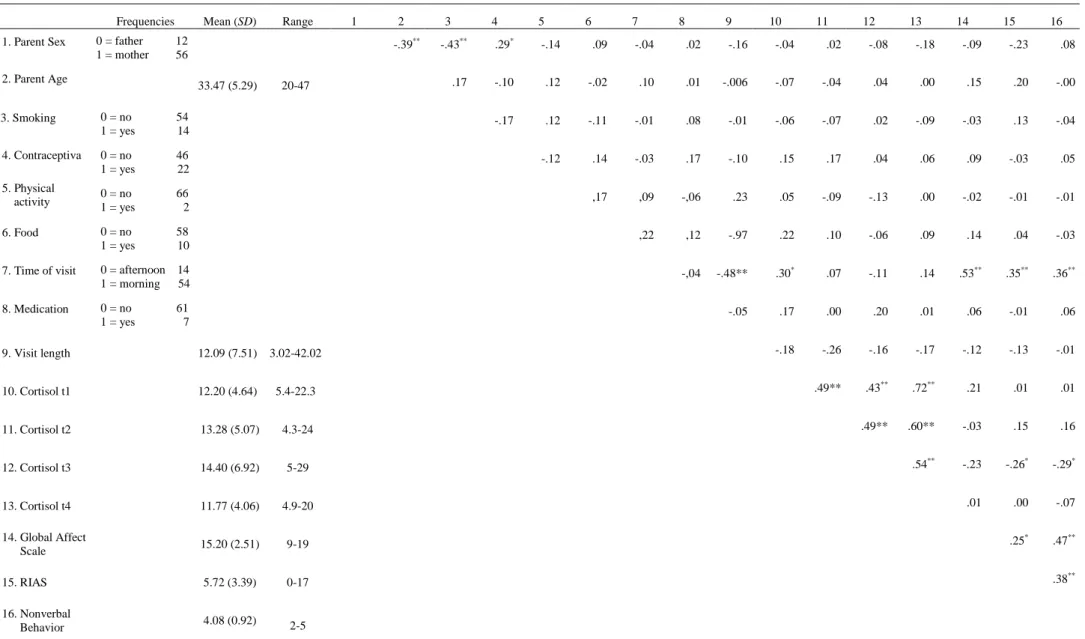
The length of the medical visit was shorter in the in-patient consultation (M = 10.43, SD = 5.39) as compared to the out-patient consultation (M = 15.19, SD = 4.94; t = -3.27, p < .01). Pediatrician’s global affect ratings reached an average of 15.20 (SD = 2.51), and the composite measure of the verbal RIAS categories one of 5.72 (SD = 3.39). For the nonverbal behavior, pediatricians reached an average of 4.08 (SD = 0.92). Table 1 contains the frequencies, means, standard deviations, ranges, and intercorrelations of the relevant variables.
33 3.2. Variance decomposition
Estimation of the null model revealed that 21% of variance in parents’ change in cortisol is due to differences between pediatricians (ICC (1) = 0.2182), and may be explained by differences in pediatricians’ appearance, behavior or communication style during the consultation.
3.3. Cortisol response
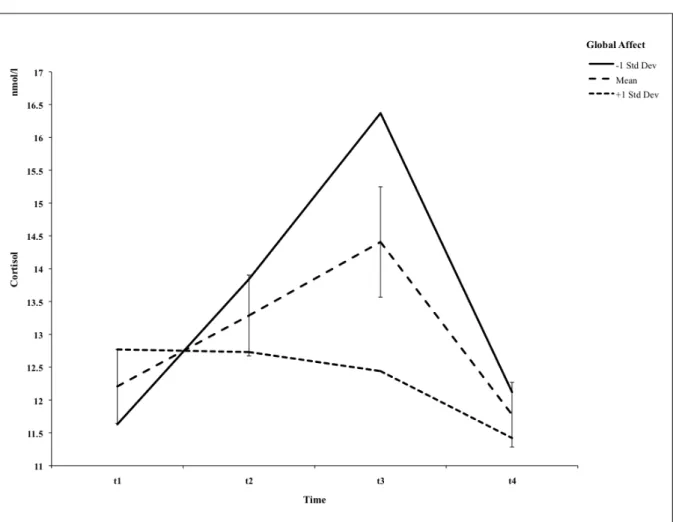
In line with our first hypothesis, we found an increase in parents’ cortisol response in the course of the medical encounter. Figure 1 shows the means for the raw cortisol values measured on the four measurement occasions (t1-t4). The baseline measure at t1 was 12.20 nmol/l (SD = 4.64), and 13.28 nmol/l (SD = 5.07) at t2, and the measures did not differ significantly (t = -1.08, p > .05). As expected, the cortisol response increased during the medical visit and peaked at 20 minutes after the consultation (M = 14.40 nmol/l, SD = 6.92), followed by a subsequent decrease visible already at t4 (M = 11.77 nmol/l, SD = 4.06). The change in cortisol was significant from t1 to t3 (t = -2.20, p < .01), but not between t2 and t3 (t = -1.12, p > .05).
3.4. Affective communication behavior
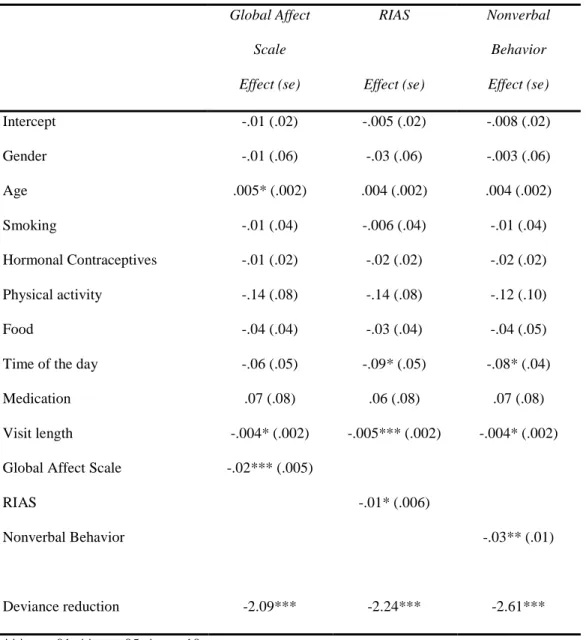
Our second hypothesis predicted pediatricians’ affective communication behavior to be negatively related to parent’s change in cortisol during the medical visit. As expected, pediatricians’ global affective climate during the consultation was associated with parents’ cortisol response. The change in level of free cortisol was the smaller the higher the global affective atmosphere created by the pediatrician (b = -.02, p < .01). Figure 1 shows the impact of global affective atmosphere at ± 1 SD from the mean on parental cortisol.
The analysis with the second indicator of nonverbal behavior pointed in the same direction, the more pediatricians displayed nonverbal cues that expressed interest, concern, and connection towards their conversational partner, the lower increases in cortisol we
34 observed in parents (b = -.03, p < .05). Likewise, verbal facets of pediatricians’ affective behavior were negatively related to parents’ cortisol response, but this effect just missed statistical significance (b = -.01, p = .05). Hence, the three analyses show the same expected modulating effects, but only two of them reach the conventional level of statistical significance. We further measured intervening variables (sex, age, hormonal contraceptive use, smoking, physical activity, medication, food intake, time of day, and visit length) and introduced them in our models as covariates. Further details on the models as well as control variables are displayed in table 2.
4. Discussion and Conclusion
The goal of this study was to investigate parent’s physiological reaction to pediatric consultations and to explore whether pediatricians’ affective communication behavior would reduce stress responses during the medical visit. Based on video-recordings of the consultations, we rated pediatricians’ affective communication behavior, and parents provided saliva samples several times in the course of the medical encounters. Our results indicate that the medical encounter represented a stressful event for parents as indicated by an increase in their levels of free cortisol. Pediatricians’ affective communication behavior was related to less steep increases in parents’ cortisol during the medical visit. The results will be discussed in detail in section 4.1., followed by a short summary and practice implication in section 4.2. and 4.3..
4.1. Discussion
As expected, parents’ cortisol levels increased during the medical encounter. Peak cortisol values were observed 20 minutes after the encounter, followed by the onset of recovery visible at the measurement occasion 45 minutes after the medical visit. The magnitude of this effect is comparable to that observed in laboratory studies, where powerful