1
The McGill Journal of Education promotes an international, multidisciplinary discussion of issues in the field of educational research, theory, and practice. We are committed to high quality scholarship in both English and French. As an open-access publication, freely available on the web (http://mje.mcgill.ca), the Journal reaches an international audience and encourages scholars and practitioners from around the world to submit manuscripts on relevant educational issues.
La Revue des sciences de l’éducation de McGill favorise les échanges internationaux et plu-ridisciplinaires sur les sujets relevant de la recherche, de la théorie et de la pratique de l’éducation. Nous demeurons engagés envers un savoir de haute qualité en français et en anglais. Publication libre, accessible sur le Web (à http://mje.mcgill.ca), la Revue joint un lectorat international et invite les chercheurs et les praticiens du monde entier à lui faire parvenir leurs manuscrits traitant d’un sujet relié à l’éducation.
International Standard Serial No./Numéro de série international: online ISSN 1916-0666
The McGill Journal of Education acknowledges the financial support of The Social Sciences and Humanities Research Council of Canada. La Revue des sciences de l’éducation de McGill remercie le Conseil de recherches en Sciences humaines du Canada de son soutien financier.
M E
McGill Journal of Education / Revue des sciences de l’éducation de McGill 4700 rue McTavish Street • Montréal (QC) • Canada H3G 1C6
•T: 514 398 4246 • F: 514 398 4529 • http://mje.mcgill.ca
Republication Rights / dRoits de RepRoduction
All rights reserved. No part of this publication may be republished in any form or by any means without permission in writing from Copibec.
Tous droits réservés. Aucune partie de la présente publication ne peut
être reproduite sous quelque forme et par quelque moyen que ce soit sans l’autorisation écrite de Copibec.
Copibec (reproduction papier) • 514 288 1664 • 1 800 717 2022 • • [email protected]
© Faculty of Education, McGill Universisty
J
REVUE DES SCIENCES
DE L’ÉDUCATION DE M
CGILL
EDITORIAL TEAM / ÉQUIPE ÉDITORIALE : Anila Asghar (McGill University), Aziz Choudry (McGill University), Marc-André Ethier (Université de Montréal) & Teresa Strong-Wilson (McGill University)
MANAGING EDITOR / DIRECTEUR DE RÉDACTION: Stephen Peters
BOOK REVIEW EDITORS / RÉDACTEURS DES CRITIQUES DES LIVRES: Rima Athar & Mariusz Galczynski
EDITORIAL ASSISTANT / ASSISTANT DE RÉDACTION: Mariam Najih MJE INTERNS / STAGIAIRES RSÉM: Alison Crump & Amarou Yoder INTERNATIONAL EDITORIAL ADVISORY BOARD /
COMITÉ DE RÉDACTION CONSULTATIF INTERNATIONAL: David Austin, Ann Beam-ish, Dave Bleakney, Saouma BouJaoude, Katie L. Bryant, Patrick Charland, Stéphane Cyr, Budd Hall, Ingrid Johnston, Dip Kapoor, Colin Lankshear, Claudia Mitchell, Rebecca New, Cynthia Nicol, Bonny Norton, Anthony Paré, Manuela Pasinato, Wally Penetito, Kathleen Pithouse-Morgan, Saleem Razack, Jessica Ruglis, Verna St Denis, Lisa Starr, Lynn Thomas, Salim Vally, Geeta Verma, Angelina Weenie & John Willinsky
PUBLICATION DESIGN / MAQUETTE: McGill ICC
COVER DESIGN / CONCEPTION DE LA COUVERTURE: Deborah Metchette
McGill Journal of Education is a partner member of Érudit. La revue des sciences de l’éducation de McGill est une revue partenaire de Érudit. www.erudit.org
The views expressed by contributors to the MJE do not necessarily reflect those of the Editor, the Editorial and Review Boards, or McGill University. Authors are responsible for following normal standards of scholarship and for ensuring that whenever the research involves human subjects, the appropriate consents are obtained from such subjects and all approvals are obtained from the appropriate ethics review board.
Les opinions exprimées par les collaborateurs de la Revue des sciences de l’éducation de McGill ne reflètent pas forcément celles de la rédactrice en chef, des conseils de rédaction et de révision ou de l’Université McGill. Les auteurs sont tenus d’observer les règles normales de la recherche universitaire et, s’ils mènent des travaux sur des sujets humains, d’obtenir le consentement en bonne et due forme de chaque sujet ainsi que l’approbation du comité éthique compétent. 7597 C
3
M
CGILL JOURNAL OF EDUCATION
REVUE DES SCIENCES
DE L’ÉDUCATION DE M
CGILL
EDITORIAL TEAM / ÉQUIPE ÉDITORIALE : Anila Asghar (McGill University), Aziz Choudry (McGill University), Marc-André Ethier (Université de Montréal) & Teresa Strong-Wilson (McGill University)
MANAGING EDITOR / DIRECTEUR DE RÉDACTION: Stephen Peters
BOOK REVIEW EDITORS / RÉDACTEURS DES CRITIQUES DES LIVRES: Rima Athar & Mariusz Galczynski
EDITORIAL ASSISTANT / ASSISTANT DE RÉDACTION: Mariam Najih MJE INTERNS / STAGIAIRES RSÉM: Alison Crump & Amarou Yoder INTERNATIONAL EDITORIAL ADVISORY BOARD /
COMITÉ DE RÉDACTION CONSULTATIF INTERNATIONAL: David Austin, Ann Beam-ish, Dave Bleakney, Saouma BouJaoude, Katie L. Bryant, Patrick Charland, Stéphane Cyr, Budd Hall, Ingrid Johnston, Dip Kapoor, Colin Lankshear, Claudia Mitchell, Rebecca New, Cynthia Nicol, Bonny Norton, Anthony Paré, Manuela Pasinato, Wally Penetito, Kathleen Pithouse-Morgan, Saleem Razack, Jessica Ruglis, Verna St Denis, Lisa Starr, Lynn Thomas, Salim Vally, Geeta Verma, Angelina Weenie & John Willinsky
PUBLICATION DESIGN / MAQUETTE: McGill ICC
COVER DESIGN / CONCEPTION DE LA COUVERTURE: Deborah Metchette
McGill Journal of Education is a partner member of Érudit. La revue des sciences de l’éducation de McGill est une revue partenaire de Érudit. www.erudit.org
TABLE OF CONTENTS / SOMMAIRE
SPRING 2013 VOL. 48 NO 2 / PRINTEMPS 2013 VOL. 48 NO 2
269 Éditorial / Editorial
• ANILA ASGHAR, AZIZ CHOUDRY, MARC-ANDRÉ ETHIER & TERESA STRONG-WILSON
279 Professional Integration of Immigrant Teachers in the School System: A literature review
L’insertion professionnelle des enseignants immigrants dans le milieu scolaire : recension des écrits
• ALINE NIYUBAHWE, JOSÉPHINE MUKAMURERA & FRANCE JUTRAS
297 L’apprentissage par concepts en première secondaire dans un cadre d’arrimage de l’histoire et de l’éducation à la
citoyenneté
Concept-Based Learning of History and Citizenship Education in the First Year of Secondary School
• FÉLIX BOUVIER & SANDRA CHIASSON DESJARDINS
317 Decolonizing Aboriginal Education in the 21st Century
Décoloniser l’éducation des autochtones au 21e siècle
• ELIZABETH ANN MUNROE, LISA LUNNEY BORDEN, ANNE MURRAY ORR, DENISE TONEY & JANE MEADER
339 L’aide personnalisée à l’école primaire en france : quels formation continue et axes de pilotage développer pour favoriser la réussite de tous les élèves ?
Customized Help in French Primary Schools: What forms of continuing education and management lines should be developed in order to promote pupils’ academic success
• CÉLINE NOTEBAERT & JEAN-FRANçOIS NOTEBAERT
359 Classroom Behaviour Management: The effects of in-service training on elementary teachers’ self-efficacy beliefs
La gestion des comportements en classe: effets d’une formation continue sur le sentiment d’autoefficacité des enseignants du
primaire
• NANCY GAUDREAU, ÉGIDE ROYER, ÉRIC FRENETTE, CLAIRE
Feelings of Computer Self-Efficacy in High School Teachers in Niger
• MODIBO COULIBALY & THIERRY KARSENTI
403 Discussing Virtual Tools That Simulate Probabilities: What are the middle school teachers’ concerns?
Discussion à propos de simulateurs virtuels des probabilités : quelles sont les préoccupations d’enseignants de mathématiques ?
• ANNIE SAVARD, VIKTOR FREIMAN, LAURENT THEIS & FRANçOIS LAROSE
NOTES FROM THE FIELD / NOTES DU TERRAIN
425 Valuing Children’s Expression: A first attempt at displaying preschool art in an early childhood centre
Valoriser l’expression chez l’enfant: premier tentative d’exposition d’art préscolaire dans un centre de la petite enfance
• SELINA ITZKOWITZ
435 Something Resembling Hope: Notes on strategies for teaching Canadian social justice literature
Qui ressemble à de l’espoir: notes sur des stratégies
d’enseignement de la littérature portant sur la justice sociale canadienne
• AMAROU YODER
443 A Reflection on my Experiences Engaging Teachers in Professional Development on the Integration of Technology Into their Practice
Impliquer les enseignants dans un processus de développement professionnel visant à intégrer les technologies dans leur pratique: réflexions sur mon expérience
• TOM FULLERTON
BOOK REVIEWS / CRITIQUES DE LIVRES
449 Henry Giroux. Education and the Crisis of Public Values:
Challenging the assault on teachers, students, and public education (Counterpoints: Studies in the postmodern theory of education, vol. 400). New York, NY: Peter Lang. (2012). 129 pp. $29.95 (paperback). (ISBN 978-1-4331-1216-4).
453 Kate Tilleczek & H. Bruce Ferguson (Eds.). Youth, education, and
marginality: Local and global expressions. Waterloo, ON: Wilfrid Laurier University Press. (2013). 256 pp. $38.99 (paperback). (ISBN 978-1-55458-634-9).
Editorial
EDITORIAL
I
t is with great pleasure that we take this occasion to welcome Marc-André Éthier to the MJE editorial team, who joined us over the summer, and will be the primary co-editor for French language submissions. Marc-André is an associate professor at Université de Montréal and associate researcher at Centre de recherche interuniversitaire sur la formation et la profession enseignante (CRFPE). Over the last 13 years, his research has focused on four main themes: analysis of didactic tools offered to students in “Histoire et education à la citoyenneté;” development of critical thinking in history; transfer of learning in political and community practice; and democratic deliberation in social sciences classes.The addition to our editorial team has given rise to reflections on the future of journal publishing itself (a hot topic in the Canadian Association of Learned Journals) and on the place of the editorial in online only journals. In a digital age, is the journal editorial, a venerable genre, going the way of the dinosaurs? An editorial typically introduces the reader to the articles featured in a given issue. The editorial to a special issue can constitute its own academic contribu-tion, arguing for the “special” timeliness of the issue’s focus. Sometimes an editorial stands back from publishing to offer the editors’ practical advice and accumulated wisdom on how hopeful authors can increase their chances of a manuscript’s acceptance. An editorial can also be a literary artifact unto itself: a rumination on a subject inspired by the articles or by events at large; it can become a declamation, even a call to arms, on a topic of concern to readers —or that the editor believes should deeply concern them. Librarians inform us that journal issues are rarely, if ever, read in their entirety, cover to cover, PDF to PDF, html to html. Articles (especially if they are accessible online, which most now are) are accessed by readers avidly searching by keyword or author, strategic reading that googling has made it that much easier to do. Are we still as keen to explore the environs of an “e”-article, as “e”-readers, the way we once roamed the library stacks hungry for buried treasure? If that is the case for the “e”-article, where does that leave the lowly “e”-editorial? Writing an editorial can feel like writing into the dark, especially with open access, generalist journals like the McGill Journal of Education. We don’t have the same relationship with our readers as we had with our print subscribers.
Moreover, while editorials for specialist journals might still perform that good service of the literature review by helping readers situate new articles within a particular field or discourse, with the MJE’s general issues, this exercise can feel like trying to identify augurs in a night sky. Arguably, a reading on what comes randomly together (because they happen to be ready to be “posted”) can provide a useful taking of the pulse. The general issue points to what authors from different universities in Canada or globally, coming from various perspec-tives (theoretical, methodological), are currently researching and writing about and, importantly, what their reviewers, as member of their wider disciplinary community, also evidently agreed was worth hearing about. In that respect, the vetting (peer review) process has not changed — yet. Knowledge of what has randomly collided can also be of indispensable use to prospective authors, especially new scholars and graduate students who are looking to find, create or defend their niche — as well as to publish as widely as they can. The MJE encourages the scholarship of new or emerging scholars. While the jury may still be out on the future of the editorial in a digital age, reading the present stars, the articles in this MJE issue can be grouped into three broad categories: one group explores questions about culture and education, with two articles addressing issues of belonging and history and citizenship, a topic of especial urgency in Quebec presently (where the two articles are situated) given the Parti Quebecois’ proposed controversial Charter of Values, and a third article drawing our attention to useful intersections of Aboriginal, de-colonizing education with the emerging concept of 21st education; a second group addresses promising, sustained interventions in schools involving the professional development and improved classroom practices of in-service teachers; and a third group revisits the critical question of technology integration in schools.
We are pleased to publish three more Notes from the Field. This section was inaugurated in the last issue. Each of the present pieces shares useful practitio-ner knowledge: the value of displaying young children’s art in a “vernissage,” contributed by daycare director (Selina Itzkowitz); emerging critical classroom pedagogies developed from a cross-national study with practicing teachers on Canadian children’s literature with social justice themes, written by a former secondary teacher and present McGill doctoral student and research assistant (Amarou Yoder); reflections from a seasoned teacher / ICT professional / McGill master’s student studying leadership, on how to meaningfully engage teachers with professional development around new technologies (Tom Fullerton). We are grateful for the editorial assistance with French manuscripts of Mariam Najih, a master’s student in the Department of Educational and Counselling Psychology at McGill. We continue to consider ourselves fortunate to enjoy the inspired support of MJE interns, Amarou Yoder (Outreach) and Alison Crump (Doctoral Scholarship) and the steady work of our book review team, Rima Arthar and Mariusz Galczynski. We are happy to welcome back our managing editor, Steve Peters, after four months as a visiting scholar in the UK.
Editorial
ARTICLES
As Aline Niyubahwe, Joséphine Mukamurera, and France Jutras note, there can be no doubt that recently immigrated teachers are a precious resource for Quebec schools, especially in urban schools where the percentage of students who are also recent immigrants can be very high. However, there is likewise no doubt that despite changes in Quebec certification policies for these teachers, recently immigrated teachers face many obstacles, often with limited assistance. This article reviews the literature on problems newly immigrated teachers face as well as the policies and circumstances that can make possible a positive professional integration. The authors conclude by noting that access to employment remains a significant barrier because efforts to adapt to the particular experiences of im-migrant teachers are not being consistently made. Once hired, administrative and collegial support is essential for the teachers’ professional success.
Bouvier and Desjardins try to gain access to the Quebec secondary student’s point of view to consider whether students perceive and understand the connec-tion between history and citizenship in a Ministry of Educaconnec-tion initiative and secondary school revised program of study. MELS (Ministère de l’Éducation, Loisirs et Sports) proposed a new approach to the teaching of secondary history in which historical knowledge was linked to engaged citizenship. The researchers interviewed 40 students from 4 schools representing the socioeconomic and rural / urban diversity of Quebec. Students focused on the “history” aspect of their course, largely ignoring the “citizenship” part. History remained in the past. The authors note that the long-term effects of the program need to be studied, as do the pedagogical context and strategies used by teachers, which represents the next phase of their work in this critical area.
Using three vignettes from the lives of Aboriginal people, Monroe, Lunney-Borden, Murray-Orr, Toney and Meader develop an argument for the congru-ence between Aboriginal ways of knowing and the emerging concept of 21st Century education. Observing that mainstream education practices, with their emphasis on discreet, disconnected, and rational bites of knowledge, contrast sharply with holistic worldviews of Aboriginal people, the authors articulate the necessity of “de-colonizing” Aboriginal education. Aboriginal education, combined with 21st century education’s commitment to learning from and about complexity and interconnectedness, form a happy congruence that the authors suggest can provide a very useful way forward in thinking through curriculum planning and implementation.
One of the time-honoured purposes of a primary education, Notebeart and Notebeart observe, is for students to learn how to read. The authors point out that in France, where their study originates, the education budget is a primary concern. The authors’ qualitative research looks at the effects in one school of a country-wide government intervention that involved pairing teachers with students having reading difficulties. The teachers provided personalized
instruc-tion and support to the student for two hours a week outside of classroom time. The researchers conducted semi-structured interviews with 20 teachers about their experiences with the intervention. The teachers commented that they learned more about what the student could do, they established a better rapport and relationship with parents of the students, and students participated more in the classroom, becoming more confident as learners. The authors identify areas for further research of what would seem to be a promising initiative.
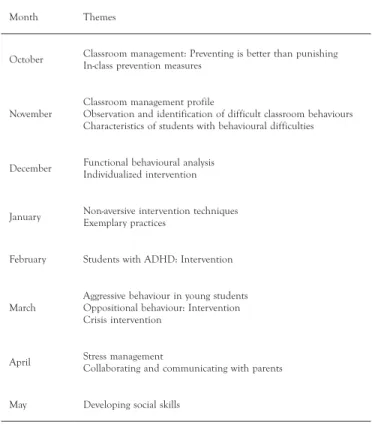
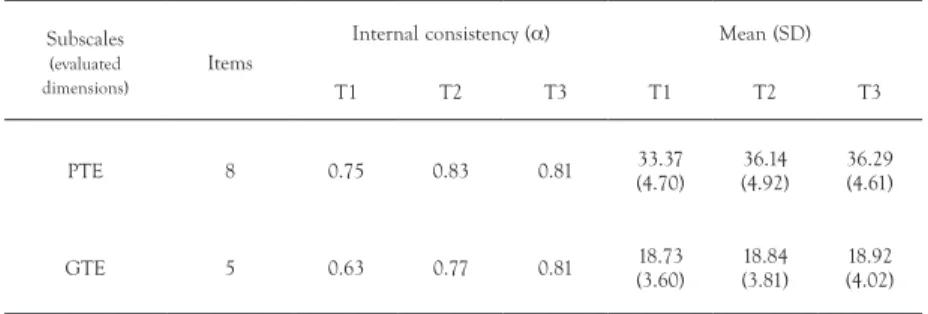
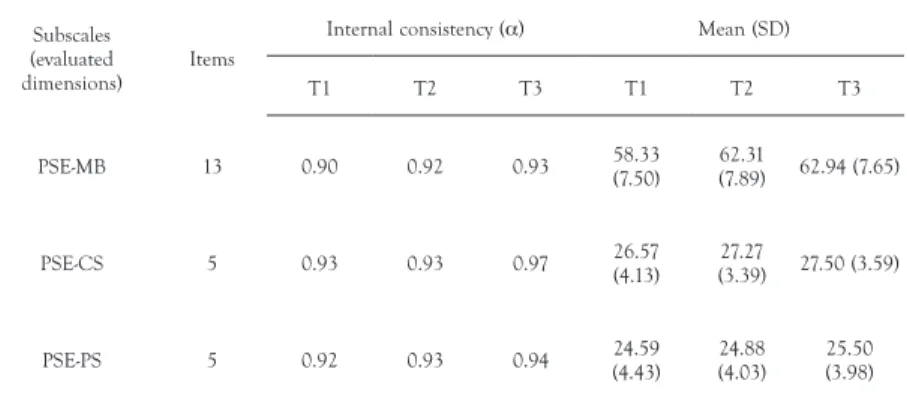
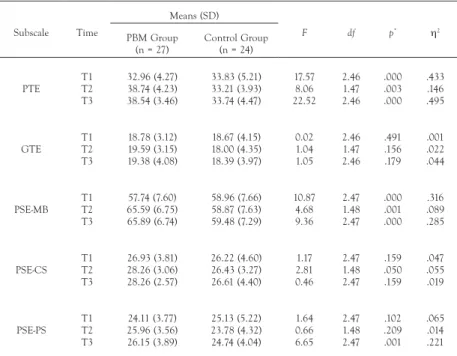
Classroom management of students with behavioural difficulties presents sig-nificant challenges for teachers. Gaudreau shares the results of an in-service teacher training program to foster better classroom management by developing teachers’ sense of professional self-efficacy. The program, positive behaviour classroom management, was implemented with elementary school teachers, and encompassed 24 hours total of professional development spread out over a year. The results of the study showed positive changes in participating teachers’ sense of teaching self-efficacy. Given the impact that a capable and confident teacher might have on the educational experience of a struggling student, the article suggests that such a program shows promise for assisting teachers in managing students more effectively, especially students with behavioural difficulties. Coulibaly and Karsenti look at the role of secondary teachers’ self-efficacy with respect to ICT (Information Communication Technologies) classroom integration, focusing on the African context of Niger. The study drew on Bandura’s concept of efficacy. Bandura emphasizes the importance of beliefs in developing self-efficacy. The quantitative pilot study applied an existing scale to ascertain whether the 69 participating teachers (64 men, 5 women) developed greater self-confidence as a result of a three-month training program. The authors find a significant difference in the self-perceptions of teachers with no prior ICT experience. The results also point to the relevance of Bandura’s theory for the critical area of teachers’ integration of new technologies within classroom practice.
Addressing discussions surrounding the effectiveness of technology used in the classrooms, Savard, Freiman, Theis and Larose report on a pilot study that em-ployed virtual simulations to teach probability in the context of gambling. The authors situate their study and findings within the frame of culturally responsive teaching. The results of the study suggest that the virtual tool of the simulator was a valuable resource for these teachers and students and that there are three “milieus” in which teachers are particularly sensitive to the uses and impacts of technology. These “milieus” include the pertinence of the content of the virtual tools to provincial learning outcomes, the contributions of these virtual tools to teaching and learning in the classroom, and finally, teachers’ interest in how the technology might make for “better learning,” including more effective feedback procedures.
Editorial
ÉDITORIAL
C’
est avec joie que nous saisissons l’occasion de souhaiter la bienvenue à Marc-André Éthier au sein de l’équipe de rédaction de la Revue des sciences de l’éducation de McGill (RSÉM). Celui-ci a joint nos rangs au cours de l’été et sera notre corédacteur principal pour les soumissions en français. Marc-André est professeur titulaire à l’Université de Montréal et membre régulier au Centre de recherche interuniversitaire sur la formation et la profession enseignante (CRFPE). Au cours des treize dernières années, ses recherches ont porté sur quatre thèmes principaux: l’analyse des outils didactiques proposés aux étudiants en histoire et éducation à la citoyenneté, le développement de la pensée critique en histoire, le transfert des apprentissages dans le domaine politique et communautaire, ainsi que la délibération démocratique dans les cours de sciences sociales.Cet ajout à notre équipe de rédaction soulève des questions quant au futur de la publication de la revue (un sujet d’actualité à l’Association canadienne des revues savantes). De plus, il nous amène à remettre en question la perti-nence de l’éditorial dans une revue exclusivement publiée en ligne. En cette ère numérique, l’éditorial de la revue, un genre honorable, est-il appelé à disparaitre, au même titre que les dinosaures? En fait, un éditorial présente habituellement aux lecteurs les articles faisant partie d’une édition. Quant à l’éditorial d’un numéro spécial, celui-ci peut être une contribution académique en soi, exposant l’à-propos particulier du sujet traité dans la sélection d’articles. Parfois, l’éditorial s’éloigne du contenu publié et devient une tribune pour les rédacteurs. Ceux-ci offrent quelques conseils pratiques, ainsi que des perles de sagesse aux auteurs espérant être publiés, afin d’augmenter les chances de voir leur manuscrit accepté. Un éditorial peut également devenir un objet littéraire : un remue-méninge sur un thème, s’inspirant des articles publiés ou d’évènements, en général, une déclaration, même un appel aux armes, portant sur un sujet préoccupant les lecteurs — ou sur lequel le rédacteur veut attirer à leur attention. Les bibliothécaires soutiennent que les numéros de la Revue sont rarement, voire jamais, lus en entier, d’un PDF à l’autre, html après html. Les articles (particulièrement s’ils sont disponibles en ligne, ce qui est le cas pour la majorité d’entre eux) sont dénichés et lus par des lecteurs cherchant
spécifiquement par mot-clé ou auteur, lecture stratégique qu’une recherche sur Google rend bien plus facile à effectuer. Les lecteurs numériques que nous sommes sont-ils réellement encore disposés à explorer les environs d’un article numérique, comme nous le faisions jadis, fouillant avidement dans des piles de documents à la bibliothèque, à la recherche d’un trésor enfoui? Si nos habitudes ont changé avec les articles numériques, qu’en est-il du modeste éditorial électronique? Rédiger un éditorial, surtout pour une revue disponible en ligne comme la Revue des sciences de l’éducation, s’apparente à marcher à tâtons. Le lien que nous entretenons avec nos lecteurs n’est plus le même que celui que nous avions avec les abonnés de l’édition imprimée. De plus, les éditoriaux écrits pour les revues spécialisées jouent un rôle dans les revues des écrits et orientent les lecteurs, situant de nouveaux articles dans un domaine ou courant de pensée particulier. Écrire ceux de la RSÉ, axés sur des problé-matiques générales, est similaire à trouver son chemin dans une nuit d’encre. Il est possible qu’une lecture portant sur une série de textes assemblés au hasard (tout simplement parce qu’ils sont prêts à la publication) soit utile, donnant un pouls au numéro. En effet, une édition plus générale rassemble ce sur quoi des auteurs de diverses universités canadiennes et de partout dans le monde, appartenant à différents courants de pensée (théoriques, méthodologiques), cherchent et écrivent. Plus important encore, celle-ci met en évidence ce que les réviseurs, membres d’une communauté disciplinaire étendue, considèrent pertinent de partager au lectorat. D’ailleurs, le processus de sélection et de révision par les pairs n’a pas changé – pas encore. Connaitre diverses idées entrant en collision peut se révéler essentiel, particulièrement pour les nou-veaux chercheurs et les étudiants gradués cherchant, créant ou défendant un créneau de recherche ou, encore, désirant être lus par le plus vaste lectorat possible. La RSÉ encourage la recherche pilotée par les nouveaux chercheurs ou les chercheurs émergents. Alors que le jury, occupé à lire les étoiles mon-tantes, demeure décalé quant à l’avenir de l’éditorial numérique dans notre monde «électronique», les articles dans ce numéro de la RSÉ peuvent être regroupés en trois grandes catégories. Le premier groupe explore la culture et l’éducation, avec deux articles traitant de questions telles que l’appartenance, l’histoire et la citoyenneté. Il s’agit d’un sujet d’une urgence toute particulière à l’heure actuelle au Québec (contexte des deux articles), avec la proposition controversée de la Charte des valeurs du Parti Québécois. Un troisième article propose une analyse des éléments communs et utiles entre les Autochtones, la décolonisation de l’éducation et les concepts émergents en éducation au 21e siècle. Ensuite, un deuxième groupe d’articles s’intéresse aux interventions prometteuses et durables en termes de développement professionnel en milieu scolaire ainsi qu’aux pratiques d’enseignement améliorées, mises en place par des enseignants. Finalement, le dernier groupe de textes explore la question fondamentale de l’intégration des technologies à l’école.
Editorial
section ayant fait ses débuts au dernier numéro. Chacun des articles témoi-gne de connaissances pratiques utiles. Le premier texte illustre l’importance d’exposer les œuvres d’art d’enfants d’âge préscolaire lors d’un vernissage et est écrit par la directrice du service de garde (Selina Itzkowitz). Un autre est soumis par un ancien enseignant au secondaire, actuellement doctorant et assistant de recherche à McGill. Dans son texte, Amarou Yoder explique l’émergence de pédagogies critiques en classe, développées au cours d’une étude pancanadienne effectuée auprès d’enseignants utilisant des œuvres de littérature jeunesse canadienne exploitant des thèmes de justice sociale. Finalement, Tom Fullerton livre ses réflexions d’enseignant expérimenté / spécialiste TIC / étudiant en leadership à la maitrise à l’Université McGill sur les moyens d’impliquer sérieusement les enseignants dans leur développement professionnel relativement aux nouvelles technologies.
Nous tenons à remercier Mariam Najih, étudiante à la maitrise au département de psychopédagogie et de psychologie du counseling de McGill, pour son soutien à la rédaction des textes en français. Aussi, nous réalisons la chance que nous avons de profiter du soutien d’Amarou Yoder (Outreach) et d’Alison Crump (boursière au doctorat), stagiaires à la Revue, ainsi que du travail acharné de notre équipe de critiques de livres, Rima Arthar et Mariusz Galczynski. De plus, c’est avec joie que nous accueillons notre directeur de rédaction, Steve Peters, de retour après un séjour de quatre mois comme chercheur invité en Angleterre.
ARTICLES
Comme le soulignent Aline Niyubahwe, Joséphine Mukamurera et France Jutras, il est indéniable que les enseignants récemment immigrés constituent une ressource inestimable pour les écoles québécoises. Ceci est particulièrement vrai dans les écoles situées en milieu urbain, où le pourcentage d’élèves ayant eux aussi récemment immigré est élevé. Cependant, il demeure évident que, malgré certains changements apportés aux politiques de certification de ces enseignants immigrés depuis peu, ceux-ci rencontrent de nombreuses difficultés et reçoivent une aide minimale. Cet article étudie les écrits portant sur les problèmes rencontrés par les enseignants d’immigration récente ainsi que les politiques et les circonstances qui favorisent une intégration professionnelle réussie. Les auteures terminent leur texte en soulignant que l’accès à l’emploi demeure une barrière significative. En effet, les efforts pour s’adapter au vécu particulier des enseignants immigrés ne sont pas faits sur une base systéma-tique. Une fois ces enseignants embauchés, le soutien de l’administration et des collègues est essentiel à leur réussite professionnelle.
Bouvier et Desjardins tentent de comprendre le point de vue des étudiants du secondaire au Québec. Ce faisant, ils essaient de cerner si les étudiants saisissent et comprennent le lien existant entre l’histoire et la citoyenneté au sein d’une
initiative du ministère de l’Éducation et dans les programmes d’étude révisés en vigueur dans les écoles secondaires. Le MELS (Ministère de l’Éducation, Loisirs et Sports) a proposé une nouvelle approche d’enseignement de l’histoire au secondaire, pour laquelle les connaissances historiques sont liées à l’engage-ment citoyen. Les chercheurs ont interrogé 40 étudiants provenant de 4 écoles représentant la diversité socioéconomique et rurale/urbaine du Québec. Les élèves se sont concentrés sur la dimension « histoire », et ont majoritairement ignoré la composante citoyenne. L’histoire est demeurée partie du passé. Les auteurs soulignent que les effets à long terme de ce programme, ainsi que le contexte pédagogique et les stratégies utilisées par les enseignants, doivent être étudié, et le seront dans la prochaine phase de leurs travaux.
S’inspirant de trois histoires tirées de la vie d’Autochtones, Monroe, Lunney-Borden, Murray-Orr, Toney et Meader développent un plaidoyer en faveur de l’harmonisation des modes autochtones d’apprentissage avec les concepts éducationnels émergents du 21e siècle. Les auteurs observent que les pratiques éducationnelles courantes, axées sur des bribes de connaissances neutres, décon-nectées et rationnelles, contrastent nettement avec la vision holistique qu’ont les Autochtones du monde. Celle-ci, jumelée à la volonté éducationnelle du 21e siècle d’apprendre de et sur la complexité et l’interdépendance, constitue l’heureux mariage proposé par les auteurs et une marche à suivre fort valable lors de la planification et la mise en place de programmes.
Comme observé par Notebeart et Notebeart, l’une des raisons d’être des rituels de l’enseignement au primaire est l’apprentissage de la lecture par les élèves. Les auteurs relèvent qu’en France, pays où la recherche a été menée, le budget alloué à l’éducation est une préoccupation importante. La recherche qualitative pilotée par les auteurs examine les effets, au sein d’une école, d’une intervention gouvernementale déployée à l’échelle nationale et impliquant le jumelage d’enseignants avec des élèves éprouvant des difficultés de lecture. Les enseignants ont offert un enseignement et un soutien personnalisé aux enfants, à raison de deux heures par semaine, à l’extérieur des heures de classe. Les chercheurs ont réalisé des entrevues semi-dirigées avec les 20 enseignants, pour s’enquérir de leur expérience. Les enseignants ont exprimé avoir appris à connaitre davantage ce que l’élève pouvait faire et avoir créé de meilleurs rapports et relations avec les parents des élèves. De plus, les élèves participaient mieux en classe, devenant plus confiants comme apprenants. Dans leur texte, les auteurs identifient des pistes de recherche pour ce qui semble être une initiative prometteuse.
La gestion des élèves aux prises avec des problèmes de comportement représente un défi important pour les enseignants. Gaudreau partage les résultats d’un programme de formation continue destiné aux enseignants et visant à améliorer la gestion de classe en développant le sentiment d’efficacité professionnelle de l’enseignant. Ce programme, axé sur la gestion des comportements positifs en
Editorial
classe, a été mis sur pied auprès d’enseignants du primaire et comprenait un total de 24 heures de développement professionnel, échelonné sur un an. Les résultats de la recherche révèlent des changements positifs dans le sentiment d’efficacité personnelle des enseignants participants. Considérant l’impact qu’un enseignant compétent et en confiance peut avoir sur le vécu éducationnel d’un élève en difficulté, l’article suggère que ce programme est prometteur pour assister les enseignants, les aidant à gérer plus efficacement le comportement des élèves, particulièrement ceux ayant des difficultés comportementales. Coulibaly et Karsenti étudient le rôle de l’auto-efficacité chez les enseignants au secondaire en ce qui a trait à l’utilisation des TIC (technologies de l’information et des communications) en classe, en ciblant le contexte africain propre au Niger. La recherche s’inspire du concept d’auto-efficacité de Bandura, qui met l’emphase sur l’importance des croyances dans le développement du sentiment d’auto-efficacité. Au cours de cette étude-pilote quantitative, les auteurs ont utilisé une échelle déjà existante pour établir si les 69 enseignants participants (64 hommes, 5 femmes) ont développé une plus grande confiance personnelle suite au programme de formation de trois mois. Les auteurs ont noté une différence significative en ce qui a trait à la perception d’efficacité personnelle chez les enseignants n’ayant aucune expérience TIC préalable. Les résultats confirment également la pertinence de la théorie de Bandura concernant le domaine sensible de l’intégration des technologies par les enseignants au sein de leur pratique en classe.
S’intéressant aux discussions portant sur l’efficacité des technologies utilisées en classe, Savard, Freiman, Theis et Larose exposent les résultats d’une étude-pilote faisant appel à des simulations virtuelles pour étudier les probabilités dans le contexte des jeux de hasard. Les auteurs situent leur projet de recherche et leurs résultats dans le cadre d’un enseignement adapté au contexte culturel. Les résultats de la recherche démontrent que l’outil virtuel du simulateur s’est révélé utile pour les enseignants et élèves. De plus, ceux-ci indiquent qu’il existe trois dimensions pour lesquelles les enseignants sont particulièrement inquiets : la pertinence du contenu des outils virtuels en regard des objectifs d’apprentissage provinciaux, la contribution de ces outils virtuels à l’enseigne-ment et l’apprentissage en classe et finalel’enseigne-ment, la manière dont ces technologies peuvent engendrer des mécanismes de rétroaction plus efficaces.
Professional Integration of Immigrant Teachers
PROFESSIONAL INTEGRATION OF IMMIGRANT
TEACHERS IN THE SCHOOL SYSTEM: A LITERATURE
REVIEW
ALINE NIYUBAHWE, JOSÉPHINE MUKAMURERA & FRANCE JUTRAS
Université de Sherbrooke
ABSTRACT. This literature review article investigates the professional integration of teachers recently immigrated to Canada and other western countries. Its findings reveal a number of obstacles to the integration of immigrant teachers into the teaching profession. The review summarizes different initiatives facilitating or hampering immigrant teachers’ access to employment and professional tion. It also notes that there is little research on teachers’ professional integra-tion in Western French speaking countries in general, and more particularly in Quebec where these teachers are often relied upon because of the shortage of personnel in this profession.
L’INSERTION PROFESSIONNELLE DES ENSEIGNANTS IMMIGRANTS DANS LE MILIEU SCOLAIRE : RECENSION DES ÉCRITS
RÉSUMÉ. Cette recension des écrits porte sur l’insertion professionnelle des en-seignants immigrants au Canada et ailleurs en Occident. Les résultats mettent en évidence divers obstacles à leur insertion dans la profession enseignante. Ils permettent également de prendre connaissance de certaines mesures qui favo-risent ou nuisent à leur intégration dans l’emploi et au sein de l’équipe-école. On constate aussi que peu de recherches sont faites sur le sujet dans les pays francophones en général et au Québec en particulier où on compte sur l’apport de ces enseignants pour combler les besoins de main-d’œuvre.
H
iring teachers who are recent immigrants is not new to the Quebec school system. However, the state of their professional integration is largely unknown especially since there has been little research about how they fit into the dif-ferent school communities. In an effort to better understand this issue, a literature review was undertaken to sum up and analyze French and English research dealing with the professional integration of immigrant teachers in Canada and several other Western countries. The aim of this article is to present the results of this review. It begins by presenting the research problem, then describes the methodology employed to review the documentation and finally analyzes the findings.RESEARCH PROBLEM
Since 1993, becoming a teacher in Quebec has normally required four years of bachelor level studies that are approved by the Quebec Ministry of Education, Leisure and Sports (Ministère de l’Éducation, du Loisirs et du Sport, MELS). It also requires a Quebec teaching permit, which is issued by the MELS upon successful completion of the entire Quebec teacher training requirements. However, since the middle of the 2000s, a new Quebec Government regula-tion has introduced more flexible training requirements for secondary school teachers not only in order to face an anticipated shortage in teaching personnel, but also in an effort to facilitate entry into the teaching profession (Lavigne, 2006). In fact, this provisional measure allows bachelor’s degree holders in a Quebec secondary school subject or discipline to obtain a temporary teaching authorization or permit on the condition that they are offered employment from a recognized Quebec secondary school. Furthermore, this new teaching authorization regulation allows the MELS to first grant a temporary teaching authorization. Subsequently, upon fulfillment of certain conditions,1 a perma-nent teaching permit can be granted to recently immigrated teachers holding a valid teaching permit in their country of origin. This new Teaching Authoriza-tion RegulaAuthoriza-tion eliminates the requirement that these teachers must undergo a complete teacher re-certification process in Quebec (MELS, 2006).
The aim of this regulation is to facilitate re-entry into the teaching profession. The results are beneficial not only to recently immigrated teachers but also to the children of immigrant families. In fact, several authors (Carr & Klas-sen, 1997; Deters, 2006; Goodson, ThiesKlas-sen, & Bascia, 1997; Phillion, 2003; Ross, 2001; Schmidt, 2010; Schmidt, Young, & Mandzuk, 2010; Wang, 2003) maintain that immigrant teachers play a key role in facilitating immigrant children’s integration. These authors contend that these teachers can a) act as role models b) help these children to integrate into the school system, and c) contribute to multicultural education. Consequently, these teachers can bring significant educational contributions to the steadily increasing number of immigrant children in the Quebec School system. As a case in point, Benes and Dyotte (2001) explained that the Quebec school system receives between six and eight thousand new immigrant students per year. In certain Montreal-area schools, the percentage of immigrant students can reach 90%. A teaching faculty that reflects this diversity would therefore be a consider-able asset to the success of immigrant children. In fact, this is consistent with the goals of integrating people of various ethnocultural origins at all levels of employment in the school system set forth in the 1998 intercultural policy (Benes & Dyotte, 2001).
Although certain administrative measures appear to foster access into the profession for immigrant teaching personnel in Quebec, their integration into the Quebec School system remains quite controversial. If their Quebec-born colleagues have already encountered professional integration problems,
Professional Integration of Immigrant Teachers
sometimes leading to abandonment of the profession (Mukamurera, 2005; Mukamurera, Bourque & Gingras, 2008), what are the implications for teachers of foreign origin as they attempt to integrate into a network and a community that is very different from what they have experienced previously in their countries of origin?
Indeed, despite the teaching experience acquired in their countries of origin, these teachers assume beginner’s status in the Quebec school system. This is compounded by the fact that they are often not familiar with Quebec culture, its school system or the teaching models that are used. As a result, it appears that they must undergo quite an adaptation process in order to become effec-tive teachers in the Quebec context (Vallerand & Martineau, 2006). According to Martineau and Ndoreraho (2006), these recently immigrated teachers need continuous and personalized support in order to rapidly develop the necessary knowledge and competency required to be able to read a situation correctly. It is therefore particularly relevant to study the professional integration of these teachers into the Quebec school system in order to better understand their particular situation and to consider different ways of meeting their needs. For these reasons, a literature review dealing with the issue of professional integra-tion of immigrant teaching personnel was undertaken in order to explore this situation and to examine research related to the professional integration of immigrant teachers endeavouring to enter the teaching profession in Quebec, elsewhere in Canada and in several other Western countries.
METHODOLOGY Literature review procedure
The literature review was conducted using standard procedures (Mertens, 2010). The first step involved identifying relevant publications (scientific articles, professional articles, media articles, chapters in an edited volume, theses, etc.) dealing with the integration of immigrant teachers. In order to find references relating to this specific research topic, the main concepts were first identi-fied and then keywords were assigned to each concept using synonyms. The research was carried out in English and French in order to consult as many texts as possible. Different search engines were employed: the University of Sherbrooke Crésus Catalogue, the Education Resources Information Center (ERIC), a well known English language database, FRANCIS, the French humanities and social sciences database, the ProQuest thesis catalogue, and Google. The second step of the literature review required sorting through the documents that were found during step one in order to select the most relevant documents. The final step involved the analysis of 34 documents dealing with the professional integration of immigrant teachers. The vast majority of these documents originated in English speaking countries. Table 1 summarizes their general characteristics.
TABLE 1. The corpus
Document Types Location Research types Data collection techniques
21 scientific articles (18 with research results) Ontario (7) Manitoba (2) Quebec (1) Australia (4) United States (3) Israel (4) Quantitative (4) Qualitative (14) Observations Questionnaires Interviews Focus groups Documentary analysis
5 professional articles Ontario Québec — Surveys Opinions
2 Research reports UK United States Quantitative Questionnaires Interviews
1 Media article Quebec — —
1 Chapter in an
edited volume Ontario Qualitative Interviews
2 Doctoral theses Ontario Manitoba Qualitative Quantitative Interviews Observations Questionnaires I
2 Information bro-chures available on the Internet
Quebec
Israel — —
This review of literature shows very few studies on immigrant teachers’ profes-sional integration, and especially in French-speaking areas of the world. The studies are generally based on the Community of Practice (COP) framework as it is considered useful in the study of adaptation and integration of im-migrant teachers. Several aspects of the COP are investigated: legitimate peripheral participation, adjustment to established social norms, institutional structures, sociocultural adjustment, identity and resilience. From the 34 docu-From the 34 docu-ments reviewed, there are two doctoral theses and eight docudocu-ments which pertain more to the professional community and general public than to the scientific. Among the scientific literature gathered, most present qualitative studies (17/21). From these, six were undertaken with merely three to six participants. Furthermore, the six quantitative studies reviewed do not give a general portrait of the situation of immigrant teachers, as they are limited to a specific school district or to participants from a specific university training program for immigrant teachers. Moreover, two of these quantitative studies involved only a small number of participants (34 to 110), and thus do not offer an overview of the situation. However interesting all of these results are, they do not lead to a general understanding of the integration of immigrant teachers. Finally, the results do not reflect the migratory journey of the group studied, thus shedding little light on the factors that could have influenced their socioprofessional integration into their new school environment.
Nev-Professional Integration of Immigrant Teachers
ertheless, the analysis of these studies shows the many challenges immigrant teachers face in the schools of their new country.
A content analysis procedure (Mucchielli, 1979; Bardin, 2007) was used on the selected documents. This procedure was chosen because it facilitates consultation of information in documents and isolation of their meaning. As each document was read, relevant passages regarding the research topic were noted. The information from relevant passages was then divided into “coded segments” (Mucchielli, 1979; Bardin, 2007). After the coding, the “coded seg-ments” were classified into themes and sub-themes.
RESULTS
Two main themes emerged from the chosen documents dealing with profes-sional integration of immigrant teachers: profesprofes-sional integration problems specific to immigrant teachers, and factors favourable to their professional integration into the school system.
Professional integration problems specific to immigrant teachers
According to different studies carried out in North America and elsewhere such as Israel and Australia, immigrant teachers face the following difficul-ties: 1) problems related to employment; 2) problems linked to professional integration into the school culture and the teaching team; 3) problems related to non-recognition of competencies previously acquired in their countries of origin; and 4) problems related to the teaching task, particularly those related to teaching practice and classroom management.
Problems related to access to employment. Immigrant teachers have difficulty
access-ing employment in their host country. Most of them have acquired extensive experience in their countries of origin, but because of the different teaching systems, many obstacles hinder their access to employment. In Canada (De-ters, 2006; Schmidt, 2010), the United States (US) (Ross, 2001) and Australia (Reid, 2005), a high level of unemployment and under-employment among immigrant teachers was observed. As stated by Schmidt, Young and Mandzuk (2010), most immigrant teachers faced two major obstacles to resuming their career in their host country. The first obstacle was the difficulty in gaining access to the required training leading to temporary or permanent teacher certification, and the second the finding of employment once certification was obtained.
Access to employment requires a teaching permit, which implies long and expensive procedures (Allard, 2007; Phillion, 2003). In Ontario, Phillion (2003) explored obstacles to employment encountered by five visible minority immigrant teachers. This study showed that in addition to lengthy procedures, the teachers found it difficult to pay the $250 required for obtaining
equivalen-cies for their diplomas. In fact, most immigrant teachers were under-employed while waiting for employment as teachers, earning only minimum wage that did not allow them to save the money required to obtain equivalency for their diploma.
Phillion (2003) also showed that once the fees could be covered the immigrant teachers were able to secure a temporary teaching permit. However, access to employment still remained difficult because it required experience in Canada and a letter of reference from a Canadian school principal (Beynon, Ilieva & Dichoupa, 2004; Deters, 2006; Jamieson & McIntyre, 2006; McIntyre, 2004; Phillion, 2003; Schmidt, Young, & Mandzuk, 2010). According to Phillion, Canadian teaching experience is compulsory even for supply teaching. He also indicated that a letter of recommendation was required merely to obtain an interview with a school counsellor. For this reason, immigrant teachers believed that volunteering represented the best way to gain teaching experi-ence. Nevertheless, several of these teachers found it very difficult to find a school that would give them an opportunity to prove themselves (McIntyre, 2004; Phillion, 2003). All things considered, one must question the logic that requires immigrant teachers to have professional experience in Canada when these same individuals are not allowed the opportunity to acquire it. Furthermore, in Manitoba, Schmidt (2010) and Schmidt, Young and Mandzuk (2010) pointed out that systematic discriminatory hiring practices are some of the main obstacles faced by immigrants who want to resume their teaching career. Schmidt (2010) also noted that over-qualification could have an ad-ditional negative impact on their chances of obtaining teaching employment. As an example, one research participant explained that her personal strategy for increasing her chances of gaining employment was to conceal the fact that she had a Master’s diploma and extensive teaching experience. She believed that her native country diploma and experience could decrease her chances of being hired because of the higher salary that she was entitled to.
Problems of access to employment could also be attributed to linguistic and cultural barriers (Beynon, Ilieva, & Dichoupa, 2004; Cruickshank, 2004; Elbaz-Luwisch, 2004; Maureen, 1992; Gordon, 1996; Hutchison, 2005; Myles, Cheng, & Wang, 2006; Phillion, 2003; Reid, 2005; Remennick, 2002; Schmidt, 2010). Not mastering the language and the culture of the country could hamper access to employment (Dakin, 1971). For example, the participants in a study led by Elbaz-Luwisch (2004) involving immigrant teachers in Israel related that they would show inappropriate teaching behaviour because of their lack of understanding of the language and the cultural code of teaching practices. Immigrant teachers from Russia who participated in Remennick’s (2002) study in Israel admitted that their main reason for leaving the teach-ing profession was their lack of mastery of Hebrew, the teachteach-ing language of Israel. In Quebec, the French language test could be an obstacle for gaining access to employment for many immigrant teachers (Lefebvre, Legault, & De
Professional Integration of Immigrant Teachers
Sève, 2002). In Ontario, the immigrant teachers who were involved with the Myles, Cheng and Wang (2006) study stressed how they were perceived to be very different from the others because of their accent. Participants in the Phillion (2003) study in Ontario deplored the fact that they could not pass the oral language test because of their accent and lack of fluency in English. In the US, one participant in Gordon’s (1996) study mentioned that she was refused employment because of her accent. One participant in Hutchison’s (2005) research underwent language training to reduce her accent because the parents of the children in her class were concerned about the effect of her ac-cent on their children’s education. In Australia, the immigrant teachers who participated in the Cruickshank (2004) study said that they lost confidence in themselves because of their lack of mastery of English, the language of instruc-tion. Hutchison (2005) also noted the language barrier could limit their ability to teach effectively and to offer culturally based examples. Others said that they felt inferior because of their Russian accent in Israel (Remennick, 2002). Schmidt (2010) suggested that in order for immigrant teachers to succeed in their professional integration they needed additional community support to adapt to their new cultural and linguistic environment.
Finally, the requirement to retrain for the necessary credits in order to earn the official teaching permit strongly hindered immigrant teachers’ professional integration (Beynon, Ilieva, & Dichoupa, 2004; Maureen, 1992). In fact, their financial vulnerability due to the cost of their university studies made balanc-ing family, work and study responsibilities more difficult for many immigrants (Gordon, 1996; Phillion, 2003; Schmidt, 2010; Schmidt, Young, & Mandzuk, 2010). Furthermore, certain immigrant teachers found that they were not guar-anteed a teaching position even when they had obtained proper certification (Maureen, 1992). Going back to school could appear discouraging for certain immigrant teachers who doubted their own ability to successfully complete their studies (Cruickshank, 2004; Gordon, 1996).
This concludes the analysis of the first type of problem, the different obstacles faced by immigrant teachers while attempting to obtain employment and inte-gration into the profession. The second type of problem involves difficulties of professional integration into the school culture as well as integrating into networks of other teachers at a school.
Problems linked to professional integration into the school culture and the teacher network. Even though most immigrant teachers already have teaching
experi-ence, they must integrate into a new school system and a new culture. This requires, as beginners do, an open environment with colleagues that are will-ing to cooperate, thus helpwill-ing them integrate easily into the school culture. Unfortunately this does not appear to be the case for most immigrant teachers. Different studies on this topic in Canada, Israel and Australia emphasized the fact that often these teachers faced great difficulties establishing positive
relations and collaboration with their colleagues as well as with the school administration (Bascia, 1996; Myles, Cheng, & Wang, 2006; Phillion, 2003; Reid, 2005; Remennick, 2002).
In Bascia’s (1996) Ontario study investigating immigrant teachers from visible minorities, the participants deplored not only the fact that their conversations with their white colleagues remained superficial, but also reported feeling socially isolated at the school. The results of Wang’s (2003) doctoral thesis on cultural dissonance and the adaptation of immigrant teachers of Chinese origin in Ontario showed similar findings. All the participants reported that they felt isolated from their Canadian colleagues, were left on their own and did not receive support during their first year of work. Some said they experienced many different types of frustrations, while others related that this period was marked by anxiety, stress and pressure. These teachers also deplored the distance, indifference and mistrust of the school administration towards them. In Israel, certain participants in Remennick’s (2002) study reported having conflicts with their Israeli colleagues. The teaching personnel of Russian origin perceived that their Israeli colleagues considered them a threat to their jobs and kept a distance. Furthermore, these same immigrant teachers claimed that the Israeli teachers did not want to cooperate with them or develop mentoring relationships with them. These teachers also emphasized the lack of cooperation on the part of the schools’ counsellors and the students’ parents. The parents often took their children’s side in the case of conflict with these teachers. These types of parental or counsellor behaviour only contributed to the increase of these teachers’ feelings of powerlessness when interacting with difficult students (Remennick, 2002). Peeler and Jane’s (2005) Australian research on the importance of mentoring during the professional transition of immigrant teaching personnel reported that one participant ascertained that a failed relationship with her mentor had affected her relations with the other members of the teaching personnel.
In Canada and the US, problems of racism and discrimination faced by some immigrant teachers hindered the success of their integration. Phillion (2003) notes that some teachers reported that their Ontario colleagues refused to speak to them in the staff room and this same behaviour sometimes occurred in the classroom during their practicum with the supervising teacher. Moreover, Bascia’s (1996) study emphasized the isolation felt by the visible minority im-migrant teachers at school. In Toronto, some white teachers interviewed in Carr and Klassen’s study (1997) affirmed that some of their colleagues were racist or had racist tendencies. In Manitoba, Schmidt (2010) also reported that immigrant teachers often faced discriminatory practices in the school and university communities. For example, one school principal who was a research participant deplored the open hostility shown towards teachers with a strong accent and questioned the real effectiveness of equity legislation on obvious discriminatory practices in certain schools.
Professional Integration of Immigrant Teachers
Problems due to lack of recognition of the professional competencies of immigrant teach-ers. Some authors (Lenoir-Achdjian, 2005; Reid, 2005) reported that Canadian
immigrant selection policies that took into consideration the immigrants’ competencies and their qualifications facilitated finding a job in their host country. Most of the immigrant teachers already had university diplomas and extensive teaching experience acquired in their country of origin. However some authors’ research from the US (Ross, 2001), Canada (Beynon, Ilieva, & Dichoupa, 2004; Myles, Cheng, & Wang, 2006; Phillion, 2003; Schmidt, 2010) and Australia (Reid, 2005), found that the immigrant teachers’ existing competencies were not taken into consideration in the hiring procedures. Consequently they were forced to begin part, or all of their training again. Furthermore, the retraining did not guarantee access to employment (Beynon, Ilieva, & Dichoupa, 2004). For example, during a period of teacher shortages in Ontario, immigrant teachers who were competent in the required subject were not hired for a permanent position (Jamieson & McIntyre, 2006). Mc-Intyre (2004) remarked that despite immigrant teachers’ experience and even certifications, they are more often under-utilized and limited to supply teaching positions in contrast to their qualified Ontario or Canadian counterparts. Not only do the immigrant teachers experience difficulties being hired for a teaching position, they also experience prejudice even when they do succeed. One study in the US by Hwang and Baek (2005) related to the perceptions of immigrant teachers of Hispanic origin with regards to education indicate negative stereotypes towards them from the broad US population, prejudices, and a high level of expectation regarding their competency. In Canada, im-migrant teachers from a visible minority were also victims of prejudice. In Mujawamariya’s (2008) study, black immigrant students reported that both the administration and their colleagues doubted their capability to teach science. In addition, according to Mujawamariya (2008) and Wang (2003), the administration and their colleagues were less open to immigrant teachers than to other Canadian teachers. As immigrant teachers they were required to spend more time and energy in order to conform and to be accepted. Accord-ing to Mujawamariya, these prejudices appear to further inhibit the teachers’ professional integration into their teaching careers and their contribution to scientific knowledge.
Carr and Klassen’s (1997) Toronto study showed that visible minority teachers held positions that were of inferior status to those of their white colleagues. In another research study in Israel by Michael (2005), comparing Israeli born teachers to those of Russian origin, the results seemed to indicate that the immigrant teachers showed lower rates of membership in professional organi-zations, participated with less frequency in decision-making concerning their school, assumed fewer positions of responsibility and participated less often in continuing education than their Israeli counterparts. This author suggested that integration of immigrant teachers was not a central priority in the
ev-eryday affairs of Israeli school establishments. He argued that these teachers encountered not only systematic barriers that prevented them from becoming full time classroom teachers, but also that they were victims of an exclusion mechanism which restricted access to positions of responsibility and limited their influence in school decision making. In fact, according to the research results, immigrant teachers were not perceived as good educators, and were thus seen as incapable of transmitting the dominant culture.
Problems linked to the teaching task. The first problem is related to teaching
practices. Because teaching philosophies can vary from one country to another, immigrant teachers often face problems adapting to the teaching model that is applied in their host country (Cruickshank, 2004; Dakin, 1971; Gordon, 1996; Hutchison, 2005; Myles, Cheng, & Wang, 2006; Wang, 2003; Seah, 2005). For example, Wang (2003) notes that immigrant teachers of Chinese origin in Toronto felt disoriented after observing the differences in teaching approaches in Toronto schools. In China, the school supplied everything, whereas in Toronto, the teachers were responsible for procuring and manag-ing their teachmanag-ing materials on their own. Furthermore, the teachers found that they must be creative and self-reliant in order to find the appropriate materials to teach with, while in China teaching materials were standardized. The teachers also experienced problems with the role they had to play in the classroom. They were used to transmitting textbook knowledge and found it difficult to change from the role of transmitting knowledge to that of facilitat-ing learnfacilitat-ing. The teachers also brought to light problems related to student assessment. Similar findings were also reported in other studies: Myles, Cheng and Wang (2006) in Ontario, Cruickshank (2004) in Australia, Elbaz-Luwisch (2004) in Israel and Gordon (1996) in the US. The immigrant teachers who participated in these studies felt they had to change their beliefs and teaching practices, in order to adapt to the new teaching system.
The second problem is related to classroom management. Whether in Canada or the US, the immigrant teachers were required to manage multicultural or multi-ethnic classrooms with children from different socio-economic back-grounds which might pose problems for the immigrant teachers who were faced with this “diversity” for the first time (Gordon, 1996). The situation was similar in Israel. Consequently, certain immigrant teachers who participated in the Elbaz-Luwisch study (2004) reported that their first year teaching was difficult. When the students insulted them, the school administration made no effort to reconcile the two parties. Remennick’s (2002) study in Israel confirmed the situation: immigrant teachers of Russian origin declared that they had to work very hard to gain respect and the students’ attention. They added that instilling discipline took a lot of time and affected the effectiveness of their teaching. They remarked that there was a notable lack of discipline in the multi-ethnic classrooms and in schools with children from disadvantaged neighbourhoods. Furthermore, the study showed that immigrant teachers
Professional Integration of Immigrant Teachers
were often given the most difficult classes and that the Israeli-born teachers avoided these types of classes.
Findings related to classroom management problems were also reported in Wang’s (2003) thesis. Immigrant teachers of Chinese origin in Ontario claimed they had to work hard to gain the respect of the children, and faced undisci-plined behaviour, lack of respect and disobedience from them. Furthermore, these teachers encountered the difficulty of establishing lasting and strong relationships with their students. Another malaise sensed by the immigrant teachers was the students’ lack of confidence in their teaching ability. This resulted in the students intentionally testing the limits of their teachers. This situation is noted in Elbaz-Luwisch’s (2004) and Remennick’s (2002) studies in Israel as well as that of Reid (2005) in Australia.
In the US, immigrant teaching personnel encountered the same types of prob-lems regarding the teacher’s role and power. Gordon (1996) also emphasized that immigrants do not apply for teacher training because they find the role and power of the teacher is not the same as that of their countries of origin. In fact, in some countries where education is not considered a human right for all, teachers benefited from high esteem and are viewed as persons who can have a significant effect on the child’s future. On the other hand in the US where education is considered to be an undeniable right, the teacher has no hierarchical status (Gordon, 1996). For immigrant teachers who are not used to this mode of operation and who would like to impose their old habits, gaining respect from the students proves to be quite a challenge. For example, one participant in Hutchison’s (2005) research in the US related that she had received an official note from the school administration saying that her contract would not be renewed if her classroom management competencies were not improved.
We have just demonstrated that immigrant teachers’ encountered difficulties with professional integration are quite similar across several countries. The following points address the different initiatives that improve access to employ-ment and integration into the school team.
Initiatives to enhance the professional integration of immigrant teachers
Access to employment. Ontario has instigated administrative procedures aimed
at improving immigrant teachers’ integration into the mainstream (Bascia, 1996; Ordre des enseignantes et enseignants de l’Ontario [Ontario College of Teachers], 2004). According to the Ordre des enseignantes et enseignants de
l’Ontario, certification of immigrant teachers is among their top priorities. In
2004, Ontario’s Ministry of Training, Colleges and Universities injected 1.9 million dollars into a project to help foreign-trained teachers acquire certifica-tion in order to teach in Ontario schools. This project’s mission was to support immigrants in their process of certification, to facilitate learning English and