HAL Id: hal-03146944
https://hal.univ-lorraine.fr/hal-03146944
Submitted on 19 Feb 2021
HAL is a multi-disciplinary open access
archive for the deposit and dissemination of
sci-entific research documents, whether they are
pub-lished or not. The documents may come from
teaching and research institutions in France or
abroad, or from public or private research centers.
L’archive ouverte pluridisciplinaire HAL, est
destinée au dépôt et à la diffusion de documents
scientifiques de niveau recherche, publiés ou non,
émanant des établissements d’enseignement et de
recherche français ou étrangers, des laboratoires
publics ou privés.
Circulating multimarker approach to identify patients
with preclinical left ventricular remodelling and/or
diastolic dysfunction
Olivier Huttin, Masatake Kobayashi, Joao Pedro Ferreira, Stefano Coiro,
Erwan Bozec, Christine Selton-Suty, Laura Filipetti, Zohra Lamiral, Patrick
Rossignol, Faiez Zannad, et al.
To cite this version:
Olivier Huttin, Masatake Kobayashi, Joao Pedro Ferreira, Stefano Coiro, Erwan Bozec, et al..
Circu-lating multimarker approach to identify patients with preclinical left ventricular remodelling and/or
diastolic dysfunction. ESC Heart Failure, Wiley, 2021, �10.1002/ehf2.13203�. �hal-03146944�
Circulating multimarker approach to identify patients
with preclinical left ventricular remodelling and/or
diastolic dysfunction
Olivier Huttin
1,3, Masatake Kobayashi
1, João Pedro Ferreira
1, Stefano Coiro
1,2, Erwan Bozec
1,
Christine Selton-Suty
3, Laura Filipetti
3, Zohra Lamiral
1, Patrick Rossignol
1, Faiez Zannad
1and
Nicolas Girerd
1*
1Université de Lorraine, Centre d’Investigations Cliniques-Plurithématique, Inserm1433, CHRU Nancy, Inserm DCAC, and F-CRIN INI-CRCT (Cardiovascular and Renal Clinical
Trialists), INSERM CHU de Nancy, Institut Lorrain du Cœur et des Vaisseaux Louis Mathieu, 4 Rue du Morvan, 54500 Vandoeuvre lès, Nancy, France;2Division of Cardiology,
University of Perugia, Ospedale S. Maria della Misericordia, Perugia, Italy;3Service de Cardiologie, Institut Lorrain du Cœur et des Vaisseaux, Centre Hospitalier Universitaire
de Nancy, Nancy, France
Abstract
Aims Biomarkers reflecting myocardial fibrosis and inflammation have been individually associated with left ventricular hypertrophy (LVH) and diastolic dysfunction (DD). However, the added value of afibrosis-inflammation multimarker approach in a populational setting is yet to be studied. We evaluated the value of a multimarker approach to detect LVH and DD in a large population-based cohort.
Methods and results In a prespecified analysis (BioSe-PreIC study) of the 4th visit of the STANISLAS cohort (1705 subjects, 47 ± 14 years, 47.4% men), we evaluated the ability of brain natriuretic peptide (BNP), Galectin-3 (GAL3), N-terminal propeptide of procollagen type III (P3NP), and soluble ST2 to predict LVH (LV mass> 116/100 g/m2 for men/women) and DD using discrimination (C-index) and reclassification analysis (NRI).
Participants with LVH and/or DD had significantly higher levels of BNP, GAL3, and ST2. Overall, the predictive value of clinical variables for LVH and/or DD was good (C-index ranging from 0.76 to 0.82) and the addition of BNP, Gal3, P3NP, and ST2 moderately but significantly improved predictive value (delta C-index = 0.03, P = 0.03 for LVH and 0.01, P = 0.01 for DD) and reclassification (NRI = 25.3, P = 0.02 for LVH and NRI = 32.7 for DD, P < 0.0001). Gal3, P3NP, and ST2 significantly improved predictive value (delta C-index = 0.01, P = 0.01) and reclassification (NRI = 31.3, P < 0.0001) for DD of top of clinical variables and BNP.
Conclusions As the measurement of Gal3, P3NP, and ST2 results in marginal (even if significant) increase in the prediction of DD/LVH on top of routine evaluation, their systematic use should not be promoted in unselected healthy individuals to screen for preclinical DD. Further research is needed to determine whether a more personalized medicine approach combing proteomic and clinical scoring can amplify the added value of biomarkers to identify preclinical DD.
Keywords Biomarkers; Heart failure, diastolic; Echocardiography, Doppler; Brain natriuretic peptide; Collagen; Left ventricle; Systolic function
Received:28 August 2020; Revised: 30 November 2020; Accepted: 2 January 2021
*Correspondence to: Nicolas Girerd, Université de Lorraine, Centre d’Investigations Cliniques-Plurithématique, Inserm1433, CHRU Nancy, Inserm DCAC, and F-CRIN INI-CRCT (Cardiovascular and Renal Clinical Trialists), INSERM CHU de Nancy, Institut Lorrain du Cœur et des Vaisseaux Louis Mathieu, 4 Rue du Morvan, 54500 Vandoeuvre lès Nancy, France. Tel: +33 3 83 15 74 96; Fax: +33 3 83 15 73 24. Email: [email protected]
Background
Early identification of patients with cardiac abnormalities [Stage B—structural heart disease in the absence of clinical
signs or symptoms of heart failure (HF)] represents a major challenge for research and clinical practice.1 Recent guidelines emphasized the importance of the detection of preclinical diastolic dysfunction (DD) using conventional
ESC Heart Failure (2021)
echocardiographic algorithms as they identify higher risk of developing overt HF.2,3 Yet, a widespread systematic use of echocardiography as a screening tool cannot be routinely used in patients without symptoms primarily because of the lack of machine/physician time and high cost. Brain natriuretic peptide (BNP) alone has limited specificity to detect cardiac structural/functional disease in Stage B.4 Whether a fibrosis-inflammation multimarker approach can improve de-tection of LV remodelling and preclinical DD in a populational setting remains uncertain.
Aims
We aimed to evaluate the ability of four a priori selected serum biomarkers [BNP, Galectine-3 (GAL3), N-terminal propeptide of procollagen type III (P3NP), and ST2] to detect structural and/or functional cardiac disease [left ventricular hypertrophy (LVH) and/or DD] in a populational setting.
Methods
The STANISLAS Cohort has been described previously.5 Briefly, it is a single-centre familial longitudinal cohort
which includes 1006 families (4295 subjects) from the Nancy region of France recruited in 1993–1995. From
2011 to 2015, a total of 1705 subjects aged 20
to 75 years underwent their 4th examination using high-quality echocardiographic imaging at our department. In this prespecified analysis (BioSe-PreIC study funded in 2012—specifically targeted to test the prespecified hypothesis above) of the 4th visit of the STANISLAS populational cohort (Lorraine, France),5 we include all patients who attended the 4th visit (1705 subjects, 47 ± 14 years, 47.4% men) with available echocardiographic examinations (performed using Vivid 9, General Electric Medical Systems, Horten, Norway).
All cardiac chamber volumes and mass measures were measured according to current guidelines indexed to body surface area.6 DD was graded according to the 2009 guidelines.7 Briefly, as previously used by our group, two qualifying steps were applied: thefirst is based on e′ and left atrial volume index, while the second is based on E/A, E/e′, and deceleration time.8We assessed the additional value of biomarkers on top of the HOMAGE score9recently validated as an accurate predictive tool for HF. We measured BNP, GAL3, and ST2 using the OLINK Proseek® Multiplex. The as-says use a proximity extension assay (PEA) technology, where oligonucleotide-labelled antibody probe pairs bind to their respective targets and give rise to new DNA amplicons with
Table 1 Subjects characteristics, circulating biomarkers, and imaging phenotype according to the presence of diastolic dysfunction and/
or left ventricular hypertrophy
Whole cohort Individuals 50 or older
Characteristic Overall (n = 1705) No DD/LVH (n = 1,313) DD and/or LVH (n = 350) P value No DD/LVH (n = 633) DD and/or LVH (n = 331) P value Clinical variables Female gender 878 (51.5%) 681 (51.9%) 175 (50.0%) 0.55 315 (49.8%) 165 (49.8%) 1.00 Age (years) 48.9 ± 14.1 45.7 ± 13.8 60.2 ± 7.4 <0.0001 59.2 ± 4.0 61.5 ± 5.0 <0.0001 BMI (kg/m2) 26.0 ± 4.8 25.4 ± 4.5 27.8 ± 5.2 <0.0001 26.4 ± 4.4 27.8 ± 5.2 <0.0001 Diabetes 70 (4.1%) 45 (3.4%) 23 (6.6%) 0.014 38 (6.0%) 23 (7.0%) 0.58 Coronaropathy 42 (2.5%) 24 (1.8%) 18 (5.2%) 0.002 15 (2.4%) 18 (5.5%) 0.015 Hypertension 337 (19.8%) 192 (14.7%) 135 (38.8%) <0.0001 163 (25.8%) 133 (40.4%) <0.0001 SBP (mmHg) 126 ± 16 124 ± 15 132 ± 18 <0.0001 128 ± 16 133 ± 19 <0.0001
Biology and biomarkers
Creatinine (μmol/L) 72.20 ± 14.11 71.66 ± 13.73 73.83 ± 15.48 0.012 72.73 ± 15.42 73.70 ± 15.44 0.16 Natriuretic peptides B (BNP) 1.43 ± 0.60 1.35 ± 0.50 1.71 ± 0.81 <0.0001 1.52 ± 0.56 1.73 ± 0.81 0.003 NT-pro BNP 3.58 ± 1.02 3.48 ± 0.96 3.95 ± 1.13 <0.0001 3.80 ± 0.90 3.99 ± 1.10 0.031 Galectin-3 (Gal-3) 6.31 ± 0.34 6.28 ± 0.33 6.43 ± 0.33 <0.0001 6.38 ± 0.32 6.44 ± 0.33 0.030 ST2 protein (ST2) 4.57 ± 0.61 4.54 ± 0.61 4.68 ± 0.62 <0.0001 4.63 ± 0.54 4.68 ± 0.61 0.10 P3NP (ng/mL) 6.20 ± 2.09 6.14 ± 1.90 6.34 ± 2.72 0.082 6.07 ± 1.73 6.36 ± 2.77 0.047 Echocardiography LVEF (%) 65 ± 7 65 ± 6 65 ± 8 0.81 66 ± 6 65 ± 8 0.029 Indexed LVM (g/m2) 76.2 ± 19.2 72.6 ± 15.7 90.0 ± 24.8 <0.0001 76.4 ± 15.5 89.8 ± 24.5 <0.0001 Indexed LAV (mL/m2) 22.8 ± 7.3 22.1 ± 6.7 25.6 ± 8.7 <0.0001 22.5 ± 7.2 25.6 ± 8.9 <0.0001 E/A 1.19 ± 0.42 1.27 ± 0.43 0.91 ± 0.26 <0.0001 1.04 ± 0.30 0.89 ± 0.23 <0.0001 Mean E′:lateral septal
(cm/s)
11.4 ± 3.2 12.3 ± 2.8 7.9 ± 1.9 <0.0001 10.4 ± 1.6 7.7 ± 1.6 <0.0001
E/E′ 6.48 ± 1.85 6.02 ± 1.41 8.17 ± 2.32 <0.0001 6.54 ± 1.41 8.24 ± 2.33 <0.0001
DT (ms) 210.4 ± 53.3 207.3 ± 51.8 220.9 ± 56.3 <0.0001 218.9 ± 52.9 223.3 ± 56.5 0.23 BMI, body mass index; BNP, brain natriuretic peptide; DT, deceleration time; LAV, left atrial volume; LVH, left ventricular hypertrophy; LVM, left ventricular mass; NT-pro BNP, N-terminal pro brain natriuretic peptide; SBP, systolic blood pressure.
2 O. Huttin et al.
ESC Heart Failure (2021) DOI: 10.1002/ehf2.13203
each ID-barcoding their respective antigens. The amplicons are subsequently quantified using a Fluidigm BioMark™ HD real-time PCR platform. The good correlations of PEA-based approach for the quantification of circulating plasma natri-uretic peptides have been reported previously.10P3NP was measured by an ELISA (CISBIO, Saclay, France; dynamic
range 2.2 to 30 μg/L; inter-assay coefficient of variation 8%). The ability of biomarkers to predict LVH (LV mass > 116/100 g/m2 for men and women) and DD were evaluated using discrimination (C-index), integrated discrimination improvement and reclassification analysis (NRI).
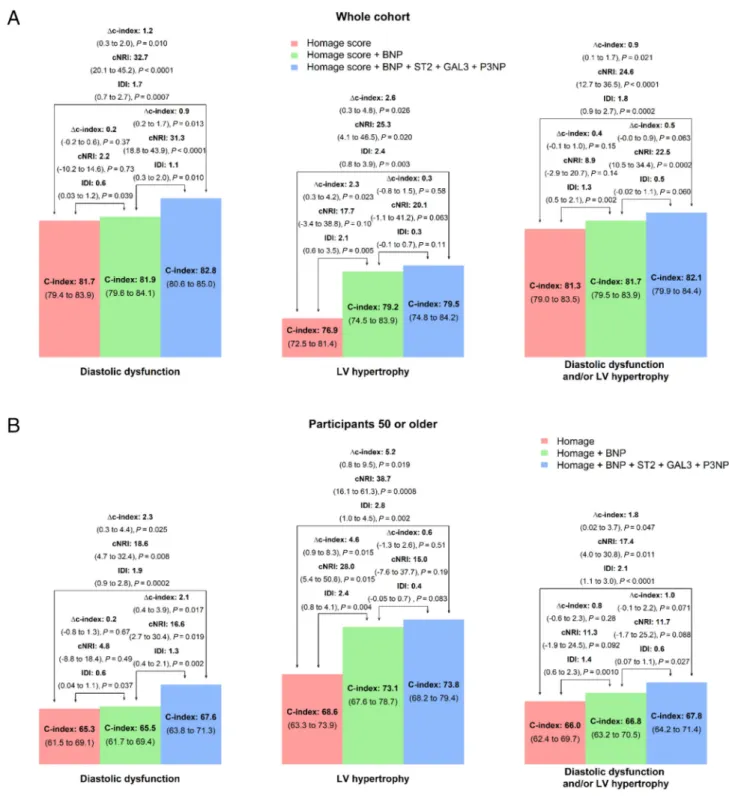
FIGURE 1 Discriminant value of brain natriuretic peptide (BNP), Galectin-3 (GAL3), N-terminal propeptide of procollagen type III (P3NP), and ST2 for
Results
The DD and LVH prevalence were 18% and 14%, respectively. Patients with LVH and/or DD were older and had higher body mass index and systolic blood pressure (Table1). All four bio-markers were significantly higher in patients with DD and/or LVH. GAL3 had the highest discrimination value for DD (C-index of GAL3 0.64 vs. 0.62 for BNP, 0.55 for ST2, and 0.54 for P3NP) whereas BNP and ST2 had the highest discrim-ination value for LVH (C-index 0.68 and 0.62, respectively). Overall, the discrimination value of the HOMAGE score (age, body mass index, systolic blood pressure, heart rate, serum creatinine, smoking, diabetes mellitus, history of coro-nary artery disease, and use of antihypertensive medication) for LVH and/or DD was good (C-index ranging from 0.76 to 0.82) (Figure 1), and the addition of BNP, Gal3, P3NP, and ST2 significantly but moderately improved discrimination value (delta C-index = 2.6%, P = 0.03 for LVH and 1.2%, P = 0.01 for DD) and reclassification (NRI = 25.3, P = 0.02 for LVH and NRI = 32.7, P< 0.0001).
In patients 50 or older, the predictive value of clinical var-iables were lower (all C-index <0.70) whereas the added value of biomarkers remained significant (delta C-index = 0.05, P = 0.02 for LVH and 0.02, P = 0.03 for DD).
In both the whole population and participants 50 or older, the addition of GAL3, ST2, and P3NP significantly increased the discrimination for DD on top of the HOMAGE score and BNP (P = 0.01 and P = 0.02, respectively), whereas BNP did not significantly increase the discrimination for DD on top of the HOMAGE score.
Considering N-terminal pro BNP in place of BNP retrieved similar results (data not shown).
Conclusions
We provide evidence for the additional value of several circulating biomarkers, related to different biological path-way involved in HF, to predict LV remodelling and/or DD in a populational setting.
Natriuretic peptides are well-established biomarkers for prognosis in HF patients but are currently not recommended as a screening tool in asymptomatic individuals especially in a population at low risk to develop overt HF. Importantly, in the results presented herein, BNP did not increase discrimi-nation for DD.
In our study, we intended to improve the accuracy of the biological screening for functional/structural abnormality using additional biomarkers selected a priori based on their association with mechanistic pathways leading to HF.11We
showed herein a significant association of these additional biomarkers, exploring fibrosis (Gal 3 and N-terminal propeptide of procollagen type III) and inflammation (ST2),
with structural and functional cardiac changes at a very early stage of the disease process. These results extend our under-standing as these biomarkers were previously mostly studied in patients with overt HF.
The increase in myocardial Gal-3 expression has been previously related to LVH and incident HF with preserved EF.12 In our analysis, among the four biomarkers tested, Gal-3 (C-index 0.64) appears to be the most promising bio-markers to detect preclinical DD.
In the results reported herein, ST2 had some predictive value for LVH (C-index 0.62). ST2 is related to myocardial inflammation, which can lead to myocardial fibrosis13 and increase the risk for DD and incident HF with preserved EF.14 Our results confirm the results of smaller studies reporting improved prediction of LVH and/or DD in preclinical HF patients with the isolated use of ST2.15,16
We demonstrated significant differences in P3NP levels in participants >50 with and without cardiac abnormalities (P = 0.04) in a populational setting. This extends previous data showing that P3NP have diagnostic/prognostic value in patients with HFpEF17or elderly individuals.18
The superiority of a multi-biomarker approach on top of a mono-marker (BNP) strategy has been reported for the de-tection of LVH,19but scarce evidence exist for the detection of DD. In our study, we show that a screening based on four biomarkers results in marginal but significant increase in the prediction of both LVH and DD on top of the HOMAGE score and that this significant increase persists when considering individuals aged 50 or older (as C-index changes related to the addition of biomarkers increased while the predictive value of the HOMAGE score dropped in this subset). Impor-tantly, the achieved increase appeared more important for DD than for LVH, possibly because of greater DD variability in this populational pre-disease setting than LVH. In addition, the ageing process could increase DD and LVH variability to a greater extent in older individuals. In addition, our results show that the addition of GAL3, ST2, and P3NP have additive value on top of the HOMAGE score and BNP to de-tect DD.
Importantly, we used PEA to quantify natriuretic peptides, GAL3 and ST2. We have evidence of the adequacy of PEA-based approach for natriuretic peptides,10but the quan-tification of GAL3 and ST2 with ELISA may have improved the value of these biomarkers to identify preclinical HF.
Thesefindings suggest that a screening using four biologi-cal biomarkers improves our prediction for LVH and/or DD in populational settings, but that the achieved prediction re-mains fairly low. GAL3 for DD and ST2 for LVH appeared the most informative biomarkers. Approaches based on integrative approaches using more biological biomarkers, possibly combined with imaging biomarkers, are warranted to better identify individuals at risk for HF. Future studies should determine whether an approach based on GAL3 for DD and ST2 measurements in clinical settings, using
4 O. Huttin et al.
ESC Heart Failure (2021) DOI: 10.1002/ehf2.13203
predetermined thresholds and routine biological methods, have an impact on our detection of DD/LVH in routine practice.
Acknowledgements
Subjects were included in the STANISLAS COHORT, which was supported by grants from the French Ministry of Health (Programme Hospitalier de Recherche Clinique Inter-régional 2008–2013) and sponsored by the CHU Nancy, F-54000, Nancy, France.
The authors deeply thank the entire Clinical Investigation Centre staff all of whom are involved in the daily manage-ment of the STANISLAS cohort.
Con
flict of interest
None declared.
Funding
The STANISLAS study was sponsored by Nancy CHRU and supported by a public grant overseen by the French National Research Agency (ANR) as part of the second‘Investissements d’Avenir’ programme (reference: ANR-15-RHUS-0004). The BioSE-PreIC study was funded by the "programme hospitalier de recherche clinique" (PHRCI 13-084).
References
1. Echouffo-Tcheugui JB, Erqou S, Butler J, Yancy CW, Fonarow GC. Assessing the risk of progression from asymptomatic left ventricular dysfunction to overt heart failure: a systematic overview and meta-analysis. JACC Heart Fail 2016;4: 237–248.
2. Kane GC, Karon BL, Mahoney DW, Redfield MM, Roger VL, Burnett JC, Jacobsen SJ, Rodeheffer RJ. Progression of left ventricular diastolic dysfunction and risk of heart failure. JAMA 2011; 306: 856–863.
3. Yancy CW, Jessup M, Bozkurt B, Butler J, Casey DE, Drazner MH, Fonarow GC, Geraci SA, Horwich T, Januzzi JL, Johnson MR. 2013 ACCF/AHA guideline for the management of heart failure: a report of the American College of Cardi-ology Foundation/American Heart Asso-ciation Task Force on Practice Guidelines. J Am Coll Cardiol 2013;62: e147–e239.
4. Chow SL, Maisel AS, Anand I, Bozkurt B, de Boer RA, Felker GM, Fonarow GC, Greenberg B, Januzzi JL Jr, Kiernan MS, Liu PP, Wang TJ, Yancy CW, Zile MR, American Heart Association Clinical Pharmacology Committee of the Council on Clinical Cardiology; Council on Basic Cardiovascular Sciences; Council on Cardiovascular Disease in the Young; Council on Cardiovascular and Stroke Nursing; Council on Cardiopulmonary, Critical Care, Perioperative and Resusci-tation; Council on Epidemiology and Pre-vention; Council on Functional Genomics and Translational Biology; and Council on Quality of Care and Outcomes Re-search. Role of biomarkers for the pre-vention, assessment, and management of heart failure: a scientific statement from the American Heart Association.
Circulation 2017;135: e1054–e1091.
5. Ferreira JP, Girerd N, Bozec E, Mercklé L, Pizard A, Bouali S, Eby E, Leroy C, Machu JL, Boivin JM, Lamiral Z. Cohort profile: rationale and design of the fourth visit of the STANISLAS cohort: a familial longitudinal population-based cohort from the Nancy region of France. Int J Epidemiol 2018;47: 395–395j.
6. Lang RM, Badano LP, Mor-Avi V, Afilalo J, Armstrong A, Ernande L, Flachskampf FA, Foster E, Goldstein SA, Kuznetsova T, Lancellotti P, Muraru D, Picard MH, Rietzschel ER, Rudski L, Spencer KT, Tsang W, Voigt JU. Recommendations for cardiac chamber quantification by echocardiography in adults: an update from the American Society of Echocardi-ography and the European Association of Cardiovascular Imaging. Eur Heart J
Cardiovasc Imaging 2015;16: 233–270.
7. Nagueh SF, Appleton CP, Gillebert TC, Marino PN, Oh JK, Smiseth OA, Waggoner AD, Flachskampf FA, Pellikka PA, Evangelisa A. Recommendations for the evaluation of left ventricular diastolic function by echocardiography.
Eur J Echocardiogr J Work Group Echocardiogr Eur Soc Cardiol 2009;10:
165–193.
8. Huttin O, Fraser AG, Coiro S, Bozec E, Selton-Suty C, Lamiral Z, Frikha Z, Rossignol P, Zannad F, Girerd N. Impact of changes in consensus diagnostic recommendations on the echocardio-graphic prevalence of diastolic dysfunc-tion. J Am Coll Cardiol 2017; 69: 3119–3121.
9. Jacobs L, Efremov L, Ferreira JP, Thijs L, Yang W, Zhang Z, Latini R, Masson S, Agabiti N, Sever P, Delles C. Risk for in-cident heart failure: a subject-level meta-analysis from the Heart “OMics” in AGEing (HOMAGE) Study. J Am Heart
Assoc Cardiovasc Cerebrovasc Dis 2017;
6: e005231.
10. Arrigo M, Vodovar N, Von Moos S, Masson E, Segerer S, Cippà PE, Mebazaa A. High accuracy of proximity extension assay technology for the quantification of plasma brain natriuretic peptide. J
Clin Lab Anal 2018;32: e22574.
11. Ferreira JP, Verdonschot J, Collier T, Wang P, Pizard A, Bär C, Björkman J, Boccanelli A, Butler J, Clark A, Cleland JG, Delles C, Diez J, Girerd N, González A, Hazebroek M, Huby AC, Jukema W, Latini R, Leenders J, Levy D, Mebazaa A, Mischak H, Pinet F, Rossignol P, Sattar N, Sever P, Staessen JA, Thum T, Vodovar N, Zhang ZY, Heymans S, Zannad F. Proteomic bioprofiles and mechanistic pathways of progression to heart failure. Circ Heart Fail 2019;12: e005897.
12. de Boer RA, Edelmann F, Cohen-Solal A, Mamas MA, Maisel A, Pieske B. Galectin-3 in heart failure with pre-served ejection fraction. Eur J Heart Fail 2013;15: 1095–1101.
13. Shah KB, Kop WJ, Christenson RH, Diercks DB, Henderson S, Hanson K, Li SY, deFilippi CR. Prognostic utility of ST2 in patients with acute dyspnea and preserved left ventricular ejection frac-tion. Clin Chem 2011;57: 874–882. 14. Paulus WJ, Tschöpe C. A novel paradigm
for heart failure with preserved ejection fraction: comorbidities drive myocardial dysfunction and remodeling through coronary microvascular endothelial in-flammation. J Am Coll Cardiol 2013; 62: 263–271.
15. Daniels LB, Clopton P, Iqbal N, Tran K, Maisel AS. Association of ST2 levels with cardiac structure and function and mortality in outpatients. Am Heart J 2010;160: 721–728.
16. Wang Y-C, Yu C-C, Chiu F-C, Tsai C-T, Lai L-P, Hwang J-J, Lin JL. Soluble ST2 as a biomarker for detecting stable heart fail-ure with a normal ejection fraction in hypertensive patients. J Card Fail 2013; 19: 163–168.
17. Martos R, Baugh J, Ledwidge M, O’Loughlin C, Murphy NF, Conlon C, Patle A, Donnelly SC, McDonald K.
Diagnosis of heart failure with preserved ejection fraction: improved accuracy with the use of markers of collagen turn-over. Eur J Heart Fail 2009;11: 191–197. 18. Barasch E, Gottdiener JS, Aurigemma G, Kitzman DW, Han J, Kop WJ, Tracy RP. The relationship between serum markers of collagen turnover and cardio-vascular outcome in the elderly: the
Cardiovascular Health Study. Circ Heart
Fail 2011;4: 733–739.
19. Zile MR, Desantis SM, Baicu CF, Stroud RE, Thompson SB, McClure CD, Mehurg SM, Spinale FG. Plasma biomarkers that reflect determinants of matrix composi-tion identify the presence of left ventric-ular hypertrophy and diastolic heart failure. Circ Heart Fail 2011;4: 246–256.
6 O. Huttin et al.
ESC Heart Failure (2021) DOI: 10.1002/ehf2.13203