MINISTERE DE L’ENSEIGNEMENT SUPERIEUR ET DE LA RECHERCHE SCIENTIFIQUE
UNIVERSITE MENTOURI - CONSTANTINE FACULTE DES LETTERS ET DES LANGUES DEPARTMENT DES LANGUES ETRANGERES
A CASE STUDY OF FIRST YEAR ENGLISH STUDENTS
AT GUELMA UNIVERSITY. ALGERIA
A Dissertation Submitted in Partial Fulfilment of the Requirements for the
Magister Degree in Applied Linguistics and Language Teaching
Option: Language Teaching and Methodology
Presented by:
Supervised by:
ABDAOUI Mounya
Dr. HAMADA Hacène
Board of Examiners:
* Prof. SAADI Hacène –UMC–Constantine – President
* Dr. HAMADA Hacène –ENS– Constantine – Supervisor
* Dr. KESKES Said –University of Setif – Examiner
January 2010
TEACHING LEXICAL
COLLOCATIONS
TO RAISE PROFICIENCY IN
FOREIGN LANGUAGE WRITING
i
DEDICATION
I DEDICATE THIS DISSERTATION TO:
My parents, my brothers and my sister.
My husband and his family.
My son.
My relatives and my friends.
My teachers.
ii
ACKNOWLEDGEMENTS
A profound debt of gratitude is owed to my supervisor
Dr. Hacene HAMADA
for his continuous encouragement, guidance and support.I am also indebted to all my Magister teachers – including my supervisor, for their interesting lectures, documents and advice during the academic year 2006-2007.
I would like to thank all the members of the jury for reading and evaluating my dissertation.
I would also thank
Dr. Samir Maghlout
for providing me with two books.I owe much to my husband for his understanding, patience and help.
I never forget to thank my teachers at Guelma University who taught me the basic principles of English especially Dr. Toulgi, L. Mr. Boudechiche, H. and Mr. Ellaggoune, A.
iii
ABSTRACT
The purpose of the present study is to investigate the role of teaching collocations in raising foreign language writing proficiency. Students of English as a Foreign Language are facing a variety of problems that make their writing not proficient. One major problem is the lack of appropriate vocabulary which could be related to the ignorance of collocations. Thus, we hypothesise that a correlation may exist between using collocations and writing proficiency. To prove this hypothesis, an experimental study has been conducted. Two groups have constituted our sample: an experimental group and a control one. A pre-test has been administered to examine students' use of collocations. It consists of two parts: part one includes exercises taken from McCarthy and O’Dell textbook “English Collocations in Use”. Part two is an assessment of students’ paragraphs. The results of the pre-test have shown a limited knowledge of collocations and a wide range of “mis-collocations”. Afterwards, a questionnaire has been conducted to both teachers and students to gain more information about our sample’s use of collocations. Data driven from the questionnaire have confirmed students’ limited knowledge of collocations. An experiment has been conducted to raise students' writing proficiency by developing their collocational competence mainly through an explicit teaching of collocations. The Pearson Correlation Coefficient Test has been administered by assessing students’ writing of the first examination’s paragraphs. The results of the post-test have confirmed our hypothesis that a strong linear correlation exists between writing proficiency and using collocations. Thus, we recommend the adaptation of a Communicative-Collocational Approach to teaching writing which entails teaching writing through a communicative approach by developing students' collocational competence.
iv
LIST OF ABBREVIATIONS
C-R: Consciousness-Raising
EAP: English for Academic Purposes EFL: English as a Foreign Language ESP: English for Specific Purposes FLT: Foreign Language Teaching L1: First Language
L2: Second Language
L3: Third / Foreign Language MWU: Multi-Word Units
PPP: Presentation, Practice, Production SLA: Second Language Acquisition
TEFL: Teaching English as a Foreign Language Vs.: versus
v
LIST OF TABLES
Table 1.1 Collocations’ Patterns according to Michael Lewis (2000: 133)………..….17
Table 1.2 Collocations’ Patterns according to McCarthy and O' Dell (2005: 12)……..18
Table 1.3 Collocations’ Patterns according to McCarthy, O' Dell and Lewis Michael. 18 Table 1.4 Examples of Grammatical Collocations………...20
Table 1.5 Examples of Lexical Collocations………..………20
Table 1.6 Word classes: Function Words Vs Content Words………26
Table 1.7 List of English Homonyms……….……30
Table 1.8 List of English Homophones………..31
Table 2.1: A Comparison of the Product, the Process and the Genre Approach………44
Table 4.1 Percentage of Students’ Correct and Incorrect Answers in Section A of the Pre-test ………..94
Table 4.2 Percentage of Students’ Correct and Incorrect Answers in Section B of the Pre-test……….95
Table 4.3 Percentage of Students’ Correct and Incorrect Answers in Section C of the Pre-test………95
Table 4.4 Percentage of Students’ Correct and Incorrect Answers in Section D of the Pre- test………96
Table 4.5 Percentage of Students’ Correct and Incorrect Answers in each section ..…96
Table 4.6: Percentage of Students’ Correct and Incorrect Answers in the Whole Pre-test ……….97
Table 4.7 Percentage of Students’ Grammatical versus Collocational Errors in Written Assignments………97
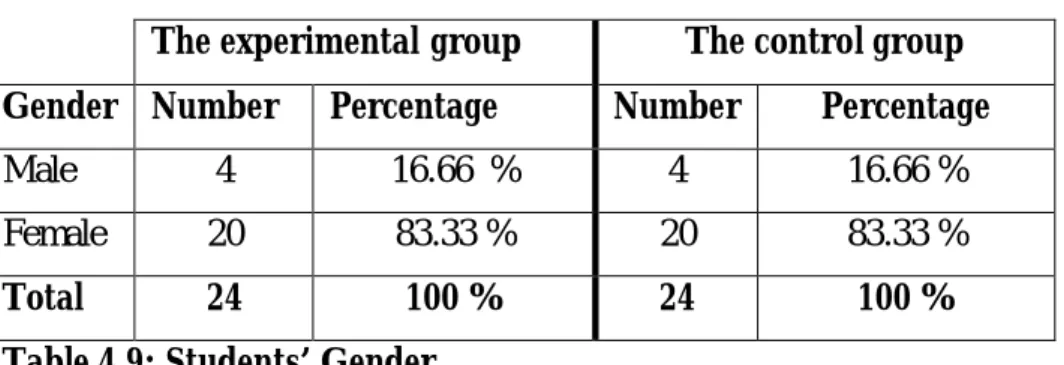
Table 4.9 Students’ Gender………..………....100
Table 4.10 Years of Studying English in the Primary, Middle and Secondary School………...….100
Table 4.11 Students' choice to study English at the University………..…..101
Table 4.12 Ownership of an English-English Dictionary………..…...102
Table 4.13 Frequency of Using an English-English Dictionary ……….………….…102
Table 4.14 Students’ Appreciation of their Level in English …….………….………103
Table 4.15 The Most Difficult Skill for Students……….103
Table 4.16 Students’ Appreciation of their Level in Writing ………..104
Table 4. 17 Sources of Difficulties in Writing ………….………....105
Table 4. 18 Students’ Knowledge of Collocations………...105
Table 4. 19 Students’ Source of Collocation Knowledge ………106
Table 4. 20 Students’ Problems in Writing Concerning Word Combinations……….106
Table 4. 21 Transfer of Arabic Collocations ………...…107
Table 4. 22 Arabic Interference in English Writing……….107
Table 4. 23 French Interference in English Writing……….…108
Table 4. 24 Ownership of a Collocations’ Dictionary………...…...…108
Table 4. 25 Vocabulary Learning Strategies ………109
Table 4. 26 Teaching Collocations to Raise Students’ Writing Proficiency…………109
Table 4. 27 Teaching Vocabulary as a Separate Module……….110
Table 4. 28 Teachers’ Gender………..112
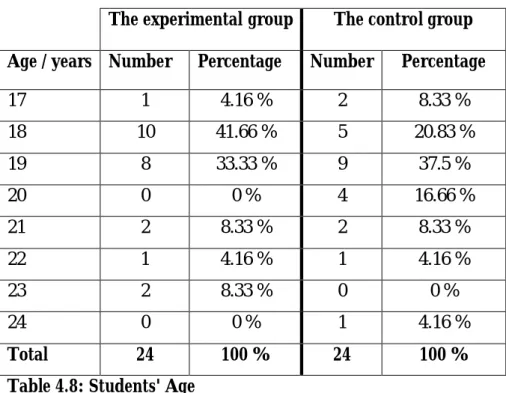
Table 4. 29 Teachers’ Age………113
Table 4. 30 Teachers’ Degree or Qualifications………...113
Table 4. 31 Teachers as Post-graduate Students………...114
Table 4. 33 Teachers’ Work Situation………..114
Table 4. 34 Teachers’ Experience in Teaching Written Expression……….115
Table 4. 35 The Most Difficult Language Skill for Students………...116
Table 4. 36 Raising Students Writing Proficiency through the Teaching of Grammar / Vocabulary………116
Table 4. 37: Teaching Vocabulary: Words in Isolation versus Word Combination…117 Table 4. 38: The Best Way of Teaching Vocabulary………...117
Table 4.39: Teaching Vocabulary through the Other Skills or as a Separate Module………..…118
Table 4. 40: The Major Cause of Learners' Errors in Writing………..118
Table 4. 41: Noticing Collocations………...119
Table 4. 42: Mis-collocations in Students Writing……….…..119
Table 4. 43: Teaching Students Collocations to Make them Write Correctly……..…120
Table 4. 44: Designing a Collocational Syllabus………..…120
Table 4. 45: Ways of Teaching Collocations………120
Table 4. 46: Encouraging Autonomous Learning of Collocations………...121
Table 4. 47: Scores according to Collocations’ Use………...………..124
Table 4. 48: the Experimental Group Scores of the Post-test……….. 125
Table 4. 49: Correlation between Using Collocations and Writing Proficiency...…...126
Table 4. 50: the Control Group Scores of the Post-test………127
Table 4. 51: Correlation between Mis-collocations and Writing Non-proficiency ...128
vi
LIST OF FIGURES
Figure 1-1: A Diagram of the Process of the Affixation of the Root “Use”…………27
Figure 1-2: Word Family………27
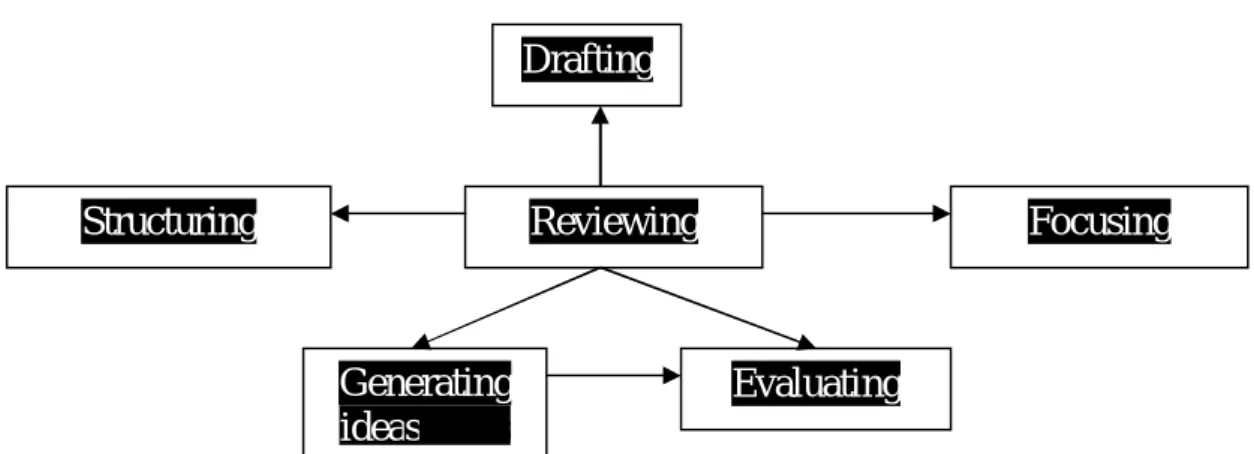
Figure 2-1: White and Arndt’s Process Writing Model……….42
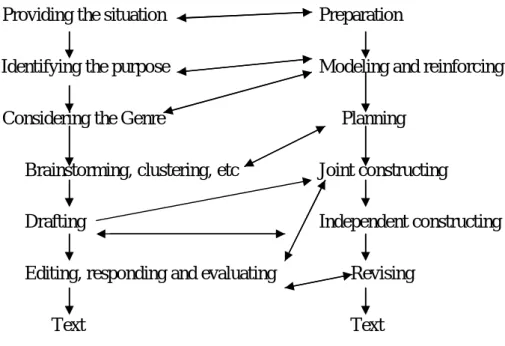
Figure 2-2: Application of the Process-Genre Approach…….………...46
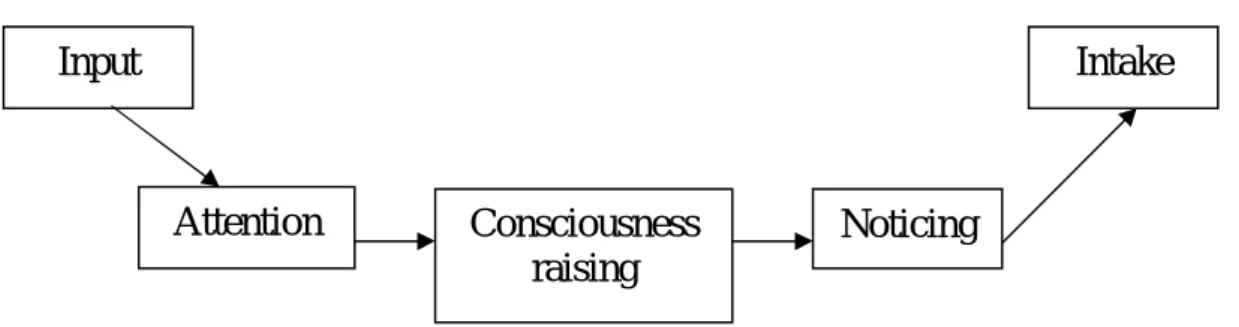
Figure 2-3: Stages of Converting Input into Intake………56
vii
CONTENTS
Dedication………...i Acknowledgements………... ii Abstract………..… iii List of Abbreviations………..……iv List of Tables………...v List of Figures……….………vi Contents ………...vii INTRODUCTION……….………...………..……...1 1. Review of Literature………..………22. Statement of the Problem………..4
3. Aims of the Study………..6
4. Hypothesis………..…...6
5. Research Methodology and Design………...6
5.1 Choice of the Method………...………...6
5.2 Population of the Study………...7
5.3 Data Gathering Tools………...8
6. Structure of the Dissertation………..……...9
CHAPTER ONE: Collocations Introduction……….11
1.1 Collocations’ Origin in Phraseology and Prosody………...11
1.2 Collocations in the Lexical Approach………...………13
1.3 Approaches to Define Collocations……….………...14
1.3.2 The Traditional Approach………...……...15
1.4 Collocations’ Patterns……….………..….17
1.5 Collocations’ Types………..….19
1.5.1 Lexical vs. (versus) Grammatical Collocations…...……….19
1.5.2 Technical vs. Academic Collocations………...……….20
1.5.3 Strong vs. Weak Collocations ………...…………21
1.5.4 Open vs. Restricted Collocations………22
1.6 Collocations’ Criteria………....23
1.7 Collocation and Colligation………...24
1.8 The Nature of Vocabulary: Individual Words vs. Multi-Word Units ………..24
1.8.1 The Meaning of “word” ……….…………25
1.8.2 Word Classes………..25
1.8.3 Word Families………26
1.8.4 Word Formation……….…28
1.8.5 Words’ Relations………28
1.8.6 Multi-Word Units………...…………32
1.9 Collocations, Idioms and Phrasal Verbs ….……….…….33
1.10 Vocabulary vs. Grammar………...……….……….……34
1.10.1 Collocations and Communicative Competence……….…...…36
1.10.2 Collocational Competence……….…...37
Conclusion………...38
CHAPTER TWO: Teaching Collocations in Foreign Language Writing Introduction……….…39
2.1 The Skill of Writing……….………..…39
2.2.1 The Product Approach ………...…41
2.2.2 The Process Approach……….………...…42
2.2.3 The Genre Approach………..43
2.2.4 The Process -Genre Approach………..……….45
2.2.5 The Eclectic Approach………..……….46
2.3 Mis-collocations in Foreign Language Writing……….……49
2.4 Interference of the Mother Tongue………50
2.5 Interference of French as a Second Language………..….51
2.6 The Aims of Teaching Collocations………..52
2.7 Challenges to Teaching Collocations………....53
2.8 Directions for Teaching Collocations………54
2.8.1 Teaching Collocations by Highlighting and Noticing………....55
2.8.2 Teaching Collocations through Consciousness-Raising………..…..58
2.8.3 Teaching Collocations through Context……….60
2.8.4 Teaching Collocations through Exercises………..…61
2.9 Materials for Teaching Collocations ………....64
2.10 The Role of the Teacher………..67
2.11 The Role of the Student………...69
Conclusion………...70
CHAPTER THREE: The Experimental Study Introduction……….72
3.1 Aims of the Experiment……….………72
3.2 Population and Sample of the Experiment ……….………...…72
3.3 Students’ Questionnaire……….………73
3.3.2 Description……….…73
3.4 Teachers’ Questionnaire………74
3.4.1 Teachers' Sample Population ………...………..75
3.4.2 Administration………75
3.4.3 Description……….….75
3.5 The Pre-test ………...75
3.5.1 The First Part: Collocation Exercises………...……. 75
3.5.2 The Second Part: Students’ Written Assignments………..76
3.6 Content of the Experiment……….…76
3.7 The Post-test………..92
Conclusion………...…93
CHAPTER FOUR: Data Analysis and Interpretation Introduction……….94
4.1 The Pre-test………90
4.1.1 The First Part: Collocation Exercises……….…90
4.1.2 The Second Part: Students' Written Assignments………..…93
4.2 Students' Questionnaire……….…95
4.2.1 Analysis of Results and Findings………...………95
4.2.2 Summary of Results and Findings from the Students’ Questionnaire ……….…111
4.3 Teachers' Questionnaire………...112
4.3.1 Analysis of Results and Findings.………..………..107
4.3.2 Summary of Results and Findings from the Teachers’ Questionnaire………….122
4.4 The Post-test ………...…123
4.4.1 Analysis of Results and Findings...………..123
4.4.1.2 Pearson Correlation Coefficient of the Control Group……….127
4.4.2 Summary of Results and Findings from the Post-test………..129
4.5 Summary and Discussion of Findings……….129
Conclusion……….………131
General Conclusion………...132
1. Concluding Remarks………...…132
2. Pedagogical Implications………133
3. Research Perspectives and Limitations ………...….136
Bibliography……….138
Appendices………...…145
Appendix 1: Chronology of Researches about Collocations………145
Appendix 2: Students' Questionnaire ………..…147
Appendix 3: Teachers’ Questionnaire ……….151
Appendix 4: Collocations’ Pre-test: Part One…..………..……..157
Appendix 5: Content of Writing Syllabus for First Year Students ……….160
Appendix 6: Jacobs et al.’s Scoring Profile………..161
Appendix 7: Two Sample Pages From “English Collocations in Use”...…………...162
Appendix 8: A Sample Study Page From “Oxford Collocations Dictionary”……....164
Appendix 9: List of “Collocations with Common Verbs” from “Oxford Collocations Dictionary”………....165
French Summary………...166
Introduction
In contrast to grammar, vocabulary has long been neglected in teaching. It has always been taught through the other skills whereas grammar has been taught as a separate module, which has ranked vocabulary in an inferior position to grammar. Curricula are full of grammatical rules that are said to improve the learner’s language as if teaching a language equals teaching its grammar. Although, the old approaches have tried to teach vocabulary, words have been introduced only in lists which proved to be useless. Many researchers have recently raised the importance of teaching vocabulary like Michael Lewis who questioned “the grammar-vocabulary dichotomy” and advocated a lexical approach (1993, 1997, 2000) which is mainly interested in teaching collocations or “common word combination” (2000: 127). The latter is a broader term that does not include only collocations but also idioms, phrasal verbs, fixed phrases and semi-fixed ones.
Following Michael Lewis’s views, we believe that teaching collocations would raise students’ proficiency in language learning. Furthermore, we focus on the direct influence of teaching collocations on the field of foreign language writing where the students have a problem of combining words together. Even though the native speaker can also have a problem in associating words, foreign language students struggle more with making their writing sound natural. This may be due to their ignorance of collocations and the interference of the mother tongue or even the second language, which is the case of English language learners in Algeria, having Arabic as the mother tongue and French as a second language. Examining learners' writing, one could quickly notice the “mis-collocations” that are widespread in their written assignments. This reflects their lack of proficiency in the target language. Thus, we hypothesise, in this
study that students of English as a foreign language should learn collocations to make their writing better since collocations constitute the most important part of vocabulary.
1. Review of Literature:
Many researchers have considered the importance of collocations in SLA (Second Language Acquisition) and TEFL (Teaching English as a Foreign Language). But each researcher has approached collocations from a different dimension. So, there are different categories: some researchers have approached the problem of translating collocations in a purely linguistic description. Others have been much interested in contrastive and error analysis while the rest of researchers have investigated collocations’ use and in some cases its relation to proficiency in speaking and/or writing. Since researches about this subject are extensive, we are going to state only some examples from each category. In 1987, Emery, P (cited in Mahmoud, Abdelmoniem. 2005: 119) has investigated Arabic/English translation of collocations by comparing collocations in the two languages. Next in 1991, he has dealt with collocation in modern Standard Arabic by specifying the types of collocations (ibid). In 1999, Farghal, M. and Shunnaq, A. have also approached collocations in relation to English / Arabic translation (ibid: 119-120). In 2002, Al-Salmani, A. has focused in his MA thesis on Collocations and idioms in English-Arabic translation. Far from translation, other researchers have investigated other matters related to collocations in Foreign Language Learning. In 2003, Hassan Abadi Siavosh has studied learning English lexical and grammatical collocations by Iranian EFL learners. After examining learners’ collocations types he has found that their performance differs according to the patterns of collocation “in favour of verb-noun collocations” and that acquisition of lexical collocations is easier than grammatical ones. In her research about learning collocations Gitaski, C (cited in Siavosh, 2003: 51) has pointed out that learning
collocations is facilitated by the level of ESL learners. The higher is the level, the easier is learning collocations. She has further stated that easiness depends also on the degree of complexity of the collocation itself. Concerning the problem of collocational errors, some researchers have approached it within their mother tongue. In 1989, Kharma and Hajjaj (cited in Mahmoud, Abdelmoneim: 2005: 118) has focused on verb-noun collocations in their analysis of collocational errors made by Arabic learners of English. Later in 1997, lombard has studied the use of collocations by non-native speakers of Mandarine in his Doctoral Dissertation. He has relied on learners’ written assignments to collect the necessary information about collocations’ problems and types. In 2005, Dr Mahmoud, Abdulmoneim has studied errors made by Arab Learners of English. The results of his empirical study have indicated that collocation constitute a problem for Arabic learners. This problem could be overcome by raising learners’ consciousness about collocation with the help of simple contrastive analysis of English and Arabic. After that, in 2007 Cao, Hongquan and Nishina, Kikuko from Tokyo Institute of Technology have analyzed errors of Japanese adjectival collocations. By administering a survey questionnaire, they have resulted in classifying collocational errors and constructing “an error database”.
Concerning collocations’ use in speaking, in 2003 Sung, J (cited in Hsu: 2) study has resulted in a strong correlation exists between the use of English lexical collocations and speaking fluency. Then in 2008 Hsu, Jeng-yih and Chiu, Chu-yao have investigated the same subject as Sung, J but they reached contrary results. They have found that no significant correlation exists between the use of English lexical collocations and speaking fluency. However, they have found that a strong correlation exists between knowledge of collocation and speaking proficiency but no correlation exists between knowledge and use of collocation. Furthermore, Hsu has investigated the influence of
using collocations on fluency in writing. In 2007, he has conducted an empirical study about the impact of lexical collocations on the writing of Taiwanese College English majors and non-English majors. His empirical study consists of an on-line writing test on the same topic which has been evaluated through a web-based writing programme. Correlation has been found between writing proficiency and using collocation. But none of the researchers has tried to teach collocations as a treatment to see whether teaching collocations could lead to fluency in writing. This research has approached the problem of mis-collocations in foreign language writing by trying to teach collocations in order to see if there is a correlation between using collocations and writing proficiency after the treatment. Recently, in 2009, Lombard has explored the use of collocations by ESL students from a task-based approach. To know more about collocations’ researches see appendix one.
2. Statement of the Problem
Students of English as a Foreign Language (EFL) lack the vocabulary needed to produce correct written English. Besides, they use inappropriate word combinations when they write; i.e., words that do not go together. As a result, their writing is not proficient. As claimed by Hill: "Students with good ideas often lose marks because they don't know the four or five most important collocations of a key word that is central to what they are writing about." (Hill, in Michael Lewis, 2000: 50). Therefore, their writing is full of “mis-collocations” that make it sounds unnatural. Hill illustrates this problem with the following example in which students say: "His disability will continue until he dies" rather than "He has a permanent disability." (ibid: 49-50). Hence, students should realize the fact that words have their collocational fields.
Consequently, it is advised to teach English students the right associations of words to raise their proficiency in English generally and in writing specifically. As it is claimed by Lewis Michael, collocations should be taught because they constitute the central part of vocabulary. Hence, Michael Lewis could be considered as the father of the lexical approach and thus of collocations. He argues that language acquisition takes place when the learner is able to analyse the language into lexical 'chunks'. In other words, learning English collocations would make the speech and the writing of foreign language learners sound native-like. As claimed by McCarthy and O’Dell, collocations (2005: 6) “…give you the most natural way to say something: smoking is strictly forbidden is more natural than smoking is strongly forbidden”. So, collocations are
prefabricated chunks that are already stored in the learners’ memory. It is these chunks which are retrieved by the learner when (s) he produces the language not isolated words. In this respect, vocabulary learning is a focal point in language acquisition while grammar is ranked as a secondary factor that aims at organizing chunks of vocabulary. This is because grammar is not sufficient, it is always taught but students still make grammatical errors when they write.
Eventually, collocations require to be taught so that the learners would be aware of them because they would help learners not only to understand lexis but also to communicate ideas more effectively when they write. Teaching collocations would provide the learner with a helpful device in writing. It could facilitate the task of writing by making it easier, more precise and more natural and native like. For instance, instead of saying 'they disagreed with an angry way', we say 'it was a heated debate'.
3. Aims of the Study
The aim of the present study is twofold:
(1) to investigate the correlation between collocations’ use and proficiency in writing; (2) to raise students’ writing proficiency by teaching collocations to develop their collocational competence mainly through noticing and consciousness-raising.
4. Hypothesis
Through our teaching of ‘Written Expression’ at the university level, we have observed that English learners do not know collocations and this is a fact manifested in their writing. Their lack of proficiency in writing is perhaps due to their ignorance of collocations. Hence, we hypothesise that:
-If we teach collocations to foreign language learners, they would use them when they write. Consequently, their proficiency in writing would increase.
So, effective foreign language writing could be better achieved when learners study collocations. Therefore, a correlation may exist between students’ use of collocations and proficiency in writing.
Thus, we are going to work on the development of students' collocational competence through explicit teaching based on noticing and consciousness-raising in order to raise their vocabulary stock and help them write accurately. This is due to the assumption that teaching grammar is not sufficient. More exploration is needed in the field of vocabulary generally and collocations particularly.
5. Research Methodology and Design
5.1 Choice of the Method
This research has been conducted through the experimental method as an appropriate way of investigating our hypothesis which states that using collocations
would raise students’ writing proficiency because collocations’ use correlates with proficiency in writing. The use of collocations would increase if we teach collocations to foreign language learners. Consequently, we are going to investigate the case study of first year English students at the University of Guelma. We have two groups under study: an experimental group and a control one. Both groups would be treated objectively in order to reach valid results. The same courses of writing will be taught to both groups. Attention of the experimental group will be drawn towards noticing collocations by highlighting them so that learners’ consciousness about collocations would raise. Thus, collocations will be taught to the experimental group through explicit teaching that aims at encouraging autonomous learning. Both groups will be tested before and after the treatment in order to determine the efficiency of teaching collocations on raising the writing proficiency of the experimental group.
5.2 Population of the Study
Subjects of our study are first year students at the English Department of Guelma (East of Algeria). There are 240 first year students divided into ten groups, each group includes twenty-four students. Since it is difficult to deal with the whole number of the population, our sample is composed of two groups which are chosen randomly. It consists of forty-eight students whose native language is Arabic and their Second Language is French. They are aged between 17 and 24 years. A group is to be considered as the experimental group which will receive the treatment while another group is considered as the control one. In addition to students’ population, we are also interested in the teachers of written expression at the same department, aged between 21 and 41 years. There are four teachers for first year students–including me, and two teachers for second year students. The reason behind choosing the teachers of writing
and not other modules is due to the fact that they are supposed to know more about students’ writing level as well as collocations’ use.
5.3 Data Gathering Tools
To answer the research questions, quantitive data from students’ questionnaires as well as teachers’ questionnaires would be collected. We begin with the students’ questionnaire in order to have a global view about students’ knowledge of collocations and their level in writing. However, the questionnaire could not provide access to what is “inside a person’s head” (Tuckman, cited in Cohen and Manion: 305) and as Cohen and Manion claim: “…at the heart of every case study lies a method of observation” (1980:125), it is better to put the target sample under observation through experiment to gain “research-relevant information”. Both the experiment and the questionnaires would help us to collect data about the status of teaching collocations and the problems that students encounter in writing especially mis-collocations. The last problem is due to students’ ignorance of the most common collocates a word has. Since students are used to study vocabulary through the other modules and not as a separate module, there is no clear tendency to include collocations within the curriculum. Eventually, a major part of vocabulary may be neglected. Therefore, we have to proceed to teachers’ questionnaire to benefit from their experience in the field of teaching writing.
A pre-test is to be administered prior to the study in order to assess students’ level in writing in relation to the use of collocations. The pre-test has two parts: part one includes exercises from McCarthy and O' Dell textbook English Collocations in Use (see appendix 4), while part two relied on the subjects’ essays to assess their level in writing and their knowledge of collocations. Later, “mis-collocations” will be counted in an objective way from both parts of the pre-test. The treatment includes a collection of lessons in which the experimental group’s attention is directed intentionally towards
collocations. The experimental group will get an intensive teaching of collocations for three hours a week during a four-month period, i.e. the first semester. The learners’ awareness of collocations is raised through explicit teaching based mainly on highlighting, noticing and consciousness-raising. At the end of the experiment, a post-test will be administered to both groups to determine if teaching collocations has contributed to the improvement of the experimental group writing proficiency.
Once data is collected from the pre-test and the questionnaires, we will code and score the answers through analysing questions’ responses by giving objective scores to each question. In the post-test we are going to assess students’ writing of the first mid-term examination by applying Jacobs et al.’s Scoring Profile. Then, we will score their use of collocations objectively. Eventually, the Pearson Coefficient of Correlation of both groups is counted between the two variables: using collocations and writing proficiency. Finally, we will interpret the data according to the research aims, the hypothesis and the results of both the pre-test and the post-test to prove or disapprove the validity of the hypothesis.
6. Structure of the Dissertation
The dissertation includes two theoretical chapters: Chapter one –Collocations– introduces the term 'collocations', explains its origin, definitions, patterns, types and criteria. The nature of vocabulary is explained by focusing on individual words versus Multi-Word Units. Next, the relation between collocations and the two close concepts, idioms and phrasal verbs, is clarified.Then, the field of vocabulary teaching is explored in order to draw a relationship between teaching collocations and “communicative competence”. Hence, the concept of “collocational competence” in foreign language
– reviews the most common approaches to teach writing. It sheds light on the problem of “mis-collocations” in foreign language writing as well as the purpose of teaching collocations where we provide challenges and directions for teaching collocations. Finally, we emphasize the importance of materials in teaching collocations, and the role of both the teacher and the student in and outside the foreign language classroom. Chapter three –The Experimental Study– represents the implementation of the experiment and the pre- and post-tests. Chapter Four –Data Analysis and Interpretation– provides comments on the findings of the tests and the experiment. On
one hand, this chapter introduces an analysis of the results drawn from teachers and students’ questionnaires. On the other hand, it interprets data driven from both the pre-test and the post-pre-test to see whether the experiment has led to any changes in the performance of the experimental group in contrast to the control group. At the end, a general conclusion will follow with some pedagogical implications.
Introduction
Linguists have defined the term “collocation” in different ways. We try in this chapter to clarify this notion by exploring its origins and citing its most significant definitions according to two specified approaches: the Traditional Approach and the Statistical one. Providing insights into phraseology and the lexical approach would clarify the importance of collocations as an interesting part of vocabulary. The latter is explored by introducing its nature generally and comparing individual words with Multi-Word Units particularly. After that, we explore collocation types, patterns and criteria and point out the relation between collocations, idioms and phrasal verbs. Finally, we deal with both communicative and “collocational competence” which is a new expression in collocation teaching introduced by Lewis Michael in 2000.
1. 1 Collocations’ Origin in Phraseology and Prosody
Phraseology has its roots in Russia where it appeared in lexicology in the twentieth centuryas a branch of linguistics that deals with words joined as a whole unit (Cowie, A. P 2001: 1). Phraseology is different from lexicology in that the latter is related to the meaning of individual words whereas the former is related to “phraseological units”, that is word combinations that have become very important in first and Second Language Acquisition (SLA) (ibid). Moreover, this field of linguistics has been highly developed by Firth, J. R and the Neo-Firthians Halliday, M and Sinclair, J. Recently, corpora and web concordances have become very influential tools which contribute to the analysis of phraseology (ibid: 3).
Palmer, F. R is considered as a pioneer in the field of collocations; He (as cited in Kennedy, Graeme. 2003: 468) defines “collocation” as “a succession of two or more words that must be learned as an integral whole and not pieced together from its
component parts”. However, it is widely accepted that the word “collocation” was coined by Firth in 1957 when he said ‘You shall know a word by the company it keeps’ (Firth, cited in Palmer, 1981: 75-76). Firth uses the word collocation to refer to the association of words in the same context so that when you see a word you expect the presence of another. He claims: “Collocations of a given word are statements of the habitual or customary places of that wordorder but not in other contextual order and emphatically not in any grammatical order. The collocation of a word or a 'piece' is not to be regarded as mere juxtaposition, it is an order of mutual expectancy”, (Firth, 1957: 181). He farther believes that collocates of a word help us to understand its meaning. Firth gives the example of dark that collocates with night “one of the meanings of night is its collocability with dark” (ibid: 196). Here, the meaning of the word night is clarified through its collocate dark. Also, the word that needs clarification– here night, is called the node word, whereas the words that could be combined with it are called collocates.
The work of Firth had an impact on many linguists who studied collocations. we can cite here, but not exhaustively, some of them like Bolinger (1972), Peters (1977, 1983), Hakuta (1974) , Wong-Fillmore (1976), Nattinger (1980), Syder (1983), Allerton (1987), Sinclair, J (1987), Quirk, Greenbaum, Leech and Svartvik (1985), Sinclair, J (1991), Francis, Hunston, and Manning (1996), Paradis (1997). Among these studies, Sinclair (1991, as cited in Andreou, G and Galantomos, I. 2008: 1) has introduced new concepts “the idiom principle” and “the open-choice principle” which are the two principles that govern the choice of words by speakers and writers. The first principle results in collocations or other degrees of idiomaticity like for instance idioms or fixed phrases in contrast to the second principle which is more general and includes “a wide range of possible and acceptable words” (ibid.).
Furthermore, Hoey (as cited in Michael, Lewis, 2000: 232) claims that what constitutes a collocation is the “meanings” rather than the words, following Sinclair (1991) who says that “Many uses of words and phrases show a tendency to occur in a certain semantic environment” (ibid). In this scope, Hoey is pointing out what he calls “a world beyond collocations” referring to “semantic prosody” (ibid). The latter is –as defined by Hoey, the association of a word with “a particular set of meanings” (ibid). That is what makes a word collocates with specific meanings rather than others. He illustrates his view with the example of the word chilly. Within the prosody of "time", chilly collocates with morning, night, evening, day; whereas it does not collocate with
minutes or decades. (ibid: 233)
1.2 Collocations in the Lexical Approach
According to Barlow (as cited in Partington, A. 1998: 21-22) “purely syntactic descriptions of language especially those of the generative schools” could not really explain how language works. He argues that the generative school has ignored the fact that words have their collocations; rather, it has concentrated on the explanation of “free association of lexical items” on the basis of grammar (ibid). Attempts to design a lexical syllabus have started with Willis in 1990. Later, Michael Lewis coined the term “lexical Approach” (Richards and Rodgers, 2001: 138) to indicate a theory in which lexis and vocabulary play a major role in language learning. The lexical approach has emerged as a reaction to the behaviourist view which is based on PPP (Presentation, Practice, and Production). Contrary to it, the lexical approach is based on exposing the learner to large amounts of input combined with consciousness-raising. (Thornbury, Scott. 2002: 109). Woolard, George (as cited in Lewis, Michael: 2000: 31) has pointed out that within the lexical approach, vocabulary is learnt by learning word combinations not just individual words. Besides, word combinations have to be treated as whole not as
separated individual words. They are “prefabricated chunks” that are stored in the mind as “individual wholes”. Whenever learners want to speak or write, they recall these ready chunks instead of brainstorming their mind searching for which word goes with which. This view is also shared by Lewis, Morgan (as cited in Lewis, Michael: 2000: 15) who claims that: “so much of the language of the effective language user is already in prefabricated chunks, stored in their mental lexicons just waiting to be recalled for use.”
Consequently, collocations represent an important part of lexical chunks. Thus, we think that if learners are exposed to these chunks, they may well internalize the rules of writing and speaking. This is due to the fact that lexical competence is the result of frequent exposure, consciousness-raising and memorizing. (to be discussed in chapter two. Section 2.8.2 )
1.3 Approaches to Define Collocations
Two approaches to define collocations could be distinguished: the Statistical/ Frequency-based Approach or “the phraseological approach” (Nesselhauf, N. 2005: 12) and the Traditional Approach. The first approach is called also “statistically oriented approach” by Herbst (as cited in Nesselhauf, N: 14). Attempts by linguists to define the term collocation have resulted in various definitions. We have tried to classify the most common ones under each approach.
1.3.1 The Statistical / Frequency-based Approach
This approach has its roots in the “phraseological approach” (Nesselhauf, N. 2005: 12) whose most common adherents are Cowie, A. P Mel’ćuk, I and Hausmann, F. J. It analyses “co-occurrences” through a corpus-based data in “an inductive approach”
that “generates a wide range of collocations” (Granger, S. 2005: 1). Under this approach, there are common definitions which we chronologically order as follows: 1- “Collocation is the statistical tendency of words to co-occur.” (Hunston, S. 2002: 12) 2- “…the occurrence of two or more words within a short space of each other in a text” (Sinclair, J. cited in Nesselhauf, N. 2005: 12)
1.3.2 The Traditional Approach
Unlike the Statistical / Frequency-based Approach Approach, the Traditional one approaches collocations from a lexical point of view. It is concerned with combining two or more words. However, the Traditional Approach could benefit from co-occurrences drawn from the Statistical Approach. Thus, the two approaches are complementary. The following are the most common definitions given to collocation under this approach:
1- “When two words co-occur, or are used together frequently, they are said to collocate.” (Gairns, R and Redman, S. 1986: 36).
2- “How words typically occur with one another” (Carter and McCarthy. 1988: 32) 3- “…a sequence of two or more consecutive words, that has characteristics of a syntactic and semantic unit, and whose exact and unambiguous meaning or connotation cannot be derived directly from the meaning or connotation of its components”
(Choueka, Y. 1988: 609)
4- “A collocation, in its simplest definition, consists of two words which are linked together in the memory of native speakers and occur together with some frequency in both written and oral discourse” (Aghbar, 1990. As cited in Hsu, Jeng-yih and Chiu Chu-yao. 2008: 182)
5- “collocation has long been the name given to the relationship a lexical item has with items that appear with greater than random probability in its (contextual) context” (Hoey, 1991. As cited in Partington, A.1998: 16)
6- “…a group of words which occur repeatedly in a language” (Carter: 1992: 47)
7- “Collocation is the placing together… of words which are often associated with each other, so that they form common patterns or combinations” (Watson, D. 1997: 7)
8- “…the ways in which words regularly occur near each other” (Diegnan et al: 1998: 35)
9- “Two words are collocates if they occur together with more than chance frequency, such that, when we see one, we can make a fairly safe bet that the other is in the neighbourhood.” (Thornbury, Scott. 2002: 7)
10- “Collocation is the way words combine in a language to produce natural-sounding speech and writing.” (Oxford Collocations Dictionary. 2002: vii)
11- “we define collocations as two words belonging to different grammatical categories to exclude binomials where the two words are from the same category and are connected implicitly or explicitly by a conjunction (e.g. and, or) or a preposition such as "in" or "by" (e.g. push and shove, sick and tired, here and there, in and out, life and death, hand in hand, dead or alive).” (Mahmoud, Abdulmoneim. 2005: 118).
12- “A collocation is a pair or group of words that are often used together.” (McCarthy, M. J and O’Dell, F. 2005: 6)
From the above definitions, given under each approach, we notice that there is no single definition of the word “collocation”. However, in spite of the difference in approaching and defining collocations there is a common agreement among all the linguists/pedagogists that collocations are two or more words combined together continuously. For example, the expression “fast food” is called "collocation" because
the word fast 'co-locates' or 'co-occurs' frequently in the same location as the word food. If we see “fast” we directly expect the presence of “food”. In this context, “fast” could not be substituted for the word ‘quick’ or ‘rapid’ for the simple reason that it will not sound natural. As indicated in definition n°: 10: “Collocation is the way words combine in a language to produce natural-sounding speech and writing.” (Oxford Collocations Dictionary. 2002: vii). Thus, teaching collocations is much advocated because it may lead to natural writing/speaking. Other examples may include collocations like: ‘deliver a speech’ and ‘make a decision’. This does not mean that all co-occurring items can be considered as collocations since there are many word combinations that go together but they are not considered as collocations because collocations are only one type of word combination. For instance we exclude from collocations binomials (as explained by Abdelmoneim in definition n°: 11) and compound nouns such as ‘post-office’, ‘swimming pool’ and ‘dry-cleaning’. Also, phrasal verbs like ‘get up’, ‘carry on’ are classified under grammatical collocations since there are two types of collocations: grammatical and lexical ones (explained in: 1.5 Collocation types).
1.4 Collocations’ Patterns
The grammatical words that constitute a collocation are grouped in various patterns. We have classified the most common patterns in the following two tables according to Lewis, M (2000: 133) and McCarthy and O' Dell (2005: 12):
Table 1.1 Collocations’ Patterns according to Lewis, M (2000: 133) Adjective + noun a difficult decision
Verb + noun submit a report
Noun + noun radio station
Verb + adverb examine thoroughly
Adverb + adjective extremely inconvenient Verb + adjective + noun revise the original plan
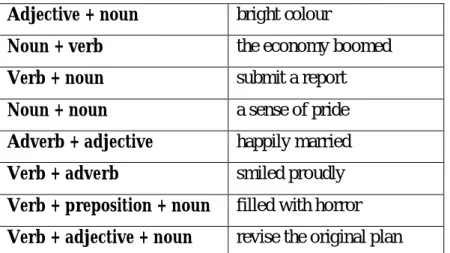
Table 1.2 Collocations’ Patterns according to McCarthy and O' Dell (2005: 12) We agree with McCarthy and O' Dell that “There are many types of collocations” (2005: 12) since there are nine parts of speech: noun, adjective, adverb, verb, preposition, conjunction, article, pronoun and interjection. The first five parts could be combined to compose collocations. We observe that Michael Lewis’ patterns are nearly similar to McCarthy and O' Dell’s ones. As shown in the two tables above, we notice that in both classifications there are the following patterns: adjective + noun, noun + noun, verb + adverb, noun + verb and adverb + adjective. But in the first classification, there is the pattern verb + adjective + noun while in the second one there is: verb + preposition + noun. In the second table the pattern verb + noun is not found whereas in the first one we find both patterns: verb + noun and noun +verb. As a result, we can deduce a new classification from the two tables mentioned above by including all the patterns with the same examples as follows:
Adjective + noun bright colour
Noun + verb the economy boomed
Verb + noun submit a report
Noun + noun a sense of pride
Adverb + adjective happily married
Verb + adverb smiled proudly
Verb + preposition + noun filled with horror Verb + adjective + noun revise the original plan
Table 1.3 Collocations’ Patterns according to McCarthy, O'Dell and Lewis, M Adjective + noun bright colour
Noun + verb the economy boomed
Noun + noun a sense of pride
Verb + preposition + noun filled with horror
Verb + adverb smiled proudly
In the table above we find eight patterns of collocations. In these patterns the focus is on the main parts of speech since articles, pronouns and prepositions are not apparent in the patterns. For instance, in the last two examples the preposition “with” and the definite article “the” are not included in the patterns. Concerning articles, they are used for defining nouns; so, we think that including or deleting them from the patterns would not make any difference. Pronouns are not included because they are always changing: different pronouns with different verbs. Prepositions are not included because we are talking about lexical not grammatical collocations. (See collocation types below)
1.5 Collocations’ Types
Collocations are classified in various manners; each scholar has divided them according to different dimensions. Some scholars have considered their strength, others their use…etc. The most common types are discussed below.
1.5.1 Lexical Vs (Versus) Grammatical Collocations
According to Michael Lewis, collocations are either lexical or grammatical (2000: 134). Since this research is concerned with lexical collocations and not grammatical ones the term “collocation” refers to “lexical collocations”. The difference between grammatical and lexical collocations is that the former includes a principal word that is an adjective, a verb or a noun and a grammatical word which is usually a preposition (Benson, 1989: 593) whereas the latter does not include grammatical words like prepositions. Lexical collocations consist only of lexical words and they may be more difficult to learn. Consequently, phrasal verbs such as carry on, give up…etc are considered as grammatical collocations and they are found in all English-English dictionaries while specific dictionaries are allocated to lexical collocations which may
be ignored by native speakers too. In the following two tables, the constituents of each type are classified with examples:
Verb + prepositions Walk up Noun + prepositions Anger at Adjective + prepositions Proud of
Table 1.4 Examples of Grammatical Collocations Verb + noun set the table
Adjective + noun Fresh breathe Adverb + adjective bitterly hurt Table 1.5 Examples of Lexical Collocations
As it has been discussed above, it is clear that in the first table the dominating part is “prepositions” which represent grammatical words whereas in the second table there are no prepositions; only lexical words are included. Thus, it is the preposition that makes a collocation grammatical.
1.5.2 Technical Vs Academic Collocations
Here, collocations’ types are approached from the dimension of General/ Specific English. Technical collocations are different from lexical and grammatical collocations in that the former are used in a special field within a special register. i.e. ESP (English for Specific Purposes) to help the learners acquire a specific language usage and use. However, the latter are academic/General and could be used in both General English and ESP.
Moreover, technical collocations are “powerful indicators of register” (Partington, A 1998: 20). They are “pre-cooked expressions” which are needed in “many genres of writing”. Each genre has its special collocations so that what is a normal collocation within a specific genre could not be considered so in another genre.
Sinclair (as cited in Partington, 1998: 20) illustrates this case with the collocations “vigorous depressions” and “dull highlights” that are normal only in the register of meteorology and photography respectively. In this context, Fuentes, Alejandro Curado (2001: 118) claims that “The level of technicality in word behaviour is closely related to subject domain. The salient condition is that elements function uniquely in their corresponding field, describing the restricted setting.” He illustrates his view with specific combinations of the noun network such as U-network, access network, local area network (ibid). Also, technical collocations help in increasing the learner's
potential to command special languages. However, Fuentes (ibid: 111) remarks that free collocations that appear in different registers are considered as “semi-technical” word combinations. He gives the example of information: information system, information technology, digital information, and information about (ibid). According to Farell
(Cited in Fuentes, 2001: 115) semi-technical collocations are “formal, context-independent words with a high frequency and/or wide range of occurrence across scientific disciplines, not usually found in basic general English courses; words with high frequency across scientific disciplines.”
Hence, we can say that technical collocations are register-dependent while semi-technical ones are related to scientific domains but they may be found in academic language. As a result, all the types are important in learning ESP but only academic collocations are useful in General English especially “common core collocations” which are collocations that are used frequently and hence common.
1.5.3 Strong Vs Weak Collocations
Classifying collocations according to strength refers to the degree of words’ association. Some words co-occur so often that when a word appears, its collocate
follows it most of the time. Here, it is qualified as a “strong collocation”. But when two words collocate rarely, the strength reduces and the collocation is not strong enough for the collocate to be predicted since the words are not always together.
Hill, Jimmie (as cited in Michael Lewis, 2000: 63) classifies collocations according to strength into four categories: unique, strong, weak and Medium-strength collocations. First, there are unique collocations. As examples, Hill gives the two collocations “foot the bill” and “shrug your shoulders”. The two collocations are unique because the
verbs “foot” and “shrug” are not used with any other nouns. Secondly, there are strong collocations like “trenchant criticism” and “rancid butter”. These are not unique because there are other things that can be trenchant or rancid, but these collocations are very few. Thirdly, there are weak collocations: to illustrate, adjectives like long, short, cheap, expensive, good or bad could be combined with many things (nouns) for instance red car. These combinations are “more predictable” and easy to the majority of
students. Finally, the fourth type is medium-strength collocations; for example “holds a conversation” and “a major operation”. Hill (ibid) thinks that students are concerned
with this type which is neither strong nor weak.
1.5.4 Open Vs Restricted Collocations
Cowie and Howarth (1996: 81) distinguish two types of collocations: ‘open’ and ‘restricted’. According to them, a collocation is restricted if its parts ‘keep their literal
meaning’, for instance “vested interest”, whereas a collocation is considered as open when one or both parts has/have a ‘figurative meaning’ such as “white man” referring to “skin colour”. Open collocations are as described by Carter “open to partnership with a wide range of items” (cited in Partington, A. 1998: 26). Most lexical items are included in this type for instance: white, short, long, red…etc. In between the two extremes there are “semi-restricted” collocations. Here a specific word has a limited
number of collocations. Carter (ibid.) gives the example of the verb harbour that collocates with doubts, uncertainty, grudge and suspicion.
Cowie and Howarth (1996: 83) further claim that restricted collocations are “idiosyncratic and arbitrary” in contrast to “perfectly open collocations…formed by general principles of co-occurrence”.
As a general comment, we can consider “open collocations” as “weak collocations” in Hill’s terms. But it is difficult to consider “restricted collocations” as weak or strong because this is related to the meaning rather than the frequency of co-occurrence. Also, we agree with Cowie and Howarth that collocations could be “arbitrary” regardless of their type. For what makes a word like “fast” collocates with “food” if we can say rapid or quick food. In fact, it is only what we ought to say so as to make our speech natural.
1.6 Collocations’ Criteria
Collocation is characterized by three main criteria: Non-compositionality, non-substitutability and non-modifiability (Bowles, Hugo, 2007: 08). First, a collocation is
non-compositional in the sense that we cannot understand its meaning even if we understand the meaning of the individual words. A good example of non-compositionality is an idiom for instance, ‘to have an itching palm’ meaning ‘to be greedy for money’ (Kirkpatrick, E. M. and Schwarz, C.M, 1993: 180).
Second, non-substitutionability means that we cannot substitute the words that constitute a collocation for their synonym. For example, in the collocation: close the meeting, it’s wrong to say shut the meeting because “shut” and “meeting” do not go
together, whereas one could say shut the door. Finally, Collocations are non-modifiable, that is to say it is impossible to modify them by adding extra words.
1.7 Collocation and Colligation
The difference between the two terms “collocation” and “colligation” has to be pointed out so that one should not think that they are the same. Hoey (cited in Michael Lewis, 2000: 234) argues that another word exists far from collocation and semantic prosody, which is colligation or “the grammatical company a word keeps and the positions it refers”. Colligation is “what we do” with the language. Colligations of a word are a description of what this word “typically does grammatically” (ibid). Hoey gives the example of 'employment words': accountant, actor, actress, architect, carpenter, which have different colligations. That is to say, these words do not occur
with/in the same “grammatical constructions” for instance: indefinite articles and possessive case (ibid). Robins (cited in Michael Lewis, 2000: 213) points out the difference between collocations and colligations as follows:
“Groups of words considered as members of word-classes related to each other in syntactic structures have been called colligations to be distinguished from collocations which refer to groups of words considered as individual lexical items irrespective of their grammatical classes and relations”
Consequently, the learners have to differentiate between the three concepts: collocations, colligations and semantic prosody in order to have a clear view about what a collocation is. Also, as indicated by Hargreaves Peter (ibid: 214) knowledge of a word’s collocates has to coincide with the grammatical patterns or colligations of this word.
1.8 The Nature of Vocabulary: Individual Words Vs Multi-Word Units
One cannot speak about collocations and ignore vocabulary since the latter consists of both individual words and collocations. Furthermore, collocations represent
the most important part of vocabulary. We are going to speak about the nature of vocabulary by discussing first the term “word”, and introducing its meaning, classes, families, formation and forms. After clarifying the concept “word” it is useful to pass to the concept of “Multi-Word Units” to explore its meaning. Then, we will discuss a focal point which is the relation between vocabulary and grammar.
1.8.1 The Meaning of “word”
One could not speak about a language without words; the word is the main constituent of a language. Second and foreign language learners are always acquiring new words. According to Scott Thornbury (2002: 01), the acquisition of new words is a continuous process even in the first language. Words may be considered as the heart of vocabulary which makes the learners torn between form and meaning. Once the learners grasp the meaning of a specific word they become eager to know how to employ it in the right way and/or context. However, they are often confused to find another meaning of an already known word. Moreover, pronouncing a word the wrong way could lead to the problem of mixing it with another word which is its homophone.
1.8.2 Word Classes
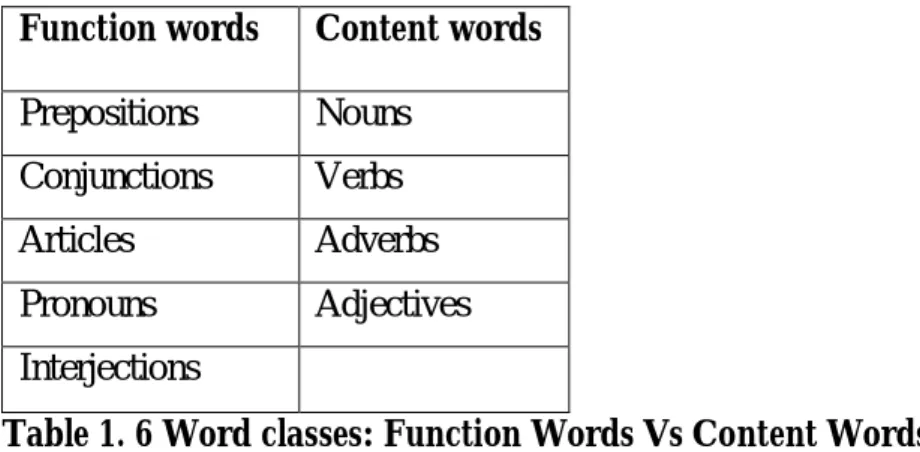
Word classes are parts of speech. Words are classified into eight categories: nouns, pronouns, verbs, adverbs, adjectives, prepositions, conjunctions, articles and interjections. A word can belong to two classes, for instance “fast” is both an adjective and adverb. Also, Thornbury (2002: 4) claims that word classes are divided into grammatical /function words and content words. He further says that content words
“carry a high information load” while function words play a grammatical role in the sentence (ibid: 3-4). We can classify the two types in the following table:
Function words Content words Prepositions Nouns Conjunctions Verbs Articles Adverbs Pronouns Adjectives Interjections
Table 1. 6 Word classes: Function Words Vs Content Words
As shown in the table above, content words are: nouns, verbs, adverbs and adjectives. They play an important role in vocabulary, according to Thornbury (2002: 4) content words are related to teaching vocabulary but function words are allocated to teaching grammar.
1.8.3 Word Families
Each word has a family that shares with it the same root, this family is the result of the addition of “suffixes” after the root of a word to get new words that are called “inflexions” (Thornbury, S. 2002: 4). But when the new words are the result of adding affixes like: the “s” of the plural or the “ed” of the past, they are called “derivatives”. Thus, “inflexions” and “derivatives” are the consequence of “affixation”. New words could also be formed by adding “prefixes” to the root of the word, they are also called “derivatives” (ibid). In the following diagram, we illustrate the process of affixation of the root "use" as follows:
Root: Use
Inflexions Derivatives
Figure 1-1: A Diagram of the Process of the Affixation of the Root “Use” The illustration above indicates that the process of affixation includes inflexions and derivatives. Adding the affixes “s” and “ed” respectively results in the inflexions “uses” and “used”. Also, the addition of the prefix “re” results in the derivative “reuse” while the addition of the suffixes “ful” and “less” results in the derivatives “useful” and “useless” respectively. Of course there are other inflexions by adding “ing”, “er”…etc, and other derivatives exist by adding "mis", "able"…etc. but generally we can say that affixation leads to specifying a word’s family. Consequently, the words included in the family of the root “use” are indicated in the following diagram:
usable
use
uses re-use misuse useful useless useage using user Use uses used + “ed” of past+ “s” of plural + ful + less
useful useless + re
1.8.4 Word Formation
New words are formed by various ways, Thornbury (2002: 5) states five ways: -Affixation (discussed in the previous section).
-Compounding: to join two or more words such as up-to-date.
-Blend: to mix two words into one, he gives the example of breakfast + lunch = brunch. -Conversion: to convert a part of speech into another one. Thornbury gives the example of “must” which is converted from a verb to a noun in this sentence “a balloon flight is an absolute must”.
-Clipping: to shorten “longer words” for example influenza→ flu.
1.8.5 Words’ Relations
The learner could be confused by encountering words that have different meanings but look alike, or words that are written differently but mean the same thing. Therefore, words’ relations that can be a source of troubles for the learner should be clarified as follows:
-Synonyms
Synonymy is related to words that have the same meaning; one could be substituted for the other without affecting the meaning of a sentence. Thus, synonyms help to explain difficult words with easier ones. Sometimes, they enrich writing by giving a rhetorical meaning to the text for instance when a noun is described by two adjectives that have the same meaning.
-Antonyms
Antonyms are words which have opposite meanings, for example “good” and “bad”. The meaning of words could be clarified by their antonyms, for example the meaning of “ugly” is “not beautiful”.
-Homonyms
Homonyms are words that have the same sound and spelling but differ in their meaning. The following table represents our own list of some English homonyms with their different meanings. As shown in the table below, those words are spelled and pronounced in the same way, but they have different meanings which could be clarified through the context or the associated words.