Academic and Research Staff L. D. Braida S. K. Burns H. S. Colburnt L. S. Frishkopf J. L. Goldsteint` J. J. Guinan, Jr.t R. G. Mark$ W. T. Peaket Prof. W. M. Siebert Prof. T. F. Weisst ** Dr. J. S. Barlow T Mr. N. I. Durlach Dr. R. D. Hall Dr. N. Y. S. Kiangf Dr. H. J. Liff Dr. E. P. Lindholm D. W. Altmannt R. M. Brownt D. J. Callahan A. H. Cristt W. F. Kelley L. H. Seifel S. N. Tandon Graduate Students Baer E. Berliner R. Bourk H. Conrad Demko, Jr. A. Friedel O. Frost Gaiman Hasan L. Hicks J. M. Houtsma W. James B. Jergens H. Johnson W. Kress, Jr. K. Lewis Y-S. Li C. Moxon Nedzelnitsky M. Rabinowitz B. Rosenfield H. Schultz J. Shillman L. Sulman P. Tripp, Jr. G. Turner, Jr.
RESEARCH OBJECTIVES AND SUMMARY OF RESEARCH
The principal scientific research objective of the Communications Biophysics Group is to obtain a better understanding of sensorineural processes. Our approach com-bines both electrophysiological and behavioral experimental techniques with machine
data processing and analytical methods of communication theory. While our principal objectives are scientific, we are interested in applications of our research results and of new technological developments to clinical medicine.
Members of our group have ties with several hospitals and with the Harvard Medical School. In particular, we have a close working relationship, including sharing of facilities and joint staff appointments, with the Eaton-Peabody Laboratory of Auditory
Physiology, which is operated jointly by the Massachusetts Eye and Ear Infirmary, Boston, Massachusetts, and M. I. T. Another example is the recent establishment of a Bioengineering Laboratory as a joint Harvard-M. I. T. endeavor at the Thorndike
Memorial Laboratory of Boston City Hospital.
This work was supported principally by the National Institutes of Health (Grant 5 PO1 GM14940-04), and in part by the National Institutes of Health (Grant. 5 TOl GM01555-04), and the National Aeronautics and Space Administration (Grant NGL 22-009-304).
TAlso at the Eaton-Peabody Laboratory, Massachusetts Eye and Ear Infirmary, Cambridge, Massachusetts.
tInstructor in Medicine, Harvard Medical School, Boston, Massachusetts.
Instructor in Preventive Medicine, Harvard Medical School, Boston, Mas-sachusetts.
t•Research Affiliate in Communication Sciences from the Neurophysiological Laboratory of the Neurology Service of the Massachusetts General Hospital, Boston, Massachusetts. Prof. Prof. Prof. Prof. Prof. Prof. Prof. Prof.
(XXIII. COMMUNICATIONS BIOPHYSICS)
Our research program can be divided into five major areas: Auditory Physiology, Auditory Psychophysics, Neuroelectric Correlates of Behavior, General Neurophysio-logical Research, and Biomedical Engineering. The programs for each will be discussed individually.
A. Auditory Physiology
The primary objective of this work is the improvement of understanding of signal transmission and coding of sound stimuli in the auditory system. A large portion of the experimental work is carried out in the Eaton-Peabody Laboratory of Auditory Physiology. New construction at the Eye and Ear Infirmary required the demolition of the Eaton-Peabody Facility in the spring of 1970. The laboratory is now in tem-porary quarters provided by M. I. T. in Cambridge near the M. I. T. campus.
Exper-imental work in the new location started in October 1970 after a six-month hiatus required for renovating the space and installing the facilities. The new laboratory space includes two experimental chambers and associated electronic equipment, an operating room, histological laboratory, electronics shop, animal quarters, dark-room, data processing rooms, and an office in contiguous space.
1. Mechanical Signals in the Middle and Inner Ear
a. Measurement of velocity by means of the M6ssbauer effect
Our system of obtaining velocity waveforms from synchronous detection of y -ray discharges will be improved to provide automatic calibration of the velocity signal. A system has also been planned in which a sinusoidal acoustic stimulus will be controlled by a digital computer so that velocity magnitude and phase can be measured as fre-quency is swept through the range of interest.
W. T. Peake, G. K. Lewis
b. Measurements of sound pressure in the inner ear fluid
The small pressure probe that was developed for this purpose has been tested in two calibration devices and was found to be adequate for measuring sound
pres-sure in fluid. A few preliminary experiments in cats indicated that the sensitivity of the probe in conjunction with other electronic equipment is enough to give
accu-rate measurements in the basal turn of the cat cochlea. Such measurements have not been reported previously and they will contribute substantially to our
under-standing of the mechanics of the inner ear.
T. F. Weiss, V. Nedzelnitsky
c. Mechanical responses of the inner ear to electric stimulation
Experiments during the past year have clearly demonstrated that a mechanical response can be produced in the inner ear by electric stimulation. The relation of the electric stimulus to "equivalent" acoustic stimuli has been determined for cer-tain kinds of stimuli. These results can be related to previous observations of human "hearing" produced by electric stimulation. A doctoral thesis is being com-pleted on this topic.
2. Transduction Mechanisms in Hair-Cell Systems a. Electric potentials in the inner ear of the cat
Intracochlear measurement of electric responses to acoustic stimuli have deter-mined the distribution of these potentials in a transverse plane in the cochlea. Three papers which present and interpret these results have been submitted for publica-tion.
T. F. Weiss, W. T. Peake b. Electric potential in the inner ear of lizards
An experimental program of measurements in the lizard was undertaken (in col-laboration with Dr. Michael J. Mulroy) because the relative simplicity of the inner-ear anatomy seems to provide considerable advantage in performing experiments.
This project will try to associate specific cells in the inner-ear receptor with pat-terns of electric response. At present, micropipettes filled with two different kinds of dye are being used in an attempt to mark individual cells.
T. F. Weiss, D. W. Altmann, R. G. Turner, Jr. c. Transduction in hair cells of the lateral line organ
We are attempting to obtain intracellular recordings of receptor potentials from hair cells of the lateral line organ of the mudpuppy, Necturus maculosus. In a pre
-liminary study of this organ,1 such potentials have been found. It is our intention to study these responses more quantitatively by determining the shape of the response to sinusoidal stimuli and the response amplitude as a function of stimulus intensity
and frequency. We also intend to try to determine whether or not changes occur in the resistance of the hair-cell membrane as a result of stimulation.
L. S. Frishkopf, A. J. Liff d. Organization and medullary projections of branches of the
VIIIth nerve of the bullfrog
We continue our effort to determine the anatomical relationships and central con-nections of branches of the eighth nerve of the bullfrog that innervate separate
peripheral organs. On the basis of our recent finding2 that the branches of the
pos-terior rannus of the eighth nerve remain separate through the ganglion to the medulla, we expect that selective lesions in the ganglion will enable us to locate the projections of these branches in the medulla.
L. S. Frishkopf 3. Stimulus Coding in Auditory Nerve Fibers
a. Simultaneous recordings from two auditory-nerve fibers
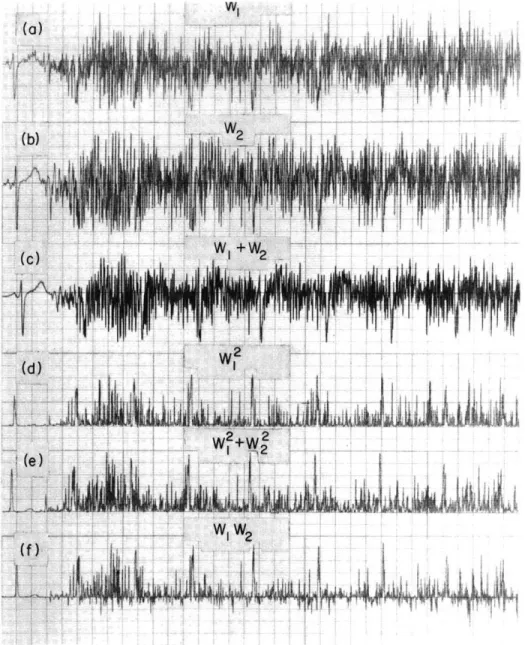
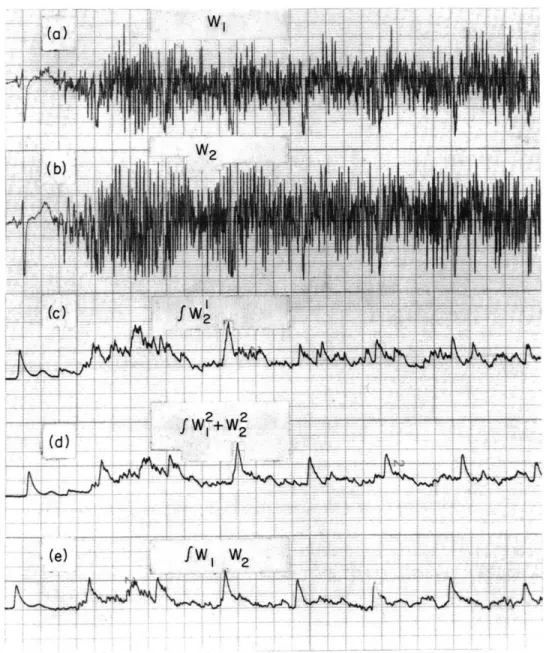
Analysis has been carried out on responses recorded simultaneously from pairs of auditory-nerve fibers in anesthetized cats. Tests of independence of action poten-tial patterns for conditions of (i) stimulation with tones, and (ii) no acoustic stimulation (spontaneous activity) are consistent with the hypothesis that the variability in the firing patterns of auditory-nerve fibers results from statistically independent random
pro-3
cesses. This work is being prepared for publication.
(XXIII. COMMUNICATIONS BIOPHYSICS)
b. Auditory-Nerve responses to high-level tones
This project has demonstrated that dramatic reductions in spike rate occur when the level of a tone is increased at certain levels. Large changes in the phase of the response also occur with the same increase in level. These results are con-trary to the usual description of receptor properties. The results are being sys-tematized and will be prepared for publication.
N. Y. S. Kiang, T. Baer
c. Efferent system to the cochlea
Two papers have recently been published4' 5 which report the work on electric stimu-lation of the crossed olivocochlear bundle.
N. Y. S. Kiang, W. T. Peake
d. Responses of single auditory-nerve fibers in cochleas damaged by drugs
A manuscript will be prepared on the previous experimental work on this project in which the normal function of the cochlea is altered by the administration of an anti-biotic, kanamycin. Further experimental work is planned.
N. Y. S. Kiang, E. C. Moxon
4. Single cells in the cochlear nucleus
The auditory-nerve fibers terminate in the brain stem in the cochlear nucleus. Electric responses from cells in this nucleus are being studied in an effort to relate response properties to morphology of the cells. This work combines physiological experiments with anatomical investigations being carried out in the laboratory of Dr. D. K. Morest in the Department of Anatomy, Harvard Medical School.
N. Y. S. Kiang, T. R. Bourk
5. Signal transformation in brainstem nuclei
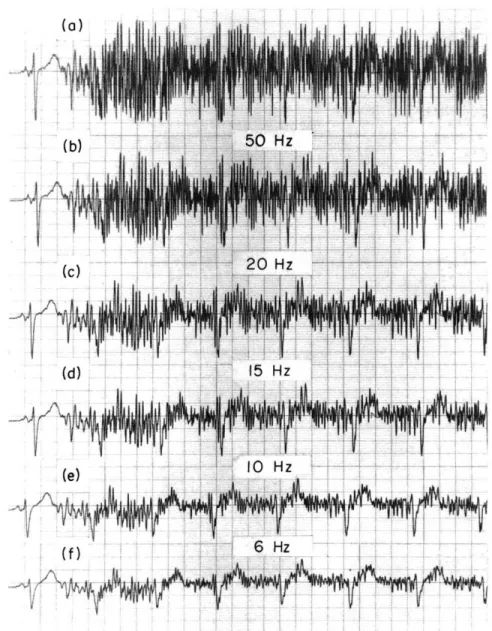
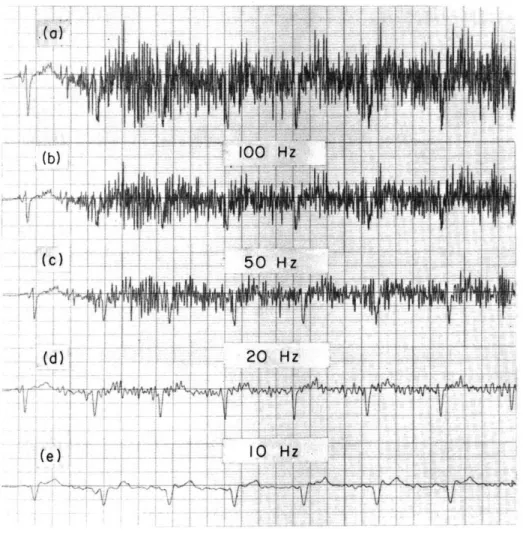
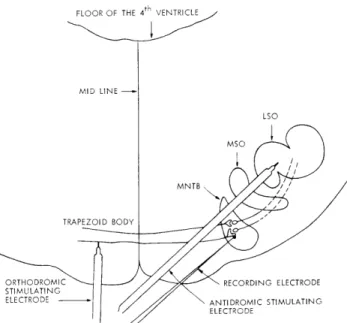
Certain brainstem auditory neurons (in the medial nucleus of the trapezoid body) receive a single very large presynaptic ending. In the vicinity of these, unusual "double-unit" waveforms can be recorded. We have recently shown that the first part of the "double-unit" waveform is due to the firing of the large presynaptic ending, and the second part is due to the firing of the postsynaptic cell.6 Usually each firing of the large presynaptic ending causes the postsynaptic cell to fire; how-ever, in some cases the postsynaptic cell does not fire. It appears possible that there is an inhibitory synaptic input to these cells which is able to "gate" the effect of the presynaptic ending. We intend to explore this possibility in further experi-ments along with other properties of the "double-unit" waveforms. We shall con-tinue to develop methods for recording intracellularly from these cells.
J. J. Guinan, Jr., R. Y-S. Li
References
1. G. G. Harris, L. S. Frishkopf, and A. Flock, "Receptor Potentials from Hair Cells of the Lateral Line," Science 167, 76-79 (1970).
2. R. L. Boord, L. B. Grochow, and L. S. Frishkopf, "Organization of the Posterior Ramus and Ganglion of the VIIIth Cranial Nerve of the Bullfrog, Rana Catesbeiana, " Quarterly Progress Report No. 99, Research Laboratory of Electronics, M. I. T., October 15, 1970, pp. 180-182.
3. D. H. Johnson, "Statistical Relationships between Firing Patterns of Two Auditory-Nerve Fibers," S. M. Thesis, Department of Electrical Engineering, M. I. T.,
February 1970.
4. M. L. Wiederhold and N. Y. S. Kiang, "The Effects of Electric Stimulation of the Crossed Olivocochlear Bundle on Single Auditory-Nerve Fibers in the Cat," J. Acoust. Soc. Am. 48, 950-965 (1970).
5. M. L. Wiederhold, "Variations in the Effects of Electric Stimulation of the Crossed Olivocochlear Bundle on Cat Single Auditory-Nerve Fiber Responses to Tone Bursts,"
J. Acoust. Soc. Am. 48, 966-977 (1970).
6. R. Y-S. Li, "Antidromic and Orthodromic Stimulation of Neurons Receiving Calyces of Held, " S. B. and S. M. Thesis, Department of Electrical Engineering, M. I. T. September 1970.
B. Auditory Psychophysics
The general goal of this research is to determine and understand the performance of the auditory system, and to apply this understanding to problems in the perception of speech and music, the transmission of information by means of artificial auditory dis-plays, and the diagnosis and treatment of hearing disorders.
In some of our studies, the observed performance appears to be explainable in terms of the physiology of the peripheral auditory system, and there is considerable interaction between the psychophysical and physiological research. In others, the performance appears to depend strongly on portions of the nervous system about which knowledge is still relatively limited, and our models cannot yet be related to the underlying physiology.
At present, the program in auditory psychophysics is undergoing a transition that results from our newly acquired interest in hearing impairments and our new require-ments for more precise specification and control of the acoustic stimulus. As a result of these new elements, a significant portion of our work during the past year has been devoted to preliminary planning, familiarization with past research, crude explora-tory experiments, and further development of our computer-controlled laboratory facilities. We hope that this preparatory work will be completed during the coming year, and that specific new research projects in these areas will be well under way in 1972.
1. Intensity Perception
During the past year, our efforts to develop a general theory of intensity perception 1 have focused on theoretical modifications of the memory model, further processing of data from previous experiments, further experiments to examine deviations from Weber's law, the design of new experiments to further guide the development of our theory, the examination of deviations from Weber's law for sound intensity, and the preparation of previous results for publication.
The theoretical modifications have been motivated by our previous experimental results which indicate that when the intensity range of the stimulus set is appre
-ciably greater than the difference limen, performance depends on the position of the stimulus within the range. Thus, for example, in one-interval identification and
(XXIII. COMMUNICATIONS BIOPHYSICS)
and category-scaling experiments, and in two-interval, roving-level, discrimination experiments, resolution is appreciably better at the extremes of the intensity range than in the middle. Similarly, in two-interval, roving-level, discrimination
experi-ments, the bias is much greater at the extremes than in the middle, and of oppo-site sign at the two extremes. These features of the data indicate that our memory model is inadequate and needs to be revised. Furthermore, our initial work on this problem suggests that resolution and bias are strongly interdependent, that both
involve common underlying memory processes, that one cannot hope to fully under-stand resolution without simultaneously underunder-standing certain elements of bias, and that experimenter-subject feedback decreases resolution (as well as bias) in two-interval, roving-level, discrimination. The new experiments that have been designed to guide future development of the theory include additional two-interval, roving-level, discrimination experiments, identification experiments with a standard and with asymmetric payoff matrices, and intensity-ratio discrimination experiments. The examination of deviations from Weber's law has been motivated by our exper-imental results on one-interval identification and category scaling, and two-interval, roving-level discrimination, which suggest that Weber's law is not sufficiently accu-rate to be used as a postulate in our theory of intensity perception. Although it is well known that Weber's law is inaccurate at low intensities, it is often assumed that it provides an accurate description of intensity discrimination at medium and high intensities. According to a number of recent studies (which have measured intensity discrimination with increased precision) Weber's law is inaccurate at high, as well as at low, intensities, and the intensity region over which the law provides an accurate description is relatively small. According to our own recent experi-ments,2, 3 in which the ability to discriminate intensity in a two-interval, fixed-level paradigm was measured as a function of intensity for frequencies 1000 Hz and 250 Hz, resolution is essentially constant (i. e. , Weber's law is valid) only between roughly 15 and 50 dB SL. Below 15 dB SL resolution deteriorates rapidly, and above 50 dB SL it improves uniformly with intensity. The preparation of pre-vious results for publication has resulted in two papers summarizing our results
4,5
thus far on resolution in one-interval paradigms.
During the coming year, we hope to continue our theoretical explorations, per-form further two-interval, roving-level discrimination experiments (as well as some of the other recently designed experiments), and continue to prepare articles sum-marizing previous work.
2. Perception of Musical Pitch
Most of the experimental work in the first phase of the project on musical pitch perception was completed during the past year. Extensive psychophysical
experi-ments were conducted to test the ability of musically sophisticated listeners to iden-tify musical intervals defined by stimuli containing no fundamental energy. The experiments were designed to test critically, under conditions that closely simulate musical perception, the place-frequency detection theory6 and the temporal-periodicity detection theory.7 Both theories were conclusively shown to be inadequate by our experimental finding that pitch perception with the complex tones that we employed as stimuli is essentially independent of whether the full spectrum of the complex tone is presented to one ear or whether it is divided between a subject's two ears. A detailed description of this work and experimental results that are typical for subjects with adequate training has been published.8
The basic experimental stimuli used to define musical notes were half-second samples of periodic sounds which were two successive harmonics of the fundamental frequency. The choice of the lower harmonic number used in any presentation of
effectively prevented identification of intervals defined by a pair of notes on the basis of information in only one of the two harmonics. Subjects' ability to correctly iden-tify (percent correct) 8 familiar musical intervals distributed over a half-octave range was examined as a function of various stimulus conditions, including (i) stim-ulus amplitude, (ii) average lower harmonic number, (iii) absolute frequency, and (iv) monotic (complete spectrum in one ear) and dichotic (spectrum divided between ears) stimuli. The major findings are the following. First, interval-identification data with monotic and dichotic stimuli are very similar, except for differences at higher intensities that are well accounted for by combination tones.9 Second, interval identification deteriorates monotonically with increasing harmonic number, and is random for harmonic numbers exceeding approximately 10. Third, and finally, all monotic stimuli for which identification performance was better than random
con-sisted in either behaviorally resolvable tones or generated such tones as combina-tion tones (where a behaviorally resolvable tone is defined as a partial of a complex tone that can be aurally matched to a simple tone of similar frequency as the par-tial).
In the coming year we shall continue with current theoretical work to charac-terize the confusions that subjects make in identifying intervals in terms of a sta-tistical decision model. The precise nature of these confusions could provide evidence on the relative importance of spatial or temporal cues in the central mechanisms (postcochlea) that are responsible for musical pitch perception. In the second phase of this project additional experiments are planned to investigate the binaural inte-gration properties of the pitch processor, and it is expected that the theoretical work of the first phase will indicate still other experiments.
3. Binaural Hearing
Work continues on a general theory of binaural hearing1 0 based on auditory-nerve data. Observations from auditory-nerve activity are used to determine a mathemat-ical description of the peripheral transduction from pressure waves to auditory-nerve patterns. The limitations on binaural performance are then separated into two components: those that are due to information loss in the peripheral encoding,
and those that are due to the restricted processing capabilities of the central ner-vous system.
Theoretical work has proceeded both on the peripheral encoding model and on the restrictions of the central system. In the first area, we have started to deter-mine, using both analytic and simulation techniques, the effects of refractory behav-ior in the auditory-nerve patterns on predictions made from a model without refractoriness. Also, some earlier work related to models of peripheral encoding has been published. In the second area, recent work has been focused on sym-metry properties with respect to simultaneous variation in interaural amplitude ratio and interaural time delay. A major defect of the theory has been predictions of symmetry that are contradicted by experiments on discrimination of interaural time delay. Two modifications of the theory were considered: one predicts asymmetry in binaural detection experiments and has been rejected on the basis of recent exper-imental results (see below), and one requires additional study of auditory-nerve pat-terns and is still being pursued.
Several experiments were performed in connection with the theoretical analysis. The investigation of some symmetry properties of binaural masked detection thresh-olds 12 resulted in rejection of a proposed modification of the theory and support for the model as originally formulated. An exploratory experiment on the binaural detection of tones in a background of pseudo-random noise supports the conclusion from the theoretical analysis that the random character of the stimulus is less important than the random nature of the peripheral encoding. A second exploratory
(XXIII. COMMUNICATIONS BIOPHYSICS)
experiment on the ability to use fine time structure binaurally also supported the predictions of the theory. Neither of the exploratory experiments was sufficiently extensive to merit publication, and both should be repeated.
During the coming year, first priority will be given to preparing the backlog of past work for publication. We also plan to complete the study of refractory effects and to carry out an experiment related to a basic assumption of the model - that binaural comparisons of the detailed time structure of the auditory-nerve patterns can be made only among fibers with approximately the same best frequencies.
4. Aural Combination Tones
Work continues in our comparative physiological and psychophysical study of aural combination tones. Psychophysical and physiological combination tone phenom-ena are both describable as effects equivalent to tones added to the stimulus. The amplitudes of this equivalent tone are similar for the psychophysical and phys -iological data, but the phases are not. The phase of the psychophysical combination tone depends strongly upon the amplitude of the primary stimulus (typically, it decreases 100 per 1 dB increase in stimulus amplitude), while the phase of the physiological combination tone is not dependent upon stimulus amplitude. This gross
difference in the phase behavior in otherwise highly correlated behavioral and phys-iological data motivated work during the past year to test further the adequacy of the "equivalent stimulus tone" descriptions of the combination tone phenomena. This work, which we outline below, confirmed and extended the range of validity of the
earlier descriptions and has provided a basis for further work.
13
In a physiological experiment similar to those reported previously, additional data were gathered that showed little or no effect of stimulus amplitude upon combination-tone phase measured either in cancellation tests or in the phase coher-ence of the auditory-nerve spikes. We also tested the contention of de Boer, et al.14 that simple transducer nonlinearity contributes significantly to some of the combination-tone data that we previously reported and described as effects equiva-lent to tones in the stimulus. A simple transducer nonlinearity will produce the strongest combination-tone effects when it is driven equally by the two stimulus tones. In fact, little or no combination-tone effect was found in nerve fibers driven by two-tone stimuli with equal amplitude and frequencies near the characteristic frequency so that the tones were about equally effective in exciting the fiber. (The frequency interval of the two tones was 10% or less.) While these data provide no basis for attributing any of the combination phenomena previously reported to trans-ducer nonlinearity, there is experimental support for transtrans-ducer nonlinearity as the generator of neural phase locking to the higher frequency stimulus tone (f2) in some of the data previously reported.
Theoretical work has been done in examining the combination-tone effects generated by exponential transducer models that have been found to give excellent descriptions of neural responses to simple stimuli. This model was extended to tone complexes and was used to simulate PST histograms. We found that at stimulus frequencies above -1 kHz the transducer generates combination-tone phase locking that is small
com-pared with the experimental findings. The model transducer must be driven with a stimulus containing the combination tone to simulate the experimental data.
Two new psychophysical experiments were performed to further examine the phase of the behavioral combination tone. In one of these experiments, concerned with the binaural
lateralization of the aurally generated combination tone, the following procedure was used. We first generated a combination tone of frequency 2fl -f2 = 500 Hz in one ear, by stimulating it with a complex tone of frequencies fl and f2. Next, we measured the amplitude and phase of the externally generated 500-Hz tone that
precisely cancelled the combination tone, as a function of the level of the primary two-tone stimulus. Finally, we shifted the externally generated cancellation tone to the contralateral ear and examined the lateralization of the image produced by the bin-aural interaction of this externally generated tone and the bin-aurally generated combina-tion tone, as a funccombina-tion of the phase of the external tone. In general, we found that the image followed the level-dependent cancellation phase: The image was approxi-mately in the center when the phase of the external tone was opposite to the can-cellation phase, and it was off to one side, or split, when the phase of the external tone was equal to the cancellation phase. These results show that the "equivalent tone in stimulus" description of the behavioral combination tone is consistent with binaural lateralization phenomena and with current models of binaural interac-tion.1 0 Moreover, independently of models, the experiment shows that the phase of the 2fI -f2 timing information within some neurons beyond the auditory nerve car-ries .the information of the level-dependent cancellation phase.
In a second experiment we extended our previous work on cancellation of com-bination tones by measuring level dependence at high frequencies.15 The amplitude and phase of the cancellation tone for 2fl -f2 were measured as a function of pri-mary stimulus level with fl = 8 kHz and f2 = 9.6 kHz. The phase of the cancel-lation tone varied grossly with primary stimulus level in a similar manner to that found with much lower stimulus frequencies. Because it is known that neural time locking to tonal stimuli deteriorates with increasing stimulus frequency, this result gives evidence that the temporal information that generates a level-dependent can-cellation phase exists within the cochlea. Thus, for low stimulus frequencies, the auditory nerve should contain the information of cancellation phase in temporal form.
In general, the gross difference in the phase properties of the psychophysical and physiological combination tones appears to be a real one and to imply one of the following: (a) the psychophysical and physiological operations for measuring com-bination tones are different (i. e., cancellation of tonal sensations and cancellation of neural coherence are not concurrent operations); (b) the operations are concurrent in awake subjects, but the concurrence disappears when the physiological measure-ments are made on subjects under anesthesia; (c) the operations are concurrent, independently of anesthesia, in a population of auditory-nerve fibers that was sys-tematically missed in the physiological experiment.
According to available physiological data, the first hypothesis implies that the behavioral phase information is not carried on either a single auditory-nerve fiber or on a group of such fibers with neighboring characteristic frequency. Therefore, the physiological data would give the correct measure of the cochlear combination tone, while the psychophysical measure would reveal some aspects of how central mechanisms process the whole auditory-nerve pattern to produce tonal sensation. Since this hypothesis would force us to reject all existing conceptions of monaural and binaural processing of complex tones, we plan to pursue it only if the two remaining hypotheses fail. In future work we plan to investigate the second hypothe-sis first, by studying the effects of anesthesia upon the timing of auditory-nerve spike responses to tonal stimuli. If necessary, the third hypothesis will be investi-gated by making a survey of the spatial pattern of auditory-nerve responses to a fixed two-tone stimulus. The consequences of either of the last two hypotheses being correct are also nontrivial. According to the second hypothesis, some efferent mechanism might, in the unanesthetized subject, greatly influence the timing of auditory-nerve spikes, at least for complex stimuli. According to the third hypoth-esis, a particular group of peripheral nerve fibers are responsible for tonal sensa-tion and tonal lateralizasensa-tion, and this group would have been systematically missed in the samples of earlier experiments.
(XXIII. COMMUNICATIONS BIOPHYSICS)
5. Hearing Impairments
Our ultimate goals in studying hearing impairments are to gain an increased under-standing of auditory function, improved audiometric techniques, and improved hearing aids. During the past year, we have continued work that we believe is relevant to the development of a research program on hearing impairments. This work can be divided roughly into four areas: familiarization with previous research, development of appro-priate laboratory facilities and test procedures, preliminary experiments on listeners with impaired hearing, and a search for appropriate research strategies.
In the preliminary experiments, we performed a variety of psychoacoustic tests on three listeners, each of whom was diagnosed as having a different type of sensorineural impairment. These experiments helped to acquaint us firsthand with some important phenomena related to hearing impairments (e. g. , recruitment and abnormal tone decay), to provide us with preliminary data on the relative stability of measurements made on listeners with hearing impairments, to sharpen our concern about the necessity of devel-oping a truly flexible test facility and improved means for specifying the stimulus at various points in the peripheral auditory system, and to reinforce the idea that
psycho-acoustic research on hearing impairments could be vastly improved if the experimenter were able to experience the same sounds as those experienced by the subject whom he is studying (and be cognizant of the similarity).
In conjunction with these experiments, computer programs were developed for the PDP-4 computer to simulate standard audiometers and to provide adaptive versions of conventional psychoacoustic tests for the determination of absolute and differential thresholds and of points of subjective equality (matching experiments). The pre-liminary results that have been analyzed suggest that our specific adaptive technique provides relatively stable estimates of the absolute threshold and of the differential threshold for intensity, but is unsatisfactory for estimates of the differential thresh-old for frequency. Also, the technique employed for matching experiments (which was modelled after the adaptive procedure that was used for threshold measure-ments in order to minimize training problems) proved cumbersome and of little use in cases with pronounced distortion. In general, attempts to characterize the impair-ment were limited by the large effort required to develop specialized tests for each listener, despite the fact that the development of these tests involved only new soft-ware and was much easier than it would have been if new hardsoft-ware were required.
This problem points out the need for powerful, but flexible, problem-oriented soft-ware languages if the flexibility of the computer is to be fully realized in diagnostic tests.
Future work on hearing impairments will continue to be oriented toward the develop-ment of a strategy and program for research, and the improvedevelop-ment of facilities, devices and measurement techniques (see Sections 6 and 7). In addition, aside from performing further preliminary experiments on listeners with impaired hearing, we intend to explore three areas for possible research projects. The first area involves the phenomenon of recruitment and is concerned with the extent to which the loud-ness function in a recruiting ear can be predicted from the ear's dynamic range (where the upper limit is defined by the loudness discomfort level or a more pre-cise equivalent), and the extent to which the differential threshold for intensity in a recruiting ear is approximately the same as in a normal ear (provided the intensity level is measured in SPL rather than SL and is not too close to the absolute thresh-old in the recruiting ear). These questions are of interest to us because of the apparent confusion in publications on these questions and because of their relation to the theory of intensity perception that we are developing (see Section A). The second area, which we intend to explore in collaboration with the Speech Communi-cation Group of the Research Laboratory of Electronics, involves general background research for improved hearing aids and is concerned with the development of improved methods for characterizing speech-perception difficulties and for deter-mining transformations of the speech-signal space that are well matched to the
impaired system's residual sensitivity (not only in terms of detection, but also in terms of resolution in time, amplitude, and frequency) and for which the speech signals in the transformed space can be understood without excessive training. Despite the large amount of previous research in this area, we are not convinced that this research has been adequate. Thus, for example, we plan to explore the possibility that certain impairments in which the ability to understand speech is much worse than would be expected merely on the basis of the audiogram (and therefore tend to be diagnosed in terms of central disabilities and to be viewed as untreatable by hearing aids) are the result of relatively peripheral auditory disorders that degrade features of the signal other than amplitude (e. g., phase or timing) and consequently might be treatable with new types of hearing aids that focus on these other features. Similarly, we plan to explore whether it is possible to construct improved schemes for lowering the frequency content of speech signals by applying recent advances in the understanding of speech perception and speech production. For example, we hope to determine the usefulness of a transformation of speech-signal space that simu-lates the speech signals that would be produced by a human speaker with an abnor-mally large vocal tract (and therefore lowers the frequency region of the spectrum envelope of the speech signals in a manner that capitalizes on the ability to under-stand speech over a wide variety of vocal-tract sizes). The third area relates to the problem of enabling the experimenter to more fully appreciate the signal dis-tortions experienced by the listener with impaired hearing. In general, we believe that a better appreciation of these distortions would lead to a greatly improved understanding of the impairment and a greatly improved capability for the design of a hearing aid. Aside from considering the possibility of trying to include people with hearing impairments on our own research staff, we intend to explore a variety of methods for simulating the distorted signal produced by an impaired ear with a predistorted signal fed to a good ear (and a variety of methods for evaluating the success of such a simulation). Although there are undoubtedly certain types of impairments for, which no satisfactory predistortion exists, we do not yet know their relative importance. Moreover, to the extent that such a predistortion exists and can be determined, it is likely to provide a very useful guide in the design of an appropriate aid.
6. Stimulus Specification and Acoustic Transducers
At present, psychophysical studies of both normal and impaired auditory systems are limited by inadequate acoustic transducers and inadequate knowledge and tech-niques for specifying and/or controlling the stimulus at various points of the sys-tem peripheral to the auditory nerve. Examples of these inadequacies are apparent in (i) the relatively poor fidelity of bone-conduction stimulators (relative to the fidel-ity of the equipment that is available for producing the electrical signal at the input to these transducers); (ii) the uncontrolled variability of the stimulus delivered through earphones or bone-conduction stimulators at the input to the auditory nerve (caused by uncontrolled variations in the coupling between the transducer and the head, and in various internal structures such as the middle-ear muscles and the jaw muscles); and (iii) the problems related to comparisons between the minimum audible field and the minimum audible pressure (the "missing 6-dB problem") and to the occlusion effect in bone-conduction experiments.
In an attempt to eliminate some of these inadequacies, we hope to initiate a variety of new projects concerned with acoustic transducers, measurement of middle-ear function, and signal-calibration techniques. In particular, we intend to develop a probe-tube system for measuring the acoustic signal at the ear drum, a bone-conduction stimulation system for bypassing the most peripheral portions of the auditory system, and a system for measuring the acoustic impedance of the middle ear. We also plan to examine the extent to which a bone-conducted signal can be calibrated relative to an air-conducted signal (or vice versa) by cancellation, to develop a new method for determining changes in the intensity of signals at the input
(XXIII. COMMUNICATIONS BIOPHYSICS)
to the cochlea by measuring the associated changes in the phase of combination tones, and to explore the possibility of constructing an earphone with very low impedance. Brief comments on each of these three projects will be made.
a. Calibration by air-bone cancellation
It is well known that, under certain conditions, it is possible to cancel a bone-conducted sound with an air-bone-conducted sound. Thus, in principle, if either stimulus can be properly calibrated, the other can be calibrated by cancellation. Very little is known, however, about the range of parameter values for which cancellation is possible, or the precise extent to which cancellation can be achieved for a fixed set of values. Moreover, since the relative properties of the two signals depend strongly on the state of various muscles in the head (e. g. , those controlling the jaw) and on the extent to which the ear is occluded (e.g., by the earphone used to produce the air-conducted sound), further research is required in order to deter-mine whether such a scheme can be made practical for routine calibration purposes.
b. Calibration by cancellation of combination tones
When two tones of different frequency (fl <f ) are presented to the ear (and the values of various parameters are chosen properly), it is possible to hear a com-bination tone of frequency 2f -f2 . This combination tone, which appears to be gen-erated in the cochlea, can be cancelled (and therefore measured) very precisely by an externally introduced tone of frequency Zfl -f2 and appropriate amplitude and phase. Previous research (see Section B) has shown that (a) the amplitude of the cancellation tone grows almost linearly with the amplitude of the two-tone stimulus, while the phase decreases at typically 100 per dB; (b) for primary stimulus tones
(fl and f2) with roughly equal amplitudes, the cancellation adjustment is relatively insensitive to changes in the amplitude of the higher frequency (f2) tone; and (c) the cancellation phase is invariant to arbitrary linear-plus-constant phase
transforma-tions of the stimulus. These combination-tone phenomena, together with the cancellation-measurement technique, appear to provide an excellent means for deter-mining changes in the amplitude of the lower frequency (fl) tone at the input to the cochlea, and thus for monitoring signal amplitude. Further research is required, however, in order to develop this technique.
c. Low-impedance earphone
All existing earphones are relatively "hard" acoustic structures (i.e., of high acoustic impedance). This characteristic not only leads to a variety of differences between earphone listening and free-field listening, but is a primary cause of the
uncontrolled variability of the signal produced by earphones at the eardrum. Thus, at low frequencies, the signal at the eardrum is critically dependent upon the seal of the earphone around the ear, and minor leaks in the seal cause major changes in the effective input to the ear. Similarly, at frequencies greater than roughly 2 kHz, small differences in earphone characteristics appear to have such large influences on the effective input to the ear that most results at these frequencies must be regarded with considerable skepticism.
If an earphone could be designed that "looks like free space to the ear," many of these problems would disappear, since the pressure-velocity relations in the ear canal would then be determined primarily by the input impedance to the ear. In principle, it should be possible to build such an earphone by appropriate use of feed-back. Furthermore, the availability of such a system might permit a significant
improvement in ear protectors by cancellation of some components of the bone-conducted sound and/or the sound that is attenuated (but not eliminated) by the pas-sive shields that constitute the conventional protectors. The actual design of such a system, however, presents a variety of theoretical and practical problems requiring considerable further research.
7. General Facilities and Instrumentation
In order to support a wide range of psychoacoustic research on normal and impaired auditory systems, we are continuing to develop general-purpose facilities for stimulus generation and control, response monitoring, and data processing. During the past year, we have concentrated on the development of an integrated hardware-software system for experiment control. To facilitate the use of the com-puter, we are attempting to develop powerful, flexible, and easy to learn
problem-oriented languages. The first of these is an interpretive language modified for experiment control that is suitable for small computers (PDP-8/12) with 8000 words of core memory, and retains many powerful computational features. We have also designed inexpensive timing, synchronizing, and analog-to-digital conversion circuitry for the PDP-8L computer, new circuitry for sharing a high-capacity disk mem-ory, and appropriate software modifications that permit a variety of system
pro-grams to take advantage of this memory. This effort complements previous efforts to develop circuitry for sharing relatively expensive peripheral devices. In addition to developments related to the computer facility, we have designed an inex-pensive improved four-quadrant multiplier for analog signals which provides greater suppression of distortion components.
Future work will be concerned with completing the computer-controlled psycho-acoustics facility. We intend to achieve improved control performance by developing a
compiler to supplement the interpretive language, and to develop an automated system for studying speech confusions, using the PDP -12 computer for stimulus generation and the disk memory for waveform storage. We also plan to design new improved electroni-cally controllable attenuators of high quality for this facility. Substantial instrumentation development will also be associated with the projects on stimulus specification, bone-conduction and impedance measurements, and acoustic transducers (Section 6).
J. E. Berliner, L. D. Braida, D. J. Callahan, H. S. Colburn, N. I. Durlach, J. L. Goldstein, A. J. M. Houtsma, W. F. Kelly, W. M. Siebert, W. M. Rabinowitz, D. B. Rosenfield
References
1. N. I. Durlach and L. D. Braida, "Intensity Perception. I. Preliminary Theory of Intensity Resolution," J. Acoust. Soc. Am. 46, 372-383 (1969).
2. P. J. Haughey, "Intensity Resolution in Audition," S. B. Thesis, Department of Electrical Engineering, M. I. T. , February 1970.
3. W. M. Rabinowitz, "Frequency and Intensity Resolution in Audition," S.M. Thesis, Department of Electrical Engineering, M. I. T., June 1970.
4. L. D. Braida and N. I. Durlach, "Intensity Perception. II. Resolution in One-Interval Paradigms" (submitted J. Acoust. Soc. Am.).
5. C. T. Pynn, L. D. Braida, and N. I. Durlach, "Intensity Perception. III. Resolu-tion in Small-Range IdentificaResolu-tion" (to be submitted to J. Acoust. Soc. Am.).
6. H. L. F. von Helmholtz, Sensations of Tone (Dover Publications, Reprint of 1895 edition, New York, 1954).
7. J. F. Schouten, R. J. Ritsma, and B. L. Cardozo, "Pitch of the Residue," J. Acoust. Soc. Am. 34, 1418-1424 (1970).
(XXIII. COMMUNICATIONS BIOPHYSICS)
8. A. J. M. Houtsma and J. L. Goldstein, "Aural Tracking of Musical Notes: The Prob-lem of the Missing Fundamental," Quarterly Progress Report No. 98, Research Lab-oratory of Electronics, M.I.T., July 15, 1970, pp. 195-203.
9. J. L. Goldstein, "Aural Combination Tones," in R. Plomp and G. F. Smoorenburg (eds.), Frequency Analysis and Periodicity Detection in Hearing (Sijthoff, Leiden, The Netherlands, 1970).
10. H. S. Colburn, "Some Physiological Limitations on Binaural Performance," Ph.D. Thesis, Department of Electrical Engineering, M. I. T., 1969.
11. H. S. Colburn, "Auditory-Nerve Firing Patterns for Repetitive Pseudo Noise -Burst Stimuli," Quarterly Progress Report No. 99, Research Laboratory of Electronics, M.I.T., October 15, 1970, pp. 183-191.
12. J. S. Latimer, "Investigation of Some Symmetry Properties of Binaural Masked Thresholds," S. B. Thesis, Department of Electrical Engineering, M.I.T., June 1970. 13. J. L. Goldstein and N. Y. S. Kiang, "Neural Correlations of the Aural Combination
Tone 2fl -f2, "Proc. IEEE 56, 981-992 (1968).
14. E. de Boer, P. Kuyper, and G. F. Smoorenburg, "Proposed Explanation of Synchrony of Auditory-Nerve Impulses to Combination Tones," J. Acoust. Soc. Am. 46,
1579-1581 (LE) (1969).
15. J. L. Goldstein, "Auditory Nonlinearity," J. Acoust. Soc. Am. 41, 676-689 (1967).
C. Neuroelectric Correlates of Behavior
Eyelid responses in the rat continue to be the main concern of this research. Our interest in conditioning and its neural substrate led to this subject, but it is clear that questions about conditioning must to a considerable degree wait upon answers to more fundamental problems. Be that as it may, it has been necessary at this stage of our
inquiry to make sure that control of the eyelids in the rat (our subject of choice) through various conditioning procedures is feasible, and our behavioral work thus far has been
directed largely toward that problem.
Recent experiments have been successful in conditioning the corneal reflex by clas-sical procedures that are very much like those used in eyelid conditioning studies with human subjects and, more recently, with rabbits. Our earlier failures can be attributed largely to the use of unconditional stimuli, air puffs, that were too weak. They were
strong enough to elicit full vigorous blinks, but it appears that the occurrence of a strong response following appropriate CS-UCS pairings is not in itself sufficient for conditioning.
This is best understood, perhaps, through Spence's view of the unconditional stimulus which sees a dual role for the UCS; not only does it elicit the unconditioned response, but it has motivational, drive properties that are necessary for the occurrence of a condi-tioned one. It has also been possible to establish a condicondi-tioned eyelid response with a shock UCS delivered to the snout through subcutaneous electrodes. Alternative procedures for conditioning may provide some necessary flexibility in the analysis of the conditioned blink. Classical conditioning studies planned for the coming year are parametric in nature
and, we hope, will serve two purposes: (i) to determine the optimum conditions for estab-lishing simple and discriminative conditioned eyelid responses in the rat, and (ii) to determine how similar eyelid conditioning in this species is to that in other species.
Operant control of the eyelids using positive reinforcement has been more difficult to achieve. Rats can learn to close their eyes when the response is followed by food rein-forcement, but under all of the procedures that have been tried thus far the training is very difficult. Our problem, then, is to determine whether this task is inherently diffi-cult for the rat, and if so why, or whether our procedures have been at fault. We had hoped to find in the literature on human eyelid conditioning some clues to the solution of this problem, but the positive reinforcement procedures used with human subjects have not
been really comparable to those employed with animals. Plans for the coming year include studies of the human eyelid response under operant conditioning procedures that will permit direct comparisons with the nonhuman animal work.
The behavioral work has also been concerned with the nature of the electromyogram (EMG) recorded from the eyelid. A preliminary study of the eyelid EMG in rat was described by Donald M. Edwards2 in an undergraduate thesis in electrical engineering, and this has been followed up with additional work in the unanesthetized animal, including some conditioning experiments now in progress. If the EMG turns out to be a practicable measure of eyelid responses in the classical conditioning situation, it will expedite the parametric conditioning studies that are contemplated because our present technique for measuring eyelid responses (measuring eyelid position by means of the light reflected from the orbital region) is rather difficult and time-consuming. It is of interest that the rat's eyelid EMG resembles that described for human subjects; it too has a brief, short-latency component (approximately 12 ms) which is followed after a pause of variable dura-tion (30-100 ms) by a more prolonged discharge. The nature of the early response is still in question, and we hope that it may be more amenable to analysis in the rat, wherein the choice of experimental procedures is greater, than it has been in the human.
Both components of the eyelid response have been seen in the activity of single eyelid motoneurons recorded by micropipette electrodes in the facial nucleus of lightly anesthetized rats. The discharge patterns of eyelid motoneurons in response to air puffs (like those used in the conditioning experiments) will be described in a pre-liminary study of these cells that is nearing completion.
Representation of the eyelids in sensorimotor cortex of the rat remains elusive. Earlier maps of "somatosensory" and "motor" areas of rat cortex have not been of much help; and, in fact, it has been necessary to reevaluate those maps. Electrical stimulation below the cortical surface through "semi-microelectrodes" has yielded a map of the motor area that occupies much less cortex than the motor area described by Woolsey, 3 especially in its anterior and lateral extents. The smaller area found in our work may simply reflect the refinement in stimulation techniques, i.e., the smaller electrodes and smaller currents needed to evoke movements. A study is just beginning in which some independent criterion for distinguishing our motor area is being sought; an attempt will be made first to determine if there is a preferen-tial antidromic response from this cortical region to stimulation of the pyramidal tract.
Multiple-unit and single-unit responses to tactile stimulation in the curarized rat have been used to determine the cortical region serving somesthetic functions. The responsive region is again less extensive than earlier maps indicate, although the orientation of the various parts of the body seems to agree well with the earlier work. A more intensive search will now be undertaken for cortical responses to stimulation of either the cornea or the eyelid. It may well be that the cells respon-sive to such stimulation are few in number and occupy only a very small cortical region. A similar situation may hold for the representation of the eyelid in the motor area, and a more exhaustive search must also be undertaken for a site where electrical stimulation gives rise to movements of the eyelid.
During the coming year an attempt will be made to delineate the macropotentials in the brainstem associated with the corneal reflex. Of particular interest will be any slow potentials related to cellular activity in the facial nucleus. If there is a char-acteristic slow potential in the facial nucleus when the rat blinks in response to corneal stimulation, it could prove beneficial on at least two counts. First, it could aid in the placement of microelectrodes, especially in chronic animals prepared for both behavioral and electrophysiological study. Second, it might in itself provide a useful monitor of the activity in the eyelid motoneuron pool, depending, of course, upon its relationship to the cellular activity.
Our plans to investigate the trigeminal afferents involved in the corneal reflex were not realized during the past year, but we hope to begin this study in the coming
(XXIII. COMMUNICATIONS BIOPHYSICS)
one. In particular, an effort will be made to determine the location, the response properties, and the receptive fields of second-order afferents in the spinal trigem-inal complex that respond to corneal stimulation.
R. D. Hall, E. P. Lindholm, B. L. Hicks References
1. K. W. Spence, "A Theory of Emotionally Based Drive (D) and Its Relation to Per-formance in Simple Learning Situations," Amer. Psychologist 13, 131-141 (1958). 2. D. H. Edwards, "Correlation of Muscle Activity with Movement of the Rat Eyelid,"
S. B. Thesis, Department of Electrical Engineering, M. I. T., 1970.
3. C. N. Woolsey, "Patterns of Localization in Sensory and Motor Areas of the Cere-bral Cortex," The Biology of Mental Health and Disease (Paul B. Hoeber, Inc., 1952). D. General Neurophysiological Research
In addition to the physiological work previously described, research in our labora-tory has included and will continue to include various other studies of the nervous sys
-tem. These studies are generally of the kind that we feel will profit from our interest in analytical and computer techniques. One current objective is the following.
1. Electrical Properties of Nerve Membrane
We are continuing to study the dependence of ion conductances on ion concentration in voltage-clamped lobster axons, using the sucrose-gap technique. Attention has been focused recently on the "instantaneous linearity" property of nerve membrane.
T. F. Weiss, P. Demko, Jr.
E. Biomedical Engineering
In broadest terms our objective is to apply engineering technology to practical prob-lems in patient care, health delivery systems, and clinical research. Our activities are not restricted to particular organ systems, although we have a strong interest in the cardiovascular system. Our research interest goes beyond the level of bio-instrumentation development into the clinical applications and medical research prob-lems themselves. A well-equipped bioengineering laboratory has been established as a joint Harvard-M. I. T. endeavor at the Thorndike Memorial Laboratory of Boston City Hospital. This facility serves as a base of operations for engineering activities within the medical community. Graduate students often pursue thesis projects at the hospital -frequently in cooperative projects with physicians. Furthermore, the laboratory serves as a point of contact for members of the medical community who desire engineering consultation. The laboratory facility at R. L. E. and the hospital facility complement each other. Complex instrumentation and/or computer software are pursued most intensively at M. I. T. and are later transferred to the hospital laboratory for clinical application. Studies involving clinical data, animal experi-mentation, etc. are centered at the hospital, as well as a moderate amount of bioinstrumentation development.
Several on-going research projects are listed below. 1. Ectopic Beat Detection
Continuing interest centers around the problem of reliably detecting and cate-gorizing ectopic cardiac activity from EKG recordings. During the past year we developed an ectopic-beat detector based on a simple pulse-duration criterion. This
device estimates the duration of the widest component in the EKG complex, compares it with a stored reference based on an observably normal beat, and declares abnormal morphology on the basis of exceeding a specified fraction of this reference. Preliminary
evaluations suggest that this system works as well as an earlier system which compared the duration of the individual beat with a running average of the previous four normal
beats. Our ultimate objective is to devise practical methods for monitoring ectopic activity in both ambulatory and hospitalized patients.
2. EKG Characterization Techniques
a. Apparatus has been constructed which characterizes the electrocardiographic waveforms as a series of straight-line segments. An error criterion is established and new line segments are added to the characterization only as often as is needed to remain within the established error. The apparatus is implemented with 8 linear-integrated circuits and gives promise of economical preprocessing that yields approx-imately a ten-to-one reduction in data rate.
b. A short-term memory incorporating MOS shift registers and using delta mod-ulation has been designed. Such techniques as matched-filtering and temporal pat-tern recognition can be easily implemented by using such multiple access delay-line
memories. These possibilities will be further exploited, although the 200-ms mem-ory was designed principally to allow observation of the P-wave of electrocardio-grams while using the much larger QRS complex for purposes of detection.
3. Display Techniques
A resettable sweep system and a continuous position controller have been added to our three-dimensional oscilloscope. This addition allows photographic superposi-tion of many electrocardiographic complexes lasting over periods up to 50 min long. Waveforms of abnormal morphology are clearly visible when displayed in this man-ner. Records from hospitalized patients have been scanned for ectopic activity with
greater success than is obtainable with human evaluators. 4. EEG Correlates of Metabolic Encephalopathy
Patients with uremia experience significant alterations in CNS functions. This is manifested clinically by CNS irritability with twitches or seizures, and changes in level of consciousness which may vary from slight drowsiness to deep coma. Changes in the EEG have been described in these patients, and some workers argue that the EEG may provide a sensitive indicant of CNS state in these patients. This project proposes to monitor EEG's of uremic patients being dialyzed at Boston City Hospital.
The EEG will be analyzed using averaged evoked potentials, spectral analysis, and autocorrelation techniques. The objective of the study is to determine if systematic changes in EEG data are of predictive value in managing uremic patients.
5. Noninvasive Blood-Pressure Monitoring in Ambulatory Patients
This project aims at developing an instrument to monitor blood pressure by mea-suring pulse wave velocity in the arterial system. An approximately linear relationship has been demonstrated between diastolic blood pressure and the velocity of pulse wave propagation in the major elastic arteries. Work is under way to develop reliable means of detecting pulse wave arrivals using ultrasonic techniques.
6. Dynamic Monitoring of Physiological Variables in Ambulatory Patients
The objective of this effort is to develop a miniature portable data recorder that will permit the acquisition of heart rate, number of ectopic beats per minute, and possibly
(XXIII. COMMUNICATIONS BIOPHYSICS)
blood pressure over a 24-hour period in ambulatory patients. This instrument would have wide applicability to the study of cardiovascular disease.
7. Magnetic Tape Recording System
A data recording-reproduction system capable of multiplexing 3 low-frequency data channels on a single-voice bandwidth magnetic tape channel has been designed and con-structed. The basic algorithm involves time -multiplexing the three signals in the form of relative pulse positions. While it does not produce truly periodic sampling, the code developed by the device does have a perfectly periodic frame rate and thus allows cor-rection for variations caused by irregularities in tape speed.
8. Analog Interface
The design of an analog input-output interface for our digital data processor has been completed. This interface can accommodate 16 analog output channels; two of the output channels will be used as horizontal and vertical signals to a display, and the remaining will be used for waveform simulation. The interface includes
multiple buffering and a timing system that permits period sampling, irrespective of the activity of the central processor. At present, it is being implemented in terms of medium-scale integrated (MvISI) circuitry.
9. Pacemaker Evaluation Techniques
The hospital group has recently initiated a Cardine pacemaker follow-up clinic. As a part of this activity, studies are being conducted on the amplitude-duration threshold curve, and instrumentation is being designed to facilitate remote pacemaker analysis via telephone lines.
S. K. Burns, R. G. Mark List of Theses
1970
R. Cintron, "Evaluation of a Method to Detect Pacemaker Failure," S. M. Thesis, Department of Electrical Engineering, M. I. T.
R. A. Collesidis, "A Digital System to Time-Compress an Electrocardiogram," S. B. Thesis, Department of Electrical Engineering, M. I. T.
D. H. Edwards, Jr., "Correlation of Muscle Activity with Movement of the Rat Eye-lid," S. B. Thesis, Department of Electrical Engineering, M. I. T.
L. J. Gessman, "Characterization of Ectopic Heart Beats via a Three-Dimensional Vectograph Display, " S. B. Thesis, Department of Electrical Engineering, M. I. T. J. R. Hamerly, "Ectopic Beat Detector," S. B. Thesis, Department of Electrical Engi-neering, M.I.T.
P. J. Haughey, "Intensity Resolution in Audition," S. B. Thesis, Department of Elec-trical Engineering, M. I. T.
D. H. Johnson, "Statistical Relationships between Firing Patterns of Two Auditory-Nerve Fibers, " S. M. Thesis, Department of Electrical Engineering, M. I. T.
A. F. Krummenoehl, "Auditory Discrimination of Interaural Time off the Midline," S. M. Thesis, Department of Electrical Engineering, M. I. T.
K. A. LaBresh, "Pulse Wave Velocity as a Measure of Arterial Blood Pressure," S.B. Thesis, Department of Electrical Engineering, M. I. T.
J. S. Latimer, "Investigation of Some Symmetry Properties of Binaural Masked Thresh-olds," S. B. Thesis, Department of Electrical Engineering, M. I. T.