HAL Id: tel-02190133
https://hal.archives-ouvertes.fr/tel-02190133
Submitted on 22 Jul 2019
HAL is a multi-disciplinary open access archive for the deposit and dissemination of sci-entific research documents, whether they are pub-lished or not. The documents may come from
L’archive ouverte pluridisciplinaire HAL, est destinée au dépôt et à la diffusion de documents scientifiques de niveau recherche, publiés ou non, émanant des établissements d’enseignement et de
Supporting learning through multisensory interaction
Ines Di Loreto
To cite this version:
Ines Di Loreto. Supporting learning through multisensory interaction. Human-Computer Interaction [cs.HC]. Université Toulouse 3 Paul Sabatier, 2019. �tel-02190133�
U
NIVERSITÉP
AULS
ABATIER– T
OULOUSE3
H
ABILITATION À
D
IRIGER DES
R
ECHERCHES
Présentée et soutenue publiquement par
I
NES
D
I
L
ORETO
le 15 Juillet 2019
Spécialité: Informatique - Interaction Homme-Machine
Supporting learning through
multisensory interaction
JURY
Pascal SALEMBIER, Université de Technologie de Troyes (UTT) - Président Nadine COUTURE, Ecole Supérieure des Technologies Industrielles Avancées (ESTIA)
- Rapporteur
Pierre DE LOOR, École Nationale d'Ingénieurs de Brest (ENIB) - Rapporteur Dag SVANAES, Norwegian University of Science and Technology (NTNU) - Rapporteur
Emmanuel DUBOIS, Université Toulouse 3 - Examinateur
Habilitation à Diriger des Recherches préparée au sein de l’Institut de
Recherche en Informatique de Toulouse
Index
INTRODUCTION
P.1
- CONTEXTUALIZING TECHNOLOGY BASED APPROACHES FOR LEARNING P.3
- DESIGN METHODS FOR TEL:USER CENTERED DESIGN,PARTICIPATORY DESIGN, AND HUMAN CENTERED DESIGN
P.4
-SOME SPECIFIC ELEMENTS STRUCTURING THE WORK: AFFORDANCES AND MULTIMODALITY
P.4
-MANUSCRIPT PLAN P.8
C
HAPTER1
–
S
ENSORY AND PHYSICAL AFFORDANCES IN BODY MOVEMENT P.11-MIXED MODALITY SYSTEMS FOR POST STROKE REHABILITATION P.11
-FROM CENTRALIZED INTERACTION TO MODULAR MULTIMODALITY P.20
-MONOSENSORY AFFORDANCES FOR BODY TRAINING P.26
C
HAPTER2
-
M
ULTISENSORY LEARNING FOR CRISIS MANAGEMENT P.40-TANGIBLE INTERACTION AND MULTI-SENSORY CHANNELS IN CENTRALIZED INTERACTION
P.41
-TANGIBLE INTERACTION AND MULTI-SENSORY CHANNELS IN DISTRIBUTED INTERACTION
P.54
-EMOTIONAL AND PHYSIC INTERACTION IN MOBILITY P.58
C
HAPTER3
-
P
ERCEPTUAL SUBSTITUTION FOR VISUALLY IMPAIRED PEOPLE P.69-SENSORY AND PHYSICAL INTERACTION FOR CONCEPTUAL MAP CREATION P.70
-MULTI SENSORY ARTIFACTS FOR SOCIAL AND EMOTIONAL INTERACTION P.87
CHAPTER4:CONTRIBUTIONSANDSTILLOPENRESEARCHQUESTIONS P.
I
NTRODUCTION
This work accounts on the research I conducted in the last 8 years. In these years I made the deliberate choice to direct my investigations towards research actions with a potential for societal impact. I’m totally aware that this choice orients more towards applied than basic research, and it requires a deep reflection on the theoretical elements that have been structuring my research, giving rise to more personal reflections. In this manuscript I will account for both, the principles guiding my research until now and the practical implementations, trying also to have a reflection on the new elements that have the potential to guide my research in the future.
At the center of all my researches is a Human Centered Design approach to technical and technological solutions. As a matter of fact, in a large number of the projects described in this work this Human Centered Design approach takes the form of Human Computer Interaction and Participatory Design for prototyped artifacts. In recent years, however, a more global socio-technical approach on how to empower users in a real context has been an additional concern of my researches.
In this global context of empowering users through Participatory Design and Human Computer Interaction (which is not a new approach, being empowerment at the origin of the concept of Participatory Design [03]), one of my contributions is the analysis of the role of sensory elements as a part of technical or technology-based artifacts in the learning context. All the researches described in this work relate the “translation1” of different
sensory needs into a system with empowering purposes in a learning context. The answers to these sensory needs are instantiated through different (not always computer based, but always technologically enhanced) artifacts, and inscribed into different interaction paradigms2.
The interest of putting the accent on a sensory-based approach is linked with the fact that, while multi-sensory/multi-modal learning is used in offline teaching (for example in the Montessori approach [02]) systematic and reflective thoughts on the topic in technology-enhanced learning are still at their infancy. One particular reason could be that we are evolving inside the third HCI wave (see [17]), where rigid guidelines, formal methods, and
1 I use here the term translation as defined by Latour, that is: a process of arranging heterogeneous interests into a new order, thereby creating something new (as described in Pandora’s Hope [13] Chapter 2: Sampling the Soil in the Amazon Forest).
2It is worth to note here, that I use here paradigm in the sense of the technological paradigm used to implement a
systematic testing are no more at the center, nor is “the user” but the “human” creating a more exploratory approach [18] based on cultural, physiological, psychological, (and so on) elements.
Inside this landscape, the works described in this manuscript will show in which way the design of multi-sensory technologies (i.e., not only the sensory translation choices, but also the methods used to collect and interpret them) impacts the results for empowerment. At stake for the analysis are thus not only the objects analyzed and created for humans’ interaction, but also the methods used during the researches. It is necessary here to interpret the term method as “the search for a way” [01], a means towards a goal, as a way of moving in between the partial knowledge produced inside our researches, which brings us to admit that this knowledge could not be other than partial and relative, as linked to its elaboration context. This does not means that the illustrated findings are purely relative (I do believe in the existence of an external reality) but that the knowledge generated by them is relatively constructed [12] through the means used for conducting the research, and the people who conducted it. Thus, even if the projects presented in this work use mostly an empirico-inductive approach inducing and generalizing from collected data, during my researches I have tried to avoid the trap of thinking that the model created to describe the particular context and project is a theoretical thesis describing the reality of the world. This reflection joins tensions within the HCI and interaction design research communities regarding the fundamental differences between science and design, and the implications of this difference (e.g., [17] that is the tension between “finding the truth” and “pursuing the non-existent” [19]) for Human Computer Interaction.
In order to pursue the non-existent, two methods are of particular importance for my research: the participatory demarche (in the sense of moving from A to somewhere using a participatory approach), and the thinkering approach. As I will enter into details into the participatory design for empowering users later in this work, I would like to spend here some space to describe why the thinkering approach is particularly relevant for my work. The word “Thinkering” seems to be originated by Michael Ondaatje in his novel The English Patient3. This expression is nowadays used to describe when we use our hands to engage with
something [23] – whether it’s putting together a toy, doing the washing up, or even playing with a fidget spinner. When we physically engage with things, especially with our hands, we generate a great variety of sensory images. These sensory images help us understand our immediate reality and help us build personal and shared meaning. Of this personal and shared meaning is part the narrative perspective: how we construct the story of our experiences and opinions has a great impact on the way we think, we feel, and how we stand in front of the world [e.g., 21]. Thus, even if the term thinkering has been lately used in relation with technology (see e.g., Arduino [22]) it has a more sensory-based narrative
meaning, and it’s this sensory-based perspective I will be suggesting when using the term. We will see how this thinkering approach has been of particular importance in the empowerment of visually impaired people as described in Chapter 3.
CONTEXTUALIZING TECHNOLOGY BASED APPROACHES FOR LEARNING
In this part, I will more precisely insert Sensory Based Learning, which is a vast field, in the frame of 2 research domains: Technology Based Learning and Ability Based Design, as
they guided the structuring of my researches.
As for the first domain, one additional constraint in my researches is the learning context, as the thinkering, sensory, and so on elements have to be relevant for learning through technology usage in different domains. While more in depth experimentations should be conducted in order to assess the real contribution of the proposed affordances and multi-sensory aspects for learning purposes (I will return on this aspect in the final chapter, addressing the limitations of this work), still initial results shows that a multi-sensory reflection on the design of new technology based artifacts in the learning context seems to be relevant.
In the rest of this section I will give a more general description of the meaning and usefulness of a Technology-Based approach to learning using sensory aspects, leaving a review of current approaches for Technology-Based Learning and their relationship with affordances to each specific chapter, as the proposed solutions are strongly context linked.
As explained by Koller et al. [14] Technology-based learning (TBL) constitutes learning via electronic technology, including the Internet, satellite broadcasts, audio and video conferencing, chatrooms, webcasts, and so on. TBL, thus, today encompasses terms such as online learning and web-based learning adding to the scenario connected objects, augmented visual displays, and the like. This larger view of TBL, that is whatever usage of a technology for learning purposes, is the one I will be adopting in this work.
Attempts to use computer technologies to enhance learning began with the efforts of pioneers such as Atkinson and Suppes at the end of the ‘60ies. Starting from that moment, the romanticized view of technology in which its mere presence in schools would have enhanced student learning and achievement has been contrasted by the view that money spent on technology, and time spent by students using technology, are money and time wasted [15]. It’s agreed upon now, that technology has great potential to enhance student achievement and teacher learning, but only if it is used appropriately. Things are becoming more and more complicated now that learning has moved away from classes, and a pervasive approach (where Tangible User Interfaces [24] play a relevant role) to learning is widely adopted.
As a result, researches in the field still have to assess what is hidden behind the term “appropriateness” for learning in different context.
To partially answer to this “appropriateness” question I used (in particular in the last three years) what Wobbrock and al. call “Ability Based Design” [16]. The idea behind ability-based design consists on focusing on ability - more than dis-ability - throughout the design process in an effort to create systems that leverage the full range of human potential. I think that the concept of ability-based design, because of its focus on empowering what people can do and not on what they are not able to do, can be extended beyond the disability aspect to address all users, creating a very empowering approach.
DESIGN METHODS FOR
TEL:
U
SERC
ENTEREDD
ESIGN,
P
ARTICIPATORYD
ESIGN,
ANDH
UMANC
ENTEREDD
ESIGNDuring my work I attempted at having a comprehensive approach through all the phases of the project (from analysis to development to test). This means that in creating the learning artifact, I tried to take into account the user’s needs (physical and emotional needs, learning needs, and so on), the context (in the larger sense of the space in which the system will be used but also the actors and their systems of beliefs), and the technological panorama at the particular moment of my researches. In order to avoid subconscious biases and assumptions about users’ abilities I used at its maximum a Participatory Design approach, in an act of co-creation with the final users. Even if sometimes (as in the case of the post-stroke rehabilitation project I will be discussing in Chapter 1) the co-creation uses a User Centered Design approach, there is an in depth analysis on the reasons why a Participatory Design approach would not be useful in this particular context. As a matter of fact I strongly believe the Participatory Design approach as a huger potential to create an empowering effect. Participatory Design (PD) is about involving users in the creation of systems in order to make sure that the end object actually serves their needs. From the very beginning PD researchers have been explicit about their concern with the politics of system design [03], and I think that even today is important to be concerned beforehand (i.e., before designing the system) and thus anticipate the possible impacts the system will engender (i.e., if the system will empower or dis-empower the final user in a particular context). A Participatory Design approach could help in detect these possible impacts, anticipating them in the design. I also prefer to use the term Human Centered Design to the term User Centered Design, as both are carriers of different beliefs and actions (which impacts also the methods used during research).
To summarize, the work accounted in this manuscript describes a sensory-based approach for learning in different application fields, work that is framed within the
TEL and ability based domains, using a (whole) Human design approach and in particular Participatory Design.
S
OME SPECIFIC ELEMENTS STRUCTURING THE WORKTwo aspects that structure my work are the concept of affordances and the multimodal/multisensory elements. The notion of affordance has a special appeal to designers as it offers a way of relating not only objects properties but also values and meanings to designed objects [06]. Affordances have been widely used (and misused) in the HCI field but I still believe they have the potential of structuring the understating of an artifact if used in a functional way.
Affordances
The debate on the role and the meaning of affordances is still high on terms today (as some people talk about affordances as an object in and of itself, while others talk about affordances as properties, or manifestations, of objects). The concept of affordance in the original Gibson’s sense is a propriety of the object per sé and not a perceived property, which is apparently in contrast with the phenomenological approach I claim to use elsewhere in the manuscript (see Chapter 3).
However Gibson argues [04,05] against a disembodied account of perception expressed in terms of the cognitive analysis of visual stimuli. He argues that visual perception is performed by animals and humans who are situated within and moving around the world, and that this embodiment is fundamental to their visual experience. For the phenomenological approach (and in particular for Husserl as interpreted by Merleau-Ponty [25 p.10-11]) the real is a solid fabric, which does not wait our judgments to annex the phenomena. The world is not an object of which I can possess the laws of constitution, it is the natural environment and the field of all my thoughts and all my explicit perceptions. Thus, the world is an environment where the objects with their characteristics have a meaning only because the man can know himself only inside the world.
In addition, for Gibson, the key element of perception is neither the visual feature nor the object in the world but the affordance, which he defines as a property of the world that affords action to appropriately equipped individuals. The affordance, however, is a property of the world that exists and emerges only in the object-subject relationship and that would not exist if one of the elements of this relationship went missing. An affordance is thus a relational system, and not simply a property of the object.
Perception for Gibson exists only because the man is moving around the world, as for Heidegger perception exists because of the man Being-in-the-world. For Heidegger the world is here, now and everywhere around us (there is thus an external reality). However, we are
totally immersed in it, and it is not possible to not being in it. Thus, the distinction between object and subject disappears. As humans (as users and as researchers), we cannot avoid being in the world, moving around it and experiencing it, as a whole.
An applied (and less philosophical) usage of affordances which helped in pragmatically structuring my research for design purposes is Hartson’s one.
In reaction to Norman's [06] essay on misuse of the term affordance in Human-computer interaction literature, Hartson [07] defines four complementary types of affordance in the context of interaction design and evaluation: cognitive affordance, physical affordance, sensory affordance, and functional affordance. In Hartson’s view, the terms cognitive affordance (Norman's perceived affordance) and physical affordance (Norman's real affordance) refer to parallel and equally important usability concepts for interaction design, to which sensory affordance plays a supporting role.
More in detail on Hartson’s affordances:
- A cognitive affordance is a design feature that helps, aids, supports, facilitates, or enables thinking and/or knowing about something.
- A physical affordance is a design feature that helps, aids, supports, facilitates, or enables physically doing something.
- A sensory affordance is a design feature that helps, aids, supports, facilitates, or enables the user in sensing (e.g., seeing, hearing, feeling) something. Sensory affordance includes design features or devices associated with visual, auditory, haptic/tactile, or other sensations.
- A functional affordance is an affordance helps or aids the user in doing something (that is functional affordances helps in design for purposeful action)
If we do not lose sight of the fact that these elements are only descriptive and not intrinsic components of reality, Hartson’s positioning is pertinent for my researches for the importance he gives to functional affordances, even more than for the explicit introduction of the sensory aspect [20]. I think the usage of the functional affordances is particularly relevant in today’s mixed environments where the notion of physical, cognitive, and sensory are highly mingling, like in augmented reality.
In addition to Hartson’s four affordances, I use an additional element: the emotional affordance. This concept derived from psychology has already been used in robot/human interaction [08] and in human-machine interactive planning and negotiation [09] but I’m convinced that it could be used in a more extensive way for learning systems.
Emotional affordances are all the mechanisms that have emotional content as a way to transmit and/or collect emotional meaning about any context; it can include bodily
expressions, social norms, values-laden objects or extended space, among others. In some way, emotional affordances influence the functional results of an interaction.
I do believe that the above-described affordances are particularly relevant as tools in a whole Human design approach, if intended as an ecosystem. In this ecosystem being in the world with other elements (humans or not) is a non-neutral interaction.
In addition, the emotional affordance allows to go beyond the positivistic approach centered on cognitive and physiological elements as separated controlled entities, giving space for the addition of instability (and potentially the risk of non-reproducibility) in an otherwise positivistic approach to systems design.
While in some way the described affordances can be seen as hierarchical (sensory elements influencing physical and cognitive elements, emotional elements potentially changing the cognitive elements, and so on), and even if these affordances can act as a checklist for the designer (i.e., do not forget to address a particular aspect), they should be seen more like an interconnected web of links. One possible danger of separating affordances is to go back to the old Cartesian/Platonic separation between the mind and the body which is at the basis of the analytical philosophy very often used in the computer science context [10], and from which I believe we should be finally detached.
To explain what I mean with a metaphor, we could see affordances not in a tree model perspective, but in a 3D modeling collapsed or an expanded perspective.
4
VS
4 The building images are courtesy from Guillaume Ducellier and Thomas Dautreppe work on a UTT building
While the second kind of visualization brings a hierarchical perspective with it, with things hidden inside (as could be the “real” properties of an object), the first one do not expose more elements, simply helps the brain to focus on different aspects, without creating a hierarchical structure, in a vision where the links between the parts can or cannot be underlined. During the description of the experiences in the different chapters, I will put the necessary weight on the affordances and their interrelationship (that is, I will talk about one affordance and its relationship with the other affordances), the interaction types they imply in the described system, and the way the global system impacts the context.
Multi Sensory vs Multi Modal
I would like to spend a final paragraph on the usage of the terms multi-sensory and multi- modality in this manuscript. The term multi-sensory will be used it in this work to indicate the fact that humans - as animals - perceive the world using multiple sensory modes, including vibration, vision, audition. The multi-modal term will be used to indicate on one hand the means used to translate the sensory needs into the technological and technical systems, and on the other the activities linked with the sensory needs. This is coherent to what happens in the learning domain, where multimodal learning indicates the integration of activities into lessons that utilize various modalities of student learning (i.e. artistic expressions, kinesthetic, visual and audio aids) through high and low technology resources. To summarize, the sensory-based approach to learning described in this work will be structured in particular through the lenses of the affordance concept, with a particular attention to the multi-sensory and multi-modal aspects.
M
ANUSCRIPT PLANThe global approach described in the previous part of this work is a final synthesis of these latter 8 research years. As a matter of fact, each of the researches I conducted contributed or in specifying the research questions, or in supplementing the conceptual framework. The rest of this manuscript, thus, takes a thematic perspective accounting for the evolution of my researches towards the global vision explained in the Introduction. This means that the
chapters are centered on a particular issue (for example a body based approach to disabilities) and inside this particular topic I will be detailing the historical evolution of the subjects drafted in the introduction. Figure 1 introduces in a graphical way the different research questions/domains, the time they were brought to the front in my research and in which particular occasion.
Figure 1. Timeline of research questions.
In next Chapter I will introduce a first set of reflections involving sensory aspects for physical training. Most of the work that will be described is single-user (allowing thus for “easily” isolating the consequences of the usage of certain solutions). What emerges is a first reflection on the usage of different senses and different modalities of interaction for body based systems. In addition, the chapter draws a first observation on the implication of the usage of Participatory Design and User Centered Design in the medical field. Chapter 2 will extend this approach to multi-users evolving systems, complexifying thus the interaction between affordances. The accounted application domains are crisis management and emergency work, and the learning aspects will be anew put at the center. Chapter 3 will describe two attempts to perceptual substitution. The sensory affordances will be the central aspects analyzed, and I will draw consideration on the epistemological stances taken in these latest years in my researches.
The final chapter will be dedicated to a global comparative analysis and the future works part will be dedicated to research opening in the long-term period. In this part I will also draw some initial, general consideration about the appropriateness of the used methods, in the standing of a reflective approach.
References
01. Varenne, F. (2011). Modéliser le social: méthodes fondatrices et évolutions récentes. Dunod.
02. Montessori, M. (originally published in 1909, reprinted 2004). The discovery of the child. Aakar books. 03. Kensing, F., & Blomberg, J. (1998). Participatory design: Issues and concerns. Computer Supported
04. Gibson, J. J. (1966). The senses considered as perceptual systems. 05. Gibson, J. J. (1950). The perception of the visual world.
06. Norman, D. A. (1999, May/June). Affordances, conventions, and design. Interactions, 38-42.
07. Hartson, R. (2003). Cognitive, physical, sensory, and functional affordances in interaction design. Behaviour & Information Technology, 22(5), 315-338.
08. Vallverdu, Jordi & Trovato, Gabriele. (2016). Emotional affordances for human–robot interaction. Adaptive Behavior. 24. 10.1177/1059712316668238.
09. Franzoni, Valentina & Milani, Alfredo & Vallverdu, Jordi. (2017). Emotional affordances in human-machine interactive planning and negotiation. 924-930. 10.1145/3106426.3109421.
10. Di Loreto, I., & Hervouet, F. (2012). Identity: the contribution of contemporary philosophy to agent design
11. Harrison, S., Tatar, D., & Sengers, P. (2007, April). The three paradigms of HCI. In Alt. Chi. Session at the SIGCHI Conference on Human Factors in Computing Systems San Jose, California, USA (pp. 1-18) 12. Habermas, J., & Ladmiral, J. R. (1973). La technique et la science comme" idéologie" (p. 211). Paris:
Gallimard.
13. Latour, B. (1999). Pandora's hope: essays on the reality of science studies. Harvard university press. 14. Koller, V., Harvey, S., & Magnotta, M. (2006). Technology-based learning strategies. Social Policy
Research Associates Inc. http://www. doleta. gov/reports/papers/TBL_Paper_FINAL. pdf.
15. National Research Council. (2000). How people learn: Brain, mind, experience, and school: Expanded edition. National Academies Press.
16. Wobbrock, J. O., Kane, S. K., Gajos, K. Z., Harada, S., & Froehlich, J. (2011). Ability-based design: Concept, principles and examples. ACM Transactions on Accessible Computing (TACCESS), 3(3), 9.
17. S. Bødker, “When Second Wave HCI Meets Third Wave Challenges,” in Proceedings of the 4th Nordic Conference on Human-computer Interaction: Changing Roles, New York, NY, USA, 2006, pp. 1–8. 18. Dunne, A., & Raby, F. (2001). Design noir. Design Noir: The Secret Life of Electronic Objects, 46. 19. Rosseland, R. B. (2018). Exploring Movement-Based Rhythmic Interaction with Senior Citizens. PhD
thesis
20. Maarten Brouwers. Affordances something to think about? https://murb.nl/articles/52-affordances
21. White, M. (2004). Narrative Practice and Exotic Lives: Resurrecting Diversity in Everyday Life. Adelaide, South Australia: Dulwich Centre Publications.
22. Banzi, M., & Shiloh, M. (2014). Getting started with Arduino: the open source electronics prototyping platform. Maker Media, Inc.
23. Bab, M. & Boniwell, I. (2017). LEGO® Serious Play® for Positive Psychology.
24. Shaer, O., & Hornecker, E. (2010). Tangible user interfaces: past, present, and future directions. Foundations and Trends® in Human–Computer Interaction, 3(1–2), 4-137.
C
HAPTER
1
–
S
ENSORY AND PHYSICAL
AFFORDANCES IN BODY MOVEMENT
In this Chapter I will introduce a first set of reflections involving sensory aspects in physical training. Most of the work that will be described is single-user (allowing thus for “easily” isolating the consequences of the usage of certain solutions). What will emerge in this part is a first reflection on the usage of different senses and different modalities of interaction for body-based systems, in particular in the case of body rehabilitation. Current approaches to accessible computing share a common goal of making technology accessible to users with disabilities. In particular through the current work we will see a shift from dis-ability to ability-based design as a paradigm for design in my researches. Just as user-centered design shifted the focus of interactive system design from systems to users, ability-based design [31] attempts to shift the focus of accessible design from disability to ability. Finally, following the consideration that the used methods influence the final result of a translated system, I will draw a set of observation on the implication of the usage of Participatory Design and User Centered Design in the medical field.
M
IXED MODALITY SYSTEMS FOR POST STROKE
REHABILITATION
The starting point of my reflection on the effects of sensory-based elements on the translation of human needs was the work conducted during the creation of the Rehabcraft system. The Rehabcraft system, was created during the MoJOS (Moteur de Jeux Orientés Santé; Health-Oriented Games Engine) project. As a post-doc I had the possibility to work on it during my stay at LIRMM5, in the SMILE6 team. My researches at the time revolved in
particular around two topics: adaptation/personalization7 and patient’s interaction with the
system (in an HCI adaptive system perspective). The MoJOS project aimed at creating a middleware dedicated to the design and generation of serious games in the field of health and to provide medical proof that serious games are useful. The middleware had to combine service-oriented computing modules that are interoperable, reusable, customizable and health-oriented and featuring a self-adaptive gameplay (using intelligent artificial agents)
5 Laboratoire d’Informatique, de Robotique et de Microélectronique de Montpellier http://www.lirmm.fr/ 6 Système Multi-agent, Interaction, Langage, Evolution
according to the learner-player-patient capabilities. As application domain, the project decided to adopt post-stroke rehabilitation.
Stroke is the third cause of mortality and the first one of handicap in adults. It can cause significant disabilities, such as paralysis, language difficulties, and cognitive impairment. These disabilities strongly affect the quality of daily life for survivors both from the behavioral and physical point of view. Concerning this latter point, several researchers on the field have shown that important variables in relearning motor skills and in changing the underlying neural architecture after a stroke are the quantity, duration, and intensity of training sessions (for more information see e.g. [01]). As the effects of a stroke are quite large (ranging from cognitive, to physical, to emotional), the focus was put on upper limb rehabilitation. It’s also worth to note that in this case we are talking about re-learning motor skills, where motor skills are surely mapped in the brain – even if after childhood they are used in an automatic way.
In the rest of this part, I will not account for the results of the whole project, but on a particular prototype that initiated my reflection on how multi-modality affects the usage and acceptance of systems for people with disabilities. It’s worth also to note that at this point of the reflection I was still in a disability-based paradigm, paradigm that evolved with the following work.
I
DENTITY CARD
:
R
EHABCRAFT
(2010-2013)
Description and aim: ANR project: MoJOS (Moteur de jeux orienté services)
Mixed Reality System for Serious Games used for the rehabilitation of the upper limb after stroke. In this case learning is ‘“learning anew” motor skills.
Societal aspect/problem: In France strokes are around 150.000 people each year
Partners : LIRMM (Laboratoire d'Informatique, de Robotique et de Microélectronique de Montpellier ) + CHU (Centre Universitaire Hospitalier) Montpellier
Stakeholders: therapists, patients, Serious Games company
Initial Research questions:
-
Will a game based system increase patients’ motivation?-
Will a personalized experience (taking into account patient's impairments) increase patient’s motivation?-
What is the added value of therapists tracking?Working team: 1 Junior Researcher (me), 1 Senior researcher (Abdelkader Gouaich),1 phd student (Nadia Hocine), 1 engineer , 1 master students
Spent time: 2 years
Related publications: 2 journals, 6 conferences
Learning objectives
Re-learning motor skills after a stroke is a complicated issue as stroke is a highly heterogeneous syndrome. The specific abilities that will be affected by stroke depend on the location, type and size of the lesion. Each patient is thus characterized by a specific combination of deficits [02]. Therefore, stroke rehabilitation programs are strongly personalized and not generic. They are adapted to a particular patient, to regain as much function as possible. The most important gain of function takes place within the first six months after stroke. In most countries, due to high costs, only 6/8 weeks of rehabilitation are executed under the direct supervision of an expert (i.e. in the hospital or rehabilitation centre). In addition, therapy focusing on mobility (recovery of leg function) is the primary concern within these first weeks, so that recovery of arm function is conducted mainly at home [03]. Important in relearning motor skills and in changing the underlying neural architecture are the quantity, duration and intensity of training sessions (see for example [04][05]). To experience significant recovery, stroke patients must then perform a substantial number of daily exercises. In stroke accidents rehabilitation involves thus intensive and continuous training to regain as much function as possible, depending on several factors including the severity of brain lesions and the degree of cerebral plasticity. Unfortunately, typical rehabilitation sessions with therapists include a relatively small number of motions [06] due to the low duration of personal rehabilitation sessions. Home training can increase the amount of executed movements. However, while this is often prescribed, only 31% of the patients actually perform the recommended exercises [07]. As a side effect patients can develop depression or aggressiveness due to the trauma of reduced capabilities. Depression and aggressiveness also imply that stroke survivors may find it difficult to focus on a therapy program, creating thus a vicious circle. This scenario raises the problem of selecting a home-based rehabilitation technology that both can help and motivate patients to perform their therapeutic exercises to ameliorate their recovery after stroke. The challenge for post stroke rehabilitation is then to create exercises able to decrease the monotony of hundreds of repeated motions.
Following the hypothesis that the theories of motor learning can be applied on motor relearning, most rehabilitation techniques are founded on principles of motor learning and skill acquisition established for the healthy nervous system. Thus, patients with upper extremity paralysis typically regain motion starting from their shoulder. Over time, they may gradually regain motion in the elbow, wrist, and, finally, the hand. This progressive approach has thus to be taken into account when creating a system for upper limb rehabilitation.
C
OMPUTER BASED INTERACTION PARADIGMS FOR POST-
STROKE REHABILITATIONIn this section I will briefly sketch the state of the art of interaction paradigms for post-stroke rehabilitation when the MoJOS project was conducted.
It is also worth to note that whatever system conceived in the above described scenario has to address at least two stakeholders, the therapist and the patient, who are in an asymmetric relationship, the therapist being the expert guiding the patient towards recovery. I will give some consideration on the impact of this asymmetric relationship at the end of this chapter, when discussing implications for User Centered and Participatory Design.
At the time of the project the most used existing approaches for post stroke rehabilitation through computer based systems were: robot based system, virtual reality based systems, and mixed reality based systems.
The robot based approach for rehabilitation has been used since the late 90s to assist patients (see for example [08][09]). In this kind of system the patient is in front of the robot and her shoulder is strapped to a chair. The patient's impaired arm is strapped to a wrist carrier and attached to a manipulandum. A video screen is above the training table to create a virtual context for movements and provide visual feedbacks to the patients. This approach is very invasive, and, since the patient is attached to the robot, the therapist cannot intervene directly to assist or provide guidance. On the other hand, as the robotic arm is pushing the number movements the patient will do, it assures a high number of repetition.
In the Virtual Reality approach(see for example [10][11]), the patient is normally placed in front or a chroma key green scene and their image is merged, in realtime, with a virtual environment and then projected on a monitor. A camera is used for tracking participant's movements and converting them to interaction events within the virtual environment. In this configuration, the therapist can intervene during the therapeutic sessions. However, the patient sees her image on a monitor, which implies an additional cognitive effort to situate herself in the virtual world. Low Cost devices such as the Sony EyeToy have also been used as an economic alternative for VR rehabilitation [12]. EyeToy is an off-the-shelf low cost gaming device that allows interaction with virtual objects displayed on a standard TV. In this configuration, the therapist can intervene during sessions to assist and provide guidance to
patients. The patient is free from any device which makes EyeToy non invasive. However, the patient has to make an additional cognitive effort to situate herself in the virtual environment to coordination her arms and interaction with virtual objects, a not so simple task for people affected by a stroke.
A third paradigm introduced the usage of tabletop interaction. Al Mahmud et al. [13] have developed a social game using a tabletop augmented reality platform, namely Visual Interaction Platform [14]. This platform allows interaction with physical objects that are tracked using infrared-based system. A visual feedback is provided by projecting the display on a table. It is worth noting that this system has been initially used for socializing elder people. Nevertheless, the VIP could be adapted for post stroke rehabilitation. Since the patient is free from any device the therapist can intervene during sessions and consequently the system does not implies changing usual ways of work. The patient interacts with her hand with objects on the table were the display is projected. This makes interaction very natural with both eyes and hands are targeting the same place. Since no device is attached to the patient, the VIP is considered as not invasive. Besides, VIP is a quite large system so a dedicated place is required.
Confronting the three interaction paradigms, we decided to opt for the third one, as it was a carrier of better opportunities, more adapted to the patient/therapist collaboration, less invasive, and source of less cognitive effort for the patient. However, we decided to not to opt for a fixed tabletop based interaction paradigm as the interactive surface for upper limb rehabilitation is dependent from the healing targets of the patients (e.g., small or large movements in 2D or 3D space. In addition, we decided to exploit low cost elements to test the adequateness of the approach to create something that could be used in a home context.
T
HE ACTUAL PROTOTYPEIn this section I describe the mixed reality system (hereafter MRS) we conceived. It’s out of the scope of this work to retrace the global components of the system, however game components that will not be described in this chapter can be found in [X] in the author’s publications list at the end of this chapter.
The aim of a mixed reality environment is to merge real and virtual worlds to create a new context of interaction where both physical and digital objects co-exist and interact consistently in real time. The mixed reality system we conceived and developed for this study is composed of three main subsystems: (i) a gaming subsystem responsible for managing the game application and the adaptive elements; (ii) a motion capture subsystem responsible for tracking patient's movement; and (iii) a display subsystem responsible for displaying the virtual game environment in a physical environment.
The gaming subsystem follows a client-server pattern: the mechanics of the game are implemented at the server level. The game server translates this input into game events that are used to compute the next state of the game according to the game mechanics. Once the new state of the game has been computed, update events are sent to the game client(s) to update their local copies of game objects, which in turn update the graphical environment. The game client fulfills thus the following functions: (i) receiving patient's movement events from the motion capture system; (ii) forwarding these events to the game server; (iii) receiving events from the game server to update game object state; and finally (iv) generating the game's output in terms of 3D scenes and sounds. The MR system described above is able to support different types of therapeutic games, conceived ad hoc to train different types of movements. A module of the game server allows developers to integrate different types of adaptation for every game, offering a personalized gaming experience for each patient.
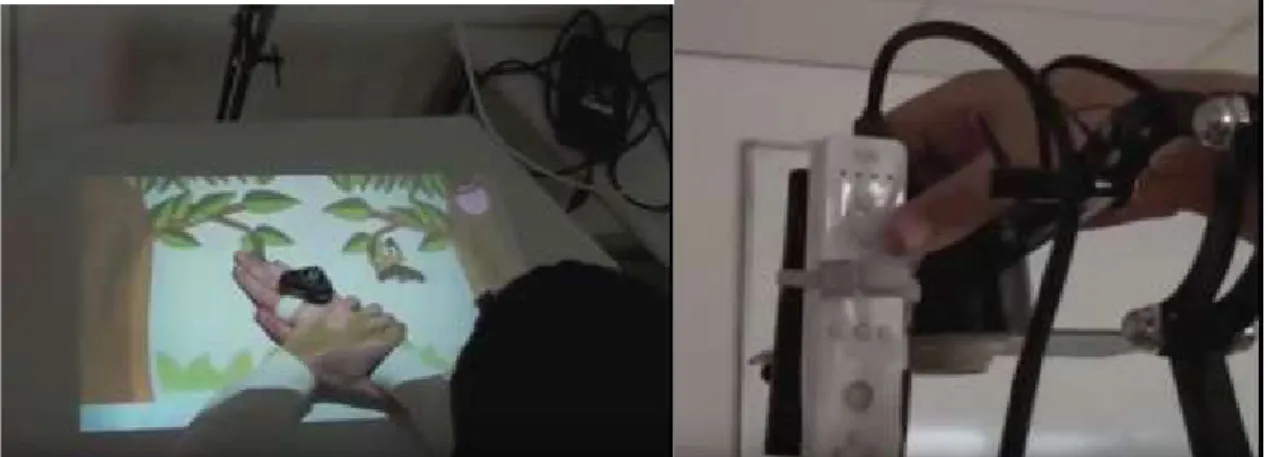
The motion capture subsystem is responsible for tracking the patient's hand and to communicate these movements to the game client. In the first version of the system (Figure 1), the motion capture system was composed of three components:
1) An IR emitter: this is an active sensor built using a simple infrared (IR) emitter that is attached on the patient's hand using a Velcro strap. This basic device is very cheap and convenient to use even with patients that suffer from spasticity.
2) An IR camera: To track the IR emitter a Nintendo Wiimote was used as an IR camera. The Nintendo Wiimote is an affordable device that has been used in many open source projects. Consequently, a plethora of open source libraries offered the use of Wiimote as pointing device.
3) A processing software: the role of this component is to translate Wiimote events into mouse events so that the IR emitter and IR camera are considered as a standard pointing device from the operating system’s point of view.
Figure 1. The overall system.
The display subsystem: Within a mixed reality context it is necessary to display game objects directly in the physical world. Within the context of this experiment, a pico projector was attached to a support (the base of a floor lamp with joints, to be able to direct the projection and the capture at whatever angle) to display the game onto a standard table (to let the patient to be seated in case of fatigue). Pico projectors are affordable (less than 200 euros), lightweight (less that 300g), and easy to use by simply plugging a VGA cable into a computer. However, they are limited in terms of brightness (the one that was used in this experiment was less than 30 lumens). This constraint has to be taken into account when building the game’s graphical environment by selecting colours and contrasts to compensate for this limitation.
The overall system is presented in Figure 1. The patient holds on his hand (or attach on it) the IR emitter device and sits in front of the table (a) to play the exercise (see also Figure 2 left). The IR camera (c and Figure 2 right) and pico projector (d) are placed on the top of a support (b). A laptop computer is used to run the game client and to establish a Bluetooth connection with the WiiMote.
Figure 2. Other details of the system.
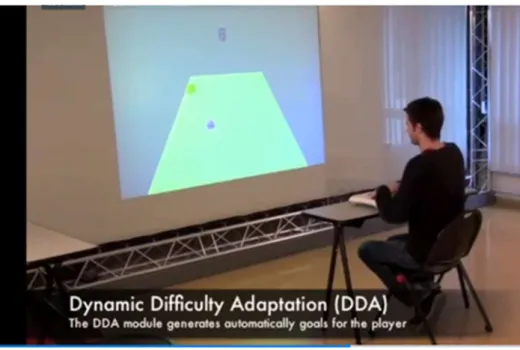
The main idea behind the system was allowing for different devices to be used depending on the patients’ impairments and cognitive capabilities. Figure 3 shows an alternative configuration were smallest movements are constraint using a Wiiboard, and differentiated focus (with a large observation space) was enacted by a large-scale projector (Figure 4).
Figure 3. Alternative devices.
Figure 4. Displaying the game in a vertical way on a larger scale
CONSIDERATIONS ON AFFORDANCES
In this part of the chapter I will address the analysis of the affordances, in particular functional and physical affordance, that are the translation of user’s needs and enable action in this system.
The usability evaluation of the systems ([VI], [VII], [VIII] in the author’s publications list) did highlight some interesting aspect from the sensory affordance perspective: music in the game wasn’t working as a clue or as an ambience creator, but as a distractor in the difficult cognitive and physical task of the patient. However, as I do not have an in depth analysis of these elements (at the beginning of my work I was focusing more on the whole body experience), I will not treat them in depth.
On what concern functional affordances, the evaluation demonstrated that the multi-device approach was potentially successful for physical rehabilitation. A medical validation, showing the actual interest of this kind of system for physical rehabilitation, has been conducted for an evolved version of the system and will be illustrated in next part of the chapter. As for the relationship physical/cognitive affordances we could observe elements already known for the interaction with other kind of augmented systems in post-stroke rehabilitation. While the used games were easily understood and accepted as funny exercises by less affected patients, they created cognitive overload in very affected patients. Thus, the usage of multi-sensory channels with very affected patient is to avoid, and reinforces the idea of a modular and configurable system.
As final consideration, I would like to discuss more in depth the role played by the pair therapist/patient as an indissoluble couple for the system usage and evaluation.
In the first pilot study we held, 4 patients affected by stroke tested a game with a graphical tablet, a mouse and the mixed reality system described above under the therapist observation and help. While we will not enter in detail here, we can summarize results as follow. First of all patients were not able to differentiate the difficulty of using the system from the difficulty of executing the movement, strongly impaired by the stroke. As patients have also coordination problems, having to press a lever can generate spasticity or synkinesia (i.e. uncontrolled movements). In addition the mixed reality system allows for coordination and proprioception (i.e. the sense of the relative position of neighboring parts of the body). In fact, the patient must try to move her/his limb in coordination with other parts of his/her body to reach a target. The cognitive and physical effort of the patient was thus focused on controlling the hand to reach a goal (thus focusing on physical and sensory affordances to achieve functional goals). On the other hand, the clinical eye of the therapist, who assisted the sessions helping the patient for example in avoiding compensation movements, was able to observe for which patient the exercise was more difficult to understand or execute, or when the patient had to put all efforts to move his hand (and thus was concentrating on his hand and not on the screen and the like). To do so, the therapist was taking into account emotional and physical clues.
This case of social interaction during a therapy session raise in my opinion an interesting question on the role of “distributed and differentiated” affordances. In this case we are confronted with in an asymmetric configuration, as the therapist will not focus his attention to the same affordances of the patient, their functional goals being different. Thus, the same objects/subjects most probably do not offer the same affordances to the two users. What this implies for the design and development of a computer-augmented system was a question which remained unsolved by the end of the project, but that is in my opinion worth to explore in the future.
F
ROM CENTRALIZED INTERACTION TO MODULAR
MULTIMODALITY
Following the end of the Mojo’s project, the initial elements that emerged from this experience were studied in depth with a startup in Montpellier, Naturalpad. The initial aim of this collaboration was continuing the reflections on multi-modality that emerged in the project. While the results of this collaboration are now a commercial platform, MediMoov, containing a set of configurable games, and able to support different devices to train different physical disorders, the most interesting research elements emerged at the beginning of our joint collaboration, involving mainly the concept of sense-based accessibility, and the shift towards an ability-based approach.
I
DENTITY CARD
:
INITIAL WORK ON
M
EDI
M
OOV
(2014-2016)
Description and aim: Design and implementation of a set of configurable games to train different physical disorders, with a particular focus on universal access.Societal aspect/problem: Physical training
Partners : LIRMM then UTT (Université de Technologie de Troyes) + Naturalpad (http://www.naturalpad.fr/en/)
Stakeholders: therapists, patients, Serious Games company
Initial Research questions:
-
Will a personalized experience (taking into account different impairments) increase motivation?-
Does the system and the game allow for a differentiated yet seamless interaction?-
Are these interactions modalities intuitive and easy to use?Working team: 1 Researcher (me), 1 phd student (Geoffre Melia), the developing team from Naturalpad
Spent time: 1 year
T
HE INTERACTION PARADIGM AND A TECHNOLOGICAL SOLUTIONFrom the previous experience it was rather evident that in an asymmetric relationship (such the one between the patient and the therapist) how the different affordances are perceived by each actor and how the actors act together to reach a common functional goal has to be analyzed, designed and implemented in detail. In the particular research I will be describing in this part, we complicated things further bringing another actor to the scene: a healthy player (for example a family member) who could participate in the patient’s rehabilitation. Complicatedness arises not only at the level of cognitive difficulty, but also at the level of physical interactions. As a political stance, I decided to drop the dis-ability based design approach, in order to not to consider the non-healthy person a diminished version of a healthy person.
This idea of a non-healthy player as a diminished version of a healthy player is clearly visible in the Serious Games for Health world. One of the main drawbacks of classic game for health design, which are in fact diminished versions of classical video games, is the lack of intention to appeal healthy gamers, hindering the possibility of social rehabilitation8. Often this
happens because the gameplay is not enough taken into account, while development efforts are only focused on the educational or training message (the so-called seriousness of the game). The second drawback is the high specificity of each movement based rehabilitation game. Most rehabilitation games are constructed around a specific pathology and using specific devices (impacting thus the kind of affordances presented to the users). Then problems arise. What if the game needs to be used in another context, for example a game for post stroke rehabilitation reused in the setting of back pain rehabilitation? The problem is deeper of what it appears if we look at it from the research point of view. While it’s true that a game conceived for cognitive rehabilitation may not be adapted for motor rehabilitation, why motor-based rehabilitation games are not based on similar interactions, as motor laws in human being are general? For this reason the research reflection during this period revolved around having a classic game design but within a flexible modular environment to plug and play whatever device and game, in order to allow people with different capabilities to work together.
The actual prototype
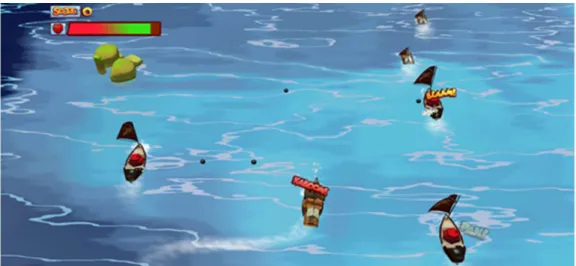
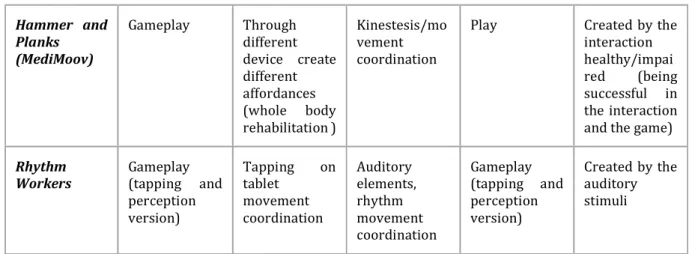
Hammer and Planks9, the result of this first reflection with Naturalpad, is a vertical shooter10.
It consists of a 2D environment scrolling from top to bottom in which the player controls a ship that can move from left to right and top to bottom, and use its cannon to shoot enemies and avoid obstacles. The goal of each game is to defeat all enemies without being destroyed by bullets, reefs, or other obstacles. In this way the player will pass through a series of levels and use what he found to improve its ship. Figure 5shows a screenshot from the actual game.
8I’m totally aware that I’m overgeneralizing, as there are more and more good examples of serious games.
9 A video of the system is available at https://www.youtube.com/watch?v=NXTer-ZltsI
10 In vertically scrolling shooters, the action is viewed from above and scrolls up (or very occasionally down)
The phases of the game are generally intense, short but requiring a lot of concentration. Enemies and obstacles arrive in large numbers and it is an important part of the game to respond quickly and staying attentive. Also the idea behind the boat improvement is linked to the patient’s rehabilitation: as a player he rebuilt his boat in the game, as a patient he do the same with his own body. In this way we tried to address emotional aspects.
From the personalization point of view the doctor can configure game parameters such as difficulty, game speed or areas where enemies should appear through a dedicated web interface (Figure 6shows this aspect). At the end of a game, the interface allows the therapist to view game statistics such as the number of objectives attained, the missed ones, the time spent in different sectors of the screen as well as the patient's center of mass trajectory during the session. This information will allow the doctor to evaluate the patient progression and to adjust the difficulty for the next game.
Figure 5. A screenshot from Hammer and Planks, showing the normalized game play.
A
M
ULTIMODALI
MPLEMENTATIONHammer and Plank has been developed to be used on several platforms: computer, smartphone, and tablet. On the computer version, it is possible to interact with the game using a large set of controllers: gamepad, keyboard, mouse and some NUI (Natural User Interfaces): Kinect or Wiiboard.
The version developed for the mobile device uses the internal sensors – and in particular the accelerometer – to capture the movements of the player. With this set of interactive devices we were able to propose a large palette of game supports for all the family and for some disabled people.
With this technological approach, we tried to avoid every kind of discrimination towards non-healthy players and at the same time engaging the healthy ones. The main idea here was to avoid developing a diminished version of a normal game to be played by non-healthy players, creating devices that will help whatever person to play inside their ability space. We tested our approach during the Montpellier In Game (MIG), an annual event dedicated to video games, thus in a non formal, non controlled, setting where we performed participant observations.
Our main question during the event was “Will this game really be played by everybody?” (that we can translate into a more specific research question: does the system and the game allow for a differentiated yet seamless interaction?). We thus conducted observations during the event and analyzed the data collected. During the two days of the event we had more than 700 games sessions played by healthy and unhealthy people (knowing that all the players played more than one session). The unhealthy people came because they had heard about the game on the radio and wanted to try it. There were different pathologies ranging from manipulation problems, to strokes, to a quadriplegic person. It’s worth to note that sometimes the motivational impact of the fact of being able to play again is strongly underestimated. The fun aspect for someone who has access to everything (from the physical and psychological point of view) is not the same as someone who has access to “something”. In the rest of this section I will briefly report on some of the players who took part to the event whose interactions with the system I find particularly interesting.
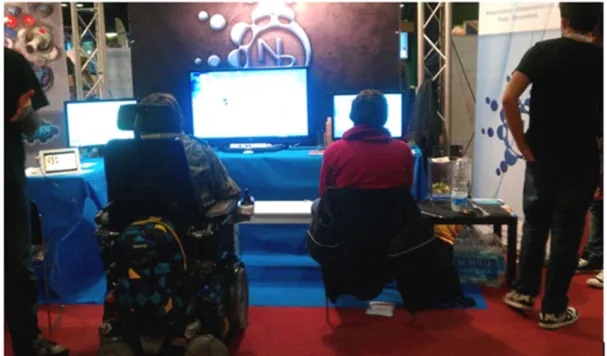
One of the players at the event was a child (10-12 years old) who arrived in a wheelchair pushed by his father. The child was suffering from a stroke and was installed on the bench to play with his brother (which generates a small challenge between the two). They played together (or better one versus the other) a couple of game sessions using a gamepad.
A second player who captured my attention was a girl with fine manipulation problems (she wasn’t thus able to play with the buttons of the gamepad). She was provided with a tablet (a Nexus7) using the accelerometer to drive the boat. She was very happy to be finally able to play again and the tablet demonstrated to be a good interaction technique for this type of pathology.
Finally, a quadriplegic boy who was barely able to move his hands and thumbs (especially the left one) arrived on the first day. We provided him with a joypad augmenting the sensitiveness of the stick control, and he passed 4hrs playing on the stand. His motivation
for playing so long was linked mainly to the fact that he wanted to make the best score but also to the fact that Hammer and Planks was one of the few games he was able to play because of his physical limitations. The learderboard acted thus as activator for competition not only against the others but also against oneself, pushing the player to pass his own limits.
Apart the unhealthy players, the game appealed to healthy players as well.
To quickly explain why with some stats, the person who played the most was a healthy player who played 55 game sessions, followed by the hemiplegic player who played 40 game session.
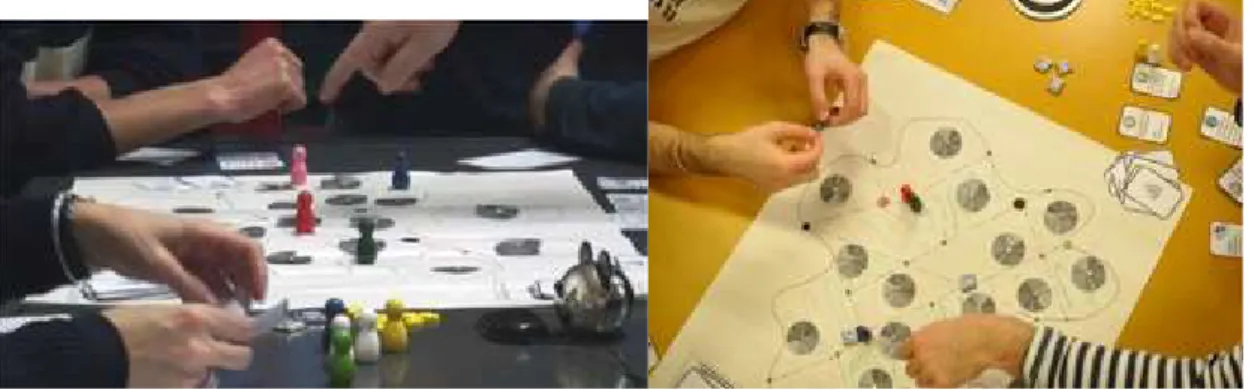
Figure 7. Different players playing together at the MIG event
Within this particular experience, two elements are worth to retain (and both open in my opinion to interesting additional research questions). The first one is the non-conventional (for computer science controlled research) usage of the MIG event as first evaluation (but not validation) field. While non-conventional, this kind of experimentation led to an informal evaluation of the system, which opened in a second time for the clinical validation of the tool (see [III], [XI] in the author’s publications list) as the system was considered by clinicians stable enough to go through it.
The second observation is on non-distributed/yet distributed affordances in this kind of configuration. I did not discuss in depth in this section the visual and auditory affordances of the game as they are not specific to the developed kind of game, but generic to all vertical shooters (e.g., the usage of visual and auditory feedbacks, the ambient music, the visual configuration, and so on). Still is clear that particular visual and auditory affordance where the same for all the players, and that the players had the same final goal. On the other hand, the previous accounts of experimented devices led to a consideration on the fact that each person created these functional and cognitive affordances interacting with different physical
(and sometimes sensory) objects. No actual study was held to evaluate if the different affordances generated by the different devices created a different representation of the system in the players. Still this is a very interesting research question to address.
As a matter of fact, at this point of my researches it was possible to answer positively to the non-therapeutic research questions (Does the system and the game allow for a differentiated yet seamless interaction? Are these interactions modalities intuitive and easy to use?). The MIG experience and other experiments in controlled settings helped to assess more in general the importance of an ability based sensory approach to create engagement. However the other questions (Will a game based system increase patients’ motivation? Will a personalized experience (taking into account patient's impairments) increase patient’s motivation? What is the added value of therapists tracking?) needed a validation inside a clinical protocol to be answered. The account of the clinical validation aspects can be found in III and IX in the author’s list of publications at the end of this chapter.
MONOSENSORY AFFORDANCES FOR BODY TRAINING
More interesting (for the aims of this work) than the clinical validation of the Medimov system is the account of another experiment on the usage of sensory channels in healthcare. While the previous experiences allowed for a stand towards ability-based design and a multi-modal approach, and even if there was an initial understanding of the importance of the sensory aspects for this kind of systems, no systematic research was held on the topic. On the other hand, interesting elements as the cognitive overloading created by music in physical rehabilitation started to give a hint of the sensory element importance. For this reason the following work held on body rehabilitation and training focused on sensory aspects. The work I will briefly describe in this section involved, in fact, the evaluation of sensory elements for rhythm assessment and body training.
Rhythmic skills are natural and widespread in the general population. The majority can track the beat of music and move along with it. These abilities are meaningful from a cognitive standpoint given their tight links with prominent motor and cognitive functions such as language and memory. When rhythmic skills are challenged by brain damage or neurodevelopmental disorders, remediation strategies based on rhythm can be considered. For example, rhythmic training can be used to improve motor performance (e.g., gait) as well as cognitive and language skills.
I
DENTITY CARD
:
R
HYTHM WORKERS (2016-2017)
Description and aim: Design and implementation of an auditory game to evaluate the pertinence of rhythm based training for different disorders.
Societal aspect/problem: Cognitive and motor training
Partners :UTT (Université de Technologie de Troyes, France) + Naturalpad (France) + EuroMov, Montpellier University, France
Stakeholders: therapists, patients, Serious Games company
Initial Research questions:
-
What is the role of auditory stimuli for motor training?-
Which kind of auditory stimuli is more adapted?-
What is the role of a game based approach in this particular domain?the developing team from Naturalpad
Spent time: 1 year
Related publications: 1 journal
Humans display a natural tendency to move, spontaneously or deliberately, to the beat of rhythmic auditory stimuli, such as music [15],[16]. This activity is widespread and is typically participatory. It manifests, for example, in dance, synchronized sport, and in group activities (e.g., waving together at a rock concert). Synchronization to a musical beat is sustained by a complex neuronal network, including perceptual regions, motor regions, as well as sensorimotor integration areas11. Disruption of these neuronal networks due to brain
damage or neurodevelopmental disorder affects auditory-motor synchronization to a musical beat [17], [18], as well as other functions such as speech. Notably, tracking the beat does not require mandatorily an explicit motor response. Still, mere listening to an auditory rhythm, for example conveyed via music, activates movement-related areas of the brain. Thus training with rhythmic stimuli may be beneficial to (re)activate the motor system in the damaged and in the healthy brain. In addition, as rhythmic skills are linked to other cognitive abilities such as working memory and reading skills [19], [20], rhythmic training may foster improvements of more general cognitive abilities, which play a critical role in language learning and literacy [21], [22], [23]. Ultimately, these beneficial effects of rhythmic training are likely to have positive consequences for health and well-being, such as promoting an active lifestyle, by reducing motor and cognitive decline in patient populations or reducing the need for healthcare services.
During the last 5 years, studies have focused on the cognitive and neuronal underpinnings of the benefits linked to health-targeted serious games [24]. On top of the physical and physiological benefits associated with serious games (e.g., via dedicated physiotherapeutic exercises), the effects of this type of training extend to cognition. Cognitive functions such as language and memory can also be enhanced by serious games, an effect which is likely to be accompanied by plastic changes of the brain. For example, structural brain changes associated with learning have been observed due to the use of videogames [25]. These promising results indicate that implementing training protocols via serious games may be particularly valuable for enhancing brain functions as well as for therapy and rehabilitation.
The interaction paradigms
In already existing games involving rhythm conveyed by auditory stimuli we can find four different interaction paradigms.
Games that Involve Full Body Movements Recorded via an External Interface (e.g., Kinect, Wii)
Here I refer mostly to dance games (e.g., Just Dance12). These games have interesting
applications in physiotherapy for patients with spinal cord injury, traumatic brain injury and stroke [26]. They focus more on physical exercise and activity than on rhythm per se. Indeed, the ability of these games to record and score the rhythmic precision of the player is rather poor. Because these games focus on discrete movements/actions instead of repeated movements (i.e., rhythmic) they cannot be used for delivering specific training of rhythmic skills. For example, Just Dance consists in reproducing movements that are illustrated through images displayed on the screen. The player’s score depends on the precision of the movements as compared to a model action sequence. The player has to execute the movements in a given temporal window. Yet, the task is not purely rhythmic and synchronization to the musical beat is not recorded. In spite of the fact that these games do not measure rhythmic skills per se, they provide a motivating setting to perform dance while monitoring the player’s movements. Adding a rhythm component to some of these games, as in the case of dance, may be a valuable strategy to translate them into a training program. Games that Involve Rhythmic Finger Tapping on a Tablet
An example of these games is Beat Sneak Bandit13. Here, the player has to tap precisely to the
beat in order to make the character progress, avoid the enemies and so forth. This kind of feature is used in serious games dedicated to learning, such as Rhythm Cat14, designed to
learn music rhythm notation. For the purposes of training rhythmic skills, one major drawback of these games is that the timing precision of the software is very poor. The time window in which a response is considered as good is very wide (i.e., up to several hundreds of milliseconds) and the temporal variability of the recording is high. In addition, no feedback on the rhythmic performance of the player is provided.
Computer or Console Games that Involve Finger Tapping on Keys
12 https://just-dance.ubisoft.com/en-us/home/ 13 http://simogo.com/work/beat-sneak-bandit/ 14 https://melodycats.com/rhythm-cat/