HAL Id: tel-02172751
https://tel.archives-ouvertes.fr/tel-02172751
Submitted on 4 Jul 2019HAL is a multi-disciplinary open access archive for the deposit and dissemination of sci-entific research documents, whether they are pub-lished or not. The documents may come from teaching and research institutions in France or abroad, or from public or private research centers.
L’archive ouverte pluridisciplinaire HAL, est destinée au dépôt et à la diffusion de documents scientifiques de niveau recherche, publiés ou non, émanant des établissements d’enseignement et de recherche français ou étrangers, des laboratoires publics ou privés.
Visual and acoustic techniques for motorcycle collision
warning system with EEG validation
Muhammad Muzammel
To cite this version:
Muhammad Muzammel. Visual and acoustic techniques for motorcycle collision warning system with EEG validation. Other. Université Bourgogne Franche-Comté; Universiti Teknologi Malaysia, 2018. English. �NNT : 2018UBFCK019�. �tel-02172751�
THESE DE DOCTORAT DE L’ETABLISSEMENT UNIVERSITE BOURGOGNE FRANCHE-COMTE PREPAREE A UNIVERSITI TEKNOLOGI PETRONAS
Ecole doctorale n°84460
SPIM - Sciences Physiques pour l'Ingénieur et Microtechniques
Doctorat de Instrumentation et informatique de l'image
Par
M. MUZAMMEL Muhammad
Développement d'un système d'avertissement sonore, validé par EEG, basé sur des approches vision et acoustique pour la detection de véhicules approchants des véhicules moteur deux roues
Thèse présentée et soutenue à « Universiti Teknologi PETRONAS, Seri Iskandar », le « 3rd July, 2018 »
Composition du Jury :
M., JEOTI, Varun Professeur des Universités, Universiti Teknologi PETRONAS Président
M., BENSRHAIR, Abdelaziz Professeur des Universités, INSA de Rouen Examinateur
M., KHOUDEIR, Majdi Professeur des Universités, Universite de Poitiers Examinateur M., MERIAUDEAU, Fabrice Professeur des Universités, Université Bourgogne – Franche – Comté Directeur de thèse
Titre : Développement d'un système d'avertissement sonore, validé par EEG, basé sur des approches vision et acoustique pour la detection de véhicules approchants des véhicules moteur deux roues. Mots clés : Sécurité des motocyclistes, Detection de collision, Analyse de signaux EEG
Résumé : Dans de nombreux pays, le taux de mortalité des motocyclistes est beaucoup plus élevé que celui des autres conducteurs de véhicules. Parmi de nombreux autres facteurs, les collisions arrière des motocyclettes contribuent fortement à ces décès de motards. Les systèmes de détection de collision peuvent être utilisés pour minimiser ces accidents mortels. Cependant, la plupart des systèmes de détection de collision existants n'identifient pas le type de danger potentiel auquel sont exposés les motocyclistes. Chaque système d'alerte de collision utilise une technique de détection de collision distincte, ce qui limite ses performances et rend impératif l'étude de son efficacité. Malheureusement, aucun travail de ce type n'a été signalé dans ce domaine particulier pour les motocyclistes. Par conséquent, il est important d'étudier la réponse physiologique du motocycliste contre ces systèmes d'alerte de collision. Dans cette recherche, une méthode de détection et de classification des véhicules approchant (par l'arrière) est présentée. Pour la détection de collision, une approche basée vision et une technique basée sur l’étude des données sonores ont été utilisées. Pour les techniques visuelles et acoustiques, des caractéristiques d'apparence et de spectre de puissance ont été utilisées, respectivement, pour détecter le véhicule qui s'approche à l'extrémité arrière de la motocyclette. En ce qui concerne la classification des véhicules, seule une technique basée acoustique est utilisée; un spectre de puissance acoustique et des caractéristiques énergétiques sont utilisés pour classer les véhicules qui approchent.
Deux types d'ensembles de données, à savoir des ensembles de données acquises durant ce travail (obtenues en plaçant une caméra à l'arrière d'une motocyclette) et des ensembles de données disponibles téléchargeables (pour la détection visuelle et pour la classification audio des véhicules) sont utilisés pour la validation. La méthodologie proposée a permis de détecter et de classer les véhicules pour des ensembles de données acquises durent cette thèse. De même, pour les ensembles de données disponibles, le taux de vrais positifs le plus élevé et le taux de fausse détection le plus faible ont été atteints par rapport aux méthodes de l’état de l art. En outre, une étude physiologique basée sur le potentiel lié à l'événement (ERP) a été réalisée sur les motocyclistes afin d'étudier leurs réponses vis-à-vis du système d'alerte de collision arrière. Deux types d'avertissements auditifs (c'est-à-dire verbal et buzzer) sont utilisés pour ce système d'avertissement. Pour étudier la réponse des motocyclistes, les composantes N1, N2, P3 et N400 ont été extraits des données d'électroencéphalographie (EEG). Ces systèmes d’avertissement ont montré des effets positifs au niveau neuronal sur les motocyclistes et réduisent leur temps de réaction et les ressources attentionnelles nécessaires pour traiter correctement la cible. En résumé, le système d'avertissement de collision par l'arrière proposé avec des avertissements verbaux auditifs augmente considérablement la vigilance du motocycliste et peut être utile pour éviter les scénarios possibles de collision arrière.
Université Bourgogne Franche-Comté 32, avenue de l’Observatoire
Title : Visual and Acoustic based Techniques for Motorcycle Collision Warning System with EEG Validation.
Keywords : Motorcyclist safety, Collision detection, EEG analysis Abstract : In many countries, motorcyclist
fatality rate is much higher than that of other vehicle drivers. Among many other factors, motorcycle rear-end collisions are also contributing to these biker fatalities. Collision detection systems can be used to minimize these fatalities. However, most of the existing collision detection systems do not identify the type of potential hazard faced by motorcyclists. Unfortunately, motorcyclists’ physiological response has not been investigated for the verbal warning-based collision warning system. Furthermore, motorcycles have different maneuverability as compared to cars and other four-wheeler vehicles, which can affect the riders’ response for this collision warning system. Therefore, it is important to study the physiological response of the motorcyclist for this system. In this research, a rear end vehicle detection and classification method is presented for motorcyclists. For visual-based and acoustic-based collision detection techniques, appearance features and power spectrum have been used, respectively. As for the vehicle classification, only an acoustic technique is utilized; an acoustic power spectrum and energy features are used to classify the approaching vehicles. Two types of datasets which are comprised of self-recorded datasets (obtained by placing a camera at the rear end of a motorcycle)
and online datasets (for vision-based vehicle detection and for audio-based vehicle classification techniques) are used for validation. Moreover, an event-related potential (ERP) based physiological study has been performed on motorcyclists to investigate their responses towards the rear end collision warning system. Two types of auditory warnings (i.e., verbal and buzzer) are used for this warning system. To study the response of the motorcyclists, the N1, N2, P3, and N400 components have been extracted from the electroencephalography (EEG) data. The proposed methodology successfully detected and classified the vehicle for self-recorded datasets and achieved a true positive rate of 95.87% and a false detection rate of 5.25%. For online datasets, the higher true positive rate and less false detection rate have been achieved as compared to the existing state of the art methods. The introduced auditory warnings have shown positive effects at neural levels on motorcyclists and reduce their reaction time and attentional resources required for processing the target correctly. In summary, the proposed rear-end collision warning system with auditory verbal warnings significantly increases the alertness of the motorcyclist and can be helpful to avoid the possible collisions.
Université Bourgogne Franche-Comté 32, avenue de l’Observatoire
iv
TABLE OF CONTENTS
RÉSUMÉ ... ii
ABSTRACT ... iii
LIST OF TABLES ... vii
LIST OF FIGURES ... ix
LIST OF ABBREVIATIONS & SYMBOLS ... xiii
Chapter 1 Introduction ... 1
1.1 Motorcyclist Accidents ... 1
1.2 Motorcyclist Safety Systems ... 3
1.3 Related Collision Detection Systems ... 5
1.4 Response of Drivers against Collision Warning Systems ... 6
1.5 Research Gaps and Motivation for Research ... 8
1.6 Problem Statement ... 9
1.7 Hypothesis ... 10
1.8 Research Objectives ... 11
1.9 Scope of Study ... 11
1.10 Thesis Outline ... 12
Chapter 2 LitErature Review ... 13
2.1 Motorcyclists Safety and Active Safety Systems... 13
2.1.1 Antilock Braking System ... 14
2.1.2 Electronic Stability Control ... 15
2.1.3 Advance Collision Warning Systems ... 15
2.1.4 Limitations of Existing Motorcycle Safety Systems ... 18
2.2 Related Work for Vehicle Detection and Classification ... 19
2.2.1 Vision-based Vehicle Detection Techniques ... 20
2.2.2 Vision-based Vehicle Classification ... 24
2.2.3 Audio-based Vehicle Detection and Classification ... 28
2.2.4 Audio-Visual based Vehicle Detection and Classification ... 32
2.2.5 Directional Microphones ... 34
2.3 Response of Drivers ... 35
v
2.3.2 EEG based Drivers Physiological Response Study ... 39
2.4 Summary ... 45
2.5 Research Gaps ... 47
2.5.1 Limitations of Visual Techniques ... 48
2.5.2 Limitation of Acoustic Techniques ... 48
2.5.3 Limitations of Drivers Physiological Response Studies ... 48
Chapter 3 Methodology ... 50
3.1 Proposed Methodology ... 50
3.2 Proposed Vehicle Detection and Classification Technique ... 51
3.2.1 Dataset ... 51
3.2.2 Visual Technique for Vehicle Detection ... 54
3.2.3 Audio-based Vehicle Detection ... 64
3.2.4 Audio-based Vehicle Classification ... 71
3.2.5 Combination of Audio and Visual Techniques ... 82
3.2.6 Auditory Alerts for the Fusion Technique ... 85
3.2.7 Hardware ... 86
3.3 EEG based Motorcyclist Physiological Response Analysis ... 87
3.3.1 Sample Size Calculation ... 88
3.3.2 Participants Selection ... 88
3.3.3 Safety of Participants and Ethics ... 89
3.3.4 Apparatus for EEG Data Recording ... 90
3.3.5 Stimuli and Procedure ... 91
3.3.6 Data Acquisition ... 93
3.3.7 Data Analysis ... 94
Chapter 4 Results and Discussion ... 97
4.1 Vehicle Detection and Classification ... 97
4.1.1 Vision-based Vehicle Detection ... 98
4.1.2 Audio-based Vehicle Detection ... 102
4.1.3 Audio-based Vehicle Classification ... 107
4.1.4 Fusion of Vehicle Detection and Classification ... 115
4.1.5 Alerts for Detected and Classified Vehicles ... 117
4.2 EEG based Physiological Response Study for Motorcyclists ... 118
vi
4.2.2 One Way Repeated Measures ANOVA Results ... 121
4.2.3 Discussion ... 124
Chapter 5 Conclusion and Recommendations ... 127
5.1 Conclusion ... 127
5.2 Recommendation and Future Work ... 129
List of Publications... 131
References ... 132
Appendices ... 149
Appendix A: Questionnaire for the subject recruitment. ... 149
Appendix B: Flyer used for the advertisement to recruit subjects for EEG study. ... 155
Appendix C: Consent form for ethical approval to collect EEG data. ... 156
Appendix D: Ethical approval from the Electrical Engineering Department ethics committee. ... 161
vii
LIST OF TABLES
Table 1.1: Motorcycles distribution in different regions of the world [1]. ... 2
Table 2.1: Related studies for motorcycle collision detection systems. ... 16
Table 2.2: Advantages and disadvantages of collision detection techniques. ... 19
Table 2.3: Related studies for vision-based vehicle detection (continuous). ... 22
Table 2.4: Related studies for vision-based vehicle classification. ... 25
Table 2.5: Related studies for audio-based vehicle detection and classification. ... 29
Table 2.6: Related studies for audio-visual based vehicle applications... 33
Table 2.7: Features used to analyze the response of drivers. ... 37
Table 2.8: EEG wave band frequencies. ... 40
Table 2.9: EEG responses of drivers for different warning systems. ... 42
Table 3.1: Self-recorded multimedia dataset characteristic. ... 52
Table 3.2: Datasets for vision-based vehicle detection. ... 53
Table 3.3: Audio datasets characteristic for vehicle classifications. ... 54
Table 3.4: Number of features obtained by using SVD for different data balancing techniques. ... 70
Table 3.5: Frequency band of the audio signal using 5th level of decomposition. ... 73
Table 3.6: Number of features obtained for the different dataset. ... 75
Table 3.7: Number of features obtained for the different dataset. ... 81
Table 3.8: Number of features obtained by SVD. ... 82
Table 3.9: First frame analysis method for the combination of vehicle detection and classification techniques. ... 82
viii
Table 3.10: K-map values for the first frame of any Nth vehicle. ... 83
Table 3.11: Combination of vehicle detection and classification techniques for any frame (i.e., other than the first frame). ... 84
Table 3.12: K-map values for any next frame of the Nth vehicle. ... 84
Table 3.13: Sample size for different power values. ... 88
Table 3.14: Participants selection details [72-79, 159-161]. ... 89
Table 3.15: Verbal warnings given to the motorcyclist. ... 92
Table 4.1: Confusion matrix for the proposed technique to calculate different parameters. ... 97
Table 4.2: Results of the proposed visual technique. ... 101
Table 4.3: Different class detections by using feature matrix F7 from the self-recorded dataset. ... 110
Table 4.4: Four classes’ detection by using F7 from online dataset ESC-50 [150]. .. 111
Table 4.5: LITIS Rouen [151] online dataset confusion matrix for the proposed technique by using feature matrix F7. ... 114
Table 4.6: Fusion of vehicle detection and classification techniques. ... 117
Table 4.7: Normality test of the ERP data. ... 121
Table 4.8: Latency (ms) and amplitude (µV) and of N1, N2 and P3 components with four warning conditions as factors. ... 123
ix
LIST OF FIGURES
Figure 1.1: Honda (CD-70) motorcycle used in Pakistan. ... 2
Figure 1.2: Yamaha (115cc) motorcycle used in Malaysia. ... 2
Figure 2.1: Classification of motorcyclist safety systems. ... 13
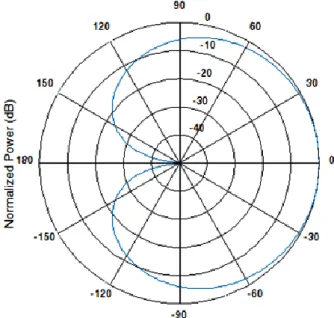
Figure 2.2: Polar pattern of a directional microphone. ... 35
Figure 2.3: 10-20 international system for positioning of EEG electrodes. ... 40
Figure 3.1: Proposed methodology. ... 51
Figure 3.2: Equipment mounted at the rear end of motorcycle. ... 52
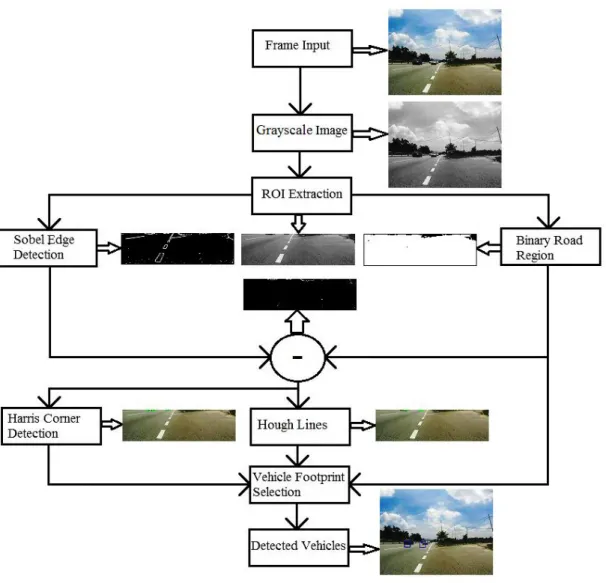
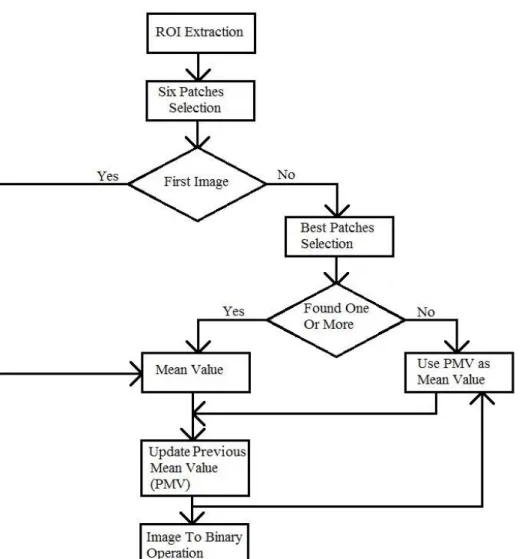
Figure 3.3: Flowchart to detect the vehicles. ... 55
Figure 3.4: Location of the selected patches in frame ... 56
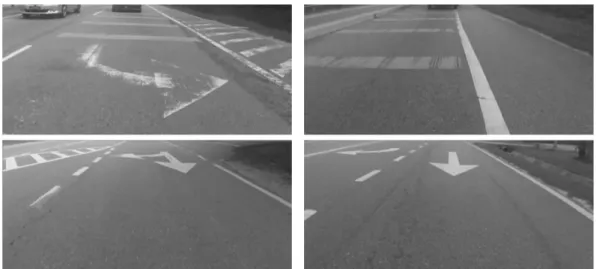
Figure 3.5: Different lane marks present on the road using self-recorded dataset. ... 56
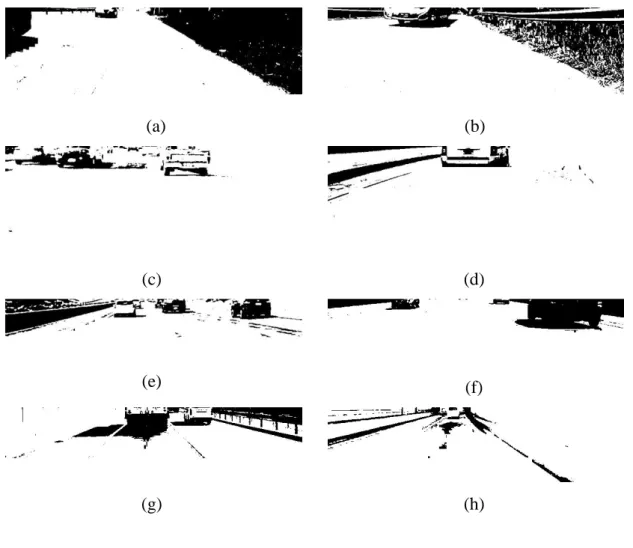
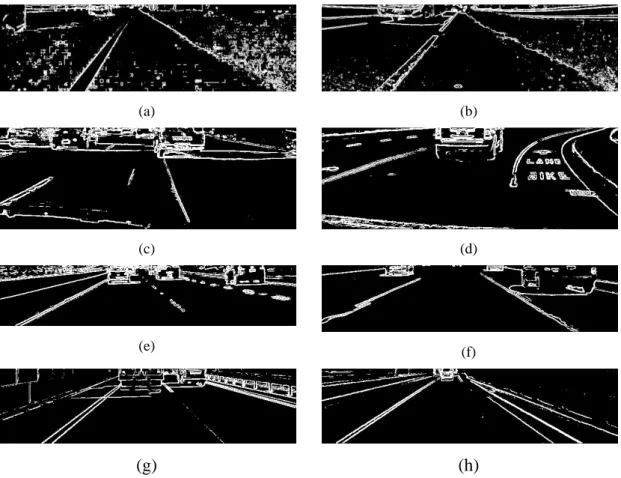
Figure 3.6: Binary road detection: a) Self recorded dataset with two cars at lane markers; b) Self recorded dataset with bus footprints; c) LISA-Dense (frame 735); d) LISA-Urban (frame 13); e) LISA-Sunny (frame 104); f) Source-2 (frame 140); g) iROADS-Daylight; and h) iROADS-Tunnel. ... 58
Figure 3.7: Flowchart for the detection of binary road region. ... 59
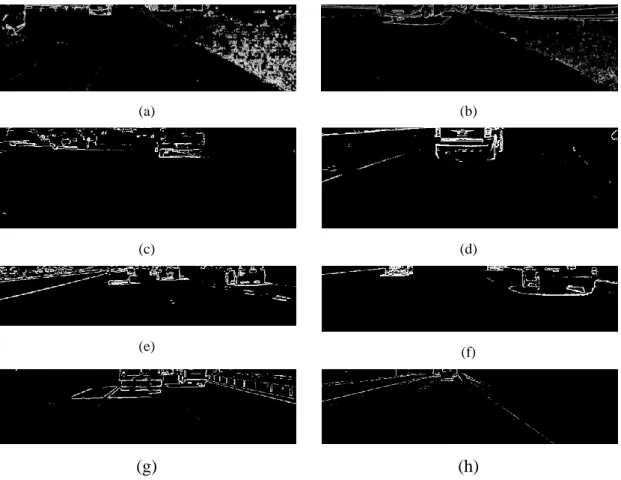
Figure 3.8: Sobel edge detection with Otsu threshold; a) Self-recorded dataset with two cars at lane markers; b) Bus footprints from self-recorded dataset; c) LISA-Dense (frame 735); d) LISA-Urban (frame 13); e) LISA-Sunny (frame 104); f) Source-2 (frame 140); g) iROADS-Daylight; and h) iROADS-Tunnel... 60
Figure 3.9: Lane Marker Free (LMF) image: a) Self-recorded dataset with two cars at lane markers; b) Self-recorded dataset with bus footprints; c) LISA-Dense (frame 735); d) LISA-Urban (frame 13); e) LISA-Sunny (frame 104); f) Source-2 (frame 140); g) iROADS-Daylight; and h) iROADS-Tunnel. ... 61
x
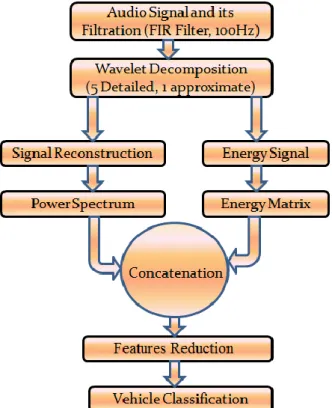
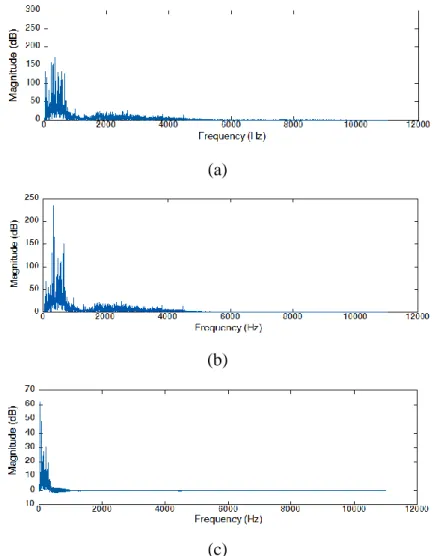
Figure 3.10: Harris corner detection: a) Self-recorded dataset with two cars at lane markers; b) Self-recorded dataset with bus footprints; c) LISA-Dense (frame 735); d) LISA-Urban (frame 13); e) LISA-Sunny (frame 104); f) Source-2 (frame 140); g) iROADS-Daylight; and h) iROADS-Tunnel. ... 62 Figure 3.11: Selected lines plotted on ROI images: a) Self-recorded dataset with two cars at lane markers; b) Self-recorded dataset with bus footprints; c) LISA-Dense (frame 735); d) LISA-Urban (frame 13); e) LISA-Sunny (frame 104); f) Source-2 (frame 140); g) iROADS-Daylight; and h) iROADS-Tunnel... 63 Figure 3.12: A proposed methodology for audio-based vehicle detection. ... 65 Figure 3.13: Spectrogram of 1:12 (min:sec) duration from the self-recorded dataset. 67 Figure 3.14: A proposed methodology for audio-based vehicle classification. ... 71 Figure 3.15: Frequency response of audio signal from LITIS Rouen (bus) dataset a) Signal without filtration; b) Filtered signal; c) Subtraction of both frequency responses. ... 72 Figure 3.16: Percentage of energy for self-recorded dataset containing multiple vehicles a) E1; b) E2; c) E3; d) E4; e) E5 and f) E6. ... 76
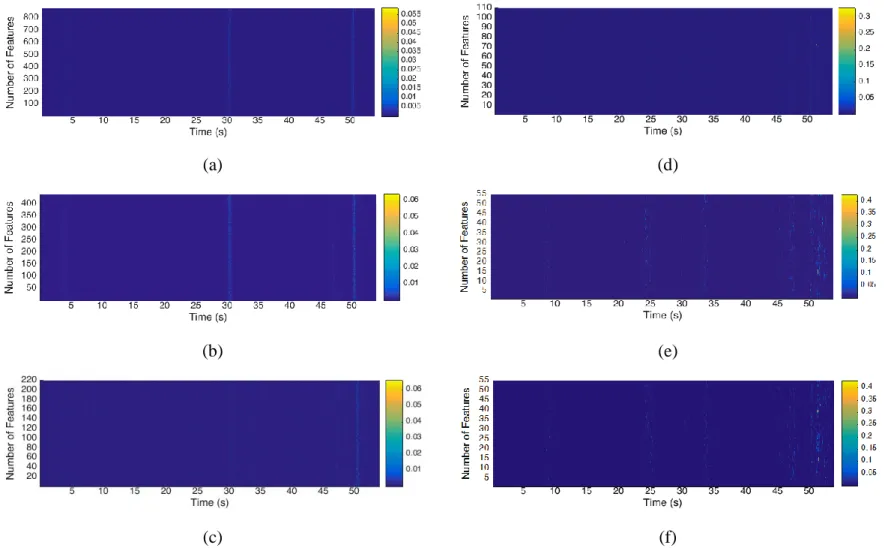
Figure 3.17: Percentage of energy for online datasets, a) E1 (LITIS Rouen-bus); b) E5
(LITIS Rouen-bus); c) E6 (LITIS Rouen -bus); d) E1 (ESC50-train); e) E5
(ESC50-train) and f) E6 (ESC50-train). ... 77
Figure 3.18: Spectrogram for self-recorded dataset containing multiple vehicles a) S1;
b) S2; c) S3; d) S4; e) S5 and f) S6. ... 79
Figure 3.19: Spectrogram for online datasets, a) S1 (LITIS Rouen-bus); b) S5 (LITIS
Rouen-bus); c) S6 (LITIS Rouen -bus); d) S1 (ESC50-train); e) S5 (ESC50-train); f) S6
(ESC50-train). ... 80 Figure 3.20: Window selection to alert motorcyclist. ... 85 Figure 3.21: Directional audio pattern of the At-2035 microphone. ... 87
xi
Figure 3.22: Motorcycle simulator used for EEG data recording. ... 90
Figure 3.23: EEG data recording using Enobio-20. ... 91
Figure 3.24: Experimental design for four warning conditions. ... 92
Figure 3.25: Placement of electrodes in Enobio-20 for EEG data recording. ... 94
Figure 3.26: ERP epochs extraction from the EEG data. ... 95
Figure 3.27: Artifacts detection in ERP epochs. ... 95
Figure 4.1: Vehicle detection from self-recorded dataset: a) Two cars crossing the motorcyclist; b) Bus approaching from the rear end; c) truck at the rear end of the motorcycle; and d) Two different types of vehicles. ... 98
Figure 4.2: Vehicle detection from online datasets: a) LISA-Dense (frame 735); b) LISA-Urban (frame 13); c) LISA-Sunny (frame 104); d) Source-2 (frame 140); e) iROADS-Daylight; and f) iROADS-Tunnel. ... 99
Figure 4.3: False vehicle detection: a) wrong lane vehicle detection in self-recorded dataset; b) False detection from self-recorded dataset; c) LISA-Dense (frame 735); d) LISA-Urban (frame 13); e) LISA-Sunny (frame 104); and f) Source-2 (frame 744). ... 100
Figure 4.4: Small 1000c vehicle at the rear end of the motorcycle. ... 103
Figure 4.5: Vehicle of 1300cc approaching the motorcyclist. ... 103
Figure 4.6: No vehicle at the rear end of the motorcycle. ... 104
Figure 4.7: True positive rate for different data balancing techniques. ... 104
Figure 4.8: False detection rate for different data balancing techniques. ... 105
Figure 4.9: Vehicle classification from self-recorded dataset: a) Two cars; b) Bus; c) Truck and d) Multiple types of vehicles. ... 108
xii
Figure 4.10: True positive rate obtained by using different feature matrices for the
self-recorded dataset. ... 108
Figure 4.11: False detection rate for different data balancing techniques. ... 109
Figure 4.12: Four classes’ detection from the online dataset ESC-50 [150]. ... 111
Figure 4.13: classification of LITIS Rouen [151]. ... 113
Figure 4.14: Vehicle detection classification from self-recorded dataset: a) Two cars; b) Bus; c) Truck and d) Multiple types of vehicles. ... 116
Figure 4.15: Auditory verbal warnings: a) Single car at the rear of the motorcycle and b) Two cars. ... 118
Figure 4.16: Average ERP components for subjects a) N1 Latency; b) N2 Latency; c) P3 Latency; d) N400 Latency; e) N1 Amplitude; f) N2 Amplitude; g) P3 Amplitude and h) N400 Amplitude. ... 119
Figure 4.17: Average ERP plots a) N1 (P8); b) N2 (C2); c) P3 (Pz) and d) N400 (Fz). ... 119
Figure 4.18: Topography of the ERP components analyzed for four warning conditions a) N1 (160ms); b) N2 (200ms); c) P3 (310ms); d) N400 (450ms) and e) Scale for all topographical plots. ... 120
xiii
LIST OF ABBREVIATIONS & SYMBOLS
Abbreviations
1-NN 1-Nearest Neighbor ABS Antilock braking system ACW Advance Collision Warning ADASYN Adaptive Synthetic
ADC Analog to Digital Converter AgCl Silver Chloride
ANN Artificial Neural Network ANOVA Analysis of Variance
AR Autoregressive
ARS Aspect ratio and size BFTree Best First Decision Tree
CC Cluster Centroids (CC)
CISIR Centre for Intelligent Signal and Imaging Research
CMEAN Centroid mean
CN Condensed Nearest-Neighbour
CNN Convolutional Neural Network CNV Contingent Negative Variation CPU Central Processing Unit
CSD Centroid Standard Deviation DOT Department of transportation DWT Discrete wavelet transform
EEG Electroencephalography
ENN Edited Nearest Neighbours ERP Event-related potential ESC Electronic stability control
ESC-50 Environmental Sound Classification Dataset FDR False detection rate
FIR Finite impulse response
FFT Fast Fourier Transform
xiv
FP False Positive
GA Genetic Algorithm
GRBF Gaussian Radial Basis Function
GMM Gaussian Mixture Model
GPS Global Positioning System HOG Histogram of gradient
HT Heavy tracked
HW Heavy wheeled
IBS Imperfect buzzer system (IBS) IHT Instance Hardness Threshold
iROADS Intercity Roads and Adverse Driving Scenarios IVS Imperfect verbal system
K-map Karnaugh map
KNN K-nearest neighbor
LASER Light amplification by stimulated emission of radiation LCD Liquid Crystal Display
LDA Linear discriminant analysis
LEF Low Energy Frames
LISA Laboratory for Intelligent and Safe Automobiles
LITIS Laboratoire d'Informatique, du Traitement de l'Information et des Systèmes
LMF Lane marker-free
LT Light tracked
LW Light wheeled
MEMS Micro-electromechanical system MFCC Mel-frequency Cepstral Coefficients
MLFFNN Morphological operation and Multilayer feed-forward neural network
MV Mean value
NCR Neighbour-hood Cleaning Rule
NHTSA National Highway Traffic Safety Administration, USA NIC Neuroelectrics Instrument Controller
NM-1 Near Miss-1
xv
NM-3 Near Miss-3
NN Nearest Neighbours
NSS No sound system
OSS One-Sided Selection
PCA Principle component analysis PLM Multilayer Perceptron
PMV Previous mean value
PNN Probabilistic Neural Network PS Power and Sample size calculation PSD Power spectral density
PVS Perfect verbal system
QDA Quadratic discriminant analysis RBF Radial basis function
RF Random Forest (RF)
RF-20 Random Forest classifier with 20 number of trees RF-50 Random Forest classifier with 50 number of trees
RMS Root mean square
RNNs Random neural networks
ROI Region of interest
ROS Random Over Sampling
RUS Random under Sampling
SC Spectrum Centroid
SF Spectral Flux
SFM Spectral Flatness Measure SIFT Scale-invariant feature transform
SMOTE Synthetic Minority Oversampling Technique SMOTE-B1 Borderline SMOTE of type 1
SMOTE-B2 Borderline SMOTE of types 2
SP Shape profile
SPSS Statistical Package for the Social Sciences SRC Sparse representation-based classifier
SS Spectrum Spread
xvi STFT Short Time Fourier Transform SVD Singular Value Decomposition SVM Support vector machine
TFD Time-Frequency Distribution
TL Tomek Link
TN True Negative
TP True Positive
TPR True positive rate
UTP Universiti Teknologi PETRONAS
V2W Voice2White
WHO World Health Organization
ZCR Zero Cross Rate
Symbols
J Number of features obtained by using STFT
L Length of the audio signal
K Total number of audio frames
P Total number of samples in one audio frame FS Sampling frequency of the audio signal
FC Cutoff frequency
Nf Filter order
KHz Frequency unit, equal to 1,000 Hz
GB Gaga byte (unit of memory)
(x1, y1) Start coordinates of line
(x2, y2) End coordinates of line
d Distance
h Length of the selected line obtained by using Hough method mh Slope of the line obtained by using Hough method
ah Angle of the line obtained by using Hough method
xvii
Greek Symbols
α Alpha
1
CHAPTER 1 INTRODUCTION
Motorcycle accidents are a major concern in many Asian countries. Collision detection and warning systems can be helpful to avoid these accidents. However, for motorcycle little work has been reported in that particular domain. Whereas for other types of vehicles, a significant work has been reported in the literature. These collision warning systems directly cannot be used for motorcycles as they have different maneuverability as compared to cars and other vehicles. In this research, a collision warning system has been presented for motorcyclists. Visual and acoustic techniques are used to detect and classify the vehicles approaching at the rear end of the motorcycle. Also, the response of motorcyclists is investigated by measuring the variations in event-related potential (ERP) components. It has been found that the auditory collision warning system had a positive effect on neural levels at the motorcyclist.
This chapter discusses the motorcyclist fatalities and some safety techniques (including collision detection systems) that are used to increase the safety of the motorcyclists. It focuses on the audio/vision-based vehicle detection/classification techniques that are either used in collision detection system or can be used for motorcyclist safety enhancement. In addition, some information is provided about the driver's response studies that validate these collision detection systems. Furthermore, problem statements, hypothesis, objectives and scopes of the present research work are also included in this chapter.
1.1 Motorcyclist Accidents
According to the motorcycle industry, there were 313 million motorcycles on the road as of the year 2012, of which 78% are in Asia, 5% in Latin America, and 2% in North America [1]. Table 1.1 gives the percentage distribution of motorcycles in different regions of the world.
2
Table 1.1: Motorcycles distribution in different regions of the world [1].
Region Motorcycles (%) Asia 78 Europe 14 Latin America 5 North America 2 Africa 1
The term motorcycle is interchangeable with the term motorbike. However, the term motorbike is mostly used in the United Kingdom and Australia. While in the United States a motorbike has less power as compared to the motorcycle vehicle. Globally, the term motorbike is used less than the term motorcycle. Figure 1.1 below shows the Honda CD-70 motorcycle used in Pakistan. While Figure 1.2 shows a Yamaha motorcycle (115cc) used in Malaysia.
Figure 1.1: Honda (CD-70) motorcycle used in Pakistan.
Figure 1.2: Yamaha (115cc) motorcycle used in Malaysia.
World Health Organization (WHO) reported that annually 1.25 million people die due to road fatalities [2]. Motorcyclists account for 24.1% of these fatalities as compared to the other modes of transport [3]. However, Motorcycle fatalities are a
3
major concern in many Asian countries. In Malaysia, for example, around 62% of road fatalities are motorcyclist fatalities [4]. This figure is 66.6% in Cambodia, 73.5% in Thailand, 46.1% in Singapore, and 35.7% in Indonesia [5].
In many other countries around the world, the situation is not as bad but still needs to be addressed. In New Zealand, for example, 13% of road fatalities are motorcyclist fatalities [6]; while, this figure is 9% in the Europe [2]. According to the U.S. National Highway Traffic Safety Administration (NHTSA) in the year 2014, motorcyclist fatalities account for the 14% of road fatalities [7].
Motorcyclists also sustain many types of injuries that are more serious than those suffered by other vehicle drivers in accidents [8]. Head injuries are more common among motorcyclists and contribute to more than half of all fatalities among riders. Chest and abdominal injuries are the second leading cause of motorcyclist fatalities, accounting for 7% to 25% of motorcycle deaths, while cervical spinal injuries often occur in fatal motorcycle accidents. Nonfatal motorcycle accidents mostly involve lower-extremity injuries. Among lower-extremity injuries, fractures are the most common and can lead to permanent disability [9]. Soft-tissue injuries and neck injuries also occur in motorcycle accidents [10].
Motorcycles have characteristics different from those of other vehicles, especially in terms of their maneuverability. Motorcyclists require high levels of coordination and balance to control them [8]. Motorcyclists are more exposed to the external environment; therefore, more likely to suffer injuries or fatalities compared to the drivers of cars and other vehicles [8, 11]. Motorcycles frontal and rear end collisions have highly contributed to the motorcyclist fatalities and are mostly recorded on motorways and primary roads. Many factors are involved in motorcycle accidents: among them are over speeding, driving under the influence of alcohol, ignorance of the route, and loss of controls [5, 12].
1.2 Motorcyclist Safety Systems
To increase the safety of the motorcyclists and minimize their fatalities, different techniques have been proposed; they can be divided into two major categories: 1) passive safety and 2) active safety. Passive safety covers the use of
4
helmets [13, 14], special cloths [15], airbags [16], etc. Active safety covers antilock braking system (ABS) [17], electronic stability control [18, 19], and advance collision warning (ACW) systems for motorcycles [20-22], etc.
In passive safety systems, helmets are found effective to minimize the head injuries and minimize the chance of motorcyclist death up to 40% [23, 24]. Full-face helmets are found safest among all types of helmets. Furthermore, protective clothes in passive safety systems reduce the risk of the injury to the upper body, hands, wrists, legs, feet, and ankles [15]. Also, wearing reflective protective clothing can further reduce the risk of accidents [25, 26]. However, the installation of airbags on a motorcycle is still a major challenge. This is due to the direct exposure of the motorcyclist to the external environment and the absence of seat belts in motorcycles [27]. The research is still on ongoing to find the suitable location for the installation of an airbag on a motorcycle [28, 29].
These passive safety techniques aim to reduce injuries; while, active techniques help to avoid accidents from occurring in the first place. The active safety systems are not yet fully developed and still are at a research stage. In, active safety systems, ABS and ESC systems were found reliable to increase the stability of the motorcycle [17, 19]. ABS system increases the braking performance for both dry and wet road surfaces and prevents the motorcycle from tipping over [17]. Similarly, ESC system detects different parameters such as speed, yaw rate, and wheel torque, etc., to detect and control the motorcycle trajectory [19]. However, for motorcycle rear-end collisions both systems were found less effective.
An autonomous braking system has also been presented to increase the safety of motorcycles [30, 31]. If there are chances of collisions, these systems automatically apply the brakes. However, these systems rely on the collision detection methods and very few collision detections or collision avoidance methods for motorcycles have been reported in the literature [20-22]. The collision detection methods proposed in the literature were not fully developed [20, 21]. Furthermore, in [22], a mobile camera needed to be installed manually for every driving session. Thus, it may change the angle of the mobile camera installed on a motorcycle and may affect the vehicle detection.
5 1.3 Related Collision Detection Systems
Every collision warning system used a discrete collision detection technique. These systems first detect the approaching vehicles. If there are chances of a collision, these systems give early warning to the driver to avoid it. The collision detection methods for cars and other four-wheeler vehicles rely on different types of sensors and approaches to detect the vehicles [32-38]. Among different types of sensors, cameras and microphones are relatively cheap and produce reliable results as compared to the other sensors such as radar, ultrasonic, a global positioning system (GPS) and laser scanners, etc.
The cameras provide a wide field of view, thus allowing the detection of the vehicles across multiple lanes. There are many vision-based techniques that used the appearance features of the approaching vehicle for collision detection [37, 39-44]. Among different appearance-based features, edges features are found more suitable option (i.e., the vehicle rear or frontal views show strong vertical/horizontal edges and corners) to detect the approaching vehicles. Yet, the vehicle detection techniques presented in the literature have very low frame rate (i.e., the process only a few frames in one second). Vibrations are more prominent in motorcycle compare to four-wheeler (and higher) vehicles. Therefore, a fast and reliable vehicle detection technique for motorcycles using visual information is still a challenge.
It is believed that the information about potential hazard types will further assist the driver to understand the situation and can be helpful to avoid potential accidents. However, in the literature available vision-based vehicle classification techniques are limited to surveillance applications [45-48]. Many challenging issues still exist in vehicles classification. That include road environment, illumination variations, camera field view, the similarity in vehicle appearance and a large number of vehicle types, etc. [45, 49]. Variations of light, weather and day/night scenario make it even more complex to detect the vehicle type from the images.
The microphones are low cost as compared to other types of vehicle detection sensors. Also, in contrast to visual features, vehicle sound spectrum obtained by the microphone is not affected by the light intensity [50, 51]. Every vehicle that moves on the road generates acoustic spectrum dominated by the engine noise, exhaust noise,
6
tire noise and air turbulence [52, 53]. This sound spectrum can be used to detect and classify the vehicles. Therefore, it is important to investigate it further. In the literature, the methods have been reported for audio based vehicle detection and classification for surveillance applications [52, 54-58].
There is a significant difference between vehicle detection/classification for collision detection system and for surveillance application. For surveillance application, microphones mostly fixed at some points are used to detect and classify the vehicles [52, 54-58]. Also, the air turbulence can increase false vehicle detections for the collision detection system as it appears after the vehicle passes the microphone [52, 53]. Therefore, for the collision detection/warning system, it is still challenging to extract features from the audio signal (obtained by using a single microphone) to detect and classify the approaching vehicle by neglecting the audio of the vehicles moving opposite lane with minimum air turbulence.
By using a single microphone, it is not possible to find the rear end approaching vehicle location for a collision warning system because of the Doppler shift in an audio spectrogram can change due to the movement of any vehicle [52, 53]. Hence, vision-based vehicle detection can be used with an audio-based vehicle detection/classification method, to increase the accuracy and reliability of the collision detection/warning system.
1.4 Response of Drivers against Collision Warning Systems
Because of the technical constraints, these collision warning systems can prone to false alarms or nuisance alarms and misses some vehicles. The collision warning system with such limitations can impact the driver's behavior in two ways: 1) it can distract the drivers or 2) it can redirect the driver's attention to the road if necessary. It is expected that these systems would benefit the drivers by diverting their attention towards the road and assisting them to understand the critical situation.
Many researchers have investigated the response of car drivers against collision warning systems [59-66]. However, no such work has been reported for motorcyclists. Motorcycles have different maneuverability as compared to cars and other vehicles [8]. Also, motorcyclists are more exposed to the external environment and are more
7
likely to get distracted as compared to the drivers of cars and other vehicles. They require high levels of coordination and balance to control motorcycle, particularly for scenarios when they trying to avoid possible rear-end collisions [8]. Therefore, it is important to investigate that the design collision warning system can be useful for motorcyclists or it will create a further distraction.
In these collision warning systems, different types of warnings are used such as visual [67], auditory [68], vibratory [69], or tactile [70], etc. The audio warnings can be further divided into buzzer warnings and auditory verbal warnings. Auditory verbal warnings convey the information about the situation or about the potential hazard e.g., its type and distance from the source, etc. [59]. These response studies can be divided into two categories: 1) behavioral studies and 2) electroencephalography (EEG) based response study of drivers. All of the above studies found that the collision warning systems increased the alertness of the drivers. Also, in these research studies, there were pre-crash scenarios; therefore, the simulator was utilized for the safety of drivers [59-66].
In behavioral research studies, different parameters (i.e., drivers’ reaction time, brake time and time to the collision, etc.,) are used to find the alertness of vehicle drivers [59-66]. In these studies, visual, auditory, tactile or combination of these warnings was used to alert the drivers [59-66]. Tactile warnings have been found to be more suitable as compared to any other types of warnings [63]. Also, auditory warnings were found more convenient as compared to the visual warnings. The auditory-verbal warnings are considered less annoying for the critical driving situation [71]. The driver can swiftly learn these warnings. Also, these warnings can convey spatial information about the potential hazard, thus may reduce the perception and response time to the danger [70].
Also, many researchers investigated the physiological response of drivers through electroencephalography (EEG) [72-74]. However, tactile warnings were not used for these EEG studies, as movements or motion can affect EEG signals. EEG alpha and theta bands were used to study the response of drivers. In these studies, when the auditory warnings were given to the drivers, their alpha/theta signals power decreased and they responded rapidly to avoid potential collisions [72-74]. These warnings were also found effective to minimize the drowsiness effects [75, 76].
8
Besides alpha and theta bands in EEG studied, the event-related potential (ERP) components were also used to examine the responses of drivers for collision warning systems [77-80]. These ERP components arise due to the specific sensory, cognitive, or motor event, etc. In these studies, ERP components named as contingent negative variation (CNV), N1, N2, and P3, were used to find the alertness of the drivers. The CNV was one of the first ERP components to be described in the year 1964. The negative CNV peak rises quickly if the subject is uncertain about when the imperative stimulus will be, and it rises gradually if the subject is confident about when the imperative stimulus will occur [81].
Similarly, P300 is considered as an endogenous potential, as its occurrence links with the person's reaction. More specifically, the P300 is thought to reflect processes involved in stimulus evaluation or categorization. When recorded by EEG, it surfaces as a positive deflection in voltage with latency (delay between stimulus and response) of roughly 250 milliseconds to 400 milliseconds [82]. N1 is a negative-going evoked potential measured by EEG and it peaks in-betweens 80-120 milliseconds after the onset of a stimulus and distributed mostly over the fronto-central region of the scalp. While N2 peaks occur 200-350 milliseconds post-stimulus and are found primarily over anterior scalp sites.
In these EEG studies, drivers’ response time for different types of collision warning systems (i.e., 100% and 70% accurate collision warning systems) were compared to the condition when the collision warning system was absent. It has been observed that these warning systems decreased the reaction time and increased the alertness of the drivers. Also, variations in the amplitude and latency of N1, N2, and P3 components have been found for these warning systems compared to the no warning condition. These variations occurred due to the collision warning system facilities at the sensory level and the driver required less time and the attentional resources for processing the target correctly.
1.5 Research Gaps and Motivation for Research
Among different types of collision detection techniques, vision and audio-based vehicle detection/classification techniques give more reliable results as compared to other techniques. Yet there are many gaps in the existing research work.
9
Motorcycles are smaller in size and have stronger vibration effects than other types of vehicles which can blur the image and make it complex to detect the vehicle using appearance features. Therefore, a method is required to extract the simple features from the images that can give fast and accurate vehicles' detection in the presence of vibrations for the motorcycle rear-end collision detection system. Its synchronization with the audio-based vehicle detection and classification is also important as both features have a different frame rate.
Most of the audio-based techniques used multiple microphones to detect and classify vehicles for the surveillance purpose. Also, these microphones are installed at the fixed place. An audio-based vehicle detection/classification for the collision detection system is different from the surveillance application. It is very challenging to extract features from the audio signal (obtained by a single microphone installed at the rear end of the moving vehicle) to detect and classify the approaching vehicles for the collision warning system.
Also, some limitations are found in these behavioral and EEG/ERP based drivers’ response studies. Most of these were reported for car drivers. No such work has been found for motorcyclists. The response of motorcyclist may vary from the car and other vehicle drivers. EEG studies give a better perception of the driver about the collision warning system. Yet, these studies used the buzzer warnings for the collision warning systems. The physiological response of the drivers may differ when auditory verbal warnings presented. These studies also focus on the frontal collision warning system. It is important to investigate the physiological response of motorcyclists or other vehicle drivers (by using ERP components) for the rear collision warning system. Besides, N1, N2 and P3 components, N400 also needs to be investigated for auditory verbal warnings. ERP component N400 is part of the normal brain responses to verbal words and other meaningful stimuli. It peaks occur 400-500 milliseconds post-stimulus [83].
1.6 Problem Statement
Based on the above research gaps, the problem statement can be formulated as follows:
10
• A fast and reliable rear end vehicle detection approach for motorcycles using appearance features need to be investigated. Also, audio and visual datasets have different frame rate; therefore, the integration of visual technique with audio-based vehicle detection and classification technique is yet to be designed.
• Further analysis of the acoustic power spectrum (obtained by using a single microphone) is required to detect and classify the approaching vehicles for a collision warning system.
• All previous physiological studies were limited to the frontal collision scenarios and only computed the N1, N2, and P300 for car drivers. Moreover, only buzzer warnings were used to alert the car drivers. It is still challenging to investigate motorcyclists’ physiological responses for the rear collision warning system for auditory verbal warnings by using ERP components N1, N2, P3, and N400, respectively.
1.7 Hypothesis
From the above problem formulation, we hypothesize that,
I. The vehicles moving on the road have very strong frontal edges (i.e., appearance-based features) in images that can be used to detect their presence and it can be integrated with an audio-based vehicle detection/classification method by creating audio frames.
II. Acoustic power spectrum consists of engine, tire and exhaust noises of the moving vehicles, and this spectrum can be used to detect the vehicle presence and to differentiate this vehicle from other vehicles.
III. The auditory-verbal commands are found to be easily understandable and less annoying. It is believed that verbal warning commands will enhance the brain neural activities and will be helpful to assist the drivers in a collision warning system.
11 1.8 Research Objectives
I. To develop a method to detect approaching vehicles at the rear end of the motorcycle (even in the presences of vibrations) by using appearance features from images.
II. To evaluate the acoustic spectrum of the approaching vehicles to detect their presence, classify them into different categories, and integrate with vision-based vehicle detection technique.
III. To investigate the physiological responses of motorcyclists for the rear end collision warning systems when they are presented the auditory-verbal warnings.
1.9 Scope of Study
This research explores suitable audio and visual features for a motorcycle rear-end collision detection system. In this research, rear rear-end approaching vehicles and their type is detected to alert the motorcyclist about potential hazards. For this, audio and visual datasets are recorded at daytime in Ipoh-Lumut highway and inside UTP for different lighting conditions and road scenarios by using a 125cc motorcycle.
Also, the physiological responses of motorcyclists are investigated for the rear end collision warning system for the auditory-verbal warning messages. The EEG data has been recorded by using a simulator located at the CISIR lab, UTP Malaysia. The selected subjects for this experiment were UTP students or staff members with valid motorcycle driving license. Afterwards, offline analysis of EEG data has been performed.
Different research areas (i.e., vision-based vehicle detection for the motorcyclist, audio-based vehicle detection and classification, a fusion of audio and visual techniques, and the physiological response study of motorcyclists) are investigated in this research study. Therefore, instead of the in-depth study of any individual research field, the work is more focused on the interaction and fusion of these different research areas.
12 1.10 Thesis Outline
The work presented in this thesis consists of a total of five chapters. In Chapter 1, a brief introduction is presented about the motorcyclist fatalities, motorcycle safety systems, response studies and related techniques that can be used to minimize the motorcycle accidents and fatality rate. Also, the problem statement and objectives are given in Chapter 1. Chapter 2 covers the detailed literature review about different safety systems for the motorcycle. Moreover, it includes the audio and vision-based vehicle detection/classification techniques that can be used for the collision detection system. It also covers the behavioral and physiological studies to measure the responses of the drivers against collision warning systems. Finally, the limitations of the existing research work are highlighted at the end of this chapter. Chapter 3 covers the proposed methodology for the vision-based vehicle detection, audio-based vehicle detection, an audio-based vehicle classification and combinations of these techniques for the collision detection system for motorcycles. Also, in this chapter, the methodology to study the physiological responses of motorcyclists against the collision warning systems has been presented. Chapter 4 covers the results obtained for all the techniques; it also highlights the comparison of the proposed research work with the existing state of the art methods. Finally, Chapter 5 concludes the proposed research work and proposes the suggestions for future work in this area.
13
CHAPTER 2 LITERATURE REVIEW
This chapter discusses the different types of motorcycle safety systems, their effectiveness, and gaps. This chapter mostly focuses on the motorcycles collision detection/warning systems. It also includes the different types of collision detection/warning systems for other vehicle drivers. These systems detect the possible chances of collision with other vehicles (i.e. detect the vehicles and it types) and alert the drivers about it. In order to avoid these collisions, vision and audio-based vehicles detection and classification methods are discussed in very details. Moreover, the techniques to study the response of drivers against collision warning system are also included in this chapter. Lastly, the research gaps between the current work and literature are reviewed and concluded.
2.1 Motorcyclists Safety and Active Safety Systems
Motorcycle fatalities are a major concern in many Asian countries. Different techniques have been proposed to increase the safety of motorcyclists and to minimize road fatalities. These techniques can be divided into passive safety systems and active safety systems, as shown in Figure 2.1 below.
14
Passive safety systems for the motorcyclist include helmets [84-87], protective clothing [88-91], and airbags [27, 92-94]. While, active safety systems for motorcyclists include antilock braking system (ABS) [17], electronic stability control (ESC) [18, 19], and advance collision warning systems [20, 95] that provide the motorcyclist with an early warning of a potential accident [96]. Details of active safety systems are given below.
2.1.1 Antilock Braking System
A brake is a crucial device for a motorcycle. A motorcycle is normally equipped with individual brake systems for the front and rear wheels. Motorcyclists control the front brake by hand and the rear brake using foot [97]. The front-wheel brake provides great deceleration but can result in an unstable ride or a loss of control owing to a shift in the center of gravity. Meanwhile, the rear-wheel brake does not affect the stability of the motorcycle but yields less deceleration [98].
To address the above issue, manufacturers have developed a braking system that essentially links the front and rear brake controls. This system applies a braking force to both wheels when either control is engaged and is referred to as a combined braking system. With a combined braking system, it is still possible that a wheel may lock during hard braking [99]. To solve this, ABS has been proposed [17, 99-101].
An ABS has been introduced to a range of motorcycles since the late 1980s and use electronic controls to maintain wheel rotation and increase stability. For hard braking, an ABS uses electronic control for both wheels and prevents the motorcycle from tipping over [101]. The use of this brake in a motorcycle can improve the braking performance on both dry and wet surfaces [17]. ABSs have been found beneficial for the reduction of motorcyclist injuries from 34% to 39% in Europe and from 42% to 48% in real-world severe accidents [102]. However, the motorcyclist cannot rely on an ABS to prevent all types of accidents. For example, an ABS cannot prevent accidents in the case that the motorcycle is struck from behind by another vehicle [99]. Additionally, ABSs are fully developed and there is not much room for improvement in ABS design.
15
Recently, an autonomous braking system has been presented for motorcycles [30, 31]. The system first detects frontal vehicles and, if there is a chance of collision, automatically applies braking. However, both cited studies were limited to low-speed scenarios and the study conducted by G. Savino et al. [30] was also limited to obstacles encountered in a straight line.
2.1.2 Electronic Stability Control
The stability of a motorcycle is different and much more complex than that of a car [19]. Being a single-track vehicle, a motorcycle can easily become unstable [8]. The stability of a motorcycle, therefore, plays a vital role when the motorcycle is ridden. To increase the stability of a motorcycle, many researchers have proposed electronic stability control (ESC) systems [18, 19, 103, 104]. ESC was initially suggested to increase the stability of cars and it is currently used in most commercial cars.
In the case of a motorcycle, an ESC system detects the speed, yaw rate, lateral acceleration and wheel traction to determine whether the actual course of the motorcycle is the same as the driver's intended course. If there is a divergence, the ESC system applies different braking pressures to the wheels to correct the motorcycle trajectory [19]. An ESC system can effectively stabilize the motorcycle and help to minimize accidents that usually occur because of the instability of the motorcycle. Because ESC has already been fully developed and is currently used, there is little room for its further improvement.
2.1.3 Advance Collision Warning Systems
Little work has been reported for motorcycles collision detection or collision warning systems as given in Table 2.1 below.
E. D. Bekiaris et al. [20], proposed different techniques to warn the motorcyclist about the potential collisions but did not present the development and accuracy of these techniques. C. Spelta et al., [95] presented a method of communication between different components of a motorcycle to increase safety.
16
Table 2.1: Related studies for motorcycle collision detection systems.
Author/ Year Study type/Data type Collision Detection System Limitations/Conclusions E. D. Bekiaris et al. (2009) [20] Different techniques were proposed for a motorcyclist to avoid a collision.
Multiple sensors.
The development and accuracy of the systems were not presented. F. Biral et al. (2010) [21] Tested in a laboratory environment. Global positioning system (GPS) device and digital map.
A road-curve warning system was presented to increase the safety of motorcyclists. C.-Y. Fang et al. (2014) [22] Sixteen sequences (containing 60,261 frames) were captured by a smartphone and used to test the performance of the system.
Mobile camera and GPS device.
For the given technique, a mobile camera was used to detect the frontal vehicles and a GPS device was used to estimate the distance to the frontal vehicles. The given technique had 98.49% accuracy. G. Savino et al. (2012) [30] Experimental tests were conducted in a transportation research laboratory.
Laser Scanner. The study focused on the activation of an active braking system and achieved 98% proper detection. F. Giovannini et al.(2013) [31] An experimental-based study involving 12 volunteers riding a scooter equipped with a prototype.
Laser Scanner. This research used a laser scanner for a motorcycle autonomous emergency braking system. The system was effective in minimizing the chance of collision. G. Savino et
al. (2009) [105]
A total of 10 tests were conducted for both moving and fixed obstacles, while the motorcyclist traveled towards the obstacles.
Laser Scanner. No false detection was generated.
G. Kumarasamy
et al. (2015) [106]
The study was conducted in a test environment by pre-calculating the distance from obstacles.
Camera, range sensor, and a gyroscope sensor.
A camera and range-based sensor were used to detect the frontal vehicles. To track motion, a gyroscope sensor was placed on the
motorcyclist helmet. A. Amodio
et al. (2017) [107]
Controlled overtaking scenarios have been in this study.
Radar. The accuracy of this technique is not presented.
F. Biral et al. [21] presented a system that warns motorcyclists of an approaching curve in the road to avoid accidents. The presented technique (which was only tested in a laboratory environment) was based on a Global Positioning System
17
(GPS) device that determines the position of the motorcycle. A digital map was then used to estimate the approaching curve in the road.
C.-Y. Fang et al. [22] proposed a vision-based collision warning system for a motorcycle to avoid accidents. The system uses a mobile camera to detect frontal vehicles and a GPS device to estimate the distance to a frontal vehicle. The major issue with this technique is the placement of the mobile phone on the motorcycle. To implement the presented technique, a motorcyclist needs to install the phone camera manually in each driving session. The angle of the mobile camera may, therefore, vary in different driving sessions, making it difficult to detect frontal vehicles. Additionally, the mobile phone can be damaged as it is placed in an open environment.
Also, a laser scanner has been proposed to detect the frontal vehicles for an autonomous braking system [30, 31, 105]. F. Giovannini et al. [31] used the model given in [30] to detect a vehicle. Also, they did not present the accuracy of their vehicle detection; meanwhile, G. Savino et al. reported the accuracy of 100% in their 2009 [105] study and 98% in their 2012 [30] study. However, both studies were limited to low-speed straight-line detection. All the above studies more focused on the autonomous braking system rather than vehicle detection.
G. Kumarasamy et al. [106], proposed a hybrid technique of detecting frontal collision for motorcycles. In their study, a camera and a range-based sensor were used to detect frontal vehicles. For tracking, a motion gyroscope sensor was placed on the motorcyclist’s helmet. The system can detect the frontal vehicle and monitor the rider's deviation from the intended path. This technique used a range-based sensor for vehicle detection within a city. However, the range of the sensor was only 4 meters, which can lead to a collision. Additionally, the accuracy of the hybrid technique was not presented.
In [107], a lane changing system is presented for motorcyclists. Radar is used to detect the vehicles in adjacent lanes. Also, a camera is used to record the whole session, which afterward used to validate the results. However, the accuracy of this technique is not presented.
18
Very little work has been done in the field of collision warning systems for motorcycles. Similar to the case for other vehicles, different types of collision warning systems can be designed for motorcycles. The development of different systems will allow us to measure performance and costs.
2.1.4 Limitations of Existing Motorcycle Safety Systems
Among passive safety systems, helmets are the most useful in reducing the extent of head injuries and thus reducing the probability of the death of the motorcyclist [23, 24]. However, many motorcyclists refuse to wear helmets owing to the weight and overheating effect of helmets [85, 108]. Therefore, further research can be performed to develop the lightweight and strong helmets with a coolant system to make it more acceptable for motorcyclists.
Protective clothing can be used by motorcyclists to minimize the chances of soft-tissue injury. The installation of airbags in a motorcycle remains challenging. Research is ongoing to find the best location for the installation of an airbag in a motorcycle [28, 29]. The direct exposure of a motorcyclist to the external environment and the absence of seatbelts are major challenges facing the installation of airbags [27].
All the above passive safety systems can only help to minimize the effects of injuries; while, active safety systems can help avoid accidents. Among active safety systems, ABSs and ESC are less effective when the motorcycle is struck from behind by another vehicle. Additionally, both systems have already been fully developed and have been in use for some time and therefore cannot be greatly improved.
As a type of active safety system, collision warning systems can be effective in reducing the number of motorcycle accidents. These warning systems can be equally valuable for frontal and rear collisions. However, a limited work has been reported for motorcycle collision detection or warning system.
19
2.2 Related Work for Vehicle Detection and Classification
For car and other vehicle drivers, there are many types of collision warning system. These systems rely on global position system (GPS) based inter-vehicle communications method [32, 33], radar [34], laser-scanners [35], ultrasonic [36] and camera-based approaches [37, 38], etc., for collision detection as given in Table 2.2 below.
Table 2.2: Advantages and disadvantages of collision detection techniques.
Types of Collision Detection Technique
Advantages Disadvantages
GPS (Inter-vehicle communications).
Low cost and reliable.
Require two-way communications with another vehicle.
Radar. High performance.
Very expensive. Therefore, not suitable for motorcycle
application. Laser scanners. High performance.
Very expensive. Therefore, not suitable for motorcycle
application.
Ultrasonic. High accuracy. Small range. Therefore, greater chances of collision.
Camera-based approaches.
Low cost and high accuracy.
Less efficient in poor weather conditions, like fog or rain.
Every vehicle detection technique has some limitations. For example, GPS and inter-vehicle communication systems require two-way communication with another vehicle. That decreases the performance of the collision warning system relies on these vehicle detection techniques. Similarly, ultrasonic sensors have small range; therefore, the collision warning system based on it is less accurate than the camera and laser radar-based system. On the other hands, laser radar more is expensive than the camera-based system.
While, images and videos provide rich data sources, from which additional information and context can be surmised. Cameras provide a wide field of view, allowing for the detection and tracking of (moving) objects across multiple lanes. The cameras are less expensive as compare to radar and laser scanners. Therefore, the camera-based techniques can give reliable results to detect the rear end vehicles.
20
Moreover, audio microphones can be used for vehicle detection and classification. These sensors can even work during poor weather conditions and even at night time [50, 51]. They are cheap in comparison to other sensors, easy to install, with low power consumption and rather uncritical positioning demands. No direct line-of-sight is needed when analyzing acoustic signals, making acoustic vehicle detection and classification very attractive. Every vehicle while moving on the road makes some noise. This noise pattern helps to detect/classify the vehicle.
The vehicle classification by using visual information is very complex. Many types of vehicles belonging to the same class have features of various sizes and shapes. Moreover, occlusion, shadow, and illumination make the visual based classification task even more challenging. Also, it is highly unlikely to find the approaching vehicle location by using a single audio microphone. Therefore, the visual technique can be used for vehicle detection and audio technique can be used for vehicle classification.
2.2.1 Vision-based Vehicle Detection Techniques
In general, vehicle detections using cameras can be classified as stereo and monocular [38]. Stereo-based methods require two images, leading to the increase in system complexities and costs. In contrast, monocular vision-based techniques used only one image to predict about potential collisions.
For a monocular based system, the determination of vehicle locations is performed by analyzing the vehicle’s motion or appearance [38]. In a motion based technique, an optical flow method is used to detect the vehicles [109, 110]. Motion-based methods are effective for detecting moving objects; however, they are computationally intensive and require analysis of several frames before an object can be detected. They are also sensitive to camera movement and may fail to detect objects with slow relative motion [41]. As such, motion-based techniques are less commonly used for vehicle detections.
On the other hand, appearance-based detection techniques detect vehicles based on shadow underneath the vehicles [39], color [40], symmetry [37, 41], texture [42], lights [43], and edges [44], etc. In appearance-based techniques, color is a useful cue