HAL Id: hal-02815469
https://hal.inrae.fr/hal-02815469
Submitted on 6 Jun 2020HAL is a multi-disciplinary open access
archive for the deposit and dissemination of sci-entific research documents, whether they are pub-lished or not. The documents may come from teaching and research institutions in France or abroad, or from public or private research centers.
L’archive ouverte pluridisciplinaire HAL, est destinée au dépôt et à la diffusion de documents scientifiques de niveau recherche, publiés ou non, émanant des établissements d’enseignement et de recherche français ou étrangers, des laboratoires publics ou privés.
Effect of nitrogen fertilization on the susceptibility of
tomato & lettuce plants to plant pathogens & on efficacy
of biocontrol agents
Manzoor Ali Abro
To cite this version:
Manzoor Ali Abro. Effect of nitrogen fertilization on the susceptibility of tomato & lettuce plants to plant pathogens & on efficacy of biocontrol agents. Life Sciences [q-bio]. 2009. �hal-02815469�
EFFECT OF NITROGEN FERTILIZATION ON THE
SUSCEPTIBILITY OF TOMATO & LETTUCE PLANTS TO PLANT
PATHOGENS & ON EFFICACY OF BIOCONTROL AGENTS
.By
ABRO Manzoor Ali
Master 2 GQPV Phtoprotection (Research) 2008-2009
Universite d’Avignon et des Pays du Vaucluse
UFR Sciences exactes-Pole Agrosciences
Supervisor: Philippe NICOT
18
thSept:2009
Unit
UnitUnitéé de Pathologie Vde Pathologie Vééggéétale tale Unitéé de Pathologie Vde Pathologie Vééggéétale tale
ABSTRACT:
TITLE: EFFECT OF NITROGEN FERTILIZATION ON THE SUSCEPTIBILITY OF TOMATO AND LETTUCE TO PLANT PATHOGENS AND ON THE EFFICACY OF BIOCONTROL AGENTS.
Mineral nutrients have marked effects on plant diseases, in many situations they are the front line of defense against diseases. In all mineral elements nitrogen (N) is by for the most extensively reported element affecting plant disease. Therefore experiments were carried out to investigate the effect of nitrogen fertilization on the susceptibility of tomato and lettuce plants to Botrytis cinerea Oidium neolycopercici, Ssclerotinia
sclerotiorum and to determine if fertilizers can be used to improve the efficacy of
biocontrol agents against B. cinerea. We used varying levels of N concentrations in the fertigation solution feed to the plants through a drip irrigation system. The eight-week old potted tomato and lettuce plants grown in a heated green house were used for inoculation of different fungi. The susceptibility of tomato and lettuce decreased with increasing N concentration. High N fertilization decreased the severity and development of B. cinerea both in tomato and lettuce plants, however in the case of O. neolycopersici and S.
sclerotiorum high N fertilization increased the susceptibility of tomato and lettuce plants
against both pathogens. There was a positive correlation between N fertilization and the efficacy of two antagonists (Trichoderma. Harzianum and Microdochium. dimerum) against B. cinerea in tomato. The efficacy of both biocontrol agents was highly improved in high N fertilization treatments especially presence in low inoculum concentration of the pathogen.
RESUME: Effet de fertilisation azotée sur la sensibilité des plantes de tomate et de laitue à des agents pathogènes et sur l'efficacité des agents de lutte biologique.
Les nutriments minéraux ont des effets marqués sur les maladies des plantes. Ils sont, dans de nombreuses situations, en première ligne de défense contre les maladies. Parmi tous les éléments minéraux, l'azote (N) est l’élément le plus décrit comme un élément affectant les maladies des plantes. Dans cette étude, les expériences ont été réalisées pour étudier l'effet de la fertilisation azotée sur la susceptibilité des plants de laitue et de tomate à Botrytis cinerea, Oidium neolycopercici et Seclerotonia
sclerotiorum. Dans le but de déterminer si les engrais peuvent être utilisés pour améliorer
l'efficacité des agents de lutte biologique contre B. cinerea, nous avons utilisé différents niveaux de concentrations d'azote dans la solution de fertilisation par le système d'irrigation goutte à goutte. Des plantes de tomate âgées de 8 semaines et des plantes de laitue cultivées en pot ont été utilisées pour l'inoculation de champignons différents. Ces plantes ont été élevées dans des conditions d’une serre chauffée. Les résultats de ces études ont démontré que la sensibilité de la tomate et la laitue ont diminué avec l'augmentation de la concentration de N. Un taux élevé de fertilisation azotée a diminué la gravité et le développement du B. cinerea à la fois dans la tomate et la laitue. En revanche pour O. neolycopersici et S. sclerotiorum, un taux élevé de fertilisation azotée a augmenté la susceptibilité des plantes de tomate et de laitue à ceux deux pathogènes. Une corrélation positive a été trouvée entre la fertilisation azotée et l’efficacité de deux antagonistes (Trichoderma et Microdchium) contre B. cinerea chez les plantes de tomate. En utilisant un taux élevé d’azote N, l'efficacité de ces deux agents de lutte biologique a été fortement améliorée et en particulier dans le cas d’une concentration faible de l'agent pathogène.
KEY WORDS: Botrytis cinerea, Oidium neolycopersici, Susceptibility, N
ACKNOWLEDGMENTS
I wish to express profound and unprecedented gratitude to my worthy teacher and learned supervisor Dr Philippe NICOT Director research Phytopathology Unit INRA Avignon, France for his invaluable suggestions guidance and constant encouragement towards me during studies and provided a continuous potential of investigations. I express my heart felt gratitude for his generous consideration and indomitable patient shown to me. I feel highly obliged him for entire assistance during this study.
I am grateful to Francois LECOMPTE, Marc BARDIN for his constant assistance and valuable suggestions throughout the studies for systemic presentation of the work. I shall be failing in my duty if I do not record my indebtness to Mr Sakhr AJOUZ Ph.D student at Phytopathology unit INRA Avignon for his co-operation and time to time suggestions regarding this study. Thanks are also extended to, Joel BERAUD, Francois Debruni, Clair FROULET, Michel RIQUEAU and, Patricio CASTRO, Arshad Ali, Jonathon GAUDIN and other persons of the unit for their support during this study.
I wish also thankful and deeply indebted to my sincere parents my wife and children and loving family members for their blessing and moral support which enabled me to achieve the highly ideals of my academic life.
TABLE OF CONTENTS GENERAL INTRODUCTION...1 REVIEW OF LITERATURE...3 1. Tomato: ...3 2. Botrytis cinerea :...3 3. Taxonomy:...3 4. Host range:...3 5. Symptoms:...3 6. Pathogenicity: ...5
7. Effect of nitrogen fertilization on susceptibility of plants to Botrytis cinerea...5
8. Effect of nitrogen fertilization on the efficacy of biocontrol agents...7
9. Efficacy of biocontrol agents against Botrytis cinerea...8
MATERIAL AND METHODS...9
1. Production of plant material ...10
1.1. Tomato...10
1.2. Lettuce ...10
2. Assessment of plant development and tissue content ...11
2.1. Tomato ...11
2.2. Lettuce...11
3. Plant pathogens and inoculum production...11
3.1. Botrytis cinerea...11 3.2. Spore suspensions...12 3.3. Mycelium. ...12 3.4. Sclerotinia sclerotiorum ...12 3.5. Oidium neolycopersici...12 3.6. Biocontrol agents...12 4. Inoculation...13 4.1. Tomato...13
4.1.1. Botrytis cinerea on leaf pruning wounds...13
4.1.2. Biocontrol agents and Botrytis cinerea on leaf pruning wounds...14
4.1.3. Oidium neolycopersici on leaves...14
4.2. Lettuce...14
4.2.1. Botrytis cinerea on leaves...14
4.2.2. Sclerotinia sclerotiorum on leaves...14
5. Incubation and quantification of disease development...15
5.1. Incubation of plants after inoculation...15
5.2. Assessment of Botrytis stem lesions on tomato...15
5.3. Assessment of powdery mildew symptoms on tomato ...15
5.4. Assessment of leaf symptoms on lettuce (Botrytis and Sclerotinia)...16
6. Data analysis...16
RESULTS...17
1. Effect of N fertilization on the mineral contents in the tissues of the plants...17
1.1 Tomato ...17
1.2 Lettuce...17
2. Effect of N fertilization on the susceptibility of tomato plants...17
2.1 Powdery mildew...17
2.2.1. Latency period (days)...18
2.2.2. Lesion growth rate (mm/day) ...18
2.2.3. Kinetics of disease development ...18
3. Effect of N fertilization on the efficacy of biocontrol agents against B. cinerea...19
3.1 Tricoderma harzianum ...19
3.1.1 Latency period (days)...19
3.1.1 Lesion expansion rate ...19
3.1.2 AUDPC...19
3.2 Microdochium dimerium (strain L 13) ...19
3.2.1 Latency period...19
3.2.2 Lesion expansion rate...20
3.2.3 AUDPC...20
4 Effect of N fertilization on the susceptibility of Lettuce to B. cinerea...20
4.1 Leaf area necrosis percent ...20
4.2 Lesion expansion rate (mm2)...20
DISCUSSION...22
CONCLUSION AND PERSPECTIVES...25
GENERAL INTRODUCTION
In recent years the importance of sustainable agriculture has risen to become one of the most important issues in agriculture. In addition, plant diseases continue to play a major limiting role in agricultural production. The control of plant diseases using classical pesticides raises serious concerns about food safety, environmental quality and pesticide resistance, which have dictated the need for alternative pest management techniques and their combined use in the framework of integrated protection. One such alternative could be a rational use of fertilization to reduce the susceptibility of a crop to its pathogens or to improve the efficacy of biological control methods. (C.Dordas., 2008).
Mineral elements are routinely applied to boost crop yields and improve over all plant health and quality. They have marked effects on plant diseases, and in certain situations, their rational use can reduce disease to an acceptable level, or at least to a level at which further control by other cultural practices or conventional organic biocides are more successful and less expensive. (C. Dordas 2008).
Grey mold, caused by B. cinerea, is one of the most important diseases on sheltered crops. It is particularly damaging for tomatoes grown under plastic tunnels (Nicot et al., 1996). It causes serious losses in more than 200 plant species worldwide. It is most destructive on mature or senescent tissues of dicotyledonous hosts, it usually gains entry to such tissues at a much in crop development and remains quiescent for a considerable period before rapidly rotting tissues when the environment is conducive and the host physiology. B. cinerea is difficult to control because it has a variety of modes of attack, diverse hosts as inoculum sources, and it can survive as mycelia and/or conidia or for extended periods as sclerotia in crop debris. Use of any single control measure is unlikely to succeed and a more detailed under standing of the host–pathogen interaction, the micro environment in which the fungus operates and its microbial competitors on the host are essential. For this study two experiments were conducted on the susceptibility of tomato & lettuce plants to different types of fungi: B. cinerea causing grey mould of tomato and lettuce, O. neolycopersici on tomato. We also examine the effect of N nutrition on the efficacy of two biocontrol agents (T. horzianum and M. dimerum) against B.cinerea on tomatoes. The present study was carried out in the mycology laboratory at Phytopathology unit INRA Saint-Maurice, Avignon. The objectives of this study were to investigate the effect of various levels of Nitrogen fertilization on the susceptibility of
tomato and lettuce plants to B.cinerea, Oidium neolycopercici and on the efficacy of biocontrol agents against B. cinerea.
REVIEW OF LITERATURE
1. Tomato:
Tomato (Solanum lycopersicum l., formerly Lycopercicon esculentum) belongs to family solanaceae, and is the 2nd most consumed vegetable in the world after the potato.
The tomato production at the world level, is incresing regularly (Laterrot and Philouze, 2003). The world tomato production was 123 million tonnes in 2005 and in 2007 it was increased up to 126 million tonnes in the world (FAOSTAT, 2009). While in France the total tomato prduction was 750000 tonnes (Agreste, 2009).
2. Botrytis cinerea :
B. cinerea is an airborne plant pathogen with a necrotrophic lifestyle; although there
are fungicides for its control, but many classes have failed to checks its growth due to genetic plasticity (Williamson, B. 2007).
3. Taxonomy:
Kingdom: Fungi, phylum: Ascomycota, subphylum: Pezizomycotina, class: Leotiomycetes, order: Helotiales, family: Sclerotiniaceae, genus: Botryotinia (Williamson, B. 2007).
4. Host range:
Over 200, mainly dicotyledonous plants, including important protein, oil, fiber and horticultural crops, are affected in temperate and subtropical regions. It mostly causes problems in many greenhouse crops, such as tomato, cucumber, pepper, strawberry, sweet basil, rose, gerbera and most potted plants.
5. Symptoms:
It can cause soft rotting of all aerial plant parts, and rotting of vegetables, fruits and flowers post-harvest to produce prolific grey conidiophores and (macro) conidia typical of the disease (Williamson, B. 2007). In vegetables, it may infect fruits, leaves. Stem infection resulting from growth through the petiole or from direct infection of wounds may cause plant death (Dik and Wubben, 2004).
6. Pathogenicity:
B. cinerea produces a range of cell-wall-degrading enzymes, toxins and other
low-molecular-weight compounds such as oxalic acid. New evidence suggests that the pathogen triggers the host to induce programmed cell death as an attack strategy (Williamson, B 2007).
7. Effect of nitrogen fertilization on susceptibility of plants to
Botrytis cinerea.
It has long been recognized that the nutritional status of a plant can play a role in its susceptibility to pathogenic fungi. Nitrogen, in particular, is deemed to strongly influence the host-pathogen interactions (Huber & Watson, 1974). However, N can be either favorable or unfavorable to the infection process, depending on the pathosystem (Huber & Thompson, 2007). For certain fungal pathogens high N decrease the disease, For example, as compared to plants grown at high nitrogen availability, the leaves of tomato plants were about 2.5 times more susceptible to primary lesions formation by the fungus at low nitrogen availability (Hoffland et al., 1999). The effect of tissue N concentration appeared to be highly pathogen-dependent having no effect on susceptibility to F.
oxysporum, but was susceptible to P. syringae and O. lycopersicum, in which it increased
significantly with increasing N concentration, but in case of B.cinerea it is opposite because it deceases susceptibility with increasing N concentration (Hoffland et al., 2000). The effect of N on fruit quality varied; the fallen fruit attacked by B. cinerea was decreased by addition of N, however, the optimum tomato yield was obtained with 7.6 mg water-soluble N in the dried soil (Roorda van Eysinga, 1971).The effects of the N and Ca on grey mould incidence of sweet basil, lesion size and rate of disease progression were erratic and rarely significant, B. cinerea decreased sporulation on decreasing the concentration of N and increasing the concentration of Ca in the irrigation solution (Yermiyahu et al., 2006). The farmers should not be advised to increase row distances, reduce plant density or lower N application in order to reduce the need for fungicide treatment against B. cinerea because of adverse effects on yield. A reduction of N fertilizer from 150 to 100 kg/ha reduced the number of diseased pods from 38 to 35/10 kg but also reduced yield from 17.7 to 15.4 t/ha (Neuvel et al., 1996). The N concentration
of the nutrient solution should not be more than 200 ppm and the K concentration should be between 200-300 ppm for profitable cucumber production in perlite (Altunlu et al., 1999). The application of Nitrogen at 150 or 300 kg/ha did not significantly raise the percentage of grapes infected with B. cinerea, except when combined with sprinkler irrigation (Meriaux et al., 1972).
The effect of high N is not consistent and pathogen specific in certain cases the high N fertilization increases the disease. In grape vine, excessive N fertilization (100 kg/ha annually) significantly increased susceptibility of plants to B. cinerea (Delas et al., 1982). In winter rape infection by B. cinerea increased with increasing N rate, while infection by
Sclerotinia sclerotiorum and shedding of flower buds and flowers due to water and heat
stress decreased as N rate increased (Jankowski and Budzynski, 1997). In Strawberries, increased application of nitrogen caused increased incidence of B.cinerea (Daugaard et
al., 2003). Nitrogen fertilizer increases bunch rot of grapes may be due to nitrogen
causing increased canopy density, which in turn causes a microclimate more conducive to the development of botrytis bunch rot (Mundy and Beresford, 2007). In Rape crop differences in N fertilizer application did not affect the presence of S. sclerotiorum, P.
lingam and Alternaria, but infection with B. cinerea increased with increasing amounts of
N (Lemanczyk et al., 1997). Elevated levels of N supply from 7.15 to 57.1 mM also increased the susceptibility of Beg plants to B. cinerea disease by 10% to 80% in stems and 3% to 14% in leaves (Pitchay et al., 2007). High N predisposed grapevines to infection by B. cinerea bunch rot had increased disease severity. Latent infection of cups and berries, as well as visible infection of clusters increased as the rate of ammonium nitrate amendment increased (R'Houma et al., 1998). Disease incidence of grey mould was higher in green house tomatoes under conditions of high nitrogen fertilization and reduced ventilation (Gullino et al., 1991).
The effect of N on fungal pathogens is different in field, in storage and also on age of plants. The excessive N-fertilization significantly increases the incidence of rot in kiwifruit in cold storage, but the incidence also varies from year to year in fruit from plants not receiving high rates of N (Pertot and Perin, 1999). The Susceptibility of Khalrobi to B. cinerea infections in the treatment groups varied with leaf age. In young, 3-week-old leaves an increased level of leaf lesions was detected in the Ca deficient
plants, in 6-week-old leaves a higher degree of infection was established in the Ca and Mg deficient plants 72 hrs. following inoculation with conidial solution (Schwab et al., 1993). The effect of nitrogen in the fertilizer is not consistent, but calcium enrichment of the plant tissue generally reduces susceptibility of tomato to B.cinerea (Dik and Wubben, 2004). The quantity of nitrogen used did not have a visible effect on the infection rates of
B. cinerea in the vineyard, but after harvest there was a greater presence of the fungus in
grapes from vines treated at 180 kg N/ha than in those from vines treated at 60 and 120 kg N/ha (Chambers et al., 1995). Grapes may be apparently healthy when packed, but bunches from vigorous vines grown with excess N could develop high levels of B.
cinerea rot during and after storage. It is essential that table grapes receive the correct N
applications for cost-effective production and as an important control strategy against the rot (Chambers et al., 1993)
The effect of high N is also depending upon the source of nitrogen used. The severity of tomato root rot was significantly increased by ammonium-nitrogen; disease severity was reduced by nitrate-nitrogen (Duffy and Defago, 1999). In the vitro developmental parameters of B. cinerea, the pathogen causing grapevine grey mould among the 8 nitrogen sources, the best development of B. cinerea was observed on L-leucine aminoacide and DL-asparagine, monohydrate amide substrates. The least favorable nitrogen sources were DL-norvaline and L-asparagine, substrates on which the test fungus grew and sporulated very weakly (Stefan, 2001). Elevated nitrogen and potassium concentrations in the fertilizer solution increased disease severity of strawberry Botrytis rot in contrast to phosphorus and calcium (Nam et al., 2006). In strawberry disease susceptibility was affected by N-concentration and N-source, B. cinerea lesions were largest in ammonium nitrate > ammonium sulphate > calcium nitrate, hence data suggest that calcium nitrate may be a suitable source of nitrogen, helping growers to reduce disease risk (Walter et al., 2008).
8. Effect of nitrogen fertilization on the efficacy of biocontrol agents.
In order to enhance biocontrol activity of antagonists against fungal pathogens, certain strategies, such as adding calcium salts, carbohydrates, amino acids and other nitrogen compounds to biocontrl treatments are proposed Janisiewicz et al., (1992). How
does N act on the pathogen- antagonism interactions. Foliar fertilizers cause changes in the development and antagonism of Trichoderma spp. The kind of changes depends on the fungal isolate and fertilizer composition. T. harzianum isolate, proved the most sensitive to the chosen fertilizers. Among the selected fertilizers Mikrovit Cu acted most unfavorably, since it most strongly inhibited mycelial growth and T. harzianum spore germination, and diminished the antagonism of Trichoderma isolates towards B. cinerea and R. solani Duzniewska, (2008). Soil nitrogen fertilization enhances aroma expression, but it also increases vine vigour and susceptibility to grey rot Lacroux et al., (2008) .
9. Efficacy of biocontrol agents against Botrytis cinerea
Replacement of fungicides with biocontrol of foliar diseases is an alternative mean of managing plant pathogens. One of the most important biocontrol agent is Trichoderma
spp. against B. cinerea in tomato. The Trichoderma harzianum isolate Jn 14 reduced the
disease by 77 % when applied as spore suspension on tomato and bean plants (Barakat and Al-Masri, 2005). T. harzianum were tested for the control of vegetable diseases relatively good control of P. cubensis, B. cinerea and R. solani was achieved (Bedlan, 1997). Application of antagonistic Trichoderma spp. to leaves of pepper or tomato resulted in a decrease in disease severity caused by B. cinerea. Moreover, an antagonistic strain of Fusarium sp. significantly reduced the incidence of stem lesions (caused by B.
cinerea) on tomatoes. The yeast strain PBGY1 and Trichoderma harzianum T39
(Trichodex) were effective under a range of conditions in tomato and cucumber, while integration of the biological control agent with a suitable climatic regime can increase the overall control of B. cinerea (Dik and Wubben, 2001). The application of Trichoderma and Gliocladium as biological control agents reduced tomato leaf receptivity (infection and sporulation) to grey mould. The application of these antagonists reduced the conidial germination of B. cinerea on tomato leaves (Hmouni et al., 2005). Strain L13 of
Microdochium dimerum was shown in earlier work to be efficient as a protectant of
tomato pruning wounds against B. cinerea at crop level in a wide range of environmental conditions, the biocontrol agent provided efficient protection of foliage against B.
MATERIALS AND METHODS
1. Production of plant material
1.1. Tomato
Two batches of plants were produced between May and July 2009 to evaluate the effect of different levels of nitrogen on the susceptibility of tomato plants (Solanum
lycopersicum var esculentum) to B. cinerea and O. neolycopersici and on the efficacy of
biocontrol agents.
For both batches of plant production, seeds of cultivar Swanson were sown in 1 cm3 Rockwool cubes in a greenhouse. Ten days after sowing, the cubes, each containing one plantlet, were transferred on to Rockwool blocks 7.5 x 7.5 x 6 cm. During the first month, the plants were fertigated twice a day with a standard commercial nutrient solution (Duclos international Lunel, France).
After that period, the plants (bearing 3-4 leaves) were placed on the top of 2 liter pots filled with a mixture (1:1 V/V) of vermiculate and pozzalana (inert crushed volcanic rock) to start the nutrition treatments. Five levels of nitrogen concentrations were tested in the fertilization solution: 0.5; 1; 5; 10 and 20 mM / litre. Forty plants were used for each of the nitrogen fertilisation regimes.
The plants were fertigated with a drip irrigation system (one dripper per pot) up to 6 times a day depending on the climatic demand, with one minute pulses. Three pots chosen at random were weighted continuously to evaluate their loss of water, thus the climatic demand in the green house. The pH of the nutrient solution was adjusted to 6 in each treatment by addition of H2 SO4.
1.2. Lettuce
An experiment was conducted to evaluate the effect of different levels of nitrogen on the susceptibility of lettuce plants (Lactuca sativa) to B. cinerea and S. sclerotiorum. For this experiment, seeds of cultivar Faustina were sown on 14 April, 2009 in 1 cm3
Rockwool cubes in a green house. Four weeks after sowing, they were subjected to the same five regimes of nitrogen fertilisation as for the trial with tomato. A total of 200 plants were produced, 40 for each regime of nitrogen fertilization. These treatments
A B
C
Figire.1 Study the effect of N nutrition on the susceptibility of tomato plants to B.cinerea A: Incubation of inoculated plants in growth chambers
B: Whole plants showing symptoms of the disease C: Stem lesion produced by B.cinerea
remained in place for 18 days and the 45 day old plants were then inoculated with either B. cinerea or S. sclerotiorum.
2. Assessment of plant development and tissue content
Just before the plants were used for tests with plant pathogens, samples were collected to assess the effect of the fertilization treatments on their development and the content of their tissues. Five plants were randomly selected from each fertilization treatment in the greenhouse and brought back to the laboratory for analysis.
2.1. Tomato
For tomatoes, the leaves and stems of each plant were analysed separately. For each sample, the wet and dry weights (after 72h at 70 °C) were measured. Sub samples were ground, calcined at 400 °C for 12 h and then mineralized in boiling H2SO4. The
potassium, calcium and magnesium concentrations were measured with an atomic spectrometer (Varian AA 100). The phosphorous content was assessed with a spectrophotometer (Perkin-Elmer Lambda 2) and total nitrogen and carbon were measured with a gas analyzer (Thermo Finnigan 1112). All these analyses were conducted (or subcontracted) by collaborators of the "Plante
2.2. Lettuce
For lettuce, the whole plants were used for tissue analysis. The same methods were used as for the tomato plants.
3. Plant pathogens and inoculum production
3.1. Botrytis cinerea
Six strains of B. cinerea were used in this work. Three strains (BC1, BC 43 and BC 44), were selected for their high level and three (BC 21, BC 84 and NhPm4) for their moderate level of aggressiveness to tomato, determined in previous studies of the laboratory. For each strain, inoculum was produced on potato dextrose agar medium (Difco, Detroit, USA) in a growth chamber (21°C, 14h photoperiod).
A
B
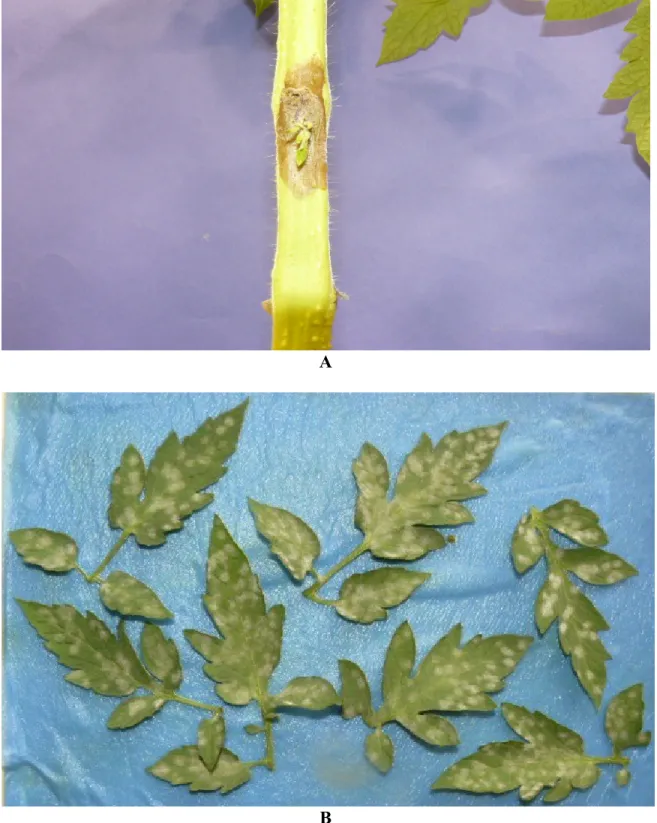
Figure 2. Effect of N nutrition on the susceptibility of tomato to B.cinerea & P.mildew. A: Stem infection of B.cinerea on tomato plants
3.2. Spore suspensions.
Spores were collected in sterile distilled water from the surface of 14-day old cultures. Each suspension was filtered through a 30 µm mesh sterile filter to remove mycelium fragments and adjusted to the desired concentrations with the help of a hemacytometer. Two concentrations were tested 106 and 107 sp/r ml for inoculation of
tomato plants.
3.3. Mycelium.
For tests with lettuce plants, the inoculum consisted of mycelium disks, 5 mm in diameter, which were excised from the growing margin of three day old cultures. One of the highly aggressive strains (strain BC 44) was omitted from the test on lettuce as inoculum was not available at the time of inoculation.
3.4. Sclerotinia sclerotiorum
This fungus was used in tests on lettuce leaves. The inoculum consisted of 5 mm diameter mycelial disks excised from the growing margin of three day old colonies produced on PDA medium in the same growth chamber as for B. cinerea.
3.5. Oidium neolycopersici
As this powdery mildew fungus is an obligate parasite, the isolate used in this work was maintained on tomato plants. For the duration of the work, six potted plants (cultivar Monalbo) were produced every two weeks, and the fungus was periodically transferred to fresh substrate. The inoculum for the trial consisted of spores produced two weeks after inoculation of the young potted plants. Mildewed leaflets were collected and shaken in 500 mL of sterile water. Containing 0.1 % Tween 80. The concentration of the spore suspension was then adjusted to 104sp/ml with the help of a haemocytometer. To
avoid losing spore viability in water, the inoculum was prepared rapidly and used immediately to spray tomato leaves.
3.6. Biocontrol agents
One strain of Trichoderma harzianum (T1) and one strain of Microdochium dimerum (L 13) were used in this study for tests on the effect of nitrogen fertilization on the
A
B
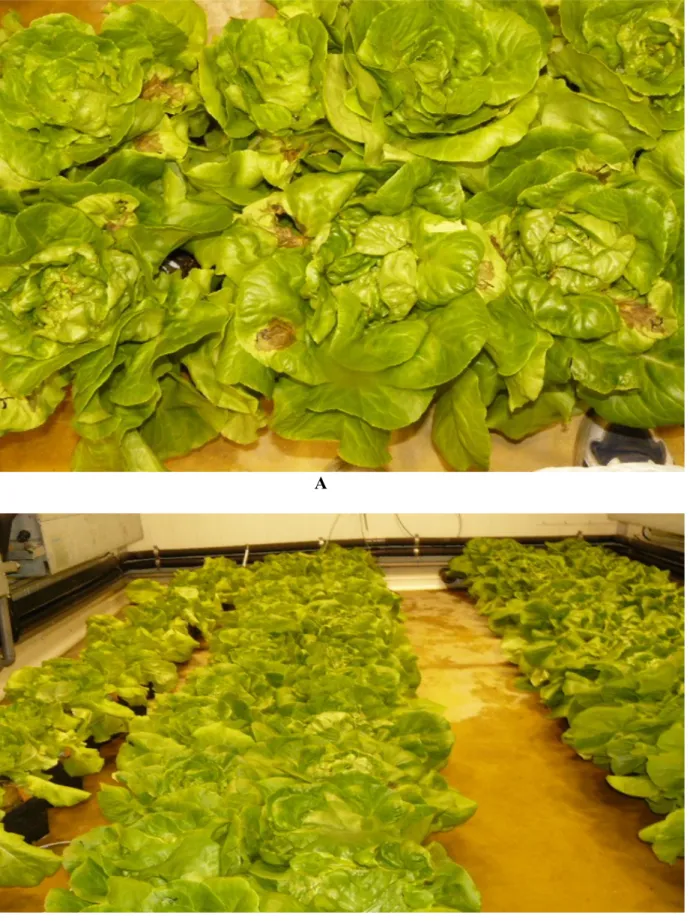
Figure 3. Effect of N nutrition on the susceptibility of Lettuce plants to B.cinerea A: Symptoms of the disease caused by B.cinerea after inoculation
interaction between the host plant (tomato), the parasite (B. cinerea) and the biocontrol agent. They were selected for their known protective effect of leaf pruning wounds on tomatoes against B. cinerea (studied in previous work in the laboratory) and differences in their presumed mode of action (nutrient competition for M. dimerum and antibiosis for
T. harzianum).
The fungi were cultured on potato dextrose agar in the same growth chamber as described above. The spores of T. harzianum were collected in sterile distilled water from the surface of 14 day old cultures. For M. dimerum a one week old culture was used. Each suspension was filtered through a 30 µm mesh sterile filter to remove mycelium fragments and adjusted to the desired concentration (107 spores per ml for both biocontrol
agents) with the help of a hemacytometer.
4. Inoculation
4.1. Tomato
4.1.1. Botrytis cinerea on leaf pruning wounds
In the first experiment (first batch of plant production in May), the objective was to compare the effect of plant nutrition on their susceptibility to six different isolates of B.
cinerea. Six sets of five plants were randomly chosen in the greenhouse for each nitrogen
treatment (150 plants in total) and each set was inoculated with one of the six strains of
B. cinerea. For each plant, the third, fourth, fifth and sixth leaves were cut with pruning
scissors, leaving 5-10 mm petiole stubs on the stem. The four wounds were each inoculated with a 10 µl aliquot of spore suspension. The third and fifth leaves were inoculated with a spore suspension containing 107 sp/ml and the fourth and sixth leaves
with inoculum containing 106 sp/ml.
In the second experiment (second batch of plant production in July), the objective was to compare the effect of plant nutrition on the efficacy of two biocontrol agents against each of two strains of B. cinerea. In this experiment, two sets of 15 plants were randomly chosen in the greenhouse for each nitrogen treatment (150 plants in total) and each set was inoculated with either strain BC 1 or BC 21 of B. cinerea. For each plant, four leaves were excised as described above and the third and fifth leaves were inoculated
A
B
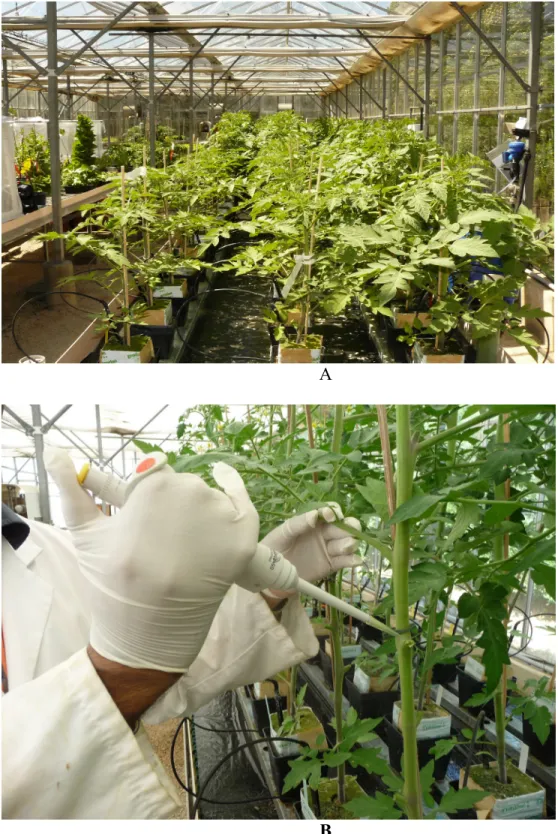
Figure 4. Effect of N fertilization on the susceptibility of tomato plants to B.cinerea A: Tomato Plants showing variation in their height due to different levels of N applied in the fertigated solution in green house
with a spore suspension containing 107 sp/ml while the fourth and sixth leaves were
inoculated with 106 sp/ml. For each set of 15 inoculated plants per fertilization regime,
five plants were used as an inoculated control and 10 plants were further treated with a biocontrol agent.
4.1.2. Biocontrol agents and Botrytis cinerea on leaf pruning wounds
The biocontrol agents were applied five minutes after the inoculation with B. cinerea. On each pruning wound, 10µL of spore suspension (containing 107 sp/mL) of either M. dimerum or T. harzianum were deposited. For each set of 15 Botrytis-inoculated plants
per fertilization regime, five plants were treated with M. dimerum and five plants were treated with T. harzianum.
4.1.3. Oidium neolycopersici on leaves
For each batch of plant production in the greenhouse, one set of five plants per fertilization regime (25 plants per experiment) was used for tests with O. neolycopersici. For these two replicate experiments (one in May and one in July), the inoculum (spore suspension containing 104 sp/mL) was applied with the help of a compressed-air sprayer.
All leaves of each plant were sprayed until run off.
4.2. Lettuce
4.2.1. Botrytis cinerea on leaves
Five sets of five plants were randomly chosen in the greenhouse for each nitrogen treatment (125 plants in total) and each set was inoculated with one of the five strains of
B. cinerea. For each plant, three leaves were selected for inoculation and a mycelial disk
(5 mm diameter) was placed in the centre of each leaf.
4.2.2. Sclerotinia sclerotiorum on leaves
One set of five plants was randomly chosen in the greenhouse for each nitrogen treatment (25 plants in total) and each set was inoculated with S. sclerotiorum. For each plant, three leaves were selected for inoculation and a mycelial disk (5 mm diameter) was placed in the centre of each leaf.
5. Incubation and quantification of disease development
5.1. Incubation of plants after inoculation
Following inoculation, the plants were transferred to a growth chamber in conditions conducive to disease development (21 °C, RH above 85 %) with a 14h photoperiod. During this period, the plants were irrigated manually, using the same fertilization solutions as those used before inoculation.
5.2. Assessment of Botrytis stemlesions on tomato
Each inoculated wound was examined daily, between day 3 and day 7 after inoculation, for infection of the petiole stubs by B. cinerea and consequent development of stem lesions. The incidence of stem lesions and the length of developing lesions (mm) were recorded daily. To summarize the kinetics of stem canker development, the area under the disease progress curve (AUDPC) was calculated with values measured between day 3 and day 7 after inoculation.
5.3. Assessment of powdery mildew symptoms on tomato
Disease symptoms were assessed 14 days after inoculation. On each plant, every leaflet of the 3rd 4th 5th and 6th leaves was examined. On the first repetition of the
experiment (May), the severity of powdery mildew was rated for each leaflet on a scale of 0 to 9, adapted from a method developed by the laboratory for melon (see annex 1). The scores for all leaflets of a leaf were then averaged to provide four replicate disease ratings per plant.
In addition, a photo of each leaf was taken with a digital camera, and the percentage of mildewed leaf area was assessed with the help of image analysis software developed by the American Phytopathological Society for disease quantification (Assess 2, APS Press, St Paul, Minnesota). For the second repetition of the experiment (July), following a comparison of results obtained with both disease assessment methods, only the image analysis method was used.
5.4. Assessment of leaf symptoms on lettuce (Botrytis and Sclerotinia)
Both B. cinerea and S. sclerotiorum induce soft rot lesions on the lettuce leaves. The incidence and severity of disease was assessed on day 4 and day 6 after inoculation for B.
cinerea and on day 6 for S. sclerotiorum.
For each leaf inoculated with B. cinerea, the percentage of diseased leaf area was assessed visually. In addition on day 6 after inoculation, the leaves were detached from the plants and a photo was taken for each leaf with a digital camera. The image analysis software (Assess 2.0) was then used to quantify the total leaf area (in mm²) and the percentage of diseased leaf area.
For plants inoculated with S. clerotiorum, disease assessment was only carried out with the help of photos and image software analysis.
6. Data analysis
ANOVA/MANOVA module of statistica software was used to analyse all the data. For tomato & lettuce the length of lesion, latency period, lesion growth rate, leaf area with necrosis and the Area under the Disease Progress Curve AUDPC (computed between day 3 and 7) on day 7 after inoculation of B. cinerea & for O. neolycopersici disease severity percent was analysed.
RESULTS
1. Effect of N fertilization on the mineral contents in the tissues of
the plants
1.1 Tomato
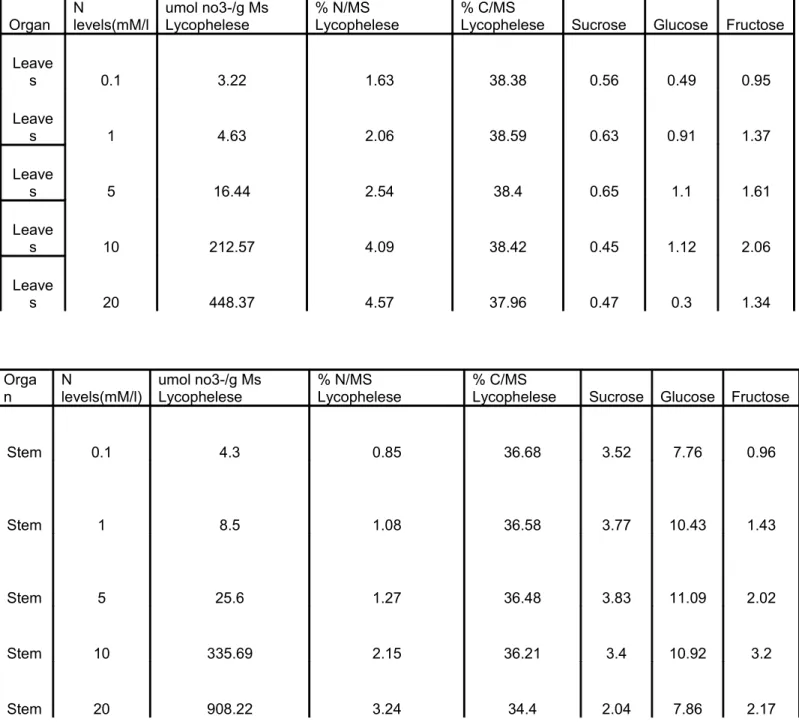
There was a significant effect (p<0.0001) of N nutrition on the composition of soluble sugars in the different organs of tomato plants fertigated with different regimes of N nutrition. There were also great differences in sugars (MS Mycophelleze) and mineral content (Table 1). The soluble sugars (Sucrose, Glucose and Fructose), and N & Ca were higher in the leaves and stems in high N nutrition treatments as compared to low N treatments.
1.2 Lettuce
The effect of N fertilization on the composition of soluble sugars in the whole lettuce plants were also examined, but we did not obtained the results from the lab.
2. Effect of N fertilization on the susceptibility of tomato plants
2.1 Powdery mildew
The effect of N fertilization on the tomato plants susceptibility to Oidium
neolycopersici was tested. There was a significative effect (p<0.0001) of N fertilization
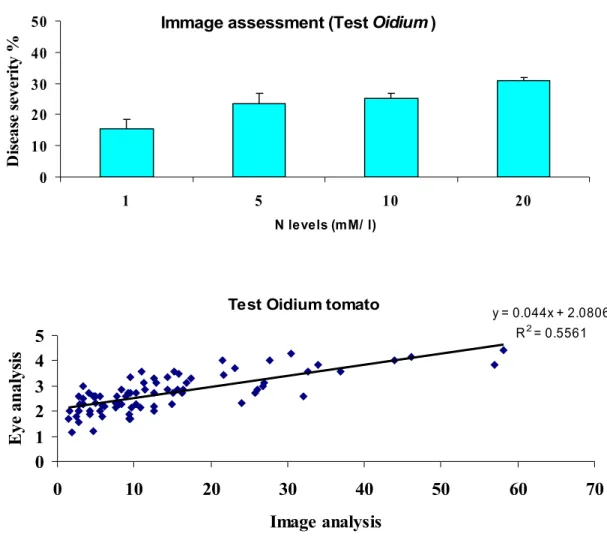
on the severity percentage of O. neolycopersici on tomato. The results indicate that 14 days after inoculation the symptoms were more severe in high N fertilization treated plants as compared to low N fertilization treatments. High N nutrition favours Powdery mildew in tomato plants (Figure 4).
Organ N levels(mM/l umol no3-/g Ms Lycophelese % N/MS Lycophelese % C/MS Lycophelese Sucrose Glucose Fructose Leave s 0.1 3.22 1.63 38.38 0.56 0.49 0.95 Leave s 1 4.63 2.06 38.59 0.63 0.91 1.37 Leave s 5 16.44 2.54 38.4 0.65 1.1 1.61 Leave s 10 212.57 4.09 38.42 0.45 1.12 2.06 Leave s 20 448.37 4.57 37.96 0.47 0.3 1.34 Orga
n N levels(mM/l) umol no3-/g Ms Lycophelese % N/MS Lycophelese % C/MS Lycophelese Sucrose Glucose Fructose
Stem 0.1 4.3 0.85 36.68 3.52 7.76 0.96
Stem 1 8.5 1.08 36.58 3.77 10.43 1.43
Stem 5 25.6 1.27 36.48 3.83 11.09 2.02
Stem 10 335.69 2.15 36.21 3.4 10.92 3.2
Stem 20 908.22 3.24 34.4 2.04 7.86 2.17
Table No 1. Effect of N fertilization on the tenure of soluble sugars g/100 g MS lycophelese in the different organ (leaves & stem) of tomato plants. Values are the average of 25 plants from five N treatments.
2.2 Botrytis cinerea 2.2.1. Latency period (days)
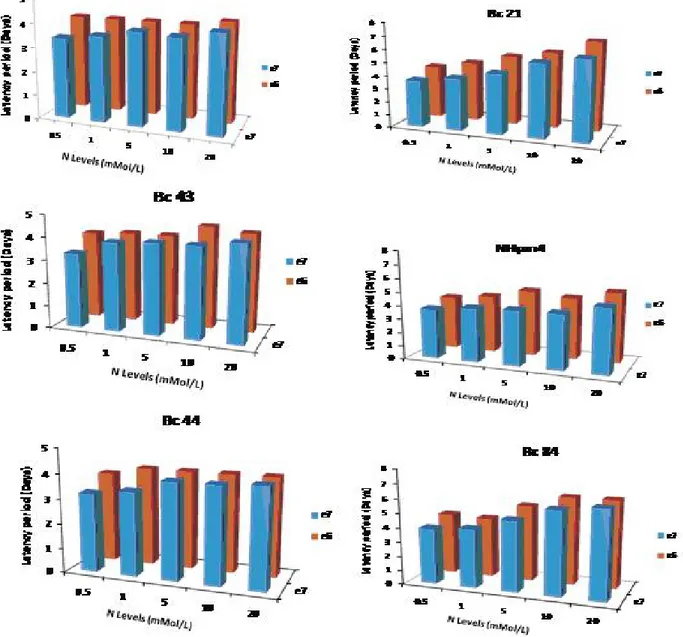
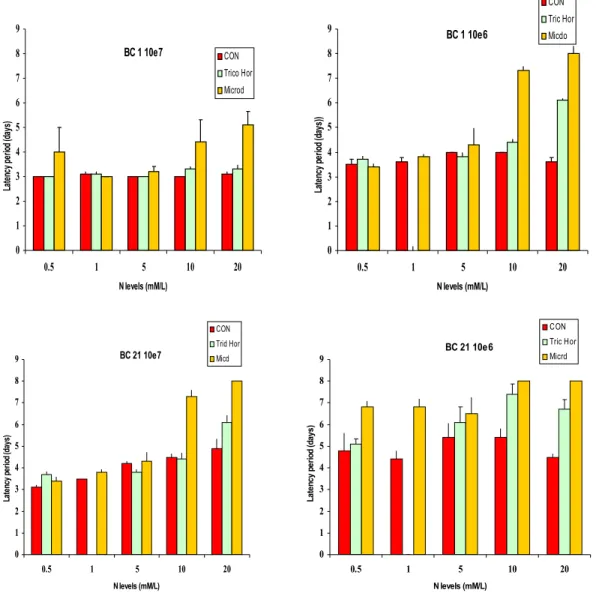
The latency period was measured as the time between inoculation and grey mold symptoms appearance on the stem of tomato. For six strains of B. cinerea tested, there was a significant effect (p<0.0001) of N nutrition on the latency period. For BC 1, BC 44 and BC 43 the latency period was remain same with each N fertilization concentrations tested and for BC 21, BC 84 and NHpm4 the latency period was increased as N concentration increased (Figure 1). The leaves which were inoculated with 107 sp/ ml
showed a shorter latency period than those inoculated with 106 sp/ ml. For BC 21, BC 84
and NHpm4 High N fertilization delayed the symptoms by 1-2 days what ever the inoculum concentration of B. cinerea (Figure 1).
2.2.2. Lesion growth rate (mm/day)
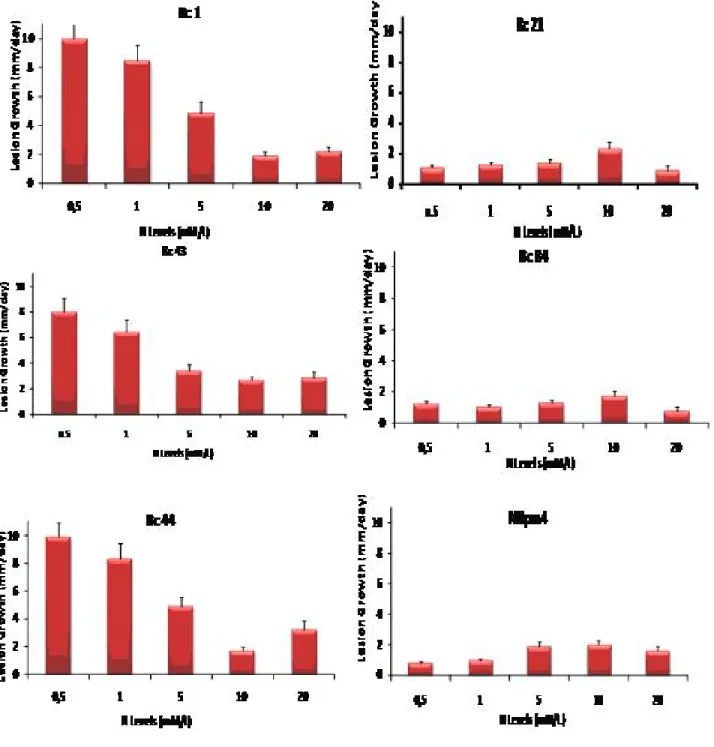
For all six strains of B. cinerea there was a significative effect (p<0.0001) of N fertilization on the lesion growth rate. It was found that lesion growth rate was different for all six strains of B. cinerea tested. For BC1, BC 44, and BC 43 an increasing N concentration in the fertigated solution resulted in a decrease in lesion growth rate (mm) per day (Figure. 2). While for BC 21, BC 84 and NHpm4 the lesion growth rate was similar in each N fertilization tested. The statistical analysis ANOVA test was performed for all data. The pooled data is taken from twenty five randomly selected plants from five levels of N concentrations tested.
2.2.3. Kinetics of disease development
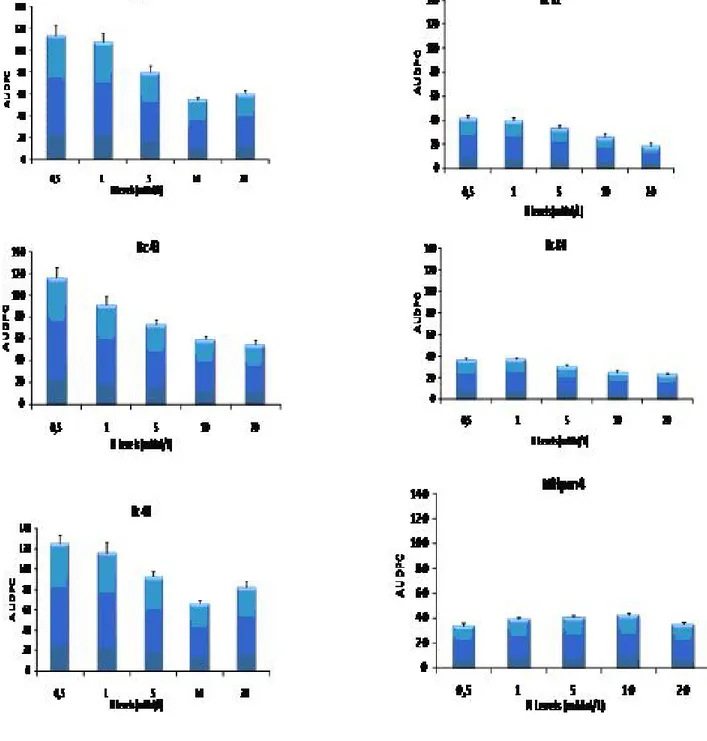
There was a significant effect (p<0.0001) of N fertilization on the kinetics of disease development for each strain of B. cinerea tested between each five nitrogen treatments. Seven days after inoculation AUDPC calculated. For BC1, BC 44, BC 21, BC 84 and BC 43, when N nutrition concentration in fertigated solution was increased the AUDPC was decreased in all N treatments (Figure.3). For NHpm4 the AUDPC was remained almost the same for each N nutrition concentration tested.
5
e7
Bc 1
Latency period (Days)
Figure 1: Latency period (days) between inoculation of six strains of Botrytis cinerea and symptoms appearance on the stem of tomato plants grown at different N nutrition concentrations. All six strains were inoculated at 107spores and 106spores/ml.
3
Effect of N fertilization on the efficacy of biocontrol agents against
B. cinerea.
3.1 Tricoderma harzianum
3.1.1 Latency period (days)
There was a significant effect (p<0.0001) of biocontrol agent Trichoderma
harzianum on the latency period of two strains of B.cinerea. For BC 1 & BC 21 the T. horizonum. delayed the symptoms by 2-3 days especially in high N nutrition treatments
(Figure 5). There was also a significant effect of inoculum concentration of B. cinerea on the latency period.
3.1.1 Lesion expansion rate
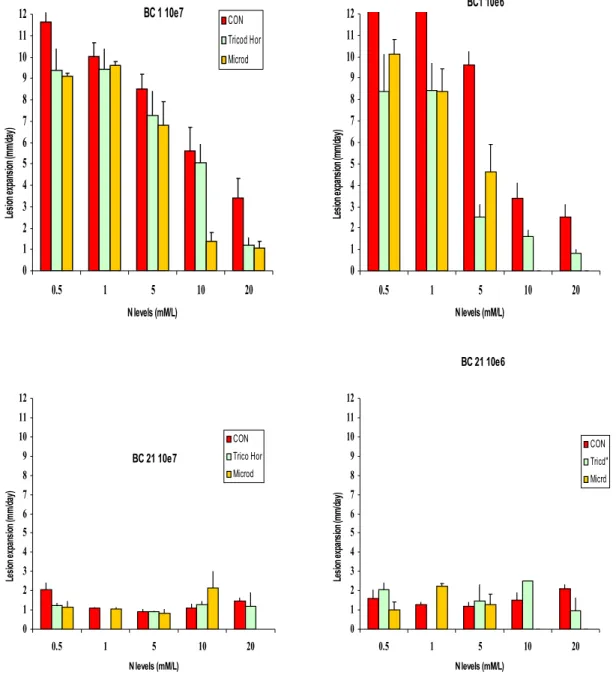
For both strains (BC 1 & BC 21) of B. cinerea there was a significant effect (p<0.0001) of T. harzianum on the lesion expansion rate. The lesion grew slower in the
T. harzianum treated plants as compared to control plants not treated with biocontrol
agent (Figure 6). For the two strains tested the efficacy of T. harzianum was better in high N nutrition and low inoculum concentration treatments as compared to low N nutrition and high inoculum concentrations of B. cinerea
.
3.1.2 AUDPC
There was a significative effect (p<0.0001) of T. harzianum on the AUDPC of the six strains of B. cinerea tested. In high fertilization treatments AUDPC decreased in presence of antagonist as compared to control. For two strains tested T. harzianum was more effective against BC 21 as compared to BC 1 in high N fertilization treated plants (Figure 7).
3.2 Microdochium dimerium (strain L 13)
3.2.1 Latency period
There was a significant effect (p<0.0001) of M. dimerum (L13) on the latency period of two strains of B.cinerea tested. The biocontrol agent delayed the symptoms of
.
Figure 2: Lesion growth rate (mm/day) seven days after inoculation of six strains of Botrytis cinerea on stems of tomato plants grown at different N fertilization concentrations. Each value is the mean of 25 replicates (pooled data for the two inoculum and four inoculation concentrations). Bars represent the standard error of the mean
the disease by 4-5 days in high N fertilization treatments (Figure 5). For BC 21 the latency period was more than 5 days in high N fertilization & at low inoculum concentration and for BC 1 the effect was only in very high N fertilization treatments as compared to low N fertilization & control plants not treated with L 13.
3.2.2 Lesion expansion rate
There was a significant effect (p<0.0001) of biocontrol agent M. dimerum (L 13) on the lesion expansion rate of two strains of B. cinerea tested. The L 13 was highly effective especially in high N fertilization treatments (Figure 6) For BC 1 & BC 21 the lesions expansion rate was 0 in high N fertilization and low concentration treatments as compared to untreated control plants.
3.2.3 AUDPC
The results showed that antagonist M. dimerum was very effective against the two strains of B. cinerea especially in high fertilization treatments as compared to low N fertilization and control plants. In high fertilization plants AUDPC decreased due to effectiveness of antagonist (Figure 7).
4
Effect of N fertilization on the susceptibility of Lettuce to B.
cinerea.
4.1 Leaf area necrosis percent
For each of the five strains (BC1, BC 43, BC 21, BC 84 and NHpm4) of B. cinerea there was a significant effect (p<0.0001) of N fertilization on the leaf area
percent with necrosis. The high N fertilization reduced the percent of the leaf necrosis. The strains BC1, and BC 43 were more aggressive in low N treatments on lettuce as compared to BC 21, BC 84 and NHPm4 (Figure 8). In high N fertilization treatments the symptoms were less severe for all five strains of B. cinerea.
4.2 Lesion expansion rate (mm2)
For each of the five strains of B. cinerea tested there was a significant effect of different levels of N fertilization (p<0.0001) on the lesion expansion rate. For BC 1, BC
Figure 3: Effect of different levels of N fertilization on the susceptibility of tomato plants to six strains of Botrytis cinerea. The data represent the curve on the progress of the length of lesions on the stem (AUDPC) measured seven days after inoculation. Each value is the mean of 25 replicates (pooled data for the two inoculum and four inoculation concentrations). Bars represent the standard error of the mean.
21, BC 84 and NHpm4 the lesion expansion rate was increased as N nutrition
concentration in the fertigated solution increased and for BC 43 the lesion expansion rate was remained same in all low N nutrition concentrations and increased at high N nutrition treatments (Fifure 9).
Immage assessment (Test Oidium ) 0 10 20 30 40 50 1 5 10 20 N levels (mM/ l) D is ea se s ev er it y %
Test Oidium tomato y = 0.044x + 2.0806
R2 = 0.5561 0 1 2 3 4 5 0 10 20 30 40 50 60 70 Image analysis E ye a n al ys is
Figure 4. Effect of N fertilization on the susceptibility of tomato plants to Oidium
neolycopersici. The data represent the disease severity percentage 14 days after
inoculation.calculated with eye analysis and image analysis software Assess 2.0 adopted by APS press Minnesota .
DISCUSSION
Our results indicate that the high N fertilization reduced the severity of the disease seven days after inoculation of six strains of B. cinerea. We thus confirm earlier results on tomato, showing that a high N fertilization lowers the plant’s susceptibility to B.
cinerea (Hoffland et al., 1999, Antoine, 2008). This was observed for three highly
aggressive and three less aggressive strains of B. cinerea on tomato. Moreover we observed that in six strains of B. cinerea tested BC 1, BC 43 and BC 44 were highly aggressive in less N fertilization treatments as compared to BC 21, BC 84 and NHpm4 respectively.
The latency period before symptoms appearance was different for all strains of B. cinerea tested. There was a significative effect of N fertilization on the latency period of six strains of B. cinerea. In high N fertilization treatments the latency period was increased as compared to low N fertilization treatments. we found contrasted results between all six strains of B. cinerea tested, as BC 1, BC 44 and BC 43 and BC 21 lesions grew more slower in high N fertilization treatments, while for BC 84 and NHpm4 lesions grew more faster in high N fertilization treatments. Antoine (2008) also worked on effect of different levels of N fertilization on the susceptibility of tomato to B. cinerea and reported similar results. Hoffland et al., 1999 investigated the effect of nitrogen availability on susceptibility of tomato leaves to the fungal pathogen B. cinerea and reported that leaves of plants grown at low nitrogen availability had a high leaf C/N ratio and were about 2.5 times more susceptible to primary lesion formation by B. cinerea compared to plant grown at high nitrogen availability, which had a low leaf C/N ratio. Antoine (2008) observed that in case of susceptibility of tomato plants to grey mold more the nitrogen in the fertigated solution more the plants were resistant against grey mold. Excessive levels of nitrogen in the form of Ca (no3)2 were also observed to significantly depress bacterial
wilt of tomato incited by Pseudomonas solanacearum (Kelman, A. 1950). This finding is inconsistent with current hypothesis on the effect of nutrient availability on plants strategies, which are generally based on the supposition that plant grown under conditions of lower nutrition availability are better defended ( Bryant et al.,1983 Herms & Mattson., 1992).
It is also inconsistent with the findings that a decreased N availability to tomato leads to an increase in synthesis of defense-related compounds (Hoffland et al., 1999b; Wilken et
BC 1 10e7 0 1 2 3 4 5 6 7 8 9 0.5 1 5 10 20 N levels (mM/L) La te nc y p er iod (d ay s) CON Trico Hor Microd BC 1 10e6 0 1 2 3 4 5 6 7 8 9 0.5 1 5 10 20 N levels (mM/L) La te nc y pe rio d (d ay s) ) CON Tric Hor Micdo BC 21 10e7 0 1 2 3 4 5 6 7 8 9 0.5 1 5 10 20 N levels (mM/L) La te nc y pe rio d (d ay s) CON Trid Hor Micd BC 21 10e6 0 1 2 3 4 5 6 7 8 9 0.5 1 5 10 20 N levels (mM/L) La te nc y pe ri od (d ay s) CON Tric Hor Micrd
Figure 5. Effect of N fertilization on the efficacy of two biocontrol agents T. harzianum & M. dimerum on the latency period (days) of two strains (BC1 & BC 21) 0f B. cinerea. The data represents the mean latency period (days) of two strains of B. cinerea with two biocontrol agents and with two inoculum concentrations 107 & 106 sp/ml of B. cinerea
al., 1996). Possibly the effect of N availability on resistance to B. cinerea in tomato is
pathogen specific. High N nutrition influence the susceptibility of plants to B. cinerea because of many reasons such as nitrogen influences plant resistance by reducing the frequency of successful penetration by pathogens or by slowing pathogenesis after penetration. In their study of the effects of N on resistance of the three pathogens on tomato, it appeared that the outcome of the balance between the nutrition and resistance-related factors varied depending on the pathogen. This could be the result of different requirements for pathogen growth, or differences in pathogen sensitivity to resistance-related compounds (Hoffland et al., 2000).
Results show that the susceptibility was maximal at low levels of N fertilization treatments and decreased sharply when nitrogen was increased in the fertigated solution but with very high levels of N fertilization the susceptibility of lettuce plants was also increased. The % of the leaf area with disease necrosis was high in low N fertilization treatments as compared to high N nutrition treatments. Surprisingly for five strains of B.
cinerea the lesion expansion rate was increased as the N fertilization n in the fertigated
solution was increased. We also found the difference between the strains of B. cinerea in the lesion expansion rate. For BC 1, BC 21, BC 84 and NHpm4 the lesions grew faster in
high N fertilization treatments as compared to BC 43 which remains stabilize in low N nutrition treatments. So in our results we not found any different effect of N fertilization on the aggressivety of B. cinerea between two crops tomato and lettuce except that lesion expansion rate was more in high N fertilization in lettuce than in tomato.
Our results show that high N nutrition enhances the efficacy of biocontrol agents against two strains of B.cinerea. In high N fertilization treatments the two biocontrol agents tested (Microdochium strain L 13 & Trichoderma sp. Strain T1) provided high level of protection of pruning wounds against B. cinerea on tomatoes. For two biocontrol agents tested Microdochium L 13 provided high level of protection followed by Trichoderma sp. against two strains (BC1 & BC 21) of B. cinerea in high N fertilization treatments as compared to low N fertilization treatments. This may be due to the fact that high N nutrition enhances the resistance in tomato plants against B. cinerea and also may be high N fertilization increase the capacity of antogonistis for taking more nutritions, space and activity of enzymes which restrict the growth & development of B. cinerea. Elad et al., 1998 demonstrated that the exact mechanism by which T. harzianum T39 controls the various pathogens was that T. harzianum T39 hinders the conidial germination and germ tube elongation of B. cinerea.
BC 1 10e7 0 1 2 3 4 5 6 7 8 9 10 11 12 0.5 1 5 10 20 N levels (mM/L) Le sio n e xp an sio n ( mm /da y) CON Tricod Hor Microd BC1 10e6 0 1 2 3 4 5 6 7 8 9 10 11 12 0.5 1 5 10 20 N levels (mM/L) Le sio n e xp an sio n ( mm /da y) BC 21 10e7 0 1 2 3 4 5 6 7 8 9 10 11 12 0.5 1 5 10 20 N levels (mM/L) Le sio n e xp an sio n ( m m /da y) CON Trico Hor Microd BC 21 10e6 0 1 2 3 4 5 6 7 8 9 10 11 12 0.5 1 5 10 20 N levels (mM/L) Le sio n e xp an sio n ( m m /da y) CON Tricd" Micrd
Figure 6. Effect of N fertilization on the efficacy of two biocontrol agents T. harzianum & M. dimerum on the lesion expansion of two strains (BC1 & BC 21) 0f B. cinerea. The data represents the mean lesion expansion (mm/day) of two strains of B. cinerea with two biocontrol agents and with two inoculum concentrations 107 & 106 sp/ml of B .cinerea
The level of protection of pruning wounds was relatively high by the two antagonists when B. cinerea was applied at 106sp/ml, but when inoculum concentration was applied
107sp/ml the protection of pruning wounds was little bit low. The similar results were
reported by Antoine (2008). Nicot et al., (2003) reported that Strain L13 of
Microdochium dimerum was shown in earlier work to be efficient as a protectant of
tomato pruning wounds against B. cinerea at crop level in a wide range of environmental conditions, the biocontrol agent provided efficient protection of foliage against B.
cinerea.
BC 1 10e7 0 20 40 60 80 100 120 140 160 0.5 1 5 10 20 N levels (mM/L) AU DP C (m m ) CON Tr Hor Micd BC 1 10e6 0 20 40 60 80 100 120 140 160 0.5 1 5 10 20 N levels (mM/L) AU DP C (m m ) CON Tr Hor Micd BC 21 10e7 0 20 40 60 80 100 120 140 160 0.5 1 5 10 20 N levels (mM/L) AU DP C (m m ) CON Tr Hor Midcm BC 21 10e6 0 20 40 60 80 100 120 140 160 0.5 1 5 10 20 N levels (mM/L) AU DP C (m m ) CON Tri Hor Micdo
Figure 7. Effect of N fertilization on the efficacy of two biocontrol agents T. harzianum & M. dimerum on the AUDPC of two strains (Bc1 & Bc 21) 0f B. cinerea. The data represents the mean AUDPC 7 days after inoculation of two strains of B.cinerea with two biocontrol agents and with two inoculum concentrations 107 & 106 sp/ml of B. cindered.
BC1 0 10 20 30 40 50 60 0.5 1 5 10 20 N levels (mM/ l) Le af ne cr oti c a re aa re a % BC 21 0 10 20 30 40 50 60 0.5 1 5 10 20 N levels (mM/ l) Le af ne cro tic ar ea % BC 43 0 10 20 30 40 50 60 0.5 1 5 10 20 N levels (mM/ l) Le af ne cr ot ic ar ea % BC 84 0 10 20 30 40 50 60 0.5 1 5 10 20 N levels (mM/ l) Le af n ec ro tic ar ea % NHpm4 0 10 20 30 40 50 60 0.5 1 5 10 20 N levels (mM/l) Le af n ec ro tic ar ea %
Figure 8: Effect of different levels of N fertilization on the susceptibility of Lettuce plants to five strains of Botrytis cinerea. The data represents the leaf area % with necrosis six days after inoculation. Each value is the mean of 25 replicates. Bars represent the standard error of the mean.
BC 1 0 200 400 600 800 1000 1200 1400 1600 0.5 1 5 10 20 N levels (mM/ L) L es io n ex pa ns io n (m m 2) Bc 21 0 200 400 600 800 1000 1200 1400 1600 0.5 1 5 10 20 N levels (mM/L) Le sio n ex pa ns io n (m m 2) BC 43 0 200 400 600 800 1000 1200 1400 1600 0.5 1 5 10 20 N levels (mM/L) L es io n ex pa ns io n( m m 2 ) Bc 84 0 200 400 600 800 1000 1200 1400 1600 0.5 1 5 10 20 N levels (mM/L) Le sio n e xp an sio n( m m 2) NHpm4 0 200 400 600 800 1000 1200 1400 1600 0.5 1 5 10 20 N levels (mM/L) L es io n ex pa ns io n( m m 2)
Figure 9: Effect of different levels of N fertilization on the lesion expansion (mm2)
caused by five strains of Botrytis cinerea on lettuce six days after inoculation. Each value is the mean of 25 replicates .Bars represent the standard error of the mean.
CONCLUSION AND PERSPECTIVES
In sustainable agriculture balanced nutrition is an essential component of any integrative crop protection program because in most cases it is more cost-effective and also environmentally friendly to control plant disease with the adequate amount of nutrients and with no pesticides. Nutrients can reduce disease to an acceptable level, or at least to a level at which further control by other cultural practices or conventional organic biocides are more successful and less expensive. We have shown here that the high nitrogen fertilization reduces the B. cinerea in tomoto and lettuce. Also high N fertilization enhances the efficacy of biocontrol agents against B. cinerea in tomato. Our results suggest that N-limited plants were more susceptible to infection of B. cinerea. But in case of O. neolycopersici the high N fertilization increases the severity of the disease. More over our results also show that high N fertilization increases the susceptibility of lettuce to S. sclerotium. Although from the above discussion, this clearly depends on the particular host–pathogen interaction .It is unwise, therefore, to generalise about the effects of N on plant disease without more information about the relative effects of N supply on host defence and the availability of substrate for pathogen growth in a wider range of pathosystems and crop environments. From a practical perspective, this means that although manipulation or assessment of crop N status might be used as part of disease control strategies, how that is achieved will depend on the crop and the pathogens from which it is most at risk. More research is needed in order to find the nutrients or nutrient combinations which can help to reduce disease severity. In addition, more research is required to find how the nutrients increase or decrease disease tolerance or resistance, what the changes are in plant metabolism and how this can be used to control plant disease? More over farmers are advised to use recommended doses of nitrogen and other fertilizers for over come the disease problem.
REFERENCES
Altunlu, H., Gul, A., Tunc, A, 1999. Effects of nitrogen and potassium nutrition on plant growth, yield and fruit quality of cucumbers grown in perlite. Proceedings of the international symposium on greenhouse management for better yield and quality in mild winter climates, Antalya, Turkey, 3-5 November, 1997. pp. 377-382. Antoine, W., 2008. Facteurs d,eficacite de la protection contre Botrytis cinerea a l,aide du
champignon Microdochium dimerium L13 en culture de tomate sous abris. Master 2 report du stage, Institute national d'horticulture.
Barakat, R. M., Al-Masri, M. I., 2005. Biological control of gray mold disease (Botrytis
cinerea) on tomato and bean plants by using local isolates of Trichoderma harzianum. Dirasat. Agricultural Sciences. 32, 145-156.
Bedlan, G., 1997. Biological control of vegetable diseases by Trichoderma harzianum. Gesunde Pflanzen. 49, 89-94.
Williamson, B., 2007. Botrytis cinerea: the cause of grey mould disease. Molecular Plant Pathology. 8, 561-580.
Card, S., Jaspers, M. V., Walter, M., Stewart, A., 2002. Evaluation of micro-organisms for biocontrol of grey mould on lettuce. New Zealand Plant Protection Volume 55, 2002. Proceedings of a conference, Centra Hotel, Rotorua, New Zealand, 13-15 August 2002. pp. 197-201.
Chambers, K. R., Merwe, G. G. vander., Fourie, J. F., Ferrandi, C., 1993. Botrytis rot of table grapes as influenced by different levels of nitrogen applied to the soil. Deciduous Fruit Grower. 43, 64-67.
Chambers, K. R., Merwe, G. G. vander., Fourie, J. F., Ferrandi, C., 1995. Nitrogen nutrition and post-harvest susceptibility to Botrytis in table grapes. Rivista di Frutticoltura di Ortofloricoltura. 57, 47-50.
Chitrampalam, P., Figuili, P. J., Matheron, M. E., Subbarao, K. V., Pryor, B. M., 2008. Biocontrol of Lettuce Drop Caused by Sclerotinia sclerotiorum and S. minor in Desert Agroecosystems. Plant Disease. 92, 1625-1634.
Cruz A, M., 1993. Effect of nitrogen, fungicide and pruning on Botrytis cinerea in raspberry. Agricultura Tecnica (Santiago). 53, 258-263.