HAL Id: hal-02520861
https://hal.archives-ouvertes.fr/hal-02520861v2
Submitted on 15 Dec 2020HAL is a multi-disciplinary open access archive for the deposit and dissemination of sci-entific research documents, whether they are pub-lished or not. The documents may come from teaching and research institutions in France or abroad, or from public or private research centers.
L’archive ouverte pluridisciplinaire HAL, est destinée au dépôt et à la diffusion de documents scientifiques de niveau recherche, publiés ou non, émanant des établissements d’enseignement et de recherche français ou étrangers, des laboratoires publics ou privés.
Corrado Mascia, Pierfrancesco Moschetta, Chiara Simeoni
To cite this version:
Corrado Mascia, Pierfrancesco Moschetta, Chiara Simeoni. Mathematical Modelling and Simulation of EMT/MET Biological Transitions. Organisms. Journal of Biological Sciences, Sapienza University of Rome, 2019, 3 (2), pp.65-74. �10.13133/2532-5876/16448�. �hal-02520861v2�
Mathematical Modelling and Simulation
of EMT/MET Biological Transitions
Corrado Mascia, a Pierfrancesco Moschetta, a and Chiara Simeoni ba Dipartimento di Matematica "Guido Castelnuovo", Sapienza University of Rome, Italy b Laboratoire J.A. Dieudonné, Unicersity of Nice-Sophia Antopolis, France
Corresponding author: Corrado Mascia, [email protected]
Abstract
The capability of cells to alter their phenotype in response to signals is crucial to the understanding of different morphogenetic pathways. We focus presently on the case of Epithelial-to-Mesenchynaml Transition (EMT) and its reverse Mesenchymal-to-Epithelial Transition (MET), which are considered as a plausible mechanism at the base of tumours onset and spread. We propose a simplified mathematical model, consisting of two coupled differential equations, aiming to describe the minimal dynamics of Epithelial and Mesenchymal cells. Differently from many previous models arising in various contexts, the basic assumption is the presence of a cooperative-like structure between the two families determined by the presence of a source term (possibly nonlinear) involving cells of the opposite compartment, in addition to an inherent apoptosis term. Finally, being the Mesenchymal phenot-ype characterised by high-level motility, the presence of motion is included into its dynamics by means of a diffusive-like term. In case the source term is truly nonlinear and, as a consequence, multiple equilibria may coexist, propagating fronts connecting such different states can be numerically observed. For different values of the parameters, specifically the relaxation times σ and τ, the measure of invasiveness λ and μ, together with functions f and g, the model is capable to describe various directions of propaga-tion, also suggesting a possible simple mechanism responsible for tumour reversion.
Keywords: phase transitions, reaction-diffusion systems, propagating fronts, finite difference schemes, wave speed
approxima-tion
Citation: Mascia, C, Moschetta, P, Simeoni, C, 2019, “Mathematical Modelling and Simulations of EMT/MET biological
transitions”, Organisms: Journal of Biological Sciences, vol. 3, no. 2, pp. 65-74. DOI: 10.13133/2532-5876/16448
Original Articles
Vol. 3 No. 2 (December 2019) ISSN: 2532-5876
Open access journal licensed under CC-BY DOI: 10.13133/2532-5876/16448
Introduction
In order to pursue investigation concerning cancer occurrence and development, mathematical modelling turns out to be a powerful tool of analysis experimental studies might rely on. Nowadays, indeed, trials in can-cer research are one of the most challenging and interdi-sciplinary contexts, so that the possibility of improving strategies for approaching the subject to deliver better and faster results is imperative. A lot of effort is particu-larly made with the aim of developing suitable models that could account for the processes leading to tumour
cells production and spreading. Although such techni-ques are typically bounded by limitations mathematical abstraction inevitably brings with it, the recognition of their relevance is increasingly perceptible inside scien-tific groups: the contribution in terms of predicting cells evolution, and potentially forecasting treatments, is re-markable, thus constituting an effective research path worth being deeply investigated.
Presently, we focus on the application to Epithelial-to-Mesenchymal Transition (EMT) and its reversal me-chanism Mesenchymal-to-Epithelial Transition (MET). These are comprised among the experimental
hallmar-ks of cancer, as responsible also for the activation of in-vasion and metastasis (Hanahan and Weinberg, 2020, 2011; Magi et al., 2017; Thiery, 2006; Thiery and Sle-eman, 2006; Thompson and Newgreen, 2005). Alto-gether, EMT and MET display dynamical behaviours which resemble those observed in physical systems du-ring abrupt macroscopic changes between qualitatively separated stable states, also known as phase transitions (Davies et al., 2011). Also, such transitions are active in other important morphogenetic processes, such as early embryogenesis, tissue generation and wound healing (Kalluri and Weinberg, 2009).
More precisely, EMT is the process which allows a polarised epithelial cell, interacting with the basement membrane via its basal surface, to experience a phenot-ypical switch that permits it to acquire a mesenchymal phenotype. Such new epiphany is characterised by the loss of connectivity (usually as a consequence of down regulation of internal E-cadherin), improved migratory skills, enhanced invasiveness and elevated resistance to apoptosis. From a biomedical point of view, cells phe-notypic differentiation turns out to be a crucial step for determining cancer onset and evolution. A characteris-tic element to be taken into consideration is that even gradual variation in a few control parameters and/or unknown densities can switch cells into distinct and specific phenotypes. The possibility of inducing MET, namely the reverse process of EMT, by means of some external stimuli, is giving rise to perform promising stu-dies at the base of which lies the ultimate ambition to revert an apparently already sealed fate for cells having acquired malignant features.
Apparently, after some previous pioneering work, the first experimental studies showing the presence of a phenotypic transition have been published during the '80s (Greenburg and Hay, 1982). Nevertheless, the attention to this phenomenon has been limited until 2000, when the number of publications on these topics has drastically increased (Nieto, 2011). Since then, the exploration of the subject is considered as an emerging research front.
The most traditional approach is based on a bottom-up procedure, sbottom-upposed to be predominant for descri-bing how global structures are the result of underlying microscopic counterparts. Indeed, a large part of the li-terature is devoted to a detailed description of activators and inhibitors of the transitions as determined at mole-cular level, sometimes comparing an appropriately
pro-posed mathematical model with experimental results. As an example, it is a well-known fact that transforming growth factor β (TGF-β) plays a pivotal role in EMT (Xu et al., 2009) and, thus, finding which elements could enhance its presence has been an issue in the last years (Snail, ZEB, Slug, Twist, …). Correspondingly, up regu-lation of E-cadherin promotes the epithelial phenotype; thus, a big effort has been devoted to understand which are the specific ingredients (at the molecular scale) ma-king its level growing (e.g. myo-inositol). In addition, the eventual appearance of an intermediate cells phe-notype between the epithelial and mesenchymal ones has also been considered (Jolly et al., 2014).
However, more recently, such point of view has been widely disputed, leaving the space to different approa-ches based on special types of modelling programmes (Bertolaso, 2016). Actually, it has been proposed that critical events are the result of emerging properties at a scale that is larger than the microscopic ones, accor-ding to the influence of external constraints. Therefore, a novel strategy should be applied, grounded on what it is nowadays a well-established discipline, the so-called
Systems Biology approach (Bizzarri et al., 2008;
Biz-zarri et al., 2013; Hornberg et al., 2006). More specifi-cally, instead of focusing on the role of individual genes, proteins or other local pathways in biological phenome-na, a pertinent alternative is to characterise the ways molecular parts adopt for interacting with each other to determine the collective dynamics of the system as a whole.
Therefore, following the same philosophy, we con-centrate on the mechanisms emerging from a cumula-tive account of the different elements contributing to EMT and MET. Indeed, the main idea underlying the Systems Biology approach is to replace the reductionist paradigm by describing biological systems as a whole, through an holistic view by virtue of which the biome-dical processes cannot be exhausted considering the sy-stem as the mere sum of its components; that is why, instead of focusing on the role of individual agents, the purpose is to define how essential components interact to characterise the collective dynamics.
In this direction, we propose a simplified math-ematical model, which does not pretend to provide any quantitative description of the phenomenon under scrutiny, but only to attempt a qualitative analysis. Such a model considers a very limited number of unknowns —one for the epithelial and one for the mesenchymal
Mathematical Modelling and Simulation of EMT/MET Biological Transitions
phenotype— and also a minimal set of parameters, then concentrating on the presence of propagating fronts which typically correspond to the invasion of one state into the other. We stress that the inclusion of a nonline-ar term is crucial for the dynamics, since it gunonline-arantees the existence of fronts through the emergence of several discrete stationary states (we shall introduce the defini-tion of these mathematical objects later on).
The majority of mathematical models relevant to the description of EMT/MET is based on ordinary
diffe-rential equations, i.e. systems where the unknowns are
considered as functions solely of the time variable. The resulting models are usually rather entangled, often consisting of very large systems, with each unknown variable possessing a stringent biological meaning (Bocci et al., 2018; Gasior et al., 2017; Guerra et al., 2018; Laise et al., 2012; MacLean et al., 2014; Turner and Kohandel, 2010).
Regrettably, the absence of physical space depen-dency limits dramatically their range of application, together with the capability of catching the correct and complete biological behaviour. As a matter of fact, cells migration requires some (spatial) destination. Thus, more recently, attention has been paid to a different type of modelling based on partial differential
equa-tions (Hellmann et al., 2016; Sfakianakis et al., 2018).
In such an extended framework, as a consequence of the presence of a single (and simple) term accounting for the motility of cells with mesenchymal phenotype, propagation fronts take place and such appearance par-ticipate to the investigation in a crucial way.
In this article, EMT/MET analysis is carried out by exploiting a simplified one-dimensional hyperbolic-parabolic partial differential system. Specifically, the densities of epithelial and mesenchymal phenotypes are the unknown variables, and the main purpose con-sists in establishing the existence of traveling waves by means of numerical simulations. A reliable appro-ximation of the propagating fronts speed is provided by the so-called LeVeque-Yee formula (LeVeque and Yee, 1990). One of the most interesting results arising from the model currently under investigation lies in the possibility of reproducing the property of being/ not being invasive, according to the dependence on a reduced number of control parameters. Numerical si-mulations are based on finite difference schemes and carried out by employing an Implicit-Explicit strategy (Quarteroni, 2017).
1. A simple mathematical model
Following Simeoni et al., 2018, we propose a pro-totypical model which consists of two coupled diffe-rential equations aiming to reproduce the EMT/MET dynamics. The first is an ordinary differential equation for the nonnegative density u = u(t,x) and it illustrates
the time variation of the amount of cells displaying
the epithelial phenotype. The second is a partial diffe-rential equation of reaction-diffusion type for the time
variation of mesenchymal cells, with density
deno-ted by v = v(t,x). After rescaling the variables, the system
reads as
(1)
for some given positive parameters σ, τ, λ, μ and
fun-ctions f and g.
The two equations of system (1) have a strong simila-rity in their structure, guaranteeing a sort of symmetry of the underlying physical mechanisms. However, there are two crucial differences. Firstly, the presence of the
parameters σ and τ is needed to incorporate different
time-scales in the phenomena, often required when de-aling with non-equilibrium thermodynamics. We focus
mostly on the choice of values σ = τ = 1, corresponding
to the case of same time-scale for both the unknowns, although individual choices could be more appropria-te, depending on the context. Secondly, the last term in
the equation for v, which represents a motility given by
the second order space derivative of the unknown,
is expressed as a diffusive term, which, on its turn, is the macroscopic appearance of an underlying brownian
random walk (Taylor, 1920). Such term is mandatory,
since one hallmark of the mesenchymal phenotype is its high degree of motility. Possible alternatives of model-ling could also be considered, essentially corresponding to different types of random walk, such as the
correla-ted random walk (Zauderer, 1983). Let us stress that
modelling motility terms is one of the major issues in order to obtain a reliable model, but we made the choice of the above form to keep the presentation as simple as possible.
The unknowns u and v are interpreted as the amount
of cells having epithelial and mesenchymal phenotype, respectively, inside some tissue under observation. The
con-stitutes one of the points where the interaction between applied mathematicians and theoretical biologists is pi-votal, as mentioned in the introduction. We assume that
both functions f and g are nonnegative and monotone
increasing, according to the modelling assumption that the system (1) is cooperative, i.e. a higher presence of epithelial phenotype determines a higher production of mesenchymal phenotype and viceversa.
Disregarding the coupling term f, the density u of the
epithelial phenotype is destined, asymptotically in time,
to the extinction (due to the apoptosis-like term −u in
the first equation), that suggests a stabilisation towards the equilibrium point with an exponential decay rate (as characteristic for solutions to linear equations). A
similar fate is expected for the other unknown v when
neglecting the coupling term g, thus providing
conver-gence —again, with an exponential decay rate— to its asymptotic equilibrium.
Examples for f and g, being considered in the
forthco-ming discussion, are (2)
for some p > 1. The former is a standard linear function, while the latter is an S-shaped function, as for the clas-sical saturating Hill form (Gesztelyi et al., 2012; Weiss, 1997). Such choice is motivated by the assumption that the default state of mesenchymal cells is prone to be-come motile without any limitation. On the contrary, epithelial cells have an inherent tendency to generate mesenchymal cells with an asymptotic bounded range of availability. Different choices can be easily imple-mented without specific and/or additional difficulty.
The presence of the coupling terms f and g
determi-nes the possible existence of a second stable equilibrium
point with larger coordinates (u,v). The parameters λ
and μ are interpreted, respectively, as a factor
enhan-cing cell-cell adhesion (hence, structural stability typi-cal of epithelial phenotype) and an inflammatory factor, inducing the transition towards a motile mesenchymal phenotype.
A reaction-diffusion system similar to (1) has alrea-dy been discussed in Capasso and Maddalena, 1981. In that (epidemiological) context, the meaning of the
va-riables u and v is different: the unknown u represents
the average concentration of bacteria and v the infective
human population inside an urban community; moreo-ver, attention is drawn to convergence towards constant
equilibrium states. Presently, we concentrate on the existence of propagating fronts, which are interpreted as epiphanies of EMT and/or MET, depending on the sign of the propagation speed.
In Section 1.1, we preliminarily consider basic pro-perties of the ordinary differential equations obtained by disregarding the second order spatial derivatives. Then, we move to the case where space dependency is taken into account, hence leading, in particular, to the emergence of propagating fronts for describing inva-sion of one-state into another. Depending on the values
λ and μ, invasion can be modulated and also reverted,
thus corresponding to a possible tumour reversion sce-nario. Of course, the present model is too simple to be capable of providing quantitative predictions of such phenomenon, but is regarded as an attempt at a qua-litative description of the basic elements at the core of tumour reversion.
1.1 Space independent solutions
Neglecting the space dependency, system (1) reduces to standard ordinary differential equations, usually descri-bing the dynamics of a well-stirred mixture, that is (3)
Analogous models are already present in the lit-erature since decades. Among others, we quote Gre-en and Sleeman, 1974 and its descGre-endants, where the FitzHugh-Nagumo system is proposed in the context of
axon signalling, with variables u and v denoting
appro-ximately the potential of nerve axons and a (qualitative) feature of the ionic channels opening/closure
mechani-sm, respectively. The effect of the variable u inside the
equation for v is completely different with respect to the
model (3) presently considered: indeed, we attempt at simulating a particular type of cellular mechanism, di-stinguished by a cooperative-type coupling, for which each variable positively contributes to the increase of the other. Finally, in Jones et al., 2004, a system with analogous cooperative structure —arising in the context of wound healing experiments (Barriere et al., 2015)—
is proposed, but with a mixed product u ∙ v as
conse-quence of the mass action law assumption, with the
Mathematical Modelling and Simulation of EMT/MET Biological Transitions
spatially-evolving section of the wound, respectively. A standard procedure for analysing differential equations consists in evaluating constant steady states, i.e. special constant solutions which are preserved by the dynamics. For system (3), these are given by
which correspond to the request that
(4) u = λf(v) and v = μg(u).
As an example, we consider the functions in (2) with
p = 2, for some parameters λ,μ > 0. In such a case, the
modelling function g is said to have a Holling type III
response form (Holling, 1959). Substituting into (4), we deduce the polynomial equation
(1 − λμ ∙ u + u2)u = 0,
which admits one, two or three solutions depending on
the value of the product λμ. Indeed, for 0 < λμ < 2 we
compute a single (physically meaningful) solution u0,
for λμ = 2 two solutions u− = u+ and, finally, for λμ > 2 three solutions always with coordinates
u = u0 = 0, u = u−, u = u+, where
In the latter case, the constant solutions u0 = 0 and u+
are shown to be asymptotically stable equilibria of the
system (3), while the intermediate state u− is unstable.
In the present context, stability is referred to the beha-viour of small perturbations to the corresponding state: stability being a (local) synonym of attractive, and in-stability of repulsive dynamics, respectively.
The limiting regime of system (3) as σ → 0+ is said to
be a singular dynamics, since the first equation reduces
to the algebraic identity u + λf(v) = 0,which turns out to
be a constraint for the overall dynamics. Correspondin-gly, there is no need of specifying an initial condition for
the unknown u, thus being determined by the relation
itself. In such regime, system (3) reduces to the first or-der differential equation
(5) where (6)
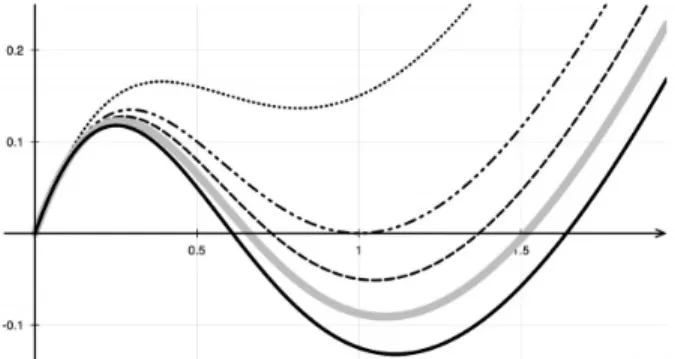
Figure 1. Graphs of the potential function H given in (7) for diffe-rent values of the parameters.
Therefore, in the singular limit σ → 0+, the
equa-tion for v has a special form, which is usually called a
gradient-like structure. Indeed, after multiplying both
sides of (5) by , we deduce the identity
which shows that the function H is dissipated (it has nonpositive variation) along trajectories of the varia-ble v and thus, in principle, the solutions converge to
its minima. In the specific case (2) with p = 2 and λ, μ
appropriately chosen, the potential H has two distin-ct minima. Hence, H adistin-ctually adistin-cts as a switch separa-ting solutions which asymptotically converge to one of
the two achievablephenotypes. Entering into details,
for f(v) = v and g(u) = from (6) there holds
(7)
by using the explicit form of the functions given in (2)
with p = 2. For λμ > 2, the function H has the typical
sha-pe of a double-well potential with wells located at u0 = 0
and u+ defined above (see Figure 1). In particular, for a
specific choice of the product λμ, the two wells have the
same depth, with significant consequences in the space-dependent case of system (1), as we shall discuss in the following section.
1.2 Accounting for space dependency
The original model (1) is a simple instance within a wider class, usually referred to as reaction-diffusion
systems, which very often support special solutions
interest in such mathematical objects is that they are designed to reproduce invasive patterns, which are a key-feature of many biological applications, properly starting from cancer modelling. A complete review on this issue and its ubiquity in biological modelling can be found in Volpert and Petrovskii, 2009.
As already mentioned in Section 1.1, the limit
dyna-mics of system (1) as σ → 0+ is said to be singular since
the mathematical object obtained by (formally) setting
σ = 0 is not a differential equation, but rather an
alge-braic relation. This fact has a number of significant con-sequences, relatively to the number of initial/boundary conditions that can be imposed. In such regime, the
sy-stem reduces to the identity u = λf(v) together with the
scalar reaction-diffusion equation (8)
where F(v) = −v+μg(λf(v)).Depending on the specific
form of function F, the equation (8) may support special
solutions of a traveling wave type, namely given by v(x,
t) = V(x − ct) for some profile V and propagation speed c (Volpert and Petrovskii, 2009). In addition, if the
profi-le function V is such that there exists finite limits at −∞
and +∞, i.e.
with F(v−) = F(v+) = 0, then the solution is said to be a
propagating front with speed of propagation c. Let us
stress that both the profile function V and the speed
pa-rameter c are unknown, and have to be determined by imposing that they satisfy the scalar reaction-diffusion
equation (8) with boundary data v− and v+.
Inserting the above ansatz into equation (8) gives an
ordinary differential equation for the profile V,
parame-trised by the speed value c, that is
(9)
which satisfies the boundary conditions V (−∞) = v− and
V (+∞) = v+. In mathematical terms, if v− ≠ v+, we are looking for a so-called heteroclinic orbit (we note that, since the equation (9) is autonomous, the solutions are translationally invariant).
In the prototypical case (2) with p = 2, the reaction
function becomes F(v) = − v + μ which has a
bistable shape if λμ > 2, and then equation (8) supports
propagating fronts. In general, the speed c in equation
(9) does not have an explicit formula, nevertheless it can be approximated numerically, usually furnishing a
value which depends on the parameter τ and the form of
the function F.
When the parameter σ is non zero, similar
pro-perties hold for the complete system (1). More pre-cisely, a traveling wave solution is a special solution of the form
(10)
And we notice that, by definition, both components are assumed to travel with the same propagation speed.
The system of ordinary differential equations for U and
V is obtained by substituting (10) into (1), so that
(11)
As before, the solution is said to be a propagating (or
invasion) front if it defines a heteroclinic orbit of the
dynamical system (11) with constant (and different) boundary values
(12)
where the asymptotic states (u±, v±) are forced to be
equi-libria of system (1) as given by equations (4).
Incidentally, let us observe that being system (11)
autonomous, the profile functions U and V, whenever
they exist, are determined up to a translation of the in-dependent variable, as for the scalar case (9).
The parameter c has to be appropriately tuned in
order for the boundary conditions (12) to be satisfied. Determining the exact —or, at least, an approximate—
value of the propagation speed c is crucial for the
un-derstanding of the EMT/MET phenomenon under in-vestigation, since it provides the velocity of invasion of phenotype fronts. Actually, computing an exact solution for c is, in general, not possible; thus, it is crucial to
de-velop a suitable algorithm producing a reliable numeri-cal estimate of the speed (refer to Section 2.2).
1.3 A short overview of rigorous results
For the sake of simplicity in the presentation, we
fo-cus on the case of modelling functions (2) with p = 2.
In the singular limit σ = 0, the model system (1)
Mathematical Modelling and Simulation of EMT/MET Biological Transitions
,
where the potential H is given in (7). Whenever the
fun-ction H has two wells, there exists a propagating front
connecting the two minima of this potential, with a
uni-que propagation speed c, whose value is linked to the
difference of depth of the potential wells. Moreover, its stability is rigorously established as in Fife and McLeod, 1977. An identity for the propagation speed is indeed available and it shows that, in the particular case of two wells of equal depth, the traveling wave is, in fact, a ste-ady state (c = 0).
Similarly, for σ > 0,when H has the same properties
as mentioned above, there exist positive values λ0 and
μ0 such that system (1) possesses a standing wave with
profiles (U, V) = (U(x),V(x)) corresponding to the speed c
= 0. Such value separates positive and negative speeds of propagation, and it is determined by the requirements
The first condition corresponds to the requisite that the two wells of H have same depth; the second one
tran-slates the fact that v0 is a zero of the variation ∂H/∂v —
hence a singular point of the potential H(∙; λ, μ)— and
consequently a candidate for the asymptotic state v+.
Together, they imply that the speed is zero and the wave is stationary.
Finally, in that framework, one can compute the sta-tionary traveling fronts U and V by using the standard construction of a steady heteroclinic orbit for the dou-ble-well potential with wells of equal depth (Mascia et al., 2019). Incidentally, we recall that a rigorous proof of the existence of propagating fronts for the system (1) is an open problem in full generality.
2. Numerical simulations
In the mathematical literature, there is a number of numerical schemes of different types for approxima-ting partial differential equations. The choice depen-ds mainly on the dynamical features of the numerical solution one is interested in and, even within the same framework, various algorithms could be implemented (Quarteroni, 2017). As regards the numerical strategy
to be applied to the model system (1), we have chosen to employ an implicit-explicit finite difference algorithm. Such a choice allows adopting larger time steps compa-red to fully explicit schemes, which are instead heavily conditioned by the restrictions that stability requires, thus leading to less computationally expensive simula-tions. As a matter of fact, our numerical algorithm di-scretises implicitly all the linear terms, whilst the
nonli-near reaction functions f and g are treated explicitly.
We denote by dx and dt the space and time steps,
re-spectively, and by xj = j dx, j = 1,2,..., the discretisation
points located on a uniform mesh, together with tn = n dt,
n = 1,2,..., the discrete times. Moreover, the symbols ujn
and vjn indicate numerical approximations of the values
u(xj, tn) and v(x
j, tn), respectively. Then, the
correspon-ding numerical scheme reads as
in the model case (2) with p = 2, since the function f is
linear. After simple algebraic manipulations, the abo-ve algorithm becomes a linear system for the unknown couple (ujn+1, v
jn+1) to be computed in term of the
para-meters σ, τ, λ, μ and the (known) couple (ujn, v
jn). By
ite-rations, one ends up with an explicit approximation for
the unknown variables at time tn+1 (for more details, see
Mascia et al., 2019). In the general case of a
nonline-ar function f, the same implicit-explicit strategy would
have suggested the modified scheme
An approximated solution to system (1) is thus the result of time iterations starting from some spatial-ly discretised initial datum which has to be furnished. Presently, we consider initial data of Riemann type, i.e. discontinuous profiles consisting of two different con-stant states at the left and the right of some given point,
usually located at x = 0, namely
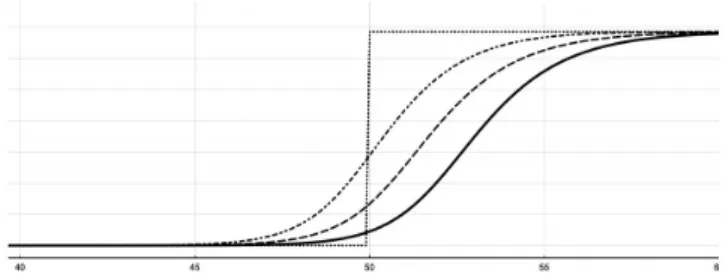
Figure 2. Graphic illustration of case 1 (propagation from right to left)
with the analogous definition for v(x, 0), where (u±, v±)
are constant steady states of system (1).
2.1. Computational results for EMT/MET
As mentioned in Section 1.2, in the singular regime σ
→ 0+, the system (1) reduces to a standard parabolic
re-action-diffusion equation (8) for the mesenchymal phe-notype. The behaviour of such a model is essentially well-known, separating EMT invasion and MET regression regimes by appropriately tuning the model parameters.
The general case, for σ > 0, follows the same qualitative
analysis with respect to the model parameters.
In particular, for the reaction functions given in (2)
with p = 2 and μ = 1, threshold values for the dynamics
can be explicitly computed, which are 0 < λ* = 2.0 < λ0 = 2.175063.
The analysis is straightforward for 0 < λ < λ*, since any positive initial datum generates a solution (u, v) which
converges to (0,0) as t → +∞ with exponential rate. Next,
we concentrate on the regime λ > λ*. The numerical
re-sults reported below illustrate only the profile for the
component u, the profile of the component v being
qua-litatively very similar. We also limit the presentation to the dynamics exhibited by choosing an initial datum of Riemann type (13).
Case 1: λ = 2.1 > λ*. For this choice of the parameter λ,
numerical evidence of the existence of a traveling front
is obtained. Moreover, being the stable state u+ closer to
the critical state corresponding to the threshold value
λ*, the solution exhibits a regressive behaviour, namely
the front travels towards the right-hand side with posi-tive speed (see Figure 2).
Case 2: λ = λ0. Since the two wells of the potential
function H have the same depth for this value of λ,
sy-stem (1) possesses a stationary solution with the
requi-red asymptotic behaviour for σ = 0. In particular, the
dynamics is independent from the relaxation
parame-ters σ and τ, and the existence of a traveling wave in the
regime σ > 0 is a straightforward consequence of the
observation that the fronts are actually steady states.
Case 3: λ = 2.25 > λ0. Again, numerical evidence of
the existence of propagating fronts emerges as the long-time behaviour of the solution to a Riemann problem (13). The traveling wave has positive speed, so that we are in a situation for which invasion is possible, corre-sponding to the typical EMT/MET phenomenon (see Figure 3). For more general initial data, competition between different branches of the solution starts play-ing a crucial role in featurplay-ing the large-time behaviour.
As far as λ increases, the numerically computed
speed of the propagating fronts increases in absolute value and, thus, invasive EMT/MET regimes are more and more probable.
2.2. Approximation of the speed
Finding a reliable approximation for the velocity of propagating fronts when an explicit formula is not available is crucial for many theoretical reasons. In particular, the speed of propagation c provides an ad-ditional parameter which, in principle, could be used to calibrate the model in practical situations. The nume-rical approximation of the propagation speed relies on the approach originally proposed in LeVeque and Yee, 1990, and successfully applied to systems of reaction-diffusion equations in Lattanzio et al., 2019a, 2019b, Moschetta and Simeoni, 2019.
Figure 3. Graphic illustration of case 3 (propagation from left to right) We provide a brief recasting of the basic idea behind
such method: given a smooth function φ with
asympto-tic states φ±= φ (±∞), there holds
Mathematical Modelling and Simulation of EMT/MET Biological Transitions
for any , where [φ]: = φ+ − φ−, this formula being
obtained by interchanging the order of integration.
Choosing the shift value h = − cdt we infer that
.
Denoting by φjn the approximation of φ (x
j −ctn), the
nu-merical counterpart of identity (14) is given by (15)
The approximation (15) is indeed exact whenever
φjn is related to a traveling wave solution with constant
speed c and asymptotic states φ±. In general, the value cn
can be regarded as a space-averaged propagation speed,
which is suppose to stabilise towards the correct speed c
when φjn converges to the traveling profile.
Because the model system (1) has two dynamical
variables u and v, the respective speed values can be
computed through the LeVeque-Yee formula (15) by ap-plying it either to ujn or to v
jn. Actually, for large n, the
two numerically estimated values appear to be close one to the other, as expected from the theoretical analysis (refer to Section 2.2).
Conclusions
In the recent years, EMT and MET have been consi-dered as an important emerging research subject, con-stituting a crucial event in cancer onset and spread, also strictly related with invasive features and linked to the consequent formation of metastasis. We have proposed a simplified mathematical model, consisting of a system of coupled partial differential equations for two varia-bles, describing, in principle, two different cells phenot-ypes, namely epithelial and mesenchymal. The model system is of reaction-diffusion type and often supports the emergence of propagating fronts under minimal as-sumptions on the physical parameters. Of course, the presence of a space-dependent diffusion term is cru-cial, together with a little amount of nonlinearity. We also illustrated a numerical algorithm able to furnish reliable approximations for the propagation speeds, which could be useful to calibrate the model with re-spect to experimental data and realistic situations.
Acknowledgments
The research presented in this article has been mo-tivated by the fruitful discussions with the researchers
of the Systems Biology Group Lab — www.sbglab.org — settled at the Department of Experimental Medicine, Sapienza University of Rome (Italy) and, in particular, with M. Bizzarri and S. Dinicola.
This project is partially supported by the French go-vernment, managed by the ANR under the UCA JEDI Investments for the Future project, reference No. ANR-15-IDEX-01.
References
Barriere, G, Fici, P, Gallerani, G, Fabbri, F & Rigaud, M 2015, “Epithelial mesenchymal transition: a double-edged sword”, Clinical and Translational Medicine, vol. 4, no. 14, pp. 1-6.
Bertolaso, M 2016, Philosophy of cancer. A dynamic and
relational view. History, Philosophy and Theory of the
Life Sciences 18, Springer Netherlands.
Bizzarri, M, Cucina, A, Conti, F & D’Anselmi, F 2008, “Beyond the oncogene paradigm: understanding complexity in car-cinogenesis”, Acta Biotheoretica, vol. 56, no. 3, pp. 173-196.
Bizzarri, M, Palombo, A & Cucina, A 2013, “Theoretical aspects of Systems Biology”, Progress in Biophysics and
Molecular Biology, vol. 112, no. 1-2, 33-43.
Bocci, F, Jolly, MK, George, JT, Levine, H & Onuchic, JN 2018, “A mechanism-based computational model to cap-ture the interconnections among epithelial-mesenchymal transition, cancer stem cells and Notch-Jagged signal-ling”, Oncotarget, vol. 9, no. 52, pp. 29906-29920. Capasso, V & Maddalena, L 1981, “Convergence to
equi-librium states for a reaction-diffusion system modelling the spatial spread of a class of bacterial and viral diseases”,
Journal of Mathematical Biology, vol. 13, pp. 173-184.
Davies, P, Demetrius, L & Tuszynki, J 2011, “Cancer as dyna-mical phase transition”, Theoretical Biology and Medical
Modelling, vol. 8, pp. 1-30.
Fife, P & McLeod, J 1977, “The approach of solutions of nonli-near diffusion equations to travelling front solutions”,
Archive for Rational Mechanics and Analysis, vol. 65, pp.
335-361.
Gasior, K, Hauck, M, Wilson, A & Bhattacharaya, S 2017, “A theoretical model of the Wnt signaling pathway in the epi-thelial mesenchymal transition”, Theoretical Biology and
Medical Modelling, vol. 14, no. 20, pp. 1-20.
Gesztelyi, R, Zsuga, J, Kemeny-Beke, A, Varga, B, Juhasz, B & Tosaki, A 2012, “The Hill equation and the origin of quantitative pharmacology”, Archive for History of Exact
Sciences, vol. 66, pp. 427-438.
Green, M & Sleeman, B 1974, “On FitzHugh's nerve axon equations”, Journal of Mathematical Biology, vol. 1, pp. 153-163.
Greenburg, G & Hay, ED 1982, “Epithelial suspended in colla-gen gels lose polarity and express characteristics of
migra-ting mesenchymal cells”, Journal of Cell Biology, vol. 95, no. 1, pp. 333-339.
Guerra, A, Rodriguez, DJ, Montero S, Betancourt-Mar, JA, Martin, RR, Silva, E, Bizzarri, M, Cocho, G, Mansilla, R & Nieto-Villar, JM 2018, “Phase transitions in tumour growth VI: Epithelial-Mesenchymal transition”, Physica
A, vol. 499, pp. 208-215.
Hanahan, D & Weinberg, RA 2011, “Hallmarks of cancer: the next generation”, Cell, vol. 144, no. 5, pp. 646-674. Hanahan, D & Weinberg, RA 2000, “The hallmarks of
can-cer”, Cell, vol. 100, no. 1, pp. 57-70.
Hellmann, N, Kolbe, N & Sfakianakis, N 2016, “A mathema-tical insight in the epithelial-mesenchymal-like transition in cancer cells and its effect in the invasion of the extra-cellular matrix”, Bulletin of the Brazilian Mathematical
Society, vol. 47, no. 1, pp. 397-412.
Holling, C 1959, “Some characteristics of simple types of pre-dation and parasitism”, The Canadian Entomologist, vol. 91, no. 7, pp. 385-398.
Hornberg, JJ, Bruggeman, FJ, Westerhoff, HV & Lankelma, J 2006, “Cancer: A Systems Biology disease”, Biosystems, vol. 83, no. 2-3, 81-90.
Jolly, MK, Huang, B, Lu, M, Mani, SA, Levine, H & Ben-Jacob, E 2014, “Towards elucidating the connection between epi-thelial-mesenchymal transitions and stemness”, Journal
of the Royal Society Interface, vol. 11, no. 101, 20140962.
Jones, M, Song, B & Thomas, D 2004, “Controling wound healing through debridement”, Mathematical and
Com-puter Modelling, vol. 40, pp. 1057-1064.
Kalluri, R & Weinberg, RA 2009, “The basics of epithelial-mesenchymal transition”, Journal of Clinical
Investiga-tion, vol. 116, no. 6, pp. 1420-1428.
Laise, P, Fanelli, D, Lio’, P & Arcangeli, A 2012, “Modeling TGF-β signaling pathway in epithelial-mesenchymal tran-sition”, AIP Advances, vol. 2, 011201, pp. 1-11.
Lattanzio, C, Mascia, C, Plaza, RG & Simeoni, C 2019a, “Analysis and numerics of the propagation speed for hyperbolic reaction-diffusion models”, in preparation. Lattanzio, C, Mascia, C, Plaza, RG & Simeoni, C 2019b,
“Kine-tic schemes for assessing stability of traveling fronts for the Allen-Cahn equation with relaxation”, Applied
Nume-rical Mathematics, vol. 141, pp. 234-247, 2019.
LeVeque, R & Yee, H 1990, “A study of numerical methods for hyperbolic conservation laws with stiff source terms”,
Journal of Computational Physics, vol. 86, no. 1, pp.
187-210, 1990.
MacLean, AL, Harrington HA, Stumpf, MPH & Hansen, MDH 2014, “Epithelial-Mesenchymal transition in metastatic cancercell populations affects tumor dormancy in a simple mathematical model”, Biomedicines, vol. 2, no. 4, 384-402.
Magi, S, Iwamoto, K & Okada-Hatakeyama, M, 2017, “Cur-rent status of mathematical modeling of cancer - From the
viewpoint of cancer hallmarks”, Current Status in Systems
Biology, vol. 2, pp. 39-48.
Mascia, C, Moschetta, P & Simeoni, C 2019, “Phase transi-tions of biological phenotypes by means of a prototypical PDE model”, Communications in Applied and Industrial
Mathematics, vol. 10, no. 1, pp. 1-17.
Moschetta, P & Simeoni, C 2019, “Numerical investigation of the Gatenby-Gawlinski model for acid mediated tumour invasion”, Rendiconti di Matematica e delle sue
Applica-zioni, vol. 7, pp. 1-31, online first.
Nieto, MA 2011, “The ins and outs of the epithelial to mesen-chymal transition in health and disease”, Annual Review
of Cell and Developmental Biology, vol. 27, pp. 347-376.
Quarteroni, A 2017, Numerical models for differential
pro-blems. Third edition. Modeling, Simulation and
Applica-tions 16, Springer, Cham.
Sfakianakis, N, Kolbe, N, Hellmann, N & Lukacova-Medvi-dova, M 2017, “A multiscale approach to the migration of cancer stem cells: mathematical modelling and simu-lations”, Bulletin of Mathematical Biology, vol. 79, no. 1, 209-235.
Simeoni, C, Dinicola, S, Cucina, A, Mascia, C & Bizzarri, M 2018, “Systems biology approach and mathematical modeling for analyzing phase-space switch during epithe-lial-mesenchymal transition", in M Bizzarri (ed) Systems
Biology, pp. 95-123, Methods in Molecular Biology 1702,
Springer Protocols + Business Media LLC.
Taylor, GI 1920, “Diffusion by continuous movements”,
Pro-ceedings of the London Mathematical Society, vol. 20, pp.
196-212.
Thiery, J 2006, “Epithelial-Mesenchymal transitions in tumour progression”, Nature Reviews Cancer, vol. 2, no. 6, pp.442-454.
Thiery, J & Sleeman, J 2006, “Complex networks orchestrate epithelial-mesenchymal transitions”, Nature Reviews
Molecular Cell Biology, vol. 7, no. 2, pp. 131-142.
Thompson, EW & Newgreen, DF 2005, “Carcinoma invasion and metastasis: A role for epithelial-mesenchymal transi-tion?”, Cancer Research, vol. 65, no. 14, pp. 5991-5995. Turner, C & Kohandel, M 2010, “Investigating the link between
epithelial-mesenchymal transition and the cancer stem cell phenotype: A mathematical approach”, Journal of
Theoretical Biology, vol. 265, no. 3, pp. 329-335.
Volpert, V & Petrovskii, S 2009, “Reaction-diffusion waves in biology”, Physics of Life Reviews, vol. 6, no. 4, pp. 267-310.
Weiss, J 1997, “The Hill equation revisited: uses and misuses”,
The FASEB Journal, vol. 11, no. 11, pp. 835-841.
Xu, J, Lamouille, S & Derynck, R 2009, “Tgf-β-induced epi-thelial to mesenchymal transition”, Cell Research, vol. 19, no. 2, pp. 156-172.
Zauderer, E 1983, Partial Differential equations of applied