The year in cardiology: heart failure 2014
Adriaan A. Voors
1*
and Frank Ruschitzka
21
Department of Cardiology, AB31, University Medical Center Groningen, University of Groningen, Hanzeplein 1, Groningen 9713 GZ, The Netherlands; and
2
Cardiovascular Center, University Hospital Zurich, Zurich, Switzerland
Received 23 October 2014; revised 26 November 2014; accepted 4 December 2014; online publish-ahead-of-print 3 January 2015
Preamble
The year 2014 has become a remarkable year for heart failure. A bad start was caused by the publication of TOPCAT, showing that spir-onolactone did not prove to be beneficial for the treatment of patients with heart failure and preserved ejection fraction (HFpEF). Nevertheless, further insights in the study yields a few bright spots, and treatment with spironolactone might still be considered in patients with HFpEF. In acute heart failure, additional data were pub-lished on the effects of serelaxin. Serelaxin reduced wedge pressures, had similar effects in acute heart failure patients with and without a reduced ejection fraction, and had a neutral effect on diuretic re-sponse. But the most important news was related to the results of PARADIGM, where LCZ696, the first-in-class angiotensin-receptor neprilysin inhibitor, proved to be superior to enalapril in reducing mortality and morbidity in patients with heart failure and reduced ejection fraction (HFrEF).
ACE inhibitors in heart failure
with reduced ejection fraction:
the end of an era?
During the last decades, treatment of patients with heart failure with reduced ejection fraction (HFrEF) has improved dramatically with the introduction of ACE-inhibitors, b-blockers, angiotensin receptor blockers, and mineralocorticoid receptor antagonists. This caused a stepwise reduction in mortality and heart failure hospitalization. However, residual mortality and morbidity is still too high. Therefore, there is a continuous need for better therapies.
The biggest heart failure news of 2014 in heart failure was the pres-entation and publication of the PARADIGM trial.1The trial reported the effects of LCZ696, a first in class angiotensin receptor neprilysin inhibitor. LCZ696 comprises the molecular moieties of the angioten-sin II AT1 receptor antagonist valsartan and the neprilyangioten-sin inhibitor prodrug AHU377.2In PARADIGM, the effect of LCZ696 on a com-posite of death from cardiovascular causes or hospitalization for heart failure was compared with enalapril in 8442 patients with
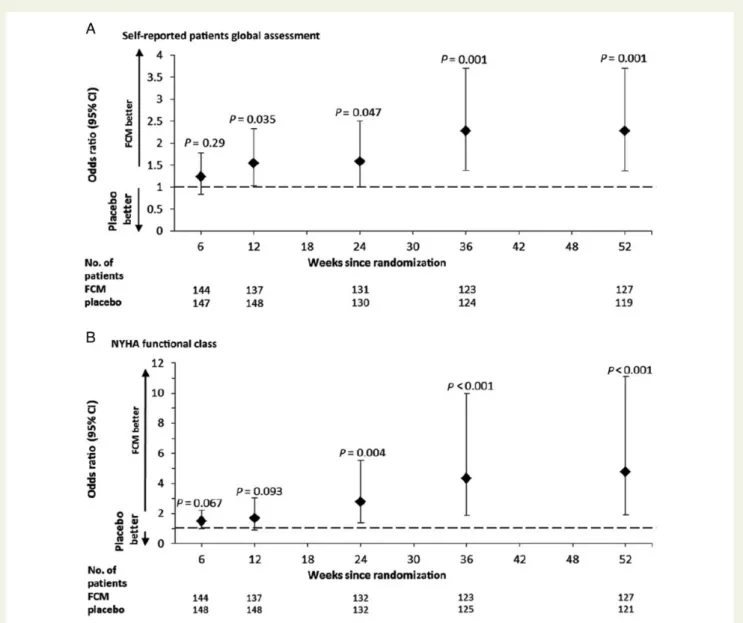
HFrEF. The trial was stopped prematurely due to an overwhelming benefit of LCZ696. Compared with enalapril, LCZ696 significantly reduced the primary endpoint by 20% and all-cause mortality by 16%. The drug was well tolerated, with no increase in angioedema, which was a concern with the combined ACE-inhibitor/neprilysin inhibitor omapatrilat. There were more cases of symptomatic hypo-tension in the LCZ696 group and less cases of worsening of renal function. The major question is to which extent should LCZ696 replace ACE inhibitors in patients with HFrEF, for whom these agents are a mainstay. Although the trial was well conducted, the run-in period is of concern. More than 1200 patients were excluded because of adverse events or abnormal laboratory test results. So, patients who tolerated enalapril but became hypotensive on LCZ696 in the second run-in phase were not included in this study, which might have biased the results in favour of LCZ696. Neverthe-less, since the CONSENSUS trial was published in 1987, this is the first drug that proved to be superior over enalapril, and therefore this trial will probably be the end of an era. The drug now needs to be approved and reimbursed, so it will unfortunately take some time before the drug will be readily available, but this will provide physicians and policy-makers time to get more insights in the study. The second important trial that was presented and published during the scientific sessions of the European Society of Cardiology in Barcelona, September 2014, was the CONFIRM-HF trial.3This trial confirmed beneficial effects of intravenous iron on symptoms, functional capacity, and quality of life in patients with HFrEF, with and without anaemia. Iron deficiency (ferritin level ,100 mg per L or between 100 and 299 mg per L, if the transferrin saturation is ,20%) is found in .40% of patients with HFrEF, and is related to severity of symptoms and a poor clinical outcome. CONFIRM-HF was a double-blind, placebo-controlled trial in 304 HFrEF patients with iron deficiency. Patients were randomized 1 : 1 to treatment with i.v. iron, as ferric carboxymaltose or placebo for 52 weeks. Ferric carboxymaltose improved functional capacity, symptoms, and quality of life and was associated with a reduction in the risk of hospitalization for worsening heart failure (Figure1). CONFIRM-HF confirmed the results of FAIR-HF that were nearly identical.4 However, blinding of these patients in both studies remained difficult,
The opinions expressed in this article are not necessarily those of the Editors of the European Heart Journal or of the European Society of Cardiology.
*Corresponding author. Tel:+31 503612355; Fax: +31 503614391, Email:[email protected]
which is important due to the soft endpoints that were used. Also, both FAIR-HF and CONFIRM-HF were too small to show effects (both beneficial and/or deleterious) on mortality.
A third study that received a lot of attention in 2014 was related to the efficacy of b-blockers in patients with HFrEF and atrial fibrilla-tion.5A pooled analysis was performed using individual patient data from 10 randomized controlled trials that compared b-blockers and placebo in HFrEF. Overall, 18 254 patients were included (13 946 in sinus rhythm and 3066 with atrial fibrillation). b-Blockers were associated with a 27% reduction in all-cause death among HFrEF patients in sinus rhythm, but among patients with AF, no mor-tality reduction was seen. The authors conclude that b-blockers should not be regarded as standard therapy to improve prognosis in patients with concomitant heart failure and atrial fibrillation. However, we have to be careful with sub-group analyses, even
when performed in such a well-performed meta-analysis, and prospective studies in HFrEF patients with AF should be performed to establish the value of b-blockers in HFrEF patients with atrial fibrillation.
Finally, in May 2014, long-term follow-up data of the MADIT-cardiac resynchronization therapy (CRT) trial were published in the New England Journal of Medicine.6The original study enrolled 1820 patients to either CRT-D or ICD in patients with mild HFrEF (NYHA classes I – II; LVEF≤30%) and a QRS duration of 130 ms or more. After a follow-up of 2.4 years, CRT-D was associated with a significant reduction in death from any cause or a heart-failure event. However, the outcome was mainly driven by heart-failure events. After a median follow-up of 5.6 years, a 41% mortality reduc-tion was shown in patients with left bundle branch block, while no benefit was found in patients without a left bundle branch block.
Figure 1 Patient global assessment and NYHA functional class over time (full-analysis set). The data presented are odds ratios for patient global assessment (A) and NYHA functional class (B) for the ferric carboxymaltose group when compared with the placebo, of being in a better category of patient global assessment (A) and NYHA functional class (B). In those panels, the P-values are for the comparison between the two study groups, and the I bars denote the 95% confidence intervals.
A better understanding to improve
treatment of heart failure and
preserved ejection fraction
The biggest disappointment of 2014 was the results of TOPCAT.7 TOPCAT failed to show a beneficial effect of spironolactone on the primary composite endpoint of cardiovascular death or hospital admis-sion for heart failure in 3445 patients with heart failure and preserved ejection fraction (HFpEF). After ACE-inhibitors and angiotensin recep-tor blockers, this is the third group of blockers of the renin–angioten-sin–aldosterone system (RAAS) that failed in HFpEF patients, but previously showed a beneficial effect in patients with HFrEF. However, a few important issues need to be taken into account. First, spironolactone significantly reduced hospital admissions for heart failure, but increased the risk on worsening of renal function (doubling of serum creatinine) and hyperkalemia.7Therefore, there might be some benefit with the use of spironolactone in patients with HFpEF, but patients always need to be carefully controlled for renal function and potassium. Second, there was a remarkable difference between patients that were recruited in Russia and Georgia, compared with patients that were recruited in North America. Patients in Russia and Georgia had a much lower event rate, and spironolactone was not beneficial in these patients. In contrast, spironolactone significantly re-duced the primary endpoint in patients that were recruited in North America. Taken together, there is no strong evidence in favour of the use of mineralocortocoid receptor antagonists in patients with HFpEF. After the dust had descended, the most striking question was how RAAS inhibitors can be so successful in HFrEF, yet fail to show a benefit in HFpEF? First, due to the complicated diagnosis, recruitment of patients in HFpEF studies is often more difficult than HFrEF studies. If the inclusion criteria are too lenient, patients with other causes of their complaints instead of HFpEF might be included and dilute the effects of the drug. If the criteria are too strict, it will be more difficult to recruit patients, and the study will take much longer than expected, as was the case with TOPCAT. A longer duration of the trial is related to a high crossover and dropout rate, further diluting the effects of the drug. But thirdly, it starts to become clear that HFpEF is different from HFrEF, and drugs that are effective in HFrEF are not necessarily effective in HFpEF. Therefore, a better understanding of the patho-physiology of the disease is highly needed. In 2014, studies were published that attempted to better phenotype HFpEF patients. Two recent studies showed that coronary artery disease is common in patients with HFpEF and is associated with increased mortality and greater deterioration in ventricular function.8,9The authors assumed that revascularization may be associated with pres-ervation of cardiac function and improved outcomes in HFpEF patients with coronary artery disease. Another important finding in patients with HFpEF is the observation that they have greater mech-anical dyssynchrony compared with healthy controls of similar age and gender.10Within the HFpEF population, the severity of dyssyn-chrony was related to the width of QRS complex, LV hypertrophy, and diastolic dysfunction. These data might pave the way to studying the effects of CRT in patients with HFpEF. In summary, a better char-acterization of different phenotypes of HFpEF patients will likely improve our understanding and might lead to better and more tailored therapies in HFpEF.
Technology in heart failure:
implant-based multiparameter
telemonitoring and chronic vagal
stimulation
Novel technologies are increasingly used in the diagnosis and treat-ment of patients with heart failure, but uncertainty remains on the effects on clinical outcome. In the 2012 ESC Heart Failure Guidelines, a distinction is made between remote monitoring with or without the use of an implanted device.11Data both on non-invasive and invasive remote monitoring are inconsistent and do not yet support a guide-line recommendation. Recently, data were published on a rando-mized clinical trial on the effect of telemonitoring using data from a recently implanted ICD or CRT-D12in 664 HFrEF patients. The primary outcome measure was a composite clinical score combining all-cause death, overnight hospital admission for heart failure, change in NYHA class, and change in patient global self-assessment. After 1 year, 63 (18.9%) of 333 patients in the telemonitoring group vs. 90 (27.2%) of 331 in the control group (P ¼ 0.013) had worsened composite score (odds ratio: 0.63, 95% CI: 0.43 – 0.90). Since patients with HFrEF often receive an ICD or CRT-D anyway, the current approach is feasible and might improve clinical outcome. The only downside is the amount of data that is transferred and needs to be monitored and the decision-making process and protocols used to streamline these data.
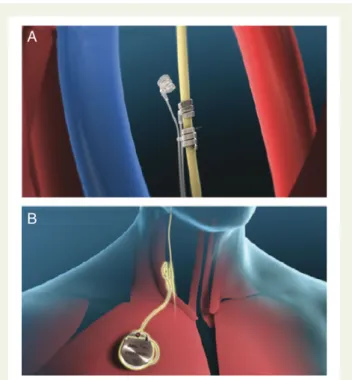
Another technology that is increasingly studied in heart failure is the use of direct vagal nerve stimulation to enhance parasympathetic tone (Figure 2). In September 2014, data of the first randomized sham controlled trial on direct vagal nerve stimulation were
Figure 2 (A) Investigational bipolar helical vagal cuff. (B) Precision (TM) Pulse Generator and implanted lead.
presented and published.13After 6 months of treatment, there was no difference in the primary endpoint of change in left ventricular end systolic diameter between patients with the device ON or OFF. However, patients with the device ON experienced statistically significant improvements in symptoms and quality of life, which were secondary endpoints of the trial. However, these are soft-endpoints that might be affected by subjective feelings of being treated, rather than to a direct beneficial cardiac effect of the device. In addition, blinding in the NECTAR-HF trial might be confounded since inter-vention in the ON group is expected to decrease heart rate. Never-theless, results from similar studies are expected in the upcoming years.
More data on serelaxin in acute
heart failure
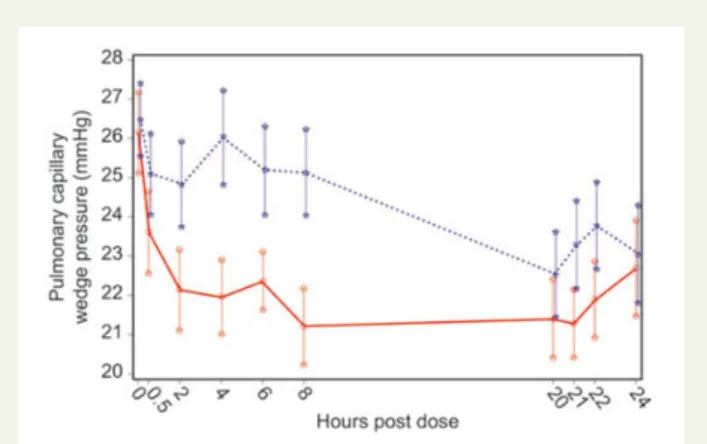
Serelaxin is a vasoactive peptide hormone with vasodilatory, anti-fibrotic, anti-inflammatory, and pro-angiogenic effects that is cur-rently under investigation for the treatment of patients with acute decompensated heart failure. RELAX-AHF demonstrated beneficial effects on relief of dyspnoea and (cardiovascular) mortality, but not on heart failure readmissions in 1161 patients with acute heart failure.4The large RELAX-AHF2 trial, that aims to include 6375 patients with acute heart failure, and with cardiovascular mortality as the primary endpoint, is currently ongoing. In the meantime, more data on serelaxin were published in 2014. First, a randomized, double-blind, placebo-controlled, multicentre study assessed the haemodynamic effects of serelaxin in 63 patients with acute heart failure.15Serelaxin significantly decreased pulmonary capillary wedge pressure during the first 8 h of infusion, but showed no significant effect on the peak change in cardiac index vs. placebo (Figure3). Another sub-group analysis of the RELAX-AHF trial showed that ser-elaxin had similar effects in acute heart-failure patients with a pre-served and a reduced left ventricular ejection fraction.16 Finally, another publication showed that serelaxin was associated with less diuretic use, but also with less net weight loss, and therefore had a neutral effect on diuretic response.17
The future of heart failure:
epigenetics?
A number of interesting novel developments related to (epi)genetics are ongoing in heart failure. One example is the intracoronary infu-sion of AAV1/ sarcoplasmic reticulum Ca2+ATPase 2a (SERCA2a) gene transfer in patients with severe heart failure. In HF, the level and the activity of SERCA2a is decreased, contributing directly to impaired cardiac contraction and relaxation. Recently, long-term follow-up data were published of the CUPID trial, a phase II rando-mized, double-blind, placebo-controlled study on the effects of AAV1/SERCA2a vs. placebo in 39 patients with advanced HF.18 After 3 years of follow-up, the risk of pre-specified recurrent cardio-vascular events (myocardial infarction, worsening heart failure, heart-failure-related hospitalization, ventricular assist device place-ment, cardiac transplantation, and death) was reduced by 82% in the high-dose vs. placebo group (P ¼ 0.048). No safety concerns were noted during the 3-year follow-up.
A second example is the increasing interest in the role of mircoR-NAs in heart failure. MircoRmircoR-NAs are small non-coding RmircoR-NAs that regulate gene-transcription and protein formation. Wahlquist et al. aimed to identify miRNAs that suppress intracellular calcium handling in heart muscle by interacting with messenger RNA encod-ing the sarcoplasmic reticulum calcium uptake pump SERCA2a.18 MicroNA-25 potently delayed calcium uptake kinetics in cardiomyo-cytes in vitro and was upregulated in heart failure. Interestingly, injec-tion of an antisense oligonucleotide (antagomiR) against miR-25 markedly halted established heart failure in a mouse model.19
Conclusions
Overall, 2014 has become a good year for our heart failure patients. Further improvement in the treatment of HFrEF can be achieved with LCZ696 and intravenous iron. Pharmacological treatment of HFpEF remains problematic, especially after the neutral results of TOPCAT with spironolactone. A better characterization of the patients and a better pathophysiological insight are strongly needed to improve the outcome of patients with HFpEF. In acute heart failure, recent results from RELAX-AHF have resulted in a renewed interest from researchers and industry to further improve outcome of this deadly syndrome.
Conflict of interest: A.A.V. received consultancy fees and/or re-search grants from Alere, AstraZeneca, Bayer, Cardio3Biosciences, Celladon, Merck/MSD, Novartis, Servier, Torrent, Trevena, Vifor. F.R. received consultancy fees from Servier and Biotronik.
References
1. McMurray JJ, Packer M, Desai AS, Gong J, Lefkowitz MP, Rizkala AR et al. Angiotensin-neprilysin inhibition versus enalapril in heart failure. N Engl J Med 2014;371: 993 – 1004.
2. Voors AA, Dorhout B, van der Meer P. The potential role of valsartan+ AHU377 (LCZ696) in the treatment of heart failure. Expert Opin Investig Drugs 2013;22: 1041 – 1047.
3. Ponikowski P, van Veldhuisen DJ, Comin-Colet J, Ertl G, Komajda M, Mareev V et al. Beneficial effects of long-term intravenous iron therapy with ferric carboxymaltose in patients with symptomatic heart failure and iron deficiency. Eur Heart J 2014; doi:10.1093/eurheartj/ehu385.
Figure 3 Pulmonary capillary wedge pressure during the course of study in both treatment groups. Data presented as means + standard error.
4. Anker SD, Comin Colet J, Filippatos G, Willenheimer R, Dickstein K, Drexler H et al. Ferric carboxymaltose in patients with heart failure and iron deficiency. N Engl J Med 2009;361:2436 – 2448.
5. Kotecha D, Holmes J, Krum H, Altman DG, Manzano L, Cleland JG et al. Efficacy of beta blockers in patients with heart failure plus atrial fibrillation: an individual-patient data meta-analysis. Lancet 2014.
6. Goldenberg I, Kutyifa V, Klein HU, Cannom DS, Brown MW, Dan A, Daubert JP, Estes NA III, Foster E, Greenberg H, Kautzner J, Klempfner R, Kuniss M, Merkely B, Pfeffer MA, Quesada A, Viskin S, McNitt S, Polonsky B, Ghanem A, Solomon SD, Wilber D, Zareba W, Moss AJ. Survival with cardiac-resynchronization therapy in mild heart failure. N Engl J Med 2014;370:1694 – 1701.
7. Pitt B, Pfeffer MA, Assmann SF, Boineau R, Anand IS, Claggett B et al. Spironolactone for heart failure with preserved ejection fraction. N Engl J Med 2014;370:1383 – 1392. 8. Hwang SJ, Melenovsky V, Borlaug BA. Implications of coronary artery disease in heart failure with preserved ejection fraction. J Am Coll Cardiol 2014;63(25 Pt A): 2817 – 2827.
9. Mentz RJ, Broderick S, Shaw LK, Fiuzat M, O’Connor CM. Heart failure with pre-served ejection fraction: comparison of patients with and without angina pectoris (from the Duke Databank for Cardiovascular Disease). J Am Coll Cardiol 2014;63: 251 – 258.
10. Santos AB, Kraigher-Krainer E, Bello N, Claggett B, Zile MR, Pieske B et al. Left ven-tricular dyssynchrony in patients with heart failure and preserved ejection fraction. Eur Heart J 2014;35:42 – 47.
11. McMurray JJ, Adamopoulos S, Anker SD, Auricchio A, Bohm M, Dickstein K et al. ESC guidelines for the diagnosis and treatment of acute and chronic heart failure 2012: The Task Force for the Diagnosis and Treatment of Acute and Chronic Heart Failure 2012 of the European Society of Cardiology. Developed in collaboration
with the Heart Failure Association (HFA) of the ESC. Eur J Heart Fail 2012;14: 803 – 869.
12. Hindricks G, Taborsky M, Glikson M, Heinrich U, Schumacher B, Katz A et al. Implant-based multiparameter telemonitoring of patients with heart failure (IN-TIME): a randomised controlled trial. Lancet 2014;384:583 – 590.
13. Zannad F, De Ferrari GM, Tuinenburg AE, Wright D, Brugada J, Butter C et al. Chronic vagal stimulation for the treatment of low ejection fraction heart failure: results of the neural cardiac therapy for heart failure (NECTAR-HF) randomized controlled trial. Eur Heart J 2014; doi:10.1093/eurheartj/ehu345.
14. Teerlink JR, Cotter G, Davison BA, Felker GM, Filippatos G, Greenberg BH et al. Ser-elaxin, recombinant human relaxin-2, for treatment of acute heart failure (RELAX-AHF): a randomised, placebo-controlled trial. Lancet 2013;381:29 – 39. 15. Ponikowski P, Mitrovic V, Ruda M, Fernandez A, Voors AA, Vishnevsky A et al. A
ran-domized, double-blind, placebo-controlled, multicentre study to assess haemo-dynamic effects of serelaxin in patients with acute heart failure. Eur Heart J 2014; 35:431 – 441.
16. Filippatos G, Teerlink JR, Farmakis D, Cotter G, Davison BA, Felker GM et al. Sere-laxin in acute heart failure patients with preserved left ventricular ejection fraction: results from the RELAX-AHF trial. Eur Heart J 2014;35:1041 – 1050.
17. Voors AA, Davison BA, Teerlink JR, Felker GM, Cotter G, Filippatos G et al. Diuretic response in patients with acute decompensated heart failure: characteristics and clinical outcome-an analysis from RELAX-AHF. Eur J Heart Fail 2014;16:1230 – 1240. 18. Zsebo K, Yaroshinsky A, Rudy JJ, Wagner K, Greenberg B, Jessup M et al. Long-term effects of AAV1/SERCA2a gene transfer in patients with severe heart failure: analysis of recurrent cardiovascular events and mortality. Circ Res 2014;114:101 – 108. 19. Wahlquist C, Jeong D, Rojas-Munoz A, Kho C, Lee A, Mitsuyama S et al. Inhibition of