Eur J Pediatr (2006) 165: 437–441 DOI 10.1007/s00431-006-0093-4
O R I G I N A L PA P E R
Raffaele Renella . Sergio Fanconi
Decision-making in pediatrics: a practical algorithm to evaluate
complementary and alternative medicine for children
Received: 15 August 2005 / Revised: 21 December 2005 / Accepted: 30 December 2005 / Published online: 19 April 2006 # Springer-Verlag 2006
Abstract We herein present a preliminary practical algo-rithm for evaluating complementary and alternative med-icine (CAM) for children which relies on basic bioethical principles and considers the influence of CAM on global child healthcare. CAM is currently involved in almost all sectors of pediatric care and frequently represents a challenge to the pediatrician. The aim of this article is to provide a decision-making tool to assist the physician, especially as it remains difficult to keep up-to-date with the latest developments in the field. The reasonable application of our algorithm together with common sense should enable the pediatrician to decide whether pediatric (P)-CAM represents potential harm to the patient, and allow ethically sound counseling. In conclusion, we propose a pragmatic algorithm designed to evaluate P-CAM, briefly explain the underlying rationale and give a concrete clinical example.
Keywords Algorithm . Alternative . Complementary . Pediatric
Abbreviations CAM: Complementary and alternative Medicine . CAN: Child abuse and neglect .
CME: Continuing medical education . p-CAM: Pediatric complementary and alternative medicine
Introduction
Complementary and alternative medicine (CAM) is used in the prevention of, but also as therapy for, acute [2,15] and chronic diseases in children [14,16] and has recently been integrated into the research agendas of pediatric academic societies as a priority [3]. Recent surveys indicate that up to 50% of patients requiring in- or out-patient care in a European hospital use CAM [18], but these approaches are often not openly discussed with healthcare teams [5]. Because of the significant number of different approaches and perspectives, and abundance of information of varying quality, CAM therapies frequently represent a challenge to the office pediatrician [9,10,17]. Medical school curricula and post-graduate continuing medical education (CME) programs have only recently introduced teaching programs that include decision-making in the area of pediatric CAM (p-CAM) [4]. On the front-line, pediatricians often face misinformed/uninformed parents, who rely on sources of information (family, friends or the internet) who may be unaware of potential risks [12,13].
Attempts have been made to provide the practitioner with reproducible and valuable scientific data on “main-stream” p-CAM, such as acupuncture, homeopathy and herbal remedies, but many therapies remain uninvestigated [1]. Furthermore, some experts suggest that some p-CAM therapies may not be amenable to the usual scientific evaluation process. Other authors discuss liability issues, medical misconduct and malpractice that p-CAM could imply [4]. Unfortunately, very few authors offer pragmatic decision-making strategies that could help the pediatrician and the patient.
As it remains difficult to keep up-to-date with the latest developments in this field, and only a few well-designed studies clearly attest to the benefits of CAM, we propose here a pragmatic algorithm designed to evaluate CAM in the pediatric setting.
R. Renella . S. Fanconi
Department of Pediatrics, University Hospital of Lausanne, Lausanne, Switzerland
R. Renella (*)
Département medico-chirurgical de Pédiatrie, Centre Hospitalier Universitaire Vaudois, Avenue du Bugnon,
1011 Lausanne, Switzerland e-mail: [email protected] Tel.: +41-21-3143604
Building the algorithm
With the aim of offering a practical decision-making strategy, we reviewed the existing literature and observed common trends and views that we used to establish an algorithm applicable to any patient and therapy. Unfortu-nately, our search of the literature did not retrieve any previous attempt to establish a similar decision-making tool which could provide the pediatrician with a clearer overview of types of therapies his patient may desire to embark on. The attention of the community, however, seems to be focused on describing the position of the pediatric patient and his family within the context of p-CAM [6] and on the potential legal consequences of p-CAM application in children (liability and malpractice concerns). An office-based pediatrician can hardly keep up-to-date with the integrality of the most recent literature in this field and thus should be provided with practical tools for decision-making. The healthcare management commu-nity has already adopted this pragmatic attitude [16].
Furthermore, we also took into account the fact that, in most countries, pediatricians are required to declare potential situations of childhood abuse and neglect. When observing behavior in his practice that might point towards abuse or neglect, the pediatrician might be required by law to refer the situation to the competent judiciary instances, depending on national or local legislation. This compulsory declaration may place the physician in a conflicting position with regards to his patient. A valuable attitude in these moments is, in our opinion, to apply common sense with the aim of never interrupting the lines of communication with the patient and his family.
The bioethical principles
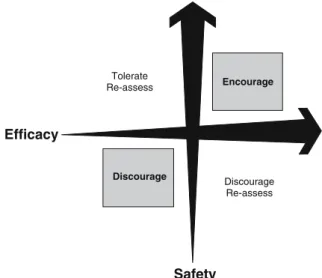
All decisions that keep in mind the four basic principles of bioethics (autonomy, beneficence, nonmaleficence and justice) can generally be considered to be correct and defendable in the face of professional and legal authorities, especially when common sense is applied [7]. Even if we consciously oversimplify the philosophical underpinnings, these principles allow us to establish two conceptual dimensions by which to grade and evaluate the therapy of concern, namely safety and efficacy. A simple diagram, as presented in Fig. 1, can be drawn and used for an initial impression [7]. All therapies, conventional or P-CAM, can be inserted, thereby allowing a comprehensive picture of the options, may they be ongoing or prospective. This diagram has already been used extensively to measure the risk of malpractice liability associated to CAM in adults [8], and some authors have mentioned its potential in the pediatric setting [4]. This conceptual diagram should constitute the core of the algorithm.
In reality, only very few therapies can be classified into the straightforward Encourage and Discourage zones of the diagram, which represent de facto no decisional dilemma. To simplify decision-making, we considered
that unsafe therapies should be discouraged, while safe therapies could be tolerated even if ineffective, but only if they do not interfere with or interrupt an ongoing effective approach. Safe but ineffective therapy should be tolerated as a complement, but not as exclusive strategy.
In our understanding, an unlimited quantity of clinical examples would be necessary to illustrate and thoroughly discuss these gray-zones defined by unsafe/effective and safe/ineffective CAM therapies. Such in-depth analysis overrides the scope of our article and algorithm, and we believe in the necessity of leaving the pediatrician and the patient maneuvering room for discussion and reflection within the boundaries of the trust-based patient-physician relationship.
The algorithm
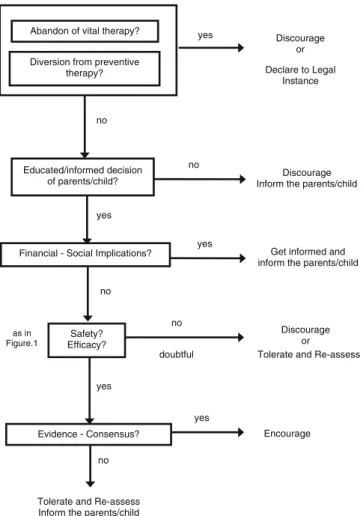
Figure 2 summarizes our decision-making algorithm. We have classified the above-mentioned conditional questions into a logical order of priority.
Initial questions should assess situations from which the child could be diverted or even induced to abandon a vital ongoing therapy. In such cases, the pediatrician should discourage proceeding to – or continuing – the CAM therapy under discussion. Child abuse and neglect (CAN) should in any such case be clearly discussed, excluded or declared to legal authorities.
As a second priority, the pediatrician should verify if an informed decision of the parents, and eventually of the child, has been taken. Some questions that may be posed are the following. How much do the parents know about the therapeutic project? Have the parents (and the child)
Efficacy Discourage Encourage Tolerate Re-assess Discourage Re-assess Safety
Fig. 1 Core “Safety-Efficacy” diagram based on bioethical prin-ciples. This diagram is a simplified and modified version of the liability risk analysis as presented by Cohen and Eisenberg [3]. Comment: In doubtful situations, we recommend grading the quality of the discussed therapy as unsure or inefficacious. This cautious attitude can be adopted, given that most common therapies in P-CAM have not been studied in randomized controlled trials and, consequently, evidence is not available to make an educated decision; thus, common sense should prevail
understood and measured potential risks and eventual benefits? Have they weighed any potential social or religious impact? What would the quality of life be for the child and his/her family if a new p-CAM therapy is started? Is there awareness of the associated economic costs? We should never neglect any potential social and economic implications. In fact, a safe and effective – but expensive – treatment may represent possible economic hardship to the family.
Only after having answered these two fundamental questions, should the pediatrician evaluate safety and efficacy as described in Fig.1. In doubtful situations, when either efficacy or safety are uncertain, the caregiver may schedule a re-assessment of the situation and offer follow-up.
We recommend verifying whether or not evidence, or a reasonable consensus, supports the application of the therapy and can be found in the scientific literature. It is an absolute necessity that this crucial step of the algorithm be discussed openly with the patient and his/her family and that the discussion and conclusions (if any) subsequently be recorded in the patient’s personal chart. Moreover, we suggest that an update of information be obtained regularly. If this is the case, a new p-CAM can be encouraged. If it is not the case, we suggest tolerating the initiation of the new p-CAM therapy and following the evolution of the child’s
health and his/her family’s situation with regular assess-ments, informing the patient and his family of potential hazards and socio-economical issues.
Application of the algorithm: case presentation
A 6-year-old girl known as having chronic childhood asthma (in a context of familial atopy) and her parents come to your general pediatric office. They explain their intent to start an herbal oil massage therapy based on an ancestral Alpine village tradition. They have heard of it from a neighbor. They request your opinion about this idea. The pediatrician’s point of view is that this idea may have arisen from the frustrations felt by the child and the family during the frequent acute episodes, which he has not successfully prevented to date. Puzzled as to what to say, and concerned not to allow a hazardous therapy to begin, he decides to use the described algorithm to help him with this situation.
Before applying the algorithm, he establishes a complete recent history and obtains more details about the massage therapy. It consists of sunflower oil in which herbs and flowers, collected in the fields of a nearby Alpine region, have been immersed for 3 years and stored in a cold and humid cellar. The specifications of the types of herbs and flowers are unknown to the family. The massage consists of the direct application of this mix to small surfaces of the face and the pectoral region once a day in the morning. Step 1:
The pediatrician asks the parents about their feelings on the actual standard and proven therapy he has introduced. Will they stop giving the evidence-based inhalations and the leukotriene antagonist (montelu-kast) he has prescribed? Will they reduce the recommended preventive inhalations? The parents confirm their trust in the efficacy of the ongoing therapy for the acute episodes and certainly will continue with the preventive inhalations, but they think it might not be enough to help their child. The girl agrees and mentions her sadness, saying that the drugs already used do not work well enough.
Step 2:
The pediatrician follows the algorithm and tries to understand why the family thinks this new therapy might help. They mention 20 children in the Alpine village and surroundings who “have noticed an improvement with their asthma after the massage therapy started”. They also mention that they have read on the internet that some mountain flowers have an anti-asthmatic effect. They tell the physician that they will go back to the Alpine village and ask the old lady who prepares the oils for details. Both parents are physicians themselves and clearly state they do not know the exact mechanism of action of the massages, but they think that trying it out will tell them if it helps their daughter.
Tolerate and Re-assess Discourage
or Declare to Legal
Instance
Discourage Inform the parents/child
Discourage or yes Encourage Safety? Efficacy? Abandon of vital therapy?
Diversion from preventive therapy? yes Educated/informed decision of parents/child? no no yes no doubtful Evidence - Consensus?
Tolerate and Re-assess Inform the parents/child
yes
no
as in Figure.1
no
Get informed and inform the parents/child Financial - Social Implications?
yes
Step 3:
The pediatrician returns to the algorithm and asks about the price of the oil mixture. The parents say it will cost 20 Euros per month, and state it will not be a burden for the household budget. He enquires about the potential effects of the new therapy on the child’s life and on the family’s life. They say that the massage will be performed by one of the parents for 10 min in the morning before breakfast. The smell is said to be pleasant.
Step 4:
The pediatrician continues with the algorithm and tells the parents he has doubts on the efficacy of the treatment. He suggests he will have a look in the existing medical literature and asks for details about the underlying rationale. The parents give him the phone number of the old lady who prepares the oils. He then asks about the potential risk that the oils used in the massages might increase the skin problems in their child? He explains his concerns that the massage might burn the skin, induce irreversible lesions, increase her atopic dermatitis or even cause infections. The parents state that the 20 children treated had no such complications, and that they will carefully screen for any secondary effect.
In summary, the pediatrician’s impression is that he has doubts about safety and efficacy of this therapy in this atopic child. He discusses his concerns openly with the family and reschedules an appointment after he has had time to look for evidence or consensus on such therapy in the literature and after having had more details on the massage oil from the producer.
We believe that the rational application of our algorithm allows the pediatrician to ask all of the essential questions and to establish a plan on how to proceed with the situation. In the case presented here, the pediatrician will be able to obtain a clear picture of the new therapy, anticipate potential risks for the child and establish a plan for follow-up. Most importantly, he will achieve this by openly discussing his concerns with the family, thus providing a stimulus for the parents themselves to reflect on whether– or not– to start this new approach in the hope of relieving their daughter’s health issues.
The reality of actual patient-doctor communication as a limitation
One major problem is the fact that patients and their parents seem to consider discussing p-CAM therapies with healthcare providers a taboo [5,14, 18]. A recent review of the literature on the topic highlights the importance of offering patients and parents space within the therapeutic relationship [11] and respecting a few simple rules. One of these rules could be to remain open to the idea that there
may be different, equally interesting paths to a child’s good health. We believe that the pediatric practitioner is indispensable in improving the awareness of, and provid-ing education on, p-CAM therapies and that by doprovid-ing so he may increase the ease at which the topic can be openly discussed with patients and parents. We also hope that an approach attempting to simplify and provide a practical decision-making will contribute to the integration of p-CAM in the pediatric routine.
Conclusion
In conclusion, we have established a pragmatic algorithm for decision-making in p-CAM. The application of bioethical principles added to basic pediatric fundamentals can help the physician in dealing with this field and allow debate between specialists and p-CAM therapists as to how to integrate p-CAM in everyday clinical practice. The reasonable application of our algorithm along with common sense should enable the pediatrician both to decide whether or not p-CAM is potentially harmful to the patient and to provide ethically sound counseling.
References
1. Adams KE, Cohen MH, Eisenberg D, Jonsen AR (2002) Ethical considerations of complementary and alternative med-ical therapies in conventional medmed-ical settings. Ann Intern Med 137:660–664
2. Armishaw J, Grant CC (1999) Use of complementary treatment by those hospitalised with acute illness. Arch Dis Child 81:133–137
3. Cohen MH, Eisenberg DM (2002) Potential physician mal-practice liability associated with complementary and integrative medical therapies. Ann Intern Med 136:596–603
4. Cohen MH, Kemper KJ (2005) Complementary therapies in Pediatrics: a legal perspective. Pediatrics 115:774–780 5. Committee on Children with Disabilities, American Academy
of Pediatrics (2001) Counseling families who choose comple-mentary and alternative medicine for their child with chronic illness or disability. Pediatrics 107:598–601
6. Cuzzolin L, Zaffani S, Murgia V, Gangemi M, Meneghelli G, Chiamenti G, Benoni G (2003) Patterns and perceptions of complementary/alternative medicine among Pediatricians and patients’ mothers: a review of the literature. Eur J Pediatr 162:820–827
7. Davis MP, Darden PM (2003) Use of complementary and alternative medicine by children in the United States. Arch Pediatr Adolesc Med 157:393–396
8. Forjuoh SN, Rascoe TG, Symm B, Edwards JC (2003) Teaching medical students complementary and alternative medicine using evidence-based principles. J Altern Complement Med 9:429–439
9. Friedman T, Slayton WB, Allen LS, Pollock BH, Dumont-Driscoll M, Mehta P, Graham-Pole J (1997) Use of alternative therapies for children with cancer. Pediatrics 100:e1
10. Kemper KJ (2002) The holistic pediatrician: a pediatrician’s comprehensive guide to safe and effective therapies for the 25 most common ailments of infants, children and adolescents, 2nd edn. HarperCollins Books, New York
11. Kemper KJ, Cassileth B, Ferris T (1999) Holistic Pediatrics: a research agenda. Pediatrics 103:902–909
12. Lee AC, Kemper KJ (2000) Homeopathy and naturopathy: practice characteristics and pediatric care. Arch Pediatr Adolesc Med 154:75–80
13. Losier A, Taylor B, Fernandez CV (2005) Use of alternative therapies by patients presenting to a pediatric emergency department. J Emerg Med 28:267–271
14. Madsen H, Andersen S, Nielsen RG, Dolmer BS, Host A, Damkier A (2003) Use of complementary/ alternative medicine among Pediatric patients. Eur J Pediatr 162:334–341
15. Moenkhoff M, Baenziger O, Fischer J, Fanconi S (1999) Parental attitude towards alternative medicine in the Pediatric intensive care unit. Eur J Pediatr 158:12–17
16. Santa Ana CF (2001) The adoption of complementary and alternative medicine by hospitals: a framework for decision making. J Healthc Manage 46:250–260
17. Sikand A, Laken M (1998) Pediatricians’ experience with and attitudes toward complementary/alternative medicine. Arch Pediatr Adolesc Med 52:1059–1064
18. Woolf AD (2003) Herbal remedies and children: do they work? Are they harmful? Pediatrics 112:240–246