DEVELOPHENT ASSISTANCE AND THE ENVIRONMENT: A GUESTION OF ACCOUNTABILITY
by
JOHN ALFRED JAMES HORBERRY B.A. Hons. Cambridge University
(1974)
M.S. University of Pennsylvania (1975)
Submitted to the Department of
Urban Studies and Planning
in Partial Fulfillment of the Requirements of the
Degree of
DOCTOR OF PHILOSOPHY
at the
MASSACHUSETTS INSTITUTE OF TECHNOLOGY February 1985
OJohn A. J. Horberry 1984
The author hereby grants to M.I.T. permission to reproduce and to distribute copies of this thesis document in whole or in part.
Signature of Author. . . . .. ... Department of Ur an Studies and Planning
^tptember 26th 1984
Certified by.-...
Thesis Supervisor
Accepted by.
Head, Ph.D. Committee
ARCHIVES
MaASSACHUSETTS IST1TUTEOF TECHNOLOGY-FEB08 1985
DEVELOPMENT ASSISTANCE AND THE ENVIRONMENT: A QUESTION OF ACCOUNTABILITY
by
JOHN ALFRED JAMES HORBERRY
Submitted to the Department of Urban Studies and Planning on October 1st, 1984 in partial fulfillment of the requirements of the Degree of Doctor of Philosophy
ABSTRACT
An analysis was made of what determines the capacity of different types of development assistance agencies to
assess and mitigate the environmental effects of their funding programs. The analysis concentrates on the influence of the political and financial structure of
bilateral aid programs, multilateral development banks and UN specialized agencies on the incentives and constraints
facing the agency st 4ff. The key to understanding how this relationship affects environmental policy is the
accountability system that prevails within each agency. The accountability system is the configuration of pressures and mechanisms by which various actors hold the agency
accountable for compliance with different policy objectives relative to different elements of the agency's program.
Environmental assessment of development assistance activities is one of a set of policies that development assistance agencies have difficulty implementing because
they modify rather than expand the output of the agency -and this conflicts with the underlying reward system within agencies. The extent to which it can be successfully
implemented depends on how the political and financial structure of the agency shapes the incentives and
constraints facing the staff via accountability system. This can either inhibit or encourage the review of
environmental effects of projects and their modification, if appropriate.
The accountability system of bilateral agencies was found to be dominated by domestic political pressures and mechanisms for monitoring their output. Multilateral
development banks are mainly accountable for their financial responsibilities and for ensuring
creditworthiness. Owing to their political and financial structure, UN specialized agencies are relatively
autonomous to pursue activities designed to strengthen and enhance their programs. It is in this context that
agencies' capacity to implement environmental assessment policies can be understood a;.d influenced.
The analysis illustrates how development agencies respond to political, financial and developmental policy objectives and what opportunities exist for securing the implementation of specific policies in different types of agencies.
Thesis Supervisor: Dr. Lawrence Susskind
PREFATORY NOTE
The research on which this dissertation is based would not have been possible without the cooperation and
assistance of the many officials of development assistance agencies that I have interviewed in the past two years. I wish to thank them and I hope that they will forgive any
factual errors that I have inadvertently made - the fault is mine. I also wish to acknowledge my debt to the
International Institute for Environment and Development, in particular Brian Johnson, Richard Sandbrook and David
Runnalls, for provoking my interest in the topic and giving me the opportunity to investigate the environmental
policies and procedures of development assistance
agencies. That happy association led to another, with the International Union for Conservation of Nature and Natural Resources, in particular the Conservation for Development Centre, directed by Mike Cockerell and Mark Halle; through
them I was able to undertake further research that contributed to this dissertation.
Various members of the Department of Urban Studies and Planning at MIT have been exceptionally generous with
advice and help. I am grateful to Martin Krieger and Aaron Fleisher for their continual concern. No Ph.D. candidate in the Department can survive without the help and humor of Jackie LeBlanc - whom I sincerely thank. Finally, I wish to thank my committee: Lisa Peat tie, who first suggested I should consider coming to MIT; Eugene Skolnikoff, the
Director of the Center for International Studies; and Larry Susskind, my advisor throughout my career at MIT. They have
TABLE OF CONTENTS
Page
Chapter
1.
INTRODUCTION . . .9
Chapter 2. INTERNATIONAL ORGANIZATION AND DEVELOPMENT ASSISTANCE . . . 19
- Introduction . . . . . . . . 19
- Development Assistance Agencies . . . 21
- The Political and Financial Structure of Development Assistance Agencies . . . 30
- Perspectives on International Organizations . . 45
- The Policies and Operations of Development Assistance Agencies . . . 63
Chapter 3. DEVELOPMENT ASSISTANCE AND THE ENVIRONMENT 81 - Introduction . . . 81
- The Effects of Development Assistance on the Environment . . .
81
- The Institutional Response . . . 101
- Critiques and Proposals . . . 115
Chapter 4. ACCOUNTABILITY AND DEVELOPMENT ASSISTANCE 128 - Introduction . . . 128
- Development Assistance Agencies and their Policies . . . 129
- Accountability, Development Assistance and Environmental Assessment . . . 141
- Analysis and Measurement . . . 150
- The Case Studies . . . 155
Chapter 5. BILATERAL AID PROGRAMS . . . 159
Case Study United States Agency for International Development - Introduction . . . 159
- NEPA and Development Assistance . . . 164
- The Political and Financial Structure of AID . . 186
Accountability, Organizational Response and
Environmental Planning . . . 207
Chapter 6. MULTILATERAL DEVELOPMENT BANKS . . . . 223 Case Study the International Bank for
Reconstruction and Development
- Introduction . . . 223
The Political and Financial Structure of the
World Bank . . . 232
The Bank's Accountability System . . . 238 The Accountability System and Environmental
Responsiveness . . . 257
The Environmental Response of the Bank . . . . 263
- Conclusions . . . 285
Chapter 7. THE UNITED NATIONS SYSTEM . . . 289 Case Study Food and Agriculture Organization
of the United Nations
- Introduction . . . 289
- The Political and Financial Structure of the FAO . 299 - Accountability or Autonomy? . . . 309
- Accountability and Environmental Assessment . . 336 - Barriers to Environmental Assessment . . . 342
Chapter 8. DEVELOPMENT ASSISTANCE AND THE ENVIRONMENT:
CONCLUSIONS. . . . 347
- Introduction . . . 347
- Conclusions from the Cases . . . 348 - Other Development Assistance Agencies . . . . 359 - The Determinants of Environmental Assessment
Capacity . . . 374
- The Latitude for Environmental Assessment . . . 380
LIST OF TABLES
Table 1 Total Flows of Resources from DAC Countries
By Major Categories . . 25
Table 2 The Net Flow of Financial Resources from DAC
Countries . . . . . 26
Table 3 Composition of External Financial Receipts of
Developing Countries by Type of Flow 1970-1981 27 Table 4 ODA from DAC Countries to Multilateral Agencies
1981 . . . 28
Table 5 Loan and Grant Disbursements by Multilateral
Agencies . . . 29
Table 6 The Project Cycle . . . 108
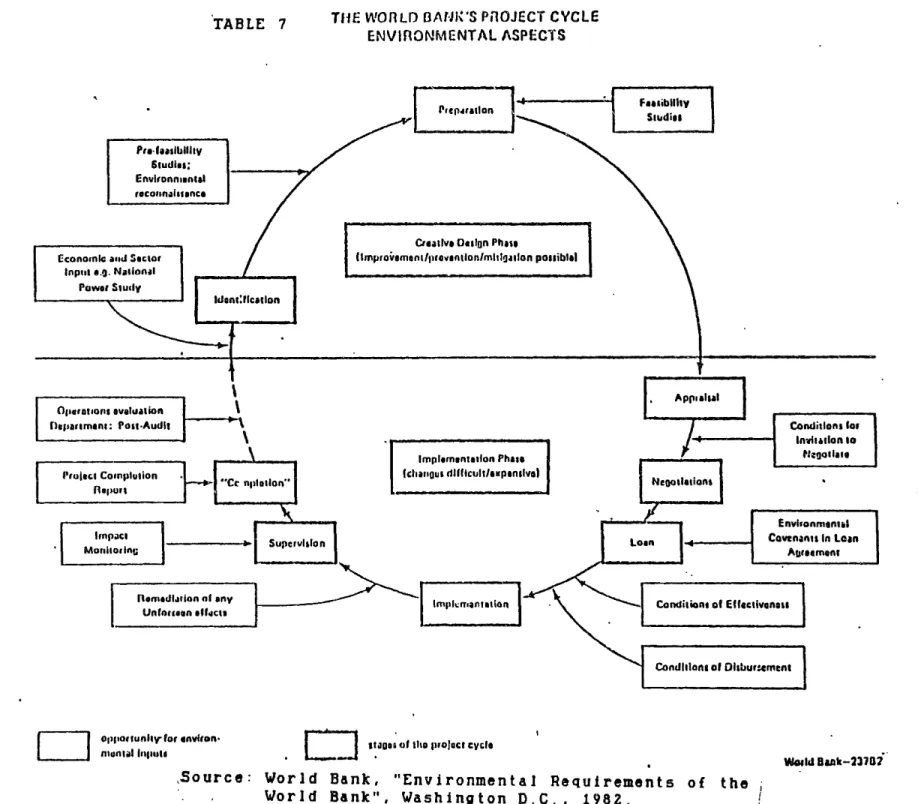
Table 7 The World Bank's Project Cycle: Environmental
Aspects . . . 109
Table 8 Environmental Input into the Project Cycle . 110 Table 9 Total U.S. Agency for International Development
Commitments . . . 187
Table 10 International Development Cooperation Agency: Agency for International Development: Program
Trends FY 1980-1983 . . . 189
Table 11 Agency for International Development . . . 193 Table 12 The World Bank: The Record for Ten Years,
1974-83 . . . 235
Table 13 The World Bank . . . 236
Table 14 Annual Expenditure on FAQ Field Programmes 301 Table 15 Trends in the Real Volume of FAO's Technical
Cooperation; UNDP Allocations to FAQ and
FAO/UNDP Delivery 1974-1982 . . . . 302 Table 16 Regional Distribution of FAQ Field Projects . 303 Table 17 Estimated Extra-Budgetary Expenditures for
Table 18 The Food and Agriculture Organization of
the United Nations 308
Table 19 The FAQ Regular Budget 312
Table 20 Contributions of Member States to the FAO
CHAPTER 1
Introduction
The national and International organizations that provide funds to developing countries for economic
development projects operate in two kinds of environments. One Is the bio-physical environment of the project or
program being funded - the watershed surrounding a dam, the tropical forest being cleared for agriculture or the
coastal zone within which a harbor is built. The other is the political and Institutional environment within which the organization performs its task of administering the flows of development assistance - the political actors that have influence over its policies and decisions, the
institutions with which it has to cooperate and the various participants on whom the implementation of the projects depend.
This study Is about how policies for protection of the physical environment fare within the different political and institutional environments in which these organizations operate. I shall call this latter environment the
"task-environment" - a term used In organizational theory to refer to the relationships an organization has with external actors and processes in the course of performing
its ias . However, the purpose of this study is not to test whether organizations have to take account of their task-environment, but to investigate how the political and financial structure of the organization equips it to change its output in relation to its task-environment.
The organizations I shall discuss are called
development assistance agencies. They include national government agencies in wealthy countries whose job is to disburse funds directly to developing countries for
projects or programs - this form of assistance is
conventionally called bilateral assistance and the national agencies will be referred to in this study as bilateral agencies. They also include international agencies, to which a number of n<' ans belong and which receive
contributions or loan guarantees from wealthy countries and provide funds to poor countries in various forms. I shall be dealing with two main categories of international agency - multilateral development banks and United Nations
organizations.
The policy issue in question is how can development assistance agencies ensure that their programs do not have harmful effects on the bio-physical environment. In one
sense, this issue is particular to the relationships
be tween different types of development project and the
natural resource systems on which they depend and the
environment In which they are located. But, it is also an issue common to other policies that concern the
"developmental objectives" of assistance programs. To put it simply, there are alternative frames for analyzing the efforts of development assistance agencies - political,
financial or developmental - that have very different implications for policy making and organizational reform.
The political frame concerns the goals of governments and intergovernmental organizations in providing and
allocating the assistance. The financial frame encompasses the overall flows of assistance and the terms on which it is lent or granted. The developmental frame focusses on the effects of the assistance on economic growth, income distribution, employment, health, nutrition, population, education, rural development, social organization, cultural values and the state of the environment - not necessarily
In that order.
Policies that are designed to affect the developmental account, so to speak, often embody criteria for achieving good outcomes and suggest procedures or methods for
ensuring that projects meet these criteria. The question I shall organize this study around is what determines the
capacity of a development assistance agency to follow these
procedures and meet these criteria effectively.
The
for an agency to adopt a policy intended to satisfy a specific developmental objective than to ensure that the program meets that objective. In the case of environmental
protection, many agencies have declared themselves
committed to assessing the environmental effects of their programs and taking steps to minimize damage, but very few have convincingly reformed their operations and performance
as a result. The Issue is, at this point, less one of the merits of the particular policy and more what structural
and organizational features influence the implementation of developmental policies.
My initial approach to this question is to suggest that because development assistance agencies are political and
financial bodies, one must look to their political and financial structure for an explanation of how policies are adopted and transmitted to the organization. Also, because development assistance agencies are large organizations, one must look to their organizational processes and
behavior to explain how they implement the policies. It seems reasonable to expect that bureaucracies do not always
Implement policies quite as their political masters propose or their financial status requires. Some of the reasons for this are that the organization has to cope with Its
task-environment and make sure It gets its job done despite
barriers and uncertainties.
However, I think the Issue is more complex. The reason Is that the way an organization copes with its
task-environment is to a large extent determined by its political and financial structure. For, the structure defines many of the Incentives and constraints facing the staff of the organization. The structure determines how policies are enforced or how the performance of the program is evaluated. The organization can try to influence its task-environment - including the mechanisms by which the political and financial structure exercises control over the operations of the organization - but mainly it is reacting to how its responsibilities and reward system are shaped from above in relation to the problems it faces in getting its task done.
Because I think that the fate of a policy such as
environmental assessment depends on the interaction between the political and financial structure of the agency and the organizational Incentives and constraints facing the staff,
I have proposed an analytical "handle" with which to
Investigate this relationship. This is the "accountability system" by which the organization is held accountable to
the political members, sources of funds, leadership and
other participants for its performance.
The nature of the
accountability system
-how strict It is, what criteria it
of the agency and so on - determines the relationship of policy making with the operations of the agency.
So, my analysis will focus on the capacity of
development assistance agencies to assess the environmental effects of their programs in terms of the accountability system prevailing in different types of agency
-distinguishable by their political and financial
structure. The question is what does the accountability system imply for a new policy objective and how can the accountability system be brought to bear on a particular
policy objective.
I give an account in the next chapter of the
development assistance system and the various theoretical perspectives that have contributed to my view of the
importance of a conceptual linkage between the political and financial structure of the agencies and the
organizational processes that embrace their day-to-day operations.
Then, I show in chapter 3 that development assistance agencies have become quite concerned with environmental issues. Over the past decade or so, they have adopted
Policies for the environmental review of their funding
programs, have allocated some of their funds to projects
designed to manage environmental problems and have provided
technical assistance and funds to the governments of developing countries to strengthen their environmental policies and institutions. I shall also point out that environmental lobbies and non-governmental organizations continue to criticize these agencies for not following
these policies through and for still causing environmental problems through their regular funding programs.
This leads to a discussion in Chapter 4 of how to
analyze the determinants of the response, or lack of it, of different types of agencies to environmental problems their projects may cause. At this point, I lay out my arguments
for using the accountability system to organize the analysis.
The underlying question is whether the policy makers and advocates who are worried by environmental problems in
developing countries are justified in focussing their attention on development assistance agencies and whether
their efforts to elicit a more vigorous or effective response from the agencies are likely to succeed. Are
these agencies able to deliver what is being demanded of them - taking into account their political and financial structure and the task-environment they face?
This question is not exclusive to environmental
objectives that development assistance agencies are expected to achieve. Whether the issue Is alleviating poverty, achieving better nutrition levels, promoting the
Interests of women In development or avoiding social or
cultural disruption, development agencIes can hardly make a case that such objectives are undesirable. However, when it comes to reforming their procedures and operations in order to satisfy these objectives, one needs to ask whether the reforms needed are compatible with the nature of the organization, Its political and financial status and thedominant organizational Incentives governing its day-to-day operations. Organizations do resist new policies, changed procedures and additional objectives. Sometimes, it is obvious why they resist, and steps can be taken to address
the reasons directly; other times, it is not clear what accounts for poor implementation of new policies.
If the demands being made of development agencies are unreasonable or difficult to implement, it would benefit the advocates of new policies to understand why. If policy makers can discern the limited influence of development
agencies over the implementation of their program or the incompatibility of certain.objectives expected of them, then they should be able to advocate other measures
designed to complement the actions of agencies or to avoid
cannot make Luch difference, then policy makers can look for ways of influencing the actors or activities that do make a difference.
If, on the other hand, the policies are reasonable and the agencies have the capacity to achieve the objectives in question, then policy advocates should know how to
stimulate the response required and how to enforce the policy objectives most effectively. An understanding of the sources of resistance and the incentives facing agency staff are indispensable for furthering the interests the particular policies represent.
In order to distinguish policies that development assistance agencies are equipped to implement and to
improve policy mechanisms and procedures accordingly, it is necessary to analyze what determines the capacity for
development agencies to respond to the policies asked of them - what is the relationship is between the sources of policy and the operations of the organization and what are
the mechanisms by which the leaders and managers of the agency ensure the desired performance within the program?
Within the development assistance system, there are
types of agency that have very different political and
financial structure
-bilateral agencies, multilateral
5, 6 and 7, 1 have taken one case from each group and examined in detail the response of the agency in question
to a policy for the environmental assessment of its funding program in relation to the accountability system that
prevails within the agency. Because the political and financial structure of each agency is so different and produces quite distinct accountability systems, it is possible to make comparisons about how that structure determines the agency's environmental responsiveness.
From these comparisons, and from evidence from other cases that I have accumulated, I shall draw some general conclusions about the role of the accountability system in shaping the response of an agency to policy initiatives designed to improve the developmental effects of its
program. Ultimately, the value of this analysis is that it allows a better understanding of why policies that seem
reasonable and desirable are not always implemented effectively. It should provide the basis for judging strategies for improving the performance of development assistance agencies and offer some insight into how to
CHAPTER Z
International Organization and Development Assistance
Introduc-t-ion
This chapter and the next review the literature and historical experience relevant to the question of what determines the response of development assistance agencies to the environmental effects of their funding programs. In
this chapter, I start by describing the development
assistance agencies that are the subject of this study.
Second, I discuss some of the perspectives on the goals and performance of international organizations, trying to
extract insights that are relevant to development
assistance agencies. Third, I address in more depth the question of how development assistance agencies satisfy the policy demands of the participating actors and satisfy
their own organizational interests in relation to specific efforts to improve the outcomes of their programs. In the next chapter, I discuss the relationship of development assistance to the bio-physical environment.
At the outset, it must be said that not all
agencies, and not all development assistance agencies are international organizations. Bilateral development
assistance agencies are not, of course, intergovernmental organizations. However, they are engaged in activities
that involve other states, both donors and recipients, and are key actors within the community of international
organizations providing and administering the flow of
development assistance to developing countries. Also, some of the literature on international organizations has little relevance to development assistance agencies and will not be considered here. On the other hand, some literature on how large organizations behave stems from an analysis of national organizations but is relevant to my
investigation.
I am concerned with the question of why development assistance agencies do not always implement policies that appear to offer developmental benefits and have been
adopted by the leadership and management of the agencies. It seems to me that there are two main themes worth
exploring in the literature. One concerns the implications of the political nature of development assistance agencies on how they behave, what priorities they have and how they
are controlled. The other focusses on the procedures, mechanisms and practices that are at work within the
their task. Both these themes should offer some ideas
about how the output of the organizations compares with the desired policy outcomes. I also think it is necessary to integrate these themes in order to understand what
determines the capacity of a development assistance agency to, in this case, carry out environmental assessments of its program.
Deve-lopment Assistance Agencies
The context of this study is the apparatus for
providing funds for "official development assistance" to poorer countries.1 Essentially all such funds originate from the governments of wealthy governments - either Western members of the Development Assistance Committee
(DAC) of the Organization for Economic Cooperation and
1. The OECD defines "official development assistance" as grants or loans undertaken by the official sector, with promotion of economic development and welfare as main objectives, at concessional financial terms. QOD, Development Cooerationn :Efforts and Policies of the Members of the Development Assistance Commit tee. 1983
Bnview,
Paris, Organization for Economic Cooperation andDevelopment (QECD), Eastern block members of the Council for Mutual Economic Assistance (CMEA) or members of OPEC.2 Almost all funds are eventually made available to the
governments of poorer countries, or agencies and
institutions responsible for economic development within those countries. However there are a variety of channels, institutions and mechanisms whereby funds are made
available by donors, allocated to recipients and disbursed
for programs or projects.
In my case studies, I shall examine development assistance agencies that represent the three main categories of development assistance provided by DAC
members: namely 1 bilateral assistance provided directly from an agency of the donor government to recipient
government or institution, and multilateral assistance, which is channeled via international agencies in two forms
- 23 as contributions to multilateral development banks and the EEC, and 3) as contributions to the United Nations
Development Programme (UNDP) and the specialized agencies of 1e LN zystem. Since my analysis hinges on the
different political and financial structures that govern the policies, procedures and organizational dynamics
affecting the provision of assistance in these three cases.
I shall devote some space to discussing these categories of development assistance agencies.
In 1982, total net disbursements of official
development assistance from DAC members was US$27,853 millions, which amounted to 74% of official development assistance from all donors. Of DAC assistance, 66% was in
the form of bilateral assistance, 25% in the form of concessional contributions to multilateral development banks and the EEC, and 8% to the UN system.3 Historically
there has been a growth in the share of development
assistance channeled through multilateral agencies, (from an average of 15.7% of DAC official development assistance during 1971-1973 to 25.3% in 1982. The share channeled through the UN system has remained fairly constant (a modest increase from 6.7% of DAC official development
assistance in 1971-1973 to 8.1% in 1982) as the combined total of the budgets of the UNDP and specialized agencies have kept pace with overall assistance flows. However, in
the last 2-3 years major donors have resisted this trend and placed more emphasis on bilateral assistance. The rate of expansion of contributions by DAC members to
multilateral and UN organizations has slowed since the late
3. Figures calculated from J±bid., p.179.
1970's, except for European Community members'
contributions to the European Development Fund (EDF) which have risen faster than multilateral official development
assistance as a whole.5 There has been a reluctance to replenish the International Development Association (IDA),
the concessional window of the World Bank Group and the funds contributed to UNDP have dropped off significantly in real terms. 6
The DAC, in reporting the current stagnation in contributions to multilateral and UN organizations,
considers the implications. Members face severe budgetary constraints but increasing demands from a growing number of
international organizations. But there appears to be an attitude among some donors that multilateral organizations are less responsive to their preferences than they would wish, while UN organizations are inefficient and hard to
influence.8 Nevertheless, the DAC asserts that members do not dispute the traditional grounds for supporting
multilateral agencies - namely that the assistance is less
5. ibid.. p.77.
6. ibid.,pp.105-108 & pp.100-101. 7. IbId.., p.98.
8. See for instance United States Treasury Department, .L. Participation in the Multilateral Develooment Banks in the
TABLE I
TOTAL FLOW OF RESOURCES FROM DAC COUNTRIES BY MAJOR CATEGORIES
1970 1971 1972 1973 1974 1975 1976 1977 1978 1979 1980 1981
a) S billion, net, current prices
Official Development Assistance ... 6.9 7.6 9.2 9.1 11.6 13.8 14.0 15.7 20.0 22.8 27.3 25.6 Grants by private voluntary agencies ... 0.9 0.9 1.0 1.4 1.2 1.3 1.4 1.5 1.7 2.0 2.4 2.0 Non-concessional flows ... 8.1 8.9 10.0 11.9 9.7 29.7 30.6 34.3 48.9 50.6 45.7 60.4 Total flow of resources... 15.9 17.4 20.2 22.4 22.5 44.8 46.0 51.5 70.6 75.4 75.4 88.0
b)S billion, 1981 prices and exchange rates
Official Development Assistance ... 17.8 18.4 20.1 17.7 20.5 21.1 20.8 21.6 23.9 24.1 26.5 25.6 Grants by private voluntary agencies ... 2.3 2.2 2.2 2.7 2.1 2.0 2.1 2.1 2.0 2.1 2.3 2.0 Non-concessional flows ... 20.9 21.6 21.8 23.2 17.1 45.4 45.4 47.1 58.3 53.5 44.3 60.4 Total flow of resources ... 41.1 42.2 44.1 43.7 39.7 68.5 68.2 70.7 84.2 79.8 73.1 88.0
e) Asuper cent orGNP
Official Development Assistance ... 0.34 0.34 0.36 0.29 0.34 0.36 0.33 0.33 0.35 0.35 0.38 0.35 Grants by private voluntary agencies...0.04 0.04 0.04 0.04 0.04 0.04 0.03 0.03 0.03 0.03 0.03 0.03 Non-concessional flows... 0.41 0.40 0.38 0.38 0.28 0.77 0.74 0.73 0.86 0.79 0.63 0.83 Total flow of resources ... 0.79 0.78 0.78 0.72 0.65 1.17 1.10 1.09 1.24 1.17 1.04 1.21
Source: OECD, Development Coooeration: Efforts and Policies
TABLE 2
THE NET FLOW OF FINANCIAL RESOURCES FROM DAC COUNTRIES
Net disbursements
S million Percentages
1970 1975 1979 1980 1981 1970 1975 1979 1980 1981
1. Orncial Development Assistance ... 6949 13846 22820 27264 25635 44 31 30 36 29 1. Bilateral grants and grant like flows... 3 321 6268 11 704 14 123 13 184 21 14 15 19 15
of which: Technical cooperation... . ... 1524 2922 4685 5477 5249 10 . 7 6 7 6
2. Bilateral loans at concessional terms...2 351 3 53 4 628 3 985 5 099 15 8 6 5 6
3. Contribution to multilateral institutions ... 1277 4039 6488 9 156 7352 8 9 9 12 8
of which to: UN ... 371 1 197 1699 2170 2228 2 3 2 3 2
EEC ... 158 673 1 216 1 575 1 561 1 2 2 2 2
IDA ... 582 1316 1996 3101 2434 4 3 3 4 3
Regional Development Banks ... 101 418 918 1 717 753 1 1 1 2 1 II. Otherofficial flows... 1 122 3912 2894 5272 6607 7 9 4 7 8
1. Bilateral... 845 3833 3138 5378 6470 5 9 4 7 7 2. M ultilateral ... 276 79 -244 - 106 137 2 x x x I l1l. Private flows ... 7018 25706 47690 40430 53780 44 57 63 54 61 1. Direct investment ... 3690 10344 12745 9769 14639 23 23 17 13 17 2. Bilateral portfolio ... 697 9291 23450 17702 24712 4 21 31 23 28 3. Multilatcral portfolio ... 474 2553 2087 1469 3836 3 5 3 2 4 4. Export credits ... 2157 3518 9408 11490 10593 14 8 12 15 12 IV. Grants by private voluntary agencies ... 860 1 346 1 997 2 386 2018 5 3 3 3 2 Total net flow ... 15948 44810 75401 75352 88040 100 100 100 100 100 Total netflow in 1981 prices ... 41 103 68 517 79789 73086 88040 - - - -
-TABLE 3
COMPOSITION OF EXTERNAL FINANCIAL RECEIPTS OF DEVELOPING COUNTRIES
BY TYPE OF FLOW 1970-1981
Net disbursements Percentage shares in total receipts
1970 1971 1972 1973 1974 1975 1976 1977 1978 1979 1980 1981
Official Development Assistance ... 42.5 44.2 43.1 38.6 45.5 36.9 33.8 31.9 32.7 35.8 38.0 (34.1)
a) DAC bilateral ... 29.8 29.9 26.4 22.0 22.8 18.3 16.3 15.8 15.8 18.6 18.8 17.6
b) OPEC bilateral ... 2.0 2.1 2.8 6.3 11.5 10.4 8.9 8.3 8.3 7.7 8.6 6.6
c) CMEA countries, bilateral ... 5.1 6.0 5.9 4.2 3.5 1.4 1.8 1.4 1.4 2.1 2.0 2.0
d) Other countries, bilateral... .. .. 0.. 0.. 0.. 0.1 0.1 0. 1 0.12 (0.2)
e) Multilateral agencies ... 5.6 6.3 6.0 6.1 7.8 7.1 6.6 7.2 7.2 7.3 8.4 (7.7)
e of which: OPEC financed ... - - - - 0.3 0.3 0.7 1.2 1.2 0.3 0.3 0.4
Non-concessional flows ... 57.5 55.8 56.9 61.4 54.5 63.1 66.2 67.3 67.3 64.2 62.0 65.9
a) Multilateral agencies ... 3.6 4.3 4.3 4.0 5.1 4.7 4.6 3.7 3.7 4.9 5.3 (4.8)
of which: OPEC financed... - - - 0.1 0.1 0.2 0.2 0.2 0.3 0.2
b) Direct investment ... 19.4 15.6 18.1 14.7 5.2 21.2 14.8 14.2 14.2 15.7 10.8 (14.1)
c) Bank sector ... 15.8 15.6 20.6 30.1 27.6 22.0 25.8 27.5 27.5 23.0 20.6 (24.0)
d) Bond lending ... 1.6' 1.4 2.2 1.8 0.8 0.8 2.1 3.2 3.2 1.3 3.4 (2.4)
e) Private export credits ... 11.0 12.8 6.2 3.6 6.6 8.1 12.4 12.3 12.3 11.1 12.7 (10.2)
f) Official export credits ... 3.1 3.4 3.2 3.7 2.4 2.2 2.4 2.6 2.6 2.0 2.6 (2.)
g) DAC - other oficial ... 0.8 1.3 1.8 2.8 1.8 1.0 1.0 1.5 1.5 1.3 2.3 (1.9)
h) OPEC bilateral ... 1.1 0.9 - 0.4 2.5 2.8 2.8 1.2 1.2) (1.1) (2.9)
z) CMEA countries ... 0.6 0.5 0.5 0.3 0.2 0.2 0.2 0.1 0.1
J) Other... 0.5 - - - - 0.1 0.2 1.0 1.0 3.7 (3.4) (2.9) Total receipts ... 00.0 100.0 100.0 100.0 100.0 100.0 100.0 100.0 100.0 100.0 100.0 100.0
Source: OECD, Develooment CooperatIon: Efforts and Policies
of the Members.of the Develooment Assistance Committe
TABLE 4
ODA FROM DAC COUNTRIES TO MULTILATERAL AGENCIES 1981
$ million
IBRD and militated institutions IDB Asian development bank EEC
African
Countries Countriesen Ordi. Ordi- develop- aenieUN Other Total
IBRD8 IDA Total nary a Total nary C Total n EDF Other Total agencies
capital capital frund
Australia... - 0.1 0.1 - - - 8.6 28.4 37.0 - - - - 48.3 16.7 102.0 Austria ... -3.1 43.3 40.2 0.1 - 0.1 3.4 - 3.4 - - - - 12.8 2.3 58.8 Belgium ... 2.0 51.6 53.6 - - - 0.6 3.8 4.4 6.1 38.3 53.8 92.1 47.3 2.1 205.7 Canada ... 3.5 146.9 150.4 5.9 16.2 22.1 7.6 47.3 54.9 25.0 - - - 154.8 35.3 442.5 Denmark ... 19.2 34.8 54.0 0.5 3.8 4.3 0.3 3.2 3.5 7.3 14.8 18.9 33.7 93.4 4.5 200.6 Finland ... 5.7 20.7 26.4 0.3 2.3 2.6 0.2 3.5 3.7 3.6 - - - 20.1 - 56.4 France ... 10.9 163.9 174.8 2.3 18.1 20.4 2.3 22.4 24.7 6.1 157.3 192.4 349.7 55.9 0.5 632.1 Germany ... 5.6 295.2 300.8 14.8 6.6 21.4 3.3 - 3.3 24.9 162.2 274.3 436.5 135.9 14.4 937.1 Italy ... 0.1 112.1 112.2 25.5 10.3 35.8 - 28.6 28.6 8.5 72.0 137.0 209.0 88.2 11.0 493.4 Japan ... 9.1 452.4 461.5 -6.3 - -6.3 18.7 176.2 194.9 - - - - 242.5 17.9 910.5 Netherlands... 2.2 81.8 84.0 0.8 3.9 4.7 0.6 - 0.6 5.9 49.1 69.8 118.9 145.9 6.5 366.6 NewZealand ... 2.7 3.3 6.0 - - - 2.3 1.8 4.1 - - - - 4.3 2.9 17.2 Norway ... 0.7 40.9 41.6 - - - 0.6 3.5 4.1 12.2 - - - 136.8 12.0 206.7 Sweden... - 90.8 90.8 - - - 0.2 6.0 6.2 14.2 - - - 198.6 7.4 317.3 Switzerland ... - - - 0.3 3.7 4.0 1.2 5.1 6.3 13.7 - - - 41.2 8.6 73.8 United Kingdom ... - 375.7 375.7 -1.0 - -1.0 2.8 30.1 32.9 12.5 113.6 207.1 320.7 96.6 28.5 865.9 United States ... 44.0 520.0 564.0 - - - 25.0 3.0 28.0 42.0 - - - 705.9 126.0 1 465.9
Total DAC countries ... 102.6 2 433.5 2 536.1 43.2 64.9 108.1 77.7 362.9 440.6 182.0 607.3 953.3 1 560.6 2 228.5 296.7 7 352.5
a) including IFC.
Net disbursements
TABLE 5
LOAN AND GRANT DISBURSEMENTS BY MULTILATERAL AGENCIES
$ million
Concessional flows Non-concessional flows
Agencies 1970 1976 1977 1978 1979 1980 1981 1970 1976 1977 1978 1979 1980 1981 IBRD'... ... net - 16 39 76 107 107 88 508 1724 1833 2104 2846 3166 3603 gross - 16 39 76 107 107 88 810 2279 2501 2900 3786 4 310 5015 IDA ... net 163 1310 1 132 1007 1278 1543 1918 - - - - - - -gross 163 1 326 1 158 1 038 1 303 1 584 1 963 - - - - - - -IFC ... net - - - - - - - 68 193 98 58 108 295 510 gross - - - - - - 77 252 174 169 244 465 645 IDB . ... net 224 282 299 332 335 326 438 84 285 388 375 447 567 643 gross 245 362 392 433 461 468 .. 150 398 552 560 613 813 ofwhich: ... grants - 12 - - - 17 .. - - - - - -
-African D.B. and Fund net - 11 26 39 55 96 91 2 44 66 83 92 97 70
gross - 11 26 44 57 96 93 2 51 73 93 108 117 99 Asian D.B. ... net 1 62 89 161 116 149 .. 15 232 225 229 278 328 gross 1 63 100 161 124 159 .. 16 263 272 294 361 429 of which:...grants - - 8 - - 8 .. - - - - - - -Car. D.B. ... net - 14 12 20 25 43 6 11 * 7 13 EEC/EIIB...net 210 501 549 805 1 124 1013 1440 11 58 49 78 162 257 241 gross 210 512 558 815 1 137 1 028 1 453 (11) 68 67 :04 194 294 275 of which: ... grants 174 396 473r 729' 848 900 .. - - - - - -
-IMF Trust Fund...net - 175 864 680 1636 434 - - -
-lFAD ... net - - 3 45 75 - - -
-United Nations ... grants 498 1 252 1404 1730 2214 2487 .. - - - - - - -Arab OPEC Funds... net - 419 1 107 973 265 294 415 - - 20 157 219 128 265
ofwhich:...grants - 8 13 19 19 28 42 - - - - - --
-Total ... net 1096 3867 4832 6007 6202 7759 (8000) 688 2542 2690 3084 4159 4849
gross 1117 3975 5090 6147 6375 7936 .. 1066 3469 3953 4277 5700 6583
of which: ... grants 672 1668 1898 2478 3077 3505 .. - - - - - -
-a) Excluding loans transferred to IFC.
b) Including funds channelled through other multilateral organisations, c) Including STABEX.
Note: Loas unless otherwise stated. For abbreviations see page 173. Net disbursements
wi
governed by individual donors' political interests or tied to particular goods and services and that these agencies play an indispensable role as repositories of erperience and fora for discussing the policy framework for
assistance. Also, while UNDP contributions have dropped off, there has been an increase in contributions to other UN operational activities that provide resources to
developing countries. 1 0
Thea Po2l It il -and Financ1a1-S t ruc t ur-e o.f 1Deve l opMen
Assistance Agencies.
There are important differences in political and economic structure among the types of development
assistance agencies that can help explain how different agencies respond to policy initiatives and what capacity they have for reviewing their assistance programs.
A. Bilateral Agencies.
9. OECD,
on
i.
p.99.
Almost all donor governments disburse the bulk of their foreign assistance through their bilateral agencies,
directly to the governments or institutions of recipient countries.
Bilateral agencies are parts of national governmental machinery, disbursing funds provided by the government's
treasury and following the political and economic
objectives that the government holds as part of its foreign and domestic policies. For instance, assistance may be allocated in order to secure political alliances or trade relationships. Bilateral agencies also pursue
developmental objectives in allocating and guiding the
disbursement of the funds at their disposal. For instance, they may target their assistance to poor rural farmers or to meeting basic needs or raising nutrition levels. The agencies are subject to the directives and pressures of government, parliament and the electorate in carrying out
their program. While a bilateral assistance program is usually administered by a single agency, the national policy for that program is normally the responsibility of several government departments. 11
The activities of the OECD, an international
11. White, John, Thmoltc1oorinAid,
New York, St .
organization to which the Western developed countries belong, include the work of the DAC. The members have agreed to increase and improve the effectiveness of the
flows of resources made available to developing countries. The purpose of the DAC is provide a mechanism for members
to coordinate, monitor and discuss their bilateral aid programs in the light of this agreement. Thus members are
loosely committed to temper their individual political and economic policies with the developmental objectives agreed among themselves concerning the quantity, terms, mechanisms and priorities of development assistance. The remainder of bilateral assistance is coordinated to some extent by the CMEA and OPEC, representing the Socialist and oil-exporting countries respectively.
Bilateral aid is a mix of concessionary loans and grants; much of it is tied to the purchase of the donors goods and services and channeled to countries which are of foreign policy, security or trading interest to the donor. Nevertheless, bilateral aid can also be allocated to much poorer countries than development bank loans and ear-marked
for particular developmental objectives if the donor government chooses and the recipient government agrees.
Needless to say, the levels, destinations and
determined by donor government policy and the political, economic and developmental pressures facing a particular donor.12 However, bilateral aid donors do coordinate to some extent both in general via the DAC and at the country
level either Informally or through coordinating
mechanisms. Bilateral donors also often cooperate with multilateral agencies at a country level and provide
co-financing for large projects.1 3
B. Multilateral Development Banks.
Multilateral development banks, including the World Bank Group (the International Bank for Reconstruction and Development, the International Development Association, the International Finance Corporation), the Asian Development Bank, the Inter-American Development Bank, the African Development Bank, the Carribean Development Bank and Arab Bank for Economic Development in Africa, have global or
12. See, in the US case for instance, Congressional Budget Office, Assistina the Develovino Countries: Forelan Aid and
Trade Policies of the United States, Washington D.C.,
Government Printing Office, 1980; Hough, Richard, E.conomLc
Assistance and Security: Re thinkina US Policy, Washington
D.C., National Defense University Press, 1982.
13. See recent Issues of OECD, Development
Coeration:Efforts and Policies of the Members of the Develoament
Assistance Commit tee, (Annual Report by the Chairman of the
Development Assistance Commit
tee), Paris, Organization for
regional membership divided into donor and recipient members. There are other multilateral financing
institutions such as the International Fund for
Agricultural Development and various OPEC funds that are not discussed here.
Also, other multilateral organizations exist which do not conform exactly to the model of a development bank. The European Development Fund is discussed in this section,
although it is a really a European Community-wide bilateral program. The European Investment Bank is increasing its funding outside the European Community, but this is still a minor part of its lending program. The Organization of American States is a regional technical assistance agency, usually included among multilaterals.
UN organizations are, of course, multilateral but I treat them in a separate category, because of their
distinct political and financial structure. Formally, the World Bank is affiliated to the UN system, but in practice it is politically and financially distinct, and does not share those features that 1 use to distinguish the UN organizations.
Within multilateral development banks, voting is
welghted according to the capital contribution of the
members. They have two-tier governing bodies; a Board of
Governors comprising the Finance ministers of members, which meets annually to review the broadest policy issues, and a Board of Executive Directors, permanently posted at
the bank, who represent the members in approving disbursements and matters of policy and operations.
Most of the funds that the multilateral banks disburse are borrowed on the International capital markets on the strength of the capital contributions of the members, both paid in and callable. These funds are lent to borrowing governments or agents thereof at interest rates that are normally below those available from commercial banks. Most lending is for economically productive projects and
programs in the public sector for which alternative sources of funds are unavailable. The multilaterals, in
particular, the International Development Association of the World Bank Group, do also raise concessionary funds from their developed members, to provide soft-loans to poorer borrowers and less financially remunerative sectors.
The constitutional and financial policies of the multilateral banks are governed by the major donors, but
they are, in theory, free from the political or economic
pressures of individual members.
The management and
professional staff are able to take a more independent line
than in bilateral or UNk agencies on the financial,
operational and developmental policies they follow. The banks have instituted relatively rigorous feasibility and appraisal studies that need to be undertaken before loans are approved; they have considerable leverage over the design of ProJects and can attach conditions to loans. They also come to influence the economic policies of the borrowing governments on a wider, longer term basis than most bilateral and UN agencies. Traditionally, most
lending by multilateral development banks was allocated to capital projects, such as transportation, power generation and industry, but over the past decade an increasing
proportion of loans have been in the agricultural, urban, health and education sectors.1 4
The World Bank is preeminent among multilaterals in size, influence and experience. It also plays a more prominent role in researching, analyzing and forming economic development policy.5 The regional development banks, although they all stem from roughly the same model -smaller versions of the World Bank responsive to the
specific economic and developmental conditions of the
14. See Mason, Edward and Robert Asher, The World Rank
Since Bret ton.Woods, Washington D.C., The Brookings
Institution, 1973, pp.62-86, 191-294 and White, .os.. cit.,
pp. 54-58.
15. Ayres, Robert, Bankino
onthe Poor: the World
Rank andregion - vary considerably in their response to the
particular interests regional members, in the role of the main donors and the economic development policies that they
promote. 16
White and, more recently, Krasner note that the
Inter-American Development Bank has been most regionally responsive and has substantial resources. The Asian Development Bank has enjoyed plentiful resources but has not adapted to the interests of regional members, while the African Development Bank has remained closely in tune with regional needs but has failed to acquire substantial
resources. These differences are explained partly in terms of their history and the structural relationships of donors and recipients within the frame of the institution. For
instance, the members established the inter-American
Development Bank in the hope of providing an alternative to the World Bank; the major donor, the United States, saw an opportunity to pursue more hegemonic, long-term objectives that allowed the regional members greater participation and influence in the bank than in the World Bank. The other two regional banks were established without such a clear
objective, and with less conviction about the convergence
1
6. Wh
it e, J
oh
n,
atLona.llevelonmentRnsteAin
African and Inter-American Develonment Ranks. New York,
Praeger, 1972, pp.11-32, 1t9-199.
of interests between donors and recipients. In the Asian case, Japan came to dominate but pursued traditional
short-term economic interests, and sought to replicate the operations of the World Bank in a way that suppressed any reqional expression. In the African case, the Western donors were excluded from membership, thus severely restricting the availability of funds to respond to the regional needs.1 7
The total development assistance funds provided by OPEC countries peaked during mid-1970's, (29% of total official development assistance in 1975), and have declined markedly in recent years, (18% in 1982).18 However, most of this decline is accounted for by OPEC bilateral assistance. OPEC contributions both to their own and to other
multilateral agencies has been more buoyant. OPEC/Arab multilateral institutions consist of the Arab Fund for Social and Economic Development, the Islamic Development Bank, the OPEC rund and the Arab Bank for Economic
Development in Africa. Much of the assistance has been targeted towards the poorer Arab or Islamic nations.
17. WhIte, on...i., pp.189-197; Krasner, Stephen, "Power
Structures and Regional Development Banks", in
International Organization, 35:2, Spring 1981, pp.303-305.
18. OECD, ot. cit., p.87.
The European Development Fund (EDF) is the major
instrument for the development assistance provided by the European Community, and is administered by the
Directorate-General for Development, Commission of the European Communities. The European Investment Bank, the
development bank of the European Community, only makes about 15% of its loans outside the Community, which
amounted to about 480 million ECU's in 1983, (approximately US$400 million). 2 0
The EDF is provided by member states separately from the Community budget and is distributed mostly in the form of grants to the African, Carribean and Pacific (ACP)
countries that are parties to the Lome Convention, under similar contractual agreements to Mediterranean countries and to "non-associated" states in Latin America and Asia. There is a strong bias towards ex-colonies of the Community members and an explicit policy of making the assistance conditional on trade agreements as set out in each
successive Lome Convention.21
20. European Investment Bank, "Information", No.37, Feb.1984.
21. Stevens, Christopher, ed. EEC and the Third World A
&unvey,
V.ols.1 & 2, Overseas Development
Institute/Institute for Development Studies, London, Holmes
and Meier, 1981 & 1982, passim.
Commission of the European
Communities, "Memorandum on the Community's Development
Policy", COM(82) 640 Final, Brussels, 5 October, 1982,
There are several notable features of the European Community's development assistance. The Lome Convention, which is a 5-year agreement negotiated within the ACP-EEC Council of Ministers and Consultative Assembly, embodies
the policies, protocols and procedures that will govern the disbursement of the funds, and it indicates a broad program of assistance for each ACP recipient. It also sets out explicitly the trade preferences and agreements that are contingent on the disbursement of the EDF. Once the Lome Convention is agreed, the ACP countries have considerable autonomy in selecting and requesting specific projects to be approved by the Commission. Indeed, their sovereign
right to determine their own priorities In enshrined in the agreement.
The negotiation of Lome and other agreements governing the EDF are influenced by other parts of the Commission, particularly the Directorate-General for Foreign Policy, by the Council of Ministers of the European Community and to a limited extent by the European Parliament. However, since the EDF is not funded from the main Community budget but directly from members' multilateral contributions, there is more direct influence from the members' national ministry
of foreign affairs or development cooperation than would
otherwise be expected. The Commission appears to enjoy
considerable autonomy from member governments in the
day-to-day operations of the EDF.
Ultimately, the EDF and its administration is a mixture of bilateral and multilateral assistance, bound by an
unusual legal agreement between donors and recipients.2 2
C. The UN System.
The UNDP raises funds from members of the United Nations by voluntary contributions. These funds are allocated for pre-investment studies and technical
assistance and other forms of non-capital assistance, in the form of grants rather than loans. The UNDP appoints an executing agency to implement the project, such as the
World Bank or one of the specialized UN organizations.
The UNDP is controlled by the UN General Assembly and the UN Economic and Social Council (ECOSOC). It has a decentralized structure, with Resident Representatives in developing countries enjoying considerable responsibility for negotiating country programs. In practice, the UNDP allows the recipient government much discretion about the content of country programs, exercising some review of overall development strategies and the economic and social
22.
See Commission of the European Communities, oap~.scit.,
benefits expected from individual projects. Once the grant is agreed, the executing agency has most of the
responsibility for technical content and implementation.
The main executing agencies such as FAO, Unesco, WHO and UNIDO are organizations with their own structure, membership, programs and constituencies. They are global
in membership and have equal voting - in many cases, they are dominated by the more numerous developing country members, rather than the developed countries that provide most of the budget. However, the flow of UNDP and other extra-budgetary funds has enabled them to establish
extensive field operations, and, since these funds are not directly controlled by these organizations' own members,
they offer the organizations some degree of autonomy not available within the regular programs. In recent years, UNDP and other extra-budgetary funds have amounted to over 50% of the total funds available to specialized
agencies.23 However, since 1980 there has been a decline in the funds available to UNDP, and the growth in other extra-budgetary contributions to UN agencies has begun to
23. For instance, the extra-budgetary funds available to the TAO in during the 1982-1983 biennium were US$515
million compared to the regular budget during the same
period of US$368 millions.
TAO, "Review of the Field
Programmes 1982-1983", Rome, 1983, statistical index, table
1.
tail off.2 4
The DAC notes that the support of some donors for the UN system as a channel for development assistance funds is weak in the face of claims by other multilateral
organizations.2 It is less easy for donors to influence the UN system owing to the political structure and the widespread view of recipients that donors are diverting
attention from the need for increased funding.26 Thus funding support for the UNDP is diminishing and calls from donors for more efficient administration produce little response. What is important to note here is that the
recipient countries, in the UN General Assembly and ECOSOC or the governing bodies of the UNDP and the specialized agencies have greater influence over formal decisions, if not over levels of funding, than in any other development assistance forum. Commonly, their position is to demand increased resources, reserve their right to define their own priorities for funding, to have full participation in the programs funded and to resist any conditions attached
to funds by donors. 2 7
Cox and Jacobson, in their important study of how
25. .±., PP.101-103.