Screening for Intestinal Carriage of Extended-spectrum
Beta-lactamase–producing Enterobacteriaceae
in Critically Ill Patients: Expected Benefits and
Evidence-based Controversies
Jean-Ralph Zahar,1,2 Stijn Blot,3,4 Patrice Nordmann,5,6,7 Romain Martischang,8 Jean-François Timsit,2,9 Stephan Harbarth,8 and François Barbier10 1Infection Control Unit, Avicenne University Hospital, Assistance Publique - Hôpitaux de Paris, Bobigny, and 2INSERM, Infection Antimicrobial Modelling Evolution, UMR 1137, Paris Diderot, Sorbonne Paris Cité University, France; 3Department of Internal Medicine, Ghent University, Belgium; 4Burns, Trauma and Critical Care Research Centre, Centre for Clinical Research, Faculty of Medicine, University of Queensland, Brisbane, Australia; 5Medical and Molecular Microbiology Unit, Department of Medicine, Faculty of Science, INSERM European Unit and 6Swiss National Reference Center for Emerging Antibiotic Resistance (NARA), University of Fribourg, 7Institute for Microbiology, University of Lausanne and University Hospital Centre, and 8Infection Control Program and World Health Organization Collaborating Center, Division of Infectious Diseases, Geneva University Hospitals and Faculty of Medicine, Switzerland; 9Medical and Infectious Diseases Intensive Care Unit, Bichat-Claude Bernard Hospital, APHP, Paris, and 10Medical Intensive Care Unit, La Source Hospital, Orléans, France
The rising burden of intensive care unit (ICU)-acquired infections due to extended-spectrum beta-lactamase–producing Enterobacteriaceae (ESBL-E) strengthens the requirement for efficient prevention strategies. The detection of intestinal carriage of ESBL-E through active surveillance cultures (ASC) and the implementation of contact precautions (CP) in carriers are currently advocated in most high-income countries, to prevent cross-transmission and subsequent ESBL-E infections in critically-ill patients. Yet, recent studies have challenged the benefit of ASC and CP in controlling the spread of ESBL-E in ICUs with high compliance to standard hygiene precautions and no ongoing outbreak of ESBL-producing Klebsiella pneumoniae or Enterobacter spp. Besides, given their debated performance to positively predict which patients are at risk of ESBL-E infections, ASC results appear of limited value to rationalize the empirical use of carbapenems in the ICU, emphasizing the urgent need for novel anticipatory and diagnostic approaches. This Viewpoint article summarizes the available evidence on these issues.
Keywords. extended-spectrum beta-lactamase; contact precautions; critical care; carbapenem; ventilator-associated pneumonia.
The rising prevalence of intensive care unit (ICU)-acquired infections due to extended-spectrum beta-lactamase–produc-ing Enterobacteriaceae (ESBL-E) and the human and economic costs that they induce intensify the necessity for efficient pre-vention strategies [1]. Since the gut microbiome stands as the main reservoir of invasive ESBL-E strains, a search-and-isolate strategy, based on screening for intestinal carriage through active surveillance cultures (ASC) and the implementation of contact precautions (CP) in identified carriers, is currently advocated by international guidelines for ICUs facing ESBL-E endemicity or ongoing outbreaks [2, 3]. This policy primar-ily aims at preventing the cross-transmission of strains and/ or ESBL-encoding plasmids and, thereby, subsequent ESBL-E infections in patients not colonized at admission. In addi-tion, since prior colonization acts as a strong risk factor for ESBL-E infection, ASC results could assist the fine-tuning of
empirical antibiotic therapy in critically-ill patients with sepsis by inciting intensivists to opt for carbapenems rather than other broad-spectrum beta-lactams in documented ESBL-E carriers [1, 4]. However, the benefit of ASC for controlling the spread of ESBL-E and rationalizing the use of carbapenems in the ICU has been increasingly challenged by the recent literature. In this short narrative review, we sought to summarize the available evidence on these issues.
ACTIVE SURVEILLANCE CULTURES AND
CONTACT PRECAUTIONS IN THE CRITICAL CARE ENVIRONMENT
ESBL-E—notably, CTX-M–producing Escherichia coli—have globally disseminated in the community, with estimated car-riage prevalences ranging from 2 to 12% in Europe, 5 to 47% in Africa, 7 to 44% in Southeast Asia, and 29 to 63% in the West Pacific area [5]. This pandemic drives a continuous influx of ESBL-E into the hospital system that adds to the pool of inpa-tients colonized with healthcare-associated lineages. Thus, car-riage prevalence at ICU admission is rapidly increasing, and now commonly reaches 10–15% in Europe and up to 40% in certain Asian countries [6], although marked fluctuations are observed depending on the hospital location and case mix (Supplementary Table S1). Of note, the prevalence of imported
Correspondence: F. Barbier, Medical Intensive Care Unit, La Source Hospital, CHR Orléans, 14 Hospital Ave, 45067-Orléans, France ([email protected]).
http://doc.rero.ch
Published in "Clinical Infectious Diseases doi: 10.1093/cid/ciy864, 2018"
which should be cited to refer to this work.
carriage in a given ICU has been linked to the likelihood of ESBL-E acquisition among patients not colonized at admission, a phenomenon referred as to colonization pressure [7, 8]. This, along with variations in infection control policies, may explain why the average in-ICU acquisition rates remain quite limited in Europe and the Americas (ie, 3–4%) while exceeding 20% in high-prevalence areas [9] (Supplementary Table S1).
In addition to hand hygiene (HH) and other standard pre-cautions, the concept of CP implies the utilization of single-bed rooms; patient-dedicated equipment; single-use gloves and gowns for healthcare workers during contacts with carriers or contaminated environments; and the signalization of car-riage to ensure compliance [3]. Historically, CP have proven efficiency to control ICU outbreaks of hospital-associated ESBL-E clones, especially ESBL-producing Klebsiella
pneumo-niae and Enterobacter spp, both being associated with a more
pronounced ability for patient-to-patient spreading than ESBL-producing E. coli [10, 11]. The determinants of this observation are manifold. One may suggest that patients colonized with ESBL-producing K. pneumoniae or Enterobacter spp. differ from those carrying ESBL-producing E. coli in terms of comor-bidities and prior contacts with the healthcare system [12, 13]. This could reflect more requirements for nursing care and inva-sive procedures, as well as more frequent antimicrobial expo-sure (that is, a more severe intestinal dysbiosis, with a higher faecal relative abundance of ESBL-E), resulting in an increase in the probability of cross-transmission events. Also, prolonged environmental contamination is probably less of an issue with ESBL-producing E. coli than with other ESBL-E.
Yet, apart from epidemic situations, controversies have emerged on whether a systematic ASC and CP policy may help in preventing ESBL-E cross-transmission in hospital units applying current hygiene standards. Studies conducted in wards notably failed to demonstrate a superiority of CP to con-tain the spread of ESBL-producing E. coli, when compared to standard precautions [14]. It has also been shown that ESBL-E cross-transmission occurs rarely—even in double-bed rooms— in wards with a high level of compliance to standard precau-tions [10, 15]. Similar results have been increasingly reported in the critical care setting over the recent years. In the European multi-ICU MOSAR trial, universal screening for the carriage of multidrug-resistant (MDR) Enterobacteriaceae (mostly non–E. coli ESBL-E) and the implementation of CP in carri-ers had no measurable added value on acquisition rates after a first educational phase that increased HH compliance from 52 to 77% and included daily chlorhexidine body-washing [16]. The MOSAR investigators confirmed afterwards that the transmissibility of ESBL-E between ICU patients was actually weak, and was even 3 times lower for ESBL-producing E. coli when compared to other ESBL-E (number of secondary cases per index carrier: 0.047 and 0.17, respectively) [17]. These find-ings corroborate those of several single-center studies based on
molecular methods (strain and/or ESBL typing) that reported very low rates of cross-transmission from documented ESBL-E carriers, including in units without single-bed rooms, suggest-ing other potential sources of acquisition, such as healthcare workers, contaminated environmental reservoirs, or patient transports outside the ICU [18, 19].
Contact isolation measures have been associated with a variety of deleterious side-effects, including patients’ psy-chological distress and an increased hazard of adverse events or medical errors [20, 21]. Another key issue is the relatively high frequency of false-negative ASC samples—up to 25%— due to incorrect rectal swabbing procedures or colonization densities of ESBL-E below the detection thresholds [10]. Next, a policy of universal ASC generates both a massive workload for laboratory staffs and substantial expenditures for the hospital system, although its health-economic bene-fit has not been re-appraised in the contemporary epidemi-ological context. However, in a dynamic model of ESBL-E dissemination in a 10-bed ICU with an assumed baseline acquisition rate of 15%, improving HH compliance before and after each contact with patients from 60% to 80% was more effective and cost saving than routine carriage screen-ing and CP isolation [22].
The targeted screening of patients with pre-specified risk factors for ESBL-E carriage (ie, recent antimicrobial exposure and/or transfer from long-term care facilities, wards, or other ICUs, especially if abroad) appears as a potentially cost-saving alternative to extended ASC [23]. In 2 before-and-after stud-ies conducted in French ICUs with rates of imported ESBL-E carriage in the range of those usually reported in Northern European countries (that is, 6–7%), switching from universal to targeted ASC had no impact on the incidence of ICU-acquired ESBL-E infections [24, 25]. Of note, patients admitted directly from home through the emergency department and without known predisposing factors for ESBL-E carriage may be colo-nized by community-acquired ESBL-producing E. coli. These patients would be missed by a policy of targeted screening; nonetheless, and as discussed above, the hazard of cross-trans-mission from such unidentified carriers of ESBL-producing
E. coli is probably negligible, provided that standard
precau-tions are strictly applied. More pragmatically, in 2 recent studies conducted in ICUs with a relatively low prevalence of ESBL-E, high compliance to standard precautions, and only single-bed rooms, no change was observed in the incidence densities of ICU-acquired ESBL-E colonization and infection following the complete discontinuation of ASC and CP [26, 27], further raising doubt regarding the relevance of these measures in the absence of an outbreak. Still, ASC may be warranted for trans-ferred or repatriated patients at high risk of carriage of carbap-enemase-producing Enterobacteriaceae or other extensively drug-resistant Gram-negative bacteria (GNB), such as pan-re-sistant Acinetobacter spp.
ACTIVE SURVEILLANCE CULTURES DATA AND EMPIRICAL ANTIMICROBIAL THERAPY
ASC may provide relevant ecological insights at both indi-vidual and ICU levels for the steering of empirical therapy in critically-ill patients. Yet, the relative risk of ICU-acquired ESBL-E infection is up to 50-fold higher in patients with a pre-viously-documented ESBL-E carriage than in those without [9]. Considering that the impaired outcome associated with ESBL-E infections mainly ensues from ineffective first-line cov-erage [28], the colonization status is understandably seen as a decisional tool to optimize the likelihood of adequate empir-ical therapy in patients with suspected nosocomial sepsis [1]. Nevertheless, this approach fosters a massive over-consumption of carbapenems in carriers not infected with ESBL-E [4], which may then enhance the spread of non-fermenting GNB exhib-iting intrinsic (eg, Stenotrophomonas maltophilia) or acquired (eg, Pseudomonas aeruginosa mutants with modified OprD porin) resistance to this antimicrobial class [29]. This excess use of carbapenems could also contribute to the ongoing pandemic of carbapenemase-producing Enterobacteriaceae [30], although definite evidence is still lacking to confirm this hypothesis.
Overall, ESBL-E infections occur during ICU stays in only 10 to 25% of critically-ill patients with intestinal colonization [4, 6, 26, 31]. In those receiving mechanical ventilation, ESBL-E are responsible for ~40% of ventilator-associated pneumonia (VAP) [6, 32], while accounting for merely 7% of infection-re-lated ventilator-associated complications [33]. Therefore, in an era of growing prevalence of colonization, identifying those carriers at risk for infection constitutes a pivotal challenge for carbapenem sparing in the ICU. Studies that focused on this issue yielded conflicting results on the predictive role of clin-ical parameters, such as prior length of the ICU stay, previ-ous exposure to non-carbapenem antimicrobials (including beta-lactam/beta-lactamase inhibitor combinations, third-gen-eration cephalosporins, or fluoroquinolones), or imported ver-sus ICU-acquired carriage [6, 31, 33]. Patients colonized with ESBL-producing K. pneumoniae or Enterobacter spp. are seem-ingly at higher risk of infection than those colonized with ESBL-producing E. coli [6, 11], an association that might depend on clinical features of the carriers rather than on differences in invasiveness between species. To date, except for the protective effect of a recent exposure to carbapenems, no reliable predic-tor of ESBL-E infection may help limiting their empirical use in documented carriers [33]. Moreover, if the absence of doc-umented colonization has a >90% negative predictive value for ESBL-E infections [34], it does not definitively rule out the involvement of such pathogens, due to the aforementioned pos-sibility of a false-negative ASC or, more anecdotally, an acqui-sition of carriage between the last available ASC sample and the occurrence of infection. Also, a negative ASC sample for ESBL-E does not exclude an infection caused by other carbape-nem-requiring GNB (eg, ceftazidime-resistant P. aeruginosa or
MDR Acinetobacter baumannii). It is especially noteworthy that roughly half of culture-positive VAP episodes in ESBL-E carri-ers implicate non-fermenting GNB (including carbapenem-re-sistant isolates), alone or in combination with ESBL-E [6, 32, 33]. Hence, a policy of routine screening for intestinal carriage of ESBL-E appears of limited value to rationalize the use of car-bapenems in ICU patients.
DEALING WITH THE EXTENDED-SPECTRUM BETA-LACTAMASE–PRODUCING ENTEROBACTERIACEAE PANDEMIC: PERSPECTIVES FOR INTENSIVISTS
The prevalence of ESBL-E carriage at ICU admission and the resulting colonization pressure are expected to increase steadily in the years to come, unless strong counter-measures are taken. In this global endemic situation, universal interventions could more effectively prevent cross-transmission than a carrier-cen-tred approach. Sustained efforts to ensure a high level of com-pliance to HH (that is, above 80%) and other standard measures (eg, environmental disinfection and handling of excreta) are of paramount importance [35]. Overall, routine ASC and the implementation of CP should now be focused on highly-resis-tant pathogens, such as vancomycin-resishighly-resis-tant enterococci or carbapenemase-producing GNB.
Antimicrobial stewardship initiatives are equally essential, since avoiding agents that degrade the normal gut microbiome and the colonization resistance that it confers might protect against ESBL-E acquisition [1, 35]. It has notably been reported that prior exposure to beta-lactam/beta-lactamase inhibitor combinations, third-generation cephalosporins (3GC), fluoroquinolones, and even carbapenems may predispose patients to in-ICU acquisition of ESBL-E carriage [8, 9]. Along this line, comparative metage-nomic-based studies are warranted to better appraise the impact of antimicrobials on the gut ecosystem, including for agents with-out activity against Enterobacteriaceae but with a potent anti-an-aerobe effect (eg, metronidazole) [36]. Antimicrobial adsorption in the intestinal lumen represents another promising track to reduce their ecological side effects [37].
New algorithms to restrain the empirical use of carbapenems in patients at risk for ESBL-E infection should be considered, given the poor specificity of qualitative ASC. Features of ESBL-E strains (especially virulence determinants) and those of the carrier’s gut microbiome (namely, richness and diversity) could putatively impact the hazard of infection [36]. Next-generation sequencing technologies may yield new insights on the virulome and invasiveness of a given ESBL-E strain—as well as its potential for patient-to-patient dissemination—although such markers will not be shortly available at a bedside [38]. Also, the faecal relative abundance of MDR pathogens—including ESBL-E—correlates with the likelihood of infection in non-ICU patients [39–41], suggesting a potential role for quantitative ASC in critically-ill carriers. Then, in mechanically-ventilated patients, oropharyngeal and lower respiratory tract surveillance cultures have been shown
to usefully predict the pathogens responsible for subsequent VAP [42, 43]; however, this point remains to be specifically addressed for ESBL-E VAP. Next, recently-released beta-lactam/beta-lactamase inhibitor combinations (ie, ceftolozane-tazobactam and ceftazidime-avibactam) exhibit activity against multidrug-resistant P. aeruginosa (including carbapenem-multidrug-resistant isolates), as well as certain ESBL-E strains (particularly ESBL-producing
E. coli) [44], and could theoretically be considered as empirical regimen when both pathogens are suspected. However, clinical and ecological data remain somewhat scarce in critically-ill patients [45], leaving space for further studies to define their potential role as first-line drugs.
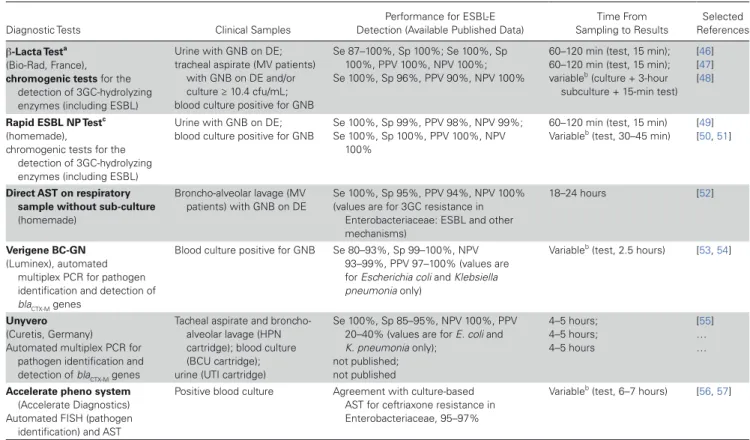
On a short-term basis, rapid diagnostic tools stand as the most pragmatic option to detect or exclude an ESBL-E in clinical samples and customize the empirical regimen of ICU patients when an infectious event arises, or to allow earlier de-escalation in those initially treated with a carbapenem. These tests may first be based on chromogenic assays that rapidly detect 3GC-hydrolyzing enzymes (including ESBL) on clinical specimens or early cultures. Direct antimicrobial susceptibility testing (AST) on clinical
samples (eg, broncho-alveolar lavage fluid for patients with suspected VAP) is another relevant approach, as it provides susceptibility data from 24 to 48 hours earlier than conventional, subculture-based AST. Moreover, several molecular assays, allowing the detection of ESBL-encoding genes on clinical samples, have been recently released. Although their accuracy still requires in-depth and multi-center appraisal in ICU patients, these tools raise major hopes for the improvement of antibiotic stewardship practices in this specific population. Table 1 summarizes the available evidence on the diagnostic performances and potential applications for these tests.
CONCLUSIONS
In an era of global ESBL-E dissemination and a massive influx of colonized patients in the ICU setting, we believe that infection prevention strategies should focus on universal measures—with the aim of ensuring a high level of compliance to HH and other standard precautions—and not on a search-and-isolate policy based on the detection of all ESBL-E carriers through intestinal ASC (Table 2). Targeted screening and CP remain a conceivable
Table 1. Selection of Commercially Available or Homemade Diagnostic Tests for Earlier Detection of Extended-spectrum Beta-lactamase–producing Enterobacteriaceae in Clinical Samples
Diagnostic Tests Clinical Samples
Performance for ESBL-E Detection (Available Published Data)
Time From Sampling to Results Selected References β-Lacta Testa (Bio-Rad, France),
chromogenic tests for the
detection of 3GC-hydrolyzing enzymes (including ESBL)
Urine with GNB on DE; tracheal aspirate (MV patients)
with GNB on DE and/or culture ≥ 10.4 cfu/mL; blood culture positive for GNB
Se 87–100%, Sp 100%; Se 100%, Sp 100%, PPV 100%, NPV 100%; Se 100%, Sp 96%, PPV 90%, NPV 100%
60–120 min (test, 15 min); 60–120 min (test, 15 min); variableb (culture + 3-hour subculture + 15-min test)
[46] [47] [48]
Rapid ESBL NP Testc
(homemade),
chromogenic tests for the detection of 3GC-hydrolyzing enzymes (including ESBL)
Urine with GNB on DE; blood culture positive for GNB
Se 100%, Sp 99%, PPV 98%, NPV 99%; Se 100%, Sp 100%, PPV 100%, NPV
100%
60–120 min (test, 15 min) Variableb (test, 30–45 min)
[49] [50, 51]
Direct AST on respiratory sample without sub-culture
(homemade)
Broncho-alveolar lavage (MV patients) with GNB on DE
Se 100%, Sp 95%, PPV 94%, NPV 100% (values are for 3GC resistance in
Enterobacteriaceae: ESBL and other mechanisms)
18–24 hours [52]
Verigene BC-GN
(Luminex), automated multiplex PCR for pathogen identification and detection of
blaCTX-M genes
Blood culture positive for GNB Se 80–93%, Sp 99–100%, NPV 93–99%, PPV 97–100% (values are for Escherichia coli and Klebsiella pneumonia only)
Variableb (test, 2.5 hours) [53, 54]
Unyvero
(Curetis, Germany)
Automated multiplex PCR for pathogen identification and detection of blaCTX-M genes
Tacheal aspirate and broncho-alveolar lavage (HPN cartridge); blood culture (BCU cartridge); urine (UTI cartridge)
Se 100%, Sp 85–95%, NPV 100%, PPV 20–40% (values are for E. coli and K. pneumonia only); not published; not published 4–5 hours; 4–5 hours; 4–5 hours [55] … …
Accelerate pheno system
(Accelerate Diagnostics) Automated FISH (pathogen
identification) and AST
Positive blood culture Agreement with culture-based AST for ceftriaxone resistance in Enterobacteriaceae, 95–97%
Variableb (test, 6–7 hours) [56, 57]
Abbreviations: 3GC, third-generation cephalosporins; AST, antimicrobial susceptibility testing; DE, direct examination; ESBL, extended-spectrum beta-lactamase; ESBL-E, ESBL-producing Enterobacteriaceae; FISH, fluorescence in situ hybridization; GNB, Gram-negative bacteria; MV, mechanical ventilation; NPV, negative predictive value; PCR, polymerase chain reaction; PPV, positive predictive value; Se, sensibility; Sp, specificity.
aThe β-Lacta Test detects all cephalosporin-hydrolyzing enzymes, including ESBL; chromosomal and plasmid-borne AmpC cephalosporinases; and carbapenemases, which may decrease
the specificity of this test for the detection of ESBL in settings where other cephalosporine-hydrolyzing beta-lactamases are prevalent.
bDepending on the time to positivity of blood cultures (usually 6 to 12 hours for bloodstream infections, due to Enterobacteriaceae). cThe Rapid ESBL NP Test only detects ESBL.
approach in critical-care environments with uncontrolled endemicity or outbreaks of ESBL-producing K. pneumoniae or
Enterobacter spp., while the available evidence argues against
the usefulness of such interventions in ICUs where ESBL-producing E. coli predominate. Given the rising incidence of healthcare-associated infections due to carbapenem-resistant GNB, a paradigm shift from ACS-based empirical regimen to new diagnostic approaches is urgently needed to restrain the overconsumption of carbapenems in patients at risk for ICU-acquired ESBL-E infections. The use of clinical algorithms, including rapid diagnostic tests, which are able to rule out the involvement of ESBL-E based on high negative predictive val-ues, will probably help ICU physicians to choose the best thera-peutic options in patients with suspected healthcare-associated infections.
Supplementary Data
Supplementary materials are available at Clinical Infectious Diseases online. Consisting of data provided by the authors to benefit the reader, the posted materials are not copyedited and are the sole responsibility of the authors, so questions or comments should be addressed to the corresponding author.
Notes
Financial support. This work was supported by the Swiss National
Science Foundation (grant 4049-40-106294/1 for an ongoing clinical trial entitled “An interventional study to evaluate the impact of a rapid screening strategy in improving nosocomial ESBL-E and CPE control in critically ill patients”).
Potential conflicts of interest. J.-R. Z. has received consulting fees,
speaker fees, and conference invitations from Merck, Sharp and Dohme (MSD); conference invitations from Pfizer; and consulting fees from Sanofi. P. N. has received consulting fees, speaker fees, and conference invitations from MSD, Shionogi, and Pfizer. J.-F. T. has received consulting and lec-ture fees from MSD; consulting fees from Abbott, MaaT Pharma, and Icuresearch; and lecture fees from Pfizer and Biomerieux. J.-F. T.’s uni-versity hospital also received research grants from 3M, Pfizer, MSD, and Biomerieux. S. H. has received funding from the European Commission and the Swiss National Science Foundation for several clinical studies related to extended-spectrum ESBL-E, and has received consulting fees from Sandoz, Bayer, and DNA Electronics. F. B. has received consulting fees, speaker fees, and conference invitations from MSD and conference invita-tions from Pfizer. All other authors report no potential conflicts. All authors have submitted the ICMJE Form for Disclosure of Potential Conflicts of Interest. Conflicts that the editors consider relevant to the content of the manuscript have been disclosed.
References
1. Bassetti M, De Waele JJ, Eggimann P, et al. Preventive and therapeutic strategies in crit-ically ill patients with highly resistant bacteria. Intensive Care Med 2015; 41:776–95. 2. Centers for Disease Control and Prevention Healthcare Infection Control
Practices Advisory Committee. Management of multidrug-resistant organisms in healthcare settings. Available at: https://www.cdc.gov/infectioncontrol/guide-lines/mdro. Accessed 1 May 2018.
3. Tacconelli E, Cataldo MA, Dancer SJ, et al.; European Society of Clinical Microbiology. ESCMID guidelines for the management of the infection control measures to reduce transmission of multidrug-resistant Gram-negative bacteria in hospitalized patients. Clin Microbiol Infect 2014; 20(Suppl 1):1–55.
4. Barbier F, Pommier C, Essaied W, et al.; OUTCOMEREA Study Group. Colonization and infection with extended-spectrum β-lactamase-producing
Enterobacteriaceae in ICU patients: what impact on outcomes and carbapenem
exposure? J Antimicrob Chemother 2016; 71:1088–97.
5. Karanika S, Karantanos T, Arvanitis M, Grigoras C, Mylonakis E. Fecal coloniza-tion with extended-spectrum beta-lactamase-producing Enterobacteriaceae and risk factors among healthy individuals: A systematic review and metaanalysis. Clin Infect Dis 2016; 63:310–8.
6. Razazi K, Mekontso Dessap A, Carteaux G, et al. Frequency, associated factors and outcome of multi-drug-resistant intensive care unit-acquired pneumonia among patients colonized with extended-spectrum β-lactamase-producing
Enterobacteriaceae. Ann Intensive Care 2017; 7:61.
7. Masse J, Elkalioubie A, Blazejewski C, et al. Colonization pressure as a risk factor of ICU-acquired multidrug resistant bacteria: a prospective observational study. Eur J Clin Microbiol Infect Dis 2017; 36:797–805.
8. Razazi K, Derde LP, Verachten M, Legrand P, Lesprit P, Brun-Buisson C. Clinical impact and risk factors for colonization with extended-spectrum β-lac-tamase-producing bacteria in the intensive care unit. Intensive Care Med 2012; 38:1769–78.
9. Detsis M, Karanika S, Mylonakis E. ICU acquisition rate, risk factors, and clini-cal significance of digestive tract colonization with extended-spectrum beta-lact-amase-producing Enterobacteriaceae: a systematic review and meta-analysis. Crit Care Med 2017; 45:705–14.
10. Tschudin-Sutter S, Lucet JC, Mutters NT, Tacconelli E, Zahar JR, Harbarth S. Contact precautions for preventing nosocomial transmission of extended-spec-trum β lactamase-producing Escherichia coli: A point/counterpoint review. Clin Infect Dis 2017; 65:342–7.
11. Gorrie CL, Mirceta M, Wick RR, et al. Gastrointestinal carriage is a major reser-voir of Klebsiella pneumoniae infection in intensive care patients. Clin Infect Dis
2017; 65:208–15.
12. Scheuerman O, Schechner V, Carmeli Y, et al.; REIPI/ESGBIS/INCREMENT investigators. Comparison of predictors and mortality between bloodstream infections caused by ESBL-producing Escherichia coli and ESBL-producing
Klebsiella pneumoniae. Infect Control Hosp Epidemiol 2018; 39:660–7.
13. Freeman JT, Rubin J, McAuliffe GN, et al. Differences in risk-factor profiles between patients with ESBL-producing Escherichia coli and Klebsiella pneumoniae: a multi-centre case-case comparison study. Antimicrob Resist Infect Control 2014; 3:27. 14. Zahar JR, Poirel L, Dupont C, Fortineau N, Nassif X, Nordmann P. About the
usefulness of contact precautions for carriers of extended-spectrum beta-lact-amase-producing Escherichia coli. BMC Infect Dis 2015; 15:512.
15. Tschudin-Sutter S, Frei R, Dangel M, Stranden A, Widmer AF. Rate of transmis-sion of extended-spectrum beta-lactamase-producing Enterobacteriaceae without contact isolation. Clin Infect Dis 2012; 55:1505–11.
16. Derde LPG, Cooper BS, Goossens H, et al.; MOSAR WP3 Study Team. Interventions to reduce colonisation and transmission of antimicrobial-resistant bacteria in intensive care units: an interrupted time series study and cluster ran-domised trial. Lancet Infect Dis 2014; 14:31–9.
Table 2. Key Messages
• Rates of imported ESBL-E carriage are rapidly increasing in most ICUs worldwide, owing to the successful spread of these pathogens (especially CTX-M– producing E. coli) in both community and hospital ecosystems.
• Universal screening for intestinal carriage of ESBL-E through ASC and the implementation of contact precautions in identified carriers appears of limited added value to prevent cross-transmission events in those ICUs with high compliance to standard precautions and no ongoing outbreak of ESBL-producing
K. pneumoniae or Enterobacter spp.
• The results of qualitative ASC for ESBL-E carriage are neither sufficient nor efficient to rationalize the empirical use of carbapenems in ICU patients. • Novel predictive and diagnostic approaches (including phenotypic or molecular rapid diagnostic tools on clinical samples) are needed to customize the
empiri-cal antimicrobial therapy in critiempiri-cally-ill patients at risk for ICU-acquired ESBL-E infections.
Abbreviations: ASC, active surveillance cultures; ESBL, extended-spectrum beta-lactamase; ESBL-E, ESBL-producing Enterobacteriaceae; ICU, intensive care unit.
17. Gurieva T, Dautzenberg MJD, Gniadkowski M, Derde LPG, Bonten MJM, Bootsma MCJ. The transmissibility of antibiotic-resistant Enterobacteriaceae in intensive care units. Clin Infect Dis 2018; 66:489–93.
18. Repessé X, Artiguenave M, Paktoris-Papine S, et al. Epidemiology of extend-ed-spectrum beta-lactamase-producing Enterobacteriaceae in an intensive care unit with no single rooms. Ann Intensive Care 2017; 7:73.
19. Alves M, Lemire A, Decré D, et al. Extended-spectrum beta-lactamase–pro-ducing Enterobacteriaceae in the intensive care unit: acquisition does not mean cross-transmission. BMC Infect Dis 2016; 16:147.
20. Morgan DJ, Diekema DJ, Sepkowitz K, Perencevich EN. Adverse outcomes asso-ciated with Contact Precautions: a review of the literature. Am J Infect Control
2009; 37:85–93.
21. Zahar JR, Garrouste-Orgeas M, Vesin A, et al. Impact of contact isolation for multidrug-resistant organisms on the occurrence of medical errors and adverse events. Intensive Care Med 2013; 39:2153–60.
22. Kardaś-Słoma L, Lucet JC, Perozziello A, et al. Universal or targeted approach to prevent the transmission of extended-spectrum beta-lactamase-producing
Enterobacteriaceae in intensive care units: a cost-effectiveness analysis. BMJ Open
2017; 7:e017402.
23. Mutters NT, Günther F, Frank U, Mischnik A. Costs and possible benefits of a two-tier infection control management strategy consisting of active screening for multidrug-resistant organisms and tailored control measures. J Hosp Infect 2016; 93:191–6.
24. Dananché C, Bénet T, Allaouchiche B, et al. Targeted screening for third-gen-eration cephalosporin-resistant Enterobacteriaceae carriage among patients admitted to intensive care units: a quasi-experimental study. Crit Care 2015; 19:38.
25. Djibré M, Fedun S, Le Guen P, et al. Universal versus targeted additional contact precautions for multidrug-resistant organism carriage for patients admitted to an intensive care unit. Am J Infect Control 2017; 45:728–34.
26. Jalalzaï W, Boutrot M, Guinard J, et al. Cessation of screening for intestinal carriage of extended-spectrum β-lactamase-producing Enterobacteriaceae in a low-endemicity intensive care unit with universal contact precautions. Clin Microbiol Infect 2018; 24:429.e7–429.e12.
27. Renaudin L, Llorens M, Goetz C, et al. Impact of discontinuing contact precautions for MRSA and ESBLE in an intensive care unit: a prospective noninferiority before and after study. Infect Control Hosp Epidemiol 2017; 38:1342–50.
28. Rottier WC, Ammerlaan HS, Bonten MJ. Effects of confounders and interme-diates on the association of bacteraemia caused by extended-spectrum β-lac-tamase-producing Enterobacteriaceae and patient outcome: a meta-analysis. J Antimicrob Chemother 2012; 67:1311–20.
29. Armand-Lefèvre L, Angebault C, Barbier F, et al. Emergence of imipenem-resis-tant gram-negative bacilli in intestinal flora of intensive care patients. Antimicrob Agents Chemother 2013; 57:1488–95.
30. McLaughlin M, Advincula MR, Malczynski M, Qi C, Bolon M, Scheetz MH. Correlations of antibiotic use and carbapenem resistance in Enterobacteriaceae. Antimicrob Agents Chemother 2013; 57:5131–3.
31. Vodovar D, Marcadé G, Rousseau H, et al. Predictive factors for extend-ed-spectrum beta-lactamase producing Enterobacteriaceae causing infection among intensive care unit patients with prior colonization. Infection 2014; 42:743–8.
32. Bruyère R, Vigneron C, Bador J, et al. Significance of prior digestive coloni-zation with extended-spectrum β-lactamase-producing Enterobacteriaceae in patients with ventilator-associated pneumonia. Crit Care Med 2016; 44:699–706.
33. Barbier F, Bailly S, Schwebel C, et al.; OUTCOMEREA Study Group. Correction to: Infection-related ventilator-associated complications in ICU patients col-onised with extended-spectrum β-lactamase-producing Enterobacteriaceae. Intensive Care Med 2018; 44:1200–2.
34. Carbonne H, Le Dorze M, Bourrel AS, et al. Relation between presence of extend-ed-spectrum β-lactamase-producing Enterobacteriaceae in systematic rectal swabs and respiratory tract specimens in ICU patients. Ann Intensive Care 2017; 7:13.
35. Teerawattanapong N, Kengkla K, Dilokthornsakul P, Saokaew S, Apisarnthanarak A, Chaiyakunapruk N. Prevention and control of multidrug-resistant Gram-negative bacteria in adult intensive care units: A systematic review and network meta-analysis. Clin Infect Dis 2017; 64:51–60.
36. Ricard JD, Lisboa T. Caution for chlorhexidine gluconate use for oral care: insuf-ficient data. Intensive Care Med 2018; 44:1162–4.
37. de Gunzburg J, Ghozlane A, Ducher A, et al. Protection of the human gut micro-biome from antibiotics. J Infect Dis 2018; 217:628–36.
38. Zhou K, Lokate M, Deurenberg RH, et al. Use of whole-genome sequencing to trace, control and characterize the regional expansion of extended-spec-trum β-lactamase producing ST15 Klebsiella pneumoniae. Sci Rep 2016; 6:20840.
39. Ruppé E, Lixandru B, Cojocaru R, et al. Relative fecal abundance of extend-ed-spectrum-β-lactamase-producing Escherichia coli strains and their occur-rence in urinary tract infections in women. Antimicrob Agents Chemother 2013; 57:4512–7.
40. Woerther PL, Micol JB, Angebault C, et al. Monitoring antibiotic-resistant entero-bacteria faecal levels is helpful in predicting antibiotic susceptibility of bacterae-mia isolates in patients with haematological malignancies. J Med Microbiol 2015; 64:676–81.
41. Taur Y, Xavier JB, Lipuma L, et al. Intestinal domination and the risk of bactere-mia in patients undergoing allogeneic hematopoietic stem cell transplantation. Clin Infect Dis 2012; 55:905–14.
42. Brusselaers N, Labeau S, Vogelaers D, Blot S. Value of lower respiratory tract sur-veillance cultures to predict bacterial pathogens in ventilator-associated pneumo-nia: systematic review and diagnostic test accuracy meta-analysis. Intensive Care Med 2013; 39:365–75.
43. Garrouste-Orgeas M, Chevret S, Arlet G, et al. Oropharyngeal or gastric coloni-zation and nosocomial pneumonia in adult intensive care unit patients. A pro-spective study based on genomic DNA analysis. Am J Respir Crit Care Med 1997; 156:1647–55.
44. Wright H, Bonomo RA, Paterson DL. New agents for the treatment of infections with Gram-negative bacteria: restoring the miracle or false dawn? Clin Microbiol Infect 2017; 23:704–12.
45. Torres A, Zhong N, Pachl J, et al. Ceftazidime-avibactam versus meropenem in nosocomial pneumonia, including ventilator-associated pneumonia (REPROVE): a randomised, double-blind, phase 3 non-inferiority trial. Lancet Infect Dis 2018; 18:285–95.
46. Gallah S, Decré D, Genel N, Arlet G. The β-Lacta test for direct detection of extended-spectrum-β-lactamase-producing Enterobacteriaceae in urine. J Clin Microbiol 2014; 52:3792–4.
47. Gallah S, Benzerara Y, Tankovic J, et al. β LACTA test performance for detec-tion of extended-spectrum β-lactamase-producing Gram-negative bacilli directly on bronchial aspirates samples: a validation study. Clin Microbiol Infect 2018; 24:402–8.
48. Compain F, Bensekhri H, Rostane H, Mainardi JL, Lavollay M. β LACTA test for rapid detection of Enterobacteriaceae resistant to third-generation cephalosporins from positive blood cultures using briefly incubated solid medium cultures. J Med Microbiol 2015; 64:1256–9.
49. Dortet L, Poirel L, Nordmann P. Rapid detection of extended-spectrum-β-lact-amase-producing Enterobacteriaceae from urine samples by use of the ESBL NDP test. J Clin Microbiol 2014; 52:3701–6.
50. Arca-Suárez J, Galán-Sánchez F, Del Prado Montoro C, Rodríguez-Iglesias MA. A modified ESBL Nordmann/Dortet/Poirel-based protocol to optimize early sepsis management. J Microbiol Methods 2017; 139:45–7.
51. Dortet L, Poirel L, Nordmann P. Rapid detection of ESBL-producing
Enterobacteriaceae in blood cultures. Emerg Infect Dis 2015; 21:504–7.
52. Le Dorze M, Gault N, Foucrier A, et al. Performance and impact of a rapid method combining mass spectrometry and direct antimicrobial susceptibility testing on treatment adequacy of patients with ventilator-associated pneumonia. Clin Microbiol Infect 2015; 21:468.e1–6.
53. Pogue JM, Heil EL, Lephart P, et al. An antibiotic stewardship program blue-print for optimizing Verigene BC-GN within an institution. Antimicrob Agents Chemother 2018; 62:e02538–17
54. Siu GK, Chen JH, Ng TK, et al. Performance evaluation of the verigene Gram-positive and Gram-negative blood culture test for direct identification of bacteria and their resistance determinants from positive blood cultures in Hong Kong. PLoS One 2015; 10:e0139728.
55. Ozongwu C, Personne Y, Platt G, et al. The Unyvero P55 ‘sample-in, answer-out’ pneumonia assay: a performance evaluation. Biomol Detect Quantif 2017; 13:1–6.
56. Pancholi P, Carroll KC, Buchan BW, et al. Multicenter evaluation of the Accelerate Pheno test BC kit for rapid identification and phenotypic antimicrobial sus-ceptibility testing using morphokinetic cellular analysis. J Clin Microbiol 2018; 56:e01329–17
57. Marschal M, Bachmaier J, Autenrieth I, Oberhettinger P, Willmann M, Peter S. Evaluation of the accelerate pheno system for fast identification and anti-microbial susceptibility testing from positive blood cultures in bloodstream infections caused by Gram-negative pathogens. J Clin Microbiol 2017; 55:2116–26.