
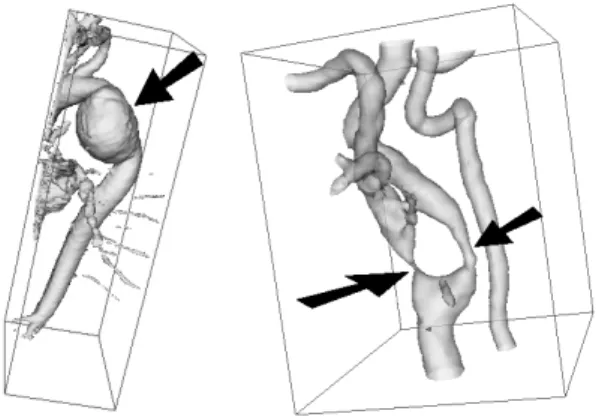
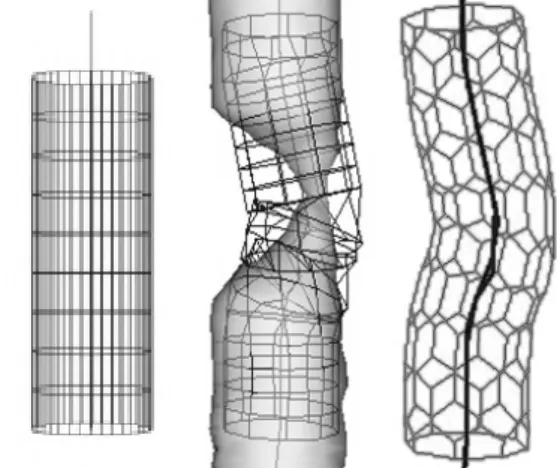
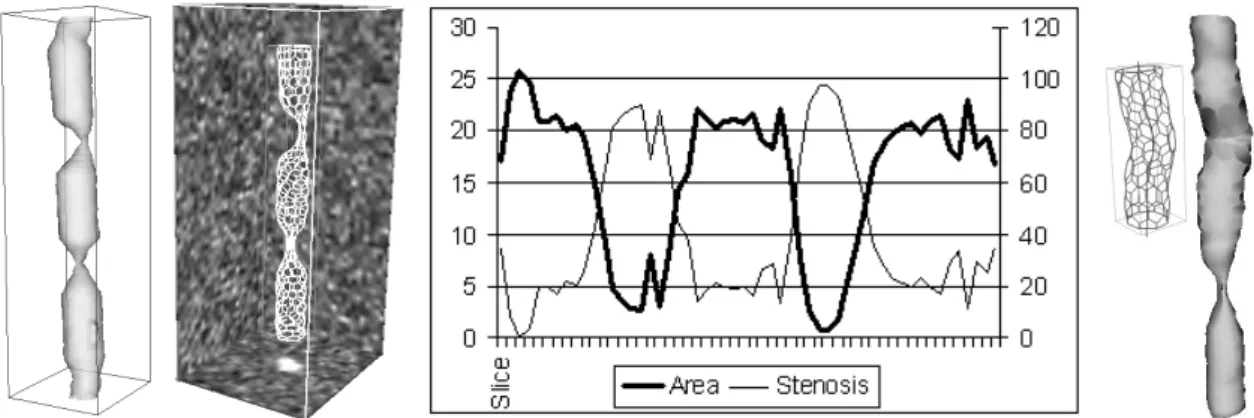
3D graphical models for vascular-stent pose simulation
Texte intégral
Figure

Documents relatifs
Individual constraints and the global fit result on the (ρ,η) plane as we could expect them from one nominal year of data taking from the LHCb experiment. Most of the improvement.
Edited by Marina Morrow (professor and chair, School of Health Policy and Management at York University) and Lorraine Halinka Malcoe (associate professor, Joseph J. Zilber School
C'est convaincu que rien n'est perdu pour aucun pays et pour tout le Continent noir, que nous engageons cette interrogation sur la nature de l'Etat
Facteurs S Le patient S Observance S Hygiène de vie S Le permis S La maladie S Syndrome épileptique S EEG standard/Sieste S Lésion
Enfin, je pars sur une classe journalisme donc la production d’écrits sera au coeur de ce projet... Application, tests pour les groupes, évaluation,
in this section, we present (1) the different levels of complexity found in models concerning the integration of genetic details, with examples on models dealing with
The measured data (black points) are compared with the SM prediction using either Sherpa (red, with red hashed band for the uncertainty) or Powheg + Pythia8 (blue, with blue hashed
We integrate the linked data technologies where the input are the tests in the turtle format with the ontology defined by the SPARQL 1.1 WG; the output is a RDF database that is fed
