Title: Sustained impact of real-time continuous glucose monitoring in hypoglycemia-prone adults with type 1 diabetes on insulin pump therapy: Results after 24 months RESCUE study
Running Title: Long-term impact of rtCGM
Sara Charleer, MSc,1 Christophe De Block, MD,2 Frank Nobels, MD,3 Régis P. Radermecker, MD,4 Ine Lowyck, MD,5 Annelies Mullens, MD,6 Denis Scarnière, MD,7 Katrien Spincemaille, MD,8 Marie Strivay, MD,9 Eric Weber, MD,10 Youri Taes, MD,11 Chris Vercammen, MD,12 Bart Keymeulen, MD,13 Chantal Mathieu, MD,1 Pieter Gillard, MD,1 for the RESCUE trial investigators*
1Department of Endocrinology, University Hospitals Leuven – KU Leuven, Leuven, Belgium.
2Department of Endocrinology, Diabetology & Metabolism, University of Antwerp – Antwerp University Hospital, Antwerp, Belgium.
3Department of Endocrinology, OLV Hospital Aalst, Aalst, Belgium.
4Department of Diabetes, Nutrition & Metabolic disorders, CHU Liege – Liege University, Liege, Belgium.
5Department of Endocrinology, Ziekenhuis Oost-Limburg, Genk, Belgium. 6Department of Endocrinology, Jessa Ziekenhuis, Hasselt, Belgium.
7Department of Endocrinology-Diabetology, Grand Hôpital de Charleroi, Gilly, Belgium.
8Department of Endocrinology, AZ Delta, Roeselare, Belgium.
9Department of Endocrinology, CHR La Citadelle Liège, Liege, Belgium. 10Department of Endocrinology, Clinique du Sud Luxembourg, Arlon, Belgium. 11Department of Endocrinology, AZ Sint-Jan Brugge AV, Bruges, Belgium.
12Department of Endocrinology, Imelda Hospital Bonheiden, Bonheiden, Belgium. 1 2 3 4 5 6 7 8 9 10 11 12 13 14 15 16 17 18 19 20 21 22 23 24 25
13Diabeteskliniek, University Hospital Brussels – VUB, Brussels, Belgium.
*a complete list of investigators in the Reimbursement Study of Continuous Glucose Monitoring in Belgium (RESCUE) trial is available in Online-Only Supplemental Material
Correspondence to: Pieter Gillard, UZ Leuven, Herestraat 49, 3000 Leuven, Belgium.
Tel: +32 16 34 06 15, email: [email protected]
Clinical Trial Registration: ClinicalTrials.gov (NCT02601729).
Word Count: 3887 words, Tables: 2, Figures: 2
26 27 28 29 30 31 32 33 34 35 36 37 38 39 40 41 42 43 44 45 46
ABSTRACT
Objective: Recurrent hypoglycemia is a risk factor for severe hypoglycemia and hypoglycemia unawareness. Additionally, fear of hypoglycemia complicates optimal diabetes control. We aimed to evaluate the sustainable long-term impact of real-time continuous glucose monitoring (rtCGM) on everyday lives of people with type 1 diabetes prone to hypoglycemia.
Research Design and Methods: This 24-month, prospective, observational, cohort study followed 515 adults with an insulin pump who received full reimbursement for rtCGM. Forty-six percent had impaired awareness of hypoglycemia (IAH). Primary endpoint was evolution of HbA1c, with secondary endpoints change in acute diabetes complications, work absenteeism, and quality of life. Additionally, we evaluated if people could achieve glycemic consensus targets during follow-up.
Results: After 24 months, HbA1c significantly declined compared to baseline (7.4% [57 mmol/mol] vs 7.7% [61 mmol/mol], p<0.0001). Sustainable benefit was also observed for fear of hypoglycemia and hypoglycemia-related complications irrespective of hypoglycemia awareness level. However, people with IAH had the strongest improvement, especially for hypoglycemic events needing help from others to recover (813 events in year before vs 141 events per 100 patient-years in second year, p<0.0001). Over 24 months, more people were able to meet hypoglycemia targets at the expense of slightly less people achieving hyperglycemia targets. Furthermore, number of people with HbA1c <7% (<53 mmol/mol) without severe hypoglycemia more than doubled (8.6% vs 19.5%, p<0.0001).
47 48 49 50 51 52 53 54 55 56 57 58 59 60 61 62 63 64 65 66 67 68 69 70
Conclusion: Use of rtCGM in this hypoglycemia-prone population led to severe hypoglycemia reduction with less fear of hypoglycemia, which has important implications for the daily lives of our patients.
71 72 73 74 75 76 77 78 79 80 81 82 83 84 85 86 87 88 89 90 91 92 93 94 95
INTRODUCTION
Achieving optimal glycemic control while avoiding hypoglycemia (1) remains a challenge for people living with type 1 diabetes (2) despite rapid advancements in insulin administration technology and better insulin preparations. Symptoms of hypoglycemia include, but are not limited to, sweating, confusion, tachycardia, and hunger (3), which can eventually result in loss of consciousness, seizure, coma, or even death when prolonged. It is, therefore, not surprising that many people experience some sort of fear of hypoglycemia that can have debilitating effects on diabetes self-management, which prevents optimal glycemic control, on every-day life, and on relationships (4). Furthermore, recurrent hypoglycemia facilitates severe hypoglycemia (5), which over time contributes to impaired awareness of hypoglycemia (IAH) affecting about 25% of adults with type 1 diabetes (6). Additionally, those with hypoglycemia unawareness have a sixfold higher risk of severe hypoglycemia (6,7). The interplay between the physiological and psychological burden of hypoglycemia is the main driver for the continued development of strategies and technological tools to avoid it.
One technological advancement is real-time continuous glucose monitoring (rtCGM) which has shown that it can help prevent hypoglycemia with also favorable results on HbA1c and quality of life in randomized controlled trials with participants treated with multiple daily insulin injections (MDI) (8–11) and continuous subcutaneous insulin infusion (CSII) (12–14). However, these studies are often short-term (typically 6 months) and it is unclear how much of the observed effect is due to the heightened motivation often seen in randomized controlled trials. In addition, longer-term observational studies often lack the patient numbers to generalize the outcomes to the broad community of people with type 1 diabetes (15,16).
96 97 98 99 100 101 102 103 104 105 106 107 108 109 110 111 112 113 114 115 116 117 118 119 120
Since September 2014, rtCGM is reimbursed in Belgium for people with type 1 diabetes who use CSII and are treated in selected specialized diabetes centers. We previously reported findings from the Reimbursement Study of Continuous Glucose Monitoring in Belgium (RESCUE), a 1-year, observational, real-world study that assessed the possible impact of this Belgian reimbursement program (17). The 12-month data showed improved glycemic control and lower risk of hypoglycemia-related hospitalizations, which resulted in a significant cost-reduction. Additionally, the fear of hypoglycemia decreased and lead to better quality of life. Our aim in the current study was to determine whether the improved glycemic outcomes and prevention of severe hypoglycemia could be sustained up to 24 months, with a focus on participants prone to hypoglycemia.
MATERIALS AND METHODS Study design
This was a multicenter prospective observational cohort study to evaluate the impact of nationwide reimbursement of rtCGM systems for adults with type 1 diabetes on CSII therapy. The results from the full 24 months of the study are reported here, consisting of the first 12-month period from which the results have been published (17), followed by an additional 12-month extension phase. The study was conducted from September 2014 to March 2019.
The study complied with the Declaration of Helsinki and the International Conference on Harmonization/Good Clinical Practice Guidelines and was approved by the institutional review boards and independent ethics committees of the participating centers. All participants provided informed consent before entering the study. The study is registered with ClinicalTrials.gov (NCT02601729).
121 122 123 124 125 126 127 128 129 130 131 132 133 134 135 136 137 138 139 140 141 142 143 144 145 146
Study participants
As previously reported (17), 17 specialized diabetes centers were free to decide to which adults with type 1 diabetes on CSII they would offer rtCGM reimbursement. Minimum criteria for selection were suggested in a non-restrictive way by the Belgian healthcare authority and included diagnosed with type 1 diabetes >1 year ago, using CSII therapy >6 months, difficult glycemic control (undefined), and motivated to use rtCGM. People in the reimbursement program were expected to use rtCGM >70% of the time. Every person who entered the reimbursement program between September 2014 and January 2017 was included, without exception, in the study after informed consent. A total of 515 adults started in the reimbursement program and were included in the analysis.
Outcomes
Primary endpoint was evolution over time of HbA1c between baseline and 24 months after start of rtCGM reimbursement. Secondary endpoints were effect of rtCGM on acute diabetes complications (hypoglycemia and/or ketoacidosis), work absenteeism, quality of life, proportion of participants with HbA1c <7% (<53 mmol/mol), and reasons to discontinue rtCGM. Additional post-hoc analyses examined how many people reached clinical consensus targets (18): <1% of time spent <54 mg/dL (<3.0 mmol/L), <4% of time spent <70 mg/dL (<3.9 mmol/L), >70% of time spent between 70-180 mg/dL (time in range, TIR; 3.9-10.0 mmol/L), <25% of time spent >180 mg/dL (>10.0 mmol/L), and <5% of time spent >250 mg/dL (>13.9 mmol/L). Further we also investigated how many people reached clinical composite endpoints (19): HbA1c <7% (<53 mmol/mol) with <1% of time spent <54 mg/dL (<3.0 mmol/L), HbA1c <7% (<53 mmol/mol) without severe hypoglycemia (hospitalization for hypoglycemia, hypoglycemic coma, help from third parties, hypoglycemia with seizure, needing
147 148 149 150 151 152 153 154 155 156 157 158 159 160 161 162 163 164 165 166 167 168 169 170 171 172
glucagon, or needing ambulance assistance), >70% TIR with <1% of time spent <54 mg/dL (<3.0 mmol/L), and >70% of TIR without severe hypoglycemia.
Devices
There was no restriction in the devices people could use in the reimbursement program. The only criteria that applied for insulin pumps and glucose sensors was that they should receive the authorization of the Belgian healthcare provider to be used in the reimbursement program. This made that there was a wide combination of insulin pumps and glucose sensors available. As this was an observational study evaluating reimbursement of rtCGM and not the efficacy of one type of sensor-pump combination, people were also able to switch between insulin pump and glucose sensor brands or switch to newer versions. This lead to a shift from low-glucose threshold suspend systems that were used at the start of the study towards low-glucose predictive suspend systems at the end (Supplemental Table 1).
Data collection
Pre-specified clinical data were collected from a period of 12 months before until 24 months after start of the reimbursement program. Information about clinical parameters was collected from clinical files at baseline, 4, 8, 12, and 24 months after start. HbA1c levels were averaged for specified time points: pre-reimbursement/baseline (before = -12 months until -1 day), 4 months (±2 months), 8 months (±2 months), 12 months (±2 months), and 24 months (±2 months) after start of reimbursement.
Questionnaires (SF-36 (20), Problem Areas in Diabetes-short form [PAID-SF] (21), and Hypoglycemia Fear Survey [HFS]-worry (22)) and standardized diaries (17) were completed at baseline, after 12, and 24 months, and scored manually.
Patient-173 174 175 176 177 178 179 180 181 182 183 184 185 186 187 188 189 190 191 192 193 194 195 196 197 198
reported emergency room admissions and hospitalizations for hypoglycemia and/or ketoacidosis were validated using hospital records in the individual centers.
rtCGM data were collected using the designated diabetes management software from the different manufacturers. Data for the following time points were extracted and averaged: data from entry in the reimbursement program (2 weeks = week 0 until week 2), 4 months (±2 months), 8 months (±2 months), 12 months (±2 months), and 24 months (±2 months) after start of reimbursement.
An overview of data completeness is available in Supplemental table 2.
Study size
Beforehand, we estimated that about 400 adults with type 1 diabetes could be part of the rtCGM reimbursement program in the period that we would analyze. As mentioned before, every person in the reimbursement program was included, which totaled 515 adults. This gave the study enough power (>80%) with a two-sided 5% significance level to detect a mean difference in HbA1c of 0.3%.
Statistical analysis
For data analysis, the full analysis set was used, which comprised all patients who were registered as receiving reimbursement for rtCGM. With a linear mixed model, we evaluated HbA1c and quality of life, as a function of time, with a random effect of center to handle the correlation between patients of the same center and an unstructured covariance matrix for the five or three repeated measurements within the same patient. By using a linear mixed model, cases with missing data still contributed to the analyses. For evolution of HbA1c, values at 4, 8, 12, and 24 months were compared with the average value from -12 months until -1 day (before=baseline). For evolution of quality of life, scores on the different
199 200 201 202 203 204 205 206 207 208 209 210 211 212 213 214 215 216 217 218 219 220 221 222 223 224
questionnaires at 12 and 24 months were compared to the scores at start of reimbursement.From the multivariable normal distribution implied by the linear mixed model, we derived the relation between baseline HbA1c and changes in HbA1c versus baseline. Taking regression to the mean into account, the obtained correlation is not tested versus zero but versus the correlation which is already expected purely based on regression to the mean (23). A logistic regression model with generalized estimating equations (GEE) was used to evaluate the evolution of proportion of participants who reached target HbA1c (<7%; <53 mmol/mol), who reached clinical consensus targets, who reached composite endpoints (18,19), with hospitalizations, with work absenteeism, and with acute hypoglycemic complications. Differences in days of work absenteeism, and number of hospitalizations and acute hypoglycemic events per 100 patient-years were assessed with a negative binomial GEE model. People who were incapable of working because of disability were excluded.
A Bonferroni-Holm correction was considered for results at 24 months referring to the primary outcome, evolution of HbA1c for the total population. No adjustment was made for multiple testing of secondary endpoints.
Post-hoc, all analyses were repeated for people with and without IAH. HbA1c evolution was also assessed for groups of baseline HbA1c. The number of people in these subgroups at baseline, 4, 8, 12, and 24 months is shown in Supplementary Table 3. Differences between the subgroups at different time points were compared with the Mann-Whitney U Test for continuous data and with the Chi-Square Test for dichotomous data.
Statistical analyses were performed with SPSS software for Windows (IBM SPSS Statistics version 26, Armonk, USA).
225 226 227 228 229 230 231 232 233 234 235 236 237 238 239 240 241 242 243 244 245 246 247 248 249
RESULTS
Patient characteristics and rtCGM use
The demographics and clinical characteristics of patients were previously presented in full (17). In short, the majority was highly educated, with a long history of type 1 diabetes, on average 6 years of CSII experience at baseline, 56% had hypoglycemia as indication to start rtCGM, and almost half of people had IAH.
Of 515 adults who were initially included in the study, 87% (n=449/515) and 69% (n=355/515) had more than 12 and 24 months of follow-up, respectively. In total, 77 people (15%) were lost to follow-up to the central investigators and 83 people (16%) stopped using rtCGM (Supplemental Fig. 1). People could have multiple reasons for deciding to stop rtCGM. The most frequent reason for discontinuation was related to the system itself, such as alarm fatigue (n=27/83, 33%). Other reasons were local and/or technical problems (n=21/83, 26%), no apparent benefit for patient and/or physician (n=20/83, 24%), and <70% usage of rtCGM (n=17/83, 20%).
Mean percentage of rtCGM wear time by people in the study was high throughout 24 months and remained stable, with 87.6±9.7%, 86.9±8.3%, 87.2±9.4%, and 87.1±10.4% at 4, 8, 12, and 24 months, respectively.
Evolution of HbA1c
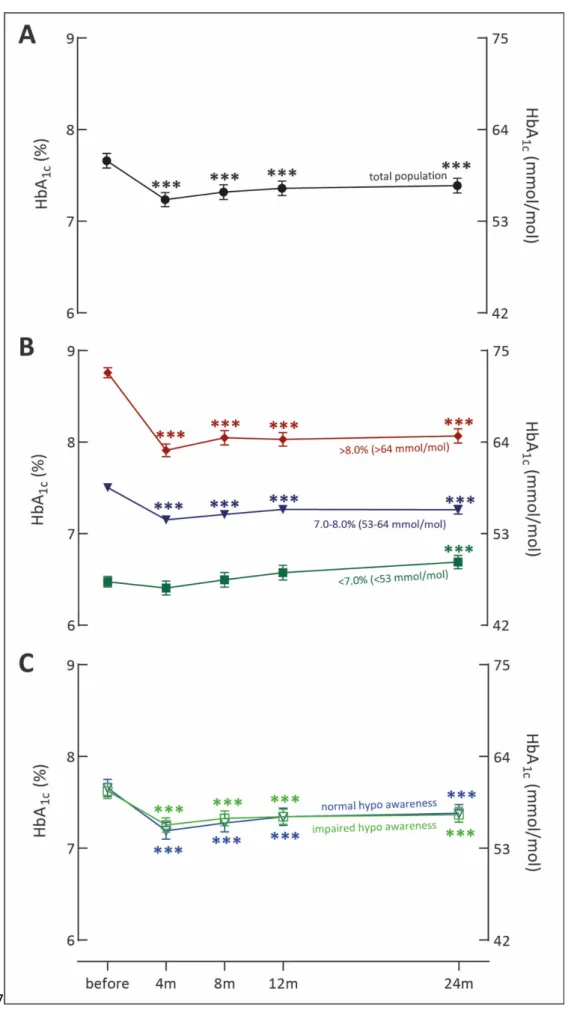
For the total population, HbA1c was significantly lower at 24 months (7.4% [7.2–7.6]; 57 mmol/mol [55–60]) compared to baseline (7.7% [7.5–7.8]; 61 mmol/mol [58–62], p<0.0001), and was stable compared to 12 months (7.4% [7.2–7.6]; 57 mmol/mol [55–60]; p=NS) (Fig. 1a).
A stronger decrease in HbA1c was observed in people with higher baseline HbA1c, although this correlation never exceeded the regression-to-the-mean effect (Fig. 1b).
250 251 252 253 254 255 256 257 258 259 260 261 262 263 264 265 266 267 268 269 270 271 272 273 274
There was no difference in evolution of HbA1c for people with and without IAH (Fig. 1c).
Change in acute diabetes complications and work absenteeism
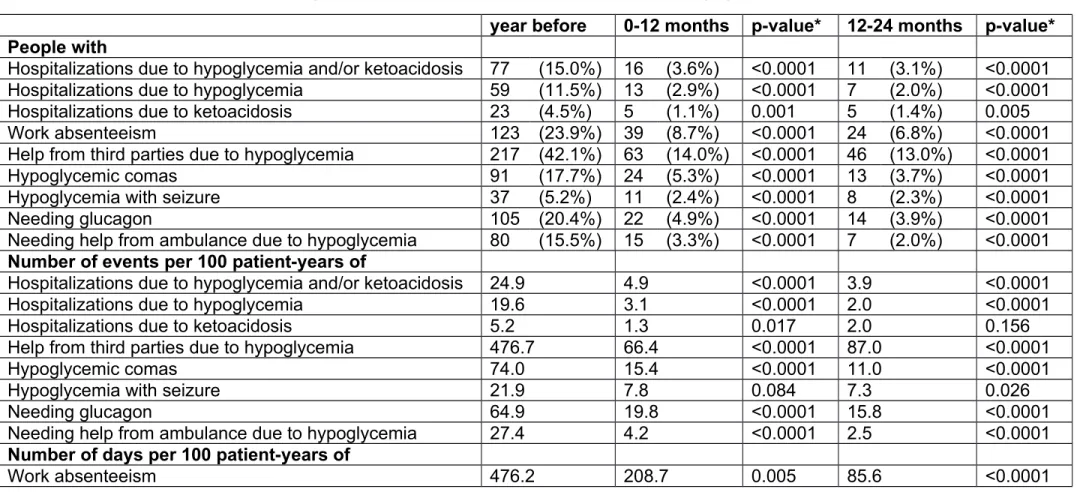
The prevalence of acute diabetes complications was lower throughout the study than in the year before. This was already apparent in the first year, but was confirmed in the second year. The largest benefit was seen for hypoglycemia-related events, for which we gathered data on different levels going from hospitalizations to receiving glucagon. Probably related, diabetes-related work absenteeism also significantly decreased (Table 1).
The decline in hypoglycemia-related events was seen in both people with and without IAH, but people with IAH had higher baseline prevalence and larger proportion of reduction at follow-up than people with normal hypoglycemia awareness (Fig. 2). People with IAH missed on average 750 days of work per 100 patient-years in the year before the study, which dropped significantly to 109 days after 24 months (p<0.0001). For people with normal awareness this reduced from 246 days in the year before to 66 days per 100 patient-years at 24 months (p=0.048).
Change in quality of life
For the total population, previously observed improvements in general quality of life, as measured by SF-36, were sustained throughout the 24-month study. PAID-SF scores overall decreased by -1.3 points (-1.7 to -0.9) (p<0.0001) and the worry subscale of HFS was also lower through 24 months of follow-up (18.2 [16.8-19.5] at baseline vs 14.0 [12.6-15.3] after 24 months; p<0.0001) (Supplemental Table 4). When evaluating quality of life based on level of awareness of hypoglycemia, both those with and without IAH showed improvement. However, improvement in those with IAH tended to be higher, partly due to the lower perceived quality of life at
275 276 277 278 279 280 281 282 283 284 285 286 287 288 289 290 291 292 293 294 295 296 297 298 299 300
baseline. This is in particular evident for HFS-worry for which they had worse baseline scores, (20.2±10.8 vs 16.4±9.6, p<0.0001 for IAH vs non-IAH) and were able to bring it to the same level as the others during follow-up (Supplemental Table 4).
Meeting glycemic targets
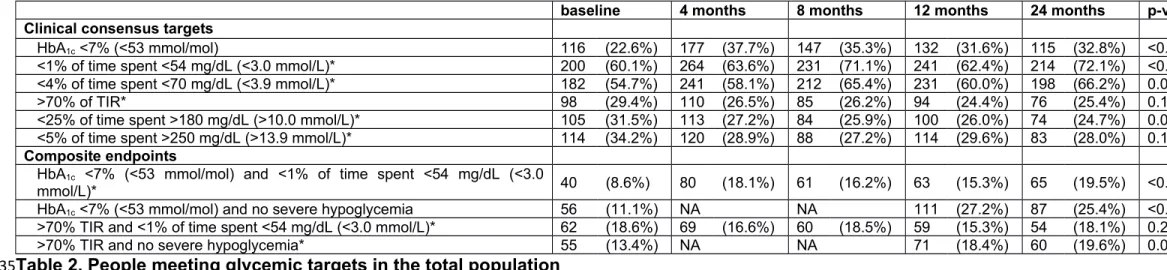
Due to the observational real-world study design, no blinded glucose measuring period was available. Therefore, we report on the percentage of people who reached the clinical consensus targets as measured by rtCGM from the first two weeks until 24 months onwards. For HbA1c targets, data were available up to one year before. When compared to the year before rtCGM reimbursement, more people were able to obtain HbA1c below the target level of 7% (53 mmol/mol) (Table 2).
More than half of the people could already attain the target of time spent <70 mg/dL (<3.9 mmol/L) in the first two weeks and this even increased to more than 2/3rd after 24 months. This was even more so for time spent <54 mg/dL (<3.0 mmol/L) (Table 2). Of people who did not reach these hypoglycemia consensus targets in the first two weeks, 53.8% and 48.4% did reach the targets for time <54 mg/dL (<3.0 mmol/L) and <70 mg/dL (<3.9 mmol/L) after 24 months, respectively.
Proportion of people who reached consensus targets of TIR and time in hyperglycemia was between 1/3rd and 1/4th in the first two weeks, but did not significantly change with even a trend towards a small reduction during follow-up (Table 2).
Number of people to reach the combined endpoints of HbA1c <7% (<53 mmol/mol) with <1% of time spent below 54 mg/dL (3.0 mmol/L) and HbA1c <7% (<53 mmol/mol) without severe hypoglycemic episodes more than doubled during the study. This was not observed for the combined endpoints of >70% TIR with <1% spent below 54
301 302 303 304 305 306 307 308 309 310 311 312 313 314 315 316 317 318 319 320 321 322 323 324 325 326
mg/dL (3.0 mmol/L) and >70% TIR without occurrence of severe hypoglycemic events (Table 2).
Throughout 24 months of follow-up, less people with IAH reached consensus targets for hypoglycemia (p<0.05 in the first 2 weeks and p<0.0001 after 24 months) and the composite endpoint of HbA1c below 7% (53 mmol/mol) without severe hypoglycemia (p<0.0001 at 2 weeks and 24 months) then those with normal awareness. Despite their differences, they both benefitted from rtCGM with increased proportion of people achieving the predefined targets for hypoglycemia. There were no changes within nor differences between groups for targets of TIR and hyperglycemia (Supplemental Table 5).
DISCUSSION
This study tried to provide more insight into how people with type 1 diabetes use advanced technology to manage their diabetes and how this influences daily life on the long run. To our knowledge, the RESCUE study is the largest and one of the longest prospective real-world cohort studies which assessed clinical and patient-reported outcome measures after initiation of rtCGM reimbursement on the long term. As reported here, rtCGM use by adults with type 1 diabetes on CSII-therapy followed in specialized centers was associated with 24 months of sustained improvements in HbA1c, quality of life, with especially fear of hypoglycemia, and acute hypoglycemic events.
Although the clinical benefits of rtCGM have been demonstrated in numerous randomized controlled trials (8–14), they often lack sufficient length to be able to inform us about the long-term sustainability and clinical impact of rtCGM use. To our knowledge, RESCUE is the largest prospective real-world study where we followed
327 328 329 330 331 332 333 334 335 336 337 338 339 340 341 342 343 344 345 346 347 348 349 350 351
our patients for two years while using rtCGM, which allowed us to distinguish study effects from sustained benefits. Only two other prospective observational studies were of longer duration. First, the prospective COMISAIR study lasted 3 years, however the patient population was much smaller (n=94, around 24 people in each group) and the study design aimed to compare four treatment strategies with or without rtCGM (15). Here, they showed that the use of rtCGM in combination with CSII or MDI was superior to capillary finger-stick tests with CSII or MDI with regards to HbA1c and time spent in hypoglycemia, without a difference between the CSII and MDI groups. Second, the study by Gómez et al prospectively followed 111 adults with type 1 diabetes starting sensor-augmented pump therapy because of hypoglycemia between 2009 and 2014. Mean follow-up time was 47 months, with less than half of the initial population followed for more than 40 months (n=50) (16). This population could achieve an HbA1c reduction of -1.7% (-19 mmol/mol) from a baseline value of 8.8% (73 mmol/mol), together with a reduction in severe hypoglycemic events. We provided an association between rtCGM-use in a large population and the long-term sustainability of its benefits regarding clinical- and patient-reported outcome measures, within the context of real-world diabetes self-management and sufficient diabetes education.
As the diverse risks of recurrent and severe hypoglycemia are well known (24), it is important that hypoglycemia is prevented through the use of rtCGM. Unprecedented, in the Belgian rtCGM reimbursement system, diabetes teams were free in choosing the people who would receive full reimbursement, but available funding was limited to a fixed number of people already using CSII (approximately 500 nation-wide). This exceptional situation forced the diabetes teams to choose the people with type 1 diabetes of whom they thought would benefit the most from using rtCGM. The teams,
352 353 354 355 356 357 358 359 360 361 362 363 364 365 366 367 368 369 370 371 372 373 374 375 376
independently from each other or from predefined criteria, selected a population with a high prevalence of hypoglycemia-related acute complications, which is now included as a main indication for rtCGM reimbursement by other countries (27) and is acknowledged by the international community as one of the most important factors why people should use continuous glucose sensors (19). Our results show that the number of clinical severe hypoglycemic events can be markedly reduced by use of rtCGM. Importantly, the improvement in HbA1c indicate that hypoglycemia reduction was not achieved at the expense of a deterioration of overall glycemic control. Together with findings from other studies addressing use of rtCGM in hypoglycemia-prone adults, this indicates that rtCGM can effectively address problematic hypoglycemia in people treated by MDI as well as by CSII (10,12,14,16).
In the RESCUE population, almost half had IAH in varying degrees. This is two to three times more than what has been described for the type 1 diabetes community (6,28). It was apparent from frequencies of hypoglycemia-related hospitalizations and severe hypoglycemic events that these people have a higher risk to develop such acute complications, something that previously has been described by others (5,6,29). Previous studies could not find evidence that use of rtCGM could improve hypoglycemia awareness (10,12). Another study suggests that improvement in IAH can be achieved through structured education and frequent contact irrespective of the treatment modality or use of rtCGM (30). The effect of this structured education could even be maintained when people returned to standard care, switched from CSII to MDI or vice versa, and did not wear their sensor for a sufficient amount of time (31). Therefore, the best option to effectively manage people with IAH is to implement a combination of rtCGM (with or without CSII per preference) and structured education with frequent follow-up contacts (32).
377 378 379 380 381 382 383 384 385 386 387 388 389 390 391 392 393 394 395 396 397 398 399 400 401
We are the first to report the proportion of people treated by rtCGM and CSII to achieve the consensus targets for glycemic control (18) in real-life. As rtCGM and sensor-augmented pumps focus primarily on hypoglycemia avoidance, they have proved their worth as about 70% of the RESCUE population could reach the consensus targets for hypoglycemia. On the other hand, reaching targets for TIR and hyperglycemia proved more difficult, with barely 30% achieving the recommended levels. Not only in real-life are these targets difficult to attain, also in controlled studies mean time spent in range is lower than the predetermined targets with still a sufficient proportion of time spending in hyperglycemia, irrespective of people using rtCGM alone or in combination with a low-glucose (predictive) suspend algorithm (9,10,12–14). Indeed, our population gradually transitioned to devices with more advanced algorithms as they were introduced onto the market during the duration of the study, which could have led to people being able to further prevent hypoglycemia. However, no difference was observed in number of people who sufficiently reached targets for TIR and time in hyperglycemia. We even observed a small trend towards less people achieving targets for TIR and hyperglycemia, an observation that has been previously described in studies with sensor-augmented pumps with the low-glucose predictive suspend feature (33,34). A possible reason for this finding may be attributed to how the patient manages a predictive insulin pump suspension, namely the consumption of carbohydrates in addition to insulin suspension to correct for a future hypoglycemia (34).
We also incorporated quality of life questionnaires, which are important patient-reported outcome measures that provide us with qualitative information regarding the impact on daily life, and are powerful tools to inform other patients, clinicians, and policy-makers (35). Management of type 1 diabetes is a daily task with a
402 403 404 405 406 407 408 409 410 411 412 413 414 415 416 417 418 419 420 421 422 423 424 425 426
considerable burden on quality of daily living. The main driver of this burden is hypoglycemia, as it can have a negative impact on relationships, sleep quality, employment, and body image due to heightened levels of stress and anxiety (4). We provide further evidence that hypoglycemia has debilitating effects on quality of life, as is shown by the overall lower perceived health-status at baseline of people with IAH. Nevertheless, the use of technology which helps in identifying and preventing hypoglycemia, in this case rtCGM, has proven to be a vital component to normalize daily life for these people, which has also been found in previous studies (8,10,12,14,31,37).
This study has limitations. Combining people who discontinued rtCGM and who were lost to follow-up, we have a drop-out rate of 30%. It is possible that we, in part, only retained the most compliant people. Nevertheless, our drop-out rate is less than what has been observed in real-world registries (38). Since RESCUE was a non-randomized observational trial, it is possible that factors other than rtCGM-use could affect the studied outcome measures. For example, it is possible that diabetes education that was provided when starting rtCGM sparked the motivation of people to get their diabetes on track again, apart from rtCGM use. However, this peak in motivation is known to fade after some time (39). Nevertheless, we observed a sustained benefit even after 2 years, which contributes to the rationale that the use of rtCGM instigates altered behavior.
In conclusion, over a 24-month period, use of rtCGM in this high-risk population led to severe hypoglycemia reduction with an important implication for the daily lives of our patients, especially through the cutback of hypoglycemia fear.
ACKNOWLEDGEMENTS 427 428 429 430 431 432 433 434 435 436 437 438 439 440 441 442 443 444 445 446 447 448 449 450 451
Acknowledgements: The authors would like to thank the data nurses, the local investigators and their teams for monitoring the patients, completing the case reporting files, and collecting data.
Funding: No funding was available. S.C. received a doctoral grant strategic basic research and P.G. received a grant for a clinical PhD fellowship from FWO (Fonds Wetenschappelijk Onderzoek).
Duality of interest: S.C. received travel grants from Medtronic and Roche, unrelated to the present work. C.M. serves or has served on the advisory panel for Novo Nordisk, Sanofi-Aventis, Merck Sharp and Dohme, Eli Lilly, Novartis, AstraZeneca, Boehringer-Ingelheim, Hanmi Pharmaceuticals, Roche, Medtronic, ActoBio Therapeutics, Pfizer, Dianax, and Union Chimique Belge. Financial compensation for these activities has been received by KU Leuven; KU Leuven has received research support for C.M. from Medtronic, Novo Nordisk, Sanofi-Aventis, Merck Sharp and Dohme, Eli Lilly, Roche, Abbott, ActoBio Therapeutics, and Novartis; C.M. serves or has served on the speakers bureau for Novo Nordisk, Sanofi-Aventis, Merck Sharp and Dohme, Eli Lilly, Boehringer-Ingelheim, AstraZeneca, and Novartis. Financial compensation for these activities has been received by KU Leuven. F.N. reports consulting fees and honoraria for speaking from Abbott, AstraZeneca, Boehringer-Ingelheim, Eli Lilly, Johnson and Johnson, Medtronic, Merck Sharp and Dohme, Novo Nordisk, Roche, and Sanofi-Aventis. C.D.B. reports consulting fees and honoraria for speaking for Abbott, AstraZeneca, Boehringer-Ingelheim, A. Menarini Diagnostics, Eli Lilly, Medtronic, Novo Nordisk, and Roche. P.G. serves or has served on the advisory panel for Novo Nordisk, Sanofi-Aventis, Boehringer-Ingelheim, Janssen Pharmaceuticals, Roche, Medtronic, and Bayer. Financial compensation for these activities has been received by KU Leuven. P.G. serves or
452 453 454 455 456 457 458 459 460 461 462 463 464 465 466 467 468 469 470 471 472 473 474 475 476
has served on the speakers bureau for Merck Sharp and Dohme, Boehringer-Ingelheim, Bayer, Medtronic, Abbott, and Roche. Financial compensation for these activities has been received by KU Leuven. KU Leuven received for P.G. non-financial support for travel from Sanofi-Aventis, A. Menarini Diagnostics, Medtronic, and Roche.
Author Contributions: SC collected and analyzed the data, performed statistical analyses, discussed and wrote the manuscript, and made figures and tables. PG and CM designed the study, analyzed and discussed the data and wrote the manuscript. FN, CDB, RR, IL, AM, DS, KS, MS, EW, YT, CV, and BK collected and discussed the data and edited the manuscript. SC and PG are the guarantors of this work and, as such had full access to all the data in the study and takes responsibility for the integrity of the data and accuracy of the data analysis.
Prior presentation: Parts of this study were presented at the 13th International Conference on Advanced Technologies & Treatments for Diabetes, Madrid, Spain, 19-22 February 2020.
REFERENCES
1. Cryer PE. Elimination of hypoglycemia from the lives of people affected by diabetes. Diabetes. 2011;60(1):24–7.
2. Hoerger TJ, Segel JE, Gregg EW, Saaddine JB. Is glycemic control improving in U.S. adults? Diabetes Care. 2008;31(1):81–6.
3. American Diabetes Association. 6. Glycemic Targets: Standards of Medical Care in Diabetes-2020. Diabetes Care. 2020;43(Suppl 1):S66–76.
4. Frier BM. How hypoglycaemia can affect the life of a person with diabetes.
477 478 479 480 481 482 483 484 485 486 487 488 489 490 491 492 493 494 495 496 497 498 499 500
Diabetes Metab Res Rev. 2008 Feb;24(2):87–92.
5. Gubitosi-Klug RA, Braffett BH, White NH, Sherwin RS, Service FJ, Lachin JM, et al. Risk of Severe Hypoglycemia in Type 1 Diabetes Over 30 Years of Follow-up in the DCCT/EDIC Study. Diabetes Care. 2017;40(8):1010–6.
6. Geddes J, Schopman JE, Zammitt NN, Frier BM. Prevalence of impaired awareness of hypoglycaemia in adults with Type 1 diabetes. Diabet Med. 2008;25(4):501–4.
7. Choudhary P, Geddes J, Freeman J V, Emery CJ, Heller SR, Frier BM. Frequency of biochemical hypoglycaemia in adults with Type 1 diabetes with and without impaired awareness of hypoglycaemia: no identifiable differences using continuous glucose monitoring. Diabet Med. 2010;27(6):666–72.
8. Lind M, Polonsky W, Hirsch IB, Heise T, Bolinder J, Dahlqvist S, et al.
Continuous Glucose Monitoring vs Conventional Therapy for Glycemic Control in Adults With Type 1 Diabetes Treated With Multiple Daily Insulin Injections: The GOLD Randomized Clinical Trial. JAMA. 2017 Jan;317(4):379–87.
9. Beck RW, Riddlesworth T, Ruedy K, Ahmann A, Bergenstal R, Haller S, et al. Effect of Continuous Glucose Monitoring on Glycemic Control in Adults With Type 1 Diabetes Using Insulin Injections: The DIAMOND Randomized Clinical Trial. JAMA. 2017 Jan;317(4):371–8.
10. Heinemann L, Freckmann G, Ehrmann D, Faber-Heinemann G, Guerra S, Waldenmaier D, et al. Real-time continuous glucose monitoring in adults with type 1 diabetes and impaired hypoglycaemia awareness or severe
hypoglycaemia treated with multiple daily insulin injections (HypoDE): a multicentre, randomised controlled trial. Lancet. 2018;391(10128):1367–77.
501 502 503 504 505 506 507 508 509 510 511 512 513 514 515 516 517 518 519 520 521 522 523 524
11. Polonsky WH, Hessler D, Ruedy KJ, Beck RW. The Impact of Continuous Glucose Monitoring on Markers of Quality of Life in Adults With Type 1 Diabetes: Further Findings From the DIAMOND Randomized Clinical Trial. Diabetes Care. 2017;40(6):736–41.
12. van Beers CAJ, DeVries JH, Kleijer SJ, Smits MM, Geelhoed-Duijvestijn PH, Kramer MHH, et al. Continuous glucose monitoring for patients with type 1 diabetes and impaired awareness of hypoglycaemia (IN CONTROL): a randomised, open-label, crossover trial. Lancet Diabetes Endocrinol. 2016;4(11):893–902.
13. Battelino T, Conget I, Olsen B, Schutz-Fuhrmann I, Hommel E, Hoogma R, et al. The use and efficacy of continuous glucose monitoring in type 1 diabetes treated with insulin pump therapy: a randomised controlled trial. Diabetologia. 2012;55(12):3155–62.
14. Bosi E, Choudhary P, de Valk HW, Lablanche S, Castañeda J, de Portu S, et al. Efficacy and safety of suspend-before-low insulin pump technology in hypoglycaemia-prone adults with type 1 diabetes (SMILE): an open-label randomised controlled trial. Lancet Diabetes Endocrinol. 2019;7(6):462–72.
15. Soupal J, Petruzelkova L, Grunberger G, Haskova A, Flekac M, Matoulek M, et al. Glycemic Outcomes in Adults With T1D Are Impacted More by Continuous Glucose Monitoring Than by Insulin Delivery Method: 3 Years of Follow-Up From the COMISAIR Study. Diabetes Care. 2020;43(1):37–43.
16. Gomez AM, Marin Carrillo LF, Munoz Velandia OM, Rondon Sepulveda MA, Arevalo Correa CM, Mora Garzon E, et al. Long-Term Efficacy and Safety of Sensor Augmented Insulin Pump Therapy with Low-Glucose Suspend Feature
525 526 527 528 529 530 531 532 533 534 535 536 537 538 539 540 541 542 543 544 545 546 547 548
in Patients with Type 1 Diabetes. Diabetes Technol Ther. 2017;19(2):109–14.
17. Charleer S, Mathieu C, Nobels F, De Block C, Radermecker RP, Hermans MP, et al. Effect of Continuous Glucose Monitoring on Glycemic Control, Acute Admissions, and Quality of Life: A Real-World Study. J Clin Endocrinol Metab. 2018;103(3):1224–32.
18. Battelino T, Danne T, Bergenstal RM, Amiel SA, Beck R, Biester T, et al. Clinical Targets for Continuous Glucose Monitoring Data Interpretation: Recommendations From the International Consensus on Time in Range. Diabetes Care. 2019;42(8):1593–603.
19. Danne T, Nimri R, Battelino T, Bergenstal RM, Close KL, DeVries JH, et al. International Consensus on Use of Continuous Glucose Monitoring. Diabetes Care. 2017;40(12):1631–40.
20. Ware JE. SF-36 Health Survey: Manual and Interpretation Guide. In: New England Medical Center, editor. The Health Institute. Boston, Massachusetts (US); 1993.
21. McGuire BE, Morrison TG, Hermanns N, Skovlund S, Eldrup E, Gagliardino J, et al. Short-form measures of diabetes-related emotional distress: the Problem Areas in Diabetes Scale (PAID)-5 and PAID-1. Diabetologia. 2010;53(1):66–9.
22. Gonder-Frederick LA, Schmidt KM, Vajda KA, Greear ML, Singh H, Shepard JA, et al. Psychometric properties of the hypoglycemia fear survey-ii for adults with type 1 diabetes. Diabetes Care. 2011;34(4):801–6.
23. Tu Y-K, Baelum V, Gilthorpe MS. The relationship between baseline value and its change: problems in categorization and the proposal of a new method. Eur J
549 550 551 552 553 554 555 556 557 558 559 560 561 562 563 564 565 566 567 568 569 570 571
Oral Sci. 2005;113(4):279–88.
24. International Hypoglycaemia Study Group. Hypoglycaemia, cardiovascular disease, and mortality in diabetes: epidemiology, pathogenesis, and
management. Lancet Diabetes Endocrinol. 2019;7(5):385–96.
25. Nathan DM, Genuth S, Lachin J, Cleary P, Crofford O, Davis M, et al. The effect of intensive treatment of diabetes on the development and progression of long-term complications in insulin-dependent diabetes mellitus. N Engl J Med. 1993;329(14):977–86.
26. Nathan DM, Cleary PA, Backlund J-YC, Genuth SM, Lachin JM, Orchard TJ, et al. Intensive diabetes treatment and cardiovascular disease in patients with type 1 diabetes. N Engl J Med. 2005;353(25):2643–53.
27. Graham C. Continuous Glucose Monitoring and Global Reimbursement: An Update. Diabetes Technol Ther. 2017;19(S3):S60–6.
28. Charleer S, De Block C, Van Huffel L, Broos B, Fieuws S, Nobels F, et al. Quality of Life and Glucose Control After 1 Year of Nationwide Reimbursement of Intermittently Scanned Continuous Glucose Monitoring in Adults Living With Type 1 Diabetes (FUTURE): A Prospective Observational Real-World Cohort Study. Diabetes Care. 2020;43(2):389–97.
29. White NH, Skor DA, Cryer PE, Levandoski LA, Bier DM, Santiago J V. Identification of type I diabetic patients at increased risk for hypoglycemia during intensive therapy. N Engl J Med. 1983;308(9):485–91.
30. Little SA, Leelarathna L, Walkinshaw E, Tan HK, Chapple O, Lubina-Solomon A, et al. Recovery of hypoglycemia awareness in long-standing type 1
572 573 574 575 576 577 578 579 580 581 582 583 584 585 586 587 588 589 590 591 592 593 594
diabetes: a multicenter 2 × 2 factorial randomized controlled trial comparing insulin pump with multiple daily injections and continuous with conventional glucose self-monitoring (HypoCOMPaSS). Diabetes Care. 2014;37(8):2114– 22.
31. Little SA, Speight J, Leelarathna L, Walkinshaw E, Tan HK, Bowes A, et al. Sustained Reduction in Severe Hypoglycemia in Adults With Type 1 Diabetes Complicated by Impaired Awareness of Hypoglycemia: Two-Year Follow-up in the HypoCOMPaSS Randomized Clinical Trial. Diabetes Care.
2018;41(8):1600–7.
32. Yeoh E, Choudhary P, Nwokolo M, Ayis S, Amiel SA. Interventions That Restore Awareness of Hypoglycemia in Adults With Type 1 Diabetes: A Systematic Review and Meta-analysis. Diabetes Care. 2015;38(8):1592–609.
33. Battelino T, Nimri R, Dovc K, Phillip M, Bratina N. Prevention of Hypoglycemia With Predictive Low Glucose Insulin Suspension in Children With Type 1 Diabetes: A Randomized Controlled Trial. Diabetes Care. 2017;40(6):764–70.
34. Biester T, Kordonouri O, Holder M, Remus K, Kieninger-Baum D, Wadien T, et al. “Let the Algorithm Do the Work”: Reduction of Hypoglycemia Using Sensor-Augmented Pump Therapy with Predictive Insulin Suspension (SmartGuard) in Pediatric Type 1 Diabetes Patients. Diabetes Technol Ther. 2017;19(3):173– 82.
35. Deshpande PR, Rajan S, Sudeepthi BL, Abdul Nazir CP. Patient-reported outcomes: A new era in clinical research. Perspect Clin Res. 2011;2(4):137– 44.
36. McCrimmon RJ, Frier BM. Hypoglycaemia, the most feared complication of
595 596 597 598 599 600 601 602 603 604 605 606 607 608 609 610 611 612 613 614 615 616 617 618
insulin therapy. Diabete Metab. 1994;20(6):503–12.
37. Norgaard K, Scaramuzza A, Bratina N, Lalic NM, Jarosz-Chobot P, Kocsis G, et al. Routine sensor-augmented pump therapy in type 1 diabetes: the
INTERPRET study. Diabetes Technol Ther. 2013 Apr;15(4):273–80.
38. Wong JC, Foster NC, Maahs DM, Raghinaru D, Bergenstal RM, Ahmann AJ, et al. Real-time continuous glucose monitoring among participants in the T1D Exchange clinic registry. Diabetes Care. 2014 Oct;37(10):2702–9.
39. Heller SR, Gianfrancesco C, Taylor C, Elliott J. What are the characteristics of the best type 1 diabetes patient education programmes (from diagnosis to long-term care), do they improve outcomes and what is required to make them more effective? Diabet Med. 2020;37(4):545–54.
619 620 621 622 623 624 625 626 627 628 629
TABLES
Table 1. Diabetes-related acute complications and work absenteeism for the total population
year before 0-12 months p-value* 12-24 months p-value* People with
Hospitalizations due to hypoglycemia and/or ketoacidosis 77 (15.0%) 16 (3.6%) <0.0001 11 (3.1%) <0.0001 Hospitalizations due to hypoglycemia 59 (11.5%) 13 (2.9%) <0.0001 7 (2.0%) <0.0001
Hospitalizations due to ketoacidosis 23 (4.5%) 5 (1.1%) 0.001 5 (1.4%) 0.005
Work absenteeism 123 (23.9%) 39 (8.7%) <0.0001 24 (6.8%) <0.0001
Help from third parties due to hypoglycemia 217 (42.1%) 63 (14.0%) <0.0001 46 (13.0%) <0.0001
Hypoglycemic comas 91 (17.7%) 24 (5.3%) <0.0001 13 (3.7%) <0.0001
Hypoglycemia with seizure 37 (5.2%) 11 (2.4%) <0.0001 8 (2.3%) <0.0001
Needing glucagon 105 (20.4%) 22 (4.9%) <0.0001 14 (3.9%) <0.0001
Needing help from ambulance due to hypoglycemia 80 (15.5%) 15 (3.3%) <0.0001 7 (2.0%) <0.0001 Number of events per 100 patient-years of
Hospitalizations due to hypoglycemia and/or ketoacidosis 24.9 4.9 <0.0001 3.9 <0.0001
Hospitalizations due to hypoglycemia 19.6 3.1 <0.0001 2.0 <0.0001
Hospitalizations due to ketoacidosis 5.2 1.3 0.017 2.0 0.156
Help from third parties due to hypoglycemia 476.7 66.4 <0.0001 87.0 <0.0001
Hypoglycemic comas 74.0 15.4 <0.0001 11.0 <0.0001
Hypoglycemia with seizure 21.9 7.8 0.084 7.3 0.026
Needing glucagon 64.9 19.8 <0.0001 15.8 <0.0001
Needing help from ambulance due to hypoglycemia 27.4 4.2 <0.0001 2.5 <0.0001 Number of days per 100 patient-years of
Work absenteeism 476.2 208.7 0.005 85.6 <0.0001
Data are n (% of total population) or n. Patient-reported hospital admissions were validated by clinicians. *P-value for the change versus baseline. 630 631 632 633 634
baseline 4 months 8 months 12 months 24 months p-value Clinical consensus targets
HbA1c <7% (<53 mmol/mol) 116 (22.6%) 177 (37.7%) 147 (35.3%) 132 (31.6%) 115 (32.8%) <0.0001
<1% of time spent <54 mg/dL (<3.0 mmol/L)* 200 (60.1%) 264 (63.6%) 231 (71.1%) 241 (62.4%) 214 (72.1%) <0.0001
<4% of time spent <70 mg/dL (<3.9 mmol/L)* 182 (54.7%) 241 (58.1%) 212 (65.4%) 231 (60.0%) 198 (66.2%) 0.021
>70% of TIR* 98 (29.4%) 110 (26.5%) 85 (26.2%) 94 (24.4%) 76 (25.4%) 0.173
<25% of time spent >180 mg/dL (>10.0 mmol/L)* 105 (31.5%) 113 (27.2%) 84 (25.9%) 100 (26.0%) 74 (24.7%) 0.040
<5% of time spent >250 mg/dL (>13.9 mmol/L)* 114 (34.2%) 120 (28.9%) 88 (27.2%) 114 (29.6%) 83 (28.0%) 0.108
Composite endpoints
HbA1c <7% (<53 mmol/mol) and <1% of time spent <54 mg/dL (<3.0
mmol/L)* 40 (8.6%) 80 (18.1%) 61 (16.2%) 63 (15.3%) 65 (19.5%) <0.0001
HbA1c <7% (<53 mmol/mol) and no severe hypoglycemia 56 (11.1%) NA NA 111 (27.2%) 87 (25.4%) <0.0001
>70% TIR and <1% of time spent <54 mg/dL (<3.0 mmol/L)* 62 (18.6%) 69 (16.6%) 60 (18.5%) 59 (15.3%) 54 (18.1%) 0.225
>70% TIR and no severe hypoglycemia* 55 (13.4%) NA NA 71 (18.4%) 60 (19.6%) 0.059
Table 2. People meeting glycemic targets in the total population
Data are n (% of people with data). TIR = time in range (70-180 mg/dL; 3.9-10.0 mmol/mol), NA = not applicable *Baseline for this variable is the first 2 weeks after start. †P-value for the evolution over the follow-up period.
635 636 637 638 639 640 641 642 643
FIGURES
Figure 1. Evolution of HbA1c
Data points represent least-squares mean (standard error) of HbA1c measurements per time point for (A) the total population, (B) as a function of baseline HbA1c, and (C) as a function of degree of awareness of hypoglycemia.
***p<0.001, for the comparisons versus baseline HbA1c. HbA1c follow-up values are still significantly different from baseline after Bonferroni-Holm correction. In panel B, the correlation between baseline HbA1c and the change in HbA1c did not exceed the regression-to-the-mean effect.
Figure 2. Hypoglycemia-related acute complications for people with and without impaired awareness of hypoglycemia
Data points represent number of events per 100 patient-years of (A) hypoglycemia-related hospitalizations, (B) hypoglycemic comas, and (C) help from third parties due to hypoglycemia.
***p<0.001, **p<0.01, and *p<0.05 for the comparisons versus baseline.
644 645 646 647 648 649 650 651 652 653 654 655 656 657 658 659 660 661 662 663 664 665
Figure 1. Evolution of HbA1c 666
Figure 2. Hypoglycemia-related acute complications for people with and without impaired awareness of hypoglycemia
668 669