HAL Id: tel-01411838
https://tel.archives-ouvertes.fr/tel-01411838
Submitted on 7 Dec 2016HAL is a multi-disciplinary open access archive for the deposit and dissemination of sci-entific research documents, whether they are pub-lished or not. The documents may come from teaching and research institutions in France or abroad, or from public or private research centers.
L’archive ouverte pluridisciplinaire HAL, est destinée au dépôt et à la diffusion de documents scientifiques de niveau recherche, publiés ou non, émanant des établissements d’enseignement et de recherche français ou étrangers, des laboratoires publics ou privés.
Marion Ducousso
To cite this version:
Marion Ducousso. Gasification biochar reactivity toward methane cracking. Chemical and Process En-gineering. Ecole des Mines d’Albi-Carmaux, 2015. English. �NNT : 2015EMAC0016�. �tel-01411838�
�������������������������
�������������������������������������
����������������������������������������
�������
�������������� et discipline ou spécialité� � � �������������������� ���������������������������� Jury:�
�����
le
École Nationale Supérieure des Mines d'Albi-Carmaux conjointement avec l'INP Toulouse
Marion Ducousso
jeudi 5 novembre 2015
Gasification biochar reactivity toward methane cracking
ED MEGEP : Génie des procédés et de l'Environnement
Centre RAPSODEE, CNRS - UMR 5302, Ecole des Mines d'Albi-Carmaux
M. Yann Rogaume Professeur, ENSTIB, INPL et Université de Lorraine, Rapporteur, Président M. Alain Thorel, Directeur de recherche, Mines ParisTech, Rapporteur
Mme. Claire Courson, Maître de Conférences, ICPEES, Université de Lorraine, Examinatrice M. Ange Nzihou, Professeur, Ecole des Mines d'Albi-Carmaux, Directeur
M. Marco J. Castaldi, Professeur, The City College of New York, Directeur
Mme Elsa Weiss-Hortala, Maître assistant, Ecole des Mines d'Albi-Carmaux, Examinatrice Pr. Ange Nzihou
Remerciements
Ces trois années de thèse ont été un réel parcours initiatique pendant lequel j’ai été encadrée, soutenue, aidée, écoutée, entourée par de nombreuses personnes pour qui j’ai beaucoup d’estime. Les mots justes ne sont pas faciles à trouver pour vous remercier comme il se doit !
Mes premiers remerciements vont pour mes encadrants, qui même s’ils m’ont mené la vie dure, ont su me donner des ailes ! Je souhaite ainsi remercier du fond du cœur mes deux directeurs de thèse Pr. Ange Nizhou et Pr Marco J. Castaldi pour m’avoir guidée vers le but à atteindre et, mon encadrante, Dr. Elsa Weiss-Hortala pour m’avoir accompagnée tout au long du chemin avec autant d’enthousiasme, d’écoute et de patience face à mes doutes. Je me suis réellement épanouie auprès de vous. Je garderai en mémoire des personnes passionnées par leur métier, qui savent transmettre leurs connaissances tout en laissant l’apprenant évoluer par lui-même. J’espère un jour pouvoir faire de même. A vous trois, un grand merci !
Au cours de ces trois années, j’ai sollicité toute une équipe de recherche : techniciens, ingénieurs, chercheurs, secrétaires qui m’ont apporté leur aide sans retenue. J’ai ainsi pu mener à bien le projet sereinement. Ainsi merci à : Mickaël Ribeiro, Pierre Bertorelle, Denis Marty, Jean-Marie Sabathier, Céline Boachon, Sylvie Delconfetto, Séverine Patry, Christine Rolland, Laurène Haurie, Nathalie Lyczko, Valérie Vérès, Christel Auriol et Anne-Marie-Fontès pour votre aide et votre bonne humeur ! Pendant cette formation, j’ai eu l’opportunité de participer aux activités d’enseignement à l’Ecole des Mines d’Albi. Ceci a été très formateur et j’ai beaucoup appris auprès des enseignants-chercheurs. Je souhaite spécialement remercier Dr. Jean-Jacques Letourneau, Dr. Patricia Arlabosse et Dr. Elsa-Weiss-Hortala.
« Mes compagnons de galère » étaient nombreux et je garde moultes souvenirs de partage, d’entraide, également de stress mais aussi de joie avec bon nombre d’entre eux ! Du côté d’Albi, ma première pensée va à Marta, mon amie de toujours et pour toujours je l’espère ! Je suis très heureuse que nos routes se soient croisées. Je remercie également « les anciens » : Chams, Charlou, Baptiste, Hélène, Santiago, Moussa, Raphaele, Maxime, Masram, Haroun qui m’ont montré la voie et les trucs pour tenir bon ! Comme par exemple, « Ciel mon doctorat ». Pour les multiples bons moments quotidiens (le café du matin, Eurest à midi, les gâteaux d’anniversaire…) et l’aide inestimable au laboratoire (changer les bouteilles de gaz !!, étalonner la micro-GC !!....) je voudrais dire mille mercis à tous les copains : Bruna, Marwa, Elias, Maxime, Alex, Augustina, Rababe, Lucia,
grâce à Jeff, Naomi, Simona, Madhu, Franscesco, Swanand, Steven, Stéphanie, Timothy, Demetra, Robyn, Michaela, Kevin, Linnea. La vie est bien plus agréable quand on est bien entourée!
Pour finir, je voudrais dire encore une fois M E R C I à mes parents, ma sœur, ma tante, mon copain et sa famille, mes amis pour leur soutien avant, pendant et après la thèse ;).
I
Content
Résumé long français ... V
Introduction ...1
I. Chapter 1: Literature review ...7
Introduction: motivation to perform pyro-gasification ... 7
1. Biomass pyro-gasification basics ... 8
1.1. Biomass resources ... 8
1.2. Main steps and reactions in pyro-gasification process ... 12
1.3. Products: syngas, gas-phase co-products, tars, biochars and soots ... 15
1.4. Technologies consideration ... 17
1.5. Partial conclusion ... 19
2. Focus on the biochars ... 20
2.1. Surface physico-chemical properties ... 20
2.2. Origin of the reactivity of biochars in pyro-gasification process ... 31
2.3. Applications ... 37
2.1. Functionalisation ... 38
2.2. Partial conclusion ... 41
3. Catalytic methane cracking ... 42
3.1. Thermodynamics aspects ... 42
3.2. Metal supported catalysts ... 45
3.3. Carbonaceous materials ... 45
3.4. Partial conclusion ... 54
4. Conclusion ... 55
Bibliography ... 57
II. Chapter 2: Materials and methods ... 65
1. Experimental capabilities ... 65
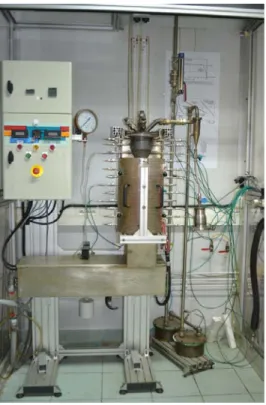
1.1. Pyro-gasification of poplar wood under an H2O/N2 mixture in a fluidized bed ... 66
II
2.1. Proximate and ultimate analysis ... 80
2.2. Minerals content ... 80 2.3. Textural properties ... 83 2.4. Oxygenated content ... 87 2.5. Carbon structures ... 91 3. Summary ... 97 Bibliography ... 99
III. Chapter 3: Characterization of the raw and functionalized biochars ... 101
1. Raw biochar surface properties ... 101
1.1. Oxygenated functions of the raw biochar ... 102
1.2. Mineral content of the raw biochar ... 104
1.3. Carbon matrix of the raw biochar ... 107
1.4. Specific surface area and porosity of the raw biochar ... 109
1.5. Partial conclusion on the physico-chemical properties of the raw biochar ... 110
2. Oxygenated biochars surface properties ... 111
2.1. Oxygenated functions on the oxygenated biochars ... 113
2.2. Mineral content of the oxygenated biochars ... 120
2.3. Carbon matrix of the oxygenated biochars ... 121
2.4. Specific surface area and porosity of the oxygenated biochars ... 128
2.5. Partial conclusion on the physico-chemical properties of the oxygenated biochars ... 130
3. Impregnated biochars surface properties ... 132
3.1. Oxygenated functions of the impregnated biochars ... 135
3.2. Mineral content of the impregnated biochars ... 136
3.3. Carbon matrix of the impregnated biochars ... 143
3.4. Specific surface area and porosity of the impregnated biochars ... 145
3.5. Partial conclusion on the physico-chemical properties of the impregnated biochars ... 146
4. Conclusion on the characterization of the raw and functionalized biochars ... 148
III IV. Chapter 4: Biochars reactivity towards methane cracking and the relation with their
physico-chemical properties ... 153
1. Comparison of the activities of the raw and functionalized biochars for methane cracking ... 154
1.1. Activity of the mineral impregnated biochars ... 155
1.2. Activity of the oxygenated biochars ... 157
1.3. Partial conclusion on the activities of the raw and functionalized biochars ... 159
2. Interaction between the biochars reactivity and their physico-chemical properties ... 160
2.1. Initial conversion ... 161
2.2. Deactivation by carbon deposit ... 179
3. Conclusion ... 184
Bibliography ... 188
V. Chapter 5: Kinetics, mass transfer and modeling at the pore scale ... 191
1. Apparent initial kinetics parameters and fitting of the deactivation equation ... 193
1.1. Mass balance in the plug-flow reactor and kinetics parameters determination ... 193
1.2. Initial kinetics parameters determination: experimental results ... 195
1.3. Deactivation of the biochars surface ... 197
2. Model of H2 production at the pore scale ... 199
2.1. Introduction to heterogeneous reaction ... 199
2.2. Description of the hydrogen concentration evolution into a micropore ... 203
2.3. Results ... 214
3. Conclusion ... 222
Bibliography ... 224
Conclusions and Prospects ... 225
4. Conclusions ... 225 5. Prospects ... 231 Bibliography ... 236 Appendices ... A Nomenclature ... E List of Figures ... x
List of tables ... xvi
v Les problématiques de production énergétique et d’impact de notre mode de vie actuel sur le réchauffement climatique planétaire sont au cœur des débats politiques, sociétaux et scientifiques actuels. Un enjeu majeur de notre siècle est de résilier notre dépendance aux ressources fossiles et de développer des filières de production d’énergie respectueuses de l’environnement, des hommes et viables sur le long terme. Plusieurs voies se basant sur l’exploitation de ressources naturelles et renouvelables, telles les énergies solaires et éoliennes, sont actuellement explorées et offrent un avenir prometteur. Cependant, ces ressources ont pour majeur point faible une livraison d’énergie intermittente et dans une certaine mesure aléatoire. L’exploitation de la ressource biomasse a l’avantage de présenter une réserve « continue » d’énergie dont la quantité peut être planifiée et contrôlée. Elle permet ainsi une gestion sûre et efficace de l’énergie produite. La valorisation énergétique de la biomasse peut être opérée par deux types de procédés : biochimique et thermochimique. La conversion biochimique type estérification, digestion ou fermentation permet de produire notamment des biocarburants (bioéthanol, biodiesel) à partir de biomasse fourragère, betterave, tournesol ou cane à sucre. Elle représente une voie d’avenir pour notamment l’industrie des transports. Son inconvénient majeur est la compétition de ressource avec le secteur agricole. La valorisation de la biomasse peut également se faire par voie thermochimique. La torréfaction, la pyrolyse et la gazéification représentent les trois procédés principaux. Ils différent de part la température de réaction et le réactif utilisé pour extraire l’énergie. La réaction de gazéification s’opère à haute température (700 à 1200°C) dans une atmosphère oxydante (H2O, CO2, O2 ou air). Le
carbone fixe constituant la biomasse réagit avec le gaz réactif par des réactions thermochimiques complexes pour former un gaz combustible riche en CO et H2 appelé « gaz de synthèse » ou syngas
en anglais. Selon le gaz réactif, nous observons préférentiellement l’un des deux réactions endothermiques présentées ci-dessous :
� + �2� → �� + �2 Eq_R. 1
� + ��2→ 2��
Eq_R. 2
Ainsi le principal objectif du procédé de gazéification est de produire du gaz de synthèse qui pourra être par la suite valorisé pour de multiples applications telles que la production d’électricité, d’intermédiaires chimiques et de biocarburants. Ce procédé est très prometteur, cependant son développement à l’échelle industrielle est ralenti par des contraintes techniques, technologiques et
vi
scientifiques. En effet, au cours de la chauffe, la biomasse se décompose en divers éléments organiques qui forment une fraction liquide à température ambiante et sont généralement regroupés sous le terme goudrons. Sont également produits des hydrocarbures légers notamment du méthane qui représente le deuxième co-produit gazeux après le dioxyde de carbone. Des polluants type sulfure d’hydrogène, ammoniac et des hydrocarbures aromatiques polycycliques (HAP) peuvent être présents dans la phase gazeuse, leurs concentrations varient selon le type d’entrant et des conditions de traitement. Enfin, le charbon ou char en anglais constitue la fraction solide au terme de la réaction. Ainsi la gazéification de la biomasse est un processus complexe donnant lieu à de nombreux co-poduits. Pour accroître l’attractivité du procédé, il est nécessaire de traiter et valoriser ces différents co-produits.
L’objectif principal de cette étude consiste en la valorisation du résidu solide, le charbon, en tant que catalyseur de réaction de craquage d’hydrocarbures. L’idée qui sou tend le projet est de réintroduire le charbon dans le procédé de gazéification, en aval du réacteur principal pour améliorer le rendement et purifier en gaz de synthèse. Un projet de doctorat, mené par Naomi Klinghoffer, qui représentait la première collaboration entre le centre RAPSODEE et le « Combustion and Catalysis laboratory », a démontré le pouvoir catalytique des charbons de gazéification de biomasse pour des réactions de craquage d’hydrocarbures. Cependant, la complexité des propriétés physico-chimiques des charbons a représenté un verrou pour la compréhension du mécanisme catalytique. Cette étape de compréhension est cruciale pour envisager une introduction des charbons en tant que catalyseurs à l’échelle industrielle. Ainsi, ce second projet de doctorat fait suite à l’étude menée par Naomi Klinghoffer et est axé sur la compréhension des phénomènes mis en jeu lors du craquage catalytique d’hydrocarbures sur lit de charbons de gazéification. Nous avons sélectionné le méthane comme gaz réactif pour différentes raisons : il est le second co-produit gazeux après le méthane, il est une molécule modèle pour le craquage de la liaison C-H, il est également l’hydrocarbure le plus stable. De plus, la réaction de craquage du méthane conduit à une amélioration du rendement de production d’hydrogène. Ainsi, cette étude s’attache à comprendre le mécanisme de craquage catalytique du méthane sur un lit de charbons issus de la gazéification de biomasse.
Les travaux précédents de l’équipe et la bibliographie ont identifié que l’activité catalytique des charbons était contrôlée par ses propriétés physico-chimiques. Cependant, le charbon est un matériau très complexe de part sa composition chimique et ses propriétés physiques. Propriétés, qui sont, de plus, dépendantes de la ressource et du mode de traitement thermique. Le charbon est un matériau hautement carboné, contenant une fraction faible de minéraux, notamment des alcalins et alcalino-terreux et des hétéroatomes types oxygène, azote, hydrogène. Ceux sont également des structures généralement poreuses et développant une surface spécifique importante. Pour la
vii réaction catalytique de craquage d’hydrocarbures, quatre propriétés physico-chimiques des charbons ont été identifiées comme importantes : la structure de la matrice carbonée, la composition en fonctions oxygénées, la composition minérale et la porosité/ surface spécifique. Dans ces quatre familles de propriétés, nous pouvons également dénombrer différentes sous-familles. La Figure_R 1 schématise ces différentes propriétés.
Figure_R 1 : Schéma présentant les 4 propriétés physico-chimiques importantes pour les charbons ainsi que les sous-familles
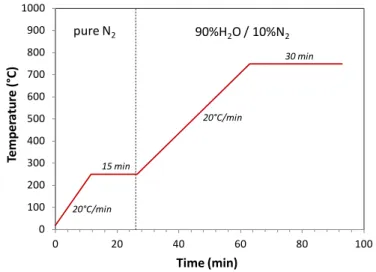
Pour comprendre la réactivité des charbons, nous avons fait le choix de comparer l’activité catalytique de charbons dont les propriétés physico-chimiques étaient différentes. Dans un premier temps, nous avons produit un charbon dit « brut » à partir de la gazéification de copeaux de bois de peuplier dans un réacteur à lit fluidisé à 750°C, 90%H2O/10%N2 pour un palier de 30 min et avec une
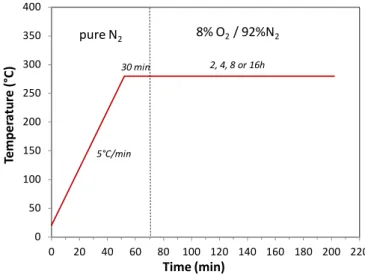
vitesse de chauffe de 20°C/min. Puis nous avons réalisé des traitements dits de « fonctionnalisation » afin de modifier les propriétés de surface ciblées. Le premier traitement avait pour objectif d’augmenter la teneur en fonctions oxygénées à la surface des charbons, nous avons donc opéré une campagne d’oxygénation des charbons sous une atmosphère contrôlée (8%O2/ 92%N2) pour
différentes températures et durées. Le second traitement visait à augmenter la concentration en minéraux et notamment en calcium et potassium dans les chars. Pour se faire, nous avons imprégné
viii
les copeaux de bois avant la gazéification dans des solutions de nitrate de calcium et de nitrate de potassium. Nous avons ainsi produits des charbons bruts et fonctionnalisés dont nous avons caractérisés les propriétés de surface et que nous avons testés pour la réaction de craquage catalytique du méthane. La Figure_R 2 résume le processus de production et de fonctionnalisation des différents charbons. La Table_R 1 résume les différents charbons produits.
ix Table_R 1 : Résumé des charbons brut et fonctionnalisés produits dans cette étude
# Abréviation Description
1 char_brut Charbon brut de gazéification de bois de peuplier (réacteur à lit fluidisé à 750°C, 90%H2O/10%N2, 30 min, 20°C/min)
2 ox2h_280C Charbon oxygéné pendant 2 h à 280°C (oxygénation) 3 ox4h_280C Charbon oxygéné pendant 4 h à 280°C (oxygénation) 4 ox8h_280C Charbon oxygéné pendant 8 h à 280°C (oxygénation) 5 ox16h_280C Charbon oxygéné pendant 16 h à 280°C (oxygénation) 6 ox2h_340C Charbon oxygéné pendant 2 h à 340°C (oxygénation) 7 ox2h_400C Charbon oxygéné pendant 2 h à 400°C (oxygénation)
9 Ca-char Char imprégné pendant 6h dans une solution de nitrate de calcium (0,5 %massique)
10 K-char Char imprégné pendant 6h dans une solution de nitrate de potassium (0,5 %massique)
11 Ca+K-char Char imprégné pendant 6h dans une solution de nitrate de calcium et potassium (0,25 %massique)
Une fois les différents charbons produits, nous avons mené une campagne de caractérisation de leurs propriétés physico-chimiques. Comme présenté précédemment, nous nous sommes attachés à caractériser la matrice carbonée, la nature et teneur en sites oxygénées et minéraux et nous avons également évalué la porosité et surface spécifique de ces différents charbons. Les différentes techniques qui ont été utilisées pour l’étude sont présentées dans la Table_R 2. Le charbon brut est un résidu microporeux développant une surface spécifique de l’ordre de 660 m2/g. Sa matrice carbonée est très complexe contenant à la fois des structures graphitiques ordonnées, désordonnées, des systèmes cycliques aromatiques et des carbones insaturés. Il contient également une forte concentration en groupes oxygénés de différente nature (acides forts, faibles et bases) et une concentration de minéraux de 3%massique (majoritairement du calcium et du potassium).
Concernant les charbons oxygénés, nous avons observé que l’oxygénation pour les trois températures testées et les différents temps de séjour ont conduit à augmenter la concentration globale en groupes oxygénés à la surface. Les concentrations maximales ont été obtenues pour les températures d’oxygénation les plus hautes (concentration globale multipliée par 2). Nous avons également pu observer que ce mode d’oxygénation favorisait la formation de sites oxygénés acides (faibles) à la surface des charbons. L’oxygénation a également eut un impact sur la porosité et la matrice carbonée des différents charbons. En effet, une partie de la matrice carbonée a réagit avec l’oxygène par combustion. Aux plus hautes températures de traitement (340 et 400°C), cela a conduit à augmenter la porosité et la surface spécifique des charbons (atteignant jusqu’à 859 m2/g au lieu de
x
662 m2/g) et a également augmenté la concentration de défauts dans la matrice. La Table_R 3 résume les différents résultats. Pour les trois chars imprégnés, nous avons observé une augmentation de la concentration en calcium et potassium (selon l’imprégnation) de 2 à 10 fois celles du charbon brut (voir Table_R 3). L’imprégnation, de part l’inclusion de particules de minéraux dans la matrice, a augmenté le nombre de défauts dans la structure et a réduit significativement la surface spécifique. Toutes les informations relatives aux caractérisations des charbons sont résumées dans la Table_R 3.
Table_R 2 : Moyens de caractérisation utilisés pour l’étude des propriétés physico-chimiques des charbons
Propriétés physico-chimiques Type d’analyse Informations récoltées
Matrice carbonée -Spectroscopie RAMAN -Microscopie à transmission électronique à balayage
-Distribution des structures carbonées
-Nanostructure Fonctions oxygénées -Spectroscopie infra-rouge à
transmission de Fourier
-Programme de température de désorption
-Nature des fonctions oxygénées -Quantification Minéraux -Fluorescence-X -Diffraction de rayon-X Microscopie électronique à -balayage -Analyse élémentaire -Structures cristallines -Distribution et morphologie de particules
Propriétés texturales -Adsorption gaz -Type de porosité
-Surface spécifique -Surface spécifique
xi Table_R 3 : Résumé des propriétés physico-chimiques des charbons brut et fonctionnalisés
Matrice carbonée Groupes oxygénées Minéraux Prorpriétés texturales Graphite % Défauts % Amorphe %
Concentration Nature Centration Structure Sspécifique
m2/gchar
Vmicropores
cm3/gchar
Char_brut 26 25 27 - - [Ca]≈ [K] CaCO3 K2CO3
662 0,22
Ox_2h_280°C 25 26 29 1,2*[O]cb acides faibles
≈ cb* ≈ cb 622 0,22
Ox_4h_280°C 26 26 27 1,5*[O]cb acides faibles
≈ cb ≈ cb 578 0,21
Ox_8h_280°C 23 28 28 1,5*[O]cb acides faibles
≈ cb ≈ cb 564 0,21
Ox_2h_340°C 30 33 20 1,5*[O]cb acides faibles
≈ cb ≈ cb 808 0,30
Ox_2h_400°C 28 39 16 1,2*[O]cb acides faibles
≈ cb ≈ cb 859 0,32
Ca-char 23 33 22 - - 4*[Ca]cb CaCO3 619 0,24
K-char 24 30 24 - - 10*[K]cb KHCO3 446 0,15 Ca+K-char 22 31 23 - - 2*[Ca]cb 5*[K]cb CaCO3 K2CaCO3 346 0,12 *cb : charbon brut
xii
L’étape suivante a consisté à tester le pouvoir catalytique des différents charbons lors du craquage du méthane à 700°C. La réaction principale de craquage du méthane produit de l’hydrogène et un dépôt de carbone à la surface du catalyseur (voir Eq_R. 3). La Figure_R 3 compare la production d’hydrogène lors du craquage du méthane sur les charbons bruts et imprégnés. Nous observons une nette augmentation de la production d’hydrogène pour les trois charbons préalablement imprégnés. Le charbon dont la concentration en potassium a été augmentée présente la production initiale d’hydrogène la plus élevée (4 fois plus élevée que celle du charbon brut). La production pour les deux autres charbons imprégnés est équivalente et est 2 fois plus élevée que celle du charbon brut. Ces résultats soulignent l’activité catalytique des minéraux type calcium et potassium pour cette réaction. Sur la Figure_R 3, on peut également observer une diminution de la production d’hydrogène au cours du temps pour les différents charbons, ceci est dû au dépôt de carbone sur la surface du catalyseur qui désactive les sites actifs (voir Eq_R. 3). Pour une meilleure compréhension du mécanisme et de son effet sur l’activité catalytique, nous avons développé un modèle à l’échelle du pore qui est présenté à la fin du résumé.
��4→ 2�2+ � Eq_R. 3
Figure_R 3 : Comparaison des activités catalytiques des charbons brut et imprégnés dans des solutions de nitrates de calcium et potassium
xiii Nous avons également comparé l’activité du charbon brut et des charbons oxygénés lors de la réaction du craquage du méthane. La production d’hydrogène pour les différents charbons est présentée en Figure_R 4. Dans ce cas-ci, nous n’observons pas un gain significatif concernant la production initiale d’hydrogène. Nous identifions, cependant, une diminution de la production d’hydrogène, au cours du temps pour les différents charbons, qui est due à la désactivation du catalyseur. De part l’étape de caractérisation des charbons et l’étude bibliographique, nous pouvons conclure que le rendement du craquage d’hydrogène n’a pas été amélioré pour les charbons oxygénés car l’étape d’oxygénation a conduit à augmenter la concentration de sites oxygénés instables à 700°C (acides faibles). Cependant, les sites oxygénés basiques type quinone, stables à cette température, sont restés en concentration égale. Ainsi, nous pouvons conclure que seulement certains sites oxygénés, stables à haute température (sites basiques), peuvent être des sites actifs pour la réaction de craquage du méthane.
Figure_R 4 : Comparaison des activités catalytiques des charbons brut et oxygénés
Ainsi, la comparaison des activités catalytiques des charbons brut et fonctionnalisés, couplée à une étape de caractérisation des propriétés physico-chimiques de surface des différents charbons à permis de classifier les différentes propriétés par ordre d’importance pour le rendement catalytique. La concentration en minéraux type calcium et potassium est le critère majeur pour déterminer l’activité catalytique. La porosité et la surface spécifique se positionne en second. La concentration en sites oxygénés et la nature de la matrice carbonée sont également des critères importants.
xiv
Cependant, concernant les sites oxygénés, seuls les sites basiques, stables à haute température, peuvent être sites actifs. Pour la matrice carbonée, les défauts de structure type lacune, hétéroatomes dans les feuilles de graphène sont les principales structures réactives. En conclusion, le charbon idéal pour catalyser la réaction de craquage du méthane, doit être poreux et contenir des particules dispersées de minéraux type calcium et potassium. Il devrait également avoir une structure carbonée désordonnée contenant des sites oxygénés basiques.
Dans un dernier temps, nous avons travaillé sur la cinétique globale de la réaction et le développement d’un modèle à l’échelle du pore du charbon, couplant réaction de surface et diffusion dans le pore, pour mieux appréhender le mécanisme. En effet, pour comprendre les phénomènes de surface à l’échelle microscopique, l’expérimentation est limitée, nous avons donc travaillé sur un modèle numérique. Nous avons développé un modèle 2-D, à l’aide du logiciel Matlab®, qui représente l’évolution de la concentration d’hydrogène dans un pore cylindrique, produit par la réaction de craquage catalytique du méthane sur des sites actifs de la surface. Nous avons simplifié le modèle en ne prenant en compte que 2 types de sites actifs, ayant une concentration initiale et une réactivité différente. Nous avons regardé l’influence de 2 paramètres : la concentration initiale des sites actifs et la constante de vitesse cinétique associée. Nous avons ainsi observé que plus la constante de vitesse associée à un type de site actif était élevée, plus la désactivation du catalyseur était rapide, ce qui confirme l’expérimentation (voir Figure_R 3). Concernant, la concentration initiale des 2 types de sites actifs, plus la concentration des sites actifs les plus réactifs est élevée, plus la production initiale d’hydrogène est élevée. Ainsi, nous avons développé un modèle qui peut être complexifié pour améliorer notre compréhension des phénomènes de catalyse hétérogène.
En conclusion, cette étude de doctorat, menée en collaboration au centre RAPSODEE et au Combustion & Catalysis Laboratory, s’est attachée à comprendre la réactivité des charbons de gazéification lors de la réaction du craquage du méthane. Pour mener à bien le projet, des charbons ont étés produits, fonctionnalisés, caractérisés et testés pour la réaction du craquage du méthane. Nous avons ainsi pu hiérarchiser les différentes propriétés de surface pour un rendement optimum. Nous avons également développé un modèle, comme outil de compréhension du mécanisme catalytique à la surface du charbon.
1 A challenge of this century is to successfully manage the transition from a petroleum-based economy to the one based on sustainable energies. It has been recognized that the global warming is directly correlated to the extensive use of fossil fuels this past century which drastically increased the atmospheric concentration of greenhouse gases (since 2000, anthropogenic CO2 emissions have risen
by more than 3% annually) [1]. The continuous growth in the primary energy demand, the fossil fuels feedstocks rarefaction, and the alarming impact of our current mode of energy production on the climate change pushed the international community to consider alternative solutions to conciliate preservation of the environment and energy consumption of the actual modern life. Different strategies and political guidelines have been considered to introduce alternative energies in energy production and to consider a better energy efficacy to reduce the global consumption of the fossil fuels energies in the long-term. At the European scale, the strategic politic goal is described such as the “3 x 20” rule which aims to reach by 2020:
- 20% reduction of greenhouse gases emission compared to 1990,
- 20% energy savings regarding the storyboard described by the European commission, - 20% of the energy final consumption from renewable sources [2].
In France, the “Plan d’action National” targets that 23% of global energy production will be produced from renewable resources by 2020 (in 2013 it represented 14.2%). The distribution of the renewable energies effort is planned such as following:
- 10% of the energy required for transportation, - 27% of the electrical energy,
- 33% of the heating and cooling productions.
In 2013, the part of the renewable energy in the transportation field, renewable electricity and thermal energy represented 7.1, 17.1 and 18.3% of the total production respectively which corresponds to about 65% of the final objective by 2020 [3]. Among the different renewable energies (hydraulic, biomass, geothermal energy, wind and solar powers), biomass is one of the most often considered source of renewable energy [4], [5]. Technologies which have been developed to extract energy from biomass can support heating, electricity and transportations needs. Biodiesel, ethanol, biomass agglomerates are becoming important biofuels resources worldwide. In Europe, several community-based district heating projects are currently developed based on biomass feedstocks. Another European dynamics is the development of biomethane production from the fermentation of organics. This biomethane could be injected in the natural gas system and further utilized for heating, electricity or biofuels production. Worldwide in 2011, United States have been the first producer of electricity from biomass followed by Europe, Brazil, China, India and Japan. The
2
expansion of energies based on biomass feedstocks support the developing countries to access to energy. In fact, countries in Africa and Brazil which grow sugar cane manage to generate electricity and heating from bagasse feedstocks [6]. Hence, biomass offers a large variety of feedstocks which can be utilized for various applications and are adaptable to different scales of production.
Biofuels are often classified into three categories: 1st (rapeseed, sunflower, beet, wheat and corn
starch), 2nd (ligno-cellulosic) and 3rd (algae) generations. The 1st generation of biofuels is based on
biochemical processes such as fermentation, digestion and esterification to produce ethanol and biodiesel. However, this energy chain directly competes with the food and pharmaceutical fields. In the 2nd generation of biofuels, thermochemical processes have been developed to convert ligno-cellulosic biomass (which cannot be transformed via biochemical processes) into energy. A large variety of biomass such as wood, straw, agricultural, forestry or even municipal wastes can be potential feedstocks. Three thermochemical processes: combustion, pyrolysis and gasification are usually presented in the literature. They are all based on the thermal degradation of the biomass but differ from the final application and the operating conditions. Combustion mainly consists in producing heat from the burning of biomass while pyrolysis is dedicated to the production of liquid biofuels from the heating at moderate temperature (400-700°C) under inert atmosphere and gasification generates, at high temperature (700 to 1200°C) under an oxidizing atmosphere (air, H2O,
CO2), a high energetic product called the syngas (gaseous mixture of hydrogen and carbon
monoxide). Syngas could be utilized in various applications such as the production of biofuels, chemicals or electricity. Thus, outlet for syngas applications are multiple and represent a serious alternative to fossil fuels energy. However, gasification process suffers from scientific, technologic and technical bottlenecks which slow down its industrial development. Among the different issues, the syngas yield enhancement, its cleaning and upgrading (removal of tars: heavy organics co-products) drive the attention of many researchers from several years [5], [7], [8]. In addition, the management of the undesirable co-products of gasification, and notably the treatment of the solid carbonaceous residue so called biochar, is time-consuming and costly to treat. Recent researches highlighted the catalytic performances of biochars for hydrocarbon cracking (present in tars) [9], [10]. A promising project is the valorization of the biochar such as catalyst for syngas cleaning and upgrading. This represents an opportunity to directly valorize the biochar (without any transportation issue) and to replace costly commercial based catalysts (which are used for syngas upgrading so far). Our research team took part in this global investigation since several years [11], [12]. Previous work investigated the biochars catalytic activity for different hydrocarbons cracking such as toluene, propane and methane. In addition, researches focused on the understanding of its reactivity were carried out. However, the biochar structure is highly complex, since it comes from a
3 natural resource. Thus, different aspects of the biochars reactivity are not well understood yet. This study is in the continuity of the previous works performed in the team with the emphasis on the investigations of the catalytic reactivity of the biochar surface. The methane cracking has been selected as the model reaction to test the biochar activity. In fact, the methane is the second major co-product (after carbon dioxide) in the pyro-gasification process and it is also a model molecule for the C-H breaking which is present in hydrocarbons. To reach the objective foreseen, the catalytic activity of the biochar has been studied in relation with its surface physico-chemical properties. In addition, the surface deactivation mechanism over the methane cracking reaction (due to carbon deposit at the surface) is studied in relation with the biochars surface properties as well. To carry out this project, a standard biochar has been produced from the pyro-gasification at 700°C of poplar wood under steam. The conditions of the pyro-gasification have never been changed. However, to investigate the interactions between the physico-chemcial properties of the biochars and its reactivity, several intermediate steps have been followed:
- A set of functionalization treatments (oxygenation and minerals impregnation) of the biochar surface has been performed. The main objective was to enhance the concentration of chemical species (oxygen groups, Alkali and Alkaline Earth Minerals: AAEMs) which have been highlighted to be active sites in catalytic reaction,
- A rigorous step of surface properties characterization to provide a screenshot of the global properties of the different biochars was carried out (oxygen groups, minerals content, carbon matrix and textural properties),
- A protocol of methane cracking tests on biochars has been developed,
- A kinetics study and a numerical modeling were investigated to go further in the understanding of the methane cracking reaction and deactivation.
Thus, this thesis work is composed of 5 chapters:
• Chapter I is dedicated to the literature review which first presents some basics of biomass gasification and main technologies followed by the description of the different technological, technical and scientific bottlenecks quoted previously. Then, an extensive presentation of the biochar surface properties, reactivity and potential applications is provided. In a third and last
4
section, the literature review regarding the catalytic methane cracking on carbonaceous materials is presented and more specifically the interaction between the physico-chemical surface properties and the reactivity.
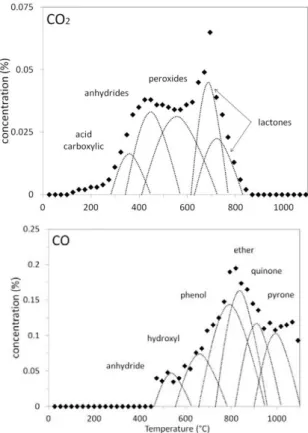
• Chapter II presents the materials and methods which have been employed to carry out the different biochar production, functionalization, methane catalytic tests and surface characterization. Well-known techniques such as Brunauer-Emmett-Teller (BET) analysis, Transmission Electron Microscopy (TEM), Scanning Electron Microscopy (ESEM), X-ray Diffraction (XRD), X-ray fluorescence (XRF) and Fourier Transform Infrared spectroscopy (FTIR) have been used to investigate the physico-chemical surface properties of the biochars. In addition, some techniques more specific to the study of carbonaceous materials such as Raman spectroscopy and Temperature Programmed Desorption (TPD) have been carried out to study more specifically the carbon structures distribution and the oxygenated content.
• Chapter III is focused on the extensive characterization of the raw and functionalized biochars surface properties. In one hand, a part of the characterizations led to evaluate the efficiency and selectivity of the functionalization treatments (characterization of the oxygen groups and AAEMs minerals content). On the other hand, a second set of characterizations has been carried out to evaluate the indirect impact of the functionalization treatments on other physico-chemical properties (carbon structures and textural properties) of the surface which are depicted to be involved in the catalytic activity of the biochar during methane cracking.
• Chapter IV is dedicated to the catalytic methane cracking tests. First, it has been highlighted that the raw biochar is a catalyst for the methane cracking reaction at 700°C. Then, the global activities of the raw, oxygenated and minerals impregnated biochars are presented and compared (also performed at 700°C). The deactivation of the surface due to carbon deposit is also approached. In the second section, the reactivity of the different biochars is discussed in relation to their physico-chemical properties. This second part is composed of two sections: the first one is focused on the initial reactivity which corresponds to the activity of the fresh catalyst surface. Then, the deactivation is discussed in function of the coke deposit impact on the different physico-chemical properties.
• Chapter V presents the kinetics study at the reactor scale and the modeling work. The kinetics investigation has been performed at the reactor scale to determine initial apparent kinetics
5 parameters and more specifically the activation energy (from experimental data) which gives insights into the performances of the catalyst. In the same section, a fit of the experimental data with a well-known empirical expression of coke concentration deposit has been performed to confirm the phenomenon of surface deactivation. In a last section, a modeling at the pore scale to get better insights into the surface deactivation mechanism and hydrogen concentration into the micropore is discussed.
Finally, we will present the main conclusions on the present work and we will propose prospects for future research works to complete the current investigations.
Bibliography
[1] M. R. Raupach, G. Marland, P. Ciais, C. Le Quéré, J. G. Canadell, G. Klepper, and C. B. Field, “Global and regional drivers of accelerating CO2 emissions.,” Proc. Natl. Acad. Sci. U. S. A., vol. 104, no. 24, pp. 10288–10293, 2007.
[2] ADEME, “MARCHES ET EMPLOIS LIES A L ’ EFFICACITE ENERGETIQUE ET AUX ENERGIES RENOUVELABLES : SITUATION 2012-2013 ET PERSPECTIVES A COURT TERME Novembre 2014,” 2014. [Online]. Available: http://www.ademe.fr/marches-emplois-lies-a-lefficacite-energetique-energies-renouvelables-situation-2012-2013-perspectives-a-court-terme.
[Accessed: 15-Sep-2015].
[3] ADEME, “Les chiffes clés 2014 CLIMAT, AIR, ENERGIE,” 2014. [Online]. Available: http://www.ademe.fr/chiffres-cles-climat-air-energie-2014. [Accessed: 01-Aug-2015].
[4] C. R. Tsai, F. Chen, a. C. Ruo, M. H. Chang, H. S. Chu, C. Y. Soong, W. M. Yan, and C. H. Cheng, “An analytical solution for transport of oxygen in cathode gas diffusion layer of PEMFC,” Int. J. Hydrogen Energy, vol. 31, no. 15, pp. 2179–2192, 2006.
[5] M. Asadullah, “Technical Challenges of Utilizing Biomass Gasification Gas for Power Generation : An Overview,” J. Energy Technol. Policy, vol. 3, no. 11, pp. 137–143, 2013.
[6] R. Dixon, M. Eckhart, D. Hales, and G. Thompson, “Rapport mondial 2012 sur les énergies renouvelables 2012,” 2012.
[7] L. Devi, K. J. Ptasinski, and F. J. J. G. Janssen, “A review of the primary measures for tar elimination in biomass gasification processes,” Biomass and Bioenergy, vol. 24, no. 2, pp. 125–
6
140, 2002.
[8] P. C. A. Bergman, S. V. B. Van Paasen, and H. Boerrigter, “The novel ‘ OLGA ’ technology for complete tar removal from biomass producer gas,” no. October, 2002.
[9] Y. Shen, “Chars as carbonaceous adsorbents/catalysts for tar elimination during biomass pyrolysis or gasification,” Renew. Sustain. Energy Rev., vol. 43, pp. 281–295, 2015.
[10] K. Qian and A. Kumar, “Reforming of lignin-derived tars over char-based catalyst using Py-GC/MS,” Fuel, vol. 162, pp. 47–54, 2015.
[11] N. Klinghoffer, J. M. Castaldi, and A. Nzihou, “NAWTEC19-5421 BENEFICIAL USE OF ASH AND CHAR FROM BIOMASS GASIFICATION - DRAFT,” in NAWTEC19-5421, 2011, p. 5.
[12] N. Klinghoffer, M. Castaldi, and A. Nzihou, “Catalyst properties and Catalytic Performance of Char from Biomass Gasification,” Ind. Eng. Chem. Res., vol. 51, no. 40, pp. 13113–13122, 2012.
Content
Introduction: motivations to perform pyro-gasification ... 7
1. Biomass pyro-gasification basics ... 8 1.1. Biomass resources ... 8 1.2. Main steps and reactions in pyro-gasification process ... 12 1.3. Products: syngas, gas-phase co-products, tars, biochars and soots ... 15 1.4. Technological considerations ... 17 1.5. Partial conclusion ... 19
2. Focus on the biochars ... 20 2.1. Surface physico-chemical properties ... 20 2.2. Origin of the reactivity of biochars in pyro-gasification process ... 31 2.3. Applications ... 37 2.1. Functionalization ... 38 2.2. Partial conclusion ... 41
3. Catalytic methane cracking ... 42 3.1. Thermodynamic aspects... 42 3.2. Metal supported catalysts ... 45 3.3. Carbonaceous materials ... 45 3.4. Partial conclusion ... 54
4. Conclusion ... 55
7 The objective of this chapter is to provide insights into the production and characterization of biochars, and the possible ways of its valorization. This will set the stage in identifying the choices made in pursuing the line of investigation. A brief introduction explains the motivations to perform biomass pyro-gasification followed by three subsections:
- The first subsection provides basic knowledge about biomass pyro-gasification
- A second subsection consists in the state-of-the-art regarding the relationship between the physico-chemical properties of the biochars surface and its reactivity in pyro-gasification process
- In the third subsection, catalytic methane cracking and more specifically on carbonaceous material is reviewed to evaluate the potential of the utilization of biochars.
Introduction: motivations to perform pyro-gasification
Pyro-gasification is often compared to combustion to evaluate the benefits in terms of energy recovery. Both processes consist in extracting the energy from a fuel by heating it under an oxidizing atmosphere. The parameter which categorizes the process as a pyro-gasification or a combustion is the air to fuel ratio. Pyro-gasification is performed under sub stoichiometric conditions whereas combustion is operated with a stoichiometric or an excess of air. This difference has a great impact on the products formed from each reaction and thus the potential energy recovered. In fact, under excess of air fuel will be fully oxidized and thus the combustion mainly produces heat, carbon dioxide and steam. However pyro-gasification which consists in a partial oxidation of the fuel will mainly generate carbon monoxide and hydrogen. As far as energy recovery is concerned, the overall energy conversion is in favor of the pyro-gasification process. In fact, combustion is usually performed to produce heat which is used to generate steam and feed steam turbine for electricity production. Once the combustion is over, no added value products left. On the contrary, pyro-gasification converts energy from the fuel into chemical species so-called synthesis gas (mixture of CO+H2). This
synthesis gas is further utilized in many various fields. It represents an intermediary building block for the production of various fuels such as synthetic natural gas, ammonia, methanol and synthetic petroleum fuel. It could be also used as a direct fuel source. In a purified state, the hydrogen can be used to directly power hydrogen fuel cells for electricity generation and fuel cell electric motor propulsion.
8
1.
Biomass pyro-gasification basics
Pyro-gasification process takes part with combustion and torrefaction into the thermo-chemical processes of biomass conversion in opposition to the biochemical processes such as aerobic, anaerobic or fermentation processes. This section initially provides a characterization of the chemical, physical and thermodynamic properties of lignocellulosic biomass. Subsequently, a description of the mechanisms involved in pyro-gasification process is provided. The third part consists in a presentation and a brief characterization of the products from pyro-gasification. Finally, the different gasifier designs are discussed and a state-of-the-art regarding the scientific, technologic and technical bottlenecks is presented.
1.1.
Biomass resources
1.1.1. Ligno-cellulosic biomass
The term “Biomass” covers a wide spectrum of entities since it is a generic designation for organic materials from living species like plants and animals. A unique definition for the term “Biomass” does not exist even if all definitions are similar. In this study, we adopt the definition given by the United Nations Framework Convention on Climate Change (UNFCCC, 2005):
“Biomass is non-fossilized and biodegradable organic material originating from plants, animals and micro-organisms. This shall also include products, by-products, residues and waste from agriculture, forestry and related industries as well as the non-fossilized and bio-degradable organic fractions of industrial and municipal wastes.”
According to their applications, three classes of biomass have been depicted [1]:
- the first-generation of biomass is in direct competition with food and pharmaceutical industries. This group is generally composed of sugarcane, surgarbeet, rapeseed, soybean or starch-derived and other species of medical interest.
- the second-generation of biomass gathers the non-food crops, ligno-cellulosic materials and waste residues.
- the third-generation is composed of aquatic microorganisms like algae.
Pyro-gasification processes are usually carried out on second-generation biomass which is mainly composed of ligno-cellulosic materials. Husk, straw and wood are defined such as ligno-cellulosic materials. Wood could be further categorized into hardwood and softwood. A harwood differs from
9 a softwood due to the fact theirs seeds contains flower and fruit. Maple, oak or poplar wood are considered to be hardwood whereas evergreens conifers such as pine or spruce are considered as softwood. A growing interest is put on cultivation dedicated to plants to produce energy such as miscanthus, willow, switchgrass and poplar wood. In fact, they present various advantages compared to other ligno-cellulosic materials: they have a short growing period and a high yield. They are densely planted (about 10, 000 trees/ha) and harvested every 2 or 4 years for very-short-rotation coppices which leads to a production of 8 to 20 T MS/ha/year [2]. In this study, poplar wood pellets have been utilized such as pyro-gasification inlet. Thus, the focus is put on wood characteristics thereafter.
Ligno-cellulosic material cannot be easily degraded by digestion or fermentation processes. High temperature or pressure are needed to decompose their major components: cellulose, hemicellulose and lignin. The composition of a ligno-cellulosic material is variable depending on its nature and origins. For hardwood the composition in lignin, cellulose and hemicelluose could vary between 18-25%, 40-44% and 15-35% respectively [3]. Regarding the definition of the constituent of the cellular makeup of wood, cellulose is represented by the formula of monomer unit (C6H10O5). It is a long
polymer chain with a high degree of polymerization primarily composed of d-glucose which is the basic unit of the crystalline structure. In addition, hemicellulose is present which is an amorphous structure with a low degree of polymerization. According to the type of wood there is a variation in the hemicellulose composition. Its generic formula is (C5H8O4) and it is mainly composed of simple
sugars such as D-xylose, D-glucose or D-galactose. Lignin is a complex three dimensional polymer of phenylpropane. The dominant monomeric unit in the polymer is the benzene ring. Lignin is highly recalcitrant.
1.1.2. Physical, chemical and thermal properties of wood
1.1.2.1. Physical properties
Density of the wood is an important parameter in pyro-gasification process. In fact the density affects the contact between the reactive gas and the solid and thus the efficiency of the process. Three types of density have been defined: true, apparent and bulk densities. They differ from the fact that the volume considered takes into account (or not) the emptiness into the particles (pores) and between the particles in a bed of material. The true density (�����) is the ratio between the mass of wood particle and its actual volume (without taking into account any empty space) whereas the
10
apparent density (��������� ) takes into account the internal pore volumes (intra-particle porosity: ��). The bulk density (�����) depends on how wood particles are packed. Bulk volume includes interstitial spaces between the particles (inter-particle porosity: ��).
1.1.2.2. Chemical properties
Proximate and ultimate analyses provide the composition of the wood. The proximate analysis determines the moisture, ash, fixed carbon and volatile matter content while the ultimate analysis provides the composition in carbon, oxygen, hydrogen, sulfur and nitrogen of the solid sample. According to the biomass feedstocks, the ultimate and proximate analyses could significantly vary. Figure I-1 presents the well known Van Krevelen diagram which shows the H:C over the O:C atomic ratio for different carbonaceous materials. One can observe that biomass is the fuel the richest in both hydrogen and oxygen with a O:C ratio comprised between 0.4-0.8 and a H:C ratio between 1.2 and 1.8. Thus, biomass is the most heterogeneous fuel regarding its chemical composition which should be taken into consideration for further applications.
Figure I-1: Van Krevelen diagram which compares the chemical composition of different fuels [4]
Regarding wood chemical composition, it is mostly composed of carbon (50.9 wt%), oxygen (42.6 wt%), and hydrogen (6.1 wt%). Nitrogen and ash represent a minor fraction of the wood composition (see Table I-1).
11 Table I-1: Ultimate analysis of hardwood and softwood [5]
Mass fraction (dry basis) %
C 50.9 (+/- 2.0)
H 6.1 (+/- 0.4)
O 42.6 (+/- 2.6)
N 0.37 (+/- 0.43)
ash 2.5 (+/- 4.4)
Thus the ultimate and proximate analyses give insights into the composition of the wood which is required to perform pyro-gasification in optimized conditions. For example the evaluation of the input carbon content is utilized to calculate the suitable oxygen concentration to perform the pyro-gasification. The determination of the moisture is also important to evaluate the energy which will be required to evaporate water contained in the biomass prior to pyro-gasification. The value of fixed carbon and the ashes give insights into the final composition of the solid.
1.1.2.3. Thermodynamic properties
The pyro-gasification is a thermochemical process. Thus the thermodynamic properties of wood are relevant information. Four thermodynamic properties are presented: the thermal conductivity, the specific heat, the heat of formation and the heat of combustion.
1.1.2.3.1. Thermal conductivity
The thermal conductivity represents the ability of a material to transfer heat. It is dependent of the temperature, density and moisture of the material. Biomass and specifically wood is a bad heat conductor due to the porosity. Its thermal conductivity varies between 0.15 and 0.30 W.m-1.K-1
whereas steel for example is about 50 W.m-1.K-1 [6]. Evaluation of the thermal conductivity is useful to predict if the temperature will be homogeneous during the pyro-gasification reaction. Since the wood has been depicted to be a bad conductor one can anticipate that important gradient of temperatures could be measured into the bed of biomass during pyro-gasification.
12
1.1.2.3.2. Specific heat capacity
The specific heat capacity (��) is the amount of heat energy required to elevate the temperature of the material of one unit of temperature per unit of mass. The specific heat capacity is dependent of the temperature. Experimental determination of specific heat for various biomass have been performed in the literature. Dupont et al. [7] measured the specific heat capacity of 21 biomass representative of species potentially useable as feedstock in thermal processes by calorimetry. They stated that a linear equation linked the specific heat to the temperature between 353-513 K. In this
temperature range the specific heat capacity of biomass is comprised between 1200 and 2000 J.K-1.kg-1.
1.1.2.3.3. Heat of formation
The heat of formation or also so-called enthalpy of formation is the change in enthalpy when one mole of component is formed from its stable elements at the standard state.
1.1.2.3.4. Heat of combustion
The heat of combustion is the energy released as heat when one mass unit of component undergoes complete combustion at temperature and pressure fixed (0°C and 1.013 bars). This characteristic is useful to compare the performances of different fuels during combustion. Two designations exist according to the condensation of water is taken into account (Higher Heating Value, HHV) or not (Lower Heating Value, LHV). Regarding the wood, its LHV is about 18 MJ/kg which is quite low compared to natural gas for example (47 MJ/kg) [8].
This section was dedicated to the description of the type of biomass utilized in the pyro-gasification process, and their properties. In the next paragraph, the theoretical bases related to the pyro-gasification process and the reactor technologies which have been developed are presented.
1.2.
Main steps and reactions in pyro-gasification process
The objective of the pyro-gasification process is to convert the biomass into a high energetic gas so-called syngas which is a mixture of carbon monoxide and hydrogen and which is intended to feed gas turbines of conversion into chemicals or fuels. Pyro-gasification is a highly complex process which involved more than 100 reactions (reaction in chains, secondary or competitive reactions mainly
13 occurring in the gas phase) and in which biomass undergoes severe transformations to produce syngas. The progress of the pyro-gasification process is dependent from the type of biomass, its origins and conditioning. However some main steps can be described. Figure I-2 presents a scheme of the main reactions occurring during the pyro-gasification process.
Figure I-2: Reaction scheme of biomass pyro-gasification [9]
Three main steps: drying, pyrolysis and pyro-gasification are presented below:
1.2.1. Drying
The drying step consists in the evaporation of the moisture (free water and bound water) inherently present in the biomass. This endothermic reaction occurs below 200°C range.
1.2.2. Pyrolysis
Pyrolysis consists in the chemical decomposition of the organic material at the temperature range of 300-700°C which corresponds to the thermal degradation of the main ligno-cellulosic components. In fact, it has been reported that the decomposition of hemicellulose, cellulose and lignin are consecutive at around 300°C, 300-400°C and 350-450°C respectively [10]. The products of the
14
pyrolysis step are the remaining carbonaceous solid so-called biochar and the volatile matters composed of condensable (tars) and non condensable fractions.
1.2.3. Gasification
Gasification consists in the partial oxidation of the char under the action of an oxidant agent which could be steam, air, carbon dioxide or oxygen. Biomass gasification generally occured in the temperature range of 700 to 1300°C. The global reaction of biomass gasification is presented in Eq.I-1. However it is a sum of multiple reactions. Some of the main reactions occurring during the gasification are presented in Eq.I-2 to Eq.I-7 such as steam gasification, Boudouard reaction, methanation, combustion, Water gas-shift and reforming. Steam gasification and Boudouard reactions which are the actual reactions which produce the energetic syngas (CO + H2) are
endothermic and thus an energy supply is required to maintain high temperature in the reactor. Global reaction:
CxHyOz+ O2 (or CO2 or H20)
→ CO, H2, CO2, H20, CH4+ light hydrocarbons + tars + char + ash
Eq.I-1
Reactions between carbon from the char and the gaseous agent:
Steam gasification: � + �2� → �� + �2 �� = +��� ��/��� Eq.I-2
Boudouard reaction: � + ��2 → 2�� �� = +�����/��� Eq.I-3
Methanation: � + 2�2 → ��4 �� = − ����/��� Eq.I-4
Combustion: � + �2 → ��2 �� = −��� ��/��� Eq. I-5
Reactions in the gas phase:
Water-gas shift: �� + �2� ↔ ��2+�2 �� = −�� ��/��� Eq.I-6 Reforming: ��4+ �2� → 3�2+�� 2 �� = ��� ��/��� Eq.I-7
15 Syngas is produced via steam gasification (Eq.I-2) and Boudouard reaction (Eq.I-3). Even if combustion is the fastest reaction (50 times faster than the steam gasification) it is not the main reaction in the gasification process since the oxygen concentration is significantly lower than the one for the gasifying agent (below 5%) [6]. The Boudouard reaction is known to be 2 to 5 times slower than the steam gasification [11]. In addition Di Blasi et al. [10] stated that water gasification mechanism is more complex than CO2 gasification since H2, CO and CO2 are in equilibrium following
the Water gas shift reaction (see Eq.I-6) in their review on the gasification and combustion rates of ligno-cellulosic biochars.
1.3.
Products: syngas, gas-phase co-products, tars, biochars and soots
1.3.1. Syngas
Syngas is composed of carbon monoxide and hydrogen. According to the subsequent use, the required ratio between the two constituents will differ. According to Nzihou et al. [12], the ratio of ��/�2 in the syngas should ideally be near equimolar to provide hydrocarbons for transport fuels. Regarding application of the Fischer-Tropsch process, an excess of hydrogen over carbon monoxide is required. Bermudez et al. [13], highlighted that a low �2⁄ ratio is suitable for the production of �� higher hydrocarbons and oxygenated derivatives. As methanol synthesis is concerned a ratio close to 2 is suitable.
1.3.2. Gas-phase co-products
Methane, carbon dioxide and light hydrocarbons such as acetylene and ethylene are the major gas-phase co-products. High pressure tends to increase the production of methane [10]. Pollutants such as nitrogen and sulfur compounds coming from the biomass and which reacted with the gasifying agent are also present in the gas phase. Regarding the distribution of the different components in the gas-phase, it is varying according to the operating conditions (temperature and residence time). However hydrogen and carbon monoxide are the major components. Carbon dioxide is the third main component followed by methane. All other components are in minor concentration.
16
1.3.3. Tars
Tar are defined as a complex mixture of condensable hydrocarbons [14]. The devolatilization of the condensable matters from the biomass produce the so-called primary tars (derived products from the ligno-cellulosic components). Further reactions into the gas phase (which are enhanced with increasing the temperature and residence time of the pyrolysis) lead to the decomposition of these primary tars to produce secondary tars (olefins and phenolics) and tertiary tars (aromatic hydrocarbons). For temperature above 900°C, benzene rings resulting from tars cracking or light hydrocarbons polymerization growth with the addition of C2H2 to form Polycyclic Aromatic
Hydrocarbons (HAPs) which are highly toxic [15], [16].
1.3.4. Biochars
Biochars are the solid residues from the biomass pyro-gasification. They are composed of organic and inorganic components which were not devolatilized during the pyrolysis step. The section 2 of this chapter is entirely dedicated to a detailed presentation of the physico-chemical properties of the biochars and the different considerations regarding their reactivity, the potential applications and the ways of functionalization. However a quick description of the general biochars characteristics is provided in this paragraph.
Biochars are disordered carbonaceous solids which could have a short-rangeg ordrered. They are mainly composed of carbon (about 85 wt%) but also contains oxygen (10 wt%), hydrogen (2 wt%), nitrogen (< 1 wt%), sulfur (< 1 wt%) and ashes (1 to 3 wt%). Most of the ashes which were present in the biomass remain in the biochars and their concentration is about few percents in the total mass of biochars. They are also porous materials due to the devolatilization of a part of the initial wood components. The characterization of their porosity (volume, pore size and structure) is of great interest. The pyro-gasification conditions (heating rate, temperature, gasifying agent) influence the yields and physico-chemical properties of the biochars. In fact, in a fast pyrolysis process (heating rate > 10°C/s), the yield of biochars tends to be lower than in a slow pyrolysis since the devolatilization of the condensable matters would be enhanced. Regarding the effect of the temperature, the higher the temperature process, the more condensed the structures. The physico-chemical properties of the biochars and the influence of the pyro-gasification conditions are presented and discussed more in details in the section 2.1.
![Figure I-7: Example of functional groups that can potentially exist on the biochar surface [40]](https://thumb-eu.123doks.com/thumbv2/123doknet/8265103.278275/50.893.217.675.719.1030/figure-example-functional-groups-potentially-exist-biochar-surface.webp)
![Figure I-18: Catalytic performance of different char samples for methane cracking [19]](https://thumb-eu.123doks.com/thumbv2/123doknet/8265103.278275/73.893.220.678.466.783/figure-catalytic-performance-different-char-samples-methane-cracking.webp)
![Figure I-22: Initial decomposition rate versus amount of surface oxygenated groups desorbed in TPD runs as CO (left axis) and CO 2 (right axis) [112]](https://thumb-eu.123doks.com/thumbv2/123doknet/8265103.278275/77.893.263.638.279.536/figure-initial-decomposition-versus-surface-oxygenated-groups-desorbed.webp)