original article
Targeted Temperature Management
at 33°C versus 36°C after Cardiac Arrest
Niklas Nielsen, M.D., Ph.D., Jørn Wetterslev, M.D., Ph.D., Tobias Cronberg, M.D., Ph.D., David Erlinge, M.D., Ph.D., Yvan Gasche, M.D., Christian Hassager, M.D., D.M.Sci.,Janneke Horn, M.D., Ph.D., Jan Hovdenes, M.D., Ph.D.,
Jesper Kjaergaard, M.D., D.M.Sci., Michael Kuiper, M.D., Ph.D., Tommaso Pellis, M.D., Pascal Stammet, M.D., Michael Wanscher, M.D., Ph.D., Matt P. Wise, M.D., D.Phil.,
Anders Åneman, M.D., Ph.D., Nawaf Al-Subaie, M.D.,
Søren Boesgaard, M.D., D.M.Sci., John Bro-Jeppesen, M.D., Iole Brunetti, M.D., Jan Frederik Bugge, M.D., Ph.D., Christopher D. Hingston, M.D., Nicole P. Juffermans, M.D., Ph.D., Matty Koopmans, R.N., M.Sc., Lars Køber, M.D., D.M.Sci., Jørund Langørgen, M.D., Gisela Lilja, O.T.,
Jacob Eifer Møller, M.D., D.M.Sci., Malin Rundgren, M.D., Ph.D., Christian Rylander, M.D., Ph.D., Ondrej Smid, M.D., Christophe Werer, M.D.,
Per Winkel, M.D., D.M.Sci., and Hans Friberg, M.D., Ph.D., for the TTM Trial Investigators*
The authors’ affiliations are listed in the Appendix. Address reprint requests to Dr. Nielsen at the Department of Anes-thesia and Intensive Care, Intensive Care Unit, Helsingborg Hospital, S Vallgatan 5, 251 87, Helsingborg, Sweden, or at niklas [email protected].
*A complete list of investigators partici-pating in the Target Temperature Man-agement 33°C versus 36°C after Out-of-Hospital Cardiac Arrest (TTM) trial is provided listed in the Supplementary Appendix, available at NEJM.org. This article was published on November 17, 2013, at NEJM.org.
N Engl J Med 2013. DOI: 10.1056/NEJMoa1310519
Copyright © 2013 Massachusetts Medical Society ABS TR ACT
Background
Unconscious survivors of out-of-hospital cardiac arrest have a high risk of death or poor neurologic function. Therapeutic hypothermia is recommended by interna-tional guidelines, but the supporting evidence is limited, and the target tempera-ture associated with the best outcome is unknown. Our objective was to compare two target temperatures, both intended to prevent fever.
Methods
In an international trial, we randomly assigned 950 unconscious adults after out-of-hospital cardiac arrest of presumed cardiac cause to targeted temperature manage-ment at either 33°C or 36°C. The primary outcome was all-cause mortality through the end of the trial. Secondary outcomes included a composite of poor neurologic function or death at 180 days, as evaluated with the Cerebral Performance Category (CPC) scale and the modified Rankin scale.
Results
In total, 939 patients were included in the primary analysis. At the end of the trial, 50% of the patients in the 33°C group (235 of 473 patients) had died, as compared with 48% of the patients in the 36°C group (225 of 466 patients) (hazard ratio with a temperature of 33°C, 1.06; 95% confidence interval [CI], 0.89 to 1.28; P = 0.51). At the 180-day follow-up, 54% of the patients in the 33°C group had died or had poor neurologic function according to the CPC, as compared with 52% of patients in the 36°C group (risk ratio, 1.02; 95% CI, 0.88 to 1.16; P = 0.78). In the analysis using the modified Rankin scale, the comparable rate was 52% in both groups (risk ratio, 1.01; 95% CI, 0.89 to 1.14; P = 0.87). The results of analyses adjusted for known prognostic factors were similar.
Conclusions
In unconscious survivors of out-of-hospital cardiac arrest of presumed cardiac cause, hypothermia at a targeted temperature of 33°C did not confer a benefit as compared with a targeted temperature of 36°C. (Funded by the Swedish Heart–Lung Foundation and others; TTM ClinicalTrials.gov number, NCT01020916.)
U
nconscious patients admitted to critical care units after out-of-hospital cardiac arrest are at high risk for death, and neurologic deficits are common among those who survive.1 Two previous trials, involvingpa-tients who remained unconscious after resusci-tation from cardiac arrest (of presumed cardiac cause, with an initial shockable rhythm), com-pared therapeutic hypothermia (32°C to 34°C for 12 to 24 hours) with standard treatment. These trials showed a significant improvement in neu-rologic function2,3 and survival3 with therapeutic
hypothermia.
Therapeutic hypothermia (also called targeted temperature management) is now recommended in international resuscitation guidelines, and its use has been extended to cardiac arrest of other causes and with other presenting rhythms as
well as to the in-hospital setting.4 Although a
Cochrane review supports these guidelines,5 some
investigators have suggested a need for additional trials to confirm or refute the current treatment
strategy.6-8 Furthermore, one trial showed that
fever developed in many patients in the standard-treatment group.3 It is therefore unclear whether
the reported treatment effect was due to hypo-thermia or to the prevention of fever, which is associated with a poor outcome.9-11 We conducted
a trial to investigate the benefits and harms of two targeted temperature regimens, both intended to prevent fever, in a broader population of patients with cardiac arrest than previously studied.
Methods Trial Design
The Target Temperature Management 33°C versus 36°C after Out-of-Hospital Cardiac Arrest (TTM) trial was a randomized clinical trial recruiting patients in 36 intensive care units (ICUs) in Eu-rope and Australia. The rationale for and design of the trial, as well as the statistical analysis
plan, have been published previously.12,13 The
protocol (available with the full text of this arti-cle at NEJM.org) was approved by the ethics com-mittees in each participating country and institu-tion. An independent data and safety monitoring committee reviewed the data and performed one prespecified, blinded interim analysis. The steering group (see the Supplementary Appendix, available at NEJM.org) vouches for the accuracy and com-pleteness of the data and analysis and for the adherence of this report to the trial protocol.
Patients
We consecutively screened patients 18 years of age or older who were unconscious (a score of <8 on the Glasgow Coma Scale [on which scores range from 3 to 15, with lower scores indicating re-duced levels of consciousness]) on admission to the hospital after out-of-hospital cardiac arrest of presumed cardiac cause, irrespective of the initial rhythm. Eligible patients had more than 20 con-secutive minutes of spontaneous circulation after resuscitation.14 The main exclusion criteria were
an interval from the return of spontaneous circu-lation to screening of more than 240 minutes, unwitnessed arrest with asystole as the initial rhythm, suspected or known acute intracranial hemorrhage or stroke, and a body temperature of less than 30°C. A full list of exclusion criteria is provided in the Supplementary Appendix. In ac-cordance with national requirements and the principles of the Declaration of Helsinki, written informed consent was waived, delayed, or ob-tained from a legal surrogate, depending on the circumstances, and was obtained from each pa-tient who regained mental capacity.15
Randomization and Trial Intervention After being screened for eligibility, patients were randomly assigned in a 1:1 ratio to targeted tem-perature management with a target body tempera-ture of either 33°C or 36°C. Randomization was performed centrally with the use of a computer-generated assignment sequence. Intervention as-signments were made in permuted blocks of vary-ing size and were stratified accordvary-ing to site.
Health care professionals caring for the trial patients were aware of the intervention assign-ments because of inherent problems with blind-ing of body temperature. Physicians performblind-ing neurologic prognostication, assessors of neuro-logic follow-up and final outcome, study admin-istrators, statisticians, and the authors were un-aware of the intervention assignments. During the analysis phase, the intervention groups were identified only as 0 and 1, and the manuscript was written and approved by all the authors
be-fore the randomization code was broken.16
The intervention period of 36 hours com-menced at the time of randomization. Sedation was mandated in both groups until the end of the intervention period. The goal was to achieve the assigned temperature as rapidly as possible with the use of ice-cold fluids, ice packs, and intravascular or surface temperature-management
devices at the discretion of the sites. Details of the trial interventions, including the manage-ment of an initial body temperature below the assigned target, are provided in the Supplemen-tary Appendix.
After 28 hours, gradual rewarming to 37°C in hourly increments of 0.5°C was commenced in both groups. At 36 hours, mandatory sedation was discontinued or tapered. After the intervention period, the intention was to maintain the body temperature for unconscious patients below 37.5°C until 72 hours after the cardiac arrest, with the use of fever-control measures at the discretion of the sites.
Neurologic Prognostication and Withdrawal of Life-Sustaining Therapies A physician who was unaware of the intervention assignments performed a neurologic evaluation 72 hours after the end of the intervention for pa-tients who remained unconscious and issued a recommendation for the continuation or withdraw-al of therapy. The triwithdraw-al protocol established pre-specified criteria for withdrawal of life-sustaining
therapy12 (see the Supplementary Appendix). All
clinical decisions remained at the discretion of the treating team.
Follow-up and Outcomes
All surviving patients were followed until 180 days after the enrollment of the last patient. The pri-mary outcome was all-cause mortality through the end of the trial. The main secondary outcome was a composite of poor neurologic function or death,
defined as a Cerebral Performance Category17,18
(CPC) of 3 to 5 and a score of 4 to 6 on the modi-fied Rankin scale,19,20 at or around 180 days. The
CPC scale ranges from 1 to 5, with 1 representing good cerebral performance or minor disability, 2 moderate disability, 3 severe disability, 4 coma or vegetative state, and 5 brain death. Scores on the modified Rankin scale range from 0 to 6, with 0 representing no symptoms, 1 no clinically significant disability, 2 slight disability, 3 moderate disability, 4 moderately severe disability, 5 severe disability, and 6 death. Mortality at 180 days and individual neurologic scores were also analyzed separately. Other secondary outcomes were the CPC at discharge from the ICU and from the hos-pital and the best (numerically lowest) reported CPC during the trial period. Predefined serious adverse events21 were recorded up to day 7 in the
ICU. Data collection and verification for all trial
data and for the outcome measures are described in the Supplementary Appendix.
Statistical Analysis
We estimated that a sample of 900 patients would provide 90% power to detect a 20% reduction in the hazard ratio for death in the 33°C group as compared with the 36°C group, at a two-sided alpha level of 0.05. Alternatively, to detect a rela-tive risk reduction of 20%, with the assumption of a mortality of 44% in the 33°C group versus 55% in the 36°C group, a sample of 850 patients would be needed. On the basis of these assump-tions, a sample of 950 patients was chosen, to allow for a loss to follow-up of 50 patients.
The principal trial analyses were performed in the modified intention-to-treat population, defined as all randomly assigned patients except those withdrawing consent for use of all trial data and those not fulfilling inclusion criteria and never receiving the intervention.22 Additional
analyses were performed in the intention-to-treat population, which included all randomly assigned patients except those withdrawing consent, and in the per-protocol population, which excluded patients with one or more major protocol viola-tions (listed in the Supplementary Appendix).
The Wilcoxon signed-rank test was used to compare distributions of continuous outcome measures. Kaplan–Meier survival curves were compared between the intervention groups with the use of the log-rank test. Relative risks were compared with the use of Cochran–Mantel– Haenszel statistics. Trends were assessed with the use of the Cochran–Armitage test. Logistic-regression and Cox analyses were performed as appropriate, with adjustment for site and for five baseline variables: age, sex, presence or absence of shockable rhythm, presence or absence of circulatory shock on admission, and the time from cardiac arrest (or from the emergency call for unwitnessed cardiac arrests) to the return of spontaneous circulation. Odds ratios were con-verted to relative risks.23 All primary analyses
were adjusted for site.24 Temperature data were
analyzed with the use of a mixed model with repeated measures. The effect of time was mod-eled with the use of a polynomial; the use of com-pound symmetry and first-order autoregressive covariance structures was compared, and the better-fitting model was used. SAS software, ver-sion 9.3, and SPSS software, verver-sion 17.1, were used for all analyses. All tests were two-sided
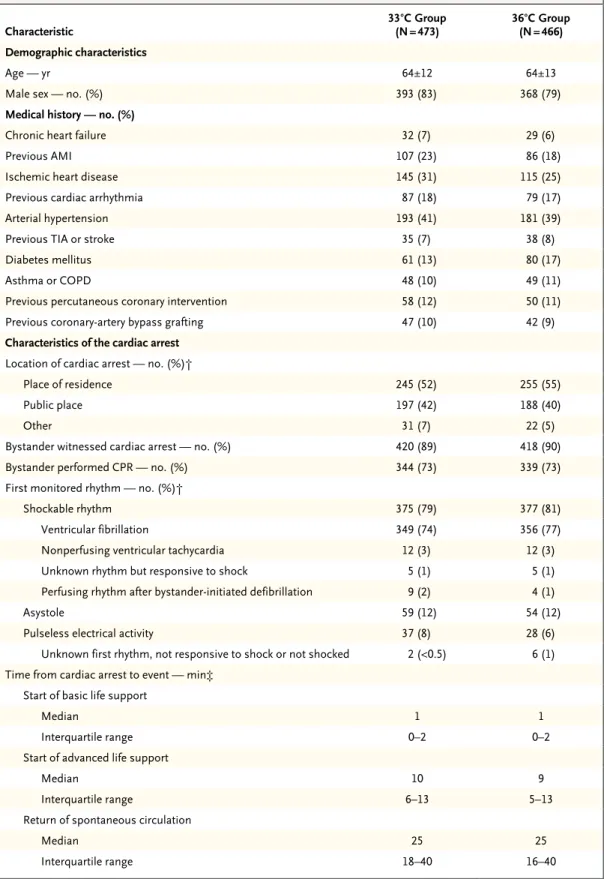
Table 1. Characteristics of the Modified Intention-to-Treat Population before Randomization.*
Characteristic 33°C Group (N = 473) 36°C Group (N = 466) Demographic characteristics
Age — yr 64±12 64±13
Male sex — no. (%) 393 (83) 368 (79)
Medical history — no. (%)
Chronic heart failure 32 (7) 29 (6)
Previous AMI 107 (23) 86 (18)
Ischemic heart disease 145 (31) 115 (25)
Previous cardiac arrhythmia 87 (18) 79 (17)
Arterial hypertension 193 (41) 181 (39)
Previous TIA or stroke 35 (7) 38 (8)
Diabetes mellitus 61 (13) 80 (17)
Asthma or COPD 48 (10) 49 (11)
Previous percutaneous coronary intervention 58 (12) 50 (11)
Previous coronary-artery bypass grafting 47 (10) 42 (9)
Characteristics of the cardiac arrest
Location of cardiac arrest — no. (%)†
Place of residence 245 (52) 255 (55)
Public place 197 (42) 188 (40)
Other 31 (7) 22 (5)
Bystander witnessed cardiac arrest — no. (%) 420 (89) 418 (90)
Bystander performed CPR — no. (%) 344 (73) 339 (73)
First monitored rhythm — no. (%)†
Shockable rhythm 375 (79) 377 (81)
Ventricular fibrillation 349 (74) 356 (77)
Nonperfusing ventricular tachycardia 12 (3) 12 (3)
Unknown rhythm but responsive to shock 5 (1) 5 (1)
Perfusing rhythm after bystander- initiated defibrillation 9 (2) 4 (1)
Asystole 59 (12) 54 (12)
Pulseless electrical activity 37 (8) 28 (6)
Unknown first rhythm, not responsive to shock or not shocked 2 (<0.5) 6 (1) Time from cardiac arrest to event — min‡
Start of basic life support
Median 1 1
Interquartile range 0–2 0–2
Start of advanced life support
Median 10 9
Interquartile range 6–13 5–13
Return of spontaneous circulation
Median 25 25
and adjusted for multiple comparisons. A P value of 0.05 or less was considered to indicate statis-tical significance.
R esults Patients
A total of 950 patients were enrolled between No-vember 2010 and January 2013; of these patients, 476 were randomly assigned to the 33°C group and 474 to the 36°C group. The modified inten-tion-to-treat population (the primary-analysis population) consisted of 473 patients assigned to 33°C and 466 assigned to 36°C (Fig. S1 in the Supplementary Appendix). The two groups had similar prerandomization characteristics (Table 1). Glasgow Coma Scale scores on admission, cardio-vascular Sequential Organ Failure Assessment scores, and details of diagnostic procedures, in-terventions, and the use of health services are provided in Tables S1, S2, and S3, respectively, in the Supplementary Appendix.
Temperature Intervention
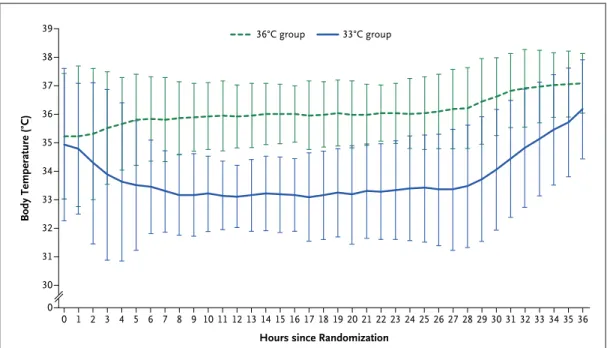
The mean values of the initial recorded body temperature (tympanic) were 35.2°C and 35.3°C in
the 33°C and 36°C groups, respectively. Tempera-ture was managed with an intravascular cooling catheter in 24% of patients and with a surface cooling system in 76% of patients in both groups. The temperature curves are depicted in Figure 1 (P<0.001 for separation of the curves). Three pa-tients in the 33°C group and four in the 36°C group did not receive the assigned intervention (Table S4 in the Supplementary Appendix). Six-teen patients assigned to the 33°C group were re-warmed before reaching the intended time point of 28 hours after randomization, at the discre-tion of the treating physician and as allowed by the protocol (Table S5 in the Supplementary Ap-pendix). Additional information regarding shiv-ering and fever is available in the Supplementary Appendix.
Withdrawal of Life-Sustaining Therapy During the first 7 days of hospitalization, life-sustaining therapy was withdrawn in 247 patients (132 in the 33°C group and 115 in the 36°C group). Reasons for withdrawal of life-sustaining therapy included brain death, multiorgan failure, and ethical concerns (Table S7 in the Supplementary Appendix). A protocol-defined approach to neu-Table 1. (Continued.)
Characteristic 33°C Group (N = 473) 36°C Group (N = 466) Clinical characteristics on admission
First measured body temperature — °C 35.2±1.3 35.3±1.1
Glasgow Coma Scale score§
Median 3 3
Interquartile range 3–4 3–4
Corneal reflex present — no./total no. (%) 264/407 (65) 258/392 (66)
Pupillary reflex present — no./total no. (%) 344/460 (75) 363/458 (79)
Serum pH 7.2±0.2 7.2±0.2
Serum lactate — mmol/liter 6.7±4.5 6.7±4.5
Circulatory shock — no. (%)¶ 70 (15) 67 (14)
ST-segment elevation myocardial infarction — no. (%) 190 (40) 194 (42)
* Plus–minus values are means ±SD. P>0.05 for all comparisons. AMI denotes acute myocardial infarction, COPD chron-ic obstructive pulmonary disease, CPR cardiopulmonary resuscitation, and TIA transient ischemchron-ic attack.
† In the 36°C group, data for location of cardiac arrest and first monitored rhythm were missing for one patient. ‡ For unwitnessed arrests, intervals were calculated from the time of the emergency call.
§ Scores on the Glasgow Coma Scale range from 3 to 15, with lower scores indicating reduced levels of consciousness. The distribution of Glasgow Coma Scale motor scores is provided in Table S1 in the Supplementary Appendix. ¶ Circulatory shock was defined as a systolic blood pressure of less than 90 mm Hg for more than 30 minutes or end-
Body Temperature (°C) 39 37 38 36 35 33 32 30 34 31 0 0 1 2 3 4 5 6 7 8 9 101112 13 14 15 16 17 18 19202122 23 24 25 26 27 28 29303132 33 34 3536 Hours since Randomization
36°C group 33°C group
Figure 1. Body Temperature during the Intervention Period.
Shown are body-temperature curves in the 33°C and 36°C groups for the 860 patients in whom a bladder tempera-ture was recorded. In the remaining 79 patients, the temperatempera-ture was recorded with an intravascular or esophageal probe, with a similar temperature profile (data not shown). Rewarming was commenced at 28 hours after random-ization. The temperature curves display the means, and the I bars indicate ±2 SD (95% of the observations are with-in the error bars).
Table 2. Outcomes.
Outcome 33°C Group 36°C Group
Hazard Ratio or Risk Ratio
(95% CI)* P Value
no./total no. (%)
Primary outcome: deaths at end of trial 235/473 (50) 225/466 (48) 1.06 (0.89–1.28) 0.51 Secondary outcomes
Neurologic function at follow-up†
CPC of 3–5 251/469 (54) 242/464 (52) 1.02 (0.88–1.16) 0.78
Modified Rankin scale score of 4–6 245/469 (52) 239/464 (52) 1.01 (0.89–1.14) 0.87
Deaths at 180 days 226/473 (48) 220/466 (47) 1.01 (0.87–1.15) 0.92
* The hazard ratio is shown for the primary outcome, and risk ratios are shown for the secondary outcomes. CI denotes confidence interval.
† The neurologic follow-up was specified in the protocol to be performed at 180 days ±2 weeks, but the time to follow-up was in some cases several weeks longer for logistic reasons. The Cerebral Performance Category (CPC) scale ranges from 1 to 5, with 1 representing good cerebral performance or minor disability, 2 moderate cerebral disability (function is sufficient for independent activities of daily life), 3 severe cerebral disability, 4 coma or vegetative state, and 5 brain death. Scores on the modified Rankin scale range from 0 to 6, with 0 representing no symptoms, 1 no clinically signifi-cant disability despite some symptoms, 2 slight disability (patient is able to look after own affairs without assistance), 3 moderate disability (patient requires some help but is able to walk unassisted), 4 moderately severe disability (patient is unable to attend to own bodily needs), 5 severe disability (patient is bedridden), and 6 death.
rologic prognostication was used to make rec-ommendations regarding the continuation or withdrawal of life-sustaining therapy (Table S8 in the Supplementary Appendix).
Follow-up and Outcomes
Follow-up was obtained by means of a face-to-face interview with the patient (for 86% of patients), a structured telephone interview with the patient (6%), a telephone call to the patient or a relative (5%), or a telephone call to a proxy provider of information (i.e., a staff member of a nursing home or a general practitioner) (3%). The last fol-low-up assessment was performed on July 9, 2013. The mean period of follow-up for all patients was 256 days.
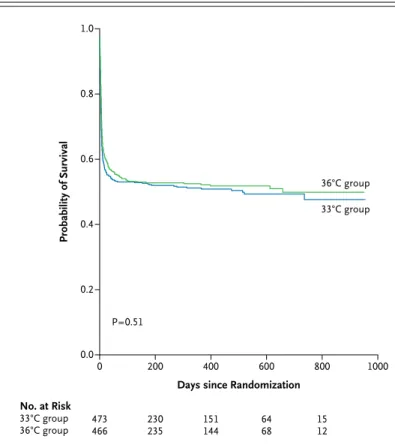
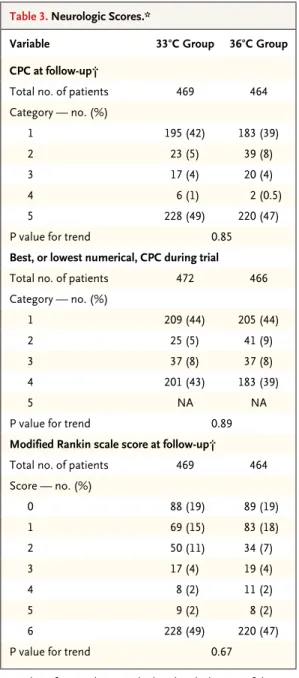
At the end of the trial, 235 of 473 patients in the 33°C group (50%) and 225 of 466 patients in the 36°C group (48%) had died (hazard ratio in the 33°C group, 1.06; 95% confidence interval [CI], 0.89 to 1.28; P = 0.51) (Table 2 and Fig. 2). The groups did not differ significantly with respect to the composite outcome of death or poor neu-rologic function at 180 days with the use of ei-ther the CPC or the modified Rankin scale score (risk ratio for a CPC of 3 to 5 in the 33°C group, 1.02; 95% CI, 0.88 to 1.16; P = 0.78; and risk ratio for a score of 4 to 6 on the modified Rankin scale in the 33°C group, 1.01; 95% CI, 0.89 to 1.14; P = 0.87) (Table 2). The neurologic scores on both scales are shown in Table 3 and in Table S9 in the Supplementary Appendix. There were no significant differences in the distribution of CPCs or modified Rankin scale scores between the two groups (P = 0.85 and P = 0.67 for trend, respec-tively). With the use of the best reported CPC during the trial (Table 3), the relative risk of death or poor neurologic function in the 33°C group was 1.04 (95% CI, 0.89 to 1.17; P = 0.67).
Similar results were obtained in adjusted analyses and in the intention-to-treat and per-protocol populations (see the Supplementary Appendix, including Tables S10 and S11). The effect of the intervention was consistent across predefined subgroups (Fig. S2 in the Supplemen-tary Appendix).
One or more serious adverse events occurred in 439 of 472 patients in the 33°C group (93%) as compared with 417 of 464 patients in the 36°C group (90%) (risk ratio, 1.03; 95% CI, 1.00 to 1.08; P = 0.09). Hypokalemia was more frequent in the 33°C group (19%, vs. 13% in the 36°C group,
P = 0.02). For the full list of serious adverse events, see Table S12 in the Supplementary Ap-pendix. The presumed causes of death as as-sessed by the trial investigators were similar in the two groups (Table S13 in the Supplemen-tary Appendix).
Discussion
In this international, multicenter, randomized trial, we compared a target body temperature of 33°C with one of 36°C in patients who had been resuscitated after out-of-hospital cardiac arrest of presumed cardiac cause. There were no signifi-cant differences between the two groups in over-all mortality at the end of the trial or in the com-posite of poor neurologic function or death at 180 days. The results were consistent in six pre-defined subgroups. We did not find any harm with a targeted temperature of 33°C as compared
Probability of Survival No. at Risk 33°C group 36°C group 473466 230235 151144 6468 1512 1.0 0.8 0.6 0.4 0.2 0.0 0 200 400 600 800 1000
Days since Randomization P=0.51
36°C group
33°C group
Figure 2. Probability of Survival through the End of the Trial.
Shown are Kaplan–Meier estimates of the probability of survival for patients assigned to a target temperature of either 33°C or 36°C and the number of patients at risk at each time point. The P value was calculated by means of Cox regression, with the effect of the intervention adjusted for the stratifi-cation variable of study site.
with 36°C. However, it is worth recognizing that for all outcomes, none of the point estimates were in the direction of a benefit for the 33°C group. On the basis of these results, decisions about which temperature to target after out-of-hospital cardiac arrest require careful consideration.
After publication of the seminal trials of
thera-peutic hypothermia after cardiac arrest,2,3 this
approach was recommended in international
guidelines,4 despite arguments by some
investi-gators that the evidence was weak, owing to the
risk of bias and small samples.6,25 The
subse-quent debate has focused on two issues. The first issue is whether therapeutic hypothermia should be extended to patients outside the originally
described populations.26-28 It may be reasoned
that the potential benefits of temperature man-agement on brain injury due to circulatory arrest would be the same irrespective of the cause of arrest. However, whole-body hypothermia influ-ences all organ systems, and any potential ben-efit should be balanced against possible side effects.29 The population of patients with cardiac
arrest is heterogeneous, and the potential risks and benefits of temperature intervention may not be the same across subgroups. The second issue is the most beneficial target temperature for
therapeutic hypothermia.30 The recommended
temperature of 32° to 34°C has been extrapolated from experiments in animals31,32; however, similar
results have been observed with milder cooling.33
A difference between our trial and earlier trials2,3 is that we did not allow the natural
tra-jectory of temperature evolution in either group; we actively controlled the temperature during the intervention period and aimed to prevent fever dur-ing the first 3 days after cardiac arrest. We enrolled patients with out-of-hospital arrests of presumed cardiac cause, in line with enrollment in earlier trials, but our sample was larger and we had fewer exclusion criteria, with approximately 20% of par-ticipants having nonshockable rhythms. Other published studies involving patients with cardiac arrest who were admitted to the ICU have shown baseline characteristics and mortality that are in keeping with our findings, supporting the gen-eralizability of our results.34-38
Our trial had several limitations. First, ICU staff members were aware of the assigned target temperature during the stay in the ICU. We aimed to minimize this problem by using robust outcomes and blinded outcome assessment. We also applied rigorous guidelines for neurologic prognostication and end-of-life decisions. Sec-ond, in one country, ethical approval required written consent from a legal surrogate before randomization, resulting in exclusion of a sub-stantial proportion of eligible patients. Third, we do not have detailed data on the dose and type of sedation or the use of neuromuscular block-ing agents. However, the sites were instructed to Table 3. Neurologic Scores.*
Variable 33°C Group 36°C Group CPC at follow-up†
Total no. of patients 469 464
Category — no. (%) 1 195 (42) 183 (39) 2 23 (5) 39 (8) 3 17 (4) 20 (4) 4 6 (1) 2 (0.5) 5 228 (49) 220 (47)
P value for trend 0.85
Best, or lowest numerical, CPC during trial
Total no. of patients 472 466
Category — no. (%) 1 209 (44) 205 (44) 2 25 (5) 41 (9) 3 37 (8) 37 (8) 4 201 (43) 183 (39) 5 NA NA
P value for trend 0.89
Modified Rankin scale score at follow-up†
Total no. of patients 469 464
Score — no. (%) 0 88 (19) 89 (19) 1 69 (15) 83 (18) 2 50 (11) 34 (7) 3 17 (4) 19 (4) 4 8 (2) 11 (2) 5 9 (2) 8 (2) 6 228 (49) 220 (47)
P value for trend 0.67
* P values for trend were calculated with the use of the Cochran–Armitage test. NA denotes not applicable. † The neurologic follow-up was specified in the protocol
to be at 180±14 days, but the time to follow-up was in some cases several weeks longer for logistic reasons.
treat the groups similarly, and surrogate markers (e.g., the presence of shivering and the number of days that sedation affected neurologic evalua-tion) did not differ between groups.
The mortality in both groups in our trial may be lower than that in the control group of the Hypothermia after Cardiac Arrest trial.3 These two
trials are not easily comparable with respect to study populations. Furthermore, prehospital and critical care management have changed during the past decade.36,39 Nevertheless, it is important to
acknowledge that there may be a clinically relevant benefit of controlling the body temperature at 36°C, instead of allowing fever to develop in patients who have been resuscitated after cardiac arrest.9
In conclusion, our trial does not provide evi-dence that targeting a body temperature of 33°C confers any benefit for unconscious patients admitted to the hospital after out-of-hospital cardiac arrest, as compared with targeting a body temperature of 36°C.
Supported by independent research grants from the Swedish Heart–Lung Foundation, Arbetsmarknadens Försäkrings aktie-bolag Insurance Foundation, Swedish Research Council, Re-gion Skåne (Sweden), National Health Service (Sweden), Thel-ma Zoega Foundation, Krapperup Foundation, Thure Carlsson Foundation, Hans-Gabriel and Alice Trolle-Wachtmeister Foundation for Medical Research, Skåne University Hospital, TrygFonden (Denmark), and European Clinical Research In-frastructures Network.
Disclosure forms provided by the authors are available with the full text of this article at NEJM.org.
Appendix
The authors’ affiliations are as follows: the Department of Anesthesiology and Intensive Care, Helsingborg Hospital, Helsingborg (N.N.), the Departments of Clinical Sciences (N.N., T.C., D.E., G.L., M.R., H.F.) and Cardiology (D.E.), Lund University, Lund, the Departments of Neurology (T.C), Anesthesiology and Intensive Care (M.R., H.F.), and Rehabilitation Medicine (G.L.), Skåne University Hospital, Lund, and the Department of Anesthesiology and Intensive Care, Sahlgrenska University Hospital, Gothenburg (C.R.) — all in Sweden; Copenhagen Trial Unit, Center of Clinical Intervention Research (J.W., P.W.), and the Departments of Cardiology (C.H., J.K., S.B., J.B.-J., L.K., J.E.M.) and Cardiothoracic Anesthesiology (M.W.), the Heart Center, Copenhagen University Hospital Rigshospi-talet — both in Copenhagen; the Department of Anesthesiology, Pharmacology, and Intensive Care, Geneva University Hospital, Ge-neva (Y.G.); the De partment of Intensive Care, Academic Medical Center, Amsterdam (J. Horn, N.P.J., M. Kuiper); the Department of Anesthesiology, Oslo University Hospital, Riks hospitalet, Oslo (J. Hovdenes, J.F.B.); the Department of Intensive Care, Medical Center Leeuwarden, Leeuwarden, the Netherlands (M. Kuiper, M. Koopmans); Intensive Care Unit, Santa Maria degli Angeli, Pordenone (T.P.), and the Department of Intensive Care, Istituto di Ricovero e Cura a Carattere Scientifico San Martino, Istituto Scientifico Tumori, Univer-sity of Genoa, Genoa (I.B.) — both in Italy; the Department of Anesthesiology and Intensive Care, Centre Hospitalier de Luxembourg, Luxembourg (P.S., C.W.); Adult Critical Care, University Hospital of Wales, Cardiff, United Kingdom (M.P.W., C.D.H.); the Department of Intensive Care, Liverpool Hospital, Sydney (A.Å.); the Department of Intensive Care, St. George’s Hospital, London (N.A.-S.); the Department of Heart Diseases, Haukeland University Hospital, Bergen, Norway (J.L.); and 2nd Department of Internal Medicine, Cardiol-ogy and AngiolCardiol-ogy, General University Hospital in Prague, Prague, Czech Republic (O.S.).
References
1. Moulaert VR, Verbunt JA, van Heug-ten CM, Wade DT. Cognitive impairments in survivors of out-of-hospital cardiac ar-rest: a systematic review. Resuscitation 2009;80:297-305.
2. Bernard SA, Gray TW, Buist MD, et al. Treatment of comatose survivors of out-of-hospital cardiac arrest with induced hypo-thermia. N Engl J Med 2002;346:557-63.
3. The Hypothermia after Cardiac Arrest Study Group. Mild therapeutic hypother-mia to improve the neurologic outcome after cardiac arrest. N Engl J Med 2002; 346:549-56. [Erratum, N Engl J Med 2002; 346:1756.]
4. Peberdy MA, Callaway CW, Neumar RW, et al. Post-cardiac arrest care: 2010 American Heart Association guidelines for cardiopulmonary resuscitation and emer-gency cardiovascular care. Circulation 2010; 122:Suppl 3:S768-S786. [Errata, Circulation 2011;123(6):e237, 124(15):e403.]
5. Arrich J, Holzer M, Havel C, Müllner M, Herkner H. Hypothermia for neuropro-tection in adults after cardiopulmonary resuscitation. Cochrane Database Syst Rev 2012;9:CD004128.
6. Nielsen N, Friberg H, Gluud C, Her-litz J, Wetterslev J. Hypothermia after car-diac arrest should be further evaluated — a systematic review of randomised tri-als with meta-analysis and trial sequen-tial analysis. Int J Cardiol 2010.
7. Fisher GC. Hypothermia after cardi-ac arrest: feasible but is it therapeutic? Anaes thesia 2008;63:885-6.
8. Moran JL, Solomon PJ. Therapeutic hypothermia after cardiac arrest — once again. Crit Care Resusc 2006;8:151-4.
9. Zeiner A, Holzer M, Sterz F, et al. Hy-perthermia after cardiac arrest is associ-ated with an unfavorable neurologic out-come. Arch Intern Med 2001;161:2007-12.
10. Bro-Jeppesen J, Hassager C, Wanscher M, et al. Post-hypothermia fever is associ-ated with increased mortality after out-of-hospital cardiac arrest. Resuscitation 2013 August 2 (Epub ahead of print).
11. Leary M, Grossestreuer AV, Iannacone S, et al. Pyrexia and neurologic outcomes after therapeutic hypothermia for cardiac arrest. Resuscitation 2013;84:1056-61.
12. Nielsen N, Wetterslev J, al-Subaie N, et al. Target temperature management after
out-of-hospital cardiac arrest — a random-ized, parallel-group, assessor-blinded clini-cal trial — rationale and design. Am Heart J 2012;163:541-8.
13. Nielsen N, Winkel P, Cronberg T, et al. Detailed statistical analysis plan for the target temperature management after out-of-hospital cardiac arrest trial. Trials 2013;14:300.
14. Jacobs I, Nadkarni V, Bahr J, et al. Cardiac arrest and cardiopulmonary re-suscitation outcome reports: update and simplification of the Utstein templates for resuscitation registries: a statement for healthcare professionals from a task force of the International Liaison Commit-tee on Resuscitation (American Heart As-sociation, European Resuscitation Council, Australian Resuscitation Council, New Zea-land Resuscitation Council, Heart and Stroke Foundation of Canada, InterAmeri-can Heart Foundation, Resuscitation Coun-cils of Southern Africa). Circulation 2004; 110:3385-97.
15. World Medical Association. WMA Declaration of Helsinki — ethical prin-ciples for medical research involving
hu-man subjects. 59th WMA General Assem-bly. October 2008 (http://www.wma.net/ en/30publications/10policies/b3/).
16. Gøtzsche PC. Blinding during data analysis and writing of manuscripts. Con-trol Clin Trials 1996;17:285-93.
17. Jennett B, Bond M. Assessment of out-come after severe brain damage. Lancet 1975;1:480-4.
18. Brain Resuscitation Clinical Trial I Study Group. Randomized clinical study of thiopental loading in comatose survi-vors of cardiac arrest. N Engl J Med 1986; 314:397-403.
19. Rankin J. Cerebral vascular accidents in patients over the age of 60. II. Progno-sis. Scott Med J 1957;2:200-15.
20. van Swieten JC, Koudstaal PJ, Visser MC, Schouten HJ, van Gijn J. Inter-observer agreement for the assessment of handicap in stroke patients. Stroke 1988;19:604-7.
21. ICH harmonised tripartite guideline: statistical principles for clinical trials. Stat Med 1999;18:1905-42.
22. Fergusson D, Aaron SD, Guyatt G, Hébert P. Post-randomisation exclusions: the intention to treat principle and ex-cluding patients from analysis. BMJ 2002; 325:652-4.
23. Zhang J, Yu KF. What’s the relative risk? A method of correcting the odds ra-tio in cohort studies of common out-comes. JAMA 1998;280:1690-1.
24. Kahan BC, Morris TP. Improper anal-ysis of trials randomised using stratified blocks or minimisation. Stat Med 2012; 31:328-40.
25. Gibson A, Andrews PJ. Therapeutic hypothermia, still “too cool to be true?” F1000Prime Rep 2013;5:26-9.
26. Dumas F, Rea TD. Long-term progno-sis following resuscitation from out-of-hospital cardiac arrest: role of aetiology and presenting arrest rhythm. Resuscita-tion 2012;83:1001-5.
27. Nichol G, Huszti E, Kim F, et al. Does induction of hypothermia improve out-comes after in-hospital cardiac arrest? Resuscitation 2013;84:620-5.
28. Dumas F, Grimaldi D, Zuber B, et al. Is hypothermia after cardiac arrest effec-tive in both shockable and nonshockable patients? Insights from a large registry. Circulation 2011;123:877-86.
29. Nielsen N, Sunde K, Hovdenes J, et al. Adverse events and their relation to mor-tality in out-of-hospital cardiac arrest pa-tients treated with therapeutic hypother-mia. Crit Care Med 2011;39:57-64.
30. Holzer M. Targeted temperature management for comatose survivors of cardiac arrest. N Engl J Med 2010;363: 1256-64.
31. Colbourne F, Corbett D. Delayed and prolonged post-ischemic hypothermia is neuroprotective in the gerbil. Brain Res 1994;654:265-72.
32. Sterz F, Safar P, Tisherman S, Radovsky A, Kuboyama K, Oku K. Mild hypo thermic cardiopulmonary resuscitation improves outcome after prolonged cardiac arrest in dogs. Crit Care Med 1991;19:379-89.
33. Logue ES, McMichael MJ, Callaway CW. Comparison of the effects of hypo-thermia at 33 degrees C or 35 degrees C
after cardiac arrest in rats. Acad Emerg Med 2007;14:293-300.
34. Gräsner JT, Meybohm P, Caliebe A, et al. Postresuscitation care with mild thera-peutic hypothermia and coronary inter-vention after out-of-hospital cardiopul-monary resuscitation: a prospective registry analysis. Crit Care 2011;15:R61.
35. Mooney MR, Unger BT, Boland LL, et al. Therapeutic hypothermia after out-of-hospital cardiac arrest: evaluation of a regional system to increase access to cooling. Circulation 2011;124:206-14.
36. Tømte O, Andersen GO, Jacobsen D, Drægni T, Auestad B, Sunde K. Strong and weak aspects of an established post-resuscitation treatment protocol — a five-year observational study. Resuscitation 2011;82:1186-93.
37. Nielsen N, Hovdenes J, Nilsson F, et al. Outcome, timing and adverse events in therapeutic hypothermia after out-of-hos-pital cardiac arrest. Acta Anaesthesiol Scand 2009;53:926-34.
38. Lindner TW, Langorgen J, Sunde K, et al. Factors predicting the use of therapeu-tic hypothermia and survival in uncon-scious out-of-hospital cardiac arrest pa-tients admitted to the ICU. Crit Care 2013; 17:R147.
39. Adielsson A, Hollenberg J, Karlsson T, et al. Increase in survival and bystander CPR in out-of-hospital shockable arrhyth-mia: bystander CPR and female gender are predictors of improved outcome: ex-periences from Sweden in an 18-year per-spective. Heart 2011;97:1391-6.