1
Assessing a two-stage heap leaching process for Platreef flotation
concentrate
James M. Mwase†1, Jochen Petersen†, Jacques J. Eksteenβ
† Centre for Bioprocess Engineering, Department of Chemical Engineering, University of Cape Town,
Rondebosch, South Africa
β Department of Metallurgical Engineering, Western Australia School of Mines, Curtin University, GPO
Box U1987, Perth, WA 6845, Australia
The original version of this article is available in hydrometallurgy 129-130 (2012) 74-81
Abstract
Samples of low-grade flotation concentrate derived from Platreef ore were treated with a two-stage heap leach process to determine the potential to run this process parallel to to the convential concentrate-smelt-refine process for extracting platinum group metals, thereby adding value to the convential process via economic treatment of low-grade materials. Using bench-scale columns, a first stage bioleach achieved extractions of 91.1% Cu, 98.5% Ni and 83.5% Co in a space of 88 days at a temperature of 65°C. Samples of residual concentrate from this process were similarly treated via columns in a second stage leach using cyanide solution, achieving extractions of up to 96.5% Pd, 97.5% Au and 35% Pt in a space of 45 days at 50°C. Mineral liberation analysis of a sample of concentrate from the cyanide leach experiment revealed that the bulk of the remaining Pt was in the form of sperrylite which appeared to leach very slowly in cyanide solution. Further to this, analysis of the cyanide leachate solution showed high levels of thiocyanate
Key words: heap leaching, platinum group metals, base metals, Platreef 1. Introduction
The mineralisation of the Platreef ore is unique and distinguishes it from its counter-parts, the Merensky and Upper Group 2 (UG2) ore bodies, which all lie in the Bushveld Igneous Complex in South Africa. The reef is essentially a base metals (BMs) and palladium resource rather than a traditional platinum resource. The platinum group metals (PGMs) in Platreef ore occur largely as Pd and Pt bismuth-tellurides and arsenides, which are observed to be slow-floating in comparison to the PGM sulphides (Shamaila and O’Connor, 2008; Vermaak, 2005). Further to this, nearly half of the PGMs in Platreef deport to silicate minerals (Bryson, 2008). The combined consequence is that the PGMs are not fully recoverable via flotation, and portions of PGMs of significant value will report to the tailings. To achieve acceptable PGM recoveries a higher-than-usual mass pull is needed, but this leads to grade dilution and a poor quality concentrate material, which in turn negatively impacts the smelter operation further downstream (Mogosetsi, 2006). Due to the high iron and sulphur content and low PGM grade, the smelting and converting costs (and associated costs of gas handling, acid plants, etc) makes these concentrates economically marginal if a smelting route is followed, unless new concentrator developments lead to higher concentrate grades and more pyrrhotite rejection. Moreover, there is also high variation in mineral grade along the reef; whereas some sections of the reef are suitable for up-grade via milling and flotation, significant
2
parts fall below the cut-off grade. However these two classes of material may be suitable candidates for heap leaching. A two-stage heap leaching process is proposed for the lower grade materials, which can run parallel to the conventional processing route of concentrating-smelting-refining. This method is proposed for application as a two-stage heap leach for low-grade whole ore and concentrate, and possibly as a combined heap and tank leach for low-grade concentrate.
A recent study on a low-grade PGM concentrate derived from Western Platinum Ltd (Mwase et al., 2012) revealed the potential effectiveness of this two-stage heap leaching process to extract PGMs and BMs from low-grade, high chromium, UG2 concentrates. The first stage was a bioleach utilising thermophilic microorganisms, operating at a temperature of 65°C, to extract BMs from the concentrate material. Extractions of 52% copper and 95% nickel were achieved within 4 weeks. The benefit of using thermophiles at elevated temperatures of 65-85°C to speed up the reaction kinetics of sulphide mineral bioleaching and enable the leaching of copper from chalcopyrite is well documented (Watling, 2008; Rawlings and Johnson 2007; Stott et al., 2003; Plump et al., 2002; Dew et al., 2000; Stott et al., 2000, Norris and Owen 1993). Critical to commercialising this process in heaps is that the oxidation of the sulphide minerals is exothermic and generates enough heat to run the heap under thermophilic conditions (Pradhan et al., 2008; Dixon and Petersen 2003). The heat and moisture can be conserved in the heap by manipulating the rates of solution irrigation onto the heap and air up flow in the heap (Kelly et al., 2008; Harvey et al., 2002; Dixon, 2000), and through the appropriate use of transparent plastic sheets. This method therefore allows the leaching of ore or concentrate using the low capital and operating costs of heap leaching but with the advantage of operating at a higher temperature for faster reaction kinetics (Petersen and Dixon, 2002). Additionally, this stage is required to reduce the consumption of cyanide by the copper and nickel. These metals are easily complexed by cyanide and have the effect of taking the place of the precious metals to be leached especially in cases where dilute cyanide solutions are used (Chamberlain & Pojar, 1984). However, the extent to which they consume cyanide depends on the mineral in which they occur. Oxides are more soluble than sulphides; but sulphides still leach slowly and can be problematic if not leached out before cyanidation. Furthermore, base metal cyanide complexes can readily be adsorbed to carbon (Marsden and House, 2006), causing further interference in the recovery of PGMs. This interference may also extend to other forms of recovery such as zinc cementation or electrowinning (Aylmore & Muir, 2001). In theory, the possibility of evaluating a single cyanide leach step to extract both BMs and PGMs exists, but the recovery methods of BMs from cyanide solution are not well established and wide-spread on an industrial level, although they have been explored (Gupta & Mukherjee, 1990; Habashi 1999). In contrast, several technologies, namely solvent extraction, electrowinning, sulphide precipitation and crystallisation, are well established and wide spread in recovering BMs from acidic sulphate based media.
The same study (Mwase et al., 2012) showed that in a subsequent heap cyanidation process on the residue at ambient temperature, PGMs could be extracted with promising results. Extractions of 20% platinum, 87% palladium and 46% rhodium were achieved, with additional base metal values extracted, within a further 3 week cyanide leach. The role of hydrogen peroxide, or a similar strong oxidant, in aiding the dissolution of PGMs was investigated, but not explored fully in the study. It is postulated that the addition of such oxidants may be beneficial to the process. Current processes, namely nitric acid-hydrochloric acid and chlorine-acid-hydrochloric acid, make use of a combination of a strong
3
oxidant and complexing agent to leach platinum. The study also showed the effectiveness of elevated temperatures during the cyanidation step in significantly increasing the rate of PGMs dissolved from the ore concentrate material. In the case of percolation leaching associated with aeration, materials of construction for irrigation, aeration and solution collection and moisture loss via evaporation are foreseen to limit the temperature for practical industrial application. A patent is pending that incorporates solar heated cyanide heap leaching for PGMs, following autothermal heap bioleaching for BMs from materials derived from Platreef deposits (Eksteen et al., 2011). The authors (Eksteen et al., 2011) show how this can be practically achieved using solar heating and potential heat integration between the heap bioleach and heap cyanide leach operations, as the heap bioleach is quite exothermic and the cyanide heap leaching operation is roughly energy-neutral, except for environmental and evaporative losses. Solar heating, either directly for alkaline cyanide solutions, or indirectly via intermediate heat exchange provides environmentally friendly ways to heat the solution and obtain acceptable extraction kinetics for the PGMs and Au. It matches a low intensity heating mechanism to a low intensity leaching process with a large thermal inventory. As the barren leached heaps are to be considered for mine backfill, the heaps are foreseen to be temporary heaps with loading and unloading onto permanent well-engineered leach pads. Furthermore, PGMs can be recovered from pregnant cyanide leach solutions via adsorption to carbon and subsequent elution, zinc cementation and ion exchange resins (Chen and Huang, 2006; Torres and Costa, 1997; Bruckard et al 1992).
This paper will investigate the application of sequential stage heap leach technology to low-grade Platreef concentrates. These concentrates may be primary concentrates (i.e., all the concentrate is processed using heap leach technology), or secondary low-grade concentrates (where a concentrator produces a high-grade concentrate for smelting and a low-grade concentrate for heap leaching). Part of the focus will be on the changes taking place in the mineralogy of the ore, throughout the process, and its impact on developing the process for commercial application.
2. Materials
2.1. Concentrate preparation
The test work was conducted using a batch sample of flotation concentrate derived from a mill-float-mill-float (MF2) recovery process on Platreef ore as a proxy material. Samples for the leaching tests, size analysis, mineral analysis and PGM and BM solid assays were obtained using a 2-way riffle splitter and various size rotary splitters, from this batch sample after it had been thoroughly mixed and homogenized. The ore concentrate was sized using wet screening showing that it was 83% passing 38μm. A fire assay and mineral liberation analysis (MLA) revealed the following grade assay and mineral composition reflected in Tables 1 and 2, respectively:
Table 1: Precious metals grade assay
Total (6E) Pt Pd Au Rh Ru Ir
g/t g/t g/t g/t g/t g/t g/t
4
Table 2: Major base metals and gangue elements
Cu Ni Fe Co Mg Al Ca Si Cr Total S
% % % % % % % % % %
2.3 3.4 16.4 0.1 10.4 1.4 4.0 17.3 0.2 8.0
Table 3: Major PGM, BM and gangue minerals grouped by relative abundance
PGM mineral group (Area %) Minerals/Mineral group (Wt %)
Alloys 20.8 Chalcopyrite 4.9 Sulphides 28.6 Pentlandite 7.7 Arsenides 23.8 Pyrite 1.9 Sulpharsenides 7.8 Pyrrhotite 5.3 Tellurides 19.1 Silicates 66.5 - - Others* 13.7
*Oxides, Carbonates and sulphates
The analysis showed that the base metal sulphides were not well liberated, with chalcopyrite at 61%, pyrrhotite at 44% and pentlandite at 43%. Pyrite at 33% has the lowest liberation. Chalcopyrite was associated mostly with silicates and to a lesser extent with pentlandite and pyrrhotite. Pentlandite was associated mostly with silicate gangue. Pyrite was associated with pyrrhotite, silicate gangue and to a lesser extent pentlandite and other BMS, while pyrrhotite was associated with silicate gangue, pentlandite and chalcopyrite. Bornite tended to be locked with chalcopyrite and non-silicate gangue, while millerite was associated with pentlandite and silicate gangue.
Table 4: Major PGM minerals by % abundance
PGM Mineral Formula % Abundance Mineral Group
Ferroplatinum PtFe 7.5 Alloys
Plumboplalladinite Pd3Pb2 5.3
Sudburyite PdSb 1.7
PGE alloys PtRuFeNi 6.1
Cooperite PtS 16.1 Sulphides
PtRhCuS PtRhCuS 3.2
Kharaelakhite (Pt, Cu, Pb, Fe, Ni)9S8 2.0
Braggite PtPdS 4.0
Vysoskite (Pd, Ni)S 2.7
Sperrylite PtAs2 19.6 Arsenides
Stillwaterite Pd8As3 1.6
PtPdAs PtPdAs 1.8
PtPd Sulpharsenide (Pt, Pd)AsS 3.6 Sulpharsenides
Irarsite (Ir, Ru, Rh, Pt)AsS 3.0
Maslovite PtBiTe 9.6 Tellurides
Kotulskite Pd(Te, Bi) 8.3
The minerals, sperrylite (PtAs2) at 19.6 % and cooperite (PtS) at 16.1 % were by the far
the most abundant PGM minerals (Table 4). The MLA also revealed that at this stage the PGMs were 61.2 % liberated, 21.5 % middlings and 17.3 % completely locked in silicate or BM sulphide matrices.
5
3. Experimental
3.1 High temperature heap bioleaching on concentrate
3.1.1. Aim
The aim of this experiment was to determine the effectiveness of using a thermophilic bioleach process to extract copper and nickel from a Platreef concentrate prior to a cyanide leach for precious metals. A low-grade flotation concentrate was used in this first test as a proxy, due to its immediate availability and to obtain results in a shorter period of time than would be obtained with whole ore leaching and thus pre-determine optimal operating conditions.
3.1.2. Methods
Columns used to simulate heap leaching in this experiment were identical to the ones used in the earlier mentioned study on low-grade PGM concentrate (Mwase et al., 2012). Four samples of flotation concentrate weighing 650 g each were made into slurry using deionised water in a solid to liquid ratio of 5:3. The slurry was coated onto granite pebbles, packed into the columns and left overnight to air-dry. A solution containing 30 g/L H2SO4 was pumped into the columns from the top at a rate of 1 L/day (translated from
a typical industrial flow rate of 5 L/m2/h), for 5 days in order to dissolve as much of the acid soluble BM minerals as possible, and the effluent was collected from the bottom. The feed was thereafter replaced with the main leaching solution containing 2 g/L Fe (1 g Fe3+ as ferric sulphate and 1 g Fe2+ as ferrous sulphate) and 10 g/L H2SO4, which was
pumped into the column at the same rate and in the same manner. A culture of thermophilic microorganisms, previously adapted to chalcopyrite, was inoculated into the 4 columns, which were operated at temperatures of 65, 70, 75 and 80°C. Quantitative real time polymerase chain reaction (qRT PCR) was used to identify and quantify
Metallosphaera hakonensis in the culture at 99% prevalence The columns were aerated
at a gas flow rate of 130 mL/min, which corresponds to a superficial aeration rate of 1.0 m3/m2/hr. Due to the low gas flow rates, measurement of oxygen consumption to monitor the bioleaching activity was not possible. Samples of solution were collected from the effluent at various intervals for atomic absorption spectroscopy (AAS) analysis of Cu, Ni, Co and Fe. The pH and redox potential were also measured and recorded each time a sample was taken, using a standard pH meter and Ag/AgCl-Pt combination redox probe, respectively. The temperatures were also monitored and recorded when samples were taken. Additional samples were also collected for microscopic inspection, to monitor the wellbeing of the microorganisms. After 88 days of leaching, the extractions achieved were calculated both from the amounts present in solution and those determined by fire assay of the residual concentrate material.
On completion of the experiments, the columns were emptied, and the concentrate was washed off the granite with water and recovered by sieving and pressure filtration. The concentrate was further washed with water to remove residual acid and then dried. From the dry samples, sub-samples were obtained for fire assays, x-ray diffraction (XRD) and MLA analyses, while the bulk of the samples were used in subsequent cyanide leaching experiments to extract the precious metals.
6
3.2 High temperature cyanide heap leaching
3.2.1. Aim
This test work was conducted to determine the effectiveness of using cyanide solution to leach PGMs from the residual material of a thermophilic bioleach process, following a high degree of extraction of the BMs.
3.2.2. Methods
Two samples of residual concentrate from the bioleach experiments were made into a slurry, coated onto granite pebbles and packed in columns as before. They were leached with 0.1 M (5 g/L) of cyanide solution at a flow rate of 1 L/day. The cyanide solution was recycled for 7 days after which it was exchanged with fresh solution. A high concentration cyanide solution was used considering the high grade of the present material relative to the grades of typical gold ores (1 g/t) heap leached with cyanide. Usually gold heap leach operations use a cyanide solution concentration of 0.15-2.5 g/L, but it is not unheard of to operate at 5 g/L if the ore is refractory due to the presence of silver or copper (Chamber and Pojar, 1984). Additionally, it was assumed that due to the low concentration of PGMs in the concentrate, a 7 day recycle was required to build up sufficient PGM concentration in solution to allow for accurate analysis of PGMs in solution. The columns were operated at a temperature of 50°C and aerated at a rate of 150 mL/min. Samples were withdrawn at various intervals for inductively coupled plasma mass spectrometry (ICP-MS) analysis of precious metals, and inductively coupled plasma optical emission spectrometry (ICP-OES) for BMs and gangue elements. After 45 days of leaching the extractions achieved were determined by the metals in solution.
3.3 High temperature cyanide leaching in stirred tanks
3.3.1. Aim
This test work was undertaken to understand further the impact of BMs on a precious metals cyanide leach on the present material, and compare the results to the literature on the same subject matter.
3.3.2. Methods
Three different types of concentrate samples, as listed below, were leached in 0.1 M cyanide solution for 4 days in 1 L Erlenmeyer flasks. An overhead stirrer was used to agitate the mixture and the temperature was maintained at 75oC using a water bath. Solution samples were withdrawn at various intervals over a 4 day period and filtered for ICP analysis. The three samples differed as follows:
Sample 1: A sample of fresh, untreated concentrate
Sample 2: A sample of residue from the bioleach process described above
Sample 3: A sample pre-treated with an acidic mixture of 40 g/L H2SO4 and 30 g/L HNO3
7
4. Results and Discussion
4.1 High temperature bioleach
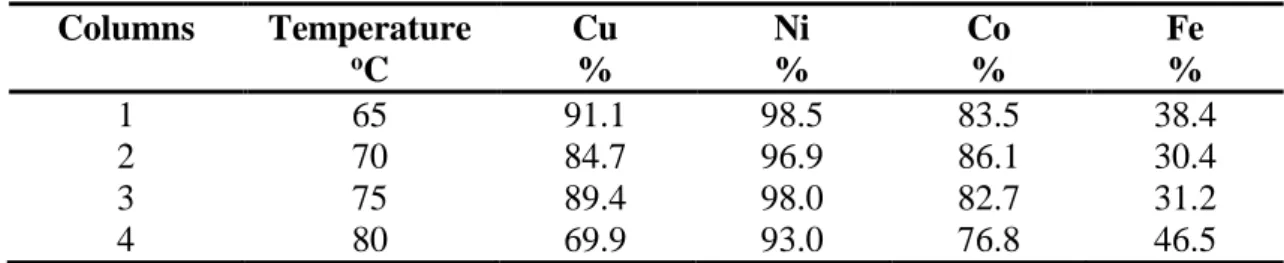
Amongst the four columns operated (Table 5), the 65°C column was the overall best performer, contrary to the expectation that higher temperatures would produce better results. This temperature works in favour of the process, because temperatures exceeding 65°C would pose difficulties to the integrity of the materials of construction for the heap, such as high density polyethylene (HDPE) used for heap pads, the plastics used for irrigation pipes, aeration pipes, liners and collection pipes, which would soften at temperatures above 65oC. Additionally, solution vapour losses would be substantially
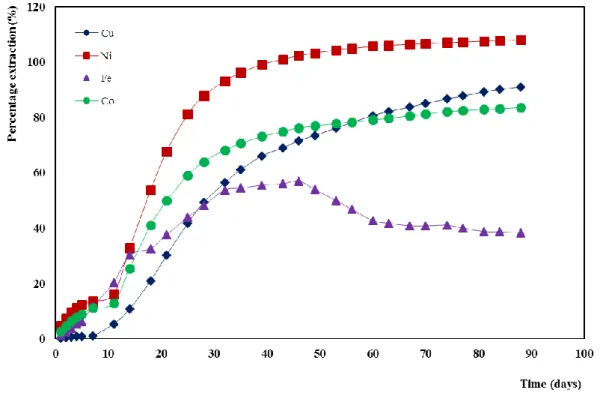
increased at higher temperatures. The results for all columns also point to the general amenability of this ore to high temperature bioleaching (Table 5). Clearly the occurrence of these metals as sulphide minerals coupled with the presence of pyrite and pyrrhotite are the reasons for the potential of this process. However, galvanic interaction between the various sulphide mineral phases may also play a role (Bharathi et al., 2008). Galvanic leaching occurs when two mineral phases are in contact with each other and where one has a lower rest potential than the other. The mineral with the higher potential thus acts as a cathode while the one with the lower potential serves as an anode and experiences preferential leaching. Chalcopyrite in contact with pentlandite promotes faster leaching of nickel (Fig 1) due to chalcopyrites higher rest potential (Bharathi et al., 2008; Mason & Rice, 2002). Chalcopyrite leaching is primarily promoted by its association with pyrite (Ekmekci and Demirel, 1997).
It must be noted that the extractions from Table 5 were calculated using fire assay results from concentrate samples before and after the bioleach, while the curves in Figure 2 were drawn from ICP analyses of effluent leachate samples. There was a slight difference between the two, particularly Ni which in Figure 2 appears to have gone over 100 % extraction.
Table 5: Extractions of BMs over 88 days
Columns Temperature Cu Ni Co Fe oC % % % % 1 65 91.1 98.5 83.5 38.4 2 70 84.7 96.9 86.1 30.4 3 75 89.4 98.0 82.7 31.2 4 80 69.9 93.0 76.8 46.5
8
Figure 1: Extraction curves in column 1
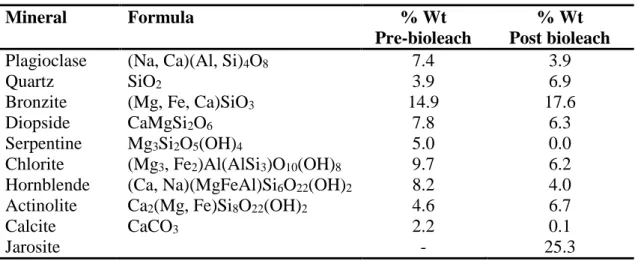
Co-leaching of PGMs was also observed, with the lowest degree of co-leaching being experienced in the 65°C column. However, across all columns rhodium (Rh) and ruthenium (Ru) were extracted in excess of 50 %. This is comparable to dissolution in acidic, aerated sulphate solutions, currently experienced in typical base metal refining in context of the typical platinum beneficiation route (Dorfling et al., 2010). Given that Rh and Ru are soluble in this acidic solution their extraction is unavoidable. However, considering the quantities extracted, recovery via methods such as solvent extraction, ion exchange and precipitation (Kononova et al., 2011; Bernardis et al., 2005; Seymour & O'Farrelly, 2001; Els et al., 2000) from the leach liquor should be evaluated.MLA and XRD analyses were conducted on a sub-sample from column 2; it was assumed that the splitting process to generate the samples for the bioleach experiment resulted in representative samples with similar bulk and PGM mineralogy. As such the results from this sample could broadly be applied to all four samples. The MLA analysis, post-bioleach, compared with the pre-bioleach MLA (Table 4), indicated that ruarsite, laurite and irarsite had been completely leached while the percentage abundances of the PGE alloy and PtRhCuS had been diminished significantly. There was also some co-leaching of platinum (Pt) and palladium (Pd) (10-20%) but this was not as high as the Rh and Ru and was mainly from the PGE alloys and sulpharsenides. The sulphides were predominant at 38% (cooperite accounting for 28%), followed by arsenides at 24 % (mainly sperrylite) and finally the tellurides at 19.8% (mainly maslovite at 16.1%). Their increased percentages can be attributed to further concentration, due to dissolution of the base metal and acid soluble gangue minerals. Comparing this mineralogy and percentage abundance with Table 4, it appears there was no change in mineralogy of the major PGM minerals (sulphides, arsenides and tellurides). Additionally the PGM liberation post-bioleaching increased to 81 % from 61 %. The increased liberation can be attributed to the near complete oxidation of the sulphide minerals thereby exposing PGMs either encapsulated completely in sulphide mineral matrices or lying at the boundaries of sulphide and silicate minerals.
9
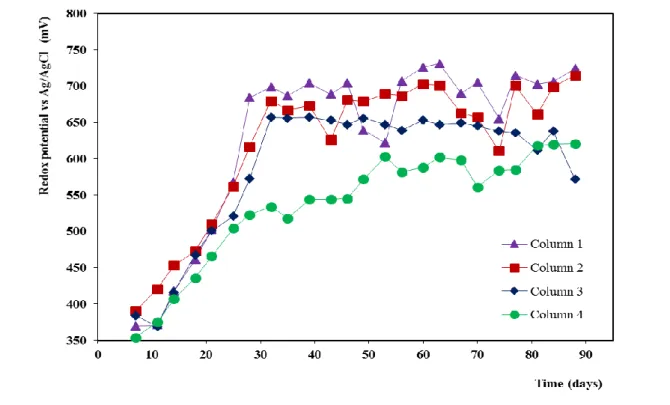
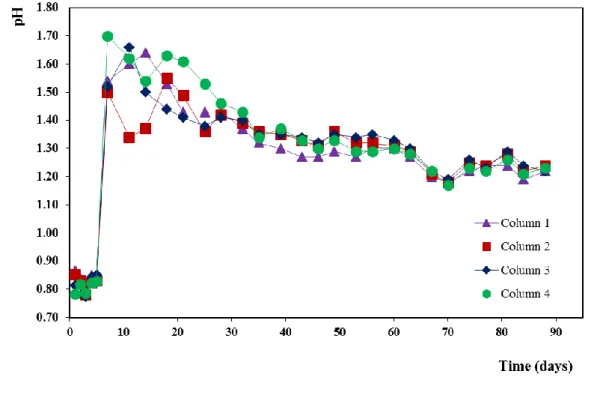
It was observed that after 43-46 days, iron precipitation occurred in all the columns, following the trend in Fig. 1. It is unclear if at this point the leaching of the iron sulphides stopped and the source of the iron in the precipitate was from the feed solution, or if the Fe leached out and re-precipitated in another form. The MLA confirmed that the BM sulphides had been mostly leached and there was hardly any elemental sulphur present. Residual copper and nickel was in the form of chalcopyrite and pentlandite. XRD and MLA analyses also confirmed that a considerable amount of the concentrate residue (25%) was jarosite (KFe3(SO4)2(OH)6) as opposed to before when the majority of the
concentrate was in the form of silicate minerals (Table 3). The MLA analysis did not provide liberation or deportment information on the residual chalcopyrite and pentlandite to explain why they had not leached out with the bulk of the respective minerals, especially considering that bacterial activity was high and the pH was still conducive for leaching at this point (Fig 2 and 3).
10
Fig 3: pH profiles
There was considerable dissolution of the gangue elements Mg, Al and Ca (Table 6). This is of importance as accumulation of these elements in the range of 10-12 g/L leads to inhibition of ferrous oxidation by bacteria (Ojumu et al., 2008). Although the concentrations of these elements were below 0.25 g/L in this test work, on an industrial scale, where the solution would typically be recycled, a bleed system would have to be built into the design to prevent the build-up of these elements over long leaching periods. A comparison of percentage abundance before and after the bioleach (Table 7) shows that the sources of these elements are likely to be the minerals plagioclase, diopside, serpentine, chlorite, hornblende and calcite. The MLA analyses also revealed the formation of enstatite (MgSiO3) and talc (Mg3Si4O10) post-bioleach, which most likely
formed from the hydrating of serpentine and diopside.
Table 6: Gangue element dissolution over 88 days
Columns Mg Si Cr Al Ca % % % % % 1 47.2 7.4 40.7 54.8 61.4 2 47.0 4.4 30.8 52.7 62.2 3 50.0 6.4 53.4 51.4 65.5 4 52.0 11.7 40.5 40.3 71.4
11
Table 7: Comparison of major gangue elements before and after bioleaching
Mineral Formula % Wt % Wt
Pre-bioleach Post bioleach
Plagioclase (Na, Ca)(Al, Si)4O8 7.4 3.9
Quartz SiO2 3.9 6.9
Bronzite (Mg, Fe, Ca)SiO3 14.9 17.6
Diopside CaMgSi2O6 7.8 6.3
Serpentine Mg3Si2O5(OH)4 5.0 0.0
Chlorite (Mg3, Fe2)Al(AlSi3)O10(OH)8 9.7 6.2
Hornblende (Ca, Na)(MgFeAl)Si6O22(OH)2 8.2 4.0
Actinolite Ca2(Mg, Fe)Si8O22(OH)2 4.6 6.7
Calcite Jarosite CaCO3 2.2 - 0.1 25.3
4.2. High temperature cyanide leach
The concentrate samples used from the bioleach experiment were as follows-Column A consisted of a blend of samples from columns 1 and 3. After sub-sampling for assays after the bioleach, the samples had to be blended to generate a sample big enough to run the column at full capacity. Column B used the residual material from column 4 alone, and as a result it ran at two-thirds capacity. Assays conducted on the two residual samples from the bioleach experiment, which were subsequently used in the follow-up cyanide leach experiment, showed the following grades reflected in Tables 8 and 9:
Table 8: PGM grade of residual concentrate samples
Columns Pt Pd Au Rh Ru
g/t g/t g/t g/t g/t
A 15.5 21.5 1.7 1.1 0.2
B 18.0 25.3 1.9 1.7 0.7
Table 9: Major base metal and gangue element grade of residual concentrate samples
Columns Cu Ni Co Fe Mg Al Ca Si Cr Total S
% % % % % % % % % %
A 0.3 0.1 <0.05 15.8 6.3 0.8 1.7 19.0 0.1 4.8 B 0.9 0.3 <0.05 14.0 6.6 1.1 1.5 20.3 0.1 4.9
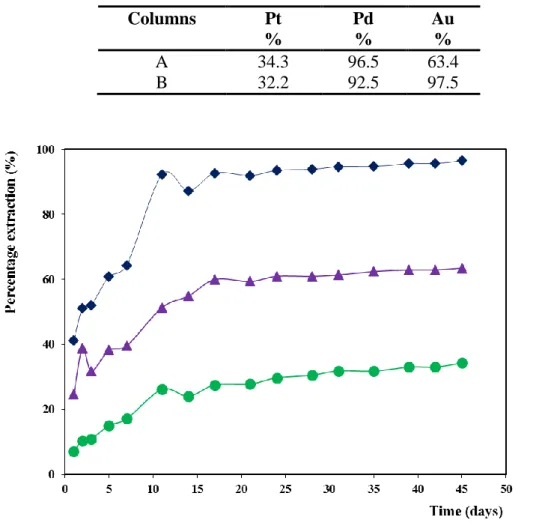
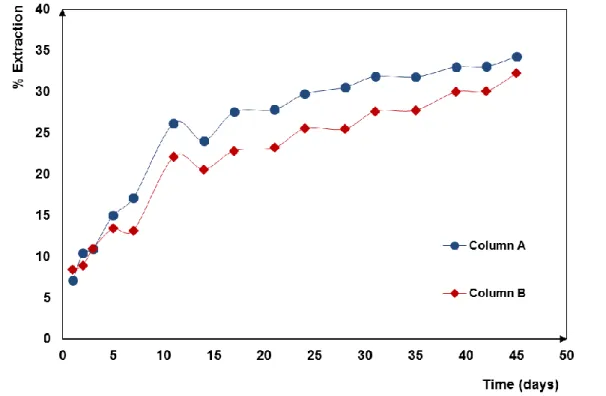
The rate and extent of Pd and gold (Au) extraction was high (Figures 4 and 5) reaching complete and near complete extraction (Table 10) between days 15 and 20. However, by comparison, the same figures show that the rate and extent of Pt leaching is much lower in the same time period. But Fig. 6 shows that the Pt extraction curves were continually increasing, initially fast and then at a slower rate, linked to a shift in the platinum minerals that are participating in the leach. This trend suggests that perhaps over a longer period of time a higher extraction could be achieved. It was observed that in the first instance it took 7 days of recycling the solution to reach maximum Pt extraction, but after that it only took 4 days of recycling the solution. In the second week it appeared that re-precipitation of the Pt occurred after 4 days, and in subsequent weeks the Pt extraction level stayed constant after 4 days of the 7 day solution recycle. This may be a case of cyanide depletion or equilibrium saturation after 4 days. Theoretically, this means if the solution was changed more frequently the rate and extent of Pt extraction may have been higher over
12
the same leaching period. However there is also an indication of a mineralogical limitation. The more cyanide soluble platinum minerals were dissolved in the first 15 days, leaving the less soluble ones behind. Comparisons can be made with gold hydrometallurgy where the refractory nature of certain Au bismuths, tellurides and arsenides to direct cyanide leaching under mild conditions of temperature (up to 60oC), atmospheric pressure and dilute reagent concentrations (2-5 g/L), is well reported (Adams, 2005; Henley et al., 2001; Climo et al., 2000; Jayasekera et al., 1996). It may be that this process is suffering a similar mineralogical limitation. Further test work and mineralogical analysis was conducted to confirm this.
Table 10: Precious metals extractions after 45 days
Columns Pt Pd Au
% % %
A 34.3 96.5 63.4
B 32.2 92.5 97.5
13
Figure 5: Precious metals extraction curves for Column B
Figure 6: Platinum extraction curves for Columns A and B
A sub-sample of 100 g of residue concentrate from column B was leached in 0.5 M (24.5 g/L) of sodium cyanide solution in an Erlenmeyer flask at a pH of 11 for 21 days with an additional 24.5g of cyanide being added after 10 days. The temperature was kept constant at 75oC using a water bath. These somewhat more aggressive conditions were used to
14
obtain results in a shorter period of time and hopefully obtain maximum extraction without resorting to high pressure and temperature leaching. Of the 68 % Pt left in the concentrate after the cyanide heap leach test above, the new test only achieved a further 6 % extraction. An MLA analysis on a sub-sample of the residual material from column A indicated that 78 % of the remaining Pt was in the form of sperrylite (PtAs2) and a
further 9 % were in the form of sulpharsenides. It also showed that at this stage the remaining PGMs were 91 % liberated. Looking back at Figure 4 it is hence clear that the more soluble Pt minerals leached out early, leaving sperrylite which appears slow leaching in cyanide solution under conditions of low to medium temperatures. Typically, Au telluride and arsenide minerals which are refractory to direct cyanidation are leached using high concentrations of cyanide (5-15 g/L) at high temperatures (>100oC) and
pressures (>2 MPa) or by roasting before cyanidation (Marsden and House, 2006; Adams, 2005). These processes are not suitable in a heap leach context. Instead a different hydrometallurgical solution is required that can be applied to a heap leach scenario. Some avenues that are proposed for exploration include; adding hydrogen peroxide to the cyanide solution to oxidize the arsenic (Vladmir and Oran, 2006), pre-treating the concentrate with either a chloride solution (Rapson, 1997) or an alkaline sodium sulphide solution (Anderson, 2010). These results (extractions and MLA analysis) also suggest that the sample in column A had a different PGM mineralogy, mostly sperrylite, to the one in column 2 of the bioleach experiment. If this sample had a similar mineralogy to the sample from column 2 in the bioleach and sperrylite was the only slow leaching mineral, then this experiment and the column leach should have produced higher extractions of Pt. In addition to sperrylite it is therefore not clear at this point if other major Pt minerals, namely the sulphides and bismuth-tellurides, are also slow leaching in cyanide.
The presence of sulphur, at a level of up to 5000 ppm, was also detected through ICP analysis of the cyanide solution in the stirred reactor experiments. High pressure liquid chromatography (HPLC) was used to confirm that the sulphur was in the form of thiocyanate. This concentration level represents a considerable percentage (39%) of the cyanide being consumed for non-leaching purposes and this may likely be the cause of the suspected cyanide depletion in the column tests after 14 days. Ciftci and Akcil (2010) report a similar effect in their test work which involved the cyanide leaching of bioleached residue concentrate. The first stage of bioleaching was intended to liberate refractory Au minerals for cyanide leaching. They observed jarosite formation in the concentrate after the bioleach and high free cyanide consumption in the subsequent cyanide leach. They reported the formation of thiocyanate but attributed the high cyanide consumption to formation of ferrocyanide instead; formed from the release of iron from the jarosite. However, in this case Table 11 below shows that very little iron went into solution (ICP analysis indicated it peaked at 50 ppm) as compared to the sulphur. The MLA post-bioleach showed no elemental sulphur or sulphide minerals present in the concentrate but a LECO combustion test showed that there was 4% sulphur showing incomplete sulphur oxidation during the bioleaching process. In the absence of elemental sulphur and sulphide minerals it is postulated that the sulphur was present as thiosulphate and/or other polythionates, which are capable of reacting with cyanide to form thiocyanate. These compounds may have crystallized out into the residual concentrate, or more likely co-precipitated with or adsorbed onto the jarosite phase and been carried over to the cyanide leach. Further test work and analysis is required to verify the source and identity of the compounds that lead to thiocyanate formation. It is also proposed that in addition to the
15
Fe oxidizing bacteria, another culture of bacteria grown on elemental sulphur can be added to the process to complete the oxidation of the sulphur.
Table 11: Extraction of major BMs in cyanide solution post bioleach residue
Columns Cu Ni Fe Co
% % % %
A 18.3 32.3 0.0 0.8
B 17.0 16.1 0.0 0.0
Although the percentage extractions of the BMs appear low (Table 11), especially considering how much copper and nickel was extracted in the bioleach, the concentration levels exceeded 100 ppm in the first 14 days. Marsden and House (2006) report that this amount of copper usually has a negative influence on gold recovery via adsorption to carbon, and it may influence PGM recovery similarly. Nickel on the other hand displays less ability to adsorb to carbon than copper so the observed amount of nickel may not cause problems during the precious metal recovery stage (Marsden and House, 2006). But only for the first 14 days; after that the levels dropped to the 20-50 ppm range which does not have any negative impact thereafter. The fact that the residual copper and nickel continues to leach out in the second stage, shows that it is liberated. However further investigation will be conducted into why it did not leach out in the first stage. It is, however, encouraging that the iron extraction remained low and as before this is attributed to the formation of jarosite during the bioleach process.
Table 12: extraction of major gangue elements in cyanide solution post bioleach residue
Columns Mg Al Si Ca Cr
% % % % %
A 0.0 0.1 0.0 0.1 0.8
B 0.0 0.2 0.0 0.1 1.4
The dissolution of gangue elements was relatively insignificant, and did not impact the leaching of precious metals (Table 12). Separate test work will determine their impact on recovery of the precious metals.
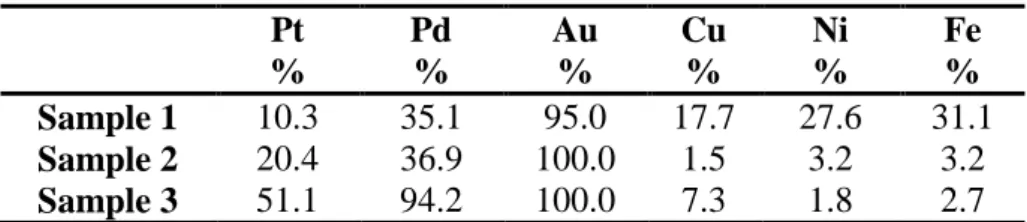
4.3. High temperature cyanide leach in stirred tanks
The percentage extractions achieved from the leach test are presented below:
Table 13: Percentage extractions after 4 days
Pt Pd Au Cu Ni Fe
% % % % % %
Sample 1 10.3 35.1 95.0 17.7 27.6 31.1
Sample 2 20.4 36.9 100.0 1.5 3.2 3.2
Sample 3 51.1 94.2 100.0 7.3 1.8 2.7
Sample 1: fresh untreated concentrate; Sample 2: residual concentrate from bioleach process (column 2); Sample 3: concentrate sample pre-treated with hot nitric/sulphuric acid mixture to extract the bulk of BMs
The extraction levels of gold are not diminished by the presence of the BMs. However, removal of these elements during pre-leaching has had a positive influence on the
16
extraction of Pt. At first glance it may seem that the pre-treatment used on sample 3 is superior to the bioleaching, resulting in substantially higher Pt and Pd extractions; but the fact is that the aggressive hot nitric/sulphuric acid pre-leach for sample 3 had reduced the PGM grade by as much as half. The actual amounts of Pt and Pd extracted from the two samples were more or less identical. Table 13 also illustrates the importance of high extraction of BMs before cyanidation. This is clear from the high amounts of Cu, Ni and Fe extracted from Sample 1 in comparison to Samples 2 and 3, which would result in high consumptions of cyanide reagent. This experiment, specifically sample 2, also shows that in addition to sperrylite, other major PGM minerals are also refractory to cyanide leaching (Figure 7). As discussed earlier, an MLA analysis on residue material from column 2 of the bioleach showed that Pt sulphides were at 38%, the arsenides at 24 % and the tellurides at 19.8%. If sperrylite was the only slow leaching mineral, then this experiment should have produced a higher extraction of Pt.
Figure 7: Pt leach curve for sample 2 (residue from column 2 of bioleach experiment)
5. Conclusion
A two-stage heap leach process in which a bioleach process is used to first extract BMs followed by a cyanide leach to extract precious metals is a potential method for further exploration to accompany the conventional method of processing PGMs (concentrate-smelt-BM leach-PGM leach), to achieve full value of the Platreef ore considered here. However the slow extraction rate of platinum and high cyanide consumption via formation of thiocyanate presents a hindrance to the successful commercialization of the process. Significant portions of the Pt have been identified as slow-leaching minerals in cyanide, especially in comparison to the Au and Pd minerals. Additionally, the leaching pattern of the bulk of the Pt showed indications of either equilibrium saturation or cyanide depletion due to the prolonged recycling of solution in the test work, accompanied by a
17
suspected preferential reaction of cyanide with unidentified sulphur compounds, resulting from incomplete sulphur oxidation in the first stage bioleach.
Acknowledgements
The sponsorship of Lonmin (through Western Platinum Ltd.) and their permission to publish the results is acknowledged with appreciation.
A shorter version of this paper was previously presented at the International Conference on Percolation Leaching: The Status Globally and in Southern Africa, 7-9 November 2011, Misty Hills, Muldersdrift, South Africa. With permission by SAIMM.
References
Adams, M.D. (editor). 2005. “Advances in gold ore processing”, Developments in mineral processing, Elsevier, Mutis Liber Pty Ltd., Guildford, Western Australia. Andserson, C.G. 2010. “The treatment of arsenic bearing ores, concentrates and
materials with alkaline sulfide hydrometallurgy”. Retrieved June 2011 from:
http://www.camp-montanatech.net/_Documents/Published/Articles_Papers/the_treatment_of_arsenic_bear ing_ores_concentrates_and_materials_with_alkaline_sulfide_hydrometallurgy.pdf. Aylmore, M.G., Muir, D.M. 2001. “Thiosulfate leaching of gold-a review”, Minerals Engineering 14, no. 2, pp 135-174.
Bharathi, K., Lakshmi, M., Ravindra, P. 2008. “Role of galvanic interaction in selective
leaching of nickel from copper flotation concentrate”, Advances in Natural and Applied
Sciences, vol. 2, issue 2, pp 68-72.
Bernadis, F.L., Grant, R.A., Sherrington, D.C. 2005. “A review of methods of separation
of the platinum group metals through their chloro-complexes”, Reactive & Functional
Polymers 65, pp. 205-217.
Bruckard, W.J., McDonald, K.J., McInnes, C.M., Sparrow, G.J., Woodcock, J.T. 1992.
“Platinum, palladium, and gold extraction from Coronation Hill ore by cyanidation at elevated temperatures”, Hydrometallurgy 30, pp 211-227.
Bryson, M. 2008. “Review of metallurgical characteristics of Akanani ore”, Mintek restricted presentation, 22 January 2008.
Chamberlain, P.G., Pojar, M.G. 1984. “Gold and Silver leaching practices in the United
States”; Bureau of Mines Information Circular/1984, United States Department of the
Interior IC 8969.
Chen, J., Huang, K. 2006. “A new technique for extraction of platinum group metals by
pressure cyanidation”, Hydrometallurgy in China Journal, Volume 82, Issues 3-4, Pages
18
Ciftci, H., Akcil, A. 2010. “Effect of biooxidation conditions on cyanide consumption and
gold recovery from a refractory gold concentrate”, Hydrometallurgy, vol. 104, pp
142-149.
Climo, M., Watling, H.R., van Bronswijk, W. 2000. “Biooxidation as a pre-treatment
for telluride-rich refractory gold concentrate”, Minerals Engineering 13, no. 12, pp
1219-1229.
Dew, D.W., Van Buuren, C., McEwan, K., Bowker, C. 2000. “Bioleaching of base metal sulphide concentrates: A comparison of high and low temperature bioleaching”,
The Journal of The South African Institute of Mining and Metallurgy, vol. 100 no. 7, pp 409-414.
Dixon, D.G. 2000. “Analysis of heat conservation during copper sulphide heap
leaching”, Hydrometallurgy 58, issue 1, pp 27-41.
Dixon, D.G., Petersen, J. 2003. “Comprehensive modelling study of chalcocite column
and heap bioleaching”, In P.A. Riveros, D. Dixon, D. Dreisinger and J. Menacho, (eds.),
Copper 2003-Hydrometallurgy of Copper (Book 2), vol. 6, CIM, 2033, pp 493-516. Dorfling, C., Akdogan, G., Bradshaw, S.M., Eksteen, J.J. 2010. “Determination of the
relative leaching kinetics of Cu, Rh, Ru and Ir during the sulphuric acid pressure leaching of leach residue derived from Ni-Cu converter matte enriched in platinum group metals”,
Minerals Engineering 24(6), pp 583-589.
Ekmekci, Z., Demirel, H. 1997. “Effects of galvanic interaction on collectorless flotation
behaviour of chalcopyrite and pyrite”, International Journal of Mineral Processing 52, pp
31-48.
Eksteen, J.J., Mwase, J.M., Petersen, J.P. 2011. “Energy efficient recovery of precious
metals and base metals”, Provisional Patent Application, No. 2011/01436, 23 February
2011.
Els, E.R., Lorenzen, L., Aldrich, C. 2000. “The adsorption of precious metals and base
metals on a quaternary ammonium group ion exchange resin”, Minerals Engineering 13,
no. 4, pp 401-414.
Gupta, C.K., Mukherjee, T.K. 1990. “Hydrometallurgy in Extraction Processes Volume
ІІ”; CRC Press, Boston.
Habashi, F. 1999. “Hydrometallurgy, textbook of”, Second edition, Metallurgie Extractive Quebec, Quebec City, Canada.
Harvey, T.J., Holder, N., Stanek, T. 2002. “Thermophilic bioleaching of chalcopyrite
with GEOCOAT® Process”, Presented at Alta 2002 Nickel/Cobalt 8-Copper 7
Conference, Perth, Australia.
Henley K. J., Clarke N.C., Sauter P. 2001. “Evaluation of a diagnostic leaching
technique for native gold and gold±silver tellurides”, Minerals Engineering 14, no. 1,
19
Jayasekera, S., Avraamides, J., Ritchie I. M. 1996. “The electrochemical oxidation of
gold telluride (AuTe2) in perchloric acid solutions”, Electrochimica Acta, vol. 41, no. 6,
pp 879-885.
Kelly, G., Ahlborn, G., Carretero, E., Gunn, M., Harvey, P. 2008, “Laboratory and
Demonstration Scale Optimization of the Quebrada Blanca Heap Leach Bacterial Regime Using Geoleach™”, II taller Internacional de Procesos
Hidrometalurgicos-HydroProcess 2008, Mayo 14-16, 2008, Hotel Sheraton, Santiago, Chile.
Kononova, O.N., Melnikov, A.M., Borisova, T.V., Krylov, A.S. 2011. “Simultaneous ion
exchange recovery of platinum and rhodium from chloride solutions”, Hydrometallurgy
105, Issues 3-4, pp 341-349.
Marsden, J., House, I. 2006, “The Chemistry of Gold Extraction”, Second Edition, Society of Mining, Metallurgy and Exploration, Colorado, USA.
Mason, L.J., Rice, N.M. 2002. “The adaptation of Thiobacillus ferrooxidans for the
treatment of nickel-iron sulphide concentrates”, Minerals Engineering 15, pp 795-808.
Mogosetsi, D. 2006. “Scoping flotation work on sample from the Akanani platinum
project”, External Mintek restricted report, no. 4272.
Mwase, J.M., Petersen, J., Eksteen, J.J. 2012. “A conceptual flowsheet for heap leaching
platinum group metals (PGMs) from a low-grade ore concentrate”, Hydrometallurgy
111-112, pp. 129-135.
Norris, P.R., Owen, J.P. 1993. “Mineral sulphide oxidation by enrichment cultures of
novel thermoacidophilic bacteria”, FEMS Microbiology Reviews, vol. 11, Issues 1-3, pp
51-56.
Ojumu, TV, Petersen, J, Hansford, G.S. 2008. “The effect of dissolved cations on
microbial ferrous-iron oxidation by Leptosprillum ferriphilum in continuous culture”.
Hydrometallurgy 94, pp 64-76.
Petersen, J. and Dixon, D.G. 2002, “Thermophilic Heap Leaching of A Chalcopyrite
Concentrate”, Minerals Engineering 15 (11), pp 777-785.
Plump, J.J., Gibbs, B., Sttot, M.B., Robertson, W.J., Gibson, J.A.E., Nichols, P.D., Watling, H.R., Franzmann, P.D. 2002. “Enrichment and characterisation of thermophilic
acidophiles for the bioleaching of mineral sulphides”, Minerals Engineering 15, pp
787-794.
Pradhan, N., Nathsarma, K.C., Srinivasa Rao, K., Sukla, L.B., Mishra, B.K. 2008. “Heap
bioleaching of chalcopyrite: A review”, Minerals Engineering 21, pp 355-365.
Rapson, W.S. 1997. “New chloride leaching process for gold extraction from refractory
20
Rawlings, D.E., Johnson, D.B. (editors) 2007. “Biomining”, Springer-Verlag Berlin Heidelberg, New York.
Seymour, R.J., O'Farrelly, J.I. “Platinum Group Metals”, Kirk-Othmer Encyclopedia of Chemical Technology-Online. Published online: 13 July, 2001, Retrieved 22 September
2007 From http://www.mrw.interscience.wiley.com/emrw/97804712389
66/kirk/article/platseym.a01/current/pdf.
Shamaila, S., O’Connor, C. T. 2008. “The role of synthetic minerals in determining the
relative flotation behaviour of Platreef PGE tellurides and arsenides”, Minerals
Engineering 21, pp 899-904.
Stott, M.B., Watling, H.R., Franzmann, P.D., Sutton, D. 2000. “The role of iron-hydroxy
precipitates in the passivation of chalcopyrite during bioleaching”, Minerals Engineering
13, No 10-1, pp1117-1127.
Stott, M.B., Watling, H.R., Franzmann, P.D., Sutton, D. 2003. “Comparative leaching of
chalcopyrite by selected acidophilic bacteria and archaea”, Geomicrobiology Journal
20, pp 215-230.
Torres, V. M., Costa, R. S. 1997. “Recovery and production of gold and platinum-group
metals by using cyanidation under pressure”, Braindex online database Retrieved 2 July,
2007 from http://www.braindex.com/patent_pdf/
Vermaak, M. K. G. 2005. “Fundamentals of the flotation behaviour of palladium bismuth
tellurides”, PhD thesis, University of Pretoria.
Watling, H.R. 2008. “The bioleaching of nickel-copper sulphides”, Hydrometallurgy 91, pp 70-88.
Vladimir, S., Moran, R.E. 2006. “Environmental occurrence and impacts of arsenic at
gold mining sites in the western united states”. Mine Water and the Environment,
International Mine Water Association 2006, Lisboa 90. Retrieved June 2011 from: http://www.imwa.info/bibliographie/09_14_181-191.pdf.