Université de Montréal
Formulation development and characterization of
liquisolid tablets containing clozapine
par Uslu Sibel
Faculté de Pharmacie
Mémoire présenté à la Faculté des études supérieures en vue de l’obtention du grade de Maîtrise (M.Sc.)
en Sciences Pharmaceutiques Option Technologie Pharmaceutique
Avril, 2014
Université de Montréal Faculté des études supérieures
Ca mémoire intitule :
Formulation development and characterization of liquisolid tablets containing clozapine
Présentée par : Uslu Sibel
A été évalué par un jury composé des personnes suivantes :
Xavier Banquy, président-rapporteur Gregoire Leclair, directeur de recherche Sophie-Dorothée Class, membre du jury
Résumé
L’objectif de ce projet était de développer une formulation liquisolide (LS) de clozapine ayant des propriétés de dissolution améliorées et évaluer sa stabilité et ainsi que sa robustesse à la modification d’excipients. Le propylène glycol (PG), la cellulose microcrystalline (MCC) et le glycolate d’amidon sodique (SSG) ont été utilisés respectivement en tant que véhicule liquide non volatile, agent de masse et agent désintégrant pour la préparation de comprimés LS. Le dioxyde de silicium colloïdal (CSD), le silicate de calcium (CS) et l'aluminométasilicate de magnésium (MAMS) ont été choisis comme agents d’enrobage sec. La caractérisation complète des mélanges et des comprimés a été effectuée. Le taux de libération des comprimés LS était statistiquement supérieur à celui des comprimés réguliers. La surface spécifique des matériaux d’enrobage avait un effet sur les propriétés d’écoulement des mélanges et la taille des particules des matériaux d’enrobage a eu un effet sur la vitesse de dissolution. Le ratio support/enrobage du mélange de poudres (valeur de R) était un paramètre important pour les systèmes LS et devait être plus grand que 20 afin d’obtenir une meilleure libération du médicament. La formulation choisie a démontré une stabilité pour une période d’au moins 12 mois. La technique LS s’est avéré une approche efficace pour le développement de comprimés de clozapine ayant des propriétés de dissolution améliorées.
Les comprimés oro-dispersibles (ODT) sont une formulation innovante qui permettent de surmonter les problèmes de déglutition et de fournir un début d'action plus rapide. Dans l’optique d’améliorer les propriétés de dissolution, un essai a été effectué pour étudier la technique LS dans la formulation des ODT de clozapine. Le PG, la MCC, le CSD et la crospovidone (CP) ont été utilisés respectivement en tant que véhicule liquide non volatile, agent de masse, agent d’enrobage sec et agent superdésintégrant pour la préparation de comprimés oro-dispersibles liquisolides (OD-LST). Le mannitol a été choisi comme agent de masse et agent édulcorant. La saccharine de sodium a été utilisée comme agent édulcorant. La caractérisation complète des comprimés a été effectuée. Le taux de libération des OD-LSTs était statisquement supérieur comparativement aux comprimés ODTs. La formulation choisie a démontré une stabilité pour une période d’au moins 6 mois. Il a été conclu que des ODT de
clozapine peuvent être préparés avec succès en utilisant la technologie LS dans le but d’améliorer la désintégration et le taux de dissolution de la clozapine dans la cavité orale.
Mots-clés : Liquisolide, clozapine, formulation, comprimé, oro-dispersible, excipients,
Abstract
The objective of this research was to develop a liquisolid (LS) formulation of clozapine with improved dissolution properties and evaluate its robustness to excipient modifications as well as its stability. Propylene glycol (PG), microcrystalline cellulose (MCC) and sodium starch glycolate (SSG) were employed as non-volatile liquid vehicle, carrier material and disintegrant respectively for preparing LS compacts. Colloidal silicon dioxide (CSD), calcium silicate (CS) and magnesium aluminometasilicate (MAMS) were selected as coating materials. Complete characterisation of the blends and tablets was performed. The drug release rates of LS compacts were distinctly higher as compared to regular tablets. The specific surface areas of coating materials had an effect on the flow properties of the blends and the particle sizes of coating materials affected the dissolution rate. The carrier : coating ratio of the powder system (R value) was an important parameter for LS systems and had to be larger than 20 to obtain enhanced drug release. The selected formulation demonstrated stability for a period of at least 12 months. The LS technique was an effective approach to prepare clozapine tablets with enhanced dissolution properties.
Orally disintegrating tablets (ODT) constitute an innovative dosage form that overcomes the problems of swallowing and provides a quick onset of action. In view of enhancing dissolution properties an attempt has been made to study LS technique in formulation of ODT of clozapine. PG, MCC, CSD and crospovidone (CP) were employed as non-volatile liquid vehicle, carrier material, coating material and superdisintegrant respectively for preparing orally disintegrating liquisolid tablets (OD-LST). Mannitol was selected as a carrier material and sweetening agent. Sodium saccharin (SS) was employed as a sweetening agent. Complete characterisation of the tablets was performed. The drug release rates of OD-LSTs were distinctly higher as compared to regular ODTs. The selected formulation demonstrated stability for a period of at least 6 months. It was concluded that the ODT of clozapine can be successfully prepared using LS technology in order to improve disintegration and dissolution rate of clozapine in oral cavity.
Keywords : Liquisolid, clozapine, formulation, tablet, orally disintegrating, excipients,
Table of contents
1. Introduction 1
1.1 Liquisolid (LS) technology 1
1.1.1 Overview 1
1.1.2 Classification of LS systems 2
1.1.3 Excipients used for the preparation of LS systems 4
1.1.3.1 Non-volatile solvents 4
1.1.3.2 Carrier materials 5
1.1.3.3 Coating materials 6
1.1.3.4 Disintegrants 8
1.1.3.5 Drug candidates 9
1.1.4 Liquid loading capacity of powders 18
1.1.5 Preparation and optimization of LS systems 20
1.1.6 Characterization of LS systems 23
1.1.6.1 Preformulation studies 23
1.1.6.2 Evaluation of LS systems 25
1.1.6.2.1 Pre-compression evaluations 25
1.1.6.2.2 Post-compression evaluations 27
1.1.7 Sustained release with LS formulations 30
1.1.8 Advantages and limitations of LS systems 33
1.1.9 Conclusion 34
1.2 Orally disintegrating tablets (ODTs) 35
1.2.1 Overview 35
1.2.2 Description of orally disintegrating (OD) dosage forms 36
1.2.3 Selection of drug candidates 38
1.2.4 Excipients used for the preparation of ODTs 39
1.2.4.1 Overview 39
1.2.4.3 Sweetening agents 39
1.2.5 Methods of preparation of ODTs 41
1.2.6 Evaluation of ODTs 44
1.2.7 Advantages and limitations of ODTs 47
1.3 Schizophrenia and Clozapine 49
1.3.1 Schizophrenia 49
1.3.2 Clozapine 50
1.4 Hypothesis of the thesis 52
1.5 Objectives of the thesis 52
1.6 References 52
2. Research paper: Formulation development and characterization of liquisolid tablets
containing clozapine 71
2.1 Abstract 71
2.2 Introduction 72
2.3 Materials and methods 74
2.3.1 Materials 74
2.3.2 Methods 74
2.3.2.1 Use of a mathematical model to design LS compacts 74 2.3.2.2 Preparation of LS powder blends and tablets of clozapine 75 2.3.2.3 Preparation of conventional tablets of clozapine 76
2.3.2.4 Flow properties of LS systems 78
2.3.2.5 Weight variation, hardness, friability and content uniformity
tests 78
2.3.2.6 In vitro dissolution studies 78
2.3.2.7 Stability study 79
2.4 Results and discussion 79
2.4.1 Flow properties 79
2.4.3 In vitro dissolution studies 83
2.4.4 Stability study 88
2.5 Conclusion 90
2.6 References 90
3. Formulation development and dissolution rate enhancement of clozapine by orally
disintegrating liquisolid systems 94
3.1 Overview 94
3.2 Literature review on orally disintegrating liquisolid tablets (OD-LSTs) 95
3.3 Materials and methods 96
3.3.1 Materials 96
3.3.2 Methods 97
3.3.2.1 Preparation of OD-LSTs of clozapine 97
3.3.2.2 Preparation of conventional ODTs of clozapine 98 3.3.2.3 Weight variation, hardness, friability, content uniformity,
disintegration time, wetting time and water absorption capacity
tests 99
3.3.2.4 In vitro dissolution study 102
3.3.2.5 Stability study 103
3.4 Results and discussion 103
3.4.1 Weight variation, hardness, friability, content uniformity, disintegration time, wetting time and water absorption capacity tests 103
3.4.2 In vitro dissolution study 104
3.4.3 Stability study 105
3.5 Conclusion 106
3.6 References 107
List of figures
Figure 1.1 Schematic representation of the structure of the liquisolid systems 3 Figure 1.2 Schematic representation of liquisolid systems 21 Figure 1.3 Schematic outline of the steps involved in the preparation of liquisolid
systems 22
Figure 1.4 Wire basket type of disintegrating test apparatus 46 Figure 2.1 Dissolution profiles of clozapine from liquisolid tablets and directly
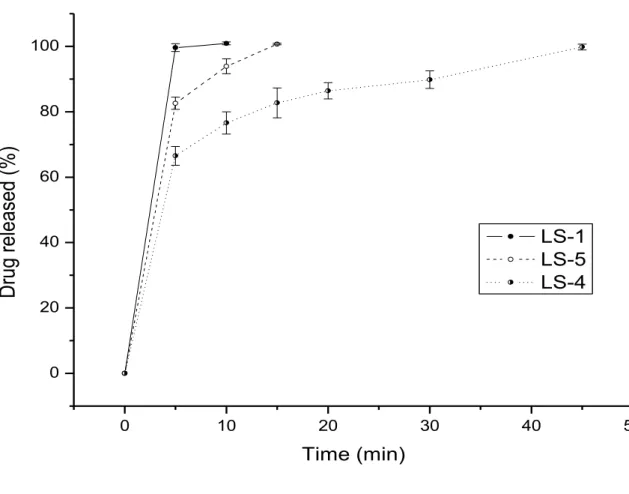
compressed tablets (means ± SD; n=3) 84
Figure 2.2 Dissolution profiles of clozapine from liquisolid tablets that had different
R values (means ± SD; n=3) 86
Figure 2.3 Dissolution profiles of clozapine from liquisolid tablets containing different
coating materials (means ± SD; n=3) 87
Figure 2.4 Dissolution profiles of clozapine from liquisolid tablets that had different
Lf values (means ± SD; n=3) 88
Figure 2.5 Dissolution profiles of clozapine from liquisolid tablets (fresh and aged)
(means ± SD; n=3) 89
Figure 3.1 Wire basket type of disintegrating test apparatus 101
Figure 3.2 Modified disintegration test apparatus 101
Figure 3.3 Dissolution profiles of clozapine from orally disintegrating liquisolid tablets and directly compressed orally disintegrating tablets (means ± SD; n=3) 105 Figure 3.4 Dissolution profiles of clozapine from orally disintegrating liquisolid tablets
List of tables
Table 1.1 List of some of developed liquisolid systems to enhance dissolution rate 10 Table 1.2 Optimization of some formulation parameters for liquisolid systems with
immediate drug release 23
Table 1.3 List of some in vivo studies 29
Table1.4 (a) List of some of developed sustained release liquisolid systems 31 Table1.4 (b) List of some of developed sustained release liquisolid systems 32 Table 1.5 Advantages and limitations of liquisolid systems 33 Table 1.6 Advantages and limitations of orally disintegrating tablets 48 Table 2.1 Formulation design of clozapine liquisolid tablets 77
Table 2.2 Flow properties of liquisolid powder blends 80
Table 2.3 Evaluation of clozapine liquisolid tablets 82
Table 2.4 Hardness results of clozapine liquisolid tablets (fresh and aged) 89 Table 3.1 Formulation design of clozapine orally disintegrating liquisolid tablets 98 Table 3.2 Physical characterization of clozapine orally disintegrating liquisolid tablets 104 Table 3.3 Disintegration time results of clozapine orally disintegrating liquisolid tablets
List of abbreviations
BCS Biopharmaceutical classification system
Caprol® PGE-860 1,2,3-propanetriol homopolymer (9Z)-9-octadecenoate Cremophor® EL Polyoxyl 35 castor oil
CCD Charge coupled device
CCS Croscarmellose sodium
CDER Center for Drug Evaluation and Research
CMC Carboxymethyl cellulose
CP Crospovidone
CS Calcium silicate
CSD Colloidal silicon dioxide
DCP Dibasic calcium phosphate
DCT Directly compressed tablet
DSC Differential scanning calorimetry
DTA Disintegration test apparatus
Eudragit® RL Acrylic resin RL polymer
Eudragit® RL PO A copolymer of ethyl acrylate, methyl methacrylate and a low content of methacrylic acid ester with quaternary ammonium groups
Eudragit® RS Acrylic resin RS polymer
Eudragit® S-100 Anionic copolymer based on methacrylic acid and methyl methacrylate
FDA Food and Drug Administration
FLODT Felodipine liquisolid orodispersible tablet FTIR Fourier transformed infrared spectroscopy
Fujicalin® Spherically granulated dicalcium phosphate anhydrous
GIT Gastrointestinal tract
HCl Hydrochloric acid
HPMC Hydroxypropylmethyl cellulose Labrasol® Capryl capryol polyoxy glycerides Lauroglycol® FCC Propylene glycol monolaurate (type 1)
LS Liquisolid
Maisine® 35-1 Glyceryl monolinoleate
MAMS Magnesium aluminometasilicate
MCC Microcrystalline cellulose
NF National Formulary
NSAID Nonsteroidal antiinflammatory drug
OD Orally disintegrating
ODT Orally disintegrating tablet
OD-LST Orally disintegrating liquisolid tablet
PEG Polyethylene glycol
PG Propylene glycol
PK Pharmacokinetic
RH Relative humidity
SEM Scanning electron microscopy
SLS Sodium lauryl sulphate
SS Sodium saccharin
SSG Sodium starch glycolate
Synperonic® PE/L61 Poloxamer 181
Synperonic® PE/L81 Polyoxyethylene-polyoxypropylene block copolymer Transcutol® HP Diethylene glycol monoethyl ether
US United States
USP United States Pharmacopoeia
Chapter one
1
Introduction
1.1 Liquisolid (LS) technology
1.1.1 Overview
Solubility is one of the important parameters to achieve desired concentration of drug in systemic circulation for pharmacological response to be shown (Charman and Charman 2003). Poorly water soluble drugs will be inherently released at a slow rate owing to their limited dissolution rate within the gastrointestinal tract (GIT) contents. One challenge for poorly water soluble drugs is to enhance the rate of dissolution (Darwish and El-Kamel 2001). Various techniques have been employed to formulate oral drug delivery system that would enhance the dissolution profile and in turn, the absorption efficiency of poorly water soluble drugs (Shinde 2007; Patel and Patel 2008): Solid dispersions (Kapsi and Ayres 2001; Shah, Amin et al. 2007; Rane, Mashru et al. 2007; Vanshiv, Rao et al. 2009), micronization (Li, Wang et al. 2007; Nighute and Bhise 2009), use of mesoporous silica carriers (Ahuja and Pathak 2009), ball milling technique (Sonoda, Horibe et al. 2008), use of complexing agents (El-Zein, Riad et al. 1998; Pravin and Nagarsenker 2004; Ghorab, Abdel-Salam et al. 2004; Gowrishankar, Ali et al. 2007), crystal engineering (Blagden, de Matas et al. 2007), solubilization by surfactants (Nazzal, Nutan et al. 2002; Patil and Paradkar 2006) and liquisolid (LS) technique developed by Spireas et al. (Spireas and Bolton 1999; Spireas 2002). These techniques take advantage of the increased dissolution rate resulting from the addition of a solubilizing agent, particle size reduction or the drug being in an already dissolved or amorphous state.
LS technique has been identified as a promising technique to improve the dissolution rate of poorly water soluble drugs (Fahmy and Kassem 2008). When properly formulated, LS
powder blends possess acceptable flowability and compressibility properties. They are prepared by simple blending with selected powder excipients referred to as the carriers and the coating materials.
This technique was successfully applied for low dose poorly water soluble drugs. Drug can be present in a completely or partially dissolved state in the LS formulation. The LS formulation can then facilitate the release of this drug by two mechanisms: (1) Already dissolved drug only need to diffuse out of the formulation and (2) the liquid component of the formulation act as a solubilizing aid to facilitate the wetting and dissolution of undissolved particles. Since dissolution of a non-polar drug is often the rate limiting step in gastrointestinal absorption, better bioavailability of an orally administered poorly water soluble drug is achieved when the drug is formulated using a LS system.
1.1.2 Classification of LS systems
The term LS systems refers to the powdered forms of liquid medications formulated by converting liquid lipophilic drugs or drug suspensions or solutions of water insoluble solid drugs in suitable non-volatile solvent systems, into dry, non-adherent, free flowing and readily compressible powder admixtures by blending with the selected carrier and coating materials (Figure 1.1).
Figure 1.1 Schematic representation of the structure of the liquisolid systems
Based on the type of liquid medication encapsulated, LS systems may be classified into three subgroups: (1) Powdered drug solutions, (2) powdered drug suspensions and (3) powdered liquid drugs.
Simultaneously, based on the formulation technique used, LS systems may be classified into two categories namely: (1) LS compacts and (2) LS microsystems.
The term LS compacts refers to immediate or sustained release tablets or capsules prepared, combined with the inclusion of appropriate excipients required for tableting or encapsulation, such as lubricants and for rapid or sustained release action, such as disintegrants or binders, respectively.
The term LS microsystems refers to capsules prepared by combining the drug with the carrier and the coating materials with inclusion of an additive in the liquid medication wherein the resulting unit size may be as much as five times that of LS compacts (Spireas and Bolton 1999; Spireas 2002).
Liquid drug, drug solution or drug suspension
Carrier saturated with liquid (wet layer)
Coating particles (dry surface)
1.1.3 Excipients used for the preparation of LS systems
1.1.3.1 Non-volatile solvents
With the LS technology as described by Spireas, a liquid may be transformed into free flowing, readily compressible and apparently dry powder by simple blending with selected excipients such as the carriers and coating materials. The liquid portion, which can be a liquid drug, a drug suspension or a drug solution in suitable non-volatile solvents is incorporated into the porous carrier material. Inert, preferably water-miscible, not highly viscous, non-toxic organic solvents with high boiling point such as propylene glycol (PG), liquid polyethylene glycols (PEG), glycerine and polysorbates are best suitable as liquid vehicles (Kulkarni, Aloorkar et al. 2010). Once the carrier is saturated with liquid, a liquid layer is formed on the particle surface which is instantly adsorbed by the fine coating particles. Thus, an apparently dry, free flowing and compressible powder is obtained (Spireas 2002).
Non-volatile solvents enhance the solubility of poorly water soluble drugs by formation of micelles and act as dispersants. For immediate release LS compacts, the selection of solvent is based on high drug solubility and for sustained release, solvents with least solubilizing capacity is selected. Since there are no specific non-volatile liquid vehicles used in the preparation of LS compacts, different aqueous solvents have been used as non-volatile liquid vehicles in the preparation of immediate release and sustained release LS formulations with different drugs. So, selection of non-volatile solvent in LS technique is important to obtain immediate or sustained release formulation (Baby, Saroj et al. 2012).
In various studies, the effect of different types of non-volatile liquid vehicles has been investigated. The results suggest that the selection of a liquid vehicle with a high solubilizing capacity for the drug and thus, an increased the fraction of molecularly dispersed drug (FM), leads to enhanced release profiles (Spireas and Sadu 1998; Nokhodchi, Javadzadeh et al. 2005; Javadzadeh, Siahi et al. 2007; Gubbi and Jarag 2009; Akinlade, Elkordy et al. 2010). That means that by the selection of a liquid vehicle with optimum solubilizing properties the amount of liquid and thus, the weight and size of the LS compacts can be reduced. However, in addition to the drug solubility in the liquid vehicle other physicochemical characteristics of
the liquid vehicles such as polarity, viscosity, molecular weight, chemical structure and lipophilicity may also have an effect on drug release (Spireas and Sadu 1998).
Propylene glycol (PG), an inert solvent miscible with water is a suitable liquid vehicle
for LS systems. It is not highly viscous (dynamic viscosity: 58.1 cP at 20 °C) and has a high boiling point (188 °C). PG is used in a wide variety of pharmaceutical formulations and is generally regarded as a relatively non-toxic material (Handbook of Pharmaceutical Excipients 2009; Baby, Saroj et al. 2012).
PG was successfully used as non-volatile solvent in LS preparation of drugs such as bromhexine hydrochloride (Gubbi and Jarag 2009), famotidine (Fahmy and Kassem 2008), pioglitazone hydrochloride (Gandhi, Sawant et al. 2013), simvastatin (Burra, Kudikula et al. 2011), to name a few.
1.1.3.2 Carrier materials
In LS approach, the carrier material plays as a major role in obtaining the dry form of the powder from the liquid medication. Each carrier has its unique property. Selection of the carrier will depend upon its liquid holding capacity, the flowability of the powder and which carrier requires less compression force (Kavita, Raju et al. 2011).
When the drug dissolved in liquid is incorporated into a carrier material, the liquid is initially absorbed in the interior of the particles. Once the carrier is saturated with liquid, a liquid layer is formed on the particle surface which is instantly adsorbed by the fine coating material particles. The coating material provides the conversion from a wet to a dry surface and gives the LS system desirable flow properties (Gavali, Pacharane et al. 2011).
The particles of the carrier materials are compression enhancing, relatively large, preferably porous particles possessing sufficient absorption property which contributes in liquid absorption, e.g. various grades of microcrystalline cellulose (MCC) (Spireas 2002),
starch (Spireas 2002), lactose (Javadzadeh, Siahi et al. 2007), sorbitol (Javadzadeh, Siahi et al. 2007), dibasic calcium phosphate (DCP) (Yadav and Yadav 2009) etc.
Microcrystalline cellulose (MCC) is a purified, partially depolymerized cellulose
that occurs as a white, odorless, tasteless, crystalline powder composed of porous particles. It is commercially available in different particle sizes and moisture grades that have different properties and applications. The specific surface areas and particle sizes of carrier materials are important parameters for the optimization of LS systems.
MCC is widely used in pharmaceuticals, primarily as a binder/diluent in oral tablet and capsule formulations where it is used in both wet granulation and direct compression processes.In addition to its use as a binder/diluent, MCC has some lubricantand disintegrant properties that make it useful in tableting (Handbook of Pharmaceutical Excipients 2009).
MCC was successfully used as carrier material in LS preparation of drugs such as furosemide (Akinlade, Elkordy et al. 2010), griseofulvin (Hentzschel, Alnaief et al. 2011), hydrocortisone (Spireas, Sadu et al. 1998), irbesartan (Boghra, Patel et al. 2011), pioglitazone hydrochloride (Gandhi, Sawant et al. 2013), piroxicam (Javadzadeh, Siahi et al. 2005), rofecoxib (El-Say, Samy et al. 2010), tamoxifen citrate (Walunj, Sharma et al. 2012) to name a few.
1.1.3.3 Coating materials
The particles of the coating materials are flow enhancing, highly adsorptive particles,
e.g. silica of various grades like medium surface fumed silica, colloidal silicon dioxide (CSD),
synthetic amorphous silica, calcium silicate (CS), magnesium aluminometasilicate (MAMS). These particles contribute in covering the wet carrier particles and displaying a dry looking powder by adsorbing any excess liquid (Spireas and Bolton 1999; Spireas and Bolton 2000; Spireas 2002). The coating material is required to cover the surface and so maintain the powder flowability (Yadav and Yadav 2010).
Colloidal silicon dioxide (CSD), a submicroscopic fumed silica is a suitable coating
material for LS systems. Its specific surface area is 100–400 m2/g depending on grade. The specific surface area of Aerosil® 200 is 200 ± 25 m2/g. Primary particle size is 7–16 nm. Aerosil® forms loose agglomerates of 10–200 µm (Handbook of Pharmaceutical Excipients 2009).
CSD is widely used in pharmaceuticals, cosmetics and food products. Its small particle size and large specific surface area give it desirable flow characteristics that are exploited to improve the flow properties of dry powdersin a number of processes such as tableting and capsule filling.
CSD was successfully used as coating material in LS preparation of drugs such as carvedilol (Pardhi, Shivhare et al. 2010), hydrocortisone (Spireas, Sadu et al. 1998), irbesartan (Boghra, Patel et al. 2011), pioglitazone hydrochloride (Gandhi, Sawant et al. 2013), piroxicam (Javadzadeh, Siahi et al. 2005), rofecoxib (El-Say, Samy et al. 2010), tamoxifen citrate (Walunj, Sharma et al. 2012), valsartan (Lakshmi, Srinivas et al. 2011), to name a few.
Calcium silicate (CS) has large micropores and excellent tabletability, also leads to a
physical stabilization of amorphous drugs with enhanced drug release. CS possesses many intraparticle pores on its surface. Moreover, it has been shown that this silicate is also suitable for adsorption of liquid (Sharma, Sher et al. 2005). It can absorb up to 2.5 times its weight of liquids and still remain a free flowing powder (Handbook of Pharmaceutical Excipients 2009). CS is used as a filler aid for oral pharmaceuticals. It has also been used in pharmaceutical preparations as an antacid.
CS is used as coating material in LS preparation of some drugs. Repaglinide is widely used for the treatment of diabetes. It is a poorly water soluble drug which has poor absorption in the upper intestinal tract and has a very low bioavailability (Shams, Sayeed et al. 2011). The LS compacts of repaglinide were prepared using CS as a coating material (El-Houssieny, Wahman et al. 2010).
Tocopherol acetate (vitamin E acetate) is an oil soluble liquid drug. Hentzschel et al. investigated the suitability of various novel coating materials such as CS (Florite®), MAMS (Neusilin® US2) for LS compacts of tocopherol acetate (Hentzschel, Sakmann et al. 2011).
Neusilin® US2, a synthetic amorphous form of MAMS which is prepared by spray
drying and provides an extremely large specific surface area (300 m2/g) and good flow and tableting properties. The high porosity and large specific surface area of Neusilin® allow a high liquid adsorption capacity (Hentzschel, Sakmann et al. 2011). This may be of interest especially for the preparation of LS compacts. Neusilin® makes hard tablets at low compression forces compared to similar binders. Primary particle size of neutral grade of Neusilin® US2 is 44-177 µm. It is a multifunctional excipient that can be used in both direct compression and wet granulation of solid dosage forms. Neusilin® is widely used for improvement of the quality of tablets, powders, granules and capsules.
Neusilin® was used as coating material in LS preparation of some drugs. Cyclosporine-A is a fat soluble, hydrophobic polypeptide metabolite of fungus beauveria
nivea (formerly tolypocladium inflatum gams). It is a hydrophobic cyclic peptide built from non-mammalian aminoacids with low oral bioavailability; which is one of first line immunosuppressive drugs used to prevent transplant rejection and to treat autoimmune diseases. The self-emulsifying cyclosporine-A tablets were prepared by the LS compaction technique using MAMS (Neusilin® S1) as a coating material (Zhao, Zhou et al. 2011).
Griseofulvin is an antifungal drug which has very low solubility in water. The LS compacts of griseofulvin were prepared using colloidal silica and MAMS (Neusilin® US2)as coating materials (Hentzschel, Alnaief et al. 2011).
1.1.3.4 Disintegrants
Disintegrants indirectly affect the dissolution parameter since the immediate next step is dissolution (Kavitha, Raju et al. 2011). To aid dissolution, tablet formulations generally require rapid disintegration, which can be facilitated by the addition of superdisintegrants.
Once a tablet disintegrates, the solubility properties of the drug, either alone or assisted by other formulation ingredients, determine the drug's subsequent dissolution rate and extent of release. The solubility properties of water-soluble drugs result in rapid and high-level drug release, but with poorly water soluble drugs, other ingredients in the formulation, including the disintegrant, play a key role in determining the drug dissolution characteristics exhibited by the finished formulation (Balasubramaniam and Bee 2009). Sodium starch glycolate (SSG), croscarmellose sodium (CCS), pregelatinized starch, crospovidone (CP) etc. are most commonly used disintegrants (Rajesh, Rajalakshmi et al. 2011).
Sodium starch glycolate (SSG) is widely used in oral pharmaceuticals as a
disintegrant in capsule and tablet formulations. It is commonly used in tablets prepared by either direct compression or wet granulation processes. The mechanism by which disintegration action takes place is rapid absorption of water and swell leading to an enormous increase in volume of granules which result in rapid and uniform disintegration. The higher dissolution rates observed with superdisintegrants may be due to rapid disintegration and fine dispersion of particles formed after disintegration (Kumar and Nirmala 2012).
SSG is successfully used as disintegrant in LS preparation of drugs such as atorvastatin calcium (Gubbi and Jarag 2010), bromhexine hydrochloride (Gubbi and Jarag 2009), diazepam (Manogar, Hari et al. 2011), irbesartan (Boghra, Patel et al. 2011), pioglitazone hydrochloride (Gandhi, Sawant et al. 2013) etc.
1.1.3.5 Drug candidates
LS technique has been successfully employed to improve the dissolution rate of poorly water soluble or water insoluble drugs which belong to Biopharmaceutical Classification System (BCS) Class II or IV. Some of developed LS systems are listed in Table 1.1. These LS systems are the compacts based on the formulation technique used.
Table1.1 List of some of developed liquisolid systems to enhance dissolution rate
Drug Therapeutic class/ BCS class
Liquid vehicle Carrier / Coating materials Reference
Aceclofenac Nonsteroidal antiinflammatory drug (NSAID)/Class II PEG 400 MCC, DCP / Hydroxypropylmethyl cellulose (HPMC)
Yadav, Nighute et al. 2009
Amlodipine besylate Antihypertensive/ Class II
PG MCC / Silica Kaur, Bala et al. 2013
Atorvastatin calcium Lipid lowering agent/ Class II
PEG 400, PG MCC / Silica Gubbi and Jarag 2010
Bromhexine HCl Mucolytic agent/ Class II
PEG 400, PG MCC / Silica Gubbi and Jarag 2009
Candesartan cilexetil Antihypertensive/ Class II
Polysorbate 80 MCC / Silica Sayyad, Tulsankar et al. 2013 Carbamazepine Antiepileptic/Class II PEG 200 MCC, Lactose / Silica Javadzadeh, Navimipour et al.
2007
Carbamazepine Antiepileptic/Class II PG MCC / Silica Tayel, Soliman et al. 2008
Carvedilol Nonselective beta blocker/alpha 1 blocker/ Class II
PEG 400 MCC / Silica Pardhi, Shivhare et al. 2010;
Drug Therapeutic class/ BCS class
Liquid vehicle Carrier / Coating materials Reference
Clofibrate (liquid drug)
Lipid lowering agent - MCC / Silica Spireas 2002
Cyclosporine-A Immunosuppressive/ Class II
Lauroglycol® FCC, Maisine® 35-1, PEG-35 castor oil, PEG 400
MCC / MAMS Zhao, Zhou et al. 2011
Diazepam Antiepileptic,
antianxiety agent/ Class II
PEG 600 MCC / Silica Manogar, Hari et al. 2011
Domperidone Antidopaminergic/ Class II Polysorbate 20, Polysorbate 40, Polysorbate 60, Polysorbate 80, PG, PEG 200, PEG 400
MCC / Silica Ibrahim, El-Faham et al. 2011
Escitalopram oxalate Antidepressant/Class II PG MCC / Silica Kumbhar, Mujgond et al. 2013
Etoricoxibe NSAID/Class II PEG 400 MCC / Silica Yala, Srinivasan et al. 2012
Ezetimibe Lipid lowering agent/ Class II
PEG 400, Polysorbate 80, Transcutol® HP, Labrasol®
Drug Therapeutic class/ BCS class
Liquid vehicle Carrier / Coating materials Reference
Famotidine Antiulcer/Class IV PG MCC / Silica Fahmy and Kassem 2008
Fenofibrate Antihyperlipidemic/ Class II
PG MCC / Silica Karmarkar, Gonjari et al. 2009
Fenofibrate Antihyperlipidemic/ Class II
PG, PEG 600 MCC / Silica Sabale, Grampurohit et al. 2012
Furosemide High-ceiling loop diuretic/Class IV
PEG 400, Synperonic® PE/L81, Caprol® PGE-860
MCC / Silica Akinlade, Elkordy et al. 2010
Furosemide High-ceiling loop diuretic/Class IV
Polysorbate 80 MCC / Silica Burra and Galipelly 2010
Gemfibrozil Antilipidemic/Class II Polysorbate 80 MCC / Silica Spireas 2002
Glibenclamide Antidiabetic/Class II PEG 400 MCC / Silica Darwish and El-Kamel 2001
Glimepiride Antidiabetic/Class II PG MCC / Silica Singh, Prakash et al. 2011
Glipizide Antidiabetic/Class II PG, PEG 200, PEG 400
MCC / Silica Mahajan, Dhamne et al. 2011 Griseofulvin Antifungal/Class II PEG 300 MCC, MAMS /
Colloidal silica, MAMS
Hentzschel, Alnaief et al. 2011
Drug Therapeutic class/ BCS class
Liquid vehicle Carrier / Coating materials Reference
Hydrochlorothiazide Diuretic,
antihypertensive/ Class IV
PEG 200 MCC / Silica Khaled, Asiri et al. 2001
Hydrochlorothiazide Diuretic,
antihypertensive/ Class IV
PEG 400 MCC / Silica Spireas 2002
Hydrocortisone Corticosteroid/Class II PG MCC / Silica Spireas, Sadu et al. 1998; Spireas 2002
Ibuprofen NSAID/Class II PEG 300 MCC / Silica Hentzschel, Alnaief et al. 2010
Ibuprofen NSAID/Class II PEG 400 MCC / Silica Chuahan, Patel et al. 2012
Indomethacin NSAID/Class II PG MCC / Silica Nokhodchi, Javadzadeh et al.
2005
Indomethacin NSAID/Class II PEG 400 MCC, DCP / HPMC Yadav and Yadav 2009
Indomethacin NSAID/Class II PEG 200, Glycerin MCC / Silica Saeedi, Akbari et al. 2011 Irbesartan Antihypertensive/
Class II
PEG 400 MCC / Silica Boghra, Patel et al. 2011
Ketoprofen NSAID/Class II PG, Polysorbate 80 MCC, DCP / Silica Nagabandi, Tadikonda et al. 2011
Ketoprofen NSAID/Class II PEG MCC, DCP, Starch, Lactose /
Silica
Drug Therapeutic class/ BCS class
Liquid vehicle Carrier / Coating materials Reference
Lamotrigine Antiepileptic/Class II PEG 400 MCC / Silica Yadav and Yadav 2010
Lansoprazole Proton-pump inhibitor/Class II
Polysorbate 80 MCC / Silica Kasture, Gondkar et al. 2011 Levothyroxine
sodium
Thyroid hormone/ Class II
Olive oil, Soybean oil MCC / Silica Spireas 2005
Loratadine Antihistaminic/Class II PG MCC / Silica El-Hammadi and Awad 2011
Meloxicam NSAID/Class II PG, PEG 400,
Polysorbate 80
MCC / Silica El-Gizawy 2007
Meloxicam NSAID/Class II PEG 400 MCC / Silica Emmadi, Sanka et al. 2010
Metaxalone Muscle relaxant/ Class II PEG 400, Polysorbate 80, MCC Spireas 2011 Methyclothiazide Diuretic, antihypertensive/ Class II
PEG 400 MCC / Silica Spireas, Wang et al. 1999;
Spireas 2002
Naproxen NSAID/Class II PEG 400,
Cremophor® EL, Synperonic® PE/L61
MCC / Silica Tiong and Elkordy 2009
Drug Therapeutic class/ BCS class
Liquid vehicle Carrier / Coating materials Reference
Nifedipine Vasodilator/Class II PG, PEG 400, Polysorbate 80
MCC / Silica Annapureddy, Preetha et al. 2013 Nimesulide NSAID/Class II PG, PEG 400,
Polysorbate 80
MCC / Silica Hassan and El-Saghir 2011
Pioglitazone HCl Antidiabetic/Class II PG MCC / Silica Gandhi, Sawant et al. 2013
Piroxicam NSAID/Class II Polysorbate 80 MCC / Silica Javadzadeh, Siahi et al. 2005;
Javadzadeh, Siahi et al. 2007
Piroxicam NSAID/Class II PG MCC / Silica Javadzadeh, Shariati et al. 2009
Prednisolone Glucocorticoid/Class II PG, PEG 400, Glycerin, Polysorbate 80
MCC / Silica Spireas and Sadu 1998
Prednisone Glucocorticoid/ Class II
PG MCC / Silica Spireas 2002
Repaglinide Antidiabetic/Class II Polysorbate 80 MCC / Calcium silicate El-Houssieny 2008; El-Houssieny, Wahman et al.
2010
Rifampicin NSAID/Class II Polysorbate 80 MCC / Silica Rajesh, Pinkesh et al. 2013
Rofecoxib NSAID/Class II PEG 600 MCC / Silica El-Say, Samy et al. 2010 Rosuvastatin calcium Cholesterol lowering agent/Class II PG, PEG 400, Polysorbate 80
Drug Therapeutic class/ BCS class
Liquid vehicle Carrier / Coating materials Reference
Simvastatin Hypolipidemic/Class II PG MCC / Silica Burra, Kudikula et al. 2011
Spironolactone Steroid/Class II PEG 400 MCC / Silica Spireas 2002
Tamoxifen citrate Antiestrogenic/Class II PG MCC / Silica Walunj, Sharma et al. 2012 Telmisartan Antihypertensive/
Class II
PEG 400 MCC / Silica Swamy and Shiny 2013
Tocopherol acetate (liquid drug)
Vitamin supplement - MCC, MAMS, Fujicalin® /
Colloidal silica, Calcium silicate, MAMS
Hentzschel, Sakmann et al. 2011
Valsartan Antihypertensive/ Class II
PG, PEG, Glycerine MCC / Silica Lakshmi, Srinivas et al. 2011 Valsartan Antihypertensive/
Class II
PG MCC, Lactose, DCP / Silica Chella, Shastri et al. 2012
Caprol® PGE-860: 1,2,3-propanetriol homopolymer (9Z)-9-octadecenoate. Cremophor® EL: Polyoxyl 35 castor oil.
Fujicalin®: Spherically granulated dicalcium phosphate anhydrous. Labrasol®: Capryl capryol polyoxy glycerides.
Lauroglycol® FCC: Propylene glycol monolaurate (type 1). Maisine® 35-1: Glyceryl monolinoleate.
Synperonic® PE/L61: Poloxamer 181.
Synperonic® PE/L81: Polyoxyethylene-polyoxypropylene block copolymer. Transcutol® HP: Diethylene glycol monoethyl ether.
1.1.4 Liquid loading capacity of powders
A powder can retain only limited amounts of liquid while maintaining acceptable flow and compression properties. To calculate the required amounts of powder excipients (carrier and coating materials) a mathematical approach for the formulation of LS systems has been developed by Spireas (Spireas and Sadu 1998; Spireas 2002). This approach is based on the flowable (Ф-value) and compressible (Ψ-number) liquid retention potential introducing constants for each powder/liquid combination. The Ф-value of a powder represents the maximum amount of a given non-volatile liquid that can be retained inside its bulk [w/w] while maintaining an acceptable flowability. The flowability may be determined from the powder flow or by measurement of the angle of repose.
The Ψ-number of a powder is defined as the maximum amount of liquid the powder can retain inside its bulk [w/w] while maintaining acceptable compactability resulting in compacts of sufficient hardness with no liquid leaking out during compression. The compactability may be determined by the so-called “pactisity” which describes the maximum (plateau) crushing strength of a one gram tablet compacted at sufficiently high compression forces. The terms “acceptable flow and compression properties” imply the desired and thus preselected flow and compaction properties which must be met by the final LS formulation.
Depending on the excipient ratio (R) of the powder substrate an acceptably flowing and compressible LS system can be obtained only if a maximum liquid load on the carrier material is not exceeded. This liquid/carrier ratio is termed “liquid load factor (Lf)” and is defined as the ratio between the weights of liquid formulation (W) and the carrier material (Q) in the system:
Lf = W / Q
R represents the ratio between the weights of the carrier (Q) and the coating (q) material present in the formulation:
R = Q / q
The Lf that ensures acceptable flowability (ΦLf ) can be determined by: ΦLf = Φ + φ ⋅(1/R)
Where Φ and φ are the Ф-values of the carrier and coating materials, respectively (Spireas and Sadu 1998; Spireas 2002).
Similarly, the Lf for production of LS systems with acceptable compactability (ΨLf) can be determined by:
ΨLf = Ψ + ψ ⋅(1/R)
Where Ψ and ψ are the Ψ-numbers of the carrier and coating materials, respectively. The optimum liquid load factor (L0) required to obtain acceptably flowing and compressible LS systems are equal to either ΦLf or ΨLf whichever represents the lower value.
As soon as the L0 is determined, the appropriate quantities of carrier (Q0) and coating (q0) material required to convert a given amount of liquid formulation (W) into an acceptably flowing and compressible LS system may be calculated as follows:
Q0 = W / L0 and
q0 = Q0 / R
The validity and applicability of the above mentioned principles have been tested and verified by producing LS compacts possessing acceptable flow and compaction properties (Spireas 2002).
1.1.5 Preparation and optimization of LS systems
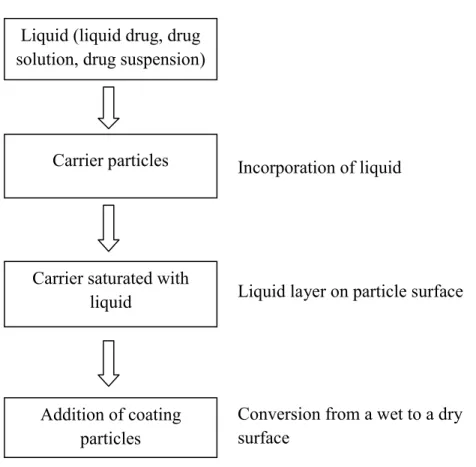
The new LS technique may be applied to formulate liquid medications (i.e., oily liquid drugs and solutions, suspensions or emulsions of poorly water soluble solid drugs carried in non-volatile liquid vehicles) into powders suitable for tableting or encapsulation. Simple blending of such liquid medications with calculated quantities of a powder substrate consisting of certain excipients referred to as the carrier and coating powder materials, can yield dry looking, non adherent, free flowing and readily compressible powders (Spireas and Bolton 1999). The liquid portion, which can be a liquid drug, a drug suspension or a drug solution in suitable non-volatile liquid vehicles, is incorporated into the porous carrier material. Once the carrier is saturated with liquid, a liquid layer is formed on the particle surface which is instantly adsorbed by the fine coating material particles. The coating material provides the conversion from a wet to a dry surface and gives the LS system desirable flow properties (Figure 1.2).
Figure 1.2 Schematic representation of liquisolid systems
To prepare a LS system, first the drug is dispersed or dissolved in the non-volatile solvent, the carrier and coating material mixture in a ratio is then added to the liquid medication. The liquid medication is now converted to powder form. Various excipients such as disintegrants and lubricants may be added to the LS compacts (Figure 1.3). Before preparing into compacts pre-compression studies have to be performed.
Liquid (liquid drug, drug solution, drug suspension)
Carrier particles Incorporation of liquid
Carrier saturated with
liquid Liquid layer on particle surface
Addition of coating particles
Conversion from a wet to a dry surface
Figure 1.3 Schematic outline of the steps involved in the preparation of liquisolid systems Liquid vehicle Carrier material Solid pharmaceutical drug Drug solution or suspension Coating material FINAL FORMULATION
By adding and mixing coating material, wet particles can be converted to dry looking, free flowing powders.
Can be filled into CAPSULES or Can be compressed into TABLETS
Addition of more excipient if necessary
LIQUISOLID SYSTEM
The LS technology has been successfully applied to low dose, poorly water soluble drugs. The formulation of a high dose, poorly soluble drug is one of the limitations of the LS technology. As the release rates are directly proportional to the fraction of molecularly dispersed drug in the liquid formulation a higher drug dose requires higher liquid amounts for a desired release profile.
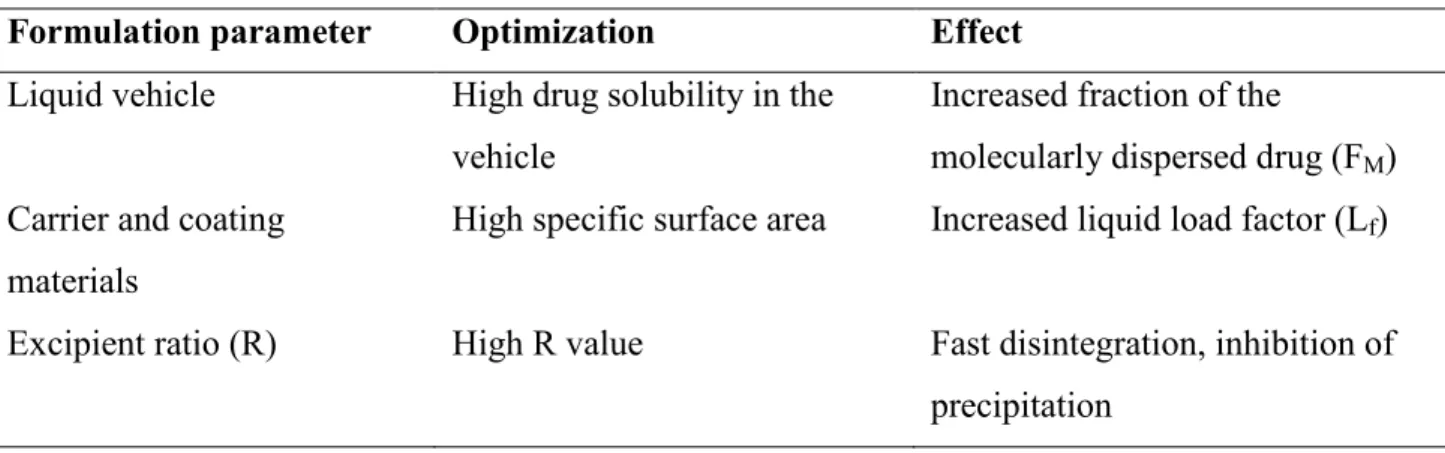
Moreover, to obtain LS systems with acceptable flowability and compressibility, high levels of carrier and coating materials are needed. However, this results in an increase in tablet weight ultimately leading to tablet sizes which are difficult to swallow. Therefore, to overcome this and various other problems of the LS technology several formulation parameters may be optimized (Table 1.2).
Table 1.2 Optimization of some formulation parameters for liquisolid systems with immediate drug release
Formulation parameter Optimization Effect
Liquid vehicle High drug solubility in the vehicle
Increased fraction of the
molecularly dispersed drug (FM) Carrier and coating
materials
High specific surface area Increased liquid load factor (Lf) Excipient ratio (R) High R value Fast disintegration, inhibition of
precipitation
1.1.6 Characterization of LS systems
1.1.6.1 Preformulation studies
Before formulating the LS systems preformulation studies should be performed first, these include; solubility studies, determination of angle of slide, calculation of liquid load factor, determination of flowable liquid retention potential and LS compressibility test.
Solubility studies
To select the best non-volatile solvent for dissolving or suspending the drug in liquid medication, solubility studies are carried out by preparing saturated solutions of drug by adding excess of drug into non-volatile solvents and shaking them on shaker for specific time period under constant vibration. After this, the solutions are filtered and analyzed (Kulkarni, Aloorkar et al. 2010).
Determination of angle of slide
Powder excipient or its mixture is accurately weighed and placed at one end of a metal plate (with a polished surface). This end is raised gradually until the plate makes an angle with the horizontal at which the powder is about to slide. This is called the angle of slide (Ɵ). It is taken as a measure for the flow properties of powders. An angle of slide corresponding to 330 is regarded as optimal flow behaviour (Spireas, Jarowski et al. 1992).
Calculation of liquid load factor
Liquid load factor (Lf) is defined as the ratio of weight of the liquid medication (W) to weight of the carrier material (Q) and it can be determined by using the following formula (Spireas and Bolton 2000; Spireas 2002).
Lf = W / Q W= Weight of liquid medication Q= Weight of carrier material
Determination of flowable liquid retention potential
The term "flowable liquid retential potential" (Φ value) of a powder material describes its ability to retain a specific amount of liquid while maintaining good flow properties. The Φ value is defined as the maximum weight of liquid that can be retained per unit weight of the powder material in order to produce an acceptably flowing liquid/powder admixture (Tayel, Soliman et al. 2008).
LS compressibility test
LS compressibility test is used to determine Φ values and involves steps such as preparing carrier-coating material admixture systems, preparing several uniform liquid or powder admixtures, compressing each liquid or powder admixtures to tablets, assessing average hardness, determination of average liquid content of crushed tablets, as well as determining plasticity, sponge index and Φ value and Lf value (Spireas and Bolton 1999; Spireas 2002).
1.1.6.2 Evaluation of LS systems
1.1.6.2.1 Pre-compression evaluations
In order to ensure the suitability of the selected excipients, Differential Scanning Calorimetry (DSC), X-Ray Diffraction (XRD), Fourier Transformed Infrared Spectroscopy (FTIR) and Scanning Electron Microscopy (SEM) studies are performed. In addition, flowability studies are also carried out to select the optimal formula for compression.
Differential Scanning Calorimetry (DSC)
It is used to determine the interactions between drug and excipients, which indicates the success of stability studies. The drug has a characteristic peak, absence of this peak in DSC thermogram indicates that the drug is in the form of solution in liquid formulation and it is molecularly dispersed within the system (Fahmy and Kassem 2008). DSC studies showed that clozapine exhibits a sharp endothermic peak at 182.670 (Govda, Ram et al. 2012).
X-Ray Diffraction (XRD)
For characterization of the crystalline state, the XRD patterns are determined for drug, excipients used in formulation, physical mixture of drug and excipients, finally for the prepared LS system (Javadzadeh, Navimipour et al. 2007). Absence of constructive specific peaks of the drug in the LS X-ray diffractogram indicate that drug has almost entirely converted from crystalline to amorphous or solubilized form. Such lack of crystallinity in the LS system is understood to be as a result of drug solubilization in the liquid vehicle i.e., the
drug has formed a solid solution within the carrier matrix. This amorphization or solubilization of drug in the LS system may contribute to the consequent improvement in the apparent solubility and therefore the dissolution rate of the drug (Fahmy and Kassem 2008). XRD pattern of pure clozapine showed a characteristic peaks at 2θ0 = 10.52, 17.39, 19.36, 19.73, 21.05, 21.44, 23.09 and 23.72 (Govda, Ram et al. 2012).
Scanning Electron Microscopy (SEM)
SEM is utilized to assess the morphological characteristics of the raw materials and drug-carrier systems(Fahmy and Kassem 2008).
Fourier Transformed Infrared Spectroscopy (FTIR)
FTIR studies are performed to determine the chemical interaction between the drug and excipients used in the formulation. The presence of drug peaks in the formulation and absence of extra peaks suggest that there are no chemical interactions between the drug and the carrier when formed as LS system (Yadav, Nighute et al. 2009).
Contact angle measurement
For assessment of wettability, contact angle of LS tablets is measured according to the imaging method. The commonly used method is to measure contact angle directly for a drop of liquid resting on a plane surface of the solid, the so-called imaging method. A saturated solution of the drug in dissolution media is prepared and a drop of this solution is put on the surface of tablets. The contact angles are calculated by measuring the height and diameter of sphere drop on the tablet(Javadzadeh, Navimipour et al. 2007).
Flow behaviour
Flow property of a powder is of major importance in the production of tablet dosage forms in order to attain a uniform feed and reproducible filling of tablet dies. Angle of repose, Carr’s index, Hausner’s ratio and compressibility index are used in order to ensure the flow properties of the powders (Banker and Anderson 1987).
1.1.6.2.2 Post-compression evaluations
The formulated LS systems are evaluated for post-compression parameters such as; - Weight variation
- Drug content / content uniformity - Hardness
- Thickness and diameter - Friability
- Disintegration
- In vitro dissolution studies - In vivo evaluation
- Stability studies
(Kavitha, Raju et al. 2011; Lakshmi, Kumari et al. 2012)
Evaluation parameters of the tablets mentioned in the Pharmacopoeias need to be assessed, along with some special tests are discussed here:
Stability studies
To obtain information on the stability of LS systems, the effects of storage on the release profile and the crushing strength of LS compacts were investigated. Stability studies of LS systems containing atorvastatin calcium (40 °C / 75% RH, 6 months) (Gubbi and Jarag 2010), carbamazepine (25 °C / 75% RH, 6 months) (Javadzadeh, Navimipour et al. 2007), ezetimibe (30 0C / 60% RH, 1 month) (Khanfar, Salem et al. 2013), glimepiride (25 °C / 75% RH, 6 months) (Singh, Prakash et al. 2011), hydrocortisone (ambient conditions, 10 months) (Spireas 2002), indomethacin (25 °C / 75% RH, 12 months) (Javadzadeh, Siahi et al. 2007), naproxen (20 °C / 76% RH, 4 weeks) (Tiong and Elkordy 2009) and piroxicam (25 °C / 75% RH, 6 and 9 months, respectively) (Javadzadeh, Siahi et al. 2007; Javadzadeh, Shariati et al. 2009) showed that storage at different conditions neither had an effect on the hardness nor on the release profiles of LS compacts. This indicates that the LS technology is a promising technique to enhance the release rate without having any physical stability issues.
In vivo evaluation
The LS technology is a promising approach for the enhancement of drug release of poorly water soluble or practically water insoluble drugs. Bioavailability assessment is required for LS technique, because it was proved that enhancing the drug releases from the dosage form by determination of in vitro release studies. So, this parameter should establish for determination of the efficacy of the formulation. Some researchers have been evaluated in vivo absorption and bioavailability characteristics of LS compacts as described in Table 1.3.
Table 1.3 List of some in vivo studies
Drug Therapeutic class Results Reference
Carbamazepine Antiepileptic (sodium channel blocker)
In vivo testing demonstrated that the bioavailability of carbamazepine from the LS capsules was enhanced by 182.7%. The study also showed that a lower drug dose can be administrated using LS capsules to achieve similar clinical effects but minimize the associated adverse effects.
Chen, Wang et al. 2012
Pioglitazone HCl Antidiabetic It was found that the relative bioavailability of pioglitazone HCl from the LS tablets was significantly higher than that from the commercial tablets. In addition, the in vivo reduction of blood glucose level through the optimized LS formula was greater than that of marketed product.
Gandhi, Sawant et al. 2013
Repaglinide Antidiabetic The study showed that the relative bioavailability of repaglinide from the LS compacts was significantly higher than that from the commercial tablets. The results of the glucose tolerance test showed that the blood glucose level was decreased significantly after the commercial drug (percent change, 18.1%) while in groups treated with the LS formulation the decrease was highly significant with a percent change of 29.98%.
El-Houssieny, Wahman et al. 2010
1.1.7 Sustained release with LS formulations
Development of sustained release oral dosage forms is beneficial for optimal therapy in terms of efficacy, safety and patient compliance. Ideally, a controlled release dosage form will provide therapeutic concentration of the drug in the blood that is maintained throughout the dosing interval. To achieve this aim, several methods have been developed such as preparation of salt form of drug, coating with special materials and incorporation of drugs into hydrophobic carriers. LS technique is a novel method that can change the dissolution rate of drugs (Javadzadeh, Musaalrezaei et al. 2008). If hydrophobic carriers such as acrylic resin polymers (Eudragit® RL and RS) are used instead of hydrophilic carriers in LS systems, sustained release formulations can be obtained. Some drugs have been formulated as LS sustained release systems. Different liquid vehicles, carriers and coating materials were used to formulate these drug delivery systems (Table 1.4).
Table1.4 (a) List of some of developed sustained release liquisolid systems
Drug Therapeutic class
Liquid vehicle Carrier material Coating material
Additional retardant agent
Reference
Lornoxicam NSAID Polysorbate 80 MCC, Eudragit® RL PO, Eudragit® S-100,
Chitosan, Sodium CMC
Silica - Ganesh, Deecaraman
et al. 2011 Metoprolol
succinate
Antihypertensive, antiarrhythmic
Polysorbate 80 MCC Silica HPMC Jagannath, Maroti et
al. 2013 Propranolol
HCl
β-adrenergic blocking agent
Polysorbate 80 Eudragit® RL and RS Silica HPMC (4000 mPa.s)
Javadzadeh, Musaalrezaei et al. 2008
Theophylline Antiasthmatic Polysorbate 80 Eudragit® RL and RS Silica HPMC E4M Nokhodchi, Aliakbar et al. 2010
Tramadol HCl Opioid analgesic PG MCC Silica HPMC K4M Karmarkar, Gonjari
et al. 2010 Venlafaxine
HCl
Antidepressant PG, PEG 400, polysorbate 80
Eudragit® RS PO Silica HPMC Khanfar, Salem et al. 2013
Eudragit® RL: Acrylic resin RL polymer, Eudragit® RL PO: A copolymer of ethyl acrylate, methyl methacrylate and a low content of methacrylic acid ester with quaternary ammonium groups, Eudragit® RS: Acrylic resin RS polymer, Eudragit® S-100: Anionic copolymer based on methacrylic acid and methyl methacrylate, HPMC: Hydroxypropylmethyl cellulose, Sodium CMC: Sodium carboxymethyl cellulose.
Table1.4 (b) List of some of developed sustained release liquisolid systems
Drug Results Reference
Lornoxicam The results showed retardation in the release rate of the drug from the LS compacts and the kinetic studies showed that the sustained release LS formulations followed zero-order.
Ganesh, Deecaraman et al. 2011
Metoprolol succinate
The study showed the LS technique can be optimized for the production of sustained release matrices of water-soluble drugs. LS formulations containing Polysorbate 80 followed zero-order release kinetics. In this study, wet granulation technique showed more retardation properties compared to direct compression technique.
Jagannath, Maroti et al. 2013
Propranolol HCl Sustained release LS tablets prepared by wet granulation technique showed greater retardation properties in comparison with conventional matrix tablets and most of LS formulations followed zero-order release pattern.
Javadzadeh, Musaalrezaei et al. 2008
Theophylline The prepared LS compacts showed more sustained release behaviour as compared to simple sustained release matrix tablets and the results suggested that zero-order release can be achieved with LS formulations.
Nokhodchi, Aliakbar et al. 2010
Tramadol HCl The prepared LS compacts of water-soluble drug, tramadol HCl showed more sustained release behaviour as compared to marketed sustained release formulations. The release profiles of drug followed the Peppas model.
Karmarkar, Gonjari et al. 2010
Venlafaxine HCl
The prepared LS formulations have shown a better sustained release effect in comparison with directly compressed tablets. The type of liquid vehicle was to found to affect the drug release significantly.
1.1.8 Advantages and limitations of LS systems
Some advantages and limitations of LS systems are listed in Table 1.5. Table 1.5 Advantages and limitations of liquisolid systems
Advantages Limitations
Poorly water soluble or water insoluble drugs can be formulated into LS systems.
This technique is only for slightly*/very slightly water soluble** and practically water insoluble*** drugs.
Better availability of an orally administered poorly water soluble drug is achieved when the drug is in solution form.
In order to achieve acceptable flowability and compactability for LS powder formulation, high levels of carrier and coating materials should be added. This will increase the weight of tablets to above one gram which makes them difficult to swallow.
Optimized rapid release LS tablets or capsules of poorly water soluble drugs exhibit enhanced in vitro and in vivo drug release as compared to their commercial counterparts.
The LS systems have drug loading capacities and they require high solubility of drug in non-volatile liquid vehicles.
Can be applied to formulate liquid medications such as oily liquid drugs.
Enhanced bioavailability can be obtained as compared to conventional tablets.
Drug release can be modified using suitable formulation ingredients.
Can be used in controlled drug delivery and zero-order release can be obtained.
Drug can be molecularly dispersed in the formulation. Capability of industrial production is also possible.
Advantages Limitations
Their production cost is lower than that of soft gelatine capsules, because the production of LS systems is similar to that of conventional tablets.
(Saharan, Kukkar et al. 2009; Saharan, Kukkar et al. 2009; Kulkarni, Aloorkar et al. 2010; Bindu, Kusum et al. 2010; Sharma and Jain 2010; Gavali, Pacharane et al. 2011; Rajesh, Rajalakshmi et al. 2011; Burra, Yamsani et al. 2011)
* Slightly soluble: From 100 to 1000 parts solvent needed to dissolve 1 part solute
** Very slightly soluble: From 1000 to 10 000 parts solvent needed to dissolve 1 part solute *** Practically insoluble or insoluble: More than 10 000 parts solvent needed to dissolve 1 part solute (USP36-NF31, 2013).
1.1.9 Conclusion
LS technique is a promising alternative method for formulation of poorly water soluble or water insoluble solid drugs and liquid lipophilic drugs. LS compacts refer to formulations formed by conversion of solid state to liquid state, drug suspensions or drug solutions in non-volatile solvents into dry, non-adherent, free flowing and compressible powder mixtures by blending the suspension or solution with selected carrier and coating materials. When the drug within the LS system is completely dissolved in the liquid vehicle, it is located in the powder substrate still in a solubilized state. Already the dissolved drug only needs to diffuse out of the formulation and the liquid component of the formulation act as a solubilizing aid to facilitate the wetting and dissolution of the undissolved particles. Thus, this shows improved release rates and greater bioavailability. This technique is also used to design sustained release systems by using hydrophobic carriers in LS systems.
1.2 Orally disintegrating tablets (ODTs)
1.2.1 Overview
For the past one decade, there has been an enhanced demand for more patient-friendly and compliant dosage forms. As a result, the demand for developing new technologies has been increasing annually (Hirani, Rathod et al. 2009). Since the development cost of a new drug molecule is very high, efforts are now being made by pharmaceutical companies to focus on the development of new drug dosage forms for existing drugs with improved safety and efficacy together with reduced dosing frequency and the production of more cost effective dosage forms.
For most therapeutic agents used to produce systemic effects, the oral route still represents the preferred way of administration, owing to its several advantages and high patient compliance compared to many other routes (Valleri, Mura et al. 2004). Tablets and hard gelatin capsules constitute a major portion of drug delivery systems that are currently available. However, many patient groups such as the elderly, children and patients who are mentally retarded, uncooperative, nauseated or on reduced liquid-intake/diets have difficulties swallowing these dosage forms. Those who are traveling or have little access to water are similarly affected (Hanawa, Watanabe et al. 1995; Mallet 1996; Porter 2001).
To fulfill these medical needs, pharmaceutical technologists have developed a novel oral dosage form known as “Orally Disintegrating Tablets (ODT)” which disintegrate rapidly in saliva, usually in a matter of seconds, without the need of water. Drug dissolution and absorption as well as onset of clinical effect and drug bioavailability may be significantly greater than those observed from conventional dosage forms (Seager 1998; Bradoo, Shahani et al. 2001; Sreenivas, Dandagi et al. 2005).
Although chewable tablets have been on the market for some time, they are not the same as the new ODTs. Patients for whom chewing is difficult or painful can use these new tablets easily. ODTs can be used easily in children who have lost their primary teeth but do not have full use of their permanent teeth (Mizumoto, Masuda et al. 2005).
Recent market studies indicate that more than half of the patient population prefers ODTs to other dosage forms (Deepak 2004) and most consumers would ask their doctors for ODTs (70%), purchase ODTs (70%) or prefer ODTs to regular tablets or liquids (>80%) (Brown 2003).
ODTs have been developed for numerous indications ranging from migraines (for which rapid onset of action is important) to mental illness (for which patient compliance is important for treating chronic indications such as depression and schizophrenia) (Ghosh, Chatterjee et al. 2005).
1.2.2 Description of orally disintegrating (OD) dosage forms
All fast disintegrating tablets approved by United States Food and Drug Administration (US FDA) are classified as “ODTs”. European Pharmacopoeia adopted the term “orodispersible tablets” for tablets that dispersed or disintegrate in less than 3 min in the mouth before swallowing. Such a tablet disintegrates into smaller granules or gel like structure, allowing easily swallowing by patients. As per recent US FDA guideline on ODT, disintegration time of ODT should have an in vitro disintegration time of approximate 30 s or less, when based on United States Pharmacopoeia (USP) disintegration test method or alternative.
ODTs are different from conventional sublingual tablets, buccal tablets and lozenges, which require more than a minute to dissolve in oral cavity. Different OD dosage forms are as follows:
Fast dissolving tablets and ODTs: Fast dissolving tablet (also known as fast
dissolving multiparticulate, rapid dissolving, mouth dissolving, fast melting or orodispersible tablet) is an oral tablet that does not require water for swallowing (Hirani, Rathod et al. 2009). Recently, European Pharmacopoeia has used the term orodispersible tablets. This may be defined as uncoated tablets intended to be placed in the mouth where they disperse readily