• Aucun résultat trouvé

Relationship orientation in social media : construct, measurement and link to company performance

N/A
N/A
Protected

Academic year: 2021

Partager "Relationship orientation in social media : construct, measurement and link to company performance"

Copied!
265
0
0

Texte intégral

(1)

Relationship orientation in social media: construct, measurement and link to

company performance

A dissertation presented by

Morana Fudurić

Supervised by

Prof. Ivan Snehota, PhD

Prof. Andreina Mandelli, PhD

Submitted to the

Faculty of Communication Sciences

Università della Svizzera italiana

for the degree of

Ph.D. in Communication Sciences

(2)
(3)

BOARD:

Advisors:

Prof. Ivan Snehota, PhD (Università della Svizzera Italiana)

Prof. Andreina Mandelli, PhD (Università della Svizzera Italiana and SDA Bocconi)

Reviewers:

Prof. Stefania Borghini, PhD (Bocconi University)

(4)
(5)

Final version

(6)
(7)

ABSTRACT

Today, companies operate in a dynamic environment, characterized by fast technological

development, vast competition and globalization as well as constant changes in the

market which has led to the growing awareness of the importance of developing long

term, profitable relationships with various stakeholders or partners. Combined with the

emergence of social media during the 1990s that facilitate the development and

maintenance of such relationships, the two concepts gain even more importance, and are

often considered as crucial factors for a company's success. Moreover, both concepts

have been referred to as new marketing paradigms that had a profound impact on

marketing theory and practice. With the decreasing marketing efficiency of mass

communication, the concept of relationship building in social media is becoming more

appealing to marketing academics and practitioners. However, even though relationship

building has been identified as one of the company’s main objectives in social media, it

has not been conceptualized or measured adequately. On the other hand, existing

conceptualizations of a more general relationship orientation, in addition to having

certain conceptual and methodological issues, do not take into account the specificities

of the social media context. For this reason, we argue in favor of the development of a

new construct - relationship orientation in social media (ROSM), and its

operationalization that would enable both academics and practitioners to measure the

degree to which a company is oriented towards relationship-building in social media.

The main focus of our study was to develop an understanding of the key features of

ROSM. More specifically, our aim is to determine the domain and definition of the

construct and its measurement. As a secondary objective, we aimed at developing an

understanding of the impact of ROSM on company performance. Given the objectives

defined, a mixed method approach was used. The literature review of relationship

marketing, social media and strategic orientation, was used as the basis for the

conceptualization of ROSM. The empirical research was conducted in several stages.

First we conducted field interviews in order to develop a better understanding of

(8)

relationship orientation and its specificities in social media. More specifically, the main

purpose of this stage was to develop a working definition of the ROSM construct and a

preliminary pool of items to measure it. Additionally, the insights from the interviews

were used to identify the key outcomes and influencing factors of the

ROSM-performance link. In the second stage we used the Delphi method to refine the

preliminary pool of items, which resulted in the refined measurement scale. Finally, we

conducted quantitative research to empirically test the new construct measurement and

evaluate its psychometric properties.

Our findings indicate Relationship Orientation in Social Media (ROSM) is a behavioral,

process-based, multidimensional construct consisting of three dimensions: (1)

Knowledge generation, dissemination and management, (2) trust and bonding and (3)

interaction facilitation and management. As a result, the key features of our view of

ROSM are (1) the focus on current and potential customers and their communities in

social media, (2) continuity and process-based view that incorporate generation,

dissemination and management of knowledge and (3) focus on specific activities rather

than attitudes and beliefs. The construct can be measured with a multi-item scale, and

has satisfactory psychometric properties. We also identified several business and

customer-based performance measures and introduced environmental and internal

factors that may influence the ROSM-performance link. The main contribution of the

dissertation and research is the conceptualization of relationship orientation in social

media (ROSM), the operationalization of the construct by developing a measurement

scale and the exploration of the link between relationship orientation in social media and

company performance.

(9)
(10)

To my parents – my rock and anchor in life

and

my brother who will always be the “Jack of all trades” to me

(11)
(12)

ACKNOWLEDGMENTS

The entire process of the PhD studies is a remarkable journey, both in terms of one's

academic and personal development. Academic, because of the number of theories,

perspectives, approaches and methods one is exposed to, and the challenges that follow

in the process of dissertation research and writing. Personal, because you learn to cope

with criticism and develop (a hopefully healthy level) of self-criticism. You grow in

character, which often directs your future endeavors. Finally, the connections and

relationships one develops throughout the studies often span both the academic and

personal domain. For me, there are a number of people I've met and cooperated with

throughout this journey, that deserve merit.

First and foremost, I wish to thank my supervisors, professors Andreina Mandelli and

Ivan Snehota for our inspiring discussions, constructive criticism, encouragement and

unconditional support in all the stages of my journey. I greatly benefited from our

discussions that helped me develop my arguments and improve my skills in academic

discourse. When I first came to the university, you made me a promise saying you would

continuously „pick on me“ and push me to reach my full potential. Thank you for

keeping that promise.

I would also like to thank professors that have advised me during my research and have

always been available to discuss the numerous difficulties a PhD candidate faces in

research. Special thank you goes to professors John Deighton, James Jaccard, Ajay

Kohli, Robert Palmatier, Peter Schultz and Susanne Suggs for the time and effort

invested in our discussions; for their advice and suggestions in conceptualizing ROSM,

identifying potential pitfalls and choosing the right methodologies and procedures.

I am also grateful to all the professors of the Institute of Marketing and Communication

Management, in particular Peter Seele and Albert Caruana, for their support, suggestions

and criticism during the IMCA seminars and our unofficial discussions. Special thanks

(13)

also go to all my USI colleagues for their support, especially to Ana Javornik for her

words of encouragement in the most stressful situations. My thanks also go to my

colleagues and friends Natalie, Zlatina, Marco, Antonella, Fabio and Katharina.

Additionally, my appreciation goes to all my colleagues at the Marketing department of

the Faculty of Economics and Business, University of Zagreb, especially my supervisor

Professor Jurica Pavičić for encouraging me to pursue a PhD abroad. I also wish to give

special thanks to Tanja Kesić, Đurđana Ozretić Došen, Zoran Krupka, Goran Vlašić,

Vatroslav Škare, Miroslav Mandić and Sandra Horvat for their valuable insights and

support.

Last but not least, my family and friends that have stood by me and believed in me

during my studies. I thank Krešo, Marin, Dalia, Damir, Marija, Dora, Andrija, Ante and

Maja for keeping me on track and not letting me forget the value of true friendship.

Lastly, I want to thank my parents and brother for all of their love, understanding,

support and encouragement. I can only hope to become the person you see in me today.

(14)

TABLE OF CONTENTS

ABSTRACT VI

ACKNOWLEDGMENTS XI

LIST OF TABLES XVI

LIST OF FIGURES XVIII

1. INTRODUCTION 1

1.1. POSITIONING OF THE RESEARCH 1

1.2. RESEARCH QUESTIONS 4

1.3. CONTRIBUTION OF THE RESEARCH 6

1.4. ORGANIZATION OF THE WORK 8

2. RELATIONSHIP MARKETING 11

2.1. INTRODUCTION 11

2.2. DEFINITION AND ORIGIN 12

2.2.1. TRANSACTION VS.RELATIONSHIP MARKETING 12

2.2.2. DEFINING RELATIONSHIP MARKETING 21

2.2.3. TOWARDS AN OPERATIONALIZATION OF RELATIONSHIP MARKETING 25

2.2.4. CONCLUDING REMARKS 31

2.3. DEFINING CONSTRUCTS 33

2.3.1. INTRODUCTION 33

2.3.2. OVERVIEW OF DEFINING CONSTRUCTS 35

2.3.3. CONCLUDING REMARKS 43

2.4. RELATIONSHIP OUTCOMES 45

2.4.1. INTRODUCTION 45

2.4.2. OVERVIEW OF KEY RELATIONSHIP OUTCOMES 46

2.4.3. CONCLUDING REMARKS 53

3. SOCIAL MEDIA 55

3.1. INTRODUCTION 55

3.2. DEFINITION AND ORIGIN 57

(15)

3.2.2. SOCIAL MEDIA AND NEW INTERACTIVE MARKETING PARADIGMS 64

3.2.3. SOCIAL MEDIA TYPES 68

3.2.4. SOCIAL MEDIA RESEARCH 70

3.2.5. CONCLUDING REMARKS 71

3.3. SOCIAL MEDIA MARKETING STRATEGIES 72

3.3.1. INTRODUCTION 72

3.3.2. SOCIAL MEDIA MARKETING STRATEGY DEVELOPMENT 74 3.3.3. TOWARDS A TYPOLOGY OF SOCIAL MEDIA STRATEGIES 81

3.3.4. EFFECTIVENESS AND METRICS 85

3.3.5. CONCLUDING REMARKS 91

3.4. SOCIAL MEDIA AND RELATIONSHIP BUILDING 91

4. STRATEGIC ORIENTATION – PERFORMANCE MODELS 102

4.1. INTRODUCTION 102

4.2. OVERVIEW OF STRATEGIC ORIENTATION – PERFORMANCE MODELS 103

4.2.1. MARKET ORIENTATION 107

4.2.2. CUSTOMER ORIENTATION 113

4.2.3. INTERACTION ORIENTATION 116

4.2.4. CONCLUDING REMARKS 119

4.3. RELATIONSHIP MARKETING AS A STRATEGIC ORIENTATION 120

4.3.1. RELATIONSHIP ORIENTATION DEFINITION, DEVELOPMENT AND MEASUREMENT 120

4.3.2. MODELING RELATIONSHIP ORIENTATION 125

4.3.3. CONCLUDING REMARKS 129

5. RESEARCH DESIGN AND METHODOLOGY 131

5.1. REFINED RESEARCH QUESTIONS 131

5.1.1. RQ1A:HOW CAN WE DEFINE RELATIONSHIP ORIENTATION IN SOCIAL MEDIA (ROSM)? 133 5.1.2. RQ1B:HOW CAN WE MEASURE RELATIONSHIP ORIENTATION IN SOCIAL MEDIA (ROSM)? 134 5.1.3. RQ2:WHAT IS THE LINK BETWEEN ROSM AND COMPANY PERFORMANCE? 135

5.1.4. OUTLINE OF RESEARCH METHODOLOGY 136

5.2. STAGE 1 – GENERATING A PRELIMINARY POOL OF ITEMS 139

5.3. STAGE 2 - ITEM REFINEMENT 142

5.4. STAGE 3 – MEASUREMENT ASSESSMENT AND VALIDATION 144

5.4.1. SAMPLE AND DATA COLLECTION 144

5.4.2. VARIABLE OPERATIONALIZATION AND MEASUREMENT 146

5.5. EXPLORATION OF THE LINK BETWEEN ROSM AND PERFORMANCE 147

6. FINDINGS 149

(16)

6.2. ROSM CONCEPTUALIZATION – FINDINGS FROM FIELD INTERVIEWS 151

6.3. ITEM REFINEMENT 160

6.4. MEASUREMENT ASSESSMENT AND VALIDATION 163

6.4.1. PRELIMINARY ANALYSIS 163

6.4.2. EXPLORATORY ASSESSMENT 163

6.4.3. CONFIRMATORY ASSESSMENT 174

6.4.4. MEASUREMENT VALIDATION 180

7. DISCUSSION 184

7.1. DETERMINING THE KEY FEATURES OF ROSM 185

7.1.1. HOW CAN WE DEFINE ROSM? 185

7.1.2. HOW CAN WE MEASURE ROSM? 190

7.2. EXPLORING THE ROSM-PERFORMANCE LINK 193

7.2.1. KEY OUTCOMES OF ROSM 193

7.2.2. FACTORS INFLUENCING THE ROSM-PERFORMANCE LINK 194

8. CONCLUDING REMARKS 197

8.1. MANAGERIAL IMPLICATIONS 197

8.2. LIMITATIONS AND SUGGESTIONS FOR FURTHER RESEARCH 199

APPENDICES 203

APPENDIX 1: VARIABLE OPERATIONALIZATIONS 204

APPENDIX 2: DELPHI ROUND 1 SUMMARY OF RESULTS 209

APPENDIX 3: DELPHI ROUND 2 SUMMARY OF RESULTS 216

APPENDIX 4: EFA CORRELATION MATRIX 221

APPENDIX 5: SCREE PLOT 230

(17)

LIST OF TABLES

TABLE 1: COMPARISON OF TRANSACTION AND RELATIONSHIP MARKETING CONCEPTS ON

THE STRATEGY CONTINUUM ... 17

TABLE 2: CONCEPTUAL CATEGORIES OF RELATIONSHIP MARKETING ... 21

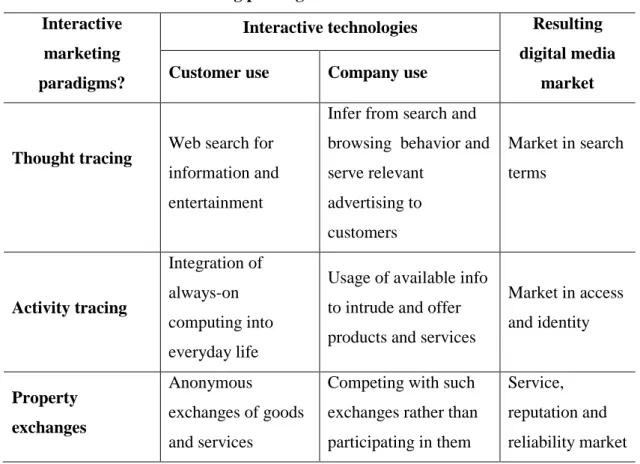
TABLE 3: INTERACTIVE MARKETING PARADIGMS ... 65

TABLE 4: SOCIAL MEDIA SITES STATISTICS IN 2013 ... 68

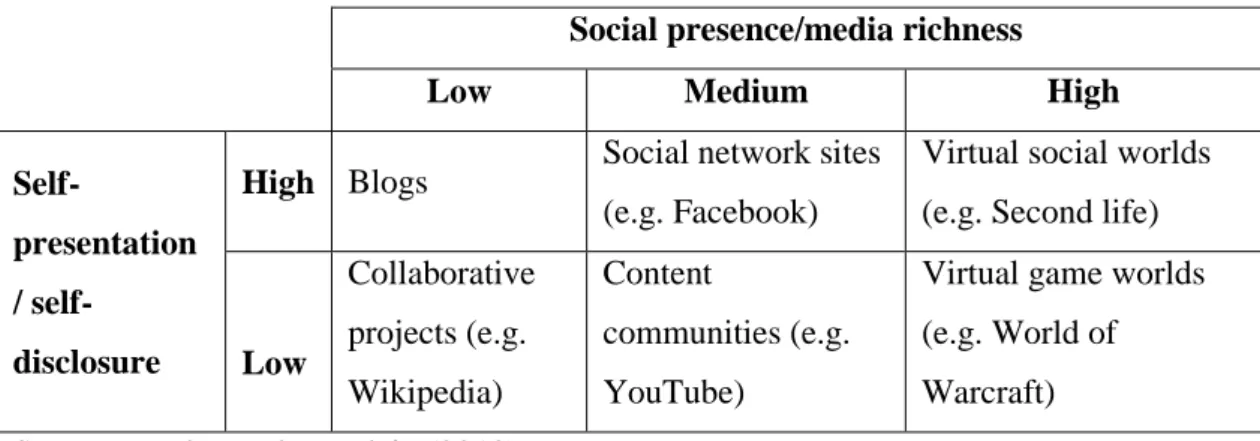
TABLE 5: CLASSIFICATION OF SOCIAL MEDIA ... 69

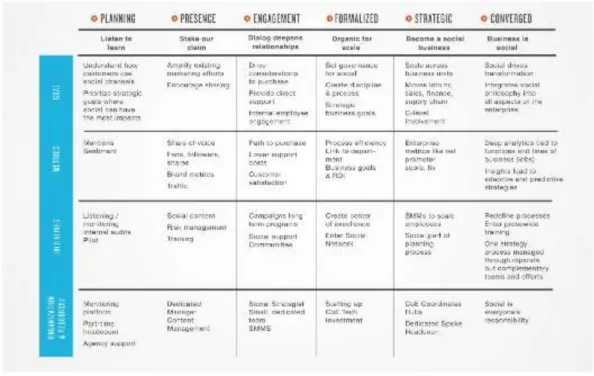
TABLE 6: STAGES OF SOCIAL MEDIA STRATEGY DEVELOPMENT ... 77

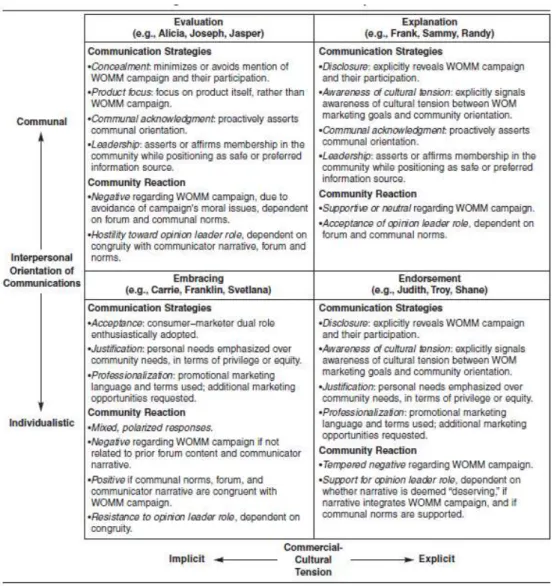
TABLE 7: TYPOLOGY OF SOCIAL MEDIA STRATEGIES ... 81

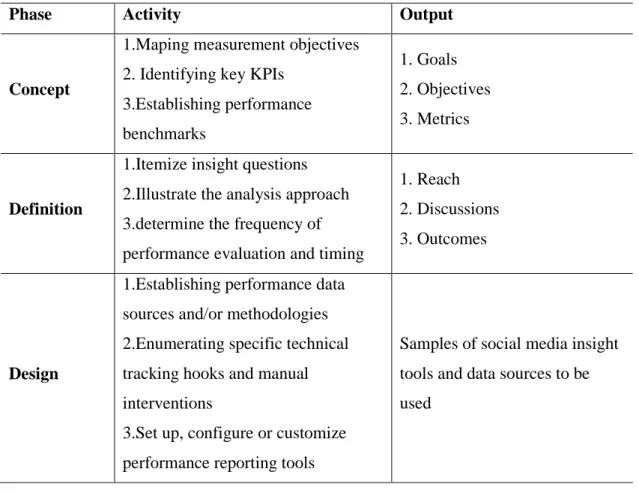
TABLE 8: SOCIAL MEDIA MEASUREMENT PROCESS ... 86

TABLE 9: OVERVIEW OF STRATEGIC ORIENTATIONS RELEVANT FOR THE FIELD OF STUDY ... 105

TABLE 10: PRELIMINARY POOL OF ITEMS ... 158

TABLE 11: PURIFIED LIST OF ITEMS ... 161

TABLE 12: KMO AND BARTLETT'S TEST ... 165

TABLE 13: TOTAL VARIANCE EXPLAINED ... 165

TABLE 14: COMMUNALITIES, PATTERN AND STRUCTURE COEFFICIENTS OF ROSM ... 167

TABLE 15: TOTAL VARIANCE EXPLAINED ... 168

TABLE 16: COMMUNALITIES, PATTERN AND STRUCTURE COEFFICIENTS OF ROSM ... 169

(18)

TABLE 18: OVERVIEW OF MEASUREMENT MODELS’ FIT INDICES ... 175

TABLE 19: RESULTS OF CFA ... 176

TABLE 20: RELIABILITY ANALYSIS AFTER CFA ... 177

TABLE 21: ITEM REFINEMENT SUMMARY ... 178

TABLE 22: DISCRIMINANT VALIDITY ... 181

TABLE 23: CORRELATION ANALYSIS FOR DISCRIMINANT VALIDITY ANALYSIS ... 182

(19)

LIST OF FIGURES

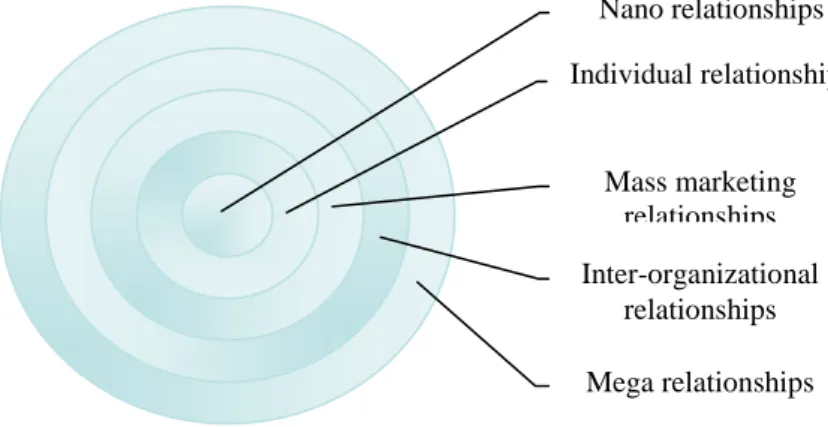
FIGURE 1: REPRESENTATION OF RELATIONSHIPS ... 29

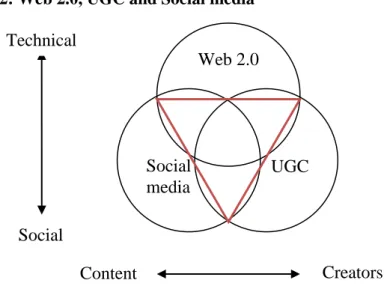
FIGURE 2: WEB 2.0, UGC AND SOCIAL MEDIA ... 58

FIGURE 3: NARRATIVE STRATEGIES ... 84

FIGURE 4: S-O-R FRAMEWORK FOR SOCIAL MEDIA METRICS ... 88

FIGURE 5: SOCIAL CRM HOUSE ... 96

FIGURE 6: SCALE DEVELOPMENT PROCESS ... 137
(20)

1. INTRODUCTION

1.1. Positioning of the research

Both relationship marketing and social media have been related in the literature to the

development of “new marketing paradigms”. Relationship marketing, because of the

shift from a transaction-oriented approach to a relationship-oriented approach. Social

media, because of the significant shift in the locus of power, activity and value, away

from the company and towards the customer (Berthon et al., 2012).

More specifically, relationship marketing has been presented as an alternative to the

traditional, transactional approach, and is grounded in the literature and concepts of

services marketing and industrial marketing (Grönroos, 2011; Gronroos, 1994;

Gummesson, 2002a, 1997), quality management (e.g. customer-perceived quality; see

Edvardsson, 2005, 1988; Eggert and Ulaga, 2002; Ulaga and Eggert, 2006) and

organizational theory (see Gummesson, 2002b, 1996, 1994) but it also other related

areas such as economics, political sciences etc. that have influenced the development of

the field (see Eiriz and Wilson, 2006). At the core of this approach to marketing, is the

notion of establishing and maintaining long-term relationships with customers and other

stakeholders, such that both sides benefit from the relationship. For such an approach to

be successful, some authors stressed the importance of developing an organizational

culture that supports relationship marketing, with its philosophy being embedded in all

activities and levels of the organization (Gronroos, 1994; Gummesson, 1997).

Still, several issues emerged regarding the definition, scope, antecedents, outcomes and

operationalization of relationship marketing. With this in mind, in this thesis we address

some of these issues by analyzing and examining various definitions and aspects of

relationship marketing, its defining constructs (i.e. trust, commitment, interaction,

cooperation) and outcomes (i.e. profits, loyalty, satisfaction etc.). We also explore,

(21)

define and explain the key differences and relations between some of the terms often

wrongly used as synonyms in the relationship marketing (e.g. customer database

management, customer relationship management and relationship marketing) and

strategic orientation literature (e.g. market orientation, customer orientation, interaction

orientation and relationship orientation).

On the other hand, the growing importance of the social media environment yet again

calls for a shift in the marketers’ mindset. Broadly defined as a set of internet-based

applications that enable and facilitate the creation and distribution of user-generated

content (Kaplan and Haenlein, 2010), it gave rise to the consumer that is no longer just a

passive observer. As Berthon et al. (2012) pointed out, the changes in the locus of

power, activity and value point to the need to rethink the way to approach the customers.

In other words, marketing had to transform from the more “traditional” unidirectional,

broadcasting-based marketing to an approach based on interactivity, personalization,

real-time and collaboration with a community of users (see Kozinets et.al., 2010). Note

here that this approach shares a lot of common ground with relationship marketing – for

example, interactivity, personalization and collaboration are at the core of both

relationship marketing and social media.

Then, the question becomes – how should companies approach the customers in this new

environment? When discussing social media and their impact on marketing, Kane et al.

(2009) argued that the later has had a significant impact on the development of deeper

relationships. Recent research supports this claim, as building and maintaining

relationships is one of the top reasons for a company’s social media participation

(Michaelidou et al., 2011). The underlying reasoning is that the establishment of

relationships with customers through interaction and collaboration with a community of

users can generate value for both the consumer and the brand (Muniz and O’Guinn,

2001). Clearly, applying some sort of relationship marketing approach in the social

media environment is called for. This, in turn, stresses the need to operationalize the

relationship orientation construct in social media, making it more applicable and

measurable.

(22)

Following the existing literature, relationship orientation can be considered an

operationalization of the relationship marketing concept. While we find abundant

literature that explains market, customer or interaction orientation (see for example

Kohli and Jaworski, 1990; Kohli et al., 1993; Narver and Slater, 1990; Ramani and

Kumar, 2008), there is limited literature available that reflects the activities and

behaviors of organizations that characterize themselves as being “relationship-oriented”.

More specifically, a “relationship oriented” organization is one whose actions are

consistent with the relationship marketing concept based on „identifying and

establishing, maintaining, enhancing and, when necessary, terminating relationships with

customers and other stakeholders, at a profit so that the objectives of all parties involved

are met; and this is done by mutual exchange and fulfillment of promises“ (Gronroos,

1994).

Although “relationship marketing orientation” as a concept has been referred to in the

literature, so far there have been only a few attempts to define the “relationship

marketing orientation” construct, its elements and measurement (Palmatier et al., 2008;

Sin et al., 2002; Tse et al., 2004). Furthermore, we have found the existing definitions

and measurements have several important shortcomings, as they do not fully and

adequately reflect the scope and elements of relationship marketing. Additionally,

although it is true that the popularity of social media has led companies to devote more

time effort on building their social media presence and connecting with the customers,

influencers and others alike, it is still unclear whether these attempts in fact lead to

yielding returns on investments made, and, ultimately, profits. This study will attempt to

answer that question as well, and can therefore contribute to theory and practice in the

field of social media.

To sum up, the growing body of literature in the field of relationship marketing in the

1990s and 2000s, as well as a growing interest in exploring the benefits of social media

supports the increasing importance of these two areas. Although we acknowledge the

variety of constructs underlying relationship marketing and its complexities, the

examination and research of such complexities, relations and dyads, however, does not

(23)

represent the main focus of this research. We rather examine the relationship marketing

from a strategic perspective to gain further insights into its application in the social

media context, and possible impact on company performance. Here, relationship

orientation in social media (ROSM) represents the operationalization and

implementation of the relationship marketing concept in social media, making it more

applicable in research and practice.

1.2. Research questions

The main distinction between this and previous research is the integration of relationship

marketing orientation with the concepts of social media and company performance. The

primary focus of our study is to identify the key features of ROSM. Additionally, our

secondary objective is to explore the link between ROSM and performance. Naturally,

these objectives served as a guideline for the formulation of research questions presented

below.

RQ1: What are the main features of relationship orientation in social media?

There are several key defining concepts of relationship marketing that have often been

used as the basis for development of the relationship orientation construct and its

measurement (see for example Sin et al., 2002; Tse et al., 2004). These are, for example,

the concepts of trust, commitment, communication and interaction, and collaboration

(Anderson and Weitz, 1992; Anderson and Narus, 1990; Fullerton, 2005; Grönroos,

2011; Morgan and Hunt, 1994).

However, given the complexity of relationships as such, relationship orientation has

been conceptualized from a number of very diverse perspectives – attitudinal and

behavioral, individual and organizational. As a result, there has been a lot of confusion

on what exactly constitutes relationship orientation and how it should be modeled and

(24)

measured. Additionally, based on recent relationship marketing literature, we argue that

existing relationship orientation measurement scales, while providing relevant

contributions to theory and practice, fail to take into account all relevant components of

relationship orientation and do not provide generalizable results.

Additionally, research has shown that some of the key relationship marketing constructs

differ online and offline (Urban et al., 2009). For example, Shankar et al. (2002) argue

greater knowledge of the antecedents and consequences of online trust can help

managers develop better online strategies. Moreover, social media and relationship

marketing share a lot of common ground due to contextual specificities of social media

and the key cornerstones of relationship marketing. More specifically, by examining the

relationship marketing literature and social media literature, we conclude that social

media, because it facilitates information sharing, dialogue and interactions, is an

important ingredient in marketing for companies that aim at establishing and

strengthening relationships with their customer..

Therefore, we believe these gaps in the literature speak in favor of the development of a

new ROSM measurement scale that we adapt to the specific social media environment.

RQ2: What is the link between ROSM and performance?

In general, most strategic orientation-performance models identify similar outcomes or

performance measures. In chapter 4, we compared 3 types of strategic orientations -

market orientation, customer orientation and interaction orientation – based on their

definition, scope/focus and outcomes. We have shown that even thought the three

orientations differ conceptually, their outcomes tend to be evaluated using similar

indicators, usually categorized in two main groups: customer-based outcomes such as

loyalty and satisfaction (Jaworski and Kohli, 1993; Ramani and Kumar, 2008) and

business outcomes, also referred to as profit-based or financial such as profits, sales, ROI

(25)

etc. (Jaworski and Kohli, 1993; Narver and Slater, 1990; Ramani and Kumar, 2008; Sin

et al., 2002).

Even though researchers agree all relationship marketing activities are ultimately

evaluated on the basis of a company’s overall profitability there is limited empirical

research available that examines the link between relationship orientation and company

performance. The few studies we examined in more detail in Chapter 4 of the thesis were

focused on specific areas and contexts (e.g. business-to-business and service sector), and

are able to explain only a small percentage of variance in company performance (Sin et

al., 2002; Tse et al., 2004). This can be a result of poor construct and model

conceptualization, omitting other relevant performance measures and variables or taking

into consideration the role of context. Additionally, the complex nature of relationships

needs to be taken into account when determining performance outcomes. Furthermore,

some outcomes may be more “relationship specific” such as customer satisfaction and

loyalty, while other outcomes tend to be more “generic” such as sales, profits or market

share.

1.3. Contribution of the research

The thesis offers conceptual and empirical contributions. The main conceptual

contribution is the (1) conceptualization of relationship orientation in social media

(ROSM) and (2) the operationalization of the construct by developing a measurement

scale.

Firstly, we defined ROSM and identified its domain. We found that existing

conceptualizations of relationship orientation exhibited certain conceptual and

methodological issues such as the narrow consideration of the concept For example,

some important features that pertain to relationship creation and development have not

been taken into account More precisely, any activities of data collection, monitoring and

knowledge development and dissemination have been omitted, even though these

activities have received significant attention in the relationship marketing and strategic

(26)

orientation literature (for a more detailed overview see discussions presented in chapter 2

and chapter 4 of the thesis). Moreover, the specificities of social media have to be

considered and linked to the construct of relationship orientation. Contrary to the

prevalent approach in the literature, we conceptualize ROSM at the company level; and

as multidimensional, behavioral and process-based rather than individual and cultural.

Secondly, we operationalize the ROSM construct. The existing measurement scales have

been developed and tested in very specific contexts such as the services sector in China

(see for example Sin et al. (2002)). We argue that, given it is grounded in the Chinese

services sector, the respondent’s attitudes, behaviors, and consequently responses used to

develop and test the RMO scale, have been influenced by the characteristics and nature

of the industry and culture in which they work. For example, the notion of trust and

reciprocity significantly differs between China and most European countries due to

significant cultural differences. Finally, the existing scales combine attitudinal and

behavioral perspectives, whereas the behavioral perspective may prove to be a more

objective measure as it is based exclusively on actual behaviors. Finally, the specificities

and complexities of communication and behaviors in social media have to be taken into

account and incorporated into the scale to adequately reflect relationship-building

activities in the social media context. Because existing scales were not suitable, we

followed the procedure of Churchill (1979) and develop a measurement scale of the

ROSM construct, making the construct more applicable in research and in practice.

A third conceptual contribution is developing an understanding of the links between

relationship orientation in social media and company performance. Although existing

literature argues that businesses that adopt relationship orientation can improve their

performance (Berry, 1995; Gronroos, 1996; Gummesson, 2004; Morgan and Hunt,

1994), there have been fewer empirical research to support this claim, especially in the

context of social media. It is only in the past two years that the researcher’s attention has

turned towards determining and quantifying the outcomes of various

relationship-building activities in social media. Additionally, we introduce several variables based on

(27)

prior literature and research findings, which may influence the strength of the impact of

ROSM on performance, such as environmental and company characteristics.

Empirically, the main contribution of the thesis is the empirical validation of the ROSM

measurement scale and a detailed examination of its psychometric properties. Finally,

with respect to potential managerial implications, the research can give companies and

managers insights on how to effectively use social media to develop, maintain and

enhance valuable relationships with customers in social media.

To sum up, this thesis provides both conceptual and empirical contributions to the fields

of relationship marketing, strategic orientation, and social media. The main conceptual

contribution lies in the (1) precise definition of the relationship orientation in social

media (ROSM) construct and the identification and definition of its key dimensions and

(2) the development of the construct’s measurement scale. An additional theoretical

contribution of the thesis is the development of a working model representing the impact

of ROSM on perceived company performance, moderated by several company-specific

and environmental variables. In developing these ideas, we adopted several

theory-building strategies such as the use of analogy and interrelations (see Yadav, 2010).

1.4. Organization of the work

The work is organized as follows. After a brief introduction, in the literature review we

provide an extensive overview of the three key research areas – relationship marketing,

social media and strategic orientation. Next, we provide an outline of research design

and methodology, followed by the presentation of findings of the empirical study and

their discussion. We finish by presenting the managerial implications, limitations and

recommendations for further research.

In Chapter 2, we

analyze and discuss the nature, definition and scope of relationship

marketing as seen by various authors. Secondly, we identify and examine the key

(28)

defining concepts or underpinnings of relationship marketing, the understanding of

which is crucial for the conceptualization and operationalization of the ROSM construct.

Finally, we explore the link relationship marketing to various (1) company and (2)

customer-based outcomes. Given the topic and objectives of the thesis and research,

addressing these issues becomes critical for further examination of relationship

orientation in social media and its impact on company performance.

Chapter 3 addresses the nature and specificities of social media, and its impact on the

marketing paradigm and marketing practice. We start by defining the construct and

looking into its development in the past decade, followed by an examination of social

media types, strategies and an overview of relevant social media research. Finally, we

provide a conceptual link between relationship marketing and social media by examining

relationship-building strategies in social media.

In Chapter 4, we focus on understanding the key similarities and differences between

relationship orientation and related types of strategic orientations such as market

orientation, customer orientation and interaction orientation. Given the complex nature

of relationship orientation and the many different approaches in its development and

measurement, establishing a link between these constructs was essential for the

positioning of this study. Additionally, the chapter presents a detailed analysis and

discussion of existing measures and conceptualizations of relationship orientation and

the apparent conceptual gaps, which we use as arguments in favor of the development of

a new ROSM scale.

In Chapter 5, we refined our research questions based on the literature review presented

earlier in the thesis. Given the identified objectives and research questions, and their

nature, a mixed method approach that combines qualitative and quantitative methods

was chosen as the most suitable. Following the established procedure, we provide a

detailed description of the research we conducted three consecutive stages: the first stage

is characterized by ROSM conceptualization based on a review of the literature and

(29)

expert interviews. As a result, a working definition of ROSM was developed along with

a preliminary pool of items to measure it. In the second stage, we focus on establishing

face validity, item refinement and scale purification using the Delphi method. Finally, in

the third stage we focus on measure assessment and validation.

Next, in Chapter 6 we present the results of the empirical study. First we present the

findings from the qualitative study. We start by outlining the findings that emerged from

the field interviews. We then provide a brief overview of the results from the scale

pretest based on the Delphi method. Next, we present the analysis of the quantitative

study - a detailed analysis of the scale and measurement by using exploratory and

confirmatory factor analysis, followed by reliability and validity analysis.

In Chapter 7 we discuss the findings in light of existing theories and contributions in the

literature. We present a final definition of ROSM, elaborate each of the identified

dimensions and contrast them with existing literature. Finally, we discuss the findings

related to the link between ROSM and company performance and identify potential

factors that may influence that relationship.

Finally, in Chapter 8, we present the summary of findings followed by a discussion of

managerial implications, limitations and recommendations for future research.

(30)

2. RELATIONSHIP MARKETING

In this chapter we will examine and discuss the concepts and ideas of relationship

marketing as seen by various authors, and, by evaluating various approaches to some of

the key factors, discuss how relationships are created and maintained and what the

expected outcomes of such relationships are.

The idea of relationship marketing has been practiced since the beginning of trade.

However, in terms of research, it has received more attention in the 1980s and 1990s

onward. Given its complex nature, relationship marketing has been examined from a

number of different perspectives that often contradict one another. These contradictions

caused a lot of confusion surrounding the construct and raising issues on what

relationship marketing really is, how it differs with respect to other constructs, how it

can be measured, what are the expected benefits and pitfalls (if any) and so on. Given the

topic and objectives of the thesis and research, addressing these issues becomes critical

for further examination of relationship orientation in social media and its impact on

company performance. Therefore, the main purpose of this chapter is to discuss the

nature, definition and scope of relationship marketing as seen by various authors.

Secondly, we identify and examine the key defining constructs or underpinnings of

relationship marketing. Finally, we explore the link relationship marketing to various (1)

company and (2) customer-based outcomes such as (1) sales, ROI, profits and (2)

customer loyalty and satisfaction.

2.1. Introduction

The concept itself draws its roots from many different theories, dominantly from

business and organizational science, but also from other related areas such as economics,

political sciences, sociology, social psychology and law that have influenced the

development of the field (Eiriz and Wilson, 2006). While examining relationship

marketing, it is important to note that we focus on customer relationships, rather than

(31)

business-to-business relationships, although both have received significant attention,

especially in the past 10 years (see Das, 2009). Still, there is a lot of disagreement

regarding the definition of relationship marketing and various authors have presented

definitions of relationship marketing, which mainly vary in scope (Gronroos, 1994;

Harker, 1999).The reviewed literature suggests that, although there is no generally

accepted definition of relationship marketing, several definitions are used to identify all

the key actors and processes of relationship marketing (Harker, 1999). Finally, it appears

there has been some confusion in using the term “relationship marketing”

interchangeably with other related terms such as CRM or Customer orientation (Das,

2009).While these terms do share common ground, the main differences can be found in

their scope, strategic level and management. These and other issues related to the

definition, development, underlying constructs, operationalization and outcomes of

relationship marketing will be discussed in this chapter in more detail. Special attention

will be given to some of the issues and criticisms of relationship marketing and its

defining constructs.

2.2. Definition and origin

2.2.1. Transaction vs. Relationship marketing

The concept of the marketing mix, developed by Neil Borden during the 1960s and later

categorized as the 4Ps by McCarthy, has for long dominated marketing theory, research,

and practice. The concept, often described as transactional, became increasingly popular

with the emergence of mass markets (Kandampully and Duddy, 1999; Gronroos, 1999).

Although the concepts of the so called “transactional marketing”, characterized by an

emphasis on an individual sale, can still be applied today (Grönroos, 1999; Gronroos,

1994; Payne, 1994), scholars argue that an increasingly competitive business

environment characterized by constant changes calls for a different approach to

marketing and business (Kandampully and Duddy, 1999; Payne, 1994; Webster, 1992).

More specifically, several authors identified key changes that require a shift in the

(32)

marketing paradigm (i.e. a shift from transactional to a relational approach), and can be

summed up as the following: (1) fragmentation of the mass markets; (2) changes in

customer preferences (i.e. customers no longer want to remain anonymous and desire an

individual treatment); (3) more maturing markets; (4) increasing, global nature of the

competition and (5) less standardized market offerings (Grönroos, 1999; Gronroos,

1994; Palmer et al., 2005; Sheth and Parvatiyar, 1995). These changes resulted in a

series of criticisms of the transactional marketing paradigm, which dominantly refer to

the loss of substance and validity due to its simplicity, and of not bearing in mind the

needs of the customer and disregarding services and industrial marketing (Gummesson,

1994; Iglesias et al., 2011; Payne, 1994).

More precisely, it has been argued that the initial list of marketing characteristics

presented by Borden has been oversimplified and categorized into the 4Ps. The question

of oversimplifying the marketing mix is rooted in the fact that Borden initially suggested

12 elements that reflect the key marketing activities, namely: product planning, pricing,

branding, channels of distribution, personal selling, advertising, promotions, packaging,

display, servicing, physical handling and fact finding and analysis (Borden, 1984).

Therefore, the McCarthy’s 4Ps classification represents a condensed, simplified version

of the marketing mix.

While this meant the 4Ps approach was more simple and manageable in terms of

research, it was often criticized for being incomplete and not taking into account the

conceptual and methodological considerations when developing a classification. As

Waterschoot and Bulte (1992) point out, the simplified version of the marketing mix has

several considerable shortcomings that appear to be the direct result of poor

conceptualization of the term. Following the classification scheme proposed by Hunt in

1991, they analyzed the 4Ps classification based on the following criteria: (1)

specification of the phenomena to be classified, (2) specification of the key dimensions

or properties that form the base for the classification, (3) identification of categories that

are mutually exhaustive, (4) scheme that is collectively exhaustive and (5) usefulness of

(33)

the classification. The analysis was used to identify three major flaws, namely: (1) the

properties or characteristics of the classification have not been identified, (2) the

categories are not mutually exhaustive and (3) there is a catch-all subcategory (i.e. sales

promotion) that is continuously growing in importance (Waterschoot and van den Bulte,

1992, p. 85)

It is interesting to note that even Borden pointed out to some of these issues and

emphasized that the list he developed is a result of findings based on in-class

discussions, consulting and case analysis and is by no means exhaustive. Additionally,

he concluded that the number of elements on the list may vary depending on different

contexts and situations. Nevertheless, it seems that over time, this understanding of the

marketing mix had faded, with the 4Ps being considered not only a dominant, but also

universal marketing paradigm by academics and practitioners alike. However, the

oversimplified consideration of the marketing mix due to the previously described loss

of substance and validity bears on both marketing theory and practice. Marketing theory

because the aim of classifications is to stimulate conceptual integration and purification

of the discipline, as well as provide a guideline for the development measures of

marketing mix activities and their outcomes (Waterschoot and van den Bulte, 1992). A

similar logic applies to the practitioners – they need a sound classification and

measurement they can use to assess the impact of their marketing efforts. If a

classification faces problems we described earlier, it tends to have an impact on the

discipline as a whole, especially if the classification is widely recognized and accepted.

Finally, the previously mentioned issues, or flaws of the traditional approach to

marketing, seen through the marketing mix, were further emphasized by relationship

marketing researchers. For example, it is argued that the 4Ps model is too

production-oriented and does not take into account the needs and wants of customers and does not

consider the impact of services or network interactions specific to the

business-to-business market (Gronroos, 1994; Gummesson, 1994). Additionally, it has been argued

that, even though some of the flaws in the 4Ps classification have been addressed by

(34)

adding additional “Ps” (for an outline of the evolution of “Ps” see Gummesson, 1994), it

still “does not explicitly include any interactive elements”, and “does not indicate the

nature and scope of such interactions” (Gronroos, 1994, p. 6). As Gummesson (1994)

points out, the traditional approach does not recognize the possibility of a partnership

between the customer and the seller, and that the customer can also be an active

participant. Similarly, Gronroos (1994) concluded that the traditional marketing mix is

more of a clinical approach making the seller an active, and customer a passive

participant, making this approach unfit to face “the reality of industrial marketing and

the marketing of services” (Gronroos, 1994, p. 9).

As an alternative to the traditional, transactional approach, the concept of relationship

marketing has emerged during the 1980s, and was grounded in the literature and

concepts of services marketing and industrial marketing (Grönroos, 1999; Gronroos,

1994; Gummesson, 2002a), quality management (e.g. customer-perceived quality; see

Crosby et al., 1990; Edvardsson, 2005, 1988) and organizational theory (see

Gummesson, 2002b, 1996) but it also feeds on other related areas such as economics,

political sciences, sociology, social psychology and law that have influenced the

development of the field (see Eiriz and Wilson, 2006). In terms of the relevant research

streams and perspectives, the Nordic School of Service that examines management and

marketing from a service perspective (see Grönroos, 1999, 1985) and the IMP Group

that adopted a network and interaction approach to understanding industrial businesses

(Ford, 2011; Ford et al., 2011; Hakansson et al., 2009; Snehota and Hakansson, 1995)

provided considerable contributions to the conceptual development of relationship

marketing. These two schools of thought remain among the most acknowledged in the

field of relationship marketing (Palmer et al., 2005), although other schools of thought

emerged throughout the years, such as the Anglo-Australian school based on quality,

customer service and marketing (Gronroos, 1994; Palmer et al., 2005), the north

American school that studies company-customer relationships (Gronroos, 1994; Palmer

et al., 2005; Payne, 1994), or the Chinese business relationship perspective (Palmer et

al., 2005). Based on this brief overview of schools of thought, we may conclude that

(35)

beyond the initial two schools – the Nordic school and the IMP – the researchers’ views

begin to diverge and encompass various other schools of thought, perspectives and

research streams. The main reason for such discrepancies may lie in the fact that these

schools, unlike the Nordic school and IMP, share similar approaches, methodologies and

views making it difficult to categorize them adequately. Finally, this also suggests that

there are a number of different approaches to relationship marketing, and shows the

complexity of the field.

Compared to the more “traditional” marketing concept that focuses on transactions,

relationship marketing has often been described as the “new marketing paradigm” and a

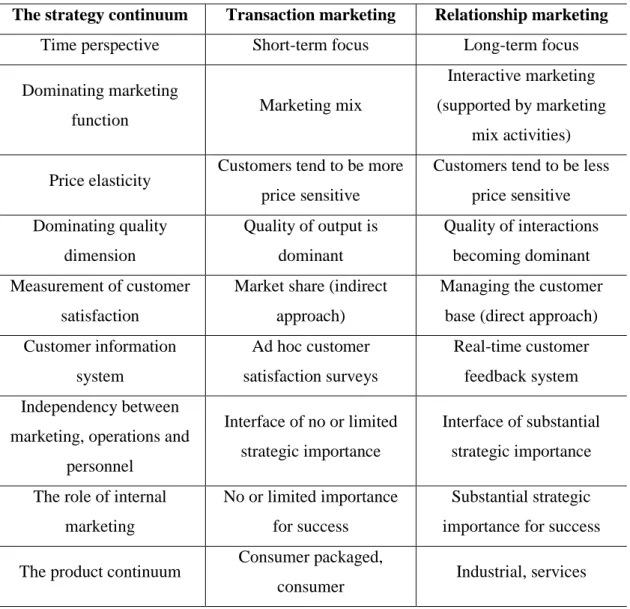
strategic orientation (Gronroos, 1994; Kandampully and Duddy, 1999). Table 1 shows

some of the key differences between the classical, transactional approach to marketing

and relationship marketing along several elements of the strategy continuum. According

to Grönroos (1991) the strategy continuum represents different approaches to marketing

strategy, with transaction marketing placed at one end of the continuum, and relationship

marketing on the other. In a broad sense, the relationship end of the continuum reflects a

focus on relationships with different groups of stakeholders, while the transactional end

reflects a focus on one transaction at a time. Before explaining the continuum and

differences between the two ends of the continuum (see Table 1), it is important to note

that a company’s focus is almost never purely transactional or purely relational. As

Grönroos (1995) pointed out, there are plenty of mixed strategies that dominantly

manifest as being either transactional or relational. Therefore, any of the elements of the

continuum as listed below, serve to evaluate the degree to which a company’s marketing

strategy reflects a certain approach or characteristic. These nine characteristics are: (1)

time perspective, (2) dominating marketing function, (3) price elasticity, (4) dominating

quality dimension, (5) measurement of customer satisfaction, (6) customer information

system, (7) interdependency between marketing, operations and personnel, (8) role of

internal marketing and (9) the product continuum.

(36)

Table 1: Comparison of transaction and relationship marketing concepts on the

strategy continuum

The strategy continuum

Transaction marketing

Relationship marketing

Time perspective

Short-term focus

Long-term focus

Dominating marketing

function

Marketing mix

Interactive marketing

(supported by marketing

mix activities)

Price elasticity

Customers tend to be more

price sensitive

Customers tend to be less

price sensitive

Dominating quality

dimension

Quality of output is

dominant

Quality of interactions

becoming dominant

Measurement of customer

satisfaction

Market share (indirect

approach)

Managing the customer

base (direct approach)

Customer information

system

Ad hoc customer

satisfaction surveys

Real-time customer

feedback system

Independency between

marketing, operations and

personnel

Interface of no or limited

strategic importance

Interface of substantial

strategic importance

The role of internal

marketing

No or limited importance

for success

Substantial strategic

importance for success

The product continuum

Consumer packaged,

consumer

Industrial, services

Source: Gronroos, 1991, 1994

Time perspective refers to the short vs. long-term orientation of a company’s marketing

strategy. As shown in Table 1, relationship marketing is characterized by a long-term

focus, since the primary objective is to create results through enduring and profitable

relationships with customers, which requires time (Ganesan, 1994; Gronroos, 1994;

Kandampully and Duddy, 1999). On the other hand, it is argued that companies adopting

a more transaction-based perspective will focus on the short run, given that their primary

(37)

focus is a single transaction at a given time. In short – we could say that the main

objective of a transactional approach is to get customers, while the main objective of the

relational approach is to get and keep customers which requires more time and effort

(Grönroos, 1995).

Secondly, for a company that adopts the relationship approach, the dominating function

is primarily interactive and refers to activities outside the classical marketing mix as we

know it. As pointed out earlier, the relationship approach acknowledges the active

participation of the buyer or customer, and the importance of interactions, and therefore

centers on interactive marketing as the dominant part of the marketing function

(Gronroos, 2004, 1994; Gummesson, 1994). These views have also been confirmed by

Sheth and Parvatiyar (1995) who argue that, unlike the transactional perspective driven

by value distribution and financial outcomes, the relationship perspective focuses on

value creation through collaboration and interaction processes. This is not to say that the

marketing mix activities become irrelevant for the company. It is rather about making

the interaction processes and part-time marketers the core, with the traditional marketing

mix activities supporting such processes (Grönroos, 1995; Gummesson, 1994).

Thirdly, in terms of price elasticity, it has been argued that customers tend to be more

price sensitive for companies that are more transaction oriented (Gronroos, 1994). The

argumentation supporting this claim is that, in transaction marketing, the core product is

at the heart of the offering, and image of the company or brand which keeps the

customer attached. In this setting, price quickly becomes an important decision-making

factor, which makes the customers more price sensitive, and more inclined to switch

products when offered a lower price. On the other hand, a company that dominantly uses

the relational approach offers more value to the customer, develops stronger

relationships with the customer making him less price sensitive (Gronroos, 1994). This

however, is a somewhat rigid view, as most companies today do offer benefits in

addition to the core product. (E.g. in form of additional services).

(38)

Fourth, as Table 1 suggests, the dominating quality dimension for companies that adopt

the transactional approach is determined by the technical quality dimension, whereas for

relationship-oriented companies it is determined by the quality of interactions. While the

technical aspects of the product and its quality remain important for relationship-oriented

companies, the nature of relationship marketing suggests that the quality of interactions

needs to be taken into account, and possibly become dominant (Grönroos, 1991;

Gronroos, 1994).

It has also been suggested that transactional and relationship marketing differ based on

their approach to the measurement of customer satisfaction and customer information

systems (points 5 and 6 in Table 1). Grönroos (1995) argued that companies that adopt

the transactional approach (1) do not have any direct knowledge of the degree of

customer satisfaction, (2) are not able to continuously monitor customer satisfaction and

therefore conduct ad hoc surveys and (3) use market share as a proxy of customer

satisfaction. On the other end of the continuum, however, companies that use the

relational approach can continuously monitor customer satisfaction by directly managing

the customer base (Grönroos, 1995, 1991). Perhaps this line of thinking is the most

difficult to grasp when explaining the transactional-relational continuum, given the

number of issues that emerge. First, it is unclear what is meant by ad hoc customer

surveys. Typically, ad hoc is contrasted with planned, not continuous, so it is our

impression that the term was misused when attempting to argue the differences in the

two approaches to marketing and customer satisfaction surveys. Additionally, the survey

itself represents a direct contact with the customer, and, even if it represents a “snapshot”

at a given point in time, it can be, and often is, planned and conducted periodically.

Finally, Gronroos (1994) argued that for a company that adopts a transaction marketing

strategy “there are no way of continuously measuring market success other than market

share monitoring” (p. 12), directly linking customer satisfaction to market share

statistics. However, research has shown that the positive link between market share and

customer satisfaction may not be that straightforward (e.g. in the short run or with

cross-sectional data, see for example

(Hakansson and Snehota, 1995). Moreover, in an

extensive study of the customer satisfaction-market share relationship, Rego et al. (2013)

(39)

find that the hypothesized relationship was either nonsignificant or negative. After

reexamining the data for a longer period of time, the authors confirmed a significant

negative relationship between the two constructs. Taking into account these issues, we

argue that the key difference between the transactional and relational approach in terms

of customer satisfaction monitoring and customer information systems lies in the

methodologies used to monitor customer satisfaction, richness of the data (data obtained

via direct customer contacts and interactions is richer) and the overall commitment of the

company towards customer satisfaction monitoring.

Next, it has been argued that the level of importance of intraorganizational collaboration

and departmental interdependency varies along the strategy continuum. In a company

with a transactional approach to marketing, there are no part-time marketers and the

majority of the customer contacts fall under the domain of the marketing and/or sales

departments (Grönroos, 1991; Gronroos, 1994). Therefore, in such a setting, these

departments are in charge of the marketing function and there is very little collaboration

with other company departments. However, as noted several times so far, the relational

approach introduces part-time marketers who operate throughout the company, in

various positions and departments. For such an approach to be successful, the

coordination and collaboration of at least three functions is necessary – marketing,

operations and human resources (Grönroos, 1995; Kandampully and Duddy, 1999).

Finally, internal organization and the role of internal marketing are considered, and

thought of as having substantial strategic importance for success (Grönroos, 1991;

Gronroos, 1994). The key role of internal marketing is to inspire and motivate

non-marketing staff (also called part-time marketers) to actively engage in non-marketing-like

behaviors and to convey the importance of such behaviors for the company as a whole

(Grönroos, 1995). Gronroos (1994) concluded that, contrary to the transactional

approach, the relational approach requires “…a thorough and on-going internal

marketing process to make relationship marketing successful. If internal marketing is

neglected, external marketing suffers or fails” (p. 13).

(40)

2.2.2. Defining relationship marketing

During the 1990s, there have been several attempts to define relationship marketing by

reflecting diverse academic and socio-political backgrounds of scholars (Harker, 1999).

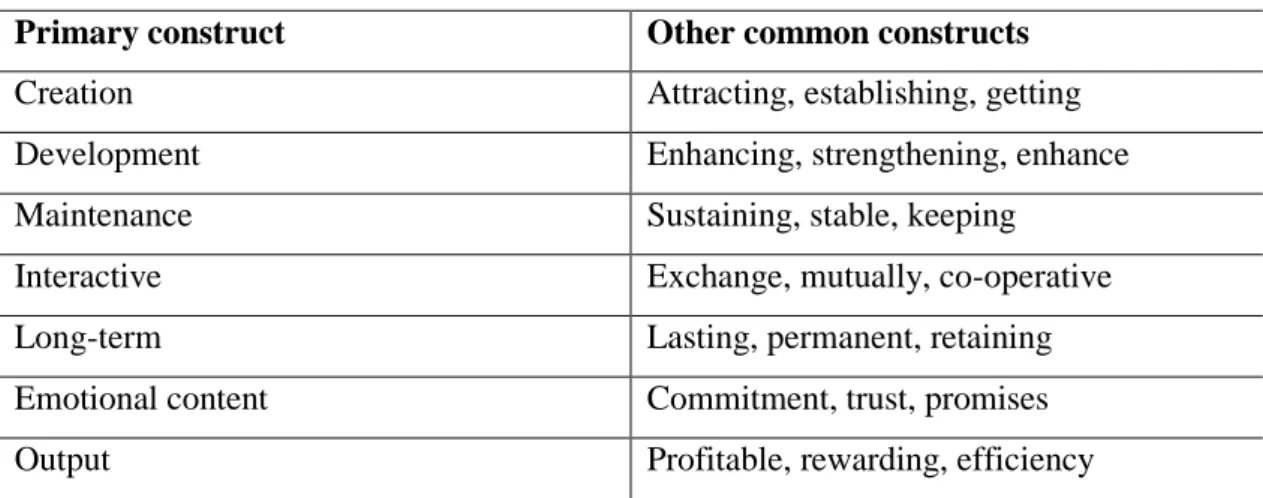
In his analysis of 26 different relationship marketing definitions, Harker (1999) defined

seven conceptual categories of relationship marketing (see Table 2).

Table 2: Conceptual categories of relationship marketing

Primary construct

Other common constructs

Creation

Attracting, establishing, getting

Development

Enhancing, strengthening, enhance

Maintenance

Sustaining, stable, keeping

Interactive

Exchange, mutually, co-operative

Long-term

Lasting, permanent, retaining

Emotional content

Commitment, trust, promises

Output

Profitable, rewarding, efficiency

Source: Harker, 1999

Although some definitions seem to have many of the conceptual categories in common,

none of the definitions fully address all of the previously listed constructs (see Table 2).

For example, in 1983 Berry was one of the first authors to define relationship marketing

as attracting, maintaining and – in multiservice organizations – enhancing customer

relationships (Berry, 2002). This definition is very narrow in scope, as it does not take

into account interactivity, the temporal dimension, emotional content or output. Over

time, two trends can be observed regarding attempts to define relationship marketing.

One that features “single-item” definitions of relationship marketing that reflects only

one construct category (or two at best). A good example of such a definition is Bennett

(1996) who defines relationship marketing as the total fulfillment of all the promises

given by the supplying organization, the development of commitment and trust and the

establishment of personal contacts and bonds between the customer and the firms’

(41)

representatives; the eventual emergence of feelings within each party of mutual

obligation, of having common goals, and the involvement with and empathy for the other

side. This definition clearly dominantly focuses on interactivity (e.g. personal contacts,

bonds, involvement) and on emotional content (e.g. promises, commitment, trust,

feelings, empathy) while completely ignoring all other components of the construct (e.g.

creation, temporal component, output, etc.). A second group of authors, however,

attempted to provide a wider, more “general” definition of relationship marketing. For

example, O’Malley et al. (1997) say relationship marketing involves the identification,

specification, maintenance and dissolution of long-term relationships with key customers

and other parties, through mutual exchange, fulfillment of promises and adherence to

relationship norms in order to satisfy the objectives and enhance the experience of the

parties concerned.

Similarly, Gronroos (1994), p.138 defined it as „identifying and establishing,

maintaining, enhancing and, when necessary, terminating relationships with customers

and other stakeholders, at a profit so that the objectives of all parties involved are met;

and this is done by mutual exchange and fulfillment of promises“. Note here that both

definitions also refer to the potential situation of ending a relationship (e.g. dissolution of

relationships; terminating relationships) and also refer to goals and objectives (Gronroos

is very specific in defining relationships should be profitable but compared to O’Malley

et.al. is missing the temporal dimension). Given these two definitions score highest in

terms of the constructs used, they can therefore be considered as widely acceptable.

Additionally, Gronroos (1999) emphasized that profitable business relationships should

rely on a firm’s ability to develop trust in itself and its performance with its customers

and stakeholders, and its ability to establish itself as an attractive business partner. He

then concludes that most definitions of relationship marketing, although varying in terms

of scope and emphasis, do in fact, share similar meanings (Gronroos, 1999).

However, labeling relationship marketing as a “new marketing paradigm” has received

its fair share of criticism. Several authors have questioned whether relationship

Figure

Table  1:  Comparison  of  transaction  and  relationship  marketing  concepts  on  the  strategy continuum
Table 2: Conceptual categories of relationship marketing
Figure 1: Representation of relationships
Figure 2: Web 2.0, UGC and Social media
+7

Références

Documents relatifs

As the bearing of consumer-to-consumer communications has become significantly exaggerated in the ever-virtual marketplace [5], to guide our research efforts that

- Caractérisation quantitative du contenu en composés phénoliques (phénols totaux, flavonoïdes, tanins) dont les différentes parties de la plante (feuilles,

Computer vision spans a number of areas including 3D-scene (re)construction, indexing of video databases, object tracking and recognition, motion detection and estimation, and

It has caused him to distrust (not merely question or criticize) the fundamental institutions of society; it has caused h i m to lose faith in the future, replacing i t with a

What mode(s) of governance are suggested? We expected that – despite national competencies in educational matters – a supranational policy framework would be

Driven by the collective turmoil around online reputation, competitive intelligence software vendors redirected their activities, using their already-built technical

Social media have challenged media logics in several parts of the world, most recently in the United States, where politicians have been able to reach citizens directly and

Stereotype endorsement and perceived ability as mediators of the girls’ gender orientation-soccer performance relationship.?. Running head: STEREOTYPE ENDORSEMENT AND GIRLS’