Publisher’s version / Version de l'éditeur:
Vous avez des questions? Nous pouvons vous aider. Pour communiquer directement avec un auteur, consultez la première page de la revue dans laquelle son article a été publié afin de trouver ses coordonnées. Si vous n’arrivez pas à les repérer, communiquez avec nous à [email protected].
Questions? Contact the NRC Publications Archive team at
[email protected]. If you wish to email the authors directly, please see the first page of the publication for their contact information.
https://publications-cnrc.canada.ca/fra/droits
L’accès à ce site Web et l’utilisation de son contenu sont assujettis aux conditions présentées dans le site LISEZ CES CONDITIONS ATTENTIVEMENT AVANT D’UTILISER CE SITE WEB.
SFPE Handbook of Fire Protection Engineering, pp. 3-81-3-87, 1988
READ THESE TERMS AND CONDITIONS CAREFULLY BEFORE USING THIS WEBSITE. https://nrc-publications.canada.ca/eng/copyright
NRC Publications Archive Record / Notice des Archives des publications du CNRC :
https://nrc-publications.canada.ca/eng/view/object/?id=aa267684-c94e-4e79-ad27-09efa314a14f
https://publications-cnrc.canada.ca/fra/voir/objet/?id=aa267684-c94e-4e79-ad27-09efa314a14f
NRC Publications Archive
Archives des publications du CNRC
Access and use of this website and the material on it are subject to the Terms and Conditions set forth at
Fire temperature - time relations
Ser
TH1
N21d
no*
1579
c. 2
BLDG
National Research
Conseil national
1
*
1
Council Canada
de rechenhes Canada
Institute for
lnstitut de
Research in
recherche en
Construction
construction
Fire Temperature
-
Time Relations
by T.T.
Lie
Appeared in
The SFPE Handbook of Fire Protection Engineering 1988
Section 3, Chapter 5
p. 3-81
-3-87
(IRC Paper No. 1579)
Reprinted with permission
NRCC
30108
i
I R C
-r ITfSf
ABSTRACT
Analytical expressions are given that describe characteristic temperature curves as a
function of the significant parameters for various fire conditions commonly met with in
practice. Expressions
are
also given for the standard fire curve used
in
North America and
for the fire curve adopted by the International Organization for Standardization
(ISO).
The
curves
are
intended as basic fire exposure curves for
fire
resistive design.
L'auteur prdsente des expressions analytiques ddcrivant les courbes de temp6rature
caract6ristiques en fonctiP-
'
-% >
-
'----gnditions d'incendie
que l'on retrouve coura
ons concernant la
courbe d'incendie stand
courbe d'incendie
adoptde par lYOrganisat
rbes
d'exposition
Section
3lChapter
5
FIRE TEMPERATURE-
TIME RELATIONS
INTRODUCTION
The intensity and duration of fire in buildings can vary
in
a wide range. and several studies have been carried out to investigate the determining factors. At present it is possible to estimate the temperature course of fire in enclosures under various conditions, provided the values of the param- eters that determine it are known.
Several of these parameters. however, such as amount and surface area of the combustible materials, are unpredict- able as they change with time and often vary from compart- ment to compartment
in
a building. It is not possible. therefore. to know at the time a building is erected the temperature course of a fire to which objectsin
that building might be exposed during its service life.-
It
is possible, however, to indicate for any enclosure atemperature-time curve that. with reasonable likelihood. will not be exceeded during the lifetime of the building. Such curves are useful as a basis for the fire-resistive design of buildings. They can also facilitate studies of fire resistance of building components exposed to fires of various intensity and duration.
In
this chapter, analytical expressions willbe
given that describe characteristic temperature curves as a function of the significant parameters for various fire conditions com- monly met with in practice.Expressions will also be given for the standard fire curve used in North America, and for the fire curve adopted by the International Organization for Standardization (ISO).
FIRE TEMPERATURES
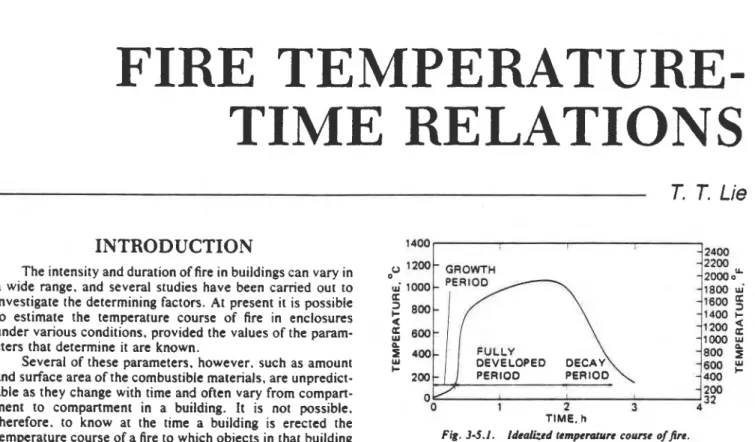
The temperature course of a fire in an,enclosure may be divided into three periods:
I.
The growth period.2.
The fully developed period. and3.
The decay period.Dr. T.T. Lie is Research Officer with the Institute for Research in Construction, National Research Council of Canada. He has carried out research related to fire resistance design, which includes evalu- ation of the fire resistance of building constructions by calculation and testing. o
t
GROWTH DEVELOPED PERIOD 0 I 2 3 4-- TIME. hFig. 3-5.1. ldeali=ed temperature course of
firr.
These periods are illustrated in Figure
3-5.1,
where an idealized fire temperature course is shown. During the growth period, heat produced by the burning materials is accumulated in the enclosure. As a result. other materials may be heated so severely that they also ignite. At this stage of the fire, the gas temperatures rise very quickly to high values. The rather sudden ignition of materials in all parts of the room is called "flash over." After the flash over. the fully developed period starts. Because the temperaturesin
the enclosure are relatively low in the growth period. their influence on the fire resistance of structural members is negligible.
In
fire resistance studies. therefore. the growth period can be disregarded. Actual risk of failure of structural members or fire seuarations begins when the fire reaches the fully developed stage. In this itage. temperatures of about1000°C or higher can be reached. and the heat transferred from the fire to structural members may substantially reduce their strength. This risk also exists
in
the decay period.Parameters Determining the Fire
Temperature Course
The most important parameters that determine the temperature course of a fire were first shown by Kawagoe and Sekine' and by Odeen.' who estimated the heat balance for fires
in
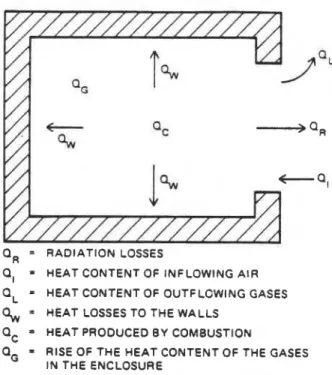
enclosed spaces. Usually part of the heat pro- duced during a fire in an enclosure will be absorbed by the walls and contents. a part by the gases. and a part will be lostQR = RADIATION LOSSES
Q, = HEAT CONTENT OF INFLOWING AIR
QL = HEAT CONTENT OF OUTFLCWING GASES
= HEAT LOSSES TO THE WALLS
Qc = HEAT PRODUCED B Y COMBUSTION
QG = RISE OF THE HEAT CONTENT O F THE GASES I N THE ENCLOSURE
Fig. 3-5.2. Hem W n c e for an enclosure during a Jim.
by radiation and convection from windows. (See Figure 3-5.2.) There is also loss o f chemical energy that could have been released as heat because of outflow of unburned gases. which bum outside the enclosure. I n addition. there is loss of unburned particles.
To be able to determine the temperature course. it is necessary to know at each moment during a fire. the rate at which heat is produced and the rate at which heat is lost to exposed materials and surroundings. Several of the param- eters that determine heat production and heat losses. such as material properties, room dimensions. wall construction. window area. and emissivity of the flames and exposed materials. can be determined with reasonable accuracy. Others that are known approximately are the amount of gases that burn outside the room. the loss of unburned particles through windows. and the temperature differences in the room.
There are several parameters, however. whose magni- tude cannot be predicted. Usually they change with time. and therefore. their value at the time of occurrence of a fire is determined by chance. Such parameters include the amount. surface area. and arrangement of the combustible contents. velocity and direction o f wind. and the outside temperature. The influence o f wind.' and that of fire load can be substantial. Surveys show, for instance. that the vanabil- ity of fire loads in various types o f buildings is such that deviations in the order o f 50 percent or more from the most probable fire load are ~ o m m o n . ~ As a consequence. variabil- ity of fire load alone may easily cause deviations from the most probable temperature course of hundreds degrees centigrade in temperature and 50 percent or more in fire duration.
POSSIBLE FIRE SEVERITIES
Owing to the substantial influence of uncertain factors. i t i s impossible to predict accurately the temperatures to which building components will be exposed during their service life. Even i f the analysis to predict fire temperature
courses in enclosures i s perfect, i t is very improbable that a
1
certain predicted temperature course will occur.
The fire temperature to which building components will most likely be exposed during the use of a building i s the relatively low temperature of a fire that has been extin- guished before i t reaches the fully developed stage. There i s
a small although not insignificant change o f occurrence of a fully developed fire. I n this case, and assuming that the fire cannot be influenced by action of the fire brigade. the fire will be controlled either by the surface area of the materials that can participate in the burning or by the rate o f air supply through the openings.'.'
Whether the fire will be largely controlled by surface area or ventilation depends on the amount of combustible contents. Unless i t s quantity. surface area. and arrangement are controlled. or the size of the windows and floor area made such that the possibility o f a ventilation-controlled fire becomes
remote."^^
the type of fire that may occur i sunpredictable. According to- statistical data. combustible contents of 10 to 60 kg per m- of floor area are normal, and there is a considerable probability of enclosures having a combustible content of 40 to 100 k g h ~ . ' . ~ I t is probable that
in the latter range. as confirmed by experiments..' the fire I
will be mainly ventilation controlled, even when large win- dow openings are present. I t is likely that the greater the
space behind the windows. or to a certain extent, the deeper i
the enclosure. the more material or surface area i t will contain and therefore the greater will be the probability o f a ventilation-controlled fire. Usually a ventilation-controlled fire is the more severe fire, and because of the substantial probability of .its occurrence. it is common to base fire resistance requirements for buiidings on the assumption that tire severities will be controlled by ventilation.
CHARACTERISTIC TE,MPERATURE
CURVES
I t is possible to indicate for any enclosure a character- istic temperature-time curve whose effect, with reasonable likelihood. will not be exceeded during the lifetime o f the building. Such curves are useful as a basis for the fire- resistance design of buildings. They can also facilitate stud- ies o f fire resistance o f building components exposed to fires of different severity.
There are several reports which present the temperature course of fires in fully developed and decay
period^.'.'.^.^^'^
I n all of these studies a procedure is followed in which the fire temperatures are determined by solving a heat balance for the enclosure under consideration.
For the fully developed period and ventilation-con- trolled fires. there is reasonable agreement in the tempera- tures found in the various studies. except for rather shallow rooms of limited size. I n the latter case. the amount of combustible gases that burn outside may increase in such a way with increasing ventilation that the temperature de- creases.'
There i s less agreement in the results of the various studies for the decay period. partly due to the complexity of ,the processes that determine the temperature in that period. So far. rates of decay of temperature can only be established empirically or by making conservative or highly idealized assumptions. Because of the different approaches in deriving the rates o f decay. there is a rather wide spread in the results of the various studies. Fortunately the influence o f temper- ature variation in the decay period on the maximum temper-
FIRE TEMPERATURE-TIME
RELATIONS
3-83
1 1 *---- 200
0 1 2 3
TIME. h $2
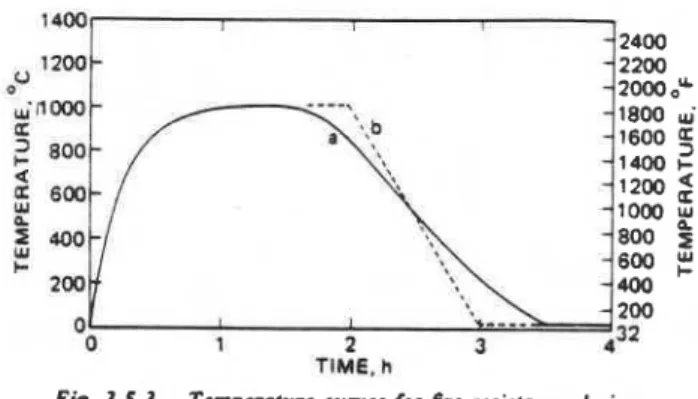
Fig. 3-5.3. Tempemtun c w e s f w f i resistance design.
atures reached in building components is relatively small."
For the purpose of deriving a temperature-time curve that.
with reasonable probability, will not be exceeded during the
lifetime of the building,
itwill be sufficient to use a curve that
only approximately reflects the effect of heating in the decay
period. This is further explained in Figure
3-5.3.In Figure
3-5.3curve a illustrates a fire temperature
curve derived theoretically for a certain building. The prob-
ability of occurrence of a fire with a more severe effect than
shown by the curve is once in
50years. Curve b illustrates a
fire temperature curve for the same building, but
itis
assumed that the rate of burning remains constant until all
combustible materials are consumed, whereupon the fire
temperature drops linearly to room temperature. Although
curve b differs in shape from curve a, their heating effect is
approximately the same. If curve b is used instead of curve
a. the probability of occurrence of a more severe fire than
that represented by the relevant curve may change some-
what. for instance. from once in fifty years to somewhat
more or less than fifty years. In practice this means that
virtually the same fire safety will be provided whether curve
a or curve b is used for the fire-resistance design of a
building. The use of curve b instead of curve a has the
advantage that
itis easier to define.
Expressions for Characteristic
Temperature Curves
In the following, analytical expressions are given that
describe characteristic temperature curves as a function of
the significant parameters for various fire conditions com-
monly met with in practice. For the fully developed period.
the derivation of these curves will be based on the temper-
ature curves for ventilation-controlled fires calculated ac-
cording to the method described by Kawagoe and Sekine.'
The temperatures attained in ventilation-controlled fires
are described (in addition'to the thermal properties of the
material bounding the enclosure) by a parameter, known as
the opening factor
Fwhere
Ais area of the openings in the enclosure, H is height
of the openings, and
A,is area of the bounding surfaces
(walls and floor and ceiling). The method of calculating
A<H
for openings of unequal height is described in Refer-
ences 9 and
1 1.The rate of burning, R, of the combustible materials in
the enclosure is given by
TABLE 3-5.1 Thermal Properties of the Enclosure
Factor
Description
k
Thermal
conductivityof bounding material: 1.16
WlmK
for a
heavy material
( p 21600 kg/m3), 0.58
WlmK
for a light
material
(r i1600 kg/mq
pc Volumetric
speclfic heat of bounding material: 2150
x 103J/m3K for a heavy material
(p r1600 kglmq,
1075
x lo3J I ~ ~ K
for a light material
( p <1600 kg/m3)
A,
Total inner surface area bounding the enclosure, including
window area:
1000 m2H
Window heqht: 1.8
mE
Emissivity for radiation transfer beween hot gases and inner
bounding surface of the enclosure:
0.7a,
Coefficient of heat transfer by convection between fire and
inner bounding surface area:
23 W/m2Ka,
Coefficient of heat transfer between outer bounding surface
area and surroundings:
23 W/m2Kc
Specific heat of combustion gases: 1340 J/Nm%
G
Volume of combustion gas produced
byburning
1kg of
wood: 4.9 Nm3/kg
q
Heat released
inthe enclosure
bybuming
1kg of
wood:1o.n
x to6 kgTo
Initial temperature:
20%V
Volume of enclosure:' 1000 m3
Ax
Thickness of elementary layers of bounding material: 0.03
mAt
Time increment: 0.0004167
hr0
Thickness of bounding material: 0.1
5m
I1 can tm shown Mat Me influence of the
volume
of the enclosure on the fire temperahm isnegligible.
and. thus, if Q is the fire load per unit area of the surfaces
bounding the enclosure, the duration of the fire.
T,is
determined by
For given thermal properties of the material bounding
the enclosure, the heat balance can be solved for the
temperature as a function of the opening factor F. Besides
depending on F. the temperature course is also a function of
the thermal properties of the material bounding the enclo-
sure.
In this study, two materials have been chosen as repre-
sentative bounding materials: one with thermal properties
resembling those of a heavy material (high heat capacity and
conductivity) and one representing those of a light material
(low heat capacity and conductivity). The thermal properties
of these materials are given in Table
3-5.1.In practice.
materials with a density of approximately
1600kg/m2 or
more, e.g., normal-weight concretes, sand lime brick. and
most clay bricks, can be considered as belonging to the
group of heavy material. Those with a density of less than
1600
kg/m2. e.g., lightweight and cellular concretes and
plasterboard. can be regarded as belonging to the group of
light materials.
Using the method described in Reference
II, the tem-
perature course of fires in enclosures has been calculated for
the two chosen bounding materials and for various values of
the opening factor." The conditions for which the calcula-
tions have been performed are shown in Table
3-5.1and the
3-84
DESIGN CALCULATIONS
A~
0 200
b i 6 j a 2
TIME. h
Fig. 3-5.4. Temperature-time curves for venti&uion-control&d/ins in enclosum boundsd by dominantly heavy morerials f p z 1600 k g l d ~ . calculated for wriaru opening factors by solving a heat balance for the enclosure.
curves in these figures were used as a basis for the derivation of temperature curves for fire-resistance design. It was found that these temperature curves could be reasonably described by the expression
where
T
= the fire temperaturein
"C,r
= timein
hr,F
=opening factor
in
m"', and C = a constant taking into account the influence of the properties of the boundary material on the temperature. C = 0 for heavy materials (pr
1600 kg/m2), and C = I for light materials (p
<
1600 kg/m). The expression is valid forand
If
t>
(0.081R+
I , a value oft = (0.08lF)+
I should be used.If
F >
0.15, a value ofF
= 0.15 should be used.The temperature-time curves evaluated from Equation 4
and those obtained by solving the heat balance for the
8 TIME. h
Fig. 3-5.5. Tempemure-time curves for ventihion-controlled/ires in enclosures bounded by dominantly light materiais ( p < 1600 kglkglnr'). calculated for wriour opening factors by solving a heat bolonce for rhc enclosun.
T IME, h
Fig. 3-5.6. Compahon between temperature-time curves obtained by solving a heat balance and those described by an analytical expression for ventilorion-controlled /irrs in enclosures bounded by dominantly
heavy materials ( p 2 1600 k g l d ) .
enclosure are shown
in
Figures 3-5.6 and 3-5.7 for various values of the opening factor.It is seen that with the aid of the analytical expression. temperature curves can be developed that reasonably de- scribe the curves derived from solving the heat balance.
As discussed previously, the temperatures in the decay period are more difficult to calculate due to the complexity of the processes that determine the temperature in this period. On the other hand, if the temperature variations are not very large, the influence of such variations
in
the decay period on the temperature attained in exposed building components isin
general relatively small. Therefore. describing the temper- ature course in the decay period by a temperature-time relation that approximately reflects the decrease of temper- ature in this period is sufficient.According to experimental data of Kawagoeqhe rate of temperature decrease of a fire with a fully developed period of less than one hour is roughly 10°C per minute, and that of a fire with a fully developed period of more than one hour is P C per minute. The Swedish code assumes a rate of decrease of 10°C per minute irrespective of the duration of the fully developed period of the fire.9 A comparison with semi-empirical data developed by Magnusson and The- landersson9 shows that the assumption of a rate of decrease of 10°C per minute is too fast for fires of long duration an$ too slow for fires of short duration. According to Harmathy. who studied several experimental fires of relatively short d~ration,".'~ the rate of decrease of temperature for such fires is in the order of I5 to 20°C per minute.
-FROM HEAT BAIANCE
"' FROM ANALYTICAL EXPRESSION
TIME, h
Fig. 3-5.7. Compahon between tempemure-time curves ohained by solving a heat balance and those described by an analytical expression for venrihrion-controlled~es in enclosures bounded by dominantly light
FIRE TEMPERATURE-TIME RELATIONS
3-85
. -
TIME. h
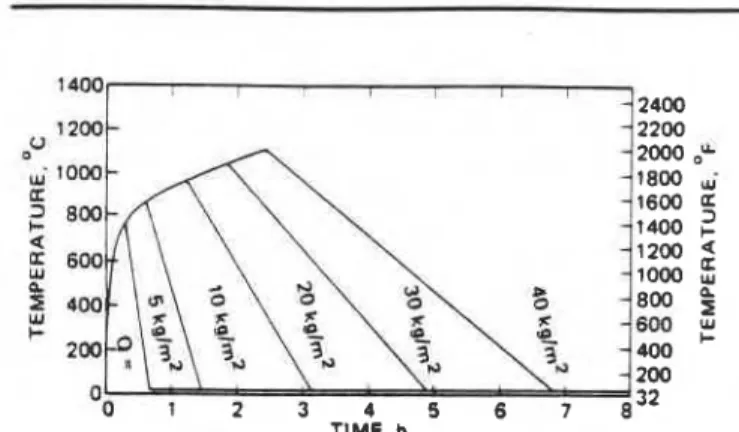
Fig.3-5.8. Characteristic temperotwe curpes for w'ousfire loads, Q,
(opening factor, F
=
0.05 m'", heavy boundin# material).In general, the longer the duration of the fully developed
period the lower the rate of decrease of temperature. Using
this information the following expressions have been derived
for the temperature course of fire in the decay period
with the condition
In the above equations T
=fire temperature.
r =time at
which the decay starts as given by Equation 3,
t =time
under consideration
( t>
r ) ,and
T
=temperature given by
Equation 4 at the time
t = 7.The temperature curves obtained from Equations
4and
7 are illustrated in Figure 3-5.8 for various fire loads and an
opening factor of 0.05 m''2. In Figure 3-5.9 the influence is
shown of the openings on the fire temperature course. It can
be seen that the fire load determines the duration of the fire,
whereas the openings determine both the duration and the
intensity of the fire. In Figure 3-5.10 a characteristic temper-
ature curve is compared with the temperatures measured at
several places in a room during an experimental fire.'
Itis
seen that the curve developed from the analytical expression
reasonably characterizes the temperatures obtained during
the experimental fire. It is somewhat conservative but satis-
factory to use as a design curve for fire resistance.
STANDARD
FIRE CURVE
In studies of fire resistance. it is common to expose
building elements to heating in accordance with a standard
LARGE OPENING ~ A L I un 800 3 I-
2
600 W a;
400 0 0I
1 2 3:
?
TIME. hFig. 3-5.9. Influence of opening factor on
firr
temperature course.'"1
,
,
,
,
,
,,
j:w"
'
0 0.5 1 . 0 1.5 2.0 2.5 3.0 3.5 4 2 '
TIME, h
Fig. 3-5.10. Comparison of design temperature curves derived from a d y t i c d expressions with temperatures measured during an expmti- mentallfn @ load per unit internal area of the bounding
surfaces
Q=
18.75 kg/', opening factor F
=
0.047 m'", heavy bounding m a t e d ) .temperature-time relation. The standard temperature-time
curves used in various countries are shown in Figure 3-5.11.
It
can be seen that there are no significant differences
between the various standard curves. The values of the
curve adopted by ISO" are given in Table 3-5.2. Those used
in North America'" are given in Table 3-5.3.
There are also analytical expressions for several of the
standard curves. The expression that describes the IS0
curve is
where
t =tiine
inminutes.
T
=fire temperature in
"C,
and
To
=initial temperature
irl"C.
For the curve used in North America, several analytical
expressions exist." One of the expressions is of the form of
a sum of exponential functions
where a ,
=532 for "C. 957 for
O F ; a2 =-
186 for "C. -334 for
OF:
a, =820 for "C, 1476 for
O F ; a, =-0.6;
a, =-3;
a, =-12.
4 0 0 ~ 1 1 3 4 5 8 7 8
DURATION, h
Fig. 3-5.1 1. Standcvd lfre temperature-time relations used in various countries for testing of building elements.
1
ABLE 3-5.2 Standard Temoerature-Time Relatlon Accordina to IS0 834" Time Temperature "F Temperature"C
Time Temperature "F Temperature"C
The extreme deviation from the values given
in
Table3-5.2 are -26°C at 45 min; +48"C at 3.5 hours; and -78°C at
8 hours.
This form is suitable for use in analytical heat flow calculations, because when it is used as a boundary condi- tion the heat transfer equations are integrable.
A set of expressions that more accurately approximate the values given in Table 3-5.2 is
where a , = 580 for "C. 1044 for OF: a2 = -276.8 for "C.
-498.2 for OF; a, = 714.4 for "C, 1286 for O F : a, = 0.8429;
a,
*
0.9736;a,
= 8.910.The maximum duration of the temperature, given by Equations 11, 12. and
13,
from the values tabulated in Table3-5.2 is -7'C at 40 min.
Another temperature-time relation. given
in
Reference18, has the form
7-To=a,
tanha,t+a,tanha,t+a,tanha,t, t < 2 ( 1 1 )T
-
To
= all-
exp (-3.795534)]+
3 0 6 . 7 4 4 (14)T
-
To
-
906.7+
41.671, t 2 2 for "C (12)T
-
To
= 1632+
751, t 2 2 for"F
(13) TABLE 3-5.3 Standard Fire Temperstunr-77meRelation Used in North America (NFPA No. 2511'"
Temperature rise
Time in Minutes . of fire ("C)
0 0 5 556 10 659 15 71 8 30 821 60 925 90 986 120 1.029 180 1,090 240 1.133 360 1.193
where a = 750 for "C, 1350 for OF: and t = time in minutes. This expression is frequently used and is a reasonably accurate approximation of the relation between temperature and time given
in
Table 3-5.2.NOMENCLATURE
area of the openings in the enclosure. m2 area of the internal bounding surfaces. m' constant
opening factor, m"'
height of openings in the enclosure. rn
fire load per unit area of the internal bounding sur- faces. kg/m2
rate of burning, kglhr fire temperature, "C
fire temperature at the time r, "C time. hr
FIRE TEMPERATURE-TIME RELATIONS
3-87
REFERENCES
I. K. Kawagoe and T. Sekine. "Estimation of Fire Temperature- Time Curve in Rooms." B.R.I. Orcusionul Reporr No. I I . Build- ing Research Institute, Ministry of Construction. Tokyo ( 1%3).
2 . K. Odeen. "Theoretical Study of Fire Characteristics in En- closed Spaces," Blrllerin 10. Division of Building Construction. Royal Institute of Technology. Stockholm 11963).
3. P.H. Thomas and A.J.M. Heselden. "Fully Developed Fires in Single Companments." Fire Research Note N O . 923. Building Research Establishment. Fire Research Station. Borehamwood (1972).
4. T.T. Lie. Fire and Blrildings, Applied Science Publishers Lim- ited. London. pp. 19-22 ( 1972).
5.
P.H.
Thomas. A.J.M. Heselden. and M. Law, "Fully Devel-oped Companment Fires; Two Kinds of Behavior." Fire Re- search Technical Paper N o . 18. Her Majesty's Stationery Office. London ( 1967).
6. T.T. Lie. Fire and Buildings, Applied Science Publishers Lim- ited. London ( 1972). pp. 9- 1 1.
7. T.Z. Harmathy, "A New Look at Compartment Fires, Part I
and Pan 11." Fire Tech.. 8. 3 and 4 (1972).
8. K. Kawagoe, "Fire Behavior in Rooms." Reporr N o . 21. Building Research Institute. Ministry of Construction, Tokyo (1958).
9. S.E. Magnusson and S. Thelandenson, "Temperature-Time Curves of Complete Process of Fire Development. Theoretical Study of Wood Fuel Fires in Enclosed Spaces." Acta Polytech-
nica Scandinavia. Civil Engineering and Building Construction Series No. 65. Stockholm (1970).
Y. Tsuchiya and K. Sumi. "Computation of the Behavior of Fire in an Enclosure." Comb. ilnd Flume. 16 (1971).
K . Kawagoe. "Estimation of Fire Temperature-Time Curve in Rooms." Reseurclr Paper N o . 29. Building Research Institute. Japan ( 1967).
T.T. Lie. "Characteristic Temperature Curves for Various Fire Severities," Fire Tech., 10. 4 ( 1974).
E.G. Butcher. T.B. Chitty, and L.A. Ashton. "The Tempera- tures Attained by Steel in Building Fires," Fire Research Technical Puper No. 14, Her Majesty's Stationery Office, London ( 1966).
E.G. Butcher. G.K. Bedford, and P.J. Fardell. "Further Exper- iments on Temperatures Reached by Steel in Buildings," Sym- posilrm N o . 2. Behavior of Srrucrural Steel in Fire. Paper N o . I .
Her Majesty's Stationery Office. London ( 1968).
"Fire Resistance Tests-Elements of Building Construction."
lnrcrnarionul Standard I S 0 834. ( 1975).
NFPA 251. Standard Methods of Fire Tests of Building Con- srrucrion and Materials. National Fire Protection Association. Quincy, MA ( 1985).
G. Williams-Leir. "Analytical ~ ~ u i v a l e n - t s of Standard Fire Temperature Curves," Fire Tech.. 9. 2 (1973).
J.P.
Fackler, "Concernant la Resistance au Feu des Elementsde Construction." Cahier 299, Centre Scientifique et Technique du Batiment ( 1959).