
High Performance by Exploiting Information Locality through Reverse Computing
Texte intégral
Figure

Documents relatifs
Throughout this paper, we shall use the following notations: N denotes the set of the positive integers, π( x ) denotes the number of the prime numbers not exceeding x, and p i
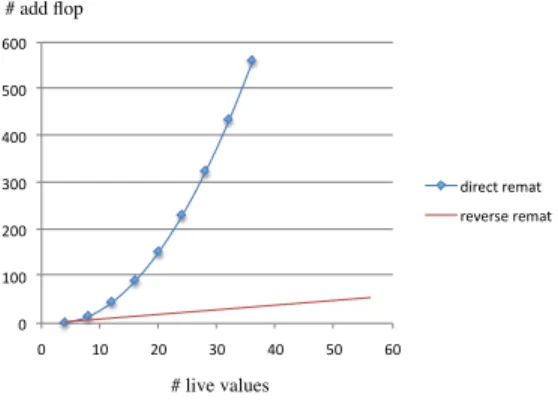
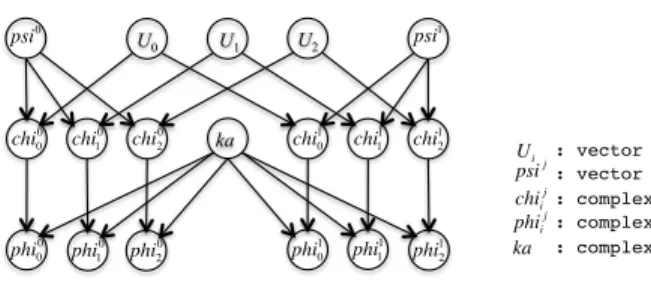
Par cons´equent, l’une des questions que nous abordons dans cette th`ese est de savoir si la remat´erialisation via le calcul inverse - remat´erialisation inverse - peut aider `
Part I - Automated Inference of the Protocol Vocabulary presents our solution to infer the vocabulary of undocumented protocols by means of an automated approach and novel
Here, a simple conceptualization through a 2-D vertical model is used to test whether (i) ignoring microforms in groundwater models at the macroform scale can impact estimations
$ sed -i "s/ffffaaaaaaaaaaaa1116e8d14b782aff//g" dongle-mouse.bytes.hex Remove the dongle packets from the mouse + dongle capture to isolate the mouse packets... Dongle
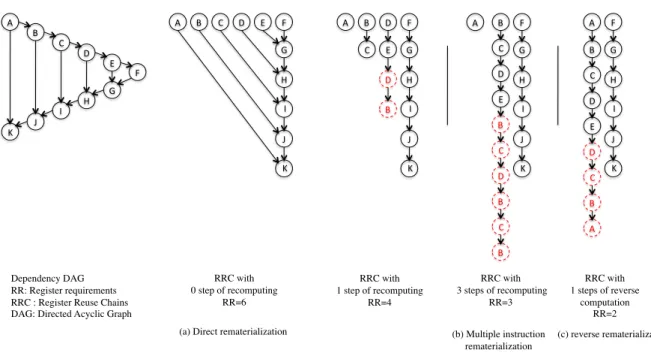
The idea of aggressive register reuse is to enforce register reuse between direct dependent values. Based on the gen- eration of register reuse chains [5] we propose to conside
Instrumentation 2x Alto Saxophone 2x Tenor Saxophone Baritone Saxophone 4x Trumpet / Flugelhorn 3x Tenor Trombone Bass Trombone Electric Guitar Bass Guitar
A new algorithm is presented to compute the subextensions of some effectively given algebraic field extension K → L, for arbitrary base field K. Similarly, the algorithm can compute
