HAL Id: in2p3-01099796
http://hal.in2p3.fr/in2p3-01099796
Submitted on 5 Jan 2015HAL is a multi-disciplinary open access archive for the deposit and dissemination of sci-entific research documents, whether they are pub-lished or not. The documents may come from teaching and research institutions in France or abroad, or from public or private research centers.
L’archive ouverte pluridisciplinaire HAL, est destinée au dépôt et à la diffusion de documents scientifiques de niveau recherche, publiés ou non, émanant des établissements d’enseignement et de recherche français ou étrangers, des laboratoires publics ou privés.
Transient effects in highly-excited fissioning systems
Y. Ayyad, J. Benlliure, J.L. Rodrıguez-Sanchez, A. Bacquias, A. Boudard, E.
Casarejos, T. Enqvist, M. Fernandez, V. Henzl, V. Henzlova, et al.
To cite this version:
Y. Ayyad, J. Benlliure, J.L. Rodrıguez-Sanchez, A. Bacquias, A. Boudard, et al.. Transient ef-fects in highly-excited fissioning systems. SOTANCP3 - 3rd International Workshop on “State of the Art in Nuclear Cluster Physics”, May 2014, Yokohama, Japan. pp.012075, �10.1088/1742-6596/569/1/012075�. �in2p3-01099796�
This content has been downloaded from IOPscience. Please scroll down to see the full text.
Download details:
IP Address: 90.96.86.177
This content was downloaded on 30/12/2014 at 23:41
Please note that terms and conditions apply.
View the table of contents for this issue, or go to the journal homepage for more 2014 J. Phys.: Conf. Ser. 569 012075
Transient effects in highly-excited fissioning systems
Y. Ayyad1,7, J. Benlliure1, J.L. Rodr´ıguez-S´anchez1, A. Bacquias2,
A. Boudard3, E. Casarejos1, T. Enqvist4, M. Fernandez1, V. Henzl2,
V. Henzlova2, B. Jurado5, A. Keli´c-Heil2, T. Kurtukian5, S. Luki´c2,
P. Nadtochy2, D. P´erez-Loureiro1, R. Pleskaˇc2, F. Farget6,
M. V. Ricciardi2, K.-H. Schmidt2, C. Schmitt6 and
Son Nguyen Ngoc2
1 Universidade de Santiago de Compostela, Santiago de Compostela, Spain
2 GSI, Darmstadt, Germany
3 CEA-Saclay/IRFU, Gif-sur-Ivette, France
4 Oulu southern Institute and Department of Phyiscs, University of Oulu, Finland
5 Universite Bordeaux I, CNRS/IN2 P3, CENBG, BP 120, Gradignan, France
6 GANIL, BP 55027, Caen Cedex 05, France
E-mail: [email protected] Abstract.
In this work we report the proton- and deuteron-induced fission of208Pb at 500A MeV in
inverse kinematics. We obtained two observables that allow us to investigate dynamical effects in the fission process: partial fission cross sections and the width of the fission fragment charge distribution as a function of the atomic number of the fissioning system. Results are compared to nuclear reaction model calculations in order to describe the evolution of the system from ground to saddle.
1. Introduction
Spallation reactions at high kinetic energies are a promising tool to investigate dissipative and dynamical effects because thermalized pre-fragments are produced with small distortion, low angular momentum and high excitation energy [1]. In spallation reactions, the interaction of a fast light projectile with the target nucleus can be described as binary nucleon-nucleon collisions through an intra-nuclear cascade. During the process the target gains thermal excitation energy and angular momentum proportionally to particle-holes excitations that take place in the initial distribution of the target. Subsequently, the excited system enters into pre-equilibrium emission leading to a thermalized pre-fragment through emission of fast nucleons. This thermalized sys-tem enters then into a second statistical de-excitation stage where the equilibrated pre-fragment dissipates its excitation energy by light charged particle and cluster evaporation,γ-ray emission, fission and multi-fragmentation [2].
Fission is usually described as a statistical process where the fission probability only depends on the density of states above the barrier, according to Bohr-Wheeler model [3]. However, this
7 Present address: Research Center for Nuclear Physics, Osaka University, Japan.
3rd International Workshop on “State of the Art in Nuclear Cluster Physics” IOP Publishing Journal of Physics: Conference Series 569 (2014) 012075 doi:10.1088/1742-6596/569/1/012075
Content from this work may be used under the terms of theCreative Commons Attribution 3.0 licence. Any further distribution of this work must maintain attribution to the author(s) and the title of the work, journal citation and DOI.
model fails in reproducing pre-scission neutron multiplicities [4]. Presently, it is generally ac-cepted that fission is a diffusion process whose evolution is governed by a reduced dissipation coefficient [5]. Dissipation arises from the excitation energy exchange rate between intrinsic and collective degrees of freedom of the fissioning system. The collective modes need a certain time to explore the potential-energy landscape. As consequence, the fission width is highly suppressed at the onset of the process, requiring a certain transient time (delay time) to establish a quasi stationary flux over the barrier [6]. The fission delay allows the system to cool down by particle evaporation. Under the proper conditions stated before, the lifetime of the system is comparable to such fission delay time and dynamical effects manifest.
In this work we investigated dynamical effects on fission by means of the spallation reactions p+208Pb and d+208Pb at 500A MeV in inverse kinematics. By using a dedicated setup for fission measurements [7] we determined the atomic number of the fissioning system. We deduced two observables with clear signatures of nuclear dissipation: partial fission cross sections and width of the fission fragment charge distribution σz as a function of the atomic number of the fissioning system. The former yields information about the spallation stage of the process and the evolution from ground to saddle. σz is strongly correlated to the temperature at saddle and thus gives us information about the fission delay and the dissipation [8, 9, 10]. By using two different targets we investigate the temperature-dependence of nuclear dissipation. In addition, the spherical configuration of 208Pb makes it suitable to investigate such dynamical effects since the process starts at ground deformation. Finally, we compare our results with calculations performed with two different intra-nuclear cascade codes, INCL [11] and ISABEL [12], coupled to ABLA [13] statistical de-excitation code. In ABLA code, the fission width can be calculated according to the Bhor-Wheeler statistical model, the time-independent picture of Kramers and a time-dependent fission width obtained from Fokker-Planck equation. More details of these codes applied to spallation reactions can be found in Refs. [14, 15].
2. Experimental details and results
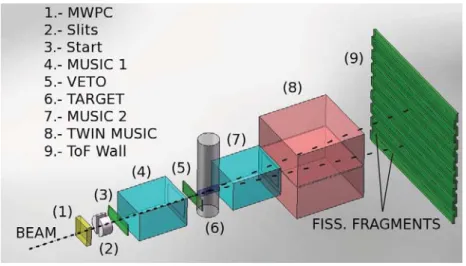
Figure 1. Sketch of the experimental setup used for the present work.
The experiment was conducted at GSI (Darmstadt - Germany) using a dedicated setup (see Fig. 1). Comprehensive details can be found in Ref. [16]. A 208Pb beam, accelerated to 500A MeV, impinged on a cell with thin titanium foils containing liquid hydrogen and deuterium.
Due to the kinematics, fission fragments are emitted in forward direction with high kinetic en-ergies. Two multi-sample ionization chambers (MUSIC) surrounded the target to identify the products of the reaction and nuclei produced in other layers of matter placed upstream of the target. A double ionization chamber (Twin MUSIC) was placed downstream of the second MU-SIC to detect both fission fragments in coincidence. By measuring the energy loss of the fission fragments in the Twin MUSIC detector we identified their atomic number and we reconstructed the charge of the fissioning system Z1+Z2 by summing each fission fragment atomic number, taking into account that the proton evaporation probability is negligible.
2
+ Z
1
Z 73 74 75 76 77 78 79 80 81 82 83 84
Partial Fission Cross Section (mb)
-1 10 1 10 Pb + p 500 A MeV Pb+p INCL+ABLA Bohr-Wheeler -1 s 21 =4.5x10 β Pb+p INCL+ABLA Kramers -1 s 21 =4.5x10 β Pb+p INCL+ABLA -1 s 21 =4.5x10 β Pb+p ISABEL+ABLA
Figure 2. Partial fission cross sections for
the reaction p+208Pb. 2 + Z 1 Z 73 74 75 76 77 78 79 80 81 82 83 84
Partial Fission Cross Section (mb)
1 10 Pb + d 500 A MeV Pb+d Bohr-Wheeler -1 s 21 =4.5x10 β Pb+d Kramers -1 s 21 =4.5x10 β Pb+d
Figure 3. Partial fission cross sections for
the reaction d+208Pb.
Partial fission cross sections for the reactions p+208Pb and d+208Pb were obtained by nor-malizing the number of fission events for eachZ1+Z2 value to the beam intensity and the target thickness (yield). The contribution of the titanium foils of the target was subtracted after mea-suring the yield with empty target. Corrections were applied due to the beam attenuation in the target and secondary reactions of the fission fragments. The geometrical acceptance of the setup for each fission fragment was evaluated by means of a monte-carlo simulation. As can be seen in Figs. 2 (p+208Pb) and 3 (d+208Pb), partial fission cross sections for the case of reactions with deuteron target are larger for fissioning systems with lower values of Z1+Z2 due to the larger kinetic energy of the reaction. We also compared the partial fission cross sections with calculations performed with INCL+ABLA for reactions with proton and deuteron and IS-ABEL+ABLA for the case of the reaction with proton. One can see that the shape of the partial fission cross section curve depends strongly on the entrance channel defined in the intra-nuclear cascade because two codes provide rather different results. On the other hand, the magnitude of the curve is sensitive to the de-excitation stage. Calculations with INCL+ABLA according to Bohr-Wheeler transition-state (solid lines) and Kramers (dotted lines) models clearly over predict the experimental values. By considering a dynamical fission delay with a reduced dis-sipation strength of β = 4.5 × 10²¹ s−1 (dashed line), calculations agree fairly well with the experimental data. Therefore, partial fission cross sections yield information about the evolu-tion of the system from ground to saddle.
We also obtained the width of the fission fragment charge distribution σz for the reactions p+208Pb and d+208Pb (Fig. 4). It can be clearly seen that for both reactions we obtain very similar values for the entire Z1+Z2 range studied here. This fact indicates that the observable does not depend on the entrance channel but on the temperature and excitation energy at the
3rd International Workshop on “State of the Art in Nuclear Cluster Physics” IOP Publishing Journal of Physics: Conference Series 569 (2014) 012075 doi:10.1088/1742-6596/569/1/012075
saddle point for each Z1+Z2. We also performed calculations with INCL+ABLA (see Fig. 4) according to the statistical model (solid line) and Kramers time-independent fission width (dash dotted line). Both calculations over predict the experimental results in the Z1+Z2 range where the excitation energy is larger and dynamical effects manifest. However, calculations considering a fission delay induced by a dissipation with a strength ofβ = 4.5×10²¹ s−1(dashed and dotted lines for proton and deuteron, respectively) are in very good agreement with the data. Dynami-cal Dynami-calculations show that the reduction of the temperature at saddle (which also reduces σz) is because of the fission delay instead of the reduction of the asymptotic value of the fission width proposed by Kramers. Indeed, the nucleus cools down by particle evaporation because the time needed to reach the saddle point is longer due to the fission delay.
2 + Z 1 Z 73 74 75 76 77 78 79 80 81 82 83 (charge units)z σ 5 6 7 8 9 10 Pb + p 500 A MeV Pb + d 500 A MeV -1 s 21 =4.5x10 β Pb + d -1 s 21 =4.5x10 β Pb + p ) -1 s 21 =4.5x10 β Pb + d Kramers ( Pb + d Bohr-Wheeler
Figure 4. Width of the fission fragment charge distribution as a function of the atomic number
of the fissioning nuclei for both reactions investigated in this work.
3. Conclusions
We have investigated transient and dissipative effects in proton- and deuteron-induced fission of208Pb at 500A MeV by using a dedicated setup for fission experiments in inverse kinematics. We have obtained the partial fission cross sections and the width of the fission fragment charge distribution σz both as a function of the atomic number of the fissioning system. Partial fission cross sections yield information about the evolution of the system from ground to saddle, while σzgives information about the temperature of the system at the saddle point. This temperature
does not depend on the entrance channel of the reaction for each system with a defined atomic number Z1+Z2. Finally, by performing calculations with intra-nuclear cascade code INCL coupled to ABLA de-excitation code we show that a fission delay with a dissipation strength of β = 4.5 × 10²¹ s−1 is needed to explain the experimental data.
References
[1] Bhatt K H, Grang´e P and Hiller B 1986 Phys. Rev. C 33 954
[2] Bohr N 1936 Nature, 137 344
[3] Bohr N and Wheeler J A 1939 Phys. Rev. 56 426
[4] Gavron A, Beene J R, Ferguson R L, Obenshain F E, Plasil F, Young G R, Petitt G A, Jaaskelainen M, Sarantites D G and Maguire C F 1981 Phys. Rev. Lett 47 1255
[5] Kramers H A 1940 Physika VII 4 284
[6] Grang´e P, Jun-Qing L and Weidenm¨uller H A 1983 Phys. Rev. C 27 2063
[7] Schmidt K H et al 2000 Nucl. Phys. A 665 221 [8] Benlliure J et al 2002 Nucl. Phys. A 700 69
[9] Jurado B, Schmitt C, Schmidt K H, Benlliure J, Enqvist T, Junghans A R, Kelic A and Rejmund F 2004 Phys. Rev. Lett. 93 072501
[10] Schmitt C, Schmidt K H, Keli´c A, Heinz A, Jurado B and Nadtochy P N 2010 Phys. Rev. C 81 064602
[11] Boudard A, Cugnon J, David J C, Leray S and Mancusi D 2013 Phys. Rev. C 66 014606 [12] Yariv Y and Fraenkel Z 1979 Phys. Rev. C 20 2227
[13] Kelic A, Ricciardi M V and Schmidt K H 2008 Proc. of Joint ICTP-IAEA Advanced Workshop on Model Codes for Spallation Reactions, ICTP Trieste, Italy, 4-8 February
[14] Benlliure J et al. 2006 Phys. Rev. C 74 014609 [15] Ayyad Y et al. 2014 Phys. Rev. C 89 054610 [16] Schmidt K H et al. 2013 Phys. Rev. C 87 034601
3rd International Workshop on “State of the Art in Nuclear Cluster Physics” IOP Publishing Journal of Physics: Conference Series 569 (2014) 012075 doi:10.1088/1742-6596/569/1/012075