HAL Id: tel-01753793
https://tel.archives-ouvertes.fr/tel-01753793
Submitted on 29 Mar 2018HAL is a multi-disciplinary open access
archive for the deposit and dissemination of sci-entific research documents, whether they are pub-lished or not. The documents may come from teaching and research institutions in France or abroad, or from public or private research centers.
L’archive ouverte pluridisciplinaire HAL, est destinée au dépôt et à la diffusion de documents scientifiques de niveau recherche, publiés ou non, émanant des établissements d’enseignement et de recherche français ou étrangers, des laboratoires publics ou privés.
Mathematical models in computational surgery
Stefano Casarin
To cite this version:
Stefano Casarin. Mathematical models in computational surgery. Fluids mechanics [physics.class-ph]. Université de La Rochelle, 2017. English. �NNT : 2017LAROS008�. �tel-01753793�
UNIVERSITÉ DE LA ROCHELLE
École Doctorale Sciences et Ingénierie en Matériaux, Mécanique, Énergétique et Aéronautique (SI-MMEA)
Laboratoire des Sciences de L’Ingénieur pour l’Environnement (LaSIE)
THÈSE
présentée par :
Stefano CASARIN
pour l’obtention du grade de Docteur de l’Université de La Rochelle Discipline : Mécanique des fluides
Mathematical Models in Computational Surgery
Soutenue le 16/06/2017
Thèse dirigée par Marc GARBEY & Scott A. BERCELI
JURY : Rapporteur Rapporteur Examinateur Examinateur Examinateur Examinateur Mr. Thiery COLIN Mr. Francesco MIGLIAVACCA Mr. Nabil CHAKFÉ Mr. Abdallah EL HAMIDI Mr. Scott A. BERCELI Mr. Marc GARBEY
Professeur, Université de Bordeaux Professeur, Politecnico di Milano Professeur, Université de Strasbourg Professeur, Université de La Rochelle Professeur, University of Florida Professeur, Université de La Rochelle
iii
Modèles mathématiques en chirurgie informatisée
Résumé
La chirurgie informatisée est une science nouvelle dont le but est de croiser la chirurgie avec les sciences de l’informatique afin d’aboutir à des améliorations significatives dans les deux domaines. Avec l’évolution des nouvelles techniques chirurgicales, une collaboration étroite entre chirurgiens et chercheurs est devenue à la fois inévitable et essentielle à l’optimisation des soins chirurgicaux.
L’utilisation de modèles mathématiques est la pierre angulaire de ce nouveau domaine. Cette thèse demontre comment une approche systématique d’un problème clinique nous a amenés à répondre à des questions ouvertes dans le domaine chirurgical en utilisant des modèles mathématiques à grande échelle.
De manière générale, notre approche inclut (i) une vision générale du problème, (ii) le ciblage du/des système(s) physiologique(s) à étudier pour y répondre, et (iii) un effort de modélisation mathématique, qui a toujours été poussé par la recherche d’un compromis entre complexité du système étudié et réalité physiologique.
Nous avons consacré la première partie de cette thèse à l’optimisation des conditions limites à appliquer à un bio-réacteur utilisé pour démultiplier le tissu pulmonaire provenant d’un doneur. Un modèle géométrique de l’arbre trachéo-bronchique couplé à un modèle de depôt de soluté nous a permis de déterminer l’ensemble des pressions à appliquer aux pompes servant le bio-réacteur afin d’obtenir une distribution optimale des nutriments à travers les cultures de tissus.
Nous avons consacré la seconde partie de cette thèse au problème de resténose des greffes de veines utilisées pour contourner une occlusion artérielle. Nous avons reproduit l’apparition de resténose grâce a plusieurs modèles mathématiques qui permettent d’étudier les preuves cliniques et de tester des hypothèses cliniques avec un niveau croissant de complexité et de précision. Pour finir, nous avons développé un cadre de travail robuste pour tester les effets des thérapies géniques afin de limiter la resténose. Une découverte intéressante a été de constater qu’en contrôlant un groupe de gènes spécifique, la perméabilité à la lumière double après un mois de suivi.
Grace aux résultats obtenus, nous avons démontré que la modélisation mathématique peut servir de puissant outil pour l’innovation chirurgicale.
Mots-clés: chirurgie informatisée, modèles mathématiques, bioréacteur pulmonaire, greffe de veine, resténose, preuves cliniques, thérapie génique.
v
Mathematical Models in Computational Surgery
Abstract
Computational Surgery is a new science that aims to intersect surgery and computational sciences in order to bring significant improvements in both fields. With the evolution of new surgical techniques, a close collaboration between surgeons and computational scientists became unavoidable and also essential to optimize surgical care.
A large usage of mathematical models is the cornerstone in this new field. The present thesis shows how a systematic approach to a clinical problem brought us to answer open questions in the field of surgery by using mathematical models on a large scale.
In general, our approach includes (i) an overview of the problem, (ii) the individuation of which physiological system/s is/are to be studied to address the question, and (iii) a mathematical modeling effort, which has been always driven by the pursue of a compromise between system complexity and closeness to the physiological reality.
In the first part, we focused on the optimization of the boundary conditions to be applied to a bioreactor used to re-populate lung tissue from donor. A geometrical model of tracheobronchial tree combined with a solute deposition model allowed us to retrieve the set of pressures to be applied to the pumps serving the bioreactor in order to reach an optimal distribution of nourishment across the lung scaffold.
In the second part, we focused on the issue of post-surgical restenosis of vein grafts used to bypass arterial occlusions. We replicated the event of restenosis with several mathematical models that allow us to study the clinical evidences and to test hypothesis with an escalating level of complexity and accuracy.
Finally, we developed a solid framework to test the effect of gene therapies aimed to limit the restenosis. Interestingly, we found that by controlling a specific group of genes, the lumen patency is double after a month of follow-up.
With the results achieved, we proved how mathematical modeling can be used as a powerful tool for surgical innovation.
Keywords : computational surgery ; mathematical models ; lung bioreactor ; vein graft ; restenosis ; clinical evidences ; gene therapy
vii
Acknowledgments
The very first thanks cannot go to anyone but dr. Marc Garbey, that has been for me a great professor and mentor, but above all an extraordinary person that I am honored to work for and to collaborate with. Looking forward to many other years like these lasts.
A huge thanks to dr. Scott A. Berceli. His input has been absolutely fundamental for this work and I feel honored of collaborating and learning from a scientist of his caliber.
Thanks to dr. Brian Dunkin and to dr. Barbara L. Bass for their more than valuable collaboration with our research center at the Houston Methodist Hospital.
Also thanks to prof. Giuseppe Baselli and dr. Federico Aletti for giving me the possibility to start this adventure back in 2012, and more in general for introducing me into the world of Research.
Thanks to my wonderful parents, Antonella and Enzo. If I spent for them all the words they deserve, I should write a second PhD thesis. I can only say that without them I would have never reached this goal, but more important I would not be the person that I am today.
Thanks to my family. Both to who I can still hug, and to who I can unfortunately only hug in my sweetest thoughts. Thanks in particular to that very person that is always on my side and never leaves me alone like a keeper angel. Am I right grandma Oliva?
Thanks to my girlfriend Eleonora, for being on my side day by day, for always giving a smile, for always being ready to listen to me and to advise me for the best, and for giving me that serenity that I have been chasing for so long. You are still the most beautiful among the most unexpected things that could ever happen to me.
Thanks to my co-workers, because you guys made all the days spent in the lab way easier. I feel it is fair to cite some above all: Juliette, Remi (doctor!) and Adeline, but especially my friend/colleague/PhD program mate/former roomie Guillaume, because in all this time a joke or
viii a smile never went missing between us and I am sure they never will (and this makes 4 French fellows out of 4! Isn’t it crazy from an Italian??) Also thanks to dr. Verena Kallhoff, because we all know that the efficiency of our center is mostly due to her hard and patient work.
A special thanks goes to Marie Garbey, literally and simply a second mom!
Thanks to all my friend. Both to the ones still in Italy and the ones here in Houston. For you guys I should really write a complete book if I wanted to list you all. However, I feel it is fair to cite Luca (Pres and Pat), Dario, Oscar, Giordano, Trappa, Eleonora and Flavio (and his home-made pizzas), Andrew, Austin, Ethan. Last but not least my dear friend Jose (Kuko!!), because in you I found a true friend even on the other side of the ocean!
Finally, a dedication: to that person that, from the very first second I opened my eyes until today, totally dedicated her life to me. Every day, every minute, every second, never hesitating of putting my needs in front of hers and always, ALWAYS there to cheer me up and to listen to me when I needed the most. I’ll never find the right words to thank her for all she did for me without being banal or common. That is why I want to express my gratitude just dedicating this work to her.
x
Ringraziamenti
Il primo ringraziamento non può che andare al mio relatore, dott. Marc Garbey, il quale è stato per me un grande professore e mentore, ma soprattutto una straordinaria persona per la quale sono onorato di lavorare e con il quale sono lusingato di collaborare. Ad altri molti anni come questi ultimi.
Un immenso ringraziamento al mio correlatore, dott. Scott A. Berceli. Il suo apporto è stato a dir poco fondamentale per la riuscita di questo lavoro ed io non posso che dirmi onorato di apprendere da uno scienziato del suo enorme calibro.
Un ringraziamento al dr. Brian Dunkin ed alla dott.sa Barbara L. Bass per la loro preziosissima collaborazione con il nostro centro di ricerca presso lo Houston Methodist Hospital.
Un sincero ringraziamento va anche al prof. Giuseppe Baselli e al dott. Federico Aletti per avermi dato la possibilità di iniziare il mio percorso a Houston nel 2012, e più in generale per avermi introdotto al mondo della Ricerca.
Grazie ai miei fantastici genitori, Antonella ed Enzo. Se dovessi spendere per loro tutte le parole che meritano, dovrei scrivere una seconda tesi di dottorato. Posso solo dire che senza di loro non avrei mai raggiunto questo traguardo, ma cosa ancora più importante, non sarei la persona che sono oggi.
Grazie alla mia famiglia. Sia a coloro che posso ancora abbracciare, sia a coloro che purtroppo posso solo incontare nei miei sogni piu’ belli e nei miei pensieri piu’ rincuoranti. Un pensiero in particolare a quella speciale persona che sempre è al mio fianco e che mai mi lascia da solo come solo un angelo custode farebbe. Dico bene nonna Oliva?
Grazie alla mia ragazza, Eleonora, per essermi accanto giorno dopo giorno, per regalarmi sempre un sorriso, per essere sempre pronta ad ascoltarmi e consigliarmi, ed infine per avermi regalato una serenità a lungo inseguita. Sei ancora la più bella tra le più inaspettate cose che mi potessero capitare.
xi Grazie ai miei colleghi, perchè è grazie a voi ragazzi che le giornate spese in laboratorio sono passate così velocemente. Mi sento di dover citare in particolare Juliette, Remi (doctor!) ed Adeline, ma specialmente il mio amico/collega/compagno di dottorato/ex co-inquilino Guillaume, perchè in tutto questo tempo una battuta ed un sorriso tra di noi non sono mai mancati e sono certo mai mancheranno (e fanno 4 Francesi su 4!Non è incredibile detto da un Italiano???)
Inoltre, un ringraziamento alla dott.sa Verena Kallhoff, perchè tutti noi sappiamo che l’efficienza del nostro centro è in larga parte da attribuire al suo duro e paziente lavoro.
Un ringraziamento speciale a Marie Garbey, letteralmente e semplicemente una seconda mamma!
Grazie a tutti i miei amici. Sia a quelli in Italia sia a quelli qui a Houston. Per elencarvi tutti mi servirebbe un libro intero, però ci terrei ad elencare i miei più stretti, tra cui Luca (Pres e Pat), Dario, Oscar, Giordano, Trappa, Eleonora e Flavio (e la sua pizza fatta in casa), Andrew, Austin, Ethan. Ultimo ma non ultimo, il mio caro amico Jose (Kuko!!!!), perchè in te ho trovato un vero amico anche dall’altro capo dell’oceano!
Infine, una dedica: a quella persona che, dal primo momento in cui ho aperto gli occhi fino ad oggi, ha completamente dedicato la sua vita a me. Ogni giorno, ogni minuto, ogni secondo senza mai esitare a mettere le mie esigenze prima delle sue e sempre, SEMPRE pronta a rincuorarmi ed ad ascoltarmi quando ne ho avuto più bisogno. Non risucirò mai a trovare le parole giuste per ringraziarla per tutto quello che ha fatto per me senza risultare banale o di circostanza. Ecco perchè ci tengo ad esprimere la mia gratitudine semplicemente dedicandole questo lavoro.
xii
Table of Contents
Résumé ... iii Abstract ...v Acknowledgments ... vii Ringraziamenti ...xList of Figures ... xviii
List of Tables ... xxi
List of Supplemental Figures ... xxi
List of Supplemental Tables ... xxi
1. General Introduction and Motivation ...1
1.1 Mathematical modeling in computational surgery ...1
1.2 Systems Biology ...5
1.3 Model order reduction ...6
1.4 Structure of the thesis ...7
References ...10
2. Mathematical modeling to improve clinical machines setup ...15
References ...19
2.1 Optimal Flow Conditions of TracheoBronchial Model to Reengineer Lung Structures ...21
Abstract ...21
2.1.1 Introduction ...22
2.1.2 Materials and Methods ...23
“The Methodist Hospital Research Institute” bioreactor: properties and mathematical modeling principles ...23
xiii Geometrical model of TBT: anatomical description, simplification and
mathematical implementation ...24
Numerical implementation of the flow in the compliant TBT ...27
Validation ...29
Liquid Ventilation ...29
Solute Deposition Model (SDM) ...29
Boundary conditions optimization ...32
2.1.3 Results ...32 2.1.4 Discussion ...34 2.1.5 Conclusions ...37 Appendix I ...38 Appendix II ...38 Appendix III ...39 Appendix IV...41 References ...44
3. Mathematical modeling to replicate clinical evidences ...48
References ...52
3.1 Vascular Adaptation: Pattern Formation and Cross Validation between an Agent Based Model and a Dynamical System ...54
Abstract ...54
3.1.1 Introduction ...55
3.1.2 Overview ...57
Anatomy of a vein graft ...58
Dynamical System (DS) ...58
Agent Based Model (ABM) ...62
3.1.3 Methods...65
Basic Solution ...65
xiv
Intimal hyperplasia...66
Outward remodeling ...67
Cross validation ...68
Calibration of intimal hyperplasia ...70
Calibration of outward remodeling ...70
Competitive cellular events...70
Generalization of the ABM ...71
3.1.4 Results and Discussions ...72
Basic Solution generation ...72
Intimal hyperplasia pattern formation ...73
Outward remodeling pattern formation ...76
Cross validation and calibration...79
Calibration...79
Qualitative cross validation...81
Details on the endothelium dynamic...83
3.1.5 Conclusions ...85
References ...85
3.2 A Versatile Hybrid Agent Based, Particle and PDE Method to Analyze Vascular Adaptation ...89
Abstract ...89
3.2.1 Introduction and Motivation ...90
3.2.2 Concept and Methods ...93
Mechanical Model (MM) ...94
Tissue Plasticity (TP) ...96
Tissue Remodeling (TR) ...97
3.2.3 Preliminary Results and Discussions ...103
3.2.4 Conclusions ...107
References ...108
xv
3.3.1 Introduction ...110
3.3.2 Methods...111
Intimal hyperplasia...113
Wall remodeling...114
3.3.3 Results and Discussions ...115
3.3.4 Conclusions ...116
4. Mathematical modeling to predict therapies outcome ...118
References ...119
4.1 Linking gene dynamics to vascular hyperplasia: toward a predictive model of vein graft adaptation ...124
Abstract ...124
4.1.1 Introduction ...125
4.1.2 Materials and Methods ...126
Multiscale model ...126 Experimental setup...128 Dynamical System (DS) ...129 Cluster Network (CN) ...131 Sub-models coupling ...138 Clusters weights ...140
Hybrid model calibration ...144
In silico gene therapy ...146
Gene therapy as a tool to minimize hyperplastic growth of the wall...146
Sensitivity analysis...150
4.1.3 Results and Discussions ...151
Clusters interconnectedness ...151
Clusters weights ...152
Calibration of the hybrid model ...153
Gene therapy ...154
Single cluster modulation ...154
xvi
Structural properties test ...157
4.1.4 Conclusions ...158
References ...159
5. Conclusions and Future Perspectives...164
xviii
List of Figures
2.1 – Engineering of a lung scaffold from donor ...17
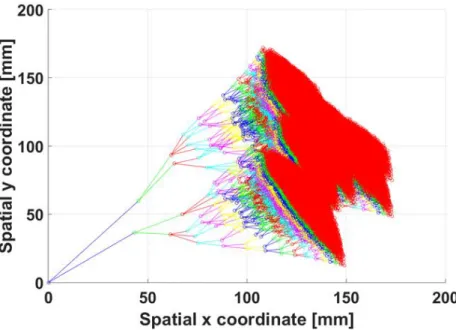
2.2 – Geometrical model of TBT ...26
2.3 – Feedback loop scheme ...32
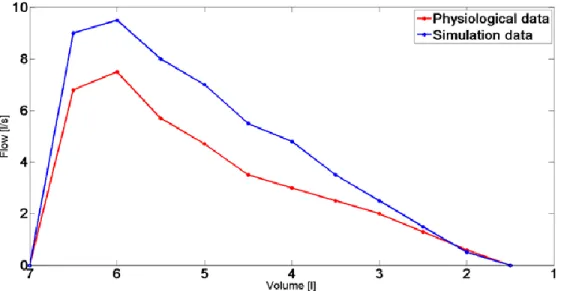
2.4 – Validation of the model ...33
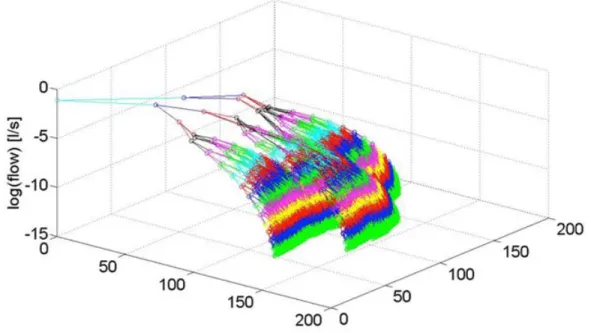
2.5 – Semi-logarithmic 3D representation of a tidal liquid ventilation applied to the TBT model ...34
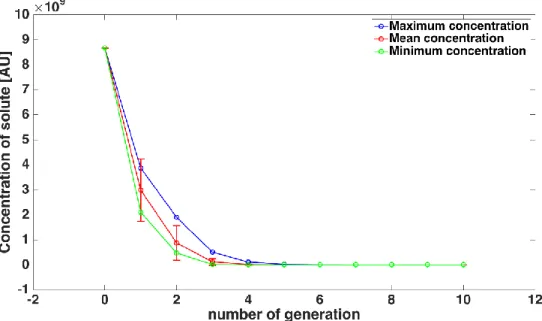
2.6 – Solute distribution ...35
2.7 – Solute distribution in Left Main Bronchus (LMB) ...36
3.1 – Clinical observations ...57
3.2 – Vein histology at the time of graft implantation ...58
3.3 – Conceptual scheme of the Dynamical System ...59
3.4 – Flow chart of the ABM ...63
3.5 – Fundamental unit belonging to the grid of the ABM ...57
3.6 – Intimal hyperplasia cellular pattern ...75
3.7 – Temporal dynamic of intimal hyperplasia ...76
3.8 – Outward remodeling cellular pattern ...77
3.9 – Temporal dynamic of outward remodeling ...78
3.10 – Calibration of the DS on the output of the ABM ...80
3.11 – Qualitative ABM vs. DS cross validation ...82
3.12 – Radial vs. Non-Radial symmetry assumption ...84
3.13 – Graft arterialization ...91
3.14 – Conceptual diagram of restenosis...92
3.15 – Morphological structure of vein graft ...93
3.16 – Intimal hyperplasia generation ...104
3.17 – Intimal hyperplasia after 3 months ...105
3.18 – Intimal hyperplasia after a month ...106
xix
3.20 – Grey Block model of the ABM ...111
3.21 – Virtual dataset and virtual measures generation with the ABM ...112
3.22 – Grey Block model of intimal hyperplasia ...113
3.23 – Grey Block model of medial hyperplasia ...114
3.24 – Parameters identification ...115
4.1 – System biology approach ...127
4.2 – Hybrid model development step-by-step diagram ...129
4.3 – Dynamical System (DS) ...131
4.4 – Genes dynamic retrieved from microarray probe for the five significant clusters ....132
4.5 – Sub-models coupling ...139
4.6 – Calibration of the cluster’s weights ...141
4.7 – Cellular events dynamic from rabbit model ...142
4.8 – Gene therapy general concept...147
4.9 – Gene therapy principle ...149
4.10 – Interconnected networks of clusters...151
4.11 – Clusters weights ...152
4.12 – Calibration of the hybrid model ...153
4.13 – Gene therapy: single cluster modulation ...155
4.14 – Gene therapy: coupled cluster modulation...157
xxi
List of Tables
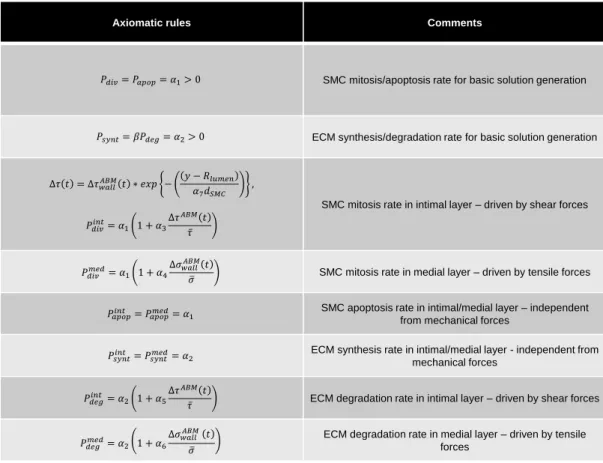
3.1 – Axiomatic rules that drive the dynamics of SMC and ECM ...67 3.2 – Parameters set up for virtual experiments ...74 3.3 – Multiscale description of the model ...94 3.4 – Axiomatic description of the set of rules that regulate the ABM ...97
List of Supplemental Figures
3.1 – Calibration of the DS on the output of the ABM ...69 3.2 – Temporal dynamic in basic solution regime ...73
4.1 – Calibration of the Cluster Network (CN) ...137 4.2 – Calibration of the clusters weights ...143 4.3 – Calibration of the hybrid model ...146
List of Supplemental Tables
1
1. General Introduction and Motivation
1.1 Mathematical modeling in computational surgery
Computational surgery can be defined as a new science aimed to modernize surgery by using computational science combined with new technologies [1]. At today, many advances in surgery have been reached thanks to the advent of new technologies and the use of computational methods. For example, let us think about how medical imaging and robotics improved the diagnosis efficiency [2], or about how the study of pivotal fields that impact surgical interventions’ outcomes, like genetic and physiology, strongly relies on computational methods.
An accurate digression on computational surgery has been outlined by Garbey M. et al. [3], where surgery is stated of having been transformed mainly by three categories of technical advances:
1. Augmented visualization: medical imaging, virtual reality, and mathematical modeling 2. Augmented manipulation and robotics: smart devices for minimally invasive procedures, stereotactic intervention technologies, real-time tracking, biomarkers, and biosensors
3. Reconstructive procedures and prostheses: customized prostheses, regenerative tissues, regenerative medicine, and gene therapy
This thesis wants to focus on the mathematical modeling approach applied to surgery in order to give an answer to an open question in a simple but at the same time effective way.
Surgery, and also more in general Medicine are the perfect target of a research based on a mathematical modeling approach. All the current biggest challenges of modern Medicine are based on the deep understanding of the biological processes that regulate them [4-6]. The understanding of the biological systems that are at the base of the events that Medicine wants to cure or to control or even just to improve, is the real key for a successful final outcome.
Medicine is largely based on biological systems, which are certainly complex [7,8] and also more complex is to reach a deep knowledge of them, especially because they often are the result
2 of the interplay between different sub-components [7-11]. To make things even more complex, there is the fact that biological systems are often regulated by non-linear processes [12,13], which are more difficult to be finely replicated. Finally, the intrinsic complexity of the fundamental “bricks” the biological systems are built of does not facilitate the comprehension of the systems themselves. It is sufficient to think how intricate the structure of a cell is and to try to project its complexity to a higher level, such a tissue, an organ, or an entire apparatus [14].
The introduction of mathematical models in Bioscience and Medicine significantly improved the general knowledge and boosted medical research [15,16]. A mathematical model that is able to replicate a specific event taking in consideration the complexity of the different factors that regulate it, allows researchers to better understand how the system might be influenced by external stimuli or perturbations. Also, as already said, mathematical models are suitable for computer simulations. Thanks to this, the response of a biological system under different conditions can be easily simulated in silico and, on a larger scale, the long-term follow up of a certain procedure can be predicted in advance. To demonstrate these important features, it is relevant to cite the works by Garbey M et al. [22] and Salmon R et al. [23], who replicated with a mathematical model the re-shaping of the breast after lumpectomy surgery being so able predict the cosmetic long-term outcome of the procedure.
The ability to study and to predict in advance a clinical or an experimental outcome is a relevant advantage for modern Medicine. In fact, biological experiments are expensive and time-consuming, and being able to simulate in advance the effect of several alterations of a system, allows to place a filter in front of the biological experimentation in order to reduce costs and time.
In general, the mathematical modeling approach clashes with the need for a correlation between predicted results and experimental observations. This results in the systematic need of a validation of the model at various levels. This is true for all the disciplines, and especially for Medicine. Any discrepancy between the predicted results and the experimental observations needs to be fixed by improving the model, or at least justified on the base of the level of complexity of the model itself.
A mathematical model approach applied to Medicine carries with it several benefits:
The presence of a discrepancy between the predicted results and the actual experimental observations is not necessarily a mistake. It can actually lead to the discovery of
3 components that are still missing in the model and that are mandatory to be able to design the right outcome. On the other hand, it can also be an indicator that a better experimental setup design is needed.
Mathematical models easily investigate the effects of perturbations applied to the system. In the field of Medicine, a perturbation is seen as a drug, a specific surgical procedure, the application of a prosthesis, etc. The challenge of the researchers is to associate each perturbation to a bunch of parameters that drive the system toward a certain outcome. As previously mentioned, being able to do that, means to be able to foresee the effect of different perturbations on the long-term outcome of any procedure.
Mathematical models are based on computers simulations, which are not constrained a
priori. On the other hand, an experiment performed in a laboratory undergoes certain
biological constraints that limit the range of possibilities that might be explored. The “no constraints” property of mathematical modeling allows to study new scenarios and to develop new hypothesis to drive the design of new experiments.
Mathematical modeling can individuate the degree of relevance of a specific element within a complex system. For example, something that will be assessed in this thesis will be the elaboration of a network of genes in order to study the impact of the genetic level on a clinical event. One of the most challenging part was exactly to individuate the element that had the biggest impact on the clinical event of interest.
There are a lot of examples of use of mathematical models in Medicine and they cover a very big range of different fields of interest thanks to their property to be either descriptive or predictive, or both.
The cardiovascular field gives us a complete round up as works both descriptive and predictive have been conducted. An example of description of a clinical phenomenon with a mathematical model is given by the work of Migliavacca F et al. [17], where the hemodynamic in the aortic arc after Norwood shunt operation in response to hypoplastic left heart syndrome is studied with a mathematical model and with the use of Computational Fluid Dynamic (CFD) software. Another example of a mathematical model for descriptive purposes is the dynamical system used by Garbey M et al. [18] that replicate the phenomenon of a vein graft’s arterialization post saphenous arterial bypass. On the other hand, an example of predictive application is the development of a
4 mathematical model implemented to predict the valve prosthesis-patient mismatch [19], or to remain in theme of heart valve, to predict the operative mortality after valve replacement surgery [20]. A predictive application of a mathematical model for vascular surgery will also be largely address in the current work.
Way more clinical areas are interested by the large use of mathematical models, such as cancer research, improvement of machines for the assisted respiration, improvement of dialysis machines. However, a deep study of their usage across all the clinical disciplines lies outside the purposes of this thesis.
The properties of mathematical models, as they have been described, are perfect to adapt the mathematical modeling to a wide range of applications.
Mathematical models can be used in order to improve the design of already existing and commercialized medical devices, like stents. It is the case of the work by Garbey M et al [21], where the mechanical properties of an esophageal stent were replicated with a simple spring model that allowed the researchers to predict how different designs of the stent affect the stability of the stent itself in the esophageal tract.
At the same way, the use of mathematical models can also drive the design of medical devices. The mathematical model developed by Huiskes R et al. [24] predicts how different shapes and materials of the femoral head of a hip prosthesis can impact the level of stress at the interface with the acetabular component. This ability drastically improved the design of hip prosthesis being the unbalanced level of stress at the joint the major cause of short-term failure for hip prosthesis [29].
However, the potentialities of mathematical modeling is not confined only to medical devices. It can be extended to drugs too, and again both from a design and an improvement perspective. It is the case of the works by Lin Chien-Chi et al. that developed a series of mathematical models to improve the drug-delivery property of some hydrogels [25] and Liu HY et al. [26] that engineered hydrogels for drug-release with the mediated action of targeted enzymes.
Mathematical models were also used in order to improve surgery. Nguyen TB et al. [27] developed a mechanical model based on pre-operative CT scans for localizing the position of a liver and a tumor within the tissue during a minimally invasive liver operation. Thanks to it, a surgeon can track in real time the position of the tumor within the liver during surgery.
5 Finally, on a larger view, mathematical models can be used to improve the clinical operations maximizing the efficiency and minimizing the time-wasting. In the work of Garbey M et al. [28] the authors developed a theoretical multiscale model of surgical flow of operations that allows to test how specific factors before, during, and after the surgery affect the efficiency of the whole operation.
1.2 Systems Biology
Within the mathematical modeling, an approach that further revolutionized the world of medical research is systems biology, which will be the base philosophy of the works presented in this thesis.
The concept of systems biology is inspired by the Gestalt principles, for which the whole was different than the sum of the parts [30]. Systems biology amplifies this concept and it is based on the understanding that whole is greater, not only different, than the sum of the parts. With reference to living organisms, the fundamental principle is that in order to understand the complexity of a system is not sufficient just to know the functioning of its single components, but it is equally important to study how the various sub-components are connected in an organized network [31].
Accordingly, a systems biology approach cannot exclude a collaborative research approach. Many scientific fields must be involved to explore all the levels of complexity that come along with an approach of this type. In this thesis, the mutual collaboration between mathematicians, surgeons, and biomedical engineers has been the cornerstone of the research and allowed us to study specific apparatuses and events with a deep level of accuracy.
A systems biology approach naturally translates in a multiscale modeling approach. Generally, multiscale modeling refers to a style of modeling in which multiple models at different scales are used simultaneously to describe a system and the different models usually focus on different scales of resolution [32]. This approach adapts itself perfectly to the human body that is a machine made of separate compartments that work together at different scales to perform specific tasks. Also, this approach adapted itself perfectly to the purposes of our thesis, in which, as it will be seen, sub-components at different scales concur to influence a specific event of interest.
6 The multiscale modeling approach not only allowed us to study the processes at the base of the problem we wanted to assess, but also it allowed us to make specific predictions on the final outcome, adding an enormous value to our research.
1.3 Model order reduction
A mathematical model can be generally seen as black box [33]. Accordingly, the perturbation employed by a certain input stimulates the model to produce an output driven by the characteristic parameters of the model, which are constant values in their simplest definition [34]. As the output of a model is mediated by the sub-events that describe the dynamic of the model, these characteristic parameters are representative of these events. The values of these parameters are typically evaluated heuristically, i.e. starting from the observation of experimental data.
As we have already mentioned, a mathematical model should include more than just one single sub-component or in parallel sub-event in order to satisfyingly describe a biological system. Assuming for simplicity that within a certain model a single event is driven by one and one only parameter (this is generally not true, but for let us assume it just for this example), the complexity of the model grows proportionally with the complexity of the system that it replicates. This means that if a biological system is influenced by N different events, we need a N-degree complex system in order to create an accurate model.
However, the greatest challenge of mathematical modeling is to create a model both accurate, but also simple and feasible, especially from a computational point of view. Indeed, if it is true that mathematical models are suitable for computer simulations, it is also true that average computers have memory and performances that might be not enough for models resulting to be too complex. Also, in order to face a specific problem, or in order to answer one specific question, not necessarily a model that faces all the aspects of a system is necessary.
In the already cited work by dr. Garbey et al. [21], the mechanical properties of a stent were replicated with a simple spring model, which is well known to be a 1 degree of complexity model in its stiffness constant k [34]. Certainly the whole stent system cannot be replicated with just one constant parameter and be considered accurate. Already if someone thinks to the properties of the material can understand how complex the modeling of a device such as can be. However, the research presented in their work was only oriented in understanding how the stiffness of the stent
7 influences its stability in the esophageal tract and, to reply to this question, a 1 degree of complexity model was sufficient. More, it would have been a non-smart modeling choice to design a more complicated model, because the computation would have been more complex and basically for no reasons.
Accordingly, the real question should be the following: “Within a certain system, and considering the problem I want to face, which are the aspects of the system that must be taken in account? On the other hand, which are the aspects that can be disregard?”. This is why mathematical modeling has to be a matter of compromise between closeness to the physiological reality and complexity.
In the present thesis various biological events belonging to different fields have been studied always starting from this simple question. The rational has always been to translate a biological problem into a mathematical one, but keeping in mind that the more complexity is added, the more difficult it would have been to find a unique solution. The main concern was to individuate the minimum number of parameters that were able to give us a model accurate enough for the problem we were facing, but also feasible from a computational point of view.
1.4 Structure of the thesis
This thesis wants to address clinical topics of high relevance by following the principles described in this general introduction. Every work that will be presented aims to solve or at least to improve the current status of a pressing issue involving a certain clinical procedure, or a clinical machinery.
The general scheme followed for each project can be summarized in 5 points:
1. Overview of the problem: within a certain clinical procedure, there is an open question that we want to give an effective answer to.
2. Individuation of the system that has to be replicated: what is the physiological system that drive the specific event related to the open question?
3. Mathematical modeling approach: Which kind of mathematical construct is suitable to replicate the physiological system?
4. Systems Biology: is the system driven by interconnected sub-compartments? If yes, how does their mutual interconnectivity impact the final outcome?
8 5. Complexity reduction: which simplifications can we make in order to end up with a model
both simple and accurate enough?
The first project, presented in chapter 2, is about the improvement of a machinery used for a clinical application. Lung transplants efficacy has been largely improved with the advent of tissue engineering [36], and in particular with the advent of bioreactors able to repopulate lung scaffolds from donors with stem cells of the receiving patient [37]. The stem cells, along with the nourishment medium, are injected in the scaffold through the TracheoBronchial Tree (TBT) [37], which serves as conveying structure. After a review of the state of the art, which will be presented in the chapter, it was clear how one of the key for a successful cells adhesion and repopulation is to optimally set the pressures that have to be applied to the pumps serving the bioreactor. We developed a mathematical model of transport of solute across the TBT in order to be able to know in advance which set of pressures have to be applied to the bioreactor in order to obtain an optimal cells repopulation.
In the second project, presented in chapter 3, the arterialization of a vein graft post bypass surgery is largely studied. From literature, intimal hyperplasia and wall remodeling were individuated as the events that mainly lead the process of graft adaptation to the new environmental conditions imposed by the surgery [38,39].
In the first part, the graft’s adaptation was replicated, with special attention to the two events cited, both with a dynamical system [18], and with an agent based model, implemented starting from the framework developed by Garbey M et al. [40]. Studying the pattern formation of intimal hyperplasia and wall remodeling with both the models, it resulted how the dynamical system was more user friendly than accurate, while the agent based model was closer to the physiological reality than user friendly. This fostered us to cross-validate the two models in order to keep the pros and to discard the cons of both of them.
The second part of chapter 3 offers an example of how to increase the level of complexity of a model in order to get closer to the physiological reality. Starting from the agent based model of graft adaptation, the structure of the Extra Cellular Matrix (ECM) has been deeply described from
9 a mechanical point of view, and the membranes separating the various layers assume a behavior closer to the physiological reality.
Finally, the third part of the chapter focuses on the importance of the correspondence between model’s outcome and experimental observations. The right setup of the parameters driving the model is the key to obtain an output acceptably close to the physiological reality. This is true for the specific model under study, but also in general. To develop a rational for the setup of the parameters, a large consideration has to start right from the experimental observations. A systematic method in order to test which is the minimum number of biological measures at experimental level that are necessary to retrieve the right value of the model’s parameters was developed. The method was applied to the parameters leading cellular events of major importance in the ambit of vascular adaptation, such as cells proliferation and cells motility.
The third project, presented in chapter 4, is possibly the most challenging. From considerations based on literature (presented inside the chapter), it emerges how the rate of failure of Coronary Artery Bypass Graft (CABG) surgery is unacceptably high. Despite years of improvement in surgical techniques [41,42] and in therapies administered to the patient (mainly drug therapies like antiplatelet [43]), a 10-12% rate of graft failure within the first month is recorded [44,45]. An efficient post-surgical therapy might be found at the genetic level. Accordingly, a multiscale model of graft arterialization is proposed. The model not only replicates the process of adaptation of the vein to the new environmental conditions, but also details the level of impact that specific groups of genes employ on the arterialization itself. A key feature of the model is its capability of linking the genetic, cellular and tissue levels with feedback bridges in such a way that every single variation from an equilibrium point is reflected on all the other elements. This aspects perfectly reflects the principle of systems biology introduce earlier and creates a highly organized loop that, once validated on experimental data, offers us the possibility to test in advance several gene therapies aimed to improve the current long-term follow up outcome of CABG.
Finally, the conclusions will summarize the main points assessed and will point out the results obtained, opening also a window on the future perspectives and future steps of our research.
10
References
1. Bass BL, Garbey M. A road map for computational surgery: challenges and opportunities. Journal of Computational Surgery 2014; 1:2
2. Satava RM. Cybersurgery: Advanced Technologies for Surgical Practice (Protocols in General Surgery Series). Wilmington: Wiley-Liss; 1998
3. Garbey M, Bass LB, De Martelin M, Collet C, Tran-Son-Tay R. Computational Surgery and Dual Training. XVIth edition. Heidelberg: Springer;2010
4. Lim P. Demands and challenges of modern medicine. Ann. Acad. Med. Singapore 2007; 36:698-701
5. http://medicaleconomics.modernmedicine.com [internet]. Top 10 challenges facing physicians in 2017. Available from: http://medicaleconomics.modernmedicine.com/medical-economics/news/top-10-challenges-facing-physicians-2017
6. https://www.fastcoexist.com [internet]. The 10 Greatest Challenges for Modern Medicine. Available from: https://www.fastcoexist.com/1679684/the-10-greatest-challenges-for-modern-medicine
7. Edelman GM, and Gally JA. Degeneracy and complexity in biological systems. PNAS 2001; 98(24): 13763-13768
8. Weng G, Bhalla US, Iyengar R. Complexity in Biological Signaling Systems. Science 1999; 284(5411): 92-96
9. Camazine S, Deneubourg JL, Franks NR, Sneyd J, Theraulaz G, and Bonabeau E. 2001. Self-Organization in Biological Systems. Princeton: Princeton University Press
10. Tononi G, Sporns O, and Edelman G. A measure for brain complexity: relating functional segregation and integration in the nervous system. PNAS 1994; 91(11):5033-5037
11. Dado D, Levenberg S. Cell-scaffold mechanical interplay within engineered tissue. Seminars in Cell & Development Biology 2009; 20(6):656-664
12. Ramdas L, Coombes KR, Baggerly K, Abruzzo L, Highsmith WE, Krogmann T et al. Sources of nonlinearity in cDNA microarray expression measurements. Genome Biology 2001; 2:research0047.1 DOI:10.1186/gb-2001-2-11-research0047
13. Lee JM, Yoo C, Choi SW, Vanrolleghem PA, Lee IB. Nonlinear process monitoring using kernel principal component analysis. Chemical Engineering Science 2004; 59(1):223-234
11 14. Nelson DL, Cox MM. 2008. Lehninger Principles of Biochemistry 5th edition. New York, NY,
USA: W.H. Freeman and Company
15. Torres NV, and Santos G. The (Mathematical) Modeling Process in Biosciences. Front. Genet. 2015; 6:354 DOI: https://dx.doi.org/10.3389%2Ffgene.2015.00354
16. https://www.cardiff.ac.uk [internet]. Using math to save lives. Available from:
https://www.cardiff.ac.uk/research/impact-and-innovation/research-impact/using-maths-to-save-lives
17. Migliavacca F, Pennati G, Dubini G, Fumero R, Pietrabissa R, Urcelay G et al. Modeling of the Norwood circulation: effects of shunt size, vascular resistances, and heart rate. APS – Heart and Circulatory Physiology 2001; 280:H2076-H2086
18. Garbey M, Berceli SA. A dynamical system that describes vein graft adaptation and failure. Journal of Theoretical Biology 2013; 336:209-220
19. Bleiziffer S, Eichinger WB, Hettich I, Guenzinger R, Ruzicka D, Bauernschmitt R et al. Prediction of valve prosthesis-patient mismatch prior to aortic valve replacement: which is the best method? Heart 2007; 93(5):615-620
20. Edwards FH, Peterson ED, Coombs LP, DeLong ER, Jamieson WRE, Laurie A et al. Prediction of operative mortality after valve replacement. Journal of the American College of Cardiology 2001; 37(3):885-892
21. Garbey M, Salmon R, Fikfak V, Clerc CO. Esophageal stent migration: Testing few hypothesis with a simplified mathematical model. Computers in Biology and Medicine 2016; 79:259-265 22. Garbey M, Salmon R, Thanoon D, Bass BL. Multiscale modeling and distributed computing to predict cosmesis outcome after a lumpectomy. Journal of Computational Physics 2013; 244:321-335
23. Salmon R, Garbey M, Moore LW, Bass BL. Interrogating a Multifactorial Model of Breast Conserving Therapy with Clinical Data. PLoS ONE 2015; 10(4): e0125006. doi:10.1371/journal.pone.0125006
24. Huiskes R, Boeklagen R. Mathematical shape optimization of hip prosthesis design. Journal of Biomechanics 1989; 22(8-9):793-789, 801-804
25. Lin CC, Metters AT. Hydrogels in controlled release formulations: Network design and mathematical modeling. Advanced Drug Delivery Reviews 2006; 58(12-13): 1379-1408
12 26. Liu HY, Greene T, Lin TY, Dawes CS, Korc M, Lin CC. Enzyme-mediated stiffening hydrogels for probing activation of pancreatic stellate cells. Acta Biomaterialia 2017; 48:258-269.
27. Nguyen TB, Huang AY, Fikfak V, Dunkin BJ, Garbey M. Image-guided simulation of tissue deformation using a mechanical model on a surgical application. Computer Methods in Biomechanics and Biomedical Engineering 2016; 20(2):206-214
28. Garbey M, Joerger G, Rambourg J, Dunkin B, Bass BL (2016). Multi-scale Agent-Based Model of Surgical Flow from the individual staff scale to the OR suite scale. Manuscript submitted for publication.
29. Pizzoferrato A, Savarino S, Stea C, Tarabusi C. Results of histological grading on 100 cases of hip prosthesis failure. Biomaterials 1988; 9(4):314-318
30. Read SJ, Vanman EJ, Miller LC. Connectionism, Parallel Constraint Satisfaction Processes, and Gestalt Principles: (Re)Introducing Cognitive Dynamics to Social Psychology. SAGE journals – SPSP 1997; 1(1):26-53
31. Kitano H. Systems Biology: A Brief Overview. Science 2002; 295(5560):1662-1664
32. www.scholarpedia.org [internet]. Multiscale modeling. Available from:
http://www.scholarpedia.org/article/Multiscale_modeling
33. Hoijnen JJ, van Loosdrecht MC, Tijhuis L. A black box mathematical model to calculate auto- and heterotrophic biomass yields based on Gibbs energy dissipation. Biotechnol. Bioeng. 1992; 40(10):1139-1154
34. www.mathworks.com [internet]. Black-Box Modeling. Available from:
https://www.mathworks.com/help/ident/ug/black-box-modeling.html
35. www.wikipedia.org [internet]. Hooke’s law. Available from:
https://en.wikipedia.org/wiki/Hooke's_law
36. Petersen TH, Calle EA, Zhao L, Lee EJ, Gui L, Raredon MB, et al. Tissue-Engineered Lungs for in Vivo Implantation. Science 2010; 329(5991):538-541
37. Nichols JE, Niles J, Riddle M, Vargas G, Schilagard T, Ma L, et al. Production and assessment of decellularized pig and human lung scaffolds. Tissue Eng. Part A 2013; 19(17-18):2045-2062
38. Liu MW, Roubin GS, King SB. Restenosis after coronary angioplasty. Potential biologic determinants and role of intimal hyperplasia. Circulation 1989; 79:1374-1387
13 39. Dobrin PB, Littooy FN, Endean ED. Mechanical factors predisposing to intimal hyperplasia
and medial thickening in autogenous vein grafts. Surgery 1989; 105(3):393-400
40. Garbey M, Rahman M, Berceli SA. A multiscale computational framework to understand vascular adaption. Journal of Computational Science 2015; 8:32-47
41. Cameron AC, Davis K, Green G, Hartzell V. Coronary bypass surgery internal-thoracic-artery-grafts — effects on survival over 15-year period. The New England Journal of Medicine 1996; 334(4S):216-219
42. Taylor LM, Edwards JM, Porter JM. Present status of reversed vein bypass grafting: Five-year results of a modern series. Journal of Vascular Surgery 1990; 11(2):193-206
43. Goldman S, Copeland J, Moritz T, Henderson W, Zadina K, Ovitt T et al. Saphenous vein graft patency 1 year after coronary artery bypass surgery and effects of antiplatelet therapy. Results of a Veterans Administration Cooperative Study. Circulation 1989; 80:1190-1197
44. Goldman S, Zadina K, Moritz T, Ovitt T, Sethi G, Copeland JG et al. Long-term patency of saphenous vein and left internal mammary artery grafts after coronary artery bypass surgery: results from a Department of Veterans Affairs Cooperative Study. J. Am. Coll. Cardiol. 2004; 44(11):2149-2156
45. Motwani JG, Topol EJ. Aortocoronary Saphenous Vein Graft Disease: Pathogenesis, Predisposition, and Prevention. Circulation 1998; 97(9):916-931
15
2. Mathematical modeling to improve
clinical machines setup
The present chapter debates the use of mathematical modeling to improve the efficiency of the setup of a machine used for the clinic. Furthermore, it studies the setup of a bioreactor used in order to repopulate a lung scaffold obtained from donor in order to make it suitable for transplant.
At today, lung diseases are a plague that largely affects our Society. Statistics show how the average incidence of deaths due to lung diseases is of 235,000/year [1,2]. Among them, Chronic Lower Respiratory Disease (CLRD), Chronic Obstructive Pulmonary Disease (COPD), and lung cancer hold the highest incidence [1-3].
Management of lung diseases often includes inhaled medications [4] and ventilator therapies [5] (this latter also for severe injuries), which are widely accepted as being the optimal route of administration of first-line therapy for most of the pulmonary diseases. A series of mathematical models have been realized with the aim of improving the efficiency of these therapies, especially the ones involving mechanical ventilation. A one-compartment and a two-compartments models of the dynamic of the respiratory system have been developed respectively by Marini et al. [6] and by Crooke et al. [7] in order to predict the effect of different waveforms applied to the ventilator and to optimize the setup of the ventilator machine. Works with a higher level of complexity have also been presented. Hancao et al. [8], with their multi-compartment model, designed an optimal airflow to be obtained across the airways in order to optimize the mechanical ventilation therapy.
This will be also the philosophy followed in this chapter: to create a model equipped with a feedback loop that allows us to predict the optimal setup of the clinical machine in order to obtain an optimal flow across the airways.
16 Despite years of improvements of clinical machines and therapies administered, some chronic pathologies can only be slowed down, and not totally cured. After the lung has reached an incurable stage, it is necessary to think in terms of organ replacement and basically resort to a lung transplant.
Considering the large incidence of severe lung diseases, it is easy to imagine how the demand for lung transplants is increasingly high, while the availability of donors is severely limited [9-11]. As result, the average waiting time for a lung transplant in US is 1 year [11].
In order to cope with this problem, tissue engineering is heading today towards the creation of “ex novo” engineered organs in order to replace the damaged lung [12-14]. The engineering of an organ from donor implies the decellularization of the donated organ in order to obtain a scaffold to be repopulated by stem cells of the receiving patient [15, 16]. The generation of lung tissue through tissue engineering raises the possibility for treatment of lung diseases/disorders by providing an answer to the current organ shortages.
In addition, many patient who had have access to the transplant, face many issues related to the transplant itself, like antibiotics intolerance [17], incidence of collateral pathologies [18], or even worse organ rejection [19]. By engineering lungs from donor, the risk of rejection is sensibly reduced.
It is following this principle that works such as the one by Nichols JE et al. [20] have been developed.
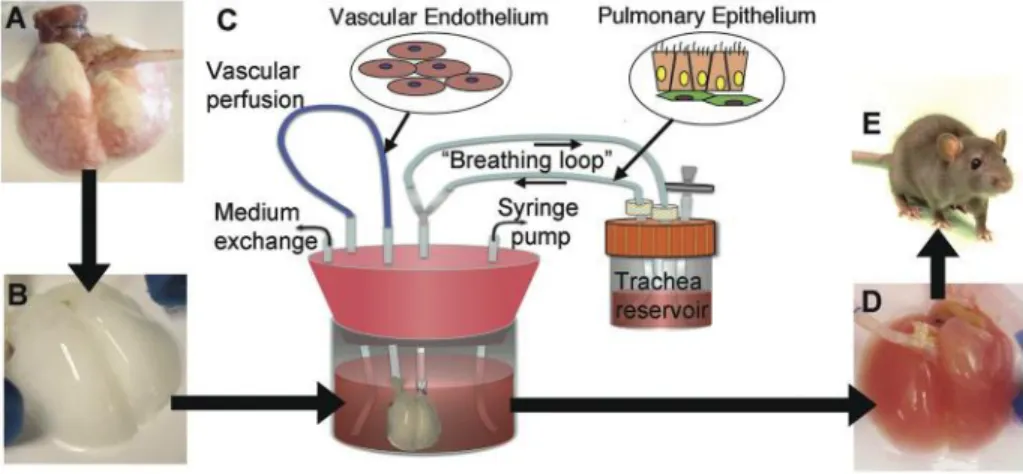
Fig 2.1 shows the main steps of the procedure applied to the case of a lung scaffold obtained from rat. The same principle of decellularization followed by scaffold repopulation has been applied from the same group of researchers at the “Houston Methodist Hospital Research Institute” in Houston, Texas at the human case.
The core of the procedure is the treatment of the lung from donor into the bioreactor that performs the re-cellularization of the scaffold. The nourishment is injected into the airside compartment of the lung through the TracheoBronchial Tree (TBT) thanks to the action of syringe pumps that drive the medium into the lung.
17 Consequently, it is clear how the key point for a successful outcome, meaning for a successful stem cells deposition, a uniform nourishment distribution, and a favored cell re-population, resides in the optimal setup of the bioreactor, i.e. in the adjustment of the pressures applied to the pumps.
In this chapter, a predictive model of slow liquid ventilation across the TBT is proposed (“Optimal Flow Conditions of TracheoBronchial Model to Reengineer Lung Structures” by Casarin S et al.). It combines a 1D mathematical model of TBT and a Solute Deposition Model (SDM) strongly dependent on fluid velocity across the tree itself. With it, it has been possible to design a mathematical framework for tracking and driving the concentration of a generic solute across the airways, looking for its optimal distribution. By coupling the two models, a feedback system is created that allows to derive the optimal pattern of solute. This, combined with the fact that the TBT model is invertible, allows the retrieval of the optimal set of pressures to be applied to the bioreactor in order to obtain an optimal distribution of solute across the lung structure that is crucial for survival and proliferation of the recipient’s cells.
All the modeling principles described in the introduction are applied in the approach followed in this chapter. A physiological structure, such as the TBT, is individuated as decisive in order to give an answer to a specific clinical question. Indeed, the optimal final outcome of the re-cellularization process is a matter of transport and diffusion of nourishment to the stem cells previously injected in the airside compartment, and they both happen through the TBT.
Figure 2.1 – Engineering of a lung scaffold from donor. (A) Native adult rat lung canulated in the pulmonary
artery and trachea for infusion of decellularization solutions. (B) Acellular lung matrix devoid of cells after 2 to 3 hours of treatment. (C) Acellular matrix mounted inside a bioreactor that allows seeding of vascular endothelium into the pulmonary artery and pulmonary endothelium into trachea. (D) Engineered lung removed from the bioreactor and suitable for implantation in (E) recipient rat [18].
18 The model is made of two sub-components and takes in account separately both the geometry of the biological structure, and the diffusion/transport of a solute across it. The two sub-components are coupled and a feedback bridge allows the prediction of the effect that a specific input has on the final outcome.
The most interesting part is that the model is a good compromise between complexity and computational feasibility, and it fully respects the principle of model order reduction previously described. The simplifications of the model are summarized below:
Only the first 15 generations of the TBT are considered. After all, further expanding the analysis would have resulted in a useless CPU memory consumption as the distal part of TBT is not involved in any transport phenomena.
The model explores only the longitudinal direction of solute transport, transferring the description of solute’s spreading along the remaining two directions to the diffusive term. It is so a 1D model, which guarantees the realization of a solid mathematical framework although it is not physiologically accurate.
The losses of pressures at each branching point of the tree have been systematically ignored. Once again, by considering them, the analysis would have needed to add level of complexity that would have been unnecessary for the purpose of the study.
Only one specific solute (oxygen) has been investigated. However, the semi-lumped parameters character of the model allows to easily increase the complexity of the medium mixture in order to explore the distribution of more nourishment solutes.
Summarizing, the method presented in this chapter, provides a solid mathematical framework that is able to predict in advance the optimal setup of a clinical machine, like a bioreactor used for lung re-engineering. The model can be easily improved in order to add degree of complexity and accuracy to the problem, with specific reference to a 3D structure of the TBT, and a more complete medium mixture composition.
19
References
1. www.nhlbi.nih.gov [internet]. Disease Statistics. Available from:
https://www.nhlbi.nih.gov/about/documents/factbook/2012/chapter4
2. www.lung.org [internet]. Monitoring Trends in Lung Disease: Data & Statistics. Available from: http://www.lung.org/our-initiatives/research/monitoring-trends-in-lung-disease/?referrer=https://www.google.com/
3. www.lung.org [internt]. COPD. Available from: http://www.lung.org/lung-health-and-diseases/lung-disease-lookup/copd/?referrer=https://www.google.com/
4. Labiris NR, Dolovich MB. Pulmonary drug delivery. Part I: Physiological factors affecting therapeutic effectiveness of aerosolized medications. BJCP 2003; 56(6):588-599
5. Fan E, Needham DM, Stewart TE. Ventilatory Management of Acute Lung Injury and Acute
Respiratory Distress Syndrome. JAMA 2005; 294(22):2889-2896
6. Marini JJ, and Crooke PS. A General Mathematical Model for Respiratory Dynamics Relevant to the Clinical Setting. Am. Rev. Respir. Dis. 1993; 147(1):14-24
7. Crooke PS, Head JD. A general two-compartment model for mechanical ventilation. Mathematical and Computer Modelling 1996; 24(7):1-18
8. Hancao L, Haddad WM. Optimal Determination of Respiratory Airflow Patterns Using a Nonlinear Multicompartment Model for a Lung Mechanics System. Computational and Mathematical Methods in Medicine 2012; 2012: 165946
9. Orens JB, Estenne M, Arcasoy S, Conte JV, Corris P, Egan JJ et al. International Guidelines for the Selection of Lung Transplant Candidates: 2006 Update – A Consensus Report From the Pulmonary Scientific Council of the International Society for Heart and Lung Transplantation. The Journal of Heart and Lung Transplantation 2006; 25(7):745-755
10. Trulock EP, Edwards LB, Taylor DO, Boucek MM, Keck BM, Hertz MI. The Registry of the International Society for Heart and Lung Transplantation: twenty-first official adult lung and heart-lung transplant report – 2004. The Journal of Heart and Lung Transplantation 2004; 23(7):804-815
11. Meester JD, Smits JA, Persijn GG, Haverich A. Lung transplant waiting list: differential outcome of type of end-stage lung disease, one year after registration. The Journal of Heart and Lung Transplantation 1999; 18(6):563-571
20 12. Petersen TH, Calle EA, Zhao L, Lee EJ, Gui L, Raredon MB, et al. Tissue-Engineered Lungs
for in Vivo Implantation. Science 2010; 329(5991):538-541
13. Andrade CF, Wong AP, Waddell TK, Keshavjee S, Mingayo L. Cell-based tissue engineering for lung regeneration. American Journal of Physiology – Lung Cellular and Molecular Physiology 2006; 292(2):L510-L518
14. Ott HC, Clippinger B, Conrad Cluadius, Schuetz C, Pomerantseva I, Ikonomou L et al. Regeneration and orthotopic transplantation of a bioartificial lung. Nature Medicine 2010; 16:927-933
15. Hoshiba T, Lu H, Kawazoe N, Chen G. Decellularized matrices for tissue engineering. Expert Opin. Biol. Ther. 2010; 10(12):1717-1728
16. Jensen T, Roszell B, Zang F, Girard E, Matson A, Thrall R et al. A Rapid Lung De-cellularization Protocol Supports Embryonic Stem Cell Differentiation In Vitro and Following Implantation. Tissue Engineering Part C: Methods 2012; 18(8):632-646
17. Williams TJ, Grossman RF, Maurer JR. Long-term functional follow-up of lung transplant recipients. Clinics in Chest Medicine 1990; 11(2):347-358
18. Sundaresan S, Trulock EP, Mohanakumar T, Cooper JD, Patterson GA. Prevalence and outcome of bronchiolitis obliterans syndrome after lung transplantation. The Annals of Thoracic Surgery 1995; 60(5):1341-1347
19. Trulock EP. Management of Lung Transplant Rejection. Chest 1993; 103(5):1566-1576 20. Nichols JE, Niles J, Riddle M, Vargas G, Schilagard T, Ma L et al. Production and assessment
of decellularized pig and human lung scaffolds. Tissue Eng. Part A 2013; 19(17-18):2045-2062
21
2.1 Optimal Flow Conditions of
TracheoBronchial Model to Reengineer
Lung Structures
Stefano Casarin1 , 2, Federico Aletti3, Giuseppe Baselli3, and Marc Garbey1 , 2
1 LASIE UMR CNRS, University of La Rochelle, La Rochelle, France 2 Houston Methodist Hospital Research Institute, Houston, Tx, USA
3 Dipartimento di Elettronica, Informazione e Bioingegneria, Politecnico di M ilano,
Milano, Italy
Abstract
The high demand for lung transplants cannot be matched by an adequate number of lungs from donors. Since fully ex-novo lungs are far from being feasible, tissue engineering is actively considering implantation of engineered lungs where the devitalized structure of a donor is used as scaffold to be repopulated by stem cells of the receiving patient. A decellularized donated lung is treated inside a bioreactor where transport through the TracheoBronchial Tree (TBT) will allow for both deposition of stem cells and nourishment for their subsequent growth, thus developing new lung tissue. The key concern is to set optimally the boundary conditions to utilize in the bioreactor. We propose a predictive model of slow liquid ventilation, which combines a 1D mathematical model of the TBT and a Solute Deposition Model (SDM) strongly dependent on fluid velocity across the tree. With it, we were able to track and drive the concentration of a generic solute across the airways, looking for its optimal distribution. This was given by properly adjusting the pumps’ regime serving the bioreactor. A feedback system, created by coupling the two models, allowed us to derive the optimal pattern. The TBT model can be easily invertible thus yielding a straightforward flow/pressure law at the inlet to optimize the efficiency of the bioreactor.
22
2.1.1 Introduction
The increasing demand for lung transplants is due to the growing occurrence of severe lung pathologies, such as chronic obstructive pulmonary disorders and restrictive diseases [1,2]. In 2012, there were 3,700 recorded lung transplants worldwide [3].
One of the limits to the widespread need for lung transplantation is the scarcity of suitable donor lungs for implant. It is estimated that organs are retrieved from only 20% to 25% of potential donors because of religious, social, or other reasons [4]. Furthermore, more than 80% of potential donor lungs are injured during brain death and other complications experienced in the intensive care unit, and thus cannot be used for transplantation. Less than 10% of the available donors have lungs with a preserved alveolar-capillary barrier that can be considered acceptable for transplantation [4]. According to Cypel et al. [5], this percentage can be increased using gene therapy with an adenoviral vector encoding human interleukin-10 (AdhhlL-10). Using this technique, the authors showed that lungs excised from donors could be repaired ex vivo before transplantation.
An alternative option to the use of lungs from deceased donors is the development of tissue-engineered lungs. A typical approach consists in the use of donated lungs as supporting scaffolds to be repopulated by stem cells of the receiving patient. The scaffold is prepared and treated inside a bioreactor using a slow liquid perfusion regime. The benefits of this approach consist both in limiting the side effects, such as organ rejection, and dramatically improving the metabolic performance of the scaffold. The success of lung engineering relies on achieving homogeneous distribution of nutrient to nourish the stem cells in the scaffold, which is a challenging problem. A possible tool to help improve the growth process of the engineered lung is the mathematical simulation of the medium perfusion flow in the airways.
Several works have addressed the problem of simulating flow in the lungs by means of numerical simulations for the computation of the flow distribution inside the airways [6-10]. However, most of the simulations assumed a fast regime of perfusion, which is not the typical situation of a bioreactor for engineered organs. Total Liquid Ventilation (TLV) and Partial Liquid Ventilation (PLV) were studied thoroughly in [11-14]. Both techniques have been used in patients
23 in order to restore the lung functionality by injection of a liquid oxygenating mixture in the airways, however neither accurately reflects the typical conditions of a bioreactor either.
In this paper, we present a mathematical model of slow liquid flow in the TBT, based on the description of air ventilation introduced by Florens et al. [15] and Florens [16]. Our goal is to set a criterion to determine the optimum boundary flow conditions to be applied to a bioreactor used for the ex vivo treatment of lungs from donors. Our work has been focused on the pure transport region of the TBT, i.e. the upper portion of it. In this context, an accurate study of both the flow, and above all of the solute transport in the upper airways is of paramount importance. The study of the transport phenomena enables precise tracking of the concentration of a generic solute along the tree. In this way, an optimal distribution of the solute can be targeted, and the flow conditions necessary to achieve it can be determined.
2.1.2 Materials and methods
“The Methodist Hospital Research Institute” bioreactor: properties
and mathematical modeling principles
A new approach in lung engineering is represented by the bioreactor developed by the Houston Methodist Research Institute. It deviates from other common techniques, such as drug therapy, oxygen therapy, surgery and pulmonary rehabilitation. Its design follows the principles described in [17], applying them directly to the human lung case.
The procedure is explained in detail in [18]. A donated lung is completely decellularized in order to remove all immunogenic cellular constituents. After the decellularization process, the tissue retains its architecture and its common functions. To enhance the deposition, the survival, and the differentiation of lung epithelium, the matrix is cultured in a bioreactor designed to mimic the features of the human lung, including vascular perfusion and airways ventilation. The excised lung is mounted inside the chamber of the bioreactor and it is connected to the external circuit by a three syringe-pump loop system. The left syringe drives the liquid breathing cycle, the central one performs the culture medium exchange, and the right one the vascular perfusion. Repopulation

![Figure 3.3 - Conceptual scheme of the Dynamical System. Primary interacting elements in vein graft adaptation are linked through a feedback system [5]](https://thumb-eu.123doks.com/thumbv2/123doknet/14675582.742351/82.918.292.623.116.544/figure-conceptual-dynamical-primary-interacting-elements-adaptation-feedback.webp)